Blog

  • Duxton Bees launches honey brand, Fuzzy Bum

    Duxton Bees launches honey brand, Fuzzy Bum

    Duxton Bees has launched Fuzzy Bum, a new honey brand with a mission that goes beyond sweet treats, raising awareness about Australia’s bee crisis. 

    According to the company, Fuzzy Bum is made entirely from locally sourced honey and is fully traceable back to the hive. The product is minimally processed, retaining its natural vitamins, minerals and antioxidants. 

    “Our goal with Fuzzy Bum is to highlight the importance of local beekeepers and sustainable honey production in Australia,” said Keegan Blignaut, MD of  Duxton Bees. “Bees are essential to our environment and food security, yet they are under threat.

    “By choosing 100 per cent Australian honey, consumers can help protect these vital pollinators and support a more sustainable future.” 

    The packaging is designed with bold lettering, vibrant colours, and humorous drawings inspired by local Australian flora.

    Fuzzy Bum honey is now available both online and at select retailers.

  • Judge says Apple and one of its executives lied during Epic Games trial in 2021

    Judge says Apple and one of its executives lied during Epic Games trial in 2021

    Remember Judge Yvonne Gonzalez Rogers? She was the judge who made the ruling in Apple’s 2021 legal battle against Epic Games that resulted from Apple’s decision to boot Epic and its popular Fortnite game from the App Store. Apple said that Epic included a link inside the App Store version of Fortnite that would allow users to buy in-app items for the game directly from Epic. This prevented Apple from taking the 30% cut it would usually take from the cost of paid apps and in-app purchases.

    Today, Judge Gonzales Rogers said in a court document that Apple “willfully” violated an injunction that she imposed on the company in 2021. She also wrote that Alex Roman, Apple’s Vice President of Finance “outright lied to the court” about the timing related to a decision made by Apple to place a 27% fee on some App Store purchases. The judge turned over the matter to U.S. attorneys who will now investigate whether Roman and Apple will be charged with criminal contempt.

    In a short but sweet response, Apple said, “We strongly disagree with the decision. We will comply with the court’s order and we will appeal.”

    Wednesday, Rogers ruled that Apple was in contempt and accused the tech giant of trying to violate the rulings she made in the 2021 case. The judge explained that after her decision in 2021, purchases made off-app by iPhone users would be expected not to have any commission or cut for Apple. But all Apple did in 2024 was reduce the cut it would receive from 30% to 27%.

    “In stark contrast to Apple’s initial in-court testimony, contemporaneous business documents reveal that Apple knew exactly what it was doing and at every turn chose the most anti-competitive option. To hide the truth, Vice-President of Finance, Alex Roman, outright lied under oath.”

    The judge also said that Apple never presented documentation about a meeting held in June 2023 that Apple CEO Tim Cook attended. Apple never told the court about this meeting until this year by hiding it from the court, according to Judge Gonzales Rogers. The judge ordered Apple to immediately stop charging commissions on purchases made for iPhone apps obtained through web links inside an app. As previously noted, that’s exactly what Epic did with its Fortnite app that kicked off all of this drama.

    “It’s a huge victory for developers, and it means all developers can offer their own payment service side-by-side with Apple’s payment service. This forces Apple to compete. This is what we wanted all along.”

    Additionally, Apple will be responsible for Epic’s attorney fees related to this issue. Judge Gonzalez Rogers had no sympathy for the company. “This is an injunction, not a negotiation. There are no do-overs once a party willfully disregards a court order,” the judge wrote.

  • T-Mobile is phasing out plans with included taxes and fees starting tomorrow

    T-Mobile is phasing out plans with included taxes and fees starting tomorrow

    T-Mobile recently introduced new plans where customers were quick to notice that the taxes and additional fees were no longer factored into the price. Now, according to multiple people claiming to be T-Mobile representatives, it seems that the company is doing away with its older plans entirely.

    One T-Mobile user claiming to be an employee at an authorized retailer has revealed that representatives will no longer receive commissions for activating older plans. This claim was backed up by multiple other people claiming to be employees of the carrier as well. Apparently T-Mobile has instructed store personnel to push the new plans only and stay away from plans that include taxes and fees in the price.

    Another user claiming to be a T-Mobile employee as well has also shared the same news in a separate post. The new instructions are to take effect from May 1 and will make it a lot more difficult to go to a store and sign up for a plan with included taxes and fees. Understandably representatives at these stores want to earn their commissions and will be very hesitant about activating an older plan.

    This decision comes after T-Mobile faced backlash online for introducing pricing updates to existing plans. Customers claimed that their plans, which had been marketed to them as price locked forever, also saw increases in monthly cost. Since then T-Mobile has been a lot more careful about promising price locks and new offers clearly state how long such guarantees will last.

    Naturally the revelation about older plans being no longer incentivized for store employees was met with criticism. One user even said that T-Mobile, which calls itself the “un-carrier”, is now just becoming another carrier company like AT&T or Verizon. AT&T and Verizon don’t offer plans with included taxes and fees and T-Mobile only started doing so around eight years ago.

    Including the taxes and fees in the price upfront makes it a lot easier for customers and employees. In fact representatives say that T-Mobile has gone back in time with its latest moves and they now have to once again tell customers that taxes and fees are separate. To me this feels like T-Mobile is getting ready to completely phase out plans with included charges in the near future.

  • Apple CEO Tim Cook reveals what Apple needs to build iPhone in the US

    Apple CEO Tim Cook reveals what Apple needs to build iPhone in the US

    While the tariff fiasco has brought red ink to the markets and chaos to the global economy, the ultimate goal according to President Donald Trump and his supporters, is to have manufacturing brought back to the United States. According to Trump’s Commerce Secretary Howard Lutnick, who was appearing on CNBC, Apple CEO Tim Cook told him that there is a “key catalyst” that would be necessary for Apple to consider building the iPhone in the US.

    Lutnick says that he asked Cook when he was going to bring iPhone manufacturing to the States. Cook responded by saying, “I need to have the robotic arms to do it at a scale and precision that would allow me to bring it here.” Cook seems to be one of the few tech industry leaders who might not be a Trump supporter but who still commands respect from the president and vice versa.

    This relationship has helped Apple protect its most important product, the iPhone, from tariffs during both Trump terms. Recently, Trump temporarily exempted some consumer electronics including smartphones from the reciprocal tariffs that Trump imposed on US trading partners. This includes a whopping 145% tariff on products imported to the US from China which is where the majority of iPhone units are assembled.

    By using robots to do the tedious low-paying assembly jobs such as building an iPhone, Apple wouldn’t have to worry about finding Americans willing to work for the $3 to $3.70 per hour that iPhone assemblers reportedly make in Shenzhen, China. Without a robotic labor force, at the federal minimum wage of $7.25 per hour, Apple would be paying twice that amount to build the iPhone forcing it to raise the price of the device.

    By using robots to build the iPhone in the US, Apple would be able to reduce the cost to assemble the product and might even be able to cut prices for the iPhone. But Apple is still a long way from having a team of robots unplug themselves in the morning and head over to the assembly line where they silently build iPhone units. Yet, if you ask the Commerce Secretary, he’ll try to get you to believe that this technology is coming sooner than you’d think.

    Talking about the iPhone, Lutnick says about Tim Cook, “He wants to build it here, he’s going to build it here. The Commerce Secretary does agree with our position that Americans won’t work for the low wages Foxconn pays iPhone assemblers in China. He says that Americans will be running the iPhone factories in the States. “They’re not going to be the ones screwing components in.” Unfortunately, Lutnick doesn’t explain who will be.

    Cook is right and robotics can be the answer, but this is going to take time even with AI. Let me make a statement that many of you will find surprising. If the Trump administration is patient and allows time for the technology to catch up with the goal, the current administration might end up being known for helping change the world of manufacturing for the better. However, patience is not the strong suit of our president and his team.

  • Vietnam Airlines gets go-ahead to buy 50 narrow-body aircraft

    Vietnam Airlines gets go-ahead to buy 50 narrow-body aircraft

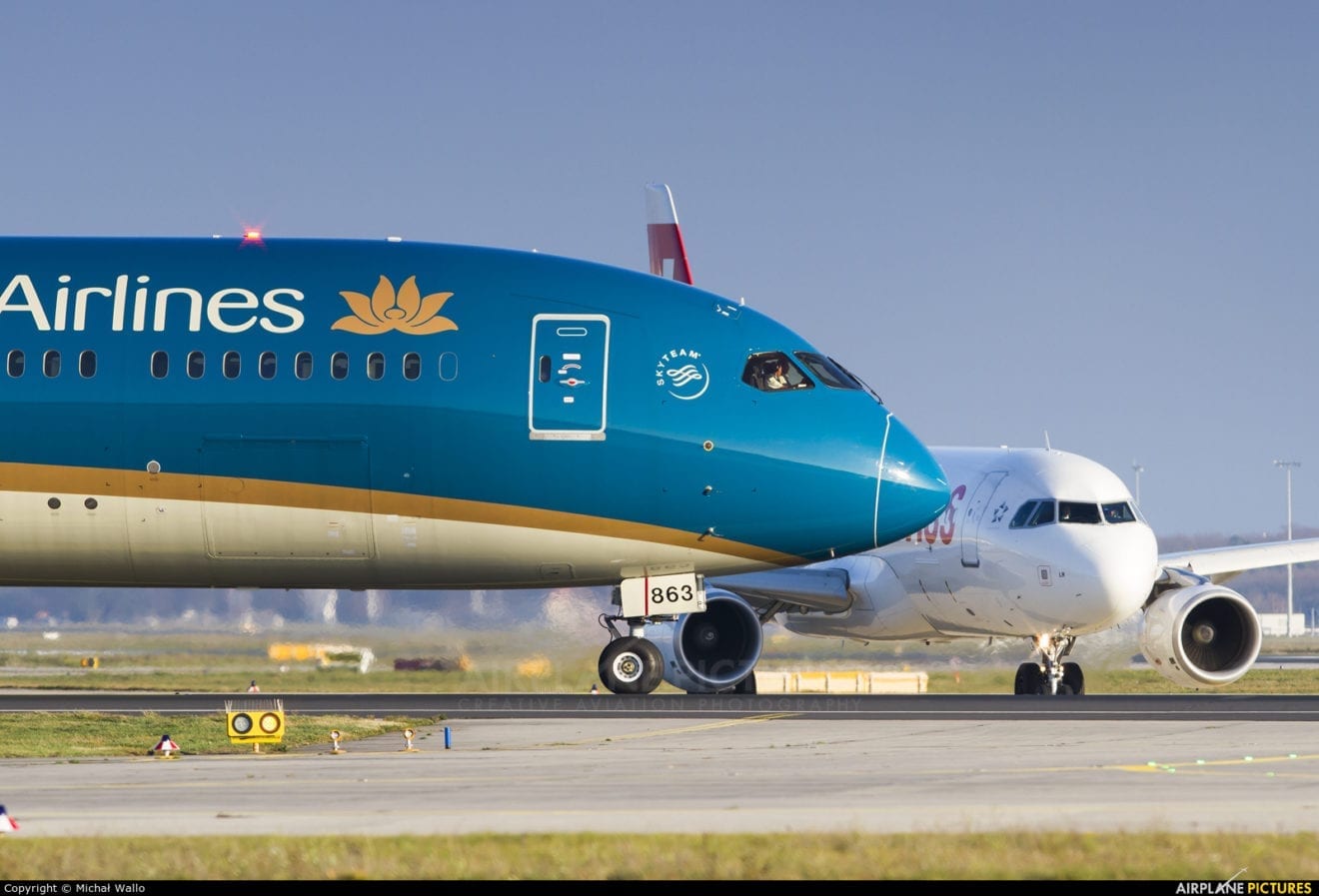
    Vietnam Airlines has been granted in-principle approval by the government to acquire 50 narrow-body aircraft without requiring a state guarantee.

    The approval, outlined in an official dispatch from the Government Office reflecting the views of Deputy Prime Minister Ho Duc Phoc, is intended to address future travel demand and phase out aging aircraft.

    Vietnam Airlines previously proposed buying 50 Airbus A320 NEO and Boeing 737 MAX jets, along with 10 spare engines, at a total estimated cost of around US$3.7 billion—equivalent to 1.6 times its current total asset value, based on 2024 financial data.

    The new aircraft will gradually phase out older A321 CEO planes as part of the airline’s fleet modernization plan.

    Earlier this month, during Phoc’s visit to the U.S., Vietnam Airlines signed a memorandum of understanding with Citibank for $560 million in funding for strategic projects, including the aircraft purchase. It also signed a separate MOU with Vietcombank to prepare additional capital for the acquisition.

    In September 2023, Vietnam Airlines signed a deal to purchase 50 Boeing 737 MAX aircraft, with deliveries expected between 2027 and 2030.

    Looking ahead, the airline projects it will need a fleet of 52 wide-body and 112 narrow-body aircraft by 2035. At present, Vietnam Airlines operates a fleet of about 100 planes, including more than 30 wide-body jets.

    According to its 2024 financial report, the carrier earned over VND113.7 trillion (US$4.37 billion) in revenue, transporting 22.7 million passengers and 314,700 tons of cargo. Its aircraft utilization averaged 11 hours per day, a 25% increase from 2023.

  • UBS Adds Global Crisis as Possible Downside Scenario

    UBS Adds Global Crisis as Possible Downside Scenario

    Wary of the potential for the escalating trade war to materially destabilize the macro environment, UBS has revised its assessment of possible downside scenarios, including the risk of a global crisis.

    In the first quarter earnings report of UBS, the Swiss banking giant revised its list of expected credit loss (ECL) models, economic scenarios that could play out as well as their weightings. This was due to prevailing economic and political conditions, most notably from the rapid escalation of the trade war under US President Donald Trump.

    As of 31 March 2025, there was a high degree of geopolitical and macroeconomic uncertainty, including uncertainty relating to tariffs that could be introduced by the US government after that date and the economic consequences thereof, the bank said.

    The actual announcing of the tariffs in April 2025 was subsequent to the reporting date. UBS has assessed the situation based on the uncertainties that existed on the reporting date and has exercised judgment.

    Adjusted Predictions

    As a result, UBS has adjusted its forecasts with the replacement of the stagflationary geopolitical crisis scenario with a «global crisis scenario» (15 percent chance) which targets risks such as sovereign defaults, low interest rates and significant emerging market stress. The «mild debt crisis scenario» has also been replaced with a mild stagflation crisis scenario (30 percent chance) with assumptions of rising rates alongside declines in GDP and equities.

    It applies a 50 percent chance to its baseline scenario of relatively stable economic conditions, down from 60 percent at the end of 2024.

    UBS is closely monitoring the current market situation, and it will carefully assess developments, potentially revisiting the narratives and weightings in the second quarter of 2025, the bank added.

  • China Mobile Hong Kong to Shut Down 3G Services by the End of June

    China Mobile Hong Kong to Shut Down 3G Services by the End of June

    The decision comes following a steady decline in 3G users, who now make up less than 0.25% of CMHK’s total mobile customer base, including post-paid, pre-paid, and virtual network operator-related subscribers. CMHK has been notifying customers of the upcoming transition since late 2023 and continues to assist affected users in upgrading their 3G phones, devices, or SIM cards.

    In a separate statement, the Communications Authority (CA) confirmed it granted CMHK prior approval to cease 3G services under Special Condition 10.4 of the company’s Unified Carrier Licence. The CA acknowledged that only a small number of users were affected and highlighted CMHK’s continued efforts to support them through service upgrades and transition arrangements.

    Customers who do not wish to upgrade will be offered reasonable termination options. The CA has also mandated that CMHK maintain adequate 3G service quality until the shutdown date.

    The CA also encouraged customers to consider upgrading to newer mobile services for improved quality and features.

  • Indosat Surges Ahead with Rising ARPU and Bold AI Ambitions

    Indosat Surges Ahead with Rising ARPU and Bold AI Ambitions

    Indosat Ooredoo Hutchison (Indosat) reported positive results in the first quarter of 2025, despite facing tough competition in the industry. The company’s success is due to its disciplined approach and dedication to supporting Indonesia’s digital development. During this quarter, Indosat saw growth in its average revenue per user (ARPU) and an increase in its customer base, showing resilience in a challenging market.

    ARPU reached nearly IDR 39.2 thousand, growing by 4.6% year-over-year (YoY), with 700,000 new mobile customers added, bringing the total to 95.4 million. The company reported stable total revenue of IDR 13,577.9 billion, with earnings before interest, taxes, depreciation, and amortization (EBITDA) reaching IDR 6,415.1 billion, growing by 0.6% quarter-on-quarter (QoQ). Net profit also increased by 27% quarter-on-quarter to IDR 1,311.1 billion, marking 17 consecutive quarters of profitability.

    Vikram Sinha, President Director and CEO of Indosat, emphasized, “This quarter’s results reflect not only strong financial performance, but also the unwavering dedication of our entire team to serve the people of Indonesia. In an increasingly competitive landscape, we have remained focused on our larger purpose: empowering Indonesia.”

    The company is also preparing for 5G technology to provide faster and more reliable digital services, especially in underserved areas. Indosat allocated IDR 2,620.4 billion in capital expenditure (CapEx) during the quarter, with a significant portion directed towards its cellular business. The company also announced a collaboration with Nokia and NVIDIA to deploy artificial intelligence radio access network (AI-RAN) technology, enhancing its 5G Cloud RAN with AI.

    The launch of the Digital Hub in February 2025 marked a significant step in Indosat’s commitment to empowering Indonesia. The Digital Hub offers entertainment, e-commerce, health, and lifestyle services to millions of users, with strong engagement across Indosat’s platforms. Indosat is not only focused on digital lifestyle enablement but also on talent development programs like Generasi Terkoneksi (GenSi) and IDCamp to equip young Indonesians with essential skills in AI and digital leadership.

    The company aims to become an AI-driven telco and techco by investing in advanced technologies and promoting AI innovation and automation. Through industry collaborations and a focus on technology, Indosat is leading Indonesia’s digital transformation towards a more inclusive and prosperous future.

    “Our journey to become an AI-techco has just begun. From investing in networks and talent to driving collaboration across industries, our goal remains the same: to make technology a force for inclusion, innovation, and digital sovereignty,” concluded Sinha.


  • Arizona Legislature pushes for a state bitcoin reserve

    Arizona Legislature pushes for a state bitcoin reserve

    The Arizona Legislature approved a pair of bills Monday that could pave the way to create the country’s first state Bitcoin reserve.

    The fate of the bills, which mimic President Donald Trump’s moves on the national level, is now in the hands of Democratic Gov. Katie Hobbs. 

    The pair of bills, both led by Republicans and passed largely along partisan lines through the House and the Senate, would allow the state to invest up to 10% of its public funds in digital assets like bitcoin. According to a 2023 audit, Arizona holds more than $30 billion in state-managed assets.  

    If Hobbs signs them into law, Arizona will become the first state to have its own cryptocurrency reserve. If Hobbs uses her veto power, the bills are dead. 

    A spokesperson declined to comment on how she plans to proceed. 

    Republican state Sen. Wendy Rogers, who sponsored one of the pieces of legislation, said it’s in Hobbs’ best interest to sign the legislation. “Crypto and bitcoin have a huge following nationwide and in Arizona. They are wildly popular with the youth and independents,” Rogers said, adding: “I certainly hope she signs it, because she can take credit and it will make her look good.”

    Trump announced a “strategic crypto reserve” in March, but the announcement bothered some cryptocurrency supporters after he posted on his social media platform that the reserve will include lesser-known cryptocurrencies besides bitcoin, which are more prone to volatility. 

    Barrett Marson, a Republican political consultant based in Phoenix, said GOP members of the Arizona Legislature are taking their cues from Trump. “Arizona Republicans are nothing if not attuned to what Trump is doing and always finding a way to replicate that here in the state,” Marson said. 

    Marson, who said he isn’t sure whether Hobbs will sign the bills or veto them, said he believes crypto’s mercurial nature is likely to be a consideration. “Gov. Hobbs will undoubtedly consider how volatile bitcoin can be when she decides whether to sign or veto this effort,” he said. 

    But Rogers isn’t concerned. “I do not have any concerns about the volatility of bitcoin simply because if you zoom out on all of the charts, it always increases in value,” she said, before she argued that bitcoin is a “hedge against inflation.” 

    “I can’t speak for the other cryptocurrencies, as those need to be analyzed on an individual basis,” she said.

  • Smartcom Expands Push-to-Talk Services Across Indonesia

    Smartcom Expands Push-to-Talk Services Across Indonesia

    Smartcom, a mobile virtual network operator (MVNO) based in Singapore, is now expanding its services to Indonesia. The goal of this expansion is to introduce Smartcom’s mission-critical push-to-talk (PTT) solutions to a larger market, catering to the communication needs of various industries. Since 2015, Smartcom has been collaborating with TASSTA and Singtel to provide reliable PTT communication coverage across Singapore.

    However, entering the Indonesian market poses new challenges due to its larger and more diverse nature. Indonesia, boasting the largest economy in Southeast Asia, offers a growing market for mission-critical communication solutions. With initiatives like ‘100 Smart Cities’ and a workforce of around 160 million, there are vast opportunities for expanded PTT services. The adoption of TASSTA’s solutions by key Indonesian industries like the police force and national railway operator underscores the demand for reliable communication systems.

    Indonesia’s industrial landscape, especially the mining and oil and gas (O&G) sectors, requires specialized push-to-talk solutions. Large events and gatherings also necessitate mission-critical PTT communication that can withstand high network congestion. To address these needs, Smartcom is partnering with Telkomsel, Indonesia’s largest telecommunications provider, to offer priority bandwidth during peak events. Additionally, solutions like ATEX-certified mobile devices will cater to O&G companies operating in hazardous environments.

    The expansion into Indonesia is part of Smartcom’s strategy to grow its customer base and enhance its services. By entering this new market, Smartcom aims to improve its product range, customization capabilities, and local technical support. Smartcom is also exploring partnerships with software providers to enhance its PTT platform and collaborating with Samsung Knox Mobile Device Management to ensure the security of its cellular-based communication solutions. Despite the challenges of entering a new market, Smartcom is working with Enterprise Singapore to navigate Indonesia’s business landscape.

  • Viettel Begins Construction of Vietnam’s Largest Data Center

    Viettel Begins Construction of Vietnam’s Largest Data Center

    Viettel has started building a new data center campus in Ho Chi Minh City, Vietnam. This will be Viettel’s largest data center yet, boasting a capacity of 140 MW and around 10,000 racks. The facility will cover approximately 40,000 sqm (430,555 sq. ft.) on a 4-hectare site. The data center is expected to be operational by 2026 and fully completed by 2030.

    It will be situated in Tan Phu Trung Industrial Park, Cu Chi district, which is 25 km from Ho Chi Minh City and 15 km from Tan Son Nhat International Airport. Huyen Nguyen, Deputy Director of Viettel’s International Business Center, mentioned that the data center aims to achieve a power usage effectiveness (PUE) of less than 1.4 and comply with Uptime Tier III standards. Viettel currently runs 15 data centers in Vietnam with a total capacity of 87 MW.

    The company plans to build 24 data centers by 2030, with a combined capacity of 560 MW. Viettel’s IDC data center unit offers colocation and cloud services from five data centers across Hanoi (x2), Da Nang (x1), and Ho Chi Minh City (x2), totaling 25,000 sqm (269,100 sq. ft).

    Notably, Vietnam recently lifted restrictions on the foreign ownership of data centers, removing the 49% cap.

  • Phone scammers will soon lose a major advantage

    Phone scammers will soon lose a major advantage

    The Federal Communications Commission is taking aim at a key loophole that helps robocallers dodge detection systems meant to protect consumers. If you’re still getting bombarded with scam calls on your phone, this gap involving older network technology is a likely contributor. The FCC wants to ensure calls maintain their digital fingerprints even when passing through these older networks.  

    Modern phone calls over internet (IP) networks benefit from STIR/SHAKEN, a system the FCC champions for tracking, blocking, and warning about bad calls. It acts like a digital fingerprint to verify caller ID isn’t faked or “spoofed”. It’s crucial for spotting malicious calls before they potentially trick someone.  

    The problem is that when calls travel — even partially, through older, non-IP phone lines (think traditional landlines) — this STIR/SHAKEN verification often gets lost due to technical limitations of those networks. Scammers know this and actively exploit it by routing calls through these pathways, effectively erasing the digital proof of origin. This makes their illegal calls much harder for carriers to identify and block.  

    Patching the network hole

    The FCC’s new proposal directly targets this non-IP loophole. For the last four years, providers using these older networks faced delayed deadlines for implementing call authentication required by the TRACED Act. The FCC now wants to end these delays and get authentication solutions deployed.  

    This initiative stems from the TRACED Act, which is legislation designed specifically to bolster the fight against the flood of illegal robocalls. While STIR/SHAKEN on IP networks has certainly made a dent, billions are still lost annually to frequent phone scams related to everything from fake auto warranties to government impersonations, seriously damaging consumer trust. Addressing specific vulnerabilities like the non-IP gap is essential.

    Shutting down this specific loophole won’t magically stop all robocalls overnight, but it’s a necessary technical fix in the ongoing battle. Ensuring calls retain authentication across different network types makes it tougher for scammers to operate anonymously and hide their tracks. Ultimately, closing this gap should lead to fewer fraudulent calls getting through to consumers and hopefully increase the reliability of caller ID.

  • Honor’s upcoming flagship wants a seat at the champions table

    Honor’s upcoming flagship wants a seat at the champions table

    Although specs and price should be the deciding factor when purchasing a phone, “brand” is one of the most important aspects that convinces customers to buy certain products.

    To put it bluntly, Apple and Samsung have monopolized certain markets like the United States through the sheer power of their branding. But other companies are making products that are at least as good and are priced much lower.

    Honor is one of the brands that have been trying to enter the US market for years before Chinese companies have become undesirable in the country. The most recent Honor flagships offer good value for money, especially since they typically cost less than Samsung’s top-tier phones.

    The upcoming flagship to be released by Honor later this year definitely wants a seat at the champions table. The first details about the unannounced Honor Magic 8 Pro indicate that this will be a real beast.

    Honor’s flagship will be equipped with Qualcomm’s not-yet-release Snapdragon 8 Elite 2 processor. Also, reliable tipster Digital Chat Station claims the Magic 8 Pro boasts a very powerful triple camera system that includes 50-megapixel main, 50-megpaixel ultra-wide, and 200-megapixel periscope telephoto cameras.

    Yest, this is the same camera configuration as the Magic 7 Pro, except that the upcoming Magic 8 Pro will use the OmniVision OV50Q sensor to power its main snapper. On top of that, DCS says the camera system supports “smooth frame transition” and “super frame synthesis.”

    In addition, Honor managed to further improve focus speed and optimized high dynamic range. More importantly, the Magic 8 Pro camera is said to consume a lot less power than the Magic 7 Pro, another key aspect that Honor decided to fine-tune.

    These are all the details about the Magic 8 Pro that have been leaked so far, but it’s more than we expected considering that the phone isn’t expected to arrive until later this fall.

    Even though Honor hasn’t announced anything about the Magic 8 Pro, the Chinese company usually launches its second flagship for the year in Q3, so there’s still time to learn at lot more about the device.

  • HSBC Scores Above other Banks

    HSBC Scores Above other Banks

    The British-Asian bank HSBC, which is also active in Switzerland, delivered a good operating result in the first quarter. Investment banking, asset management and International Wealth and Premier Banking performed particularly well. However, net profit was lower following the Group’s reorganization.

    In the first quarter of 2025, HSBC increased pre-tax profit adjusted for one-off effects such as divestments and currency effects by 11 percent to 9.8 billion dollars. Adjusted revenues increased by seven percent to 17.7 billion dollars, as was reported in a press release on Tuesday.

    The bank points to growth in the wealth management business in the IWPB and Hong Kong business segments. This was supported by higher client activity in the foreign exchange, bond and equity market business due to high market volatility.

    On balance, however, the London-based bank earned less. Following extraordinary income of 3.7 billion dollars from divestments in Canada and Argentina last year, net profit fell by 3.2 billion or 32 percent to 6.93 billion dollars.

    New Share Buyback Program

    The announcement of a new share buyback program with a volume of USD 3 billion should please shareholders. A 2 billion program was completed last year.

    Our strong results this quarter demonstrate the momentum of our earnings, the discipline in executing our strategy and the confidence in our ability to achieve our goals, sayd CEO Georges Elhedery.

    Elhedery took over the management of the bank last September and undertook a far-reaching restructuring. HSBC has merged its commercial and investment banking activities and intends to concentrate on its strengths such as the private client business in the UK and Hong Kong. This also includes cost savings of 1.8 billion dollars over the next two years.

    HSBC generates the majority of its income in Asia and, as one of the world’s largest commercial banks, would be exposed to major risks in the event of a trade dispute between the USA and China. The management asserts that a conservative approach to credit risk means it is well-positioned to overcome the challenges ahead. In a scenario with significantly higher tariffs, the bank expects a direct impact on earnings in the low single-digit percentage range and credit losses of around 500 million dollars.

  • Mail&More – the world’s first GSA dedicated to mail and e-commerce

    Mail&More – the world’s first GSA dedicated to mail and e-commerce

    Mail&More offers a fully scalable solution to all airlines seeking to participate in the rapidly growing e-commerce and small parcel logistics niche. It removes the challenges and complexity that non-traditional cargo such as mail or e-commerce bring to an airline’s operational processes. Mail&More assumes responsibility on the airline’s behalf for all related commercial operations through to capacity sourcing and allocation, and is supported by innovative Mail EDI software.

    E-commerce features in every air cargo conference as the disruptor and fastest-growing commodity in air cargo. And it is one that requires specialized expertise given the sheer volumes of AWBs it generates as well as the last-mile network complexity of small parcels with very diverse end destinations. Mail&More has developed a tailored service that has continuously seen annual growth rates of 50% since it was officially introduced in 2022 and today caters to a growing network of 20 postal operators and 30 airlines across the globe, with a strong footprint in Europe and Asia.

    Mail & More is unique. It bridges the gap between postal operators on one hand, who are always looking for the best possible network solutions for the e-commerce platforms, consolidators and vendors that they serve, and airlines, on the other, seeking to optimize their capacity utilisation and load factors – and their process efficiency. Mail&More matches the two and develops market shares, constructs routings, oversees and coordinates transport operations, while advising its customers on cross-border alternatives or other measures they can take to increase their base loads on certain routes. Because of its experience and understanding of regulatory bodies, customer expectations and airline processes in this product niche, Mail&More is a strong partner for airlines of any size seeking to improve or even launch their e-commerce strategy. What’s more, it is the only company in the world currently offering this service.

    Mail&More offers audits, strategic guidance, solution recommendations, and operational support tailored to each airline’s size and structural focus—whether large carriers aiming to further optimize and digitalize their e-commerce strategy, mid-sized airlines developing their parcel business with the right tools, or smaller and leisure airlines still defining their strategic direction. Leveraging innovative cloud-based MAIL EDI software, the Mail&More team assists airlines in efficiently developing their e-commerce service both in terms of costs and return on investment. Once established, it assists in digitalizing the airline’s respective processes to ensure complete product positioning, visibility and control over its operations.

    2025 will be a year of consolidation for Mail&More, following growing interest from airlines over the past two years. Many carriers have recognized the need to position their e-commerce and parcel services with the same strategic importance as established special products such as pharmaceuticals, dangerous goods, or perishables. However, due to its rapid development, this segment presents challenges—particularly in terms of return on investment. This is where Mail&More adds value, offering extensive network coverage, strong partner connections, market visibility, digital tools, operational efficiencies, and ongoing performance monitoring. By providing a comprehensive and centralized commodity strategy, Mail&More acts as a long-term, plug-and-play business solution.