Blog

  • Costco and DoorDash to deliver groceries to the doors of Aucklanders

    Costco and DoorDash to deliver groceries to the doors of Aucklanders

    Costco has teamed up with DoorDash to deliver its range of groceries and household essentials to homes in Auckland at bulk-saving rates.

    The partnership will enable Costco members and non-members to get everything from toilet paper to fresh fruits and vegetables or premium poultry and meat delivered to their homes.

    “We’re always looking for ways to make everyday shopping easier, and our partnership with Costco means Aucklanders can now get incredible value and quality delivered straight to their doorstep,” said DoorDash New Zealand GM Bradley Thomas.

    To launch the new partnership, New Zealand customers will receive NZ$20 off their first Costco order when they spend $150 or more.

  • Aldi ranked Australia’s top supermarket for fifth consecutive year

    Aldi ranked Australia’s top supermarket for fifth consecutive year

    For the fifth time in a row, Aldi has been named Supermarket of the Year 2024 in Roy Morgan’s Customer Satisfaction Awards.

    The supermarket has won this title eight times. The ratings are calculated from an annual survey of 60,000 Australians and cover 40 industry categories.

    “With the rising cost of living, we know many Aussie families are feeling the pinch,” said Simon Padovani-Ginies, group director of Aldi Australia. “That’s why we’re more focused than ever on keeping grocery prices low and making every dollar count. Our entire business model is based on saving people money while making sure only the best products make it onto our shelves.”

    “As well as delivering a dependably high level of customer satisfaction to millions of Australians Aldi is also recognised by Roy Morgan as one of Australia’s top five most trusted brands – a position Aldi has held consistently over the last five years despite the challenges faced by the sector in an era of high inflation and rising interest rates,” said Roy Morgan CEO Michele Levine.

    She said Aldi had a perfect record of winning all 12 monthly customer satisfaction awards during 2024 with an average customer satisfaction rating of “an exceptional” 88.8 percent.

  • How the Banking Industry Drives Switzerland’s Economic Power

    How the Banking Industry Drives Switzerland’s Economic Power

    The banking association Swiss Banking has presented a study that underscores the importance of the financial industry for the Swiss economy. To ensure this remains the case, prudent strategic decisions and smart, focused regulation are needed.

    The study, commissioned by Swiss Banking (Swiss Bankers Association, SBA) and conducted by the consulting firm Oliver Wyman, concludes that the banking industry plays a key role in supporting economic growth and strengthening Switzerland’s capacity for innovation.

    In 2024, the Swiss financial sector contributed CHF 74 billion to the national economy, which corresponds to 9 percent of GDP. Of this contribution, 57 percent came from banking services (5 percent of GDP), and 43 percent from insurance and other financial service providers.

    Around 160’000 highly qualified professionals work in the banking sector. For each job in the industry, there is an additional job in another sector that depends on it. Annual tax contributions amount to CHF 7 billion, making banks one of the most important sectors in the Swiss economy. Every eighth tax franc comes from the financial industry, emphasized Swiss Banking President Marcel Rohner during the presentation of the study on Friday in Zurich.

    The Swiss financial center is considered one of the most important worldwide and is a key pillar for prosperity, innovation, and international connectivity in Switzerland. This has led to more favorable financing conditions and a lower interest rate level in Switzerland than abroad for many years, Rohner added. This represents an important competitive advantage for companies and also has positive effects for consumers.

    Another factor is the success in international wealth management,» said association CEO Roman Studer. Some of these assets also contribute to financing volumes.

    The industry provides efficient access to capital for both private and corporate clients – nationally and internationally. Especially for small and medium-sized enterprises (SMEs), a stable supply of credit is essential. There is a close symbiosis between the banking sector and the broader economy.

    The financial sector is growing, and much has emerged in recent years, said Rohner. He cited examples such as the relatively young financial service providers Swissquote and Partners Group, which are successful global publicly listed companies, as well as fully licensed digital asset banks like Amina and Sygnum. In 2024, there were 484 fintech firms.

    As a result, the financial ecosystem is deepening, and fintechs and banks are increasingly benefiting from one another. New markets are emerging with digital assets, such as crypto ETPs, ESG investments, or impact investments.

    To ensure that Switzerland’s financial center remains successful in the future, prudent strategic decisions are needed. Economic openness, smart and focused regulation, and a solid reputation, especially about money laundering or terrorism financing, are key to the financial center’s competitiveness.

    Regulation must be internationally aligned. This also includes robust and broad-based liquidity safeguards as well as solid and competitive capital requirements. We must and want to learn the right lessons from the Credit Suisse case, emphasized Studer. This includes liquidity safeguards and resolution capabilities. That must also apply to UBS.

    The only remaining major Swiss bank plays a crucial role in the ecosystem, from which smaller banks also benefit. «UBS is important on the corporate client side, and we need a global bank that can offer products and services others cannot, Rohner said.

    The position of the Swiss banking sector should not be taken for granted and must be protected,» he added. «We want to take good care of our financial center and shape it with ambition, in line with our tradition of excellence, trust, integrity, and stability. That’s how we stay globally relevant and future-ready. That is our responsibility – and our opportunity.

    When it comes to regulation and capital requirements for UBS, a middle ground will be found – I’m confident there’s no insurmountable divide.

    The fact that the political process is dragging on has both advantages and disadvantages. The extended timeline creates uncertainty, but also ensures that questions are addressed holistically rather than in isolation.

  • Vietnam discovers 12 mines containing over 10 tons of gold

    Vietnam discovers 12 mines containing over 10 tons of gold

    A major gold discovery in central Vietnam has revealed 12 mines containing over 10 tons of gold and 16 tons of silver, according to the Mid-Central Geological Division.

    The discoveries were made following geological investigations across 32 areas with gold ore potential.

    Vietnamese authorities have identified around 500 gold-bearing locations nationwide. Of these, 30 sites have undergone detailed surveys, revealing an estimated total of 300 tons of gold reserves. Most of these deposits are concentrated in mountainous areas of northern Vietnam and several central provinces.

    Starting in 2025, the Department of Geology and Minerals has been launching a new project to evaluate mineral potential in central Vietnam, focusing on localities like Quang Nam, Quang Ngai, Binh Dinh and Phu Yen provinces.

    Another mineral survey project, initiated in 2017, led to the recent discovery of 40 gold mines with total estimated reserves of nearly 30 tons.

  • Huawei Unveils Comprehensive Suite of AI-Powered Solutions at MWC Barcelona 2025

    Huawei Unveils Comprehensive Suite of AI-Powered Solutions at MWC Barcelona 2025

    At the Huawei Product & Solution Launch during Mobile World Congress (MWC) Barcelona 2025, Huawei revealed its innovative roadmap, showcasing a comprehensive suite of AI-powered solutions designed to transform network infrastructure, accelerate digital information, and propel the industry into a more intelligent, connected, and sustainable digital future.

    AI-Centric Network Solution, Seizing New Opportunities in the AI Era

    Yang Chaobin, Huawei’s Director of the Board and CEO of the ICT Business Group, introduced the AI-Centric Network solution to address the growing demand for enhanced network bandwidth, lower latency, wider coverage, and improved operations and management.

    In his keynote, Yang Chaobin highlighted the solution’s four-layered approach, which includes all-domain connectivity, application-oriented O&M, enhanced AI-to-X services, and innovative business models. Through this strategy, Huawei aims to accelerate the transition towards an intelligent world while unlocking new revenue streams.

    AI-Centric 5.5G, Igniting the Mobile AI Era

    Building on an AI-powered network foundation, Cao Ming, Vice President of Huawei and President of Huawei Wireless Solution, noted that mobile AI aims to revolutionize the world by delivering intelligent, human-like experiences anytime, anywhere, and for everything. This shift towards ‘AI for All’ will drive three major transformations in the mobile industry. Firstly, it will transform the user experience from being downlink-focused to offering diverse capabilities. Secondly, it will evolve O&M from AN L3 to AN L4 intelligence. Thirdly, it will shift business models from traffic-based to multi-factor monetization.

    In the mobile AI era, connections will expand from human-to-human to human-to-AI and AI-to-AI, requiring diverse experiences and services. For multi-modal AI interactions, high uplink capability is essential. Cao Ming mentioned that, for real-time AI agent calling, ultra-low latency is critical. To enable ubiquitous intelligent connections, Cao Ming emphasized that seamless coverage is necessary, particularly for AI-powered devices in both dense cities and remote areas.

    To address these challenges, Cao Ming introduced three AI-Centric 5.5G solutions: GigaGear, GreenPulse, and GainLeap.

    Intelligent Core, Paving the Way to the Mobile AI Era

    Further expanding on the mobile AI concept, George Gao, President of Huawei Cloud Core Network Product Line, charted the evolution of core networks into AI-native systems.

    In his keynote, George Gao noted that AI core network transformation occurs in two phases: 5G-A Intelligent Core and Agentic Core. He added that 5G-A Intelligent Core can equip three intelligence entries with calling agents, personalized experience agents, and digital expert agents.

    Moreover, George Gao also launched Huawei’s Telco Intelligent Converged Cloud (TICC) infrastructure, which manages heterogeneous hardware and integrates FusionMind to provide high-quality training and inference services for agents.

    Towards AI ON for New Growth in the AI Era

    Huawei’s product and solution launch also showcased optical network advancements, with Bob Chen, President of Huawei Optical Business Product Line, unveiling the AI Optical Network (AI ON) concept.

    AI applications, from self-owned call assistants to third-party chatbots, thrive on a strong network foundation. According to Bob Chen, the equation is clear: (Data + Model + Computing) x Network = AI prosperity. However, AI development demands deterministic connections and on-tap computing power akin to utilities like electricity and water.

    The transition to AI ON networks requires awareness, always-on demand, assurance, autonomous O&M, and AI-native capabilities. Chen explained that traditional networks struggle with undifferentiated services and reactive repairs, but AI-driven networks offer:

    • Customized Connections: Instead of fixed speeds, users can get tailored services. For example, a gaming package can offer 500 Mbps speed, 10 ms latency, and 99.9999% reliability.
    • Deterministic Performance: AI ensures low latency, “0” packet loss, and hitless protection switching, eliminating uncertainties caused by congestion and failures.
    • Autonomous Operations: The application of AI enables real-time risk detection, automatic troubleshooting, and proactive network health checks.

    AI WAN: Leading IP Networks into the Intelligent Era

    Meanwhile, Leon Wang, President of Huawei Data Communication Product Line, presented the company’s new AI WAN solution, which is designed to empower IP networks in the Net5.5G era using AI. During his keynote, Leon Wang highlighted the solution’s three-layer architecture, comprising AI routers, AI new connections, and AI new brain, which enhances network performance and intelligence through millisecond-level flow sampling, high-accuracy flow awareness, and efficient security protection engines.

    Leon Wang explained that AI WAN’s predictive traffic management helped MTN South Africa reduce congestion at 10% of its 7,000 base stations, resulting in a 25% increase in data usage (DOU) in KwaZulu-Natal and traffic grew by 15.4%. In home services, Carrier CTM partnered with Huawei to optimize network services using an AI computing engine. This resulted in a dramatic reduction in game latency and hence a significant improvement on customer experience. For enterprise security, AI WAN’s intelligent flash defense detected attack flows, enabling carriers to offer high-value security services with a projected 35% revenue increase.

    AI-Ready Data Infrastructure Accelerates Telco-to-Techco Transformation

    In his keynote, Peter Zhou, President of Huawei Data Storage Product Line, highlighted the growing importance of data in the AI era, as AI agents are set to leverage massive amounts of data to transform consumer, home, and business experiences.

    By 2030, Peter Zhou predicts that each individual will generate TB-scale data, powering 10 billion AI agents, while each family will produce PB-scale data for 1.8 billion AI housekeepers, and enterprises will manage EB-scale data, driving 2.8 billion AI applications. To support this, Huawei introduced AI-Ready data storage, featuring a data lake, diverse data services, and a FlashEver business model. Their AI-driven storage innovations include OceanStor Dorado, which enables seamless AI and cloud-native applications; the OceanStor A Series storage, which reduces GPU wait time by 30% and cuts inference costs by 40%; and the OceanStor Pacific, which doubles storage capacity while cutting power consumption by 40%.

    Peter Zhou added that Huawei’s security and business continuity solutions can reduce TCO by 30%, recover 1 TB of data in 20 seconds, and offer flexible AI storage models like FlashEver, a pay-as-you-go model with 10-year investment protection.

    Huawei ICT Services and Software Enable Digital Intelligence Acceleration

    In his keynote, Bruce Xun, President of Huawei Global Technical Service, showcased a series of innovative digital intelligence solutions to address the key challenges in the industry’s digital transformation journey.

    Huawei established the equipment Center Office (CO) modernization solution, Intelligent Operations solution for MBB cross-domain service keepalive, Mobile Network NPS Improvement solution, Differentiated Service Experience Monetization and Assurance solution, and enhanced Mobile Money solution.

    He emphasized focusing on high-value business scenarios, such as streamlining network, data, and AI capabilities along the value stream, and quickly integrating Copilot, AI Agent, and DTN into the operation process for efficient human-machine collaboration and value realization, ultimately creating tangible business value and accelerating digital intelligence.

    Accelerate Intelligence with Cloud, Leap from Telco to Techco

    Bruno Zhang, Huawei Cloud CTO, discussed the comprehensive strategies required for telecom carriers to shift to technology companies, highlighting, “Carriers have clear expectations for the cloud.” In his keynote, Bruno Zhang outlined Huawei’s cloud offerings, including Huawei Cloud Stack and CloudDC to support this transformation.

    The Huawei Cloud Stack has reduced TCO by 50% over 3 years, offering 120+ cloud services for seamless migration, while CloudDC provides 30+ Tier 3+ data centers with a 10x efficiency boost and AI-powered fault recovery within 15 minutes. In terms of AI-powered databases, GaussDB outperformed competitors, doubling performance, ensuring zero data loss, and auto-fixing 90% of faults.

    Huawei’s ‘AI for Industries’ initiative leverages its Pangu Models and ModelArts to help enterprises create industry-specific AI models, with over 400 AI applications successfully deployed across 30+ industries. To help carriers leverage their device-cloud synergy with multi-architecture compute and multi-OS devices, Huawei created Cloud Device, a family of products including KooPhone, KooDrive, and Cloud STB. These products deliver 60 ms latency and zero buffering.

    Bruno Zhang highlighted that live streaming and AI have experienced remarkable growth, with streamers increasing by 10x and AI usage growing 20x over the past five years. While traditional networks face challenges, Huawei’s Cloud Media Edge enhances real-time streaming and drives ARPU growth. Finally, Bruno Zhang explained that carriers require ecosystem capability and operational expertise to expand their enterprise business, and Huawei Cloud offers two solutions to support this. KooGallery provides carriers with easy access to tens of thousands of enterprise applications via standard APIs, while Cloud on Cloud offers comprehensive cloud operation capabilities.

    AI Empowering Operators Accelerated Transition Towards Energy Prosumers

    Recognizing the significant role of technological innovation in the intelligent era, He Bo, President of Huawei Data Center Facility & Critical Power Product Line, highlighted the challenges of rising energy consumption, emissions, and infrastructure reliability. In his keynote, Bo noted that AI-driven energy solutions are transforming operators into Energy Prosumers 2.0.

    He Bo introduced the Single SitePower infrastructure and AI-driven DC infrastructure to address these concerns. These solutions integrate energy and information flows and enhance resilience, efficiency, and sustainability. He also highlighted Huawei’s Virtual Power Plants (VPP), AI-driven PV+ battery systems (which increase energy yield by 20% and reduce cabling by 80%), and the Arc-Fault Circuit Interrupter (AFCI), which can extinguish arcs in 2.5 seconds, improving safety.

    Meanwhile, Huawei’s modular designs and advanced cooling systems for data centers are addressing reliability, uncertainty, delivery, and high power demands. Huawei’s series of innovations aims to establish a greener energy foundation for the ICT industry, driving operators to thrive while accelerating carbon neutrality goals.

    Through these comprehensive product and solution offerings, Huawei is demonstrating its commitment to driving innovation and establishing an intelligent and sustainable digital ecosystem, ultimately advancing the telecommunications industry.

  • Toymaker LEGO opens $1.3B green factory in Vietnam

    Toymaker LEGO opens $1.3B green factory in Vietnam

    Danish toymaker LEGO Group inaugurated its first factory in Vietnam, an over-US$1.3 billion green investment, at the Vietnam-Singapore Industrial Park III in the southern province of Binh Duong.

    The factory, inaugurated on Wednesday, is set to employ about 4,000 workers. It is expected to bolster LEGO’s supply chain in Asia, reflecting its global leadership in toy manufacturing.

    The facility, LEGO’s sixth globally and second in Asia, stems from active collaboration between the Vietnamese Government, ministries, agencies and Binh Duong authorities to attract hi-tech and green-focused foreign investment.

    Once fully operational, the factory will run entirely on renewable energy from an on-site solar system, serving as a model for green manufacturing and supporting Vietnam’s shift to a circular economy.

    Niels B. Christiansen, CEO of LEGO Group, called it a strategic move to expand the manufacturing capacity in the Asia-Pacific while reaffirming LEGO’s long-term commitment to sustainable development.

    Deputy Prime Minister Mai Van Chinh hailed LEGO’s investment as a boost to Binh Duong’s reputation as a hub for global manufacturers, citing its prime location, strong transport links, and pro-business climate.

    LEGO is also investing in Vietnam’s workforce, with over 100 foreign experts training local technical and management staff. The company plans to partner with educational groups to bring play-based learning to over 60,000 Vietnamese children this year.

    A distribution center in the nearby province of Dong Nai, its second logistics hub in Asia, is also slated for opening later this year.

  • Fuel prices plunge to 4-year low

    Fuel prices plunge to 4-year low

    Vietnam gasoline price plummeted to its lowest in four years Thursday afternoon.

    The popular fuel RON95 fell 8.2% to VND19,200 (US$0.74) per liter, the lowest rate since May 2021.

    Biofuel E5 RON92 declined by 7.3% to VND18,880.

    Diesel dropped 6.7% to VND17,240.

    Regulators said that the global oil market over the past seven days has been influenced by several factors, including a rise in the U.S.’ crude oil inventories and its announcement of a 10% tariff on all imports.

    These factors pushed fuel prices down, with RON95 decreasing by 11.2% to $75.3 per barrel. Diesel went down by roughly 9% to $79.5.

  • WhatsApp’s most comprehensive update arrives today

    WhatsApp’s most comprehensive update arrives today

    WhatsApp receives new updates quite often, but many times developers don’t really reveal what’s been added to the app. That usually happens because the changes are minor or not significant enough to warrant a changelog.

    Today’s update, or better say changelog, is very different to what we’re used to. WhatsApp has just announced its first “feature roundup,” a comprehensive and informative list of new features and improvements that the app received recently.

    While these might not necessarily be rolled out today, they might have been part of very recent updates that not everyone received yet. That said, let’s take a deep dive into what’s coming and what’s already been added to WhatsApp recently.

    Most of the changes announced today revolve around conversations, chats, and Channels, so let’s start with the first on the list. First off, WhatsApp now features an “online” indicator in group chats, allowing users to see how many people are “Online” in real-time, right under the group name.

    Secondly, WhatsApp has added the ability to highlight notifications in groups. It’s an easy way to prioritize group chat notifications by using a new “Notify for” setting and selecting “Highlights” to limit notifications for @mentions, replies, and messages from saved contacts or “All” to receive all notifications.

  • Cathay continues its sustainability efforts as it builds momentum for future development

    Cathay continues its sustainability efforts as it builds momentum for future development

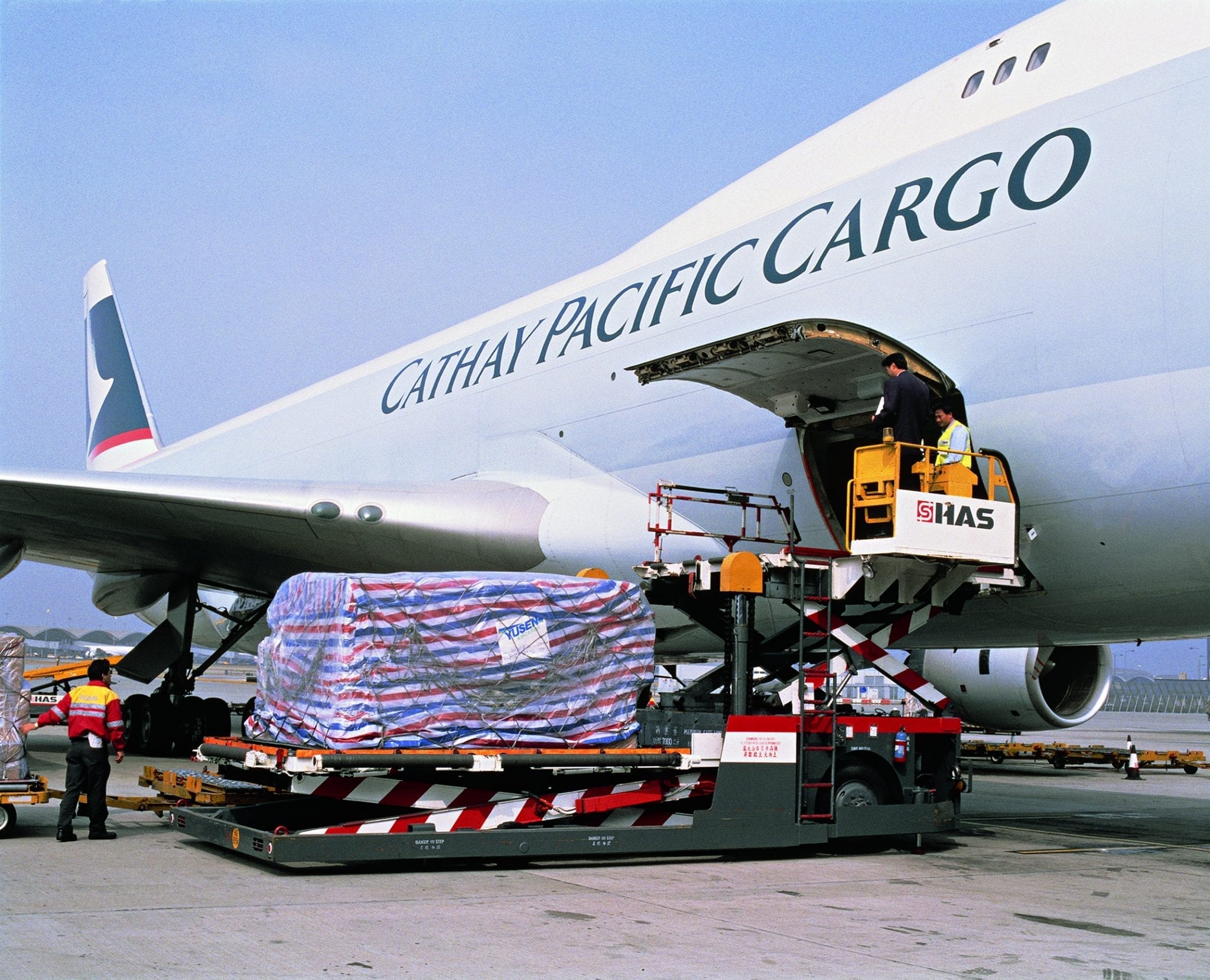
    Cathay released its 2024 Sustainability Report, reflecting steady progress in its sustainability journey and reaffirming its commitment to long-term sustainable development. As the Cathay Group moves into its next phase of growth, sustainability remains a key priority.

    Chief Executive Officer Ronald Lam said: Having successfully completed our two-year rebuilding journey, we have now set our sights on growth and development, where sustainability remains an area where we aspire to lead and is at the forefront of our path forward.

    Our environmental focus continues to be on climate change and a circular economy. As a pioneer and early adopter of sustainable aviation fuel (SAF), we continue to work towards fostering a local SAF ecosystem and expanding SAF usage globally, while acknowledging the challenges and opportunities ahead. We are also embracing the shift towards responsible use of resources by continuously reducing our reliance on single-use plastics (SUP) and exploring packaging alternatives. Beyond our environmental efforts, we remain committed to our deep roots in Hong Kong, enriching our communities through youth, sports, and arts initiatives while setting our sights on future growth by attracting, developing and retaining a strong pipeline of global talent.

    Key highlights from the 2024 report include:

    • Fostering a local SAF ecosystem with the Group’s record global SAF usage: Cathay launched a landmark tripartite SAF partnership with HSBC Hong Kong and EcoCeres, enabling SAF usage from Hong Kong International Airport while demonstrating the potential of fostering an SAF system in Hong Kong. It also co-initiated the Hong Kong Sustainable Aviation Fuel Coalition (HKSAFC), a multi-stakeholder group, to drive SAF policy development and adoption in Hong Kong. Globally, Cathay’s Corporate SAF Programme recorded a 22-fold increase in SAF usage compared to its launch in 2022.
    • Advancing a circular economy: Cathay Pacific reduced its passenger-facing SUP items to an average of 2.6 pieces and set two new secondary SUP targets for 2025: increasing inflight recycling of water bottles to 33% and ensuring at least 50% of the remaining passenger-facing SUP items are made with recycled plastics. Working towards its goals, Cathay Pacific introduced a first-of-its-kind workflow for recycling plastic bottles and cans at Hong Kong International Airport.
    • Nurturing the Hong Kong community: 2024 marked the 20th anniversary of Cathay’s flagship youth development programme, I Can Fly, with its return after a five-year hiatus, expanding the initiative to include an exchange tour in the wider Greater Bay Area.

    The full 2024 Sustainability Report detailing Cathay’s sustainability performance and commitments is available here.

  • Instagram is reportedly changing its mind about this long-ignored Apple device

    Instagram is reportedly changing its mind about this long-ignored Apple device

    Instagram is finally working on something users have been asking for since the early days — a proper app for the iPad. According to a new report from The Information, Meta has started developing a version of Instagram made specifically for tablets. That means, more than a decade after launching exclusively on iPhone, the social platform could soon be much more usable on Apple’s larger screens. Sound familiar? I thought I’d heard that before.

    This change of heart doesn’t seem to be random. The push to bring Instagram to iPad is reportedly tied to the ongoing uncertainty surrounding TikTok. With a possible ban of TikTok in the United States being debated in Congress, Meta sees a real opportunity to win over creators who may be looking for a new home. Offering better tools and support for creators is one of Instagram’s current priorities — and that includes making sure the app works well on more than just phones.

    Instagram has long resisted building an iPad-specific app. Back in 2020, Instagram head Adam Mosseri said the company had limited resources and too many other things to work on. In 2022, he added that there just wasn’t a big enough group of users demanding an iPad app to make it a priority. As a result, users have been stuck using the iPhone version of the app on their iPads, which looks awkward and doesn’t take advantage of the extra screen space.

    However, we have seen how quickly Meta can make features appear seemingly out of thin air, especially when it involves one-upping a competitor. Let’s not forget how quickly the Meta-owned app “Threads” gained a ton of new features once the company realized that competing app “Bluesky” began to rise in popularity and eating into their user base.

    There’s still no official confirmation or timeline for release, and details on what the app might look like are limited. But the fact that Instagram is even considering it now shows how much the competition has shifted. TikTok already has an iPad-optimized app, and YouTube’s Shorts platform runs well across all devices. Instagram risks falling behind if it doesn’t meet creators where they are — and many of them use iPads for editing, planning, and posting content.

    If this finally happens, it could unlock a lot of potential for iPad users. Instagram now has a chance to capitalize on an opportunity to gain more users, and the timing couldn’t be more critical. Maybe this is one thing we can agree to be thankful to TikTok for. Maybe.

  • Taiwanese bubble tea chain Gong Cha hits US$600m in global sales

    Taiwanese bubble tea chain Gong Cha hits US$600m in global sales

    Taiwanese bubble tea chain Gong Cha has reached US$600 million in global system sales for the 12 months ended December, driven by its rapid global expansion.

    Group revenue also rose 12 percent year-on-year to US$190 million as the brand expanded operations in Japan, South Korea, and the US.

    The company opened 240 new stores and entered five new markets: Saudi Arabia, Morocco, Mauritius, Honduras and Puerto Rico. Gong Cha now operates 2162 stores across 28 countries.

    “It’s been a fantastic year for Gong Cha,” said Paul Reynish, global CEO. “We’ve invested heavily in our supply chain and operations, expanded our footprint through new stores and geographies, and focused on making our existing stores more efficient and profitable for our franchisees.”

    The company recently introduced a new store format, Gong Cha 2.0, alongside a digital kitchen system that features ordering kiosks and automated drink machines.

    The brand also launched several marketing campaigns, including a high-profile collaboration with Final Fantasy XIV and limited-time drink offerings, resulting in more than 1.3 billion media impressions last year.

    “Looking ahead, we see huge potential for Gong Cha to become a global brand,” Reynish added.

    Founded in Taiwan in 2006, Gong Cha relocated its global headquarters to London in 2019. The company plans to enter at least six new markets this year and reach 10,000 stores globally by 2032.

  • Uniqlo parent expects profit lift ahead of tariff disruption

    Uniqlo parent expects profit lift ahead of tariff disruption

    The operator of Uniqlo, Japan’s Fast Retailing, is expected to post another quarter of strong earnings on Thursday, but the focus will be on how the global clothing chain navigates a trade environment thrown into disarray by new US tariffs.

    Based on the LSEG consensus forecast drawn from six analysts, Fast Retailing is expected to post a 14 percent rise in operating profit to US$866 million in the three months through February from a year earlier.

    That would be a record for the second quarter and a near doubling of the 7.4 per cent profit growth of the first quarter.

    From one store in Hiroshima, western Japan, 40 years ago, Uniqlo has grown to more than 2,500 locations across the world, selling inexpensive fleeces and cotton shirts made primarily in China and other Asian manufacturing hubs.

    But that business model has been upended by widespread tariffs announced by US President Donald Trump, along with retaliation by some of America’s trading partners.

    The company has recently looked to North America and Europe for growth due to a slowing economy in China, its largest overseas consumer market with more than 900 Uniqlo stores on the mainland.

    The tariffs will certainly be a negative for Fast Retailing, said independent analyst Mark Chadwick, but the measures will have the same impact on its retail peers and have a worse effect on other industries.

    “Textile supply chains are probably more flexible than, say auto supply chains,” said Chadwick, who writes on the Smartkarma platform. “In short, US tariffs will have a negative impact on Fast earnings looking out over the next 12 months, but less so than other global firms like Nintendo, Toyota.”

    Fast Retailing shares have fallen more than 4 percent this month as Trump laid out his tariffs plan. They are down 19 percent in 2025 after surging nearly 50 percent last year.

    Its founder Tadashi Yanai, Japan’s richest man, aims to make his company the world’s No. 1 clothing brand. Yanai, due to speak at Thursday’s earnings briefing, has long been an advocate of free trade and has defended the company’s business dealings in China when human rights concerns there have sprung up.

    Trump said Japan would be hit with a 24 percent reciprocal tariff on non-auto products, while duties on Chinese goods would rise to 104 percent.

    UBS analysts said that Uniqlo goods shipped to North America are procured from sources outside China, and Fast Retailing’s tariff costs would be an estimated $236,011 million next fiscal year, curbing business profit by about 6 per cent.

    “We will be watching closely whether a heightened price consciousness among consumers leads them to re-rate the balance between value and pricing at Uniqlo, potentially translating into business opportunities over the medium term,” UBS’s Takahiro Kazahaya wrote in a report this week.

    Fast Retailing expects operating profit to reach 530 billion yen in the fiscal year ending in August, which would be a fourth straight year of record earnings.

    Domestic sales have recently gotten a boost from a surge in duty-free shopping amid a tourism boom in Japan fuelled by a weak yen.

  • Cristiano Ronaldo to launch CR7 Life flagship store in Hong Kong

    Cristiano Ronaldo to launch CR7 Life flagship store in Hong Kong

    Football icon Cristiano Ronaldo is expanding his lifestyle brand globally with the debut of the CR7 Life flagship in Hong Kong.

    Located on the seventh floor of Times Square Mall, the outlet will showcase a curated range of products, including apparel, accessories, shoes, eyewear, fragrances, and homeware. Many of the featured items have been handpicked and signed by Ronaldo.

    A dedicated CR7 Life Museum will also open alongside the store, celebrating the football star’s career, achievements, and influence on global sports culture.

    The flagship will also feature a Portuguese cafe serving traditional Portuguese delicacies such as Pasteis de Nata (custard tarts), premium coffee, and artisanal pastries.

    “This is more than just a shopping destination. It’s a full-sensory, cultural encounter that brings together sport, style, and travel – positioning Hong Kong as Asia’s new home of football lifestyle,” said the company.

  • Singapore retail sales plunge in February

    Singapore retail sales plunge in February

    Singapore retail sales took a dive in February due to the difference in timing of the Chinese New Year.

    Excluding motor vehicles, retail sales fell 6.7 percent year-on-year in February, reversing the 5.1 percent increase in January. The estimated total value was SG$3.2 billion (US$2.3 billion), of which 14.6 percent were from online sales.

    The Department of Statistics said the decline was partly due to Chinese New Year being celebrated in February last year, as opposed to January this year.

    For the two-month period (January to February), retail sales were down 0.5 per cent.

    By industry, wearing apparel and footwear recorded the biggest sales decline of 18.4 percent, mainly due to lower sales of wearing apparel. Department stores and supermarkets and hypermarkets saw a 14.6 percent and 13.3 percent decrease, respectively.

    In contrast, retailers of optical goods and books recorded sales growth of 6.4 percent. The cosmetics, toiletries and medical goods, watches and jewellery, and computer and telecommunications equipment industries also reported modest improvements.

    Sales of food & beverage services fell 5.6 percent in February, compared to the 10.3 percent growth in January. This was also due to the difference in the timing of Chinese New Year.

  • J Lindeberg opens five-story flagship in Seoul’s Gangnam district

    J Lindeberg opens five-story flagship in Seoul’s Gangnam district

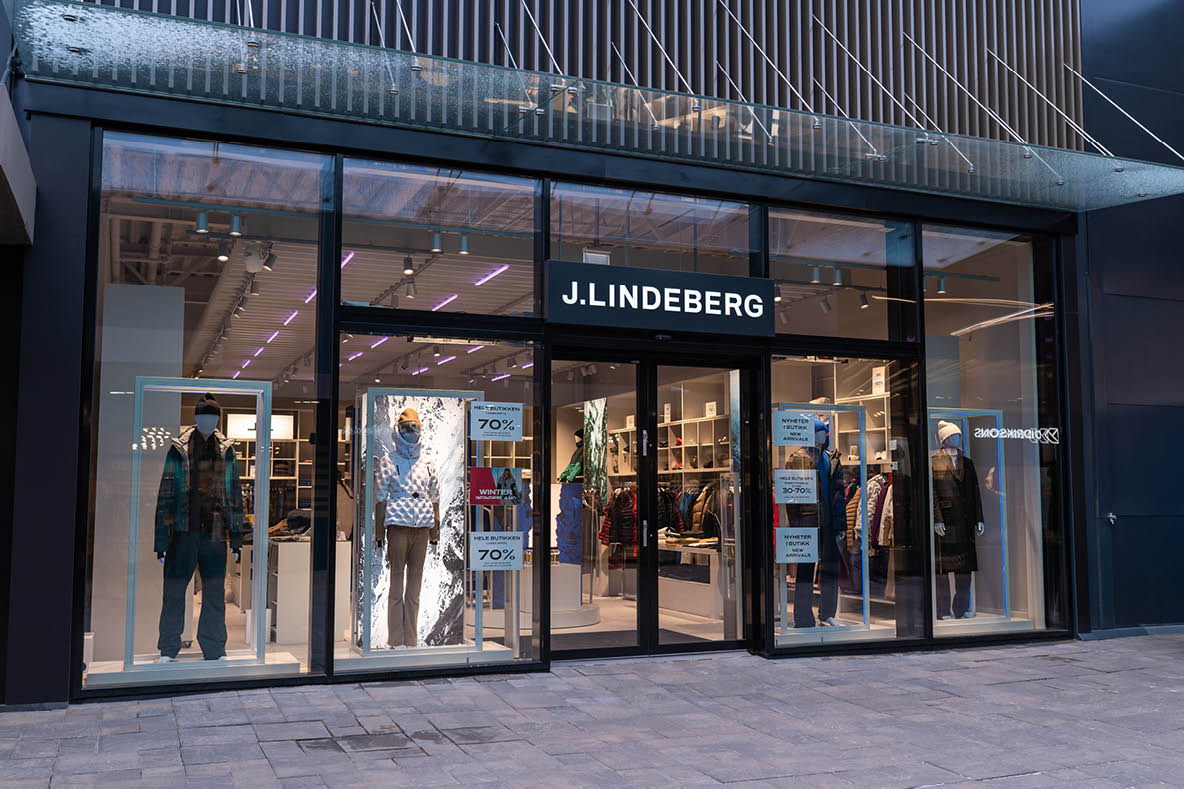
    In Seoul’s trendy Gangnam district, Swedish apparel label J Lindeberg has opened its largest store yet, a five-storey flagship.

    The concept store is inspired by the rhythm of golf and each floor showcases the company’s apparel as if navigating a golf course.

    The store was designed in collaboration with interior creatives, Showmakers, to celebrate movement, performance, and modern luxury through its furniture, themed zones and hangout spaces.

    The store offers different services on each floor,