Blog

  • Zara to open first cafe in South Korea

    Zara to open first cafe in South Korea

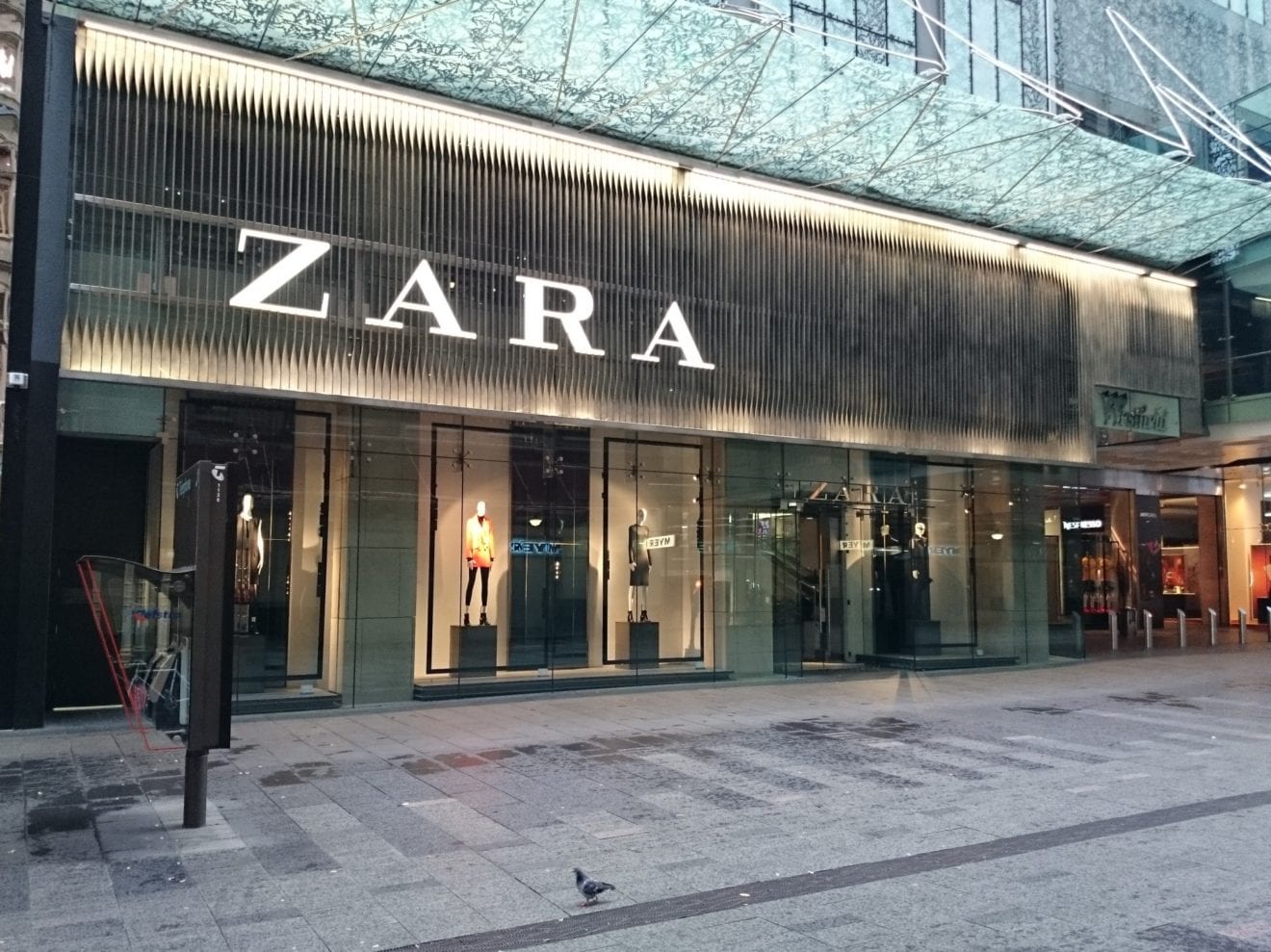
    Zara, the Spanish fashion giant, is set to open its first Zacaffe location in South Korea this May, launching inside the brand’s newly renovated flagship store in Myeong-dong, Seoul.

    The move reflects a growing trend among global fashion brands incorporating cafes into their retail spaces, offering customers a more immersive brand experience.Zara introduced Zacaffe in Madrid in November 2024, integrating a cafe space within select stores to serve coffee, desserts, and branded merchandise, including tumblers, hats, eco-bags, and t-shirts. Following its China debut in Nanjing this month, the Seoul location will be its third global outpost, with an Osaka store also in the pipeline.

    “Myeong-dong is a prime shopping and fashion district, attracting both locals and tourists, making it the perfect location for a flagship Zara store and our cafe experience,” a Zara representative said.

    Zara also plans to introduce Korean-inspired desserts and a cafe design that reflects local aesthetics, aiming to attract both domestic customers and international visitors. The company is considering further expansion within South Korea.Zara is not alone in blending retail and café culture. Luxury fashion brands have increasingly adopted coffeehouse ventures to strengthen their brand presence and enhance customer engagement.

    Ralph Lauren introduced Ralph’s Coffee to South Korea in September 2024, opening a cafe in Seoul’s Garosu-gil district, a decade after launching the brand in New York in 2014. The cafe, featuring classic green-and-white interiors and American-style menu offerings, has drawn long queues, even on weekdays. Ralph’s Coffee also opened a popular pop-up store at The Hyundai Seoul last month.
    Maison Kitsune, the Parisian-Japanese brand under Samsung C&T fashion division, launched cafe Kitsune in Seoul’s Garosu-gil in 2018. The brand has since expanded to Hyundai Department Store’s Mokdong and Pangyo locations, as well as Shinsegae’s Centum City branch, where the cafe welcomes over 400 customer groups daily on weekends.

    Gelato Pique, a Japanese homewear brand, entered the cafe scene in September 2024 by opening Pique cafe in Hannam-dong, Seoul. The cafe offers specialty crepes and gelato, aligning with the brand’s “comfortable luxury” ethos and attracting foot traffic to the store.The trend underscores a strategic shift in the fashion industry. With the rise of e-commerce reducing in-store foot traffic, brands are reinventing retail spaces as lifestyle destinations.

    “Online shopping has made it harder for brands to showcase their identity in physical stores,” a fashion industry insider noted. “By launching cafés and selling branded merchandise, fashion labels create a more tangible, memorable experience for customers.”

    As more brands adopt cafe-driven retail strategies, the industry’s shift toward experiential shopping is expected to accelerate, blurring the lines between fashion, lifestyle, and hospitality.

  • Asia’s most prestigious university launches exchange program for Vietnamese students

    Asia’s most prestigious university launches exchange program for Vietnamese students

    For the first time ever, students at the Vietnam National University in Hanoi can apply for an exchange semester at China’s Tsinghua University, the nation’s top university and the most prestigious in Asia, for free.

    According to an announcement by Vietnam National University in Hanoi, starting this year, students from their second year onward at Vietnam National University-Hanoi with strong academic achievements and proficient foreign language skills, either an IELTS score of 7.0 for English or at least an HSK 5 level for Chinese, can apply for a tuition-free semester at Tsinghua.

    Applications for the fall semester (September 2025–January 2026) must be submitted by April 30, while applications for the spring semester (February–June 2026) are due by Nov. 30.

    Selected students will receive free tuition for the duration of their exchange at Tsinghua, but will be responsible for their own living expenses, insurance and visa fees.

    This program is part of a broader cooperation agreement signed between VNU and Tsinghua University on March 2. Similar agreements were also made with Vietnam National University in Ho Chi Minh City and Vietnam’s National Economics University.

    Tsinghua University has been recognized as the most prestigious institution in Asia by Times Higher Education. In the THE World Reputation Rankings 2025, it ranks eighth globally, surpassing both Yale University and the University of Tokyo.

    In THE World University Rankings 2025, it stands at number 12, the highest position of Chinese universities, followed by Peking University, another top-tier institution in the country.

    Tsinghua currently maintains exchange agreements with about 200 universities worldwide.

  • PepsiCo to acquire Poppi for US$1.95 billion

    PepsiCo to acquire Poppi for US$1.95 billion

    PepsiCo has signed a definitive agreement to acquire probiotic soda brand Poppi for US$1.95 billion.

    The transaction amount includes $300 million of anticipated cash tax benefits for a net purchase price of $1.65 billion.

    “We’ve been evolving our food and beverage portfolio over many years, including by innovating with our brands in new spaces and through disciplined, strategic acquisitions that enable us to offer more positive choices to our consumers,” said Ramon Laguarta, PepsiCo chairman and CEO.

    “More than ever, consumers are looking for convenient and great-tasting options that fit their lifestyles and respond to their growing interest in health and wellness. Poppi is a great complement to our portfolio transformation efforts to meet these needs.”

    The agreement also includes a further potential earnout consideration subject to reaching certain performance milestones within a specified period after the transaction’s closing.

    Poppi, which combines apple cider vinegar with natural fruit flavours and probiotics, gained attention after appearing on the reality TV show Shark Tank in 2018.

  • China retail sales improve as Beijing looks to consumers to ease trade pressure

    China retail sales improve as Beijing looks to consumers to ease trade pressure

    China’s retail sales growth quickened in January-February in a welcome sign for policymakers’ efforts to boost domestic consumption even as joblessness rose and factory output eased, underscoring the strains on an economy facing fresh US tariff pressure.

    Policymakers have put expanding domestic demand as the top priority this year as they try to cushion the impact of the Trump administration’s tariffs on its crucial export engine.

    China’s top leaders have maintained an economic growth target of “around 5 per cent” for 2025, but analysts say that may be a tall order given pressure on exports, tepid household demand and a protracted property crisis.

    The data followed weaker-than-expected exports and inflation indicators earlier this month, highlighting the need for more policy support to foster a sustainable economic recovery.

    “The risk to the economy is the damage from higher US tariffs on China’s exports which will likely show up in the trade data over the next few months,” said Zhiwei Zhang, chief economist at Pinpoint Asset Management.

    “I think Beijing will continue its current policy stance. There is no urgency to loosen monetary policy by cutting RRR or interest rate at this stage,” he said, adding that policymakers may choose to wait for a few months before cutting rates given the trade uncertainties.

    Data released by the National Bureau of Statistics (NBS) on Monday showed retail sales, a gauge of consumption, rose 4 per cent in the January-February period, better than a 3.7 per cent rise in December and marking the quickest rate since November 2024. Analysts had expected retail sales to grow 4 per cent.

    Household consumption in the first two months was buoyed by holiday spending during the 8-day Lunar New Year holidays, when China’s box office raked in record takings with animated hit “Nezha 2”.

    In the annual parliament meeting earlier this month, China’s leaders pledged stronger fiscal and monetary support for the economy, with a particular emphasis on spurring domestic consumption.

    Among other measures, they have lined up 300 billion yuan (US$41.5 billion) for a recently-expanded consumer goods trade-in scheme for electric vehicles, appliances and other goods.

    “Retail sales growth was decent, reflecting the vital role of subsidies in supporting home appliance and mobile phone sales,” said Tianchen Xu, senior economist at the Economist Intelligence Unit.

    However, the effect of the scheme may “fade over time”, with auto sales already down in the first two months, he added.

    The NBS data showed home appliance and audio-visual device sales grew 10.9 per cent, compared with December’s 39.3 per cent jump. Catering revenue, however, rose 4.3 per cent underpinned by the festival boost, faster than the 2.7 per cent rise in December.

    On Sunday, China unveiled a “special action plan” to boost domestic consumption, featuring measures including increasing residents’ income and establishing a childcare subsidy scheme.

    Officials from the country’s top economic ministries will brief media on consumption-boosting measures later on Monday.

    Chinese stocks were roughly flat as investors assessed the mixed set of economic data.

    Unemployment, Trump woes

    Highlighting the stress facing households, the urban survey-based jobless rate in February climbed to 5.4 per cent, the highest in two years.

    US president Donald Trump has piled an additional 20 per cent of tariffs on all Chinese goods and is threatening more action. Exports were one of the lone bright spots for China’s economy last year.

    With factories shutting down temporarily during the Lunar New Year holidays, China’s industrial output grew 5.9 per cent year-on-year in the first two months, slowing from the 6.2 per cent expansion in December. However, it was ahead of expectations for a 5.3 per cent rise.

    China publishes data for the two months in a combined release to smooth out the impact of the LNY holidays, which fall in either of the two months.

    Fixed asset investment, which includes property and infrastructure investment, expanded 4.1 per cent in the January-February period year-on-year, versus expectations for a 3.6 per cent rise. It grew 3.2 per cent in 2024.

    The real estate sector, while showing some improvement, remained frail and underlined the low investor confidence.

    Property investment fell 9.8 per cent in the first two months of 2025 year-on-year, after tumbling 10.6 per cent in 2024. An NBS spokesperson said the country’s housing market faces some pressure despite signs of stabilising.

    That suggests policymakers will have their work cut out in their efforts to keep the economy on an even keel amid the threat of more US tariffs.

    In a note to clients, Goldman Sachs analysts said the boost from exporters’ frontloading late last year may have subsided and the adverse effect from higher US tariffs may have started to kick in.

    “January-February activity data and our high-frequency tracker for early March pointed to a modest slowdown in sequential GDP growth momentum in the first quarter vs the fourth quarter in 2024.”

    For 2025 as a whole, some analysts say the growth impulse could be uneven.

    “China’s economy had a decent start to the year, likely driven by fiscal stimulus,” said Zichun Huang, China economist at Capital Economics.

    “We expect the recovery to continue over the coming months, but given the wider headwinds weighing on China’s economy, we don’t expect any near-term improvement to be sustained for long.”

  • Ugg launches footwear collection with NewJeans’ Hanni

    Ugg launches footwear collection with NewJeans’ Hanni

    California-based lifestyle brand Ugg has launched a sandal collection, GoldenRise, in partnership with K-pop girl group NewJeans’ member, Hanni.

    The GoldenRise has a customizable strap that can be worn three ways: as a slide, slingback, or wrap sandal. According to the brand, the collection has 100 per cent recycled polyester straps that adjust over the top of the foot, and the back strap may be wrapped around the ankle, switched for a shorter slingback, or removed completely to create a slide.

    “Rooted in joy, renewal, vibrancy, and warmth, Ugg and Hanni explore the magnetic, effortless feeling that is ‘Big Spring Energy,’” the brand said in a statement.

    The GoldenRise sandal, which Hanni wears in the global Spring/Summer 2025 campaign, is available on Ugg’s website, at Ugg stores, and at select wholesale retailers nationwide.

    Ugg employed leftover leathers and suedes in a new footwear line last year in reaction to the previous seasons’ overstock.

  • Chagee faces boycott ahead of Vietnam opening

    Chagee faces boycott ahead of Vietnam opening

    Chinese milk tea brand Chagee is facing criticism for apparently adopting the ‘nine-dash line’ in its digital app while it prepares to launch in Vietnam.

    According to local reports, Vietnamese customers are calling for a boycott of Chagee after learning that the company used a map with the controversial nine-dash line.

    In a photo recently circulated on Vietnamese social media, an account using a Chagee logo as its image responded impolitely to a customer’s statement that they wanted to boycott the company over the line’s adoption, saying: “Chagee does not lack friends as customers”. We cannot ascertain if the responses are genuine or not but has been advised that multiple accounts are pretending to be Chagee to stir controversy and debate.

    Chagee has not officially responded to the incident yet.

    The “nine-dash line” or “U-shaped line” is a boundary line drawn by China on a map to illustrate its sovereignty claim over the majority of the East Sea, considered by Vietnam as a grave violation of its territorial sovereignty.

    The issue seems to cause significant damage to Chagee’s image and reputation. Le Minh Vu, managing partner at FnB Academy, told Vietnamese newspaper Tuoi Tre (Youth) that “Chagee should withdraw from the Vietnamese market due to issues unrelated to products or services – things that can be fixed and corrected”.

    Chagee was founded in 2017 in Shanghai, China, and has since expanded rapidly throughout Southeast Asia, with more than 5000 locations.

    The brand intends to open its first store in Vietnam, with a prime position in Ho Chi Minh City’s CBD in District 1.

  • Hermes opens new Indonesia store

    Hermes opens new Indonesia store

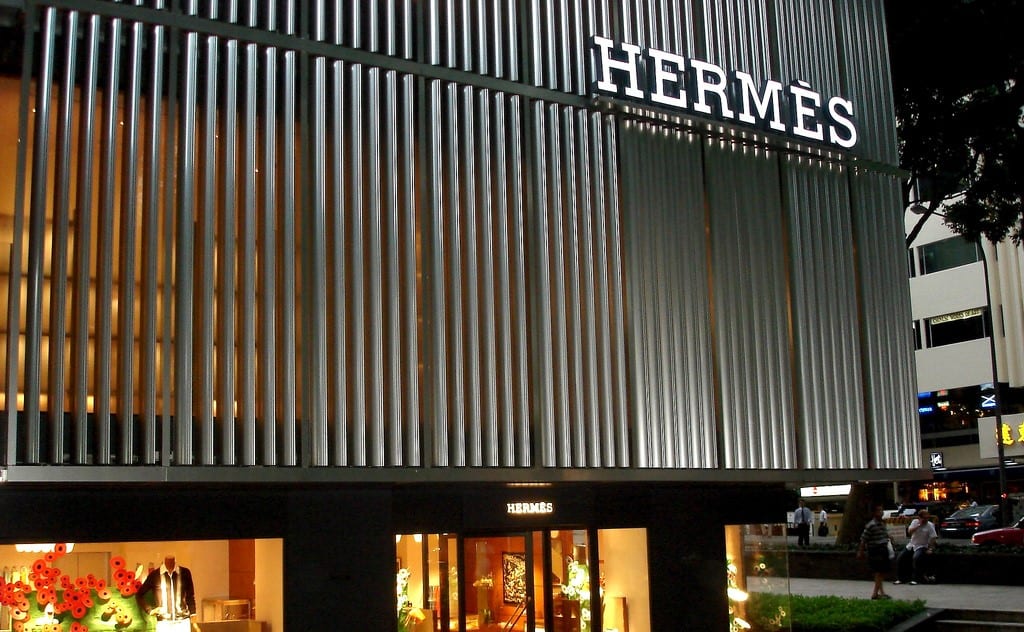
    Hermes has opened a new store in Jakarta, Indonesia, located in Plaza Indonesia.

    Designed by Paris-based RDAI, the space showcases the French luxury house’s 16 metiers (artisinal expertise) in a setting that blends traditional craftsmanship with contemporary design.

    The store’s facade features teal-green ceramic tiles and semi-sheer rattan screens, offering glimpses into the interior. Inside, the layout is arranged by category, with fashion jewellery, silks, home collections, beauty, and fragrance near the entrance.

    Leather goods and equestrian collections are framed by fabric-covered panels, while dedicated areas present ready-to-wear and footwear. A jewellery and watch salon, adorned with hand-carved lacquered panels, adds a “refined touch”, while hand-tufted carpets introduce texture throughout the space.

    The store also incorporates locally sourced materials, including hand-woven wall fabrics and wooden furniture. Curated artworks from the Emile Hermes collection and contemporary photography further enhance the interior.

    In collaboration with Indonesian art collective Tromarama, the window displays merge the label’s equestrian heritage with Jakarta’s rail network, offering a unique artistic interpretation.

    “We invite visitors to explore our collections in a space that reflects Indonesia’s cultural and artistic heritage,” said Hermes.

  • Your Apple Wallet is about to get much better

    Your Apple Wallet is about to get much better

    As we await the stable release of iOS 18.4 in April, the beta versions are already giving us a solid preview of what’s coming. The latest beta release reveals a useful new feature for tracking your spending that is set to land in Apple Wallet.

    In the first iOS 18.4 beta, the Wallet app introduced a menu labeled “Subscriptions & Payments.” Now, with the latest update, it has been rebranded to “Preauthorized Payments,” and as you might guess, this change shifts the focus more toward payments that have been authorized in advance.

    This section in Wallet will now display merchants that you have given the go-ahead to charge your Apple Pay for things like subscriptions, automatic top-ups and regular bills. So, if you use Apple Pay for things like adding money to your transit card or paying for your gym membership, those transactions should show up here.

    Apple seems to have recognized that calling this section “subscriptions” could be a bit misleading, so the new name – preauthorized payments – makes it clearer. However, while the name change is helpful, it doesn’t change the fact that you are still managing recurring payments across different sections rather than having them all in one place.

    Right now, if you want to check your subscriptions, you can do it through the App Store or your iPhone’s Settings, which is a bit faster and easier. Just tap the Apple Account section at the top with your profile picture and you will find the Subscriptions section there.

    Whether you go through the App Store or Settings, the Subscriptions page looks the same. It shows all your active subscriptions and when they are set to renew.

    While this works, I think the new addition to Wallet is a nice step forward in making it easier to track your recurring payments. It gives you a better view of your spending, which has been a key focus of the Wallet app lately.

    Still, I think Apple could make it even easier by bringing everything under one roof. Imagine being able to see exactly how much you are spending each month – whether it is for Apple TV shows, Netflix, or any other subscriptions – all in one place. It would save a lot of time and make managing your money that much simpler.

  • Starbucks ordered to pay $50M to customer burned by hot beverage

    Starbucks ordered to pay $50M to customer burned by hot beverage

    A delivery driver has won $50 million in a lawsuit after being seriously burned when a Starbucks drink spilled in his lap at a California drive-through, court records show.

    A Los Angeles County jury found Friday for Michael Garcia, who underwent skin grafts and other procedures on his genitals after a venti-sized tea drink spilled instants after he collected it on Feb. 8, 2020. He has suffered permanent and life-changing disfigurement, according to his attorneys.

    Garcia’s negligence lawsuit blamed his injuries on Starbucks, saying that an employee did not wedge the scalding-hot tea firmly enough into a takeout tray.

    “This jury verdict is a critical step in holding Starbucks accountable for flagrant disregard for customer safety and failure to accept responsibility,” one of Garcia’s attorneys, Nick Rowley, said in a statement.

    Starbucks said it sympathized with Garcia but planned to appeal.

    “We disagree with the jury’s decision that we were at fault for this incident and believe the damages awarded to be excessive,” the Seattle-based coffee giant said in a statement, adding that it was “committed to the highest safety standards” in handling hot drinks.

    U.S. eateries have faced lawsuits before over customer burns.

    In one famous 1990s case, a New Mexico jury awarded a woman nearly $3 million in damages for burns she suffered while trying to pry the lid off a cup of coffee at a McDonald’s drive-through. A judge later reduced the award, and the case ultimately was settled for an undisclosed sum under $600,000.

    Juries have sided with restaurants at times, as in another 1990s case involving a child who tipped a cup of McDonald’s coffee onto himself in Iowa.

  • WestJet Cargo sells Virgin Atlantic’s cargo capacity from Toronto–London and beyond

    WestJet Cargo sells Virgin Atlantic’s cargo capacity from Toronto–London and beyond

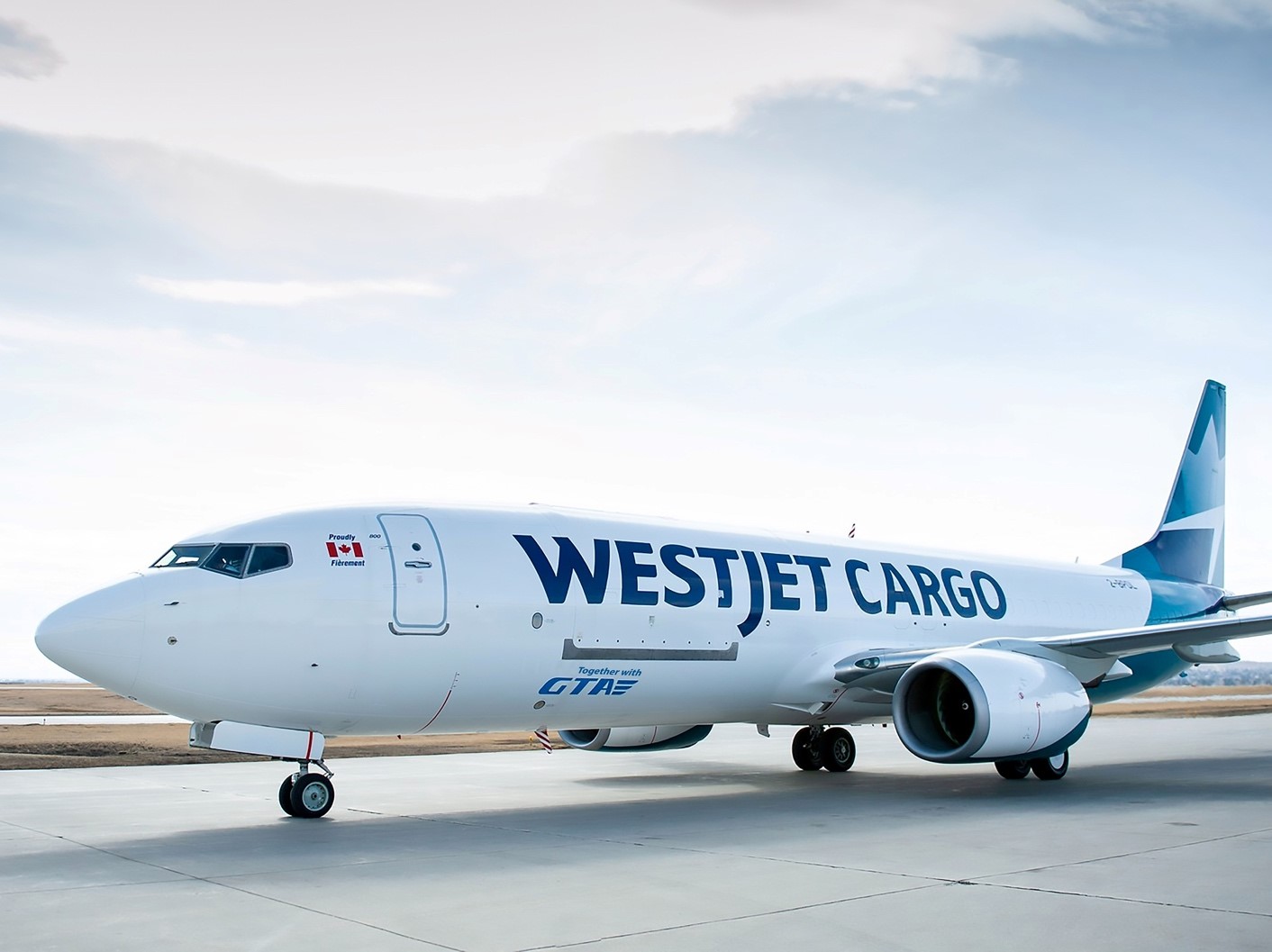
    WestJet Cargo proudly announces a Block Space Agreement (BSA) with Virgin Atlantic from Toronto (YYZ) to London (LHR) and beyond starting the 31st March.

    This marks a commercial year-round collaboration that will significantly boost cargo capacity between the East Coast of Canada to London and beyond on Virgin Atlantic network. This commercial partnership strengthens trade links between Canada and key destinations across Europe, Africa, the Middle East, and Asia, as Virgin Atlantic serves numerous strategic cities from London Heathrow, including DEL, BOM, BLR, JNB, CPT, DXB, RUH, LOS. In addition, it signifies the airline’s return to the Canadian cargo market after more than two decades, leveraging WestJet Cargo’s proven expertise to manage and sell this key route.

    Starting at the end of March, WestJet Cargo will sell cargo capacity on Virgin Atlantic’s wide-body flights from Toronto to London offering up to 20Tonnes of capacity per day. The commercial partnership will provide customers with reliable access to both WestJet Cargo’s and Virgin Atlantic Cargo’s full suite of services — areas in which both carriers have established a strong track record. All shipments from Toronto will be moved under a WestJet Cargo Air Waybill (AWB) starting 838.

    “Virgin Atlantic’s decision to entrust WestJet Cargo with managing this crucial route is a testament to our deep understanding of the Canadian market and our operational excellence. It’s a natural synergy with the same ground handling in both Toronto Pearson International and London Heathrow. We have a super team based in Toronto who are eager to make this commercial partnership a success for both carriers. Our specialized expertise in handling high-value commodities such as pharmaceuticals and valuables ensures that customers receive reliable, top-tier service, all while providing seamless access to Virgin Atlantic’s London service, and beyond” said Kirsten, Executive Vice President of WestJet Cargo.

    “We’re thrilled to further enhance our commercial partnership with WestJet, leveraging their longstanding cargo expertise in the Canadian marketplace. This collaboration will ensure our customers across the region will have seamless access and added capacity throughout Virgin Atlantic’s global network,” said Nick Diesel, Managing Director, Virgin Atlantic Cargo. “Canada is an important market for us, and this partnership enables us to provide cargo solutions that support trade and business growth between Toronto, London and beyond.”

    Virgin Atlantic chose WestJet Cargo for this pivotal commercial partnership due to the carrier’s strong market presence, robust operational capabilities, and specialized handling proficiency. This partnership represents a renewed commitment by Virgin Atlantic to the Canadian cargo market, connecting inbound cargo via its state-of-the-art cargo facility at London Heathrow, and signals a new era of strategic growth and innovation for WestJet Cargo.

    With this scalable commercial partnership model, WestJet Cargo is further establishing its role as a key player in the international cargo industry.

  • GoTo posts first full-year underlying profit

    GoTo posts first full-year underlying profit

    Indonesia’s biggest tech firm PT GoTo Gojek Tokopedia forecast a sharp increase in its underlying earnings for 2025 on Wednesday, and also posted its first ever full-year underlying profit.

    GoTo, which offers ride hailing, food deliveries, logistics and financial services, also forecast a surge in its core earnings, or adjusted EBITDA, the company’s key measure of profitability.

    “We saw a significant increase in our user numbers throughout the year and expect this to continue into 2025,” said Patrick Walujo, GoTo Group CEO.

    The tech firm now expects its adjusted EBITDA for 2025 to be in the range of 1.4 trillion rupiah (US$85.16 million) to 1.6 trillion rupiah.

    It’s a significant increase from GoTo’s underlying profit of 327 billion rupiah for 2024, swinging from a loss of 3.670 trillion rupiah last year.

    The firm’s financial technology segment, whose earnings jumped 70 per cent last year, is expected to expand further in 2025 as the user base for its GoPay app and its loan book grows, the company said.

    GoTo, which is backed by Japan’s SoftBank Group and Singapore’s sovereign wealth fund GIC, had reportedly been involved in merger talks with Southeast Asian ride-hailing and food delivery company Grab.

    But GoTo said in a filing last month it had not engaged in talks regarding a potential merger with any party, noting media reports involving Grab.

    In an interview with the Financial Times, GoTo CEO Walujo expressed openness to a potential deal.

    “I will always be open to anything that is enhancing our shareholders’ return . . . in the long term,” Walujo said.

  • Puma plans job cuts as US demand weakens, outlook dims

    Puma plans job cuts as US demand weakens, outlook dims

    Puma on Wednesday announced job cuts and warned of uncertain US consumer demand. The German sportswear group’s shares slumped 23 percent in the wake of disappointing quarterly and annual forecasts issued a day earlier.

    The grim outlook, which follows weak quarterly sales and annual profit announced in January, has raised concerns over Puma’s ability to compete with bigger rivals Adidas and Nike while fending off newer, fast-growing brands such as On Running and Hoka.

    Chief executive Arne Freundt said Puma’s target consumers in the United States were not spending due to economic uncertainty.

    “February was bad. March has started off a bit better,” he said at a press conference.

    Chief financial officer Markus Neubrand announced plans to cut 500 jobs worldwide and close some unprofitable stores as part of a cost-cutting plan.

    When asked about the potential impact of US import tariffs, Puma’s management confirmed that Chinese production made up about 10 percent of shoe imports into the United States, down from 30 percent in the past.

    The company was urging suppliers to diversify production away from China to countries including Indonesia, they said.

    Late on Tuesday, Puma forecast currency-adjusted sales for the current quarter to grow in a low single-digit percentage, below last year’s level, with “significantly” lower operating earnings for the same period.

    It said its annual currency-adjusted sales would grow in a low– to mid-single-digit percentage rate, compared with 4.4 per cent growth to 8.82 billion euros (US$9.62 billion) in 2024.

    It had previously expected 2025 growth to be stronger than in 2024.

    The group forecast adjusted earnings before interest and taxes (EBIT) of $566.5 million to $653.7 million euros for 2025, before a one-time charge of up to 75 million related to its cost-cutting programme.

    “While expectations have lowered recently, we still think this guidance is below the most conservative estimates and raises more questions,” Barclays analysts wrote in a note to investors.

    Puma shares slumped 23 percent to $23.86 at 1246 GMT, a level not seen since November 2016.

    Puma’s larger peer Adidas, meanwhile, recorded a solid performance in 2024 and adopted a cautious stance for 2025.

    “The stark contrast in regional performance and sell-through versus Adidas, in our view, underscores the importance of brand momentum in driving demand, but also orchestrating operational leverage amid a volatile retail environment,” said Felix Dennl, an analyst at Metzler in Frankfurt.

    Sales of popular retro shoe models helped boost sales of brands including Puma and Adidas last year.

    Puma said it still aims to sell 4 million to 6 million pairs of its relaunched motor racing-inspired “Speedcat” sneaker, though Freundt said an expected uptick in sales was taking longer than expected to materialise.

  • Indonesia to convert waste into fuel, power in 30 big cities

    Indonesia to convert waste into fuel, power in 30 big cities

    Indonesian Deputy Minister of Energy and Mineral Resources Yuliot Tanjung said that the government is targeting to process waste into fuel and electricity in 30 big cities by 2029.

    He added that each city can produce around 20 megawatts of electricity. The products obtained from waste processing will not be limited to electricity but also include fuel oil, which will be produced using pyrolysis technology.

    According to the official, waste can be converted into electricity and fuel oil through integrated waste processing with the help of technology.

    Earlier, the Ministry of Environment informed that the acceleration of waste utilization into energy is expected to support waste management efforts in regions, supported by new regulations regarding electrification.

    The government is unifying three presidential regulations related to waste management to support the utilization of waste to produce electrical energy through waste power plants.

  • China’s Strategic 5G Pricing Stimulates Economic Expansion

    China’s Strategic 5G Pricing Stimulates Economic Expansion

    China’s rapid deployment and adoption of 5G technology have positioned it as a global leader in the telecommunications sector. Central to this success is the country’s strategic approach to 5G pricing, which has facilitated widespread consumer uptake and stimulated economic growth.

    In 2019, China’s major telecommunications operators—China Mobile, China Telecom, and China Unicom—officially launched 5G services to the public. These operators introduced competitively priced data packages to encourage early adoption.

    At launch, China Mobile had already attracted 3.8 million 5G users, accounting for 69% of China’s 5G market. The company set an ambitious target of reaching 100 million 5G users by the end of 2020, a bold move considering that it had only recorded 21.5 million net additions in the first 11 months of 2019 and 37.9 million for the whole of 2018.

    To achieve this goal, China Mobile introduced a nationwide strategy focused on affordability, rapid network expansion, and device availability. It also planned to transition to 5G Standalone (5G SA) by the fourth quarter of 2020, ensuring a fully optimized and independent 5G network.

    China Mobile’s initial 5G plans ranged from RMB 128 (USD 18) to RMB 598 (USD 86) per month, offering a tiered structure based on data and voice usage. These prices were designed to make 5G accessible to both casual and heavy users. By maintaining relatively low entry-level pricing compared to Western markets, China Mobile accelerated 5G adoption among consumers.

    The Ministry of Industry and Information Technology’s (MIIT) research arm, the China Academy of Information and Communications Technology (CAICT), reported that 13.77 million 5G phones were sold in the last two months of 2019, with 35 different models available. While the majority of China’s mobile shipments in 2019 were 4G devices (389 million units), the rapid price decline and increased availability of 5G phones helped accelerate consumer adoption.

    At the end of the year, the company had deployed 50,000 base stations across 50 cities, laying the foundation for nationwide 5G coverage.

    While China Mobile pursued aggressive pricing to attract mass adoption, China Telecom strategically positioned itself with a pricing model that balanced affordability with premium offerings tailored to high-speed connectivity applications, such as its groundbreaking 5G-powered Shanghai Maglev train network.

    China Telecom introduced its 5G plans with a tiered pricing strategy, ensuring a variety of options for consumers. The operator’s base plan started at an affordable rate, making it accessible to a wide range of users, while premium packages offered higher data limits and additional features. This approach was designed to cater to both budget-conscious customers and high-data users who required uninterrupted connectivity, such as business professionals and gamers.

    In comparison to China Mobile, which offered 5G plans starting at RMB 128 (USD 18) for 30 GB, China Telecom’s pricing focused on flexible packages and bundled services. While China Mobile aimed to rapidly increase its subscriber base through low-cost plans, China Telecom leveraged its 5G infrastructure investments, such as its high-speed rail network coverage, to justify competitive yet value-driven pricing.

    In partnership with ZTE, China Telecom successfully deployed the world’s first commercial 5G maglev train network in Shanghai, enabling seamless connectivity at speeds of up to 500 km/h. This innovation highlighted the carrier’s ability to offer premium 5G services beyond conventional mobile plans, targeting industries and high-end users willing to pay for cutting-edge connectivity solutions; thus, contributing to China’s broader gross domestic product (GDP).

    China Unicom officially introduced its 5G services in 2019, setting a minimum price of RMB 190 (USD 26) per month for its 5G data packages. As one of China’s three major telecom operators, China Unicom came up with a strategic pricing model that balanced affordability with profitability, ensuring a smooth transition from 4G to 5G.

    Unlike China Mobile, which was expected to introduce lower-cost 5G plans, China Unicom initially set higher price points for its 5G services. This pricing strategy aimed to offset the high costs of early 5G infrastructure deployment, encourage gradual adoption rather than overwhelming the network with an immediate surge of users, and maintain quality service for early adopters by preventing excessive congestion.

    The company justified its pricing by highlighting that its 5G plans were still the cheapest in the world. Compared to South Korea’s minimum 5G package of RMB 325 (USD 44) per month and AT&T’s USD 70 per month for 15 GB of data in the US, China Unicom’s offering was over 40% cheaper than South Korea’s and 60% lower than the US’s lowest 5G plan.

    Despite China Unicom’s competitive global pricing, the RMB 190 (USD 26) starting price sparked controversy online, as many consumers found the cost too high. However, telecom industry analysts pointed out that premium pricing during the early phase of 5G adoption was a standard strategy. To address affordability concerns, China Unicom announced plans to introduce lower-cost 5G packages over time, adjusting its pricing based on user demand and network expansion. The company emphasized its long-term goal of making 5G accessible to a wider audience while maintaining service quality.

    While its initial pricing catered to high-end users and businesses, the company made it clear that more flexible and affordable packages would be introduced as 5G adoption increased.

    This strategy allowed China Unicom to remain financially sustainable while gradually transitioning users from 4G to 5G, ensuring a stable and high-quality network experience for China’s first wave of 5G subscribers, while simultaneously supporting the enterprises contributing to China’s GDP.

    According to data released by the Ministry of Industry and Information Technology (MIIT), by the end of November 2024, China’s 5G mobile phone subscriptions surpassed 1 billion, marking a significant milestone in the country’s rapid adoption of next-generation connectivity. This figure represents 56% of all mobile lines in China, reflecting a 9.4 percentage point (PP) increase compared to the previous year.

    According to the GSMA’s Mobile Economy China 2024 report, China is expected to reach a 5G adoption rate of 90% by 2030, positioning it as a global leader in mobile connectivity. The report projects that 5G connections will rise to 1.6 billion by 2030, contributing USD 260 billion to the country’s GDP.

    Within three years of 5G development, the average monthly data usage per mobile user in China nearly doubled from 7.8 GB to 14.9 GB. This surge has supported applications such as remote work, online education, digital life, scientific research, and epidemic prevention and control, highlighting 5G’s role in enhancing digital services.

    Beyond this, the widespread adoption of 5G has revolutionized consumer services, particularly in e-commerce and mobile internet usage. With over 1.1 billion internet users as of 2024, accounting for approximately 78.6% of the population, China leads the global e-commerce market. The rapid growth of 5G networks has further accelerated online retail and digital services, contributing to economic growth.

    Since the issuance of 5G commercial licenses, China’s 5G commercialization has directly generated approximately CNY 5.6 trillion (around USD 787.53 billion) in economic output over the past five years. Additionally, it has indirectly contributed to CNY 14 trillion in economic output, underscoring 5G’s substantial role in the country’s development.

    According to Zhang Yunming, Vice-Minister of Industry and Information Technology, China has entered a crucial period of 5G commercialization, with wireless technology being applied to 40 of the 97 major economic categories. He emphasized that large-scale applications have already expanded into mines and ports.

    A Framework for the Future

    An extensive infrastructure network has supported China’s progress in 5G deployment. As of November 2024, the country had installed approximately 4.2 million 5G base stations, which account for over 60% of the global total, according to industry estimates. Yunming highlighted that China has already met the 14th Five-Year Plan (2021-2025) target for 5G deployment ahead of schedule, with 29 5G base stations per 10,000 residents. These networks provide extensive coverage across government service hubs, cultural landmarks, tourist destinations, and key transportation corridors.

    The Chinese government is continuing its push for broader 5G accessibility, particularly in rural and remote regions, as part of a national strategy to bridge the digital divide. In collaboration with 11 other government bodies, the MIIT recently launched an updated plan known as the second “Set Sail” action plan, which aims to further enhance 5G applications by 2027. The initiative sets ambitious goals, including increasing 5G base stations to 38 per 10,000 people, achieving a personal 5G user penetration rate exceeding 85%, and ensuring that over 75% of network traffic runs on 5G networks.

    Shanghai, one of China’s key economic centers, has also taken an aggressive stance in advancing 5G. The city unveiled a three-year strategy to expand 5G applications by 2026, focusing on developing 5G-Advanced technology and integrating it with artificial intelligence. The plan aims to achieve a 5G personal user penetration rate of over 90% while ensuring continuous 5G and 5G-A coverage for low-altitude aviation routes. Additionally, Shanghai is fostering the development of high-standard, 5G-enabled manufacturing facilities and exploring applications in humanoid robotics and innovative energy systems.

  • JD Mall to open first physical store in Hong Kong

    JD Mall to open first physical store in Hong Kong

    China’s JD.com is preparing to open its first brick-and-mortar store in Hong Kong as part of its expansion efforts.

    The company is currently in search for a location for its offline superstore, focusing on home appliances and consumer electronics, similar to JD Mall locations in Mainland China.

    While the Hong Kong store is expected to follow a similar model, space constraints may lead to a more compact format.

    A spokesperson from the company confirmed to news agency Ming Pao that new JD Mall stores will launch across the region this year but did not specify locations.

    However, industry sources say that the company has been actively recruiting talent from Hong Kong’s electronics retail sector since last year.

    Last year, its property division acquired the entire Li Fung Centre in Sha Tin, and related companies have also moved into Jardine House in Central.

    In Mainland China, JD Mall stores operate in cities such as Beijing, Guangzhou, and Chongqing, offering electronics, home appliances, and lifestyle products.