Blog

  • Young Vietnamese risk health with late-night work, entertainment

    Young Vietnamese risk health with late-night work, entertainment

    Young people are increasingly trading their health for late-night work and entertainment and ending up with consequences like sleep disorders, reduced productivity and long-term health risks.

    Nam, a programmer for a multinational technology company, works from 10 p.m. to 4 a.m. due to time zone differences.

    To synchronize his work with colleagues and clients in the U.S., the 27-year-old from Ho Chi Minh City stays up at night.

    His day typically starts at 10 a.m. and his work begins in the evening. He participates in online meetings, writes code, fixes bugs, and deploys projects, often working until 3 a.m.

    Then he winds down by browsing social media, watching movies or listening to music before going to bed at 4 a.m.

    The subversion of his circadian rhythm results in memory loss, difficulty concentrating and lethargy during the day. He has also gained weight, and his skin has darkened and developed acne.

    He says: “It was not until now that I realized the harm of staying up late; I might need to consider changing my job if I don’t want my health to deteriorate further.”

    Mai Anh, 22, admits she is a “TikTok addict.”

    The bright phone screen at night has become a familiar sight for her. From 10 p.m. every day she immerses herself in short videos, from funny clips to trendy dances and life hacks.

    It is often 3 a.m. by the time she turns off her phone.

    She sleeps only three to five hours a night, always waking up tired, sluggish and unable to focus on work. Though she is fully aware of the negative effects of staying up late, the allure of TikTok makes it hard for her to stop.

    “I know it is not good, but just a little scroll each night turns into a habit,” she says.

    In Vietnam, the “night owl” lifestyle is becoming increasingly popular, especially among young people.

    The development of technology, work and study pressures and the appeal of nighttime entertainment are causing many young people to stay up late.

    This is not happening only in large cities but also in rural areas, where young people now have easier access to the internet and online entertainment, according to Dang Nhat Tam, deputy head of the general internal medicine department at HCMC’s Nguyen Tri Phuong Hospital.

    Scientists refer to those who prefer staying up late and sleeping in as “night owls” for obvious reasons.

    Studies show that night owls tend to feel very energetic at night but sluggish in the morning.

    Due to disruption of their natural rhythms, their biological clocks are completely reversed, leading to deterioration of health, a weakened immune system and frequent illnesses.

    One of the main consequences is sleep disorders, which cause memory problems, difficulty concentrating and reduced work efficiency. This prolonged issue also increases the risk of diseases such as cancer, stomach disorders, asthma, chronic obstructive pulmonary disease (COPD), kidney, liver, and musculoskeletal conditions, and immune system-related diseases.

    Associate Professor Dr. Nguyen Anh Tuan, head of the digestive surgery department at the 108 Military Central Hospital, says sleeping late is a major cause of obesity, hormonal imbalances, slowed metabolism, increased appetite and impaired blood sugar balance.

    Staying up late causes the body to use blood sugar inefficiently, leading to fat accumulation and an increased risk of type 2 diabetes.

    Lack of sleep not only causes dark circles under the eyes but also damages the skin due to lack of moisture and reduced pH levels.

    Poor sleep quality limits the production of growth hormones and inhibits collagen production, causing the skin to lose its firmness and become prone to acne and irritation.

    Scientific evidence also shows that circadian rhythm disorders are linked to moodiness, anxiety and depression. While most people feel refreshed and energetic in the morning, “night owls” experience a poor mental state in the morning, which only improves by evening.

    Their sleep-wake cycles are disrupted, with sleep often being too long or too short.

    Sleeping less than seven hours or more than nine hours a day also increases the risk of stroke, particularly brain hemorrhages.

    A proper sleep cycle allows the body organs to rest, recharge and prepare for the next cycle.

    To improve sleep, experts suggest balancing work and rest, maintaining a regular sleep schedule, relaxing with books or music, choosing a comfortable and quiet place to sleep, and adjusting the temperature and lighting.

    It is important to limit phone and electronic device use before bedtime, avoiding screen time at least 30 minutes before sleep, and refraining from work-related stress and keeping a relaxed mind.

    A healthy, balanced diet with nutritious foods, avoiding overeating at night or consuming stimulants that disrupt sleep, can also help.

    Regular physical activity promotes better sleep quality. Regular health checks help detect any underlying issues early.

    If sleep disorders occur, it is essential to consult a doctor or sleep specialist for diagnosis and treatment.

    Self-medication should be avoided, as it can lead to dependence and complications.

    In some cases patients may not need medication, and just adjusting habits and reorganizing life can significantly improve sleep.

    If sleep disorders stem from underlying conditions, treating the root cause is crucial, doctors advised.


  • Google Messages group conversations are about to become so much merrier

    Google Messages group conversations are about to become so much merrier

    The more people there are in a group chat, the more fun it is, but Google Messages’ current way of adding new contacts is quite tedious. Google is apparently working to make it easier to grow your group chats.

    Code in the latest beta version of Google Messages for Android hints that in the future, you might be able to join group chats using links, similar to how you can on WhatsApp.

    Android Authority, which came across this feature, was not able to activate it, which might suggest it could be a while before actually see it in action.

    People often create work groups or class groups on messaging apps, and since the pool of people who could be added to such groups is quite large, it’s easy to unintentionally leave some people out. This could cause friction with them and most importantly, they might miss out on critical or time-sensitive messages. A “join via link” feature would address this.

    Other changes are seemingly also in store for the apps. To bring uniformity to the design, the forward message screen might be switched to a card-based interface. Earlier reports suggest that the search UI and the start chat screen will also get the same treatment.

    Some other minor tweaks were also spotted. The profile info screen has been slightly updated and features filled icons. There is a little pencil icon beside the group chat picture, to make it easier for you to change the group chat image.

  • The Cathay Group announces 2024 annual results

    The Cathay Group announces 2024 annual results

    The Cathay Group announced its annual results for the year 2024, showcasing a solid financial performance driven by stronger cargo demand, higher passenger volumes, lower fuel price and higher cost efficiencies compared with the previous year.

    The Cathay Group reported an attributable profit of HK$9.9 billion in 2024, which compares with a profit of HK$9.8 billion in 2023.

    The Cathay Group’s airlines and subsidiaries, excluding exceptional items, reported an attributable profit of HK$8.8 billion for the full year of 2024, versus a profit of HK$9.2 billion in 2023. Results from associates, the majority of which are recognised three months in arrears, were a full-year profit of HK$288 million, compared with a loss of HK$1.6 billion in 2023.

    Cathay Group Chair Patrick Healy said: “This second consecutive year of solid financial performance is a testament to the outstanding effort and dedication of our global teams. It has enabled us to complete buybacks, pay dividends to our shareholders, reward our people and commit substantial investments that will enhance the experience for our customers and benefit our home hub, Hong Kong.”

    Stronger cargo demand, higher yields
    Cathay Cargo performed very well in 2024, especially in the second half of the year with strong e-commerce demand being a key driver. Overall, cargo tonnage was 11% higher and yield was about 3% higher than in 2023.

    Higher passenger volumes, lower yields
    On the travel side, Cathay Pacific and HK Express combined carried over 30% more passengers year on year. However, as more flights were added to the market, passenger yields (or average revenue generated per revenue passenger kilometre (RPK)) continued to normalise as expected. Cathay Pacific saw a 12% decrease in yield, while for HK Express this was even more pronounced with yields down 23% year on year, reflecting the intense competition on regional routes.

    Cathay is committed to its dual-brand strategy to best serve customers with different needs, with Cathay Pacific as its premium full-service airline and HK Express as its low-cost airline. HK Express experienced short-term operational issues in 2024 that affected its earnings, with an average of five of its Airbus A320neo fleet grounded due to industry-wide Pratt & Whitney engine issues.

    Cathay has confidence in the low-cost carrier business model of HK Express in the long-term, with its commitment to offering low fares and more destination choices for customers. A path to sustained profitability can be expected as the airline continues to grow and increase its efficiencies. HK Express is the world’s fastest-growing airline according to aviation analytics provider OAG, and was recently named one of the world’s top five low-cost airlines by Airline Ratings.

    Lower fuel price and higher cost efficiencies
    Although the Cathay Group’s airlines flew more, fuel was less expensive with the average into-plane unit price of fuel (excluding hedging) being over 9% lower year on year.

    Furthermore, with the increase in both passenger and cargo volumes, the Cathay Group (before subsidiaries and associates) was able to spread its fixed costs over a wider base, resulting in a 4.5% decrease in cost per available tonne kilometre (ATK) (excluding fuel) compared with 2023.

    Improved results from associates
    The results from associates, recognised three months in arrears, also improved from a HK$1.6 billion loss in 2023 to a HK$288 million profit in 2024. The Cathay Group’s associates primarily include Air China Limited (“Air China”) and Air China Cargo Co. Ltd. Air China’s results improved due to the recovery of the civil aviation market, increased fleet efficiency and stricter cost management.

    Buybacks, dividends and rewarding people
    In addition to Cathay buying back the remaining 50%, or HK$9.8 billion, of the preference shares from the Hong Kong SAR Government in July 2024, a total of nearly HK$4 billion was paid to the Government in preference share dividends over its holding period and in buying back the warrants in September 2024.

    In early January 2025, Cathay also repurchased approximately 68% of the HK$6.7 billion guaranteed convertible bonds due 2026.

    Cathay’s full-year result has allowed it to announce a second interim dividend payment to ordinary shareholders of 49 cents per share. Together with the first interim dividend that had already been paid, a total of 69 cents per share or HK$4.4 billion will have been paid in ordinary share dividends in respect of 2024.

    Sharing success with its people has always been a key part of Cathay’s culture. Cathay is pleased to be providing its people with more than 10 weeks of eligible pay in total in the form of discretionary bonus and profit sharing.

    HK$100 billion in investments, 100 new aircraft, 100 destinations
    Mr Healy continued: “We are excited about the future and remain firmly committed to strengthening the Hong Kong international aviation hub by boosting air travel and cargo capacity, and elevating our customer experience. Our financial performance gives us the confidence to commit to investing over HK$100 billion to coincide with the launch of the Three-Runway System.

    “We have already commenced taking delivery of more than 100 new-generation aircraft, as well as introducing new world-leading cabin interiors including Aria Suite and our all-new Premium Economy, new flagship lounges, and digital innovations.

    “We are also continuing to expand our global network, having already announced 11 additional destinations for 2025 with more to come. Together, Cathay Pacific and HK Express will operate passenger services to more than 100 destinations around the world within this year.

    “As Hong Kong’s home airline group, we look forward to continuing to do our part to elevate Hong Kong’s status as a world-leading international aviation hub connecting Hong Kong, the Chinese Mainland, and the world. I would like to sincerely thank our people, our customers, our shareholders and the Hong Kong SAR Government for the invaluable support they have shown Cathay.”

  • How is IoT Transforming Agriculture in the Philippines

    How is IoT Transforming Agriculture in the Philippines

    One of the biggest challenges farmers face is managing crops efficiently while dealing with environmental uncertainties. IoT-enabled crop monitoring systems use sensors to collect real-time data on soil moisture, temperature, humidity, and pest activity. This data allows farmers to make informed decisions about irrigation, fertilization, and pest control, ultimately leading to healthier crops and higher yields.

    For example, a farmer using IoT sensors can receive alerts if the soil moisture drops below optimal levels, prompting timely watering to prevent crop stress. Similarly, temperature fluctuations can signal the need for protective measures against extreme heat or cold. Meanwhile, urban farmers using hydroponic and aeroponic systems are integrating IoT sensors to monitor nutrient levels, pH balance, and water temperature. By leveraging these insights, farmers can optimize resources and reduce waste, ensuring maximum productivity.

    Notably, the Philippine Rice Research Institute (PhilRice) has been working with local farmers to implement IoT-driven solutions. Funded by the Philippine Council for Agriculture, Aquatic and Natural Resources Research and Development of the Department of Science and Technology (DOST-PCAARRD) and implemented by the University of the Philippines Los Baños (UPLB), Project SARAI provides farmers with automated weather stations and IoT-based soil monitoring systems. These technologies inform farmers in provinces like Laguna and Bukidnon about soil moisture levels, enabling precision farming by applying the right amount of water and fertilizers at the right time.

    Livestock Management: Ensuring Animal Welfare and Efficiency

    IoT technology is also making livestock farming more efficient and sustainable. Farmers can now use GPS trackers and health monitoring sensors to keep track of their animals’ location and well-being. These devices help detect early signs of illness, allowing for prompt intervention and reducing the spread of disease within herds.

    Moreover, automated feeding systems powered by IoT technology ensure that livestock receive the right amount of nutrition. This not only improves the animals’ health but also enhances breeding efficiency and overall farm productivity. With better monitoring and management, Filipino farmers can reduce losses and increase profitability in the livestock sector.

    Smarter Irrigation for Water Conservation

    Water scarcity remains a major concern in many parts of the Philippines, making efficient water use a priority for farmers. IoT-based irrigation systems help address this issue by automating water distribution based on real-time soil moisture data. These systems prevent over-irrigation and reduce water wastage.

    To address water scarcity, in June, 2024, the National Irrigation Administration (NIA) inaugurated the Philippines’ largest solar-powered pump irrigation system. This project utilizes 1,056 solar panels to power submersible pumps with a discharge capacity of 12,800 gallons per minute, providing free irrigation to 350 hectares of rice fields for approximately 237 farmers.

    By implementing IoT-driven irrigation, farmers can significantly cut down on manual labor and operational costs while improving crop health. The ability to remotely monitor and control irrigation schedules also gives farmers greater flexibility, especially in large-scale farming operations.

    Weather Monitoring: A Shield Against Climate Uncertainty

    Unpredictable weather patterns pose significant risks to agriculture, often leading to crop failures and financial losses. IoT-enabled weather monitoring stations provide farmers with up-to-the-minute data on temperature, humidity, rainfall, and wind speed. With this information, they can make proactive decisions, such as adjusting irrigation schedules, protecting crops from extreme weather, or delaying planting and harvesting to avoid losses.

    The Philippine Atmospheric, Geophysical and Astronomical Services Administration (PAGASA) has deployed automated weather stations equipped with environmental sensors to capture distributed meteorological measurements. These IoT-based systems provide real-time data on various weather parameters, aiding in accurate forecasting and timely disaster response.

    In a country frequently affected by typhoons and droughts, like the Philippines, having access to real-time weather insights can be the difference between a successful harvest and a devastating loss. IoT technology empowers farmers with the knowledge needed to navigate these challenges more effectively.

    Precision Steering and Automated Machinery

    IoT-driven automation extends beyond monitoring and data collection; it also enhances farm machinery operations. Precision steering systems in tractors and harvesters ensure optimal planting and harvesting routes, reducing fuel consumption and minimizing soil disruption. This leads to better crop yields and more sustainable farming practices.

    For greenhouse farming, automation through IoT allows farmers to control temperature, humidity, and lighting remotely, ensuring ideal growing conditions for plants. This minimizes human intervention and increases efficiency, making greenhouse operations more profitable and less labor-intensive.

    For example, the Department of Science and Technology (DOST) invested PHP 2.49 million to construct a smart greenhouse system at the Payatas Controlled Disposal Facility. This project utilizes IoT-based integrated sensor modules to monitor parameters in a smart aquaponics system, aiming to create optimal conditions for plant growth.

    Overcoming Challenges: Connectivity and Cost

    Despite the numerous benefits IoT brings to agriculture, its adoption in the Philippines faces challenges, particularly in rural areas where internet connectivity is limited. Many IoT systems rely on stable internet access to function optimally, and without reliable connectivity, data transmission and automation can be compromised. According to Statista, fixed internet in the Philippines saw a median download speed of about 93.68 Mbps and an upload speed of 94.02 Mbps as of November, 2023. Meanwhile, mobile internet download speeds in the country reached 35.56 Mbps during that period.

    Additionally, the initial investment required for IoT implementation can be a barrier for small-scale farmers. The cost of purchasing and maintaining IoT sensors, smart irrigation systems, and automated machinery may be prohibitive without financial support or government incentives.

    To address these challenges, collaborative efforts from the government, technology providers, and agricultural organizations are needed. Investing in rural internet infrastructure and offering subsidies or loan programs for farmers adopting IoT technology can accelerate the integration of smart agriculture across the country.

    The Philippines has been actively investing in rural internet infrastructure to enhance connectivity and drive economic growth. The Tech4ED program, led by the Department of Science and Technology (DOST), has established over 42,000 telecenters across the country, providing IT education and e-Government services to underserved communities.

    Meanwhile, Converge ICT Solutions Inc. has expanded its fiber optic network to cover 495 cities and municipalities to improve rural internet access. Its fiber backbone now spans 103,000 kilometers. Furthermore, the government’s National Broadband Program (NBP), approved in 2017, aims to boost connectivity in remote areas, despite budget constraints. A key milestone under this initiative is the completion of the Luzon Bypass Infrastructure, an ultra-high-speed system that allows international submarine cables to bypass the earthquake-prone Luzon Strait.

    The Future of Smart Agriculture in the Philippines

    As IoT technology continues to evolve, its potential to transform Philippine agriculture grows even more promising. By harnessing data-driven insights, farmers can make more precise decisions, reduce costs, and improve sustainability. The integration of IoT in agriculture is not just about increasing efficiency; it’s about ensuring food security, improving livelihoods, and adapting to the ever-changing climate.

    With the right infrastructure and support, the widespread adoption of IoT in Philippine agriculture could lead to a more resilient and prosperous farming industry. Embracing this digital revolution is key to securing a sustainable future for farmers and the nation as a whole.

  • Jio Partners with SpaceX to Bring Starlink Internet to India

    Jio Partners with SpaceX to Bring Starlink Internet to India

    Jio’s commitment to providing affordable, high-speed internet across the country is at the heart of this collaboration.

    “Ensuring that every Indian, regardless of location, has access to seamless broadband remains Jio’s top priority. Our collaboration with SpaceX to bring Starlink to India is a significant step in our journey toward comprehensive digital inclusion. By incorporating Starlink into Jio’s broadband infrastructure, we aim to enhance accessibility, reliability, and connectivity in an increasingly AI-driven world, empowering communities and businesses alike,” said Mathew Oommen, Group CEO of Jio Platforms.

    “We appreciate Jio’s dedication to enhancing connectivity across India. We look forward to collaborating and securing the necessary approvals from the Government of India to extend Starlink’s high-speed internet services to a broader audience,” said SpaceX’s President and COO, Gwynne Shotwell.

    In addition to broadband services, Jio and SpaceX are exploring other possible collaborations to further enhance India’s digital ecosystem. This includes expanding connectivity solutions in sectors such as education, healthcare, and business.

    Apart from Jio, India’s Airtel has also teamed up with Starlink to bring satellite broadband to local users. This partnership allows Airtel to distribute Starlink equipment and offer tailored solutions to businesses, schools, healthcare providers, and remote communities. Both companies are also looking at ways to combine their infrastructures to optimize connectivity and improve service delivery.

    With both Jio and Airtel partnering with SpaceX, India is on the brink of a major upgrade to its broadband network, bringing faster, more reliable internet to both urban and rural areas.

  • 26 million devices are infected by malware that steals bank card data including passwords

    26 million devices are infected by malware that steals bank card data including passwords

    25 million device users were targeted by a certain type of malware attack in 2023 and 2024. Infostealer malware does exactly what its name would suggest it does and grabs important information such as bank card numbers, passwords, and other sensitive data. Cyber security firm Kaspersky estimates that 2.3 million bank cards were leaked on the dark web in 2023-2024. The company says that every 14th infostealer infection ends up with the attacker scoring stolen bank card data.

    Including the 9 million devices infected by infostealers in 2024 alone, a total of 26 million have been, in the words of Kaspersky, “compromised” by such malware. While only 1% of bank cards issued globally have been leaked on the dark web, 95% of the card numbers spotted are “technically valid” according to the report. But there’s more to this type of malware that goes beyond stealing bank card account numbers.

    Kaspersky’s report goes on to state that this malware also steals credentials which is information used to verify a user’s identity. And that includes passwords. This data, along with cookies, are distributed to the dark web community. Victims can get into trouble without realizing that they are about to infect their phone, tablet, or computer. An infostealer is often disguised as legitimate software. Kaspersky’s report uses a game cheat as an example. The victim typically downloads the software and runs a malicious file.

    The malware is then spread to other devices via phishing links, malicious email attachments, infected websites, and other methods. Last year, Redline was the most widespread infostealer as it accounted for 34% of infections. The fastest growing of the infostealers was Risepro whose share of infections rose from 14% in 2023 to 23% last year. Another rapidly growing infostealer is Stealc which debuted in 2023 with a 3% share of infections. That number grew to 13% in 2024.

    Kaspersky says that if you do find yourself the victim of an infostealer, monitor your bank accounts and notifications. Have your bank card reissued and change the passwords for your bank app and website. Enable two-factor authorization and set spending limits if your bank allows you to do so. Be on the lookout for phishing attacks, fake texts, and bogus phone calls. If you’re not sure if a notification, email, or text is legit, call your bank. Kaspersky also suggests running security scans on your devices making sure to remove any detected malware.

  • Samsung Foundry drops further behind TSMC after disasterous Q4

    Samsung Foundry drops further behind TSMC after disasterous Q4

    TSMC is the largest contract chip foundry in the world. Looking at its roll call of customers, you can see why it is number one. After all, the Taiwan-based foundry manufactures chips based on designs submitted by companies such as Apple, Nvidia, AMD, MediaTek, Qualcomm, and Broadcom. Data compiled by TrendForce that The Chosun Daily published says that during the fourth quarter of 2024, TSMC’s market share rose 2.4 percentage points to 67.1%.
    That means approximately two out of every three chips produced during the last three months of the year were built by TSMC. As for second-place Samsung Foundry, its market share dropped 1 full percentage point from 9.1% to 8.1% during the same quarter. Sammy’s foundry has had to deal with poor yields on its advanced chips, which this year resulted in the use of Qualcomm’s Snapdragon 8 Elite for Galaxy application processor (AP) on every Galaxy S25 series unit.
    A repeat could be in store for next year’s Galaxy S26 line unless Samsung Foundry can hike its yield on 2nm production from the current 30% before mass production of the Exynos 2600 AP begins. If there is enough of an improvement, the Exynos 2600 SoC will power the Galaxy S26 and Galaxy S26+ in all markets except for the U.S., China, and Canada.
    But we digress. The gap in market share between TSMC and Samsung Foundry increased sequentially from 55.6% in Q3 to 59% in Q4. TrendForce says that TSMC is benefiting from the AI buzz as demand for Nvidia’s GPU chips used for AI training, inference (predictions and decisions), and computing picks up. Those chips are made by TSMC.
    Also helping TSMC is the demand for high-end smartphone chips including those used to power the iPhone, and Samsung’s flagship Galaxy S and foldable Galaxy Z models. Starting this year the new Tensor G5 AP, designed by Google from the ground up, will be built by TSMC using its third-generation 3nm node (N3P) and deployed in the Pixel 10 line. That is the same node that TSMC will use to build Qualcomm’s Snapdragon 8 Elite 2 for next year’s Galaxy S26 Ultra.
    You might be wondering which foundry is in third place behind Samsung Foundry. That would be China’s largest foundry, SMIC. While the latter appears to be handling the production of Huawei’s APs, it also could be making some money building Huawei’s Ascend AI accelerators. Long-time PhoneArena readers probably are aware that thanks to U.S. sanctions, SMIC cannot purchase extreme ultraviolet lithography machines preventing SMIC from building chips using a process node more advanced than 7nm.
    TSMC generated $26.85 billion in revenue during Q4 2024, a gain of 14.1% year-over-year. Samsung Foundry’s Q4 revenue declined 1.4% to $3.26 billion.
  • Financial Times to reopen Vietnam bureau

    Financial Times to reopen Vietnam bureau

    The London-based Financial Times (FT) was granted a license to reopen its permanent office in Vietnam at a ceremony held at the Ministry of Foreign Affairs on Wednesday.

    At the event, Deputy Minister of Foreign Affairs Le Thi Thu Hang commended the newspaper for its past contributions to connecting Vietnam with the U.K. and the wider world. She expressed her confidence that with its professionalism, credibility, and coordination with the ministry and other Vietnamese Government bodies, the FT would continue to play a key role in strengthening bilateral ties and promoting Vietnam’s image globally.

    The Deputy Minister stressed that Vietnam is entering a new era – the era of the nation’s rise and hoped that the FT would help spread this message to readers in the U.K. and the world. She also affirmed the ministry’s commitment to supporting the newspaper and the British Embassy in enhancing the Vietnam-U.K. strategic partnership.

    Anantha Lakshmi, FT resident correspondent and head of its bureau in Hanoi, noted that the newspaper has closely followed Vietnam’s economic trajectory for many years. Its decision to reopen a permanent presence in the country reflects Vietnam’s growing importance in global affairs, she said.

    She highlighted that amid increasing macroeconomic uncertainties and geopolitical tensions, many nations are seeking to diversify their economic ties by investing in Vietnam. This makes it a particularly critical time to share the Southeast Asian country’s story with the FT international readership.

    One of the world’s leading newspapers specializing in finance and trade, the FT previously operated in Vietnam from 1995 to 2000 and again from 2010 to 2022. With the reopening of its Vietnam bureau, the number of foreign news agencies with a permanent presence in the country has now risen to 30.

  • DHL Express Hong Kong becomes the Official Partner of Kai Tak Sports Park

    DHL Express Hong Kong becomes the Official Partner of Kai Tak Sports Park

    DHL Express, the world’s leading international express service provider, has been appointed as the Official Partner of the newly opened Kai Tak Sports Park (KTSP). The partnership demonstrates both organizations’ mutual commitment to bringing world-class mega events to Hong Kong, further strengthening the city’s position as Asia’s Event Capital.

    Through this partnership, DHL will support KTSP in welcoming a variety of international, large-scale sports and entertainment events to Hong Kong. This collaboration enhances DHL’s brand visibility to audiences at home and abroad, contributing to the growth of Hong Kong’s mega events economy.

    “We are delighted that DHL Express is our Official Partner. We look forward to enhancing the experience of our world-class mega events together. With KTSP as Hong Kong’s home venue, we are committed to bringing more international sports, cultural, and entertainment events to Hong Kong, further transforming the city into an event capital and creating new growth opportunities,” said Mr. John Sharkey, CEO, KTSP.

    “DHL Express is honored to be the Official Partner of KTSP. This underscores our long-term commitment to Hong Kong’s development. In line with our purpose of ‘Connecting People, Improving Lives,’ we are excited to support KTSP in hosting world-class large-scale events. Through our shared values of innovation and mission to promote Hong Kong as a hub for live events, we will connect local and international audiences with their favorite sports teams, athletes, and artists. We believe we can better position Hong Kong as an attractive destination for the sports, cultural, arts and music lovers,” said Andy Chiang, Senior Vice President and Managing Director, DHL Express Hong Kong and Macau.

    One of the main events in 2025 for KTSP is the Coldplay’s Music Of The Spheres World Tour in April, for which DHL is the Official Logistics Partner. As Coldplay’s Official Logistics Partner, DHL is helping to reduce the tour’s transport emissions by, for example, leveraging Sustainable Aviation Fuel (SAF), which generates up to 85% less CO2 emissions compared to traditional jet fuel.

    The partnership with KTSP reinforces DHL’s long-term commitment to the sports and entertainment industry at both local and global levels. With a long history of partnering with some of the world’s most prestigious events and teams – including Formula 1, Formula E and Manchester United – DHL connects people from all over the world, enabling fans to engage with their favorite sports teams and artists. Locally, DHL is the Official Partner of Hong Kong China Rugby, nurturing talented local athletes to help them realize their full potential on the international stage.

    Officially opened on 1 March 2025, Kai Tak Sports Park is Hong Kong’s largest integrated sports and entertainment landmark. Featuring a multi-purpose stadium and a variety of sports and leisure facilities, the park supports the government’s goals of boosting tourism, promoting sports development, and hosting major sporting and entertainment events, thereby contributing to the city’s economic development and cultural exchange.

  • Vietjet launches Singapore-Phu Quoc direct flight route

    Vietjet launches Singapore-Phu Quoc direct flight route

    Party General Secretary To Lam and leaders of Vietnamese ministries, agencies and localities witnessed the announcement of Singapore – Phu Quoc direct flight service on Tuesday, as part of his official visit to the city state.

    Starting May 30, Vietnam’s budget carrier Vietjet Air will operate the new route with four weekly flights, connecting Singapore with Vietnam’s largest island. This addition brings the total number of weekly flights between Vietnam and Singapore to 78, catering to an estimated half a million passengers a year.

    It is the fourth direct air service between the two countries, joining existing routes to Ho Chi Minh City, Hanoi, and Da Nang. It is expected to not only boost tourism but also strengthen economic, trade, and cultural cooperation between the two nations.

    Chairwoman of the Vietjet Air Board of Directors Nguyen Thi Phuong Thao stressed that Vietjet is more than just an airline, it drives economic growth, trade, investment, education and cultural exchanges.

    Vietjet Air and its Singaporean partners, handling billions of USD in annual transactions, are deepening collaboration in finance, trade, and innovation to build a sustainable and prosperous future, she said.

    On this occasion, Vietjet Air and Carlyle Aviation Partners signed a US$300 million financing agreement to support the purchase of aircraft scheduled for delivery between 2025 and 2026. This deal is a pivotal step in Vietjet Air’s plan to acquire more than 400 new aircraft, as part of its fleet expansion strategy.

    Furthermore, Vietjet Air and Satair, an Airbus Group subsidiary, inked a cooperation deal on the use of Integrated Material Services (IMS), a comprehensive material supply solution for Vietjet’s entire fleet of Airbus A320 and A330 aircraft.

  • Sydney Beer Co enters administration

    Sydney Beer Co enters administration

    Sydney Beer Co entered administration last Friday, Australian Securities and Investments Commission (ASIC) filings showed.

    The company tapped Richard Stone and Brett Stephen Lord from RSM Australia Partners as administrators.

    Sydney Beer Co’s website states that former cricketer Bret Lee and actor and writer Matt Nable co-founded the company.

    Dean Joseph Woodbridge and David Richard Catterall are listed as directors on the ASIC documents.

    Sydney Beer Co is among the brewers to enter administration recently, along with Kaiju and Billson’s.

    Earlier this month, Prime Minister Anthony Albanese said his government would freeze the indexation on draught beer excise for two years.

  • Impossible Foods launches burger blind-tasting test challenge

    Impossible Foods launches burger blind-tasting test challenge

    Impossible Foods has launched “Bloody Delicious,” a blind-tasting test to see if local foodies can tell the burger is made with plant-based Impossible alt-beef.

    According to the brand, the challenge comes after it sees Australians are rapidly turning away from red meat, with “meat reducer” appearing as the country’s most popular diet last year and a quarter reducing consumption.

    “I’ve spent years cooking with red meat and would consider myself an expert when it comes to a good burger,” said chef and TV personality, TikTok Food Creator of the Year nominee Iain ‘Huey’ Hewitson.

    “I never would have thought that a plant-based burger would make its way onto my plate, but this Impossible Burger was bloody delicious!”

    Impossible Foods also said that 27 per cent of Aussies are sceptical of the taste of plant-based meat, with 19 per cent convinced that it “wouldn’t taste like animal meat”.

    The brand is also going to team up with Mary’s at Circular Quay to give away more than 200 free Impossible Burgers on April 3.

  • HelloFresh New Zealand faces court for misleading consumers

    HelloFresh New Zealand faces court for misleading consumers

    Criminal charges have been filed against global food-delivery platform HelloFresh’s New Zealand business for misleading customers about the subscriptions to its service.

    The Commerce Commission alleges that between February 2022 and July 2023, HelloFresh offered customers a discount voucher without making clear that accepting it would reactivate their cancelled subscriptions.

    Commerce Commission deputy chair Anne Callinan said the conduct breached the Fair Trading Act as it resulted in some cancelled subscriptions being reactivated without the customers’ consent.

    “We’re concerned some consumers have been misled into paying for services from HelloFresh they didn’t want through the use of misleading wording and processes in cold calls,” Callinan continued.

    “Buying products online is increasingly a way of life for Kiwi consumers and so the commission is prioritising action against illegal online sales conduct. This includes subscription traps, which come in many forms and include situations where consumers are misled into signing up for a paid subscription without knowing,” she added.

    The commission started an investigation into HelloFresh after receiving customer complaints about its sign-up, cancellation, and reactivation processes. The charges were filed in the Wellington District Court.

    In December, the agency filed charges against Woolworths New Zealand, Pak’nSave Silverdale, and Pak’nSave Mill Street over inaccurate pricing.

  • Unilever CEO eyes more opportunities in India

    Unilever CEO eyes more opportunities in India

    Unilever’s newly-appointed CEO Fernando Fernandez has voiced optimism about the Indian market, believing in its long-term growth potential despite quarterly revenue shortfall.

    In an interview with Barclays earlier this month, Fernandez highlighted the brand’s long-term prospects in India, despite the country’s substantial food inflation.

    He says India is unique since richer and poorer Indians dwell close together, resulting in a demand and supply of labour. That made quick commerce a logical channel to grow.

    “Our position in India is exceptional. We have great brands; we have a great portfolio,” he said.

    “The economic environment in India will get better in the second half of the year. There are significant changes in the channels in India. The rise of affluent India is very important. There are 60 million households of the 320 million households in India. They have serious money now.”

    According to Unilever’s financial results for the fourth quarter and full year 2024, India rose 1.8 percent, with underlying volume growth of 2.4 percent. Home care and beauty and well-being were the primary drivers, while personal care declined.

  • Fisheries exports grow by 6% in H1

    Fisheries exports grow by 6% in H1

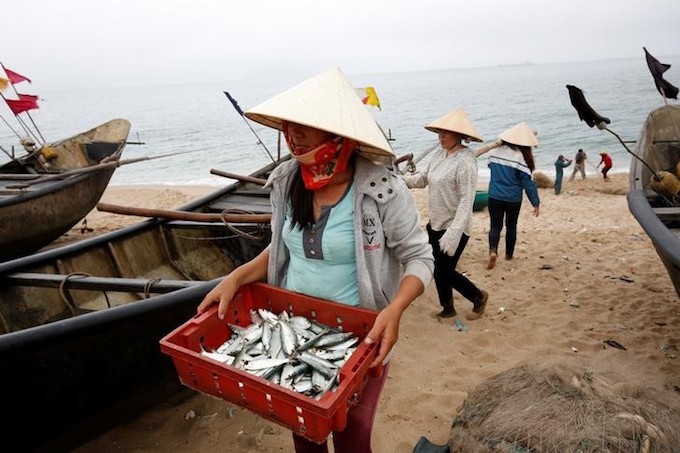
    Vietnam’s fisheries exports in the first half of 2024 were worth US$4.4 billion, up 6% year-on-year on higher demand in major markets like the U.S., China and the EU.

    Key items such as shrimp, pangasius and tuna did well, the Vietnam Association of Seafood Exporters and Producers said in its latest report.

    Pangasius accounted for $918 million and tuna for $472 million, up 5% and 23%. Shrimp fetched $1.6 billion, a 6% increase, while exports of other crustaceans jumped by 75% to $125 million.

    The U.S. and EU imported 18% and 56% more tuna. Shrimp exports to China and the EU rose by 17% and 13%.

    Top shrimp exporter Minh Phu said profits for the first half were VND7.2 billion (US$284,000) as against a loss of VND98 billion in the same period last year.

    Its CEO, Le Van Quang, said the company has been receiving more orders than last year and is planning to boost exports to China, Japan, South Korea, Australia, and New Zealand.

    Businesses are optimistic that seafood exports, especially of green and sustainable products, will grow even more in the coming months.

    But the seafood association said some challenges remain, such as fierce competition from Ecuador and India, rising transport costs and a shortage of raw materials for processing.