Blog

  • Asia Pacific outlook: Surge in data centers

    Asia Pacific outlook: Surge in data centers

    According to Cushman & Wakefield, the Asia Pacific data center market is poised to become the world’s largest data center region over the next decade. In a 2022 report, Singapore takes the top data center spot in the Asia Pacific, and the second place globally – tying with Silicon Valley after Virginia. In the region, Hong Kong claims the second spot, Sydney comes in third place, while Shanghai maintains the fourth place.

    The surge in data center activities is led by colocation providers including AWS, Microsoft, Tencent, and Alibaba. Research firm Report Linker revealed that investments into the region’s data center market amounted to US$63.15 billion last year, with investments predicted to reach US$94 billion by 2027.

    The largest data center market in the region, Singapore lifted a moratorium on new data center construction in January 2022. The moratorium was first implemented in 2019 to allow new server facilities that meet energy efficiency criteria to be constructed. As of last year, Singapore had more than 70 data centers operating with a total power capacity of 1,000 megawatts.

    For telecom operators, where data centers are becoming a strategic asset, many are deliberating data center partnerships or sell-offs to cash in. Last November, Globe Telecom was in advanced talks with ST Telemedia Global Data Centres (STT GDC) to establish a data center business in the Philippines.

    To optimize and grow the value of its large and unique portfolio of quality infrastructure assets, Singtel outlined plans to create a regional data center business last year. Through a partnership with Thailand’s Gulf Energy and AIS, Singtel’s regional data center strategy aims to offer customers a differentiated value proposition.

    The global pandemic sparked work-from-home arrangements and a spike in digital infrastructure and cloud demand. Hyperscalers are amongst those pressured to increase data centers. Compounded by the acceleration of 5G deployments and resulting technologies, strategic investments into data centers have been on the rise. New sources of funding from private equity funds also contribute to the growing data center market to capitalize on future growth opportunities.

    Datacenterpricing, a data centre research specialist, estimated over 1.5 million square meters of space under development for data centers in the Asia Pacific.

    A recent high-profile investment is the Asian Infrastructure Investment Bank (AIIB)’s US$150 million into data centers serving emerging countries in the Asia Pacific. Of which US$100 million would be channeled through Keppel’s Keppel Data Centre Fund II (KDC Fund II), which closed with US$1.1 billion in funding commitments.

    After the US, China has the second-largest hyperscaler data center capacity, accounting for 15% of the world’s total. According to Datacenterpricing, China will expand its data center market by 239,000 square meters to represent a 14% growth. Without overloading its power grids, China’s National Development and Reform Commission (NDRC) announced the set-up of four mega data center clusters outside the main population epicenters.

    South Korea is also a hotspot for data centers. In January, Equinix and Singapore’s sovereign wealth fund, GIC will jointly develop and operate two xScale data centers in Seoul, South Korea. Digital Realty will also be launching its first carrier-neutral data center in the capital to scale large enterprise applications.

    With many countries in the region still underserved, Asia Pacific will continue to witness unprecedented growth in the data centers, fuelled by increased digitalization and e-commerce.

    Indonesia, for instance, offers immense opportunities with a digital economy projected to be worth US$124 billion by 2025. The country houses more than 200 million internet users and an e-commerce market expected to reach US$100 billion by 2025. Last May, Singapore-headquartered STT GDC entered into a partnership with Indonesian Triputra Group to develop a new data center operating platform in Jakarta. Tencent Cloud built two data center facilities in the country.

    Alibaba Cloud also built its third data center in Indonesia last year. In the Philippines, Alibaba Cloud built its first data center last year to support businesses’ digitalization. This year, Alibaba has plans to debut centers in Thailand to expand its foothold in the region – a key profit driver which accounts for about 8% of the company’s total revenue, and amid greater competition by Tencent in China.

    In one of the latest, SpaceDC partners with JLL to build the largest data center in the Philippines. India, being the second most populous country in the world, is another country with very high population, but with a very low data center capacity. The current data traffic boom in India makes it another high-growth market for data centers. According to reports, Bharti Airtel plans to triple its data center capacity to 400 megawatt by 2025.

    Data centers demand is here to stay. As some telecom operators rethink their strategy for non-core operations, others view the data center business as a worthwhile investment. With the emergence of 5G and accompanying technology, telecom operators are well-positioned to seize opportunities working with, rather than against hyperscale providers to extend their capabilities to the network edge

  • Telenor sale could endanger Myanmar activists

    Telenor sale could endanger Myanmar activists

    The sale of Telenor’s Myanmar subsidiary could place the personal data of its 18 million customers in the junta’s hands. As Telenor finalizes the sale of its Myanmar business to a military-linked group, concerns have been raised that sensitive data will be infringed and that families of activists in hiding will be put in harm’s way.

    According to sources, the sale will be completed by 15 February. Last July, Telenor announced that its Myanmar subsidiary would be sold to Lebanon’s financial firm, M1 Group. Military-linked Shwe Byain Phyu was later known to be a co-investor in the sale approved by the junta.

    Justice for Myanmar has since urged the Norwegian government to intervene in the sale. There had been reports that the Ministry of Transport and Communications (MOTC), ruled by the junta, had made more than 200 requests to Telenor for information including records of calls, over the past year.

    Telenor has since said that customers in Myanmar are handled by Telenor Myanmar and that Norwegian or EU data protection regulations do not apply to its subsidiary.

  • Masan acquires majority stake in Phuc Long tea chain

    Masan acquires majority stake in Phuc Long tea chain

    Conglomerate Masan announced Wednesday that it has spent an additional $110 million to increase its ownership in the Phuc Long beverage chain from 20 percent to 51 percent.

    “Since Masan’s initial investment, Phuc Long has demonstrated strong synergies with MSN’s Point-of-Life strategy, which can now be accelerated with Phuc Long as a consolidated subsidiary of Masan,” it said in a press release.

    Masan first bought a 20 percent stake in Phuc Long in May last year for $15 million. The latest purchase puts the valuation of the tea and coffee chain at $355 million.

    Incorporating Phuc Long’s tea kiosks into Masan’s WinMart+ stores nationwide has been part of the conglomerate’s plan since last year as it sought to advance its “point of life” strategy by developing a mini-mall concept that serves a wide array of essential products and services such as groceries, beverage, pharmaceuticals and financial products.

    Masan plans to launch 2,000 such mini-malls this year, and Phuc Long is set to contribute up to VND3 trillion ($132 million) to the conglomerate revenues, which hit VND88.6 trillion last year.

    Phuc Long was established in 1968 in the Central Highlands province of Lam Dong. The company launched its tea and coffee chain in 2012 with is first store in HCMC.

  • Are Bankers Ready To Become Gamers

    Are Bankers Ready To Become Gamers

    Play-to-Earn games where participants convert digital credits into real-world money are gaining in popularity and are the gaming industry’s next big thing. Blockchain-based technology is upending the gaming industry. Until recently, regular games didn’t offer monetary compensation to gamers. Instead, proceeds flowed to game platforms.

    These new types of play-to-earn games are an early iteration of what many see as the promise of Web3,» Alexander Braun, an executive director at Capco responsible for digital strategy and innovation.

    In the early web, referred to as web1, users consumed content in a way best described as read-only.

    Technological advances gave way to Web2, giving users read-write access, and enabling them to load content onto platforms such as YouTube and Facebook.  These platforms went on to monetize the shared content.

    Introducing non-fungible tokens (NFTs) allows players to earn and own digital assets, which they can convert into money and use outside the game. This decentralization of economic ownership is a key component of Web3.

    In this sense, these games have become virtual economies. The hype around NFTs and the metaverse are closely connected to this development, Braun says.

    The global video gaming market is estimated to reach $268 billion by 2025. This sum should be setting off alarm bells at banks.

    The NFTs earned in such games are manifold and include virtual characters, decorative items, and pieces of land, which players can earn and transfer into real-world money.

    Microsoft’s $70 billion planned acquisition of game developer Activision Blizzard last month, and Walmart’s filing of patents last year related to creating and selling virtual goods show the importance businesses are assigning to games and the metaverse.

    Some go as far as to say the paradigm shift in gaming could serve as a blueprint for the start of a new economy, based on a self-governing financial system. One in which the way people interact with traditional financial institutions and with governments will fundamentally change.

    This expectation is certainly the driving force behind the billions of dollars invested in blockchain-related projects, Braun says.

    Banks can enter the trend in different ways beyond the short-term gain of improving efficiencies and streamlining outdated processes. It is also a massive opportunity for them to generate new business, Braun says.

    Yet the discussion is currently dominated by the banks’ fear their role as an intermediary will be made redundant by blockchain technology, he adds.

    However, if banks learn the costly lessons from the software industry, which was afraid of being disintermediated by open-source-software in the late 1990’s, initially fighting it and almost going extinct in the process, only to later embrace it becoming all the more profitable as a result, they will have an important and very prosperous role to play in the future, Braun says.

    Or is the real question: will gamers become bankers before bankers become gamers?

  • Twitter is cutting ties with its two-factor authentication message provider

    Twitter is cutting ties with its two-factor authentication message provider

    Twitter is ending its business relationship with the company that sends its two-factor authentication messages to its users. In a disclosure to U.S. Senator Ron Wyden, Twitter wrote that it is ‘transitioning’ from working with Mitto AG, a tech company based in Zug, Switzerland, and backed up its decision with some reports from the media.

    But why Twitter decided to stop working with Mitto AG? Well, according to some media reports, the reason is that a co-founder of the Swiss firm has been assisting governments in discreetly tracking and monitoring the phones of people to whom the company sends text messages. There were even cases when he obtained the call logs of some individuals.

    A spokesperson for Mitto said in a statement that Mitto AG “does not disclose information about its business partners, through any channel – official or unofficial – full stop. Generally, such agreements are mutual in nature, with both parties agreeing to protect the privacy and integrity of the other.”

    Mitto AG works with telecommunication and software companies to send text messages like sales promotions, appointment reminders, and two-factor authentication codes to people from all over the world. Mitto AG works with companies such as Google, WhatsApp, Telegram, TikTok, and Alibaba. There is yet no word from these firms on whether they will also follow Twitter in terminating their business relationships with Mitto AG.

  • Gas shortages in few places in Vietnam

    Gas shortages in few places in Vietnam

    Gasoline shortages have been occurring only in a few southern locations and the country has adequate reserves to fully meet demand, the industry ministry has assured.

    Shortages are only reported by small distributors who want to hold on to their stocks to push prices up, Deputy Minister of Industry and Trade Do Thang Hai said at a meeting Tuesday.

    “We have reserves to ensure supply for 20 days of consumption as regulations require.”

    Major distributors (who account for over 90 percent of market share) have been selling routinely since before the Lunar New Year holidays (January 29-February 6), he said. Many gas stations in An Giang, Dong Nai and Hau Giang provinces closed down in recent days complaining of lack of supply.

    Some also stopped selling because rising prices are forcing them to sell at a loss. They are not allowed to increase retail prices on their own and authorities usually make price changes on the 1st, 11th or 21st of a month. But since February 1 was a holiday, the next price change is not likely until Friday.

    The country’s biggest refinery, Nghi Son in the central province of Thanh Hoa, had to cut down production from 105 percent of capacity to 80 percent last month due to a cash crunch. Vietnam produces around 75 percent of its fuel requirements, with Nghi Son accounting for 35 percent, and imports the rest.

    Phan Thi Thang, deputy chairwoman of the HCMC People’s Committee, said some gas stations in the city too had closed down temporarily due to lack of supply, but reopened, and as of Tuesday only two out of 548 were closed but for other reasons.

    Major distributors in the city have assured they have enough inventory to last 40-60 days, she said.

    The city has ordered all distributors to import more to ensure reserves that would meet at least 30 days of demand, she added.

    Deputy Prime Minister Le Van Thanh has instructed the trade ministry to be more proactive in regulating gas supply to ensure there are no shortages.

  • Twitter is testing the option to change video playback speeds

    Twitter is testing the option to change video playback speeds

    Twitter announced that it is testing a new option for changing the playback speed of a video, which is just like the playback option on YouTube, Netflix, and other video platforms.

    In the tweet from Twitter, we see that the new playback option may appear as a gear icon on top of the currently playing video. When tapped, a menu would appear with speed options varying from 0.25x to 2x, making it exceptionally useful for people who don’t have much time to watch videos or for people who need to slow the playback for some reason. Twitter also mentioned that the available speeds might differ based on whether you are watching the video on Android or the web.

    Currently, Twitter’s playback option is only available on the Android and web versions of the platform, and only certain people have access to it. In the future, the test option will be available for iPhones as well, and at this time, there is no information on when we could expect Twitter to make the new feature available for every Twitter user.

    The playback option would be available on ‘Tweet Videos, Amplify Videos, Voice Tweets, videos in DMs, and Video Live Replays, depending on their platform.’

    I was curious to see if I was one of the users who have access to the new playback speed option, and I indeed have a gear icon when I open a video on Twitter. When I click on the gear button, however, I only find playback speed options ranging from 1x to 2x in the browser version of Twitter and 1x to 1.75x with 200% as the maximum option in the mobile app of the platform.

  • Facebook Messenger gets a Split Payment option as well as controls for voice message recordings

    Facebook Messenger gets a Split Payment option as well as controls for voice message recordings

    Meta is introducing a few new changes to the Facebook Messenger app. In a blog post, Meta announced that it is increasing the duration of voice messages to 30 minutes, compared to the previous 1-minute duration, and that Vanish Mode, the feature that allows you to send messages that are immediately erased once they are read, should be available everywhere now.

    Meta also introduces two new features to the Messenger app: Split Payments option, which currently would be only available in the US, and voice message recording controls.

    Split Payments enables you to distribute the payment amount among every person in the group, or as Meta said, “split your bill evenly.” The new feature is available on iOS and Android, but only in the US.

    If you are in the US and want to use the new Split Payments feature, go to a group chat and tap the + icon. Then choose the payments tab and tap the “Get started” button. After that, select the payment amount, enter a personalized message, then confirm and submit the payment request.

    Also, according to Meta, if some of your friends in the group don’t have Split Payments set up, they may quickly add their payment information in order to send and receive money.

    Meta introduces the ability to pause, preview, delete or continue recording a voice message before you send it to your friend. Previously, you could only record an audio message and send it without the ability to preview it.

    As we can see from the snapshot below, the controls for the recording will appear as a soundbar illustration on which you can slide your finger in order to hear your recording. The “Pause” and “Resume recording” controls are located on the left and right sides of the soundbar, respectively, and the “Delete” and “Send” buttons are beneath the soundbar illustration.

  • Record store openings drive Yum China sales growth

    Record store openings drive Yum China sales growth

    “We are pleased to report the third consecutive quarter of delivering positive same-store sales growth. With revenues exceeding $2 billion in the quarter, restaurant margin, operating profit and net income have all improved. We opened 129 new restaurants in the third quarter and we are on track to achieve our development target of 550-600 new stores in the year,” said Micky Pant, CEO of Yum China.

    “In this quarter, our strategic initiatives on digital and delivery continued to show encouraging development, which we believe will enable our long-term growth. The connection with our over 120 million loyalty members is getting stronger. The growth in mobile payments and cashless settlement methods for sales continued to outperform previous quarters. With over 5,100 restaurants across China offering delivery service, delivery contributed over 14% of company sales in the third quarter.

    Given the strength of our business and our confidence in generating strong cash flows long term, our Board of Directors has approved a regular quarterly cash dividend program and authorized additional share repurchases.  These demonstrate our strong commitment to increasing shareholder returns through disciplined capital allocation while simultaneously driving strong operating performance.

    With our strong operating results in this third quarter and our commitment to return capital to shareholders, we believe we are well-positioned to continue to increase shareholder value over the long run.”

  • Thai giant Central Retail plans US$3 billion investment in expansion

    Thai giant Central Retail plans US$3 billion investment in expansion

    Thailand’s Central Retail Corp. plans to invest 100 billion baht ($3 billion) over the next five years in a bid to become a top Asian retailer and more than double its revenue and profit.

    The new investment will help Central Retail grow its revenue by 2.5 times, earnings before interest, taxes, depreciation and amortization by 3.5 times, and propel its market capitalization by 2.5 times by 2026, according to Chief Executive Officer Yol Phokasub. Thailand’s largest retailer will invest in new digital technologies to expand omnichannel platforms in all its business segments and scout for acquisitions, he said.

    Central Retail is controlled by the Chirathivat family, which owns a host of industries from real estate and retailing to hospitality and restaurants. The Central Group in December agreed to buy British department store operator, Selfridges in a joint venture with Austria’s Signa Holding for $5.4 billion, expanding the group’s overseas portfolio.

    Digital technology will play a greater role in Central Retail’s new growth strategy after it saw online sales boom during the pandemic, Yol said. “By delivering experiences that merge online and offline worlds” Central Retail expects to boost the business of its more than 3,600 branded stores, he said.

    “We have already surpassed pre-Covid sales in 2021, and this is without tourists. Once tourists return, any sales we make will only be a bonus,” Yol said, adding the company will look to leverage new technologies across all its businesses in Thailand, Vietnam and Italy to boost sales.

    Shares of Central Retail have rallied almost 16% this year on expectations that easing Thai Covid restrictions and reopening of borders to foreign tourists will help it return to profit. The company reported a net loss of 2.3 billion baht for the nine months ended Sept. 30, more than double from a year earlier. It’s yet to report full-year earnings for last year.

  • Apple Arcade’s latest games are ridiculously fun and charming

    Apple Arcade’s latest games are ridiculously fun and charming

    If you’re using an iPhone or iPad and like to play games, Apple Arcade is the best bang for your buck. For just $5 per month, you get a collection of carefully curated games that have no ads or in-game purchase, so you can experience the full content without having to worry about hidden costs or MTX (micro-transactions).

    Apple Arcade adds new games every month, and many of the games already available for subscribers are getting updated with new content all the time. Although this is a very busy month for gamers, as many highly-anticipated titles have been set to release in February (Dying Light 2, Sifu, Lost Ark, Horizon Forbidden West, Total War: Warhammer 3, Elden Ring), there’s always time to fit a short gameplay session on your favorite iPhone or iPad.

    Four new games are joining Apple Arcade’s library in February, and while I’ve played a few of them, knowing how good the curation process is, I can’t not recommend all of them. But let’s start with the first game that joined Apple Arcade on February 4, Bridge Constructor+.

    A physics-based simulation-puzzle game initially launched on PC more than 10 years ago, Bridge Constructor+ is the dream of any wannabe engineer. Jokes aside, Bridge Constructor is quite faithful to the engineering and architecture of bridges, so you’ll be able to express your ingenuity designing and creating complex bridges for cars and trucks to cross over.

    On the plus side, the iOS version of the game includes all of the content, updates and DLC already released on PC, without any in-app purchases. The folks at Headup also revealed that their game has “several different settings and over 100 levels to master the art of bridge-building by using different materials and constructions to make sure they won’t buckle and break under the weight of ongoing traffic.”

    Moving on to the second game coming to Apple Arcade on February 18, Wylde Flowers is a non-combat game inspired by The Sims and FarmVille, but with a “witchy twist.” That’s no surprise at all considering that Studio Drydock, a new development team HQ-ed in Australia, was founded by two industry veterans with a combined 20-year previous experience at EA working on titles like The Sims.

    The best way to describe Wylde Flowers is “cozy life and farming sim,” so if you like to grind a little bit before going to sleep or while commuting, this seems like the perfect game. Wylde Flowers promises a charming world of diverse folks and magical spells, which set the stage for the game’s big mystery.

    Although during the day you’ll be tending crops, care for animals, fish, craft, and perform other farm-related activities, by night, you’ll be nurturing your inner witch as you learn to fly your broomstick, brew potions, control the weather and seasons or even transform into a cat. This sounds like an interesting twist from the typical FarmVille game, yet I can’t shake the feeling that the game should have been called Farming Adventures of Sabrina.

  • Over 90 pct of Samsung, Intel workers return to work after Tet

    Over 90 pct of Samsung, Intel workers return to work after Tet

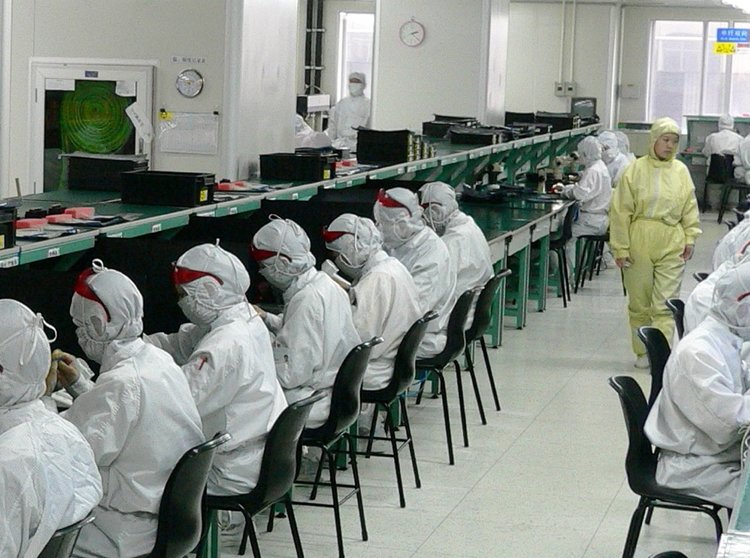
    Major factories in Ho Chi Minh City reported over 90 percent of employees returning to work after the nine-day Tet holiday, abating employer concerns of a labor shortage.

    Some factories with high return rates are Samsung electronics manufacturer HCMC CE Complex (95 percent) and motor parts maker Nidec Sankyo (94 percent). Other manufacturers like Intel and Jabil also reported a return rate of over 90 percent.

    Eight factories in Saigon Hi-tech Park of Thu Duc City, which utilize over 45,000 employees, reported between 80 percent and 95 percent of workers returning to work Tuesday after the annual Lunar New Year’s holiday Tet, according to park data.

    Over 17 industrial zones and manufacturing areas where 273,000 employees work posted a return of 82 percent.

    The high return rate is considered a relief to HCMC employers who, before the holiday, had expected a shortage of workers after Tet as many preferred to stay in their hometown.

    Tet, Vietnam’s biggest national holiday, is a time when workers of large industrial parks leave en masse for their hometowns for family renuions.

    Some factories of Vinatex, one of the biggest garment companies in Vietnam, posted a worker return rate of 100 percent as the company started off the year three days before the holiday ended to meet the surge in order numbers.

    Pou Yuen, footwear maker and biggest employer in HCMC, is expected to see its return ratio rising from 64 percent Monday to 90 percent Wednesday.

  • Important new features are finally coming to Instagram

    Important new features are finally coming to Instagram

    I don’t think I’m exaggerating saying that Instagram is overwhelmed with requests from users with hacked accounts. Although the company has been trying to make the process of recovering a hacked account easier, there’s no better defense against hackers than prevention, something that Instagram has been lacking lately.

    Lately, the social network giant has been pushing out security tools that help prevent your Instagram account from being hacked. They’re probably not foolproof, but it’s definitely a step in the right direction. After introducing Security Checkup for Instagram users who believe their accounts have been hacked last year, this feature is now rolling out to everyone on all platforms.

    It’s a nifty feature that teaches Instagram users to secure their accounts including checking login activity, reviewing profile information, confirming the accounts that share login information and updating account recovery contact information (i.e., phone number, email address). The new feature can be found in the Profile menu / Settings / Security / Security Checkup.

    To make your Instagram account more secure, we also recommend enabling two-factor authentication via WhatsApp, which is already available on certain countries. The 2FA feature can also be used with a phone number or an authenticator app like Duo Mobile and Google Authentication.

    Another important new feature coming to Instagram today is the ability to delete posts in bulk. It might seem a simple feature to have, but Instagram didn’t have it until recently. You can also archive/delete stories, IGTV and Reels, as well as your entire interactions such as comments, likes, story sticker reactions, etc.

    Along with the ability to delete and archive content in bulk, Instagram also added the option to sort and filter content and interactions by date and search for past comments, likes and stories replies from specific date ranges. All these tools to manage your accounts can be found in the Profile, just make sure to tap in the upper right corner and then choose “Your activity.

    Finally, there’s a new feature that Instagram is now testing, which will allow people who have lost access to their account to ask their friends to confirm their identity and regain access to their account. No word on when exactly we will have access to this feature, but more details are promised soon.

  • Bug allowed some iPhone users to have Siri interactions shared with Apple despite opting out

    Bug allowed some iPhone users to have Siri interactions shared with Apple despite opting out

    Back in the summer of 2019, both Amazon, Google, and Apple were hit with charges claiming that their Alexa, Google Assistant, and Siri digital assistants were recording personal conversations and having them transcribed by third-party firms. All three companies admitted that these recordings were being made to improve the performance of the digital assistants. In Siri’s case, some of the recordings collected by Apple included couples having sex, or speaking frankly with their Doctors about private medical problems.

    At the time, both Amazon and Google allowed users to opt-out while Apple didn’t. But these days, customers of all three firms can opt-out of having their convos used to help train Alexa, Google Assistant, or Siri.

    However, the release of iOS 15 beta 2 fixes a bug that ZDNet says might have been used to record some iPhone users’ interactions with Siri. Once you update your iPhone to iOS 15.4 (it’s still currently in beta), you will be asked if you want to help improve Siri and dictation by allowing Apple to review recordings of your interactions with the digital assistant. Opting out would prevent your voice interactions with Siri and the iPhone’s voice-dictation feature from being recorded and sent to Apple.

    But as it turns out, a bug found in iOS 15 enabled the feature even for those who opted out. So while you might have thought that your flirting with Siri was between you and the digital assistant, Apple was still able to listen to some users’ private or even X-rated conversations.

    In iOS 15.2, after Apple discovered the bug, it disabled the setting that allowed Apple to make these recordings and also got rid of the bug that automatically allowed the recordings to be made even when the user opted out. Commenting on the situation, Apple said, “With iOS 15.2, we turned off the Improve Siri & Dictation setting for many Siri users while we fixed a bug introduced with iOS 15.”

    Apple added, “This bug inadvertently enabled the setting for a small portion of devices. Since identifying the bug, we stopped reviewing and are deleting audio received from all affected devices.”

    When stories about Apple keeping recordings of customers’ interactions with Siri first made the rounds over two years ago, Apple said less than 1% of Siri activations were passed along to third-party contractors whose job it was to determine whether the assistant was activated by the user, or was accidentally summoned. Siri was also graded on whether it responded appropriately to the user’s query.

    The initial reports cited information from a whistleblower who worked for one of the contractors hired by Apple. The source said that Siri would sometimes mistakenly activate because the assistant would think that the “Hey Siri” wake word was said when in reality it was not. In a bizarre admission, the whistleblower said that the sound of a zipper would sometimes activate Siri.

    The anonymous whistleblower pointed out that most false Siri activations came from the Apple Watch and the HomePod smart speaker. He also left a quote that gives us a good idea about some of the content that the contractors were listening to while trying to grade Siri.

    “The regularity of accidental triggers on the watch is incredibly high. The watch can record some snippets that will be 30 seconds – not that long but you can gather a good idea of what’s going on…you can definitely hear a doctor and patient, talking about the medical history of the patient,” said the whistleblower.

    “Or you’d hear someone, maybe with car engine background noise – you can’t say definitely, but it’s a drug deal … you can definitely hear it happening. And you’d hear, like, people engaging in sexual acts that are accidentally recorded on the pod or the watch.”

    Hopefully, with the bug squashed in iOS 15.2, when iOS 15.4 comes along and you’re asked whether to opt in or opt out of the program to improve Siri (using your personal conversations), your toggle switch remains on disabled if that is indeed the option you choose.

  • EV Battery Giant LG Energy Solution Sees Demand Rising As Chip Shortage Eases

    EV Battery Giant LG Energy Solution Sees Demand Rising As Chip Shortage Eases

    Battery maker LG Energy Solution Ltd (LGES) said on Tuesday it aims to boost sales by about 8% in 2022, forecasting a pick-up in demand for electric vehicle (EV) batteries as a global chip shortage eases later this year. The newly listed South Korean firm, which accounts for a fifth of the global EV battery market, swung to profit in the October-December quarter, even as the chip shortage affecting automakers led to weaker than expected demand for batteries.

    LGES, which became South Korea’s second-largest listed firm last month in the country’s biggest ever IPO, posted an operating profit of 76 billion won ($63.5 million) for the fourth quarter, it said in its maiden earnings report. That compares with a 150 billion won profit estimate by two analysts polled by Refinitiv and a loss of 479 billion won in the same period a year earlier.

    Analysts noted that the global chip shortage has affected demand from automakers, with LGES rivals SK On and Samsung SDI Co Ltd reporting a similar impact on battery demand in the fourth quarter.

    Revenue at LGES, which supplies Tesla Inc and General Motors Co among others, rose 2% to 4.4 trillion won from a year earlier. The company said it has set this year’s capital expenditure budget at 6.3 trillion won, up 58% from a year earlier, to finance capacity expansion at its global manufacturing facilities to meet demand for batteries.

    “LGES will continue to move forward with bold investment plans needed in the long run. We are confident our business model of preparing for the future will definitely help us lead the industry,” LGES chief executive officer Youngsoo Kwon said in a statement.

    LGES made a stellar market debut in late January, surging to a market capitalisation of about $98 billion, second only to Samsung Electronics Co Ltd on the local bourse, reflecting upbeat prospects for EV battery industry. The company’s shares have since risen 8.5% and added a further 2.2% on Tuesday, ahead of a 0.8% rise in the broader market KOSPI. Asked during an analyst conference call about more battery joint ventures with automakers, LGES said it had held working-level discussions with Japan’s Honda Motor Co Ltd about a potential joint venture, but there was no concrete agreement on a deal.

    Revenue at LGES, which supplies Tesla Inc and General Motors Co among others, rose 2% to 4.4 trillion won from a year earlier

    In January, a South Korean local newspaper reported that LGES planned to build a battery joint venture with Honda in the United States. LGES said in late January that it plans to invest a total of $2.6 billion with GM to build their third joint battery plant in the United States, aiming to secure an annual capacity of about 50 gigawatt hours (GWh) of batteries by 2025, enough to power about 700,000 EVs. The two companies are already building two joint battery plants in Ohio and Tennessee.

    Global EV sales, estimated at 2.5 million vehicles in 2020, are forecast to grow more than 12-fold to 31.1 million by 2030 and account for nearly a third of new vehicle sales, according to consulting firm Deloitte.