Blog

  • Shanghai encourages ‘duty-free economy’ as part of consumer push

    Shanghai encourages ‘duty-free economy’ as part of consumer push

    The Shanghai government will support companies applying for approval to sell duty-free goods, and encourage duty-free shops to be set up at airports, hotels, malls and other commercial venues, municipal authorities said.

    The development of a “duty-free economy”, which will encourage spending on imported products, including heavily-taxed luxury goods, was outlined in a 2021-2025 consumption plan released on Saturday.

    Presently, duty-free spending in China is largely concentrated in the southern island province of Hainan, where the annual limit on individual duty-free spending was hiked to 100,000 yuan (US$15,467) last year from 30,000 yuan previously.

    Tariffs on imported consumer goods vary in China, with taxes on some luxury items such as perfumes and watches exceeding 30 per cent.

    Lured by the substantially lower prices, millions of domestic tourists flock to Hainan’s malls each year, and the numbers have been boosted by restrictions on overseas travel resulting from the Covid-19 pandemic.

    Otherwise, there are more than 300 duty-free shops across the country selling products from fragrances and cosmetics to clothing and shoes. China Tourism Group Duty Free Corp is the dominant player, with nearly 200 stores.

    Annual duty-free spending is in the tens of billions of yuan.

  • JD opens E-space store in Indonesia

    JD opens E-space store in Indonesia

    JD has introduced its first overseas E-space store through JD.ID – its e-commerce joint venture in Indonesia.

    Dudded JD.ID Electronic Store, the E-space store features an omnichannel model which offers technology and home appliance products from a list of electronics brands, including Huawei, Vivo and Oppo.

    Situated in Aeon Mall Sentul City, West Java, the 1300sqm store also provides experiential zones such as a gaming area and smart home area.

    “The launch of the E-space store in Indonesia proves our commitment to excellent service by offering various shopping platform options to our customers,” said Zhang Li, CEO of JD.ID.

    “We hope that through the inauguration of this newest offline outlet, JD.ID can more closely connect with consumers, especially providing them with convenience, comfort, and freedom in choosing the shopping platform that best suits their needs.”

    The E-space store model was first introduced by JD in 2019 in Chongqing, China, before being brought into other cities.

    Since launching its first omnichannel outlet in 2018, JD.ID has opened five physical stores in Indonesia that focus on omnichannel services.

  • Google and Apple Maps rival explains why their ETA estimates are always off

    Google and Apple Maps rival explains why their ETA estimates are always off

    Ever wonder why your estimated time of arrival (ETA) at a destination that you used Google Maps or Apple Maps to navigate to never matches up with the initial ETA estimate? For example, let’s say that you are traveling from Ludlow, Vermont to Moreau, New York. After tapping the destination into Google Maps, it shows that the drive will take 1 hour and 40 minutes allowing you to get to your destination by 2:45 pm.

    But by the time your journey ends, it is 2:55 pm and you’re ten minutes late. What happened? Google Maps and Apple Maps rival TomTom recently said in a blog post that “We rely on estimated times of arrival (ETAs) now more than ever. Whether we’re waiting on a package, food delivery or taxi ride, an accurate ETA is essential. The problem with ETAs is that they are hard to calculate accurately – and this can lead to both dissatisfied customers and disgruntled drivers.”

    First, why should it matter if your ETA is off by a few minutes? TomTom points out that deliveries could arrive too early or too late which frustrates consumers. A package that arrives too early when no one is home to receive it has a bulls-eye on it that says “steal me.” And a late food delivery could result in food being too cold by the time it gets to your house. And a rideshare that arrives at the airport late might force you to run through the airport as O.J. Simpson used to in television commercials for Hertz back in the day.

    Drivers trying to pick up minutes on their ETA tend to drive faster with no regard to the usual rules of the road. In 2019 Tom Tom spoke with ride-hailing companies (such as Lyft and Uber) and food delivery companies and was told that having an accurate ETA was one of the biggest problems they face in their businesses. That’s because there are so many unpredictable variables that go into figuring out when you will arrive at point “B” after leaving from point “A.”

    Such variables include the weather, driver behavior, and traffic. Part of the problem is that each company has a different reason to provide an accurate ETA. Delivery firms need reliable ETAs while ride-hailing and other firms dealing with commuters want to get their customers from one place to another as fast as possible.

    Inaccurate ETAs can occur because some drivers are aggressive and will speed through yellow lights, drive well above the speed limit, and take other chances. Some drivers are conservative and will stop at a yellow light and drive well below the speed limit. Some companies use algorithms to match deliveries with certain drivers. TomTom says that “These algorithms are the ‘secret sauce’ behind route and ETA planning and perform extremely complex calculations that companies own and may vary from business to business.”

    To improve ETA accuracy TomTom suggests the use of historical data that show how fast traffic flows through certain roads at specific times of the day. Mix that with Real-Time traffic (TomTom has a system that updates real-time traffic every 30 seconds). It is also important to figure information about the road into ETA calculations. The mapping firm points out that “The more accurate the maps, the better for drivers and customers. Road details like curvature, gradient, speed limits, traffic lights, specific traffic rules and lane information are all important to consider.”

    It might sound surprising, but TomTom says that the best route might be one that is longer but is more likely to deliver a more accurate ETA than another route with more traffic lights or accidents. TomTom adds that obtaining an accurate ETA is “both an art and a science.”

  • India’s September Diesel Sales Remain Below Pre-COVID Levels

    India’s September Diesel Sales Remain Below Pre-COVID Levels

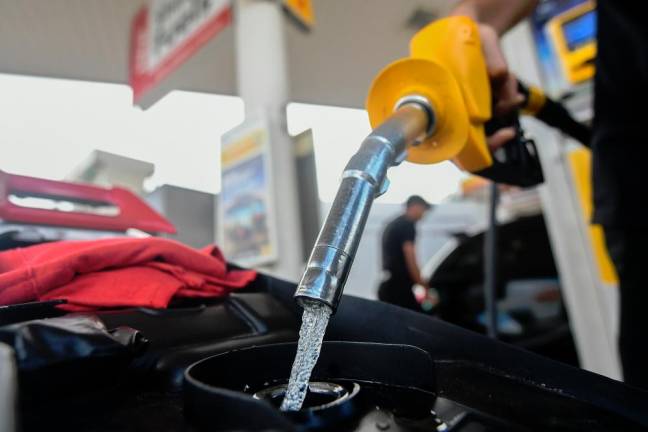
    India’s diesel consumption slowed in the first half of September from the previous month, staying below pre-COVID levels as a pick-up in monsoon rains hit mobility and demand for fuel from the agriculture sector, preliminary sales data showed.

    Diesel sales by the country’s state fuel retailers came in at 2.1 million tonnes during Sept. 1-15, a decline of about 1.5% from last year and down 6.8% from the same period in 2019, the data showed.

    State retailers Indian Oil Corp, Hindustan Petroleum Corp and Bharat Petroleum Corp Ltd own about 90% of the country’s retail fuel outlets.

    Sales of diesel, which account for about two-fifths of India’s overall refined fuel consumption, are directly linked to industrial activity in Asia’s third-largest economy.

    India’s monsoon rains revived this month after a patchy spell in August. Local diesel sales during September 1-15 was down by about 0.9% from the same period in August, the data showed.

    Improved electricity supplies also contributed to a decline in demand for diesel.

    In contrast, petrol sales stayed above the pre-COVID levels at 1.02 million tonnes as people continued to prefer using personal vehicles over public transport and shared mobility for safety reasons.

    India has not yet fully opened its public transport sector, which mostly use diesel.

  • Honda Targets Annual Sales Of 70,000 Prologue Electric Vehicles In U.S. From 2024

    Honda Targets Annual Sales Of 70,000 Prologue Electric Vehicles In U.S. From 2024

    Honda Motor Co’s U.S. unit said on Monday it is targeting initial annual sales of 70,000 for its planned electric Prologue sport utility vehicle when it goes to market in 2024. Honda plans to add additional electric vehicle models as it aims to have sold a total of 500,000 electric vehicles in the United States by 2030, and to achieve 100% zero-emission vehicles sales in North America by 2040. It comes as President Joe Biden signed an executive order last month setting a target to make half of all new passenger vehicles sold in 2030 zero-emissions vehicles.

    The Honda Prologue is being co-developed with General Motors Co and is based on the Detroit automaker’s Ultium platform, a modular platform and battery system. Honda and GM are also co-developing an electric Acura-brand SUV. GM will assemble the Prologue and the Acura SUV — both of which will go on sale in 2024 — but Honda has not disclosed which plant will build the vehicles or the name or volume targets for the Acura.

    Following the GM-built models, Honda will introduce a series of electrified vehicles through 2030 based on the Honda-developed e-Architecture, a new EV platform led by Honda, and will assemble electric vehicles at Honda plants in North America.

    Dave Gardner, executive vice president of national operations at American Honda Motor Co, said in a statement Honda will initially focus Prologue sales on California and other states like Texas and Florida. He said Honda plans to add hybrid-electric systems to more U.S. models. “Our strategy is focused on introducing a higher percentage of hybrids in core models in the near term, making a committed effort to achieve higher volume leading to the introduction of our Honda Prologue,” Gardner said.

  • China Tells Firms To Boost Cyber, Data Security Oversight On Connected Vehicles

    China Tells Firms To Boost Cyber, Data Security Oversight On Connected Vehicles

    China’s industry ministry published a notice on Thursday telling companies to step up cyber and data security oversight over connected vehicles, saying that security risks in the industry had become increasingly prominent.

    All relevant companies should establish data security management systems and regularly assess risks from network attacks, the Ministry of Industry and Information Technology said in a statement.

  • Stellantis To Push Into Challenging Indian Market With Citroen

    Stellantis To Push Into Challenging Indian Market With Citroen

    Carmaker Stellantis plans to launch a new model in India and Latin America next year under its Citroen brand, the group said on Thursday, as it aims to push out of its European turf and branch further into emerging markets where it has less exposure.

    The plan marks Citroen’s return to India, a market it left in the 1930s, and comes at a time when some other foreign carmakers are leaving the country after struggling to make a profit.

    Stellantis, which was formed earlier this year by the merger between Fiat Chrysler and Peugeot-maker PSA, has brands like Jeep and Ram in the United States, but is still aiming to reduce its reliance on Europe.

    The company said it plans to produce a new version of the Citroen C3, positioned as a city car in Europe, in India and Latin America for launch in the second half of 2022.

    Citroen said it would be the first of three models which it will produce and aim at India and Latin America over the next three years.

    Stellantis has said it expects India to become the world’s third-biggest car market after China and the United States by 2030 with total new cars in the country reaching 4-5 million cars a year.

    Still, the country has proved challenging for many foreign carmakers, which compete with local manufacturers such as Maruti Suzuki there as well as South Korea’s Hyundai. Ford last week said it was stopping production in India.

    Stellantis aims to grow sales outside Europe to 30% of its revenue by the middle of this decade, compared to 15% now.

  • Seafood companies fear lack of raw materials as Covid hits farm output

    Seafood companies fear lack of raw materials as Covid hits farm output

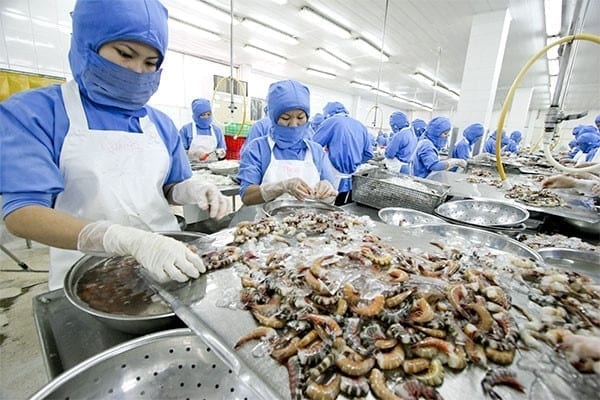
    The decline this year in shrimp and fish farming in the Mekong Delta threatens to cause a serious shortage of raw materials for processors in the coming months.

    “We have increased shrimp prices, but many farmers are still worried that Covid outbreaks will affect prices later, and so have reduced their production,” Le Van Quang, general director of Minh Phu Aquaculture Group Joint Stock Company, said.

    Speaking at a conference held online on Friday to discuss how to restore processing and exports of agricultural and aquatic produce, he forecast a big shortage in the next three months, and said businesses would be unable to meet foreign orders.

    In Tien Giang and An Giang provinces, farmers have been unable to sell their fish, shrimp and crab harvests for months due to Covid-19 restrictions.

    Many processing plants have been running at 30-40 percent of capacity as stay-at-work requirements cause a labor shortage.

    Nguyen Hoai Nam, deputy general secretary of the Vietnam Association of Seafood Exporters and Producers (VASEP), said the government should come up with policies to encourage shrimp farmers right now so that they could harvest in November to enable exports.

    He also wanted it to prioritize Covid-19 vaccination for seafood companies’ workers so that normal production could resume.

    The southern provinces and Ho Chi Minh City could be divided into three in terms of likely resilience if certain epidemic prevention measures are adopted after September 15, he said.

    The first, where the infection rate is lowest, includes Ca Mau, Bac Lieu, Hau Giang, Soc Trang, Ben Tre, and Vinh Long provinces. Businesses in this shrimp processing hub are expected to return to 60 percent of capacity by October and 80 percent by year-end.

    The second, where the epidemic is gradually being controlled, includes An Giang, Kien Giang, Tra Vinh, and Dong Thap provinces and Can Tho city, and here the rates would be 50 percent and 70 percent.

    The area with the highest risk of infection, including Long An, Binh Duong and Tien Giang and Ho Chi Minh City, would recover to 40 percent and 60 percent.

    Vietnam’s seafood exports were worth $5.5 billion in the eight months of 2021, a year-on-year increase of 6 percent, according to the Vietnam Association of Seafood Exporters & Processors (VASEP).

  • Vietnam Steel exports surge

    Vietnam Steel exports surge

    Steel exports increased by 43.4 percent year-on-year in the first eight months to 8.54 million tons, and were worth US$7.1 billion, a 127 percent rise.

    In August, for a second month in a row, the billion-dollar mark was breached, with the value of shipments increasing 2.5-fold to nearly $1.5 billion.

    The main export markets were Southeast Asia, which bought 2.7 million tons and China (1.8 million tons).

    Exports to the E.U. and U.S. skyrocketed 7.5-fold and four-fold from 12 months earlier as demand there continued to soar.

    Exports to Europe also benefited from the EU-Vietnam Free Trade Agreement, with many companies taking advantage of lower tariffs.

    According to the Vietnam Steel Association, the country’s production capacity is around 24 million tons a year. Output this year is expected to reach 21.2 million tons, enough to meet domestic and export needs.

  • DBS Announces More Tech Job Openings

    DBS Announces More Tech Job Openings

    DBS continues to add tech talent with plans to hire around 150 related positions via a virtual hackathon.

    DBS will hire for around 150 technology positions through a virtual hackathon, Hack2Hire, an annual program in its fourth edition, according to a statement.

    The positions will be for 14 developer and engineering roles across artificial intelligence (AI), machine learning and blockchain technologies.

    Successful candidates from the hackathon will be invited for a final interview during the event.

    The latest expansion follows 140 job openings previously announced in May during the bank’s female-focused virtual career fair.

    With Covid-19 greatly accelerating the pace of digital adoption, it is now more important than ever to ensure that our digital offerings continue to stay ahead of our customers’ needs, said DBS’ group head of big data/AI and consumer banking technology Soh Siew Choo.

  • 5 Major Impacts IFRS 9 Will Have on Financial Institutions

    5 Major Impacts IFRS 9 Will Have on Financial Institutions

    Introduced in 2014 as a direct replacement for the International Accounting Standards Board’s IAS 39, IFRS 9 is the International Financial Reporting Standards’ most updated set of guidelines on classifying and measuring financial assets and liabilities. IFRS 9 offers exhaustive requirements for financial institutions like banks with regard to the following:

    • How to categorize financial instruments according to amortized cost, fair value through comprehensive income, or fair value through profit and loss;
    • How to sort accounts into IFRS 9-specific impairment stages based on each account’s unique credit risk characteristics, and;
    • How to do hedge accounting in accordance with IFRS 9 guidelines.

    At the heart of this admittedly complex standard is a desire to make financial institutions more risk-sensitive and more careful about taking on too much credit risk. And though the provisions may be initially difficult to adjust to—especially for smaller banks with modest regulatory tech infrastructure—investing in an IFRS 9 application and achieving compliance as early as possible will have its rewards.

    To illustrate, here’s a briefer on the five biggest ways that IFRS 9 will affect banks. If you intend to start your IFRS 9 compliance journey soon, these are the hurdles—as well as the victories—that your own bank can expect.

    It Will Lead Banks to Develop More Risk-Sensitive Temperaments

    One significant impact that IFRS 9 will have when it’s fully embraced by banks is that it will compel them to cultivate more risk-sensitive outlooks. IFRS 9 calls for a shift away from top-down and rules-based risk modeling approaches and advocates for risk modeling that’s more grounded in the present situation.

    Your bank can use IFRS 9’s guidelines on impairment stages as its basis for risk modeling and loss modeling of financial instruments. IFRS 9’s impairment classification will definitely give you cause to examine your current accounts and distinguish those whose credit quality and ability to make repayments may result in losses for you. This will allow you and your staff to prepare for the probability of default and to devise contingency plans according to your risk outlook.

    It Will Compel Banks to Be More Exhaustive with Their Regulatory Data Management Strategies

    IFRS 9 will also require banks to do intensive calculations for items like expected credit loss (ECL), expected interest rate (EIR), and effective interest spread (EIS). Of course, to achieve full accuracy and timeliness in the calculation of these, banks will need to be conscientious about the data that serves as their basis.

    For sure, it will be a challenge not only to handle massive volumes of risk-related data, but also to ensure that this data is clean, up to date, and properly reconciled. Your bank will have a much easier time managing all your IFRS 9 calculations from a consolidated platform. Consider a solution that can flexibly analyze data related to risk, such as an individual asset’s payment status, the home industry of the borrower, and the borrower’s internal and external credit scores. This mastery over your data will help you arrive at the clearest possible picture of your expected losses.

    It Will Require Banks to Fine-Tune Their Capital Management Strategies

    You can also expect the IFRS 9 guidelines to have an impact on your bank’s capital planning and capital management strategies for the near term. One clear example pertains to IFRS 9’s requirement of calculations for expected credit loss, or ECL. For a long time, banks subscribed to the Generally Accepted Accounting Principles’ (GAAP) incurred loss model, which prompted the calculation of losses only after they had already occurred. The current expected credit loss model, however, calls for the opposite—i.e., for banks to preemptively begin calculating all losses that are expected over the life of their financial instruments upon either their origination or their acquisition (except for those measured at fair value).

    Upon arriving at those calculations, your bank will be able to make important decisions like how much more to allot in your loan or loss reserves or how to adjust your pricing strategies to factor in these imminent credit losses. By no means are these easy decisions to arrive at, but having more foresight about your expected credit losses will definitely cushion the blows a little better.

    It Will Reward Compliant Banks with Regulators’ Trust

    The shift to IFRS 9 will initially be a stressful experience for banks, especially in terms of regulatory compliance. But banks that can complete the transition will be able to avoid steep penalties and experience fewer complications from rushed or late-stage compliance.

    Eventually, more banks will develop stronger foundations for complete and accurate financial reporting not only for IFRS 9, but also for related standards like the Financial Accounting Standards Board’s Accounting Standard Update 2016-13 and the Basel Committee on Bank Supervision’s Standard No. 239. If your organization can bolster its regulatory performance in this way, you’ll earn a coveted seal of approval from your regulators.

    It Will Increase Financial Transparency and Rainy-Day Readiness in Banks

    Lastly, IFRS 9 will impart banks with two things they need in this day and age: a strengthened commitment to financial transparency and readiness for unpredictable times. It must be remembered that the IFRS 9 accounting standard was conceptualized in the wake of the 2008 financial crisis. It was meant to serve as a wake-up call for banks to reevaluate the decisions they made amidst a volatile economy.

    Today’s banks need to be just as wary of risk and as prepared for critical losses in light of the financial crisis brought about by the global pandemic. At the same time, they must also heed the call for financial transparency and levelheaded financial housekeeping practices for the sake of their customers. Thus, it would be good for your bank to see IFRS 9 as more than just a compliance-related hassle and instead, as a means for attaining resilience and trustworthiness.

    Conclusion

    The IFRS 9 compliance journey will be hardest for banks when they are still adjusting to the requirements. But after they’ve undergone the necessary infrastructure upgrades and adjustments to their regulatory reporting protocols, they’ll be even readier to manage their repertoire of financial instruments in risky, unpredictable times. Give your bank a fighting chance at adjusting to the circumstances, and get a head start on your IFRS 9 compliance.


  • Full flight load to Langkawi signals strong rebound for domestic air travel

    Full flight load to Langkawi signals strong rebound for domestic air travel

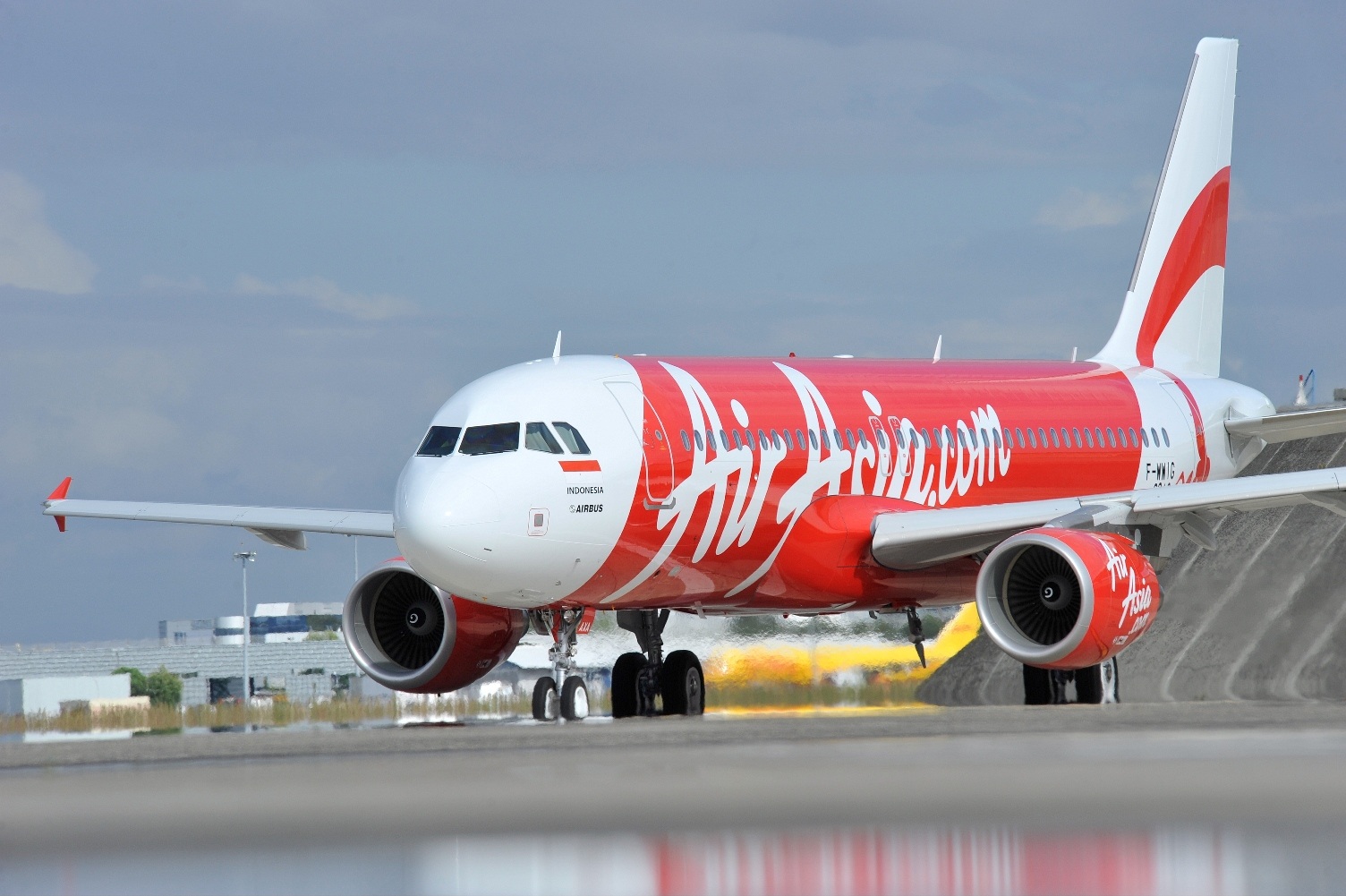
    AirAsia’s inaugural service from Kuala Lumpur to Langkawi on Thursday (Sept 16) morning under the travel bubble recorded a 100% flight load, the carrier says, signifying a strong rebound for domestic air travel.

    The low-cost carrier said the maiden flight, the first of nine scheduled daily flights from Kuala Lumpur, left KLIA2 at 9.50am utilising an Airbus A321neo.

    “Aside from Kuala Lumpur (63 flights weekly), AirAsia also has flights to Langkawi departing from Penang (14 times weekly), Johor Baru (seven times weekly), Ipoh (three times weekly) and Kota Baru (three times weekly), making a total of 90 weekly flights,” it said in a statement.

    AirAsia Malaysia chief executive officer Riad Asmat said over 200,000 seats to Langkawi were sold in less than a week.

    “To facilitate this movement, we have prepared extensively and implemented robust and comprehensive health and safety protocols to ensure all of our guests can travel safely, with our 100% vaccinated crew and frontliners.

    “After months of preparation, we are thrilled to get the country flying again and are ready to scale up our operations to meet overwhelming demand.

    “We hope more travel bubbles will be established across the country soon in line with the accelerated vaccination roll-out, and eventually across the region when it is safe to do so,” he added.

  • Bacardi launches ready-to-drink Mojito cocktail

    Bacardi launches ready-to-drink Mojito cocktail

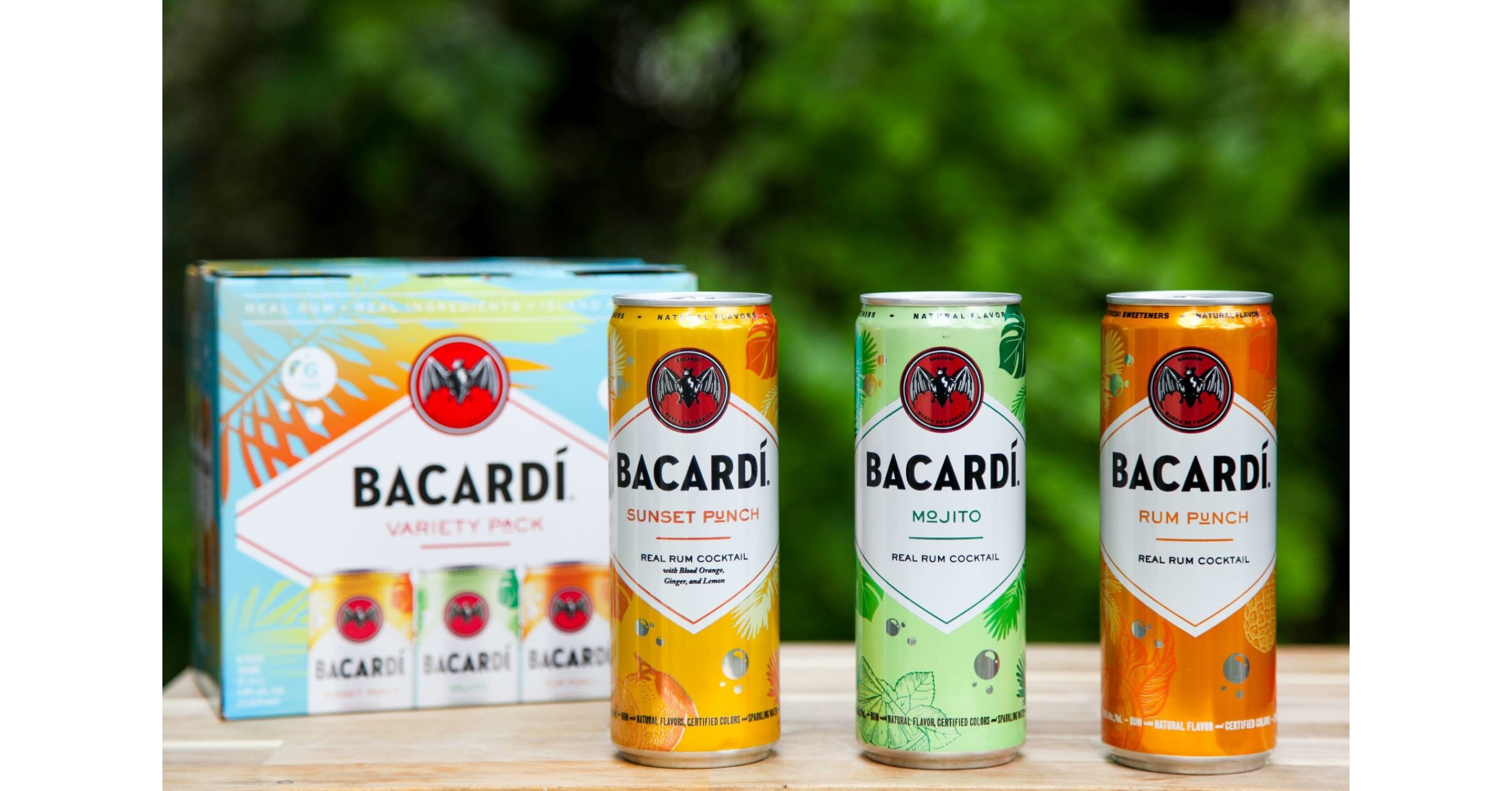
    Bacardi has launched a new RTD, Bacardi Mojito, which comes in a 250ml can with an ABV of 4.8 percent and 114 calories per serve.

    The RTD is made using Bacardi Carta Blanca Superior White Rum along with all-natural flavors and real ingredients and the calories are kept down thanks to the use of natural cane sugar.

    Bacardi-Martini Australia Brand Ambassador, Loy Catada, said he was excited to see Bacardi Mojito launch into the Australian market. “With the original Bacardu Mojito having a rich history and rise in popularity since the 1930s, we’re proud to continue to meet our customers’ desires and launch the ready-to-drink Bacardi Mojito in time for Summer here in Australia.”

    “Bacardi has been synonymous with classic Caribbean cocktails since 1862, and our latest launch gives consumers the ease of a high-quality cocktail made with the natural flavors and real ingredients of mint, lime, and the world’s most awarded rum in a convenient format.”

    With the spirit-based RTD market surging 132 percent in the last year and Mojito continuously ranking highly as one of Australia’s favorite cocktails in Google search queries, the stage is set for a big Bacardi Mojito summer.

    Bacardi is available now for independent retailers and the major chains at $24.99 RRP per pack of four.

  • Lightyear Raises $110 Million To Bring Its Solar Electric Car To Market

    Lightyear Raises $110 Million To Bring Its Solar Electric Car To Market

    Lightyear which is a startup that has been developing electric cars based on solar power has announced a $110 million in a round of funding that will enable it Bira its vehicle to the markets The company came to prominence when it was spun out of Solar Team Eindhoven which was basically a group of engineering students from the Technical university of Eindhoven who were competing in the world solar challenge with their  Stella and Stella Lux energy positive solar cars. These cars were producing more energy than they consumed.

    The Solar Team Eindhoven even recently unveiled a solar RV also, but Lightyear has graduated to becoming a full fledged automotive player than a college project. The project which was announced back in 2019 promised an electric sedan with integrated solar cells and that enabled it to give a whopping range of 725 kilometres based on the WLTP cycle.

    The team at Lightyear has made bold claims of an 724 kilometre range

    “We reached the $110 million funding milestone with the help of one of the largest international insurers in the Netherlands, Cooperation DELA. This investment aligns with their long-term focus on sustainability. Together, we can work on our shared mission of bringing clean mobility to everyone, everywhere,” said the company.

    “It is great to see the acknowledgment from investors, which is a testament to the confidence that they have in Lightyear. Thanks to the trust and funding received from our investors, we can further grow as a company and bring our Lightyear One exclusive model on the market in 2022,” said Lex Hoefsloot, the CEO and cofounder of the company.

    It still plans to deliver the first units to the market in 2022 but it must be noted that this car will not come cheap as it will cost upwards of $100,000 at around $170,000 for a starting price.

  • PepsiCo to reduce plastic use, launch plant-based snacks in green push

    PepsiCo to reduce plastic use, launch plant-based snacks in green push

    PepsiCo, a leading food and beverage giant, has announced plans to cut back on the use of virgin plastic and expand its SodaStream carbonated-water business to more markets in response to increasing calls to combat climate change.

    According to the company, as part of a new initiative called “pep+”, the food and beverage giant aims to reduce virgin plastic use per serving by half across all brands by 2030 and use 50% recycled content in all its plastic packaging.

    PepsiCo’s ambitious plastics plan also includes scaling its SodaStream business globally, Laguarta told Reuters in an interview. SodaStream, acquired by PepsiCo in 2018, makes machines and refillable cylinders that let users make their own soda or carbonated water drinks at home.

    The brand, currently in 40 countries, will bring new flavours into 23 more markets and introduce its new SodaStream Professional platform aimed at businesses in 10 additional markets by 2022.