Retail News CRM

Tag: 5G

  • India Ascends to Second Spot Globally with Over 400 Million 5G Users: A Story of Rapid Digital Transformation

    India Ascends to Second Spot Globally with Over 400 Million 5G Users: A Story of Rapid Digital Transformation

    India has solidified its position as the world’s second-largest 5G subscriber market, just after China. This achievement highlights the nation’s speedy embrace of next-generation connectivity and one of the fastest global network rollouts, as stated by the Union Minister of Communications, Jyotiraditya M. Scindia.

    Impressive Numbers in 5G Adoption

    Currently, India boasts of more than 400 million 5G users, making it home to the world’s second-largest 5G subscriber population. Data presented by the Ministry of Communications indicates that telecom service providers have installed approximately 4.69 lakh 5G base transceiver stations nationwide as of March 2025. This reflects the swift pace of 5G deployment in India, which started in October 2022 and is among the fastest rollouts globally.

    Today, 5G services encompass over 99% of India’s districts, with an estimated population coverage of around 85%. Since the initial launch, 25 crore users have migrated to 5G services, and the total subscriber base has surged past 400 million as network accessibility and device adoption have grown.

    Notable Strides in Rural Connectivity

    The Ministry also pointed out significant improvements in rural connectivity. There has been a 42.9% increase in rural telephone connections, almost twice the rate of urban growth. The number of connections has risen from 377.78 million in March 2014 to 539.83 million by September 2025.

    Digital Expansion and Internet Usage

    The digital expansion in India is further mirrored in internet usage. Total internet connections have crossed the one billion mark, reaching 1.0029 billion, compared to 251.5 million in March 2014. This represents a growth of nearly 299%.

    Progress in Telecom Self-Reliance

    In line with the Atmanirbhar Bharat vision, India has made substantial progress in telecom self-reliance. It has joined the select group of nations that have developed an end-to-end 4G stack which is upgradable to 5G. While it took other countries decades to mature similar technologies, India achieved this milestone in just two years. Additionally, there is growing momentum in indigenous 6G research and development under the ambitious Bharat 6G Mission.

    Collectively, these developments firmly establish India as a primary global player in 5G adoption and digital infrastructure. This has implications for enterprise connectivity, innovation, and long-term economic growth across the region.

    Questions & Answers

    What is India’s current rank in the global 5G subscriber market?
    India has emerged as the second-largest 5G subscriber market in the world.

    How many 5G users does India currently have?
    India currently has over 400 million 5G users.

    What has been the growth in rural telephone connections in India?
    Rural telephone connections in India have grown by 42.9%, nearly double the urban growth rate.
  • Cambodia Ushers in Digital Transformation with Nationwide 5G Launch in 2026

    Cambodia Ushers in Digital Transformation with Nationwide 5G Launch in 2026

    Cambodia is preparing to introduce 5G mobile services as of January 1, 2026, as reported by the Ministry of Post and Telecommunications. The three major mobile operators in the region, Cellcard (CamGSM), Metfone (Viettel Cambodia), and Smart (Smart Axiata), have already constructed telecommunications antenna stations and equipped these locations with the necessary 5G network infrastructure.

    5G Services Rollout

    Coinciding with New Year’s Day celebrations, customers across the three mobile operators will gain access to 5G services right from 12:01 a.m. on January 1, 2026. The initial phase of the rollout will see 5G services made available in key areas including the capital city, Phnom Penh, and various regions in Siem Reap, Kandal, Svay Rieng, Kampong Speu, Takeo, Kampong Cham, Kampong Thom, Prey Veng, Kratie, Kampong Chhnang, Pursat, Preah Sihanouk, Stung Treng, and Kampot.

    There are plans for subsequent phases to extend the coverage of 5G services throughout the other provinces of the Southeast Asian country.

    The Impact of 5G Services

    The launch of 5G services is anticipated to significantly propel digital evolution across the economic and societal landscape. Key benefits include faster internet speeds compared to the existing 4G, the simultaneous connection of multiple devices, reduced latency, and augmented efficiency in delivering digital public services.

    The new 5G services represent more than just enhanced internet speed. They symbolize an essential digital infrastructure underpinning Cambodia’s digital future. This development is expected to foster innovation and spawn new opportunities.

    As per data from the Ministry of Post and Telecommunications, Cambodia has approximately 19.6 million internet subscribers and around 20.6 million mobile phone users. These figures exceed the country’s total population of 17 million, owing to some individuals subscribing to multiple internet or phone services.

    Questions & Answers

    When will 5G services be launched in Cambodia?
    5G services are set to be launched in Cambodia on January 1, 2026.

    What are some benefits of 5G services?
    Key benefits of 5G services include faster internet speeds, the ability to connect multiple devices simultaneously, low latency, and enhanced efficiency in delivering digital public services.

    What does the introduction of 5G services signify for Cambodia?
    The introduction of 5G services indicates a significant step toward a digital future for Cambodia, expected to foster innovation and create new opportunities.

  • Sri Lanka Surges into Digital Future with Dialog’s Revolutionary 5G Ultra Launch

    Sri Lanka Surges into Digital Future with Dialog’s Revolutionary 5G Ultra Launch

    Dialog Axiata PLC has made a significant stride in propelling Sri Lanka’s digital revolution with the commercial launch of Dialog 5G Ultra. This significant development represents a quantum leap in the nation’s digital transformation and its progression into the 5G era. Dialog’s 5G network, bolstered by over 220 active 5G sites, caters to more than 1.5 million subscribers, making it the pioneer in offering commercial 5G services in Sri Lanka. This underscores its leadership in the provision of next-generation connectivity across the country. The commercial launch comes on the heels of Dialog’s acquisition of a 100 MHz block in the 3500 MHz band and a 200 MHz block in the 27 GHz band during the 5G spectrum auction conducted by the Telecommunications Regulatory Commission of Sri Lanka (TRCSL).

    Advancements in Connectivity

    Dialog 5G Ultra delivers superior 5G connectivity marked by ultra-fast speeds, low latency, and enhanced network performance. This sets the stage for augmented digital experiences for Sri Lankan consumers and offers advanced capabilities for businesses and industries. By employing the 3500 MHz spectrum for broad-area mobile coverage and the 27 GHz spectrum for high-capacity, gigabit-speed applications, Dialog is strategically poised to support future-proof consumer and enterprise applications.

    Supun Weerasinghe, Group Chief Executive Officer of Dialog Axiata PLC, said:

    The introduction of Dialog 5G Ultra signifies a crucial stride in fortifying Sri Lanka’s digital infrastructure for the future. Beyond faster connectivity, 5G is a vital catalyst of innovation, productivity, and inclusion across the digital economy. As Sri Lanka’s largest 5G network, we are committed to investing USD 100 million over the next two years to expand 5G connectivity across the country and ensure that individuals, businesses, and industries can fully participate in a digital Sri Lanka. We are grateful to the Telecommunications Regulatory Commission of Sri Lanka and the Government of Sri Lanka for conducting a transparent auction process to allocate 5G spectrum.

    Continuing the Journey into 5G

    Dialog’s foray into 5G builds upon a robust history of innovation. They were the pioneers in introducing 2G, 3G, and 4G in South Asia, spearheaded early 5G demonstrations, and have operated the country’s most extensive 5G trial network for several years. The commercial launch of Dialog 5G Ultra now makes these advancements widely accessible, integrating high-performance connectivity into daily life and business operations.

    In celebration of the launch, Dialog has unveiled a series of 5G-related promotions, including devices, data plans, and content, enabling customers to fully experience the potential of 5G in mobile and entertainment.

    Dialog also provides the most comprehensive 5G roaming network from Sri Lanka, offering 5G connectivity in 76 countries through collaborations with 155 global mobile operators. This allows Dialog customers with 5G-compatible devices to enjoy uninterrupted, high-speed connectivity while travelling abroad, reinforcing Dialog’s leadership in providing a world-class mobile experience for both Sri Lankans overseas and visitors to the country. As a pioneer in introducing future technologies to Sri Lanka, Dialog is committed to advancing national digital transformation and delivering world-class connectivity experiences that enhance lives, empower businesses, and underpin the country’s long-term development.

    Questions & Answers

    What is the significance of the launch of Dialog 5G Ultra?

    Dialog 5G Ultra is a milestone towards digital transformation for Sri Lanka as it provides high-speed, low-latency connectivity, thereby enhancing digital experiences for consumers and businesses.

    How is Dialog Axiata planning to expand its 5G services?

    Dialog Axiata has committed to investing USD 100 million over the next two years to extend 5G connectivity across Sri Lanka.

    How does Dialog 5G Ultra benefit customers travelling abroad?

    Dialog provides the most comprehensive 5G roaming network from Sri Lanka, enabling customers with 5G-compatible devices to enjoy seamless, high-speed connectivity in 76 countries.

  • Unlocking the Future with 5G-A and AI: The Rise of the Mobile AI Era and Telco-Techco Transformation in the Middle East & Central Asia

    Unlocking the Future with 5G-A and AI: The Rise of the Mobile AI Era and Telco-Techco Transformation in the Middle East & Central Asia

    The partnership between 5G-Advanced (5G-A) and AI is crucial for unlocking the intelligent future of the Middle East and Central Asia. This strategic alliance transforms the network, allowing telecommunications operators to shift from selling capacity to offering differentiated, AI-managed services. This shift allows telcos to guarantee a quality that is essential for high-value services. This vital partnership pushes the development of Autonomous Networks (AN), ensures premium experience monetization, and propels the ‘AI-first, inside-out’ transformation for new economic benefits.

    Introduction: Catalyzing the Connected Future

    The Middle East and Central Asia (ME&CA) region has positioned itself as a global front-runner in digital innovation and transformation. From the implementation of 5G to ongoing and ambitious national digital transformation programs, no other region surpasses their pace of change and development. Building on this momentum, telecom operators now stand on the threshold of a significant technological milestone – the fusion of 5G-Advanced and artificial intelligence.

    This transformation goes beyond merely upgrading two separate technologies. It entails merging the ultimate connectivity infrastructure (5G-A) with the ultimate intelligence engine (AI) to herald the dawn of a supreme digital experience. This robust experience forms the foundation for initiating the new ‘Mobile AI Era,’ a paradigm shift that is redefining operational efficiency, unlocking unprecedented business value, and advancing the region’s socio-economic and digital inclusion objectives.

    Moving Towards the ‘Mobile AI Era’: The Essential Partnership of 5G-A & AI

    The integration of AI into mobile communications signals the rapid advent of the mobile AI era. Innovative services such as real-time multi-modal calling with AI assistants, autonomous robots with embodied AI, and real-time cloud rendering for AI-generated content are emerging as the game-changing applications of the 5G-A era.

    In this ‘Mobile AI Era’, networks are evolving beyond their traditional role as mobile data pipelines. They are becoming value platforms that underpin differentiated experiences for people, homes, vehicles, things, and industries. This evolution is where AI becomes indispensable. AI acts as the brain that operates the 5G-A network, infusing intelligence into 5G-A connections, and unlocking a plethora of new scenarios, applications, and business models.

    The shift from 5G to 5G-A is fundamentally about transitioning from best-effort services to delivering guaranteed quality and sticking to service level agreements (SLAs). However, the resulting massive increase in network complexity and data volume generated by these applications cannot be managed manually.

    5G-A Experience Management and Business Innovation: Supported by AI

    One significant change that 5G-A enables is fostering ‘intelligent connectivity,’ which means a transition from selling ‘generic bandwidth’ to selling ‘differentiated, scenario-based connectivity and experience’. This transition is the key to evolving from a ‘dumb-pipe’ to an ‘AI smart-pipe’ revenue model. However, successful monetization of this transition requires sophisticated, intelligent experience management.

    While AI empowers the network, 5G-A also empowers AI-based services and applications. Its high throughput, low latency, and edge computing capabilities allow real-time interaction and decision making. This combination of 5G-A and AI allows carriers to offer differentiated, guaranteed experiences for specific applications, thereby transitioning from a simple supplier to a vital technology partner that commands premium revenue.

    Building New Value with Al-to-X: The AI-First, 5G-A Driven Transformation

    For operators in the ME&CA region, the ultimate vision is to transform from traditional communication service providers into technology companies. This transformation requires an AI-first approach, which rests on the three pillars of ‘Servitization’, ‘Platformization’, and ‘Intelligentization’.

    Carriers are progressively integrating AI into their services to improve efficiency, productivity, and user experience, especially in the 5G-A era. However, to maximize these capabilities and ensure always-on services, carriers now need to implement these three strategies of ‘AI-to-X’, where this ‘X’ signifies one or more of ‘servitization’, ‘platformization’, and ‘intelligentization’.

    Questions & Answers

    What does the convergence of 5G-A and AI mean for the Middle East and Central Asia?
    This convergence represents a significant technological leap forward. It will allow for the provision of differentiated, AI-managed services and pave the way for the ‘Mobile AI Era’ in the region.

    How does the integration of AI into mobile communications contribute to the evolution of networks?
    The integration of AI into mobile communications transforms networks into value platforms that underpin differentiated experiences. AI becomes the brain that operates the 5G-A network, infusing intelligence into connections and unlocking new scenarios, applications, and business models.

    What is the ultimate vision for operators in the ME&CA region?
    The ultimate vision for operators in the region is to transform from traditional communication service providers into technology companies. This transformation requires an AI-first approach and the implementation of the three strategies of ‘AI-to-X’, representing ‘servitization’, ‘platformization’, and ‘intelligentization’.

  • 5G Revolution in Asia-Pacific: Skyrocketing Adoption Set to Reach 4.6 Billion Connections by 2030

    5G Revolution in Asia-Pacific: Skyrocketing Adoption Set to Reach 4.6 Billion Connections by 2030

    5G technology is quickly gaining traction in the Asia-Pacific region, with its compound annual growth rate (CAGR) projected to climb by 11.4%. This surge is anticipated to elevate the number of 5G connections from 2.7 billion in 2025 to 4.6 billion by 2030. The escalation is primarily attributed to the increasing availability of cost-effective 5G devices, continual network expansions, particularly in India, Malaysia, and Thailand, and the imminent unveiling of services in Pakistan and Sri Lanka.

    Key Drivers of 5G Adoption

    Government initiatives, corporate digital transformation efforts, and the burgeoning demand for high-performance connectivity necessary for evolving application areas are the primary drivers of this growth. Emerging application areas include smart manufacturing, autonomous mobility, and cloud gaming. Additionally, government and telecom regulatory bodies in Australia, China, India, South Korea, Japan, and Taiwan have introduced national 5G strategies and action plans. These outline the vision and guidelines to establish 5G ecosystems, expand 5G coverage, and drive adoption. These strategies feature supporting initiatives such as public sector investment in 5G applications, favorable tax incentives, industry-government collaboration forums, promotion of 5G-led technological innovations, and license arrangements to optimize spectrum use.

    China Leading the 5G Market

    China is projected to maintain its position as the world’s largest 5G market throughout the forecast period. Approximately 75% of its total mobile subscriptions are expected to be on a 5G network by 2029, fueled by investment and regulatory efforts to extend 5G service coverage to rural areas and industrial parks. For instance, China had installed close to 4.2 million 5G base stations by 2024, increasing this figure to 4.6 million by the end of September 2025, significantly enhancing its network capacity and coverage. This continued expansion of 5G networks by telecom operators is also propelling the market forward throughout the Asia-Pacific region.

    Investments in 5G Infrastructure

    Regional telecom companies are planning to invest approximately USD 254 billion in network infrastructure by 2030, with a primary focus on 5G deployments. These expansions present telecom companies with opportunities to increase revenue through the sale of premium 5G mobile plans and the provision of enterprise connectivity solutions, such as private 5G. The synergy of 5G’s speed and reliability with emerging technologies like AI, data analytics, and M2M/IoT will allow telecom companies to innovate and extend their customer base into sectors like healthcare, manufacturing, and mining.

    Questions & Answers

    What is the projected compound annual growth rate (CAGR) of 5G in the Asia-Pacific region?
    The CAGR of 5G in the Asia-Pacific region is expected to be 11.4%.

    Which country is anticipated to remain the world’s largest 5G market?
    China is projected to retain its position as the world’s largest 5G market.

    What is the planned investment by regional telecom companies in network infrastructure by 2030?
    Regional telecom companies plan to invest an estimated USD 254 billion in network infrastructure by 2030, primarily focusing on 5G deployments.

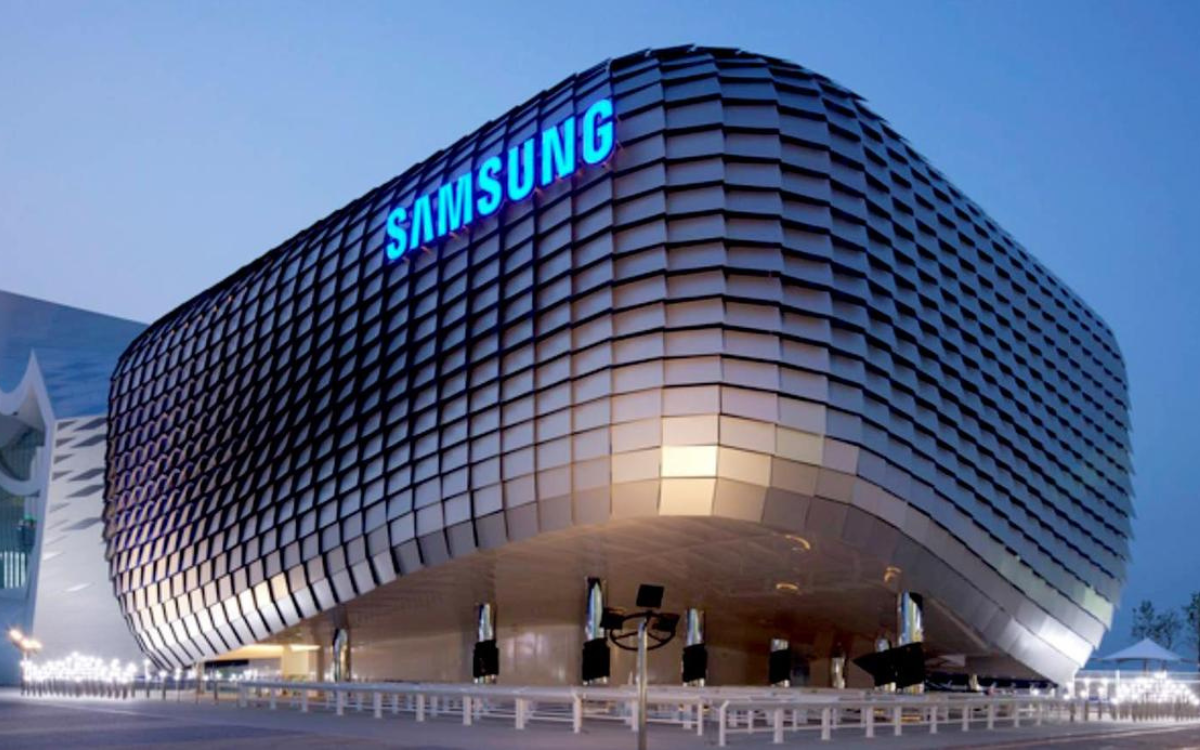
  • Samsung and SKT Forge Ahead with Advanced AI-Driven 6G Tech: A New Era in Hyperconnected Telecommunications

    Samsung and SKT Forge Ahead with Advanced AI-Driven 6G Tech: A New Era in Hyperconnected Telecommunications

    Samsung Electronics and SK Telecom (SKT) have recently formalized their cooperation by signing a memorandum of understanding (MoU). The partnership will focus on the development of crucial 6G technologies, with a special focus on artificial intelligence-based radio access network (AI-RAN) technology. The primary aim of the collaboration is to develop and test key technologies for the 6G era, including AI-based channel estimation, distributed multiple-input multiple-output (MIMO) transmission, AI-RAN-based schedulers, and core network architectures.

    Leading the Collaboration

    Samsung Research and SKT’s Network Technology Office will be spearheading the collaboration. AI-based channel estimation technology aims to improve network performance by predicting and correcting signal transmission instantaneously. This allows for quick and accurate data delivery in environments where radio waves face obstructions such as buildings or walls.

    Unlike traditional setups, where a single base station handles data processing, distributed MIMO technology enables multiple base stations or antennas to collaborate in the transmission and reception of data. This innovative approach ensures reliable, ultra-high-speed communication in both urban and rural settings.

    Improving Network Quality

    AI-RAN schedulers and AI-based core networks are crucial for data transmission optimization. They efficiently dictate when, where, and how to send data, ensuring efficient resource allocation even when numerous user devices are connected. These technologies are vital for enhancing network quality and facilitating automation in a future hyperconnected society.

    Under the partnership, Samsung Research will be concentrating on the development of AI-RAN technologies, including AI-based channel estimation models, schedulers, and distributed MIMO. Meanwhile, SKT will be responsible for providing data and setting up test infrastructure based on its nationwide network operations. The companies are also making collaborative efforts as members of the AI-RAN Alliance.

    Future Prospects

    JinGuk Jeong, Executive Vice President and Head of Advanced Communications Research Center (ACRC), Samsung Research at Samsung Electronics, has expressed optimism about the joint venture with SKT. He believes that this field-focused collaboration will enable them to verify the efficacy of AI-based wireless technologies in real-world settings and secure key AI-RAN technologies at an early stage.

    Takki Yu, Vice President of SK Telecom Network Technology Office, emphasized that the fusion of AI and wireless communications will be crucial to 6G competitiveness. Through their partnership with Samsung Electronics, they plan to secure world-class AI-RAN-based 6G technologies and lead the global 6G ecosystem.

    Since 2019, when it established the Advanced Communications Research Center (ACRC), Samsung has been proactively pursuing 6G research, publishing the 6G White Paper and 6G Spectrum White Paper, which outline its vision and direction for next-generation communications.

    Questions & Answers

    What is the main focus of the collaboration between Samsung Electronics and SK Telecom?
    The collaboration aims to develop and test key technologies for the 6G era, particularly artificial intelligence-based radio access network (AI-RAN) technology.

    Who will be leading this collaboration?
    Samsung Research and SKT’s Network Technology Office will be spearheading the partnership.

    What role does AI play in the development of 6G technologies?
    Artificial Intelligence is crucial in enhancing network quality, facilitating automation, and ensuring efficient resource allocation in a future hyperconnected society.

  • U Mobile Amplifies ULTRA5G Reach Across Malaysia: Adding Bangi, Putrajaya, and Petaling Jaya New Town to 5G Network!

    U Mobile Amplifies ULTRA5G Reach Across Malaysia: Adding Bangi, Putrajaya, and Petaling Jaya New Town to 5G Network!

    U Mobile is extending its ULTRA5G Advanced Network Experience to three new outdoor clusters: Bangi, Putrajaya, and Petaling Jaya New Town. This recent expansion is another stride in the company’s ongoing deployment strategy, offering continuous ULTRA5G coverage across all three townships.

    Ahead of Schedule

    The operator reports it is advancing faster than anticipated in its national rollout. Alongside the newly inaugurated outdoor clusters, U Mobile has also enabled ULTRA5G indoors in 30 buildings and anticipates more locations becoming operational in the forthcoming months.

    Woon Ooi Yuen, U Mobile’s Chief Technology Officer, expressed his excitement about the expansion:

    “Our ULTRA5G experience, fueled by both 5G Standalone and 5G Non-Standalone technologies, is now accessible to our customers in Bangi, Putrajaya, and Petaling Jaya New Town. We are committed to delivering the most extensive and profound 5G coverage to all Malaysians. Since initiating our deployment, we have not only brought our advanced 5G technology network to these three outdoor clusters but also indoors in 30 buildings, with many more on the horizon.”

    Improved User Experience

    U Mobile affirms that users in these areas can anticipate amplified and more dependable performance for everyday applications such as video calls, streaming, and gaming. The company also aspires to back businesses in these locations by allowing them to leverage 5G solutions designed to enhance operational efficiency.

    Users can detect ULTRA5G availability through the UM ULTRA5G network indicator on compatible devices. U Mobile asserts that additional outdoor clusters and indoor sites will persistently become operational as part of its ongoing deployment.

    Questions & Answers

    What is the significance of U Mobile’s latest expansion?
    The extension of U Mobile’s ULTRA5G Advanced Network Experience to three more outdoor clusters is a crucial step in the company’s ongoing deployment strategy, offering continuous ULTRA5G coverage to more areas.

    What progress has U Mobile made in its national rollout?
    The operator reports that it is moving faster than anticipated, having successfully launched ULTRA5G services in three new outdoor clusters and enabled ULTRA5G indoors in 30 buildings.

    How will U Mobile’s ULTRA5G benefit users and businesses in the new areas?
    Users can expect enhanced and more reliable performance for everyday applications, while businesses can leverage 5G solutions designed to improve operational efficiency.

  • China’s 5G-Boosted M2M & IoT Market Set for 7% CAGR Surge by 2030: The Future of Mobile Connectivity

    China’s 5G-Boosted M2M & IoT Market Set for 7% CAGR Surge by 2030: The Future of Mobile Connectivity

    The cellular machine-to-machine (M2M) and Internet of Things (IoT) connectivity market in China is projected to experience considerable expansion over the next decade. Projected growth rates estimate an increase in subscriptions at a compound annual growth rate (CAGR) of 7% from 2025 to 2030. The driving factors behind this growth include the emergence of new applications across diverse industries, the development of 5G infrastructure by telecommunications firms, and their comprehensive M2M/IoT service offerings.

    Increasing Adoption of M2M/IoT Technology

    The China Mobile Broadband Forecast for the third quarter of 2025 suggests that M2M/IoT subscriptions will constitute approximately 30% of all mobile subscriptions in the nation by 2030. This statistic underscores the escalating adoption of this technology and its growing significance as a revenue stream for telecom firms.

    China’s vast manufacturing base and pervasive digitalization in the sector support the growth of the M2M/IoT market. The advent of digital factories, which require extensive automation and connectivity for real-time monitoring and predictive maintenance, will bolster this growth.

    Expanded Use Cases

    Telecom Analyst Hrushikesh Mahananda points out that the expansion of use cases beyond the manufacturing sector will also benefit the market. Applications in the utilities sector, such as smart grids and smart metering, along with vehicle-to-vehicle and vehicle-to-infrastructure applications in the automotive and transportation sector, are notable examples. Additionally, connected devices and patient monitoring in healthcare and smart city initiatives involving smart buildings, traffic control, and public safety systems show promising potential.

    Government backing for the integration of M2M/IoT technology into manufacturing, smart cities, and public infrastructure projects aligns with national strategies like Made in China 2025 and China 2035. This alignment highlights the technology’s increasing relevance in the country.

    5G Infrastructure and M2M/IoT Expansion

    The creation of a robust 5G infrastructure and advancements in 5G-Advanced technology, which support large-scale IoT deployments, will further boost the M2M/IoT sector in China. For instance, the Chinese telecom regulator MIIT plans to establish over 10,000 5G factories during the 14th Five-Year Plan (2021-2025) to enhance industrial applications of 5G, primarily in manufacturing.

    Mahananda concludes that the growing prominence of M2M/IoT has led China’s leading mobile operators to design comprehensive service offerings that are fueling growth in M2M/IoT connectivity subscriptions. These operators have also developed advanced M2M/IoT platforms that streamline deployment, integration, and management of M2M/IoT ecosystems across industries, further enhancing connectivity, device management, edge, and AI capabilities.

    Questions & Answers

    What factors are driving the growth of M2M/IoT connectivity in China?
    The growth is driven by new use cases across various sectors, advancements in 5G infrastructure by telecom companies, and their comprehensive M2M/IoT service offerings.

    What percentage of mobile subscriptions in China will M2M/IoT subscriptions make up by 2030?
    According to the China Mobile Broadband Forecast (Q3-2025), M2M/IoT subscriptions will account for approximately 30% of all mobile subscriptions by 2030.

    What role does the Chinese government play in the growth of M2M/IoT connectivity?
    The government supports the integration of M2M/IoT technology into the manufacturing sector, smart cities, and public infrastructure projects, which aligns with national initiatives like Made in China 2025 and China 2035.

  • 5G Power Play: How China, South Korea, and Singapore Race to Champion Smart, Ultra-Fast Networks

    5G Power Play: How China, South Korea, and Singapore Race to Champion Smart, Ultra-Fast Networks

    Asia’s broadband and mobile landscapes are quickly transforming, spurred on by economic goals, digital sovereignty, and leadership in industries powered by artificial intelligence (AI). Significant investments are being poured into denser radio networks, more rapid fixed connections, and smart AI automation, particularly in China, South Korea, and Singapore. But what advantages do these leaders hope to reap from such extensive efforts?

    The Economic Imperative

    In the Asia-Pacific region, mobile technologies have already become a major economic cornerstone. The sector was responsible for approximately $950 billion and 5.6% of the regional GDP in 2024, and these numbers are expected to rise with the expansion of 5G.

    Rapid strides are being made in China to roll out both 5G and 5G-Advanced (5G-A) networks. The country now hosts over 4.486 million 5G cell sites, accounting for 35.3% of all mobile base stations, as of May 2025. In just the first five months of that year, 235,000 new 5G base stations were installed, highlighting the government’s ongoing dedication to expanding connectivity. Furthermore, China’s move toward 5G-A signifies a shift from basic connectivity to intelligent networking.

    South Korea’s 5G rollout is similarly comprehensive and widespread. By the third quarter of 2024, the country had approximately 36.1 million 5G connections, and operators had achieved nationwide 5G coverage that same year. Additionally, South Korea ranks highest in terms of 5G infrastructure density.

    Singapore, too, is making substantial strides in the 5G domain. By early 2024, key operators such as StarHub reported over 99% outdoor 5G coverage. The city-state has also dedicated SGD 25 billion (~USD 18 billion) in R&D funding to back enterprise testbeds for 5G in sectors like smart estates, Industry 4.0, and urban mobility.

    The Consumer Imperative

    Both consumers and businesses in Asia are pressing for lower latency, higher capacity, and full coverage. Emerging technologies such as cloud gaming, immersive video, and factory automation depend on low-latency, robust connections and are transitioning to actual deployment.

    In the race for speed, South Korea and Singapore often rank among the fastest worldwide. High speeds are essential to support business workloads, AR/VR services, and AI tasks.

    In China, where average 5G download speeds exceed 400 Mbps, operators like China Mobile and China Unicom report an increase in customer satisfaction and a reduction in churn rates as users upgrade to premium 5G plans.

    Networks are not only becoming faster but also more adaptive. Vendors and carriers are incorporating AI into the radio access network, core, and operations stacks, supporting functions like energy optimization, traffic prediction, and self-healing.

    The Geopolitical Imperative

    Networks play a critical role as key geopolitical assets. As such, governments are diversifying their suppliers and promoting investments in backup cables, localized cloud and edge computing, and corporate cloud services. Security and economic objectives further propel the demand for faster, more reliable networks.

    The advent of software as the primary differentiator in a market where hardware has become largely standardized, along with subsidies and targeted policies, is accelerating deployment. The large-scale rollouts in China underscore how favorable policy can rapidly reduce costs and expand coverage.

    A Pragmatic Race with High Stakes

    Rapid progress, however, comes with its own set of challenges. Densely packed networks are expensive, and some countries still grapple with spectrum and backhaul limitations. AI networks are complex to manage, and privacy, localization, and cybersecurity rules introduce additional regulatory hurdles.

    Yet, the pursuit by China, South Korea, and Singapore of the fastest, smartest networks revolves around maintaining economic competitiveness, enabling AI and cloud services, achieving digital resilience and independence, and unlocking future business verticals.

    Network investment has now become a central pillar for economic growth and national strategy. AI and smart infrastructure drive continuous upgrades; resilience and digital sovereignty guide policy-making; and vendor competition hastens rollout. The real victors in this race won’t simply have the highest speeds, but the ability to balance speed, intelligence, regulatory clarity, and expenditure effectively.

    By pushing forward with 5G and 5.5G leadership, China, South Korea, and Singapore are poised to benefit economically through new digital industries and productivity growth, satisfy consumer demands for faster, smarter connectivity, and solidify their geopolitical influence as global frontrunners in next-generation technology.

    Questions & Answers

    What is driving the rapid evolution of Asia’s broadband and mobile landscape?
    Economic ambitions, digital sovereignty, and leadership in AI-powered industries are the key drivers behind the swift transformation of Asia’s broadband and mobile landscape.

    How is 5G contributing to the economies of China, South Korea, and Singapore?
    5G is expected to boost the economies of these countries through the creation of new digital industries, productivity growth, and by meeting consumer and business demands for faster, smarter connectivity.

    What challenges are being faced in the deployment of 5G and AI networks?
    The key challenges include the high costs of dense network deployments, limitations related to spectrum and backhaul, complexity of managing AI networks, and regulatory hurdles related to privacy, localization, and cybersecurity.

  • Singtel, Ericsson And Hp Launch 5g+ Workspace: Revolutionizing Esim Management And Enterprise Security

    Singtel, Ericsson And Hp Launch 5g+ Workspace: Revolutionizing Esim Management And Enterprise Security

    In a joint venture with Ericsson and HP Inc, Singtel has launched a service featuring the Ericsson Enterprise Virtual Cellular Network. This service automates eSIM profile management, allowing zero-touch provisioning and secure access to corporate applications from nearly any location. This automation gives enterprises total control over eSIM activation and deployment, thus simplifying operations and reducing IT overhead.

    5G+ Workspace and HP’s Role

    The 5G+ Workspace is also equipped with HP’s enterprise-grade, AI-ready laptops and digital workplace tools. This combination simplifies device management for modern, geographically dispersed teams. Each device is fitted with Singtel’s 5G+ eSIM during production, ensuring secure connectivity straight out of the box. The intelligent management platform automatically activates 5G connectivity according to company policies, enabling IT teams to manage devices, monitor usage, and optimize the employee experience throughout the device’s lifecycle.

    Addressing Hybrid Work Challenges

    With 76% of employers in Singapore transitioning to hybrid work models, concerns about connectivity, security, and IT complexity have emerged. Singtel’s 5G+ Mobile Workspace addresses these concerns by offering a secure, intelligent mobility platform that supports cloud-native, AI-driven applications on a large scale.

    Benefits of the 5G+ Mobile Workspace

    The 5G+ Mobile Workspace provides flexible, secure, and cost-effective real-time communications, including voice, messaging, and video, without the need for additional infrastructure investment. Security is enhanced through SingVerify and Mobile Protect, which authenticate digital identities and block threats before they reach users’ devices, even when abroad.

    Enterprise Mobility Management

    Singtel’s unified dashboard allows IT teams to have full visibility and control over enterprise mobility. From a single interface, teams can monitor device usage, enforce compliance, allocate resources, and apply access policies by app, user, or location. This efficient approach eliminates the need for on-site infrastructure and simplifies operations across distributed workforces.

    The platform also supports the direct activation of advanced network services like network slicing, which facilitates high-speed data transfer and real-time analytics.

    5G+ Coverage and Performance

    Singtel’s nationwide 5G+ coverage, including the 700 MHz spectrum, ensures stronger indoor connectivity, ultra-low latency, and speeds up to four times faster. Singtel has demonstrated the scalability of its 5G+ network at high-traffic events, maintaining seamless connectivity even during peak demand.

    Questions & Answers

    What is the purpose of the Ericsson Enterprise Virtual Cellular Network?
    The Ericsson Enterprise Virtual Cellular Network automates eSIM profile management. This allows for zero-touch provisioning and secure access to corporate applications from almost any location.

    How does the 5G+ Workspace benefit distributed teams?
    The 5G+ Workspace simplifies device management for modern, geographically dispersed teams. It automatically activates 5G connectivity according to company policies, enabling IT teams to manage devices, monitor usage, and optimize the employee experience throughout the device’s lifecycle.

    What security measures does Singtel’s 5G+ Mobile Workspace offer?
    The 5G+ Mobile Workspace enhances security through SingVerify, which authenticates digital identities, and Mobile Protect, a network-level defense that blocks threats before they reach users’ devices, even when users are abroad.

  • APAC Sees Rapid Growth in IoT and M2M Connections Amidst 5G Expansion

    APAC Sees Rapid Growth in IoT and M2M Connections Amidst 5G Expansion

    The growth of machine-to-machine (M2M) and Internet of Things (IoT) cellular connections in the Asia Pacific (APAC) region is anticipated to soar, with an annual growth rate of 9.1% projected from 2025 to 2030, ultimately reaching a staggering 1.3 billion connections by the end of the decade.

    This surge can largely be attributed to advancements in 5G technology, the expansion of digital infrastructure, and the increasing integration of IoT applications, predominantly in the developed markets of the region, as reported by GlobalData.

    5G Push Drives Massive Connectivity

    According to GlobalData’s Asia-Pacific Total Mobile Broadband Forecast (Q2 2025), 5G mobile subscriptions are expected to expand at a phenomenal pace of 11.4% annually from 2025 to 2030. The expansion of network coverage, particularly in established mobile markets, is fueling this trend. Countries like South Korea, Japan, Singapore, and Australia are paving the way for 5G adoption, while regions like Hong Kong and China are poised to boast the highest 5G penetration rates by 2025.

    Kantipudi Pradeepthi, a Telecom Analyst at GlobalData, highlighted the monumental role of 5G networks, stating, “The ultra-low latency, high-bandwidth connectivity, and ability to connect vast numbers of devices crucial for M2M/IoT ecosystems will be pivotal for market growth over the forecast period. Developed markets, with their high 5G penetration and mature digital infrastructure, will undoubtedly lead in IoT adoption, resulting in increased M2M connections.”

    Sectoral Expansion: A Playground for Innovation

    The rising applications of IoT across diverse sectors—including manufacturing, healthcare, agriculture, transportation, and security—coupled with ambitious digital infrastructure projects ranging from smart cities to smart buildings, are set to escalate M2M/IoT adoption in the region. Telecommunications companies are also stepping up with dedicated connectivity plans to cater to these burgeoning demands.

    For instance, PLDT in the Philippines is actively providing M2M/IoT solutions targeting smart city initiatives, smart stores, smart buildings, and smart manufacturing. In New Zealand, Spark is delivering IoT-connected mobility solutions focused on sectors like healthcare, agriculture, and transportation, emphasizing device management, cost efficiency, and security. Meanwhile, in India, Bharti Airtel offers a diverse range of M2M SIM cards, including industrial-grade, consumer-grade, embedded M2M SIMs, and eSIMs tailored to meet specific deployment requirements.

    New Opportunities on the Horizon

    Pradeepthi concluded that the escalating demand for high-speed connectivity and enterprise-grade IoT solutions is set to dramatically reshape the mobile landscape across the APAC region. This evolution represents a golden opportunity for telecommunications companies to explore new revenue streams and diversify their offerings—after all, who wouldn’t want to ride the wave of innovation?

    Questions & Answers

    What is driving the growth of M2M and IoT connections in APAC?
    The growth is mainly driven by advancements in 5G technology, expanding digital infrastructure, and the increasing applications of IoT ecosystems, particularly in developed countries within the region.

    Which countries are leading in 5G adoption?
    South Korea, Japan, Singapore, and Australia are at the forefront of 5G adoption, with Hong Kong and China expected to achieve the highest penetration rates by 2025.

    How are telecommunications companies responding to this growth?
    Telecommunications companies are introducing diverse M2M and IoT solutions tailored for various sectors, providing dedicated connectivity plans to meet the demands of smart cities, healthcare, agriculture, and more, setting the stage for new revenue opportunities.

  • Taiwan’s Mobile Service Revenue Set to Hit $6.2 Billion by 2030: What It Means for Retail!

    Taiwan’s Mobile Service Revenue Set to Hit $6.2 Billion by 2030: What It Means for Retail!

    Taiwan’s mobile service sector is poised for a notable uptick, projected to grow from USD 5.9 billion in 2025 to USD 6.2 billion by 2030. This increase, marking a 1% compound annual growth rate (CAGR), is primarily driven by the robust uptake of 5G technology and a mounting demand for mobile data services, as outlined in GlobalData’s Taiwan Mobile Broadband Forecast (Q2 2025).

    The Shift from Voice to Data

    While mobile voice revenue continues its steady decline, with a staggering projected fall of 10% CAGR as users shift towards over-the-top (OTT) and internet-based communication platforms, mobile data revenue is flourishing. This segment is expected to grow at a 3.2% CAGR, buoyed by the appeal of high-ARPU 5G plans and an increase in video streaming, gaming, and social media interaction.

    Data Consumption on the Rise

    Kantipudi Pradeepthi, a Telecom Analyst at GlobalData, highlighted the change in consumer behavior:

    The average monthly mobile data usage is expected to leap from 36.4 GB in 2025 to approximately 44.0 GB by 2030, driven by the growing consumption of high-bandwidth online entertainment and social media content over smartphones.

    5G: The Future of Mobile Connectivity

    By the end of the decade, 5G is expected to dominate Taiwan’s telecommunications landscape, accounting for more than 95% of all mobile subscriptions. This rapid transition is facilitated by the widespread availability of 5G-capable smartphones and ongoing nationwide network rollouts.

    Leading Operators in a Competitive Market

    Chunghwa Telecom continues to shine as the market leader, holding approximately 38–39% of the subscriber base and around 40% of mobile revenue. Despite a slight dip in its subscriber numbers compared to the previous year, the operator reported higher service revenue in Q2 2025 and is channeling TWD 32.36 billion into 5G expansion, data centers, and submarine cable initiatives. Its commitment to value-added services, such as streaming and cloud gaming, reinforces customer loyalty — a secret sauce in retaining its competitive edge.

    FarEasTone is aiming for 50% 5G penetration and has teamed up with Ericsson to enhance connectivity and network slicing functionalities at large venues, making excellent use of 5G-Advanced capabilities. This innovative approach not only aims to bolster network efficiency and user experience but also encourages customers to opt for premium services.

    Meanwhile, Taiwan Mobile, which recently exceeded 10 million subscribers following its merger with Taiwan Star, is adopting a ‘Telco + Tech’ strategy. This includes investments in AI, cloud solutions, and cybersecurity, alongside a commitment of TWD 11 billion (in partnership with Fubon Group) towards renewable energy projects, reflecting its ambitions for sustainability and net-zero goals. Its growing investments in technology firms like SYSTEX are enhancing its capabilities in private 5G and enterprise solutions.

    The Road Ahead for Taiwan’s Telecom Sector

    With all three leading operators aggressively advancing 5G rollouts, Taiwan is solidifying its reputation as one of the most advanced 5G markets in the Asia Pacific. Competitive strategies, increasing data consumption, and early adoption of next-generation technologies are all ingredients that will keep revenue growth and market leadership on an upward trajectory through 2030. Who would have thought that the secrets to a telecommunications renaissance would lie in video games and social media?

    Questions & Answers

    How significant is the growth of mobile data revenue in Taiwan?
    Mobile data revenue is expected to grow at a 3.2% CAGR, driven by high-ARPU 5G plans and increased use of streaming, gaming, and social media.

    What role does 5G play in Taiwan’s mobile market by 2030?
    By 2030, 5G is projected to account for over 95% of mobile subscriptions, highlighting its pivotal role in the evolution of the telecommunications landscape.

    What strategies are operators employing to enhance their market positions?
    Operators like Chunghwa Telecom and FarEasTone are investing heavily in 5G infrastructure, value-added services, and partnerships to improve customer experiences and boost subscriber numbers.

  • Fiji Boosts Connectivity: Vodafone, Digicel, and Telecom Fiji Awarded 5G Licenses

    Fiji Boosts Connectivity: Vodafone, Digicel, and Telecom Fiji Awarded 5G Licenses

    The Ministry of Trade, Co-operatives, Micro, Small and Medium Enterprises and Communications in Fiji has granted 5G spectrum licenses to Vodafone Fiji, Digicel Fiji, and Telecom Fiji, marking a significant milestone for the nation’s digital landscape. These licenses became effective yesterday, September 15, 2025, paving the way for a carefully staged rollout of next-generation mobile technology that promises to transform connectivity across the archipelago.

    Three Stages to a 5G Future

    The government’s ambitious plan for 5G deployment unfolds in three distinct phases, extending from 2025 to 2028. The initial phase focuses on establishing coverage in four key urban centers, including the vibrant capital, Suva, where existing infrastructure—such as fiber optics and power networks—can support advanced services. As we look ahead to 2026 and 2027, coverage will expand to additional regions, inviting both excitement and anticipation about the possibilities of ultra-fast mobile connectivity.

    Vodafone Fiji Leads the Charge

    Vodafone Fiji, the nation’s frontrunner in telecommunications with over 850,000 subscribers and an impressive 85% market share, is set to spearhead the deployment. The company has already conducted extensive testing, positioning itself as a crucial player in this technological leap. In close pursuit, Digicel Fiji, a member of the multinational Digicel Group, is preparing to join the fray, eager to enhance its service offerings across Fiji and beyond.

    Telecom Fiji’s Expanding Role

    As part of this vibrant ecosystem, Telecom Fiji is set to broaden its services in conjunction with the 5G rollout. Meanwhile, the government remains committed to upgrading rural and maritime areas to 4G, ensuring that no region is left behind in the digital revolution. It’s a collaborative effort that promises to stitch together the urban and rural divides in communication access. After all, who’d have thought that a tiny archipelago in the Pacific could become a tech powerhouse?

    A Vision for Digital Transformation

    Deputy Prime Minister and Minister for Communications, Hon. Manoa Kamikamica, highlighted the broader implications of this rollout, stating, “This rollout not only addresses local challenges but also positions Fiji as a regional leader in digital transformation.” With these licenses, Fiji is not only enhancing connectivity but also fueling innovation and bolstering its digital economy across the Pacific.

    Questions & Answers

    What are the key features of Fiji’s 5G rollout?
    Fiji’s 5G rollout will occur in three phases from 2025 to 2028, starting with major urban centers, including Suva, and expanding to additional areas in subsequent years.

    Which companies have been granted the 5G licenses?
    Vodafone Fiji, Digicel Fiji, and Telecom Fiji have received the 5G spectrum licenses, with Vodafone leading the initial deployment phase.

    How does the government plan to support rural areas in this rollout?
    The Fijian government is committed to upgrading rural and maritime networks to 4G, ensuring that all regions benefit from improved connectivity as the nation embraces digital transformation.

  • Thailand’s NBTC Unveils Plan to Provide Free Spectrum for Private 5G Networks in Factories

    Thailand’s NBTC Unveils Plan to Provide Free Spectrum for Private 5G Networks in Factories

    The National Broadcasting and Telecommunications Commission (NBTC) of Thailand is stepping up its game in the race towards Thailand 4.0 by announcing a groundbreaking allocation of free spectrum aimed at factories and enterprises. This initiative is set to supercharge the country’s ambitions for technological advancement within its manufacturing sector.

    Free Spectrum for Enhanced Operations

    In a bold move, the NBTC plans to release 100 MHz of bandwidth in the 4,800 MHz band under a private network operator (PNO) license. This means that factories and enterprises can apply for allocation at no cost, so long as they utilize it to enhance their internal operations—a win-win for industry players eager to innovate.

    Boosting Industrial Capabilities through Collaboration

    NBTC Commissioner Somphop Purivigraipong detailed the vision behind this initiative, emphasizing that the allocation is tailored for factories looking to optimize their operations. “Factories can collaborate with equipment vendors or telecom companies to deploy solutions for 5G private network operations,” he noted, heralding a new era of connectivity and automation within Thailand’s industrial landscape.

    A Push Towards Private 5G Adoption

    This forward-thinking initiative is expected to catalyze the adoption of private 5G networks throughout Thailand’s manufacturing and enterprise sectors, paving the way for enhanced automation, operational efficiency, and comprehensive digital transformation. Imagine a bustling factory floor where every machine is interlinked, sharing data in real time—those visions are closer to reality than ever before.

    A Competitive Bidding Process

    While the free allocation caters to non-profit operations, enterprises eyeing the potential of private 5G for commercial purposes will still need to bid at auction for access to the 4,800 MHz band. Telecom operators can join in if they intend to function as PNOs; however, there are crucial stipulations—the licensees won’t be allowed to offer consumer mobile services or link the band with existing 2,600 MHz services. This strategic limitation underscores the NBTC’s commitment to fostering dedicated private networks.

    Unlocking Advanced Applications

    Despite limited mass-market 5G usage across Thailand—primarily leveraged for video streaming and as an add-on to 4G—there’s still a strong belief within the NBTC that private 5G networks hold the key to unlocking advanced applications like industrial IoT (IIoT), robotics, and real-time analytics. By granting spectrum access, the NBTC aims to not just elevate Thailand’s manufacturing game but to position the country as a frontrunner in industrial 5G adoption in Asia.

    Questions & Answers

    What is the purpose of the 4,800 MHz spectrum allocation?
    The 4,800 MHz spectrum allocation is primarily aimed at assisting factories and enterprises in optimizing their internal operations through the deployment of private 5G networks.

    How does this initiative support Thailand’s industrial ambitions?
    By granting free spectrum access, the NBTC hopes to drive the adoption of private 5G technology, enhancing automation, efficiency, and digital transformation across the country’s manufacturing sector.

    What are the restrictions placed on the use of the allocated spectrum?
    Enterprises that wish to use the spectrum for commercial purposes must bid at auction, and telecom operators cannot provide consumer mobile services or integrate it with existing 2,600 MHz services, ensuring a focused approach to private network development.

  • U Mobile and EDOTCO Unveil Exciting ULTRA5G Experience at Mandarin Oriental!

    U Mobile and EDOTCO Unveil Exciting ULTRA5G Experience at Mandarin Oriental!

    U Mobile, Malaysia’s cutting-edge 5G network provider, has unveiled the ULTRA5G experience in partnership with EDOTCO, the country’s leading digital infrastructure partner. This launch took place at the prestigious Mandarin Oriental, Kuala Lumpur (MO) and signifies a pivotal move towards delivering extensive and reliable 5G connectivity across Malaysia.

    First Hotel in Malaysia with Comprehensive 5G Coverage

    This landmark achievement positions the Mandarin Oriental as the first hotel in Malaysia to offer complete 5G coverage on every floor. Guests who choose U Mobile’s connectivity plans can access a superior ULTRA5G experience, enjoying seamless high-speed internet in various locations within the hotel, including ballrooms, meeting rooms, event spaces, and common areas. These advancements are supported by innovative in-building coverage (IBC) solutions meticulously installed throughout the property.

    Redefining Guest Experiences with Advanced 5G Technology

    The ULTRA5G initiative enables sophisticated applications such as 4K livestreaming for conferences and immersive virtual meetings. With attributes like low latency, high capacity, and network slicing capabilities, the technology is set to redefine how business events are conducted.

    Woon Ooi Yuen, Chief Technology Officer of U Mobile, expressed enthusiasm about the initiative: “U Mobile is thrilled to offer our ULTRA5G experience at the Mandarin Oriental, supported by EDOTCO’s 5G in-building coverage infrastructure, ensuring uninterrupted 5G connectivity on every floor. This initiative will enable smart hotel applications, enhance efficiency, safety, and guest experiences, while also facilitating 4K conference livestreaming and immersive virtual meetings that will elevate the hotel and the MICE sector.”

    Expanding Connectivity Across Malaysia

    Yuen further emphasized that this is merely the onset of their 5G journey in collaboration with EDOTCO, as plans are in place to extend the ULTRA5G experience to more key locations such as airports, hospitals, and convention centers. This expansion aims to solidify U Mobile’s commitment to providing the widest and deepest 5G coverage in the country.

    EDOTCO’s Director of Malaysia Business, Gayan Koralage, underlined the significance of their partnership: “We are proud to be U Mobile’s first partner in implementing 5G in-building coverage. EDOTCO’s neutral-host model allows for quicker deployment, reduces redundant assets, and enhances digital experiences. By providing this platform, we ensure that building owners, operators, and technology providers connect seamlessly, improving digital experiences for Malaysians while contributing to the nation’s economic growth.”

    Welcoming 5G Innovations in the Heart of Kuala Lumpur

    KLCC Property Holdings Berhad (KLCCP), which oversees a portfolio of iconic properties in the Kuala Lumpur City Centre, has welcomed the connectivity enhancements at the Mandarin Oriental. Datuk Sr. Mohd Salem Kailany, Chief Executive Officer of KLCCP, noted, “The introduction of 5G at the Mandarin Oriental is a significant step in enhancing the guest experience and solidifying Kuala Lumpur City Centre’s status as a premier destination for hospitality, MICE, and tourism. This partnership between U Mobile and EDOTCO not only benefits our tenants and guests but also plays a vital role in Malaysia’s digital transformation, starting in the heart of the capital.”

    The launch of the ULTRA5G experience at MO follows U Mobile’s announcement at the Mobile World Congress in Barcelona earlier this year, where they recognized EDOTCO as one of their preferred IBC partners. The two companies will continue to join forces in expanding the ULTRA5G experience while exploring new opportunities for consumers, businesses, and industries, aiming for an ambitious 80% coverage of populated areas by the latter half of 2026.

    Questions & Answers

    What is the significance of the ULTRA5G experience at the Mandarin Oriental?
    The ULTRA5G experience makes the Mandarin Oriental the first hotel in Malaysia to feature complete 5G coverage on every floor, enhancing connectivity for guests across various spaces within the hotel.

    How does ULTRA5G impact business events held at the hotel?
    The ULTRA5G technology supports advanced applications like 4K livestreaming for conferences and immersive virtual meetings, promoting seamless communication and interaction during events.

    What future plans does U Mobile have for expanding 5G coverage?
    U Mobile aims to collaborate further with EDOTCO to extend the ULTRA5G experience to key locations such as airports and hospitals, with a goal of achieving 80% coverage of populated areas by mid-2026.