Tag: abercrombie & fitch

  • Abercrombie & Fitch to shut Hong Kong store in wake of economic downturn

    Abercrombie & Fitch to shut Hong Kong store in wake of economic downturn

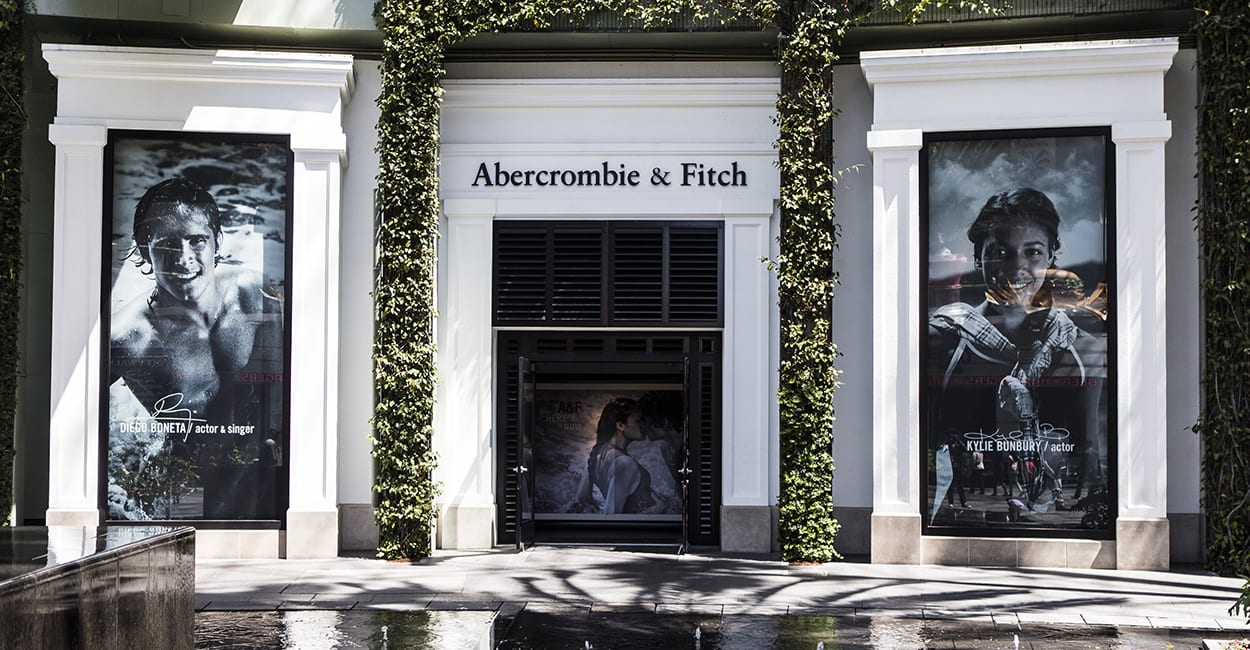
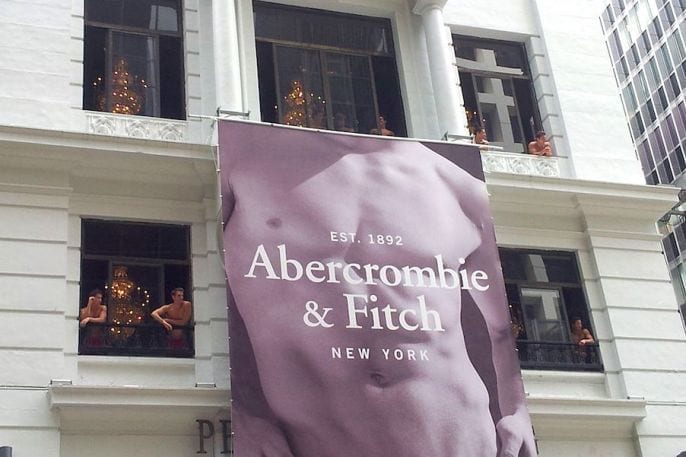
    US fashion chain Abercrombie & Fitch will close its four-storey ­flagship store in Central as early as next year amid the economic downturn and a slump in shoppers from the mainland.

    The 25,600 sq ft store on ­Pedder Street opened in 2011, paying HK$7 million in rent per month, double that of previous tenant Shanghai Tang.

    It has initiated an early exit ­before its lease expires in 2019.

    “The company exercised a lease kick-out option for its A&F flagship store in Hong Kong,” the retailer said on Friday. It claimed the move was “part of the ­company’s ongoing strategic review” and “was expected to drive economic benefit over time”.

    The closure of the store should be “substantially complete” by the end of the second quarter of fiscal year 2017.

    The move would trigger a “lease termination charge” of ­approximately US$16 million in the next quarter, it said.

    There would be no Abercrombie & Fitch branded store in the city after, but the company intended to add five stores on the mainland by the end of January.

    Comparable sales of the brand fell 14 per cent between August and October compared with the same period last year.

    It did not ­reveal its sales performance in Hong Kong.

    The city’s retail sales slumped 9.6 per cent in the first nine months of the year.

    Helen Mak, senior director and head of retail services at ­researcher Knight Frank, said Hong Kong was gradually losing its appeal to mainland tourists as a prime shopping destination after 10 years of high retail growth.

    Earlier this month, US fast-fashion brand Forever 21 said it would close its flagship store in the heart of the Causeway Bay shopping district late next year.

    Helen Mak, senior director and head of retail services at researcher Knight Frank, said many retailers had expanded aggressively a few years ago when the Chinese economy was strong and shoppers poured into the city.

    A&F had made aggressive expansions in the city a few years ago when the Chinese economy was still strong and mainland shoppers tourists poured into city to buy luxury goods.

    “Many retailers were optimistic about the market outlook at that time … But they may not be able to afford it now,” Mak said.

    Tourism spending by Chinese visitors has fuelled the boom in Hong Kong’s retail and commercial property sectors in recent years.

    Coach, another premier US brand, also closed its four-storey main store in Central last year amid weak retail sentiment.

    “Hong Kong is not too special a place for shopping in Asia. Many mainland shoppers now choose to go to elsewhere in the region, such as Japan, South Korea, Taiwan, etc,” she said.

    Last but not least, the yuan depreciation has also hit retail businesses, as a declining yuan makes Hong Kong goods more expensive for mainland shoppers, Mak said.
  • Levi Strauss & Co makes two senior appointments

    Levi Strauss & Co makes two senior appointments

    Jeans manufacturer Levi Strauss & Co has made two senior appointments from in house.

    Executive VP (global supply chain) and chief transformation officer David Love becomes executive VP and president of Levi Strauss Asia, Middle East and Africa, while senior VP (product development and sourcing) Liz O’Neill is now chief supply-chain officer.

    Liz O'Neill, chief supply chain officer

    Liz O’Neill, chief supply chain officer


    Love remains a member the company’s worldwide leadership team, which O’Neill will be joining. Both will report directly to president/CEO Chip Bergh.

    David Love, executive vice president and president of Levi Strauss Asia, Middle East and Africa.

    David Love, executive vice president and president of Levi Strauss Asia, Middle East and Africa.

    Love is an LS&Co veteran with more than 30 years of product development and sourcing experience. In his new post he will be responsible for leading the company’s commercial operations, spanning all brands and channels, across Asia, the Middle East and Africa (AMA).

    He joined the company 1982 as a manager of technical services at Levis’ UK factory, and has since held global positions.

    O’Neill joined LS&Co in 2013 to lead global supply-chain sourcing and strategy, a role involving shipping to more than 100 countries. Previously she was at Gap for 13 years and has also worked for The Disney Store in Los Angeles and Abercrombie & Fitch in Ohio.

  • Tourists taint Abercrombie & Fitch sales

    Tourists taint Abercrombie & Fitch sales

    After a short lived rally at the back end of its previous fiscal year, US apparel group Abercrombie & Fitch is now firmly back in negative territory with a weak set of sales figures at both the total and comparable level.

    It is particularly disappointing that sales growth has deteriorated since the prior quarter with much worse comparable numbers coming through for the US market.

    Once again, Abercrombie led the way with a decline of 7 per cent in same store terms; Hollister fared a little better but also slipped into negative territory with a comparable sales slide of 2  per cent. In the US both brands suffered from weaker traffic to malls and from lower tourist spend at flagship stores in key locations. This was offset, in part, by a more robust performance from the online channel which continues to show signs of life.

    Thanks to tighter inventory control, discounting was not particularly pronounced across the period which allowed A&F to produce a stronger margin outcome than might otherwise have been the case. Even so, higher product costs, relatively higher store and distribution expenses – which include the impact of lower margin eCommerce orders – and an asset impairment charge all helped push the company to an operating loss of US$10.8 million over the period. This is a marked deterioration on last year’s profit of $1.9 million.

    As disappointing as these numbers are, they are not entirely unexpected. The second quarter was expected to be fairly weak before a slight recovery of fortunes during the fall and winter seasons when stronger ranges should help drive more consumer interest. Since the previous update, however, the dollar has strengthened and this will take some of the edge of both sales growth and the profit line across the remainder of this year.

    As much as A&F is still in a period of correction, the company continues to move in the right direction. The decision to shutter 60 stores in the US over the course of this fiscal year reflects the changing dynamics of shopper behavior and will reduce A&F’s exposure to weaker malls and retail centres. The company’s emphasis on eCommerce will ensure that some of these sales are recouped.

    The company’s efforts around eCommerce are not just confined to the US. In Europe A&F’s new partnership with Zalando is encouraging, allowing it to bolster volumes and sales across Europe in a cost effective way. This gives the company and its brand extensive reach without the associated costs of opening and operating a vast number of stores.

    All that said, A&F still has much work before its brands are restored to full health. Its new ranges are better and much more appealing to core customers as well as a slightly older demographic. However, the brands still need a stronger sense of identity and focus in what remains a very crowded and competitive marketplace.

  • Applecrumby & Fish wins $300k funding boost

    Applecrumby & Fish wins $300k funding boost

    An online boutique that offers all-natural and organic baby products, Applecrumby & Fish has obtained a fresh round of seed funding worth $300,000 from Silicon Valley’s VC 500 Startups.

    The Malaysian company aims to use the money to establish itself as the top-of-mind site for safe baby essentials, reports Tech in Asia. Founded by husband and wife Sean and Jesmine Tan in Kuala Lumpur in late 2012, Applecrumby & Fish started out with 900 products. These have increased tenfold, and free same-day delivery is offered in its home market.

    Like other parents, the Tans resorted to importing their preferred baby products. After having their first child in 2011 they fell in love with organic brands not easily available in Malaysia.

    “We are very sensitive to the needs of parents who are looking for the best they can afford for their baby, at fair prices,” says Sean.

    Applecrumby & Fish sells skincare products, toiletries, food, supplements, gear and toys. Its brands include Bellamy’s, Drypers, Enfa, Gerber, MamyPoko, Putto, Spectra, Stephen Joseph and Quinny, and there are plans to add other brands not unavailable online.

    Its new funding will help it develop an in-house brand for baby products, starting with wipes and nappies. The company also wants to boost its content marketing and gear up for its launch in Indonesia as well as Brunei.

    As well as those markets, it ships to Singapore, Thailand and the Philippines.

    Applecrumby & Fish was among startups in the annual 10-week Distro Dojo program in Malaysia. Led by 500 Startups, the program focuses on customer acquisition, growth and distribution.

    Applecrumby & Fish graduated at the top of the program last month, increasing its site traffic by more than 200 per cent and tripling its revenue in less than four weeks.

    Meanwhile, the Tans aim to disrupt the diaper and wipes industry of South-East Asia with their inhouse brand, says Digital News Asia.

    “We have done our research and there is nothing quite like our brand in the market, not at our kind of non-premium pricing but with premium quality,” says Jesmine, who is also COO.

    She says the company has had 300 per cent year-on-year growth in terms of revenue, and aims to hit RM6 million (US$1.5 million) by the end of this year.

    Before launching Applecrumby & Fish, the Tans were property investors who also freelanced as interior designers. Despite Applecrumby & Fish sounding similar to US retail giant Abercrombie & Fitch, the name stems from their daughter’s first word at the age of six month, “apple”.

    “She would walk and crawl, dropping crumbs of food everywhere she went, hence crumby, while her favourite food was steamed fish,” says Jesmine.

  • Abercrombie & Fitch ‘in recovery mode’

    Abercrombie & Fitch ‘in recovery mode’

    Broadly, the latest set of results from Abercrombie & Fitch are to be welcomed: they are a sign that the brand continues to make progress in what remains a challenging market during a particularly difficult period of trading.

    Across the quarter, total sales shrank by 1 per cent on a reported basis, although when currency fluctuations are removed that number turns into growth of 2 per cent. Across the group, same store sales increased by 1 per cent on a year-over-year basis, with particularly good gains coming from international operations.

    There is also a reasonably positive story on the margin front where – despite a highly promotional environment and suppressed consumer demand- A&F saw gross profit as a percentage of sales drop by just 0.5 percentage points. The outcome here could have potentially been far worse.

    Despite there being clear signs of progress, which includes a sequential improvement in most of the sales and profit metrics, A&F is still very much in recovery mode and the brand is still not yet back to full health. This is evidenced by the fact that although the sales outcome was reasonable, it came off the back of what can only be described as a tumultuous final quarter last year when total sales shrank by 14 per cent and same store sales dipped by 13 per cent.

    Such soft comparatives flatter this quarter’s numbers and raise the question as to whether the better performance is a natural bottoming out, or if it is thanks to some of the corrective action that is now being taken by the management team. In truth, we think the results reflect a bit of both factors.

    Future growth will be governed, in large part, by how successfully the brand is able to reestablish its connection with younger consumers. Over the past year there has been evidence that both Abercrombie and Hollister are moving in the right direction in order to attune themselves to the tastes and preferences of today’s young shoppers. Among other things this has involved a less brash approach to marketing, a more minimalist and modern style in terms of clothing collections, a brighter and more inviting in-store experience, and a move into high growth categories like athleisure.

    These things have won back customers who defected and have also secured new shoppers. Most notably, the shifts have also allowed Abercrombie to secure custom from a slightly older demographic with higher spending power; something that is useful given that spending on apparel from younger shoppers remains muted thanks to the vast array of other products and services they now buy into.

    That noted, it is still far too early to say that brand loyalty has returned. At present many shoppers are rediscovering the brand and looking at it anew; as such their purchasing is patchy and occasional. While this is something A&F can improve on over time, it is unlikely it will ever regain the brand capital it once had: the market, consumers, and the competition have all shifted too much to allow that to happen.

    This is one of the reasons why A&F’s action on retooling its business model and reassessing its space and store requirements is sensible. To meet the new pattern of demand it will need fewer stores coupled with a good online offering. While there has been progress made in terms of reconfiguring the store fleet, growth from online is somewhat less encouraging.

    The upcoming year will continue to be one of reinvention. The current management team is strong and has the right mix of skills to make the necessary changes and reinvigorate the brand. However, they are up against a low growth, challenging environment which means that the play for the fiscal year as a whole is as much about holding onto current market share as it is about positioning the business for future growth.