Retail News CRM

Tag: agreement

  • CIMB get permission for banking venture with Philippines

    CIMB get permission for banking venture with Philippines

    CIMB Group Holdings Bhd has obtained the green light to establish its investment banking business in the Philippines. In a filing with Bursa Malaysia, the group said its wholly owned subsidiary CIMB Group Sdn Bhd had on Jan 23 received the relevant approvals from the Securities and Exchange Commission of the Philippines, including the Certificate of Incorporation and Certificate of Registration for an investment house licence.

    The investment banking business in the Philippines will be operated via a 60% shareholding in CIMB Bancom Capital Corporation with the remaining 40% stake to be held by local partners Bancom II Consultants, Inc and PLP Group Holdings, Inc.

    The three parties have entered into a joint venture agreement following the receipt of the approvals.

    CIMB shares went down 1 sen or 0.2% to close at RM5.65 today on 13.4 million shares done.

  • Sunway, Hoi Hup Realty wins land tender in Singapore

    Sunway, Hoi Hup Realty wins land tender in Singapore

    The Housing and Development Board of Singapore has awarded a parcel of land measuring 2.5ha to Sunway Bhd’s Singaporean unit Sunway Developments Pte Ltd (SDPL) and Hoi Hup Realty Pte Ltd after a successful bid.
    The land is slated for the SG$434.45 million (RM1.32 billion) Executive Condominium Housing Development. The group told the stock exchange that the land located at Tampines Avenue 10 (Lot 7545K MK 28), Tampines, Singapore was awarded to Hoi Hup and SDPL following a successful joint tender submitted by the parties.

    “The land will be acquired by a proposed new joint venture company to be incorporated, in which Hoi Hup or its nominee company(ies) and SDPL will have equity interest in the proportion of 65:35,” it noted.

    The 99-year lease term Executive Condominium Housing Development project is scheduled to go on for 60 months, commencing Jan 22.

    It is expected to contribute positively to the earnings of Sunway Group in the financial year 2023.

  • US-China talks on bilateral trade to impact Malaysia’s equity

    US-China talks on bilateral trade to impact Malaysia’s equity

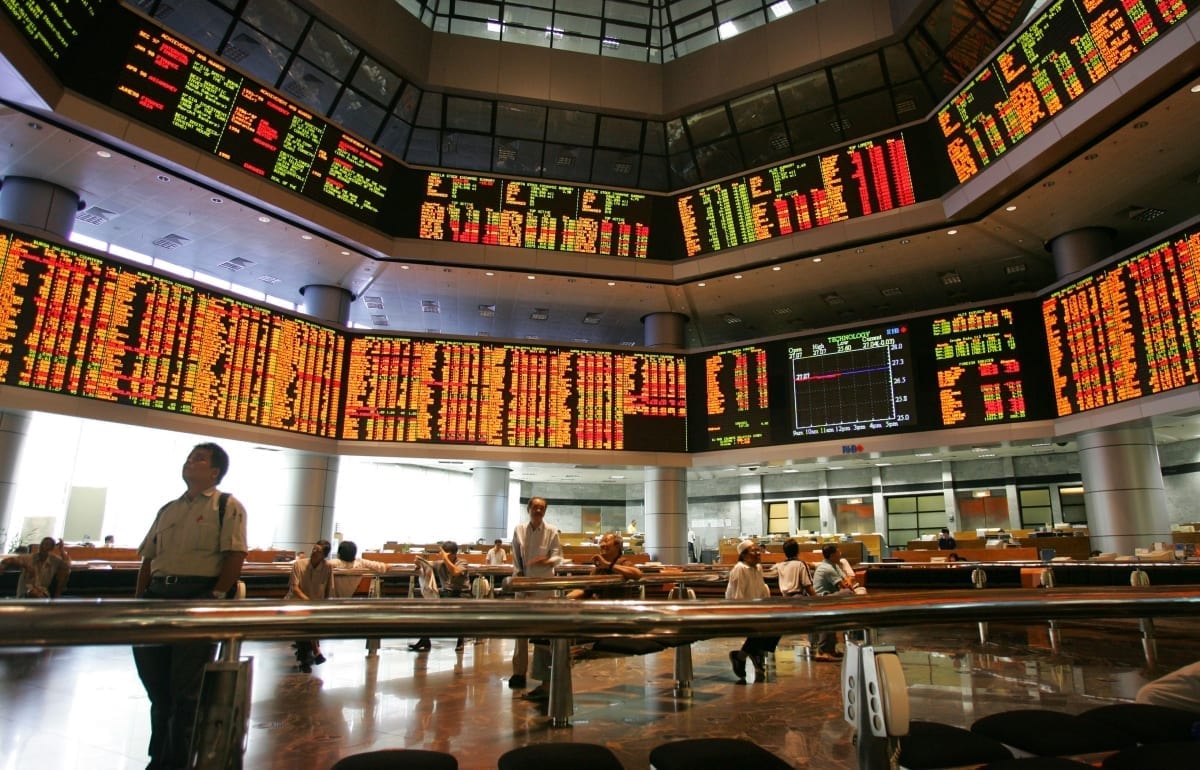
    The discussion between the US and China with respect to their bilateral trade would likely be the highlight for the equity market next week, says an economist. It could also be a source of market instability, said Bank Islam Malaysia Bhd chief economist Dr Mohd Afzanizam Abdul Rashid. He said market players are currently worried about the turbulence across global markets.

    “Generally businesses have become more risk-averse as some countries especially China and Asean nations had recorded below the 50-point demarcation line in their manufacturing index.

    “In fact, the US ISM manufacturing index has shown a similar trend, falling by 5.2 points to 54.1 in December 2018.

    “Naturally, businesses would reduce their capital expenditure and labour hiring as they would become wary of demand prospects, so we can expect equity markets to remain weak in the near term,” he said.

    Mohd Afzanizam said the current support level is at 1,653.

    The FBMKLCI might test this level should the discussion not pan out favourably, he added.

    For the holiday-shortened week, the FBM KLCI was traded mostly lower, mainly affected by external factors such as US political uncertainties, mounting concerns over poor global growth and the talks on the potential interest rate hikes by the Federal Reserve.

    The local bourse and its subsidiaries were closed on Tuesday for the New Year holiday.

    On a Friday-to-Friday basis, the benchmark FBM KLCI settled 22.29 points weaker at 1,669.78.

    The FBM Emas Index depreciated 124.28 points to 11,413.02, the FBMT100 Index decreased 131.24 points to 11,323.34, the FBM 70 declined 67.72 points to 13,023.80, the FBM Emas Syariah Index erased 152.51 points to 11,356.91 but the FBM Ace edged up 34.23 points to 4,294.43.

    Sector-wise, the Finance Index lost 99.90 points to 17,241.79, the Industrial Products and Services Index eased 1.18 points to 165.63, while the Plantation Index was 16.84 points weaker at 6,880.90.

    Comparing Friday-to-Friday, the weekly turnover rose to 7.22 billion units worth RM4.79 billion from 5.70 billion units worth RM4.15 billion.

    Main Market volume increased to 5.17 billion units valued at RM4.37 billion versus 4.16 billion shares valued at RM3.85 billion.

    Warrants turnover advanced to 1.23 billion units worth RM282.94 million compared with 948.80 million units worth RM202.97 million.

    The ACE Market volume appreciated to 719.60 billion shares valued at RM127.20 million against 556.26 million shares valued at RM90.05 million.

  • AuMake enters into agreement with JD Worldwide

    AuMake enters into agreement with JD Worldwide

    AuMake International Limited has joined forces with JD Worldwide, a division of Chinese e-commerce giant JD.com, to create a new omnichannel platform for Australian and New Zealand brands to reach Chinese customers. The strategic agreement, which was signed in Sydney on Tuesday, will see JD combine its online and logistics capability in China with AuMake’s retail store and brand building capabilities in Australia.

    The partnership mirrors a similar agreement between Alibaba’s Tmall and Chemist Warehouse, the companies noted in a statement.

    The agreement builds on the booming daigou industry in Australia and New Zealand, where personal shoppers, often Chinese students or tourists, buy and ship products on behalf of family, friends and other clients in China.

    AuMake over the past two years has expanded its chain of retail stores catering to daigou shoppers with relevant products and services.

    Under the agreement, AuMake will become JD’s exclusive retail store partner in Australia and New Zealand and connect existing and future store customers to its online flagship on JD’s cross-border platform, JD Worldwide.

    JD, under the agreement, will fully support AuMake’s online flagship, with an initial sales target of 10 million RMB ($2 million) per month, and provide access to its warehouse and dispatch logistics network in China.

    The companies will also work together to incubate and develop new brands to be exclusively sold on the JD Worldwide platform and in AuMake retail stores.

    AuMake executive chairman Keong Chan called the agreement a “company-changing event”.

    “This is a company changing event for AuMake and confirms the value that we have created so far via our retail store distribution network in Sydney,” he said.

    “Under this collaboration with JD Worldwide, AuMake will now be able to reach hundreds of millions of customers in China with new brands and products, including brands and products owned by AuMake.”

    Keong added that he believes AuMake and JD together can fundamentally change the way in which Australian and New Zealand products reach the Chinese market.

  • SK’s Chey says group is committed to U.S. society

    SK’s Chey says group is committed to U.S. society

    The chairman of Korea’s SK Group was in Washington on last Wednesday, vowing to make a commitment not only to the U.S. market but also its people and society. Chey Tae-won, who heads Korea’s third-largest conglomerate by assets, formally opened the Washington office of chipmaker SK Hynix in the presence of dozens of American dignitaries, including former U.S. Secretary of State Colin Powell.

    What was initially meant to be an opening ceremony was expanded under the name “SK Night” to provide a platform for Chey to explain the group’s current operations and investment plans in the United States, group officials said.

    “Past years, every different SK subsidiary … opened up their branches in the East Coast and West Coast, Texas … but they never actually [had] real communication with society,” Chey said in a speech.

    “Well this time, we will be investing in the U.S. about more than $7 billion here and there,” he said, citing as an example the planned construction of an electric vehicle battery plant in Jackson County, Georgia.

    “That’s going to be a $1.6 billion investment, and we’re going to hire right now more than 1,400 people,” he added to applause. “But within five years and if the market allows us, then we can expand [investment to] $5 billion and hire more than 6,000 employees there.”

    The plant is to be built by the group’s energy-chemical business, SK Innovation. On Monday, SK Biopharmaceuticals said it has applied to the U.S. Food and Drug Administration to win approval for sales of a newly-developed epilepsy treatment drug.

    Chey has pushed to expand SK’s presence in North America this year to add to business networks in China, the Middle East and Southeast Asia. During his stay here, he met with American business partners and local subsidiaries to help expand their presence on the continent.

    “[By opening up] the Washington office, I’m trying to show our commitment not only [to the] business side but also social value and commitment to society,” Chey said, adding that the group’s target is to “grow together” with U.S. society.

  • Jeju Air inks $4.4 billion deal to purchase 40 new planes

    Jeju Air inks $4.4 billion deal to purchase 40 new planes

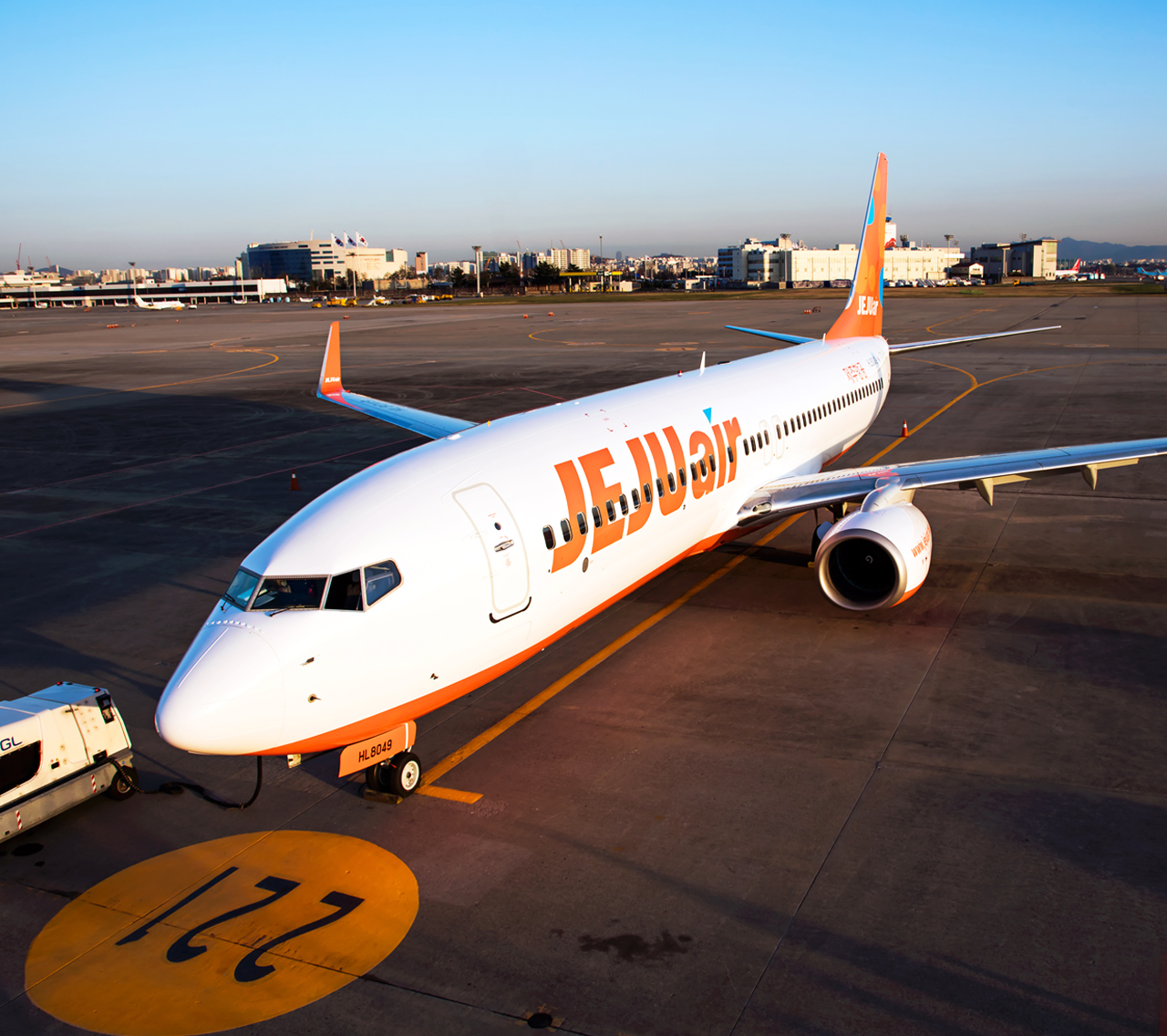
    Jeju Air, Korea’s biggest budget carrier by sales, said, on Tuesday, that it inked a $4.4 billion deal for 40 new planes, with the delivery set to begin in 2022. Jeju Air has decided to buy Boeing’s new B737 MAX passenger jets to strengthen its fleet, the company said in a statement.

    The low-cost carrier plans to assign the 189-seat B737 MAX on its mid and long-haul routes as they are more fuel efficient than the planes it currently operates, a company spokeswoman said over the phone.

    The new jets have a range of some 6,500 kilometers, 1,000 km more than the B737-800NG that the company currently operates.

    In the January-September period, net profit jumped 31 percent to 84.86 billion won ($75 million) from 64.61 billion won a year earlier. Operating profit climbed 14 percent to 95.82 billion won from 83.79 billion won during same period. Sales were up 28 percent to 941.93 billion won from 734.78 billion won.

    Jeju Air said it is on track to achieve sales of over 1 trillion won this year on the back of a strengthened fleet and profitable routes.

  • SK Korea keeps building Vietnam ties

    SK Korea keeps building Vietnam ties

    SK Chairman Chey Tae-won met with Vietnam Prime Minister Nguyen Xuan Phuc in Hanoi Thursday to discuss the conglomerate’s plans to invest more in both private and public companies and introduce measures to ease environmental problems there.

    They met for the second time in a year. As a result of the previous meeting, SK purchased a 9.5 percent stake in the holding company of Masan Group, one of Vietnam’s largest private enterprises, for $470 million in September.

    “We are pursuing further cooperation with private companies after our first meeting beginning with investment in Masan Group,” said the chairman of Korea’s third-largest conglomerate. “We expect cooperation in other areas such as privatization of state-owned companies to speed up.”

    Nguyen explained Vietnam’s privatization plans to Chey while asking SK to help develop the country’s growing industries.

    “Chairman Chey is the only foreign company chief that I meet every year, my interest in SK is special,” said Nguyen.

    Chey also said the group will help Vietnam combat environmental problems that stem from industrial development. SK Group currently supports the reforestation of a mangrove forest in Vietnam.

    Mangrove forests used to cover 4,400 square kilometers (1.08 million acres) of Vietnam, but only 30 percent remains. Since last May, SK Innovation has provided support to reforestation efforts in a mangrove forest in Tra Vinh province and reforestation research by Ho Chi Minh City University of Technology.

    SK’s relationship with Vietnam has grown over the years. Energy subsidiary SK Innovation has taken part in oil exploration and crude oil production from the country’s offshore oil fields since 1998. SK’s construction unit, SK E&C, has helped build petroleum complex projects in the country.

    Chey also participated in the Hanoi Forum Friday and Saturday.

    The Korea Foundation for Advanced Studies, an academic non-profit organization, and Vietnam National University in Hanoi jointly launched the forum this year to encourage academic cooperation between the two allies.

    Korea Inc. has been paying increasing attention to Vietnam as an alternative investment destination to China. Vietnam is expediting privatization amid a difficult fiscal situation, putting on sale several government-owned companies.

    In late October, Samsung Electronics Vice Chairman Lee Jae-yong paid a visit to Vietnam and vowed to increase investment during a meeting with the Vietnamese prime minister. Samsung Electronics operates major phone manufacturing lines in Vietnam, which has helped Vietnam become the second-largest exporter of mobile phones after China. As a manufacturing location, Vietnam serves as an important strategic partner for many Korean companies’ global supply chain.

    LG Display and textile giant Hyosung are also Korean companies with manufacturing units in Vietnam.

    During President Moon Jae-in’s visit to the country earlier this year, senior executives from SK and Samsung were in the president’s entourage in an effort to establish stronger business relations.

    In 2017, Korea placed second in terms of direct foreign investment in Vietnam, following Japan. Vietnam is currently Korea’s fourth-largest export partner.

  • Bank of Indonesia Signs $10b Financial Stability Deal With Singapore

    Bank of Indonesia Signs $10b Financial Stability Deal With Singapore

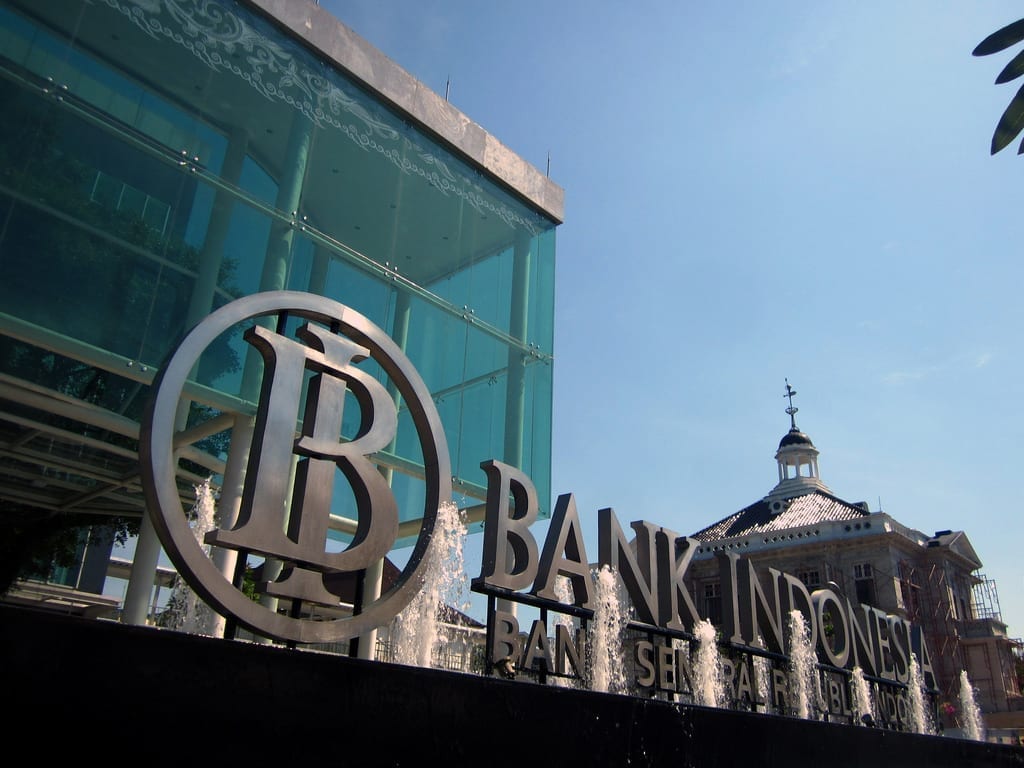
    The central banks of Indonesia and Singapore said last week that they had agreed to a bilateral deal for a $10 billion backstop to help maintain monetary and financial stability after a recent bout of turbulence in markets. The pact, which will be in place for one year, comprises a local currency swap agreement of around $7 billion equivalent and another $3 billion that allows for repurchase transactions between the two central banks to obtain United States dollar cash using government bonds of major countries as collateral.

    Bank Indonesia has been recently intervening to stabilize its rupiah, which fell to 20-year lows against the US dollar amid a global rout in emerging markets.

    “Economic fundamentals in the regional economies remain sound. But markets can sometimes overreact in the face of heightened uncertainty. This bilateral financial arrangement will instill confidence amongst investors,” said Ravi Menon, managing director of the Monetary Authority of Singapore.

  • Philippines forges agri deals with Thailand in Duterte visit

    Philippines forges agri deals with Thailand in Duterte visit

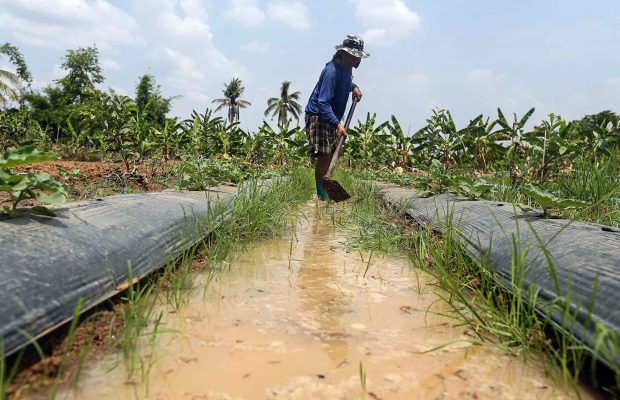
    The Philippines on Monday signed agricultural deals with Thailand, three months before it scraps a quantitative restriction on rice imports under an agreement with the World Trade Organization (WTO).

    The agricultural agreement encompasses information exchange concerning best practices in irrigation, livestock and fisheries, and technology for soil and water conservation, said President Rodrigo Duterte in a joint statement with Thai Prime Minister Prayut Chan-o-cha.

    “The Philippines and Thailand have vibrant economic relations with a trade value of almost $8 billion in 2016. We have yet to reach the limit of our potentials. That is why we also recognize the importance of cooperation in agriculture…our agricultural sector should drive national growth,” he said.

    Thailand is one of the Philippines’ primary sources of imported rice. In December, the National Food Authority (NFA) said private traders would import 284,780 tons of rice from Thailand. This is in addition to 250,000 tons that the NFA bought in August last year from Vietnam and Thailand.

    Agriculture Secretary Emmanuel Pinol said last year that he would need 2 more years to strengthen Filipino rice farmers’ capacity to compete with their peers in Vietnam and Thailand.

    While cheaper imports would bring down retail costs of the country’s staple grain, it would pose a threat to Filipino farmers’ livelihoods, because production costs in those countries are cheaper and output more plentiful.

    The Philippines is set to host the Association of Southeast Asian Nations’ (ASEAN) Second Meeting of the Joint Agricultural Working Group in 2019.

    Aside from agriculture, the Philippines also forged agreements with Thailand regarding tourism, and the promotion of exchanges that aim to enhance their capacities for science and technology.

    The two countries also agreed to ensure security and stability in the region, and address issues particularly terrorism, sea piracy, and illegal trafficking of drugs and people.

    They also stressed the need to maintain peace and stability in the region, including the South China Sea.

    “We emphasize the need for the full and effective implementation of the Declaration of Conduct of Parties in the South China Sea, and express determination to complete the Framework of the Code of Conduct in 2017,” Duterte said.

    Duterte visited Myanmar on Sunday, before he flew to Thailand on Monday.

  • Matheson Flight Extenders has signed an agreement with Cathay Pacific

    Matheson Flight Extenders has signed an agreement with Cathay Pacific

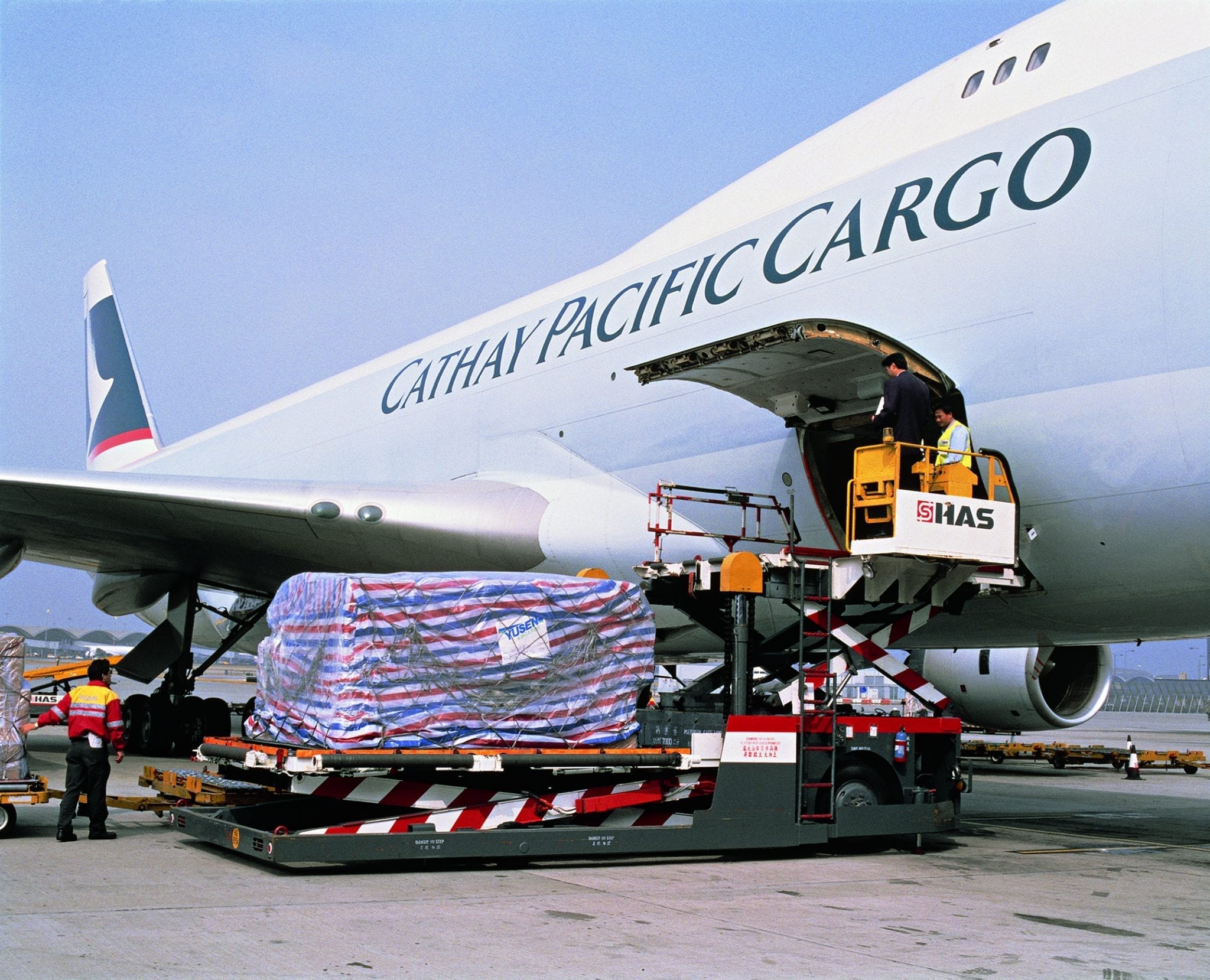
    Matheson Flight Extenders, Inc. has signed an agreement with Cathay Pacific to act as a freight consolidation agent to provide export and import services at Portland International Airport.

    Matheson Flight Extenders, Inc., a subsidiary of Matheson Trucking Inc., recently added eight employees to support Cathay’s new twice-weekly Boeing 747-8F flight to Hong Kong via Anchorage which was launched on November 3.

    “This is an exciting opportunity for Matheson to once again expand into the international freight arena,” said Charles Mellor, chief operating officer for Matheson. “We handled similar services for Asiana Airlines and are proud to be a key facilitator in the partnership between the Port of Portland and Cathay Pacific. Providing consolidation for import/export goods benefits the economy of Portland and businesses in the region.”

    According to Mellor, Cathay first contacted Matheson about providing consolidation services at Portland.

    “We quickly presented a bid and began negotiations,” he said. “The referral was a result of our previous partnership with Asiana. We have the ramp space to park a 747 close to our hangar, making it more convenient to load and unload the aircraft.”

    Cathay expects the flight to carry 40 to 60 tonnes of cargo from Portland every month, including semi-finished footwear and apparel, electronics and perishables such as blueberries, cherries, Dungeness crabs and oysters.

    The Portland flight operates every Thursday and Saturday and is routed via Anchorage and Los Angeles from Hong Kong, and via Anchorage on the way back.

  • Vietnam & South Korean businesses signed 10 contracts

    Vietnam & South Korean businesses signed 10 contracts

    The five-day fair themed “Viet Nam-South Korea Cooperation for Mutual Development” was held in the southern province of Ba Ria-Vung Tau.

    Truong Van Thoi, director of the provincial Trade Promotion Centre, said the event attracted some 40,000 visitors who spent over VNĐ6.5 billion.

    Wooden furniture businesses earned the highest revenue totalling VNĐ1.7 billion, followed by firms in textile, garments and the retail sector.

    Meanwhile, South Korean companies posted total revenue of some VNĐ1.1 billion.

    The fair facilitated local enterprises and businesses of both sides to foster their trade promotion activities, share market information and exchange experiences, helping them find suitable partners.

    The event featured 348 booths showcasing products of 194 firms, including 84 from Ba Ria-Vung Tau and 35 from outh Korea.

    Participants brought to the fair various items, including wooden products, handicrafts, interior décor and garments, as well as seafood, plant varieties, cosmetics and other consumer goods.

  • Trump to seek Indonesia`s agreement on trade commitments

    Trump to seek Indonesia`s agreement on trade commitments

    The US President Elect Donald Trump will want Indonesia to agree to ratify international trade commitments including APEC and the Indonesia-US Strategic Partnership.

    “Donald Trump will be interested in making investments in the infrastructure sector, including air, land and sea ports, especially investments that have the potential to lessen the influence of the Peoples Republic of China in South-East Asia,” international relations observer from Padjajaran University, Teuku Rezasyah, told ANTARA News in Jakarta on Wednesday.

    Teuku Rezasyah added that Donald Trump will potentially urge Indonesia to explain the Free-Active policy adopted by the country in the context of the rivalry between the US and China.

    “Considering the importance of investment and trade security, Trump is likely to understand the challenges faced by Indonesia in following human rights principles in the country,” he noted.

    Republican Donald Trump won over his rival Hillary Clinton, the candidate of the Democratic Party.

    Trump was elected as the 45th US President with total electoral votes far above Hillary Clintons.

    His victory came as a shock since most surveys had predicted that Hillary Clinton would win the US Presidential contest.

  • Indonesia, Australia discuss free trade agreement

    Indonesia, Australia discuss free trade agreement

    Australian Minister of Trade, Tourism and Investment Steven Ciobo has met Indonesian Minister of Trade Enggartiasto Lukita in Australia on Sunday to discuss free trade agreements.

    Press releases from the Department of Foreign Affairs and Trade of Australia received by ANTARA here on Sunday said that Minister Enggartiasto is visiting Australia to discuss the Indonesia-Australia Comprehensive Economic Partnership Agreement (IA-CEPA).

    IA-CEPA will generate economic framework which is expected to make closer relations between Indonesia and Australia besides opening up markets and new opportunities for both countries.

    According to Ciabo, the negotiations are going forward as the two countries continue to work to finalize the deal.

    “Minister Lukita and I have agreed to make ambitious and high quality deals,” Ciabo said, adding that the IA-CEPA can transform Australia and Indonesia economic partnership.

    Indonesia is Australias important neighbor and great regional partner, with the value of two-way trade between Australia and Indonesia amounting to US$15 billion in 2015, Ciabo noted.

    “IA-CEPA will bring our economies closer and allow Australian and Indonesian businesses to take advantages,” he said.

    IA-CEPA will create business opportunities for Australia and Indonesia to jointly work on those opportunities that will continue to develop in the future.

  • CropLife Asia Signs Partnership with Asian Apiculture Association

    CropLife Asia Signs Partnership with Asian Apiculture Association

    CropLife Asia announced today that it has signed a Memorandum of Understanding (MoU) with the Asian Apicultural Association (AAA) to support a research initiative to catalogue and study the bee species and populations in Asia. CropLife Asia Executive Director Dr. Siang Hee Tan and AAA President Dr. Siriwat Wongsiri signed the agreement at Singapore’s M Hotel.

    It is estimated that at least 87 out 115 global primary food crops require some form of animal pollination, and insect pollination occupies a high value in the production of daily produce including vegetables, fruits, edible oil and spices.

    Comprehensive data on pollinators in Asia is scarce and much of the information that does exist has been derived using an array of different methods, making it difficult to draw comparisons across geographies and time. To better understand the state of Asia’s pollinators, a first step in protecting them and promoting their use in agriculture, CropLife Asia and AAA have agreed to collaborate in developing a harmonized method to survey the pollinators in key Asian countries.

    “When it comes to pollinators in Asia, there is a general lack of both awareness as to the important role they play in agriculture as well as reliable data reflecting their overall health,” said Dr. Tan. “Our industry has a responsibility to work with chief stakeholders who have unique perspective and expertise in this area, and our partnership with AAA is an important and impactful step forward on this front.”

    A key component of the MoU is developing a universally-applicable, harmonized method to capture the state of bee health in particular in key countries across the region. Specifically, this will entail surveying bee species in order to identify major pollinators (including indigenous subspecies) and their relative abundance.

  • ‘Bilateral agreement will give players greater banking access’

    ‘Bilateral agreement will give players greater banking access’

    Top Malaysian financial players with a presence in Indonesia lauded the bilateral agreement between Indonesia and Malaysia, saying it will pave the way for greater access to conventional and Islamic banking. CIMB Group chief executive officer Tengku Datuk Seri Zafrul Aziz said the agreement is positive for the banking industry of both countries. “It is an additional impetus for CIMB Group to expand its business in Indonesia, particularly in the Islamic and consumer segments, where there are a lot of growth opportunities, given Indonesia’s 260 million population.

    “We also view the agreement between Indonesia and Malaysia as an important step towards better Asean economic integration, paving the way for CIMB to continue delivering its universal banking proposition for customers in the region.” Bank Negara Malaysia and Otoritas Jasa Keuangan of Indonesia have signed the agreement which will provide more access and operational flexibility for Malaysian and Indonesian Qualified Asean Banks operating in the respective jurisdictions. The agreement permits the formation of three banking groups that meet stipulated criteria to be classified as one of the Qualified Asean Banks, which would be afforded equal treatment as local lenders.

    CIMB is eyeing further growth in its banking franchise. Its subsidiary, CIMB Niaga, is ranked as one of the top five banks in Indonesia by asset size, with a current customer base of 3.6 million. It recently posted strong first-half results. RHB Banking Group said a commercial banking presence in Indonesia remains a priority in its overseas expansion plan, adding that it will complement its existing business in the country. “From a merger and acquisition aspect, we will keep an opportunistic mind to ensure the right time, price and strategic fit into our overall group strategy to deliver better value to stakeholders,” said group chief strategy and transformation officer Christopher Loh. Islamic finance is a significant area of potential growth in the world’s most populous Muslim nation, he pointed out.

    “Malaysia, being at the forefront of Islamic finance, could provide expertise to grow this sector, which spells an opportunity for Indonesia as the government aims to deepen the country’s Islamic banking sector. ” RHB has about 14 branches across Indonesia dealing with securities and asset management business. Affin Hwang Capital banking analyst Loh Jia Ying said one more banking licence is available for Malaysian banks to expand into Indonesia, adding that it is also possible that the central bank of Indonesia may allow the Malaysian bank to acquire one of the Indonesian banks. On the impact of the agreement, he said it would be minimal in the near term for Maybank Indonesia, CIMB Niaga and the Indonesian banking sector.

    As for state-owned Bank Mandiri’s keen interest to expand in Malaysia, Loh said although the bank may have the advantage of familiarity for Indonesians here, its profitability may be limited if it focuses only on Indonesian workers, unless there is a significant change in their behavioural patterns. Bank Mandiri, the largest Indonesian bank by assets, currently has five remittance offices in Malaysia, and focuses on the revenue generated from Indonesians working here. It will also have to undertake significant work to generate more revenue from the Indonesian workers and will be limited by the smaller number of branches.