Retail News CRM

Tag: air asia

  • AirAsia to revive Davao-Clark

    AirAsia to revive Davao-Clark

    Around two years since Davao-Clark flights were suspended, the budget airline Philippine’s AirAsia is gearing up to revive the route, a tourism officer said.

    Arwin Lingat, provincial tourism officer of Pampanga, said that AirAsia is working out to offer again the Davao-Clark, Pampanga flights.

    “Though it is still up for confirmation, there are plans to revive the flight from Davao-Clark and vice versa,” he said.

    He also pointed out that Davao-Clark Pampanga route has a big chance to be revived especially now that AirAsia inked an agreement with Davao tourism industry sector last September 30, 2015 during the recently-concluded 16th National Convention of the Association of Tourism Officers of the Philippines (Atop) in SMX Convention Center, Lanang, Davao City.

    Davao City Tourism Operations Officer Lisette Marquez, for her part, said that the signing of agreement with Air Asia for a special arrangement for Meetings, Incentives, Conventions and Events or Exhibitions (Mice) participants would mean an easier arrangement with no fee if the ticket holder wants the fare be upgraded or rebooked.

    The partnership between the city and Air Asia was signed during the formal launching of Mice Davao Program. The program is aimed to signify the city as a potential Mice destination in the country.

    In a report last 2013, budget airline Philippine’s AirAsia announced it will temporarily stop servicing the route starting October 9. The airline said the suspension was made to cushion the impact of losses made by its affiliate Zest Airways following the suspension order imposed by Civil Aviation Authority of the Philippines (Caap) last August 16, for safety violations.

    “The temporary suspension is primarily to manage costs following the recent grounding of Zest Air by Caap. This has affected many factors and allocating necessary resources such as aircraft and crew critical to ensure its recovery,” the airline said.

    Among the violations committed by Zest Air, as cited by Caap, were the series of occurrences like fuel overflow that affected several flight operations, refueling with passengers on board, excessive flight duty time of pilots, and failure to present an airman license during ramp inspection.

    Air Asia holds around 49 percent share in Zest Air.

    Flights from F. Bangoy International Airport, Davao City to Clark International Airport in Clark, Pampanga, is at four times a week.

    The airline route was suspended only after over a year of operations.

  • AirAsia makes Tune Money its wholly owned unit

    AirAsia makes Tune Money its wholly owned unit

    AirAsia Bhd is acquiring the remaining 60% interest in financial services provider Tune Money Sdn Bhd as well as its entire issued redeemable preference shares (RPS) for RM6.36mil in cash.

    In a filing with Bursa Malaysia, AirAsia said the payment of about RM0.038 per ordinary 10 sen share and RM150,000 per RPS to vendor Tune Money International Sdn Bhd (TMI) would be financed by the company’s internally generated funds.
    TMI and AirAsia share two common shareholders and directors, namely Tan Sri Tony Fernandes and Datuk Kamarudin Meranun.
    AirAsia said Bank Negara had stated on Sept 30 that it had no objections to the transaction.
    On the rationale for the acquisition, it said this would give additional benefits that could only be realised through full ownership and control of Tune Money.
    “Full ownership would allow greater control and facilitate accelerated decision-making with regards to AirAsia priority items that would help support the company’s business plan and commercial objectives.
    “Additionally, once AirAsia increases its stake in Tune Money to above 50%, Tune Money will no longer be classified as an associate and AirAsia will be able to incorporate Tune Money’s contributions to company revenue, which would improve AirAsia’s top line as well as ancillary revenue,” the low-cost carrier said.
    These, it added, were on top of the existing benefits that AirAsia enjoyed through its ownership of a stake in Tune Money, such as lower merchant discount rate, increasing ancillary spend by incentivising guests with meal and baggage discounts, and accelerating deployment of the BIG Loyalty programme by allowing points accrual from purchases outside the AirAsia ecosystem.
  • Now AirAsia can fly again in Japan

    Now AirAsia can fly again in Japan

    AirAsia Japan Co Ltd, which recently reorganised its shareholding structure, has received the air operator’s certificate from the Ministry of Land, Infrastructure, Transport and Tourism.

    AirAsia said in a statement that AirAsia Japan was scheduled to begin operations from its base at Chubu Centrair International Airport in Aichi prefecture to Shin-Chitose Airport in Sapporo, Sendai Airport in Sendai and Taiwan Taoyuan International Airport in Taipei in spring 2016.

    AirAsia group CEO Tan Sri Tony Fernandes said: “We are very excited to be back in Japan. We have fantastic partners here and we are united in the vision to change the way people travel in Japan.

    “Centrair Airport is a fantastic base and with our new routes, we look forward not only to enable the Japanese to enjoy our direct destinations but to connect them to the rest of Asia and beyond on our extensive network.”

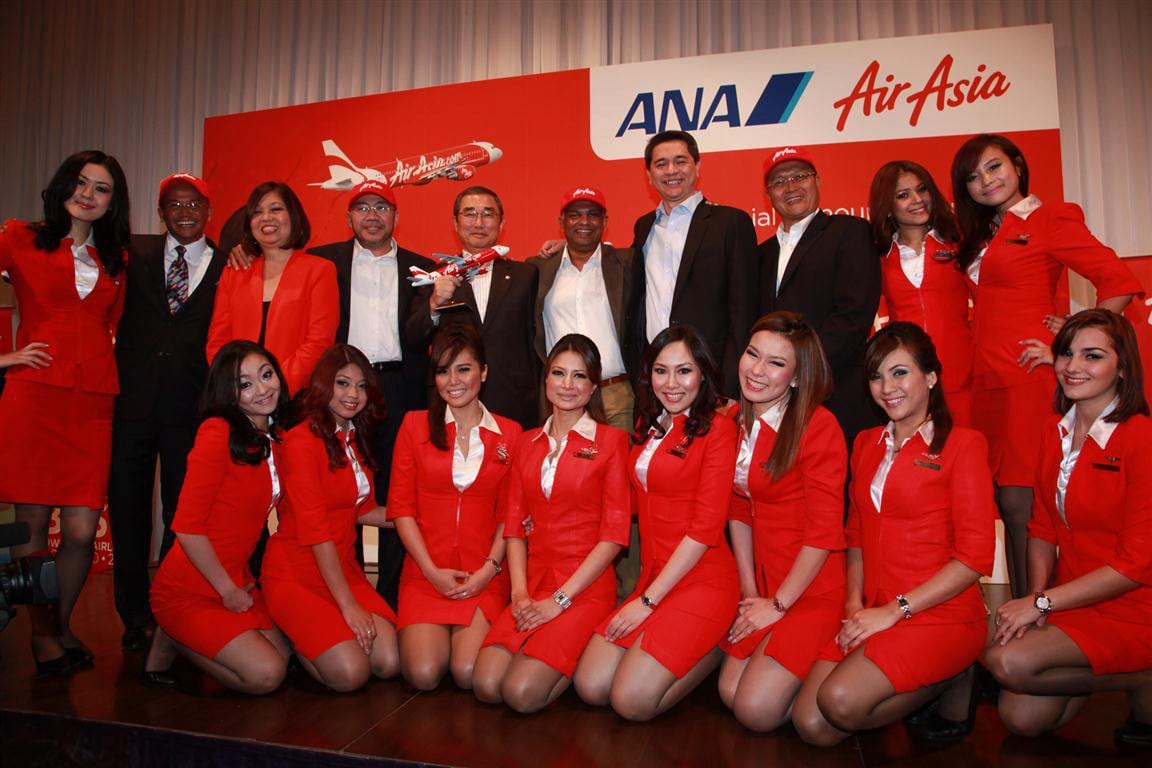
    AirAsia first tried to enter the Japanese market by collaboratng with All Nippon Airways Co Ltd (ANA) in July 2011, but AirAsia withdrew from the joint venture in June 2013 due to “different management styles”.

  • Indonesia AirAsia Will be No More

    Indonesia AirAsia Will be No More

    Indonesia AirAsia airline will end its operation in Indonesia as it will be merged with Indonesia AirAsia X. Suprasetyo, director general for air transportation at the Transportation Ministry, said this merger is to improve Indonesia AirAsia’s financial condition.

    According to Suprasetyo, the merger is to save Indonesia AirAsia from having its operating license revoked because by merging with AirAsia X, Indonesia AirAsia’s equity will not be negative. “Indonesia AirAsia X’s equity is not negative because it hasn’t been audited and its operation is still less than a year,” he said on Wednesday.

    Therefore, said Suprasetyo, after the merger, there will be no more Indonesia AirAsia. All AirAsia’s operations in Indonesia are under Indonesia AirAsia X that serves medium and long-distance flights. For that, Indonesia AirAsia X will submit new business plans and process route permits again so that they can use Indonesia AirAsia’s routes. “Indonesia AirAsia is no more,” he said.

    Indonesia AirAsia is one of 13 airlines that have negative equities, based on the Transportation Ministry’s inspection in July 2015. The ministry threatened to revoke their operating licenses if their equities were not positive until September 30.

    Indonesia AirAisa president director Sunu Widiyatmoko gave no answer when asked for confirmation, while PT Indonesia AirAsia X chief executive officer Dendy Kurniawan did not comment much and chose to wait for an official announcement from the ministry.

  • Philippines AirAsia plans 2016 growth as it establishes new secondary hubs

    Philippines AirAsia plans 2016 growth as it establishes new secondary hubs

    AirAsia’s operation in the Philippines is entering a new phase which the group hopes will lead to profitability in 2016 and eventually an initial public offering. Growth is also expected to resume in 2016, ending a phase of consolidation and fleet reductions.

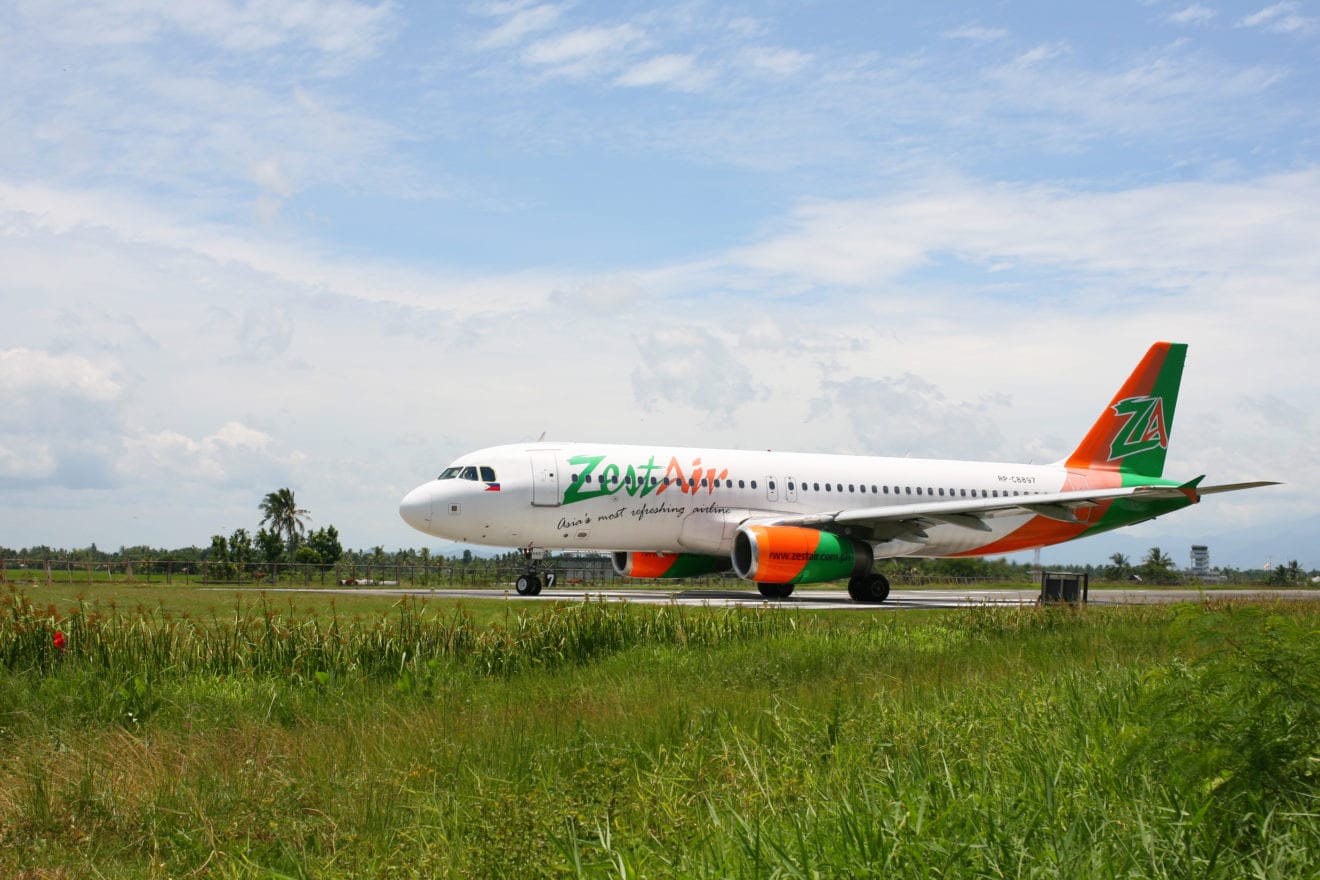
    The AirAsia Zest brand will be retired by the end of 2015 in favour of the Philippines AirAsia brand. AirAsia has already completed the transition to a single operating certificate in the Philippines, following a complicated and costly two years of maintaining two separate affiliates.

    AirAsia’s Philippine operation has been highly unprofitable since it was launched in 2012. Turnaround efforts are banking on cost reductions driven by the transition to a single airline and higher yields that will be generated by a more international focused network. The network will be expanded to include several new routes from secondary hubs, in line with a new AirAsia Group strategy to open new unique point to point routes from secondary hubs throughout Southeast Asia.

    AirAsia has struggled in the Philippine market since 2012

    Philippines AirAsia (PAA) launched in Mar-2012 with a fleet of two A320s based at Manila alternative airport Clark. The initial operation struggled, leading PAA to pursue in early 2013 a quasi-merger with Zest Airways, a much larger LCC which was based at ManilaInternational Airport. Zest adopted the AirAsia Zest brand in late 2013.

    PAA and AirAsia Zest had to initially maintain separate operations and refrain from pursuing a complete merger due to regulatory obstacles although the two carriers were able to cooperate closely. PAA moved its fleet of two A320s in Oct-2013 from Clark to Manila, where it was able to use Zest slots that opened up after Zest phased out its turboprop fleet.

    Over the last two years AirAsia’s operation in the Philippines has been in an almost constant state of restructuring. Currently the operation consists of only 12 active aircraft, which are used to serve seven domestic and seven international destinations.

    As CAPA has previously highlighted, AirAsia’s operation in the Philippines has been consistently unprofitable, posting unsustainably high negative margins. Operating losses narrowed by 62% in 1H2015 to PHP1.083 billion (USD24 million) but this is still a dismal performance as the revenue base was only PHP4.425 billion (USD99 million) and the traffic base was only 1.82 million passengers.

    Improved load factor and single AOC brightens PAA’s outlook

    But the outlook for AirAsia’s Philippine operation is starting to brighten.

    The load factor of AirAsia’s Philippine operation improved to 78% in 1H2015 compared to only 67% in 1H2014. Passenger traffic was flat despite a 10% reduction in seat capacity as unprofitable routes were cut.

    Philippines AirAsia/AirAsia Zest combined operating highlights: 1H2015 vs 1H2014

    1H2015  1H2014  y-o-y change 
    Passengers (millions) 1.82 1.82  0%
    Seats (millions) 2.31 2.55  -10%
    Seat load factor 79% 71% +8pps
    RPKs (millions) 1,703 1,770 -4%
    ASKs (millions) 2,186 2,632 -17%
    Load factor 78% 67% +11pps

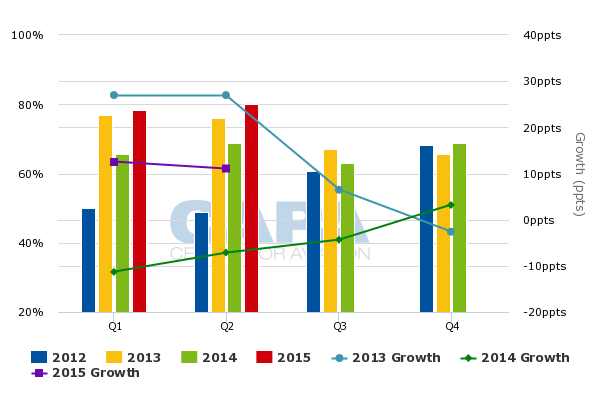
    Also, quarterly seat load factor exceeded 80% for the first time in 2Q2015.

    Quarterly load factor of AirAsia’s Philippine operation: 1Q2012 to 2Q2015

    Since the beginning of the current quarter PAA and AirAsia Zest have transitioned to a single air operators’ certificate (AOC), which the carriers were unable to pursue initially due to the long process of securing required approvals. Streamlining the operation under the AOC of PAA should facilitate efforts to reduce cost.

    AirAsia is now ready to transition to one brand in the Philippines

    AirAsia currently still has two brands in the Philippines with Philippines AirAsia and Zest AirAsia. PAA CEO Josephine (Joy) Caneba told CAPA on the sidelines of the 22-Sep-2015 CAPA LCC Airports Congress in Bangkok that final approval to merge the brands was recently secured and the Zest AirAsia brand will soon be phased out.

    A brand campaign is expected to be rolled out over the next couple of months throughout the Philippines aimed at cementing the PAA brand.

    The fleet is also now in the final process of being streamlined

    Ms Caneba said PAA still has 15 aircraft on its books but is in the process of selling older aircraft and aircraft powered with V2500s that were inherited from Zest. PAA will be left with 12 newer model CFM56-powered A320s, giving it one type of aircraft that is consistent with the rest of the AirAsia Group and generating operational efficiencies.

    Philippines AirAsia CEO Joy Caneba discusses the transition to a single AOC and brand, the streamlining of the fleet and opportunities for international growth including to China.

    Ms Caneba told CAPA that PAA aims to resume fleet growth in 2016 and has a fleet plan that envisions three additional A320s per annum.

    The new phase of fleet and network growth is made possible as a long restructuring phase is now nearing completion. Unviable routes have been cut and unit costs have been reduced by streamlining the fleet, transitioning to a single AOC and pursuing other cost saving initiatives.

    USD50 million in new capital has been raised from the five existing shareholders

    Expansion is also now possible as USD50 million in new capital has been raised from the five existing shareholders, which include four Filipino investors (with 15% stakes each) and Malaysia-listed AirAsia Berhad (with a 40% stake). Ms Caneba expects the recapitalisation exercise will be completed by the end of 2015.

    Strategically, PAA needs to resume expansion as it cannot afford to be stuck at its current modest capacity level. Cutting capacity and the fleet over the last year was necessary but is seen as a temporary measure to position the airline for future growth.

    PAA has already developed Kalibo as an alternative international hub

    PAA has been working on a network expansion plan which focuses on opening new unserved routes from secondary gateways such as Davao, Iloilo, Kalibo and Puerto Princesa.

    Kalibo is now one of three PAA bases along with Cebu and Manila, which are the largest two cities in the Philippines. Kalibo is currently linked with Manila and five international destinations including three in China (Beijing, Hangzhou and Shanghai Pudong) and two in South Korea (Busan and Seoul Incheon). PAA also operates seasonal services from Kalibo to a fourth destination in mainland China, Wuxi.

    Cebu is a smaller base with just one international and two domestic routes. From Manila, PAA currently has six domestic and five international routes, according to OAG data.

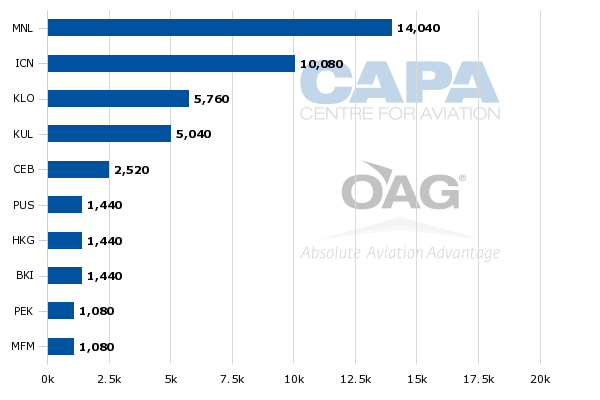
    While it has the same number of international routes from Manila and Kalibo most of PAA’s international capacity is at Manila as its Manila routes are generally served with more frequencies. PAA even has more international capacity at Seoul than at Kalibo as Seoul is served with three daily flights (one each from Cebu, Kalibo and Manila) while Kalibo overall has only 16 weekly scheduled international flights.

    Philippines AirAsia scheduled international seat capacity by hub/base/station: 21-Sep-2015 to 27-Sep-2015

    Kalibo is a gateway to the popular resort island of Boracay in the central Philippines. PAA is now looking at launching flights to Caticlan Airport, which is much closer to Boracay, after a runway extension is completed in early 2016.

    But Kalibo Airport will remain a gateway to China as PAA expects to only be able to operate domestic and potentially some shorter international flights from the upgraded Caticlan Airport.

    PAA plans to develop more secondary gateways

    Davao, Iloilo and Puerto Princesa would be new gateways for PAA with international routes initially operated using A320s from the existing bases. But PAA plans to establish new aircraft bases within the next couple of years at Puerto Princesa and potentially other secondary airports.

    PAA is discussing with the airport operating international flights from Puerto Princesa before the new terminal is completed

    As CAPA previously highlighted, PAA has been looking at operating international flights from Puerto Princesa, which is located on the western resort island of Palawan, to China and Malaysia. Puerto Princesa is planning to open a new terminal with upgraded international facilities in late 2016 or early 2017. But Ms Caneba said PAA is discussing with the airport operating international flights from Puerto Princesa before the new terminal is completed.

    See related report: AirAsia to drive growth at Philippines’ Puerto Princesa Airport as Palawan visitor numbers surge

    Iloilo, which is located south of Kalibo in the central Philippines, is also planning terminal expansion with upgraded international facilities. PAA now only serves Iloilo with domestic flights from Manila. The only scheduled international services at Iloilo currently consist of three weekly flight to Hong Kong and two weekly flight to Singapore operated by Cebu Pacific.

    Davao is the largest city in the southern Philippines but only has one international service – a link from Singapore operated by SilkAir.

    Domestic and Manila growth to slow

    PAA will continue to pursue some expansion at its main base in Manila, including a new flight to Singapore which is included in the 2016 network plan. But the main focus will be on secondary hubs in part because Manila is capacity constrained and PAA is now fully utilising its Manila slots.

    PAA is also not planning significant growth at Cebu, where it recently cut capacity. PAA currently has nine daily flights at Cebu, including seven to Manila, one to Davao and one to Seoul. Cebu-Davao, which connects the second and third largest cities in the Philippines, is PAA’s only remaining point to point domestic route.

    PAA is now focusing more on the international market as domestic routes are generally lower yielding and in some cases oversupplied. The Philippine Airlines (PAL) Group has resumed domestic capacity expansion in 2015 and relaunched several secondary domestic routes. PAA has sensibly determined is it better off redeploying some if its domestic capacity to the higher yielding international market.

    Over the last couple of years AirAsia has discovered that battling against PAL and much larger LCC Cebu Pacific in the domestic market is generally a losing proposition.

    AirAsia will pursue growth in Philippines-China market

    PAA is particularly now focusing on the Philippines-China market. It sees opportunities to add several destinations in China from multiple Philippine gateways. Ms Caneba told CAPA that PAA will probably launch Guangzhou in 2016, as well as other cities in mainland China.

    The Philippines is emerging as a popular tourist destination for Chinese residents despite some political tensions between the two countries. China is also a relatively big outbound market as there is a large Filipino Chinese population.

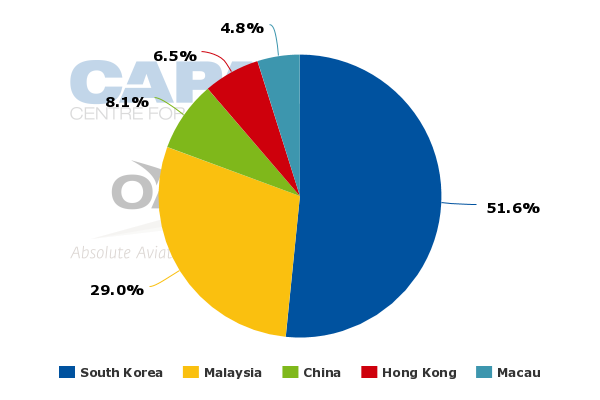
    PAA has ample room to grow in the Chinese market as it currently has only 900 weekly one-way seats to China, according to CAPA and OAG data. China accounts for only about 8% of PAA’s total international seat capacity.

    Philippines AirAsia international capacity share (% of seats) by country: 21-Sep-2015 to 27-Sep-2015

    PAA is particularly keen on linking Chinese cities with secondary gateways in the Philippines including additional routes from Kalibo andnew routes from Puerto Princesa. The routes under consideration are currently not served by any carrier, which makes them particularly appealing to PAA.

    PAA to pursue niche routes not served by its largest local competitors

    PAA is keen to expand under the radar screen of its much larger local competitors, PAL and Cebu Pacific, while exploiting network synergies with the AirAsia Group. AirAsia already serves most of PAA’s potential Chinese destinations, reducing the risk for PAA as it can leverage its parent’s experience operating and selling in China.

    PAA sees a potentially lucrative niche by pursuing interconnectivity with other AirAsia carriers and stimulating demand on new international routes from the Philippines which have never been served previously.

    As CAPA highlighted in the first two Parts in this series of analysis reports on the AirAsia Group, developing new international routes from secondary gateways is also part of a new broader strategy at AirAsia.

    Part 1 examined the upcoming opening of a new base by Thai AirAsia at U-Tapao Airport near Pattaya as well as plans to open two more new secondary bases in 2016. Part 2 examined similar plans for expansion at secondary airports by Malaysia AirAsia, including a planned new hub at Langkawi.

    2016 will be a critical year for Philippines AirAsia

    The focus on secondary international routes is logical as PAA needs to differentiate itself from its larger competitors. There should be room for three local players in the Philippine market but PAA will never have the scale to outmuscle the PAL and Cebu Pacific on trunk routes.

    PAA has had a rough initial three and a half years and still faces major challenges. 2016 will clearly be a critical year for PAA.

    If it meets its 2016 goal of becoming profitable aspirations for an initial public offering within two years will become realistic, providing a foundation for consistent growth. If the newly restructured PAA remains loss-making its long-term survivability – and the AirAsia Group’s need for a Philippine affiliate – will again be questioned.

  • AirAsia flying high again

    AirAsia flying high again

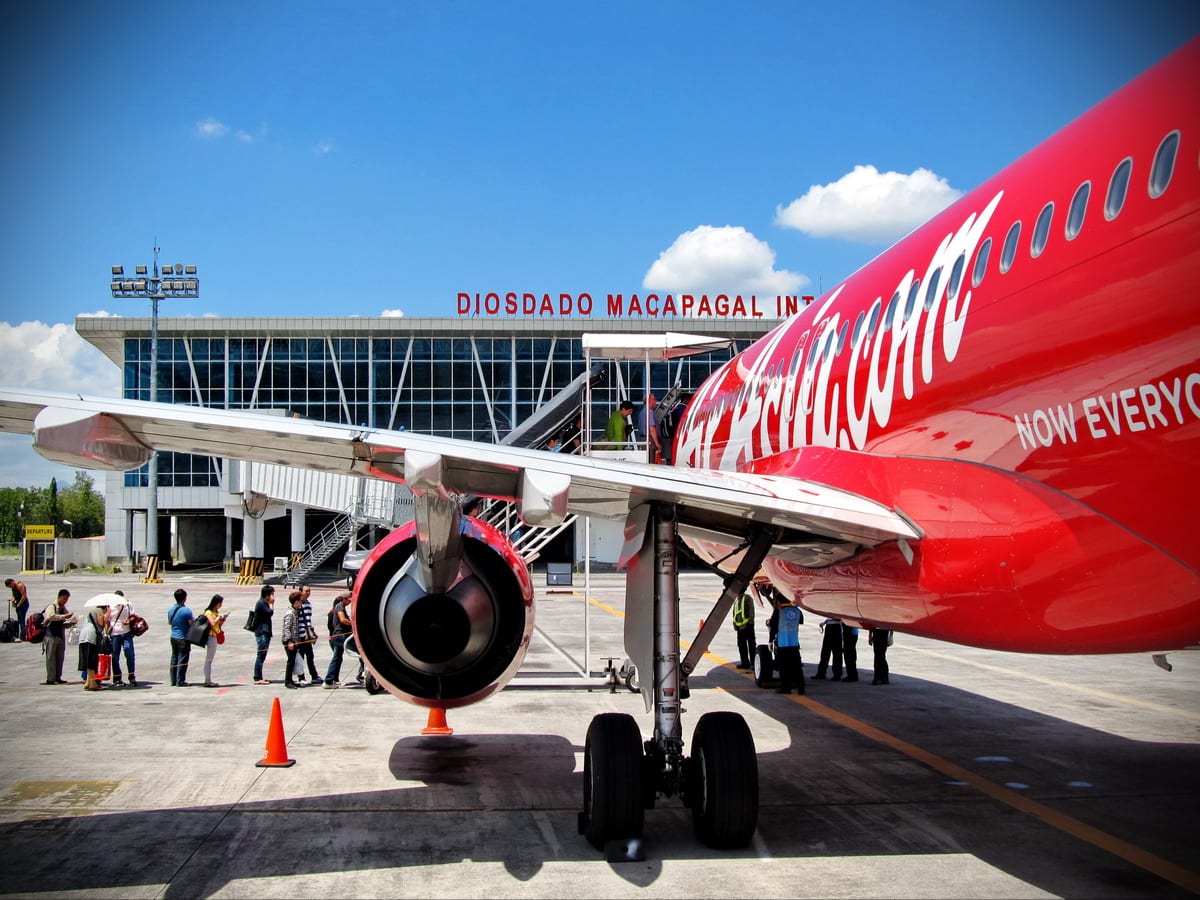
    AirAsia Bhd has been facing strong headwinds lately. The budget carrier’s share price has been on a roller-coaster ride over the past couple of months, fluctuating dramatically.

    The airline’s shares have been under pressure for some time and plunged to 78 sen on Aug 26. Its share price has since rebounded sharply from that recent low, with analysts calling it an overshooting of its price during the selldown. AirAsia became a penny stock at the end of last month and stayed below the RM1 mark for about two weeks. Its share price has since rebounded, closing at RM1.31 yesterday.

    Year to date the counter has lost more than 50%.

    What triggered the quick recovery?

    Analysts say the recent selldown was overdone and the market has ignored the significant value of its portfolio comprising non-airline businesses within the group. In addition, they note that AirAsia’s fundamentals are intact and it is undervalued.

    Maybank Investment Bank Bhd analyst Mohshin Aziz concurs that the selldown was overdone and maintains a “buy” call on AirAsia with a target price of RM2.05.

    “It is a highly beaten down stock. Given the situation, it is the highest candidate (to be picked up by investors),” he tells StarBizWeek.

    Mohshin notes that AirAsia has been very active this year engaging the investment community by having meetings, teleconferences and so forth but to no avail as it shares continued to be beaten.

    “AirAsia is cheap. Cheapest in its history in US dollar terms and also the cheapest airline stock in the world currently,” he says.

    Mohshin says there is no point talking about valuations of AirAsia, as it is beyond fire sale.

    “We derived an alternative and tangible valuation methodology for AirAsia, given that the conventional ones are gaining no traction. We took the latest available appraised value of its fleet, net off its long-term debt and times it by the ringgit at RM4.3 to the dollar and we get an intrinsic value of RM1.34 per share. Basically, the metal value of the business is higher than the current market capitalisation.

    “Shareholders can make a nice 18% gain by just selling off the fleet whilst keeping the RM4.8bil of equity,” he remarks.

    It is worth noting that the US-based Wellington group of companies which had reduced their stakes in the low-cost carrier in June this year have started buying shares in AirAsia.

    According to the latest filings with Bursa Malaysia, Wellington Management International Ltd has 200.74 million shares, or 7.214% stake in AirAsia. Wellington Management Global Holdings Ltd has an indirect 228.19 million shares or 8.2% stake, while Wellington Group Holdings LLP has an indirect 278.99 million or 10.025% stake.

    The Employees Provident Fund (EPF) had on Sept 3 acquired 2.498 million shares in AirAsia but it disposed 892,500 on Sept 9.

    “AirAsia took a beating but it is now a V-shape recovery. Wellington and EPF are back. They have been buying and hopefully the worst is behind for AirAsia. The counter has been attracting high trading volume,” an analyst say.

    The turbulence comes not in just its shares being sold down. AirAsia is also battling with other issues such as the report by accounting research firm GMT Research that raised questions about related party transactions. GMT Research had highlighted problems with the company’s accounting practices and raised concerns regarding the firm’s cash flow, leverage and group structure.

    News that PT Indonesia AirAsia (IAA) may be shut down by the end of July also caused a panic among investors.

    AirAsia’s 49%-affiliate IAA has received a letter from Indonesia’s Transport Ministry laying out terms for it to ensure a positive equity position by July 31.

    Indonesia’s Transport Ministry has ordered 13 airlines to raise funds to reach positive equity positions out of concerns that a negative equity would affect safety oversight.

    Futhermore, the company’s latest quarterly results provided little cheer to investors. In the first six months to June 30, AirAsia’s net profit fell to RM392.36 mil from RM506.87 mil a year ago, with a relatively flat revenue of RM2.6bil.

    AirAsia is also battling the Malaysia Airport Holdings Bhd (MAHB) over its operations at KLIA2. It was reported that AirAsia and MAHB would be having a “peace dinner” at the end of the month to resolve their disputes.

    Analysts, however, are not too optimistic that their differences could be resolved over a dinner. “One dinner cannot bury the hatchet. We will just have to wait and see,” one analyst says.

    Analysts believe that another concern weighing down AirAsia is the continued weakening of the ringgit against the strong greenback as about 70% of operating expenses and 80% of debt are US dollar-denominated. So far this year, ringgit has weakened by about 20% year-to-date.

    “We believe that one overhang over AirAsia’s share price performance year-to-date is the weakening of the ringgit against the US dollar.

    “We estimate that 64% of operating expenses (jet fuel, MRO and aircraft leasing) are US dollar denominated. As 8% of operating costs are hedged to reduce the impact from US dollar over ringgit volatility, the impact of every 5% drop in the ringgit equals to an increase in operating cost by 3%. Separately, 73% of its US dollar borrowings are hedged,” MIDF Research says.

    At 50%, jet fuel constitutes the largest operating cost component for AirAsia.

    AirAsia’s exposure to spot jet fuel is 49% in fourth quarter 2015 (51% hedged) and 100% in FY16 (fully unhedged). Thus, the impact on a 5% drop in jet fuel price reduces operating cost by 1.2% in fourth quarter 2015 and 2.5% in FY16.

    MIDF Research also notes that daily short value on AirAsia has reduced from a daily average of RM706,000 in the first week of September to RM335,000 in the second week of September.

    “This is also a major improvement from RM1mil to RM2mil average seen in previous months. We also believe that short sellers have been covering their positions by buying back the stock as share price rose 60% off its 77 sen low, typical in a short-squeeze situation,” it says.

  • AirAsia’s Indonesian affiliate plans debt-to-equity conversion

    The Indonesian affiliate of Malaysian budget carrier AirAsia Bhd is planning to convert debt into shares to meet a new government rule on equity.

    The debt will be converted into preference shares which carry no voting rights, Sunu Widyatmoko, President Director of PT Indonesia AirAsia, told Reuters in a text message.

    He declined to disclose the amount to be converted as it is pending approval from the Indonesia investment coordinating board.

    Indonesia AirAsia is among several airlines that have until Sept. 30 to meet Indonesia’s “positive equity” rule after the country’s transport ministry extended the deadline from July 31.

    The ministry previously said 13 airlines had “negative equity” – meaning assets used to secure loans were worth less than the outstanding balance of the loans. It said those airlines risked suspension if they did not turn equity positive.

    AirAsia shares jumped as much as 5.4 percent in early trade, outperforming the benchmark index which was down 0.6 percent.- Reuters

  • Air Asia to connect 4 more cities with Kuala Lumpur

    Air Asia to connect 4 more cities with Kuala Lumpur

    Low-cost carrierAir Asia today said it will connect four more Indian cities with its hub in Kuala Lumpur to take the number of destinations linked to the Malaysian capital to 12.

    Its Executive Director and CEO Aireen Omar announced here that four more Indian cities will be connected with the Malaysian capital.

    She, however, did not specify the cities which will be connected or offer details on the timelines by when the new flights will start.

    The airline, which entered the country in 2008, had launched a Visakhapatnam-Kuala Lumpur service in May, which was followed up by a flight to Goa from the Malaysian capital.

    Other Indian cities it connects with Kuala Lumpur include Tiruchirappalli, Kochi, Kolkata, Chennai, Bengaluru and Hyderabad.

    Omar today said it is also increasing the frequency of the Kochi-Kuala Lumpur route to 14 per week, from the present 10 per week, starting November 19.

    The airliner has chosen Bengaluru as its operating hub in the country.

    “India is an important market to us, and together with AirAsia India, we are committed towards providing the Indian consumers with low fares and high-value services. We entered the Indian market with Tiruchirappalli as AirAsia Berhad’s first destination back in 2008, and today, we serve eight cities to Kuala Lumpur and beyond,” she said.

    She said factors like exhaustion of traffic rights sometimes hampers its plans and added that the airline has already sought to increase bilateral rights so that AirAsia Berhad can expand frequencies on existing routes.

    The average flight load of the Visakhapatnam-Kuala Lumpur route since its launch in May has been 78 per cent, she added.

  • Thai AirAsia sets up Utapao base

    Thai AirAsia sets up Utapao base

    Thai AirAsia (FD, Bangkok Don Mueang) has set about establishing a base in Utapao with the launch of flights to Hangzhou, China on September 1. The 3x weekly charter service runs until October 24.

    Airline Route indicates the AirAsia (AK, Kuala Lumpur Int’l) subsidiary will also launch a 4x weekly service to Nanning on September 25 followed by a 3x weekly Nanchang service on September 26.

    Flights are on-board an A320-200.

    Currently, Thai AirAsia serves forty-four destinations spread across eleven countries including China, India, Macau, Myanmar, Vietnam, Hong Kong, Malaysia, Cambodia, Singapore, and Indonesia. It has four bases in Thailand, Bangkok’s Don Mueang airport, Chiang Mai, Krabi and Phuket.

  • AirAsia bags gold at Putra Brand Awards 2015 for 6th consecutive year

    AirAsia bags gold at Putra Brand Awards 2015 for 6th consecutive year

    AirAsia Bhd emerged the gold recipient for the “Transportation, Travel & Tourism” category for the sixth consecutive year at the Putra Brand Awards 2015.

    The award was given to AirAsia for the airline’s continued presence as the country and the region’s leading and largest low-cost carrier.

    Elated at having bagged the award, chief executive officer Aireen Omar said AirAsia was committed to further grow its route network as the airline moves from being just a low-cost carrier to a value-carrier.

    The Putra Brand Awards was launched in 2010 by the Association of Accredited Advertising Agents Malaysia to recognise brand building as an integral business investment.

  • Air Asia routes too tough for some

    Air Asia routes too tough for some

    Recent changes to some airlines’ routes have provided a mixed bag for those flying into and out of Perth, with more ways to connect to Europe but fewer options to and from Asia.

    That news comes as figures show Perth Airport cracked the 4 million mark for total international passengers last financial year, an increase of 8.4 per cent compared with 2012-13.

    Among the recent changes at the international terminal, Etihad has introduced a daily Perth-to-Abu Dhabi service (with connecting flights to Europe), while Garuda Indonesia Perth-to-Jakarta flights now can be connected through London to Amsterdam.

    However, Perth lost its regular Qantas service to Singapore in May, while Jetstar Airways cancelled its Perth-to-Jakarta flights and will cease its four-times weekly service to Lombok next month.

    Philippine Airways Perth-to-Manila-via-Darwin service also stopped in June last year.

    Qantas’s decision to drop regular services to Singapore, and operate only seasonal flights, has been somewhat mitigated by discount airline Scoot, which has been operating the route five times a week since last December.

    According to official figures for the year ended June 2014, Singapore is the most popular international city for flights to and from Perth Airport.

    Just over 1 million people flew between Singapore and Perth, while about 830,000 flew to or from Denpasar.

    For the year ended December 2013, Singapore Airlines operated the most international seats into and out of Perth, followed by Emirates.

    Discount airlines Indonesia AirAsia, AirAsiaX and JetStar Airways rounded out the top five airlines carrying the most passengers to and from Perth.

    Starting this December, Air New Zealand will offer more direct seasonal Perth-to-Christchurch flights, having this week introduced its 787-9 Dreamliner service.

    International passengers at Perth Airport account for 12.5 per cent of all international passenger traffic through Australia.

    Nationally, the cities most often flown into or from Australia last year were Singapore (accounting for 16.6 per cent of total passenger movements), Auckland (13.1 per cent), Kuala Lumpur (7.8 per cent), Dubai (7.8 per cent) and Hong Kong (6.8 per cent).

  • Indonesia AirAsia gets letter on positive equity position

    Indonesia AirAsia gets letter on positive equity position

    AirAsia Bhd’s 49% affiliate PT Indonesia AirAsia (IAA) has received a letter from Indonesia’s Transport Ministry laying out terms for it to ensure a positive equity position by July 31.

    In a filing with Bursa Malaysia yesterday, the low-cost carrier said it was going through the letter and intended to meet with the ministry.

    It said the letter had no immediate effect on the Indonesian operations and that the airline would at all times continue to operate within the ambit of Indonesian laws.

    A recent report by The Jakarta Post said 13 airlines in Indonesia had until July 31 to move their balance sheets into positive figures, in order to avoid having their operating permits suspended.

    The ministry discovered that these airlines had negative equity, which occurred when the value of an asset used to secure a loan was less than the outstanding balance on the loan.

    Indonesia’s Transportation Minister Ignasius Jonan was reported recently as saying it was important for airlines to maintain positive equity, as it affected an airline’s financial ability to maintain safety standards.

    Under the new regulations, planes with a capacity of 70 seats or more must have a paid-up capital of 500 billion rupiah (RM143.4mil).

    Credit Suisse aviation analyst Muzhafar Mukhtar said this development would raise the local capital injection into IAA by 25%, and limit the potential forms in which it may come.

    “AirAsia has been working on raising for IAA US$86mil in equity from local partners and US$100mil in convertible bonds from new investors. IAA’s negative equity is US$230mil. The convertible bonds can be replaced with convertible preference shares.

    “AirAsia could also convert amounts owed to it into equity; locals need to stump up the remaining to maintain majority local ownership. Either way, capital required from locals is higher than previously thought,” said Muzhafar in a report.

    He also warned that if IAA’s operating permit was suspended, it might mean the closure of the airline.

    However, Muzhafar opined that a closure of IAA should be very positive for AirAsia shareholders in the longer run, although there would be a period of transition – keeping sentiment negative (up to 75 sen per share of amount due from IAA could be written off; reported profits would decline as lease income from IAA disappeared).

    Maybank Kim Eng Research analyst Mohshin Aziz said it was unlikely that Indonesian regulators would force abrupt compliance with the equity regulation, and cause the loss of thousands of jobs.

    “Which government wants to do this (cut thousands of jobs)? Out of the 13 affected airlines, I believe more than half would find it very difficult to comply. The Indonesian regulators are likely to give some concessions with regards to compliance,” said Mohshin, who also opined that equity should have no bearing on airline safety.

    “Of course, an equity positive company would give a better feeling of comfort. But in reality, safety rather depends on the airline’s discipline, procedures, etc, etc.”

    Another bank-backed aviation analyst said he believed IAA had a good chance of fulfilling the Indonesian regulation on positive equity.

    “It is just a question of pumping in money, and IAA management has been optimistic.”

    However, the analyst was less certain about IAA’s plans on its financial turnaround.

    “The Indonesian market is unique – there is relatively much less access for consumers via the Internet, and it is not easy to manage seats,” said the analyst.

    AirAsia closed unchanged at RM1.49 yesterday, with a market capitalisation RM4.15bil.