Tag: Alfamart

  • Alfamart Pushes Quick Commerce and Targets 100 Stores in Bangladesh

    Alfamart Pushes Quick Commerce and Targets 100 Stores in Bangladesh

    Indonesian minimart chain Alfamart is expanding its Alfagift delivery network and preparing a 100-store entry into Bangladesh to counter slowing domestic convenience store expansion.

    The Jakarta-based operator, PT Sumber Alfaria Trijaya, is turning to digital ordering and dedicated fulfillment hubs as traditional store density approaches saturation across its home market.

    Dark stores and digital ordering

    President Director Anggara Hans Prawira confirmed that the Alfagift mobile application and loyalty platform have become central to maintaining transaction volumes. Urban shoppers increasingly order household staples and groceries through the digital channel instead of visiting neighborhood brick-and-mortar checkouts.

    To support faster fulfillment, the company is integrating dark stores into its distribution setup. These dedicated micro-warehouses shorten delivery windows and relieve pressure on standard retail outlets in crowded metropolitan areas where finding viable new retail real estate has become harder.

    South Asian expansion

    Slowing domestic retail growth has also pushed Sumber Alfaria Trijaya to seek greenfield opportunities abroad, led by a planned 100-store rollout in Bangladesh. The move marks an aggressive geographic push outside Southeast Asia as domestic store growth tapers.

    Convenience operators across the Asia-Pacific region are confronting the same ceiling. Rapid physical rollouts that drove earnings for two decades across Indonesia, Thailand, and the Philippines now deliver tighter margins, forcing traditional grocers to fight app-based delivery services on speed while exporting their store models into emerging consumer markets.

    The retailer now faces the rollout of its initial 100 Bangladesh sites while testing how deeply quick commerce can defend its domestic basket sizes against dedicated delivery platforms.

  • Indonesia’s Alfamart plans aggressive Philippine expansion

    Indonesia’s Alfamart plans aggressive Philippine expansion

    Indonesian convenience-store chain Alfamart plans to open 100 new stores in the Philippines by year end.

    Since opening its first Philippine store in 2014, Alfamart has grown its store network to around 600 stores, which are operated by its local partner SM Retail.

    Alfamart corporate affairs director Solihin says they have set up a subsidiary named DC Properties Management Corporation, in addition to the three distribution centers, to support its expansion drive.

    In Indonesia, Alfamart currently has more than 10,000 stores, having opened its first store in 1999.

    The convenience store market in the Philippines, dominated by 7-Eleven, is forecast to continue to grow as urbanization continues at a rapid pace and consumer confidence climbs. According to SM Supermalls COO Steven Tan, “retail in the Philippines remains vigorous and upbeat”.

    “Optimism to spend among Filipinos is more than just a sentiment. We see it translating into actual consumer behavior, especially retail,” he said.

  • Alfamart Philippines opening 200 new stores this year

    Alfamart Philippines opening 200 new stores this year

    Mini-mart chain Alfamart will open 200 new stores in the Philippines next year, according to a Fitch Ratings report. It said Alfamart Philippines stores already has 400 stores in the country, of which 180 were opened this year in partnership with local operator and majority stakeholder SM Group. The 200 new stores will take its total network to 600 locations in the Philippines by the end of next year.

    “Alfamart’s investment risk for its Philippine expansion is mitigated by the strong presence of SM Group in the country … Fitch expects Alfamart to have access to SM Group’s large business network and tap its widely known brand”.

    SM Retail operates 1729 stores nationwide. Alfamart’s Indonesian parent has a 35 per cent stake in the Alfamart Philippines business.

    According to the report, “Both Indonesia and the Philippines are consumer-driven markets with young populations and expanding middle classes. Both economies have similar income levels of GDP per capita of US$3000-$4000. Consumers in both markets also prefer to buy small amounts of bundled products rather than filling grocery carts”.

    It described the mini-mart sector in the Philippines “as untapped and having limited competition … the existing players mostly operate convenience stores that carry more limited products. Alfamart’s stores offer additional products, such as fresh and frozen food, personal care and small household appliances, giving the company some competitive advantage in grabbing market share.

    “Alfamart chose to expand in the Philippines as it believes it has more potential than other Southeast Asian markets, such as Thailand and Vietnam.”

  • Alfamart to add 200 PHL stores

    Alfamart to add 200 PHL stores

    Mini-mart chain Alfamart will open 200 new stores in the Philippines next year, according to a Fitch Ratings report. It said Alfamart Philippines stores already has 400 stores in the country, of which 180 were opened this year in partnership with local operator and majority stakeholder SM Group. The 200 new stores will take its total network to 600 locations in the Philippines by the end of next year.

    “Alfamart’s investment risk for its Philippine expansion is mitigated by the strong presence of SM Group in the country … Fitch expects Alfamart to have access to SM Group’s large business network and tap its widely known brand”.

    SM Retail operates 1729 stores nationwide. Alfamart’s Indonesian parent has a 35 per cent stake in the Alfamart Philippines business.

    According to the report, “Both Indonesia and the Philippines are consumer-driven markets with young populations and expanding middle classes. Both economies have similar income levels of GDP per capita of US$3000-$4000. Consumers in both markets also prefer to buy small amounts of bundled products rather than filling grocery carts”.

    It described the mini-mart sector in the Philippines “as untapped and having limited competition … the existing players mostly operate convenience stores that carry more limited products. Alfamart’s stores offer additional products, such as fresh and frozen food, personal care and small household appliances, giving the company some competitive advantage in grabbing market share.

    “Alfamart chose to expand in the Philippines as it believes it has more potential than other Southeast Asian markets, such as Thailand and Vietnam.”

  • Here are Indonesia’s top 10 retailers according to Euromonitor

    Here are Indonesia’s top 10 retailers according to Euromonitor

    Indomaret convenience store chain leads the rankings of Indonesia’s top 10 retailers.

    The Indomarco Prismatama-owned convenience store chain achieved sales of US$4.89 billion last year, followed by Alfamart with $3.97 billion, according to Euromonitor.

    Speaking at a conference where Indonesia’s top 10 retailers were revealed, Euromonitor’s Dhea Sutanto said Indomaret’s success was likely attributable to the greater number of physical stores it had compared to its competitors, and its promotion strategy.

    “If it is able to reach more consumers and more outlets, automatically it will generate more revenue, especially if it provides more accessibility to consumers that are harder to reach,” she added.

    Indomaret currently operates 15,633 outlets across Indonesia while Alfamart has 13,991.

    Matahari Department Store took third spot on the list with $1.36 billion in sales, followed by Carrefour and Transmart Carrefour by Trans Retail Indonesia, which earned $1.22 billion.

    In fifth place was Dairy Farm International operation which includes Hero Supermarket Group, Guardian, Star Mart and Giant, among others, with $903 million in sales.

    High-end fashion retailer Mitra Adi Perkasa, which owns Kidz Station, Marks & Spencer and Sports Station, came in sixth with $866 million. It was followed by Matahari Putra Prima group (Hypermart, Boston Health), gadget retailer Erajaya Swasembada (Erafone) and middle-to-low-income fashion retailer Ramayana with $781 million, $688 million and $643 million in sales, respectively.

    Books and stationery stores Gramedia, Grazera and Trimedia from Gramedia Asri Media ranked 10th by earning $430 million in sales.

  • Alfamart Dreaming Big in the Philippines

    Alfamart Dreaming Big in the Philippines

    Alfamart Philippines owner Sumber Alfaria Trijaya plans to add 150 more outlets to its present 400.

    The Indonesian convenience store’s president/director Hans Prawiraafter says a deal for financing has been signed with Standard Chartered Bank in Jakarta.

    He says the current outlets are in greater Manila, but following “significantly positive” market response based on same-store sales growth, the brand is set to enter regions outside of Manila.

    In Indonesia, Alfamart plans 800 more outlets this year including 150 franchises. There are presently 13,477 outlets. Half of the new outlets will be on Java Island while other regions will have distribution centres in Kalimantan, Sulawesi and Sumatra.

  • FamilyMart Philippines chain up for auction

    FamilyMart Philippines chain up for auction

    FamilyMart Philippines convenience-store chain, partly owned by the Ayala and Tantoco groups, is up for auction.

    With about 70 stores, the Japanese chain has been offered to prospective investors in the past few months.

    Ayala Land and the Rustan’s group, via their equally owned JV firm Sial CVS Retailers, in 2012 signed a deal with FamilyMart and Itochu Corporation to develop and run FamilyMart convenience stores in the Philippines.
    FamilyMart has been closing unprofitable stores over the past 12 months.

    In the convenience store market in past six years, new brands have been challenging 7-Eleven and MiniStop, respectively run by Philippine Seven Corporation (PSC) and Robinsons Retail Holdings.

    Aside from FamilyMart, the Puregold group also brought Japan’s Lawson into the market while the SM group introduced Indonesian brand Alfamart. Meanwhile, real-estate magnate Manuel Villar has also built his own convenience-store network, All Day.

    To date, the two original brands still lead the market, with 7-Eleven surpassing 2000 outlets while Mini-Stop has at least 500 stores.

  • Alfamart operator to expand chain in Philippines

    Alfamart operator to expand chain in Philippines

    Sumber Alfaria Trijaya, operator of Alfamart convenience stores in Indonesia, plans to add up to 200 units in the Philippines this year that will nearly double its presence there.

    SAT began its Philippine business in 2014 with a 35% stake in a joint venture with SM Investments, the Philippine banking, retail and real estate conglomerate. In a press conference on Thursday, SAT President Hans Prawira said the company’s concept of “minimarkets,” which are smaller than traditional convenience stores and that sell staples, is untapped in the Philippines.

    “The characteristics of the Philippines market are similar to Indonesia,” Prawira said. “The difference is that there are not many minimarkets in the Philippines. So it’s like a blue ocean.”

    SAT said it had 210 stores in the Philippines at the end of last year, and that about 60 of the planned 200 new outlets were already added in the January-March quarter. The JV is still loss-making but can become profitable once it reaches 400 outlets, something it aims to achieve in two years.

    Indonesian companies are increasingly targeting the Philippines, which has a large population, young demography and a growing middle class. Nippon Indosari Corpindo, Indonesia’s largest bread maker, set up a joint venture in the country last year.

    For SAT, the overseas expansion could help offset a slowdown in consumer spending at home, where the company runs some 13,000 stores across the archipelago. Sales of fast-moving consumer goods, including food and home care products, increased by 3.9% year-on-year in the first quarter, a major slowdown from 11.3% a year ago, according to Nielsen data presented by SAT. The company also faces cutthroat competition with rival Indomaret, which is controlled by the Salim Group conglomerate and has about 14,000 stores.

    “We experienced so many price increases … maybe this time there is this kind of stagnant period,” Prawira said.

    SAT still managed to log a 12% increase in revenue for the first quarter at 13.76 trillion rupiah ($1.03 billion). Prawira said he expected spending to pick up during the Ramadan fasting period that begins later this month. The company plans to open more than 1,000 stores in Indonesia this year, similar to last year’s expansion rate.

  • Alfamart Philippines plans 120 stores

    Alfamart Philippines plans 120 stores

    Alfamart Philippines is set for major expansion with funding secured for as many as 120 new stores.

    Alfamart Philippines is set for major expansion with funding secured for as many as 120 new convenience stores.

    Minority parent company Sumber Alfaria Trijaya already operates 44 stores in the Philippines in a joint venture with SM Retail, through its local subsidiary Alfamart Retail Asia. That company has secured local financing to fund the expansion, which will cost an estimated US$3.8 million.

    The Philippine roll-out is part of  a broader expansion plan for Sumber Alfaria Trijaya which will open 1200 stores in Indonesia this year. Currently, it has 10,086 stores in its home market, including 2958 which are franchised.

  • Alfamart sales strengthen

    Alfamart sales strengthen

    Indonesia’s Alfamart has reported a healthy first half year’s performance.

    Alfamart sales rose by 21.5 per cent to IDR36,870 billion (US$2 billion) thanks to an aggressive store expansion program.

    The company’s unaudited gross profit increased 20.6 per cent.

    With a network total of 12,971 stores, Alfamart group remains narrowly behind competitor Indomaret, with 13,099, records research house IGD.

    Alfamart added 713 new stores from end of 2015, across the Lawson, Alfa Midi, Alfamart and Dan Dan (health and beauty) banners, compared to 889 reported by Indomaret.

    The new stores are mainly located outside of Greater Jakarta, which still accounts for 35.6 per cent of Alfamart’s stores, IGD reported.

    During the second quarter, the group added a warehouse in Serang, Java to support the Alfamart banner. As of June 2016, the retailer managed 40 warehouses in Indonesia (32 for Alfamart, seven for Alfamidi and one for Dan Dan).

  • Tokopedia deal lets online shoppers pay in store

    Tokopedia deal lets online shoppers pay in store

    Indonesian online platform Tokopedia has signed an agreement with retailer Alfamart allowing online shoppers to pay at their nearest convenience store branch.

    Customers do not need a special account to complete a transaction in an Alfamart store.

    “The payment will be automatically verified and the order will pass directly to the seller,” says Tokopedia VP Melissa Siska Juminto.

    “The partnership will benefit not only customers but also sellers as order processing will be faster and will boost the seller’s reputation.”

    Tokopedia has previously partnered with several other retailers such as 7-Eleven and Indomaret, and also launched the Mitra Toppers program that helps merchants access capital loans.

    Tokopedia raised US$147 million in April, bringing its total disclosed funding to $247 million, the largest so far in Indonesia.

    It now has more than 7.5 million transactions a month, with a 10-20 per cent monthly growth rate. About 69 per cent of users access the company’s site using mobile phones.

  • Indonesia shines for retail investment

    Indonesia shines for retail investment

    Southeast Asia’s largest economy, Indonesia, is ranked the world’s fifth most-attractive market for retail investment in AT Kearney’s 2016 Global Retail Development Index.

    In previous years it has ranked in the top 20.

    It is an exciting time to be investing in Indonesia’s retail sector, the index says. The country scores 64.3 in market size (out of a 0-100 scale) and low in country risk (38.9) – lower than the top three markets, China, India and Malaysia. Urgency to enter the market is rated at 68.9, and the overall score of 55.6 is just one point behind Kazakhstan.

    “Despite its relatively low retail sales per capita and currency volatility, Indonesia’s huge population and cities make it quite attractive to foreign retailers, which see untapped potential in the country and are investing heavily in new development,” says the report, which covers 30 developing countries that represent more than half of total global retail sales.

    This is reflected by burgeoning foreign retail investments in the country, reports the Jakarta Post. It cites Dubai-based Lulu, which opened its first hypermarket in Indonesia this month with an investment plan of US$500 million covering nine hypermarkets and a warehouse. Meanwhile, Singapore’s Courts, South Korea’s Lotte, and Ikea and H&M from Sweden all have a presence and expansion plans in Indonesia. Courts plans to open four stores by next March to add to its existing five, and has seen its sales growth double since opening in 2014.

    Indonesian convenience stores Alfamart and Indomaret have also been expanding. Indomaret plans to add 1600 outlets this year to its 12,210 stores, while Alfamart is aiming for six-fold sales growth this year driven by its upgraded online presence.

    The government has opened up eCommerce to foreign ownership where the business value is more than Rp100 billion (US$7.49 million). According to the Indonesian eCommerce Association (Idea), eCommerce transactions are expected to reach $24.6 billion this year, three times more than in 2013.

    Indonesian retailers Matahari and Mitra Adi Perkasa have launched online shopping, while grocers Alfamart and Happy Fresh are extending their online offering.

  • Alfamart to launch click and collect

    Alfamart to launch click and collect

    Alfamart is going to utilize its 10,000 store network as pickup points for its new online shopping platform Alfacart. Alfacart, the new e-commerce platform will carry one million products from sellers, and is expected to generation IDR1tn (US$70m) transaction. The existing shopping website Alfaonline will be replaced. The advantage of Alfacart over the other e-commerce players lies with its large store network of more than 10,000 throughout Indonesia. The retailer is also expected to be opening another 1,200 stores this year.

    “We understand there are some players in the market but the high cost of last mile is still a concern,” said Sumber Alfaria president Hans Prawira, “We have presence in the market very close to shoppers.”

    E-commerce is due to boom in Indonesia

    With the growth in investment and acceptance of internet and mobile shopping, Indonesia is seen as the next frontier after China and India in Asia. The government wants e-commerce to become the backbone of its growing digital economy and leading players like Alibaba are also accelerating their expansion into Indonesia.

    Even though logistics is still a challenge due to underdeveloped infrastructure and the sheer size of the country, it is only a matter of time before we see the boom of e-commerce.

  • Alfamart to relieve Indonesia’s last-mile headache

    Alfamart to relieve Indonesia’s last-mile headache

    Indonesian retail company Sumber Alfaria Trijaya is reinventing its online shopping service, utilizing its vast network of Alfamart convenience stores as pickup points to tackle the country’s logistical challenges.

    Alfacart is expected to be officially launched this week and will replace the company’s existing shopping site Alfaonline. Sumber Alfaria aims to list one million products from third party sellers, from electronics to clothes and groceries, and generate online transactions worth roughly one trillion rupiah ($70 million) by 2016. The company is investing $2 million to upgrade its IT system.

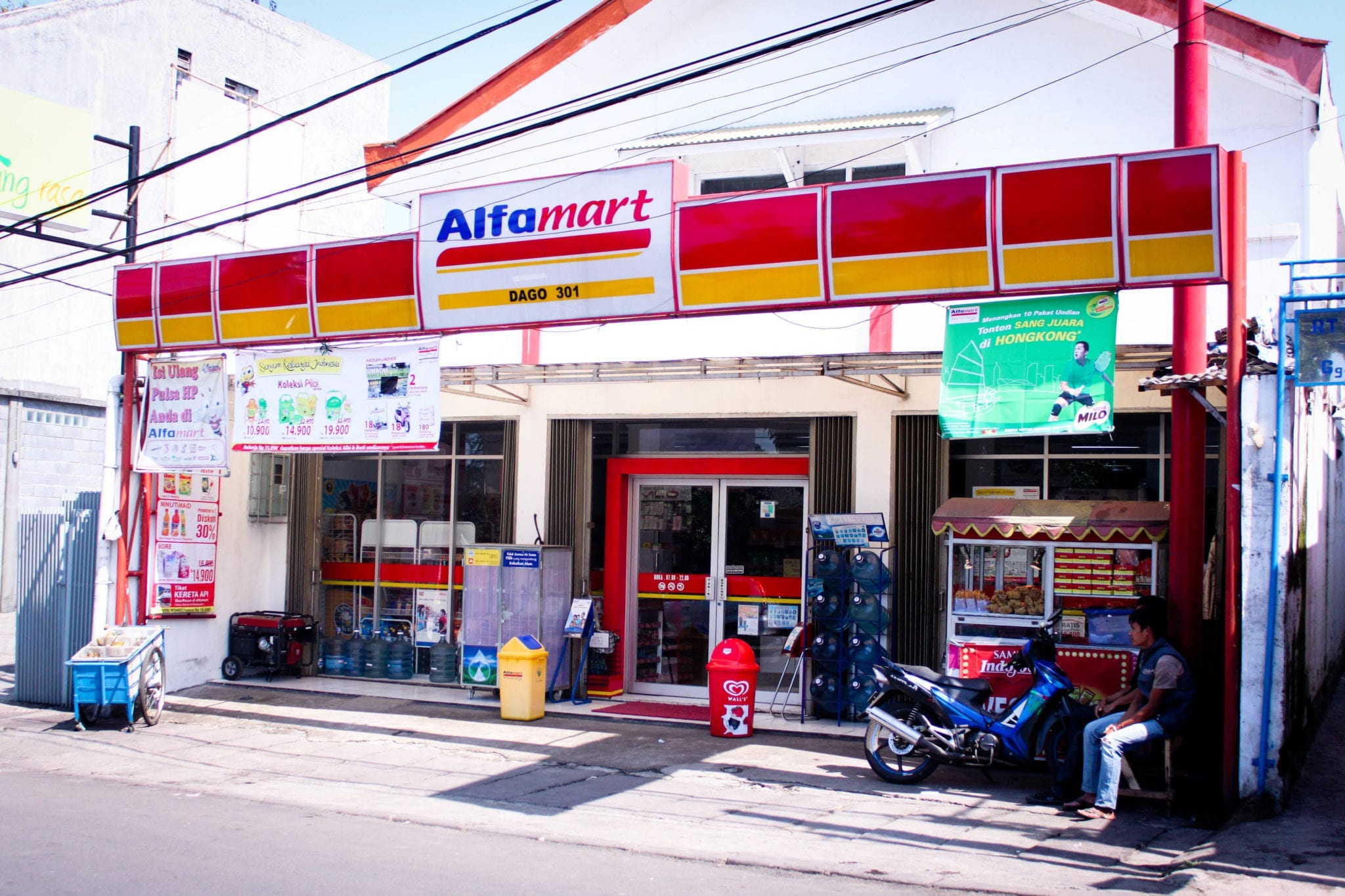
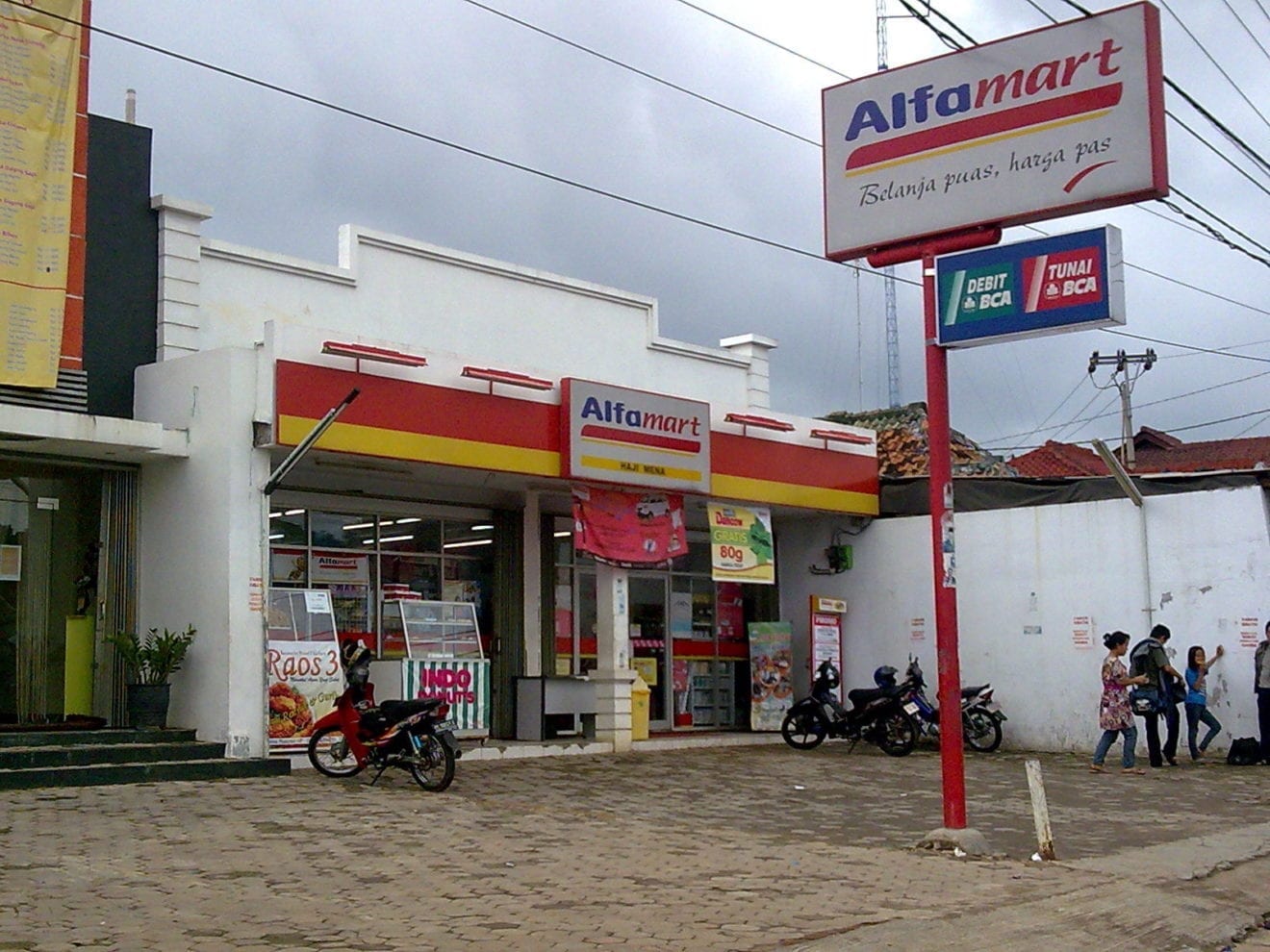
    To distinguish itself from existing players such as Lazada, Sumber Alfaria will enable Alfacart users to pay and pick up their purchases at Alfamart stores. Known for its distinctive red and yellow logo, Alfamart is of the top two convenience store chains in Indonesia with about 11,000 stores as of last December. 1,200 stores are expected to be added during 2016.

    “We understand there are some players in the market but the high cost of last mile [delivery] is still a concern,” said Sumber Alfaria president Hans Prawira, at a press conference on Friday. “We have presence in the market very close to shoppers.”

    Logistics are a significant challenge in Indonesia’s archipelago of more than 13,000 islands. In addition to poor infrastructure, home addresses are often chaotically numbered and unorganized, causing major headaches for courier companies, said IT director Bambang Setyawan Djojo. “We know the address of every Alfamart, so it will make delivery easy,” he said.

    E-commerce is booming in Indonesia but it is a costly business. Lazada recently received an investment of $1 billion from China’s Alibaba Group Holding, while Japan’s Rakuten shut down its online shopping site in the country. Sumber Alfaria only generated 451 billion rupiah in net profit on revenue of 48 trillion rupiah in 2015, a margin of less than 1%.

    Alfaonline failed to gain widespread popularity due to the perception that it only sells groceries, Bambang said. Sumber Alfaria will focus on promoting the convenience of Alfacart.

  • Dairy Farm exits Starmart Indonesia

    Dairy Farm exits Starmart Indonesia


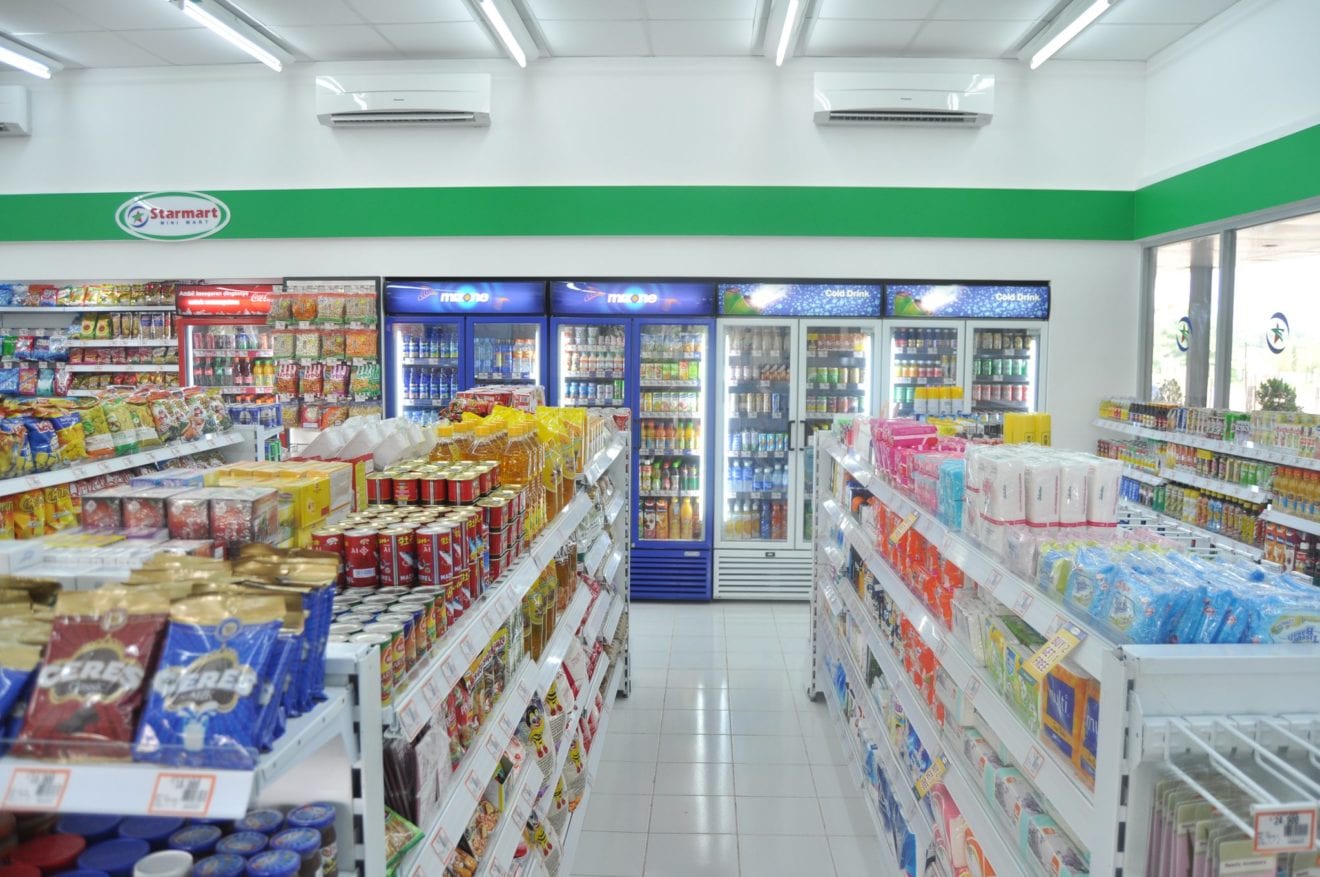
    Convenience store and grocery retailer Hero Supermarket is to exit the troubled Starmart Indonesia business.

    Hero, a subsidiary of Hong Kong-headquartered Dairy Farm International, has announced the sale of 80 stores to Fajar Mitra Indah, a subsidiary of Wings Group, an Indonesian food conglomerate which owns the FamilyMart franchise in the country. The networks will be merged by the year’s end under the FamilyMart banner, taking that network to 80.

    The sale follows the closure of 50 poorly performing stores in the network last September after a long-running strategic review. The balance of the stores – the number of which is undisclosed – will be shuttered.

    The Starmart business had effectively been kneecapped by rapidly implemented Indonesian government policies, most significantly a ban on convenience stores selling alcohol which took effect last April. A general economic slowdown has not helped sales of other goods.

    In a statement, Hero said it would withdraw entirely from the convenience stores business in Indonesia. No transactional details were revealed but the company said the closure would have no material impact on its trading figures this year.

    Both Starmart and FamilyMart are relative minnows in the Indonesian convenience store sector – local chains Alfamart and Indomart – each about 10,000 outlets strong – dominate.

    According to a report in the Nikkei Asian Review, Hero’s profit fell 90 per cent in 2014 and slipped into the red in 2015. Its supermarket business is under pressure from discounters and the company has also shuttered a number of unprofitable Guardian drugstores.