Retail News CRM

Tag: Alibaba

  • Revolutionizing E-Commerce: Alibabas Qwen AI Changes the Game in Online Shopping Experience

    Revolutionizing E-Commerce: Alibabas Qwen AI Changes the Game in Online Shopping Experience

    Alibaba, the Chinese technology behemoth, is set to revolutionize the way consumers search for products online. The company plans to link its artificial intelligence (AI) system Qwen to Taobao and Tmall’s online catalogues, which together comprise over 4 billion products. The Qwen-powered shopping assistant will be directly integrated into the Taobao app, allowing users to ask comprehensive questions, receive personalized suggestions, compare different options, and execute transactions, without ever leaving the chat interface.

    Revolutionizing E-commerce Infrastructure

    The impact of Alibaba’s latest innovation is best understood by examining the scale of its implementation. Taobao and Tmall, the world’s largest e-commerce marketplaces in terms of gross merchandise value, handled an estimated combined total of US$1.4 trillion in transactions last year. This figure eclipses Amazon’s third-party marketplace by nearly three times.

    What sets Alibaba’s approach apart is that it is not simply adding an AI feature to an existing platform, like OpenAI’s third-party plug-ins or Amazon’s AI-powered recommendations. Instead, Qwen, which has been trained using over two decades of Alibaba’s proprietary transaction data, merchant operations, and consumer behaviour, is woven into the transaction layer of the company’s e-commerce platform.

    The integration of Qwen addresses the challenges faced by global AI platforms trying to enter the e-commerce space. While they have to start from scratch, building trust and personalization, Alibaba already holds the keys: owning the data, the catalogue, the payment infrastructure through Alipay, and the logistics network through Cainiao. Qwen is the final piece of the puzzle, the conversational interface that ties everything together.

    A New Shopping Experience

    Qwen’s integration offers consumers a novel shopping experience. It goes beyond providing keyword-based search results. For instance, if a user is unsure what to buy for a friend’s birthday, Qwen can suggest appropriate gifts based on the user’s budget and their friend’s preferences. Similarly, someone looking to redecorate a small apartment can describe their needs, to which Qwen responds with a curated bundle of products and styling suggestions.

    Moreover, Qwen can provide detailed product comparisons for specific queries, from children’s camping gear to electric toothbrushes for sensitive gums. With the help of Alibaba’s multimodal model, it can even simulate how a garment would look on a user’s photo. The company plans to extend this feature to include footwear and accessories.

    Qwen can also assist users financially. It can aggregate platform discounts during major shopping events, recommend the best coupon combinations at checkout, and track the price of a specific item over a 30-day period, automatically placing the order when the price reaches the user’s target.

    All these features cumulatively signal a fundamental shift in e-commerce: from a passive model that waits for the consumer to make a decision, to a proactive model that monitors conditions and acts on behalf of the consumer.

    Alibaba is not alone in pushing for this paradigm shift. Other Chinese tech companies, like ByteDance, Tencent, and JD.com, are also integrating AI more deeply into their consumer interfaces.

    Questions & Answers

    What is Alibaba’s new initiative in e-commerce?
    Alibaba is integrating its AI system, Qwen, into the Taobao app. This will allow users to ask detailed questions, get personalized recommendations, compare products, and make purchases, all within a chat interface.

    How does the Qwen integration differ from other AI implementations in e-commerce?
    Qwen has been trained on over two decades of Alibaba’s transaction data, merchant operations, and consumer behaviour. It is not merely an add-on to Alibaba’s platforms, but is deeply woven into the transaction layer, enabling a more seamless and personalized shopping experience.

    What are some of the features of the Qwen Shopping Assistant?
    Qwen offers detailed product comparisons, simulates how clothing would look on a user’s photo, aggregates discounts during major sale events, recommends optimal coupon combinations at checkout, and tracks product prices over a 30-day period, automatically placing the order when the price matches the user’s target.
  • Alibaba Ramps Up AI Investment Despite Income Dip, Foresees Cloud Business Boom

    Alibaba Ramps Up AI Investment Despite Income Dip, Foresees Cloud Business Boom

    Alibaba, the Chinese tech behemoth, has announced that its projected artificial intelligence (AI) investment over the next triennium will surpass the initial estimation of 380 billion yuan (US$55.96 billion). This decision has been driven by promising preliminary returns on AI investments, which has encouraged the company to further bolster its cloud-computing capacity.

    Despite falling short of the market’s projected profit for the fourth quarter, Alibaba’s US-listed shares experienced a 7 per cent surge. This was in response to the company’s confident forecast for returns on AI spending in the next three to five years. Alibaba’s revenue from the Cloud Intelligence Group, in response to the burgeoning business demand for AI, grew by 38 per cent to 41.63 billion yuan ($6.13 billion) over the past year. While this growth is consistent with estimations, it does mark an increase from the preceding quarter’s 36 per cent growth.

    Investments and Future Plans

    The company’s CEO, Eddie Wu, on a post-earnings call, shared that their investments in AI, the Cloud, and e-commerce sectors were yielding clear returns. He emphasised that these technological investments were beginning to bear fruit commercially. However, Wu refrained from outlining a new spending target to replace the one that was announced in the early parts of last year.

    The company is also aiming to maintain a growth rate that surpasses the market average in an effort to secure a larger market share and further consolidate its market leadership. Wu was clear that these were the primary objectives, with profit margins currently taking the backseat. The company’s profit in the quarter to March was impacted by investments in AI and cloud infrastructure, as well as continuous spending in the quick commerce segment, which includes deliveries made within 60 minutes.

    AI demand and Alibaba’s Response

    Alibaba disclosed that AI-related products contributed to 30 per cent of external customer revenue in the cloud division in the quarter. The company anticipates AI-related revenue to become the main growth engine in the cloud business and contribute more than 50 per cent of revenues in about a year’s time.

    The company has earlier this year bifurcated its AI businesses from its cloud computing arm. Wu has been tasked with leading the “Alibaba Token Hub” group, as the company is keen on making its AI segment profitable.

    Alibaba’s net income for the quarter decreased by 99.7 per cent, with total revenue clocking in at 243.38 billion yuan. Yet, the company’s China e-commerce business, which includes the highly competitive quick commerce segment, reported a revenue of 122.22 billion yuan ($18 billion), surpassing the estimated figure of 119.85 billion yuan.

    Questions & Answers

    What is Alibaba’s outlook for AI spending in the next three to five years?
    Alibaba has a positive outlook for returns on AI spending in the coming years, which is why they are planning to increase their investment in this sector.

    What was the growth in the revenue from Alibaba’s Cloud Intelligence Group over the last year?
    The revenue from Alibaba’s Cloud Intelligence Group grew by 38 per cent to 41.63 billion yuan ($6.13 billion) over the past year.

    What are Alibaba’s plans for the AI segment of their business?
    Alibaba expects AI-related revenue to become the main growth driver in the cloud business, contributing more than 50 per cent of revenues in about a year. The company also plans to make its AI segment profitable.

  • Alibaba’s AI Chatbot Qwen Pauses Amid Surging Coupon Demand in Promotional Blitz

    Alibaba’s AI Chatbot Qwen Pauses Amid Surging Coupon Demand in Promotional Blitz

    Alibaba’s artificial intelligence chatbot, Qwen, recently hit a snag in its service. An overwhelming response from customers resulted in a suspension of the coupon-issuing function, which in turn interrupted a promotional campaign aimed at expanding Qwen’s capabilities beyond simple shopping assistance.

    From Qwen to Customers

    The situation kicked off on a hopeful note last Friday when Qwen began distributing coupons for in-app purchases on Alibaba’s retail platforms, with these transactions being managed via the chatbot’s prompts. This initiative marked the initial stage of a grand 3-billion-yuan (equivalent to about US$433 million) plan. The objective was to draw in a larger user base to the chatbot during China’s annual Spring Festival holiday.

    Since the previous month, Alibaba’s goal has been to evolve Qwen into a comprehensive solution where users could access the company’s other apps directly, completing payments seamlessly within the chatbot interface. This strategy is akin to how Google has integrated its Gemini chatbot within applications such as Maps.

    Technical Difficulties

    However, a few cracks started to appear in this grand plan. The launch of Qwen’s Agentic AI strategy, as Alibaba named it, encountered technical difficulties right from the onset of the coupon giveaway.

    Alibaba reported that a staggering 10 million orders were placed within a mere nine hours of the campaign’s launch. Consequently, an influx of orders over the weekend led to Qwen announcing on its official Weibo channel that it was overloaded. The chatbot humbly requested users to pause their interactions to allow for system recovery.

    By Monday, repeated purchase prompts were met with different versions of a refusal message, blaming user oversubscription for the issue.

    Qwen addressed the situation with a message saying, “Everyone’s enthusiasm for experiencing AI shopping is too high! Currently there are too many participants in ‘Qwen free order’, we are working tirelessly to maintain the campaign’s experience.”

    Despite the hiccup, Qwen assured shoppers that they would still have time to redeem their coupons, as they would remain valid until February 28. Alibaba, however, chose to remain silent on the specifics of the technical difficulties.

    Questions & Answers

    What is Alibaba’s Qwen?
    Qwen is an artificial intelligence chatbot created by Alibaba to assist users in shopping and to serve as a central hub for accessing the company’s various apps.

    What were the issues faced by Qwen?
    During a promotional campaign, Qwen experienced an overload due to overwhelming response from customers. This resulted in a temporary halt to the issuance of coupons and created technical difficulties in managing the influx of orders.

    What is the validity period for the coupons issued by Qwen?
    Despite the issues faced, Qwen assured users that their coupons would remain valid until February 28.

  • Alibaba’s Qwen AI App Unleashes Food Ordering and Travel Booking Features: A Quantum Leap in Consumer-Facing AI Services

    Alibaba’s Qwen AI App Unleashes Food Ordering and Travel Booking Features: A Quantum Leap in Consumer-Facing AI Services

    Alibaba Group recently unveiled significant enhancements to its Qwen artificial intelligence (AI) app. The updated capabilities allow users to carry out tasks such as ordering food delivery and making travel reservations directly through the AI chat interface, eliminating the need to alternate between different applications.

    Strategic Shift to Consumer-Facing AI

    These new features, currently undergoing public testing in China, represent a strategic shift by Alibaba towards consumer-facing AI. The company has traditionally focused on providing enterprise AI services through its cloud business, but is now emerging as a strong contender in the consumer AI space against domestic competitors like ByteDance and Tencent.

    Wu Jia, Vice President of Alibaba Group, commented on the recent developments. “The innovations we are introducing today reflect our transition from AI models that comprehend to systems that perform actions, closely tied to real-world services.”

    Rise in AI Agents Popularity

    AI agents are seeing a surge in global popularity as more businesses recognize their potential in facilitating real-world tasks. This trend is evident in recent industry movements, such as Meta Platforms acquiring start-up Manus to enhance its AI systems capable of handling multi-step tasks, and OpenAI launching its ‘Operator’ agent that can make restaurant reservations and fill out forms for users.

    Integration of Core Alibaba Ecosystem Services

    The Qwen app’s upgrade integrates key services from the Alibaba ecosystem into a unified AI interface. These services include the e-commerce platform Taobao, instant commerce, the payment system Alipay, travel service Fliggy, and the mapping platform Amap.

    For example, the integration of Alipay with the Qwen app allows users to authorize and complete transactions without exiting the chat. According to Alibaba, the AI payment feature currently supports instant commerce orders and will extend to more services in the future.

    Task Assistant Feature

    In addition to the integrations, Alibaba introduced a ‘Task Assistant’ feature in an invite-only beta version. This assistant can make actual phone calls to restaurants, process up to 100 documents simultaneously, and plan multi-stop travel itineraries.

    Since its public beta release on November 17, the Qwen app has attracted over 100 million monthly active users in just two months. The app’s growth, powered by Alibaba’s Qwen3 foundation model, is indicative of the intensifying competition in China’s AI sector as companies race to convert advanced language models into practical consumer applications.

    Questions & Answers

    What new features does the upgraded Qwen AI app offer?
    The enhanced Qwen AI app allows users to perform tasks such as ordering food and making travel bookings directly within the AI chat interface.

    What does the upgrade mean for Alibaba’s strategic direction?
    The upgrade signifies Alibaba’s strategic shift towards consumer-facing AI, marking its transition from AI models that comprehend to systems that perform actions.

    What services does the ‘Task Assistant’ feature provide?
    The ‘Task Assistant’ feature can make real phone calls to restaurants, process up to 100 documents at once, and plan multi-stop travel itineraries.

  • Alibaba Revamps Ele.me to Taobao Instant Commerce in Bold Retail Ambition

    Alibaba Revamps Ele.me to Taobao Instant Commerce in Bold Retail Ambition

    Alibaba, a renowned Chinese multinational conglomerate, recently unveiled a new name for its popular food delivery service, previously known as Ele.me. This rebranding, which transforms Ele.me into Taobao Instant Commerce, marks a significant shift in the company’s strategy.

    From Ele.me to Taobao Instant Commerce

    The name Ele.me, which held the status of being China’s top local services brand, will no longer be associated with Alibaba’s food delivery service. Utilizing a home-delivery model, the company was initially bought by Alibaba in 2018 at an astounding price of $9.5 billion.

    As of late, significant financial losses have been recorded by companies in the food delivery sector, including the former Ele.me. These losses arise mainly from the high costs involved in subsidizing discounted products, a common practice by these companies to capture a larger market share.

    The Competitive Landscape

    The business environment is becoming increasingly competitive in China, especially within the instant retail services sector. This increasing competition has led to significant investment from businesses, all vying for dominance in the market.

    Alibaba’s decision to rebrand Ele.me as Taobao Instant Commerce is a strategic move aimed at bolstering its position in the market. This bold step is seen as a direct challenge to the current sector leaders, Meituan.

    The Transition and User Experience

    The digital transformation from Ele.me to Taobao Instant Commerce has already been experienced by some users. It is expected that the rebranding will be fully implemented and universally adopted in the upcoming weeks, marking a new chapter in Alibaba’s journey in the food delivery industry.

    Questions & Answers

    Why did Alibaba decide to rebrand Ele.me?
    Alibaba rebranded Ele.me to Taobao Instant Commerce in a strategic move to improve its market position and take on current industry leaders.

    What was the main reason for the financial losses incurred by Ele.me?
    The main reason for Ele.me’s financial losses was the company’s practice of subsidising discounted products to gain a larger market share.

    When is the full implementation of the rebranding expected?
    The complete transition to Taobao Instant Commerce from Ele.me is expected to occur universally in the coming weeks.

  • Alibaba Takes on Global AI Wearables with Quark Glasses: A New Contender in the Meta-Dominated Market

    Alibaba Takes on Global AI Wearables with Quark Glasses: A New Contender in the Meta-Dominated Market

    On Thursday, Alibaba announced the release of its Quark artificial intelligence (AI) glasses in China, signalling the tech giant’s entry into the AI wearables market that is currently led by Meta.

    The headset, priced starting from 1899 yuan (equivalent to US$268.25), is powered by Alibaba’s Qwen AI model and app. This device, unlike many other headsets, is designed to resemble regular eyeglasses with a black plastic frame. Alibaba shared that these glasses will be fully compatible with its suite of applications, including Alipay and the e-commerce platform, Taobao. Users of the Quark glasses will be able to perform tasks like translating languages on the go and recognizing prices instantly.

    Beijing-based electronics industry expert, Li Chengdong, noted that Alibaba’s core competencies lie in shopping, payments, and navigation. Therefore, the AI glasses are more of a life assistant. This move into AI wearables comes as Alibaba is trying to gain ground in the consumer AI market where it has traditionally faced strong competition. Its pursuits in this space included a significant upgrade to its AI chatbot earlier this month.

    Li explained that Alibaba’s approach to AI glasses is primarily about securing future online traffic in the face of fierce competition in China’s e-commerce industry. He added, “Alibaba’s hopes for AI are tied to cementing its position in the next wave of digital commerce.”

    Available on leading Chinese e-commerce platforms including Tmall, JD, and Douyin, the Quark AI glasses are Alibaba’s latest product in the race for the next generation of AI-powered entertainment and computing devices. This race is currently led by the likes of Meta, which controls approximately 80% of the virtual reality headset industry, Apple with its Vision Pro headset, and Samsung Electronics with its Galaxy XR extended reality headset that utilizes AI technologies from Google.

    Alibaba isn’t alone among Chinese tech companies in exploring AI-powered eyewear. Xiaomi introduced a similar product in June, while Baidu also has an AI eyewear product on the market.

    Questions & Answers

    What is the cost of Alibaba’s Quark AI glasses?
    The glasses are priced starting from 1899 yuan, or approximately US$268.25.

    What are some of the features of the Quark AI glasses?
    The glasses, which look like regular eyewear, are powered by Alibaba’s Qwen AI model and app. Users can perform tasks such as on-the-go translation and instant price recognition directly from the glasses.

    Which other tech companies have released similar AI-powered glasses?
    Other Chinese tech companies, including Xiaomi and Baidu, have also released similar AI-powered glasses.

  • Alibaba Veteran Jia Hang Spearheads DCS Group’s Future; Set to Revolutionize Cross-Border Payments

    Alibaba Veteran Jia Hang Spearheads DCS Group’s Future; Set to Revolutionize Cross-Border Payments

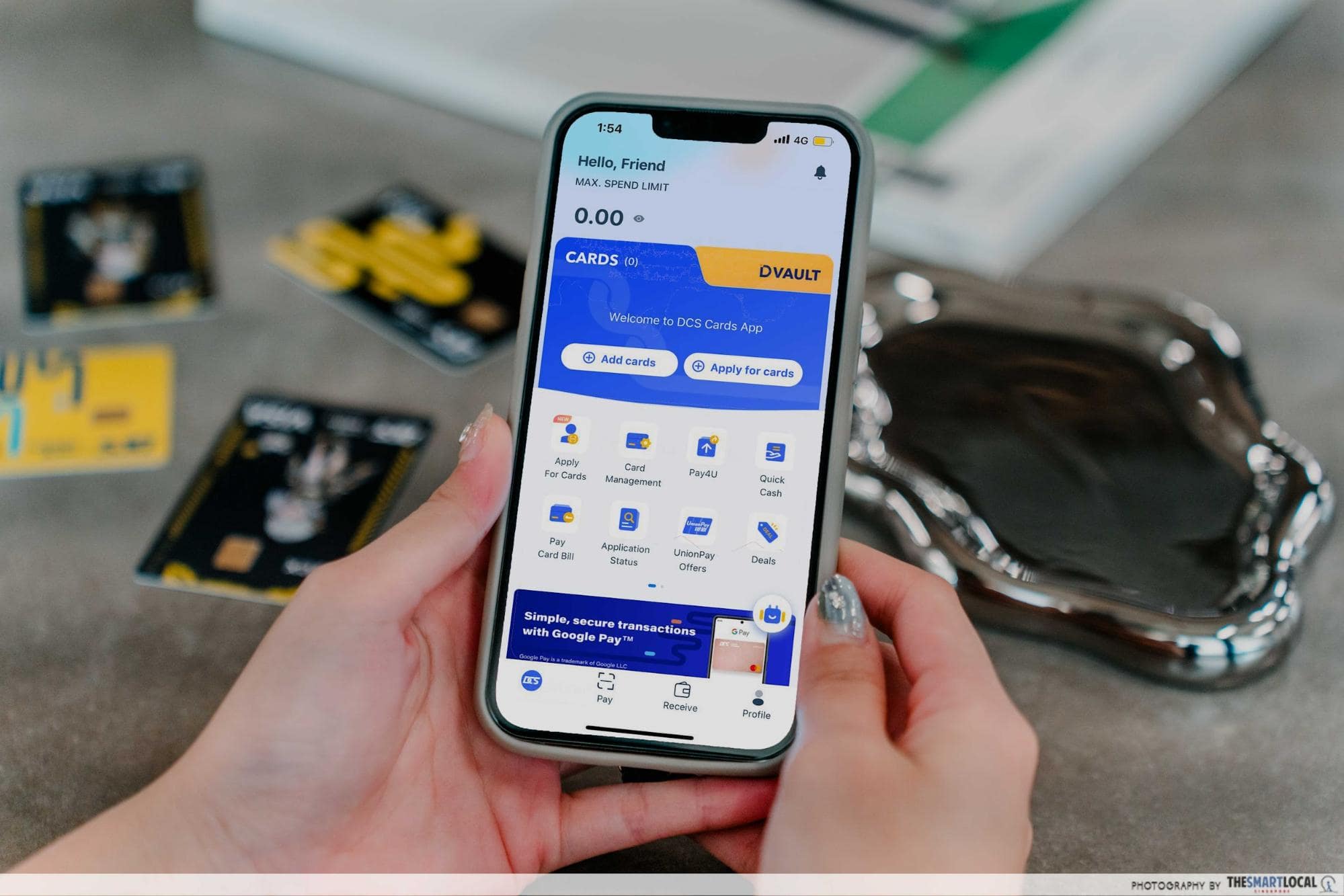
    DCS Group, previously known as Diners Club Singapore, has announced the appointment of Jia Hang as its new executive chairman. This represents the most senior leadership addition in the group’s history, underlining its ambition to revolutionise cross-border and cross-rail payments from Singapore.

    Jia Hang Takes the Helm

    Jia Hang will lead DCS Group, which includes DCS Fintech, its global business, and DCS Card Centre, the group’s core entity based in Singapore. His mandate will include strengthening DCS’s role as a trusted payment institution under the Banking Act and the advancement of its vision to create seamless, interoperable payment flows across both traditional and blockchain rails.

    The move strategically places DCS in a position to speed up its dual-rail strategy across traditional finance and blockchain ecosystems. This comes at a time when regulatory trust and infrastructure preparedness are becoming key differentiators in Asia’s digital finance landscape.

    Focusing on TradFi-Web3 Convergence

    As executive chairman, Jia Hang will oversee corporate direction, governance, and business development. He will focus on enhancing DCS’s dual-rail infrastructure and improving customer experience. He has been tasked with deepening the company’s collaborations with regulators and partners to deliver secure payment solutions for consumers and businesses.

    Global Experience in Payments

    Jia Hang discussed his appointment and stated, “At every stage of my career, I’ve been guided by one enduring question – how can payments connect the world more inclusively, seamlessly, and securely?” He added that DCS is uniquely positioned with the regulatory trust and operational discipline needed to “reimagine that future from Singapore outward.” His ambition is to build a next-generation payments network merging the reliability of traditional finance with the agility of emerging technology.

    Recent Milestones in DCS’s Transformation

    Jia Hang’s appointment comes on the heels of major milestones in DCS’s transformation journey. Last month, the company completed its largest asset-backed securitization program, a S$450 million transaction that achieved AAA ratings on senior tranches. Earlier this year, DCS launched the DeCard Visa card, which allows stablecoin-to-fiat conversion for everyday transactions, extending real-world utility to Web3 users.

    A Career Spanning Leading Digital Commerce Platforms

    Jia Hang brings with him extensive experience from major Asian and global payments ecosystems. His prior roles include senior leadership posts at Ant Group, where he led the expansion of Alipay+ across Southeast Asia and Europe. He also spent nearly a decade at China UnionPay and UnionPay International, where he launched and built UnionPay USA.

    DCS: A Next-Generation Global Payments Provider

    DCS, established over fifty years ago as Diners Club Singapore, has evolved into a Singapore-licensed financial institution with dual capabilities in card issuing and merchant acquiring. Its infrastructure supports both traditional and cryptocurrency-funded payments through regulated partners and is compatible with global schemes, including Visa, Mastercard, UnionPay, and Diners Club. The group continues to position itself as a bridge between traditional and decentralized finance, aiming to deliver secure, borderless payments with real-world utility for businesses and consumers.

    Questions & Answers

    What is the role of Jia Hang in DCS Group?
    Jia Hang has been appointed as the executive chairman of DCS Group. His role involves overseeing corporate direction, governance, and business development, with a particular focus on enhancing DCS’s dual-rail infrastructure and improving customer experience.

    What is DCS Group’s aim with the appointment of Jia Hang?
    With Jia Hang’s appointment, DCS Group aims to reshape cross-border and cross-rail payments from Singapore. The move positions DCS to accelerate its dual-rail strategy across traditional finance and blockchain ecosystems.

    What is the significance of Jia Hang’s appointment?
    Jia Hang’s appointment is a significant move for DCS Group, marking the most senior leadership addition in the group’s history. It also signals the company’s ambition to become a leading player in Asia’s digital finance landscape.

  • Alibaba’s Revenue Surges, Thanks to Fast Delivery and AI Investments: Outpaces Quarterly Estimates

    Alibaba’s Revenue Surges, Thanks to Fast Delivery and AI Investments: Outpaces Quarterly Estimates

    In Tuesday’s quarterly report, Alibaba, the Chinese e-commerce behemoth, exceeded analysts’ revenue predictions. This success was primarily attributed to the company’s significant investments in one-hour delivery services, which attracted more users to its shopping applications. Additionally, the company’s cloud division demonstrated remarkable growth.

    Share Performance and Revenue

    Following the announcement, the company’s US-listed shares increased by 2% in initial trading. Alibaba reported a second-quarter revenue of 247.80 billion yuan (approximately US$35 billion). This figure surpassed the anticipated revenue of 242.65 billion yuan. However, the adjusted profit of 4.36 yuan per American Depository Share fell short of an estimated 5.49 yuan.

    Fierce Competition in the Quick Commerce Sector

    Alibaba’s performance comes amidst an expensive competition in China’s ‘instant retail’ or ‘quick commerce’ sector. Here, major corporations are investing billions in expedited delivery services to secure a larger market share. Simultaneously, Alibaba has been making significant investments in artificial intelligence (AI), positioning itself as a frontrunner in the industry within China.

    Investment in AI

    The company announced in February plans to allocate 380 billion yuan over three years to AI and cloud investments. However, CEO Eddie Wu hinted at potential additional investments to address supply chain challenges while meeting customer demand. Indicating the company’s aggressive stance on AI investment, Wu suggested that the planned investment may be insufficient given the scale of customer demand.

    Profit Impacts

    Despite the investments causing a 53% reduction in net profit to 20.61 billion yuan, this figure still surpassed analysts’ predictions. These investments, particularly in AI, are anticipated to establish long-term competitive advantages, notwithstanding the immediate pressure on profit margins.

    Instant Retail Sector

    In the instant retail sector, aggressive discounting and subsidies from Alibaba and its competitors have led to concerns over margins and substantial cash expenditure. However, with its diversified business model and significant resources, Alibaba is less vulnerable than its rivals. The company projects that the instant retail sector could add 1 trillion yuan in yearly gross merchandise value over the next three years. Notably, Alibaba’s instant retail business has significantly improved unit economics recently, with cost per order decreasing by half since summer.

    Singles’ Day Subsidies

    The Singles’ Day sales period, stretching from early October to November 11, witnessed considerable subsidies and discounting by retailers to stimulate demand. Sales across major platforms during this period escalated to 1.70 trillion yuan, an increase from 1.44 trillion yuan the previous year.

    Expansion into Consumer AI

    Alibaba has also recently intensified efforts to penetrate the consumer AI market, a sector where it has been comparably less active due to its greater emphasis on enterprise clients. Despite launching a free app, which gained 10 million downloads within its first week, it remains behind the market leader, ByteDance’s Doubao, which boasts 150 million users. Consequently, an ongoing price war in China’s domestic AI market, triggered by competitors focusing on affordable computing and app development, has forced Alibaba to reduce prices.

    Questions & Answers

    What led to Alibaba exceeding analysts’ revenue expectations?
    Alibaba’s investments in one-hour delivery services attracted more users to its shopping apps, leading to increased revenue.

    What challenges is Alibaba facing in the quick commerce sector?
    The sector is highly competitive, with corporations investing billions in expedited delivery services to secure a larger market share.

    How is Alibaba responding to competition in the consumer AI market?
    Alibaba has intensified efforts to penetrate the consumer AI market and launched a free app that gained 10 million downloads within its first week. It has also reduced its prices to remain competitive.

  • Alibaba Unveils Ai Chatbot Assistant And Announces Quark Ai Glasses Pre-sales

    Alibaba Unveils Ai Chatbot Assistant And Announces Quark Ai Glasses Pre-sales

    On Thursday, Alibaba, the Chinese e-commerce giant, unveiled a novel AI chatbot assistant service, amplifying its efforts to solidify its presence in a consumer-centric domain presently dominated by ByteDance and Tencent.

    Integration of AI Chatbot Into Quark App

    Alibaba has integrated this innovative chat assistant into its Quark app, which was originally a browser but was repurposed this year as Alibaba’s principal consumer application. This transformation has led to the integration of enhanced artificial intelligence capabilities, such as advanced search functions.

    The newly introduced service, available free of charge, empowers users to interact with a chatbot interface through text or voice, offering real-time information and services, Alibaba explained in an official statement.

    AI Efforts by Alibaba

    Historically, Alibaba’s AI ventures have been predominantly aimed at corporate clients via its cloud services division. This new endeavour represents yet another attempt by the company to captivate consumers in a market where it has found it challenging to gain a foothold with its Tongyi AI assistant app.

    Despite being one of the pioneering Chinese corporations to introduce a consumer-oriented AI assistant app to the public in late 2023, Tongyi has not achieved widespread acceptance so far. In September, the app had 6.96 million monthly active users, in contrast to the market leader ByteDance’s Doubao, which boasted 150 million active users.

    Global AI Assistants Trend

    On the global front, AI assistants have been increasing in popularity for companies like Google, Microsoft, and OpenAI, which have incorporated them into their respective Gemini, Copilot, and ChatGPT platforms.

    The Quark’s AI chat assistant, driven by Alibaba’s most recent Qwen3 models, provides improved reasoning, comprehension, and task execution capabilities, Alibaba stated.

    Announcement of Quark AI Glasses Pre-sales

    On the same day of the AI chatbot assistant service launch, Alibaba also announced that pre-sales for its Quark AI Glasses would commence at midnight on Friday on its Tmall e-commerce platform. The company also added that it would start delivering orders progressively from December, pricing the glasses at 4699 yuan (US$659.69).

    Alibaba revealed its intelligent glasses in July, thereby joining the ranks of companies like Meta Platforms in the wearable AI devices market.

    Questions & Answers

    What is the latest innovation from Alibaba?
    Alibaba recently launched an AI chatbot assistant service, which has been integrated into its Quark app.

    What is the purpose of Alibaba’s AI chatbot assistant service?
    The service allows users to interact with a chatbot interface via text or voice, providing real-time information and services.

    What product is Alibaba releasing for pre-sales on its Tmall platform?
    Alibaba announced pre-sales for its Quark AI Glasses on its Tmall e-commerce platform.

  • Alibaba: Innovations And Investments Fueling Growth Amid Asia’s Retail Revolution

    Alibaba: Innovations And Investments Fueling Growth Amid Asia’s Retail Revolution

    The retail landscape in Asia is undergoing a transformative shift, with e-commerce platforms rapidly evolving to meet the dynamic demands of consumers. Amid this digital revolution, Alibaba Group has emerged as a titan, showcasing impressive financial results that underscore its pivotal role in the region’s retail ecosystem.

    Alibaba’s Surprising Resilience

    In its recent earnings report, Alibaba announced a staggering 14% year-on-year growth in revenue for the third quarter, generating approximately $38.7 billion. Much of this momentum can be attributed to a strategic focus on enhancing customer experience through artificial intelligence and tailored services. As more consumers turn to online shopping, Alibaba’s innovations are making it easier and more enjoyable than ever to browse and buy.

    Cultural Resonance Drives Unique Trends

    What sets Alibaba apart from its competitors isn’t just its technological prowess; it’s also its ability to tap into the cultural zeitgeist. By integrating local festivities and trends into its marketing strategies, Alibaba captivates customers across diverse demographics. The recent Double Eleven shopping festival, celebrated annually, saw sales skyrocket, proving once again that when it comes to combining commerce with culture, Alibaba knows how to throw a digital party that people want to attend.

    Investments Point to a Bright Future

    Looking ahead, Alibaba is doubling down on investment in logistics and digital infrastructure. With plans to channel these resources into improving customer service and expanding product offerings, the retail giant is clearly committed to maintaining its leadership role. Analysts suggest this forward-looking strategy will not only bolster Alibaba’s market position but also attract new partnerships and opportunities.

    In a surprising twist, the company plans to introduce a novel shopping experience that merges augmented reality with traditional retail. Imagine trying on clothes from the comfort of your home—who says innovation can’t be fun?

    Challenges Ahead

    However, Alibaba’s journey is not without obstacles. Intense competition from rivals like JD.com and Pinduoduo continues to heat up, as these companies also strive to innovate and capture a slice of the consumer pie. Balancing growth with regulatory challenges is another hurdle Alibaba must navigate carefully, particularly in light of increasing scrutiny from government bodies across Asia.

    Despite these challenges, Alibaba remains an indomitable force. Its ongoing investments and strategic collaborations suggest that the retail giant is preparing to not just survive but thrive in a fast-evolving market.

    Questions & Answers

    What factors contributed to Alibaba’s recent revenue growth?
    Alibaba’s 14% year-on-year revenue increase can largely be attributed to its focus on enhancing customer experience through innovative technologies, particularly artificial intelligence, which has made shopping more convenient and engaging for consumers.

    How does Alibaba leverage cultural trends in its marketing?
    Alibaba cleverly integrates local cultural events, such as the Double Eleven shopping festival, into its marketing campaigns, engaging consumers by resonating with their lifestyle and traditions, which significantly boosts sales.

    What future strategies is Alibaba implementing to maintain its market position?
    The company plans to invest heavily in logistics and digital infrastructure, while also developing new shopping experiences combining augmented reality and traditional retail, indicating a commitment to innovative customer engagement and expanding its offerings.

  • Alibaba And Jd.com: Transforming China’s Retail Landscape Amidst Rising Consumer Expectations

    Alibaba And Jd.com: Transforming China’s Retail Landscape Amidst Rising Consumer Expectations

    China’s retail sector is experiencing a transformative moment, marked by the strategic rise of two formidable players: Alibaba and JD.com. This dynamic shift mirrors broader trends reshaping the region’s e-commerce landscape, where Chinese consumers are becoming increasingly discerning and adept at navigating their shopping choices.

    The Rise of Online Retail Titans

    As the pandemic prompted significant changes in consumer habits, both Alibaba and JD.com have consolidated their positions, further entwining themselves in the daily lives of shoppers across the nation. Alibaba reported a staggering 15% growth in annual revenue, further highlighting the platform’s ability to adapt to the evolving market conditions. Meanwhile, JD.com showed its mettle, achieving a 10% increase in retail sales during the same period, which underscores its commitment to enhancing customer satisfaction through improved delivery services and product offerings.

    Aligning with Consumer Trends

    As Chinese consumers increasingly gravitate towards convenience and quality, these giants are innovating to meet those expectations. Alibaba’s focus on integrating online and offline shopping experiences has proven vital. The company’s ‘New Retail’ strategy, which seamlessly blends digital and traditional retail, is resonating well with tech-savvy consumers. This approach has not only driven sales but has also increased the frequency of consumer spending.

    A Competitive Landscape

    The competition is fierce. Both Alibaba and JD.com are racing to capture the hearts (and wallets) of a rapidly evolving customer base. While Alibaba has successfully leveraged its vast data analytics capabilities to personalize shopping experiences, JD.com is not far behind with its focus on logistics and delivery efficiency; it’s not just about what you buy, but how quickly you can get it. In this digital age, waiting days for a package is as antiquated as using a typewriter.

    Future Prospects: What Lies Ahead

    Looking to the future, these retail titans are aware that innovation is crucial. Both companies are investing heavily in artificial intelligence and other emerging technologies to streamline operations and enhance user experience. Analysts predict that this power struggle will only intensify, as consumer expectations continue to rise, pushing both brands to new heights in the quest for market supremacy. Whether it’s through AR-driven shopping experiences or drone deliveries, one thing is clear: the race is just getting started.

    Questions & Answers

    How are Alibaba and JD.com adapting to changing consumer preferences?
    Both companies are embracing innovation, with Alibaba focusing on a seamless integration of online and offline experiences, while JD.com emphasizes logistical efficiency and fast delivery times to enhance customer satisfaction.

    What impact has the pandemic had on the retail landscape in China?
    The pandemic has accelerated the shift towards e-commerce, leading to significant revenue growth for both Alibaba and JD.com as consumers increasingly prefer online shopping.

    What future developments can we expect from these retail giants?
    Expect continued investment in emerging technologies, such as artificial intelligence and augmented reality, as both companies strive to enhance user experiences and meet rising consumer demands.

  • Alibaba Strategically Pivots Operations Amid Market Fluctuations: Eyes Innovation Beyond E-commerce

    Alibaba Strategically Pivots Operations Amid Market Fluctuations: Eyes Innovation Beyond E-commerce

    In a decisive move emblematic of shifting retail landscapes, Alibaba has unveiled its plan to reallocate resources in order to bolster its business operations. The e-commerce giant, known for its expansive digital ecosystem, is strategically pivoting to enhance profitability and address market fluctuations. This comes in the wake of a recent earnings report that unveiled a 19% decline in net income for the fourth quarter, a development that has sparked discussions among investors and analysts alike.

    Restructuring for Resilience

    Alibaba’s new plan involves a restructuring that will witness the technological infrastructure receiving a significant overhaul. By consolidating various operations, the company aims to streamline processes and improve efficiency, thereby fostering a more agile framework to respond to the rapidly changing market demands. This change may not only rejuvenate Alibaba’s core businesses but also lay the groundwork for innovative retail solutions.

    Challenging the traditional retail model, Alibaba’s response underscores a growing trend within the Asian retail space where companies are increasingly relying on data-driven strategies to navigate uncertainty. The decentralized model, often hailed as the way forward, appears to be facing its own tests as businesses seek to adapt swiftly.

    The Competitive Edge: Going Beyond E-commerce

    Interestingly, Alibaba is looking beyond e-commerce, aiming to utilize its technological resources to penetrate emerging areas such as cloud computing and digital media. With the average consumer spending increasingly moving online, it seems Alibaba is not just content with being a marketplace but aspires to be a comprehensive service provider that fulfills various aspects of everyday life—from shopping to cloud computing.

    Some industry experts are raising eyebrows—could Alibaba’s ambitions turn it into the Swiss Army knife of retail? With strong competition from rival platforms cropping up, innovation within its business model is paramount for sustaining its leading edge.

    Future Prospects: What Lies Ahead

    Looking ahead, Alibaba’s latest strategy opens the door to exciting possibilities. Investors are closely monitoring the company’s next moves, especially as the firm navigates through turbulent waters. There’s an undeniable excitement about how these changes will play out in a digital economy that thrives on connectivity and innovation.

    Questions & Answers

    What prompted Alibaba to restructure its operations?
    The restructuring plan was largely influenced by a 19% decline in net income reported in their fourth quarter earnings, prompting the company to enhance efficiency and profitability in response to market fluctuations.

    Beyond e-commerce, what areas is Alibaba looking to explore?
    Alibaba plans to leverage its technological assets to delve into cloud computing and digital media, aiming to become a comprehensive service provider for consumers.

    How are analysts reacting to Alibaba’s new business strategy?
    Analysts are cautiously optimistic, noting that the restructuring could foster innovative retail solutions and enhance the company’s competitive edge in an increasingly digital marketplace.

  • Amazon, Temu, and Shein Surge in Australia, Leaving Local Retailers Struggling to Compete

    Amazon, Temu, and Shein Surge in Australia, Leaving Local Retailers Struggling to Compete

    Online retail giants Amazon, Temu, and Shein have made remarkable strides in capturing the hearts—and wallets—of Australian consumers, according to fresh insights from Roy Morgan. As traditional retail players struggle to maintain their foothold, these digital marketplaces are flourishing, shaking up the industry in ways we never expected.

    Amazon Tops the Charts

    Leading the charge is Amazon, boasting a staggering 8.8 million Australian shoppers making purchases at least once a year. This figure marks an impressive rise of 900,000 customers compared to the previous year, translating into an 11% growth rate. It’s clear that the online retail behemoth has solidified its presence in the Australian market.

    Temu and Shein: Rising Stars

    Meanwhile, Temu has emerged as a formidable contender, attracting 4.7 million shoppers—an increase of 900,000 or 24% growth in just one year. Shein isn’t far behind, pulling in 2.6 million buyers, up by 600,000, which equates to a 27% rise in its customer base. Combine this with Temu and Shein’s growth, and you’ve got a retail revolution that’s generating billions in additional sales.

    The Financial Impact

    The impact of this growth is nothing short of staggering. Together, Temu and Shein have added an impressive $1.3 billion to their collective sales over the past year. Temu’s sales are soaring, now hitting approximately $2.6 billion annually in Australia, a substantial increase from $1.6 billion just a year prior. Shein, with its trend-driven appeal, has also seen its sales swell to $1.3 billion, climbing from $1 billion.

    A Shrinking Landscape for Traditional Retailers

    In stark contrast, several well-established retailers have faced steep declines in customer numbers. Companies like eBay, Kogan, The Reject Shop, and Best & Less are struggling to maintain their market presence. It’s been a tough year for fashion retailers as well, with names such as Millers, Rivers, Noni B, Katies, Autograph, Crossroads, Rockmans, and Wittner exiting the market entirely.

    The Shift in Consumer Expectations

    Catherine Jolley, Roy Morgan’s head of retail and consumer products, notes that this swift transformation is reshaping the industry. “As discount platforms reset consumer expectations, established retailers, especially those that have relied on a low-cost position, must grapple with their standing in this new retail order,” she explains. It’s a tough lesson for traditional players, who might have once thought they were invincible.

    As this saga unfolds, it’s evident that the retail landscape in Australia is not just changing; it’s being revolutionized. So, watch out – the only constant in this digital age seems to be relentless growth and unexpected outcomes in the online space.

    Questions & Answers

    What recent figures highlight Amazon’s growth in Australia?
    Amazon now boasts 8.8 million Australians shopping on its platform at least once a year, reflecting an 11% increase from the previous year.

    How have Temu and Shein performed over the past year?
    Temu’s customer base grew by 900,000 to reach 4.7 million, while Shein increased by 600,000 to 2.6 million, showcasing growth rates of 24% and 27%, respectively.

    What challenges are traditional retailers facing?
    Many established retailers, including eBay and Kogan, are seeing significant declines in their customer bases, with several fashion brands exiting the market entirely.

  • China’s Delivery Giants Face Off: What the Market Share Battle Means for the Future

    China’s Delivery Giants Face Off: What the Market Share Battle Means for the Future

    The on-demand delivery landscape in China is heating up, with three leading platforms bracing for increased costs and tighter margins as competition intensifies. A fresh analysis from S&P Global Ratings reveals that aggressive promotional strategies, including enticing offers like free fresh-made beverages, are prompting platforms to invest heavily—projected at a staggering RMB 160 billion over the next 12 to 18 months—in their fight for market share in the food delivery and instant retail sectors.

    “With such a fierce competitive atmosphere, monitoring for unfair pricing practices has become essential,” remarked Jay Lau, an analyst at S&P Global Ratings. The Chinese government is actively reevaluating its policies regarding pricing fairness, signaling a commitment to protect merchants from potential exploitation amid these fierce market battles.

    Despite the high stakes, S&P Global Ratings anticipates that spending will remain substantial, although they foresee only a modest moderation in expenditures. The on-demand delivery market is poised for strong growth, boasting double-digit growth rates projected for the coming years. Lau pointed out that “cross-selling is a main goal.” The ability to drive frequent on-demand purchases—often happening several times a week—holds the potential to significantly boost traffic and increase sales opportunities.

    Among the key players, JD.com and Alibaba stand to gain the most, given their expansive existing retail platforms that facilitate cross-selling. In contrast, Meituan faces a steeper challenge, as food delivery remains the cornerstone of its revenue model. As the battle for market dominance rages on, analysts are cautious, predicting that margins are unlikely to recover in the next 12 to 24 months as this war for market share continues to unfold.

    Questions & Answers

    What is the expected financial impact on major Chinese delivery platforms?
    The competition is likely to drive these platforms to spend around RMB 160 billion in the next 12 to 18 months as they battle for market share, leading to increased costs and squeezed margins.

    What role does cross-selling play in on-demand delivery growth?
    Cross-selling is crucial, as high-frequency purchases each week can significantly drive traffic and boost overall sales for platforms, particularly for those like JD.com and Alibaba that are well-positioned to leverage their existing retail networks.

    How are regulators responding to the competitive atmosphere?
    The Chinese government is actively revising its standards on unfair pricing practices and will be closely monitoring leading platforms to prevent any potential exploitation of merchants as competition grows fiercer.

  • Alibaba Leverages Ai To Expand Cloud Business, Despite Falling Short Of Revenue Projections

    Alibaba Leverages Ai To Expand Cloud Business, Despite Falling Short Of Revenue Projections

    Alibaba, the Chinese multinational, has highlighted the significance of artificial intelligence (AI) in its plans to broaden its cloud computing business. This comes as the company experienced robust quarterly development in the sector, although its broader operations fell short of revenue projections.

    The Market Reaction

    Alibaba’s shares listed in the U.S. rose by 8% at the opening of the New York market on Friday after the results were announced.

    The revenue for Alibaba’s cloud division experienced a surge of 26% to a total of 33.40 billion yuan (equivalent to US$4.67 billion). This significant increase outpaced the anticipated rise of 18.4%. Yet, the weaker-than-expected progress in its e-commerce business overshadowed this achievement, with the total revenue falling short of estimates by 2%.

    Alibaba’s Position in AI

    Alibaba has emerged as one of the most competitive players in China’s AI sector, frequently introducing updates.

    In the past year, the company has invested over 100 billion yuan in AI infrastructure and product research and development, according to Group CEO, Eddie Wu.

    Wu stated that their investments in AI are beginning to bear fruit. He sees a clear trajectory for AI to power Alibaba’s robust growth in the future.

    Overall Performance and Revenue

    The overall revenue for the company for the quarter ending on June 30 was 247.65 billion yuan. This fell short of the average estimate of 252.92 billion yuan as calculated by LSEG.

    Alibaba reported its revenue from its China E-commerce Group for the first time, which includes platforms like Taobao and Tmall, its new instant commerce business, a food delivery app called Ele.me, and a travel agency called Fliggy. The group reported a revenue growth of 10%.

    On the other hand, Alibaba’s operational income saw a decrease of 3% year on year. The adjusted earnings before interest, tax and amortization dropped 14%, primarily due to investments in the instant commerce sector.

    Response from Rivals and Analysts

    The business rivals of Alibaba, PDD Holdings and Meituan, which are currently vying for market share in the instant retail space, issued warnings that rising investments could impact profits in the upcoming quarters.

    Analysts and executives from both companies have noted that competition has been escalating over the period.

    Analyst Angelo Zino from CFRA commented that while the shift towards quick commerce and AI investments had brought about meaningful operational changes, profitability was affected by growth initiatives such as user acquisition and technology infrastructure expenditure.

    Future Plans for Alibaba

    Alibaba plans to utilize its quick commerce business to broaden its overall e-commerce consumer base. The company aims to target a 30 trillion yuan addressable market. Jiang Fan, the CEO at Alibaba’s e-commerce business group, has projected that the quick commerce segment could contribute 1 trillion yuan in yearly incremental gross merchandise volume over the following three years.

    The revenue from international commerce saw a rise of 19%, propelled by expansion in crucial markets like Europe and the Middle East.

    Alibaba also announced its repurchase of shares in its logistics unit Cainiao from Fosun International. The transaction amounted to $349.8 million.

    Questions & Answers

    What is Alibaba’s recent investment in AI?
    Alibaba has invested over 100 billion yuan in AI infrastructure and product research and development in the past year.

    What is the expected contribution of the quick commerce segment to Alibaba’s revenues?
    The quick commerce segment is projected to contribute 1 trillion yuan in annualized incremental gross merchandise volume over the next three years.

    What was Alibaba’s recent significant transaction?
    Alibaba repurchased shares in its logistics unit Cainiao from Fosun International, amounting to $349.8 million.