Retail News CRM

Tag: Alibaba

  • Alibaba group net income soars over 130% in December quarter

    Alibaba group net income soars over 130% in December quarter

    This is despite softer demand as well as supply chain and logistics disruptions.

    Alibaba Group Holdings reported its net income attributable to ordinary shareholders grew by 138% to US$6.78b in the quarter ending in December 2022.

    The company attributed this to the decrease in impairment of goodwill linked to Digital media and entertainment segment.

    “During the past quarter, we continued to improve operating efficiency and cost optimization that resulted in robust profit growth,” Toby Xu, Chief Financial Officer of Alibaba Group, said. “Our net cash position remains strong and we continue to generate healthy cash flow. During the quarter ended December 31, 2022, we repurchased 45.4 million ADSs for approximately US$3.3b under our share repurchase program as part of our ongoing commitment to improve our shareholder return.”

    Over the same period, Alibaba noted its revenue rose by 2% year-on-year to US$35.92b.

    “We delivered a solid quarter despite softer demand, supply chain and logistics disruptions due to impact of changes in COVID-19 measures,” Daniel Zhang, Chairman and Chief Executive Officer of Alibaba Group, said.

    “Looking ahead, we expect continued recovery in consumer sentiment and economic activity. We are focused on driving growth for our customers amid the competitive landscape, and creating sustainable, longterm value for our shareholders.”

  • Tmall launches perfume advising services

    Tmall launches perfume advising services

    Alibaba’s online business-to-consumer retail platform Tmall has launched a perfume advising service, seeking to help consumers with perfume selection and use, the e-commerce giant said in a news release.

    Yves Saint Laurent, Valentino and Prada have piloted the service on their Tmall flagship stores, allowing its customers to chat with “certified perfume consultants,” receive advice on picking a daily scent or receive gifting tips.

    Close to 200 consumers tried out the service on its launch, including many male consumers buying perfumes for Valentine’s Day, the company said.per

    More brands plan to roll out the service in the coming months, said Alibaba

  • Alibaba tests ChatGPT-style tool as AI buzz intensifies

    Alibaba tests ChatGPT-style tool as AI buzz intensifies

    Alibaba Group on Wednesday said it is developing a ChatGPT-style tool that is currently in internal testing, joining a race by tech companies globally to show they are up to speed on generative artificial intelligence (AI) developments.

    The Chinese e-commerce group’s statement came after the 21st Century Herald newspaper reported that Alibaba is developing a ChatGPT-like dialogue robot which is currently open to employees for testing.

    When asked about the newspaper report, which also said that Alibaba might combine the technology with the group’s communication app DingTalk, Alibaba declined to comment.

    The company said it had been focused on large language models and generative AI for a number of years. Large language models are natural language processing systems which are trained on massive volumes of text, and are capable of answering and comprehending questions as well as generating new text.

    Alibaba’s US-listed shares rose 3.2 per cent premarket after the news.

    Shares in a number of other Chinese AI technology companies have soared in the past few days due to investor excitement over Open.Ai’s ChatGPT, which can generate articles, essays and jokes in response to prompts and has been rated the fastest-growing consumer app in history.

    Shares in Chinese search engine giant Baidu jumped by 15 per cent on Tuesday after it said it planned to complete testing of its “Ernie bot” in March. Google owner Alphabet Inc is also planning its own chatbot service and said it will use more artificial intelligence for its search engine.

    Microsoft, which owns Open.AI, plans to tie ChatGPT in with its search engine Bing.

    On Wednesday, another Chinese tech group JD.com said it was looking to integrate some methods and technology similar to ChatGPT’s into some of its products, such as its e-commerce platform’s customer service.

    A source familiar with NetEase told Reuters that the Chinese gaming company plans to deploy similar large language models technology to serve its education business.

  • Alibaba plans $1 billion investment in Turkey

    Alibaba plans $1 billion investment in Turkey

    Chinese e-commerce giant Alibaba Group Holding Ltd is planning a logistics hub at Istanbul Airport and a data centre near the Turkish capital Ankara with an investment of more than $1 billion, its president, Michael Evans, was cited as saying.

    Turkey’s Sabah newspaper reported Evans as saying in an interview that the company was looking to invest in Europe and the Middle East and that he sees Turkey as a very strong production base.

    “We have a serious investment plan at Istanbul Airport. We can evaluate e-export plans from here to Europe, the Middle East and the Far East. We plan an investment of more than $1 billion,” Evans was quoted as saying.

    Trendyol, one of Turkey’s best known e-commerce platforms, is backed by Alibaba.

    “The reason we chose Trendyol was that its technology was advanced and its potential was great. We are positioning this place as a base for Europe and the Middle East,” he said.

  • Land compensation for Alibaba victims unlikely

    Land compensation for Alibaba victims unlikely

    Victims of property firm Alibaba, which faces fraud accusations, are unlikely to get compensation in land since the projects it advertised were nonexistent, lawyers familiar with the case said.

    Obtaining cash compensation would be time-consuming due to a large number of victims, they said.

    The Ho Chi Minh City’s People’s Court has identified around VND1.6 trillion ($67.7 million) worth of assets related to allegedly fraudulent activities carried out by Alibaba leadership, namely the company of chairman Nguyen Thai Luyen and his wife Vo Thi Thanh Mai.

    The couple have been accused of fraud and money laundering in relation to 58 property projects in three southern localities. The VND1.6 trillion in question was allegedly obtained by selling illegal and/or non-existent land projects to 4,000 alleged victims.

    This VND1.6 trillion could be used to compensate the victims, said lawyer Truong Anh Tu, but he emphasized that the complex process of distributing the restitution to thousands of allegedly defrauded people – each with their own claims – would be complicated and extremely difficult to put into practice and complete.

    Tu said that some victims are demanding they be compensated with land, meaning they still want to receive land that they bought from Alibaba as part of what were advertised and sold as residential development projects.

    The problem is that Alibaba had no right to sell them the land in the first place. Even though the properties were sold as part of “residential development projects,” the land sold was actually zoned as agricultural land, a fact that can’t be overturned to compensate the alleged victims.

    In Vietnam, agricultural land is eligible only for agriculture. It can’t be sold as anything else and nothing non-agricultural may be built on it without undergoing a long process of rezoning via the process of applying for approval with the government.

    “The contracts that the victims signed are void because they bought into fake residential projects that were made up. They are not real,” Tu said.

    However, many of those who bought land from Alibaba say they still want to use it for the residential development projects that were advertised to them.

    But attorney Vo Dan Mach from Ta Pha Law Firm said the alleged victims can’t use the land they bought for residential development projects because the projects that Alibaba presented to them exist only on paper.

    He added that another major problem is also that because the majority of accusers are actually seeking cash compensation, the VND1.6 trillion in assets simply won’t be enough to compensate all 4,000 of them.

    “Figuring out a way to divide this figure for over 4,000 victims will be complicated,” he said.

    Alibaba was established in 2016 by Luyen, who also formed 22 subsidiaries to invest in 58 residential projects in the southern provinces of Dong Nai, Ba Ria – Vung Tau and Binh Thuan.

    Investigators have concluded that these projects were fake. On paper, each of the projects was attached to agricultural land ineligible for development. But Luyen and his staff advertised and sold them as residential development investments, all the while knowing that launching such developments on agricultural land would be impossible.

    Luyen ordered his employees to illegally collect nearly VND2.4 trillion from 4,560 customers, of which investigators were able to contact 4,065 who had invested a total of VND2.1 trillion.

    A ruling on the case is set to be announced Thursday.

  • Alibaba to apply for primary listing in Hong Kong

    Alibaba to apply for primary listing in Hong Kong

    Alibaba will apply for a primary listing in Hong Kong and keep its US listing, the first big company to take advantage of a rule change allowing high-tech Chinese firms with dual-class shares to seek dual primary listings in Hong Kong.

    Shares in Alibaba rose 4 percent in Hong Kong upon market opening in response to the news.

    Already present on the Hong Kong bourse with a secondary listing since 2019, Alibaba said it expects the primary listing to be completed by the end of 2022. Chief Executive Daniel Zhang said the dual listing would foster a “wider and more diversified investor base.”

    Seeking a dual primary listing will also allow Alibaba to apply for the Stock Connect scheme that will permit Chinese mainland investors to buy the company’s shares more easily.

    The move comes after the Hong Kong Stock Exchange in January changed its rules to allow innovative Chinese companies with weighted voting rights or variable interest entities (VIE) to carry out dual primary listings in the city.

    Under a VIE structure, a Chinese company sets up an offshore entity for overseas listing purposes that allows foreign investors to buy into the stock.

    “Hong Kong is also the launchpad for Alibaba’s globalization strategy, and we are fully confident in China’s economy and future,” Alibaba CEO Zhang said in a statement.

    Alibaba listed on the New York Stock Exchange in September 2014, marking what was at the time the largest IPO in history.

    In order to switch to a dual primary listing, the HKEX said companies had to have a good track record of at least two full financial years listed overseas, and a capitalization of at least HK$40 billion (US$5.10 billion) or a market value of at least HK$10 billion plus revenue of at least HK$1 billion for the most recent financial year.

  • China regulator fines Alibaba, Tencent for disclosure violations

    China regulator fines Alibaba, Tencent for disclosure violations

    China has imposed fines on technology giants Alibaba and Tencent, as well as a range of other firms for failing to comply with anti-monopoly rules on the disclosure of transactions, the country’s market regulator, said on Sunday.

    The State Administration for Market Regulation (SAMR) released a list of 28 deals that violated the rules. Five involved units of Alibaba, including a 2021 purchase of equity in its subsidiary, the Youku Tudou streaming platform.

    Tencent was involved in 12 of the transactions on SAMR’s list.

    The firms could not immediately be reached for comment. China’s tech sector has been one of the main targets of a crackdown on monopolistic practices that started in late 2020.

    Under the anti-monopoly law, the maximum potential fine in each case stands at 500,000 yuan ($74,688).

  • Alibaba tipped to take Lazada to Europe

    Alibaba tipped to take Lazada to Europe

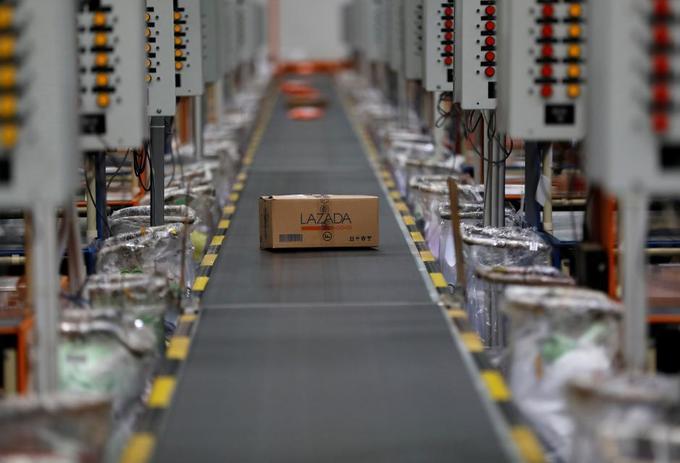
    Chinese tech giant Alibaba is taking Lazada to Europe as part of its strategy to drive growth in overseas countries.  It was reported that the plan to expand Lazada to Europe was due to Alibaba’s slowing opportunities in China.

    The company’s latest interim report published in December 2021 unveiled that its revenue from its China commerce retail business for the six months ended on 30 September 2021 was US$40.8 billion, an increase of 33% compared to US$29.7 billion for the same period of 2020. However, revenue from international commerce retail business for the same period last year was US$3.29 billion, a year-on-year increase of 43% compared to US$2.23 billion for the same period of 2020.

    When it comes to wholesale business, revenue in China for the six months ended on 30 September 2021 was US$1.26 billion, an increase of 14% compared to the same period of 2020. The increment was better in its international business, as the revenue was US$1.42 billion, an increase of 36% compared to the same period of 2020. Reuters’ report said that Lazada will target European vendors, while Lazada Thailand CEO James Dong will help spearhead the initiative. The destination of the expansion is still unknown at the moment. Moreover, Alibaba’s international digital commerce Jiang Fan visited Singapore in April to discuss the plan too.

    The potential expansion plan is Alibaba’s another step to tap into opportunities in Europe. Its logistic arm Cainiao opened a hub in Belgium last November which, reportedly, was the largest of its kind in Europe and a key part of the agreement between the Alibaba Group and the Belgian government concluded in 2018 to join the global Electronic World Trade Platform initiative.  Alibaba’s present in Europe also includes AliExpress, targets consumers looking for goods such as fashion, accessories, computer electronics, toys and tools from Chinese manufacturers.

    Last year, Alibaba reorganised its international and domestic commerce platforms into two units to better drive synergies, including international digital commerce and China digital commerce. International digital commerce brings together Alibaba’s overseas consumer-facing and wholesale businesses under the leadership of Jiang. It will include AliExpress, Alibaba.com, and Lazada. According to Alibaba, these businesses propel its globalisation strategy and the newly-created unit is in line with Alibaba’s goal of serving two billion consumers globally. In its last quarterly earnings, the company said it had reached 285 million annual active consumers overseas.

    Meanwhile, Lazada competitor Shopee also decided to pull out of France, after its foray into Europe. Shopee said that following a short-term, preliminary pilot, the company has decided not to continue the Shopee service in France. It added that other markets are unaffected, and Shopee will continue to adopt an “open-minded and disciplined approach to exploring new markets”.

    Last year, Shopee said that it is looking to grow its presence in Spain with the launch of a new Instagram page. At that point, the expansion into Europe is still in the early stages and that Shopee was understood still testing the waters. Shopee’s strategy to enter the Spanish market came shortly after it announced its expansion plans into Poland.

  • Taobao creates 10-yuan store for online bargain hunters

    Taobao creates 10-yuan store for online bargain hunters

    Alibaba Group’s marketplace Taobao Deals launched a 10-Yuan Store this week for China’s bargain hunters seeking daily necessities.

    Goods are priced below RMB10 (US$1.57) each at the digital stores, which are similar in concept to dollar stores in the US or pound shops in the UK.

    Taobao Deals also unveiled 100 Store, a marketplace for higher-value products, ranging from cosmetics, fashion accessories to kitchen utensils and toys, but still at a more affordable price point than many name brands.

    The launches are part of Taobao Deals’ efforts to appeal to a variety of shoppers in China’s lower-tier cities in China while streamlining supply chains. In both of the new store concepts, the platform is directly involved in sourcing, quality control, storage and delivery.

    Established in 2020, Taobao Deals had 280 million annual active users in the 12-months ended Dec. 31 last year. Paid orders on the platform grew over 100 per cent year-on-year in the third quarter, according to the group’s latest earnings report.

    “We’ve already reached many consumers in lower-tier cities…our mission is to serve consumers’ needs and create value for consumers,” said Wang Hai, president of Taobao Deals, at an online event held on Wednesday.

    The platform has three product categories: fresh produce sourced directly from farms, daily essentials and household items direct from factories, and trendy apparel direct from brands. 10-Yuan Store and 100 Store on Taobao Deals. Photo credit: Alibaba Group

    Powerful Partnerships

    Taobao Deal’s unique production model is best seen in an ultraviolet toothbrush head sanitizer now available on the 100 Store.

    As sales of electric toothbrushes surged in lower-tier cities in China, the operation team at Taobao Deals reached out to a manufacturer. It partnered to design a sanitizer that uses ultraviolet to sterilize the toothbrush.

    These devices tap the consumption upgrade wave washing across lower-tier cities and rural areas, which masses of merchants are surfing with the help of bargains app Taobao Deals.

    Most of the sellers that co-design products with Taobao Deals are top suppliers from Alibaba’s B2B purchasing and wholesale marketplace 1688.com. They hand over all the sales, marketing, storage and delivery work, cutting operational costs and thus passing this discount on to customers.

    “We pooled our strength to create products that cater to consumers’ needs…while manufacturers are good at production, we have consumer insight and a strong fulfillment network,” said Wang.

    More than 500,000 factories and two million merchants from China’s major manufacturing bases are collaborating with Taobao Deals as of December 2021.

  • Vietnam launches national pavilion on Alibaba

    Vietnam launches national pavilion on Alibaba

    The Vietnam Pavilion was launched on Chinese e-commerce platform Alibaba.com Friday to globally promote the country’s products and success stories.

    The Vietnam Trade Promotion Agency and the tech giant signed a deal for the purpose. Deputy Minister of Industry and Trade Do Thang Hai said the site would be used for advertising and taking Vietnamese products to customers around the world.

    The pavilion allows visitors to search for Vietnamese suppliers of agricultural and seafood products, furniture, packaging, and home and garden items.

    Vietnam has gained a reputation with global customers thanks to its production capacity, quality of products and competitive pricing, Alibaba deputy director Andrew Zhang said.

    The Trade Promotion Agency said it would coordinate with the platform to organize online advice sessions on exporting via e-commerce sites for over 2,500 Vietnamese small and medium-sized enterprises.

    A similar program was held last year also in partnership with Alibaba for around 2,000 businesses, it added.

    Tran Thi Yen Phi, CEO of Hanoi agribusiness DSW, said her firm’s revenues in the first year after joining Alibaba were US$260,000.

    The business was unaffected by the congestion at the Vietnam-China border thanks to expansion of its market to Japan, the EU and Southeast Asia. “This year we are boosting exports to China under the official quota. Deliveries are delayed by China’s ‘Zero Covid’ policy, but we still be able to operate there,” she said.

    Proline Vietnam, a packaging supplier, said its sales grew by 200 percent last year as it carried out all exports through e-commerce platforms.

  • Alibaba looks abroad as China growth slips

    Alibaba looks abroad as China growth slips

    China’s Alibaba has told its investors that overseas e-commerce would be a key focus as it looks for new sources of growth after a difficult year at home.

    Earlier this month, Alibaba Group Holding restructured its e-commerce business into separate China and international divisions, with the latter to be led by Jiang Fan, head of Alibaba’s flagship Taobao and Tmall marketplaces.

    Alibaba Deputy CFO Toby Xu, making his first major public remarks since being named this month to take over as CFO, said that international e-commerce “will become one of the key growth drivers”, adding that 57 percent of revenue for Cainiao, Alibaba’s logistics unit, comes from overseas.

    Earlier in the two-day investor event which ended Friday, Alibaba said it had set a target of $100 billion in gross merchandise value (GMV) for Lazada, its e-commerce service for Southeast Asia.

    Lazada generated $21 billion in GMV from September 2020 to the same month in 2021, the presentation showed.

    Outgoing CFO Maggie Wu said that In the future, the company will break down the category into four sub-categories – China commerce, which includes its major domestic-facing e-commerce platforms; international commerce, which will include Lazada, AliExpress, and other overseas-facing sites; local-based services, which will include its food-delivery service Ele.me and its mapping service; and Cainiao, its logistics division.

    There was also a nod to social welfare, with four of seven investment categories outlined by Xu related to initiatives such as rural revitalization and China’s aging population.

    CEO Daniel Zhang, meanwhile, pledged to slash emissions from Alibaba’s supply chains and transportation networks by 50 percent by the end of the decade.

    Missing from the presentation was any mention of Ant Group, the financial services firm that is 33-per-cent owned by Alibaba.

    Last year, Beijing intervened at the last minute to abort a planned $37 billion listing of Ant. Alibaba co-founder Jack Ma subsequently slipped from the public spotlight and Chinese authorities began a year-long regulatory clampdown.

    In November, Alibaba slashed its annual revenue forecast for its current fiscal year, from an initial growth target of 29.5 percent to between 20 and 23 percent.

    The company has been facing stiff competition from rivals including Pinduoduo, which has won over consumers in rural China, and ByteDance-owned Douyin, which has grown in China’s booming live-streamed e-commerce sector.

  • Alibaba fires employee who accused former co-worker of sexual assault

    Alibaba fires employee who accused former co-worker of sexual assault

    Chinese e-commerce giant Alibaba has fired a woman who accused a former co-worker of sexual assault in July this year. A dismissal letter, became effective on Nov. 25, the day it was given to the employee. She is identified in court papers only by her surname, Zhou. After the company failed to take action after she reported the assault, according to her, Zhou went public in August.

    She began passing out fliers to co-workers, unfurling banners in the company cafeteria, and posting messages on Alibaba’s internal website. The subsequent letter claimed she had spread false information “which aroused strong concern from society and damaged the company.”

    The move to fire Zhou is a reversal of Alibaba’s initial support for her. After her allegations surfaced, the company fired the co-worker accused of assault, identified as Zhou’s former supervisor Wang Chengwen. Two senior managers also resigned for failing to act after Zhou made her report. But prosecutors dropped her case in September after investigators found that Wang’s actions constituted “forcible indecency” but did not rise to the level of rape. Police gave him 15 days of administrative detention.

  • Alibaba overhauls e-commerce businesses, appoints new CFO

    Alibaba overhauls e-commerce businesses, appoints new CFO

    Alibaba said it would form two new units to house its main e-commerce businesses – international digital commerce and China digital commerce, in a bid to become more agile and accelerate growth.

    The international digital commerce unit will house Alibaba’s overseas consumer-facing and wholesale businesses and include AliExpress, Alibaba.com and Lazada. The unit will be headed by Jiang Fan, who had been president of the Taobao and Tmall marketplaces.

    Alibaba will house its domestic commerce businesses in the China digital commerce unit, which will be led by Trudy Dai, a founding member of Alibaba, it said.

    The company’s deputy chief financial officer, Toby Xu, will succeed Maggie Wu as its chief financial officer from April; his appointment was described as part of the company’s leadership succession plan.

    Xu joined Alibaba from PWC three years ago and was appointed deputy CFO in July 2019.

    Wu, who helped lead three Alibaba-related company public listings as CFO, will continue to serve as an executive director on Alibaba’s board.

    The e-commerce giant’s Hong Kong-listed shares slid 8 percent in early morning trade, tracking Friday declines made in the United States. US-listed shares of Chinese firms tumbled on concerns about stricter regulatory scrutiny at home in the wake of plans by Didi Global Inc to delist from the New York Stock Exchange.

    Last month, Alibaba slashed its forecast for annual revenue growth to its slowest pace since its 2014 stock market debut and saw sales at its banner event, online shopping festival Singles Day, grow at their slowest rate ever despite record sales.

  • Alibaba expects slowest annual growth in eight years

    Alibaba expects slowest annual growth in eight years

    China’s Alibaba forecast annual revenue to grow at its slowest pace since its 2014 stock market debut as second-quarter results missed expectations due to slowing consumption, increasing competition, and a regulatory crackdown.

    U.S.-listed shares of Alibaba Group Holding Ltd, which expects the fiscal year 2022 revenue to grow by 20% to 23%, tumbled 10.3% in pre-market trading on Thursday.

    Beijing has come down hard on China’s big tech, citing antimonopoly and security reasons, hitting bottom lines and stock prices at companies including Alibaba and gaming giant Tencent Holdings Ltd. Tencent last week posted its slowest revenue growth since it went public in 2004.

    This, along with supply disruptions, has contributed to China’s economy suffering its slowest growth in a year in the third quarter.

    On an earnings call on Thursday, Alibaba CEO Daniel Zhang said increasing competition and slowing consumption in China were the primary causes for slowing growth, adding that it was hard to say which one hurt earnings more.

    For the quarter ended Sept. 30, the e-commerce juggernaut’s revenue growth rose 29% to 200.69 billion yuan ($31.44 billion), its slowest rate of growth in six quarters. Analysts on average had an expected revenue of 204.93 billion yuan, according to Refinitiv data.

    Revenue at Alibaba’s China commerce retail business, its main e-commerce unit, rose 33%. On an adjusted basis, Alibaba earned 11.20 yuan per share, below the average estimate of 12.36 yuan.

    Separately, Alibaba’s chief rival JD.com Inc, said it expects weak demand will weigh on the company’s overall performance in the year’s second half.

    Alibaba, which last week recorded its slowest sales growth during its annual Singles’ Day online shopping fest, said it will continue to invest heavily in areas such as Taobao Deals, an e-commerce service targeting lower-tier cities, and offline retail initiatives.

    Alibaba’s fintech affiliate Ant Group recorded a quarterly profit of about 19.7 billion yuan for the quarter ended June. Alibaba records its profit from Ant one quarter in arrears.

    Authorities forced the suspension of Ant’s $37 billion initial public offering last November and imposed a record $2.8 billion fine on Alibaba for anti-competitive business practices in April.

    Alibaba logged its first operating loss as a public company the same quarter it faced the penalty and has lost about a third of its market value so far this year.

  • Lyre’s latest fundraising round values company at $500 million

    Lyre’s latest fundraising round values company at $500 million

    Fast-growing non-alcoholic spirits brand Lyre’s, has raised $37 million in a round that values the business at A$500 million less than three years after it launched. The funding round was led by a new investor, D Squared Capital, alongside existing investor, Morgan Creek Capital Management, which has also backed Alibaba, SpaceX, Lyft, and Allbirds). Other previous investors joining the fresh round include DLF Venture, VRD Ventures, and Maropost Ventures.

    The Sydney-based business previously raised $16 million in a seed round in September 2020.

    Co-founders Mark Livings and Carl Hartmann launched Lyre’s in April 2019 with the goal of creating non-alcoholic versions of the world’s most popular spirits. It now produces 14 non-alcoholic spirits with the distinct flavors of gin, whisky, vermouth, amaretto, absinthe, rum, and others, as well as a range of ready-to-drink pre-mixed non-alcoholic cocktails, from an Amalfi spritz to and rum and cola and G&T.

    With around 20% of the population not drinking alcohol, consumption trends heading down among existing drinkers, and an emerging, liberated middle class in Muslim countries looking to have fun and socialize while eschewing alcohol.

    CEO Mark Livings said the latest capital injection will be used predominantly for marketing, and create more than 50 new jobs in sales and marketing, production, logistics, finance, and e-commerce.

    Lyre’s products are now available in more than 60 countries, up 50% in 2021, including in the Middle East and China. This year also saw the business manufacture its one-millionth bottle, and develop six new product variations including Classico, their first no-alcohol Prosecco-style sparkling which launched to market in early November. The company now has production facilities in the UK, Germany, Australia, and the US.

    The drinks startup has also established an R&D division in partnership with beverage technology giant Döhler.

    Livings said range now covers more than 90% of the world’s best-selling cocktails.

    “Millennials and older Gen Zs are drinking less alcohol than any generation before them, but the mindful drinking movement transcends generations and cultural borders. We’re not only growing our business – we’re expanding the whole category, entering territories like the Middle East and Far East virtually uncontested,” he said.

    “The pace of growth we’re seeing is exceptional. We sold our first bottle in 2019 and today we’re selling one at least every 30 seconds. On our current trajectory, Lyre’s is set to become the fastest independent beverage brand to reach Unicorn status.”

    Off-premise sales of low-alcoholic and non-alcoholic drinks have jumped in 12 months from $291 million to $3.1 billion. In Australia, the category is expected to grow by 16% over four years to 2024.

    D Squared Capital Managing Director Daniel Grossman said the company is forging a new path in a critical category.

    “The no/low alcohol beverage market is one of the fastest-growing markets in F&B and is showing similar characteristics to plant-based milks, meats, and other mindful consumer categories,” he said.

    “Lyre’s leading product, brand, and range of award-winning SKUs have proven that they are the industry leader and we are excited to be backing the best in class company.”