Retail News CRM

Tag: Alibaba

  • Alibaba has major ambitions for Vietnamese businesses

    Alibaba has major ambitions for Vietnamese businesses

    Chinese e-commerce giant Alibaba wants to have over 10,000 Vietnamese small and medium-sized enterprises selling on its platform by 2025.

    Its government relation and business development manager, Vu The Tung, who revealed this at a ceremony to sign a memorandum of understanding with the Vietnam Trade Promotion Agency on Tuesday, said his company would help Vietnamese businesses increase their exports by promoting their products.

    The two signatories have been running a training program since August last year to enhance Vietnamese businesses’ ability to participate in global e-commerce.

    Vu Thi Minh Thuy, manager of the agency’s information technology application center, said through the training program over 300 companies have been provided consultancy in online cross-border sales.

    Fifty agriculture, aquaculture, food processing, and packaging companies became ready to sell on Alibaba’s e-commerce platform after completing training in October, she said. The two sides hope to have 1,200 Vietnamese enterprises on the platform by the end of 2021.

    Deputy Minister of Industry and Trade Do Thang Hai, who hailed Alibaba’s support, said: “The Vietnam Trade Promotion Agency and Alibaba will continue to look for enterprises to take part in the training program, and create recognition for Vietnamese brands on Alibaba’s e-commerce platform. They are also planning to create an exclusive section for Vietnamese products on the Alibaba website.”

  • Alibaba told to divest media assets

    Alibaba told to divest media assets

    Beijing has reportedly told the Chinese e-commerce conglomerate Alibaba to divest its assets in the media sector out of concern over the company’s growing public influence. Its founder, Jack Ma, the ebullient and unconventional billionaire who officially retired from Alibaba in 2019 but remains a large shareholder, has been in authorities’ crosshairs in recent months.

    In November, Chinese regulators halted a colossal $34bn stock market listing by Ant Group, an Alibaba subsidiary for online payments. The following month, regulators opened an investigation into Alibaba business practices deemed anti-competitive. Now authorities have told the tech company to drastically reduce its presence in the media sector, citing people familiar with the matter.

    Alibaba’s highest-profile media assets include Hong Kong’s leading English-language daily, the South China Morning Post, and China’s Twitter-like social media platform Weibo, and online video platform Bilibili. Officials are worried that the company has too much influence over public opinion and were reportedly appalled about the extent of its media holdings, the Journal said.

    The government did not specify whether Alibaba was requested to completely withdraw from the media or divest part of its shares.

    On Friday, the Journal reported that Alibaba risks being levied with a record fine in China for anti-competitive practices, which could exceed the $975m paid by US chipmaker Qualcomm in 2015.

    According to the article, authorities accuse Alibaba of preventing merchants who sell goods on the platform from also selling on rival websites.

  • Alibaba beats revenue forecast as Chinese regulators hover

    Alibaba beats revenue forecast as Chinese regulators hover

    China’s Alibaba Group Holding Ltd beat estimates for third-quarter revenue on a pandemic-driven jump in e-commerce, but its shares dropped amid regulatory heat for founder Jack Ma’s business empire.

    It also announced a bond sale worth as much as $5 billion through sources have said plans for the fundraising were in the works before the regulatory clampdown.

    Ma’s current woes stem from an Oct. 24 speech in which he blasted China’s regulatory system, leading to the suspension of his Ant Group’s $37 billion IPO just days before the fintech giant’s listing.

    Regulators have since launched an anti-trust probe into the tech sector, while tighter regulations for Ant are also being considered.

    Ma, who has been keeping an uncharacteristically low profile these past three months, was also conspicuously snubbed this week by his omission in a state media list of entrepreneurial leaders.

    Alibaba CEO Daniel Zhang said changing regulations for internet and fintech firms in China presented a near-term challenge.

    “We regard this as important opportunities for re-assessing and improving business practices,” he told an earnings call.

    Alibaba also said it was “unable to complete a fair assessment” of the impact that Ant’s stalled IPO will have on the company. Zhang said, however, that any potential reduction in consumer credit offerings from Ant would not have an impact on Alibaba’s e-commerce business.

    Shares in Alibaba dropped 4% in Hong Kong on Wednesday, having closed down nearly as much on the New York Stock Exchange.

    Alibaba’s total revenue rose 37% to 221.1 billion yuan ($34.2 billion) in the three months ended Dec. 31, above analysts’ estimates of 214.4 billion yuan, according IBES data from Refinitiv.

  • Jack Ma resurfaces in online meeting after three-month absence

    Jack Ma resurfaces in online meeting after three-month absence

    Alibaba Group founder Jack Ma met 100 rural teachers in China via a live video meeting on Wednesday morning, in the businessman’s first appearance since October.

    Social media speculation over the whereabouts of China’s highest-profile entrepreneur swirled this month after news reports that he missed the final episode of a TV show featuring him as a judge, amid a regulatory clampdown by Beijing on his sprawling business empire.

    Ma had not appeared in public since a late-October forum in Shanghai, where he blasted China’s regulatory system in a speech that set him on a collision course with officials, leading to the suspension of a $37-billion IPO of Alibaba’s financial affiliate Ant Group.

    Tianmu News, a news portal under Zhejiang Online, which is backed by the provincial Zhejiang government, first reported that Ma had met with the teachers via a live video conference on Wednesday.

    The Jack Ma Foundation said that Ma participated in the online ceremony of the annual Rural Teacher Initiative event on Wednesday. Alibaba Group also confirmed that Jack Ma attended the online event.

    In the 50-second video, Ma, dressed in a navy pullover, spoke directly to the camera from a room with grey marble walls and a striped carpet. It was not clear from the video or the Tianmu News article where he was speaking from.

    He addressed teachers receiving the Jack Ma Rural Teachers Award, who in previous years would have attended a ceremony organized by the Jack Ma Foundation in the Chinese seaside city of Sanya.

    “We cannot meet in Sanya due to the epidemic,” he said in the speech, which did not discuss his whereabouts. “When the epidemic is over, we must find time to make up for everyone’s trip to Sanya, and then we will meet again!”

  • Washington Mulls Alibaba and Tencent Ban

    Washington Mulls Alibaba and Tencent Ban

    Just weeks before the end of the current U.S. administration, authorities are reportedly discussing the expansion of a blacklist of companies linked to China’s military with the inclusion of major tech giants, Alibaba and Tencent.

    Discussions considering the inclusion have been underway for a few weeks amongst State and Defense Department officials, according to a report citing unnamed sources.

    The original blacklist was released in November with 31 companies including the likes of surveillance firm Hikvision and semiconductor maker SMIC.

    Most recently, the Chinese military investment ban also included an unusual case involving China Mobile, China Telecom and China Unicom Hong Kong. After an initial decision to delist the three Chinese telecommunication firms, the New York Stock Exchange (NYSE) reversed the call this Monday before making yet another reversal on Tuesday.

    Sources said that there was ambiguity about whether or not the aforementioned firms were subject to the bans which subsequently led U.S. Treasury Secretary Steven Mnuchin to phone NYSE president Stacey Cunningham to tell her he disagreed with the decision to reverse the delisting.

    The investment bans are part of a series of moves made by the Trump administration to drive decoupling between U.S. capital and the Chinese economy.

    In addition to military-linked companies, Washington also seeks to tighten on Chinese firms that fail to pass U.S. auditing standards, pressuring them with the prospects of delisting from American bourses.

    This follows a series of headline accounting scandals amongst U.S.-listed Chinese companies such as the $300 million inflation of sales figures at Luckin Coffee or 83 tons of collateralized fake gold bars at Kingold.

  • Jack Ma went missing?

    Jack Ma went missing?

    Once the poster boy for a new generation of multi-billionaire Chinese business and tech leaders, Alibaba founder Jack Ma’s fortunes have taken a serious dip in the last three months. Since a controversial speech in China in October 2020, where he lamented the country’s financial regulatory system and called for it to be reformed, the billionaire has been facing a series of actions from the Chinese authorities.

    He has faced a number of business setbacks since, including a block on his plans for a stellar listing on the stock market, actions which have in turn left the market wary of his firms.

    And he has now not been seen in public for more than two months – highlighted by his mysterious withdrawal from a scheduled appearance on his own reality TV show.

    Who is Jack Ma?

    Born in Hangzhou in eastern China, the 56-year-old came from a poor family and was once an English teacher. He bought his first computer aged 33, and in the last two decades rose to become a shining star of China’s booming economy through the success of his e-commerce giant Alibaba.

    Ma stepped down as chairman of Alibaba in 2019, but has remained in the public eye through media appearances and philanthropic work. During the Covid-19 pandemic he has donated masks and ventilators to the US – an effort that drew praise from several US politicians – and he is the face of a talent show to support young entrepreneurs.

    Where is Jack Ma?

    Ma’s removal from the good books of the Chinese authorities appears to have been even quicker than his rise to fame and fortune. The billionaire, who is known to speak freely, at a summit in October 2020 came down heavily on China’s financial regulators.

    He called for reforms in the financial system, speaking to an audience that included many officials of the regulatory organisations he was criticising.

    The response was swift. In November, a planned IPO of Ma’s Ant Group was suspended by the Chinese authorities and later, in December, the buyback plan of shares worth billions of pounds also failed to excite the investors. The authorities also opened an investigation against his firms.

    After years as the outgoing face of his companies – Ma once danced in front of tens of thousands of his company’s employees dressed in an outfit inspired by Michael Jackson – he is now conspicuously absent from the stage, without a public appearance in weeks or even a tweet in three months.

    Jack Ma net worth

    Jack Ma has various business interests. Apart from being the founder of Alibaba, he also has a stake in the online payment service Ant Group.

    It’s a dramatic change for a man who once taught English for $15 (£11) a month. He says he was rejected for 30 other jobs – including one serving at KFC – before he founded his own company.

    At one point Ma became Asia’s richest person – though he was later supplanted by another Chinese businessman.

    According to Bloomberg’s Billionaires Index, his net worth is about $50.6bn (£37bn), making him the 25th richest person in the world.

    Jack Ma and Alibaba

    Ma has said he drew the inspiration to start Alibaba from a trip to the US in 1995.  Subsequently, in 1999, Ma along with 18 people including many of his friends founded Alibaba Group from an apartment in Hangzhou, where they pooled in $60,000 (£44,000) for the venture.

    The group struggled early on and by 2002 they only had enough cash coming in to support 18 months of operation. But then came a timely intervention to connect two big markets – the US and China – ensuring that American buyers could get easier access to Chinese manufacturers, and slowly steadying the business.

    Over the years, the group became increasingly profitable and Ma and Alibaba became a force to reckon with. Ma started featuring on the covers of international business magazines – something uncommon for Chinese businessmen at that time.

    As a result, the reach of the Alibaba group, which was once rejected by funders, is now spread over 190 countries. It has become a leading platform for wholesale trade connecting millions of buyers and suppliers. It now has an estimated market cap of about $648.3bn (£474bn).

    With an estimated 100,000 employees, Alibaba now has interests in e-commerce, cloud computing, cashless payment and even movies.

    Ma stepped down from his role as chairman in 2019 and reports suggested he would focus his time and efforts on his philanthropic work.

    But as with many firms, the founder’s shadow looms large over Alibaba’s fortunes – something that the October 2020 controversy has shown. He remains an influential member of the Alibaba Partnership, for instance – a group of 36 members who can influence the nomination of the company’s board of directors.

    The company state’s that its vision is to be in operation for at least 102 years – but if the current trajectory of the crackdown on Ma continues, the dream may end much more abruptly than that.
  • Alibaba CEO hails China’s draft anti-monopoly rules ‘timely and necessary’

    Alibaba CEO hails China’s draft anti-monopoly rules ‘timely and necessary’

    China’s move to draft rules aimed at preventing monopolistic behavior by Internet platforms is “timely and necessary”, Alibaba Group CEO Daniel Zhang said on Monday (Nov 23).

    Speaking at the World Internet Conference, Zhang said Chinese Internet companies have moved to the forefront of the global industry with the help of government policies, but regulations need to evolve.

    The industry’s “development and government supervision is a relationship that promotes and relies on each other, so that platform enterprises cannot only develop well themselves, but also serve the sustainable and healthy development of the whole society”, he said.

    The annual event from Nov 23 to 24 organized by the Cyberspace Administration of China takes place as the country’s Internet giants including Alibaba, Tencent Holdings and Meituan face increasing government scrutiny.

    Earlier this month the planned US$37 billion share market listing of Alibaba affiliate Ant Group was suspended after regulators warned its lucrative online lending business faced tighter scrutiny.

    Alibaba’s e-commerce marketplaces and payment services are also expected to face greater oversight under the draft rules published on Nov 10 by China’s market regulator, which said it wanted to prevent platforms from dominating the market or from adopting methods aimed at blocking fair competition.

    Zhang is one of the few Chinese technology chiefs to appear publicly at the event after it was scaled down due to the COVID-19 pandemic. Other chief executives such as Qualcomm’s Steve Mollenkopf delivered remarks via video.

  • Alibaba shoppers shatter Singles Day record

    Alibaba shoppers shatter Singles Day record

    Singles Day on Nov. 11 is an unofficial Chinese holiday. The holiday has surpassed Cyber Monday as the largest online shopping day of the year globally.

    What Happened: Alibaba Group Holding owns the trademark to Singles Day and is the largest participating retailer.

    Yahoo Finance reports that Alibaba has added three additional days to the 2020 Singles Day holiday shopping season. The added dates are Nov. 1, 2 and 3.

    Shoppers can also get an early look Saturday with a countdown gala.

    Alibaba had over 1.3 billion orders in the 24-hour event in 2019.

    Rival JD.com holds a similar Singles Day event. JD.com reported Singles Day sales of $29.2 billion in 2019 spread out over 11 days.

    An estimated 300 million new users are expected to participate in the shopping event in 2020. Alibaba segment Tmall Global is expected to add 2,600 new brands for the event including Prada, Cartier and Chloe.

    Alibaba adding several days could break records.

    A survey from AlixPartners suggests spending will rise, with 39% of consumers saying they would spend more than in 2019.

  • Alibaba E-commerce sales sky high

    Alibaba E-commerce sales sky high

    Alibaba Group beat third-quarter revenue estimates, driven by e-commerce growth after China emerged from coronavirus lockdowns, and said it was assessing the suspension of its affiliate Ant Group’s listing.

    China’s surprise suspension of Ant Group’s planned $37 billion Shanghai initial public offering (IPO) was seen by some analysts and investors as an attempt by Beijing to cut founder Jack Ma and his financial services empire down to size.

    Alibaba CEO Daniel Zhang said during an earnings call that added that Alibaba is “actively evaluating” the impact of the Ant Group IPO’s suspension on its business and will “take appropriate measures accordingly”.

    Ant Group said separately it would decide whether to restart its IPO after fully reviewing and evaluating relevant measures.

    Alibaba’s results also coincided with markets awaiting the outcome of the US presidential election results, with Democrat Joe Biden edging closer to victory.

    Under Donald Trump, the world’s top two economies have clashed over trade, forcing some Chinese companies to put off US IPOs and list on exchanges close to home.

    Revenue at Alibaba’s cloud computing business, a focus area for the company, jumped 60 percent to 14.9 billion yuan (US$2.25 billion), while sales from its core e-commerce business rose 29 percent to 130.92 billion yuan in the reported quarter.

    Net income fell 63 percent to 26.52 billion yuan, as Alibaba had booked a one-off gain last year from its 33-per-cent stake in Ant Group.

    Revenue rose 30 percent to 155.06 billion yuan in the quarter ended September 30, compared to estimates of 154.74 billion yuan, according to IBES data from Refinitiv.

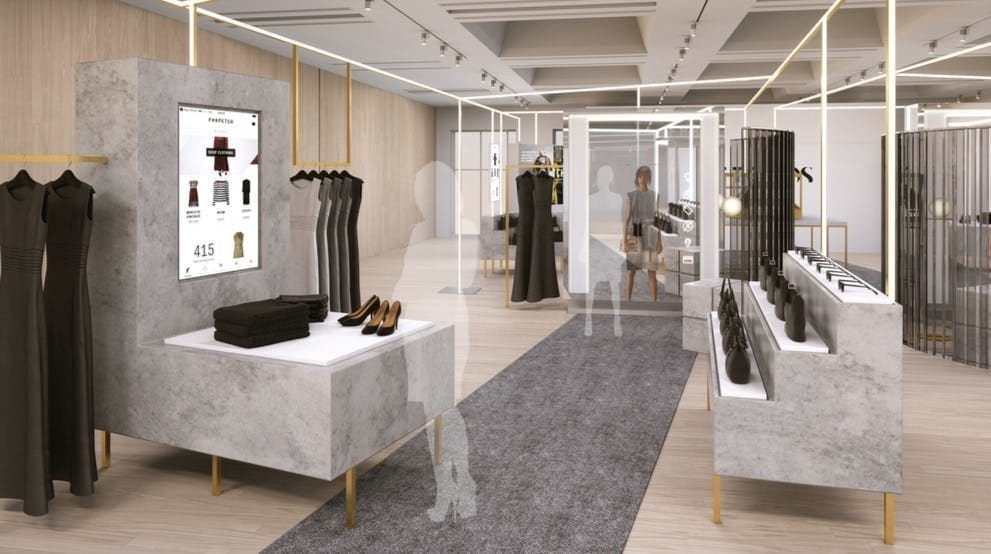
  • Alibaba eyes to invest in online fashion retailer Farfetch

    Alibaba eyes to invest in online fashion retailer Farfetch

    Alibaba Group Holding Ltd 9988.HK is in advanced talks to invest nearly $300 million in online luxury fashion retailer Farfetch Ltd FTCH.N, the Information reported on Monday, citing people familiar with the matter.

    Shares of London-based Farfetch jumped about 16% to $32.59 following the news.

    The two companies are also in talks to create a Chinese joint venture, the report said here, adding that Cartier-owner Richemont, which has teamed up with Alibaba to create mobile applications, is also considering investing in Farfetch alongside the Chinese e-commerce giant.

    Both Farfetch and Alibaba were not immediately available for comment.

    Farfetch, which counts Alibaba’s competitors JD.com 9618.HK and Tencent Holdings Ltd 0700.HK among its investors has been betting on China’s burgeoning online luxury goods world. Chinese consumers make up a third of luxury goods purchases worldwide.

    Terms of the current and past deals with Tencent and JD would not prevent Alibaba from investing in Farfetch, the Information said, citing a source.

  • Alibaba takes control of Sun Art hypermarkets

    Alibaba takes control of Sun Art hypermarkets

    Alibaba Group Holding Ltd. will invest about $3.6 billion to double its stake in Sun Art Retail Group Ltd., taking control of China’s largest chain of hypermarts to try and fend off rivals like JD.com Inc. in e-commerce’s hottest growth arena.

    Alibaba will raise its direct and indirect stake in the grocery chain to about 72% by acquiring equity from Auchan Retail International SA, then make a general offer to shareholders to buy out the rest of Sun Art. The latter’s Hong Kong-listed stock leapt as much as 30% Monday, its biggest intraday gain since 2011. Alibaba gained as much as 1.8% to touch an intraday record.

  • Alibaba’s Taobao to exit Taiwan over political tensions

    Alibaba’s Taobao to exit Taiwan over political tensions

    Taiwan on Monday gave the domestic branch of Alibaba Group Holding Ltd’s e-commerce site Taobao six months to re-register as a Chinese investment rather than a foreign one, or leave, in the government’s latest shot against Chinese firms.

    Amid growing political tension, Taiwan has stepped up oversight of Chinese investment and the operations of Chinese tech firms on the island.

    Last week it said it planned to stop local sales of Chinese internet television streaming services, though it does not plan to block them.

    The investment commission of Taiwan’s Economics Ministry said Taobao Taiwan was operated by a British-registered company called Claddagh Venture Investment, an investment firm that was in effect controlled by Alibaba.

    The commission was also concerned about information security as user data was sent back to China, it said, adding that Taobao Taiwan had been fined T$410,000 ($13,960) and had six months to either withdraw its investment, or re-register.

    “We do not consider the company as foreign investment,” commission spokesman Su Chi-Yun told Reuters. “They will have to decide whether to disinvest or rectify their investment.”

    The company should have registered as a Chinese investment, but came in as foreign investment instead since “it’s more convenient,” he added.

    Taiwan treats investment from foreign countries differently than that from China, with far more stringent rules.

    Su said even if Taobao chose to register as Chinese investment in Taiwan, it could still fall afoul of rules barring Chinese companies from sectors vital to its business model, such as third-party payments or advertising.

    Claddagh’s Taiwan office expressed regret at the move and said it had received no formal notification from the government, but that it respected the decision and would “carry out rectification as soon as possible.” It did not give details.

    Taobao Taiwan, launched last year, has previously said it was an entirely different platform from Taobao China.

  • Alibaba setting up joint venture with Swiss duty-free giant Dufry

    Alibaba setting up joint venture with Swiss duty-free giant Dufry

    Chinese tech giant Alibaba has agreed to form a joint venture (JV) with Swiss duty-free group Dufry, as Chinese shoppers’ appetite for overseas luxury goods seemed unfettered by the pandemic.

    It also announced that it would acquire an up to 9.99 percent stake in the duty-free operator in a statement released last Monday.

    Alibaba Group will have 51 percent controlling shares to Dufry’s 49 percent. The joint venture combines Alibaba’s established network and digital capabilities with Dufry’s China travel retail business and operational skills, the statement said.

    “We expect this collaboration to drive growth in Asia and with Chinese customers worldwide with the support of new digital technologies,” said Dufry Chief Executive Julian Diaz on Monday.

    As the coronavirus pandemic halts global travel, Dufry’s revenue fell by 62 percent to 1.59 billion Swiss francs ($1.74 billion) in the first half of 2020. It is an increasing presence in China’s travel retail markets as effective containment of the outbreak allowed the country to travel again.

    With 14,941 flights booked during the country’s eight-day National Day holiday that started on October 1, total air travel booking is comparable with the same period last year. Bookings for domestic flights have increased by 10.5 percent, data from China’s aviation authority showed.

    Dufry is proposing a capital increase that will raise up to 700 million Swiss francs, which Alibaba is to subscribe to up to 250 million Swiss francs of shares.

    China currently taxes imported consumer goods, such as garments and beauty products, an average of 6.9 percent and high-end cosmetics by 15 percent. But tariffs for many luxury products, such as perfumes and watches, exceed 30 percent.

    South China’s island province of Hainan has offered greater visa-free access and duty-free shopping for tourists since July 1. Meanwhile, the annual quota for individuals making duty-free purchases on the island tripled to 100,000 yuan, and the duty-free product catalog increased from 38 to 45 items with some electronic products and wines newly added to the duty-free list.

    China’s duty-free retail giant China Duty-Free Group owns all four offshore duty-free shops in Hainan. Its parent company China Tourism Group Duty-Free generated 19.3 million yuan in revenue in the first half of 2020, beating Dufry as the world’s largest duty-free retailer.

    Its sales in Hainan were the primary driver for China Tourism Group Duty-Free’s revenue boost, contributing 47 percent in the first half of the year. Hainan recorded 8.61 billion yuan in visitor duty-free spending from July 1 to September 30, a surge of 227.5 percent year on year, the local customs data showed.

  • Temenos, Alibaba Partner

    Temenos, Alibaba Partner

    The banking software company is joining up with the Chinese internet giant on cloud-based services. The deal opens a huge new potential market for Geneva-based Temenos: it is joining Alibaba’s cloud services, the company said in a statement on Thursday. In effect, banks can adopt Temenos’ software – Transact – on the Chinese firm’s cloud infrastructure.

    The move represents a massive step forward in so-called software as a service or SaaS. Providers like Temenos are moving towards more piecemeal sales and away from large one-time installations. Much of this is cloud-based, meaning banks can easily and less expensively grab what they need quickly. The technology providers hope for increased recurring revenue as well as scale effects.

    Alibaba and Temenos are currently testing with banks to establish so-called proof of concept, and already have joint customers in the wider Asia-Pacific region, they said. Transact is set up to be compatible with as many data clouds as possible.

    Alibaba, strongly anchored as China’s leading e-commerce and payments firm, is also the leading domestic cloud provider. The cloud subsidiary recently pledged an $28 billion investment in expanding, including hiring 5,000 new staff.

  • Alibaba Weighs Investment in Grab

    Alibaba Weighs Investment in Grab

    The Chinese e-commerce giant is in talks with Singapore-based ride-hailing and payments firm Grab over a potential $3 billion investment into the company.

    Part of the funds will be used to purchase Grab stock held by Uber, which acquired 23.2 percent of the company when it exited Southeast Asia in 2018, as reported on Monday, citing people related to the matter.

    Alibaba’s potential tie-up with Grab gives it access to data on millions of users in eight countries, a growing delivery fleet as well as a stake in a digital wallet and financial services noted.

    The news comes just a day after Grab had resumed merger talks with Jakarta-headquartered rival Gojek, at the urging of shareholders including SoftBank. The two companies are facing large losses due to Covid-19 related restrictions – Grab already laid off 5 percent of its workforce in June, which founder and CEO Anthony Tan said would help it better face the challenges of a post-Covid economy.

    Grab was valued at $14 billion in its last funding round in 2019, when it raised $1.5 billion from SoftBank’s Vision Fund. However, «FT» noted, citing secondary market brokers, that Grab shares have been trading at a 25-percent discount, while shares in Gojek, valued at close to $10 billion last year, have also been selling at steep discounts, particularly from early shareholders wanting to exit.

    Grab rolled out a new strategy in August to expand its consumer services ecosystem, with new products including a micro-investment solution, a third-party loan platform, and a buy-now-pay-later service.

    The firm has partnered Singtel in its application for a digital bank license in Singapore. It also moved into wealth management with the acquisition of Singapore-based robo-advisor Bento, which was relaunched as GrabInvest.