Tag: Alibaba

  • Alibaba setting up joint venture with Swiss duty-free giant Dufry

    Alibaba setting up joint venture with Swiss duty-free giant Dufry

    Chinese tech giant Alibaba has agreed to form a joint venture (JV) with Swiss duty-free group Dufry, as Chinese shoppers’ appetite for overseas luxury goods seemed unfettered by the pandemic.

    It also announced that it would acquire an up to 9.99 percent stake in the duty-free operator in a statement released last Monday.

    Alibaba Group will have 51 percent controlling shares to Dufry’s 49 percent. The joint venture combines Alibaba’s established network and digital capabilities with Dufry’s China travel retail business and operational skills, the statement said.

    “We expect this collaboration to drive growth in Asia and with Chinese customers worldwide with the support of new digital technologies,” said Dufry Chief Executive Julian Diaz on Monday.

    As the coronavirus pandemic halts global travel, Dufry’s revenue fell by 62 percent to 1.59 billion Swiss francs ($1.74 billion) in the first half of 2020. It is an increasing presence in China’s travel retail markets as effective containment of the outbreak allowed the country to travel again.

    With 14,941 flights booked during the country’s eight-day National Day holiday that started on October 1, total air travel booking is comparable with the same period last year. Bookings for domestic flights have increased by 10.5 percent, data from China’s aviation authority showed.

    Dufry is proposing a capital increase that will raise up to 700 million Swiss francs, which Alibaba is to subscribe to up to 250 million Swiss francs of shares.

    China currently taxes imported consumer goods, such as garments and beauty products, an average of 6.9 percent and high-end cosmetics by 15 percent. But tariffs for many luxury products, such as perfumes and watches, exceed 30 percent.

    South China’s island province of Hainan has offered greater visa-free access and duty-free shopping for tourists since July 1. Meanwhile, the annual quota for individuals making duty-free purchases on the island tripled to 100,000 yuan, and the duty-free product catalog increased from 38 to 45 items with some electronic products and wines newly added to the duty-free list.

    China’s duty-free retail giant China Duty-Free Group owns all four offshore duty-free shops in Hainan. Its parent company China Tourism Group Duty-Free generated 19.3 million yuan in revenue in the first half of 2020, beating Dufry as the world’s largest duty-free retailer.

    Its sales in Hainan were the primary driver for China Tourism Group Duty-Free’s revenue boost, contributing 47 percent in the first half of the year. Hainan recorded 8.61 billion yuan in visitor duty-free spending from July 1 to September 30, a surge of 227.5 percent year on year, the local customs data showed.

  • Temenos, Alibaba Partner

    Temenos, Alibaba Partner

    The banking software company is joining up with the Chinese internet giant on cloud-based services. The deal opens a huge new potential market for Geneva-based Temenos: it is joining Alibaba’s cloud services, the company said in a statement on Thursday. In effect, banks can adopt Temenos’ software – Transact – on the Chinese firm’s cloud infrastructure.

    The move represents a massive step forward in so-called software as a service or SaaS. Providers like Temenos are moving towards more piecemeal sales and away from large one-time installations. Much of this is cloud-based, meaning banks can easily and less expensively grab what they need quickly. The technology providers hope for increased recurring revenue as well as scale effects.

    Alibaba and Temenos are currently testing with banks to establish so-called proof of concept, and already have joint customers in the wider Asia-Pacific region, they said. Transact is set up to be compatible with as many data clouds as possible.

    Alibaba, strongly anchored as China’s leading e-commerce and payments firm, is also the leading domestic cloud provider. The cloud subsidiary recently pledged an $28 billion investment in expanding, including hiring 5,000 new staff.

  • Alibaba Weighs Investment in Grab

    Alibaba Weighs Investment in Grab

    The Chinese e-commerce giant is in talks with Singapore-based ride-hailing and payments firm Grab over a potential $3 billion investment into the company.

    Part of the funds will be used to purchase Grab stock held by Uber, which acquired 23.2 percent of the company when it exited Southeast Asia in 2018, as reported on Monday, citing people related to the matter.

    Alibaba’s potential tie-up with Grab gives it access to data on millions of users in eight countries, a growing delivery fleet as well as a stake in a digital wallet and financial services noted.

    The news comes just a day after Grab had resumed merger talks with Jakarta-headquartered rival Gojek, at the urging of shareholders including SoftBank. The two companies are facing large losses due to Covid-19 related restrictions – Grab already laid off 5 percent of its workforce in June, which founder and CEO Anthony Tan said would help it better face the challenges of a post-Covid economy.

    Grab was valued at $14 billion in its last funding round in 2019, when it raised $1.5 billion from SoftBank’s Vision Fund. However, «FT» noted, citing secondary market brokers, that Grab shares have been trading at a 25-percent discount, while shares in Gojek, valued at close to $10 billion last year, have also been selling at steep discounts, particularly from early shareholders wanting to exit.

    Grab rolled out a new strategy in August to expand its consumer services ecosystem, with new products including a micro-investment solution, a third-party loan platform, and a buy-now-pay-later service.

    The firm has partnered Singtel in its application for a digital bank license in Singapore. It also moved into wealth management with the acquisition of Singapore-based robo-advisor Bento, which was relaunched as GrabInvest.

  • Alibaba eyeing cornerstone stake in Grab

    Alibaba eyeing cornerstone stake in Grab

    Attracted by a massive database of customer behavior spanning eight countries, Chinese tech giant Alibaba is said to be on the brink of investing US$3 billion into Grab Holdings.

    With its origins as a ride-hailing company Grab has expanded into an app-anchored ecosystem covering food delivery, payments, courier services, and wealth management. It also operates cloud kitchens in several markets.

    In Southeast Asia, where the vast majority of Grab’s business is conducted, there would be potential synergies with Alibaba’s Lazada online marketplace, not just through marketing alliances and cross-promotions, but in last-mile delivery solutions.

    Citing “people familiar with the matter,” Bloomberg has reported that Alibaba will deploy some of the funds to acquiring part of Uber’s stake in Grab, the result of a merger deal in March 2018 which saw Uber’s regional operations and brand name disappear leaving Grab in a market-dominating position.

    Grab currently has a market valuation of $14 billion which means Alibaba’s investment would equate to about 20 percent of its value.

    The negotiations come at a time when Grab and its archrival GoJek are under increasing pressure to explore merger opportunities which would reduce intense competition between the two companies, most likely raising fares and fees and thus creating a more viable long-term business model.

    As Bloomberg put it, existing investors in Grab have been frustrated by what they see as value-destroying competition with GoJek. But negotiations of a merger “are hampered by a hostile relationship between the two companies and the complexity of coordinating between so many investors,” Bloomberg reported, citing sources.

    Any attempt at a merger between Grab and GoJek would spark a tortuous path of negotiations with regulatory bodies in the region given in most of the countries in which the two operate, they are the dominant players leading to market dominance concerns.

  • Alibaba.com initiative helps Vietnamese SMEs venture abroad

    Alibaba.com initiative helps Vietnamese SMEs venture abroad

    Alibaba.com, the global B2B e-commerce platform of Alibaba Group, launched a landmark initiative Monday to help companies in Vietnam go online and reach an enormous pool of qualified global buyers.

    As an international extension of the 2020 Spring Thunder program initiated by Alibaba Group, Alibaba.com’s ‘Project Sprout Up’ is a timely and tailored digital solution aimed at helping local SMEs compete through digitization amid the re-surfacing Covid-19 epidemic in Vietnam.

    The initiative will support Vietnamese SMEs in three key areas – faster onboarding onto the Alibaba.com platform for establishing a global reach, access to solutions designed to accelerate business growth, and tailored services to help SMEs deepen their online trade capabilities. These tailor-made services and a specially developed local program are bespoke to Vietnamese sellers on the Alibaba.com platform.

    “Vietnam has been gaining a strong reputation amongst global buyers with its manufacturing capabilities, high-quality products, competitive pricing and focus on exports. While the B2C segment has adopted e-commerce more instinctively, some entrepreneurs have also established global B2B trading using digital channels,” said Zhang Kuo, general manager of Alibaba.com.

    “This year even more businesses have felt the need for sustainable business models. We believe that global trade through B2B e-commerce can provide that opportunity and enable more SMEs to recover and even generate sustained growth,” Kuo added.

    A survey by Alibaba.com shows 65 percent of global buyers are now using online platforms to source products in place of on-site visits. There are now more than 20 million active buyers from over 190 countries and regions and an average of 300,000 inquiries made daily for goods ranging from raw materials to finished products on the platform. Over 600,000 products from Vietnamese sellers are currently listed on the Alibaba.com platform, including items from key local industries like food & beverage, furniture, home & garden, agriculture, and apparel.

    Alibaba Group’s 2020 Spring Thunder initiative was launched in April 2020 by Daniel Zhang, Chairman, and CEO of Alibaba Group. The program deploys the power of commerce and technology Alibaba Group has harnessed over the past two decades to create new supply chains, stimulate new demand, and promote new trade through a series of key measures.

    As an extension to this initiative, Alibaba.com’s ‘Project Sprout Up’ aims to help SME suppliers in Vietnam create sustainable business models through customized solutions.

    As part of the ‘Project Sprout Up’ initiative, Alibaba.com will offer its suppliers a complete 90-day onboarding service covering a range of features including online store set-up, support on product postings, understanding of keyword advertising, and support on traffic management and inquiries.

    This is backed by the use of AI to match buyers and sellers rapidly and more accurately on the Alibaba.com platform, coupled with the sheer number of inquiries each day from buyers around the world.

    With the aim of facilitating digital transformation awareness across the country, enabling local SMEs, and helping them to recover, the Alibaba.com platform has identified several changes in global consumer trends. The changes include increasing acceptance of e-commerce and the emergence of new e-commerce models, growing focus on health awareness led consumption, the popularity of products suited for in-home consumption while oriented towards value and purpose-driven consumption.

    Understanding these trends can create significant opportunities for Vietnamese sellers in the global arena. To give SMEs more confidence when participating in global trade, Alibaba.com will make it’s Smart Marketing Solution, an intelligent keyword advertising tool, available to suppliers in Vietnam.

    The tool draws on insights from the platform and AI algorithms to help suppliers market their products with intelligent pricing without additional labor or investment required. This solution will also enable businesses to understand the demand for a product category, offer pricing suggestions for their keyword bids to acquire new customer traffic and fine-tune their business strategies via a simple and basic interface, even for businesses new to the Alibaba.com platform.

    Vietnam has weathered the Covid-19 pandemic relatively well recently, however, one of the biggest challenges facing Vietnamese SMEs today is the lack of online trading skills.

    To address the issue, Alibaba.com will offer tailor-made training programs, which will highlight adaptable practices for all kinds of enterprise structures. Through systematic customer training sessions and service support programs, the ‘Project Sprout Up’ initiative will aim to create a successful roadmap for its members.

    Alibaba.com has been enabling the growth of SMEs since 1999 with tools designed specifically for B2B trade. Supplier members on the Alibaba.com platform are entitled to a suite of tools and services including a customized digital storefront, buyer analytics, targeted advertising, and support in the form of online courses as well as live customer support, among others.

    SMEs interested in learning more about ‘Project Sprout Up’ can click here to fill in a survey, after which a representative of Alibaba.com will reach out with further details.

    The first business of Alibaba Group, Alibaba.com was China’s largest integrated international online wholesale marketplace in 2019 by revenue, according to Analysys.

    It connects Chinese and overseas suppliers to international wholesale buyers, who are typically trading agents, wholesalers, retailers, manufacturers, and SMEs engaged in the import and export business. It provides them sourcing, online transaction, digital marketing, digital supply chain fulfillment, and financial services.

    In the 12 months ending March 31, 2020, over 20 million buyers from approximately 190 countries had sourced business opportunities or completed transactions on Alibaba.com.

  • Alibaba thrives after emerging from virus challenges

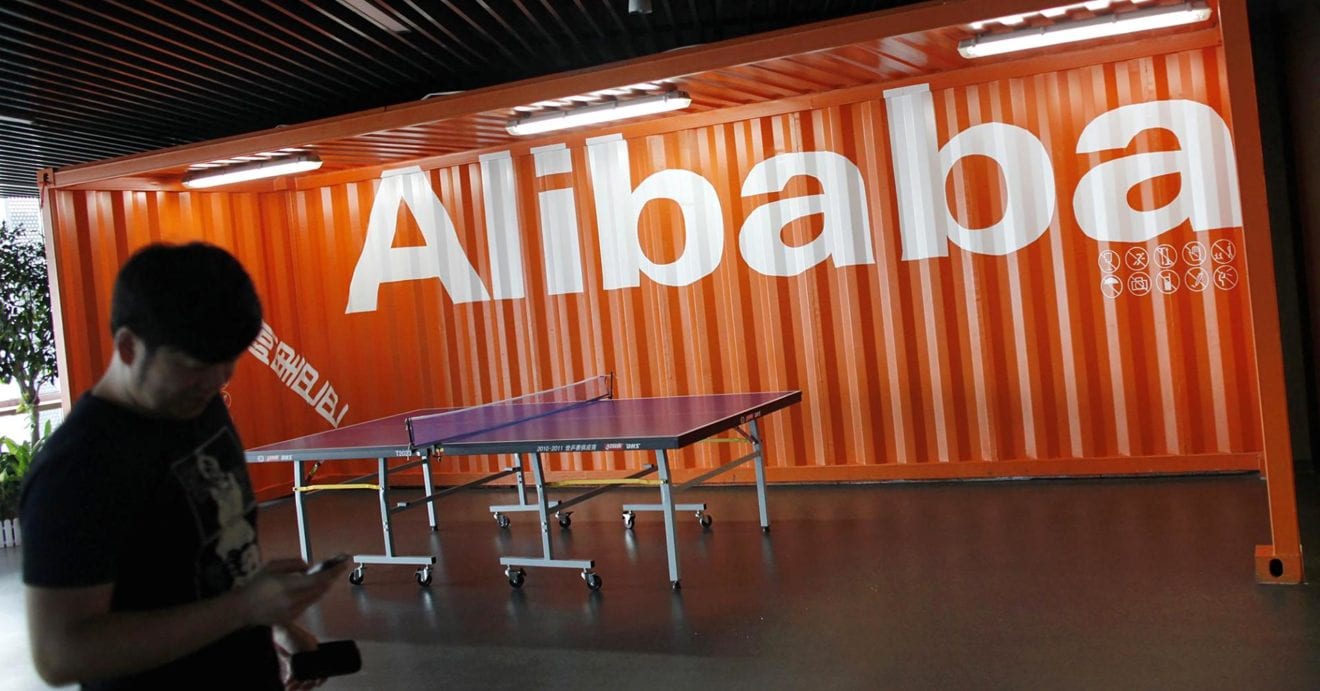
    Alibaba thrives after emerging from virus challenges

    Chinese e-commerce giant Alibaba Group’s revenue soared 34 percent to US$21.762 billion in the June quarter as the company emerged strongly from the impact of the Covid-19 pandemic in its home market.

    “Our domestic core commerce business has fully recovered to pre-Covid-19 levels across the board, while cloud computing revenue grew 59 percent year-on-year,” CFO Maggie Wu said in a statement.

    “We delivered a very strong start to our new fiscal year.”

    Net income attributable to ordinary shareholders was $6.736 billion, exceeding analysts’ estimates and justifying the 23-per-cent rise in the group’s stock value so far this year.

    Chairman and CEO Daniel Zhang said the company is well placed to take advantage of the ongoing digital transformation which has been sped up by the pandemic.

    “We mobilized our entire digital infrastructure to support the economic recovery of businesses across a wide range of sectors while broadening and diversifying our consumer base by addressing their changing preferences in a post-Covid-19 environment,” he said.

    The company reported 874 million mobile monthly active users on its Chinese digital marketplaces in June which represented an increase of 28 million, quarter on quarter.

    In Southeast Asia, Alibaba’s Lazada Group achieved more than 100-per-cent quarter on quarter growth in orders, with general merchandise, FMCG, and electronics the driving categories.

  • Alibaba-backed Best to list delivery business in Hong Kong

    Alibaba-backed Best to list delivery business in Hong Kong

    Alibaba-backed Best Inc is seeking a Hong Kong listing for its express delivery and freight delivery businesses, keen to boost its valuation and establish an investor base closer to China, said three sources with knowledge of the matter.

    The plans by Best, which went public in New York in 2017 and has a market value of US$1.8 billion, are preliminary and the offering size and target valuation have yet to be determined, said the sources, speaking on condition of anonymity as the information was private.

    The Hangzhou-based company, which has been unhappy with its New York valuation, decided not to include smaller units such as its supply chain management and cloud businesses in the Hong Kong listing as seeking a valuation for just the two delivery units would be more straightforward, one of the sources said

    The two units brought in nearly $4 billion in revenue last year, around 80 percent of the company’s overall revenue.

    The move also comes amid escalating geopolitical tensions between the US and China and tightening scrutiny of US-listed Chinese firms. Those uncertainties have prompted a number of Chinese companies to seek a second listing in Hong Kong.

    Best has tapped Credit Suisse and JPMorgan to lead the listing process said the sources. One source said the float could take place as soon as this year.

    Best and the banks declined to comment.

    Alibaba Group Holding, Best’s biggest shareholder, has endorsed the listing plan and would also consider investing in the float, said one of the people.

    The e-commerce giant, which in June increased its stake in Best to 33 percent via a $150 million convertible bond, also declined to comment.

    Alibaba’s interest in the float would mark another effort to gain more say in the world’s biggest logistics market which is rapidly growing but remains highly fragmented.

    Alibaba also has stakes in four other Chinese couriers – STO Express Co, YTO Express Group Co, ZTO Express (Cayman) Inc and Yunda Holding Co

    Best, led by founder and CEO Johnny Chou, a former Google executive, posted a 20.5-per-cent drop in first-quarter revenue from a year earlier and a net loss of $108 million, hit hard by the fallout from the Covid-19 pandemic.

    Goldman Sachs is also an investor in Best, according to the Chinese company’s 2019 annual report.

    Best’s shares have fallen 18 percent so far this year. In contrast, the S&P/BNY Mellon China Select ADR Index, which tracks Chinese firms listed in New York, has gained 16 percent over the same period.

  • ‘Starbucks Now’ starting with four Alibaba apps

    ‘Starbucks Now’ starting with four Alibaba apps

    Starbucks Coffee is introducing its own mobile order and payment system in the Mainland Chinese market as a feature on Alibaba platforms Taobao, Amap, Koubei, and Alipay.

    The Starbucks Now (“Fei Kuai”) service can be used by Starbucks customers to pre-order and pay for their beverages and food online before in-person pick-up at local stores, providing a measure of convenience whether at home or traveling.

    The feature was previously only available in Starbucks China’s own mobile app. The extension of service into the Alibaba digital economy via its cross-functional Alibaba Business Operation System (ABOS) gives Starbucks a channel into the online giant’s user base of close to a billion customers.

    “The Covid-19 pandemic highlights the importance of digitalization, which is the cornerstone for any successful brand in China,” said Alibaba Group VP Toby Xu. “Alibaba is committed to bolstering businesses’ digital firepower through ABOS

    “Through this partnership, we will continue to support Starbucks in expanding its digital service offerings across China to meet ever-evolving customer preferences and create long-term value.”

    Starbucks has collaborated with Alibaba since 2018, leveraging the firm’s Ele.me service to deliver Starbucks beverages to users’ homes.

  • Richemont suffers slump in online sales

    Richemont suffers slump in online sales

    After dismal updates from luxury goods groups this week, the company behind Cartier could be forgiven for a 47-per-cent slump in sales in its first financial quarter, writes Bloomberg’s Andrea Felsted.

    More disappointing is that Richemont’s powerful digital platform did a little better.

    Sales at the company’s online distributors, led by Yoox Net-a-Porter, fell 42 percent in the three months to June 30, a much worse performance than analysts had expected.

    That raises questions about Richemont’s strategy to expand its online platform. Now that the Swiss luxury group owns 100 percent of YNAP, it has the option to sell it, if it so desired, and their would-be suitors. But it should stay the course.

    Across the market, the demand for shopping via the click of a mouse or tap of a smartphone is rising strongly. Just look at the performance of mid-market online retailer Zalando SE, which on Wednesday upped its sales and profit forecasts.

    Richemont should clearly learn lessons from how it managed the impact of the pandemic. YNAP was hurt by warehouse closures. The decision not to use heavy discounting to clear unsold stock was risky. Zalando was able to keep all its warehouses operational.

    This doesn’t invalidate the current strategy. When it comes to pricing, Richemont chose to preserve its relationships with the fashion brands that supply YNAP by not slashing the prices of their goods. As luxury houses cut back on distribution via third-party sellers, this could prove wise in the longer term.

    There is also evidence YNAP’s e-commerce know-how is supporting Richemont’s other businesses. Online sales fell by a less-startling 22 percent if the digital arms of Richemont’s brands such as Cartier are included.

    YNAP’s joint venture with digital retailer Alibaba Group and the opening of a dedicated Cartier boutique on its luxury Tmall platform helped sales when stores in China were closed.

    Demand for online shopping is likely to remain strong even when stores reopen. And that is going to apply to the top end as much as mid-market clothes and accessories. Digital’s share of luxury sales could more than double to 30 percent by 2025, according to Bain & Co

    There will always be detractors who question the profitability of online luxury. Logistics expenses, particularly when it comes to product returns, offset the savings of having no rental bill. New warehouses and technology consume ever more investment to meet the demands of impatient, big-spending customers like YNAP’s.

    Even so, Richemont is on the right side of the trend with its online push. Indeed, the lesson from the last few months could be that the group should pare back its collection of fashion houses, such as Dunhill, Chloe and Peter Millar. That would allow it to devote the extra time and capital that the online and core watches businesses seem to need.

  • Alibaba Cloud and Unilever to Usher in Next-Generation Digital Marketing Initiatives

    Alibaba Cloud and Unilever to Usher in Next-Generation Digital Marketing Initiatives

    Alibaba Cloud, the digital technology and intelligence backbone of Alibaba Group – is partnering with Unilever, one of the biggest multinational consumer goods companies, in a pioneering strategic initiative that will enable Unilever to action on next-generation digital marketing campaigns.

    In the partnership, Unilever will be able to utilize Alibaba Cloud’s trusted artificial intelligence (AI) and cloud-based technologies to optimize its omni-channel, online and offline demand generation activities. With intelligent analysis, Alibaba Cloud’s solutions can help to unlock detailed insights into Unilever’s customers buying patterns and behaviors. The data-driven business intelligence could help Unilever accelerate the creation of new and precisely targeted digital marketing campaigns. It could also enable Unilever to predict more precisely and quickly respond to changing customer buying habits across multiple platforms.

    Taking Unilever’s digital marketing to the next level, Alibaba Cloud’s solution can support optimized brand experience for consumers’ purchasing journey through Unilever’s online stores in Taobao and Tmall. The data intelligence provided by Alibaba Cloud can be easily translated into consumer insight, pivotal in enabling Unilever to expand its current and future product offerings in line with customer needs.

    The insights into anticipated and current customer demand, will also benefit Unilever’s supply chain, as well as optimize its route to market. A range of technologies from Alibaba Cloud underpin the data intelligence analysis, which include machine learning and AI to spot customer and market patterns:

    Dataphin, a unified PaaS platform for intelligent information processing and management; Analytic DB, Online Analytical Processing (OLAP) managed database cloud service that can process enormous amounts of information in realtime; and Quick BI, an intelligent business analysis suite that generate business insights for enterprise users. With the strategic partnership, Alibaba Cloud will empower Unilever to leverage these technologies in the future.

    Fang Jun, VP Data and Digital, Unilever China: “Customer buying patterns are ever changing; when and where they buy has caused marketing to become even more agile and precise in order to stay relevant and reduce marketing waste. The use of Alibaba Cloud’s cutting-edge technology will ensure that our customers enjoy even more value from their relationship with the Unilever brand, through relevant campaigns and activities based on true insights into their buying preference.”

    “In the online, always connected world, getting customers’ attention is an ongoing challenge for marketers, so understanding what their customers want has never been more important. For marketers to keep on top of customers’ ever-changing needs and habits, the ability to understand their shopping habits is essential for keeping the brand messaging relevant for each customer,” said Selina Yuan, president of international business, Alibaba Cloud Intelligence. “Alibaba Cloud’s solutions have the ability to unlock the customer insights needed, and are set to ensure Unilever continues to succeed and build brand loyalty with its customers amid a constantly evolving and complex market place.”

    The Unilever and Alibaba Cloud collaboration was announced at the Alibaba Cloud Global Summit, in which “China Gateway 2.0” was also launched. The program, that Unilever is part of, hopes to help Alibaba Cloud’s partners and customers to accelerate their growth in China by capitalizing Alibaba Cloud’s local business expertise, technologies and matured ecosystem.

  • Alibaba and JD launch 6.18 mid-year shopping promo marketing

    Alibaba and JD launch 6.18 mid-year shopping promo marketing

    Alibaba and JD launched their annual 6.18 mid-year shopping festivals, which mark China’s largest online retail promotion since the outbreak of Covid-19.

    Within hours, JD heralded a 400-per-cent year-on-year increase in sales of luxury fashion goods, with sales of Ferragamo, Hugo Boss, Lancel and MiuMiu all up by more than 300 percent.

    Alibaba also reported increased interest from luxury labels, with close to 180 participating, including Cartier, Chanel, Burberry, Balenciaga and Montblanc.

    Within the first 10 hours of the campaign, total gross merchandise volume (GMV) jumped 50 percent over last year at Alibaba. Cosmetics and home appliances proved particularly popular, their GMV doubling over last year.

    Alibaba’s campaign included issuing US$1.96 billion worth of digital coupons in advance of the event to boost purchasing.

    More than 100,000 brands on Alibaba’s Tmall are participating in the 6.18 event – nearly twice the number of last year, including tech giant Apple. Five hours into the campaign, Apple sold more than $70 million worth of products.

    “Online consumption has seen a post-pandemic revival since March, and the sales rebound that we have observed on Taobao and Tmall has been very encouraging,” said Liu Bo, GM of Tmall and Taobao marketing and operations.

    Both Alibaba and JD say sales of luxury products have been increasing steadily since the pandemic.

  • Alibaba GMV surpasses US$1 trillion

    Alibaba GMV surpasses US$1 trillion

    Chinese retail behemoth Alibaba Group shrugged off the impact of the Covid-19 crisis to report a 35-per-cent increase in sales in the year to March, and achieving its five-year-old goal of surpassing US$1 trillion in GMV.

    Revenue for the year reached $71.4 billion, as the company expanded its global customer base to 960 million active consumers.

    In the March quarter, when the Covid-19 crisis was at its peak, revenue was up 22 percent, to $16.1 billion, a rate lower than for the rest of the year, but driven by its mainland China online ventures which drew increased custom from people unable to visit physical stores.

    Adjusted earnings before tax grew 29 percent to $22.3 billion.

    Chairman and CEO Daniel Zhang said Covid-19 has “fundamentally altered consumer behavior and enterprise operations, making digital adoption and transformation a necessity”.

    “We are well-positioned and prepared to help large and small businesses across a wide spectrum of industries achieve the digital transformation they need to survive this difficult period and eventually prevail in the new normal. By focusing on the long term and investing in value creation for our consumers and business customers, we believe we will emerge from this crisis stronger and be ready to capture more growth in the future,” he said.

    CFO Maggie Wu added that while the pandemic negatively impacted most of Alibaba’s domestic core-commerce businesses starting in late January, a steady recovery has been evident since March.

    “Based on our current view of Chinese domestic consumption and enterprise digitization, we expect to generate over $91 billion in revenue in fiscal year 2021,” she said.

  • Alibaba launches Luxury Soho

    Alibaba launches Luxury Soho

    Luxury Soho targets value-conscious consumers and helps brands quit surplus stock. Alibaba has launched a new platform Luxury Soho, targeting value-conscious aspirational shoppers, and helping high-end brands quit surplus inventory. Accessible via Mobile Taobao and the online flagship stores of partner brands, Luxury Soho is positioned as an online gathering place for young consumers – as well as those new to luxury purchasing – to discover designer brands and potentially make their first luxury purchase.

    The new service is also “a response to the need in the fashion industry for brands to be able to efficiently manage their inventory and stock – an issue that’s been compounded by the Covid-19 outbreak,” said Tmall’s head of fashion and luxury in Europe Christina Fontana.

    “Restricted movements led to reduced foot traffic in brick-and-mortar stores – including from Chinese tourists who were not able to travel to brands’ boutiques and outlets in Western countries like they used to. So brands are now sitting on a worldwide abundance of stock and are also needing to find ways to reach new consumers,” she said.

    “With Luxury Soho, brands can now move select products and collections onto an online outlet store and bring them in front of a specific audience that is waiting to discover new products and brands.”

    Alibaba’s Tmall Luxury Pavilion was designed to serve as a second website for brands in China, focused on branding and aimed at a more affluent class of consumers. By contrast, Luxury Soho targets younger, newer luxury consumers – such as those from China’s lower-tier cities or Gen Z shoppers who are just entering the world of luxury.

    “Luxury Soho also plays into brands’ existing outlet strategies,” added Fontana. “It can empower them to diversify their strategies in China to handle excessive inventories with more flexibility. As a platform, we offer the tools for brands to run their own stores with full control over their pricing, product selection, strategy and look and feel. They can engage consumers in new ways using innovative features, from live streaming, augmented reality and 3D interactive technologies to virtual icons and flexible payment solutions. Brands can even tap their offline store associates to engage with consumers online to showcase certain products and answer questions,” said Fontana.

    “In the past, luxury brands might have operated multiple stores across China to be able to reach more consumers. But the coronavirus outbreak has exposed some underlying vulnerabilities in this model and accelerated changes in consumer behavior, including the shift from shopping in-store to shopping at home. To build resilience and meet consumers where they are at, more luxury brands will think about how to move their in-store experiences online.”

    She says brands impacted by the Covid-19 crisis need to consider how to turn their focus towards China’s domestic market and explore new ways to market to consumers there.

  • Alibaba Cloud Launches USD 30 Million Global SME Enablement Program

    Alibaba Cloud Launches USD 30 Million Global SME Enablement Program

    Alibaba Cloud, the data intelligence backbone of Alibaba Group, today launched a Global SME Enablement Program to provide cloud technology relief worth more than USD 30 million to new and existing small and medium enterprise (SME) customers around the world and equip them with the solutions needed to maintain business continuity amid the COVID-19 pandemic.

    Under the program, new SME customers worldwide can apply for the relief between now and June 22 to start using a portfolio of proven solutions from Alibaba Cloud. The portfolio consists of a support package with 12 key products, including Elastic Compute Service (ECS), which powers cloud applications with low latency, and Object Storage Service (OSS), an encrypted service for data storage and backup in the cloud, as well as Alibaba Cloud Academy Courses.

    Existing customers can also apply for product coupons between now and June 22 to help them expand or upgrade their cloud applications. In addition, Alibaba Cloud will reach out to SME associations to help meet their members’ technology needs as they fight the pandemic.

    “COVID-19 has created unprecedented challenges and vulnerabilities to the global economy and especially to SMEs, who are often faced with financial constraints and limited access to technological support,” said Selina Yuan, President of International Business, Alibaba Cloud Intelligence. “Since its inception, Alibaba Cloud has always been committed to helping businesses of all sizes and making it easy to do business anywhere. The Alibaba Cloud Global SME Enablement Program aims to provide much needed and timely relief to SMEs so they can rapidly respond to the current crisis while speeding up their digital transformation and emerging from the current pandemic stronger and more resilient.”

    Alibaba Cloud announced the Global SME Enablement Program at its Digital Cloud Day. The interactive one-day online conference introduced Alibaba Cloud’s latest technologies and customer case studies; and in particular how Alibaba Cloud is applying cloud computing, data analytics, and artificial intelligence capabilities to help businesses and the wider communities better cope with COVID-19.

  • Alibaba promises ‘spring thunder’ to support SMEs during the coronavirus crisis

    Alibaba promises ‘spring thunder’ to support SMEs during the coronavirus crisis

    Alibaba group chairman and CEO Daniel Zhang has launched the “2020 Spring Thunder Initiative” to help small and medium businesses ride out the coronavirus pandemic.

    “We will … create new supply chains, stimulate new demand, and promote new trade through a series of aggressive measures,” he promised in a letter to staff.

    Zhang says Alibaba will work to help export-focused SMEs expand into new markets through AliExpress, Lazada and Tmall World, offering some companies resource support, fee reductions and fast-track processing to help them transform and develop their business in China.

    The company will activate manufacturing belts, incubate a group of “Super Producer IP” designations, and foster 10 digitized manufacturing clusters with production output valued at tens of billions in RMB.

    Another goal is to help 1000 factories develop direct-to-consumer sales in excess of RMB 100 million (US$14 million) within three years.

    Alibaba plans to help extend “immediate settlement” services until June 30, helping alleviate financing challenges for SMEs affected by trading challenges during the coronavirus crisis.

    And the e-commerce giant plans to help the agricultural sector grow through digitization along with creating 1000 Alibaba-run digitized agricultural centers across China.

    Alibaba’s online merchant bank Ant Financial is to work with hundreds of traditional banks to provide zero-contact loans to “tens of millions of small and micro businesses” says Zhang.

    His memo to staff, who he calls ‘Alibers’ is reminiscent of founder Jack Ma’s letter to staff 12 years ago during the financial crisis of 2008 when the company rolled out major relief initiatives for SMEs to survive the “economic winter”.

    At that time, three initiatives – “Dark Cloud,” “Wild Winds” and “Spring Thunder” – collectively helped 40 million SMEs to join the Alibaba ecosystem.

    The full text of Zhang’s letter to staff follows:

    Dear Alibers

    We are living through extraordinary times and Covid-19 is a battle being fought on a global scale. Our society, our economy and our everyday lives have been devastated by the pandemic; it has brought about monumental change. We, together with the rest of the world, are facing a future full of uncertainty, and it is more important than ever that we take immediate action.

    Small and medium businesses (SMEs) are the lifeblood of an economy. If SMEs are alive, then the economy will remain alive. If SMEs are thriving, then the economy will thrive. Twelve years ago, during the 2008 financial crisis, we rolled out three major relief initiatives for SMEs to survive the economic winter. The three initiatives – named “Dark Cloud”, “Wild Winds”, and “Spring Thunder” – collectively helped 40 million SMEs to fully absorb the confidence and conviction of our e-commerce platform for rehabilitating their business. Not only did we help to resolve the immediate challenges in their operations management and financing, but we also clearly improved their competitiveness in the long run. We remain incredibly proud of our decisions back then.

    When Alibaba was established 20 years ago, we defined our mission “to make it easy to do business anywhere.” The meteoric growth of the Chinese economy, together with advancements in internet and digital technology, and our unwavering commitment to our mission to serve SMEs have all helped make Alibaba what it is today. Given the massive uncertainties faced by the global economy and society here and now, we must stand arm in arm with SMEs around the world and fight the oncoming headwinds together. We must use the power of the Alibaba Digital Economy platform to take on the toughest challenges, and bring back confidence and inspire hope for everyone. The challenges we will face may be tougher than anything we’ve experienced over the past 20 years. But the bigger the crises, the stronger the connection between Alibaba and SMEs. The tougher the business environment, the more Alibaba needs to step up and fulfill our mission.

    Today, I am formally announcing the launch of the 2020 Spring Thunder Initiative. We will deploy the power of commerce and technology that Alibaba has harnessed over the past 20 years to create new supply chains, stimulate new demand, and promote new trade through a series of aggressive measures. We will continue to build out the new modality of essential infrastructure needed for the digital economy era. We will take every necessary action to help SMEs triumph over this economic winter.

    2020 Spring Thunder Initiative will include, but not limited to, the following measures and actions:

    • Help export-focused SMEs to expand into new markets through AliExpress, Lazada and Tmall World. Simultaneously, help a subset of these SMEs to transform and develop their business in the China market through measures such as resource support, fee reductions and fast-track processing.
    • Activate manufacturing belts, incubate a group of “Super Producer IP” designations, and foster 10 digitised manufacturing clusters with production output valued at tens of billions in RMB. Also, help 1000 factories realise direct-to-consumer sales of over RMB 100 million within three years.
    • Help the agriculture sector to prosper through digitisation, and create 1000 Alibaba digitised agricultural centers across China.
    • Help alleviate financing challenges for more SMEs by extending “immediate settlement” services until June 30th. Ant Financial online merchant bank will work with hundreds of traditional banks to provide zero-contact loans to tens of millions of small and micro businesses.

    The pandemic has exacted tremendous pain to our world, but it cannot stop hope from being born. In the global and China fight against the pandemic, Alibaba has proven to be a bulwark in the battle through our concrete actions. This pandemic will ultimately end, and we will eventually see the beginnings of new life. We must band together with the SMEs that need the most help, and convert Alibaba’s resources into strength for the SMEs. We must turn the “danger” brought about by the pandemic into “opportunity” for SMEs to prepare for the future through digital transformation. Now is the time for Alibaba to give back to our community and to give back to our SMEs!

    Sunshine always arrives after the rain. My fellow teammates, let’s get started!

    Daniel Zhang

    Alibaba Group Chairman and CEO