Tag: Alibaba

  • Alibaba urges offline retailers to livestream on Taobao Live

    Alibaba urges offline retailers to livestream on Taobao Live

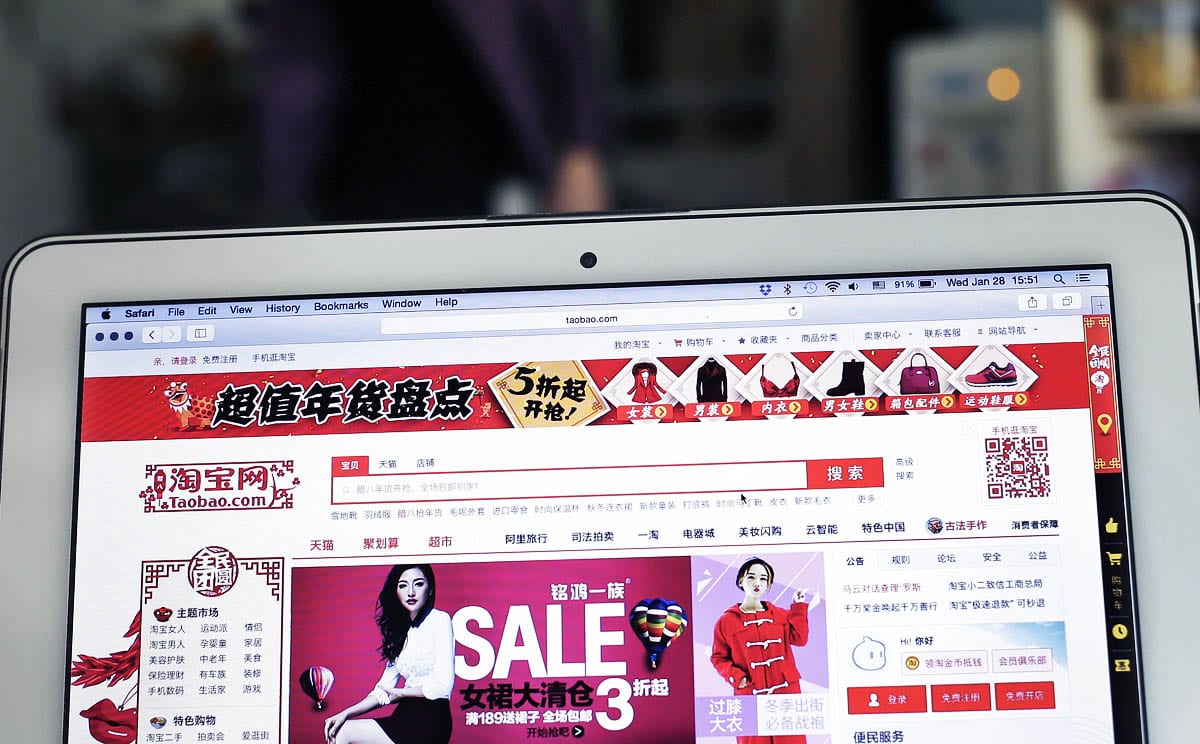
    Alibaba Group’s live streaming channel Taobao Live wants to attract more than 200,000 businesses to its platform this year.

    The firm hopes brick-and-mortar retailers such as traditional wholesale markets will enhance the shopping experience of customers with the assistance of the platform.

    Against the backdrop of the Covid-19 pandemic, the firm waived service fees for platform onboarding in February, increasing the number of merchants using Taobao Live by 719 percent.

    Recent figures have shown gross merchandise volume (GMV) generated by the platform swelled by 150 percent for the last three years running, with consumers spending more than 350,000 hours per day on the site. The surge had continued during the coronavirus outbreak period.

    “The current healthcare crisis is a wakeup call for retailers,” said Taobao’s senior director of e-commerce content Yu Feng. “It has prompted many to accelerate their digital makeovers so that their businesses become more dynamic and resilient.”

  • Shanghai Fashion Week goes digital with Alibaba

    Shanghai Fashion Week goes digital with Alibaba

    Shanghai Fashion Week is partnering with Alibaba’s B2C marketplace Tmall to hold its first fully digital event due to restrictions on gatherings caused by the coronavirus outbreak.

    The entire roster of runway shows will be streamed online on Tmall from March 24–30. More than 150 international brands and designers will showcase their latest autumn-winter collections via the Alibaba Group digital platforms.

    Readers can watch the opening show of Shanghai Fashion Week here tonight (March 24) at 6pm Beijing time via Taobao Live from your phone or computer watchers of this year’s Shanghai Fashion Week can immediately purchase the items they see on the runway without having to wait for the collections to hit the shelves.

    “We have integrated some of Alibaba’s most advanced technologies to bring a new and elevated experience to consumers,” said Tmall Fashion and FMCG GM Mike Hu. “This partnership with Shanghai Fashion Week allows us to leverage our experience in digitizing brick-and-mortar retail stores and explore a new format for the brand and product launches, bringing together technologies like live-streaming, short-form videos, DingTalk and Tmall Flagship Store 2.0 in a full-chain solution.”

    Covid-19 has forced the cancellation and rescheduling of many global fashion events, including the Milan Fashion Week originally scheduled for February

    Tmall intends for its “cloud launch” format to broaden out the reach and appeal of traditional product-launch events this year. According to material released by the firm, brands will interact with consumers virtually across an extended timeline and physical locations, from warm-up previews to the live broadcast and post-event interviews.

    The platform plans to team up with global brands to launch 360-degree marketing campaigns that cater to Chinese audiences, said Hu.

  • Alibaba Cloud to help retailers go live online within five days

    Alibaba Cloud to help retailers go live online within five days

    Alibaba’s cloud service is promising to boost e-commerce solutions to businesses suffering from the impact of the coronavirus outbreak.

    The new services will allow retailers to set up a functioning trading platform within five days. Remote hands-on training with a focus on time to market is provided.

    “The global retail industry has been hit hard by the widespread outbreak of the novel coronavirus, with businesses encountering a variety of challenges including limited access to supplies, decreasing consumer demand and foot traffic,” said Alibaba Cloud Intelligence president of international business Selina Yuan.

    “Retailers are in urgent need of a digital enterprise platform and ready-to-deploy e-commerce system to continue growing their businesses despite the uncertainty.

    “Alibaba Cloud is committed to supporting retailers amidst the coronavirus outbreak. Our suite of solutions is to facilitate this process quickly and securely, making e-commerce a sustainable option for offline retailers to carry on with business as usual.

    The services include a set of plug-and-play Alibaba Cloud products and solutions in computing, databases, multimedia and video live streaming, collaboration, and security and data analytics.

  • Alibaba has refined and expanded its Freshippo New Retail concept

    Alibaba has refined and expanded its Freshippo New Retail concept

    Unmanned checkout kiosks, mobile-scanned product details, fast-running fulfillment conveyor belts – these are just some of the features engaging customers at Freshippo, the New Retail-powered supermarket by Alibaba.

    Since launching in 2016, the chain has brought grocery shopping into the digital era and has soared in popularity with Chinese consumers thanks to its mobile-first shopping experience, 30-minute delivery options and a vast selection of products, including live seafood with cook-in-store options. Within a few years since creation, Freshippo has expanded to about 200 stores.

    To expand its reach and capabilities in China, Freshippo has been experimenting with new store formats that cater to the needs of different consumers across the country. While the original supermarket concept remains at the heart of most Freshippo locations, the chain started to introduce new shopping experiences to its portfolio about two years after its initial launch.

    The Freshippo brand now includes everything from convenience stores and breakfast pick-up stations to even a shopping mall. As a sign of just how quickly Alibaba is moving, five out of the six new store formats were launched last year alone.

    By adapting to local shopping habits and needs, Freshippo’s new store formats allow the chain to expand its digitally enabled grocery-shopping experience to more segments of consumers, all with the same mobile app.

    For example, Freshippo Farmers’ Markets cater to more price-sensitive consumers living in residential neighborhoods on the outskirts of top-tier cities. Similar to a traditional farmers’ market, there is fresh produce sold in bulk and daily essentials, but the experience is also upgraded with digitally enriched features and 30-minute delivery services.

    Meanwhile, in lower-tier cities, where high-quality products are less accessible, Freshippo Mini stores – at approximately 300-500sqm, or about one-tenth of the size of a regular Freshippo store – are designed to be set up to quickly scale to address the rising consumption demand of lower-tier markets in China without a significant investment of capital.

    There’s also Freshippo Station, which fulfills fresh-produce orders for residents living in urban residential areas where Freshippo supermarket stores are not yet available. The station’s focus on fresh produce and a hyper-local delivery radius of 1.5km are designed to meet Chinese consumers’ demands for frequent, fast and fresh deliveries.

    Other versatile formats, such as Freshippo F2 and Freshippo Pick’n Go, complement the original New Retail supermarket concept by providing customers with ready-to-eat foods. Freshippo F2, short for “Fast and Freshly Made,” offers lunch boxes and snacks for office workers in central urban business areas. Freshippo Pick’n Go is a breakfast stand that sells on-the-go Chinese and Western breakfast foods all day, addressing the demand by busy urban residents in China for quick and tasty take-out options.

    Having amassed a loyal following of Chinese consumers since its launch, the brand’s latest experiment, Freshippo Mall, expands the brand’s digital experience beyond food to address the full spectrum of consumers’ everyday needs.

    The first Freshippo Mall opened in Shenzhen last November and is a 40,000sqm complex that provides everything from retail, entertainment and dining to education and cleaning services.

    There are currently close to 60 tenants, including clothing shops, restaurants, drug stores, grocers, beauty parlors and recreational facilities for children – all connected through the Freshippo app, which offers consumers a digital discovery journey, mobile checkout and one-hour delivery within a 3km radius.

  • Another 11.11 record boosts Alibaba’s quarterly results

    Another 11.11 record boosts Alibaba’s quarterly results

    Alibaba Group has reported top-line revenue growth of 38 per cent in the December quarter.

    “Our digital economy reached new heights with another record 11.11 Global Shopping Festival for our merchants and partners,” said chairman and CEO Daniel Zhang.

    “Continued investment in user engagement, especially through social-commerce content, contributed to our strong gains in annual active consumers. As a result of its rapid growth, our cloud-computing services for the first time generated revenue of over RMB10 billion (US$1.4 billion) in a single quarter,” he said.

    Total Alibaba Group revenue reached US$23.192 billion for the quarter and non-GAAP net income was $6.678 billion, an increase of 56 per cent year-over-year. Adjusted EBITDA growth was 37 per cent.

    During the quarter, Alibaba boosted the number of annual active consumers by 18 million to 711 million over the 12 months to September 30. Mobile monthly active users rose by 39 million to 824 million.

    The company said it was responding to the coronavirus by mobilizing the “powerful forces of commerce and technology” across its ecosystem in order to “fully support the fight against the outbreak, and ensure supply of daily necessities for our communities”.

    The company has also introduced practical relief measures for its merchants.

    “No matter past, present or future, we remain true to our mission and we will support our merchants to overcome this challenging time together,” said Zhang.

    “Looking forward, we will remain dedicated to investing in digital infrastructure and services, supporting our customers and partners across the Alibaba Digital Economy, especially during the challenging time,” added Maggie Wu, Alibaba Group’s CFO.

  • Alibaba rolls out help for merchants amid coronavirus outbreak

    Alibaba rolls out help for merchants amid coronavirus outbreak

    Chinese e-commerce giant Alibaba has announced 20 measures to assist merchants during the coronavirus outbreak, including substantial fee waivers.

    In an emotional letter to its merchant partners, the firm paints a grim picture of the challenge posed by the virus to Chinese nation while emphasizing the need of “millions and millions of consumers” for their services, describing the urgency to maintain economic development as a “second battle” alongside the struggle against the coronavirus itself.

    Among the measures listed are moves to reduce operational costs on the firm’s platforms, including a waiver on all platform service fees for the first half of 2020 for all Tmall merchants and a free subscription to “Wangpu”, an online tool kit to revamp merchants’ online storefronts, to all sellers on Taobao and Tmall.

    The firm is also offering financial support by waiving or lowering interest rates on loans issued by its online bank brand under Ant Financial, Mybank. The bank will provide 12-month loans totalling RMB10 billion (US$1.43 billion) to online merchants registered on

    Taobao and Tmall from Hubei – the province at the center of the outbreak. The loans will be interest-free for the first three months, and rates will be lowered by 20 percent from the current level for the remaining nine months. Mybank is also providing 12-month loans to Taobao and Tmall merchants from outside Hubei with interest rates also lowered by 20 percent. Payments to all qualified merchants on Tmall and Taobao will also receive payments from Mybank as soon as their orders have been fulfilled as a free service until March.

    Other measures include a support fund for select chain restaurant operators; subsidies to delivery personnel and an assurance of higher logistics efficiency; the launch of employee-sharing schemes to provide flexible job opportunities to ensure income for staff; and the release of tools for enterprises to accelerate their digitization as well as allow remote working management for enterprises.

  • Alibaba and JD launch logistics solutions to help coronavirus response

    Alibaba and JD launch logistics solutions to help coronavirus response

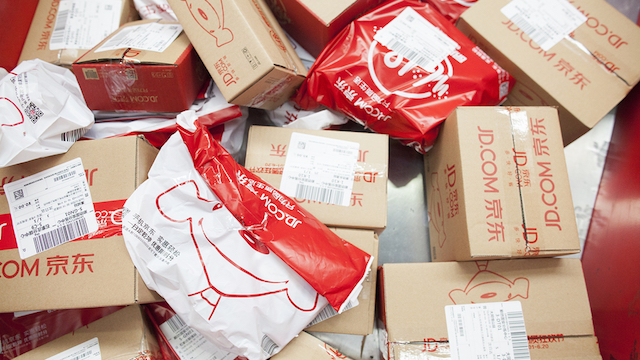
    Chinese online e-commerce giants Alibaba and JD have both introduced logistics solutions for medical personnel working to arrest the spread of coronavirus in China.

    Alibaba has launched a global B2B sourcing platform to connect medical goods suppliers with frontline staff fighting the virus, while JD has been making preparations for drone delivery of medical supplies in China as it tests the use of its autonomous delivery robots in Wuhan.

    The Alibaba Global Direct Sourcing Platform will allow Alibaba to use an RMB1 billion (US$143.46 million) fund established shortly after Wuhan city was quarantined to fight the spread of the outbreak. The fund’s purpose is to purchase vital medical supplies within and outside China to support medical personnel in Wuhan and other places affected by the virus.

    The platform will match needed medical supplies with products offered by vendors. Goods purchased through the platform will go to hospitals based on urgency and priority.

    JD is concurrently turning to advanced technology to reduce human to human contact during the coronavirus while ensuring normal operations of its logistics facilities and last-mile delivery.

    JD says its automated warehouses are working 24/7 to meet the demand for daily necessities as online shopping is believed to be the safest way to get goods while remaining protected from the coronavirus. The number of daily orders processed by these automated warehouses has increased from 600,000 to 1 million on average between January 24 and February 2.

    JD’s unmanned convenience store solution JDX Mart is also offering consumers in Guilin, Shenzhen and Dongguan a seamless and contactless way to get their everyday convenience store products while reducing the risk of infection.

  • Alibaba’s Freshippo sales soar during virus outbreak

    Alibaba’s Freshippo sales soar during virus outbreak

    Sales are soaring for Alibaba’s fresh-food chain Freshippo in the wake of the coronavirus outbreak.

    With many Chinese nationals being advised to stay at home during the course of the epidemic, demand for fresh food and household items has soared. Buyers are purchasing more items in bulk so as to reduce contact with home-delivery personnel.

    A spokesperson for Freshippo revealed that it has prepared 250 tons of packaged vegetables and 80 tons of bulk vegetables for around 50 Shanghai stores, six times above its normal volume.

    Freshippo’s head of vegetable procurement Huang Yifan said that the group is planning to ship an extra 100 tons of fresh vegetables from its supplier farm regions every day.

    Similar increases have been reported by Walmart’s delivery business in the region, JD Daojia, with reports of a five-fold increase in sales volume.

  • Li Bao Ge Group to partner with Alibaba’s Freshippo

    Li Bao Ge Group to partner with Alibaba’s Freshippo

    Li Bao Ge Group is launching its food delivery service through Alibaba’s Freshippo (Hema) stores.

    The two firms have entered into a cooperation agreement under which Li Bao Ge will open in-store counters at Freshippo stores. With exclusive selling rights for Siu Mei products, Li Bao Ge will offer cooked-on-site Hong Kong-style roast meat (“Siu Mei”) under its own brand, as well as other specialties such as Cantonese-style soup, dim sum, dessert and festive delicacies. Freshippo will, in turn, make its digital platforms and on-site facilities available to Li Bao Ge and provide technical support – including marketing initiatives, online sales resources, a delivery service, potential customers, and establishment of online to offline channels.

    Li Bao Ge undertakes to set up not less than 10 counters at Freshippo’s stores on or before 15 December next year. It will leverage Freshippo’s brand awareness and high traffic to attract more young consumers and develop multi-channel sales to penetrate the Chinese takeaway and food-delivery market.

    “As online consumption gains prevalence, the competition in the food and catering industry has extended from restaurants to online order and delivery,” said Li Bao Ge Group chairman Chan Chun Kit. “With that in mind, we have decided to adopt a new business model leveraging Freshippo’s sophisticated digital management platform and big-data analysis to develop a new integrated O2O operation based on an asset-light model.

    “Going forward, Li Bao Ge will, starting from the South China region, expand into regions and cities with high purchasing power and appeal to a younger group of individual and family customers. We will gradually transform from a conventional banquet dining operator to a light meal delivery industry player. We will also explore the opportunities for the retailing of packaged food to accelerate the pace of expansion and enhance profitability.”

    Li Bao Ge currently operates eight mid-to-high-end Cantonese restaurants in Hong Kong and Shenzhen.

  • Alibaba Group’s Hong Kong IPO confirmed

    Alibaba Group’s Hong Kong IPO confirmed

    Alibaba Group has launched its Hong Kong public offering of 500,000,000 new ordinary shares on the SEHK, raising up to US$13.4 billion.

    Alibaba plans to use the proceeds from the offering for the implementation of its strategies of driving user growth and engagement, empowering businesses to facilitate digital transformation, and continuing to innovate and invest for the long term.

    The listing in Hong Kong will allow more of the company’s users and stakeholders in the Alibaba digital economy across Asia to invest and participate in Alibaba’s growth. In addition to expanding the company’s overall investor base, the offering will tap into substantial new capital pools in Asia and create a nearly round-the-clock market for global investors to trade Alibaba shares.

    “Alibaba is guided by our mission to make it easy to do business anywhere with the vision to be a good company that lasts for 102 years,” said Alibaba Group chairman and CEO Daniel Zhang.

    “We aim to serve global consumers, of which more than 1 billion will be Chinese consumers, and facilitate more than RMB10 trillion of consumption on our platform within the next five years by continuing to pursue our three strategic pillars of globalisation, domestic consumption and big data powered by cloud computing. Hong Kong is one of the world’s most important financial centres and we are grateful for the opportunity to participate in the future of Hong Kong.”

    The total number of shares available under the Public Retail Offering could be adjusted up to a maximum of 50,000,000 new shares, representing 10 per cent of total shares initially available under the offering. In addition, the company expects to grant the underwriters an over-allotment option to purchase up to an additional 75,000,000 new shares.

    The offer price for the Public Retail Offering will be no more than HKD188 (US$24) per share, which will be traded in board lots of 100 shares each.

    The firm’s American depositary shares will continue to be listed and traded on the New York Stock Exchange.

  • Alibaba’s Taobao opens retail store in Malaysia

    Alibaba’s Taobao opens retail store in Malaysia

    Alibaba Group will launch a Taobao retail store at Mytown Shopping Centre in Kuala Lumpur.

    The new outlet is opening in partnership with Mytown and local retailer Lumahgo New Retail, and follows the brand’s first Southeast Asian store in Singapore’s Funan mall.

    The launch was preceded by a pop-up held over the weekend previewing products from local brands that will be traded in the store, including Redtick, BigboxAsia, Vivid Malaysia, DirectD Malaysia and Deep Furniture.

    “The opening of our latest Taobao store demonstrates our commitment to local shoppers and brands, as we further localize services and experiences for the Malaysian market,” said Tmall World Malaysia marketing manager Jess Lew. “We are excited to share a glimpse of this upcoming space as part of our 11.11 celebrations this year, emphasizing how we will integrate local brands and merchants with our New Retail vision.

    “Having a physical space means shoppers will be able to touch and feel a variety of products in person before making a purchase on the Taobao app simply by scanning a QR code, with the help of our staff at the store,” said Lumahgo New Retail CEO Fabian Kong.

  • Alibaba increased stakes in Cainiao Smart Logistics Network

    Alibaba increased stakes in Cainiao Smart Logistics Network

    Alibaba has invested an additional RMB23.3 billion (US$3.3 billion) to increase its equity stake in Cainiao Smart Logistics Network from approximately 51 percent to about 63 percent.

    The investment was made by subscribing for newly issued Cainiao ordinary shares in its latest financing round and purchasing some equity interest from an existing Cainiao shareholder. Other existing shareholders also participated in the fundraising.

    “Logistics is a key pillar of the Alibaba Business Operating System. It allows us to offer the best service to customers and to effectively advance our New Retail strategy,” said Alibaba Group executive chairman and CEO Daniel Zhang.

    “Cainiao strives to enhance service and user experience for merchants and consumers through superior technology and digital solutions, both within China and around the world. We are committed to supporting its ongoing development, to realizing greater synergies throughout the entire Alibaba Economy and accelerating the digitisation of the logistics industry.”

    With more financial resources, Cainiao will be able to continue its investment in technologies and logistics infrastructure services to strengthen its smart logistics network and enable innovations in

  • Alibaba’s Singles Day sales up 26 per cent

    Alibaba’s Singles Day sales up 26 per cent

    Alibaba’s Singles Day retail promotion is over for another year – and predictably a new record was set.

    The Chinese internet behemoth says its gross merchandise volume (GMV) reached RMB268.4 billion (US$38.4 billion) when midnight fell, ending the 24-hour Shopatron which engages with hundreds of millions of Chinese online and on TV.  That figure is 26 per cent ahead of last year’s GMV.

    “Today we showed the world what the future of consumption looks like for brands and consumers,” said Fan Jiang, president of Taobao and Tmall, perhaps unaware of the real meaning of the word ‘consumption’, defined by Oxford dictionary as “the action of using up a resource”.

    “We are meeting the growing demand of Chinese consumers and helping them upgrade their lifestyles, while introducing new users to our digital economy from across China and around the world.”

    While Alibaba’s Singles Day turnover figures seem to shock commentators with their predictable annual increase, a large proportion of the total sales are lined up well in advance of November 11, especially big-ticket items like motor vehicles and – for the first time this year – apartments.

    More than 200,000 brands participated in this year’s event which was launched via a televised countdown variety show on Sunday night headlined by American singer Taylor Swift.

    Of those brands, 299 achieved sales in excess of RMB100 million (US$14.3 million) and 15 of them surpassed RMB1 billion (US$143.0 million). Curiously, Alibaba listed just 14 of them: Apple, Bose, Estee Lauder, Gap, H&M, L’Oreal, Levi’s, Muji, Nestle, Nike, Philips, The North Face, Under Armour and Uniqlo.

    It took 16 hours and 31 minutes this year to surpass last year’s total GMV of RMB213.5 billion.

    While Singles Day was launched by Alibaba in 2009, the retail frenzy has since extended across Asia’s retail industry with many independent online retail brands, platforms and marketplaces launching promotions to keep pace with Alibaba.

    In Singapore, for example, cashback platform ShopBack reported a 250-per-cent increase the number of unique users during the first hour of 11.11 compared with last year. Lazada, Shopee and Qoo10 were the most popular merchants, the Straits Times reported.

    Pascal Martin, partner at OC&C Strategy Consultants, notes three trends that supported the growth of Alibaba’s Singles Day this year: New Retail, globalization and diversification.

    “This year’s Singles Day included even more partners than last year, not only online but also offline. For example, Tmall ‘s3000+ convenience stores, Hema and RT Mart supermarkets, Suning and Auchan, all members of the Alibaba New Retail ‘family’ have been part of the event.”

    In terms of globalisation, he says Singles Day has expanded beyond China through Lazada, Alibaba’s Southeast Asia platform.

    “Also, there is increasing participation by international brands that are taking advantage of the Tmall Global platform – number one by far among Chinese cross-border platforms – to get introduced to Chinese consumers without having to build a direct presence in China. The choice of an international celebrity like Taylor Swift as an anchor for the 11.11 Singles Day show is testimony to Alibaba’s global ambition.”

    Diversification is highlighted by the expansion of the event beyond products to include a variety of services from food delivery on Ele.com, videos on Youku to mobile games on UC, theatre tickets on Taopiaopiao, music on Xiami music and travel on Feizhu.

  • E-commerce competition flares up as holiday shopping season begins

    E-commerce competition flares up as holiday shopping season begins

    Vietnam’s e-commerce platforms are going all out with promotions and other marketing campaigns to woo customers for the year-end shopping season. Immediately after Apple’s latest iPhone 11 was released in Vietnam on November 1 at midnight, CEO of Singapore-owned Lazada Vietnam James Dong was seen riding a bicycle delivering the first phones to promote his company’s two-hour delivery service.

    Lazada’s latest PR stunt, along with discounts on the newest iPhones, kicked off a series of promotions, many of which will begin deployment from November 11 as the company gears up for the year-end shopping season, generally a peak time for the retail sector.

    Vietnam’s e-commerce players have now latched onto promotional trends that have been ignited by major regional players like Chinese e-commerce giant Alibaba, which launched the first Singles’ Day shopping event on November 11, 2009, offering heavy discounts on its platform.

    In addition to Singles’ Day, Vietnam’s e-commerce sites have been offering heavy promotions on October 10 and December 12, both spin-offs, as well as Black Friday and Cyber Friday events that originated in the U.S.

    “The fourth quarter is always the most exciting time for the retail sector. There will be peak days when the whole market spills out to shop,” said Steven Tuan Nguyen, Senior Regional Manager for Southeast Asia of Paris-headquartered internet advertising company Criteo.

    Lazada has also followed up the night of discounts for the iPhone 11 with a strategy it calls “Shoppertainment”, hosting live game shows in which competitors guess prices, and inviting famous artists who give out nearly 10,000 discount codes worth a total VND300 million ($12,900).

    The retailer has also hosted promotional concerts in Ho Chi Minh City. Instead of hiring artists, Singapore-based Shopee has enlisted international football superstar Christiano Ronaldo. Ronaldo’s brand ambassador contract for Shopee in Southeast Asia was announced in mid-August.

    “Together with Cristiano Ronaldo, we look forward to making a positive and lasting impact on Shopee’s development in the region,” said CEO Chris Feng.

    Shoppers not only in Vietnam but also Malaysia, Singapore and Indonesia have seen CR7’s ads pop up everywhere through various online media channels. The player is also currently associated with Shopee’s November 11 “Super Sale, free nationwide shipping” campaign in Vietnam.

    Home-grown e-commerce platform Sendo, which saw a traffic surge last quarter, is also investing heavily in year-end promotions, prioritizing Black Friday (November 29). After diva My Tam, Sendo has just added actor Ninh Duong Lan Ngoc to its roster of celebrities.

    “This year, we’ve decided to invest a great deal in the Black Friday campaign, not just on the day but for the whole week. We will advertise on all channels, from mass media to social media, so that 90 percent of customers nationwide aged between 18 and 35 years will be reached by Sendo’s ads,” said Vo Dang Minh Tuan, Brand Communication and Social Media Manager of Sendo.

    Similarly, Vietnam’s Tiki announced it will also engage in year-end promotion peaks, having invested heavily in October 10 promotions.

    The company said it has primarily been focusing on promotions related to its two strengths: a two-hour express delivery service that applies to 70 percent of items in its shop; and sales of genuine branded items with a return policy.

    According to a recent report by Criteo, Black Friday last year saw online sales traffic in Vietnam spiking 64 percent, and online sales revenue 149 percent over the average day of the month.

    Traffic and sales revenue rose 23 and 64 percent respectively for Singles’ Day, and 34 and 97 percent for December 12, a trend that is expected to continue this year, the report said.

    “The year-end shopping season usually commences with October 10 sales. Singles Day remains the key shopping festival and post-Singles Day sales ride on the festivity’s traction,” said Steven Tuan Nguyen. “As we approach the year-end holidays, there is also a spike in online retail as part of the celebration. This sustained sales season presents retailers with more opportunities to engage their audiences.”

    However, they are also faced with a real challenge to differentiate themselves. This could be achieved with the power of data – by being able to identify top-selling categories amidst millions of products, predict shopping behavior and integrate online and offline shopping data, he added.

    Vietnam’s e-commerce market is estimated at $5 billion this year and is set to reach $23 billion in 2025, according to a recent report by Google, Singapore-based investment firm Temasek, and U.S.-based consultancy Bain.

  • Accor and Alibaba form strategic partnership

    Accor and Alibaba form strategic partnership

    International hospitality group Accor and e-commerce giant Alibaba have entered a strategic partnership to develop a series of digital applications and loyalty programs to improve the consumer and traveler experience over the next five years.

    The announcement was made at a ceremony in Beijing during this year’s China International

    Import Expo. Accor was among the delegation of French companies accompanying President Emmanuel Macron on a state visit to China.

    The strategic collaboration will leverage Alibaba’s nearly 700 million consumers across its China retail marketplaces to enable more Chinese travelers to access Accor’s consumer offerings. It will allow for seamless integration of Accor’s customer journeys within Alibaba’s ecosystem. Alibaba’s travel arm Fliggy will allow consumers to book hotels, access catering services, book entertainment and take advantage of other lifestyle services. Payments can be made using Alipay, a digital payment service operated by Alibaba affiliate Ant Financial.

    Accor will also offer Chinese consumers a hassle-free hotel experience through its “Haoke” program – geared towards Chinese travelers. Haoke, which means “Welcome” in Chinese, is a certification program that ensures Accor’s hotels are ready to welcome Chinese guests by incorporating Chinese-language, Chinese dishes on menus, Chinese-speaking staff, and other services and payment systems that meet the needs of Chinese travelers.

    The collaboration between Accor and Alibaba will be instrumental to the roll-out of Accor’s soon-to-be-launched lifestyle loyalty program, ALL – Accor Live Limitless. Alibaba will make the program’s services and benefits available to its massive consumer base, using its ecosystem, consumer insights and digital marketing capabilities, accelerating the roll-out of ALL in China and around the world.

    “We are excited to enter into this strategic global partnership with Alibaba, a leading global technology company in the world,” said Accor’s chairman & CEO Sebastien Bazin. “China’s importance to the world’s tourism industry and this key collaboration with Alibaba will symbolically strengthen economic ties between China and France, while giving Chinese travelers access to exciting events and benefits through ALL – Accor Live Limitless.”

    “Over the past 20 years, Alibaba has formed two flywheels with one focused on consumers and the other on enterprises, said Alibaba Group executive chairman and CEO Daniel Zhang. “Our consumer-facing business facilitates and stimulates consumption, of which travel consumption is an important segment. Through the Alibaba business operating system, we enable tourism industry partners such as Accor to fully digitize their business operations, from sales to marketing, brand building to member management and service Innovations.”