Tag: Alibaba

  • Alibaba’s Singles Day next week will be ‘grander than ever’ predicts analyst

    Alibaba’s Singles Day next week will be ‘grander than ever’ predicts analyst

    While eye-popping sales numbers have become routine for Alibaba’s Singles Day on 11.11, Forrester senior analyst Xiaofeng Wang expects this year’s event will be “grander than ever in terms of scale and reach innovations, and social responsibility”.

    Singles’ Day, the world’s largest online shopping event, will be held on Monday, but a huge share of sales are set up in advance. Here are four points to watch out for on Alibaba’s Singles Day this year, according to Wang:

    Bigger discounts will come with more complex promotion schemes. 

    Major players such as Alibaba, JD and Shopee rolled out preorder campaigns with varying start dates, and their promotion schemes have become increasingly complex. Consumers fall into a dilemma between deals that are too good to resist and schemes that are too many and too complex to follow.

    Alibaba will continue to push the boundaries of what to buy online. 

    Last year, Alibaba expanded its 11.11 product portfolio to new industries like automobiles and hotels. This year, it is expanding into new areas such as entertainment to offline services to real estate. Consumers in China can buy tickets to Disney Parks, car-care services, home decoration, and renovation services online. What’s more, Alibaba plans to sell 10,000 apartments on its auction platform.

    Live-streaming commerce will be the key driver of revenue growth.

    Live-streaming commerce is increasingly gaining momentum in China and quickly expanding to Southeast Asia and beyond. Lazada, Shopee, and Rakuten all launched live-streaming features. Beauty brand Whoo already created a jaw-dropping record of achieving 100 million yuan Gross Merchandise Volume in six minutes of live streaming during the preorder campaign period. Fifty-five cars were sold in just one second in another live-streaming session of Chinese automobile brand JMC. We expect to see more record-breaking live streaming sales like this emerge on 11.11 this year.

    Leading retailers and brands will differentiate with their social responsibility.

    Alibaba announced the plan of “a greener 11.11.” It is committing to set up 40,000 recycling stations across China through its Cainiao Smart Logistics Network, along with an additional 35,000 by its express-courier partners. It also encourages consumers to participate by rewarding them with “green energy” points on Ant Forest. Not exactly for Singles Day, Singapore-based online retailer Carousell recently launched a “reboxing” campaign with a similar idea of reducing waste. We expect to see more retailers and brands participate and initiate social responsibility campaigns like this.”
  • Alibaba revenue surges

    Alibaba revenue surges

    Chinese e-commerce giant Alibaba enjoyed a 40 percent rise in sales during its second financial quarter, performing beyond expectations.

    Alibaba revenue rose to RMB119.02 billion (US$16.91 billion) in the September quarter, 40 percent above the RMB85.15 billion ($12.1 billion) during the same period last year, and ahead of projected revenues of RMB116.8 billion ($16.6 billion).

    The results reflected leaps in both of the firm’s core businesses – a roughly 40-per-cent jump in e-commerce and a 64-per-cent leap in cloud computing.

    Alibaba’s net income attributable to ordinary shareholders hit RMB72.54 billion ($10.32 billion).

    Alibaba has been focusing on building its business in lower-tier Chinese cities to counter the effects of saturated markets and the US-Sino trade war.

    “Average revenue per user in lower-tier cities is not as low as people imagine,” said Alibaba CFO Maggie Wu. “I think we have addressed very well in our Taobao apps different demands and levels of consumers.”

  • Alibaba revives IPO plan, likely to list after 11.11 say sources

    Alibaba revives IPO plan, likely to list after 11.11 say sources

    Alibaba is resuming plans to list on the Hong Kong exchange in a move expected to raise US$10–15 billion.

    Earlier listing plans scheduled for August were put on hold during the recent political unrest in the territory. The firm may now seek a listing as early as this month, with official filings seeking approval for the listing set to occur following its 11-11 shopping event.

    Alibaba held the largest IPO in history in 2014 on the New York exchange, raising $25 billion. It currently has a market capitalisation of about $460 billion.

    Positive development in its e-commerce and cloud businesses saw the firm return better-than-expected profits in the last financial quarter.

  • Alibaba launches 2019 11.11 Global Shopping Festival

    Alibaba launches 2019 11.11 Global Shopping Festival

    Alibaba Group has launched its 2019 11.11 Global Shopping Festival, taking the annual event into its second decade.

    The shopping holiday this year focused on “new consumption,” “new business” and actively contributing to a greener society.

    “Our goal is to stimulate consumption demand and support lifestyle upgrade in China through new brands and products,” said Taobao and Tmall president Fan Jiang. “We will enable merchants in China and around the world to grow their businesses through data-driven product innovation and consumer insights, as well as leverage our recommendation technology and content-driven user engagement to delight consumers in urban coastal cities and less-developed areas of China.

    “Given its scale, minimizing environmental impact is essential and our technology will ensure it is a green 2019 11.11 Global Shopping Festival.”

    The festival taps a global supply chain to meet the growing demand of Chinese consumers for new brands and new products. More than 200,000 brands are participating; one million new products are on offer and more than 500 million users are expected to participate in this year’s festival – about 100 million more than last year.

    Estimated consumer savings from brand and platform promotions and coupons are around RMB 50 billion (US$7 billion).

    For the first time, Alibaba held a concurrent kickoff event in the northeastern city of Harbin, underscoring its focus on serving consumers and small businesses in China’s less-developed markets. In the last quarter, more than 70 percent of Alibaba’s new annual active consumers came from lower-tier cities.

    “The success of our focus on less-developed markets in China is reflected in our new customer acquisition growth,” said Alibaba Group CMO Chris Tung. “We are equally driven to help local enterprises and factories digitize, which improve their operational efficiency and ability to engage with customers across the country.”

    More than 22,000 international brands from 78 countries and regions will participate in this year’s 11.11 on Tmall Global, Alibaba’s cross-border online marketplace, providing an expansive international product selection for consumers.

    For the second year, Lazada will take part and expects its “shoppertainment” – a blend of shopping and entertainment – to attract a record number of participating merchants and consumers in its six markets.

    While continuing to serve over 200 countries and regions, AliExpress will enable local merchants from Russia, Spain, Italy, and Turkey to participate in 11.11 for the first time.

    Daraz disrupted South Asia’s retail market with 11.11 last year and is gearing up again with celebrations in Pakistan, Bangladesh, Sri Lanka, Myanmar, and Nepal. India will celebrate with the UC Shopping Fest, in association with Paytm, VMate, and 9Apps.

    Fliggy will offer 30,000 different vacation packages to over 200 destinations to serve Chinese tourists. Thousands of travel experts will offer tips and suggestions via live streams during 11.11.

    Cainiao and its partners will make November 20th a day focused on the recycling of cardboard packaging. They will work to convert 75,000 locations into permanent recycling stations, and express courier companies to pick up used cardboard boxes and wrapping.

    Consumers will be incentivized to recycle through rewards of “green energy” points on Ant Forest.

    Alibaba Cloud expects to save 200,000 kilowatt-hours of energy on November 11th at its data centers, which will be powered by renewable energy and energy-conserving technology such as liquid-cooled servers.

  • Alibaba Group eyes 1 billion users within the next five years

    Alibaba Group eyes 1 billion users within the next five years

    Alibaba Group says it aims to serve more than 1 billion consumers and exceed RMB10 trillion gross merchandise volume by 2024.

    Unveiling the Chinese tech giant’s five-year plan to the investment community, Alibaba Group executive chairman and CEO Daniel Zhang said the company remains “true to the mission it laid out over 20 years ago” of making it easy to do business anywhere. He said empowering merchants with data technology and cloud intelligence is essential to fulfilling this mission in the digital era.

    “Today, we are creating and fulfilling new consumption needs with a view to focus on growing our digital consumer population as a whole. We can unlock tremendous synergies between our various consumer-facing businesses to convert and harvest incremental customers across the Alibaba digital economy,” said Zhang.

    In the year June 30, Alibaba Group had 730 million annual active consumers in its China consumer business, which includes its China retail marketplaces, digital media and entertainment, as well as local consumer services.

    Together with 130 million annual active consumers in its cross-border and global retail-commerce business, Alibaba has about 860 million annual active consumers globally.

    Its payments division Alipay, meanwhile, had about 900 million annual active users in China. Zhang said that while 85 per cent of Chinese people living in developed areas have tapped into Alibaba’s China retail marketplaces, the penetration rate is only 40 percent in less-developed areas, offering a tremendous opportunity to reach underserved consumers there and improve their lives.

    However, while absolute consumer numbers continue to rise, Zhang said it is just as important to view consumer needs holistically and serve them across all platforms in the Alibaba economy.

    Alibaba’s five-year goals for its China consumer business put it on the path of meeting its longer-term global ambitions to serve 2 billion customers, support 10 million profitable SMEs and help create 100 million jobs by 2036.

    Underpinning the company’s projected growth is the Alibaba Business Operating System, a full suite of digital tools that marries Alibaba’s commerce ecosystem and its cloud intelligence technology to empower brands and companies to reach more customers, better understand their needs and deepen engagement with them.

    “We have always viewed technology through the lens of real business applications. We don’t view technology in isolation,” said Zhang. “We believe in the marriage of commerce and technology. This has always been Alibaba’s unique value proposition.”

  • Starbucks teams up with Alibaba in ‘Genie-us’ delivery service

    Starbucks teams up with Alibaba in ‘Genie-us’ delivery service

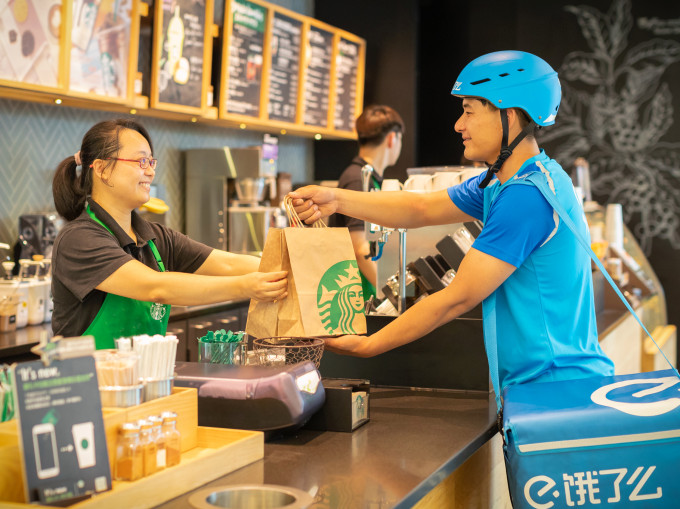
    Starbucks and Alibaba have teamed up to allow consumers in China to order coffee using their Tmall Genie smart speaker.

    From the comfort of their sofa, those seeking a hot latte or an iced tea can simply call out “‘Tmall Genie: I want Starbucks delivered’. And within 30 minutes of placing a verbal order for food and beverages, it will arrive, thanks to Alibaba’s Tmall.

    They can also track the delivery status of their orders in real-time, as well as connect membership accounts to the smart speaker to earn Star rewards with every purchase, which add up to free food and drinks.

    Soon, members will also receive personalised recommendations based on their previous orders and trending items from Starbucks’ seasonal menu, says Miffy Chen, GM of Alibaba A.I. Labs, the artificial-intelligence research unit behind the Tmall Genie.

    She said the collaboration helps both companies meet the needs of China’s digitally savvy consumers, who are increasingly expecting seamless, on-demand deliveries for everything from ordering groceries to food and medicine.

    Molly Liu, VP and GM of the digital ventures division at Starbucks China, said the new smart speaker marks a new era of digital customer engagement for Starbucks and will help “[elevate] their connection with customers to new heights.”

    “We are focused on ensuring that Starbucks voice-ordering is truly personal, and we look forward to offering our customers more convenient moments and new opportunities to engage with Starbucks on a single integrated platform as they move throughout the day,” Liu said.

    As part of the partnership between Starbucks and Alibaba, the Seattle-based coffee chain has also exclusively debuted a new Starbucks-themed Tmall Genie through its flagship store on Tmall, Alibaba’s B2C e-commerce site. The smart speaker, which comes in the brand’s classic shade of green, features its teddy-bear mascot “Bearista” behind a DJ turntable. Users can play music from a curated playlist by telling the Tmall Genie to “play some Starbucks music,” a feature powered by Alibaba’s music-streaming app Xiami.

    About 3000 Starbucks Genies, priced at RMB 199 (US$28) each, sold out instantly during a livestream hosted by popular Taobao livestreamer Viya Huang on Monday. Huang’s five-hour stream had attracted more than 829 million views.

    The new Tmall Genie feature comes as Starbucks and Alibaba celebrates the one-year anniversary of their strategic partnership to transform the coffee experience in China. Starbucks has since tapped Alibaba’s New Retail infrastructure, such as partnering with Ele.me to expand its delivery coverage or opening back-of-room “Star Kitchens” inside Freshippo, which leverage the supermarket chain’s fulfillment capabilities to enhance its delivery speed and reach.

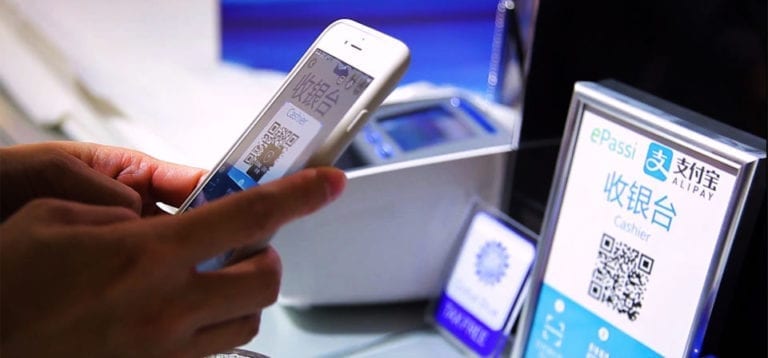
    In 2017, Starbucks’s cafes began accepting mobile wallet Alipay for payment. In December of the same year, Starbucks opened its first roastery outside of its home market in Shanghai, which featured mobile technology and augmented-reality experiences designed by Alibaba.

    While China’s per-capita demand for coffee is still a fraction of US consumption – an average mainland Chinese consumer drinks three cups a year versus 363 cups in the US – total consumption grew at an average annual rate of 16 per cent in the last decade, significantly outpacing the world average of 2 per cent, according to the International Coffee Organization.

  • Alibaba hosts the fourth Taobao Maker Festiva

    Alibaba hosts the fourth Taobao Maker Festiva

    Chinese e-commerce platform Taobao has kicked off its fourth Taobao Maker Festival.

    The signature offline event within the Alibaba ecosystem celebrates the maker spirit of China’s young entrepreneurs. The event continues to expand in scale, with this year’s festival held at two different Hangzhou venues. It will showcase more than 1000 new and creative products, along with the most exciting avant-garde designs at the Broken Bridge Fashion Show, which opens the two-week festival.

    “The Taobao Maker Festival offers a creative and exciting experience for both our makers and visitors,” said Alibaba Group’s chief marketing officer Chris Tung. “Taobao has increasingly become the go-to platform for incubating new concepts, new designs and new products. The products that premier during this year’s Festival will have a strong appeal among young people, especially the Generation Z, who long for new experiences.”

    Featured new products will include a vegan meat launched by Hong Kong social enterprise GreenMonday, powered exoskeletons launched by C-Exoskeleton, a virtual-reality headset launched by HTC and simultaneous translation technology launched by iFlytek, among many others.

    “Brands and merchants will not only have the opportunity to showcase their innovative products and interact with users in the Alibaba ecosystem during the event, but they can also leverage social and content tools embedded in Taobao and Tmall to increase the impact after the Festival,” said Tung.

    In the coming three years, Taobao plans to incubate 200,000 merchants with more than RMB5 million (US$706,300) each in annual sales. Taobao statistics released in July this year showed that new merchants who joined Taobao over the past three years achieved a total turnover of nearly RMB500 billion ($70.63 billion) in the current fiscal year. As of the end of last year, there were nearly 50,000 independent designers running their business on Taobao, most of whom are in their 20s and early 30s.

  • Alibaba founder Jack Ma prepares to step aside

    Alibaba founder Jack Ma prepares to step aside

    Alibaba Group celebrated its 20th anniversary on Tuesday in Hangzhou, highlighting its journey from 18 founders of a tiny e-commerce startup in a small apartment into the US$447 billion enterprise it is today.

    It was also Jack Ma’s final appearance as executive chairman, as CEO Daniel Zhang was set to take over at the helm of the company, which now has about 100,000 employees working in dozens of businesses in offices around the world.

    In his final speech, Ma addressed those staff, telling them that the celebration was not about his retirement but rather “the beginning of a legacy of succession.”

    Alibaba has long prided itself on its corporate governance, particularly its use of a partnership system that was created to ensure that the culture and ethos that have underlined the company and its approach to business for two decades remained intact long after the founders were gone. That focus on a responsible transition is what drove Ma’s decision to announce that Zhang would succeed him as chairman a year ago, offering customers, employees and shareholders that same visibility.

    “It’s not about the choice of an individual, but the success of a system,” Ma said during his speech.

    Alibaba’s rise has closely tracked – and, the company said, contributed to – China’s economic development. When Alibaba launched in 1999, China had only the most basic retail infrastructure, just 8.8 million internet users and a per-capita income of less than $800. Now, those numbers have soared to more than 800 million internet users, a per-capital income of more than $8000 and total e-commerce turnover of more than $1 trillion. According to research firm eMarketer, China currently represents 54.7 per cent of the global e-commerce market, a share nearly twice that of the next five countries combined. In a release, Alibaba said that about 40 million people were directly and indirectly employed by Alibaba’s e-commerce ecosystem in China.

    Ma, who turned 55 on Tuesday, also used his speech to emphasise that Alibaba should be a company focused on effecting change in the world rather than one in business only for profits. He said that Alibaba’s biggest decisions, in fact, had nothing to do with money at all.

    “Behind each of our decisions – the technology we invest in, the products we create – we consider whether they can solve society’s problems, whether they are driven by our mission, vision and values,” said Ma.

    For the next 20 years, Ma called for Alibaba to make the world “greener, more inclusive and sustainable.”

    Zhang spoke about the future as well, saying that Alibaba’s goal was to service more than 1 billion consumers globally and handle over RMB 10 trillion in transactions by 2024.

    Alibaba also needs to help enterprise customers fully digitise their businesses, including commerce, finance, logistics and cloud computing, he said. Marketing, channel management, manufacturing, product design, customer service and organisation management were all things that the “Alibaba Operating System” could help to digitise as well.

    “Only through this can we help all businesses move towards a digitised and intelligent future,” Zhang said.

    But, like Ma, there was a sense of altruism in that mission.

    “We want to continue to create value for society, solve society’s problems and be a company that shoulders social responsibility,” said Zhang.

    “If our efforts help improve society even in a small way, that makes us truly happy. We hope our customers and partners perform better than we do,” he said.

    Alibaba marked its anniversary by updating its corporate values. In a release, Alibaba said that just as its business has evolved, so had the world. Therefore, the company’s values had to keep pace with those changes and remain relevant to its global workforce. The announcement follows Alibaba’s recent reaffirmation of its mission statement – “To make it easy to do business anywhere” and an update to its vision, clarifying its intent to be a “good company that will last for 102 years” in the digital era, rather than pursuing power or scale.

  • Alibaba confirms purchase of Kaola business

    Alibaba confirms purchase of Kaola business

    Alibaba has confirmed it will buy NetEase’s Kaola for about US$2 billion, a deal widely predicted last month.

    Kaola is an import e-commerce platform which has been a rival of Alibaba for some time. Both companies have their roots in Hangzhou.

    Confirming the deal, Alibaba says it plans for Kaola to continue to operate independently under its current brand. Tmall import and export GM Alvin Liu will serve as Kaola’s new CEO.

    “We are pleased to have found a strategic fit for Kaola within Alibaba’s extensive ecosystem, where Kaola will continue to provide Chinese consumers with high-quality import products and services,” said William Ding, CEO of NetEase.

    “At the same time, the completion of this strategic transaction will allow NetEase to focus on its growth strategy, investing in markets that allow us to best leverage our competitive advantages. We remain fully committed to offering our users best-in-class and differentiated online content born from our relentless drive for craftsmanship and innovation.”

    As well as the sale of Kaola, Alibaba, together with Yunfeng, will invest some $700 million in NetEase Cloud Music. The completion of this transaction is subject to certain closing conditions. NetEase will remain the controlling shareholder of NetEase Cloud Music following the closing of this transaction.

    “As the controlling shareholder of NetEase Cloud Music, we will continue to fully support the growth of this business, helping it to realise its strategic goals in the music industry,” said Ding.

    Alibaba CEO Daniel Zhang said his company is confident about the future of China’s import e-commerce market, which it considers remains in its infancy and has great growth potential.

    “We welcome Kaola to the Alibaba family and value NetEase’s contributions in incubating an e-commerce platform with strong import capabilities. With Kaola, we will further elevate import service and experience for Chinese consumers through synergies across the Alibaba ecosystem,” said Zhang.

    “Alibaba also looks forward to becoming a partner in the future development of NetEase Cloud Music and exploring innovative collaboration in the digital entertainment space.”

  • Starbucks and Alibaba Launch Voice Ordering and Delivery through Tmall Genie

    Starbucks and Alibaba Launch Voice Ordering and Delivery through Tmall Genie

    Starbucks is taking another step toward evolving the digital customer experience for customers in China by launching voice ordering and delivery capabilities within Alibaba’s smart speaker, Tmall Genie. Customers can now order their favorite Starbucks beverages and food simply by using their voice for delivery within 30-minutes. Leveraging Alibaba’s on-demand food delivery platform, Ele.me, the voice ordering capabilities for Starbucks, further extend the customer experience within Starbucks digital ecosystem.

    The launch of the new service marks the one-year anniversary of Starbucks and Alibaba’s strategic partnership which advances the New Retail infrastructure and digital power in China – one of the fastest-growing markets in the world for coffee consumption. The announcement also builds on several significant collaborations between the two companies that enable a seamless Starbucks Experience for Chinese customers, such as establishing back-of-house kitchens, Star Kitchens, within Alibaba’s Freshippo supermarkets in China.

    “We are thrilled to provide our cutting-edge Artificial Intelligence technology through Tmall Genie to serve Starbucks digitally-savvy customers in China,” said Miffy Chen, general manager at Alibaba A.I. Labs which leads the development of Tmall Genie. “Earlier this year, we launched food order and delivery service through Ele.me in response to our users’ needs for on-demand local services. We’re excited to introduce an even more diverse and enriched experience on our platform through Starbucks voice ordering and provide a direct benefit to Chinese consumers within their daily routine.”

    “The Starbucks feature through Alibaba’s Tmall Genie ushers in a new era of digital customer engagement for Starbucks, leveraging ground-breaking digital technology to create an unprecedented experience that elevates our connection with customers to new heights,” said Molly Liu, vice president and general manager, Digital Ventures, Starbucks China. “We are focused on ensuring that Starbucks voice ordering is truly personal, and we look forward to offering our customers more convenient moments and new opportunities to engage with Starbucks on a single integrated platform as they move throughout the day.”

    Through Alibaba’s Tmall Genie, customers place an order using their voice and can track their order in real-time within the 30-minute delivery timeframe.

    Starbucks® Rewards members also can earn Stars and receive membership updates, including benefits, on the Tmall Genie. Soon, members will be able to receive personalized recommendations when using voice commands to place orders that are tailored to previous order preferences and popular items from Starbucks seasonal menu. As another added benefit, Starbucks fans in China can also listen to the latest Starbucks in-store playlists through Alibaba’s music streaming app, Xiami Music.

  • Chinese shoppers can now use Alipay at the Mall of Asia

    Chinese shoppers can now use Alipay at the Mall of Asia

    Chinese consumers can now use Alipay at the Mall of Asia stores  thanks to a joint venture between Ant Financial Services and SM.

    Technology to allow retailers to accept Alipay has been installed at almost half the mall’s stores already, with the rest to follow within three to six months.

    Opening the way for Chinese to use Alipay at the Mall of Asia is aimed at attracting more tourists to the mall – as well as the increasing locally based Chinese population.

    “SM Mall of Asia is a must-visit shopping destination among tourists who enjoy the wide array of shopping and dining offerings and unique amenities,” said Cherry Huang, GM, cross-border business for South and Southeast Asia at Alipay.

    “We are happy to partner with SM Mall of Asia to deploy Alipay acceptance points in the mall for shoppers who are looking for the best of retail and lifestyle offerings and the same seamless shopping experiences that they enjoy at home. At the same time, we are very excited to help merchants in SM Mall of Asia connect with tourists before they’ve even arrived in the Philippines through our platform’s marketing capabilities.”

    Since Alipay entered the Philippines in 2017, the number of Alipay acceptance points has grown exponentially across retail, hospitality and entertainment attractions. Aside from Manila, Alipay acceptance points are available in six provinces frequented by Chinese tourists, including Cebu, Davao, Palawan and Boracay.

    According to the Philippines Department of Trade and Industry, international tourist arrivals to the Philippines rose by 7.7 per cent to 7.1 million visitors last year. China contributed 1.255 million of them, a growth rate of 30 per cent year on year.

    More than 3.12 million Chinese citizens have taken up residence in the Philippines since January 2016.

  • Shopee app Singapore’s most downloaded

    Shopee app Singapore’s most downloaded

    The Shopee app has emerged as Singapore’s most downloaded shopping app.

    The Sea company platform had 2.8 million visitors per month on average during the second quarter, with an 11 percent increase compared to the previous quarter. It is currently the most-used app of its kind throughout the whole of Southeast Asia, while rival firm Lazada remains the most actively used e-commerce app within Singapore itself.

    “Apps by Alibaba such as Taobao and AliExpress remained prominent among Singaporean consumers probably due to the increased popularity of Chinese products and Chinese language proficiency in the country,” read a report by iPrice Group.

  • Costco China opens first store in Shanghai

    Costco China opens first store in Shanghai

    US warehouse retailer Costco opened its first store in China today, against a background of an escalating trade war between the US and China and at a time the local economy is showing signs of slowing.

    The giant store will open in a suburb of Shanghai boasting a catchment of 2 million consumers and follows a four-year program by Costco to build brand awareness among local consumers through a presence on Alibaba’s Tmall Global.

    The company has a target of signing up at least 100,000 members to make the venture viable.

    Costco’s business model relies largely on the sale of memberships giving consumers the right to shop there, with tight margins on products and large pack sizes giving the brand a cost advantage over traditional supermarkets.

    Richard Zhang, Costco’s senior vice president for Asia, said the membership model was not foreign to locals.

    “Chinese consumers are ready to pay for a membership card that grants them an exclusive privilege to buy at a warehouse store, it’s not a new concept in the country,”

    Costco also takes encouragement in that – despite the failures of European hypermarket chains Carrefour, Tesco and Metro in the Chinese market – its US rival Sam’s Club, operated by Wal-Mart on a similar business model, has been trading there for 20 years.

    “A mature market saves us efforts in educating customers.”

    However Jason Yu, GM of Kantar Worldpanel China, is less bullish about Costco’s prospects there.

    “The Chinese market is very complicated and requires retailers to innovate and localise,” he said.

    Local retailers like Hema, Alibaba’s tech-enhanced food store network, are proving popular with consumers and can adapt quickly to changing consumer preferences.

    “Local retailers are reaching out to customers via all distribution channels while foreign retailers are not so flexible to adapt to new situations,” he said. “The old way of a large and all-inclusive hypermarket doesn’t work in China.”


  • Alibaba Co-Founder Buys NBA Team For Record Price

    Alibaba Co-Founder Buys NBA Team For Record Price

    Alibaba co-founder, Joseph Tsai, has concluded a deal for the controlling interests in NBA team Brooklyn Nets for $2.3 billion – an all-time record-high price for any U.S. sports franchise.

    In addition to the $2.35 billion deal for the 51 percent stake, which makes Joseph Tsai the sole owner of the team, he will also pay nearly $1 billion more in a transaction for the Barclays Center.

    According to a report which cites two anonymous sources, the transaction is expected to complete by the end of September, pending approval by the NBA’s Board of Governors. Tsai purchases both the team and the stadium from Russian billionaire Mikhail Prokhorov, from whom he also already purchased a 49 percent stake from in 2018.

    Tsai’s 2018 acquisition included the option to become the sole controlling owner in four years. The team’s recent acquisition of megastars, Kevin Durand and Kyrie Irving from free agency, likely played a role in Tsai’s decision to exercise the right early and the team will undoubtedly experience an exponential boost in popularity, if not win rate.

    Chinese exposure to global assets through major acquisitions continues to increase and sports teams, specifical football in Europe, have been trending for years. Examples of stakes purchased include in Aston Villa, West Bromwich Albion, Wolverhampton Wanderers and Southampton in England; Italy’s A.C. Milan and Inter Milan; Spain’s Atletico Madrid; and Slavia Prague in the Czech Republic.

    And Tsai’s links with China through the gargantuan tech firm – in a nation where the NBA estimates one-fifth (300 million) of the population plays basketball – is likely to create synergies.

    The team is in a better place today than ever before and I know that Joe will build on that success, Prokhorov said.

  • Alibaba may buy Kaola from Netease

    Alibaba may buy Kaola from Netease

    Alibaba and Chinese tech firm Netease are in talks on the internet giant’s potential acquisition of its cross-border e-commerce platform Kaola, which would be merged with Tmall.

    According to sources from the mainland, Alibaba may offer as much as US$2 billion for the business.

    “The deal would represent a step toward market consolidation in China’s e-commerce sector,” wrote Tech Node’s Emma Lee. “A merger between the country’s top cross-border players would create a single market behemoth.”

    She said Alibaba could also use the deal to fend off rival Pinduoduo, which has also taken an interest in Kaola to expand its cross-border presence.

    Tmall was responsible for 32.3 per cent of China’s entire cross-border e-commerce takings in the first quarter, with Netease Kaola in second place with 24.8 per cent of the business.

    Alibaba rival Pinduoduo has also expressed interest in the Kaola business.

    “Netease has always been open-minded in seeking business development opportunities and strategic business partners to bring more vitality to Netease’s cross-border e-commerce and other business units,” said Netease CFO Yang Zhaoxuan.