Tag: Alibaba

  • Alibaba ranked China’s most valuable brand by BrandZT

    Alibaba ranked China’s most valuable brand by BrandZT

    Alibaba’s rise to the top resulted from growing its brand value by 59%, year-on-year, to $141 million. In the past five years, Alibaba has outperformed the WPP/Kantar Top 100 overall, with its brand value climbing 136%, compared to the Top 100’s 92% rise.

    Alibaba’s number-one spot for 2019 “reflects the growth of a brand which has contributed to transformational changes in the Chinese market,” the Top 100 publishers said.  In BrandZ’s “Brand Power” metric of brand equity, Alibaba’s score was particularly strong “for being ‘Meaningful,’ suggesting the brand known for coining the term ‘New Retail’ has successfully created closer connections with its consumers.”

    The Top 100 results show how digitization and the growing sophistication of Chinese consumers is creating a unique marketplace of products and services available with unprecedented speed and convenience – long a sweet spot for Alibaba. Innovators in AI, e-commerce, New Retail performed strongly.

  • Alibaba Cloud Ranked First in Asia Pacific by Gartner

    Alibaba Cloud Ranked First in Asia Pacific by Gartner

    Alibaba Cloud, the cloud computing and data intelligence arm of Alibaba Group, has been named first in Asia Pacific(*) market share for IaaS (Infrastructure as a Service) and IUS (Infrastructure Utility Services) in two consecutive years as per Gartner’s latest report revealed earlier this month named Market Share: IT Services, 2018. It has also retained its top three global provider position in the same space.

    According to this Market Share conducted by global analyst firm Gartner, Alibaba Cloud led the Asia Pacific market for IaaS and IUS with 19.6% market share (+4.7% market share gain from 2017). The technology innovator is followed by 11.0% and 8.0% market shares of the second (AWS) and third player (Microsoft) respectively in Asia Pacific in 2018.

    Alibaba Cloud boasts a strong network in Asia Pacific, with 15 availability zones in the region outside mainland China, covering Hong Kong, Singapore, Australia, Malaysia, Indonesia, India and Japan markets. It is the only global cloud provider that has set up local data centers in Indonesia and Malaysia, offering a wide range of cloud and data analytics products.

    “It is very encouraging that our continued dedication to enabling cloud development across industries in both Asia Pacific and globally(**) has been recognized by world’s leading research and advisory company. As the only global cloud provider originated from Asia, we will continue to champion millions of businesses through our world-class infrastructure, advanced analytics tools and thriving ecosystem.” said Lancelot Guo, Vice President of Alibaba Group and Head of Strategy and Marketing at Alibaba Cloud.

  • Meituan Scaling down Ella Supermarket Outlets

    Meituan Scaling down Ella Supermarket Outlets

    Chinese food-delivery website Meituan has closed three of its Ella Supermarkets in Jiangsu, almost halving its network of outlets.

    The business initiative, which sells fresh supermarket produce online for fast home delivery, has just four remaining locations in Beijing and Wuxi.

    The closures were reportedly put down to mismanagement, and stand in stark contrast to the company’s stated plans to open 20 outlets within last year.

    Its shortcomings are reflected by competing brands, however, with rival groups Yonghui Super Stores, 7Fresh and SuFresh also performing under par. Alibaba’s Hema offering is an exception with reportedly strong trading.

  • Alibaba Celebrates its 15th Ali Day

    Alibaba Celebrates its 15th Ali Day

    Alibaba employees across the world joined together to celebrate Ali Day, an annual event honoring the tenacity and fighting spirit of their colleagues and their families during the Severe Acute Respiratory Syndrome crisis in China 16 years ago.
    During the height of the outbreak in May 2003 in China, one employee was thought to have contracted the deadly virus. The entire staff was ordered to self-quarantine at home. But instead of putting the business on hold, everyone, including family members, pulled together to keep the operation afloat.
    Such determination and dedication prompted Alibaba Group founder Jack Ma in 2005 to declare May 10 as “Ali Day.” More than just a day of merriment, Ali Day is about paying tribute to employees and their family members, whom Ma often calls the company’s “biggest pillar.” It also underscores Alibaba’s values, placing “customers first, employees second and shareholders third.”
    This year, offices across all time zones held their own celebrations. Our main Xixi Campus in Hangzhou was transformed into a giant carnival, with musical and dance performances by employees throughout the day. There was a playground for children, arts-and-crafts corners and magic shows.
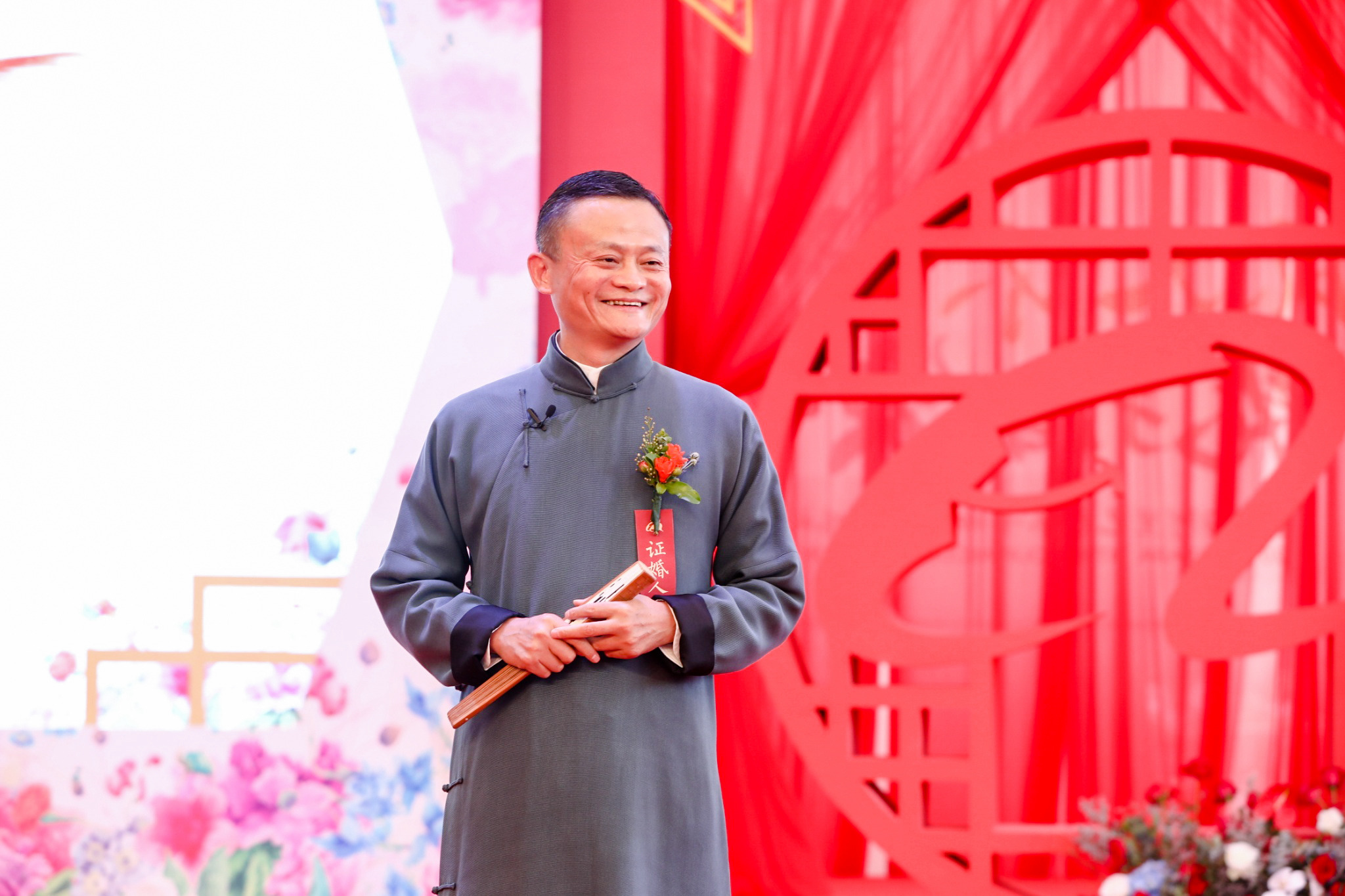
    The highlight of each Ali Day is the “wedding,” or a celebration of Alibaba couples who married over the previous year. This year was no exception, with 102 pairs of newlyweds, dressed in crimson traditional Chinese attire, receiving sage advice from Ma, himself, who presided over the ceremony. The number 102 symbolizes the minimum number of years Ma has said he wants Alibaba to last, spanning three centuries.
    On Ali Day, executives personally extend their gratitude to family members of Alibaba employees. This year, Alibaba Group Vice Chairman Joe Tsai invited the entire New York staff and guests to a New York Liberty WNBA basketball game. In Hangzhou, Alibaba CEO Daniel Zhang and Chief People Officer Judy Tong answered questions from employees’ family members.
  • Ebay Buying in India’s Paytm Mall

    Ebay Buying in India’s Paytm Mall

    International e-commerce platform Ebay is preparing to head a US$160–170 million investment in e-tailer Paytm Mall.

    In a report last Monday, the move was interpreted as a grab at O2O commerce and payments opportunities in India. It will be the third major e-commerce investment in the territory for the firm following its minors stakes in Flipkart and Snapdeal.

    Paytm Mall raised about US$215 million from Japan’s SoftBank and existing investor Alibaba mid last year, at a valuation of $1.6–2 billion. It has raised roughly $645 million in funding to date.

    The firm has a minority segment of the Indian market, which is largely dominated by its two biggest competitors Amazon and Flipkart.

  • Amazon to close China mainland store

    Amazon to close China mainland store

    Amazon China is about to stop selling local goods to local shoppers. According to multiple financial-news services, the global e-commerce giant is about to announce the closure of its dedicated Mainland China store, however Chinese consumers will still be able to order goods from Amazon’s global store.

    The dedicated Amazon China platform will close in July, meaning shoppers will no longer be able to buy goods listed by third-party local suppliers.

    According to “people familiar with the matter” quoted by Bloomberg, exiting the intensively competitive Mainland China market will allow Amazon to shift its focus to more lucrative businesses selling imported goods to Chinese and developing its successful cloud services operation.

    The withdrawal comes 15 years after Amazon entered China, purchasing local online store Joyo.com for US$75 million. Seven years later it rebranded the site under its own banner.

    The company estimates it will take about three months to close down its mainland fulfilment centres and delist local vendors as appropriate.

    With Alibaba and rival JD accounting for a combined 82 per cent of the Mainland China online market, there was little room for Amazon to eke out a commercially viable market share within a reasonable time frame.

    Michael Pachter, an analyst at Wedbush Securities, said Amazon was pulling out of the Chinese domestic market, “because it’s not profitable and not growing”.

    “The domestic Chinese online retailers just have huge advantages that Amazon can’t compete with.”

    Amazon has yet to officially confirm the China plan.

  • Jack Ma calls 12-hour work days a “blessing”

    Jack Ma calls 12-hour work days a “blessing”

    In the middle of stress awareness month, Alibaba founder Jack Ma has told his company’s workers they should be working a “996” work schedule – that is from 9am to 9pm, six days a week.

    According to a speech made this week by Ma, working 12 hours a day for Alibaba was a “blessing” to staff, and necessary for the business to achieve success.

    Ma’s comments caused a stir in China, where a conversation about work-life balance has spring-boarded off of a slowing tech industry.

    “With the pressure of economic downturn, many enterprises are facing challenges to survive… but the way to relieve anxiety is not to let employees work overtime as much as possible,” an editorial wrote.

    Ma later backtracked on his comments, calling such a work regime inhumane, unhealthy and unsustainable.

    The comments come as LinkedIn revealed work-life balance is the top cause of stress at work for Australians, with 72 per cent of survey respondents struggling to keep a balance between the two.

    The report also found that executive-level professionals are the most stressed, more so than middle management and individual contributors.

    In terms of age demographic, Generation X is the most stressed generation with over half (54 per cent) claiming to struggle with confidence in the future of their work.

  • Meet Alipay’s Western Expansion Partner: RiverPay

    Meet Alipay’s Western Expansion Partner: RiverPay

    Alipay is one of the dominant forces in Chinese mobile payments solutions, but its ultimate goal, like with any payments company, is global expansion. You’ve recently covered some of Alibaba’s expansion into the UK through their partnership with Barclaycard, but there’s an unknown partner I want to introduce you to that’s giving Alipay access to over 12,000 store locations and over 30,000 points of sale in the U.S., Canada and Europe.

    Meet RiverPay: Alipay’s authorized payment service partner that connects global merchants with over 1 billion Alipay users around the world, especially Chinese travelers abroad. (69% of whom used mobile payments last year, according to Nielsen.)

    All of RiverPay’s merchant customers are adopting Alipay as a payment option, including top luxury retailers like Saks Fifth Avenue, Hudson’s Bay, Dolce & Gabanna and Prada. With payments integration in less than two weeks and compatibility with over 80 percent of mainstream enterprise resource planning systems, RiverPay can help merchants adopt Alipay fast without interruption to cashiering systems.

  • Alibaba Launches “Fliggy Buy” Shopping Channel with Merchants

    Alibaba Launches “Fliggy Buy” Shopping Channel with Merchants

    New service offers convenience to Chinese travelers, advances “Global Fun” strategy Hangzhou, China, March 26, 2019 – Fliggy, the travel service platform of Alibaba Group, has launched its Fliggy Buy service, which offers overseas merchants a new solution to capture opportunities presented by the growing purchasing power of Chinese outbound travelers.

    The service offers a new shopping channel for Chinese travelers to browse and buy goods on Fliggy before reaching their destination, picking them up in stores after they arrive. It also advances Alibaba’s “Global Fun” strategy, which promotes international travel for Chinese tourists by working with industry players to give the tourists a richer experience while abroad.

    Merchants on Fliggy Buy will include duty-free and tax-free stores, both overseas and within mainland China, internationally renowned brands, specialty local stores and an increasing range of shopping destinations. Furla Hong Kong and Laox of Japan have already joined this channel, and more merchants are expected to join.

    “Fliggy is committed to making it easy to conduct travel business in the digital era. The launch of Fliggy Buy represents our latest move to work with merchants targeting the vast numbers of tourists from China to develop innovative solutions, and offer them targeted customer traffic. Our aim is also to embrace the potential of digital technology and provide a holistic travel experience encompassing food, accommodation, transportation, sightseeing, shopping and entertainment,” said Roman Zhu, Head of Fliggy Buy at Fliggy.

    Through Fliggy Buy, Chinese customers can access detailed information and buyers’ reviews about products, presented in their own language, prior to an overseas trip. This helps them understand features and compare prices across different merchants before committing to a purchase. They can ensure the items they want, especially limited editions, are in stock before the trip and make reservations online, as well as seek online customer service. Buying from duty-free and tax-free stores is an added benefit.
    Chinese travelers using this service can choose from a range of products, including cosmetics, suitcases, bags and alcohol offered by popular merchants. After selecting a pickup store, as well as inputting their personal information and completing payment, consumers can then pick up their goods at their leisure, allowing them more time to explore and experience the destination.

    “Duty-free and tax-free stores are our focus during the first phase of rollout, as they are the most visited shopping and consumption venues amongst Chinese outbound tourists. Our next step is to enrich the product categories on Fliggy Buy and recruit more overseas merchants to include high-end luxury brands, household electronics sellers, as well as pharmacy and cosmetics stores, assisting them to reach more Chinese consumers,” Zhu said.

    With users visiting 192 countries and regions in 2018, outbound travel is an important part of Fliggy’s business. Fliggy’s insights show an upward tendency of Chinese travelers spending overseas, as the average spending of these travelers grew 9% year-on-year in 2018. As a platform operator, Fliggy is dedicated to helping merchants and associations working in the tourist industry worldwide to build direct relationships with Chinese consumers.

    As a key component of the Alibaba Economy, Fliggy is committed to promoting Alibaba Group’s “Global Fun” initiative. Global Fun together with Global Buy, Global Sell, Global Pay and Global Delivery are the five core aspects of Alibaba Group’s globalization strategy to realize its long-term vision of serving two billion consumers around the world and supporting 10 million businesses to operate profitably on its platforms by 2036.

  • Home-and-living brand Jiyoujia debuts in Singapore

    Home-and-living brand Jiyoujia debuts in Singapore

    Alibaba’s e-commerce platform Taobao has launched its home-and-living channel, Jiyoujia in Singapore.

    Marking the brand’s first foray into an overseas market, products are on show at Taobao Home store at NomadX store.

    “Singapore is an important market for Taobao, and we continue to witness strong and sustained demand for the home-and-living category here by shoppers,” said Mickey Xiong, country director for Southeast Asia, at Taobao.

    “In fact, the home-and-living category is our fastest-growing segment here.”

    Jiyoujia also launched its Home Lab portal, one week after its debut in China. Using the portal, curated sets of Jiyoujia products are recommended to customers, promoted through interactive digital showcases. Surfers can hover over each item for more information.

  • Telenor Pakistan and Alibaba Cloud come together to provide cloud-based services

    Telenor Pakistan and Alibaba Cloud come together to provide cloud-based services

    Telenor Pakistan, the country’s leading telecom and digital services provider has partnered with Alibaba Cloud, the cloud computing arm of Alibaba Group, to become the authorized distributor of Alibaba Cloud products and services in Pakistan.

    The signing took place at Telenor Pakistan headquarters ‘345’ where Dr. Alex Li, General Manager, South Asia of Alibaba Cloud and Sardar Mohammad Abubakr, Chief Digital & Strategy Officer at Telenor Pakistan, sealed the partnership.

    Through the partnership, Telenor Pakistan will be selling Alibaba Cloud’s suite of business solutions to local enterprises across the country. The collaboration will allow customer organizations to protect their business critical applications and data with world-class security as they choose to migrate to Alibaba Cloud.

    In today’s increasingly digital world and exploding data needs, organizations are fast moving to cloud services instead of buying and managing physical servers to have their data management and security needs met. Processing data in the cloud also means that as the business grows, it can keep up with increased traffic.

    Alibaba Cloud provides cloud computing products in computing, database management, networking, security, and storage that can be deployed globally. The service delivers superior results in all product capabilities ranging from computing, user & network management, and security & compliance to scaling, developer services, enterprise integration and management tools.

    Telenor Pakistan’s partnership with Alibaba Cloud will provide a gateway to facilitate the cloud market in the country and in a fast evolving landscape, enable businesses to robustly manage their data management and digital transformation needs” said Sardar Mohammad Abubakr, Chief Digital & Strategy Officer at Telenor Pakistan.

    “We are happy to partner with one of Pakistan’s top digital service providers for distribution of our suite of cloud products and services in the country,” said Dr. Alex Li, General Manager, South Asia of Alibaba Cloud. The partnership will further our vision of fostering the development of cloud market in Pakistan and help the country move faster towards its digital transformation goals,” he added.

    Through this partnership Telenor Pakistan will be providing Alibaba Cloud’s services exclusively to its business customers to further their scale, accuracy in analytics and business security.


    # # #


    Press Contact

    Anam Abbas

    Corporate Communications, Telenor Pakistan

    press.center@telenor.com.pk


    About Telenor Pakistan

    Telenor Pakistan is 100% owned by Telenor Group and has a footprint spanning throughout the country. With a subscriber base of over 44 Million, it is the second largest mobile operator in Pakistan. Telenor launched its operations in Pakistan in 2005 and has a workforce of over 1,600 employees. For more information, please visit: www.telenor.com.pk


    About Alibaba Cloud

    Established in 2009, Alibaba Cloud (www.alibabacloud.com), the cloud computing arm of Alibaba Group, is among the world’s top three IaaS providers, according to Gartner, and the largest provider of public cloud services in China, according to IDC. Alibaba Cloud provides a comprehensive suite of cloud computing services to businesses worldwide, including merchants doing business on Alibaba Group marketplaces, start-ups, corporations and government organizations. Alibaba Cloud is the official Cloud Services Partner of the International Olympic Committee.

     

  • Grab now has more rivals than ever before in Vietnam

    Grab now has more rivals than ever before in Vietnam

    From an e-hailing app, Grab has made great steps forward, providing many different services. Most recently, it started the payment service GrabPay and lending service Grab Financial. The consumer lending market in South East Asia is very large. As estimated by the World Bank, about 2 billion people in the world cannot access bank services, and most of them are in Asia Pacific.

    The non-cash payment market, according to Grab, is worth $500 billion in South East Asia. An analyst commented that Grab is wise taking a ‘roundabout’ approach to consumer lending (it conquered the transport market first before aiming for the consumer credit market).

    Consumer lending is a fertile business field for Chinese e-commerce firms. The firms offer online payment apps to users to ‘learn’ about their financial capability.

    Grab, as an app, quickly attracted users, especially investors. Just within six years, Grab became an unicorn company, i.e. an unlisted technology firm with valuation of $1 billion and higher, in South East Asia. Analysts estimate that Grab is valued at $6 billion.

    The challenges

    The total number of Grab downloads has reached 95 million all over South East Asia. This could serve as the launch pad for it to conquer the consumer lending market.

    “GrabPay e-wallet will be used for both transport and food delivery services, two of the most used services in South East Asia,” said Jerry Lim, director of Grab Vietnam.

    However, the analyst said, by expanding its business, Grab would have to compete with more rivals who are ‘powers’ in their fields. In online payment, for example, it will have to compete not only with AirPay (Sea) and Alipay (Alibaba Group), but also with local firms such as ZaloPay (VNG) and MoMo.

    In Indonesia, Grab bought an e-commerce platform, Kudo, in April 2017. Grab believes that this is the factor which can help expand GrabPay. However, in Vietnam, Grab’s two big rivals – Sea and Alibaba — both have strong support from two popular e-commerce floors – Shopee Vietnam and Lazada Vietnam.

    Similarly, GrabFood has rivals in the food delivery sector, where Sea’s Now, which inherited the large custom from Foody, is the leader.

  • Jack Ma steps down from Alibaba divisions

    Jack Ma steps down from Alibaba divisions

    Alibaba founder Jack Ma has stepped back from active roles in five subsidiary companies as he prepares to hand over executive chairmanship of the company in September.

    Management of Alibaba say the moves were intended to improve the firm’s governance and administrative transparency.

    Ma has exited Alibaba’s Technology, Education Technology, Taobao Software, Network Technology, and Software departments.

    Stepping away from the business divisions was signalled before Ma announced last September his intention to resign as executive chairman and officials say the latest move is normal industry practice.

    One commentator described the step as “goodwill” and encouraging transparency when he is no longer active in Alibaba on a day to day basis.

    In an interview last September, which Ma owns, he said relinquishing the executive chairmanship was “not about retiring, stepping away, or backing off”. “This is a systematic plan,” he said.

  • Alibaba Group sales down this month

    Alibaba Group sales down this month

    Alibaba Group sales soared 41 per cent in the December quarter as its customer based neared 700 million.

    The Chinese company’s turnover for the three months reached US$17.057 billion and its net income attributable to shareholders $4.807 billion.

    “Our resilient operating and financial performance is a direct reflection of our persistent focus on better serving our growing base of nearly 700 million consumers across retail, digital entertainment and local consumer services,” said CEO Daniel Zhang. “Our growth is also driven by the power of Alibaba’s cloud and data technology that helps expedite the digital transformation of millions of enterprises.”

    Alibaba group sales from core commerce increased 40 per cent to $14.958 billion, while the cloud-computing division posted 84 per cent growth, turning over $962 million. The digital media and entertainment division achieved 20 per cent growth to reach $944 million.

    In a statement, Alibaba said its Taobao platform achieved “robust user growth and enhanced engagement”. Last December, its China retail marketplaces had 699 million mobile monthly average users, representing a quarterly net increase of 33 million. The annual active consumers on its China retail marketplaces was 636 million for the 12 months ended December 31, compared to 601 million for the 12 months ended September 30 last year, “reflecting successful user acquisition programs, such as referrals through the Alipay app”.

    More than 70 per cent of the increase in annual active consumers was from third-and-lower tier cities.

    Tmall thrives

    Alibaba said GMV on its Tmall business grew 29 per cent year on year in the December quarter, outpacing the industry.

    “This robust growth was driven by strength in the fast-moving consumer goods (FMCG), apparel and home furnishing categories,” the company said.

    During the quarter, Tmall signed up new brands to the platform including Valentino, Ermenegildo Zegna, Stuart Weitzman and Sergio Rossi which opened flagship stores and joined the Tmall Luxury Pavilion.

    Meanwhile, Alibaba’s proprietary grocery retail chain Freshippo (formerly Hema) continued to expand its footprint, “optimise its stores and introduce new initiatives that improve customer experience”. As of December 31, there were 109 self-operated Freshippo stores in China, primarily located in tier 1 and tier 2 cities, which continued to achieve “robust same-store sales growth” through the quarter.

    ‘Robust’ Lazada growth

    Alibaba’s Southeast Asian e-commerce platform Lazada achieved what the company described as “robust growth” in GMV. The company upgraded Lazada’s technology, which resulted in boosting the number of active users and achieved greater user engagement on Lazada’s mobile app.

    “We continue to invest resources to integrate Lazada’s business and technology operations into Alibaba with the aim of building a strong foundation for us to extend our offerings in Southeast Asia.”

  • Pierre Poignant succeeds Lucy Peng as Lazada Group CEO

    Pierre Poignant succeeds Lucy Peng as Lazada Group CEO

    Lazada Group has announced its new CEO this year, with group executive president Pierre Poignant taking the role immediately. The move is a leadership succession plan for both Lucy and Pierre where Lucy will remain as Executive Chairwoman and continue to be based in Singapore.

    In a media statement, Lazada described the change as “succession planning”.

    Poignant, who was appointed president in August, will lead the company’s strategic development into new growth pillars, while continuing to manage Lazada’s operations in Indonesia, Malaysia, the Philippines, Singapore, Thailand and Vietnam, working closely with country CEOs and regional functional team leaders.

    “Pierre is a well-respected Lazada co-founder, who has contributed tirelessly to the company for the past six years,” said Peng. “He and the team of other co-founders had the vision to build our logistics network from the ground up back in the days when no one in Southeast Asia believed in e-commerce – this valuable asset has now set us apart from the competition. Over the years, Pierre has consistently delivered beyond his call of duty and excelled in every role he has taken up.”

    Poignant said Lazada has benefitted from the Alibaba ecosystem, from the technological prowess to the logistics network.

    “This year is a turning point for Lazada. We have improved and evolved and now come out stronger, more efficient, and more agile than the start of the year. Our transformation has just begun and I am confident next year will be another watershed year,” said Poignant.