Retail News CRM

Tag: Alipay

  • Ant International’s Alipay+ Adds New Bank Partners Amid Cross-border Mobile Payment Boom in Asia Pacific

    Ant International’s Alipay+ Adds New Bank Partners Amid Cross-border Mobile Payment Boom in Asia Pacific

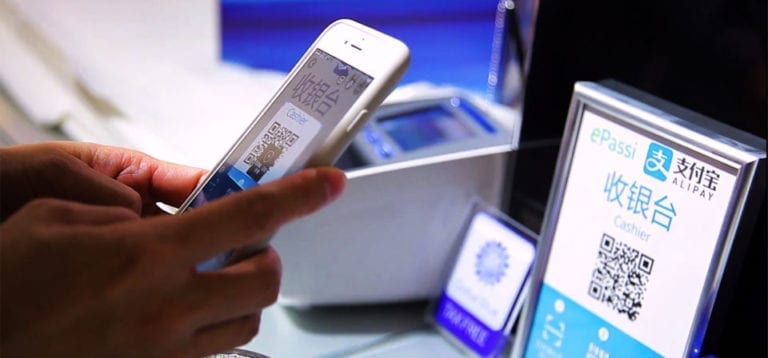
    Ant International is making inroads into the traditional banking industry in Asia, with Hang Seng Bank being the first to partner with the payment network in Hong Kong. This collaboration will enable customers to make cross-border QR payments directly from the bank’s mobile app.

    Users of the Hang Seng Mobile App are now able to scan QR codes to facilitate payments in mainland China and overseas. This is made possible through the Alipay+ network, which boasts access to over 100 million merchants across 55 countries and regions. This marks a significant milestone in the integration of traditional banking apps with the fast-growing digital wallet and QR-based payment network ecosystem in Asia.

    Banking Sector Taps Into Expansion of Cross-Border Payments

    Banks are finding that integrating with Alipay+ allows them to enhance their cross-border payment capabilities without the necessity of establishing separate connections with merchants and payment networks in individual markets.

    Alipay+, which serves as Ant International’s unified wallet gateway, is connected to more than 50 digital wallets and financial institutions. It is accepted across more than 220 markets globally and has forged partnerships with over ten national QR payment systems including Malaysia’s DuitNow and Thailand’s PromptPay.

    With the demand for cross-border payments originating from Asia-Pacific predicted to grow faster than the global average, this presents banks with a prime opportunity. The expectation is that outbound consumer-to-consumer and consumer-to-business cross-border payment volumes from the region could hit $3.7 trillion by 2032, almost twice the level recorded in 2024. This trend enables banks to retain customers within their own digital ecosystems, even when they travel or carry out international transactions.

    Alipay+ Builds Banking Network Across Asia

    Hang Seng Bank joins an increasing number of Asian banks that are connecting their mobile banking customers to Alipay+. Existing banking partners include OCBC in Singapore, Public Bank in Malaysia, Bank of the Philippine Islands, Asia United Bank in the Philippines, Kasikorn Bank and Siam Commercial Bank in Thailand, as well as Vietcombank in Vietnam.

    This model enables customers to continue using their familiar banking app while gaining access to a much larger international merchant network. In addition to payments, banks can utilise the Alipay+ Super App Platform to integrate additional services through mini-programs and plug-in solutions, which include travel-related services and other digital features.

    Ant International is not only positioning itself as a payments provider but increasingly as a technology and infrastructure partner to banks. Alongside Alipay+, the company is developing AI-based foreign-exchange technology and blockchain-powered infrastructure for cross-border liquidity management. Ant International already collaborates with global financial institutions such as Citi, Barclays, Standard Chartered and HSBC across various technology initiatives.

    For traditional banks, the rise of networks like Alipay+ signifies a broader strategic shift in Asian payments. Banks are increasingly connecting their own apps to external payment ecosystems rather than competing with digital wallets solely through proprietary solutions. The partnership with Hang Seng brings this model to Hong Kong, one of Asia’s primary banking and cross-border financial hubs.

    Questions & Answers

    What does the partnership between Hang Seng Bank and Ant International entail?
    This partnership allows Hang Seng Bank’s customers to make cross-border QR payments directly through the bank’s mobile app via the Alipay+ network.

    How is Alipay+ influencing the cross-border payment landscape in the Asia-Pacific region?
    Alipay+ is helping banks expand their cross-border payment capabilities without the need for separate connections with merchants and payment networks in individual markets.

    What is the broader strategic shift in Asian payments?
    There is a strategic shift in favor of banks connecting their own apps to external payment ecosystems, rather than competing with digital wallets solely through proprietary solutions.

  • Alipay Ventures Further into AI Commerce: Introduces Worlds First AI Wallet and Token Pay

    Alipay Ventures Further into AI Commerce: Introduces Worlds First AI Wallet and Token Pay

    Chinese fintech titan, Alipay, is ramping up its endeavors in AI-driven commerce with the introduction of an innovative AI payment infrastructure devised to bolster the burgeoning “agentic economy”.

    As per a press release issued on Monday, Alipay unveiled the world’s inaugural “AI Wallet” along with a novel service dubbed “Token Pay”, both targeted at AI firms and developers. This announcement was made at the Alipay AI Payment Ecosystem Conference held in Hangzhou.

    AI Agents in the Commercial World

    The crux of this initiative is Alipay’s AI payment ecosystem, where users can execute transactions via AI agents using voice commands and automated processes.

    Cyril Han, CEO of Ant Group, said, “Even though the quintessence of commerce remains intact in the AI era, AI agents are revolutionizing every aspect.” Han added that based on 22 years of technological prowess and commercial knowledge, Alipay is creating the next wave of AI payment services to boost the growth of the agentic commerce ecosystem.

    The firm disclosed that its AI-native payment products have already surpassed 100 million users since their February 2026 launch. As per Alipay, the system has processed approximately 300 million transactions so far, making it the first commercially scaled AI-native global payment infrastructure.

    Introduction of the “AI Wallet”

    The AI Wallet, a crucial part of this expansion, has been recently introduced and is now accessible via the Alipay app.

    The product is engineered to provide users more supervision and command over transactions executed by AI agents. This includes the ability to monitor tasks prior to and during payment and to analyze spending behavior after the transaction.

    In an effort to augment trust in autonomous AI transactions, Alipay also launched China’s maiden “Agentic Commerce Trust Protocol”, aimed to establish a standardized framework between AI systems and service platforms.

    Simultaneously, the firm introduced an intelligent security system designed to safeguard AI-driven transactions.

    “Token Pay” Designed for AI Companies

    Along with the AI Wallet, Alipay launched “Token Pay”, which the firm describes as the first integrated payment solution specifically tailored for AI model firms.

    The platform enables AI enterprises to handle subscription payments, token top-ups, and associated transactions on a global scale via a single infrastructure.

    Weiqi Hu, Vice President of MiniMax, said, “Payments are instrumental in facilitating massive growth in the AI sector. Together with Alipay, we aim to strengthen collaboration across multiple domains to accelerate the growth of AI commerce.”

    Payments Integration within AI

    Industry experts anticipate payments to become an inherent feature within AI applications rather than a separate step in digital commerce.

    “AI is redefining every facet of commerce,” said Lin Zhu, General Manager of Alipay’s AI payment business at Ant Group. Zhu added that payments are transitioning from a final step to a capability embedded from the outset. According to Zhu, only with trusted transactions, seamless payments, and secure controls, can agentic commerce genuinely proliferate.

    Extensive Expansion Across Industries

    Alipay’s AI payment infrastructure is already being widely used across a plethora of sectors and devices in China, such as AI-powered services embedded in retail apps including Luckin Coffee, smart glasses by Rokid, Alibaba’s Qwen AI ecosystem, OpenClaw-style AI agents, smart vehicle cockpits, AI development platforms like Coze and Qoder, and “One Person Companies”.

    Alipay announced additional investment in developer support programs, including token incentives and waiving payment-processing fees for individual AI developers.

    Through the latest rollout, Alipay is striving to establish itself not merely as a payment provider, but increasingly as the financial infrastructure supporting the next generation of AI-driven digital commerce.

    Questions & Answers

    What is the AI Wallet introduced by Alipay?
    The AI Wallet is a product designed to give users more control over transactions carried out by AI agents. Users can monitor tasks before and during payment execution and analyze spending behavior afterward.

    What is the purpose of Alipay’s “Token Pay”?
    Token Pay is an integrated payment solution created specifically for AI model companies. It allows AI firms to manage subscription payments, token top-ups, and related transactions globally through a single infrastructure.

    What is Alipay’s strategy with the introduction of the new AI payment infrastructure?
    Alipay’s strategy is to position itself not only as a payment provider, but increasingly as the financial infrastructure underpinning the next generation of AI-driven digital commerce.

  • Revolutionizing In-Car Transactions: Alipay Debuts Voice-Controlled Mobile Payment System

    Revolutionizing In-Car Transactions: Alipay Debuts Voice-Controlled Mobile Payment System

    At the 2026 Beijing International Automotive Exhibition, Banma Intelligence, a renowned Chinese tech corporation, partnered with fintech heavyweight Alipay to introduce a pioneering AI-enabled in-car system. This innovative technology allows drivers to initiate transactions using just their voice.

    Revolutionizing In-Car Transactions

    Known as the “AI cockpit”, the cutting-edge solution merges Banma’s in-vehicle intelligence with Alipay’s AI Pay. This allows drivers to perform hands-free transactions without the need for a smartphone. The developers of this technology aim to simplify in-car digital experiences as vehicles continue to become more software-focused.

    Ming Cai, the Chief Product Officer at Banma, noted that significant progress has been made in the realm of smart cockpits over the past two years, particularly in understanding user intent. He stated that by integrating voice-activated payments, one of the last barriers to smooth in-car digital experiences has been effectively eliminated. As a result, drivers can now simply express their intent verbally to complete a purchase.

    Emphasis on High-Demand Services

    Initially, the system primarily concentrates on services in high demand like entertainment and travel. For instance, drivers can book movie tickets, reserve hotel rooms, or order food through voice commands. A command like “buy two movie tickets” prompts the system to select showtimes and seats, following which the user can verbally confirm the choices to finalize the payment.

    Security Measures

    Security is a key feature of this new system, with Alipay integrating multi-layered risk controls and real-time fraud detection to safeguard the transactions carried out via the system.

    The development indicates a wider industry trend towards intelligent, connected vehicles, with digital services emerging as a key differentiator. Payment integration is viewed as a vital part of this ecosystem as it allows car manufacturers and software providers to deliver smooth, comprehensive user experiences.

    The companies revealed that the AI cockpit has already completed integration testing with several prominent automakers and is set to feature in new vehicle models in the latter half of 2026.

    Questions & Answers

    What is the “AI Cockpit”?
    The “AI Cockpit” is a state-of-the-art system developed by Banma Intelligence and Alipay that allows drivers to conduct transactions using voice commands.

    What services does the AI Cockpit initially focus on?
    The system is initially focused on high-demand services like entertainment and travel. It allows drivers to book movie tickets, reserve hotel rooms, and order food using voice commands.

    How does the system ensure the security of transactions?
    Security is a key feature of the system. Alipay has incorporated multi-layered risk controls and real-time fraud detection measures to protect transactions conducted through the system.

  • Ant International Set to Roll Out Alipay+ in Saudi Arabia: A New Era for Digital Payments!

    Ant International Set to Roll Out Alipay+ in Saudi Arabia: A New Era for Digital Payments!

    Ant International is set to make waves in the digital payments landscape by introducing Alipay+ in Saudi Arabia, a move that is bound to revolutionize transactions within the Kingdom. Scheduled for launch in 2026, this ambitious initiative will facilitate cross-border payments between the Kingdom’s national payment network, mada, and Alipay+, promising to simplify financial exchanges for consumers and businesses alike.

    Empowering Local Merchants and SMEs

    This new partnership is particularly advantageous for local merchants and small to medium enterprises (SMEs), which will gain the ability to accept QR payments from Alipay+’s extensive lineup of international payment partners. With over 36 partnerships already established, Alipay+ connects approximately 1.7 billion user accounts to an impressive network of more than 100 million merchants across 70 markets.

    A Commitment to the Kingdom’s Digital Future

    Douglas Feagin, President of Ant International, expressed excitement about this collaboration, stating, “This agreement deepens our presence and commitment to Saudi Arabia, and we look forward to working to promote QR payments locally as we build a thriving digital future for the Kingdom.” It seems that Alipay+ is not just entering the market; it’s planning a full-on cultural and financial integration.

    A Broader Regional Strategy

    The introduction of Alipay+ is part of Ant International’s broader strategy in Saudi Arabia, which gained momentum throughout 2025. A notable highlight includes the launch of Antom, a unified merchant payment solution, which recently received a PTSP certificate, enhancing its credibility in the region.

    Beyond Saudi Arabia, Alipay+ is already integrated with several national payment schemes across Asia, including those in Singapore, Malaysia, South Korea, Cambodia, Nepal, and Sri Lanka, illustrating its expansive reach and ambition to transform how Asia transacts.

    Questions & Answers

    What year is Alipay+ set to launch in Saudi Arabia?
    Alipay+ is scheduled to launch in Saudi Arabia in 2026.

    How many international payment partners does Alipay+ currently have?
    Alipay+ boasts over 36 international payment partners, connecting 1.7 billion user accounts to more than 100 million merchants.

    What recent development has Ant International achieved in Saudi Arabia?
    Ant International’s unified merchant payment solution, Antom, recently received a PTSP certificate, enhancing its operational credibility in the Saudi market.

  • China and Indonesia Launch Innovative Pilot Program for Cross-Border QR Payments

    China and Indonesia Launch Innovative Pilot Program for Cross-Border QR Payments

    In an exciting development for cross-border commerce, selected users from China can now engage in QR payments while visiting Indonesia, thanks to a collaborative pilot initiative between the two nations. This innovation allows users to make payments using the UnionPay and Alipay apps through Indonesia’s QRIS system, which stands for “Quick Response Code Indonesian Standard.” With more than 40 million QRIS merchants participating, this move promises to enhance the purchasing experience for tourists and business travelers alike.

    As part of this initiative, the pilot program allows not just Chinese users but also selected merchants from China’s UnionPay and Alipay networks to accept QR payments from a variety of Indonesian mobile payment applications. It’s almost like creating a financial handshake between countries, all facilitated by the convenience of QR codes.

    The payment processing will unfold in the local currencies of each country, adding another layer of efficiency to the transaction process, as confirmed in the recent press release. With the pilot phase currently underway, stakeholders anticipate that the QR payment system will be fully operational by 2025, making it a significant stride towards seamless cross-border transactions.

    UnionPay International (UPI) has laid the groundwork for this ambitious project by signing a memorandum of cooperation with the Indonesian Payment System Association, Ant International, as well as the Bank of China (Hong Kong) Jakarta branch. The move solidifies the partnership, which is further cemented through separate agreements with four Indonesian switch networks: Rintis, ALTO, Artajasa, and Jalin. As the program progresses, it could transform how payments are made between these two vibrant economies, potentially sparking interest from other nations to join the QR payment revolution.

    Questions & Answers

    How does the QR payment system work between China and Indonesia?
    Users from China can make QR payments in Indonesia using the UnionPay and Alipay apps, utilizing the QRIS system to facilitate transactions through 40 million participating merchants.

    What currencies will be used in these transactions?
    The QR payment linkages will be settled in the respective local currencies of China and Indonesia, ensuring a smooth transaction process for users.

    When is the QR payment linkage expected to become fully operational?
    The initiative is projected to be fully operational by 2025, following the current sandbox phase of the pilot program.

  • Alipay set to sell its stake in India’s Zomato for nearly $400 million

    Alipay set to sell its stake in India’s Zomato for nearly $400 million

    Chinese payments group Alipay plans to sell its 3.4 per cent stake in Indian food delivery giant Zomato for nearly $400 million through block deals on Indian stock exchanges, according to three sources and a Reuters review of the deal’s term sheet.

    Alipay, owned by Ant Group, will offload its entire 3.44 per cent stake in the deal, the term sheet seen by Reuters showed.

    Bank of America and Morgan Stanley are advisers on the deal, which is likely to be executed later this week on Indian exchanges, said the three sources, who declined to be named as the plan is private.

    Zomato, Bank of America and Morgan Stanley did not immediately respond to a request for comment. Alipay also did not respond outside regular business hours.

    Zomato shares have surged more than 90 per cent this year, after falling by more than half in 2022 when tech stocks struggled around the world.

    Alipay “wants to cash out … the (market) timing is good,” said the first source, referring to the rapid rise in Zomato’s shares in recent months.

    The block deals are set to be executed at US$1.34 per share, a 2.2 per cent discount to Zomato’s close on Tuesday, the term sheet said.

    In October, Japan’s SoftBank sold a 1.1 per cent stake in Zomato, which is India’s biggest food delivery service. Demand for online ordering has rapidly grown in recent years, prompting companies like Zomato to aggressively expand.

    Alipay’s exit from Zomato comes as other Chinese investors have been paring their stakes in Indian companies. In August, China’s Antfin sold a 10.3 per cent stake in Indian financial giant Paytm.

    Tech stocks such as Zomato have staged a rebound after a drubbing last year amid a market meltdown, when investors also raised questions about sky-high valuations of some Indian startups that had made their stock market debut in recent years.

  • Beijing Seeks Alipay App Break-Up

    Beijing Seeks Alipay App Break-Up

    There is more restructuring underway for Jack Ma’s Ant Group with Chinese authorities reportedly seeking to break up Alipay, its super app with over 1 billion users.

    Chinese officials want Ant to make its traditional credit card and small unsecured loans business – Huabei and Jiebei, respectively – into two separate apps, breaking up what used to be a single Alipay app.

    The plans also require Ant to turn over user data to a new partly state-owned credit scoring joint venture.

    The government believes big tech’s monopoly power comes from their control of data, said one source. It wants to end that.

    The reported deal that will make Zhejiang Tourism Investment a majority shareholder is considered favorable for Ant due to its relationship with its home province.

    Given the mutual trust between Ant and Zhejiang, the fintech group will have a big say on how the new JV operates, said an unnamed former Chinese central banking official. But the new set-up will also make sure that Ant listens to the party when it comes to critical decision-making.

    What does Zhejiang Tourism Investment Group know about credit scoring – nothing, said another source who noted while Ma’s team would lead the venture, there was concern about future loss of control.

    The Huabei and Jiebei businesses fall under a ‘CreditTech’ unit and is a leading revenue generator for the fintech giant.

    Last year, it issued about one-tenth of the non-montage consumer loans in the second-largest economy in the world.

  • Chinese Payment Apps Hit by Trump Ban

    Chinese Payment Apps Hit by Trump Ban

    Ant Group’s Alipay, Tencent Holdings’ QQ Wallet and WeChat pay are among the apps banned by executive order.

    Tensions between Washington and Beijing are set to rise with the latest executive order from U.S. President Donald Trump, which bans transactions with eight Chinese software applications.

    The move is aimed at curbing the threat to Americans posed by Chinese software applications, which have large user bases and access to sensitive data, citing a senior administration official.

    According to the order, the U.S. must take «aggressive action» against developers of Chinese software applications to protect national security.

    In October 2020, the U.S. State Department submitted a proposal to add Ant Group to a trade blacklist to deter U.S. investors from taking part in its lucrative initial public offering. The proposal was ultimately rejected. Trump has also previously tried to block some U.S. transactions with WeChat and the Chinese-owned video app TikTok.

    U.S. president-elect Joe Biden is set to be inaugurated on January 20, though his stance on China is still unclear.

  • AuMake says Covid-19 fast-tracked digital and buy-now-pay-later plans

    AuMake says Covid-19 fast-tracked digital and buy-now-pay-later plans

    Daigou business AuMake said the closure of its physical stores fast-tracked the company’s online development, launching the Broadway Online platform which gained significant momentum during the quarter.

    The store closures, part of the government’s restrictions to help stem the spread of the coronavirus, has also given the company time to look into developing payment platforms that would support Chinese buy now pay later services to penetrate a younger Asian customer demographic.

    AuMake said since the launching of its Broadway Online platform in February, more than 10,000 unique Asian-based consumers have visited, with over 3,000 unique visitors in the last two weeks of June alone.

    The company said the growth of the Broadway Online platform, alongside a renewed focus on the promotion of new higher-margin products through the existing AuMake online platform, delivered an 87 percent and 21 percent increase in gross margin and gross profit respectively over the previous corresponding period.

    Broadway Online continues to grow with 6 percent unique visitor growth three weeks into July, the company said.

    According to AuMake, to improve its customer experience, its in-store and online payment platforms have been developed to support Chinese owned buy now pay later providers Alipay and Tencent.

    Customers can use Alipay’s buy now pay later Huabei feature which allows purchases to be paid using credit facilities, including interest-free or daily incurring interest loans. Huabei has over 190 million users, 93 percent are less than 35 years old.

    Tencent is also in the final stages of developing its “Fenfu” credit feature, which will offer similar credit facilities to Huabei, and can be used by its 1.1 billion customer base, AuMake said.

    “The buy now pay later option is revolutionizing the way consumers shop globally, including in China, and will be available to AuMake’s in-store customers as well as its growing 40,000 online customer database,” the daigou company said. “BNPL will assist AuMake to penetrate a younger Asian customer demographic, including the Free Independent Travellers segment which is anticipated to grow post-Covid-19.”

    For the quarter ending June 30, 2020, AuMake posted a 70 percent drop in total group revenue from the previous corresponding period to $4.0 million due to the impact of Covid-19 on temporary physical store closures and the drop of inbound tourism to Australia.

    Total group gross profit was at $0.73 million, down 63 percent from the previous corresponding period, delivering a gross profit margin of 18.3 percent, an increase of 25 percent on the same period last year.

    Online sales were up 21 percent on the previous corresponding period to $2.3 million with gross profit of $0.47 million, delivering a gross margin of 20.4 percent, an 87 percent increase from the same period last year.

    The company said its cash at the bank was $8.2 million with no debt.

    AuMake said its operational cash outflow was $1.3 million for the quarter, including significant investment in online growth and in-store customer experience on re-opening.

    “While Covid-19 has undoubtedly impacted the revenue profile of the business during the June quarter, AuMake has minimized this by materially reducing all non-core expenditure,” said AuMake executive chairman Keong Chan. “At the same time, we are increasing our investment in long term growth drivers, enhancing our online offering and in-store customer experience.”

    According to AuMake, its strong financial position allows the business to continue to invest in the acceleration of online growth and to modernize in-store customer experience with significant changes to store layout, presentation, and product category expansion.

    “The company will continue to focus on operational readiness ahead of the return of Asian students and tourists,” the company said.

    AuMake’s physical stores were closed temporarily at the end of March because of government restrictions related to the health crisis.

    The store closures resulted in the company reducing its workforce by 70 percent despite the company receiving support through JobKeeper and rent assistance.

    AuMake reopened its stores on May 11.

  • TransferWise Partners Alipay in China

    TransferWise Partners Alipay in China

    The London-headquartered online money transfer service is teaming up with Chinese payments and lifestyle services platform Alipay to expand remittance options for its users.

    TransferWise is making more inroads into Asia with a tie-up with mobile payments giant Alipay, which will enable instant transfers to China for 17 currencies, the firm announced in a statement on Tuesday.

    With Alipay serving more than 1.2 billion people worldwide together with its local e-wallet partners, TransferWise, which has 7 million customers worldwide, called the partnership a «major expansion.»

    Co-founder and CEO Kristo Käärmann said money transfers to China has been one of the most requested features among TransferWise users since its expansion in Asia.

    China is projected to be one of the top remittance recipient countries in the world, with £54 billion ($65.4 billion) expected to be sent back home by Chinese expats and migrants living abroad, TransferWise said in the announcement, citing a 2019 report.

    In 2019, TransferWise rolled out a debit Mastercard in Singapore, which also included a TransferWise Borderless multicurrency account. It also began processing international payments into digital wallets in Indonesia and the Philippines last year.

    Founded in 2011, TransferWise is valued at $3.5 billion, following its last funding round of $292 million in May 2019. It has raised a total of $772.7 million in funding in 10 rounds to date. According to the firm, it processes $6 billion in transfers monthly.


  • The Impact of Libra and Alipay on Monetary Policy

    The Impact of Libra and Alipay on Monetary Policy

    Digital payment systems such as Libra and Alipay may eventually weaken traditional tools of monetary policy. In doing a good job, central banks can prevent this from happening though, according to a high-ranking Swiss central banker.

    The Swiss National Bank (SNB) is currently engaged in a fight against an appreciation of the Swiss franc and – presumably – is spending huge amounts of money on the purchase of euros and dollars. A fight against all odds it seems – and with the emergence of Alipay or eventually even Libra, the risk is that traditional means of monetary policy lose their effectiveness.

    Once such a purely digital means of payment takes on the role of a trading currency across national borders, central banks are faced with a set of whole new questions.

    It is clear that it would become more difficult to implement the monetary policy if a major part of payments in Switzerland is conducted in another currency than the franc, said Thomas Moser, member of the enlarged governing board of the SNB.

    Moser is convinced that central banks can meet the challenges by simply doing a good job, and thereby prevent people from opting for alternative means of payment. But, at the moment, the bank estimates that the introduction of digital central bank money for consumers would entail hardly an advantage, but major risks.

    The emergence of such means of payment is closely linked to the Blockchain, which is the focus of the second wave of digitization and decentralization. The Blockchain-enabled things beyond our imagination, Moser said. «Today as then, expectations were exaggerated. But in the long run, the consequences are underestimated.»

    Central banks and governments are keen to provide a legal framework for such new projects and to make them conform to the current regulation in a bid to enable the financial market to exploit the new opportunities arising.

  • Alipay-Owned Insurance Platform Extends Help to Coronavirus Victims

    Alipay-Owned Insurance Platform Extends Help to Coronavirus Victims

    An Alipay-owned insurance platform has offered to support families and medical staff affected by the ongoing coronavirus outbreak.

    The platform will help affected medical staff apply for coverage of 100,000 yuan ($14,000) each and 500,000 yuan ($72,000) for families of deceased victims. This follows Alibaba co-founder Jack Ma’s decision to donate $14.5 million through charitable foundations to support the development of a vaccine for the deadly virus.

    Various Alibaba-linked entities continue to expand their efforts to combat the epidemic including the group’s offer of $144 million to purchase medical materials for hospitals in the Hubei province and Wuhan – the origin of the outbreak. Alibaba Health Information Technology also said it would offer some of its services for free during the outbreak and has already provided free advice to 2.8 million people in the last week.

    Alibaba is not alone in the relief efforts with more than 30 technology and other new economy companies, including Tencent and Meituan Dianping, collectively donating more than $430 million to related causes. Altruism and branding aside, pundits believe that a move to support the government in the current crisis will bode well for the future as such new economy firms require significant amounts of funding for development which is often provided by state-backed lenders.

  • Fintech Firm Partners Alipay for Remittances

    Fintech Firm Partners Alipay for Remittances

    Tranglo will facilitate cross-border remittances to users of Alipay, who will be able to receive quick and secure money transfers within the app. Southeast Asian Fintech company Tranglo is partnering payment and lifestyle giant Alipay on cross-border remittances, the firm announced on Thursday on its blog.

    Tranglo said the service enables more inclusive money transfers across borders to a range of customers and hopes the service will be able to benefit Asian migrant workers, who frequently send money back home. The company already has a number of partnerships with local partners.

    Tranglo called it a significant milestone, noting Alipay’s user base of more than 1.2 billion customers globally, together with its local e-wallet partners.

    Founded in Malaysia in 2008, Tranglo operates a cross-border payment hub that provides smart services for mobile airtime top-ups, as well as foreign remittance and business payments.

    The firm’s remittance service works in 21 currencies and has 1,300 payout partners. As of 2019, it has processed $4.66 billion in transfers, according to its website. The company has offices in Kuala Lumpur, Singapore, U.A.E., London and Jakarta.

  • Alipay wants to help 10 million European businesses reach 2 billion consumers

    Alipay wants to help 10 million European businesses reach 2 billion consumers

    Payment and lifestyle platform Alipay intends to support 10 million small and medium enterprises in Europe over the next five years with technology to empower them to reach more than 2 billion potential consumers traveling to the region from around the world.

    The strategy to support these merchants was unveiled during the Alipay Partners Global Summit in London. It includes an expanded collaboration with European acquirer Worldline, as well as a new initiative to serve airport shops around the world through in-app mini-programs.

    “Our aim is to improve the way in which individuals and businesses buy, sell and receive payments, and to do this, we need to draw upon the strength of our partnerships,” said Alipay operator Ant Financial’s chairman and CEO Eric Jing. “Our growth has only been possible due to the network of partners we have established, and working together, we will make it easier for anyone to do business anywhere.

    “Our innovative solutions will continue to help merchants in Europe better serve the growing numbers of tourists as well as e-commerce shoppers coming to the region from all over the world.”

    Alipay is China’s most popular digital payment service, according to market researcher Statista, with 87 percent of survey respondents in the country aged between 18 and 69 reporting they use Alipay for their digital financial needs. Alipay currently serves more than 1.2 billion users together with local e-wallet partners in South Korea, Thailand, Malaysia, the Philippines, Indonesia, India, Bangladesh, and Pakistan.

    In a report published this year, Nielsen found that more than 93 percent of Chinese tourists would be more willing to make purchases with their mobile phones and would even increase their spending if the option were available, while 60 percent of surveyed merchants who adopted Alipay reported growth in foot traffic and revenue.

    Currently, Alipay collaborates with more than 120 financial institutions in Europe and continues to add more and more partnerships with travel service agencies and other types of third-party service providers. This is intended to help merchants deliver enhanced experiences to their customers as they seize the growth opportunities in the global travel market.

  • Alipay now available for tourists in China

    Alipay now available for tourists in China

    International travelers can now use mobile payments in China as Alipay has launched a new version of its payment app designed for short-term overseas visitors.

    After installing the Alipay app, international visitors can register with their overseas mobile phone number to access the “Tour Pass” mini-program through which they can use the “Prepaid Card” service provided by the Bank of Shanghai.

    The minimum top-up for each card is CNY100, with balance capped at CNY2000. The card is valid for 90 days, after which any remaining funds will be refunded automatically.

    With the new Alipay service, visitors can pay through QR code or make online purchases through the app.