Tag: Alipay

  • AirPass helps Aussie retailers woo Chinese shoppers

    AirPass helps Aussie retailers woo Chinese shoppers

    Recently, Australia fintech company AirPay Financial Technologies announced its regional collaboration with China leading mobile payment technology company SwiftPass to form a new lifestyle brand “AirPass”. Connecting Australian merchants directly with Chinese consumers, AirPass lets local retailers accept WeChat Pay and Alipay both online and offline, as well as reach overseas markets to make the most of the global Chinese spending boom.

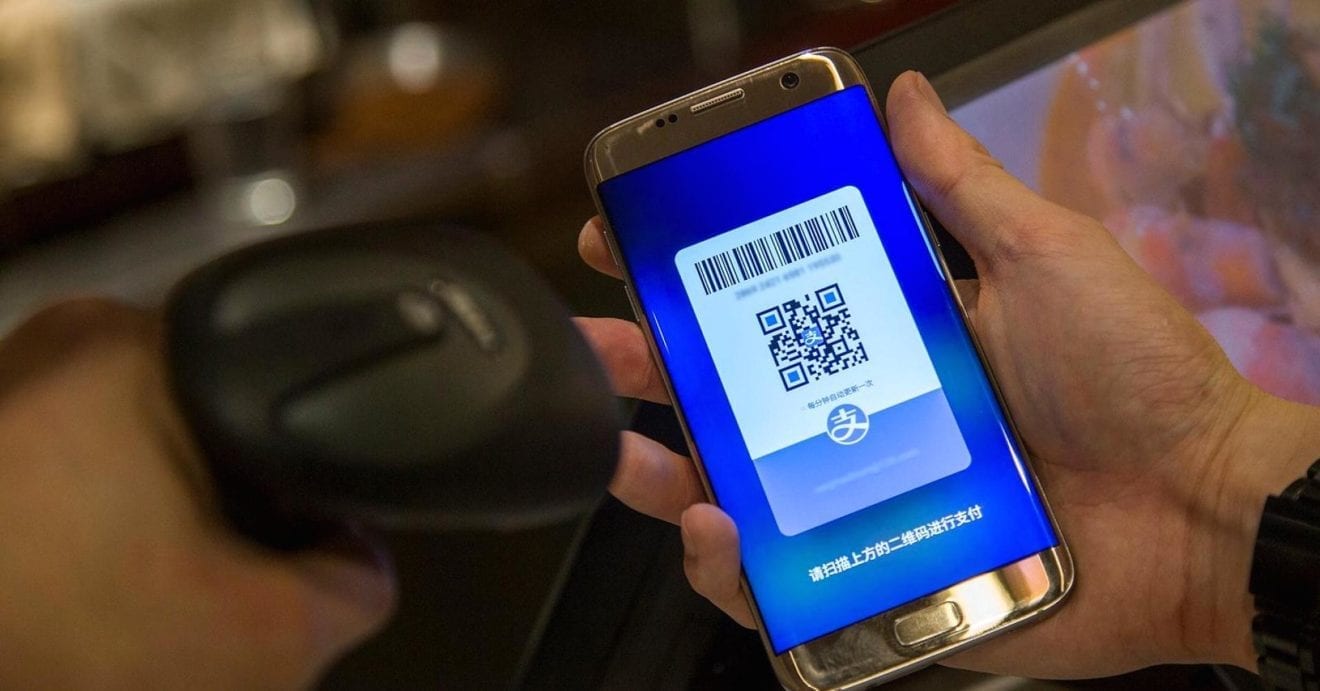
    AirPass is a lifestyle brand backed by Australian fintech startup AirPay Financial Technologies, in partnership with leading Chinese mobile payment provider SwiftPass. The new brand brings China’s most popular ePayment, eStore, eCard, eMarketing and eWallet services to Australia, allowing Chinese tourists, students and migrants to make over the counter purchases by simply scanning a QR code on their smartphone.

    The payment platform can also be integrated into Australian e-commerce websites and mobile apps, taking advantage of AsiaPay’s PayDollar payment gateway. Supporting multiple shopping cart plugins, PayDollar provides a one-stop online payment solution allowing local merchants to accept Alipay, WeChat Pay, Visa, MasterCard, Amex, PayPal and ZipPay

    “AirPass is providing a user-friendly platform for Australian retailers to build their own eStore to facilitate marketing and payment – which is the key to entering the Chinese consumer market,” says SwiftPass Technologies VP Tong Liu.

    Meanwhile, the AirPass app for iOS and Android lets Australian retailers connect directly with Chinese shoppers. AirPass assists Australian retailers and brands with setting up their own WeChat eStore to tap into Chinese social marketing channels. This allows local retailers to sell products via the WeChat ecosystem, reaching new customers in China along with Chinese communities around the globe.

    AirPass’ arrival in Australia comes as Boxing Day saw record high sales to Chinese shoppers across major retailers and shopping centre groups such as Westfield, Chadstone, QVB and Pacific Fair.

    “We are thrilled to announce our regional partnership with SwiftPass and recently launch WeChat Pay and Alipay to Australia’s largest and oldest pearling company Paspaley,” says AirPay Financial Technologies chief executive Jimmy Zhu. “There is huge demand from the market pushing us to deliver more advanced payment and marketing products.”

    Another Australian family-owned luxury retailer, Harrolds recently launched a WeChat Official Account and will soon accept WeChat Pay and Alipay in-store.

    Other luxury brands such as Gucci, Saint Laurent, Bottega Veneta, Balenciaga, Valentino, Mulberry, Givenchy, Off-White, Marais, Furla, Folli Follie and Sneakerboy are also adopting the AirPass platform in order to better reach Chinese shoppers.

  • Indonesia’s BRI Signs Partnership Agreement With Alipay

    Indonesia’s BRI Signs Partnership Agreement With Alipay

    Bank Rakyat Indonesia, Indonesia’s biggest state-owned lender, started the year with key strategic announcements, including an alliance with Chinese payment platform Alipay and plans to acquire a local insurance company and a small lender. BRI signed a memorandum of understanding with Alipay, a subsidiary of Chinese technology giant Alibaba, on Thursday to secure an opportunity to serve the growing number of Chinese tourists visiting Indonesia.

    “As China has its own payment system, we must be able to facilitate their [Chinese tourists’] needs. This move is aimed at supporting the country’s tourism industry,” Handayani, consumer director at BRI, said after an extraordinary shareholder meeting on Thursday.

    He said there are several matters that must still be discussed, including the acquisition of a permit.

    “We are currently integrating the business operation. We are now developing the IT system [for the service],” Handayani said, adding that the payment service will be launched in tourism areas, such as Bali, first.

    About 2 million Chinese tourists visited Indonesia between January and November last year, representing a 14 percent increase from the corresponding period in 2017.

    Insurance Company

    In addition to the partnership with Alipay, the lender has also set aside Rp 1.5 trillion ($105 million) this year to acquire an insurance company focused on covering property damage. BRI currently only has a life insurer, BRI Life.”This year, we want to have an insurance company. We are going to have a complete service in the financial industry,” BRI president director Suprajarto said.

    He said BRI was still observing the market and exploring several candidates before making a choice. The acquisition is slated for completion in the first half of this year, he added.

    Suprajarto said the acquisition of a general insurer would take precedence over the plan to acquire a small lender.

    This is because the Financial Services Authority (OJK) has asked BRI to acquire a lender in the categories BUKU I (banks with core capital below Rp 1 trillion) or BUKU II (banks with core capital between Rp 1 trillion and Rp 5 trillion).

    “It requires a large amount of funding, so we are now focusing on organic growth [instead of acquiring another lender],” Suprajarto said.

    BRI posted Rp 23.5 trillion in net profit in the first nine months of last year, which was 15 percent higher than the same period in 2017, thanks to a 17 percent surge in loan growth to Rp 809 trillion between January and September.

    BRI Appoints Deputy President Director

    BRI also announced the appointment of Sunarso as deputy president director and the dismissal of Jeffry J. Wurangian as commissioner and Kuswiyoto as director of corporate banking.Handayani said the changes were subject to approval by central bank.

  • Chinese QR payments booming

    Chinese QR payments booming

    Nuwemaru Street in Yeon-dong, Jeju City, was known as Baojian street until it was renamed in April. The street had been called Baojian from 2011 when the Chinese pharmaceutical company of the same name sent 12,000 employees to the southern tourist island as a reward.

    Despite the sharp drop of visitors since 2017 – when tensions between the two countries peaked with the deployment of a U.S. missile defense system – it still looks very much like Chinese territory today, with many store signs in Chinese.

    Upon closer examination of the shopfronts, Chinese QR codes are also evident.

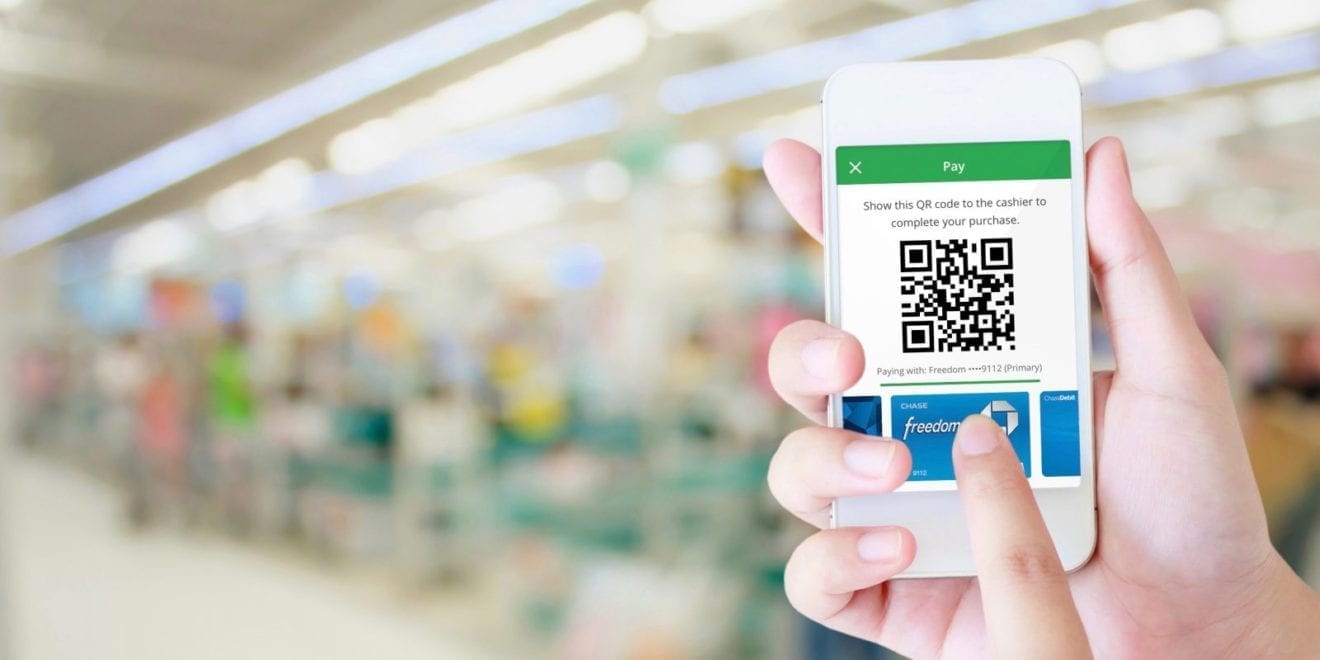
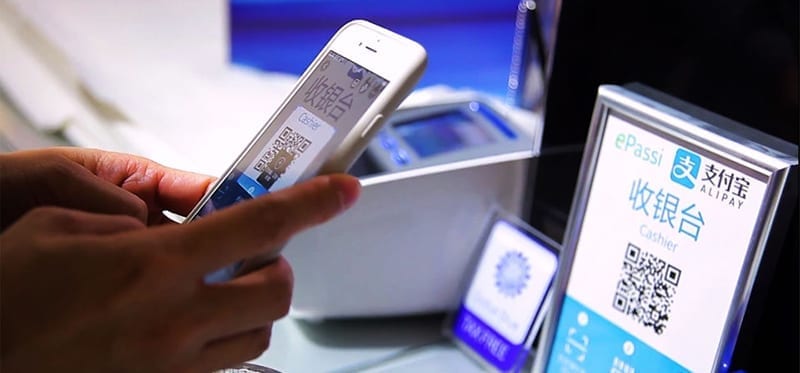
    The QR codes for Chinese mobile payment services have gained popularity on the Korean tourist island over the last couple of years. Even a restaurant selling seollongtang – Korean beef-broth soup – in the middle of the street has a QR code for Chinese mobile payments.

    “Half the Chinese visitors use Alipay or WeChat pay,” said a store clerk of one of the cosmetic stores on the street.

    Currently 1,000 stores on Jeju accept Chinese QR mobile payments. The Jeju government said it was promoting the use of Chinese mobile payments in hopes of attracting more Chinese tourists.

    On Dec. 10, it signed a memorandum of understanding with the China’s Tencent, which operates WeChat, to attract more Chinese visitors to the island.

    One part of the agreement calls for tourism promotions on the WeChat platform, including discount events, while a blog will be run to introduce the island to potential visitors from China.

    The Jeju government and the tech company also agreed to share information on the consumption patterns of Chinese tourists who made payments through WeChat pay.

    Seven top officials from Tencent attended the signing ceremony, including company vice president Zhang Ying. During the ceremony, Zhang said that the only thing he carried with him when coming to Korea was his smartphone, demonstrating that he didn’t need cash or a credit card as long as he had WeChat Pay.

    “Once WeChat Pay is available at traditional markets in Jeju, it will be a great help in promoting traditional Korean culture and goods to Chinese tourists,” said Yoon Chang-ho, head of tourism and marketing at the Jeju government.

    According to convenience store CU, in the first half of 2018 87.2 percent of Chinese tourists used mobile payments when making electronic purchases at CU outlets in Korea. Only 12.8 percent used credit cards. In 2016, 65 percent used credit cards.

    Many institutions are accepting Chinese QR code mobile payments.

    Starting in September, Hanyang University will accept tuition fees via WeChat Pay. The program is being developed with Shinhan Bank. Roughly 900 or so convenience stores and restaurants at train stations in Korea have started accepting WeChat payments.

    One of the reasons Korean businesses are willing to accept mobile phone payment systems is because people tend to spend more when using them. When they buy something by simply waving their phone, they feel as though they are spending less.

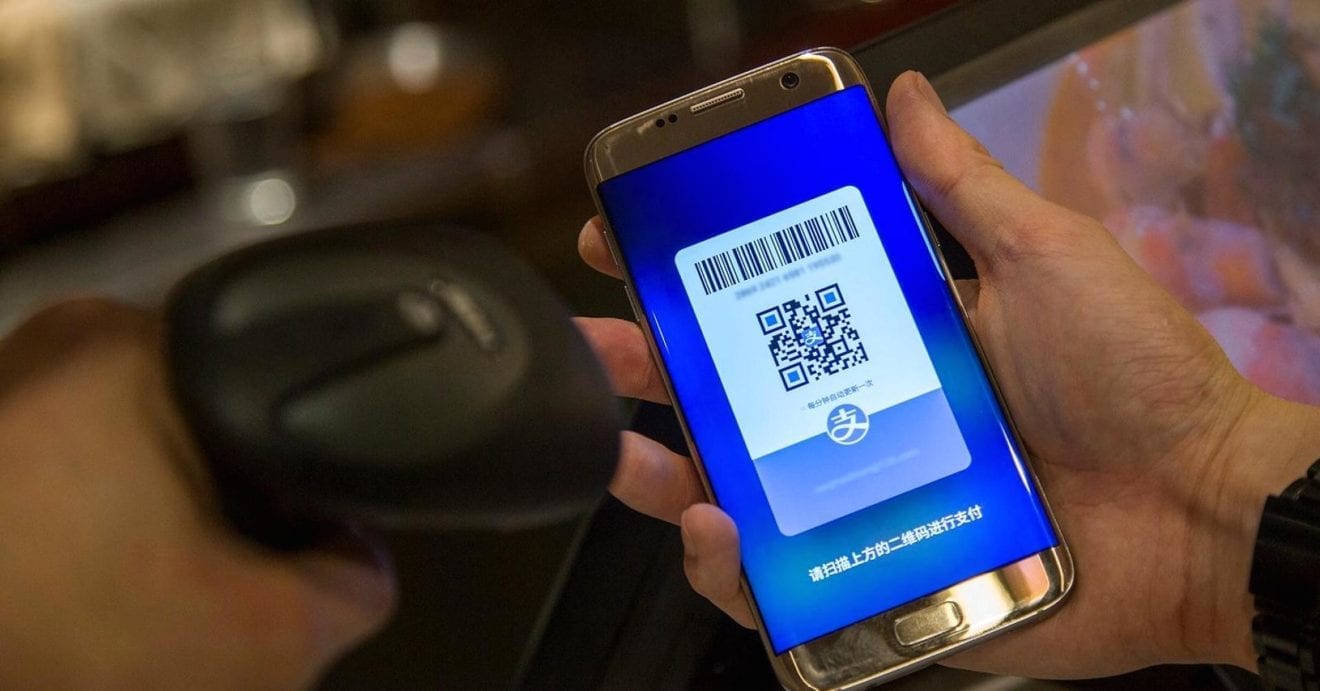
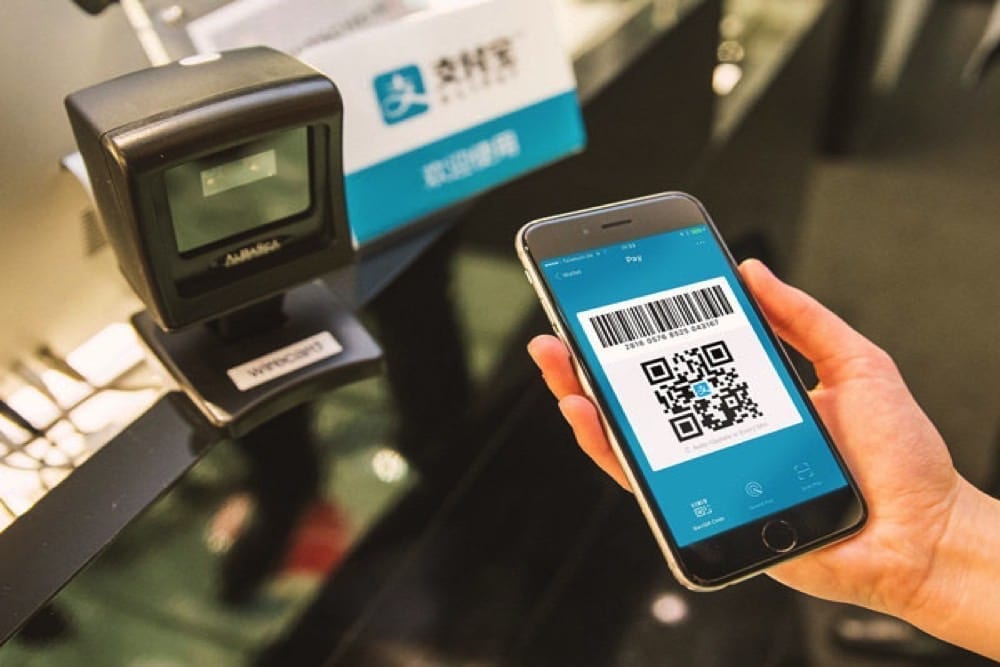
    To make a payment, a customer places the store’s QR code – similar to a bar code – in front of their phone camera for 10 to 20 seconds.

    Chinese QR code mobile payment systems are not only used in Asian countries, such as Korea, Vietnam and Thailand. They are also being used in other places visited by Chinese tourists, such as the United States and Europe. These payment systems are even accepted at Amsterdam Airport Schiphol in the Netherlands.

    Roughly 78 percent of Chinese are said to use these payment systems, while only 21 percent use either credit cards or cash.

    While visiting a small restaurant in China late last year, President Moon Jae-in was surprised at the convenience of QR-code payments.

    One reason the QR-code payment system has rapidly grown in China is the country’s lack of a telecommunication infrastructure needed for credit-card processing. The QR code system doesn’t require a credit card terminal, which makes it cost effective and convenient.

    Although WeChat Pay joined the game late compared to Alibaba, it currently has 40 percent of the Chinese mobile-payment market, while Alipay has 54 percent. WeChat may overtake Alipay because of the popularity of its mobile messenger.

    Not all commercial districts in Korea accept the Chinese mobile payment systems. One such place is Myeong-dong, which attracts huge numbers of Chinese tourists. The street vendors in Myeong-dong only accept cash.

    Some critics question the growth of the Chinese payment systems. One concern is that since the networks are Chinese, it may be hard to track down the payment records, and that could lead to tax evasion.

    A person who has been installing Chinese mobile payment systems for years said this is not true as the payments made in Korean stores are deposited in local accounts, and the Korean stores have to report the payments to the Korean financial authorities.

    Loopholes do exist. If a Chinese company decides to open a branch and use a payment terminal from China, it would bypass the local institutions, making it difficult for Korean authorities to keep track of the payments.

    Because of such problems, the Vietnamese government in June banned the use of Alipay and WeChat Pay. It found that some money spent domestically by tourists did not go through local financial institutions.

    In 2016, the tax evasion question became an issue in Thailand as well. The Thai government at the time found that Chinese businesses were evading taxes through mobile payment systems. Several travel agencies were penalized.

    Some cases have been reported in Korea. In 2016, a plastic surgeon in Nonhyeon-dong, Gangnam, only accepted cash or credit cards from his Chinese patients, and the credit cards were processed using a Chinese terminal. More than 70 percent of the revenue was from Chinese patients. The hospital was found to have evaded more than 10 billion won ($8.9 million) in taxes.

    Overseas customers also present a problem. According to Korea Custom Service, more foreigners are buying goods directly from Korean online shopping malls. In 2013, 67,000 purchases were made in this way, but that figure has surged to more than 7 million.

    Chinese customers were the top purchasers and were especially big on Korean cosmetics. Last year about 2 trillion won worth of Korean cosmetics were purchased directly online by foreign buyers. That’s 10 times the 203.5 billion won worth of cosmetics purchased directly online in 2014.

    With the growing popularity of direct purchases, many online shopping malls have started accepting mobile payment systems. Since 2015, Alipay has been supporting Korean SME exporters in terms of payments and logistics.

    This could result in Korean exporters evading taxes.

    “There is major tax evasion going on with the significant increase of foreigners buying Korean goods directly online thanks to the Korean Wave,” said Lee Hye-hoon, then ruling Saenuri Party lawmaker, during the National Assembly’s audit on the Korean National Tax Service in October 2016. “We need to take action.”

  • Alibaba powers Starbucks virtual store launch in China

    Alibaba powers Starbucks virtual store launch in China

    Starbucks launched its first virtual store in China powered by technology from Alibaba Group, providing a unified, one-stop digital experience across the Starbucks app and mobile apps within the Alibaba ecosystem, including Taobao, Tmall, and Alipay.

    The first-of-its-kind virtual store leverages an online management hub developed specifically for Starbucks by Alibaba. It provides consumers integrated access to Starbucks’ digital offerings, including “Starbucks Delivers,” “Say it with Starbucks” social gifting and merchandise available from Starbucks’ Tmall flagship store.

    Alibaba’s technology streamlines the shopping process, pulling offers that were available in multiple digital apps into a single access point. Adopting a centralized approach to its mobile presence enabled by the Alibaba ecosystem, Starbucks now has a complete overview of its consumers’ actions online. Moreover, the integration of membership between Starbucks and the range of Alibaba apps is expected to fuel strong growth in Starbucks Rewards membership in China.

    The new virtual store steps up the collaboration announced by Alibaba and Starbucks in August 2018, when the companies agreed a deep, strategic “New Retail” partnership. Ele.me, China’s leading on-demand food delivery platform, owned by Alibaba, provides Starbucks delivery service for 2,000 stores across 30 Chinese cities.

    In October 2018, Starbucks also piloted its first “Star Kitchens” within two FRESHIPPO (previously known as Hema) supermarkets in Shanghai and Hangzhou. As the first retail brand to establish a dedicated back-of-house presence in FRESHIPPO locations, each Star Kitchen utilizes the distinct fulfilment and delivery capabilities on-site to complement the handcrafted beverages offered through existing Starbucks stores.

    The launch of Starbucks’ virtual store is also the latest example of how the so-called “Alibaba Operating System” empowering traditional retailers. After years of development in this digital age, Alibaba has created a unique system to support enterprises in the process of digital transformation that covers critical areas such as retail, marketing, finance and logistics.

  • Remodeled M&M’S World Shanghai reopened

    Remodeled M&M’S World Shanghai reopened

    M&Ms World Shanghai reopened yesterday in Shanghai Shimao International Plaza. The newly remodeled 1600sqm interactive store, which offers an immersive, personalised experience with the M&M brand to residents and tourists, remains the only one based in Asia.

    The store is part of the global M&Ms retail business, which includes My M&Ms’ e-commerce sites and a B2B channel in the US and Europe.

    The M&Ms World Shanghai experience store features a “Great Wall of Chocolate” made out of more than 1 million M&Ms, a personalised printer, and a device that scans customers to create a personalised M&Ms avatar. It also features an improved checkout experience that allows mobile payment options from Alipay, WeChat and Apple Pay.

  • El Corte Ingles inked global distribution deal with Alibaba

    El Corte Ingles inked global distribution deal with Alibaba

    Spanish department store operator El Corte Ingles is to open a flagship store on Alibaba’s Tmall as part of a broad collaborative approach to reaching Chinese consumers. In a wide-ranging agreement, El Corte Ingles and Alibaba will enable a raft of Spanish and international brands commonly sold in El Corte Ingles department stores, to be sold worldwide via both AliExpress and Tmall.

    AliExpress will consider opening a number of physical stores at El Corte Ingles shopping centres in Spain to create a unique and engaging shopping experience while promoting some of its latest products available to Spanish shoppers. This follows a trial pop-up store in the El Corte Ingles Sanchinarro shopping centre in Madrid earlier this month during Alibaba’s 11.11 Global Shopping Festival.

    El Corte Ingles and Alibaba say they will also explore closer cooperation in delivery and supply-chain infrastructure and channels, allowing Alibaba to benefit from the Spanish company’s logistics knowledge and capabilities in the country, and explore the use of its distribution centres as collection points for online purchases made through AliExpress.

    Smart payments

    El Corte Ingles signed an agreement with Alibaba’s Alipay in March to bring seamless payment experience to Chinese tourists visiting Spain. This may now be expanded, as El Corte Ingles and Alibaba will work on creating new shopping experiences for Chinese visitors.

    El Corte Ingles CEO Victor del Pozo said the agreement will allow the two companies to combine both the physical and online worlds to offer the best shopping experience to its customers.

    “Together, we are writing the future and placing ourselves at the forefront of trade and technology. El Corte Ingles owns department stores in the best locations of the main cities of Spain and Portugal, and is granted with the confidence and trust of national and international customers. All of this, joined to Alibaba’s technology, will allow us to offer a proposal of unbeatable value.”

    Alibaba Group MD for Italy, Spain, Portugal and Greece, and BDM for Tmall in Europe, Rodrigo Cipriani Foresio, said digital transformation and innovation in all fields are fundamental drivers of Alibaba’s mission of making it easy to do business anywhere, with the ultimate goal of better serving consumers and stakeholders worldwide.

    “Hence, we are confident that the expertise and skills brought by both companies will generate incredible value and opportunities as the cooperation takes shape.”

    El Corte Ingles, which opened in 1940, is Europe’s largest chain of department stores.

  • AlipayHK Appointed QR Code Payment Solution Vendor of MTR

    AlipayHK Appointed QR Code Payment Solution Vendor of MTR

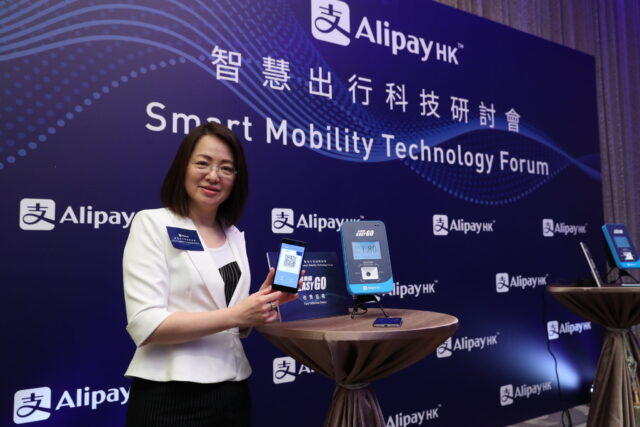
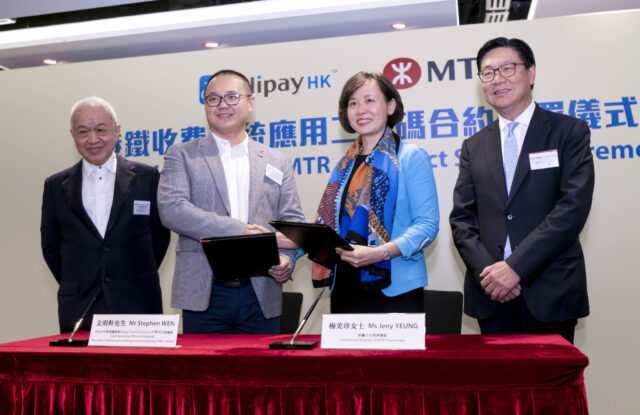
    AlipayHK users will be able to take the MTR by simply tapping their mobile phones at ticket gates at MTR stations starting from mid 2020 as the mobile payment service provider stood out from the many bidding participants and was appointed the QR Code payment solution vendor of MTR on Thursday last week.

    The QR Code solution provided by AlipayHK allows passengers to scan a code in under 0.4 seconds at ticket gates. Furthermore, the QR Code solution will support dual offline solution, so even if internet service is poor or lacking, transactions can be completed to ensure smooth journeys. The plan is to launch the QR Code payment system across  91 MTR stations in 2020. Citizens throughout Hong Kong will be able to enjoy Smart Mobility when commuting on MTR.

    AlipayHK focuses on fulfilling Hong Kong citizens’ needs in shopping, dining, living, and commuting. After its launch into the taxi industry and of the EasyGo technology,, it makes history by hitting another milestone. As Hong Kong people’s number one choice of transport, MTR caters roughly 5.8 million passengers trips every work day. In light of the high volume of passengers, MTR will introduce QR Code as an additional method of payment for passengers.

    Jennifer Tan, CEO of Alipay Payment Service (HK) Limited (APSHK) expressed: “After our collaboration with minibus operators, AlipayHK is thrilled to have won the bid in being MTR’s QR Code payment system provider. Not only is this a recognition in AlipayHK’s technological stability, we feel confident QR Code transit technology will be successfully expanded into more aspects. Commuting via QR Code is the trend for the future. Aside from gradually merging with Hong Kong’s public transports, we will also be exploring smart mobility in outbound travels by entering the most popular travel destinations of Hong Kong people, driving smart mobility across Hong Kong.”

  • Alipay to support China’s micro and small businesses to embrace digitization

    Alipay to support China’s micro and small businesses to embrace digitization

    Alipay has announced that it will launch new initiatives to provide more digital tools, safeguards, loan services and training to further improve efficiencies and support the growth and digitization of small and micro businesses (SMBs) in China.

    SMBs form the cornerstone of Chinese society and create millions of job opportunities. However, shifts in industry models mean that online and offline operations are increasingly merging together and this group has lacked the services and tools needed to improve efficiencies and seize the opportunities from digitization. Aiming to tackle this on-going issue, Alipay, will provide the following support to bolster the development of SMBs in China.

    Ÿ   Provide tools and services to support digital operations, including business analysis, customer engagement, and supply chain services aiming to help 100 million SMBs across China.

    Ÿ   Provide an additional safeguard to SMB owners. SMBs using Alipay services will be offered a maximum of RMB1000 (USD $144) rebate every half year on out-patient services. Alipay expects to extend coverage to 50 million SMBs by the end of 2018 and rebate more than RMB500 million (‪USD $71.8 million) in total.

    Ÿ   Provide MYbank’s loan services to 30 million SMB owners and self-employed people over the next three years.

    Ÿ   In collaboration with 100 start-up entrepreneurs, Ant Financial, the parent company of Alipay, will tailor 100 lessons in corporate development and operations with the aim of training 10 million SMBs and facilitate their digital transformation.

    A great number of SMBs have benefited from Ant Financial’s range of services, including those provided to QR code merchants, who are typically SMBs that use Alipay’s QR code to collect payment from customers. These services include business analysis, financial management, loan and insurance services. Powered by Artificial Intelligence, Ant Financial enables SMB owners to apply for business loans in less than three minutes by smartphone, receive near-instant approval without human intervention. One QR code merchant from Wuhan, for instance, applied for a RMB20,000 (USD $2,874) business loan during Chinese New Year and received approval within one second. In the year ending October 2018, over three million QR code merchants have applied for loans through this service with an average loan size of less than RMB8,000 (USD $1,150).

    AI facilitates the entire process of out-patient benefits offered to QR code merchants, from guiding users to upload their invoices correctly, to identifying key data points on the invoice (such as hospital name and fee amount), to reviewing the information and materials submitted. Ant Financial’s blockchain technology secures the authenticity of the invoices. Tens of millions of QR code merchants have begun to take advantage of this offer with 20,000 merchants on average signing up for the service each day.

  • Alipay will be available in Seoul taxis via kakao pay beginning January 2019

    Alipay will be available in Seoul taxis via kakao pay beginning January 2019

    Following the introduction of QR-code payment in more than 71,000 taxis in Seoul, all taxis in Seoul will accept Alipay beginning in January 2019. Alipay, the world’s largest online and mobile payment platform, operated by Ant Financial Services Group, can be used by Chinese tourists to pay for taxis in Seoul via its strategic partner kakaopay, which acts as system integrator. In the near future, local users will also be able to pay taxi fare via kakaopay.

    Alipay has been collaborating with kakaopay, a Korean mobile payment service, to further promote mobile payment services in the country. Last year, Ant Financial Services Group formed a strategic partnership with kakaopay. Since then, both Alipay and kakaopay have been working to integrate with all partner merchants in Korea. Earlier, Alipay enabled its payment service for taxis in the Pyeongchang and Gangneung areas where the Winter Olympics were hosted in February.

    Presently, Alipay is accepted by taxis in more than 15 countries and regions for Chinese users around the world, including China, Korea, Singapore, Malaysia, the U.S., Italy and Australia. Alipay is now available in more than 90% of taxis in primary and secondary cities in China. In addition, 75% of taxis in Singapore accept Alipay, providing a convenient payment method for Chinese tourists.

  • IFC and Alipay Announce 10×1000 Tech for Inclusion Programme to Inspire Technology Leaders

    IFC and Alipay Announce 10×1000 Tech for Inclusion Programme to Inspire Technology Leaders

    International Financial Corporation (“IFC”), a member of the World Bank Group, and Ant Financial Services Group (“Ant Financial”), the world’s leading tech company and the operator of Alipay, jointly announced the 10×1000 Tech for Inclusion programme at the 2018 Annual Meetings of the International Monetary Fund and the World Bank Group. The initiative will include a comprehensive programme that embraces interactivity and the exchange of ideas to provide training to 10,000 tech experts in emerging markets from both public and private sectors over the next 10 years.

    Alibaba Group founder and Executive Chairman Jack Ma said that the programme aims to build an interactive and open platform to increase support for tech leaders and skilled individuals who are working to alleviate poverty and make basic financial services more broadly accessible in Indonesia, which will be the first stop of the programme within emerging markets.

    “I believe that investing in people is investing for the future. Cultivating talent is one of the most significant things the Alibaba ecosystem can do. My hope is that emerging markets will benefit from the individuals that are nurtured under this new 10×1000 Tech for Inclusion programme and be able to embrace a brighter future through the digital economy,” said Ma, who is an adviser to the Indonesian government steering committee for e-commerce.

    The 10×1000 Tech for Inclusion programme will seek support from local public and private sector partners in emerging markets. A series of Techfin workshops will be held across China and various countries. The workshops will aim to inspire tech leaders and local talent to become “drivers for change” in the digital era, promoting technology inclusion and global sustainability.

    “Technology offers the largest dividend of the digital era bringing unprecedented opportunities for financial inclusion,” said Eric Jing, Executive Chairman and Chief Executive Officer of Ant Financial. “Individuals with talent in technology are the drivers for change who can inspire innovation that will lead to a better collective future. Now is the time for Alipay to share its knowledge and experience in digital financial services to broaden the tech communities and ecosystem within emerging markets.”

    IFC and Ant Financial have partnered on initiatives to extend micro-credits to small- and women-owned businesses in China and over the past year have driven collaboration on inclusive digital finance, green digital finance and business-environment enhancement. In 2016, Ant Financial signed onto the World Bank Group Universal Financial Access 2020 goal and committed to increasing access to financial services for 100 million underserved individuals.

    Philippe Le Houérou, IFC CEO, said, “Digital finance is transforming the financial landscape, creating new markets, empowering consumers and putting banking in the hands of unreached millions worldwide for the first time. The joint programme will further deepen knowledge and create new opportunities for digital financial services to expand financial access and improve lives.”

  • Indonesia Central Bank says Alipay, WeChat non-compliant with e-transaction rules

    Indonesia Central Bank says Alipay, WeChat non-compliant with e-transaction rules

    Bank Indonesia has said that foreign consumer payment applications, like China’s Alipay and WeChat that Chinese tourists reportedly used in Bali, are not approved for local use.

    The central bank said the applications did not comply with regulations, in particular because they did not have a cooperation with local payment systems.

    BI payment system policy executive director Onny Widjanarko said in Jakarta on Thursday that all foreign payment applications, including Alipay and WeChat, were required to comply with Indonesian regulations. “Any payment system should be adjusted to existing regulations,” he said.

    Under the National Payment Gateway (GPN) system, any foreign principles involved in retail transactions are required to cooperate with local switching companies.

    Onny said foreign payment applications must meet two requirements to be approved for conducting transactions in Indonesia: establish cooperation with a local switching company and be connected to major Indonesian banks.

    “So far we have found two cases. The foreign payment apps have cooperated with local switching companies, but they are neither connected to nor are cooperating with Book 4 major banks,” Onny said. He also stressed that all transactions in the country were required to use the rupiah.

    He said BI had halted any transactions made through foreign payment apps that did not have a cooperation with local companies.

    Onny said the central bank would monitor the situation to ensure that all transactions were made through local switching companies in compliance with regulations.

  • CIMB to accept payments from six mobile wallets

    CIMB to accept payments from six mobile wallets

    CIMB Bank Bhd will be accepting Quick Response (QR) Payment from six major mobile wallets at its terminals, enabling it to tap into an estimated customer base of about 4.5 million in Malaysia and 520 million registered mainland Chinese.

    This is the first in the market QR payment acceptance for six mobile wallet systems are accepted on a single terminal. The six mobile wallet partners are Alipay, Touch & Go Digital, Boost, KiplePay, Mcash, and Vcash.

    CIMB has partnered with GHL Systems Bhd, a leading payments company in Malaysia and Asean, to introduce the CIMB’s multi-QR terminal acceptance points for both merchants and customers.

    CIMB Group Consumer Banking CEO Samir Gupta said that this move will not only fulfil its customers and merchants’ needs, but also help develop the cashless payment ecosystem in Malaysia, in support of Bank Negara’s vision in promoting a cashless society.

    “We are delighted to enable CIMB merchants to process multiple QR codes via GHL’s unique single payment facility/gateway. Our multi-channel model is not just convenient but also cost-saving to CIMB’s merchants as multiple QR settlements are streamlined into a single payments provider,” said GHL Group CEO Danny Leong.

    The payment method is already available at certain outlets of House of Leather, NSK and Super Seven.

  • Alibaba invests in clothes sharing platform Ycloset

    Alibaba invests in clothes sharing platform Ycloset

    Alibaba has invested an undisclosed figure in Chinese garment-sharing platform YCloset.

    The site’s strategic fundraising round that secured the Alibaba funding will be used to expand its data analysis functions and physical operations centres.

    The Beijing-based service allows users to rent clothes and accessories for a monthly subscription fee. It has more than 15 million registered users and provides a range of subscription plans and options to purchase garments.

    YCloset CEO Liu Mengyuan said wearing fashionable clothes will “always top the agenda of almost every woman”.

    “Compared with buying items in a store, clothes rental services will allow women to update their looks more frequently and wear more dresses that they could not afford to buy.”

    He added that the company will cooperate with a number of e-commerce platforms including Xianyu, Taobao, Tmall and Alipay.

    Alibaba Innovation Ventures was among the investors who raised $50 million for YCloset last year in a series C fundraising round.

  • Alipay blooms outside Mainland China

    Alipay blooms outside Mainland China

    Alibaba’s Alipay payments outside Mainland China has skyrocketed during the country’s holiday season.

    According to Ant Financial, during July and August of this year, Alipay processed 2.6 times the number of in-store overseas transactions as it did during the same period last year.

    And while Asian countries topped the rankings, double-digit transaction-volume growth was recorded in countries in northern and western Europe, including Denmark, Luxembourg, Norway, Sweden and Switzerland.  The number of Alipay transactions in Russia increased by more than 5000 per cent, as Chinese travellers flocked to the host country of this year’s FIFA World Cup.

    In rankings for transaction volumes, Hong Kong overtook Thailand to take top spot, Australia and Singapore overtook Taiwan; and and Malaysia overtook the US.

    Top 10 overseas markets for Alipay Transaction Volumes July-August

    1 Hong Kong

    2 Thailand

    3 South Korea

    4 Japan

    5 Macau

    6 Australia

    7 Singapore

    8 Taiwan

    9 Malaysia

    10 USA

    Top 10 countries by Alipay transaction volume growth

    (Based on Summer 2018 vs. Summer 2017)

    1 Russia 50x

    2 Luxembourg 39x

    3 Switzerland 18x

    4 Cambodia 14x

    5 Sweden 12x

    6 Norway 11x

    7 Greece 7x

    8 Canada 7x

    9 Malaysia 5x

    10 Portugal 5x

    Average total spending per user increased 43 per cent to RMB2955 (US$432) from last year’s RMB2073 (US$303). The average total spending per user was highest in France (RMB11,386 or US$1666), followed by South Korea and Denmark. European countries accounted for more than half of the Top 10 countries in terms of average total spending per user.

    Top 10 countries by average total spending per user

    1 France

    2 South Korea

    3 Denmark

    4 Italy

    5 UAE

    6 Greece

    7 Spain

    8 Australia

    9 UK

    10 Japan

    Those born in the 1970s, 1980s and 1990s accounted for 85 per cent of all those who used Alipay overseas during the summer months of 2018.

  • Ele.me big ambition ready to dominate China’s food-delivery market

    Ele.me big ambition ready to dominate China’s food-delivery market

    Ele.me aims to grab a majority share of China’s food-delivery market in the near future, CEO Wang Lai, (pictured), said this week.

    Moving into Alibaba’s ecosystem has already created new and immediate opportunities for Ele.me and the 3 million-strong delivery force registered through its platform, Wang said. While core food delivery is likely to provide strong growth longer-term, insights offered by various Alibaba apps and platforms, coupled with a growing need for last-mile delivery in Alibaba’s overall New Retail strategy, offer hints of what’s to come.

    Alibaba took control of Ele.me in May. In June, after plugging the delivery company into its ecosystem, Ele.me delivery orders for categories including supermarkets, convenience stores under Alibaba’s Ling Shou Tong program, fresh fruits and flowers climbed 110 per cent from a year earlier. In the future, Wang said there’s the chance for tie-ups with other Alibaba business units and collaboration with nationwide food chains as a delivery partner.

    Ele.me has already begun benefiting from consumer insights derived from Taobao, Tmall, Alipay, Youku and other platforms and apps in the Alibaba ecosystem, which drives traffic to Ele.me and helps it understand the needs of Chinese consumers.

    As for Ele.me’s core food-delivery market, the Alibaba unit recently launched a RMB3 billion summer promotion campaign that’s already starting to show results in several Chinese cities. In Hangzhou, Ele.me added 100,000 customers to its membership program early this month. In Changsha, during just the first two weeks of July, gross transaction volume climbed by almost 15 per cent over the same period in the previous month.

    The summer campaign kicked off with discounts and coupons for late-night snacks delivered during the recently ended FIFA World Cup 2018 tournament. The World Cup deals spurred what Ele.me said was a “rapid rise in food delivery” in early July, with momentum sustained since then.

    But it is the sector’s longer-term prospects that excite Ele.me’s CEO. Chinese customers spent around RMB4 trillion on food in 2017, according to China Cuisine Association data. Less than 10 per cent of that went toward food delivery, which has become one of the fastest-growing and most-competitive areas in China.

    “We view the limited penetration of delivery in the food and beverage sector to-date as a tremendous opportunity for growth,” Wang said.

    Ele.me also complements Koubei, Alibaba’s local services platform. By combining Ele.me’s on-demand delivery service with Koubei’s consumer-acquisition and in-store engagement capability for restaurants and service establishments, Alibaba can offer an integrated online/offline experience to consumers, in line with the group’s overall New Retail strategy.

    “The local-services market is a must-win for Alibaba as part of its New Retail strategy, and we look forward to Alibaba’s continued financial and technological support to win this market,” said Wang. “As the spending power of Chinese shoppers continues to grow, the local-services sector becomes critical for Alibaba to build customer and merchant engagement and fulfill its mission of accelerating the digital transformation of traditional retail.”