Tag: Alipay

  • Alibaba to thank New Retail for Its record sales

    Alibaba to thank New Retail for Its record sales

    Continuing momentum in Alibaba Group’s New Retail business helped drive a 56 per cent year-on-year growth in sales for the quarter to December 31.

    The performance of the New Retail category – which combines its online (non-marketplace) and fast-growing offline retail businesses, including investments in Sun Art Retail and other established businesses – was a core highlight of the quarter, according to CEO Daniel Zhang.

    “Alibaba had another great quarter driven by the continued strength of the Chinese consumer and the wide and innovative range of services we provide for merchants and consumers,” he said.

    “We are excited by the continued momentum in New Retail, which came to life during another record-breaking 11.11 Global Shopping Festival. We expanded the scale and footprint of our New Retail initiatives with the vision of delivering true convergence of the online and offline consumer experience through mobile and enterprise technology.”

    Maggie Wu, CFO, said the group’s core business generated significant free cash flow of US$7.1 billion during the quarter, “enabling us to invest in New Retail, cloud computing, digital entertainment and globalisation”.

    Revenue from core online commerce (marketplace) activities rose 57 per cent to US$11.257 billion and from cloud computing by 104 per cent to $553 million. Digital media and entertainment sales rose 33 per cent to $832 million.

    The number of annual active consumers on Alibaba Group’s China retail marketplaces reached 515 million, an increase of 27 million from the year to September 30.

    Net income was $3.586 billion with operating margin was 31 per cent and adjusted EBITA margin for the core e-commerce business 53 per cent.

    Group highlights

    Alibaba summarised group highlights in its earnings statement, including:

    Taobao: Artificial Intelligence (AI) drove user engagement, with the Taobao app’s intelligent personal recommendations and innovative content formats continuing to drive strong growth in user engagement, conversion and annual active consumers. “We continue to invest in machine learning technologies which we apply to use cases that match consumer intent and product selection to deliver the best consumer experience.”

    Tmall: Tmall recorded 43 per cent year-on-year growth in physical goods GMV during the quarter, reflecting robust growth across all major categories including apparel and accessories, consumer electronics (mobile phones) and FMCG. “Tmall continues to be the platform of choice for the world’s top brands, with Givenchy, Giorgio Armani Beauty and Volvo establishing Tmall flagship stores and Longines, Hennessy, Dom Perignon and Baccarat joining our Luxury Pavilion in this quarter.”

    11.11: Last year’s annual November 11 Global Shopping Festival exceeded the previous year’s records, with GMV settled through Alipay on Alibaba’s marketplaces up 39 per cent year-on-year to $25.9 billion. “The continuous success of this record-breaking event is enabled by our resilient and scalable technology, as well as payments and logistics infrastructure that is capable of operating at massive scale.”

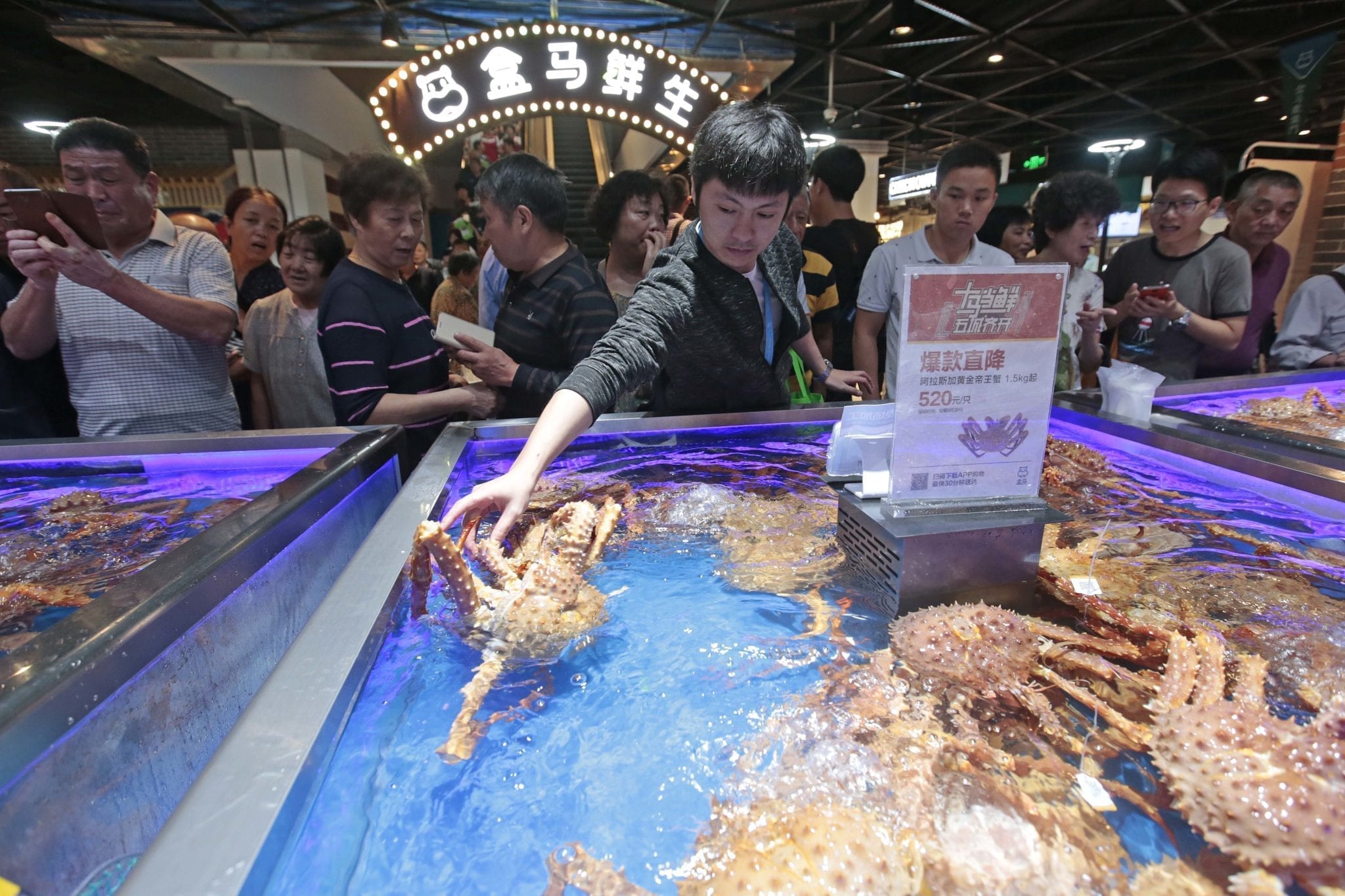
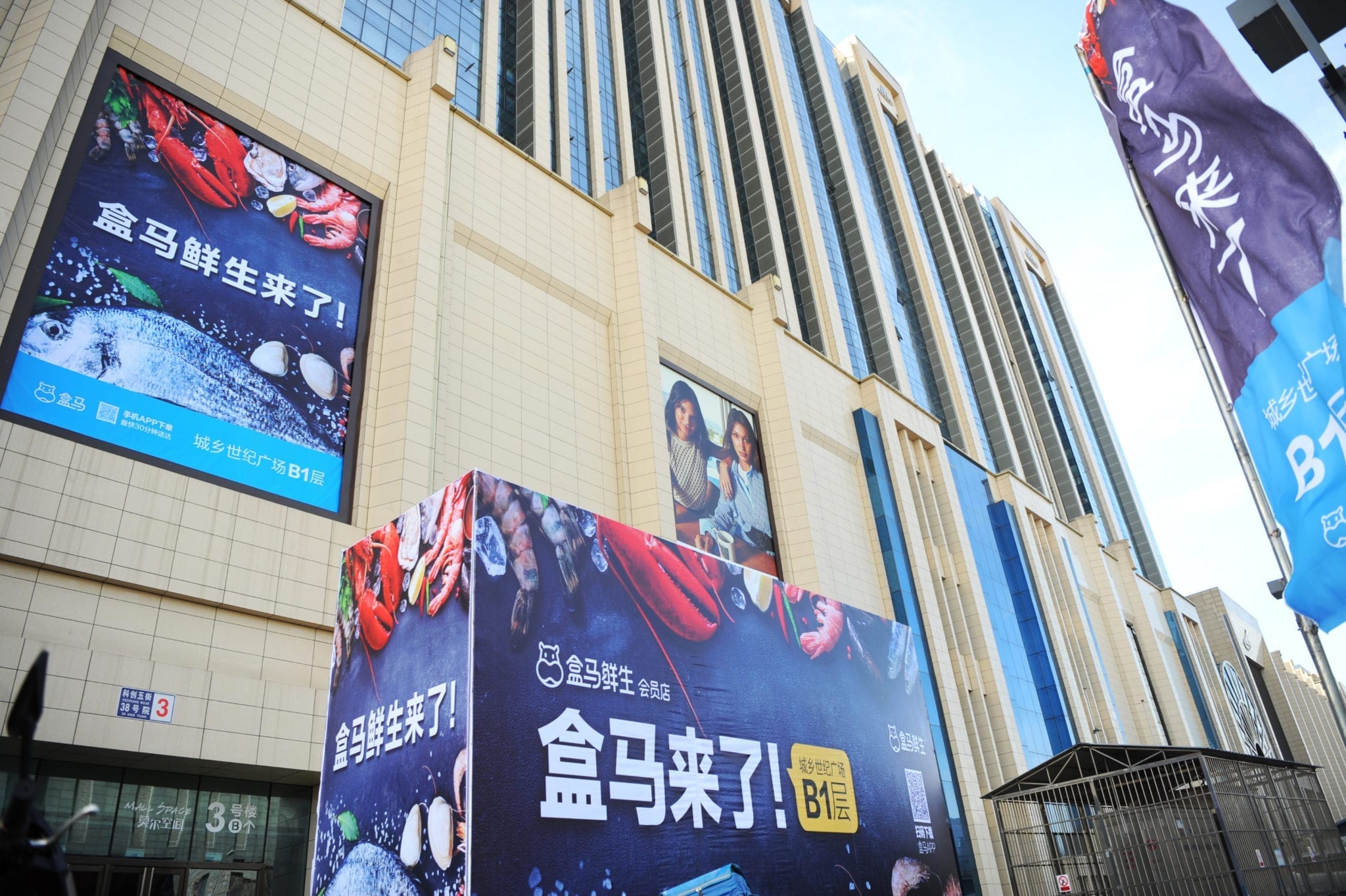
    New Retail: Rapid expansion through partnerships and innovative technologies included the opening of five new Hema fresh grocery stores in Shanghai, Beijing, Ningbo and Suzhou, taking the network to 25 at year end. “Hema exemplifies the convergence of online and offline retail by leveraging our in-store proprietary technology, digitised supply chain system, consumer insights and mobile ecosystem to provide a seamless experience for consumers.”

    In November, Alibaba formed a strategic alliance with Sun Art Group, the leading hypermarket and supermarket chain by revenue in China with over 440 stores nationwide. “Through this partnership, we aim to equip traditional retailers with our proprietary technology and know-how in online offline convergence to implement their digital transformation. In addition, the partnership with Sun Art will also enable us to accelerate the expansion of our New Retail offerings with national scale.

    International:  Alibaba’s cross-border and international retail businesses continue to show strong growth. Revenue from international commerce retail business reached $727 million in the, representing 93 per cent year-on-year growth, driven by its Southeast Asian platform Lazada and its global retail marketplace AliExpress. “While the markets for Southeast Asia and cross-border commerce remain very competitive, they are in the early innings of the game. We are optimistic about the long-term secular growth prospects of our international markets and will therefore continue to make significant investments for market share growth and focusing on the best customer experience.”

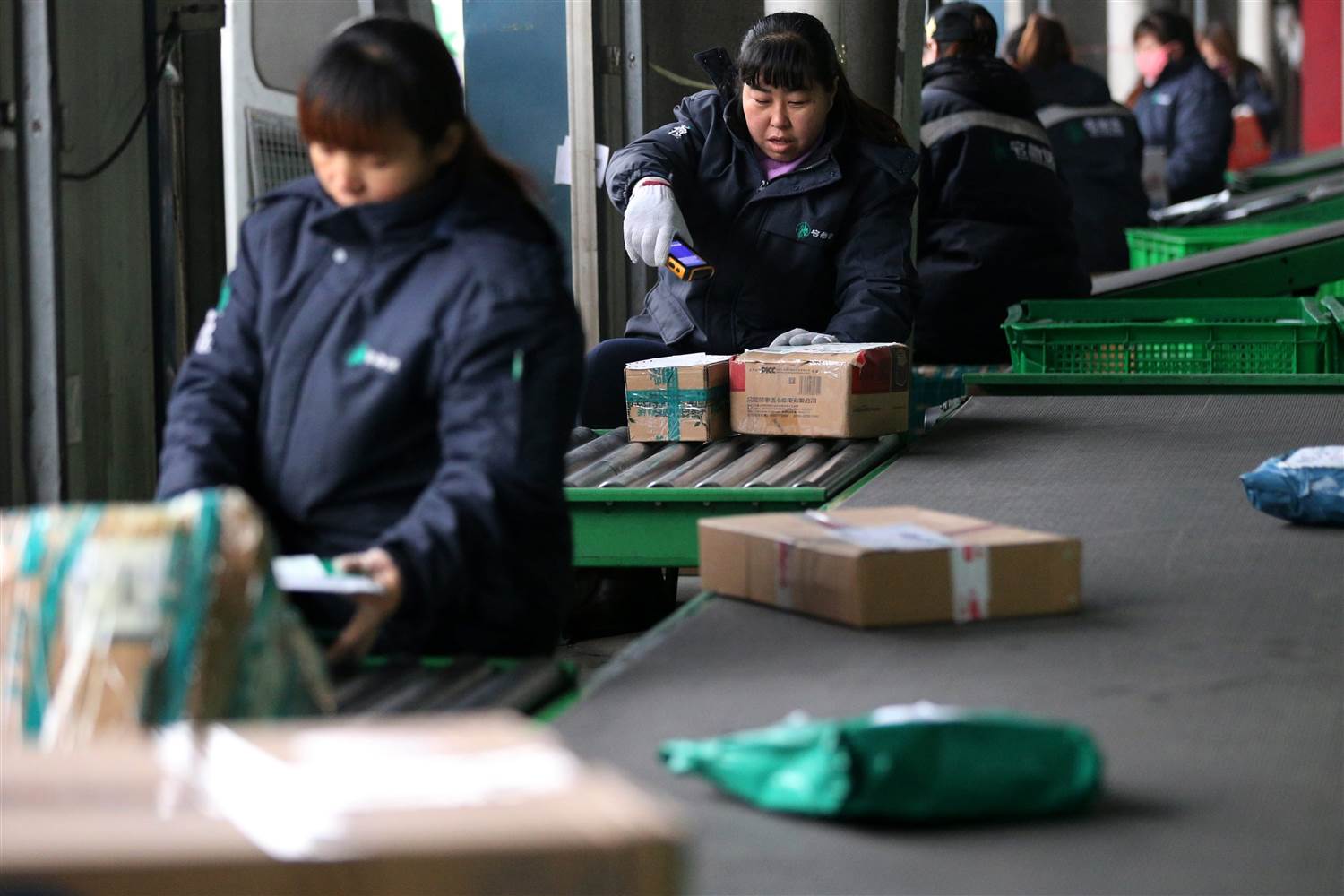
    Cainiao Network: Alibaba’s logistics division, Cainiao Network, processed 812 million orders during the 11.11 event. Cainiao Network operates an electronic shipping label system that standardises shipping data into structured formats, which enables efficient pick-and-pack operations for merchants and sorting and routing operations for delivery partners. “The advantages of this system have resulted in broad adoption by merchants and logistics service providers, both on and off our platforms, putting us in position to serve the growing consumption economy in China and roll out our New Retail strategy.”

    Cloud Computing:  Cloud computing revenue grew 104 per cent year-over-year to $553 million, driven by both robust growth in paying customers and revenue mix toward higher value-add product.  “In the December quarter, Alibaba Cloud launched 396 new products and features and continued to introduce proprietary AI technologies to tackle real-world challenges, such as traffic planning and optimising efficiency in manufacturing and airport operations. Alibaba Cloud continues to expand its customer base across a variety of industries.”

    Alibaba Cloud customers include Watsons China, carmaker Geely, and Beijing Capital International Airport.

    Digital Media and Entertainment: During the quarter, Youku video’s daily average subscribers more than doubled year-on-year, driven by several original drama series and shows that became popular hits with users.

    AI and innovation: Alibaba says its AI-powered voice assistant, Tmall Genie, surpassed 1 million unit sales since its official launch in July and the end of the year. “Tmall Genie is supported by a growing collection of sales and services and is an effective vehicle for offering a comprehensive set of every-day living applications within the Alibaba ecosystem,” the company said.

    In January, Alibaba’s Institute of Data Science Technologies (iDST), its AI research arm, developed a deep-learning neural network for natural language processing that scored higher than humans on a Stanford reading-comprehension test, the first time a machine has outperformed humans on such a test. “This development underscores Alibaba’s commitment to technology research which we believe builds the foundation for our growth in the long run.”

    Ant Financial: Alibaba Group agreed to take a 33 per cent equity stake in Ant Financial that will strengthen its strategic relationship pursuant to the series of agreements reached with Ant Financial in 2014. “We believe deepening our relationship through an equity stake in Ant Financial will bring key strategic benefits to us, including advancing our New Retail strategy with mobile payments, increasing user acquisition and retention through collaboration with the Alipay digital wallet (Alipay Wallet), and enhancing the execution of our international expansion.”

    The number of Alipay Wallet’s daily active users more than doubled during the quarter on a year-on-year basis.

  • Finland becomes the first country to offer Chinese travelers a completely cashless experience

    Finland becomes the first country to offer Chinese travelers a completely cashless experience

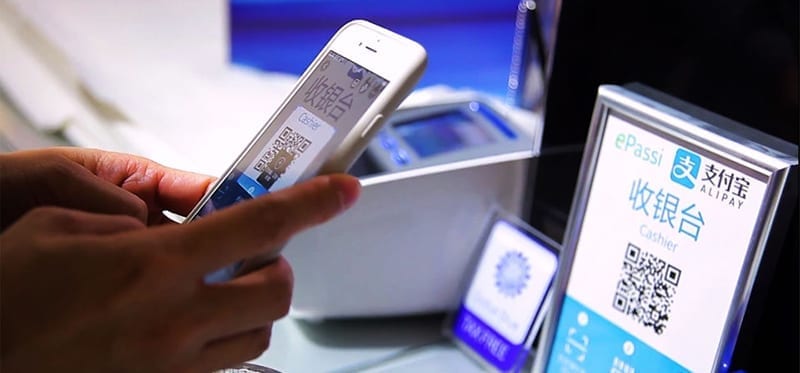
    Alipay, the world’s largest mobile payment and lifestyle platform, operated by Ant Financial Services Group, today announced that a group of Chinese travelers have concluded the first ever cashless journey to Finland, with all transactions throughout their trip made via their Alipay accounts. From booking flights, making local retail purchases in Helsinki, and dining out, to visiting museums, experiencing recreational activities, and managing transportation, as well as receiving an instant tax refund at the airport, Finland becomes the first country outside China where Alipay users can make all payments with their smartphones, and enjoy their trip without worrying about cash and language barriers, just as they would at home in China.

    To encourage future seamless, cashless journeys, Alipay has also teamed up with Lähitaksi, one of Finland’s major taxi companies. Alipay will be made available on all 1,250 Lähitaksi taxis in Helsinki and the city’s surrounding towns before the Chinese Lunar New Year holidays later this month.

    “More and more Chinese travelers have been asking whether our taxis accept Alipay, which is why we decided to launch this payment method and provide our Chinese passengers a better experience during their time in Helsinki,” said Heidi Säynäjoki, Marketing Manager of LähiTaksi. Since 2017, Alipay has also been made available at the Airport Taxi in Helsinki and in taxis and buses operated by local taxi company Santa Line across Finland’s northernmost region, Lapland.

    The group of eight Chinese tourists who visited Finland were selected from an online social media campaign initiated by Alipay at the end of 2017. The selected group commenced on a 6-day trip, visiting the cities of Rovaniemi and Helsinki in mid-January to experience the cashless journey, flying Finnair and staying in Nova Skyland Hotel in Rovaniemi and IHG’s Holiday Inn Helsinki’s City Centre, leveraging Alipay’s in-app outbound tourism service platform to find nearby merchants, collect coupons and enjoy exclusive offers. All the merchants accept Alipay for online reservation and onsite spending. Finnair became the first airline in the world to accept mobile payments for in-flight purchases when it began accepting Alipay on flights between Helsinki and Shanghai in January 2017.

    Zoe Cai, 28, a housewife and frequent overseas tourist from Guangdong Province, said, “I didn’t expect us to be able to use Alipay almost everywhere in Finland. I brought some cash with me, but the only place I got to use it was in a supermarket in Rovaniemi. At first, we were surprised when so many merchants accepted Alipay, but after this experience, we may be surprised if a merchant doesn’t accept Alipay when we travel next time.”

    Retail shops in popular overseas destinations have benefited from the rise of China’s middle-class over the last decade. An increase in disposal income has led to a greater interest to travel abroad, where Chinese tourists enjoy experiencing different cultures, exotic cuisines and new adventures. Alipay has now become a must-have tool for overseas merchants to provide Chinese tourists with a seamless traveling experience.

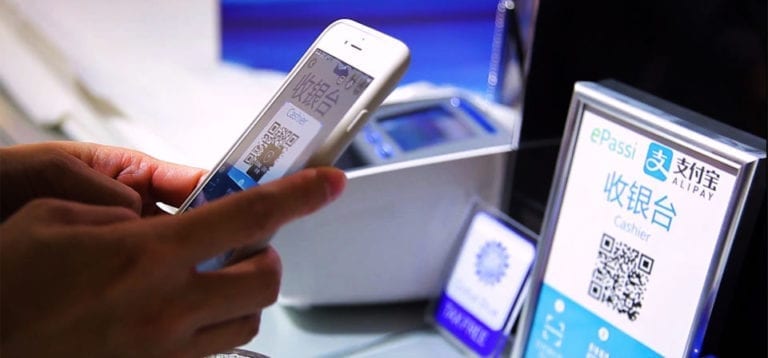
    Paavo Virkkunen, Executive Vice President of Finland’s national tourism board Visit Finland, said, “Alipay was first made available in Finland in December 2016. I am glad to see it is widely accepted among Finnish merchants today, and it demonstrates Finland’s commitment to ensure that Chinese visitors leave our country with an unforgettable experience.” Official statistics of Visit Finland show that China is Finland’s fifth largest source of tourist arrivals. ePassi is Alipay’s local partner in providing tailor-made solutions for various types of Finnish merchants to accept Alipay across the country.

    Alipay is focused on upgrading the overseas Chinese travelers’ experience throughout their visit, enabling a cashless journey via mobile payment, thus omitting language and currency barriers. It offers Chinese consumers their most preferred payment method and offers greater convenience during their travels, particularly when making transactions with overseas bricks-and-mortar merchants. Alipay is now accepted by merchants across 38 countries and regions who connect with travelers via the Alipay marketing platform and accept payments in stores and online.

  • Alipay partners Global Tax Free to roll out tax refund service in Singapore

    Alipay partners Global Tax Free to roll out tax refund service in Singapore

    Alipay, the world’s largest mobile and online payment platform operated by Ant Financial Services Group, along with Global Tax Free today announced that Chinese travelers visiting Singapore can now have tax refunds deposited directly into their Alipay accounts after completing all procedures at the airport. Singapore is the first country in Southeast Asia to offer this service to Chinese tourists.

    The move follows the signing of a memorandum of understanding (MoU) between Alipay and Global Tax Free (GTF) last September.

    “The Singapore Tourism Board (STB) is pleased to support the launch of Alipay as an additional mode of refund beyond cash and credit card. This will offer Chinese shoppers, who are frequent users of digital payment systems, a more seamless and enjoyable shopping experience in Singapore,” said Ms Ranita Sundra, Director, Attractions, Dining & Retail, STB.

    The new tax refund service is easy to use (see image below) and offers a shorter waiting time over credit card refund, which requires a lead time of up to 10 days. Through Alipay, Chinese shoppers can now enjoy a faster and more seamless refund process, as they can get their refunds in Chinese Yuan credited into their Alipay accounts immediately after completing the necessary procedures at the airport. Alipay also offers a strong and favourable exchange rate that further enhances the overall shopping experience for Chinese visitors in Singapore.

    China is one of Singapore’s key markets for tourism. Based on statistics published by the Singapore Tourism Board, 2.86 million Chinese travelers that visited the nation in 2016 accounted for S$3.5 billion in Tourism Receipts, of which 43% was contributed by shopping.

    Alipay has rolled out the tax refund service in 20 countries worldwide, including South Korea and Germany. Singapore is the first country in Southeast Asia to implement the Alipay tax refund scheme.

  • Alibaba’s Hema supermarket chain to open more stores

    Alibaba’s Hema supermarket chain to open more stores

    Alibaba’s Hema supermarket says it will open three stores in the Chinese city of Xian by the end of this year.

    The offline supermarket’s expansion into the northwestern Chinese city follows an announcement that it will add 30 locations in Beijing by year-end, rapidly expanding its store count in the capital to 35 from the current five.

    The Beijing and Xian expansion, together, more than doubles Hema’s presence – currently 26 stores in seven Chinese cities, including 14 in Shanghai, five in Beijing, two in Ningpo, two in Hangzhou, and one each in Shenzhen, Suzhou and the Southwest city of Guiyang.

    Launched in March 2015, the ‘new retail’-driven supermarket is the purest manifestation of Alibaba’s ambitions to marry online with offline, offering consumers a “more-efficient and flexible” shopping experience.

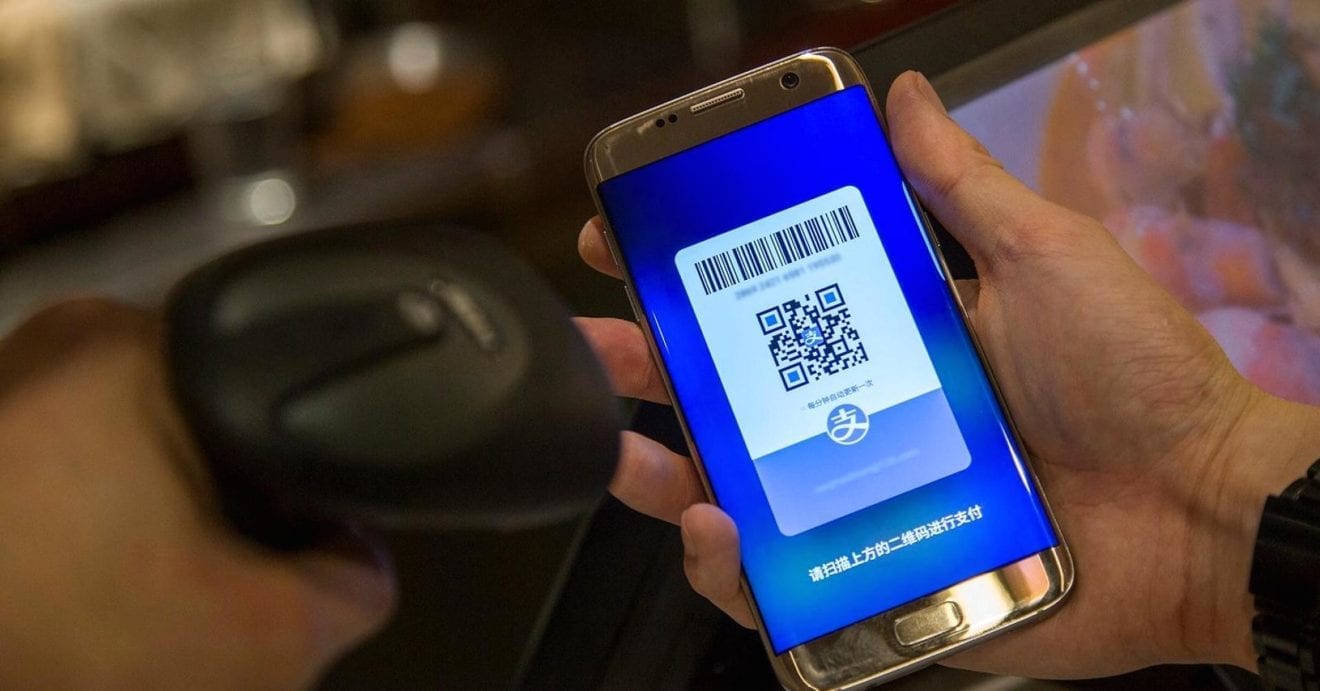
    It starts with a mobile app that allows for researching of products while consumers browse the store. All payments are handled through Alipay, the mobile-payments platform owned by Alibaba’s related company Ant Financial. To improve consumers’ experience, the data collected from transactions is used to personalise recommendations, while geographic data helps to plan the most efficient delivery routes. Residents living within a 3km radius of a Hema store can have their groceries delivered to their doors as quickly as 30 minutes after ordering.

    Government partnership

    Expanding Alibaba’s Hema supermarket in Xian is part of a series of pacts Alibaba Group signed with the city government on Tuesday, including a memorandum of understanding for Alibaba’s new Silk Road headquarters, which the company will build in the city in the next few years. The two parties signed a total of 11 strategic partnership agreements spanning cloud computing, smart logistics, New Retail and financial services.

    Tianhua Zhong, vice president of Alibaba Group, said the partnership with the city government has been progressing smoothly since talks began last summer, adding that the next stage of collaboration will focus on five areas: e-commerce and new retail, City Brain projects, accessible financial services, smart logistics and culture and entertainment.al

    In addition to being the historic gateway to the Silk Road, “Xian is an important part of the ‘Belt and Road’ initiative, and building our Silk Road headquarters [in the city] will help to expand Alibaba’s reach in the midwest, in addition to economic zones along the [modern-day] Silk Road,” added Zhong.

    The Belt and Road Initiative, announced by Chinese President Xi Jinping in 2013, is an ambitious, US$90-billion infrastructure project to connect Asia, the Middle East, Europe, and Africa through global trade.

    Earlier this year, Xian became the first city in China to have its entire subway system accept mobile payments via Alipay – passengers can pass through subway gates simply by scanning a QR code. Upcoming collaboration projects with Ant Financial, Alibaba’s related company and operator of Alipay, include allowing cabs throughout the city to receive payments using the digital wallet, as well as providing accessible credit and financing options to the thousands of small and midsized businesses based in Xian.

    “With this agreement, Cainiao will work with Xian City to build a smart logistics hub for the northwestern region, which would serve the needs of the Belt and Road Initiative. Delivery speed in the midwest has a chance of becoming on par with eastern regions,” said Zhong.

    Alibaba’s logistics arm, Cainiao Network, is expected to invest RMB1 billion in the logistics hub, which would house the unit’s cutting-edge technologies such as automated production lines, AGV robots and robotic arms. Constructions are slated to begin this year and to be put into use before the 11.11 Global Shopping Festival comes around in 2019.

  • Malaysia sees mobile commerce boom as mobile payments become widely available

    Malaysia sees mobile commerce boom as mobile payments become widely available

    Malaysian people’s love for mobile shopping has led to more transactions generated on mobile platforms.

    The data compiled from Malaysia’s three major online marketplaces — Lazada, 11street and Shopee — revealed that 70 percent of the online transactions on Single’s Day and MyCyber sales were done through mobile devices, said iPay88, a leading regional payment gateway provider in South East Asia.

    MOBILE USERS GROWING

    “Mobile users are growing faster than our anticipation, we expect the momentum to continue,” Ipay 88’s executive director and co-founder Chan Kok Long told Xinhua in a recent interview.

    According to Malaysian Central Bank, there are 42.8 million mobile phone subscriptions in Malaysia currently. Meanwhile, smartphone penetration stands at 70 percent and it is expected to increase.

    In view of the growing mobile phone user base and more friendly mobile applications, Chan said the transactions generated on mobile platform will account for 60 percent of the total before climbing to 70 percent in the next two years. Last year, the ratio stood at 50 percent, he said.

    MOBILE PAYMENTS’ CONTRIBUTION

    Another key driver is the introduction of mobile payment, which several banks are looking to launch Quick Response (QR) code-wallets that enable payment to be done in an easier way.

    IPay88 is currently the payment gateway market leader in Malaysia, accounting for 60 percent of Malaysia’s online payments system transaction.

    Chan also believed the two major Chinese online payment companies — Alipay and WeChat Pay — making their ways into Malaysia e-payment segment, could potentially double the online transactions.

    “When you see m-commerce growing tremendously, the next thing will be mobile-wallets. It is no doubt that they (the two Chinese players) will contribute a lot to the online transactions in Malaysia going forward,” said Chan.

    Cited Alipay as an example, he said, the retail transaction volume has grown robustly since it was launched four months ago.

    “Although Alipay is new in Malaysia, the growth potential is tremendous because of the increasing Chinese tourists in Malaysia,” Chan said, adding that more Malaysian retailers have to adopt the payment system as they are also afraid of losing competitiveness in dealing with Chinese tourists.

    Chan also sees great potential from WeChat Pay, which will be unveiled in Malaysia next year, as it has 20 million WeChat holders in Malaysia and 600 million active users in China.

    Earlier this year, Alipay, a unit of Alibaba affiliate Ant Financial, has inked agreements with Malaysian banks for the rollout of its service this year.

    Its competitor, WeChat Pay by Tencent Group, was then granted an e-payment license in Malaysia and planned to unveil its service in early 2018. Since then, it has secured Hong Leong Bank as its partner for the service.

    The payment gateway provider that has presence in other Southeast Asian countries, also sees Malaysia ahead its peers in embracing cashless payment.

    This is due to Malaysia’s strategic position with decent population and better infrastructure, in addition to the Malaysian government’s encouraging policies, Chan said.

    “Malaysians are more ready than its counterparts in the Association of Southeast Asian Nations, also because of the Alibaba-led Digital Free Trade Zone, which is expected to drive the country’s e-economy,” Chan said.

  • Alipay Launches “Double 12” Global Shopping Festival in Hong Kong

    Alipay Launches “Double 12” Global Shopping Festival in Hong Kong

    Alipay, the world’s largest online, mobile payment and lifestyle platform operated by Ant Financial Services Group, today launched this year’s “Double 12” Global Shopping Festival in 15 countries spanning across four continents. In addition, Ant Financial’s strategic partners in Hong Kong, India, Thailand and the Philippines will introduce campaigns for their local e-wallet users for the first time. These partners include Paytm in India, TrueMoney in Thailand, and GCash in the Philippines. Together with CK Hutchison Holdings (“CK Hutchison), AlipayHK was launched in Hong Kong earlier this year to further develop local service offerings in the city.

    In short, we call it ‘glocalization.’” Douglas Feagin, President of International Business, Ant Financial Services Group said at the launch ceremony. “This concept is about developing Alipay globally while also developing localized service offerings.”

    “Working with our global merchants network, we also continue to focus on enhancing the Alipay mobile payment experience for Mainland Chinese tourists wherever they travel,” he added. “In particular, some of our most attractive Double 12 promotions are in the Greater Bay Area, where millions of Chinese travellers regularly visit.”

    As part of this year’s Double 12 Shopping Festival, almost 10,000 merchants in Hong Kong and Macau will offer exclusive discounts throughout December to Alipay users from Mainland China. This year, a key feature of this year’s Double 12 offering is focused on Hong Kong delicacies to attract Mainland China users. In Hong Kong’s Mongkok district, a promotion of “Hong Kong snacks for 1 RMB” can be enjoyed by Alipay users. In the Guangdong province, Alipay users will receive a cashback for every payment made in over 2 million stores.

    Venetia Lee, General Manager of Alipay Hong Kong, Taiwan & Macau said, “Our aim is to provide a seamless payment and travel experience to millions of Alipay users who constantly travel to the Greater Bay Area. We will plan to launch more integrated campaigns to further enhance our user experience and bring more value to our merchant network in the region.”

    Jennifer Tan, CEO designate of the joint venture between CK Hutchison and Ant Financial that offers AlipayHK separately commented on plans for Hong Kong. “Building on Alipay’s success in mainland China, we are rolling out a creative, localized payment experience for our Hong Kong users. Participating in this year’s Double 12 Festival is a first step towards that, and we are very excited to be partnering with so many local merchants to bring this festival to life by providing exclusive offerings to AlipayHK users.”

    CK Hutchison and Ant Financial first announced the strategic partnership in September 2017. The joint venture remains subject to regulatory approval, and is expected to complete in the first quarter of 2018.

    AlipayHK has partnered with over 8,000 brick-and-mortar stores to offer exclusive gifts, discounts and rewards throughout December. In addition, vendors in the Po Tat Market will offer “1 Dollar Groceries” flash sale on December 12.

    Alipay is also working with partners across Southeast Asia to launch localized versions of Double 12 shopping festival. In Thailand for example, more than 10,000 merchants will be participating in the 1212 D-day Deals for TrueMoney users while 3,000 merchants will offer exclusive discounts on 1212 GCash Day in the Philippines.

  • Ford China partnership possibility with Tmall

    Ford China partnership possibility with Tmall

    Ford Motor China may soon be selling cars through Alibaba’s Tmall and via an “auto vending-machine” concept.

    The US automaker yesterday signed a three-year agreement signed with Alibaba Group to expand its footprint in China. It is the latest partnership in a series in China in recent months, and follows a visit to Hangzhou, where Alibaba has its headquarters, by Ford CEO Jim Hackett and executive chairman Bill Ford Jr.

    Last month the company announced a $756 million partnership with Anhui Zotye Automobile Co to build electric vehicles, and earlier this week Hackett and Ford announced plans to bring 50 new vehicles to market in China by 2025, and to build five new models in China.

    Hackett says Ford is collaborating with technology leaders to build on its vision for smart vehicles in a smart world.

    Meanwhile, the Alibaba partnership is based on the companies jointly finding new ways to sell vehicles, which could include an online component. They aim to “redefine” the retail experience and explore sustainability concepts, working together in the fields of mobility, connectivity, cloud computing, AI and digital marketing.

    Their first priority is to come up with new ways for people to buy, maintain and own vehicles using the internet, computers or other technology.

    The partnership will be part of Ford’s efforts to overhaul its China strategy to revive the growth momentum it has lost in recent months, Reuters reports. The agreement could mean that cars bought online are delivered to buyers by franchised Ford retail stores, which would maintain and repair the vehicles.

    Ford could also use Tmall’s new retail concept, the “Automotive Vending Machine”, a multi-storey parking garage that partly resembles a giant vending machine. Alibaba says buyers can use their phones to browse through the cars and choose to either immediately test drive or buy a vehicle, which would be delivered to them on the ground floor.

    Shoppers with good credit would be able to drive away after a 10 per cent down payment, then make monthly payments through Alibaba’s affiliate Alipay.

  • BingoBox to bring unmanned stores to Hong Kong

    BingoBox to bring unmanned stores to Hong Kong

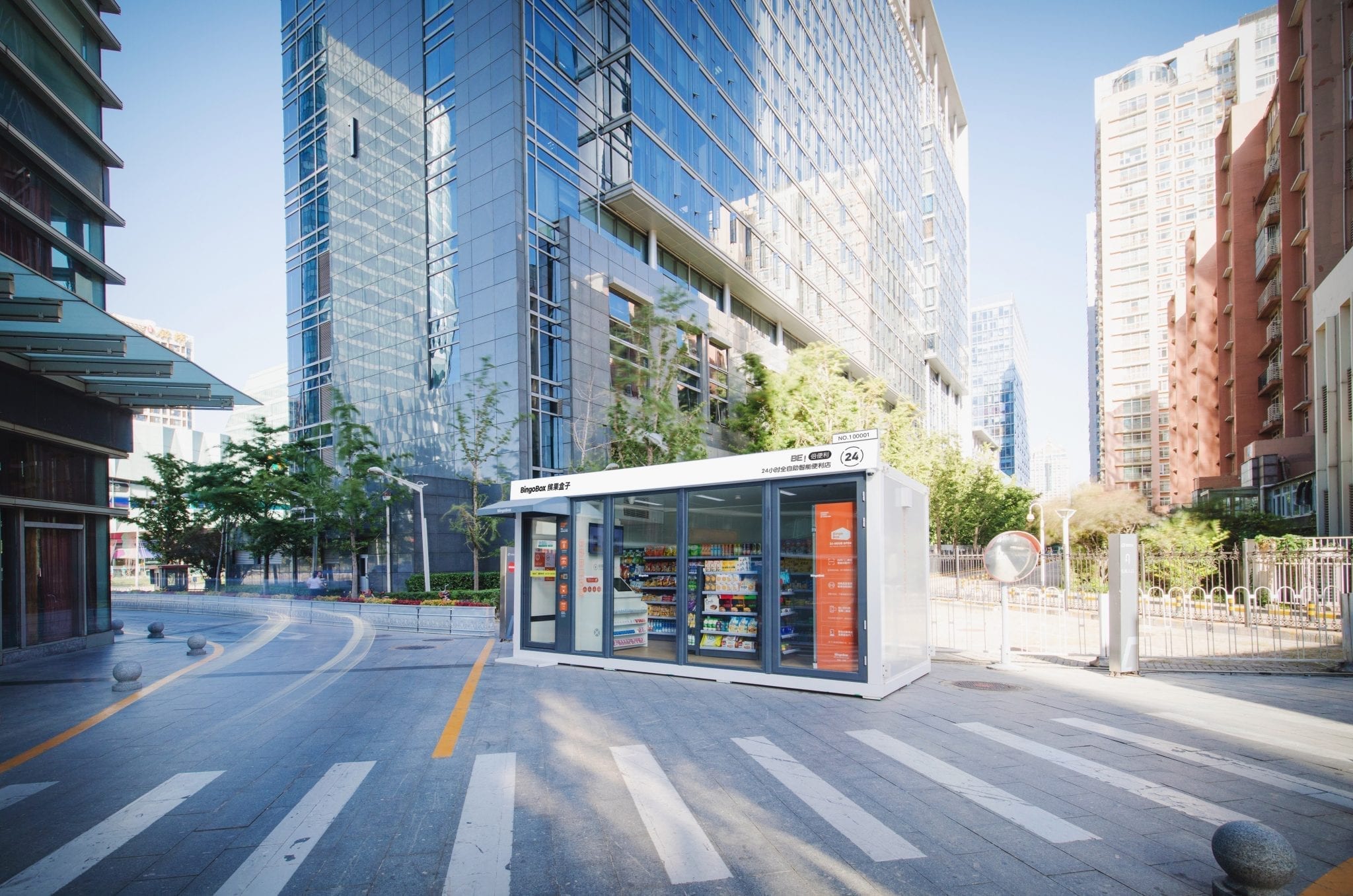
    China’s unmanned convenience-store brand BingoBox plans to introduce its cashierless concept to Hong Kong next year, targeting neighbourhoods and suburbs.

    “With unmanned stores the labour cost is eliminated, making them far more cost-effective, even in expensive cities like Hong Kong,” says BingoBox chief executive Chen Zilin.

    South Korea already has an unmanned 7-Eleven outlet, termed Signature, in Seoul, while as part of its “new retail” concept Alibaba runs an unmanned coffee shop that uses facial recognition for customer payments. Also in China, JD.com has launched unmanned convenience stores that use technology to track products and customer movements.

    In Hong Kong, BingoBox is talking with potential partners to jointly run its outlets. It will target areas that do not have convenience stores, such as parks, villages and public-housing estates, says Chen.

    On the mainland, the company has nearly 200 stores with the aim of reaching 5000 before the end of next year.

    Users scan a QR code to enter a BingoBox, place their purchases on a checkout counter that automatically scans and tallies up the total. Payments are made via mobile wallets such as Alipay or WeChat Pay.

    “As BingoBox is an unmanned store that entails almost no labour cost, we can open in areas with lower foot traffic, whereas traditional convenience stores pay high rents for prime locations,” Chen says. He is not specific about store numbers for Hong Kong, just saying “double digits”.

    The company is also looking to expand into South Korea and Malaysia within the next six months.

    Mainland BingoBox stores generate about RMB850 (US$130) in sales each day, some raking in as much as RMB6000. Chen says the shortest break-even time for a BingoBox store was five months.

    Bingbox partnered with French retail firm Auchan to launch a trial in Zhongshan, Guangdong province, last year before opening its first store, in Shanghai, in June.

  • Hundreds of new shops for China’s Auchan Minute

    Hundreds of new shops for China’s Auchan Minute

    “Several hundred” Auchan Minute shops without checkout counters are planned for China by year’s end.

    Customers enter by scanning a code via the WeChat app. After products are scanned, they are added to a virtual cart. The customer then pays via AliPay or WeChat Pay.

    Every Auchan Minute will offer 500 products 24 hours a day.

    Founded in 1961, Auchan is France’s second-largest retail group after Carrefour.

  • Alibaba’s Singles’ Day Sales Hit $10 Billion in one hour

    Alibaba’s Singles’ Day Sales Hit $10 Billion in one hour

    the frenzied annual celebration of consumption and commerce that is China’s much larger version of Black Friday — began as a protest of sorts against Valentine’s Day, propelled by college students in the 1990s.

    The event’s date, written numerically as 11/11, was associated with unattached singles, known as “bare sticks.”

    This year’s shopping festival entered new territory, blazing past $1 billion within two minutes of the holiday, starting at midnight on 11 November.

    Singles’ Day is now inextricably linked with Alibaba, the Chinese e-commerce leviathan that in recent years has turned the holiday into an online — and occasionally brick-and-mortar — mercantile extravaganza. It routinely eclipses Amazon’s yearly Prime Day promotional event.

    In July 2017, Prime Day generated an estimated $1 billion in revenue during its 30-hour sale window, resulting in what Amazon called its “biggest day ever.” A little more than an hour into this year’s Singles Day, sales had already exceeded $10 billion.

    The event has evolved into a cultural phenomenon. On Friday night, Alibaba hosted a lavish gala in Shanghai, directed by one of the producers behind the 2016 Academy Awards.

    Celebrities such as Nicole Kidman, Pharrell Williams and Maria Sharapova helped count down the moments before the 60,000 participating global brands released their Singles’ Day deals to shoppers.

    One offer, from the Chongqing-based online alcohol brand Jiang Xiao Bai, allowed 33 fast-moving customers to make a single payment of 11,111 yuan, or $1,673, for a lifetime supply of a grain liquor known as baijiu.

    Singles’ Day, which is largely powered through Alibaba’s Tmall marketplace, will test the company’s logistics network. The company promised delivery within an hour for certain products and, in advance of the shopping festival, converted nearly 100,000 stores across China into “smart stores” capable of processing payment using facial recognition and other advanced technologies.

  • 11/11: everything you need to know about Singles’ Day

    11/11: everything you need to know about Singles’ Day

    It is that time of the year again. China’s – and the world’s – biggest online shopping event is about to take place on 11 November.

    Known as Singles’ Day, Alibaba and its founder, Jack Ma, transformed the de facto holiday from an ‘anti-Valentine’s Day’ for Chinese singletons to a global shopping festival back in 2009 – and made billions of dollars in the process.

    How did it start?

    Singles’ Day, also known as ‘bare sticks holiday,’ started in 1993 at Nanjing University as a day for students to celebrate their singledom. The date 11 November was chosen as it resembles 4 solitary bare sticks.

    The annual event kicks off on the midnight of 11 November and runs for 24 hours featuring steep discounts that are driven by the main Alibaba-owned platform, Tmall.

    Essentially, think of it as the Asian version of America’s Black Friday and Cyber Monday shopping sales – but bigger than the two combined.

    Who’s participating?

    This year, Alibaba says over 15 million products from more than 140,000 brands, including 60,000 international brands, will be offering discounts on Tmall – up from 100,000 in 2016.

    Besides the e-commerce giant, other platforms like JD.com have become a key competitor and will be pushing equally hard to attract shoppers.

    11/11: everything you need to kn ow about Singles' Day

    How much is spent?

    In terms of sales, Singles’ Day is known for racking up record numbers – more so than Black Friday, Cyber Monday or Amazon Prime Day sales. In 2016, Alibaba made a staggering $17.8 billion ($5 billion in the first hour alone) and intends to break that record this year.

    How is the high demand met?

    Shoppers purchase everything – home appliances, electronics and even cars – on the day. To manage the high volume of deliveries, Alibaba opened its first automated, robot-managed warehouse. JD.com is not resting on its laurels either. It has teamed up with Walmart to simplify shopping processes and speed up deliveries.

    2017 : Increased focus on luxury

    This year, through strategic partnerships with international fashion luxury brands like Jason Wu, Opening Ceremony and Robert Geller, Alibaba is focusing heavily on the luxury sector. Similarly, JD.com is appealing to high-end consumers by launching a new luxury e-commerce site, TOPLIFE, which will go live on Singles’ Day.

    The ‘New Retail’ strategy

    This year also marks the one-year anniversary of Alibaba’s ‘New Retail’ strategy launch. The term coined by Ma aims to depict the increasingly blurry lines between offline and online shopping. As such, Alibaba is partnering with 52 shopping malls to set up 60 pop-up stores across 12 cities in China.

    100,000 stores will also become ‘smart stores’ with tech features ranging from facial recognition-powered payment solutions, scan-and-deliver O2O shopping feature and AR beauty tutorials to create a much more immersive experience.

    Entertainment will be big

    To kickstart the event, Tmall will host a four-hour star-studded countdown gala on the night before, where Pharrell Williams is expected to perform alongside other Chinese celebrities. Last year, the glitzy show attracted over 400 million viewers – three times the number of those who watched this year’s Super Bowl.

    Jack Ma to unveil debut movie

    Starring alongside action superstars Jet Li and Donnie Yen, Ma will be unveiling his martial arts film, Gong Shou Dao (The Art of Attack and Defence), on video platform Youku on Singles’ Day. To promote the film, Ma also released a theme song entitled Feng Qing Yang that he recorded with Chinese singer Faye Wong.

    Going global

    “We want to make this a global holiday, a global festival for every consumer… We want [to] help global small business…” Ma told CNN in 2016. To demonstrate it, this year Tmall will bring 100 Chinese brands overseas offering special promotions to target millions of consumers around the world.

    If you’re in China…

    Timing is everything, so be sure to prepare your shopping list early instead of browsing the entire site once the sale starts. While you’re checking out, also look out for additional promo vouchers that you can use to gain further discounts. Payment can be made with Alipay, UnionPay or major credit cards.

    If you’re abroad…

    Since most of the sites are in Chinese, prep yourself with a translation tool like Google Translate to help you navigate. Before checking out, ensure the products can be shipped to your destination. Lastly, do a quick research to find out which credit cards offer the lowest rates for inter-bank transactions and exchange rates.

  • Singles’ Day trumps Black Friday and Cyber Monday combined

    Singles’ Day trumps Black Friday and Cyber Monday combined

    Alibaba, the Chinese e-commerce giant, said on 11 November 2017 its Singles’ Day sales extravaganza hit $25.4 billion, smashing its own record from last year and cementing it as the world’s biggest shopping event.

    Once a celebration for China’s lonely hearts, Singles’ Day has become an annual 24-hour buying frenzy that exceeds the combined sales for Black Friday and Cyber Monday in the United States, and acts as a barometer for China’s consumers.

    As tills shut midnight on Saturday, Alibaba’s live sales ticker registered 168.3 billion yuan, up 39 percent from 120.7 billion yuan in 2016. The dollar figure was up more steeply due to the strength of the yuan against the greenback in 2017.

    The event began soon after a star-studded event in Shanghai late on 10 November 2017. As midnight hit, a deluge of pre-orders helped drive a billion dollars of sales on Alibaba’s platforms in the first two minutes and $10 billion in just over an hour.

    “In terms of scale it just dwarfs any other event out there,” said

    Ben Cavender, Shanghai-based principal at China Market Research Group.

    At just past the halfway mark, the headline gross merchandise volume swept past last year’s dollar total just shy of $18 billion. Shortly afterward, sales surpassed the 2016 total in the local currency.

    The event gets shoppers around China scouting for bargains and loading up their online shopping carts, while delivery men – and robots – brace for an estimated 1.5 billion parcels expected over the next six days.

    “This is a big event for China, for the Chinese economy,” Joseph Tsai, Alibaba’s co-founder and vice chairman, said. “On Singles Day, shopping is a sport, it’s entertainment.”

    Tsai said rising disposable incomes of China’s “over 300 million middle-class consumers” was helping drive the company’s online sales — and would continue. “This powerful group is propelling the consumption of China,” he said.

    The final total — more than the GDP of Iceland or Cameroon — leaves other shopping days in the shade. Cyber Monday in the United States saw $3.45 billion in online sales last year.

    Investors closely watch the headline number, though some analysts say the way it is calculated is too opaque. The U.S. Securities and Exchange Commission launched a probe into Alibaba‘s accounting practices in 2016, including into its Singles’ Day data. That investigation is as yet unresolved.

    Last year, the sales number rose by nearly a third at the eighth iteration of the event – though that was slower than the 60 percent increase logged in 2015.

    Slower growth?

    At Alibaba’s Friday night gala on 10 November 2017, the company’s co-founder and chairman, Jack Ma, hosted guests including the actress Nicole Kidman, singer Pharrell Williams and Chinese musicians and film stars such as Zhang Ziyi and Fan Bingbing.

    Singles' Day trumps Black Friday and Cyber Monday combined 5

    The excitement around the shopping blitz, however, masks the challenges facing China’s online retailers such as Alibaba and JD.com Inc., which are having to spend more to compete for shoppers in a broader economy where growth is slowing.

    “A lot of the lower hanging fruit has been picked and there’s increased competition for a share of consumer spending,” said Matthew Crabbe, Asia Pacific research director at Mintel. The sale did though beat his forecast of 20 percent growth.

    Online retailers were being forced to push offline as well as overseas to attract new shoppers, and the overall online retail market was close to “saturation,” raising questions about whether current rapid growth could be sustained.

    “They’re having to spill over out of the purely online realm into the wider consumer market,” Crabbe said.

    This has sparked deals to buy bricks-and-mortar stores in China, and overseas tie-ups, especially in Southeast Asia. Technology, too, has been key, with virtual reality dressing rooms and live fashion shows to attract shoppers.

    Alibaba also said it had turned 100,000 physical shops around China into “smart stores” for this year’s event. Goods perused by people at the stores, but then bought and paid for on Alibaba’s platforms, were added towards the sales total.

    China Market Research Group’s Cavender said brands were also increasingly making smaller price cuts to avoid “margins getting killed,” and were often asking for deposits in advance. In previous years, prices were often halved.

    Fu Wenyue, a 23-year-old dresser in Shanghai, said offers this year were smaller but more “personalized” as brands used big data to hone their targets. Fu spent 4,000 yuan on clothes, cosmetics and kitchen utensils in pre-event sales, and kept shopping on the day.

    “In actual fact, I think I spent even more than I did last year,” she said.

  • Razer partners with Worldpay for seamless online payments

    Razer partners with Worldpay for seamless online payments

    Worldpay, a leader in global payments has announced that it has been selected by Razer, the leading global lifestyle brand for gamers, as one of its key online payments provider for the virtual credits service Razer zGold.
    Razer’s zGold service allows gamers to purchase virtual credits in exchange for digital content such as games and in-game items from different content providers.

    Worldpay was chosen by Razer as it offers global coverage and a comprehensive suite of payment services. The company will also provide deep analytics to help Razer better understand its customers’ online behaviour, as well as extensive customer support. Since implementing Worldpay’s suite of payment solutions and a revamped checkout, Razer has seen a rapid take-up of zGold and retention rates. Razer is now also able to accept additional payment options including Alipay.

    Ian Lim, Director of Software at Razer said: “The Razer zGold service is set to transform the virtual credits landscape and we chose Worldpay for its ability to help us scale quickly cross multiple regions. We have seen increased user take-up and retention rates since we began working with the Worldpay team and there is much growth ahead for both companies.”

    Stuart Thornton, VP Business Development APAC, Global eCom, Worldpay said: “We are entering a hugely exciting period for Razer, and are delighted to be supporting its vision to create a first-class experience for gamers. Whether purchasing the latest hardware in the online store, or buying new games and digital content with Razer zGold, gamers can expect a seamless online experience.”

  • Singles’ Day sales set to soar

    Singles’ Day sales set to soar

    Worldpay, a global leader in payments, is predicting another record-breaking China Singles’ Day for businesses around the world, as the eCommerce extravaganza goes global.

    New data from Worldpay reveals that last year’s event grew by 39% globally1, with sales outstripping Black Friday by 137%.2 Online shopping activities peaked at 17.24 GMT3, at which point Worldpay was processing 44,505 payments per minute.

    The payments processor is expecting 11 November to make history again this year, as more and more international brands opt to participate in the shopping festival.

    According to Worldpay, retailers in Australia and Hong Kong are seeing the fastest growth, with sales rising by 105% and 71% respectively year-on-year.4

    Although the volume of sales has plateaued in mainland China, the average spend per purchase continues to rise, at a rate of 9%,5 as more and more shoppers tend to splurge on big ticket-items.

    Worldpay’s transaction data supports recent findings from the Global eCommerce Leaders Forum (GELF), which revealed the rise in consumer spending power in China is translating into growing sales on international eCommerce sites, as more Chinese shoppers than ever before are seeking genuine products from cherished global brands.

    Phil Pomford, General Manager for Asia Pacific at Worldpay said: “Since its inception as a local celebration of singledom, Singles’ Day has risen to become the world’s top grossing-online shopping holiday, and the event knows no boundaries. Our data reveals how fast Singles’ Day is growing internationally, so for international businesses looking to break into the huge Chinese eCommerce market, 11 November should be an important landmark in the calendar year.

    “To turn browsers into buyers, it is essential to tailor the online shopping experience to local tastes. For Chinese consumers, this means focusing on your mobile proposition. Shoppers expect to use their preferred payment option – increasingly e-wallets like Alipay and WeChat Pay – and merchants should offer a cutting edge checkout experience to attract tech savvy consumers.”

  • Alipay, WeChat top China brand relevance index

    Alipay, WeChat top China brand relevance index

    Chinese internet brands are trumping their Western counterparts in China, according to the second China Prophet Brand Relevance Index (BRI).

    Alipay and WeChat came in first and second respectively for the second consecutive year, followed by Android, IKEA and Apple.

    “Chinese consumers today live, work and play in a connected, digital world, so the brands that deliver useful, easily accessible and enjoyable experiences are going to be the most relevant to their lives,” Tom Doctoroff, Senior Partner at Prophet said in a press release.

    “This is our second Brand Relevance Index in China, and Alipay and WeChat dominate once again as the top two brands because they brilliantly use technology to innovate and inspire consumers,” he added.

    BRI is a ranking of the most relevant brands in consumers’ lives. Prophet partnered with research firm SSI to survey 50,000 consumers across the US, UK, Germany and China about 750 brands before deriving the results. The Chinese BRI results is part of this four-country effort, and is the second global survey conducted by the firm.

    Five retail and hospitality brands finished the top 10 listing. They included Nike, Estee Lauder, BMW, Marriott and NetEase Cloud Music.

    According to the Prophet, almost half of the top 50 brands were all technology-led. The rest were significantly invested in digital connectivity, showing that Chinese consumers like brand experiences that occur on demand, across devices and channels.

    “Brands today cannot stay still. They need to earn and re-earn loyalty at every micro moment in the customer journey, again and again. They have to be relentlessly relevant. This is more true in China than anywhere else. The brands that scored high in our Index enjoy healthy long-term demand and a strong bottom line because they are constantly reinventing themselves to satisfy and delight consumers,” Doctoroff said.

    The findings also showed that Chinese consumers are demanding for unique and immersive experiences. Here, brands like Marriott, W Hotel (ranked 11) and BMW dominated through their focus on experience and design.

    Equally important are brands that Chinese consumers to show their individualism. They are increasingly looking to share their unique experiences on QQ (ranked 28), show a greater desire to try on Taobao (ranked 35), test on Meituan (ranked 40) and taste products on Dianping (ranked 41).

    Meanwhile, Chinese consumers are focusing more on music, gaming, entertainment and sporting goods, which make up more than a fifth of the top 50 brands. According to the press release, there is “a growing shift towards prioritizing the balance between emotional and physical wellbeing, instead of focusing on just physical health.”

    Chinese consumers are beginning to embrace the sharing economy. Mobike (ranked 14) and Airbnb (ranked 45) are now taking over spots held by restaurants and airlines. Ofo (ranked 54) and Didi (ranked 87) are just outside the top 50 ranks.

    “It’s clear to be successful, brands need more than size and ubiquity. They must create a product that people love enough to integrate into their everyday lives. The brands that inspire this level of loyalty will ultimately grow the fastest because they are relevant in the moments that matter most to consumers,” Leon Zhang, Partner at Prophet, based in Shanghai, said.

    Apple continued to dominate across global rankings, holding the top positions in the US, UK and Germany rankings. Google was among the top three in the same countries.