Norwegian Cruise Line, a leading cruise brand of Norwegian Cruise Line, together with Alipay, the world’s largest online and mobile payment platform operated by Ant Financial Services Group, today announced the debut of the Alipay payment solution on board Norwegian’s most recent addition to its fleet and its first in the China market, Norwegian Joy.
This is a pioneering move where a major cruise operator has debuted a cruise ship with Alipay as part of its payment platform from the very beginning of operations. It also demonstrates Norwegian’s commitment to providing guests in China with offerings geared to their specific needs and tastes. With more than 450 million users, Alipay is China, and the world’s, leading online and mobile payment platform, one that significantly enhances the payment platform lineup on Norwegian Joy.
Norwegian began accepting transactions on the Alipay platform on a trial basis beginning on a special preview cruise for members and guests of Alibaba Group which departed from Shanghai on June 10. Including the Alipay payment solution on board Norwegian Joy is another step in a partnership announced earlier this year between Alibaba and Norwegian’s parent company, Norwegian Cruise Line Holdings – a partnership which combinesNorwegian’s experience in providing unforgettable vacations with Alibaba’s insights into Chinese consumers to offer a cruise product tailor-made for Chinese guests.
“When designing Norwegian Joy, our goal was to construct a ship that would deliver a First Class at Sea experience while making Chinese guests still feel at home,” said David Herrera, President of NCLH China. Providing the Alipay payment solution to our guests allows our guests to make purchases with the most-used payment system in China at the several luxury shops, dining venues with multinational cuisine and other points of purchase on Norwegian Joy in the same way that they use it on land. The great success of our trial on our June 10 preview voyage has allowed us to make this mobile payment method available to all guests much sooner than originally planned. I’d like to thank the team at Alipay who worked hand in hand with the team at Norwegian to make this possible. I am extremely proud of what we have accomplished together,” continued Herrera.
“We are thrilled to have guests on Norwegian Joy have the ability to make their onboard purchases with Alipay just like they do at home,” said Angel Zhao, COO of International Business Unit and Vice President of Ant Financial, “With so much to see, experience, and purchase aboard the new Norwegian Joy, we are truly excited to offer Alipay to our valued customers. Having the Alipay platform ready for guests beginning with Norwegian Joy’s June 10 preview sailing was ajoint effort that was made possible by the conviction and professionalism of both sides.”
Norwegian Joy has sailed a series of preview cruises during the month of June, with the ship’s christening ceremony soon to take place on June 27 in Shanghai, featuring the ship’s Godfather, ‘King of Chinese Pop,’ Wang Leehom. Year-round voyages on Norwegian Joy from Shanghai begin on June 28 with a season of sailings departing from Tianjin from August 26 to September 15.
With Chinese travelers being one of the most valuable customer bases for luxury goods, negotiations are underway to make mobile payment solutions WeChat Pay and Alipay acceptable in North America.
The move comes at the behest of Citcon, a cross-border commerce company, China Luxury Advisors and The Momentum Group, a marketing agency that works with WeChat. Together, the three are hoping that Chinese travelers will soon be able to use WeChat Pay and Alipay while abroad in the United States, easing the purchase of international luxury goods.
“Chinese travelers are already the highest spending international tourists in the United States – having spent more than $27 billion in the U.S. in 2015, and this number is expected to continue to grow rapidly,” said Renee Hartman, co-founder of China Luxury Advisors, Los Angeles. “This tremendous growth brings new possibilities for American retailers and destinations to continue to grow their share of visitation and spending from Chinese tourists.”
But what makes Chinese luxury consumers so interesting is that few are actually purchasing their luxury goods in China. Due to China’s strict laws on imports and what stores can open shops within its borders, many affluent Chinese get their luxury goods while abroad.
The other important factor to understand about this announcement is that for many Chinese consumers, they use an entirely different ecosystem of digital platforms than many other nations.
Most notably, WeChat Pay lets Chinese customers make mobile payments, something that is extremely popular in China.
Along with Alipay, Chinese online retailer Alibaba’s mobile payment system, the two make up almost three-quarters of purchases made in China through mobile.
Many luxury brands already have heavy presences on WeChat. A recent campaign from Swarovski illustrated some of the ways WeChat can be used by luxury brands.
Alipay has also seen integration with international luxury retailers. LVMH-owned travel retailer DFS Group is furthering its partnership with Ant Financial’s Alipay by giving exclusive promotions to customers checking out with the mobile payment method.
With an already built-in integration with many luxury brands, bringing these two China-centric mobile payment platforms to North America will be an obvious boon for American luxury retailers looking to capture more of the lucrative Chinese traveling customer base.
It’s one country, two systems for Alipay as it focuses on retail payments in Hong Kong, a special administrative region of China, with a separate mobile app from the one it uses on the mainland.
Alipay announced the launch of its Hong Kong version e-wallet Alipay HK, which is the first time for this Internet payment service provider to launch an overseas version app.
Alipay started providing services in Hong Kong in 2007. In August 2016, they gained a third-party payment license issued by Hong Kong Monetary Authority and Alipay Hong Kong company is one of the first batch of payment license owners. Now Alipay HK has finally been launched after a few months of preparation.
With the launch of Alipay HK, Hong Kong users will be able to use Alipay services by binding their credit cards of Hong Kong local banks or balance recharges, and they can use Hong Kong dollars to complete payment directly. Alipay HK provides three major services, including code-scanning payment, vendor offers, and stamp collection.
Alipay HK will gradually launch more functions like mobile phone fee recharges; payment for water, electricity, and gas bills; online transfers; taxi payment; and insurance payments.
The taxi payments are of special significance. Currently the Octopus payment card in Hong Kong is ubiquitous and can be used for both public transportation and retail payments. But Octopus cannot be used for paying of taxi trips. Octopus had a small, brief test of taxi payments a few years ago, but it failed to launch the service in Hong Kong. If Alipay could overcome the taxi payment obstacle, it could grab a new, underserved market.
For global expansion, Alipay’s parent company Ant Financial has realized e-wallet cooperation with partners in India, Thailand, South Korea, Philippines, and Indonesia. With the launch of Alipay HK, Ant Financial’s services now reach six overseas countries and regions.
Chinese online and mobile payment platform Alipay on Wednesday launched in Hong Kong its first app to handle transactions not denominated in the yuan currency, moving closer to its ambition of widening currency payment options.
Payments through AlipayHK, which handles mobile payments in Hong Kong dollars, will be accepted at more than 2,000 stores in the city from Thursday, said Ant Financial Services Group, an Alibaba Group affiliate that runs the platform. “Introducing local currency mobile payments to Hong Kong is an important step forward in Ant Financial’s mission to bring our services to more users in more markets,” said Douglas Feagin, the company’s president of global business.
The effort will help the company, which competes against Tencent Holding’s WeChat Pay, to extend its reach in offline commerce beyond mainland China. Alipay now has more than 450 million active users and payments through it are accepted at more than 2 million brick-and-mortar merchants across China, the company says.
Its standard app is already supported in more than 120,000 retail stores in 70 overseas markets via local partners, including the United States, but transactions are executed in yuan.
As many as 8,000 retailers in Hong Kong already accept Alipay’s yuan-based app, and the new app will soon extend to them, said Alipay Hong Kong’s general manager, Venetia Lee.
Chinese mobile wallet Alipay has arrived in Malaysia, marking the latest international push for Ant Financial Services Group, Alibaba Group’s payment affiliate and owner of Alipay.
According to Alibaba, six Malaysian banks have received regulatory approval from the Malaysian Central Bank to process Alipay settlements. Alipay is also scheduled as a payment option across the Southeast Asian nation by 2018, said the company.
Alipay has been on a rampant expansion route. It recently invested in foreign payment firms including India’s Paytm and Thailand’s Acsend Money, and is now widely accepted in 70 countries, including the United States.
At the time of entering North America last February, Alipay said it is looking to enhance the shopping and travel experience of Chinese consumers visiting the US and Canada, and is expanding its partnership with DFS Group, a luxury travel retailer.
The partnership launched Alipay in-store mobile payment at the DFS store in Honolulu International Airport store and at the DFS Hawaii store in Honolulu’s downtown T Galleria. DFS Group had previously launched Alipay in its airport stores in San Francisco and Los Angeles, and at JFK in New York City.
At the same time ahead of Chinese New Year 2017, Alipay was launched in Paris across 83 duty free outlets operated by Société de Distribution Aéroportuaire – the joint venture between Lagardère Travel Retail and airport operator Groupe ADP. Lagardère Travel Retail deployed Alipay with the support of its bank, BNP Paribas, and payment services provider Ingenico Group.
More than 450 million people use Alipay worldwide, according to the company’s website, and the introduction of the technology is part of the retailer’s efforts to meet the demands of its key Chinese consumers.
Alipay’s overseas expansion has also been creating synergies for Alibaba, whose e-commerce business, logistics networks and cloud computing services have all made inroads in Southeast Asia.
Two Japanese retail groups are about to start accepting bitcoin payments, a move that is likely to promote wider use of the virtual currency by domestic consumers.
Electronics chain Bic Camera has teamed up with Tokyo-based BitFlyer, which runs the largest Japanese bitcoin exchange, for a trial run of the payment system at Bic Camera’s flagship shop in Tokyo’s Yurakucho district, and at Bicqlo Bic Camera, the hybrid outlet with Uniqlo in Shinjuku.
Customers can pay up to ¥100,000 (US$900) using the cryptocurrency, as well as earn reward points at the same rate as for cash payments. Bic Camera may roll out the payment system to other locations depending on its support.
Meanwhile, Recruit Lifestyle, the retail support arm of human resources conglomerate Recruit Holdings, is partnering with another Tokyo bitcoin exchange company, Coincheck. The virtual currency will become a payment option at shops with the AirRegi POS app developed by Recruit Lifestyle.
By using tablets or other devices provided by the store, or their own smartphone, customers can deduct the amount on the bill from the designated bitcoin account. Coincheck will convert the bitcoins into yen and transfer the funds to the store.
AirRegi is used at 260,000 eateries and other retail locations throughout Japan. Businesses can choose to install the bitcoin payment system alone.
The app is also compatible with Alipay, the payment platform developed by Alibaba Group and used by many Chinese tourists visiting Japan.
Only about 4500 stores in Japan accept bitcoin payments. Rakuten’s Edy and Suica are leading electronic payment methods in Japan. The addition of AirRegi and Bic Camera outlets will multiply the number of bitcoin-compatible stores to around 260,000, nearing the 380,000 outlets that accept Suica and the 470,000 locations where Edy can be used.
More than 20 million people worldwide use bitcoin, with the monthly trading volume reaching ¥12 trillion. But more than 80 per cent of users are in North America and Europe. Bitcoin has mainly been traded for investment purposes because its value fluctuates, but it is also increasingly used by overseas travellers as it saves them the need to exchange currencies.
Japan has just started classifying virtual currency as a payment method, and cryptocurrency exchanges must register with the government. From July, purchases of virtual currency will be exempt from consumption tax.
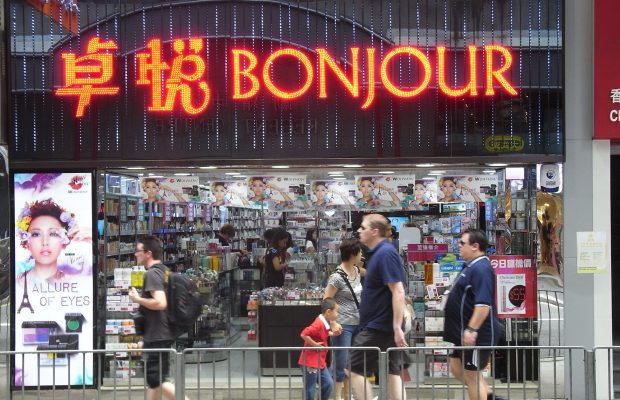
Tumbling turnover and gross profit margin have flipped an operating profit to a loss for beauty and healthcare retailer Bonjour Holdings.
Its turnover for last year fell 12.8 per cent to HK$1.995 billion (US$256.8 million), while its gross profit margin dropped from 41.8 to 38.1 per cent. This gave the group a loss of HK$77.9 million compared to a profit of HK$50.7 million in 2015.
During the year, the group rationalised its retail network from 47 to 42 outlets.
Hong Kong and Macau retail sales fell for the second straight year, the company’s audited results show.
Same-store sales fell 10.1 per cent despite the average sales value per transaction for mainland tourists rising by 7 per cent. However, the total number of mainland customers dropped by double digits last year. The company says the drop in its total number of customers contributed about 9 per cent of the overall retail decline during the year.
Bonjour says an enormous demand continued for Korean beauty and skincare products in Hong Kong’s retail market. Because of this, the group has formed dedicated procurement team to explore this trend.
During the year, Bonjour continued to introduce a variety of mass Korean beauty products to keep the market competitive and to offset the negative impacts of the falling sales of Western and Japanese premium brands.
Meanwhile, the group has been increasing awareness of its brand through online platforms. It partnered with Tmall and WeChat during the year to broaden its touch points with target consumers.
“Additionally, with the rapid rise of live-streaming and photo-sharing apps, video and photo content and key opinion leaders (KOL), partnerships has taken up a significant role in our marketing campaigns,” says Bonjour. “Online image sharing has become a critical element for us to communicate with our target consumers.”
Delivery service
The group partnered with Alipay in two one-day events during the year, “2016 Carnival All the Way” and “Double Eleven”. The group also cooperated with China Post Cross-border eCommerce (CPCBE) to launch the cross-border shopping platform www.bonjourO2O.com (BonjourO2O). With its direct delivery service, customers can buy overseas items not available in Bonjour’s mainland stores.
Online retail sales last year reached HK$40.1 million, up 7.4 per cent from 2015.
At the end of the year, the group had 42 stores in Hong Kong, Macau and Guangzhou. During the year, sales continued to decline in the face of “sky-high” rents. While rents have been adjusting over the past two years, the reduction has not been fully reflected in the company’s income statements as it is usually locked into leases with a three-year term. The company is able to renew only about a third of its agreements each year.
“We believe that stabilising sales along with falling rents should help improve our profitability gradually,” says the group.
Bonjour currently distributes 180 international cosmetic, skincare and healthcare products including Dr Schafter, Suisse Reborn, WowWow and Yumei. During the year the company adjusted the product mix, increasing international parallel-import products and mid-to-lower-priced trendy products while cutting back on higher-priced exclusive products.
CIMB Bank Bhd (CIMB Bank) and Ant Financial Services Group (Ant Financial), the parent company of Alipay, the world’s largest online and mobile payment platform, yesterday announced a collaboration to enable the Alipay mobile wallet in Malaysia as an alternative cashless payment for Chinese tourists.
CIMB Bank will act as the settlement and merchant acquirer bank to facilitate Alipay payments in Malaysia, to enable Chinese visitors to pay for their transactions in renminbi without concern about exchange rates, through a simple barcode-scanning method that they are used to in China.
Douglas Feagin, Senior vice president of Ant Financial said, “We are pleased to work with a leading financial institution in Malaysia and Asean such as CIMB Bank to bring the convenience of the Alipay service to our users wherever and whenever they need them. We see CIMB Bank, with its extensive merchant network, as the perfect collaboration partner to provide our payment solutions to Chinese travellers in this region.”
Tengku Dato’ Sri Zafrul Aziz, group chief executive, CIMB Group said, “The entry of Alipay marks a notable milestone in the growth of mobile wallet payment services in Malaysia. We are excited to work with Alipay to provide Chinese tourists a convenient and secure payment experience while in Malaysia and we target to go live with our merchants by May 2017, having received Bank Negara approval just recently.
“CIMB’s leading edge expertise in transaction banking is not only supporting Malaysia’s drive for a safe and secure cashless society, but also providing our customers with a seamless banking experience within Asean.”
Earlier on, an exchange of Memorandum of Understanding (MOU) took place between CIMB Bank and Ant Financial to officiate the collaboration. Ant Financial was represented by Douglas Feagin while CIMB Group was represented by Tengku Dato’ Sri Zafrul Aziz.
Witnessing the MOU exchange were Dato’ Sri Najib Razak, Prime Minister of Malaysia; Jack Ma, executive chairman, Alibaba Group; Dato’ Sri Nazir Razak, chairman, CIMB Group and Lucy Peng, chairman, Ant Financial.
Thus far, CIMB is collaborating with Genting Malaysia Berhad, Digi Telecommunications Sdn Bhd, YTL Corporation Berhad and Maxincome Resources Sdn Bhd (which operates the FamilyMart convenience store chain) to be the pioneer merchants to accept Alipay mobile wallet payments in Malaysia.
Alipay merchants in Malaysia will have the opportunity to deepen their wallet share from Chinese travellers, by providing an alternative payment channel to current cash or dual-currency credit card facilities.
Genting Malaysia Berhad’s leading integrated resort, Resorts World Genting will be the first merchant working with CIMB to incorporate Alipay as an alternative payment channel for its customers. The award winning resort will have the world’s first Twentieth Century Fox Theme Park, the brand new SkyAvenue mall’s food and beverage and retail outlets, and also hotels under its RM10.4 billion Genting Integrated Tourism Plan.
Digi Telecommunications Sdn Bhd will enable tourists from China to enjoy the convenience of paying for Digi mobile and data plans through the Alipay mobile wallet, enabling them to stay connected while they are in Malaysia. The Alipay mobile wallet provides customers payment convenience in line with Digi’s strategy to bring a seamless digital experience to its customers.
YTL Corporation Berhad is looking into welcoming acceptance of Alipay mobile wallet with CIMB, especially for YTL Hotels & Properties, the hospitality arm of YTL Corporation Berhad, YTL Hotels & Properties owns and manages a prestigious collection of award-winning resorts, hotels, boutique experiences and spa villages; as well as Hutong @ Lot 10, and Starhill Gallery in Kuala Lumpur, where many Chinese tourists frequent whenever they visit Malaysia.
FamilyMart will enable Alipay acceptance in three of its current outlets, located in Wisma Lim Foo Yong, Mid Valley, and KLIA 2, in its continuous efforts to bring more convenience to its shoppers. FamilyMart, which originates from Japan, is the first convenience store chain in Malaysia to bring mobile payment and Alipay to Chinese tourists. The chain targets to open 300 stores in five years.
Alipay, China’s biggest payments service, has struck a partnership with Standard Chartered as the company looks to expand its footprint and deepen its mobile-payment push into Hong Kong.
The company controlled by billionaire and Alibaba co-founder Jack Ma gained a license for e-payments from the Hong Kong Monetary Authority last year, and already began to roll out accounts denominated in the local currency back in October.
Alipay HK is partnering with Standard Chartered in order to make it easier for Hong Kong residents to top up their account in HK dollars through online and mobile banking. Specifically, the unit of Chinese e-commerce giant Alibaba will work with Standard Chartered to facilitate Alipay payments via the bank’s merchant network in Hong Kong, while the bank will provide its users with digital ways to fund their accounts.
The size of its newest partner in Hong Kong could bring Alipay to a considerable number of stores. The deal with Alipay will also allow Standard Chartered to target Chinese tourists particularly with Alipay users cannot link the HKD account to their existing yuan- denominated one, nor can they transfer money into the new account.
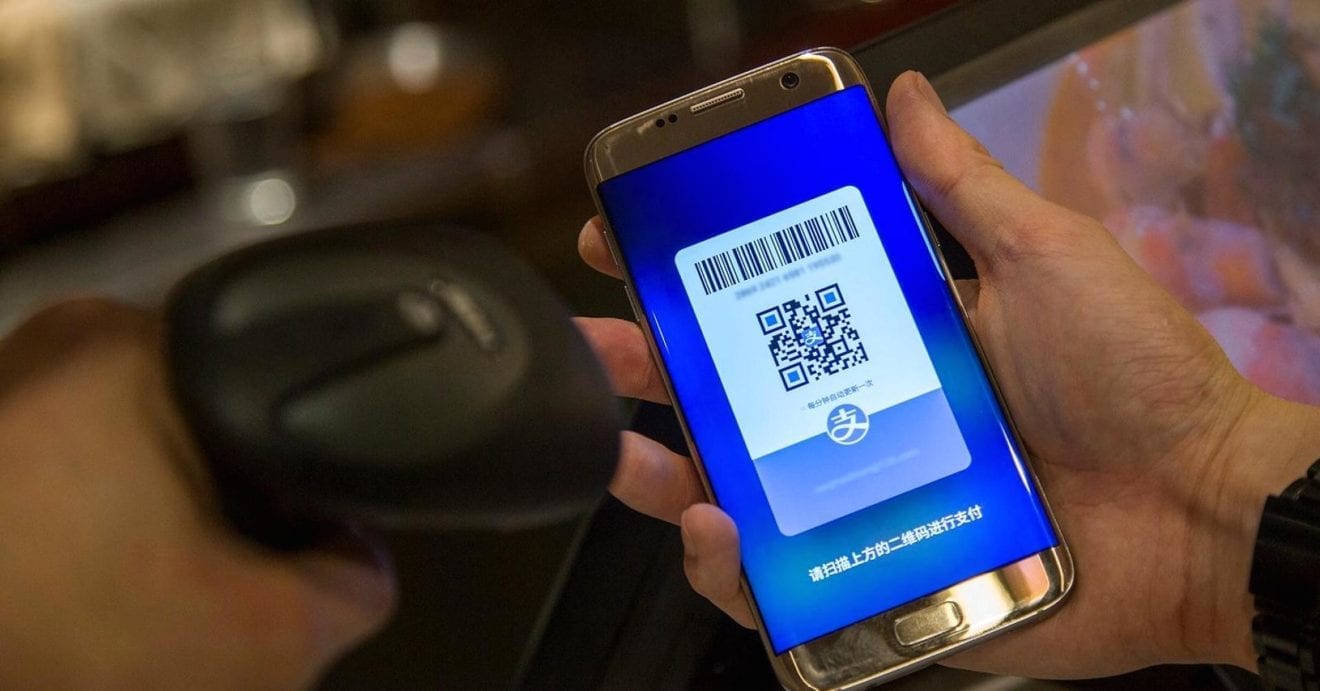
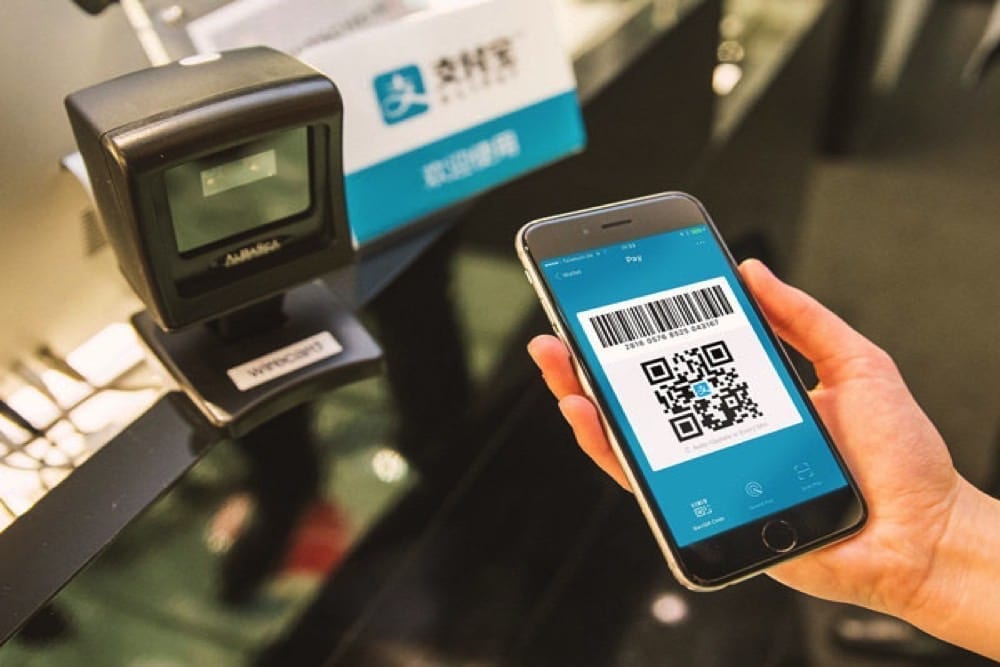
Alipay, which is operated by Alibaba’s financial services arm Ant Financial, is a separate app on devices that allows customers to pay for their purchases in-store through opening the Alipay app, then scan a QR code provided by the retailer.
Alipay holds nearly 70 percent of China’s third-party mobile payment market share and processed more than 380 million daily transactions as of June 2016.
Vicky Kong, head of retail banking at Standard Chartered Hong Kong, said: “We believe the partnership with Alipay, the world’s largest online and offline payment platform with over 450 million active users, will enhance customer engagement with our existing clients on one hand, and help reaching out to new clients, especially the active online users on the other.”
Ant Financial Holdings, which operates the Alipay online payments service for the world’s largest e-commerce platforms, has extended its service to Hong Kong through a partnership with Standard Chartered Bank, the two companies said in a statement on Tuesday.
The bank’s customers will be able to top up their Alipay HK accounts through their online and mobile banking portals, shop and pay online without incurring any transaction fee.
Alipay has been working with Hong Kong businesses to promote digital payment since 2014, primarily aimed at tourists and visitors from the Chinese mainland, who are already familiar with cashless payments.
“We are hoping to extend digital payment services to Hong Kong residents soon and the partnership with Standard Chartered is our first step,” said Venetia Lee, general manager of Alipay Hong Kong, Macau and Taiwan.
Vicky Kong, head of Hong Kong retail banking for Standard Chartered Bank said that the partnership would enhance customer engagement with existing clients, and help reach out to new ones.
Many foreign banks already have a partnership with Alipay in mainland China, but Standard Chartered is the first bank to offer this particular service to Hong Kong.
Ant Financial is an affiliate of Alibaba Group Holdings, which operates the Taobao and Tmall online shopping sites. Alibaba is also owner of the South China Morning Post.
Users of China mobile wallet app Alipay hit spending records last year both online and in stores.
Of the app’s 450 million users, most are in Shanghai, paying out an average US$20,400 last year, says the Alibaba spin-off company. This was 1.5 times more than they spent the previous year.
While the average middle-class wage in Shanghai is $35,000, this does not account for undisclosed income such as from rented property.
These figures have been released just weeks after the app hit a record 1 billion transactions in a single day.
Other highlights from Alipay’s year:
71 per cent of Alipay transactions were on mobile devices, up from 2015’s 65 per cent
Cash-strapped millennials, in China classified as those born in the 1990s, spent an average of $1080 through the app
Gen Y, those born in the 1990s, averaged $1590
The top 10 destinations outside China where Alipay was used for in-store shopping were South Korea, Hong Kong, Thailand, Macau, Taiwan, Japan, Australia, Singapore, New Zealand and Germany
Its single biggest overseas spender splurged $38,900.
Meanwhile, the company has been signing up airports, major malls and top restaurants so China’s record 133 million overseas tourists can still use the app.
About 2.3 billion Alipay transactions were chalked up using the built-in Ant Credit Pay, allowing for payment in installments, up 344 per cent from 2015.
Alipay’s small loans service, Jiebei, issued loans worth $43.4 billion to 12 million users.
Finavia’s Helsinki Airport has become one of Europe’s first to use the Chinese-friendly AliPay mobile payment application in an effort to encourage more spending at the location.
The familiar payment method is expected to encourage more Chinese passengers to spend with increasing confidence at the location, following the adoption of the scheme by the airport’s first retailers last month.
Commenting on the development, Finavia stated: “Chinese passengers are the most rapidly growing customer group at Helsinki Airport and the group that use the most money. We work hard to offer them the best possible service experience.
SEVEN SERVICE PROVIDERS NOW OFFER ALIPAY AT HELSINKI
“Familiar and easy payment options increase the feeling of smooth and safe travel for Chinese passengers,” says Finavia’s Elena Stenholm, Director of Commercial Services at Helsinki Airport.
“As far as we know, the only other airports accepting AliPay are Münich and Frankfurt. Seven commercial service points have now adopted it at Helsinki Airport and many others are interested. China UnionPay is already available at most airport outlets, adds Stenholm.
Right now, AliPay can now be used to pay for goods and services at the airport’s Iittala, M-Box, Finspiration, Lindroos and Moomin shop outlets and Finavia says it hopes to have all of the airport’s commercial operators accepting AliPay.
FINAVIA SAYS ALIPAY HAS BEEN RECEIVED ‘VERY WELL’
“We work in close cooperation with our commercial partners to develop the customer experience. AliPay has been received very well, and we encourage businesses to enable it. If the biggest commercial operators at the airport come along, the amount of outlets accepting AliPay will increase tenfold at once, says Stenholm.
As reported before, AliPay is a part of world’s largest online trading company Alibaba. AliPay is China’s leading mobile payment giant which has approximately 400m users according to its own website.
This development at Helsinki follows the fast rise of Chinese passenger numbers in recent years, with numbers expected to continue increasing for both transfers and overnight stays in Finland.
In Finland, Lapland is a particular attraction for Chinese tourists. Alibaba’s travel service provider AliTrip has announced that it will bring 50,000 Chinese tourists to Rovaniemi during 2017.
A SUCCESSFUL STAFF EXCHANGE PROGRAMME
Finavia has responded by bringing Chinese-speaking service guides to Helsinki Airport and by adding signs in Chinese.
In autumn 2016, the staff exchange programme between Finavia and Beijing Airport helped increase knowledge of the Chinese service culture and the needs of Chinese travellers.
Helsinki Airport also has an account with Chinese social media channel Weibo and an account will also be opened with this company in 2017. Weibo has approximately 300m and WeChat more than 800m active monthly users.
Meanwhile, Helsinki Airport currently claims to be the leading hub for air traffic between Europe and Asia and claims to offer the fastest and shortest route between the continents.
After securing dominance in its home market, China’s Alibaba Group Holding is racing to conquer the still nascent e-commerce market in Southeast Asia. Although the size of the market in Southeast Asia pales in comparison with China’s, it is expected to grow 32 percent on average each year through 2025, according to one industry executive.
US-based Amazon.com Inc also has its sights set on the region, making a face-off with Alibaba all but certain. Alibaba got to the Southeast Asian market first, but its victory is far from assured. Experts said there is no silver bullet for success, especially in an evolving e-commerce market facing difficulties of its own.
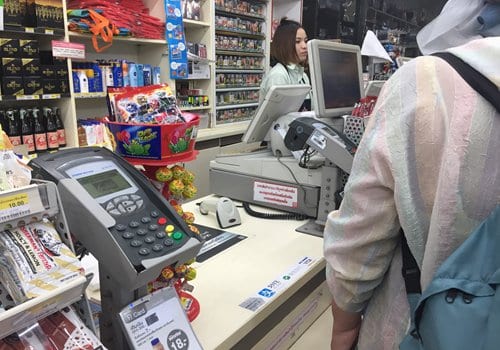
A 7-Eleven convenience store in Phuket, Thailand, that accepts Alipay.
Among the glossy, green trees in Phuket, the largest island in Thailand, the landscape is dotted by many 7-Eleven convenience stores that accept Alibaba Group Holding’s mobile payment application Alipay.
“Alipay is available in almost all 7-Eleven convenience stores here, and people are encouraged to use it with random discounts,” an employee at a 7-Eleven store on Thanon Patak Road in Phuket, who declined to be identified, told the Global Times on Saturday.
7-Eleven has added Alipay to its payment options at more than 9,000 outlets across Thailand since April.
Alibaba’s move to get Alipay into Thailand is widely perceived as a way to attract Thai smartphone users and technology-savvy consumers as it expands into Southeast Asia in 2016.
In April, the Chinese e-commerce giant acquired a controlling stake in Lazada, considered the Amazon of Southeast Asia, for $1 billion.
In November, Alibaba furthered its expansion by taking over the Singaporean online grocer RedMart via Lazada.
Alibaba’s CEO Zhang Yong said several times at press conferences in 2016 that the company’s next major goal is to help merchants on its platform enter the Southeast Asian e-commerce market.
However, expanding into Southeast Asia might be easier said than done. In the region, many people are familiar with the concept of e-commerce by name only and don’t have much of an inclination to try it.
A new frontier
A 20-something resident in Phuket surnamed Kung was surprised when she heard that Chinese shoppers spent 120.7 billion yuan ($17.4 billion) on online purchases via Alibaba’s bazaars on November 11 alone.
“My friends and I seldom shop online and do not really intend to do so because we can get whatever we need in the market or at nearby convenience stores,” Kung told the Global Times on Friday.
The woman’s biggest concern is quality. She dislikes that she can’t feel the texture of clothing sold online and worries about unwittingly buying knockoffs.
The poor reception for online shopping is reflected on the streets of Phuket, where few express deliverymen can been seen – unlike in China, where they are commonplace.
Lazada Thailand CEO Alessandro Piscini acknowledged on Thursday that Southeast Asia has a small e-commerce industry.
At a press conference with about 200 Chinese reporters in Phuket on Thursday, Piscini cited the region’s 3 percent online retail penetration rate (as of November 2015), which represented about $6 billion in sales. By comparison, China had an online retail penetration rate of 14 percent and online sales totaling $293 billion during the same period.
Still, Piscini was optimistic, saying that the small penetration rate shows that Southeast Asia has a large untapped market for e-commerce. He predicted that the region’s e-commerce market will grow by 32 percent annually to more than $200 billion by 2025, thanks to local government encouragement for the digital economy and urbanization, as well as the region’s rapidly growing middle class.
By 2020, Southeast Asia’s GDP is expected to grow by an average rate of 5.5 percent a year, Piscini said. Middle-class consumers around 35 years old will account for 60 percent of the region’s overall population, which will grow to 668 million from the current 644 million, according to latest estimates by the global statistical information provider Worldometers.
Looming rivalry
Amazon.com reportedly plans to launch in Southeast Asia in the first quarter of 2017, meaning that Alibaba and its US-based competitor will soon clash in the region.
Amazon’s entry into Southeast Asia will be done via Singapore, where “the level of customer spending and consumer culture is more closely aligned with Western markets,” TechCrunch reported in November, citing unnamed sources.
The grocery store business is shaping up to be the first battleground in the region between Amazon and Alibaba, according to the report. The rivalry between the two tech mammoths in the Southeast Asian market seems unavoidable as both have stepped up their international expansion.
“The two account for a huge amount of their home e-commerce markets, with Alibaba holding about 80 percent of online sales in China and Amazon controlling about 60 percent of the US market, so competing for new territory is a logical move,” Lu Zhenwang, founder of Shanghai Wanqing Commerce Consulting, told the Global Times on Sunday.
Alibaba should not be fazed by the potential threat of Amazon, experts said.
The Chinese company has an edge on the shopping side, but also got an early start with logistics and payments via acquisitions, experts noted.
In November, Alibaba’s financial arm Ant Financial signed an investment deal with Ascend Money, a leading online payment firm in Thailand, which also operates in Indonesia, the Philippines, Vietnam, Myanmar and Cambodia. It also snapped up a stake in Singapore’s Singpost, which is experienced at delivering parcels across Asia.
Dearth of development
Alibaba may have got to Southeast Asia ahead of Amazon, but being first doesn’t guarantee victory.
“Southeast Asia is a varied e-commerce market and full of challenges that need to be overcome,” said Liu Dingding, a Beijing-based independent analyst.
In addition to weak market reception, delivery is also perceived to be a tough issue.
Lazada Thailand CEO highlighted the complexity of delivery in Southeast Asia during Thursday press conference, citing the region’s underdeveloped infrastructure.
Liu agreed, noting that the underdeveloped infrastructure hindered the inter-city cargo or parcels delivery, which harmed users’ experiences.
According to Kung, residents in Phuket usually need to wait for one to two weeks to get their online purchases. In China, this usually takes about three days.
Against this backdrop, the e-commerce ecosystem in the region is still evolving, giving anyone a possibility to lead the market as long as it can find the right local partners, Liu said.
“Amazon, though a latecomer to Southeast Asia, still has the chance to win because it has more experience than Alibaba in expanding its business in the international marketplace,” Liu told the Global Times on Sunday.
Innovative Australian payments provider Quest Payment Systems is launching Alipay in Australian stores.
Its collaboration with Alipay, the world’s largest mobile and online payment company, will make it easy for Chinese nationals to pay for purchases in-store using their mobile phones, and in their own currency.
Quest has designed the software to integrate with POS systems to ensure a seamless experience for both retailers and customers.
Tourism Australia says Chinese visitors spent a record AU$8.9 billion over the 12 months to March this year. On average, Chinese tourists spend about AU$8000 each visit to Australia.
Quest has already enabled Alipay at select stores within The Chemist Warehouse and My Chemist pharmacy groups, with full rollout planned for early next year.
Quest innovation manager Luke Fuller says Alipay customers in Australia simply need to scan a code displayed on a payment terminal screen in order to pay from their mobile phone. “It’s simple, intuitive and ensures the customer can see exactly what their purchase will cost in both Australian dollars and their local currency.”
Fast-food giant Yum China Holdings is looking at buying food-delivery services firm Daojia.com.
Discussions are at an early stage, but a deal could be worth up to US$200 million, as reported.
Established in 2010, Daojia.com focusses on online food orders and delivery services targeting the middle class urbanites in 10 Chinese cities. With a 3000-strong logistics team, it works with more than 6000 restaurants.
Food-delivery apps are becoming more popular in China with services being offered by Baidu Inc’s Waimai, Alibaba Group Holding’s Meituan and Tencent Holdings’ Ele.me.
China’s second-largest eCommerce fim JD.com and Macquarie Capital were investors in a $50 million round of fundraising by Daojia two years ago.
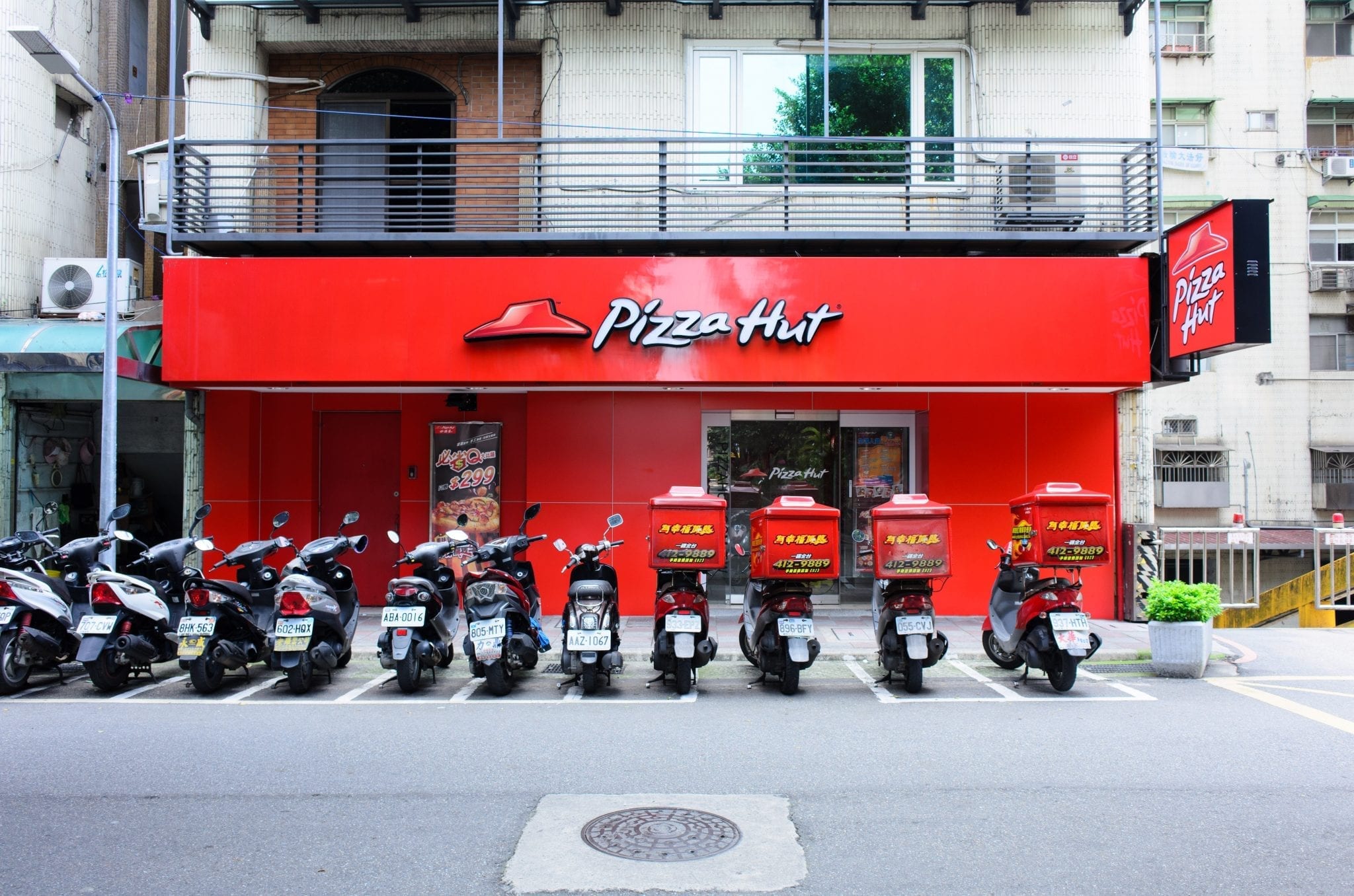
Yum China was spun off from US-based fast Yum Brands Inc 12 months ago. The company’s brands include KFC and Pizza Hut.
CEO Micky Pant says that while only 10 per cent of the company’s sales are delivered, deliveries are growing at double digits and will be an important driver of growth.
Yum China secured a $460 million investment from Primavera Capital and Alibaba affiliate Ant Financial before its spin-off. Yum China already is the biggest user of Ant’s Alipay mobile payments service. The restaurant company is also investing in its mobile ordering system and loyalty programs.