Tag: Alipay

  • KFC tests its robot orders

    KFC tests its robot orders

    Customers at a new digital KFC concept store in Shanghai give their orders to a voice-activated robot.

    Dumi the robot is sophisticated enough to handle changes and substitutions in orders.

    Dumi is the result of 10 years of research and development into artificial intelligence by Chinese web services company Baidu, which says the robot will appear soon in other real-world environments.

    Inside Shanghai’s National Exhibition and Convention Center, the KFC store has been designed to be completely digitalised. Called “Original+”, as a reference to the brand’s traditional recipe, it features wireless charging stations where customers can simultaneously stream music. They can also pay for their meals via mobile payment services including Alipay and Baidu Wallet.

    Introduced at last year’s Baidu World Congress 2015, Dumi integrates the company’s AI technologies such as voice recognition and intelligent search. The robot will use KFC’s customer behaviour data to gain a better understanding of users’ needs and improve business efficiency.

    As well as ordering and paying through Dumi, the customers can see how KFC dishes are made through the robot’s holographic imaging technology.

    Baidu VP Wang Haifeng says the robot may become a big part of the company’s application of more AI technology into fields that range from internet financing to driverless cars.

    There is only one problem with Dumi, admits Baidu: it has trouble distinguishing between certain dialects and accents. But then again, so might a human employee.

    Jason Yu, GM of the consumer research firm Kantar Worldpanel China, describes the Shanghai concept store as “a very interesting experiment”.

    “It is expected to generate increased customer experience, and raise efficiency for restaurants. And in turn it is expected to attract more young and middle class customers.”

  • Alipay extends partnership with Uber

    Alipay extends partnership with Uber

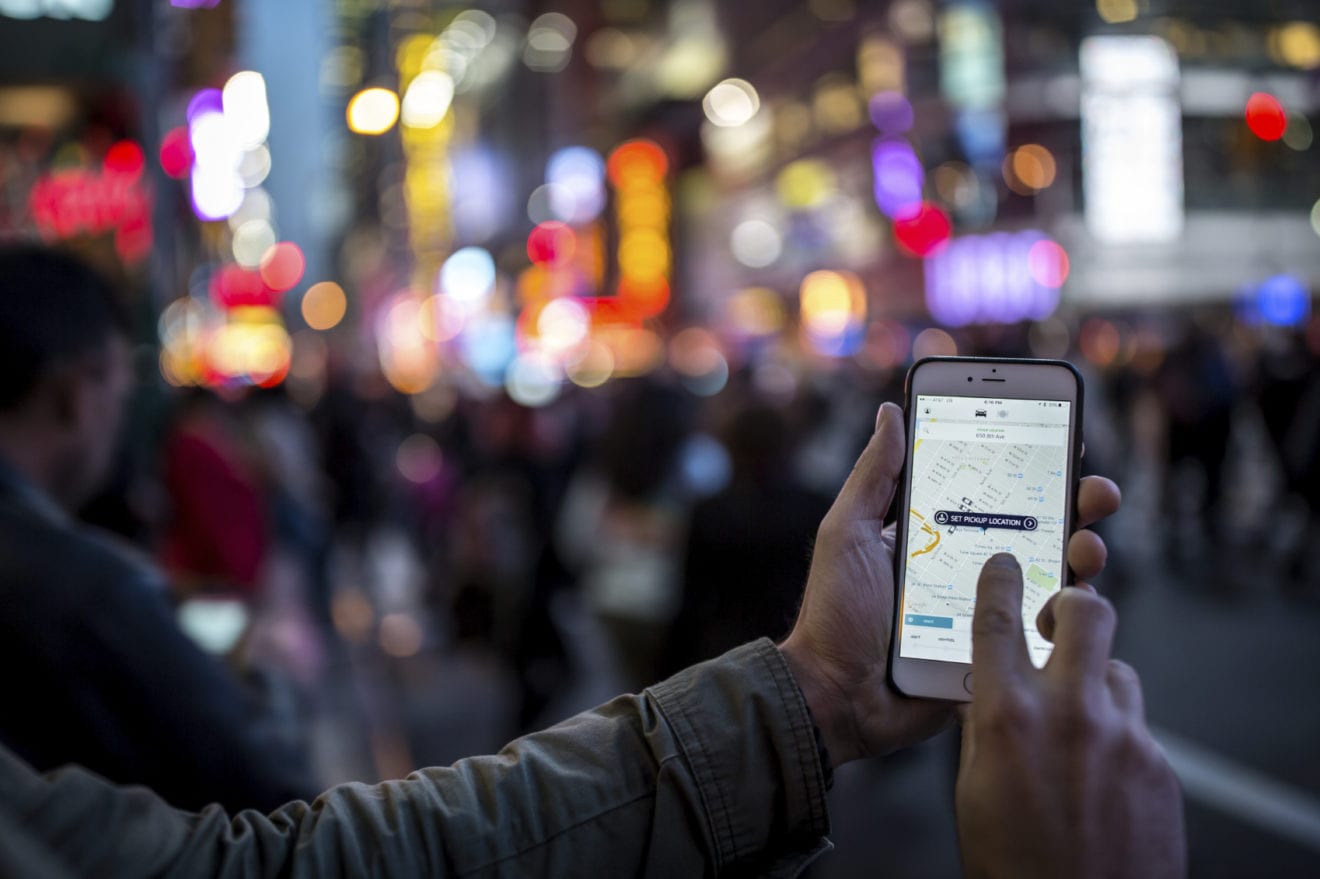
    Uber has teamed up with Alipay to allow passengers from China to pay for international Uber rides in Chinese yuan using their Alipay accounts.

    Alipay has been available as a payment option for Uber in China since 2014. However, Chinese travelers who wish to use the Uber service outside of mainland China require dual currency credit cards or currency conversions.

    The new deal aims to make the Uber service more accessible to Chinese travelers by doing away with this requirement.

    Uber’s head of business for Asia Pacific Eric Alexander told Economic Times that the partnership with Alipay will enable Uber to cater to the growing number of Chinese travelers who use Uber internationally. Alexander expects the integration to grow the number of rides taken by 9 to 10 times globally. Alipay’s userbase numbers 450 million.

    Alipay’s parent company, Alibaba, is an investor in Didi Kuaidi, Uber’s competitor in China.

    The partnership is also expected to affect Uber users from India due to Alipay’s partnership with Paytm, a mobile wallet and e-commerce operator in India.

    The latter is expected to integrate the Uber app into its own mobile app in the coming month.

    With the Paytm integration, riders in India will be able to use the Paytm app to hail Uber rides globally and pay for the service in their domestic currency.

    The integration is targeted at enabling passengers with no credit cards to use the Uber service internationally.

  • NZ govt teams up with Alibaba to boost Chinese trade

    NZ govt teams up with Alibaba to boost Chinese trade

    New Zealand has joined the likes of other Southern Hemisphere agricultural nations like Australia, Chile and Peru by forming a strategic alliance with the world’s leading online retailer, Alibaba.

    The Memorandum of Understanding (MOU) between the group and government business development agency New Zealand Trade and Enterprise (NZTE) was signed yesterday to formalize discussions for strengthening trade between the two countries and to support New Zealand brands in China.

    Under the MOU, the parties will explore different collaboration opportunities, including Alibaba providing support for New Zealand companies to enter the Chinese consumer market through its various e-commerce channels, while NZTE will assist local companies to understand and optimize the opportunities Alibaba’s system offers in terms of business growth in China.

    “We are excited to extend our cooperation with the New Zealand Government by collaborating with NZTE to support local businesses to enter China through Alibaba’s platforms,” said Maggie Zhou, Alibaba’s newly appointed managing director for Australia and New Zealand.

    “With our strong networks in China and expertise in e-commerce, we will enable Chinese consumers to benefit from the premium products and fresh foods that New Zealand businesses can offer.

    NZTE chief executive Peter Chrisp said the new arrangement offered significant opportunities for New Zealand businesses to reach more consumers as well as advocating the country’s reputation as a place of “open spaces, open hearts and open minds”.

    “New Zealand businesses are already using Alibaba’s channels to sell a wide range of products including dairy, meat, seafood, fruit, wine, beverage, cereal, skincare and health supplements,” he said.

  • Contactless mobile payments growing

    Contactless mobile payments growing

    The number of contactless payments made via mobile handsets will reach 148 million globally this year, according to a study conducted by Juniper Research.

    Samsung and Apple will account for approximately 70 per cent of new customers.

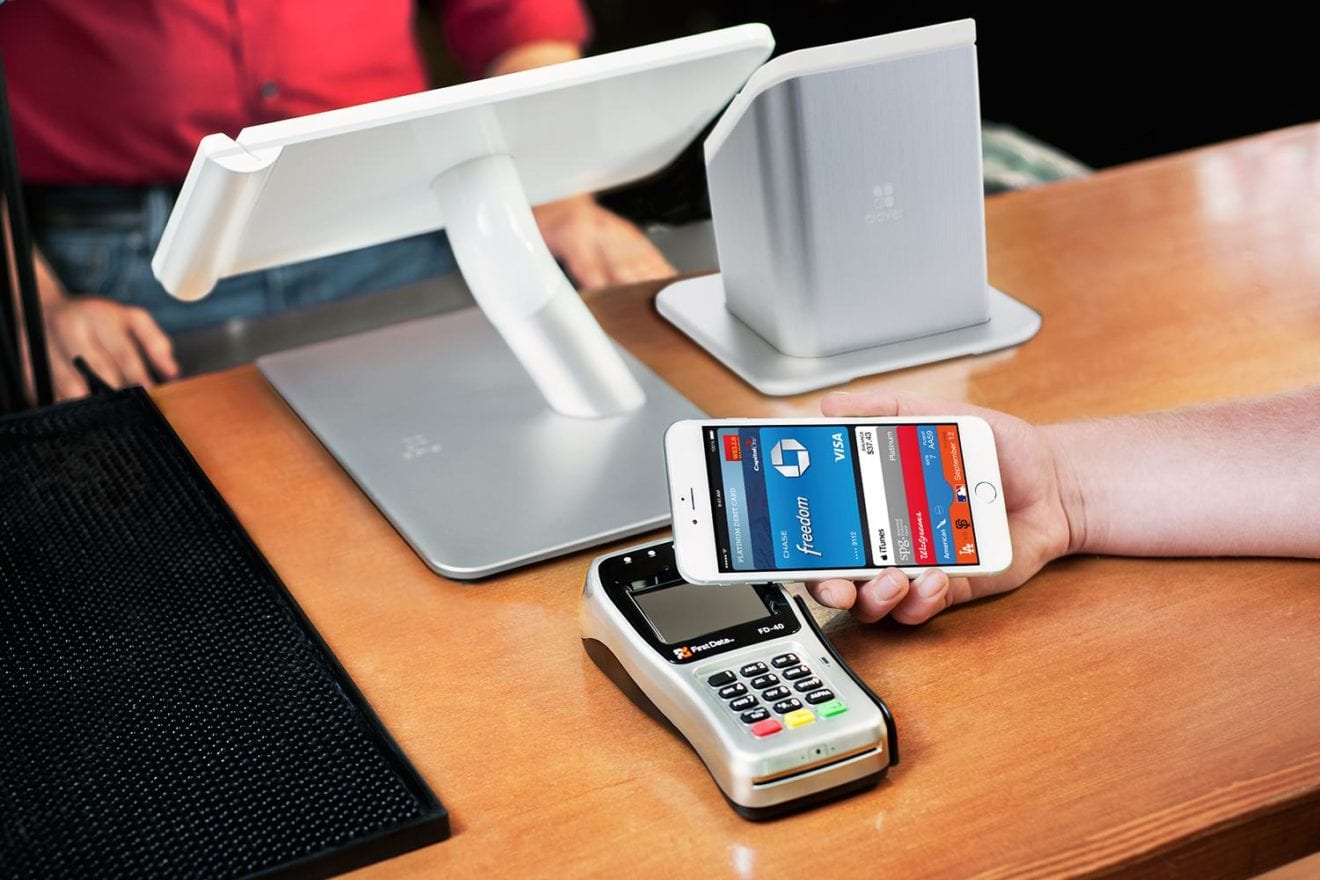
    The study showed consumers have been receptive to this payment method, predominantly because of their strategic placement. When Apple Pay was introduced in China, nearly 40 million payment cards were registered to the service in 24 hours in mid-February.

    Nearly one in five point-of-sale terminals in the US are now contactless-capable, with the report finding this will see smartphones be the number one driver of contactless payments in the US. The report also revealed banks and leading “over the top” players will deploy Host Card Emulation-based (HCE) models.

    “The combination of HCE and tokenisation is extremely attractive to banks. HCE means that they are not dependent on a mobile operator to enable the service; tokenisation reduces the burden on the issuer and allows them to use their existing infrastructure,” research co-author, Dr. Windsor Holden said.

    The study also found that NFC sticker-based solutions can be ‘risky,’ stating that in closed-loop solutions, ‘there’s a chance thieves could simply use all the money in the wallet at participating retail outlets.’

  • How UK Retailers Can Embrace The Chinese Ecommerce Opportunity

    How UK Retailers Can Embrace The Chinese Ecommerce Opportunity

    Within the next two years, China’s e-commerce market will top $1 trillion, making it bigger than the e-commerce markets of the US, UK, Japan, Germany, and France combined. Fuelled by greater internet and smartphone penetration, an expanding middle class with higher disposable income, and greater consumer confidence, over half of Chinese internet users having now made a purchase on the web.

    Surely then, UK retailers should be fighting tooth and nail for the loyalty and spend of these Chinese shoppers?

    Surprisingly, this is not the case. While over half of UK retailers (55%) ship to China, our research – into the international shopping experience offered by the UK’s top 150 online retailers – shows a massive variation in the quality of shopping experiences offered to Chinese shoppers.

    UK e-tailers are failing to accommodate a great number of Chinese shopping preferences and reducing the likelihood of conversions. For example, just over a quarter (26%) of retailers that ship to China offer shoppers the ability to pay in Yuan and present prices in local currency.

    The remainder are leaving shoppers in China to estimate for themselves how much products will cost to buy, which means shoppers could be hit by sudden currency exchange fluctuations or fees from their bank.

    Similarly, only 22% of retailers that ship to China offer shoppers the ability to pay using local payment methods, such as e-wallets and bank transfers like Alipay or Tenpay, which account for more than 80% of ecommerce payments, or Chinese payments cards such as UnionPay.

    Of retailers that do accept Chinese payment methods, 42% offer a single option, barring some prospective customers from making a purchase.

    Added to this, just one in ten (10%) retailers that ship to China offer shoppers a Mandarin-language shopping experience. Since the majority of people living in China don’t speak English fluently, shoppers are likely to feel unconfident about making a purchase if they are expected to use an English-language checkout.

    It’s clear from these customer experience shortcomings that the majority of UK retailers are failing to exploit the burgeoning Chinese ecommerce market fully. This puts them on the back foot when it comes to winning long term loyalty and purchasing preference.

    Retailers simply can’t afford to offer shoppers a second rate experience, especially when failing to localise the online store can make shoppers nervous and can quickly sour a great online experience.

    So, how can retailers rectify this and improve the customer experience to grow sales in China?

    Here are our top tips-

    •       Improve the experience for Chinese shoppers. The first rule of international trade is that, in order to be successful, customers must enjoy the same experience regardless of where they are in the world. Retailers should offer shoppers in China the same, high quality experience that shoppers in the UK and elsewhere expect to receive.

    •       Offer multiple shipping options at reasonable rates. To give Chinese shoppers the confidence to buy, retailers must offer greater choice as well as competitive prices. This is especially critical in China where clearance processes can be very lengthy for non-experienced carriers. Moreover, it’s important to have a simple and transparent returns process in place, so if something goes wrong, shoppers will be confident that it will be resolved quickly and easily.

    •       Display prices in Chinese Yuan. There are few things more off-putting than exchange rate uncertainty when buying from a retailer in another country, and this is particularly disconcerting at times of high currency fluctuation. Retailers should present shoppers in China with prices in the local currency, so that shoppers can feel confident about how much they are paying.

    •       Try to put the customer’s mind at ease. Most shoppers in China expect and prefer to pre-pay customs charges or handling fees when shopping online, so retailers should avoid any potential for nasty surprises, by being upfront about these charges and offering pre-payment.

    With e-commerce sales in China set to exceed $1 trillion next year, retailers must pay more attention to China in the years ahead. However, delivering a localised shopping experience doesn’t have to require a dedicated Chinese website or months spent negotiating with the local supply chain.


  • Alipay, WeChat drive China Jo-Jo sales

    Alipay, WeChat drive China Jo-Jo sales

    China Jo-Jo Drugstores, the US listed, China-based multichannel pharmaceutical and healthcare retailer, says customers are embracing Tencent’s WeChat and Alibaba’s Alipay to buy its goods from mobile phones.

    In the third quarter, Alipay mobile transactions with China Jo-Jo grew 84 per cent quarter on quarter, while sequential traditional payment transactions such as City Health Insurance payment transactions grew 27 per cent.

    According to research firm Analysys, Alipay and WeChat currently dominate mobile payment in China with 45 per cent and 19 per cent of the market respectively.

    “Integrating these mobile payment platforms is an important growth initiative for China Jo-Jo as consumers in China, especially the young and growing middle-class, have been keen to actively adopt mobile payment as the method of choice for their integrated mobile and physical retail store shopping experience,” the pharmacist said in a statement.

    “Providing customers this convenient and familiar mobile payment platform is helping to drive overall transaction growth in both our retail and online pharmacies.”

    Since launching Alipay’s mobile payment service in November 2014, China Jo-Jo has been initiating novel marketing campaigns including in-store sales and bonus promotions in order to attract and customers while promoting premium branded products. Payment transactions and marketing initiatives under WeChat Payment which launched in July 2015 have also been successful in growing China Jo-Jo’s customer base and overall transactions.

    Chairman and CEO Lei Liu says mobile payment platforms have had immense success in China providing consumers with a fast, secure and novel means of paying for both online and offline pharmacy goods and services that is becoming the standard method for paying for goods and services in China.

    “Mobile payment platforms now account for more and more of China Jo-Jo’s online payment transactions and is playing an integral role in the push to drive adoption of China Jo-Jo’s business model.”

    As of December 31, China Jo-Jo had 59 retail pharmacies in Zhejiang Province, China.

  • China’s move to curb grey market for luxury goods may have opposite effect

    China’s move to curb grey market for luxury goods may have opposite effect

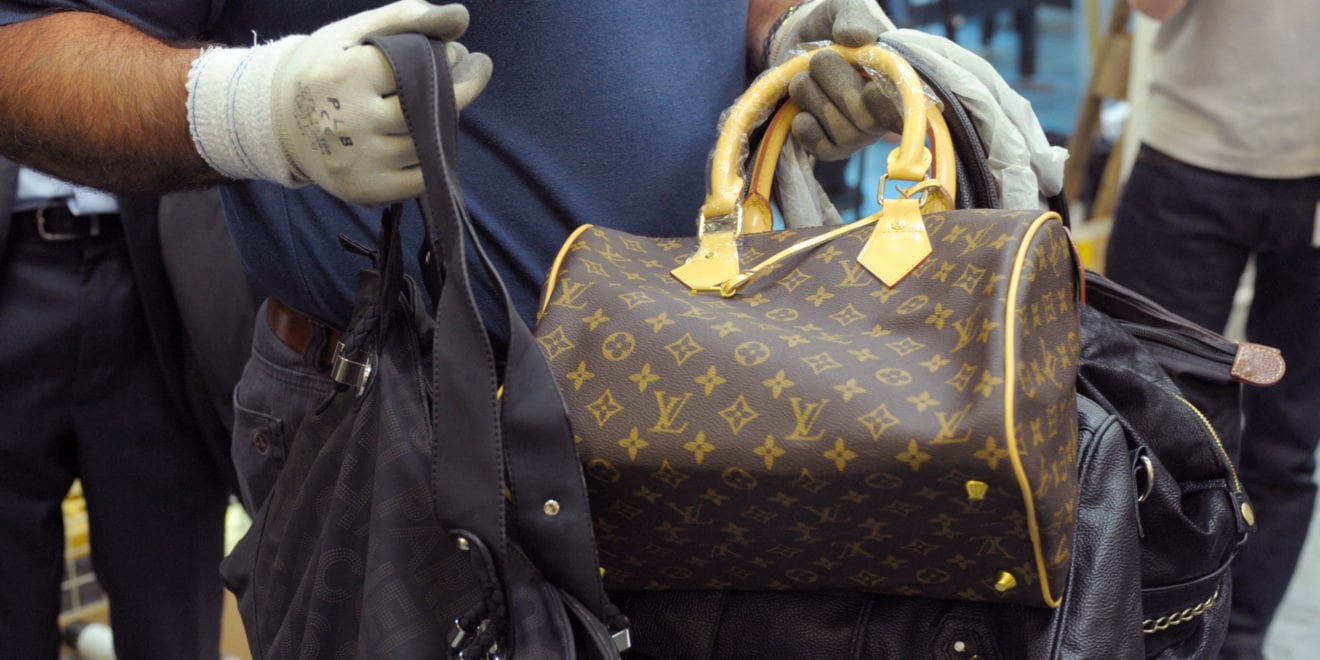
    Given the still significant price gap between high-end goods inside and outside of China, parallel imports are big business. The key players in this grey market are cross-border traders known in Chinese as daigou, and they sometimes double-deal in genuine goods and fakes. While the country’s customs service has taken steps to curb the re-selling of luxury goods sourced from overseas, some evidence suggests that those measures have driven business toward daigou by making legitimate online purchases more difficult. Both trends should be considered by brands tailoring their retail and enforcement strategies to the Chinese market.

    Driven by high taxes, tariffs and the impact of different retail strategies, price differentials for luxury goods between China and developed markets like Europe and North America make buying through daigou a compelling option for many consumers. According to Fortune Character’s 2015 China Luxury Report, the average price difference last year was between 25% and 33% depending on the category of goods. For watches, certain models were nearly 90% more expensive in China.

    These disparities make it a no-brainer for Chinese consumers to look for alternatives to their local retail outlets. One result is the huge amount spent by Chinese tourists on trips abroad. But for those who are not travelling overseas in the near future, and cannot ask a friend or relative to pick up goods for them, daigou have emerged as an alternative. Often coordinating through messaging app WeChat, Chinese buyers pick up specific items for Chinese customers and ship them to China in what Bain & Company says is a 43 billion Rmb per year business in the luxury segment alone. But the introduction of this unknown third party also creates an opportunity for dishonest traders to introduce fake goods into the mix, meaning daigou customers may be getting less than they bargained for.

    Chinese shoppers do have another option – buying online direct from the brand. While only 4% of consumers told Fortune Character that e-commerce was their preferred channel for buying luxury items, more opportunities are opening up. Among these is Alipay’s ePass, introduced about a year-and-a-half ago. The service allows brands to sell directly into China through their existing online outlets by providing both Rmb payment settlement and a delivery network in China. Cutting out the middleman gives customers more confidence that the products they order are the real deal, and Bain says this option is already hurting parallel traders’ bottom line: cross-border e-commerce accounted for 48 billion Rmb in luxury sales in 2015 – a shade higher than the figure for daigou business.

    China has also introduced measures specifically aimed at curbing grey market imports and thus allowing the government to recover more tax and tariff revenue. Last summer, the Ministry of Finance cut tariffs on cosmetics, fur products and suits. It followed up in December by announcing reduced duties on sunglasses, handbags and clothing.

    So far, this sounds like good news for brand owners. But a recent report in Business of Fashion suggests that tougher customs controls – intended to check parallel traders – are instead hampering legitimate e-commerce, and may even be driving customers back to daigou sellers.

    China’s General Administration of Customs (GAC) has stepped up scrutiny of small shipments with high declared values as part of the country’s wide-ranging anti-graft campaign. That’s problematic for some consumers who prefer to buy big-ticket luxury goods directly from overseas brands. A woman named Gao described to Business of Fashion her experience of having two DHL parcels from a UK luxury retailer turned around at customs, saying: “If they’re more than 1,000 Rmb, your parcels will be returned. So I have to either order them separately and pay double DHL overseas shipping fees, or use a daigou.” Unlike legitimate sellers, daigou can attempt to get around this by not declaring an accurate value. An e-tailer who provides a legitimate platform for Chinese consumers to buy directly from brands including Chloé and Lanvin said the complaint was a common one among his customers, with many saying their parcels had been rejected “for no reason”.

    Asked why they think luxury goods cost so much more in China, 24% of people told Fortune Character it’s because “Chinese commerce channels are unduly complex”. For brands looking to sell directly into China via e-commerce, GAC may be complicating their efforts to give customers there a simple and reliable way to buy authentic products. According to Bain, the market share of luxury parallel importers contracted last year, but if cross-border e-commerce gains a reputation as unreliable and the price gap persists, the daigou could prove more resilient than brand owners would like.

  • Cross-border deals, connected shoppers, and mobile payments

    Cross-border deals, connected shoppers, and mobile payments

    Black Friday, the day after the Thanksgiving holiday in the US (celebrated on the fourth Thursday in November), and Cyber Monday, the first Monday after Thanksgiving, mark the start of the year-end holiday shopping season.

    Figures from the United States National Retail Federation shows that over 151 million consumers made purchases online and in physical stores during the most recent Black Friday and Cyber Monday shopping seasons.

    The trend, however, is becoming global. In Asia, where connected shoppers are constantly searching for the best deals, often crossing physical and geographical boundaries, Black Friday and Cyber Monday have been integrated into the retail experience. This, despite the popularity of China’s own Single’s Day online shopping festival that is also being adopted by many retailers across the region.

    Warren Hayashi, President, Asia-Pacific, Adyen, said this is partly due to the growth of cross-border e-commerce, which is giving Asian consumers access to both US and European retailers, who market Black Friday and Cyber Monday promotions in the region and ship to Asia.

    The trend has also been driven by the growing reach of US e-commerce giants like Amazon, which has meant that e-commerce companies based in other markets, such as Lazada, Qoo10, Rakuten, Alibaba, and Zalora, are rolling out similar promotional periods.

    “An interesting effect of this trend is that rather than adversely affecting transactions during the non-promotion period, we are seeing that seasonal shopping promotions actually expand the size of the market. They provide consumers with even more opportunities to shop,” he explained.

    Ayden’s data shows that in Asia, sales volumes increased by 170 percent in a year-on-year comparison over the course of the Black Friday weekend. Meanwhile, shoppers in China spent twice the amount during Black Friday 2015 as compared to the same period in 2014. In Japan, the average transaction value increased by 50 percent.

    Interestingly, the payments industry for online and offline retail is also innovating to keep up with these developments in the retail scene. Ayden sees that companies are also going global with a payments first approach.

    “For example, we have Asian merchants expanding into Europe with their English-language website and local payment methods, such as iDEAL in the Netherlands (which accounts for over 60 percent of transaction volume in that market), SOFORT in Germany, and so on,” Hayashi shared.

    “Likewise, we have global customers selling in Asian markets from their global website, but offering targeted payment methods such as Alipay, which are dynamically offered at the checkout stage according to the shopper’s geographical location. This is a huge opportunity for retailers to expand globally,” he added.

    Interestingly, he said one of the most innovative payments technologies that is changing the user experience is the zero-click transaction – which takes place in the background, without any action required by the customer. An example is how Uber is accepting payments.

    “When passengers take an Uber, they do not need to take any specific action for the payment to be made, everything happens in the background. This kind of frictionless connectivity brings businesses closer to their customers and will spread rapidly,” he explained.

    In 2016, Hayashi sees the retail landscape in the region as going more on mobile, especially in the area of payments.

    Citing Ayden’s own data – tracked quarterly through the Mobile Payments Index – shows that Asia-based payment methods such as Alipay, UnionPay, and JCB have among the highest proportions of mobile payments globally.

    “With everything they do around payments, retailers should simply be asking themselves, how does this improve the customer experience? One key goal should be to provide a frictionless payment experience across channels,” he said.

    “For mobile, along with optimizing the size of the page, many merchants find that a “less is more” approach drives conversion increases, with page layout minimized to ensure the smoothest possible payment flow,” he continued. “It’s also important to remember that the checkout stage of the shopper should be the beginning of an on-going relationship with the consumer. Merchants that have created a frictionless checkout experience, regardless of the channel, see sustained increases in their repeat customers and purchases.”

  • UK retailers fail to capitalise on burgeoning e-commerce in China

    UK retailers fail to capitalise on burgeoning e-commerce in China

    ‘Retailers are falling short in serving both Chinese shoppers and others overseas by not providing the seamless shopping experience they offer here in the UK’

    Although 71% of the UK’s largest online retailers are selling internationally, almost half (45%) are completely ignoring China’s burgeoning e-commerce market, new research has found.

    China’s total e-commerce market is expected to increase by 50% to $6.5 trillion by 2020, with online transactions accounting for nearly half of that growth.

    China’s Centre for International Economic Exchanges predicts the nation’s international online retail will account for 30% to 40% of total world trade by 2025.

    Meanwhile, recent research by Worldpay revealed that 44% of people in China shop on overseas websites.

    But while many UK retailers, such as Selfridges and John Lewis, have taken steps to make the shopping experience in-store more welcoming for high-spending visitors from China, relatively few retailers have made similar improvements online.

    Just 55% offer shipping to China – and among those that do, the shopping experience offered to shoppers varies wildly.

    New research by Global-e, which assessed more than 150 of the UK’s largest online retailers, found that just one in ten (10%) retailers that ship to China offer shoppers a Mandarin language option.

    Across all retailers, just under a fifth (17%) offer non-English language options, with retailers that offer international language options offering 5.7 languages on average.

    And while more than a third (36%) of retailers offer prices in other currencies, just 26% of UK retailers that ship to China present prices in Chinese Yuan, and only 22% accept Chinese local payment methods, such as AliPay, UnionPay and TenPay.

    Of retailers that do accept Chinese payment methods, 42% offer a single option, barring some prospective customers from making a purchase.

    Furthermore, almost all (98%) retailers that ship to China do not provide full duties calculations and prepayment, which means that shoppers may be stung by unexpected charges or taxes.

    Not only does this put the retailer’s reputation at risk, but these companies will also be unlikely to generate brand loyalty in China.

    “Shoppers expect more from the online retail experience but very few retailers can claim to offer ‘global shopping’,” said Nir Debbi, co-founder and CMO at Global-e. “Our research shows that retailers are falling short in serving both Chinese shoppers and others overseas by not providing the seamless shopping experience they offer here in the UK.

    “To boost conversions abroad and harness untapped opportunities, retailers need to remove the frictions in the customer experience by providing effective shipping and returns, localised pricing, local currencies, and payment methods with guaranteed landed cost.”

  • Smartphones outpace tablets in Asian eCommerce

    Smartphones outpace tablets in Asian eCommerce

    For the first time, 34 per cent of browser-based online transactions globally are now made on a mobile device, compared to slightly more than 30 per cent last quarter.

    And smartphones are starting to outpace tablets.

    These were key findings of the fourth quarter edition of the Mobile Payments Index by Global payments technology company Adyen, which tracks mobile payment data from browser-based transactions across its client base and monitors Asian eCommerce shopping patterns.

    It also found that many consumers in Asia are increasingly using mobile devices to shop online. This is being driven particularly by such major payments methods as Alipay, JCB and UnionPay. JCB had the highest share (54 per cent) of mobile payments on the Adjen platform, up from 47 per cent the previous quarter. Alipay increased to 44 per cent (up from 35 per cent) while UnionPay reached 31 per cent (from 23 per cent).

    “The checkout stage of the shopper journey is not the end, but the beginning of an on-going relationship with the consumer,” says Adyen Asia Pacific president Warren Hayashi. “Merchants with a frictionless mobile checkout experience are driving repeat traffic, especially in Asia.”

    For the first time, the index shows that smartphones have overtaken tablets as the preferred device for online shopping – 17.5 per cent on smartphone against 16 per cent on tablet, compared to 14 per cent and 17 per cent respectively the previous quarter.

    When it comes to mobile payments globally, the trend to use smartphones rather than tablets continues for the 10th consecutive quarter. Last quarter this share was up 2 per cent to 68 per cent on smartphone versus 32 per cent on tablet.

    Smartphone use far outweighed tablet in Asia, with 29.5 per cent of online payments on a smartphone compared to 4.5 per cent on a tablet.

    In terms of average transaction value, iPad led the way for the first time at $107, edging out not just smartphones but also desktop/laptop, the traditional leader (at $106). Following were Android tablets at $86, iPhone at $83 then Android smartphones at $73.

    Adyen has been tracking the evolution of mobile payments since June 2013. The index is based on its global browser-based mobile payment transaction data. It does not track in-app mobile payments. With its headquarters in Amsterdam and San Francisco, Adyen serves more than 4500 businesses, customers including Airbnb, Booking.com, Crocs, Dropbox, Facebook, KLM, Mango, Netflix, Spotify and Yelp.

  • Apple Pay China launch slated for February

    Apple Pay China launch slated for February

    Tech giant Apple will launch its mobile payment system Apple Pay in China by early February, according to a report in the Wall Street Journal.

    Citing people familiar with the discussions, the newspaper says Apple has reached agreement with China’s four state-run banks to clear the way for the payment system to be used via its iPhone smartphones.

    The move will place it in direct competition with local online payment platform Alipay, run by Alibaba Group, and its affiliated company Ant Financial, and UnionPay, the state run monopoly credit card system.

    But while the banks are on board, the Wall Street Journal claims Apple may yet face more hurdles before it can launch the service, with banking and eCommerce regulations overseen by a number of government agencies.

  • Pitney’s Borderfree Expands Online Catalog to Woo China

    Pitney’s Borderfree Expands Online Catalog to Woo China

    Pitney Bowes Inc. subsidiary Borderfree is expanding its online shopping catalogue for Chinese online customers to serve their penchant for America-based consumer products. The company intends to provide these customers with more options for American brands in fashion, sports apparel and lifestyle accessories ahead of the upcoming holiday season.

    In particular, Borderfree has extended its partnership with China’s e-commerce giant Alibaba Group Holding’s subsidiary company, Ant Financial’s Alipay (an online payment services provider). This will allow China-based consumers to purchase directly from the retailer’s websites using localized payments. Borderfree’s collaboration with Ant Financial helps obliterate currency and logistics barriers, allowing leading global retailers to explore the Chinese soil.

    Borderfree realizes that customer security is paramount in online transactions and hence, is working closely with payment and marketing platform “Alipay ePass” (which allows U.S. merchants to gain access to Chinese consumers with an Alipay account), to woo in major crowd this holiday season. On the other hand, this deal also enables Alipay’s 400 million registered customers to access the products of a wide range of international retailers including Aéropostale, MotoSport, Bloomingdale’s, Macy’s and Saks Fifth Avenue at comparable prices.

    In our opinion, the incredible growth of online shopping in China, which likely accounts for over 40% of the world’s retail e-commerce according to EMarketer, is enough to bank on the profitability of this particular deal. Moreover, the fact that the U.S. happens to be the leading e-shopping destination of the world further brightens the commercial attractiveness of Pitney Bowes.

    Earlier in June, Pitney Bowes completed the acquisition of Borderfree to complement its e-commerce business. Encouragingly, this gave the company a first-mover advantage for exploring a multibillion-dollar market, which enjoys a double-digit growth rate. Notably, company sources suggest that the rapidly growing Chinese e-commerce sector is emerging as the key driver of the nation’s overall economic growth, primarily fueled by increased Internet penetration and surge in smartphone ownership.

    We believe the approaching holiday season will witness colossal growth in online purchase data, and this bodes well for Pitney Bowes’ profitability. Moreover, integration of the Borderfree business with its global e-commerce business will help the company reap significant cost-synergies in the long run.

    Pitney Bowes currently has a Zacks Rank #3 (Hold). A better-ranked stock in the industry is Advanced Emissions Solutions, Inc., that holds a Zacks Rank #2 (Buy).


  • New rules will ‘wipe out’ Chinese online payment agents

    New rules will ‘wipe out’ Chinese online payment agents

    New regulations proposed by the Chinese government will deliver an immediate boost to state-ownedChina UnionPay, potentially forcing its smaller Chinese online payment agents out of business.

    The ‘Method of Network Payment Service Management for Third-Party Payment Agents’, proposed in August 2015, is set to restrict consumers’ daily and annual spending on online purchases through private third-party payment agents such as Alipay and Tenpay. But the new law exempts China UnionPay, giving it a clear market advantage.

    According to Timetric, the new law will present serious challenges for small private third-party agents trying to get a foothold in the online retail market.

    Under the draft law, the transaction amount made through third-party payment agents will be determined on the level of security measures incorporated within the online platform. Furthermore, all private third-party payment agents will be forbidden from offering financial services such as deposits, loans, financing or currency exchange services to consumers.

    Chinese regulators say the law aims to protect consumer interest and privacy and clamp down on counterfeit products and poor customer service offered by online private third-party payment agents.

    But in practice it appears on the surface to be a tool to protect UnionPay’s market dominance in the short term and protect the government’s interests, rather than those of consumers.

    “If implemented, the new legislation is anticipated to wipe out smaller private third-party agents, due to the increased operational costs of implementing multiple security measures”, said Kartik Challa, an analyst at Timetric.

    In China, UnionPay (CUP) is the sole scheme provider of payment cards. According to central bank regulations, all banks and card issuers operating in the country are required to route their Yuan-based transactions through CUP’s electronic payment network. However, following a complaint filed by the US against China via the WTO with regards to discriminating against foreign companies in 2012, the WTO directed the Chinese government to open up its payment cards market to foreign operators. Consequently in October 2014, the Chinese government announced its decision to allow foreign companies to set up their own payment card clearing businesses, effective from June 1, 2015.

    Ultimately, says Challa, the move will open the way to stronger competition for CUP – but not in the short term.

    “This move by the Chinese government is anticipated to intensify competition in the Chinese payment cards market, and end CUP dominance as the country’s only authorised card clearing organisation. However, Visa and MasterCard have a long way to go before they can make a dent in CUP’s market share, as they need to build up infrastructure from scratch”, comments Challa.

    China is one of the largest and most mature eCommerce markets in the world, increasing at a CAGR of 56.99 per cent over the last four years, from US$68.7 billion in 2010 to $417.3 billion in 2014.

    Factors, such as the rapid adoption of smartphones, growing internet penetration as well as availability of secure online payment mechanisms and a growing preference for online shopping – especially among the rural population– contributed to this growth.

    Timetric is a provider of online data, analysis and advisory services on key financial and industry sectors. It provides integrated information services covering risk assessments, forecasts, industry analysis, market intelligence, news and commentary.a

  • Luxury shoppers in China spending 28 per cent more per online purchase than in 2014, study shows

    Luxury shoppers in China spending 28 per cent more per online purchase than in 2014, study shows

    Unfazed by the country’s economic slowdown, luxury shoppers on the Chinese mainland have increased their purchases online as a range of e-commerce options provide attractive deals – from cosmetics and clothes to cars and property.

    That trend was uncovered from a joint survey of 10,150 luxury consumers in China by global professional services giant KPMG, online luxury retailer Mei.com and Chinese media firm Sina’s Nasdaq-listed micro-blogging service Weibo. The survey was called China’s Connected Consumers 2015.

    “The pace of change in today’s marketplace in China is taking retailers and brands by surprise,” Egidio Zarrella, the clients and innovation partner for China at global professional services giant KPMG, said on Tuesday.

    The new KPMG-led study found that the average spending by mainland luxury shoppers has increased 28 per cent to 2,300 yuan (US$362) for each single e-commerce purchase, up from 1,800 yuan average in last year’s survey.

    It also found that 45 per cent of respondents in the latest survey said they have bought many luxury items online.

    While only 1 per cent said they have bought domestic and overseas properties and cars online, about 50 per cent of those surveyed said they have not ruled out making those purchases online in the future.

    “China’s luxury consumers are looking for something beyond the physical shopping experience,” Zarrella said.
    “They are moving from just owning a luxury product to experiencing luxury, including gourmet dining, fine wines, private flights, bespoke safaris, luxurious travel tours, spa treatments, art auctions and an ever increasing range of investment services.”
    In a report early this year, management consulting firm Bain & Company estimated that China’s luxury market reached 115 billion yuan last year, down 1 per cent from the previous year, as Beijing cracked down on lavish spending by government officials.

    The country’s luxury market was largely expected to remain under pressure because of the slowing economy. Mainland China’s gross domestic product growth was exactly 7 per cent in the first and second quarters of this year, compared with close to 8 per cent last year.

    Zarrella, however, pointed out that e-commerce spending in the world’s second-largest economy shows a completely different picture.

    The survey, which had respondents from 90 Chinese cities, found an increase in the average amount spent on luxury purchases in most product categories.

    It showed that a higher amount was being spent on average for popular categories such as bags at 109 per cent, women’s apparel at 58 per cent and cosmetics at 18 per cent. There was also a significant increase in spending on categories such as watches at 126 per cent and jewellery at 65 per cent.

    The top-selling product categories in China’s e-commerce market are cosmetics, women’s shoes, bags and leather goods, women’s apparel and accessories.

    “Price is becoming less of a driver [for online sales],” said Thibault Villet, the chief executive at Mei.com. “But value remains important as customers are well informed about global prices since most of them travel.”

    The study found that Chinese luxury online shoppers prefer to buy on so-called online-shopping platforms, such as e-commerce giant Alibaba Group’s Tmall.com.

    “Tmall controls over 50 per cent of the total business-to-consumer e-commerce market in China,” Villet said.

    That preference was attributed to the multiple online merchants in such platforms, the extensive information on products and pricing, peer ratings of sellers, regular promotional activities and payment gateways like Alipay and Tencent Holdings’ Tenpay.

    Villet said Mei.com plans to open its own e-commerce platform dedicated to luxury goods by next year to better compete on the mainland.

    He said the exponential growth of smartphone adoption on the mainland has also helped boost mobile e-commerce purchases. “We expect Mei.com to be fully mobile by the end of 2016,” he added.

    Mobile e-commerce sales will account for more than half of online retail shopping in mainland China by next year, according to New York-based research firm eMarketer.

    It forecast mobile e-commerce would make up 10.9 per cent of all retail sales in the country next year and 55.5 per cent of online retail shopping as the sector grew to a record US$505.74 billion, up from an estimated US$333.99 billion this year.

    The government-backed China Internet Network Information Centre has reported the number of users who accessed the internet through mobile devices reached 594 million in June, up from 557 million in December last year, while the overall number of internet users rose to 668 million from 649 million.

    Andrew Taylor, a co-founder of Juwai.com, which connects Chinese buyers to overseas property, said mobile browsing by consumers in China was a major driver of brand awareness for his company.

    “We see that many of the more affluent customers who look for luxury properties use [Tencent’s instant messaging service] QQ and call us,” Taylor said.

    “The younger consumers contact us through [Tencent social mobile messaging platform] WeChat and Sina Weibo.”

    So-called online-to-offline activities is a trend that will continue. Zarrella said that physical stores have a role to play in triggering e-commerce purchases of luxury goods.

    “We see a growing number of online platforms launching pop-up shops in malls, or have tie-ups with physical stores to give buyers an opportunity to inspect these products,” Zarrella said.

    Thomas Crampton, the global managing director at Social@Ogilvy, the worldwide practice of marketing group Ogilvy & Mather involved in social media, said an online-only approach in China is not sustainable for brands.

    “At some point, each brand will need a face-to-face touchpoint,” Crampton said.

    “We helped an automotive brand, analyse, interpret and optimise the shopper journey,” he said as an example. “From a traditional purchase cycle of over 200 days, the brand managed to sell over 300 cars in a matter of three minutes through WeChat.”

  • McDonald’s China to accept Alipay

    McDonald’s China to accept Alipay

    Alibaba’s AliPay has received a major boost in its quest to become a generally accepted payment system in the mainland.

    McDonald’s China has announced it will accept Alipay in more than 2100 restaurants.

    The launch will commence in Shanghai this month and spread across all the fast food chain;’s locations in China by March 2016.

    “McDonald’s will work together with Ant Financial and Alipay to upgrade its services by integrating data technologies,” Ant Financial sais in a statement.

    “All restaurants in China are undergoing system upgrade and the set-up will be complete to accept Alipay as its new payment method by March, 2016.

    “It will take customers only two seconds to pay their meals at McDonald’s after introducing Alipay to its outlets by scanning the QR code in users’ Alipay. It will be more convenient and efficient for both customers and cashiers.”

    Another venture set up between Alibaba and Ant Financial – Koubei – allows consumers to pay for goods using their smartphones. Koubei is expected to be accepted by McDonald’s China also.

    Alipay’s McDonald’s China deal follows another announced last week with hotel chain Marriott as Alipay gains growing momentum in gaining market share from more traditional systems like UnionPay and even cash. Walmart starting accepting Alipay in May and KFC announced a partnership in June.

    “Alipay is now accepted in over 200,000 offline retailers and eateries across China and another 30,000 shops in Seoul, Korea, Hong Kong, Singapore, Japan and Germany,” Ant Financial.