Tag: Alipay

  • US$1 billion in first five minutes of 11.11

    US$1 billion in first five minutes of 11.11

    Alibaba Group says more than US$7 billion (RMB 47.5 billion) of gross merchandise volume (GMV) was settled through Alipay on Alibaba’s China and international retail marketplaces within the first two hours of the 2016 11.11 Global Shopping Festival.

    And more than $1 billion was transacted in the first five minutes – from 12 midnight.

    “Chinese consumers purchased more in the first hour of 11.11 this year than the entire 24 hours in 2013, reflecting the incredible evolution of our global shopping festival,” said Daniel Zhang, Alibaba Group CEO. “This unprecedented level of engagement demonstrates both the consumption power of Chinese consumers and their embrace of online shopping as a lifestyle.”

    In the hours leading up to the official midnight start of November 11, millions of viewers watched the Alibaba Group 11.11 Global Shopping Festival Countdown Gala live online and on mobile devices via Youku Tudou, and the Tmall and Taobao apps. The gala was televised live across China through Zhejiang Satellite TV, as well as in Hong Kong and Macau for the first time.

    “This year, we innovated new ways for consumers watching the live broadcast of our countdown gala. Viewers were able to influence the production of the show in real-time through their mobile phones,” said Chris Tung, chief marketing officer, Alibaba Group. “Consumers in front of their televisions were shaking, tapping, scanning, chatting, browsing and buying with their mobile devices, creating a seamless and truly immersive entertainment experience.”

    VR drives surge

    International think tank Fung Global Retail & Technology predicts sales of $20 billion during the full 24 hours, up an extraordinary 40 per cent over last year’s total of $14.3 billion, thanks in part to the introduction of Buy+, the world’s first-ever end-to-end virtual reality (VR) shopping experience.

    “Buy+ will enable global retailers (even those without a physical presence in China) to offer an engaging, virtual in-store experience to Chinese consumers,” writes Fung Global Retail & Technology MD Deborah Weinswig in Singles’ Day Online Shopping Festival Could Also Benefit Retailers’ Physical Stores, a new report.

    The platform features eight virtual stores: Macy’s, Target, Costco, P&G, Chemist Warehouse, Freedom Foods, Tokyo Otaku Mode and Matsumoto Kiyoshi. Using cardboard VR headsets distributed in October, consumers can virtually walk around Macy’s Herald Square flagship in New York City to find products and, with just a nod of the head, confirm payment to purchase an item they see.

    “One of Alibaba’s strategies for Singles’ Day is to merge gamification with online shopping. The company will leverage its media and entertainment assets to drive increased online consumption,” says Weinswig.

    These include a televised countdown gala event and fashion show that was held last evening. In addition, the company is promoting products on TV screens, allowing viewers to scan QR codes for a real-time purchase.

    The concept has expanded beyond Alibaba, with chief rival JD.com, Gome and Suning also creating promotions. International retailers will target Chinese shoppers, and Chinese retailers target international shoppers. In 2015, Newegg, OTTE New York and Nasty Gal, all launched Singles’ Day promotions.

    “A year ago, Alibaba promised that Singles’ Day will be a true omni-channel event, and this year the company seems dedicated to continue delivering on the promise, armed with more technological innovations that bridge the gap between the virtual and physical worlds,” Weinswig writes.

  • DFS Group And Ant Financial Introduces AliPay

    DFS Group And Ant Financial Introduces AliPay

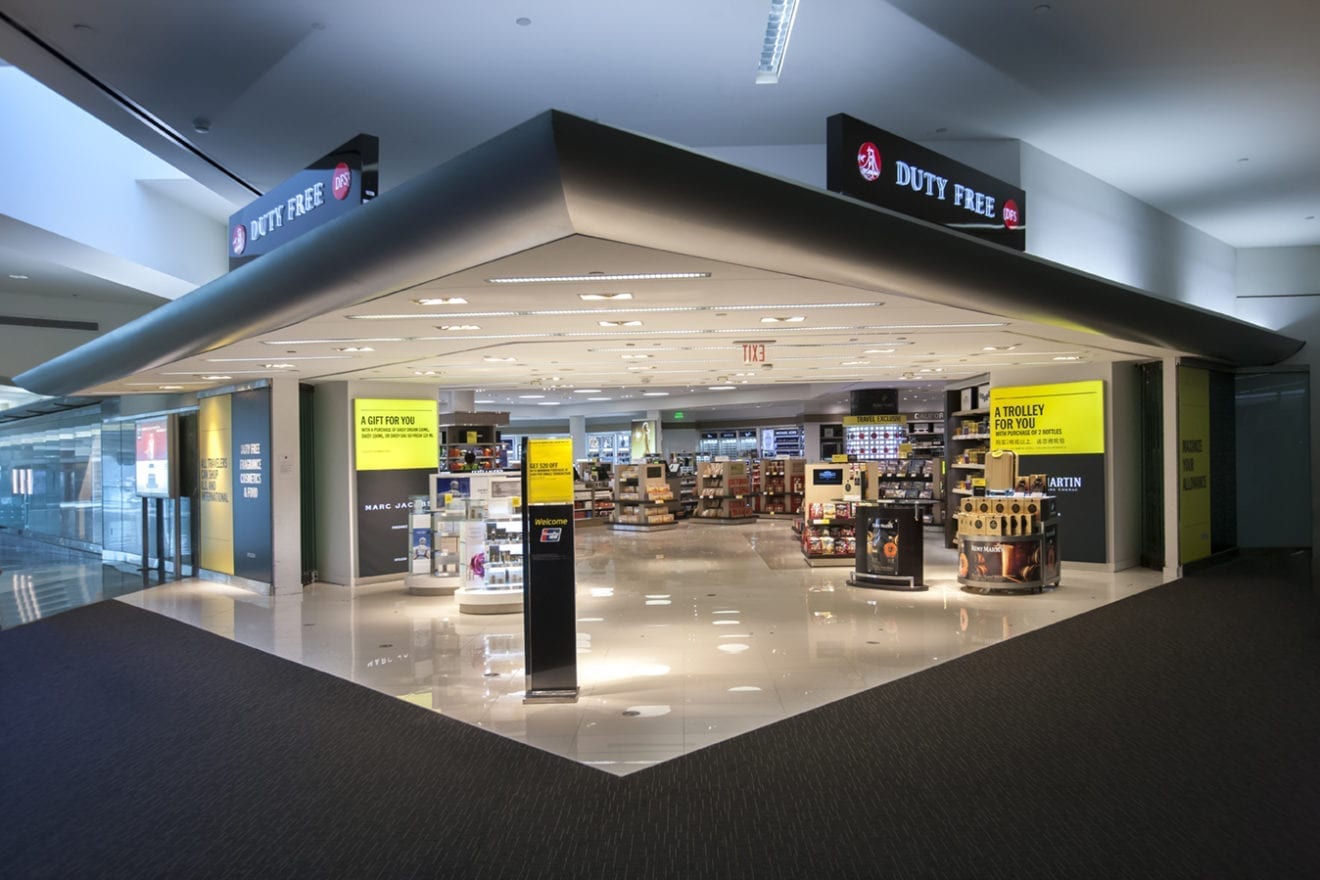
    DFS Group, the world’s leading luxury travel retailer, has partnered with Ant Financial Services Group, a related company of Alibaba Group, to launch Alipay at DFS, San Francisco International Airport, the first offline retailer in California to provide Alipay’s mobile payment option. Alipay, which provides consumers with fast, easy and safe mobile payment, caters to DFS’ global customer base that seeks out convenience and service when shopping in travel retail.

    “DFS is thrilled to partner with Ant Financial to bring leading mobile payment system Alipay exclusively in California to DFS, San Francisco International Airport,” said Mark Sullivan, Managing Director North America, DFS Group. “Here at DFS, we strive each day to ensure our customers receive the world’s best in customer service which means continuously innovating the shopping experience to meet their needs. With demand for mobile payment growing throughout retail, we are confident that with Alipay as our exclusive partner, customers will be delighted with this new and convenient approach to shopping with DFS.”

    To celebrate the launch, DFS will offer shoppers an exclusive promotion until November 30, offering 20 percent off key Origins beauty products when purchasing with the Alipay mobile app. 

    “DFS represents the most innovative approach to travel retail and we are excited to partner with them to continue to evolve this experience with the introduction of Alipay,” said Souheil Badran, President and General Manager, Alipay North America.

    This is the sixth DFS location to implement Alipay’s mobile payment system, which is also available at T Galleria stores in Hong Kong and Singapore as well as DFS, Hong Kong International Airport.

  • Yum China aims to triple outlets

    Yum China aims to triple outlets

    Yum China, being spun off at the end of this month by Yum Brands Inc, says it can triple its number of restaurants.

    Yum Brands opened its foray into China with a KFC restaurant in Beijing in 1987. There are now more than 7300 KFC and Pizza Hut outlets.

    “I really don’t see any reason why we cannot have 20,000 restaurants in China,” says Yum China division CEO Micky Pant.

    However, Yum China has had challenges in recent years including marketing blunders, rising competition, bird flu outbreaks, food-safety problems and slowing economic growth. Just this month, executives blamed anti-US protests sparked by political tensions in the South China Sea for a surprise 1 per cent drop in China sales during the latest quarter.

    Pant says those sales are recovering and “the fundamentals of the brands in China are very strong”.

    He says Yum China will have 15 per cent earnings expansion in the world’s fastest-growing economy with plans to  open restaurants in burgeoning mega-cities, major transportation hubs and new shopping malls.

    There are also plans to open Little Sheep and Taco Bell restaurants.

    Partners Primavera Capital and Alibaba Group Holding affiliate Ant Financial, which will buy a US$460 million stake in Yum China, bring competitive advantages such as real-estate market knowledge and digital leadership, Pant says.

    Yum China already is the biggest user of Ant’s Alipay service, and the restaurant group is investing in making its mobile ordering system and loyalty programs even more robust.

    After the separation, Yum China Holdings will become a licensee of Yum! Brands in mainland China with exclusive rights to quick-service restaurant KFC, casual dining brand Pizza Hut and Taco Bell, which is expanding globally but is not yet in China. It will also own the Little Sheep Mongolian hot pot and East Dawning Chinese cuisine concepts. Yum China has more than 400,000 employees in more than 1100 cities, generating more than $8 billion in system sales last year.

    The standalone Yum China is expected to start trading on the New York Stock Exchange on November 1.

  • Discovery Japan Mall opens online

    Discovery Japan Mall opens online

    Tokyo-based craft products retailer DigitalStudio has launched Discovery Japan Mall, a cross-border eCommerce venture.

    Specialising in Japanese brands, the mall’s initial catalogue includes mainly toys, fishing gear, cosmetics, food, watches and fashion. About 100 Japanese companies have opened stores on the mall, offering about 15,000 items.

    Shipping is available to more than 120 countries and regions, and as part of the opening campaign free international shipping is offered for orders worth JPY 20,000 (US$190) or more until the end of this month.

    As well as credit cards, the mall supports payment by AliPay, PayPal, UnionPay and WeChat. The website is available in English, simplified and traditional Chinese, Indonesian, Korean and Thai. Purchases can be made by smartphone, and all orders include tracking and shipping insurance, plus delivery from Japan.

    Discovery Japan Mall representative Norio Itabashi says many hidden Japanese products do not reach the overseas market, and the mall is working with craftsmen and manufacturers to sell unique products.

    DigitalStudio was established in 2003 with the aim of “continuing to bring Japan to the world”.

  • Ten airports introducing Alipay for travellers

    Ten airports introducing Alipay for travellers

    Ten international airports will be offering Alipay for travellers by the end of next month.

    First up in Alipay’s new “Future Airport” program are Munich Airport, Singapore Changi Airport, Narita International Airport in Tokyo, Kansai International Airport in Osaka, Seoul Incheon International Airport, Auckland Airport in New Zealand, Suvarnabhumi Airport in Bangkok, Hong Kong International Airport, Taoyuan International Airport in Taipei and Macau International Airport.

    “We see more Chinese tourists passing through our airport every year as they visit Japan, so becoming part of Alipay is a critical tool for our merchants,” says Kansai Airport executive officer Akihisa Tabe.

  • Alibaba to take stake in Yum China

    Alibaba to take stake in Yum China

    Yum! Brands has agreed with two partners to invest $460 million into Yum China, following its spinoff from the American fast-food giant.

    Also involved are China-based global private equity firm Primavera Capital Group and online and Alibaba subsidiary, mobile financial services provider Ant Financial Services Group, which runs the Alipay mobile payments platform.

    The spinoff and concurrent finalisation of the investment are expected to occur on October 31, with Yum China to start trading on the New York Stock Exchange the next day as an independent company.

    Under the terms of the agreements, Primavera and Ant Financial will invest $410 million and $50 million respectively in Yum China.

    Primavera founder Dr Fred Hu, former greater China chairman at Goldman Sachs, will be non-executive chairman of the board of Yum China.

    “Yum China is an established leader in the retail and restaurant industry, which we believe is poised for continued strong growth and unit expansion as cities across China invest in new transportation hubs, shopping malls and other physical and electronic infrastructure,” says Dr Hu, describing the Yum China moves as a “new and exciting chapter”.

    Membership services

    “Through this collaboration, we aim to help Yum China provide world-class mobile payment services for tens of millions of customers across its brands,” says Ant Financial Service Group president Eric Jing. “These services include hassle-free Alipay for customers to help shorten queues at the cashier, as well as membership services for Yum China designed to help manage its customer relations and promotions.”

    He says Yum brands KFC and Pizza Hut have seen promising marketing results through promotions on multiple Ant Financial platforms.

    “Primavera and Ant Financial both have deep insights into the rapid urbanisation and digital transformation that is driving the evolution of China’s economy,” says Yum China CEO Micky Pant.

    “The investments from Primavera and Ant Financial in Yum China mark another important milestone in our plans to separate the China business and create a solid foundation for Yum China as it prepares to become an independent restaurant powerhouse,” says Yum! Brands CEO Greg Creed.

    As a licensee of Yum! Brands in China, Yum China Holdings will have exclusive rights to KFC, Pizza Hut and Taco Bell, which has yet to expand to China. KFC and Pizza Hut have more than 7200 restaurants in more than 1000 cities in China.

  • Hong Kong Issues First Licenses For Stored Value Facilities

    Hong Kong Issues First Licenses For Stored Value Facilities

    Though its population of 7.5 million is equal to that of a mid-size mainland Chinese city like Hangzhou, Hong Kong makes up for lack of people with strength in its financial markets. And news today that the Hong Kong Monetary Authority has issued stored value facilities licences is big news.

    HKMA has granted stored value facilities licenses to five companies under the Payment Systems and Stored Value Facilities Ordinance: Alipay, Octopus, TNG, Money Data, and HKT Payment. Octopus’ license is effective November 13, 2016, but the other firms have effective licenses from today, August 25.

    “The grant of the first batch of licenses for SVF issuers is turning a new page in the retail payment development in Hong Kong,” Norman Chan, CEO of HKMA.

    The Ordinance commenced operation on November 13, 2015. Under the Ordinance, the HKMA is empowered to implement a mandatory licensing system for multi-purpose stored value facilities and perform relevant supervision and enforcement functions.

    A one-year period is allowed for existing issuers of stored value facilities or new market operators to apply for stored value facilities licenses from the HKMA.

  • New Arrival app helps Chinese shop abroad

    New Arrival app helps Chinese shop abroad

    A new fashion app, New Arrival, aims to introduce Chinese travellers abroad to lesser-known boutiques abroad.

    The New Arrival app serves as a platform and guide for brick-and-mortar stores Chinese shoppers might otherwise miss in their travels.

    Founded by Howell Hu, the app has two sections. One part focusses on “new arrivals” from on-ground stores, letting users browse products with a swiping feature. Shoppers swipe right to like a product and see more like it, swipe left to “pass” on the product, and swipe down to add it to their shopping cart.

    From there, they can either access more information about the store or arrange to make the purchase directly on the app via Alipay. Users can also browse using a navigation system to shop by category.

    The other section of the New Arrival app lets users tour shops by city. A “nearby” option lets travellers find stores on the go, or they can search by city (destinations include Beijing, Shanghai, New York, Paris and Hong Kong).

    More than 200 stores are presently collaborating with the app, all of them either multi-brand stores or individual designers. While most of the countries included are major tourist destinations, China is also represented as well as several destinations in Asia, such as Johor Bahru in Malaysia.

    The New Arrival app allows returns within one week, and the stores themselves handle shipping.
    Available for iPhone, the app will have an Android version next month.

  • Carrefour China concentrating on convenience

    Carrefour China concentrating on convenience

    Carrefour China says it will concentrate on convenience store development for the rest of this year.

    The French-headquartered retailer has been losing market share in the hypermarket segment and has closed about 30 stores during the past three years. It is trying to find a new growth model for the competitive Chinese model according to IGD analyst Catherine Ellwood and IGD Singapore program director Shirley Zhu.

    Hypermarkets will still play a role for Carrefour, particularly in western and central China, they say. The retailer is changing focus because of the increasing challenges for hypermarkets.

    Carrefour reportedly plans to open 40 to 50 convenience stores in Shanghai as well as about 15 Carrefour Easy stores by the end of the year.

    Rapid urbanisation, smaller families and rising affluence levels mean Chinese shoppers are demanding more convenient solutions, says the IDG team.

    “Convenience stores present a huge growth opportunity, but winning in this sector under rising costs and fierce competition is not an easy task.”

    However, Carrefour does have the advantage of existing sourcing and supply-chain capability for fresh products. Daily delivery from its own fresh distribution centre ensures availability and quality.

    A typical Carrefour Easy store has a floor size of 250 to 300 sqm with plenty of room for fresh produce displays. The stores act as pick-up locations for online shopping, and have kiosks to provide various services. There is also free Wi-Fi and charging devices in-store.

    For mobile payment alone, the stores accept Alipay, Apple Pay, Samsung Pay and WechatPay.

    Carrefour opened an extra distribution centre in June. The 21,000 sqm centre, in Dongguan, Guangdong province, will help with expansion in south China. Carrefour aims to have six distribution centres by the end the year.

  • ‘Super-shoppers’ dominating online retail

    ‘Super-shoppers’ dominating online retail

    A Worldpay global survey of 20,000 consumers has discovered that buying power in the internet age is concentrated within a group of high-spending, high-frequency “super-shoppers”.

    While these shoppers make up just 5 per cent of the population in China, they account for 92 per cent of all money spent buying physical goods online in China each month.

    Worldpay’s research into three Asia Pacific markets further reveals that APAC super-shoppers are most likely to shop online via a mobile device, and are demanding when it comes to payment method. The international payments company polled 2000 consumers in each of the 10 countries covered by the Why Do They Pay That Way? Study, including China and Japan.

    Key findings include…

    • Chinese super-shoppers are more likely than the average Chinese shopper to use a credit or debit card.
    • More than 60 per cent of Japan’s online shoppers will switch to another retailer if they cannot use their preferred payment option at checkout.
    • Australian super-shoppers were the world’s second-biggest buyers, spending on average more than £200 (US$260) on their latest online transaction.
    • The Chinese are the biggest mobile shoppers in the world, with 33 per cent of super-shoppers making their latest online purchase by mobile phone.

    “With eCommerce markets developing at lightning speed across the Asia Pacific region, it’s no surprise elite shoppers are taking their spending power online,” says Worldpay GM Asia Pacific Phil Ponford. “The super-shopper trend is driven by a growing middle class, high mobile penetration and advancements in consumer technology.

    “APAC super-shoppers are passionate about what they buy and sophisticated in how they shop. They do research to find the most competitive prices, and will turn elsewhere if they discover they can’t use their preferred payment method at checkout.”

    Unable to pay

    Internationally, 36 per cent of super-shoppers said they had experienced the situation of reaching checkout and being unable to pay with any of the listed options. This was particularly the case in China, where 44 per cent of Super-Shoppers said they could not use their preferred payment method.

    When faced with not being able to use their preferred payment option, super-shoppers may buy the same item from another website or abandon their purchase all together. In Japan, 61 per cent of super-shoppers said they would switch to another retailer if unable to use their preferred payment option at checkout. Worldpay estimates that for each lost sale globally, retailers are missing out on as much as £100.

    Super-shoppers in APAC overwhelmingly prefer credit cards. While 41 per cent of the general population in China prefers to pay online with Alipay, only 18 per cent of China’s super-shoppers said they were likely to use their nation’s most popular eWallet. Instead, 54 said they preferred to use a credit card.

    “Retailers should be looking at super-shoppers as a distinct group that often behaves very differently from other customers,” says Pomford. Retailers who do not support the right range of payment methods could actually lose major revenue without noticing.

    He describes super-shoppers as an audience that thinks of online shopping as a daily task, not just an occasional treat.

  • New Ippin mall offers Japanese goods

    New Ippin mall offers Japanese goods

    An eCommerce company that sells printer inks and sanitary napkins, C-Connect, has launched Ippin, an online shopping mall that specialises in direct sales and distribution from Japan to other countries.

    Ippin not only sells products made in Japan, but also “Produced by Japan” and “Popular in Japan” items. Customers can buy directly from 18 regions and countries, though the initial target is mainly China and Southeast Asian countries.

    Categories include food, fashion, cosmetics, children’s and baby items, and electric appliances.
    Independent websites are provided for each country, such as China, Singapore and Malaysia, with recommended item rankings and payment methods (16 currencies) to suit the market, such as credit cards, Alipay and Paypal.

    Users can choose from three languages (English, Chinese and Japanese) with more to be introduced.

    C-Connect was founded in 2009.

  • Alipay to offer cross-border Grab payment

    Alipay to offer cross-border Grab payment

    Ant Financial’s Alipay and ride-hailing company Grab have partnered to allow Chinese travelers to take advantage of cross-border payment when using Grab’s services in Singapore and Thailand.

    Starting today, Alipay users in Singapore and Thailand can pay for their taxi and private-hire car rides booked through the Grab mobile app with their Alipay accounts.

    Previously, Chinese travellers had to pay for their rides either by cash or their dual currency credit card. The Alipay option allows Chinese travelers to pay for their fares in Renminbi, without having to worry about exchange rate fluctuations.

    The deployment will soon be extended to other Southeast Asian markets that Grab currently operates in, such as Malaysia and Indonesia.

    “By collaborating with partners like Grab, we provide Chinese travelers the kind of convenience they are used to in China – no matter where they are in the world,” Ant Financial VP of international business Sabrina Peng said.

    Alipay last month partnered with Uber, Grab’s rival in Southeast Asia, in a similar deal which allows the latter’s passengers worldwide to pay for rides in Renminbi.

    Alipay has been working with local merchants in 69 overseas markets. As of May 2016, Alipay is accepted in more than 70,000 retail stores outside of China, and tax reimbursement via Alipay is supported in 24 countries and regions, including South Korea, Germany and France.

  • China online payments tightened

    Service providers and their millions of users are affected by a significant regulatory change to China online payments announced by the Chinese Central Bank.

    From July 1, third-party online payment service providers must ensure that all user accounts bear the real name of the account holder. In addition, accounts will be categorised into three types based on security requirements, capped with maximum annual payments.

    The policy was created with an aim of preventing large deposits of money into third-party payment accounts unprotected from bank deposit insurance.

    China’s third-party mobile payments market reached RMB9.31 trillion (US$1.4 trillion) last year, up 57.3 per cent from 2014. Analysts expect the industry will continue to grow at a fast rate in the coming years, reaching RMB52.11 trillion by 2018.
    Mobile payments have become a useful tool for companies in their China market strategy. The two largest third-party online payment platforms in China are Alipay and WeChat.

    Dominant player

    Dominating with roughly half of the market, Alipay is a subsidiary of Alibaba Holding Group, serving Alibaba’s B2B eCommerce network similar to how PayPal works with Amazon and eBay. Alipay co-operates with Visa and around 65 banks, including the Bank of China, China Construction Bank, the Agricultural Bank of China, and the Industrial and Commercial Bank of China.

    As well as being the primary payment method for Alibaba.com and Taobao, it serves more than 500,000 external merchants, covering online retail, gaming, communications, air tickets, commercial services and utility bill payments.

    Its international version, Alipay Global processes payments in RMB and automatically converts them to the merchant’s currency of choice. It supports 12 currencies, with exchange rates decided by either the Bank of China or China Construction Bank. Alipay Global’s transaction fee is 2 to 3 per cent.

    Account procedure

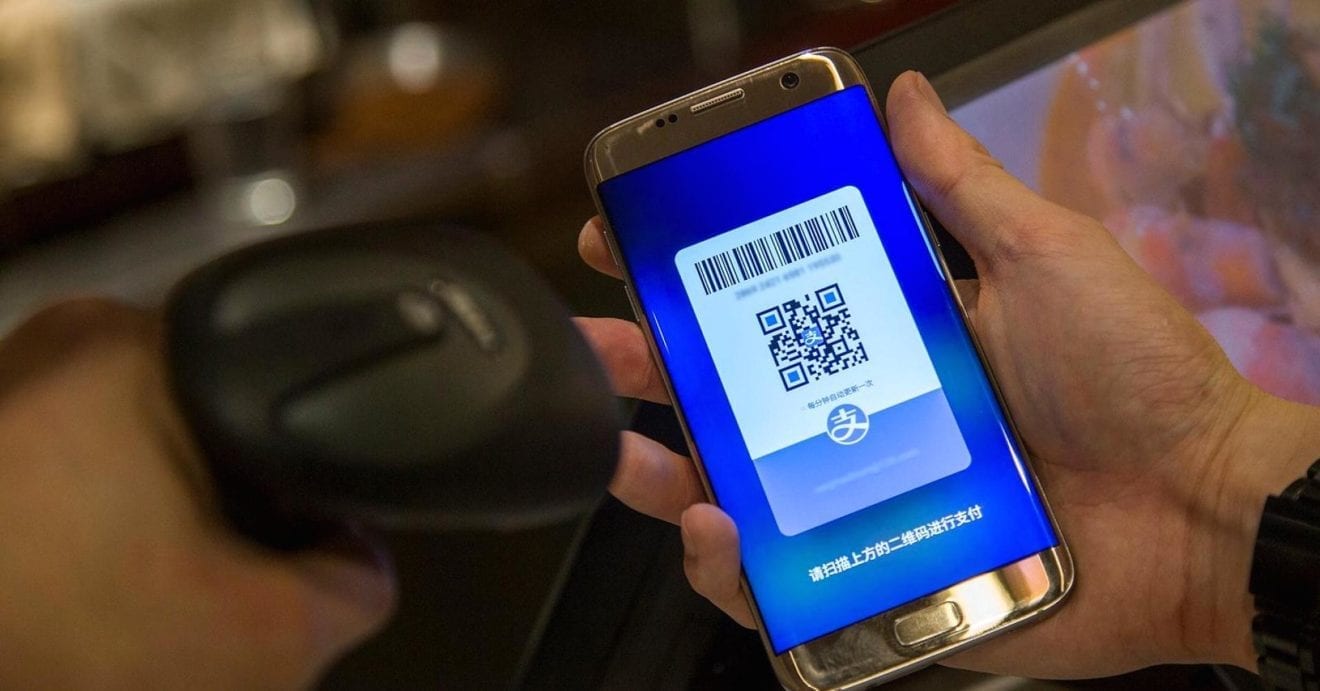
    To set up a service account with Alipay China, a company must first register an account, providing company information for verification. Once approved, an application can be made and a QR code issued.

    Applicants must provide a business licence, ID card information and public bank account details. If the applicant is not the company’s legal representative, a power of attorney must be provided.

    WeChat Payment was launched by Tencent Holdings in 2013. It is different to Alipay in that it serves as both a payment platform and an instant messaging service. It also differs from Tencent’s TenPay, which is similar to Alipay. WeChat Pay can be used to pay in stores, on websites, WeChat shops and third-party apps, with its payment procedure easier and for both customer and company alike.

    Paying through WeChat has revolutionised how retailers and customers interact, with a huge number of customers depending on its social media and instant messenger service.

    To set up a service account, a company first needs to apply for an official WeChat account, specifying reasons for the application and supplying the category or type of company.

    Applicants need to supply the full name of the contact person, phone number and email address; the website address of the company (not necessary for non-IT companies); full company name; description of the product; customer service number; and company bank account information.

    For non-financial entities such as Alibaba and Tencent to provide third-party online and mobile payment services in China, a payment business licence must first be obtained. Regulations stipulate that the business scope, qualifications and contribution ratio of foreign-invested institutions applying for the licence will be decided by the People’s Bank of China and State Council separately.

    Pile of documents

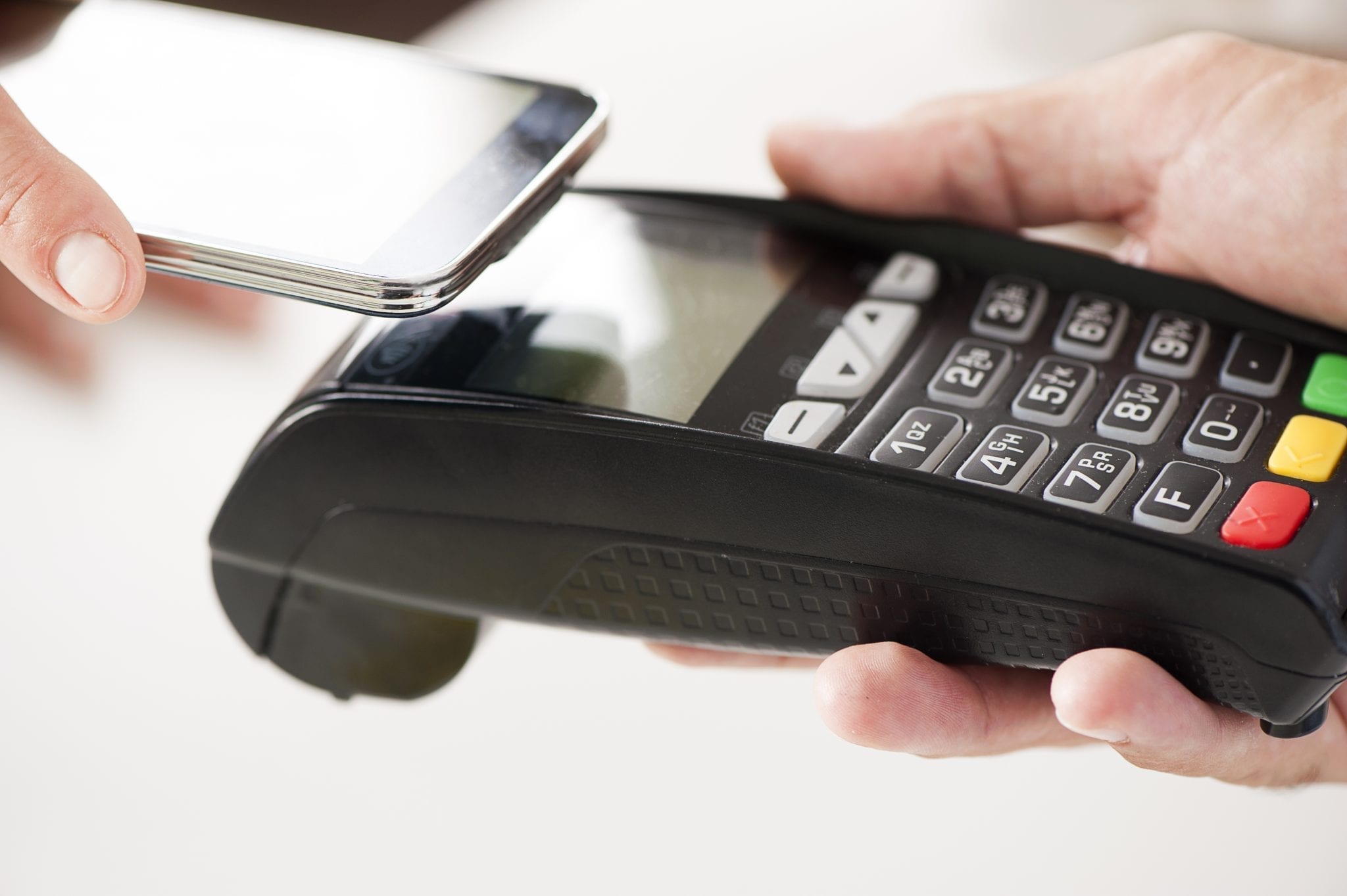
    Meanwhile, Apple Pay has entered the China market, partnering with China UnionPay and nearly 20 Chinese banks. In its first two days, more than three million bank cards were linked to its service, which uses Near-Field Communication (NFC) contactless payments as opposed to QR codes, which are used by Alipay and WeChat Pay.

    Apple Pay, along with Edenred and Sodexo, is among the few foreign-invested companies with a Chinese payment business licence.

    Applicants for the licence must be companies established in the China and must submit a pile of documents to a local branch of the People’s Bank of China – a written application specifying the name, domicile, registered capital and organisational structure of the applicant business, payment business being sought, a copy of the company’s business licence, articles of association, verification certification, financial and accounting reports audited by an accounting firm, feasibility study report, acceptance materials on anti-laundering measures, certification on technical safety testing and authentication, resumes of senior management personnel, certification that the applicant and senior management personnel are free of criminal records, relevant materials of major capital contributors, and an authenticity statement regarding the application materials.

    Entry into China’s lucrative third-party online payments can unlock huge market potential, but the requirements are strict and the application process and approval is by no means easy.

    In comparison, the process for obtaining an online payment QR code is relatively straightforward, but the recent restrictions imposed on payment account types and security checks might change both the way third-party online payment platforms work as well as consumer behaviour.

    • From China Briefing, published by Dezan Shira & Associates. Dezan Shira is a specialist foreign direct investment practice providing corporate establishment, business advisory, tax advisory and compliance, accounting, payroll, due diligence and financial review services to multinationals investing in China, Hong Kong, India, Vietnam, Singapore and other ASEAN countries.
  • Digital edge for Retail Asia Expo

    Digital edge for Retail Asia Expo

    Trending technology and the fast-changing tastes and behaviours of consumers and the market will all be in the spotlight at the eighth Retail Asia Expo (RAE), the award-winning flagship industry event in Asia for retailers.

    Organised by Diversified Communications Hong Kong and at Hong Kong Convention & Exhibition Centre (HKCEC) from June 14 to 16, the event will explore such topics as B2C sales to China, mobile wallets, cloud-based retail technologies, cross-border eCommerce and ePayments, the digitisation of retail, re-platforming, proximity marketing, online retail strategy with global standards, and innovative technologies from Israel.

    Products, ideas, software and strategies will also feature in exhibits and seminars.

    For internet retailing, exhibitors will showcase advanced internet retailing technologies, back-end support software, supply-chain management technology, electronic payments, and online sales and marketing software. Providers that have confirmed their participation include Apsis, CCDI, Cegid, Intel, iSappos and Million Tech.

    Augment Paris HQ will showcase its innovative augmented reality technology, which is being developed into apps to provide a new shopping experience, while China’s online commerce giant Alibaba Group will host three seminars in the show’s new Internet Retailing Theatre.

    Rex Cheuk, head of Tmall Global – Hong Kong/Macau, Alibaba Group, will host a keynote session covering such topics as online merchant recruitment and store promotion; Thomas Chan, associate director of AliCloud International Hong Kong/Macau, Alibaba Group, will talk about integration of eCommerce and mobile shopping via the cloud platform; and Alipay senior business development manager Simon Leung will present case studies and insights into mobile wallet use.

  • Baidu Wallet launches Southeast Asia foray

    Baidu Wallet launches Southeast Asia foray

    China’s Baidu Wallet has launched its mobile payment service in Thailand, on the eve of the traditional Thai new-year celebration Songkran.

    Part of the Baidu search-engine group, the digital payment service is now connected to more than 400 merchants in four Thai cities – Bangkok, Chiang Mai, Pattaya and Phuket. It covers restaurants, shopping malls and spas.

    Baidu Wallet is also set to launch in South Korea and Japan, with plans to also expand into Hong Kong, Macau and Taiwan.

    Baidu Wallet’s smartphone app means Chinese travellers can avoid the bother of exchanging currency. They need only scan the QR codes of partnered merchants and enter the amount of Thai baht they need. The app converts the figure to yuan based on real-time exchange rates.

    China has the highest adoption rate in the world for technology-enabled payment systems, according to a new survey by market data company Nielsen. With information from 13,000 respondents across 26 countries, the survey shows that 86 per cent of Chinese respondents paid for online purchases over a six-month period, while the global average rate was half that at 43 per cent.

    A report by consultancy iResearch shows that China’s mobile payment transactions reached $373.2 billion in the third quarter of last year, a 64 per cent increase year-on-year.

    China has been the biggest source of international tourists since 2012, says the Tourism Authority of Thailand. There were 7.9 million Chinese tourists last year – 27 per cent of total international arrivals.

    Chinese travellers spent 6400 baht (US$180) a day each on average, with most tourists spending 5690 baht.

    A report from Forrester Research says the rapid growth of smartphones is driving an eCommerce boom across Southeast Asia, the world’s third-largest digital marketplace after China and India. This boom is being paralleled by strong payment growth via mobile. Companies are boosting their investments in online and mobile platforms such as Carousell in Singapore and Tarad in Thailand, where 35 per cent of purchases are made via a mobile device.

    Alipay, from Alibaba, has introduced an online shopping service Thailand duty-free shop King Power, and the WeChat app payment option launched in Thailand at the beginning of this year.