Tag: Alipay

  • Alipay mobile payment introduced in Denmark

    Alipay mobile payment introduced in Denmark

    The world’s leading mobile payment platform Alipay was launched in Denmark on Monday, enabling its Chinese users to enjoy its fast and convenient payment service when they travel to the Nordic country.

    “We are happy that Denmark and the Nordics are embracing Alipay for Chinese tourists. The adoption of Alipay services of both payment and marketing will not only enhance the experience of Chinese consumers but also help Danish businesses to reach out to their Chinese customers even before they depart from China,” said Wang Li, head of Alipay EMEA (Europe, Middle East and Africa).Operated by Ant Financial Services Group, an affiliate company of China’s Alibaba Group, Alipay users can hail a taxi, book a hotel, buy movie tickets, pay utility bills, make appointments with doctors, or purchase wealth management products directly from within the app.

    Alipay was launched in Denmark by APay Nordic AS, in cooperation with 2paynow, the technology platform provider of Alipay in Europe.

    “We are glad to see that APay Nordic is now introducing Alipay into Denmark, which will further strengthen the advantages of Denmark as a Chinese-friendly destination,” said Miklos Bengtsen, CFO of ILLUM, a premium department store in Copenhagen, adding that China is a very important market for the Danish retail business.

    According to Wang, Alipay’s in-store payment service is covering more than 30 countries across the world, and tax reimbursement via Alipay is supported in 24 countries and regions.

    Alipay has been launching its services in Europe since mid-2016. Denmark is the fourth Northern European country for Alipay to set foot in after Norway, Finland and Sweden.

    Alipay now has over 520 million active users and over 450 financial institution partners globally. Over 10 million merchants accept Alipay across China.

  • Alipay in-store volumes grew 700% during Golden Week

    Alipay in-store volumes grew 700% during Golden Week

    Alipay has revealed that overseas in-store payments on its platform increased 700% YoY during Golden Week 2017.

    Overall per capita spend increased by 50% to 1,301 yuan. Asia dominated the list of top-ten destinations in terms of transaction volume. The continent also observed its fastest growth in Alipay use from last year.

    In Asia, Hong Kong topped the list, followed by Thailand, Taiwan, Japan, the Republic of Korea, Macau, Malaysia, Singapore, Australia and New Zealand.

    In Singapore, transaction volumes increased by 30 times. Thailand saw six times the transaction volume of last year’s.

    In Japan, transaction volumes were 16 times that of last year’s figure, while in Hong Kong and Taiwan, volumes were 13 times the 2016 figure.

    In Australia, transaction volumes increased 20 times, while New Zealand saw a six-fold increase.

    Per-capita spending was much higher than average in destinations outside of Asia, particularly in Europe, where users spent an average of 3,150 yuan through Alipay.

    Switzerland posted the highest per-capita spend (36,298 yuan or $5,506) of any country or region, well over ten times the average for Europe as a whole.

    The U.S. and Canada (1,648 yuan) and Australia and New Zealand (1,415 yuan) were also above the global average (1,301 yuan).

    In Southeast Asia, Thailand (1,519 yuan) and Singapore (1,376 yuan) were above the global average (1,301 yuan). Malaysia (940 yuan) were below the global average as merchant types in the country varies from duty free stores to convenient stores and coffee shops.

    Per capita consumption in Singapore was 3.4 times from last year and Thailand’s was 2.4 times from last year. People are spending much more with Alipay in the region. Those born in the 1980s and 1990s accounted for 84% of all users.

  • Adyen rolls out Alipay to stores worldwide

    Adyen rolls out Alipay to stores worldwide

    Adyen has expanded its partnership with Alipay to allow retailers worldwide to accept non-cash payments from Chinese customers in store.

    The partnership enables retailers using Adyen’s point of sale solution to take payments in store from Chinese consumers paying with their Alipay-enabled mobile device. The Alipay payment option is added as a new option to the existing payment terminal, with no need for additional devices or terminals.

    “Europe and the US are popular destinations for the Chinese tourists, so it’s vital that retailers are able to cater to their needs,” said Souheil Badran, President, Alipay North America.

    “Given the capabilities built into Adyen’s omnichannel service for retailers, as well as Alipay’s included marketing solution, we look forward to enhancing what it means to deliver an integrated retail solution for retailers.”

    Roelant Prins, Chief Commercial Officer at Adyen, added that “Chinese tourists are an important audience for retailers to consider. At Adyen, we’re committed to making payment processes as easy as possible for retailers, while delivering a great experience for customers. Our partnership with Alipay helps retailers unlock an enormous opportunity to grow and gain more revenue. For Chinese customers traveling abroad, they will encounter the payment experience they are used to while at home.”

  • Golden touch for Alipay overseas transactions

    Golden touch for Alipay overseas transactions

    During Golden Week, there were eight times as many in-store Alipay transactions overseas than last year.

    Asia dominated the top 10 destinations in terms of transaction volume, with Hong Kong topping the list. It was followed by Thailand, Taiwan, Japan, South Korea, Macau, Malaysia, Singapore, Australia and New Zealand.

    Much of the fastest growth in Alipay use from last year was also in Asia, with transactions volumes in Singapore growing by a factor of 30. Japan’s transaction volumes were 16 times last year’s figure, while in Hong Kong and Taiwan volumes were 13 times the 2016 figure. Thailand saw six times the transaction volume of last year.

    Alipay use also grew in the Pacific, with transactions volumes up 20 times in Australia and a six-fold increase in New Zealand – the same as for Europe, where Germany, the UK and France accounted for 40, 23 and 22 per cent of transaction volumes respectively. Italy, where Alipay launched in April, accounted for a further 5 per cent.

    Alipay per capita spend was up 50 per cent to RMB1301 (US$198). This was much higher than average in destinations outside Asia, particularly Europe, where users spent an average of RMB3150.

    Switzerland posted the highest per-capita spend (RMB36,298) of any country or region, and more than 10 times the average for Europe as a whole.

    Also above the global average were the US and Canada (RMB1648) and Australia and New Zealand (RMB1415).

    Users born in the 1980s and 1990s accounted for 84 per cent of transactions.

  • Joint venture to extend Alipay Hong Kong services

    Joint venture to extend Alipay Hong Kong services

    A new AlipayHK digital wallet joint venture aims to promote a more efficient cashless society in Hong Kong, its partners say.

    Conglomerate CK Hutchison Holdings and Ant Financial Services Group, the parent company of Alipay, say the move will further integrate online and offline payments for consumers.

    Dedicated to local-currency payments in Hong Kong, AlipayHK attracted more than 100,000 active users in its first two weeks after launching in May. The mobile app is now accepted in more than 4000 brand outlets in Hong Kong, and also offers in-app lifestyle features such as third-party insurance and the ability to receive offers such as F&B vouchers and sticker rewards from partners, such as online dining guide OpenRice.

    With a global presence, CK Hutchison and its affiliates have consumer networks with more than 124 million retail loyalty members. In Hong Kong, it has more than 600 stores selling telecommunications, food, electronics, wine, and health and beauty products.

    Ant Financial provides digital services to more than 520 million users in China and beyond. Through the Alipay app, Mainland Chinese users can hail taxis, book hotels, buy movie tickets, pay utilities, make medical appointments and manage their finances. Ant Financial also provides digital financial services to more than 250 million overseas users through strategic partnerships in India, Korea and Southeast Asia.

    “By leveraging CK Hutchison’s extensive market presence and combining its commercial experience with Ant Financial’s technology expertise, we will bring great benefits not only to our telecom, retail and other group customer, but also to all businesses in Hong Kong,” says CK Hutchison group co-MD Canning Fok.

    Subject to regulatory approval, the JV is expected to be completed by the end of the year.

  • Starbucks China rolls out Alipay in 2800 stores

    Starbucks China rolls out Alipay in 2800 stores

    Starbucks China has introduced Alipay, Alibaba’s third-party online mobile payment platform, to more than 2800 of its coffee shops.

    Alipay also covers some Starbucks outlets in Japan, Macau and Malaysia, adding up to more than 3200 stores worldwide. Its coverage outnumbers that of WeChat Pay, Tencent’s digital wallet, which covers about 2500 Starbuck shops in China, reports Caixin media group.

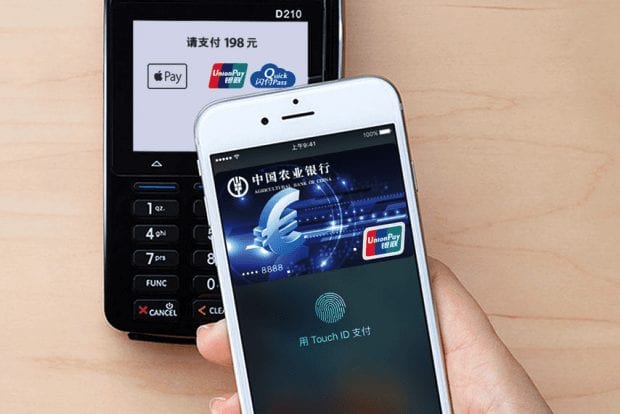
    Starbucks China also supports all mainstream digital payment methods, including Apple Pay and Quick Pass. Previously, the coffee company has promoted its digital VIP card, Starbucks Rewards, which is embedded in its app, as well as a prepaid card.

  • Alipay takes aim at Nordic markets

    Alipay takes aim at Nordic markets

    Alipay, the world’s largest online and mobile payment platform, operated by Ant Financial Services Group (“Ant Financial”, “Ant”), today announced that it has signed separate MoUs with Finpro (Finland), Svensk Handel (Sweden) and the Scandinavian Tourist Board, which will enable merchants across Nordic region to accept payment via Alipay and reach Chinese customers before, during and after their visit via Alipay’s in-app marketing platform.

    This will bring Chinese tourists the same convenient payment and travel experience that they enjoy in China.

    Douglas Feagin, President of International Business, Ant Financial Services Group, said, “Alipay has been leading the trend of smart living in China. People not only use Alipay for payment, but also for settlement of all types of needs in their daily life. As part of our globalization strategy, we are focused on working with local partners to bring this smart lifestyle to Chinese tourists, no matter where they go.”

    Over 500 merchants in Finland already accept Alipay and are searchable on Alipay’s Discover Platform, including well-known brands in Helsinki such as Marimekko, Iittala and Marja Kurki. Finland’s latest addition to the Alipay ecosystem is retail giant Stockmann. ePassi, a leading e-payment company in Europe, and the largest e-wallet in Finland, has been working with Finpro, a government owned organization promoting trade, investment and tourism in Finland, to promote Alipay among merchants in the country.

    Alexander Yin, CFO of ePassi, said, “Together with Alipay, we are building a smart tourism ecosystem for Chinese tourists. Now Chinese users have an easy and flexible way to enjoy a full Finnish shopping experience without a language or currency barrier. The convenient payment experience starts when a Chinese tourist books his or her flight ticket and hotel room online, continues with shopping on Finnair flights between China and Helsinki, and, once there, encompasses everything from hop-on-hop-off buses and sightseeing in Helsinki to shopping, dining, enjoying a classic Finnish sauna, and even meeting the Moomin in Naantali or Santa Claus up in Lapland.”

    In Sweden, several merchants including luxury watch shops have already launched Alipay through local partner Cimple in a network that is gradually expanding. Alipay’s latest MoU with Svensk Handel (“Swedish Trade Federation”), the employers’ association serving the entire trade and commerce sector, will see the two sides promote Alipay with Business Sweden, an organisation jointly owned by the Government of Sweden and representatives from the Swedish business community. Swedish State Secretary to the Minister for EU Affairs and Trade Oscar Stenström witnessed the signing of the MoU.

    Mr. Mats Hedenström, Head of Policy at Svensk Handel, said, “In Sweden, 90% of transactions are now cashless. We find it’s a safe and efficient solution for both customers and merchants. Tourists may find some shops here don’t accept cash at all. Svensk Handel’s intention in signing up with Alipay is to make it more convenient for the growing group of Chinese visitors to enjoy shopping in Sweden.”

    In Norway, 2paynow, a leading mobile payment and tax refund marketing provider in Europe, and its sales partner APay are working with the Scandinavian Tourist Board to introduce Alipay services to the Norwegian market in September. Per Holte, Chairman of Scandinavian Tourist Board, said, “Numbers of Chinese tourists, especially free independent tourists (FITs), have been increasing rapidly in the recent years and China has become an important market for the Scandinavian tourism industry. We will further deploy Alipay services in this region with 2paynow to help local merchants understand and service Chinese tourists better, which will strengthen the advantages of Scandinavian countries as Chinese-friendly destinations.”

    Meanwhile, Nets, the largest Nordic vendor of digital receipt solutions, is also bringing Alipay to merchants in Denmark and beyond.

    Alipay is now accepted by more than 10 million merchants across China and by bricks-and-mortar shops in 32 countries and territories.

    According to the World Tourism Organisation, 2016 was another strong year for outbound tourism from China, the world’s leading outbound market. International tourism expenditure grew by US$11 billion to US$261 billion, an increase of 12%. The number of outbound travellers rose 6% to 135 million in 2016.

  • Changi Airport Group partners with Alipay

    Changi Airport Group partners with Alipay

    Alipay and Changi Airport Group (CAG) have signed a strategic five-year partnership agreement to roll out the Alipay mobile payment option on a wide scale at the airport.

    They have also agreed to share marketing activities by offering customised and targeted shopping and dining offers to Chinese passengers using Alipay.

    Run by Ant Financial Services Group, Alipay has more than 520 million active users and is the first Chinese mobile payment partner for Singapore’s airport.

    Changi Airport’s yearly concession sales grew 5 per cent to hit another new high at S$2.3 billion (US$1.7 billion) last year, with travellers from China accounting for a third of all retail sales. The new mobile payment option will offer travellers more convenience when shopping and dining at the airport, including duty-free shops for cosmetics and perfumes, and wines and spirits.

    Progressively introduced at the airport since May, the Alipay mobile payment service is now available at more than 78 shopping and dining outlets. Under the joint marketing agreement, Alipay and CAG will collaborate to create information and promotions for passengers, as well as location-based information about shopping and dining options at the airport.

    Alipay will also partnering CAG in the eighth season of the “Be a Changi Millionaire” anchor shopping promotion. Shoppers who use Alipay as a payment mode will double their chances of winning the $1 million cash prize or an all-new Volvo S90 luxury sedan.

    “Changi Airport provides a myriad of customised services for our Chinese travellers including our Mandarin-speaking shopping concierge services and Chinese version of the airport’s online shopping portal,” says CAG senior VP for airside concessions Teo Chew Hoon.

  • Eraman Malaysia taps Alipay to lure Chinese tourists

    Eraman Malaysia taps Alipay to lure Chinese tourists

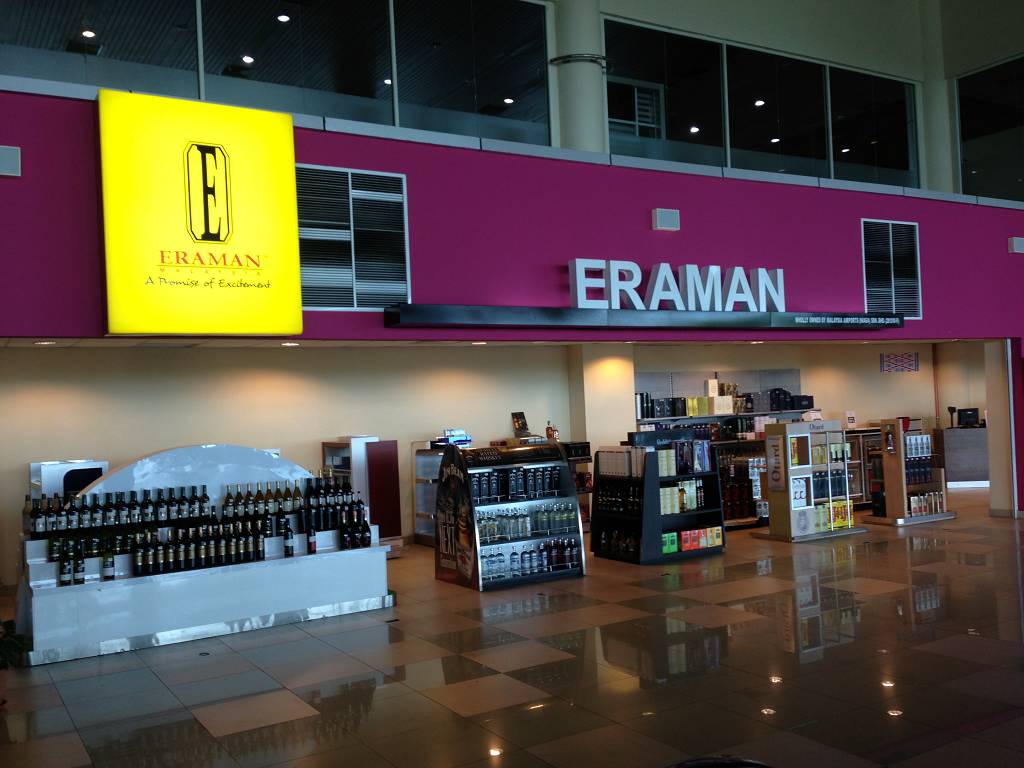
    Eraman Malaysia, the nation’s main travel retailer, has partnered with Alipay, as it improves its services to Chinese shoppers.

    Alipay, operated by Ant Financial Services Group and part of China’s Alibaba Group, is the largest online and mobile payment platform and Eraman hopes to tap the 520 million-strong Alipay active user base via the partnership.

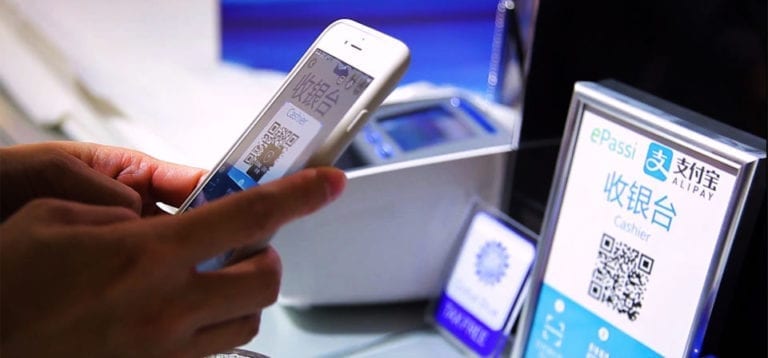
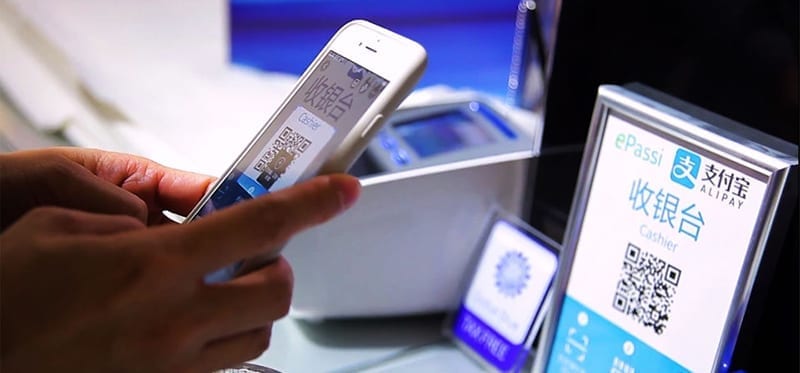
    Around 4.5 million of Alipay’s Chinese tourists travel to Malaysia annually, which mean those visiting Eraman outlets will be able to pay with their Alipay personal QR code via their smart phone.

    The contactless payment is integrated into the merchant portfolio of Maybank and CIMB Bank Bhd, Malaysia’s two largest financial services providers. It uses the in store online payment solution at all Eraman outlets nationwide.

    According to Eraman, the technology will improve Chinese travellers’ shopping experience at the airports.

    “Security and speed are important to us as we look to enable our Chinese travellers to walk into our outlets while travelling abroad and pay for purchases with the Alipay – just like they do in China. This Alipay in store payment will act as the settlement, allowing Chinese travellers to pay for their transactions in Yuan without having concerns on the exchange rate. This is done through a simple swipe and barcode-scanning method,” said Malaysia Airports (Niaga) General Manager Zulhikam Ahmad.

    “All Eraman retail outlets in KLIA and klia2 including duty free emporium and lifestyle stores began accepting Alipay in June 2017. However, Eraman food and beverage and retails outlets in Kota Kinabalu, Kuching, Penang, Langkawi International Airport and Labuan Airport have begun to accept Alipay since the end of August. In China, this payment system is a way of life for shopping and many other activities, and given the growing number of Chinese travellers here, we are hoping for a high uptake,” added Zulhikam.

    Malaysia is ranked third in the region after Thailand and Singapore for the number of Chinese visitors it attracts each year.

    Alipay has seen rapid expansion in 2017. In August, the payment provider inked an agreement with Singapore digital payment provider CCPay to offer cashless payment services to Singaporean retailers.

    Earlier in the year, it expanded into North American travel retail and later announced it had signed a deal with six major banks in Malaysia, with the goal of making Alipay a payment option across the Southeast Asian nation by 2018.

  • Eraman partners with Alipay in drive to attract Chinese consumers

    Eraman partners with Alipay in drive to attract Chinese consumers

    Malaysia Airports (Niaga) Sdn Bhd, known as Eraman, has partnered with Alipay, the world’s largest online and mobile payment platform, as it improves its services to Chinese shoppers.

    Eraman, Malaysia’s leading travel retailer, said it will now be able to tap into the 520 million-strong Alipay active user base. Some 4.5 million are Chinese tourists that travel to Malaysia annually. Those travellers visiting Eraman outlets will be able to pay with their Alipay personal QR code via their smart phone.

    Alipay is integrated into the merchant portfolio of Maybank and CIMB Bank Bhd, Malaysia’s two largest financial services providers, and uses the in-store on-line payment solution at all Eraman outlets nationwide. Eraman claimed that this new payment mode will improve Chinese travellers’ shopping experience at the airports.

    “Security and speed are important to us as we look to enable our Chinese travellers to walk into our outlets while travelling abroad and pay for purchases with the Alipay – just like they do in China. This Alipay in-store payment will act as the settlement, allowing Chinese travellers to pay for their transactions in Yuan without having concerns on the exchange rate. This is done through a simple swipe and barcode-scanning method,” said Malaysia Airports (Niaga) General Manager Zulhikam Ahmad.

    “All Eraman retail outlets in KLIA and klia2 including duty free emporium and lifestyle stores began accepting Alipay in June 2017. However Eraman food & beverage and retails outlets in Kota Kinabalu, Kuching, Penang, Langkawi International Airport and Labuan Airport have begun to accept Alipay since the end of August. In China, this payment system is a way of life for shopping and many other activities, and given the growing number of Chinese travellers here, we are hoping for a high uptake,” added Zulhikam.

    In conjunction with this smart partnership, Eraman has launched a special promotion from 1 September to 31 December whereby all Chinese travellers using Alipay will be entitled to an e-voucher of RMB100 when they spend RMB1,000 at participating Eraman retail outlets. This e-voucher can be redeemed for the second purchase at Eraman outlets within 24 hours.

    Meanwhile, Alipay users will also be able to enjoy up to -10% off for purchases made at Eraman’s F&B outlets and its convenience store, EXpress. The discount can be used for a second purchase at Eraman within 24 hours.

    “As the premier retail brand under Malaysia Airports, Eraman has evolved over the last couple of years. We continue to diversify our offerings, embrace the many exciting possibilities and grow our presence in the leading airports in Malaysia. This is our way of providing the total airport experience by means of an alternate payment method and providing ease for our Chinese customers who happen to be one of our top three passenger groups in terms of nationality,” said Zulhikam.

    Chinese travellers contribute the highest ticket sales at KLIA and klia2. Eraman said it has recorded double-digit percentage growth in sales value with fragrances & cosmetics, liquor and tobacco boosted by purchases from Chinese travellers this year. Eraman said this was also due to a varied offer and competitive pricing compared to downtown on fragrances, cosmetics and liquor.

    Malaysia is ranked third in the region after Thailand and Singapore for the number of Chinese visitors it attracts each year. Eraman said it aimed to become “their preferred duty free retailer” as Malaysia rises in the rankings.

    Eraman added that it is keen to build “long term alliances with reputable partners and recognises this collaboration to be a major contributor to the company”.

    “The entry of Alipay marks a notable milestone in the growth of Chinese tourist arrivals and online transaction services in Malaysia, and we are proud to be part of this development. We look forward to a strong synergistic collaboration and we are happy Alipay is on board with us,” said Zulhikam.

    “We are excited to partner Eraman, a very strong player in the duty free industry. With this partnership we’ll help Eraman to reach out to more Chinese customers by utilizing the Alipay marketing platform to market various top brands and products offered by Eraman,” said Alipay Country Manager of Malaysia Greta Gunawan. “Duty free shops are always on the must-visit list of Chinese tourists. In the future, Alipay users can check shop details and special offers via the in-app Discovery platform even before they depart to Malaysia.”

    CIMB Group Chief Executive Officer, Group Transaction Banking Hendra Lembong added: “We are pleased to collaborate with Eraman in providing Chinese tourists a convenient and secure cashless payment experience in Malaysia with CIMB’s Alipay mobile wallet. As a pioneer settlement and merchant acquirer bank in facilitating Alipay payments in Malaysia, CIMB is confident of spearheading the growth of mobile wallet payment services in the country with its cutting edge expertise in transaction banking. We aim to not only support Malaysia’s drive for a safe and secure cashless society, but also provide our customers with a seamless banking experience within ASEAN.”


  • Alipay, CCPay partner for cashless payments in Singapore

    Alipay, CCPay partner for cashless payments in Singapore

    China’s popular cashless payment platform Alipay has honed in on Singapore, announcing on Tuesday it has entered into partnership agreement with a local digital payment provider CCPay to offer cashless payment services to Singaporean retailers.

    Alipay, a subsidiary of Alibaba’s associated Ant Financial, has tapped CCPay to expand the use of the cashless payment platforms in Singapore, in a bid to give convenience to Chinese tourists here.

    The cashless payments will be first introduced to merchants around the Chinatown area, with plans for further expansion to other shopping malls in Singapore.

    “With Alipay’s scale and expertise in the field of cashless payments, this collaboration with CCPay will provide a platform for merchants to facilitate safe, fast and cashless payments for the Chinese tourists in Singapore,” Melvin Ooi, Alipay country manager at Singapore, Sri Lanka and Maldives, told local media.

    Kicking off in 2004, Alipay boasts over 520 million active users, mostly in China. It continues to expand into offline payments globally and covers more than 200,000 retail stores overseas with the support for 18 currencies.

    Most recently, Alipay entered nearby Malaysia in May, after forging its way into North America in January via its partnership with DFS Group.

    Founded in March 2017, CCPay is a Singapore’s main digital payment solutions provider for online, mobile and in-store payment.

  • Alipay to boost acceptance points in Singapore

    Alipay to boost acceptance points in Singapore

    Chinese online and mobile payment platform Alipay has signed a deal with CC Financial Services to allow it to expand its 20,000 acceptance points in Singapore.

    CC Financial Services, a Singapore-based startup which runs a mobile payments platform named CCPay, will function as a merchant acquiring partner for Alipay.

    The partnership aims to allow Chinese tourists to Singapore to pay for purchases using their Alipay e-wallets. Customers who use to service need to use their mobile phones to scan the QR codes provided by the retailer.

    Alipay’s country manager for Singapore, Sri Lanka and Maldives Melvin Ooi told The Straits Times that the Alipay platform will “soon” be made available for customers of banks in Singapore, although a timeline was not provided. Currently, Alipay users need to either have a banking account from China or a credit card issued by a bank in China.

    Recently, Alipay tied up with taxi operator Comfort Delgro in a partnership which enabled Alipay users to pay for cab rides using the platform. 17,000 of the current 20,000 Alipay acceptance points in Singapore are for taxis.

    CC Financial Services, which was founded in March this year, has acquired more than 600 merchants, with the plan to grow this number to 6,000.

  • Alipay Southeast Asia partners with Fave in Singapore

    Alipay Southeast Asia partners with Fave in Singapore

    Alipay Southeast Asia is partnering with Fave to roll out seamless cross-border payments via app, starting with Singapore.

    Fave, an online-to-offline (O2O) mobile platform and Alibaba Group’s financial affiliate Ant Financial will allow the Alipay app to be used for payments at restaurants and offline retailers that are part of the Fave ecosystem, with special offers and rewards for users.

    With 520 million users worldwide, Alipay is one of the world’s largest online and mobile payment platforms. As more than 3 million Chinese tourists are expected to visit Singapore this year, the ability to accept Alipay will greatly benefit local restaurants and retailers and Southeast Asia as a whole, according to Fave.

    “Restaurants and offline retailers are the backbone of the economy in Singapore, and we aim to help them succeed,” says Fave founder Joel Neoh. “While more than 90 per cent of retail spend is done offline, retailers are always looking for ways to reach out to mobile-savvy customers.”

    Regionally, Fave covers more than 10,000 restaurants and offline retailers, and has more than a million active users who can earn rewards in Indonesia, Malaysia and Singapore.

    “By partnering with innovators like Fave, we are giving Chinese travellers the safe, efficient and convenient payment services they are accustomed to at home,” says Alipay Southeast Asia head Dayong Zhang.

    According to Singapore Tourism Board (STB) preliminary estimates, more than 2.8 million Chinese travellers visited Singapore last year, proving the largest source of tourism receipts, spending more than S$3 billion (US$2.2 billion) to the end of September alone.

    Launched 12 months ago, Fave covers such segments as F&B, beauty and wellness, and lifestyle and activities, and has acquired Groupon Indonesia, Malaysia and Singapore. The company sprang from fitness sharing platform KFit.

  • Stripe strikes global partnerships with China’s Alipay, WeChat Pay

    Stripe strikes global partnerships with China’s Alipay, WeChat Pay

    Silicon Valley startup Stripe has partnered with digital payment providers Alipay and WeChat Pay to enable merchants using its platform globally to accept payments from hundreds of millions of Chinese consumers.

    Starting Sunday, the partnerships will allow online merchants using Stripe to integrate the ability for Chinese users to pay with Alipay and WeChat Pay on their websites, the company said.

    Stripe hopes the integration will help boost its revenues by allowing clients to tap China’s vast consumer market, where credit cards account for only a fraction of online spending, the company said.

    Alipay is the flagship payment service of Ant Financial, the financial affiliate of major Chinese ecommerce company Alibaba Group and has over 520 million users. WeChat Pay has more than 600 million users and is the payment app of entertainment and social network firm Tencent Holdings.

    “If you are an internet business this unlocks a new vast customer base,” John Collison, Stripe’s president and co-founder, said in an interview. In turn, Chinese consumers will have expanded choice as to which international online merchants they can purchase products and services from, he added.

    Founded by brothers John and Patrick Collison in 2010, Stripe provides technology that enables merchants in 25 countries to accept payments online. It charges a fee on each payments transactions processed through its platform.

    “If we can help a business double their sales, then it doubles our revenue from that business,” Collison said.

    The partnership coincides with the company’s launch in Hong Kong.

    One of the most valuable venture-backed financial technology companies globally, Stripe has risen in popularity among software developers and online merchants because of its ease of use.

    It is among the cohort of young fintech companies seeking to reinvent the payments landscape by taking better advantage of digital technologies to offer more user-friendly financial services and products.

    It had previously partnered with Alipay to enable only the U.S. merchants on its platform to integrate the Chinese payment service. The new global partnership builds on that experience.

    “Demand for services from Chinese consumers is at all-time high,” Souheil Badran, president of Alipay for North America, said in an interview. The new partnerships will connect them to hundreds of thousands of Stripe-powered businesses around the world, he added.

  • China’s AliPay, UnionPay & WeChat Pay join LATAM Fintech’s payments revolution

    China’s AliPay, UnionPay & WeChat Pay join LATAM Fintech’s payments revolution

    The fintech dLocal that specializes in cross-border payments for emerging markets, has integrated AliPay, UnionPay and WeChat Pay – China’s three major digital payments providers – into its platform. The addition for Uruguay-based dLocal with a US presence is touted as enabling global merchants to reach some “300 million Chinese consumers.”

    Collectively these three providers captured the vast bulk of the Chinese market for online payments (over 70%), which translated into $2.9 trillion (trn) of such payments in 2016.

    According to the market research firm Analysys, for the first quarter of 2017 Alipay, which was founded by Alibaba Group in 2004 and its founder Jack Ma, accounted for around 54% share of mobile transaction value while WeChat Pay garnered a 40% share.

    For the Uruguayan-based dLocal, which has largely been focused on the Latin American region and other emerging markets, it expands the company’s services to Asia. It is couched as enabling the firm to “offer a broader portfolio of payments and country coverage to global merchants” who want to reach some 2 billion (bn) emerging consumers in markets where payment methods are different of those in Europe and the US.

    Chinese Cross-Border E-Commerce

    Cross-border ecommerce in China reached an estimated RMB 259bn (c.$40bn) in 2015, equivalent to over 6% of China’s total consumer e-commerce. And, the growth rate has been put at more than 50% annually according industry figures and as highlighted recently by Chenan Xia, a principal at McKinsey in Hong Kong.

    Lower prices, higher quality items, larger disposable incomes and the search for non-fake goods are among a factors contributing to the rise in online cross-border purchases, creating a huge opportunity for ecommerce and marketplace businesses.

    China’s major e-commerce site, Alibaba’s Tmall, for example, has moved into the market with a cross-border site (Tmall Global), whilst smaller consumer rivals and start-ups have got in on the act.

    US e-commerce behemoth Amazon has also become increasingly active in China, having opened its offshore shopping sites of late to Chinese consumers and offering users of Amazon.cn, its Chinese site, a selection foreign products described in the local language and with Chinese specifications.

    On the flip side, Tmall Global has attracted major foreign retailers like US-based Costco and South Korea’s Lotte Mart, to its cross-border site.

    “China is the global Mecca for ecommerce and we are unlocking the doors for cross-border purchases in this market by bringing all the pertinent payment options into one solution,” said Sebastián Kanovich, CEO of dLocal, who is described as a pioneer in emerging markets payments.

    Chinese Payment Providers

    As regards the background and timeline of discussions between dLocal and AliPay, WeChat Pay and UnionPay, last year dLocal had implemented bank transfers for China, However, as Kanovich pointed out “the conversion was quite low” as these are not the dominant forms of payment for ecommerce purchases in China.

    The first item in dLocal’s 2017 Product Roadmap was to secure the top three payment methods – AliPay, WeChat Pay and UnionPay – so that they could start processing local debit and credit cards, as well as accept payments through the hugely popular e-wallets.

    “From start to go-live – contract and integration – it has taken six months. For credit and debit card acceptance, the integration was pretty straight forward as it was completely API-based,” revealed Kanovich.

    He added: “To process payments through the AliPay and WeChat Pay e-wallets, we had to develop QR-code technology, which is how AliPay and WeChat Pay operate. This was a new capability we had to develop, because none of the payment option providers in the markets we’re in are utilizing QR codes.”

    The user experience for a payment via QR code works as follows. During the checkout process, when the user indicated that they want to pay with AliPay or WeChat Pay e-wallets, dLocal generates and displays a unique QR code to the shopper which they scans to be redirected to pay with AliPay or WeChat Pay.