Tag: AmorePacific

  • AS Watson to start selling Amorepacific

    AS Watson to start selling Amorepacific

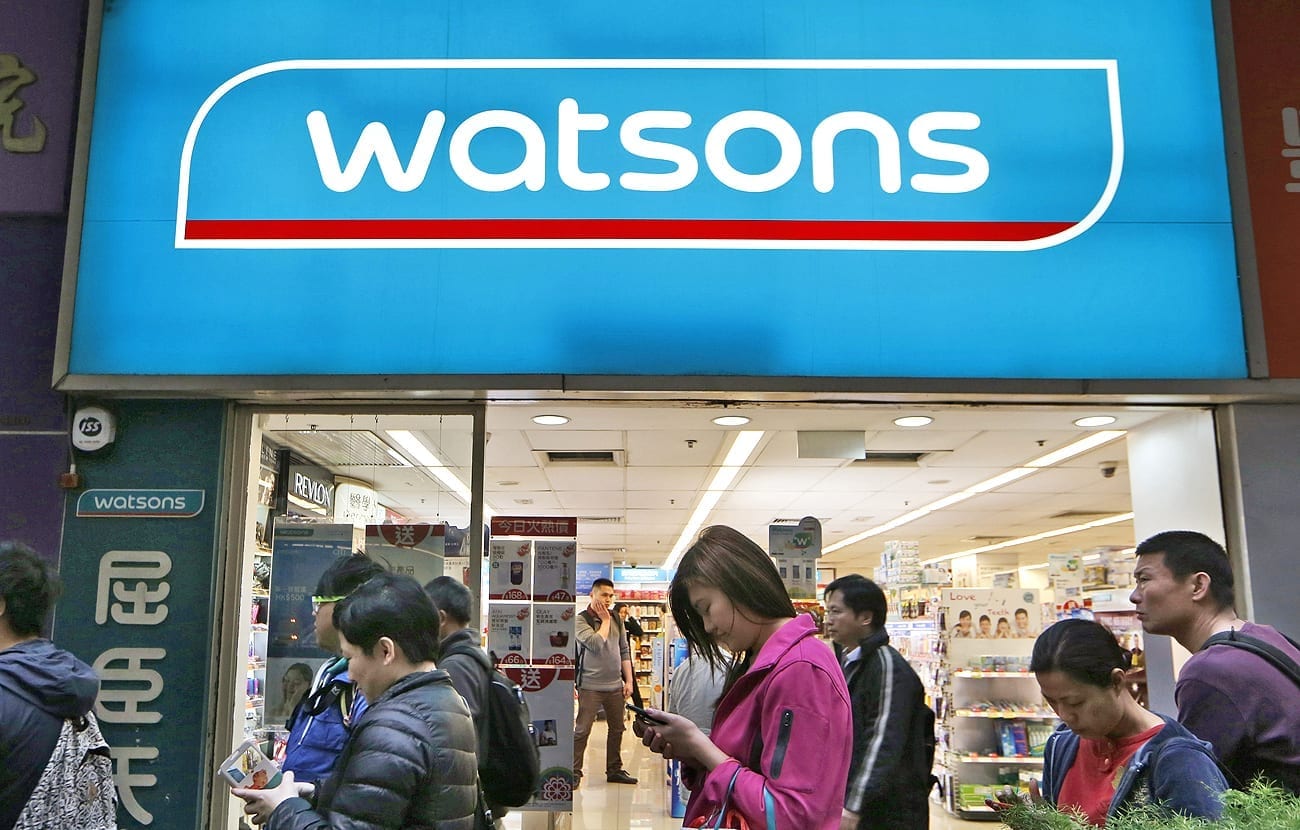
    South Korean beauty group Amorepacific and AS Watson have expanded their partnership to cover Asia and Europe. The partnership will enable Amorepacific to increase its product presence through Watsons-owned stores and online. Before this, the two had already partnered to launch Amorepacific’s botanical skincare brand Mamonde, haircare brands RYO and Mise-En-Scene across Asia.

    “AS Watson and Amorepacific are both leading players in serving beauty customers. Our customers love Korean beauty products that bring not only innovation but also quality. This is what Amorepacific can provide,” said Malina Ngai, AS Watson Group COO.

    “Through this partnership, we are both passionate and committed to combining our knowledge and capabilities to bring the best products and shopping experience to our customers.”

    Saehong Ahn, president of Amorepacific Corporation and Malina Ngai, group COO of AS Watson Group sign the strategic partnership.

    President of Amorepacific Saehong Ahn said the group “looks forward to developing concrete plans that create synergy and is a win for both companies”.

    “Amorepacific will continue our efforts to expand accessibility for customers globally, and create novel experience for customers this year.”

    AS Watson Group has a store network of more than 14,900 stores under 12 retail brands in 25 markets. Included in that are about 6800 Watsons health and beauty stores in 12 markets in Asia and Europe.

    Core customer groups are relatively young, and K-beauty is experiencing 56 per cent compound sales growth since 2015, and gaining traction in Europe with last year’s growth at 122 per cent.

    Amorepacific is the leading beauty company in South Korea, with more than 70 years of experience in beauty and a wide brand portfolio.

  • Amorepacific’s eSpoir sets foot in Thailand

    Amorepacific’s eSpoir sets foot in Thailand

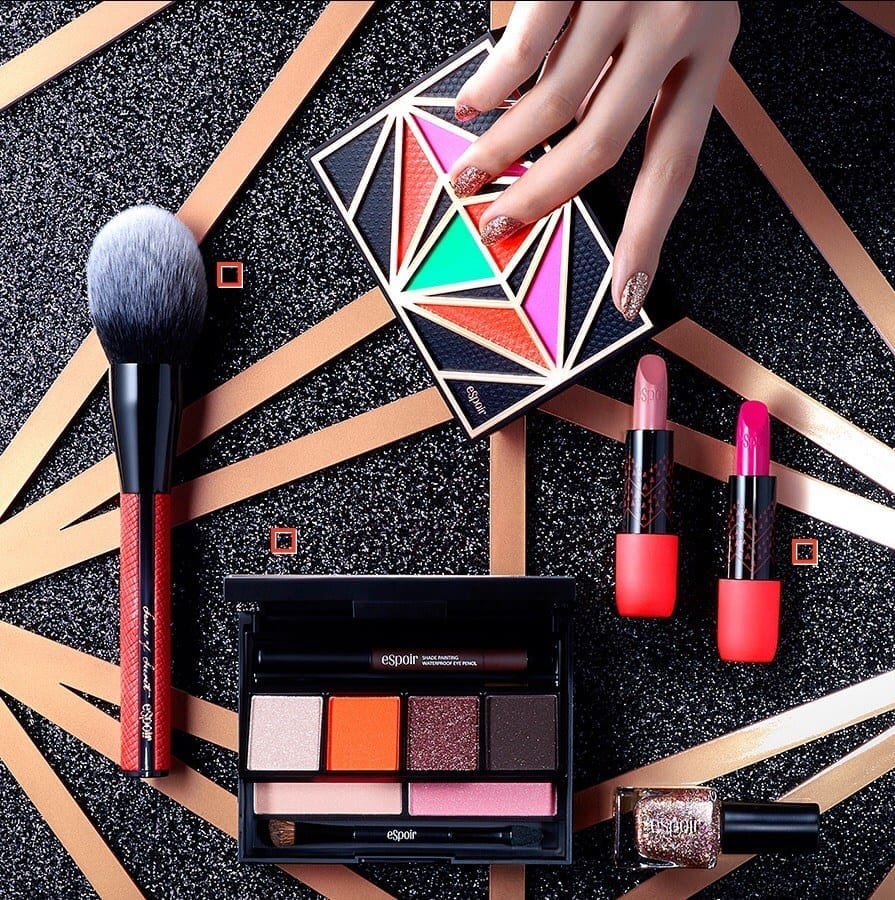
    Amorepacific-owned makeup brand eSpoir has launched in Thailand via cosmetics retailer chain Eveandboy. Nearly 130 eSpoir products are available at Eveandboy stores at Siam Square One shopping mall and at Terminal 21 near Asoke Station. The highest-profile eSpoir products include Dewy Face Glow moisturiser with hyaluronic acid, No Wear Lipstick, and Pro Tailor Foundation Be Silk / Be Glow.

    The South Korean brand will launch in eight more Eveandboy stores and an online mall to build a strong presence in the Thailand beauty market and expand channels.

    Amorepacific says it plans further expansion into other Asean countries.

    “We are pleased to be able to bring Korea’s representative makeup brand, eSpoir, to Thailand, the largest beauty market in the Asean region. The launch of eSpoir will surely strengthen our brand portfolio in Thailand and drive further growth,” said Choi Woong, Amorepacific Thailand GM.

    The group will diversify its brand portfolio spanning skincare and makeup for its sustainable growth in Thailand.

    Other brands available in Thailand including Sulwhasoo, Laneige, Mamonde, Innisfree and Etude House.
    Founded in 1945, Amorepacific sells more than 20 cosmetics, personal care, and health care brands in Asia, North America, and Europe.

  • Amorepacific boosts business expansion in the Philippines

    Amorepacific boosts business expansion in the Philippines

    South Korean cosmetics giant Amorepacific is ramping up its Asean expansion, opening the first Innisfree and Laneige Philippines stores. Amorepacific established Amorepacific Philippines in Metro Manila in August and has since opened the first Innisfree store, in Manila’s SM Mall of Asia.

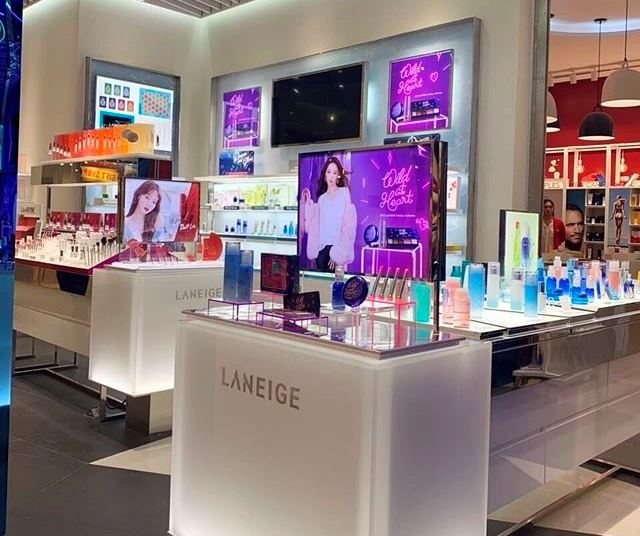
    This week the company opened its first Laneige Philippines store, at SM Makati Department Store.

    Laneige has also launched on the nation’s largest e-commerce channels in the Philippines including Lazada.

    The upmarket Laneige brand will expand through both online and offline channels through next year, Amorepacific said in a statement.

    The company says the Philippines offers great growth potential, with its population of more than 107 million. It is particularly targeting the premium beauty market which is growing quickly there, along with the broader popularity of K-beauty.

    “By expanding into this promising market, Amorepacific aims to strengthen its presence in the Asean region, which is one of the important strategic business regions for the company,” the statement said.

    Amorepacific has already launched in Singapore, Malaysia, Thailand, Vietnam and Indonesia.

    “We are glad to finally make our way into the Philippines market and respond to its increasing need for our brands,” said Robin Na, head of Amorepacific Asean regional headquarters. “Through our differentiated, innovative products and premium brands, we will spread Asian beauty across the Philippines and satisfy the local customers.”

  • Innisfree lands in the Philippines

    Innisfree lands in the Philippines

    Innisfree Corp., budget cosmetics manufacturer under South Korea’s beauty powerhouse Amorepacific Group opened its first store in the Philippines with hopes to expand its presence in the bourgeoning Southeast Asian market. According to the company, the 148-square-meter store opened at SM Mall of Asia, the largest shopping mall in Manila.

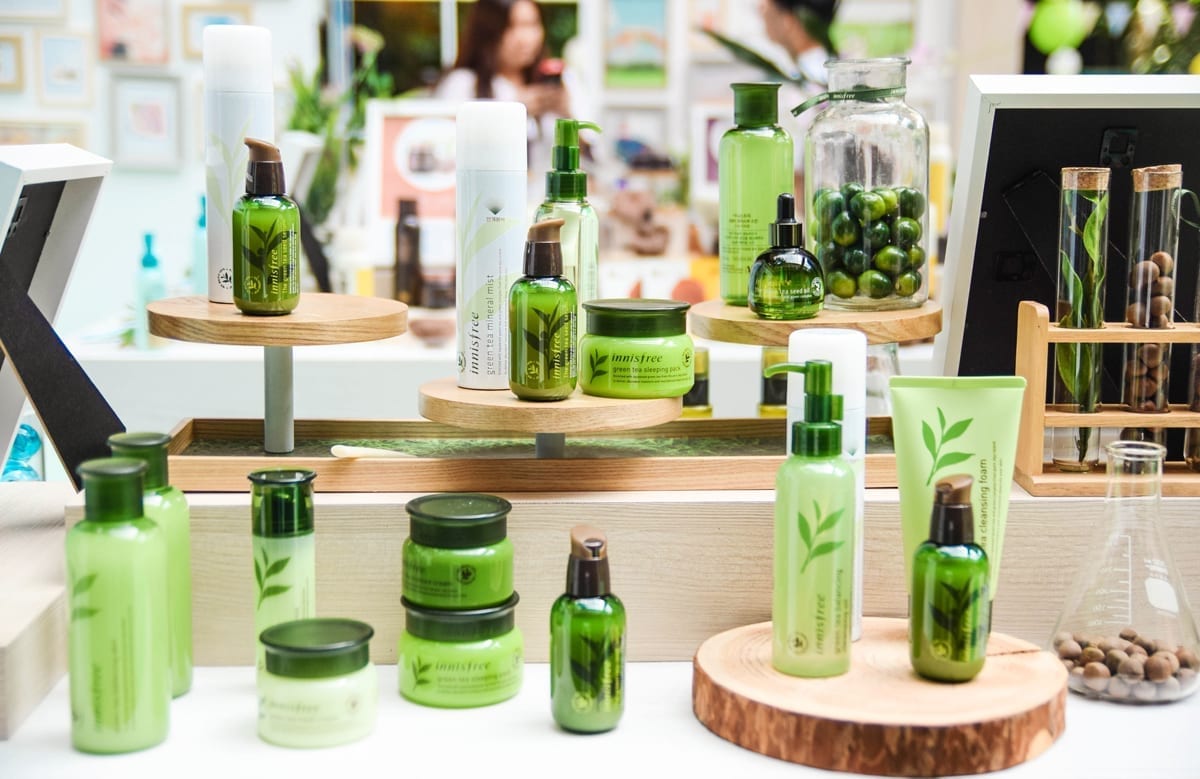
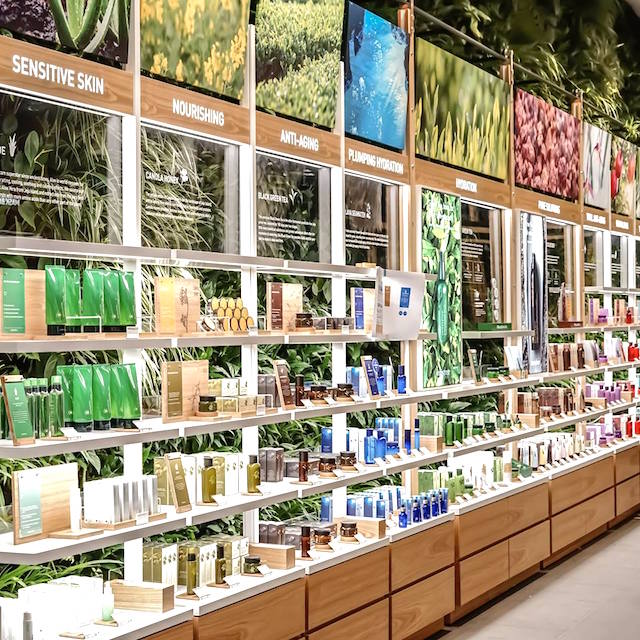
    The naturalism-oriented brand plans to introduce skin-care products made of natural ingredients from Jeju Island such as green tea and volcanic pine mushroom and their effectiveness to consumers in the Philippines to satisfy beauty demand and experience.

    The Philippines is considered a potential market due to the high ratio of young people in their 20s and 30s interested in hallyu, or Korean wave, and Korean beauty.

    An unnamed official from Innisfree said that the company will introduce not only its flagship beauty items but also pore- and oil-treatment mask and powder products tailored for humid and hot climate. The official added that the company will also pursue its environmentally-friendly green life campaign in the Southeast Asian country.

    Innisfree, meanwhile, manages 655 outlets overseas including the latest store in the Philippines.

    The skin-care brand, which opened its first overseas store in China in 2012, has outlets in Hong Kong, Taiwan, Singapore, India, Thailand, the United States, and Japan.

    Innisfree also plans to open stores at three major shopping malls in Metropolitan Manila next year and launch online channel

  • Korean brands stars on China’s Singles’ Day

    Korean brands stars on China’s Singles’ Day

    South Korean retailers benefited from another record-setting Nov. 11 Singles Day shopping extravaganza led by Alibaba Group of China. Since 2009, Chinese retail giant Alibaba Group has transformed Singles’ Day, which falls on Nov. 11, into an online shopping festival with large discounts offered for 24 hours.

    Over 40 percent of shoppers made purchases from international brands, said Alibaba.

    Among the countries that sold products to Chinese customers on Sunday, Korea ranked third after Japan and the United States.

    Korea placed at No. 3 on the list in 2016, but fell two ranks last year after the deployment of the U.S.-led terminal high altitude area defense (Thaad) antimissile system.

    The incident soured relations between the two countries and provoked a boycott movement against domestic brands in China.

    The exact volume of Korean goods purchased on Sunday was not disclosed, but it was evident that the shopping spree had an impact on local companies, as some of them reported record-breaking figures on Monday.

    Korea’s top beauty and personal care brand LG Household & Health Care Ltd. said on Monday that overall cosmetics sales during this year’s around-the-clock shopping gala rose 50 percent from a year ago at Tmall Global, a major e-commerce platform managed by China’s Alibaba Group.

    Sales of household items also jumped 73 percent during the same period.

    LG Household & Health Care raised 23 billion won (US$20.3 million) in sales of its flagship cosmetics label the History of Whoo during this year’s Singles Day event, up 72 percent from last year.

    Sales of luxury cosmetics brand su:m37 also jumped 82 percent during the same period mainly driven by increased demand for its Water-Full skin-care product line.

    The brand sold 26,500 sets of Water-Full line on November 11, up 208 percent from a year ago. It sold 24,400 sets of its Time Energy skin moisturizing solution, up 48 percent during the same period.

    Korea’s largest cosmetics company AmorePacific Corp. also scooped up sales on Sunday event.

    Sales of Yoonjo Essence, an activating serum of its premium cosmetics brand Sulwhasoo, hit 10,000 in just 60 seconds after launching sales at Tmall.

    Pre-order sales of Hera’s Rouge Holic lipstick also quintupled this year from last year.

    Korea’s fashion and retail conglomerate E-Land Group that manages 19 brands on Tmall raised 72.3 billion won in revenue on November 11 alone.

    Korea’s largest manufacturer of instant noodles Nongshim Co. also raked in record sales of 800 million won at Alibaba’s online shopping mall Taobao on the event day, more than tenfold from its daily average sales and up 25 percent from last year.

    The company attributed record sales to its top-sellers Shin Ramyun and Kimchi Ramyun.

    Alibaba clocked in sales of US$30.8 billion in the 24-hour shopping gala that began at 12 a.m. Sunday, beating last year’s US$25.3 billion.

  • Amorepacific profits slump

    Amorepacific profits slump

    Amorepacific Group announced lower-than-expected results for the third quarter on Monday with operating profits dropping 36 percent year on year. The fall comes as a stark contrast to rival LG Household & Health Care, which saw operating profits in its beauty business soar 30 percent during the same period.

    Amorepacific Group’s operating profit between July and September was 84.7 billion won ($74.2 million), down 36 percent compared to the same period last year. Its revenue rose 3.1 percent year on year to 1.46 trillion won. This was lower than the three-month analyst consensus of 1.56 trillion won in quarterly revenue and 166.9 billion won in operating profits, compiled by stock information provider FnGuide.

    The company explained in a statement that the main reason for the low profitability was the increase of costs in human resources and marketing expenditure.

    “Despite growing competition in the beauty market in and outside the country, Amorepacific continued investments to enforce brand competence and secure future growth engines,” the company said in a statement.

    The group’s main affiliate, also called Amorepacific, saw sales increase 6 percent year on year to 1.28 trillion won in the third quarter. Amorepacific’s sales success was thanks to the popularity of its brands, including Sulwhasoo, Hera, Iope and Laneige, with tourists and duty-free shoppers. However, the sales increase was nullified by a rise in costs, resulting in a sharp 24 percent fall in operating profit to 76.5 billion won.

    The results were grim for the smaller single-brand stores under the group as well: Etude House remained in the red while revenue dropped 23 percent year on year. Innisfree sales slightly increased by 3 percent, but operating profit steeply dropped 29 percent year on year. Espoir saw operating losses once again while revenue slightly rose by 1 percent.

    The good news for Amorepacific was the 36 percent year-on-year rise in revenue in the United States, thanks to strong performances from Laneige and Innisfree. Although its foothold there is still small compared to Asia, the company has been making efforts to diversify its global business, which used to heavily rely on China.

    LG Household & Health Care, on the other hand, recorded its highest-ever profit for the 54th quarter in a row. Between July and September, revenue generated from its three business sectors – beauty, daily necessities and beverages – was 1.73 trillion won, up 10.6 percent from the same period last year, while operating profit was up 9.8 percent to 277.5 billion won.

    The year-on-year jump was even higher in its beauty business: operating profit soared 30.6 percent to 184 billion won while revenue increased 23.5 percent to 954.2 billion won in the year’s third quarter. Its high-priced luxury brands, which were relatively unaffected by the Thaad row, were once again huge contributors.

    “With its high brand loyalty, The History of Whoo hit a quarterly sales record once again,” the company said.

  • Spotlight on ASEAN for Korean retail, beauty and entertainment biz

    Spotlight on ASEAN for Korean retail, beauty and entertainment biz

    With Southeast Asia becoming the center stage for South Korean businesses in expanding their global presence, retail conglomerates like Lotte, Shinsegae and CJ have been successfully tapping into the markets. Lotte Group has focused its investments on its retail arm Lotte Shopping’s entrance to the Indonesian market. According to the company, the Indonesia market accounts for 17 percent of total sales earned from overseas Lotte Group businesses.

    Lotte Mart, a discount chain operated by Lotte Shopping, currently runs 46 stores in 25 cities in Indonesia. These stores raked in 1.1 trillion won (US$971 million) in sales as of the end of last year.

    By 2020, the company aims to open 36 more stores in 10 additional Indonesia cities.

    Following a successful entrance in the Indonesian market, Lotte Shopping now targets large-scale investment in Vietnam.

    The company will inject 330 billion won to complete the construction of Lotte Mall Hanoi by 2020.

    Shinsegae Group has been also speeding up its expansion into countries in the Southeast Asia.

    In 2015, Shinsegae’s discount chain operator E-mart opened a two-story mall located in the heart of Ho Chi Minh City at Go Vap District, one of the most developed and densely populated areas in the capital.

    The Go Vap branch marks E-mart’s first overseas store since the brand redirected its focus to the Southeast Asian market in 2011 after officially exiting the Chinese market.

    For over the next three years, E-mart will invest 549 billion won to open four more stores in Vietnam by 2020.

    The second outlet in Ho Chi Minh will open in the first half of next year, the group said.

    Singapore is another crucial country — geographically and economically — for the groups.

    SPC Group opened the first Paris Baguette store in Singapore in 2012. Now nine outlets are operated there, including one at Changi Airport.

    The group said its Singaporean branch Paris Baguette Singapore PTE marked a 12 percent increase in sales from 12.9 billion won in 2015 to 14.4 billion won in 2016.

    SPC Group said it has taken care to localize its services as much as possible to meet the needs and lifestyle of Singaporean consumers.

    Entertainment businesses have also penetrated Southeast Asian markets.

    CJ ENM, a merged corporation of CJ O Shopping and CJ E&M that officially launched in July, will open Asia’s largest virtual commerce content production center in Ho Chi Minh City, Vietnam, targeting audiences in Southeast Asian countries.

    The center, called DADA Studio Vietnam, will create and distribute at least 1,000 pieces of virtual commerce content from early next year.

    Focusing on making use of the low-cost production system and high efficiency of the talent pool in Vietnam, CJ ENM said its attempt to operate a content hub abroad would lead to boosted content sales from the global market.

    “CJ O Shopping and CJ E&M had already witnessed the possibility of the v-commerce content business through our DADA Studio and online creators’ platform DIA TV. To dominate the expanding global content market, a merger of the two CJ companies will show the synergized effect of CJ’s digital content and channel operation,” said Kim Do-han, a director at CJ O Shopping.

    Following the K-pop boom and popularity of Korean style makeup trends, Amorepacific opened an outlet of its high-end makeup and skin care brand Hera this year at the Takashimaya Department store in the heart of Singapore’s shopping district.

    “Targeting the Singaporean market is important with the K-pop and Korean culture wave’s sensational influence to surrounding countries. Hera’s trendy brand image will suit well with Singapore consumers’ taste,” said Na Jung-kyun, head of Amorepacific’s Southeast Asian region division.

  • Amorepacific opens outdoor public exhibition on Jeju

    Amorepacific opens outdoor public exhibition on Jeju

    South Korea’s leading cosmetics company Amorepacific is holding an outdoor public exhibition on Jeju Island until October 14, featuring natural aspects of Jeju, like its volcanic topography.

    Titled “apmap 2018 jeju — volcanic island,” the exhibition is part of the company’s “amorepacific museum of art project (apmap),” which portrays the natural vitality of Jeju through contemporary artworks.

    A total of 15 young artists and architects have participated in the exhibition, displaying artworks ranging from sculptures to media art inside the Osulloc Tea Museum on Jeju and outside in the museum’s garden.

    Participating artists and art pieces include Lee Yong-ju and his work titled “Foldable House,” ADHD’s “Ply” and Hong Buhm’s “Veiled Grains and Layers.”

    Lee’s “Foldable House” was inspired by the Jusangjeolli cliff, and “Ply” was inspired by lava, while “Veiled Grains and Layers” was inspired by the forests Saryeoni and Gotjawal.

    The company said the exhibition would help visitors understand Jeju’s scenery in a new way and presents a special experience of art in one’s routine life.

    Through art, visitors will rediscover Jeju’s picturesque landscape and scenery as depicted in the artists’ figurative language, and find moments of contemplation and rest, it added.

    Osulloc Tea Museum on Jeju, opened in 2001 and features a cultural space where 1.8 million people visit each year.

    The company has been running the art project apmap since 2013, to discover rising and unknown artists and support their experimental art creation. Exhibitions take place every four years in parts I and II. Each project aims to introduce new themes and artists.

    From 2013 to 2016, apmap part I was held at Amorepacific venues including its product distribution center Beauty Campus located in Osan, Gyeonggi Province, in 2013, Jeju Island’s Seogwang Tea Garden in 2014, the research center Mizium in Yonging in 2015 and the new headquarters in 2016, which was designed by renowned artist David Chipperfield.
    Part II, which kicked off last year, will be hosted until 2020 on Jeju Island, the company said.

    Jeju Island was selected as a venue considering that contemporary artworks blend well with Jeju’s nature and landscape, the company said.

    The latest exhibition, which is a section of part II, began on August 11 and runs until October. Anyone who visits the Osulloc Tea Museum on Jeju can see the exhibition free of charge. More information about the company’s art project and the exhibition can be found at apma.amorepacific.com.

  • Amorepacific loses a cushion compact patent

    Amorepacific loses a cushion compact patent

    The Supreme Court dismissed Amorepacific’s patent on cushion compacts, putting an end to a three-year legal battle, according to the company on Tuesday.

    Amorepacific appealed a Patent Court of Korea ruling in February that invalidated the company’s patent for cushion compacts on the grounds that the product lacked “inventiveness.” This meant that its manufacturing didn’t have innovative technology not found elsewhere in the industry.

    The Supreme Court decision, which came on May 31, concludes a three-year legal struggle between the beauty giant and six domestic beauty companies, including Cosmax, an original design manufacturer for well-known local and global brands.

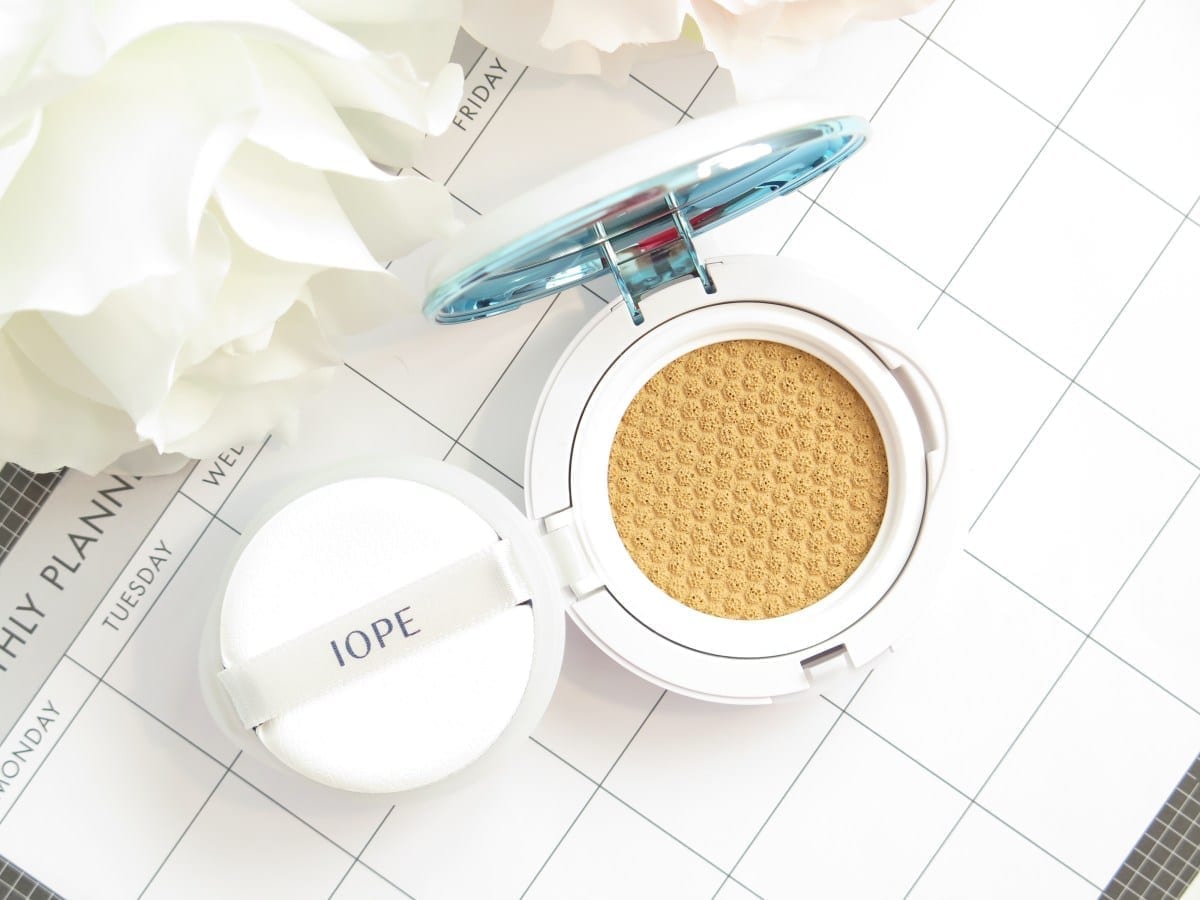
    Cushion compacts contain liquids like color foundation or sunscreen in a case, which was first used for skin powder. A sponge inside the case holds the liquids so they don’t flow out. Cushion compacts were first released by Amorepacific’s Iope brand in 2008, and became one of the company’s biggest successes. Now, cushion compacts are released by global names like Chanel, Yves Saint Laurent and L’Oreal.

    In 2011, Amorepacific registered a local patent for cushion compacts, which it described as a “cosmetic that includes urethane foam soaked with product.”

    In 2015, the six smaller beauty companies filed a suit in the patent court to annul Amorepacific’s patent on the grounds that urethane foam has been used in beauty products in the past. Cosmax was also sued by Amorepacific the following year for patent infringement.

    Amorepacific possesses more than 400 patents worldwide related to cushion compacts, but the one related to the usage of urethane foam as the sponge that holds the liquid is especially important. Manufacturers like Kolmar Korea and Cosmecca Korea paid loyalty fees to use the technique.

    Many beauty companies have since developed their own methods and materials to use in cushion compacts, but in the products’ early days, most followed Amorepacific’s model. If the court had ruled in favor of Amorepacific, this would have given the company grounds to ask for compensation for patent infringement.

    The patent court’s first ruling was in favor of Amorepacific, but the second one annulled the patent, so the beauty giant appealed to the Supreme Court but failed to receive a nod.

    “The domestic patent was annulled, but the same patent is still effective abroad, so we will continue exercising our rights to protect our technology in overseas markets,” said an Amorepacific spokesman.

  • Innisfree makes Australian debut

    Innisfree makes Australian debut

    Innisfree Australia has opened its first outlet, inside Melbourne Central shopping complex.

    This is Amorepacific’s second foray to promote its Korean cosmetics brand in Australia after Laneige launched in March.

    The company also expanded its Etude House brand in the Middle East this month.

    Innisfree, known for its green-tea lines, now has 12 stores in overseas markets including China, Thailand, Vietnam and the US.

  • Amorepacific Q1 net profit plunges 21%

    Amorepacific Q1 net profit plunges 21%

    Amorepacific Corp., South Korea’s leading cosmetics maker, said on its first-quarter net profit declined 20.9 percent from the previous year, due mainly to a sharp drop in the number of Chinese tourists.

    Net income came to 176.7 billion won (US$163 million) in the January-March period, compared with 223.5 billion won tallied for the previous year, the company said in a regulatory filing.

    Operating profit fell 25.5 percent to 235.9 billion won, and sales declined 8.8 percent to 1.43 trillion won during the cited period, it said.

    The company attributed the weak performance to the decrease in inbound tourists from China, which followed the Beijing government’s ban on sales of Korea-bound package tours amid a diplomatic row over the deployment of a U.S. missile system here.

    China has been gradually lifting its travel ban by region, but the effect has yet to be felt by the South Korean retail and tourism industries, according to market sources.

    The combined net income of Amorepacific Group, which includes smaller brands like Innisfree and Etude, reached 216 billion won in the first quarter, also down 18.9 percent from a year ago.

    Total operating profit was down 26.5 percent to 278.1 billion won, and sales decreased 10.3 percent to 1.66 trillion won during the cited period, it said.

    Amorepacific Corp is steadily pursuing the global market with five global champion brands in order to improve its earnings and become a truly global company.

    Laneige entered the Australian market by being launched in Sephora last March and Mamonde entered the US market in the US ‘ULTA’, and Innisfree and Etude opened their first stores in Japan and the Middle East respectively. The company is also concentrating its efforts on developing new global markets.

    Hera also plans to enter the ASEAN market (Singapore) for the first time in May.

  • Luxury cosmetics brand Hera opens store in Singapore

    Luxury cosmetics brand Hera opens store in Singapore

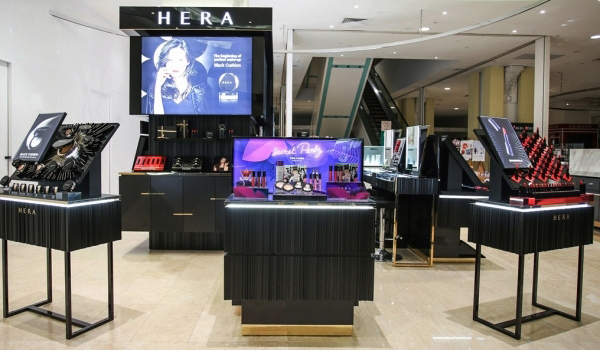
    Luxury beauty brand Hera under South Korea’s largest cosmetics conglomerate Amorepacific Group has opened its first store in Singapore that is expected to serve as the Korean beauty brand’s gateway to neighboring countries in Southeast Asia.

    According to Amorepacific on 11 May, Hera was officially launched in Singapore with the opening of its standalone boutique store inside Takashimaya Department Store.

    The move comes as luxury cosmetics brand Hera has been putting out efforts to expand its global business by entering into Association of Southeast Asian Nations (ASEAN) countries. Hera that entered China in 2016 plans to use Singapore as a bridgehead to venture into other markets in Southeast Asia.

    Hera expects the store in Singapore where hallyu, or Korean wave, is still catching on and consumers chase trendy lifestyle would help to accelerate its advance into other ASEAN markets.

    Amorepacific plans to mainly introduce skin care and beauty products that can help maintain fresh look against high humidity and temperature at its first store in the Southeast Asian country.

    In addition to the boutique store in Takashimaya Department Store, Hera plans to open a flagship store in the country before launching the brand in other neighboring countries.

    Amorepacific ventured into China immediately after Korea and China established diplomatic relations in 1992. The beauty powerhouse that has been seeking to drive the growth through overseas operations made a foray into Vietnam with its mid-tier Laneige brand in 2003 and now manages 20 direct outlets in the country.

    It also has been aggressively expanding its presence in other countries in Southeast Asia and the Middle East including Indonesia, Thailand, Singapore, and Dubai.

  • Amorepacific teams with magazine for their pop-up store

    Amorepacific teams with magazine for their pop-up store

    Amorepacific has partnered with Marie Claire magazine to open its first global beauty pop-up, in New York City.

    Open for 10 more days, the shop features products from such Amorepacific brands as Amorepacific, Annick Goutal, Iope, Laneige, Mamonde and Sulwhasoo.

    Special activities at the store include the opportunity to meet beauty experts, on-site treatments and product sampling.

    Discounts and exclusive gifts are also being offered.

    Meanwhile, Amorepacific has kicked off plans to go global with Etude House, Hera, Laneige, and Mamonde.

  • Amorepacific’s profit slide due to Chinese Challenges

    Amorepacific’s profit slide due to Chinese Challenges

    A sharp drop in Chinese tourist numbers has seen South Korean cosmetics maker Amorepacific’s profit slide 20.9 per cent in the first quarter.

    Net income came to KRW176.7 billion (US$163 million) in the January-March period, down from KRW223.5 billion won.

    Operating profit fell 25.5 per cent to KRW235.9 billion, while sales declined 8.8 per cent to KRW1.43 trillion during the cited period, it said.

    Amorepacific says the weak performance follows the decline in inbound tourists from China following the Beijing government’s ban on sales of Korea-bound package tours amid a diplomatic row over the deployment of a US missile system.

    The combined net income of Amorepacific Group, which includes brands like Etude and Innisfree, reached KRW216 billion in the quarter, also down 18.9 per cent.

    The total operating profit was down 26.5 per cent to KRW278.1 billion, and sales fell 10.3 per cent to KRW1.66 trillion.

  • Is hype gone for AmorePacific?

    Is hype gone for AmorePacific?

    AmorePacific seems to be in a quandary, with the country’s fair trade watchdog investigating the cosmetics giant amid declining performance.

    According to AmorePacific’s auditory filing, the company logged 731.5 billion won (US$685.2 million) in operating profit last year, down 32.4 percent from a year earlier. Its sales also declined to 6.29 trillion won, down 10 percent during the same period.

    Its share price also nearly halved from two years earlier.

    In the first half of 2016, AmorePacific hovered over 400,000 won per share, but started to decline, falling as low as 236,500 won last Sept. 29, and did not rise above 350,000 won. It ended at 278,000 won on Tuesday.

    The situation is quite similar for AmorePacific Group (Amore G), which is the holding firm of AmorePacific. It has been on a downturn for the past two years, falling from 215,000 won on July 3, 2015, to 127,000 won on Tuesday.

    On the fall of the titan, analysts and other observers cited the diplomatic friction between Korea and China, due to the former’s decision to deploy a U.S. Terminal High Altitude Area Defense (THAAD) battery here.

    They said China’s cap on the number of items purchased at duty free shops directly affected the revenues of domestic cosmetics firms, whose sales to Chinese tourists account for a significant portion of their entire sales.

    However, some others say blaming the THAAD issue as the sole cause of AmorePacific’s fall may be unfair, given LG Household & Health Care’s (LG H&H) surge last year.

    In January, LG H&H said it posted 6.3 trillion won in sales and 930 billion won in operating profit last year, up 2.9 percent and 5.6 percent from 2016, respectively.

    LG H&H explained it has overcome the harsh market environment, in which overall market growth faced headwinds due to a sharp decline in inbound Chinese traffic, due to its luxury brand strategy and robust sales in the onshore Chinese market.

    With the handsome numbers, LG H&H overtook AmorePacific to become Korea’s top cosmetics company.

    As the two companies show stark differences while suffering the same THAAD issue, analysts interpreted the performances of their luxury brands as the decider.

    According to LG H&H, its Whoo brand logged 1.4 trillion won in sales last year, up 200 billion won from a year earlier. Though AmorePacific did not disclose its luxury brand Sulwhasoo’s sales, Kiwoom Securities analyst Lee Hee-jae assumed Sulwhasoo posted 1.15 trillion won in sales last year, down 245 billion won from 2016.

    AmorePacific denied the assumption, saying it cannot disclose the amount but Sulhwasoo outperformed Whoo in sales last year.

    Further data showing AmorePacific products’ popularity is the market share in duty free shops. According to a Daishin Securities report, AmorePacific’s duty free market share declined from 12 percent in the first half of last year to 5 percent in the fourth quarter.

    Amid doubts on the competitiveness of AmorePacific products, with its fairness in business also questioned, the Fair Trade Commission (FTC) investigated Amore G and its subsidiaries.

    During the five-day investigation that started Feb. 21, the watchdog looked into internal trading between Amore G’s affiliates on suspicion the group unfairly helped affiliates in which Suh Min-jung, the eldest daughter of AmorePacific Chairman Suh Kyung-bae, owns stakes.

    Despite the negative issues, Amore G and AmorePacific decided to pay dividends worth more than 40 billion won to the Suh family. Of them, Chairman Suh will take approximately 39 billion won thanks to his more than 70 percent stake in Amore G and 11 percent stake in AmorePacific.

    Unlike the owner family, AmorePacific employees did not receive incentives, which they normally receive every six months, throughout last year.