Tag: AmorePacific

  • Tax changes lower Mainland cosmetics prices

    Tax changes lower Mainland cosmetics prices

    China’s new import tax regime has enabled cosmetics giants AmorePacific and Estee Lauder to lower their prices in China by up to 30 per cent.

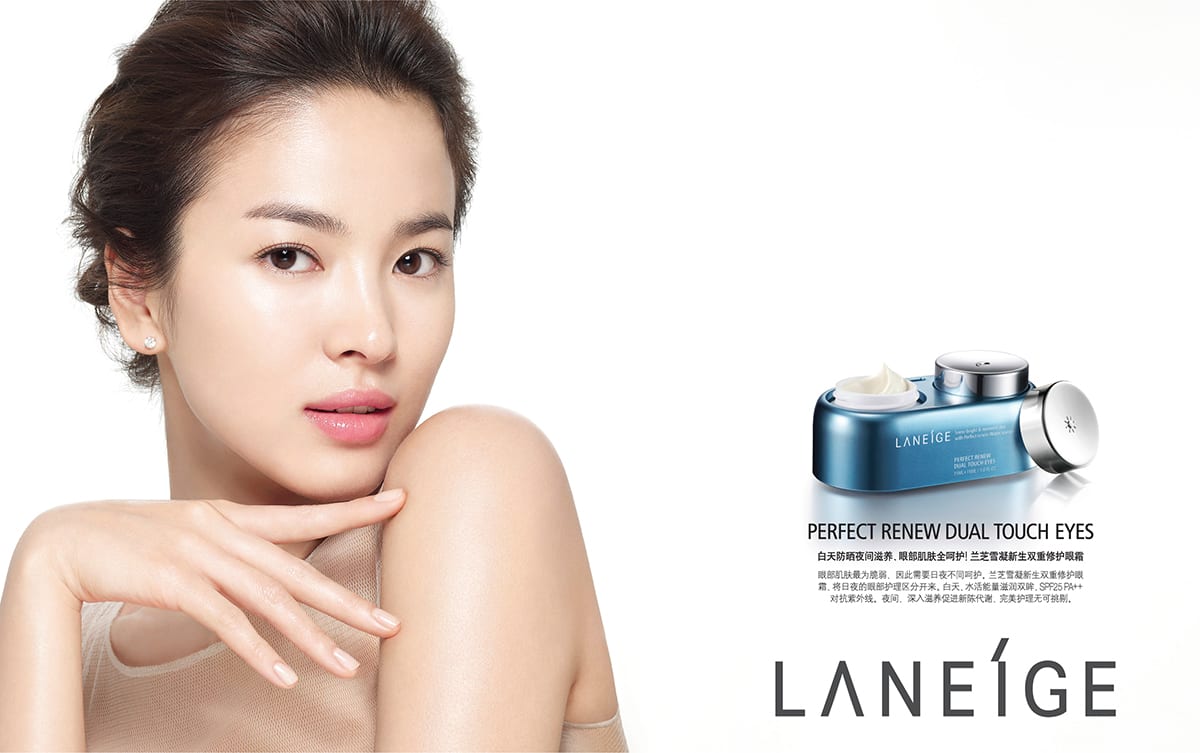
    AmorePacific’s China division says it will reduce Mainland cosmetics prices for 327 lines under the brands of Etude House, Innisfree, Laneige and Sulwhasoo by 3 to 30 per cent from January 15.

    US rival Estee Lauder has confirmed immediate price cuts for more than 300 lines in China, including its namesake label, Bobby Brown, Clinique, Jo Malone, and Mac by as much as 18 per cent.

    This follows Beijing’s move last year to slash its hefty duties on imported cosmetics in an effort to boost domestic consumption, according to AmorePacific, which has its headquarters in Seoul.

    “These global cosmetics names are now narrowing the price gap between China and overseas, and we believe more are probably about to follow suit,” says China Market Research Group director Ben Cavender, noting that with western brands becoming cheaper in the mainland, people may be discouraged from travelling to Hong Kong to make purchases.

    Imported cosmetics previously faced tariffs of 84 per cent, reflecting both import and point-of-sales taxes. The tariffs have now gone down to 29 per cent for most beauty products.
    Before the tariff reduction, many mainland consumers shopped via cross-border online marketplaces or while travelling abroad.

  • Chinese celebs promote ‘K-beauty’

    Chinese celebs promote ‘K-beauty’

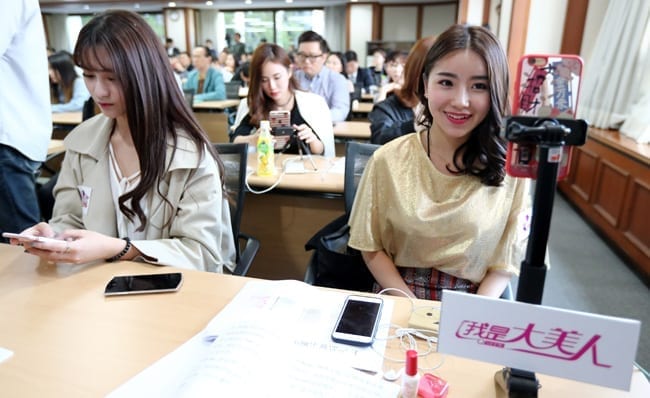
    Internet celebrities in China, known as “Wang Hong” there, have been in the limelight among Korea’s cosmetics and retail industry officials, amid a chilly relationship between the two countries. Bilateral relations have soured since Korea decided to deploy the Terminal High Altitude Area Defense (THAAD) missile system.

    The online stars, who have millions of followers on the internet, exert a strong influence over young Chinese people. According to CBN Data, a commercial data company affiliated with Alibaba, the “Wang Hong economy” is set to be worth 58 billion yuan ($8.7 billion) in 2016, more than China’s box office in 2015.

    Korea’s cosmetics industry officials have recently paid attention to them, as more have promoted K-beauty fever in China, evaluating or recommending Korean cosmetics online.

    Some cosmetics companies have even invited them to Korea to promote their products.

    AmorePacific invited some to Korea in March and September this year to promote its oriental herbal shampoo “Ryoe.” After the invitation, AmorePacific’s shampoo sales in China grew seven times year-on-year. LG Household and Health Care invited nine celebrities to Korea on Sept. 22 to promote its cosmetics brand SU:M37. The Face Shop invited five others and introduced their products to them earlier this year.

    Retail industry officials are looking for opportunities from the celebrities as well.

    Aekyung invited 10 in May to promote its cosmetics brand “Luna,” and HDC Shilla I’PARK Duty Free hosted an overnight trip for five to sightsee spots in Yongsan, central Seoul. Shinsegae broadcasted its “K-beauty fashion week” event to China through the channels of a few of the internet celebrities and Galleria Duty Free Shop employed two to promote the store in China through their social media.

    On Oct. 3, Minister of Culture, Sports and Tourism, Cho Yoon-sun said, “We would like you Wang Hongs, who lead the trend in China, to be a bridge between Korea and China,” meeting six celebrities at Jongno Hanok Village in central Seoul.

  • Korean cosmetics makers fear losses from THAAD deployment

    Korean cosmetics makers fear losses from THAAD deployment

    South Korean retailers and cosmetics companies are closely watching China’s moves after Korea and the US decided to deploy an advance missile defense system in the country on July 8.

    Neighboring China lodged a swift protest against the decision announced in the morning which is expected to further heighten geopolitical risks.

    Local cosmetics makers and duty-free shops are on alert as they worry about losing Chinese market and consumers who account for a growing portion of their revenues.

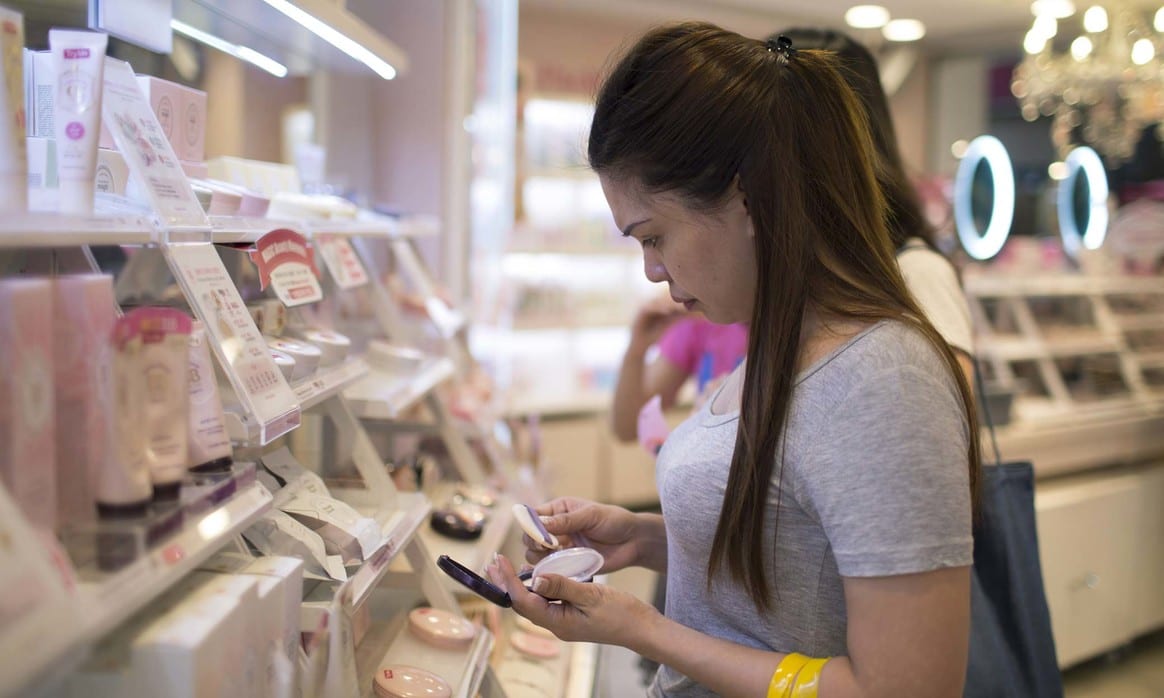
    Customers shop for cosmetics at a local duty-free shop.

    On the day, cosmetics stocks like LG Household & Health Care and AmorePacific plunged more than 4 percent.

    “The THAAD issue was a huge blow to Cosmetic stocks earlier this year and it happened again,” an official at a cosmetics company said.

    South Korea’s cosmetics exports to China doubled on-year to US$1.08 billion in 2015, which accounts for nearly 40 percent of global sales, according to the Korea International Trade Association. South Korea is the second-largest cosmetics exporter to China following France.

    “There hasn’t been an immediate impact so far as China hasn’t took any trade-related actions but we still have to keep an eye on the issue,” she said.

    If ties between the two countries weakens, China could tighten regulations on safety and tariff issues, experts said.

    Retail companies, which started to see a rebound in the number of Chinese tourists to Korea after a sharp drop due to the Middle East respiratory syndrome outbreak hit the country last year, are in panic mode.

    “We are worried over the possible drop in the number of tourists coming here if political conflicts drag on for long,” said an official at a duty-free store in Seoul.


  • Multi-brand Korean cosmetic shops thrive

    Multi-brand Korean cosmetic shops thrive

    Korean cosmetic shops that sell various brands under one roof have steadily expanded their presence across the country, giving sophisticated customers more options, according to industry sources.

    AmorePacific, South Korea’s No. 1 cosmetic company, operates about 1350 multi-brand stores, called Aritaum nationwide, which offer a wide selection of its products, including such mass brands as Laneige and IOPE. The company also operates single brand shops such as Innisfree and Etude House in the lower-end and Sulhwasoo and Hera in the higher-end segment as part of a two-track strategy.

    Also showcasing multi-brands are beauty and health care stores, such as CJ’s Olive Young and its smaller rival Watsons, which have expanded and enjoyed growing popularity among urban youngsters.

    To catch up with the latest trend, local cosmetic companies have launched multi-brand cosmetic shops in major retail strips.

    LG Household & Health Care Ltd., the nation’s second-largest cosmetic maker, launched a multi-brand shop called Nature Collection, in February, operating 11 stores in major retail strips in Seoul. The store features brands that focus on a natural look, including The Face Shop and Beyond.

    “Nature Collection is promoted through word-of-mouth, with various products and promotional events,” a company spokesman told Yonhap news service.

    Able C&C, which created the boom for the single brand shop with Missha, has recently opened a multi-brand shop called Beauty Net on a popular street in Seoul to display a wide range of select products.

    Beauty Net Korea store

    Industry officials say multi-brand shops are effective in improving customer convenience and brand management and promotion, providing easier access to new brands.

    “Expansion of these multi-brands provide the other brands with more chances to be introduced to customers,” said an Able C&C spokesman.

  • China ripe for AmorePacific

    China ripe for AmorePacific

    AmorePacific, South Korea’s largest cosmetic company, has reaffirmed its commitment to China, seeing further room for growth in the rising middle-class consumers there, the firm said Thursday.

    AmorePacific has shown stellar performance in China with a range of luxury and low-end brands, thanks to the rising popularity of Korean drama and pop. It logged 5.66 trillion won (US$4.93 billion) in sales last year, up 20.1 per cent year-on-year.

    The Korean multinational owns the cosmetics and retail brands Etude House, Laneige, innisfree, and sulwhasoo, among others.

    “By 2020, the middle class population is expected to reach 500 million, and its size and influence will greatly expand in the next decade,” AmorePacific CEO Suh Kyung-bae said during a monthly meeting with senior officials earlier this month.

    While Beijing has applied non-tariff barriers, such as those on ingredients and the approval of foreign brands, Suh expects the focus of regulations will move to distribution to curb counterfeit items and the grey market.

    “However, the tightened retail regulations will have a limited impact on companies that have already established distribution channels in the Chinese market,” Suh said.

    While fledgling cosmetics producers have bloomed over the past years, Suh expects it will take time for them to match the level of its technology and brand power.

    “We will have to keep an eye on the growth of emerging local companies, but brand power is not something they can get in a short period of time,” he said.

  • Tmall driving more than sales for top beauty brands

    Tmall driving more than sales for top beauty brands

    Scores of high-end cosmetics companies are setting up shop on Alibaba Group’s Tmall.com online marketplace as eCommerce continues to gain ground as a critical marketing and sales channel for reaching China’s increasingly sophisticated consumers.

    At the recent Tmall Beauty Awards ceremony in Shanghai, which celebrated the top cosmetics brands operating on the eCommerce platform, Alibaba announced that 29 well-known Western brands and 37 from Japan and Korea had storefronts on Tmall at the end of 2015, including more than 10 joining the platform last year alone such as Lancôme, Bobbi Brown, La Mer, Anessa and Avene. Another 20 cosmetics companies are planning to launch their own presence on Tmall this year.

    Alibaba also announced a cooperation agreement with Korean cosmetics maker AmorePacific Group to expand the latter’s Tmall presence. AmorePacific will add two more storefronts exclusively on Tmall for the Sulwhasoo and IOPE beauty brands in the following months. AmorePacific already operates the Laneige, Innisfree, Mamonde and Etude House e-shops on Tmall, and about 800,000 Chinese consumers have purchased goods from Laneige’s shop over the past three years, according to Alibaba. The brand also sold about 45,000 BB creams, or blemish balms, during Alibaba’s 11.11 Shopping Festival, bringing in US$1.4 million from that product alone.

    Alibaba has similar cooperation agreements with Procter & Gamble, Estée Lauder, L’Oréal and domestic retailer Shanghai Jahwa Corp.

    The eCommerce push by cosmetics companies comes amid strong growth in high-end cosmetics purchases by Chinese consumers. A report from Chinese research firm CBNData, released in conjunction with the awards, noted that total sales of cosmetics products in China climbed nearly 20 per cent to $74.1 billion last year from 2014. Citing independent researchers, CBNData’s report also said that online channels accounted for 36 per cent of that, or $27 billion, with Tmall controlling about a 70 per cent share of the B2C market. Alibaba Group is an investor in CBNData parent China Business Network.

    Tmall Cosmetics GM Mike Hu said total sales generated on all business-to-consumer retail websites in China currently account for 12 to 15 per cent of the entire cosmetics market, and he predicts those channels will grow by another 30 per cent to 50 per cent over the next two to three years.

    Hu stressed that Tmall offers more than just another sales channel to brands. It’s also a platform to promote new products, build a connection with customers and increase business both online and off. According to Hu, over 20 brands have introduced about 160 versions of products that were exclusive to Tmall shoppers, and the brands have launched more than 100 new products via the website in 2015.

    “Two or three years ago, eCommerce played as a sales channel since its significance grew and it helped enhance business,” said Gary Chu, online general manager at Estée Lauder China, said at the awards ceremony. “Now what we are thinking about is how to integrate brand property, content and products into our presence in Alibaba’s ecosystem to meet the needs and demands of the brand.”

    To that end, Estée Lauder has been engaging customers via its so-called Fans communities within the Tmall mobile app. One brand, Bobbi Brown, opened its Fans page last November and now has more than 640,000 followers. It offers make-up tips and sample trials, among other initiatives, to tackle customers’ most common inquiries in order to educate and interact with shoppers, while serving as a bridge to the Bobbi Brown storefront. In addition to the Fans page, the company also used Instagram-like photo sharing on Tmall to generate buzz about Bobbi Brown lipstick ahead of Chinese New Year earlier this month, and Estée Lauder regularly uses the Tmall mobile app to help launch new products.

    Alibaba Group CEO Daniel Zhang said Estée Lauder’s efforts are prime examples of ways brands can engage shoppers with content and convert interactions into business opportunities.

    “All the brands and merchants are the best content producers, and merchants should incorporate products into content that consumers are willing to read and eager to buy,” he said.

    Brands are also using their Tmall storefronts to boost their online-to-offline (O2O) business. So far 54 of them, including Estée Lauder, La Mer and Laneige, have integrated their online and offline membership programs and now allow users to make appointments for skin care treatments in brick-and-mortar stores online.

    Tmall will continue to promote O2O retail to “achieve the goal of same product, same service and same membership” online and offline, Hu said.

    Here are the winners from some of the biggest award categories from last Friday’s ceremony. The winners were chosen based on search popularity, interaction with shoppers, customer reviews, trial reports, sales and services among millions of customers and thousands of brands on Tmall in 2015.

    Most popular brands online: Laneige, Lancôme, Innisfree, Maybelline

    Hot search brands: Bobbi Brown, Avene, Sulwhasoo (which launched on March 1)

    Favorite brands among customers born in the 1990s:Sekkisei, The Face Shop, Hanhoo (Chinese domestic brand)

    Favorite brands among customers holding Alibaba Passport (shoppers spending more than RMB 100,000 ($15,270) annually on Alibaba’s platforms): Shiseido, Whoo, L’Oréal, Clarins, Innisfree

    Favorite brands among male shoppers: JVR (Chinese domestic brand), L’Oréal, NIVEA

    Best-selling brand: Pechoin (Chinese domestic brand)

    Outstanding and popular group: Estée Lauder Group
  • AmorePacific plans 350 new China stores

    AmorePacific plans 350 new China stores

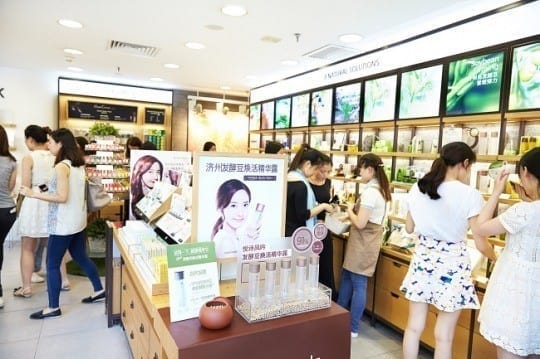
    The Korean parent of skincare brands including Laneige, Sulwhasoo and Etude, plans to open at least 300 new stores in China this year.

    AmorePacific expects a 30 per cent increase in sales in 2015, fuelled by a 15 per cent expansion in its existing China store network now numbering 2335.

    Despite intense competition from local Chinese brands and American multinationals like Procter & Gamble and L’oreal, AmorePacific is thriving in China, largely due to the sales success of its Laneige and Sulwhasoo brands, each of which have their own store networks. The company is South Korea’s largest manufacturer of cosmetics, specialising in facial creams and ginseng extracts. It also owns the Etude and Mamonde brands, which have retail store networks across Southeast Asia.

    Besides expanding its store network – 15 per cent of 2335 equates to around 350 stores – the company plans to increase its presence in Chinese online stores.

    A key factor in the brands’ China popularity is the increasing trend amongst young Asian women to emulate Korean popstars and actresses.

    In an interview with Bloomberg Business, Suh Kyung Bae, AmorePacific’s chairman, said the company recognised the importance of Asia’s rising middle class 15 years ago and this remains a key business driver.

    Despite the size of its retail network, and sales growth, AmorePacific still holds just 2.1 per cent of China’s total skincare market, according to data from Euromonitor International.

    The company said its 2014 sales grew 21 per cent to US$4.3 billion, with China now its largest market outside South Korea. While accounting for 8.6 per cent of group sales in 2013, analysts project it could represent 30 per cent by 2020.

    The company is also targeting substantial growth across