Retail News CRM

Tag: apple store

  • Apple India aims 5,000 employees eventually for Hyderabad facility

    Apple India aims 5,000 employees eventually for Hyderabad facility

    Apple has hired 3,500 people for their development centre here and is expected to take the number to 5,000 eventually, said a senior Telangana Government official.

    “Apple has taken 3,500 people so far for their development centre in Hyderabad. They will totally hire 5000 people eventually. There is no time frame for that (to achieve 5000 headcount),” Jayesh Ranjan Principal Secretary IT and Industries said.

    According to a report: The Cupertino, California-based tech giant in May last year opened it development centre here that will focus on development of Maps for its products, including iPhone, iPad, Mac and Apple Watch.

    The Californian firm had then said the investment in the facility will accelerate Maps development and create up to 4,000 jobs.

    Meanwhile, Jayesh Ranjan today inaugurated Pactera Technologies’ first office in India here.

    The Hyderabad office of Pactera Technologies reflects its strategic focus on becoming an industry leading provider of IT services on a global scale, a press release from the company said.

    The new office can seat 150 people in Phase 1 and additional 300 people in Phase 2.

    The abundant talent that is currently part of Pactera would help contribute much more to the digital and innovation world, which would also help them grow to 3,000 people organization in the next 2-3 years, it added.

  • Apple to open (mini) India stores

    Apple to open (mini) India stores

    Apple is about to open its first retail stores in India.

    But unlike in other international markets, the Apple India stores will be a joint venture with local electronics chain, Croma. And they’ll be considerably smaller than elsewhere.

    India has strict laws regulating single brand foreign retailing, which would require Apple to source a percentage of its products’ components within India.

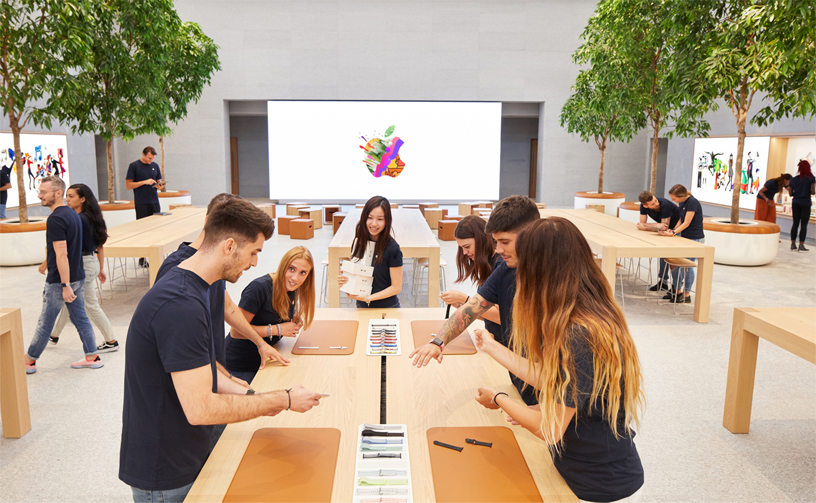
    Media sources in India say the new stores – the first of which will open around the time of next month’s Diwali Festival – will feature the same signature wooden tables and counters of full scale Apple stores elsewhere in the world and staff will be trained in the US.

    Croma, a subsidiary of Infiniti Retail, in turn owned by industrial giant Tata, will open six stores in an initial trial, all in greater Mumbai.

    Infiniti Retail CEO Avijit Mitra said in a statement: “We are proud to partner [with] Apple to launch the Apple Store in India and extremely bullish about it.

    “These stores will be modelled on the global design and will offer the best experience to consumers, showcasing the entire range of Apple products,” he said.

    The first stores will comprise a mere 46 sqm, a fraction of the size of the tech giant’s global flagships, in reality resembling little more than a concession. But it marks a significant strategic step from Apple’s previous india strategy of selling through authorised resellers or mobile phone networks.

    Apple’s iPhone 6s model goes on sale in India this week, with the 16GB version priced at 62,000 rupees, about US$960).

  • Apple reveals discount pricing feature for subscriptions in the App Store

    Apple reveals discount pricing feature for subscriptions in the App Store

    A post on the Apple Developer website reveals that a new “contingent pricing” feature will be available in the App Store. The subscription gets its name because customers can be given a discount on a subscription contingent on them having an active subscription to another publication. That discount will continue to be offered every month as long as the customer remains subscribed to both magazines.

    Here is what Apple told developers on the website: “Contingent pricing for subscriptions on the App Store — a new feature that helps you attract and retain subscribers — lets you give customers a discounted subscription price as long as they’re actively subscribed to a different subscription. It can be used for subscriptions from one developer or two different developers. We’re piloting this feature and will be onboarding more developers in the coming months.”

    Apple says developers should start planning how they will work contingent pricing into their App Store pricing strategies. A link on the website will allow developers to sign up to receive a notification from Apple in January, when the company will inform developers of more details related to “contingent pricing.”

    In explaining exactly what “contingent pricing” is, Apple writes, “For example, you might offer Ocean Journal premium subscribers the opportunity to subscribe to Mountain Climber for a discounted price of $4.99/month instead of the regular $5.99/month. Customers pay the discounted price as long as they remain Ocean Journal subscribers.”

    While Apple is writing to developers, the tech giant does explain how customers will be able to find publications in the App Store that offer “contingent pricing.” Apple says that customers will find the discounted pricing in a publication’s App Store listing, off-platform marketing channels, and planned placements in the App Store.

    Apple says that it will help developers manage the implementation of “contingent pricing” by offering customers “a seamless redemption and purchasing experience” based on the contingent price proposition the developers will provide.

    Obviously “contingent pricing” isn’t going to be available to App Store customers until sometime next yeear.

  • Vietnam excluded from Apple Store plans for Asia-Pacific

    Vietnam excluded from Apple Store plans for Asia-Pacific

    Vietnam does not figure in Apple’s plans for launching 15 new or rebuilt stores in the Asia-Pacific region from now through 2027.

    The U.S. tech giant plans to either build, remodel or relocated 15 sites in China, five in Japan, three in India, two in South Korea, and one each in Malaysia and Australia.

    This means Malaysia will be the next Southeast Asian country to get an Apple Store after Singapore and Thailand.

    Last month, Apple launched an online store for Vietnamese customers, and analysts expected this to lead to the opening of brick-and-mortar stores in the country.

    Apple has been showing increasing interest in the Vietnamese market in recent years. Last year it appointed a country manager for the first time, and set up an official YouTube channel.

    It also mentioned Vietnam as achieving double-digit growth in its financial report for the second half of last year.

    There are over 520 Apple Stores in 26 countries.

  • Apple App Store ecosystem generated big bucks last year

    Apple App Store ecosystem generated big bucks last year

    Apple reported today that its app storefront supported $519 billion in billings and sales in 2019. A study was conducted by independent economists working for Analysis Group who calculated that since the App Store opened with 500 apps in 2008, Apple has paid developers more than $155 billion. A quarter of those payments were made last year. Developers share with Apple payments for paid apps, digital content or in-app purchases made by users through Apple’s in-app payment system.
    The economists that were studying the amount of money that flows through the iOS app ecosystem are underestimating the amount of money that is collected by Apple. That is because some developers decide to monetize their apps through other methods outside of the App Store. For example, digital goods and services can be sold outside of the App Store for use within apps on Apple devices. An example of that would be downloading the Netflix app from the App Store and going to the Netflix website to pay for a subscription. Another example, one that is very popular these days, involves installing a delivery app like Instacart or Shipt and paying the delivery firm directly for groceries through its website.
    Of the $519 billion in billings and sales that the App Store generated last year, physical goods and services accounted for $413 billion or 80% of total revenue. $61 billion, or 11.8% of revenue, came from Digital Goods and Services; that leaves $45 billion, or 8.7%, which came from in-app ads. Analysis Group says that the world’s largest smartphone market, China, was responsible for a leading $246 million or 47% of global App Store billings. That was followed by the $138 billion or 27% that comes from the U.S.
    While the report is based on 2019 data, AG says that the coronavirus has had an enormous, positive impact on App Store business. The Analysis Group says that it has seen increased use of educational and business collaboration apps during the pandemic, growth in demand for food and grocery deliveries, and a trend toward ordering food and then driving to the restaurant to pick it up. Other changes include an increasing trend toward mobile gaming and video streaming apps, and the increasing popularity of social apps which are replacing the gap felt by users during periods of social isolation.
    The report says, “With widespread social distancing around the globe, more consumers are turning to mobile to make purchases and to stay informed, connected, and entertained. Many companies and their employees have had to adjust to working from home, while universities, schools, and students have switched to remote teaching and learning. During this time, app downloads, usage, billings, and sales have seen an overall surge.
    Not all apps have been able to benefit from the pandemic. Apps related to businesses that have closed or have faced strict regulations (such as the hotel business, airlines and restaurants) or those that require face-to-face interaction (like the ride share business) have been seriously impacted. And as the global economy has taken a huge hit, digital advertising also has see a plunge as companies feel less of a need to advertise to a public that is not as liquid as it once was.
    Apple CEO Tim Cook, talking about the App Store says, “The App Store is a place where innovators and dreamers can bring their ideas to life, and users can find safe and trusted tools to make their lives better. In a challenging and unsettled time, the App Store provides enduring opportunities for entrepreneurship, health and well-being, education, and job creation, helping people adapt quickly to a changing world. We’re committed to doing even more to support and nurture the global App Store community — from one-developer shops in nearly every country to businesses that employ thousands of workers — as it continues to foster innovation, create jobs, and propel economic growth for the future.”
  • Apple to reopen 100 brick and mortar stores in the states this week

    Apple to reopen 100 brick and mortar stores in the states this week

    There seems to be an urgency in the U.S. to get back to those carefree pre-COVID-19 days when the only thing you had to worry about was whether Apple’s new iPhone 12 series would support both sub-6GHz and mmWave 5G signals (they will). While some behavior, such as crowding together on beaches during Memorial Day, will no doubt lead to the second wave of COVID-19 cases, most businesses are reopening slowly while trying to take a safe approach.

    A week ago, we told you about some of the changes that T-Mobile has instituted for its reopened locations. An employee will open the door (regardless if you are coming or going), the capacity of each store will be sharply reduced to keep consumers at safe distances from one another and employees will have to wear a mask (no word on whether it has to be a magenta one). The sanitizer will be applied to the demo devices on the shelves while employees will have to spray and disinfect their own personal phones and tablets.

    Today, Apple said that it will reopen more Apple Stores in the U.S. starting tomorrow. Last week 25 locations in the states turned their lights back on along with 12 in Canada and 10 in Italy. The Apple Stores opened last week include those in Arkansas, California, Washington, Florida, Colorado, Hawaii, and Oklahoma. And now we are looking at another 100 U.S. stores that will be reopened this week. Most of these brick and mortar locations will provide curbside or storefront service only. Customers will be able to pick-up devices and accessories ordered online and show up for Genius Bar appointments. Some stores will be open for walk-in customers. Those stores will most likely require that customers wear a mask and have their temperatures taken before they are allowed to walk inside. Despite Apple’s willingness to get back to normal, those locations allowing walk-in customers will limit browsing and Apple will still focus on online sales.
    Apple says, “This week we’ll return to serving customers in many US locations. For customer safety and convenience, most stores will offer curbside or storefront service only, where we provide online order pick-up and Genius Bar appointments. Others will be open for walk-in customers and we encourage everyone to check their local store webpage for more information about hours at their preferred location. Customers can also visit apple.com for support by phone or chat. We are committed to reopening our stores in a very thoughtful manner with the health and safety of our customers and teams as our top priority, and we look forward to seeing our customers again soon.”
    As of today Apple has 510 stores globally with 271 located in the states. 148 stores worldwide are currently open and if Apple goes through with its plans for this week, that number will rise accordingly. Deirdre O’Brien, Apple’s Senior VP of Retail + People said earlier this month, “Our commitment is to only move forward with a reopening once we’re confident we can safely return to serving customers from our stores. We look at every available piece of data — including local cases, near and long‑term trends, and guidance from national and local health officials. These are not decisions we rush into — and a store opening in no way means that we won’t take the preventative step of closing it again should local conditions warrant.”
    Apple has still released new devices even with its stores closed. This includes the new refreshed versions of the iPad Pro (2020) and the second-generation iPhone SE. The company has also had to move its annual WWDC Developers Conference online; Apple will virtually host WWDC starting on June 22nd.
  • Apple Store workers are being asked to work from home

    Apple Store workers are being asked to work from home

    Last month, a leaked internal memo revealed that Apple plans on reopening on a staggered basis, the 458 retail stores it owns outside of China. Apple hoped to start opening these locations during the first two weeks of this month, although whether this happens remains to be seen. In China, the company has reopened all 42 Apple Store locations as the country claims to be on the mend.

    While the Apple employees that man the 458 closed stores are stuck at home, Bloomberg reports that the company is asking some of them to work from home answering technical support questions as part of the AppleCare team. Those who want to participate must set up a workspace in a quiet room in their home with the ability to accommodate the 27-inch Mac that Apple will send to workers. These makeshift workspaces also must have a strong internet connection, and the employees need to go through a two-week virtual training course.

    The report notes that Apple Store employees were sent forms to fill out in order to apply for the technical support jobs. Those who aren’t interested in answering these calls from home are asked to explain why. Despite this, Apple claims that the program is not mandatory and that all of its retail employees are still getting paid their full paychecks and receiving their benefits whether they participate in the program or not.

    But those who cannot work from home have concerns. They worry that by not agreeing to answer AppleCare and technical support calls from their home, they will look bad in the eyes of their managers. To be sure, there are Apple Store employees happy to help out during the crisis although others don’t understand why they are being asked to do this work. This latter group notes that Apple already promised them their full pay and benefits just for staying home.

    While Apple had started the work from the home program a few weeks ago, over the last week it has reached out in earnest to Apple Store employees seeking to fill the gaps in the AppleCare system. On Friday, the tech giant’s retail chief, Deirdre O’Brien, said that the recruiting “has been going great.”

    Most of Apple’s engineers are working from home and Apple has been reimbursing these employees for desks and computer monitors needed to set up a home office. Apple is also sending tips to employees on how best to create an ergonomic environment. And it also is allowing, with permission from those in the higher ranks of the company, some engineers to take home unfinished hardware and software to work on. The COVID-19 pandemic is resulting in the delay of new products. Apple did launch its two new iPad Pro tablets a couple of weeks ago, although they reportedly were manufactured back in January. The budget-priced iPhone 9, originally rumored to be introduced on March 31st, is now expected to first see the light of day on April 15th with its release a week later. And today, contract manufacturer Foxconn said that it still hopes to have the upcoming 5G 2020 iPhone models ready in time for the holiday shopping season.< Apple originally closed its Apple Stores in China on February 3rd. As new domestic infections started to decline sharply in the country, Apple reopened these locations on March 13th. The very next day, all of the firm's brick and mortar stores outside of China were shuttered. At first, Apple said that those stores would be closed until March 27th, but that was later revised to "until further notice." And while the aforementioned leaked memo from O’Brien discusses reopening all closed stores this month, Apple might take a more conservative path and keep the stores closed for a few additional weeks.

  • First Glimpse of the new Apple Taiwan store

    First Glimpse of the new Apple Taiwan store

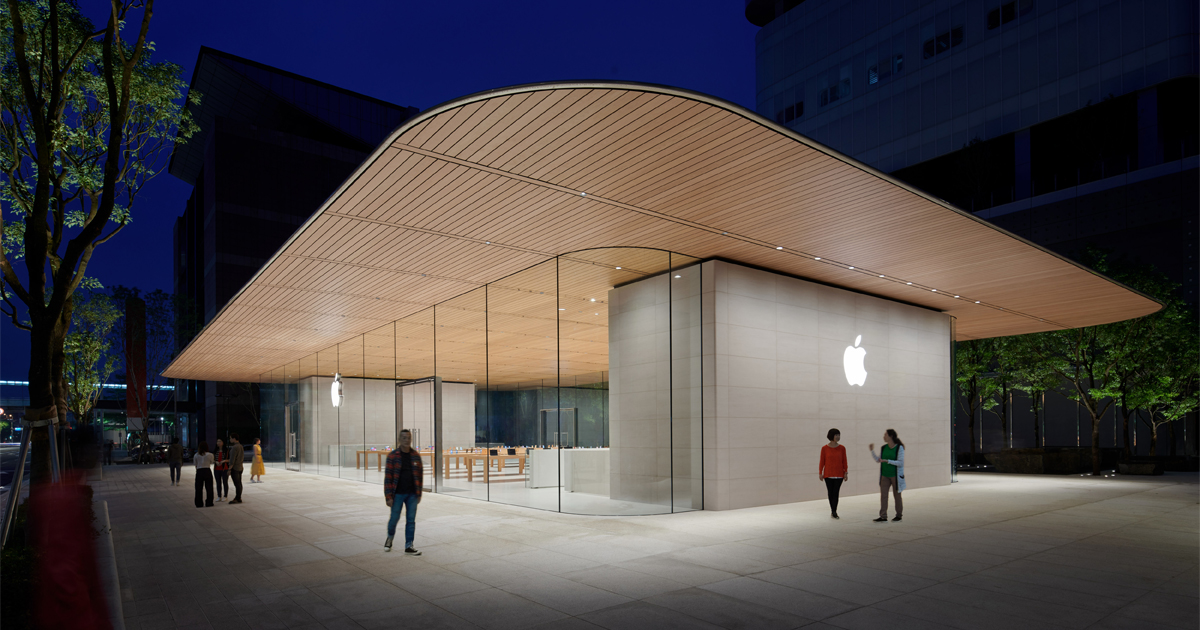
    Apple Taiwan will open its second retail location – the new Xinyi A13 store – in Taipei tomorrow.

    In a nod to the brand’s Chicago flagship, the new store’s glass exterior and distinctive roof house a two-storey retail area with two marble composite staircases leading downward to an underground level.

    Taiwanese singer-songwriter Eve Ai will perform at the opening, kicking off a six-week “Stage for Creativity” initiative that will see local artists and creators featured at the venue.

    Apple’s first official store in Taiwan opened in the Taipei 101 mall, although the majority of its products are sold via its online channel and through local authorised resellers. Around 4 million people have visited Apple Taipei 101 since its launch.

  • Apple pilloried over display model policy

    Apple pilloried over display model policy

    Just before the Fair Trade Commission comes to a decision on whether Apple has violated domestic fair trade laws, Korean phone distributors are calling the tech giant out for being the only phone manufacturer in the country that makes them pay for display phones in their stores.

    The Fair Trade Commission (FTC) is due to hold a meeting in mid-December after two years of investigating accusations against Apple and finally decide whether the company indulged in unfair practices. Some complaints are that Apple charges mobile carriers for repair and advertising costs of Apple products.

    On Wednesday, the Korea Mobile Distributors Association (KMDA) accused the company of doing something that no other handset maker did in Korea. “Apple doesn’t let us sell iPhones at all if we don’t purchase the demo phones needed for store displays,” read a statement from the KMDA. “Other manufacturers provide the display phones themselves, and come to collect them later.”

    According to the association, Apple even charged retailers for the costs of building shelves for display models and controlled where the promotional posters for new products were placed. Most of the demo devices are priced at around 70 percent of the market price. Distributors say they also had to purchase demo iPads and Apple Watches.

    iPhones are getting more costly, which could be a factor in the distributors going public with complaints against the company.

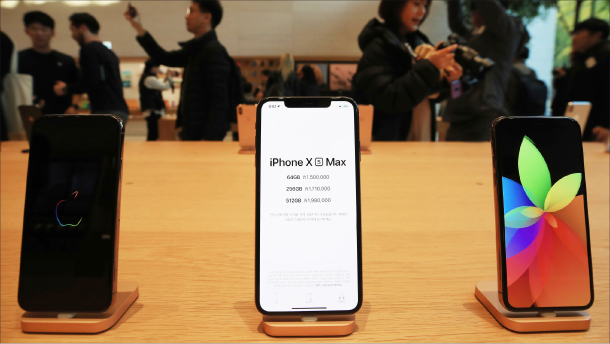
    In the past, Apple phones cost no more than 1 million won ($883). Last November, the iPhone X launched just three weeks after the iPhone 8 with a 1.42 million won price tag for a 64 gigabyte model. With the release of the iPhone XS, XS Max and XR on Nov. 2, iPhone prices have reached new highs. The iPhone XS Max is selling for more than 30 percent higher than the iPhone X at 1.97 million won for a 512 gigabyte model.

    “Previously, I spent around 1.1 million won on demo devices for Apple’s new products,” said a 53-year-old owner of a wireless store in Jongno District, central Seoul.

    Branches of the three major mobile carriers – SKT, LG U+ and KT – are the main distributors of mobile phones in Korea.

    “But recently, with Apple products becoming more expensive, the costs I have to bear have risen tremendously,” he said.

    The owner estimated that he spent nearly 5 million won on purchasing demo phones for Apple’s newest models.

    According to industry estimates, each mobile retailer spends around 2.9 million won a year purchasing Apple demo phones. This means that Apple will earn around 25.5 billion won in total sales of demo phones from the country’s 8,800 wireless stores.

    “We are not trying to sue Apple right away at this point, but rather figure out who holds responsibility,” added a KMDA spokesman. “Mobile carriers may be responsible for allowing Apple to pursue such unfair practices, leaving distributors to pay for the costs.”

    Korea is not the only country that has investigated Apple for unfair practices. This July, Japanese authorities called out the tech giant for antimonopoly practices that included forcing local mobile carriers to subsidize iPhone prices to boost sales. In 2016, France sued Apple for $55 million over unfair practices that also involved unfair contracts.

    Apple has not released an official response to the KMDA’s complaints.

    Sales of Apple’s new products have been less than stellar, which is also fueling dissatisfaction among distributors. According to industry estimates, the number of customers buying Apple’s three newest models between Nov. 2 and Nov. 7 was only 60 percent of the number that purchased Apple’s iPhone X and iPhone 8 in their first week last November.

  • Apple store to sell wearable skincare product

    Apple store to sell wearable skincare product

    Apple is now selling L’Oreal’s newest tool called the My Skin Track UV, made by the La Roche-Posay brand. The company first unveiled this product at the 2018 Consumer Electronics Show in January 2018 and it is now ready for consumers.

    This is the first time that Apple is venturing into the world of beauty and skincare in its store.

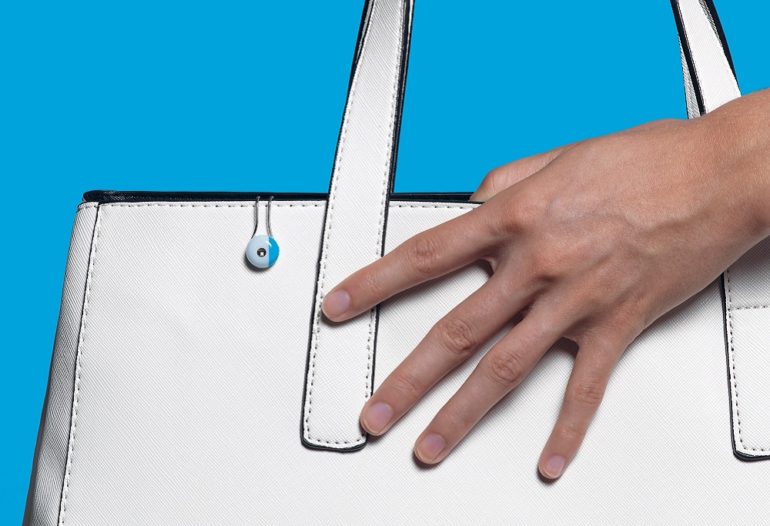
    My Skin Track UV is a small wearable device to attach on the customer’s clothes to measures their individual exposure to UVA and UVB rays; a companion app tracks their exposure to pollution, pollen, and humidity.

    The device is cleverly designed to be battery free–its sensor is activated by the sun, and is then powered by the user’s smartphone using near field communication.

    The product was designed in collaboration with Yves Behar, and relied on research gathered by Northwestern University’s John Rogers, who has developed a range of stretchable electronic devices.

    It is designed to motivate wearers to engage in safer outdoor behavior.

    While most people are aware about the sun’s impact on the skin, this knowledge often doesn’t actually prompt them to change their behavior.

    L’Oreal’s research found that when consumers had regular, accurate updates about their sun exposure, 34% applied sunscreen more often, and 37% sought shade more frequently

  • Apple concerns hit supplier stocks

    Apple concerns hit supplier stocks

    Shares in Asian suppliers and assemblers for Apple fell on Tuesday after several component makers warned of weaker than expected results, leading some market watchers to call the peak for iPhones in several key markets. Following a poor forecast earlier this month, analysts and investors voiced concern over the state of Apple’s business, contributing to growing worries that iPhone sales were stagnating and could hurt suppliers.

    Fresh warnings on Monday from screen maker Japan Display, British chipmaker IQE and Lumentum Holdings, the main supplier of the Face ID technology in the latest generation of iPhones, hurt technology stocks in Asia on Tuesday.

    Taiwan-based assembler Hon Hai Precision Industry (Foxconn) dropped more than 3 percent. Rival Pegatron fell more than 5 percent but later recouped losses. Both companies count Apple as a major customer.

    The world’s largest contract chipmaker, Taiwan Semiconductor Manufacturing, fell 2.6 percent, while Flexium Interconnect was down 1.5 percent. The Taiwan Weighted Index was down around 1.6 percent.

    “Apple’s iPhone weakness has been a long-term issue for the Asia supply chain,” said Arthur Liao, an analyst at Fubon Research in Taipei.

    “For Apple, iPhone shipment has reached its peak. For tech suppliers facing the future, they have no other big client like Apple.”

    The company’s shares fell to their lowest level in more than three months on Monday.

    Last week, a media report saying the iPhone maker had told its smartphone assemblers to halt plans for additional production lines dedicated to its new lower-priced iPhone XR had pressured supplier stocks.

    Analysts said the lack of technological breakthroughs had put a cap on demand.

    “With no new technology in sight next year for the supply chain, this is not ideal for the companies involved,” said Nicole Tu, a Taipei-based analyst at Yuanta Investment Consulting.

    “Up through the first half of 2019, we likely won’t see any breakthrough.”

    Lumentum on Monday slashed its profit and revenue forecast for the current quarter, while IQE warned that current-year results would be lower. Japan Display lowered both sales and margin outlook for the year as well.

    Apple warned earlier this month that holiday sales would miss Wall Street expectations due to weakness in emerging markets.

  • Bangkok’s IconSiam launches tonight

    Bangkok’s IconSiam launches tonight

    Six years in design and construction, Bangkok’s US$1.6 billion IconSiam development will finally be officially launched tonight before opening its doors to the public tomorrow morning. With 500 stores, more than 100 restaurants and 14 cinema screens, a luxury apartment tower and a Mandarin Oriental hotel, the ambitious development is probably the most significant addition to Asia’s retail landscape in decades.

    Tonight, 10,000 businesspeople, retailers, media and guests have been invited to an opening ceremony which kicks off a weekend of festivities costing US$30 million. A fleet of 1500 drones organised by Intel will take to the sky above the Chao Phraya River and a “famous US singer” whose identity is being kept a closely guarded secret, will perform on stage somewhere along the 400-metre riverfront promenade of the building.

    Tickets to the invitation-only event, which also features a raft of Asian entertainers, fireworks, light and water shows, have been trading online for 10,000 THB (US$300), despite never being sold in the first place.

    Tomorrow, thousands of Thais are expected to visit the 750,000sqm venue, with stores offering rewards for early customers – like H&M issuing a 20,000 THB voucher to its first – and Apple is expected to draw long queues for its first official retail outlet in Thailand.

    About 80 per cent of the stores at IconSiam will be open for business tomorrow, the balance opening in ensuing weeks as fitouts are completed and approved by offshore head offices. But the project is still not complete. Several stories above the retail and dining area remain under construction, scheduled to open in July. They will house a world-class 6500sqm River Museum, a 3000-seat concert hall and other community facilities.

    Defining IconSiam is not easy.

    “It’s not a mall. It’s not a mixed use project,” IconSiam MD Supoj Chaiwatsirikul said last night. “It’s a destination.”

    The story of how IconSiam investors acquired the 8.8 hectare riverfront site gives an insight into how the project evolved into much more than a shopping centre. The owners of the land had been approached many times over the years, including by cashed up foreign developers. But they wouldn’t sell – until Siam Piwat CEO Chadatip Chutrakul talked to them, promising to create something that could showcase Thai culture and history to the world and be something all Thais could be proud of.

    Since then, IconSiam’s operational team have worked with Thais literally the length and breadth of the country to involve them in the project. Artworks and sculptures have been selected from 100 artists, mostly Thai, to appear throughout the complex, a 1.6 hectare space called SookSiam (“a city of Thai happiness”) will feature products and cultural heritage of the nation’s four regions, showcasing their handicrafts, performing arts, food, beverages “and local wisdom” in a single destination promised as “immersive, emotional and entertaining”.

    “IconSiam inaugurates a globally innovative model for destination development that moves the project away from being a mall or a mixed-use complex to being an inspiring destination,” explains Chutrakul.

    “It’s a place to regenerate and refresh, to be inspired and seek new ideas, and a place to discover the best of Thailand and the best on offer from around the world.”

    Unprecedented coordination has taken place with city and government authorities to enhance the transport system surrounding the site. A new skytrain track – aptly called the Gold Line – is under construction linking two other rail routes and which ultimately will make it a 20-minute railway journey from downtown Bangkok to the river. The company has built its own wharf in front of the building and worked to enhance a network of 73 river piers making it easier to reach the venue. Some 45,000 Thais travel along the river using public transport every day and they are starting to find that more convenient than ever.

    Work is continuing with landowners and hotel properties along the waterfront to create a public walkway, opening up the riverfront to the people for the first time in centuries.

    SiamPiwat’s Siam Paragon shopping centre which, when neighbouring properties Siam Center and Siam Discovery are added, create the city’s largest single shopping destination, attracts about 250,000 visitors on a typical weekend day. The company expects IconSiam to draw as many as 400,000 once the project is fully operational. About 60 per cent of those will be Thais, the balance tourists, although it is obvious from the size and scale of the luxury duplexes facing the river – bearing brand names including Louis Vuitton, Gucci, Cartier and Hermes – that the ratio will be quite different zone-by-zone: This part of the project is very clearly designed to appeal to the growing legions of Chinese tourists heading to Thailand.

    Another key retail drawcard of IconSiam will be the country’s first Takashimaya department store spread over several levels and including a comprehensive food and grocery offer as well as fashion and accessories.
  • Apple’s India profit zooms 140 pc to Rs 896 cr in FY18

    Apple’s India profit zooms 140 pc to Rs 896 cr in FY18

    Tech giant Apple’s India unit registered 140 percent jump in its net profit at Rs 896.3 crore for the fiscal ended March 2018, as per regulatory documents filed by the company. According to a report: The iPhone maker, which competes with the likes of OnePlus and Samsung in the premium smartphone category in India, had registered net profit of Rs 373.3 crore in 2016-17, the documents filed with the Corporate Affairs Ministry showed.

    The company saw its total income (including other income) rising about 12 percent to Rs 13,097.6 crore in FY2018 from Rs 11,704.3 crore in the previous financial year, documents sourced by business intelligence firm Tofler showed.

    During the company’s earnings call in July, Apple CFO Luca Maestri had stated that Apple was witnessing great momentum in emerging markets and that it had established new June quarter records for Mac sales in India.

    Earlier in the year, Apple CEO Tim Cook, too, had emphasised the importance of the Indian market. He had said the company plans to launch all its initiatives, including retail, in India where it has an extremely low overall market share but offers huge opportunities. The CEO also stated that Apple was putting a lot of energy in India and working with the carriers in the market.

    The company has also been steadily increasing its market share in the burgeoning Indian smartphone market. According to Counterpoint Research, the company had a 25 percent market share in the premium category (Rs 30,000 and above) — after OnePlus (30 percent share) and Samsung (28 percent share) — in the third quarter of 2018.

  • Latest iPhone models sell well in first week out in Korea

    Latest iPhone models sell well in first week out in Korea

    After a week of presales, Apple’s new series of iPhones officially rolled out in the Korean market Friday. The response for the three phones – iPhone XS, XS Max, and the budget XR model – has been good.  According to local mobile carriers, the trio attracted the same number of or slightly more preorders than the previous iPhone generation: the iPhone X and the iPhone 8.

    “Overall, the new phones are generating more interest than the previous series,” a spokesperson from KT said. “Though the iPhone XS is getting more attention than the XR.”

    Presales data from Korea’s largest mobile carrier SK Telecom released Friday shows that 62 percent of the preorders were for iPhone XS, while 26 percent were for iPhone XS Max and 12 percent for the iPhone XR.

    The most popular color option was gold for iPhone XS and XS Max, followed by space gray and silver. For iPhone XR, black and white models led.

    The new phones are big with the young. About 30 percent of the early buyers were women in their 20s, according to SK Telecom. People in their 20s including men accounted for half of all customers making early reservations for the iPhones.

    “Younger people seem to be more interested in buying the new iPhones,” SK Telecom said in statement.

    As for storage, the 256 gigabyte (GB) option was the most popular for both iPhone XS and iPhone XS Max. Considering users have to pay over 1.8 million won ($1,611) for the 512GB option, many customers favored the slightly less pricey option. For iPhone XR, the mid-priced 128GB option was more popular than units with 64GB or 256GB of storage.

    It will take time to judge the true demand for the new phones from Apple, and questions are being raised as to whether the brand is up against the limits of efficiency gains and losing momentum.

    Apple posted $14.1 billion in net profit in the third quarter, up 32 percent year on year. Investors focused on weak unit sales and weaker-than-expected revenue guidance for the fourth quarter. Apple said it sold 46.89 million iPhones in the third quarter, a mere 0.4 percent increase year on year and below analyst expectations of 47.5 million unit sales. The revenue increase came from higher pricing.

    The U.S. phone maker also announced that starting next year it will not be reporting a breakdown of sales by product line. Luca Maestri, chief financial officer at Apple, said in a conference call Thursday that unit sales are no longer a good measure of the company’s performance.

    Apple stock fell by as much as 7.4 percent in aftermarket trading.

  • Apple profit driven by higher iPhone models

    Apple profit driven by higher iPhone models

    Tech giant Apple Inc. may not have sold as many iPhones during the quarter ending September 30, but the company’s pricier models are driving its profits higher than ever. The California-based company reported it sold about 46,889 iPhones during the quarter, almost the same number of iPhones sold in the previous corresponding period.

    Apple was selling its iPhone ASP at $793 during the quarter compared to the $618 price of the unit in the corresponding quarter a year ago. The company has also introduced the iPhone XS in September at a price starting $999 and the iPhone XS Max which costs about $100 more than the XS model.

    The tech company has posted a 20 per cent increase in its quarterly revenue for the quarter to $62.9 billion, and quarterly earnings per diluted share of $2.91, up 41 per cent.

    International sales accounted for 61 per cent of the quarter’s revenue.

    Apple’s services revenue has seen a 27-per cent increase of $10 billion.

    “We’re thrilled to report another record-breaking quarter that caps a tremendous fiscal 2018, the year in which we shipped our two billionth iOS device, celebrated the 10th anniversary of the App Store and achieved the strongest revenue and earnings in Apple history,” said Tim Cook, Apple’s CEO.

    Cook said with their recently introduced new versions of iPhone, Apple Watch, iPad and Mac, and the company’s four operating systems, they have entered the holiday season with their “strongest lineup of products and services ever.”

    “We concluded a record year with our best September quarter ever, growing double digits in every geographic segment. We set September quarter revenue records for iPhone and Wearables and all-time quarterly records for Services and Mac,” said Luca Maestri, Apple’s CFO. “We generated $19.5 billion in operating cash flow and returned over $23 billion to shareholders in dividends and share repurchases in the September quarter, bringing total capital returned in fiscal 2018 to almost $90 billion.”

    Apple is looking at a revenue of between $89 billion and $93 billion for the first quarter of the 2019 fiscal year, a gross margin of 38 per cent and 38.5 per cent, and operating expenses between $8.7 billion and $8.8 billion.

    Apple’s board of directors has declared a cash dividend of $0.73 per share of the Company’s common stock. The dividend is payable on November 15.

    Neil Saunders, managing director of GlobalData Retail, said the quarter’s results underlines all of the innovation the company has put into its suite of products over the past year.

    “Admittedly, the new iPhone XS and XS Max versions, along with Apple Watch Series 4, were only available at the very end of this quarter, but we still believe they had a positive material impact on sales,” Saunders said.

    Saunders said with the tech giant’s strong release of products, the potential launch of new services, and more sessions being added to better stores, Apple has set itself up for another year of growth.