Retail News CRM

Tag: application

  • India’s Zomato to convert 40 pc of delivery fleet into power-assisted bikes in 2 years

    India’s Zomato to convert 40 pc of delivery fleet into power-assisted bikes in 2 years

    Online restaurant guide and food ordering firm Zomato Monday said it is planning to convert 40 percent of its delivery fleet into power-assisted bikes in two years. Currently, the company has over 5,000 cyclists operating across 12 cities in India, with the majority of the fleet being in Delhi-NCR, Zomato said in a statement. The company provides food delivery services in 150 cities across the country with a last-mile delivery fleet of 1.5 lakh partners, it added.

    “We are working closely with our vendor partners to raise the scale of e-cycle adoption and aim to convert 40 percent of our fleet to power-assisted bikes within the next two years,” Mohit Gupta, CEO – Food Delivery Business, Zomato said.

    The company aims to build a future that creates more tangible value and leaves a lesser carbon footprint, he added.

  • ​Vietnam’s FastGo eyes US, Brazil expansion

    ​Vietnam’s FastGo eyes US, Brazil expansion

    Vietnamese ride-hailing company FastGo plans to enter the U.S. and Brazil this year as it seeks to quickly expand overseas. Its CEO Nguyen Huu Tuat said that he is keen to compete with other ride-hailing apps in foreign countries. “Our investors are located in the U.S. and Brazil, that’s why we have chosen those places as the next markets,” he said without disclosing who they are.

    The announcement comes a month after it expanded into Myanmar. FastGo now has over 1,000 partner drivers in Yangon and Tuat wants to have 2 million users in Myanmar this year.

    But the company wants to expand even faster to other markets this year, with Indonesia, where ride-hailing Go-Jek is based, being the first location.

    “We plan to start operating in Jakarta in March, and will also expand to Singapore this year,” Tuat said.

    The investors want the company to “go global as soon as possible,” he said to explain the rapid expansion plans.

    The company hopes to raise $50 million in the second round by June this year possibly from investors in South Korea and the U.S., he said.

    “Grab and Uber might have deep pockets, but FastGo wants to grab market share by offering better options to customers.”

    FastGo does not collect commissions from drivers but instead charges them an amount of money if they earn a minimum amount per day. FastGo also claims to not increase fees during rush hour but allows users to tip drivers.

    It became Vietnam’s first home-grown ride-hailing app last June and now has 40,000 drivers in 12 cities and provinces.

    FastGo last August received $3 million from Vietnamese fund VinaCapital Ventures, according to reports.

  • Johnson & Johnson, Apple collaborate for healthcare

    Johnson & Johnson, Apple collaborate for healthcare

    Apple and Johnson & Johnson are teaming up on a study to determine whether the latest Apple Watch, in conjunction with an app from the pharmaceutical company, can accelerate the diagnosis of a leading cause of stroke. Atrial fibrillation, or AFib, is an irregular and often rapid heart rate that causes about 130,000 deaths and 750,000 hospitalizations each year in the U.S., Johnson & Johnson said. Up to 30 percent of cases go undiagnosed until life-threatening complications occur. Worldwide, about 33 million people have the condition.

    The controlled, randomized multi-year Johnson & Johnson study will start later this year and be limited to U.S. adults ages 65 years and older who wear the Apple Watch Series 4. Specific details on how to participate will be released later.

    The Apple Watch Series 4, which costs $399 or more, has an irregular heart rhythm notification feature, as well as an FDA-cleared ECG app, both of which are designed to detect AFib.

    “We are receiving thank you letters daily from Apple Watch wearers who are discovering they have AFib,” said Apple Chief Operating Officer Jeff Williams. “We want a deeper understanding about outcomes and prevention associated with early detection. We are excited to work with Johnson & Johnson, which has a long history and expertise in cardiovascular disease.”

    Paul Stoffels, Johnson & Johnson’s executive vice president and chief scientific officer, said “the goal is to identify early on AFib and prevent stroke by combining the physical know-how from Apple and what we have from the medical and scientific know-how.”

    Cardiologist Paul Burton, Johnson & Johnson’s vice president of medical affairs for internal medicine, added the watch has a good detection rate for the condition, but there can be false positives.

    If an AFib reading appears, patients are directed to seek a formal diagnosis from their medical provider. Johnson & Johnson’s goal is to collect aggregate data from study participants, rather than tracking individual patients.

    “When we do clinical trials, we always respect the privacy of patients,” Stoffels says.

    Burton believes “the study has the potential to show that there is a lot more atrial fibrillation out there in the real world in older people than we ever imagined, and if you use a tool like an Apple Watch to detect and funnel people to care, you can really drive down stroke risk in those patients.”

    Apple CEO Tim Cook recently talked about Apple’s ambitions in the health space. “I think you’ll be able to look back at some point in the future and Apple’s greatest contribution will have been to people’s health. I think it’s that big.”

    In November 2017, Apple teamed up with the Stanford University School of Medicine on an Apple Heart Study app that uses the heart rate sensor inside the Apple Watch to collect data on irregular heart rhythms. That study is ongoing.

    Apple also hopes iPhone owners will store medical records inside the Health app.

    Stoffels says wearable technology will continue to take on increased importance in the health field, from monitoring whether patients take medications to measuring sleep. “Digital and data will become part of everything we do.”


  • Tinder sees Korea as stepping stone to region

    Tinder sees Korea as stepping stone to region

    Korea is the test bed for Tinder services in the rest of Asia, the dating app’s CEO said during his first press conference in the country on Tuesday.  “South Korea is an important market for us because of the market itself, but also because of the cultural influence it has over the broader Asia region,” said Tinder CEO Elie Seidman. Seidman previously served as the CEO of OkCupid, another popular American dating service.

    “Not only do most Koreans have smartphones and use social media, but the country wields a lot of influence in Asia through K-pop and the Korean wave.”

    Korea’s potential to raise the brand awareness of Tinder across Asia has already been demonstrated, according to the app’s regional director.

    “We once worked together with Korean celebrities Kim Jong-kook and Haha to have them use Tinder during a trip in Vietnam” for a reality TV show, said Lyla Seo, regional director, East Asia. “We saw a huge surge in Tinder users in Vietnam following the program.”

    Seo, who is Korean, oversees the dating service’s business in Korea, Japan and Indonesia. Seo worked as a marketing manager for Google Korea before joining Tinder.

    “Tinder has the so-called passport service, which allows people to view and match with users from other countries. The top five countries that used the passport to meet Koreans were Singapore, Japan, Thailand, Indonesia and Malaysia, reflecting the popularity of Korean culture,” she added.

    In Korea, the dating app first launched in 2015 and has been growing rapidly since. Tinder in Korea reported over 2.5 times more downloads last year compared to 2016. The service is especially popular among women, and over 80 percent of the users here are millennials.

    According to Tinder, the three biggest reasons Koreans use the app are to meet new types of people from different backgrounds, find users with similar hobbies and meet users in the same area.

    Users in Korea are most active on the app around 10 p.m. on Monday after they come back from work or school, Tinder also said.

    Tinder’s plan in Korea this year is to draw in more college-aged students and promote the idea that the app can be used to meet friends under the “Find a friend on Tinder” campaign.

    “In Korea, we are planning to introduce more marketing activities targeting college students and contribute to society by launching a scholarship program,” Seo said.

    Tinder, founded in 2012, has around 4.1 million paying users and generated $800 million in revenue last year worldwide.

  • SK Telecom announces plan to take on KakaoTalk

    SK Telecom announces plan to take on KakaoTalk

    SK Telecom introduced a new messaging service on Tuesday in an attempt to compete with Korea’s dominant chat app, KakaoTalk. The new service will look a lot like Apple’s iMessage. Users won’t have to download a separate app. It is offered to SK Telecom subscribers only. Messages will be sent on data networks. Group chat and check whether your message has been read will also be offered.

    Later in the year, SK Telecom promises more features so that users can share mobile gift coupons and transfer money. These are all services already offered by KakaoTalk.

    SK Telecom is trying to make its service competitive by offering freebies. Transfers of picture or video files of less than five megabytes will be free from data charges. It is also running promotions through June that will allow sharing of files up to 100 megabytes for free.

    The carrier is also preparing to launch a dedicated message service targeting business customers within the first half of this year.

    That service is based on Rich Communication Services (RCS), a communication protocol developed by the Global System for Mobile Communication Association better known as GSMA, to replace SMS messages.

    The telecom said it is planning on making the message service compatible for customers of different carriers in Korea.

    In December, KT introduced a message service dubbed Chatting based on the same RCS specifications. Basic features are identical for the two services, but they differ in some features depending on what telecom a person uses.

    Last year, KT promoted a chatting bot service on the new message service. Simple inquiries about the company’s products and services could be handled by the chat bot. In the future, it is planning to linking shopping services to the chat bot.

    Luring customers away from KakaoTalk will not be easy. Chat app users are resistant to change because all their friends use the same app.

    In the initial stage, SK Telecom’s chat service will only be offered to owners of Samsung Electronics’ flagship smartphones Galaxy Note9, S9, S9+. By February, Galaxy Note8, S8, S8+ users will also get in through an update.

    The upcoming Galaxy S10 smartphone will come with the RCS-based message app pre-installed.

  • Tech startup Blinq to focus on Southeast Asia

    Tech startup Blinq to focus on Southeast Asia

    Tech startup Blinq is targeting Southeast Asia with software which allows users to virtually try on and purchase designer apparel and accessories from online luxury and contemporary fashion retailers globally. “Blinq uses AR and algorithmic patterns to provide users with the latest trends and personalised fittings from their digital devices,” explains entrepreneur and Blinq founder Bob Chua.

    “It also allows users to choose how they would like to consume fashion, which may not necessarily be to buy, but to also rent, subscribe, or pay later for latest luxury designs from major and upcoming brands across Southeast Asia.”

    A rental-subscription model provides users the option of renting designer apparel and accessories, while the back-end automated warehousing operation enables brands to fulfil their products throughout the Asia-Pacific region.

    Citing McKinsey’s global fashion report, Chua says the personal luxury market is predicted to grow to US$500 billion by next year, with close to 44 per cent coming from Asia.

    “There is clear retail disruption happening everywhere, and e-commerce adoption in the luxury space is growing at a staggering rate here in Asia. We see a major opportunity.

    “In a way we are fusing the successful models of Asos, Farfetch, Rent-the-Runway and The Real Real into a single platform, while targeting affluent Asians.”

    Chua says the company plans to monetise its platform by white-labelling its virtual changing room AR features to other e-commerce sites, which will ultimately reduce returns and increase purchasing propensity for retailers.

    He says Blinq has secured significant seed funding and is currently en route to a next fundraising round.

  • SimplyBrand blockchain platform launches token pre-sale

    SimplyBrand blockchain platform launches token pre-sale

    SimplyBrand, the world’s first blockchain-based e-commerce verification platform, launched a token pre-sale this week with strategic partner Cobinhood, a cryptocurrency service platform. By integrating blockchain, AI and crowdsourcing, SimplyBrand aims to end online counterfeiting through a safe and trustworthy digital commerce ecosystem.

    With the expansion of e-commerce, brands are finding it more difficult to trace counterfeit goods and prove authenticity in the highly fragmented internet space, leading to massive revenue losses and often damaging brand reputation. In addition, consumers continue to suffer from fraudulent traders of copied products.

    “For the past years, SimplyBrand has used data intelligence to successfully protect brand image and drive business results for Fortune 500 and renowned clients, including Asus and popular luxury brands,” said Shanghai-based Kaufman Chang, the founder and CEO of SimplyBrand.

    “As we usher in a new era powered by blockchain and AI technology, we believe the whole retail economy will benefit from this organic platform, which truly makes every purchase matter.”

    Chang says SimplyBrand is already a well-established company with a proven business model and trusted customers using big-data anti-counterfeiting services. Now it is expanding its expertise in machine learning and AI to a more innovative, comprehensive solution.

    “We are able to identify and verify products sold on all the major e-commerce platforms with high efficiency based on data including images, prices, locations, product description, etc. An immutable “blacklist” of counterfeit product will then be created on the blockchain for public reference.”

    Chang says this allows brands to remove offending product pages responsively and continuously help to improve AI accuracy. Within this ecosystem, crowdsourced participants who report fake products through the SimplyBrand app can earn token rewards to purchase brand privileged items or sell them on exchange, while brands can buy tokens from the exchange and use them to buy brand-protection services.

    “As a result, a virtuous cycle of loyal consumers, companies and other enforcement agencies will be created to eradicate the online scourge of counterfeit products for good.”

    SimplyBrand was co-founded by Chang and Ronnie Ng, both alumni of University of Chicago Booth School of Business. Chang is a startup entrepreneur with ventures in cloud computing software and big data security software and Ng is an entrepreneur and marketing specialist.

  • TikTok plans to expand in Vietnam

    TikTok plans to expand in Vietnam

    Short-form video hosting service TikTok is planning to step up its Vietnam operations, targeting a wider Vietnamese customer base. TikTok, a product of Bytedance, a Chinese software company headquartered in the U.S., offers a short video sharing application, 15 seconds per video for basic accounts. It’s initial content is primarily lip syncing, dancing, or recording with fancy stickers and other effects.

    The TikTok app has quickly attracted the attention of many young people, particularly at school age, but is yet to appeal to older adults.

    Diep Que Anh, national director of communications for TikTok Vietnam and other emerging markets, said that the application is trying to “age” its content to widen its user coverage.

    It has to do this before it can become an advertising platform that can satisfy the demands of its client brands, some experts and industry insiders have said.

    Not revealing specific numbers, Que Anh estimated that Vietnamese users spend an average of 28 minutes per day on TikTok. Its prime time, when the app sees the highest traffic in the country, is 6 p.m.-8 p.m. every Friday and Saturday.

    The platform is still in its ad-free phase. “There have been brands who have approached us regarding advertising, but we do not intend to monetize our service at the present time,” Que Anh said, adding that they were waiting for the market to mature.

    TikTok has opened its first representative office in Ho Chi Minh City with around 70 employees. Que Anh said this number will continue to grow to several hundred employees.

    “After just one year, Vietnam has become our biggest market in Southeast Asia,” she said.

    According to Que Anh, TikTok now covers Singapore, Thailand, Indonesia, Malaysia and the Philippines.

    The Telegraph reported that in October, after receiving an additional $3 billion in capital from firms led by Softbank, KKR & Co and General Atlantic, Bytedance boosted its valuation to $75 billion, officially surpassing Uber to become the most valuable technology startup in the world.

    The Telegraph and many other newspapers call Bytedance a Chinese tech firm, although Que Anh noted TikTok’s headquarters is in Los Angeles, the U.S., and that its products are already in 150 markets.

    TikTok’s strength in the global advertising market is growing rapidly. According to Google’s ‘Best of 2018’ list, TikTok is the only social networking application named in User’s Choice Awards App of the year, while Facebook, Instagram or Youtube are no longer in the list.

    Some reports estimate that the global audience for this app this year is about 500 million.

    In Vietnam, the most successful content trend of the year – the 2018 AFF Cup, resulted in more than 120,000 videos released on the event, which attracted 54.8 million views.

  • Kakao’s carpooling app goes live in beta test

    Kakao’s carpooling app goes live in beta test

    Kakao’s carpooling service was introduced Friday for beta testing and will be officially rolled out Dec. 17. The start of the service comes after months of battling fierce opposition from local taxi services. They staged a strike on Oct. 18, two days after the IT company started accepting applications from carpool drivers.

    With the beta service, the Kakao T mobile app, a platform for all of Kakao’s mobility services from taxi hailing to navigation, was upgraded to enable the “Carpool” button on its main screen. The beta service will not be accessible to everybody.

    “The beta service is aimed at increasing the stability of the technology and collecting opinions,” Kakao said in a statement. “For that reason, it will only be offered to some users.”

    The selection of testers will be random and independent of age and location. Anyone upgrading the Kakao T app Friday will see the new “Carpool” button, but only the selected users will be able to input words in the destination box. Those who weren’t selected will see an image with the words “This service will launch soon.”

    The base fare is set at 3,000 won ($2.68) for the first 2 kilometers (1.24 miles), the same as for regular taxis. After that point, the fare will increase proportional to the driving time and distance. The company did not disclose details, but a spokesman said the cost will be equivalent to around 70 to 80 percent of regular taxi fares.

    Kakao’s carpool drivers are allowed to offer carpooling services twice a day at any time of the day. The twice-a-day rule is due to the domestic law that limits carpooling to commuting purposes. More than 50,000 drivers who met Kakao’s requirements have been selected so far.

    A government-led task force composed of lawmakers from the ruling Democratic Party, public officials and taxi companies met Friday to discuss carpooling. Executives from Kakao Mobility, the affiliate in charge of the IT company’s transportation services, decided to launch the same day,

    Kakao acquired the Luxi carpooling app in February and completed preparations for its service later in the year.

    The official launch was postponed previously as the task force failed to reach an agreement on the service’s details, including the fare and limits on use. During a task force meeting held Thursday, some government officials opposed Kakao’s request to release the service that same day, demanding more time to find common ground.

    Korea has been a difficult place for carpooling. Uber closed down its service in 2014, and Seoul’s local government questioned the legality of carpooling app Poolus in 2017.

  • Uber Eats appoints Alia Bhatt as India brand ambassador

    Uber Eats appoints Alia Bhatt as India brand ambassador

    Uber Eats, the food delivery arm of ride-hailing major Uber, Thursday said it has appointed actor Alia Bhatt as its brand ambassador in India. India is the first country for Uber Eats globally where the company has appointed a brand ambassador, Uber Eats said in a statement.

    “Alia is an inspiration to Indian millennials and we are thrilled to have her on board. The youth today relates to her easy-going, carefree and energetic personality. “She is known for her unique style and agility as an actor – the same qualities are an integral part of the Uber Eats DNA; thus making her the perfect fit to represent our brand in India,” Bhavik Rathod, India and South Asia Head, Uber Eats said.

    Uber Eats was launched in India in May 2017. The food delivery service is available across 37 cities compared to 31 cities where the American company operates its rides business. Uber Eats started in 2014 as a small delivery pilot in Los Angeles and was launched as a separate application in Toronto in December 2015. It is now available as a stand-alone app in over 350 cities globally.

    The US-based company has been aggressively investing in its Uber Eats business globally. Earlier this month, Uber said gross bookings from Uber Eats grew more than 150 percent in September quarter to US$ 2.1 billion (excluding Southeast Asia and Russia) over the year-ago period.

  • Naver says its Green Dot is the future of searching

    Naver says its Green Dot is the future of searching

    Naver’s iconic green search bar may one day be a thing of the past – at least in the mobile app.

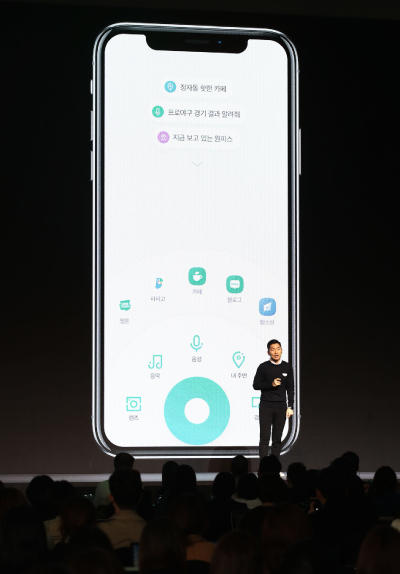
    Korea’s most popular portal site is experimenting with a new tool called the Green Dot that allows users to search for information not only by text, but also by voice, location and photos.

    The Green Dot was first unveiled last month. It is what the company calls an “interactive search” button located at the bottom of Naver’s app.

    When touched, the button opens a small window that offers various search functions like voice recognition, music recognition and recommendation on trending restaurants and bars nearby. The user can also add short-cuts to frequently used Naver services, from blogs to shopping.

    “Naver’s green search bar was developed at a time when searching online through PCs was about keywords and being linked to [web pages with] text information,” said Kim Seung-eon, the portal giant’s design head, at the Naver Design Colloquium held Friday in Dongdaemun, central Seoul. The annual event invites Naver designers to share their strategies and design insight.

    “But now with mobile, [portals] aren’t just about new information; we listen to music, reserve restaurants and use services that are closely linked to our daily lives. There are so many usages now and ways to input information. The Green Dot integrates all these; it’s the start of a new way to search and connect.”

    Kim added that the Green Dot will be the new design identity of Naver and a core function related to services coming in the future.

    The portal giant also shared the results of its first page overhaul on its mobile app.

    Last month, Naver introduced a new first page of its mobile app that left out news and trending keywords, leaving nothing but the search bar, weather information and the Green Dot.

    Its explanation was that the change was purposed to put a larger emphasis on searching, which accounts for 60 percent of why users turn on the Naver app. The change was available as a beta service.

    According to Naver, some users felt that the blank space was awkward, but the beta service had also showed meaningful results: the amount of time users spent on the app increased 15 percent and the number of searches rose 20 percent.

  • Swiggy to engage 2,000 women for food delivery

    Leading food ordering and delivery start-up Swiggy on Tuesday said it would engage about 2,000 women as delivery personnel by March 2019. “About 2,000 women will join our delivery team by March next year. Over the last few months, we have been working on training women for opportunities in this growing food delivery sector,” the city-based online food delivery platform said in a statement here.

    By deploying more women as delivery personnel across the country, the company said it aimed to create an inclusive workforce.

    The company engages around a lakh personnel daily to deliver food across 45 Indian cities it operates in.

    Currently, about 60 women are tied up with Swiggy across 10 cities, including Ahmedabad, Kochi, Kolkata, Mumbai, Nagpur and Pune, to deliver food.

    World over, the employment of women as delivery personnel has been meagre.

    “We are creating a women-friendly work environment with a dedicated helpline for any concern, as well as appointing more women in managerial roles,” the company said.

    Swiggy is identifying ‘safe zones’ for women delivery personnel to operate in and will allow them to complete their deliveries by 6 p.m., it added.

    “Since inception, we have seen the potential in investing in logistical prowess, which has helped us in having end-to-end control over the food delivery experience,” Sachin Kotangale, Vice President (Operations), Swiggy said in the statement.

    Set up in 2014, the food delivery platform claims to receive about 20 million orders a month across 45,000 restaurants in 45 cities, including New Delhi, Hyderabad, Mumbai, Bengaluru, Chennai, Kolkata, Gurugram and Pune.

    It raised US$ 210 million (around Rs 1,500 crore) from multiple investment firms, and has so far raised over US$ 460 million (around Rs 3,350 crore).

    The company, which has over 4,000 employees, reported an operating revenue of Rs 442-crore for the fiscal 2017-18.

  • Kakao profit falls in Q3 as investment costs rise

    Kakao profit falls in Q3 as investment costs rise

    Kakao, the operator of Korea’s top mobile messenger, KakaoTalk, said Thursday its third-quarter operating profit fell 35 percent from last year due to increased costs from new businesses. Operating income reached 30.7 billion won ($27.3 million) in the July-September period from 47.4 billion won a year ago, the company said in a regulatory filing.

    Sales rose 16 percent on-year to a quarterly record high of 599.3 billion won, the company said.

    Kakao said its operating income plunged due to increased investments in new businesses, such as Kakao Mobility, that the company recently launched in an effort to secure new growth engines.

    Kakao said the revenue from its content platform remained steady at 306.7 billion won, with the figure representing a 17 percent year-on-year increase.

    Advertising sales grew 10 percent year on year to 167.1 billion won over the cited period on the back of mobile advertising revenue growth.

    Music content sales increased by 11 percent year on year to 136 billion won in the third quarter due to steady revenues from the Melon streaming service.

    Kakao said it will keep up efforts until the end of this year in order to expand its foothold by wrapping up a merger with its entertainment affiliate, Kakao M. The tieup will allow the company to move forward on various business collaborations.

    Kakao said the decision is aimed at bolstering its entertainment content based on the users of Melon, which is currently operated by Kakao M.

  • All Kia motoring needs in one handy app

    All Kia motoring needs in one handy app

    Kia Motors on Monday launched an all-in-one mobile app that integrates all of its scattered online customer service channels. The new app, dubbed VIK, offers 60 different services including information on car purchases, maintenance and customer membership points and a basic guide to its driver assistive technologies.

    “It’s like having a virtual assistant specializing in car management,” a spokesperson from Kia said.

    The most notable service of the app is the augmented reality (AR) tutorials. If a user scans their steering wheel and dashboard with the in-app camera, the screen shows red dots marked with the specific features that the shown parts control.

    When users click each red dot on their screen, the phone plays a video tutorial of how that particular feature works.

    The AR-based service is made for Kia’s Stinger sedans now, but will be expanded to other models next year, the carmaker said. The app also understands voice commands.

    If a driver thinks something is wrong, they can ask the app where the closest maintenance center is without taking their hands off the steering wheel, Kia said.

    The carmaker said in-app mobile payments will be available soon so that people can pay for maintenance or car accessories without opening up another application. A service dubbed Kia Pay will be added by the end of this year.

    The carmaker is trying to promote the app by adding a social platform for Kia car drivers.

    It created a tab where users can post their trips and experiences with Kia cars. The company said it will award good stories to boost user interest in the newly launched app. To better market the app, Kia inked a partnership with Samsung Electronics on Monday to develop phones customized for Kia customers.

    The two are planning on launching Galaxy smartphones that come with Kia’s service apps, including VIK, preinstalled.

    Kwon Hyug-ho, executive vice president and head of domestic sales at Kia Motors, said the company will continue to expand its partnership with Samsung to make phones specialized for better car management in a press briefing held Monday in Seoul.