Retail News CRM

Tag: Armani

  • Armani Beauty Debuts in Mumbai with Flagship Store and Celebratory Diwali Campaign

    Armani Beauty Debuts in Mumbai with Flagship Store and Celebratory Diwali Campaign

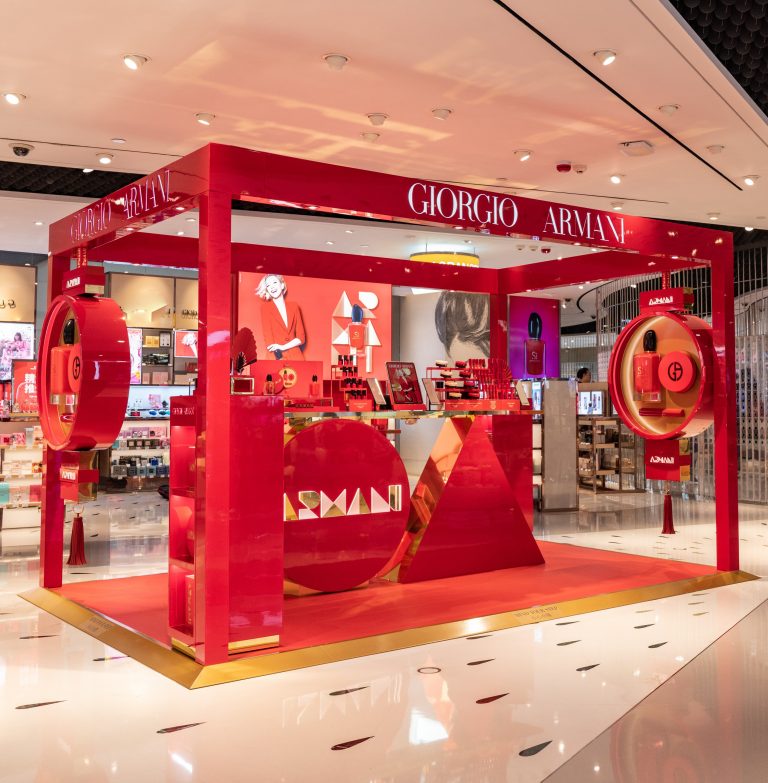
    Armani Beauty has recently unveiled a flagship store in Mumbai’s Phoenix Palladium Mall. This grand opening coincides with the brand’s debut Diwali campaign in India, marking the luxury beauty brand’s retail expansion within the nation during the festive season.

    Embracing Local Culture

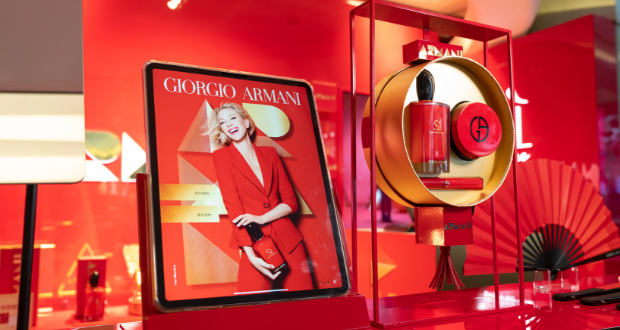
    To celebrate this milestone, Armani Beauty has decorated its Palladium Mall store with Diwali-themed items that draw inspiration from the marigold motifs prevalent in Indian culture. This approach aims at highlighting India’s largest festive season, thereby blending Armani’s presence seamlessly with local traditions.

    Charles-Alexandre Bockzmak, GM of L’Oréal International Distribution Sapmena, noted that this novel Diwali initiative in India aligns with Armani Beauty’s goal of local and cultural relevance. It also aims to provide Indian consumers with unique experiences that transcend mere commercial transactions.

    Biju Kassim, CEO of Global SS Beauty Brands, which is Armani Beauty’s distribution partner in India, echoed this sentiment. He emphasized that this first-ever Diwali campaign by Armani in India signifies a transformative beauty movement in the country.

    A Vision Beyond Commerce

    Both Bockzmak and Kassim agreed that this venture reaffirms Armani’s mission to “take beauty beyond commerce,” making the brand more relatable and in tune with the evolving needs and trends of Indian consumers. This collaborative approach with local partners underscores the brand’s commitment to remain current and connected with its target market.

    Armani Beauty operates under the Giorgio Armani fashion house and is marketed under a long-term license with L’Oréal. The brand announced its first flagship store in India in November of the previous year, marking a significant expansion in its global retail footprint.

    Questions & Answers

    What is the significance of Armani Beauty’s new flagship store in Mumbai?
    The store marks Armani Beauty’s retail expansion in India, timed perfectly to coincide with the festive season of Diwali.

    What is unique about Armani Beauty’s first-ever Diwali campaign in India?
    The campaign emphasizes Armani’s commitment to cultural relevance and aims to offer Indian consumers unique experiences that extend beyond traditional commercial interactions.

    How does Armani Beauty plan to stay current with the evolving needs of Indian consumers?
    Armani Beauty aims to remain current by embracing local culture and traditions, and working collaboratively with local partners to understand and cater to evolving consumer trends and demands.

  • Giorgio Armani Appoints Veteran Giuseppe Marsocci As Ceo, Preps For Significant Stake Sale

    Giorgio Armani Appoints Veteran Giuseppe Marsocci As Ceo, Preps For Significant Stake Sale

    Italian fashion brand, Giorgio Armani, has announced the appointment of Giuseppe Marsocci as chief executive officer, effective immediately. Marsocci, a veteran with 23 years at Armani, has served as the global chief commercial officer for the past six years. He will now be filling the significant role previously held by the late founder, Giorgio Armani.

    A New Phase for Armani

    Giorgio Armani had been a dominant force within the company he founded 50 years ago. His passing in September has led to a reshuffling of the business structure as the fashion house prepares for its next chapter. Marsocci will be responsible for supervising the proposed sale of a 15% stake in the company. High-calibre corporations like luxury conglomerate LVMH, beauty giant L’Oreal, and eyewear leader EssilorLuxottica, among others of similar stature, have been identified as potential priority buyers as specified in Armani’s will.

    Marsocci’s suitability for the role was endorsed by Pantaleo Dell’Orco, Armani’s partner and men’s design chief, who said, “His international professional experience, in-depth industry and company knowledge, discretion, loyalty, and teamwork, along with his close relationship with Mr Armani in recent years, make Giuseppe the most natural choice to ensure continuity with the path outlined by the founder.”

    Leadership Changes

    Dell’Orco, who has assumed the position of the company’s chairman, has concurrently been appointed to chair the Giorgio Armani Foundation, which holds 30% of the voting rights of the business empire. Dell’Orco already controls 40% of the luxury group’s voting rights.

    The Giorgio Armani Foundation unanimously proposed the appointment of Marsocci, aged 61. Giorgio Armani’s niece, Silvana Armani, who is currently head of women’s style, will also be appointed as vice president.

    Questions & Answers

    Who has been appointed as the new CEO of Giorgio Armani?
    Giuseppe Marsocci has been appointed as the new CEO of Giorgio Armani.

    What are some of the key responsibilities for the new CEO?
    Marsocci will be overseeing the proposed sale of a 15% stake in the company and leading the brand into its next phase of development.

    Who has been appointed as the chairman of the Giorgio Armani Foundation?
    Pantaleo Dell’Orco, Armani’s partner and head of men’s design, has been appointed as the chairman of the Giorgio Armani Foundation.

  • World Mourns As ‘King Giorgio’ Armani Leaves Lasting Legacy In Fashion Industry At 91

    World Mourns As ‘King Giorgio’ Armani Leaves Lasting Legacy In Fashion Industry At 91

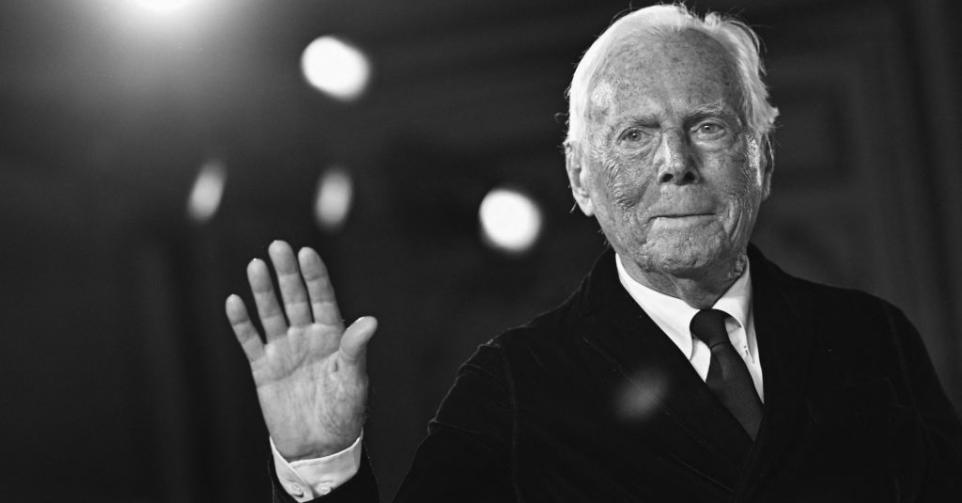
    Renowned Italian fashion designer, Giorgio Armani, universally acknowledged for his modern Italian style and grace, and fondly referred to as “King Giorgio”, passed away at 91, as announced by his company.

    Remembering the Icon

    Paying tribute to Armani, Italian Prime Minister Giorgia Meloni stated that the fashion icon’s elegance, sobriety, and creativity had brought international attention to Italian fashion. Also mourning the loss of the designer, film director Martin Scorsese praised Armani as a true artist, creating elegant designs that were not only for runway displays but also wearable, allowing people to express their individual sense of natural elegance.

    Valentino Garavani, another renowned fashion designer, mourned the loss of a friend and lauded Armani’s immense talent, his contributions to the fashion industry, and his unwavering dedication to his unique style.

    Donatella Versace, another designer, reflected on the colossal loss to the world and acknowledged Armani’s historic impact on the fashion industry.

    Tributes from the Luxury Industry

    The French luxury group LVMH paid tribute to Armani, noting his lasting legacy in the fashion industry. LVMH CEO, Bernard Arnault, lauded Armani’s unique style, combining light and shadow, and his global expansion of Italian elegance.

    Francois-Henri Pinault, the CEO of Kering, praised Armani as a visionary entrepreneur who redefined elegance with a combination of rigor and independence that marked their era.

    Miuccia Prada and Patrizio Bertelli of the Prada Group recognized Armani as a creative “Maestro” and an undisputed protagonist of Italian and international fashion. They too stated that Armani’s enduring contributions to the fashion world would be forever remembered.

    Expressions of Loss

    Actors and celebrities also expressed their grief at the loss. Supermodel Cindy Crawford expressed her sorrow over the passing of the legend. Actor Cate Blanchett noted the significant void left by Armani, not just in the realms of fashion, art, cinema, theatre, architecture, and design, but also in the hearts of the millions he’d influenced.

    Actor Julia Roberts remembered Armani as a true friend and a legend, while actor Michelle Pfeiffer recounted Armani’s kindness, generosity, and loyalty. She highlighted Armani as a pioneer of elegance and a global inspiration, expressing gratitude for the privilege of working with him on significant occasions in her life.

    Armani’s Legacy

    Simone Longland, Harrods Buying Director for fashion, described Armani as one of the great architects of modern fashion. Italian President Sergio Matterella also praised Armani’s tireless creativity and his contribution to redefining international standards of elegance and luxury.

    Milan Mayor, Giuseppe Sala, and other notable figures such as the superintendent of La Scala Opera House, Fortunato Ortombino, and the Juventus soccer club, also paid their respects to the late designer.

    Ferrari F1 driver Charles Leclerc expressed his honor at having the opportunity to collaborate with such an incredible person. AC Milan soccer club also mourned the passing of the global icon of style and elegance.

    Questions & Answers

    Who was Giorgio Armani?
    Giorgio Armani was a renowned Italian fashion designer known for his modern Italian style and grace. He garnered global recognition for his brand and was fondly referred to as “King Giorgio”. He passed away at the age of 91.

    What is Giorgio Armani’s legacy in the fashion world?
    Armani redefined the standards of elegance and luxury on the international stage. He is celebrated for his unique style, his immense talent, and the changes he brought to fashion. His contributions to the fashion industry have been universally acknowledged and will continue to influence generations of designers.

    How have people in the industry responded to his passing?
    Armani’s passing has been mourned globally by many in the fashion and entertainment industry. Tributes have poured in from fellow designers, actors, CEOs of luxury groups, and even sports figures. He has been lauded for his unique style, his contributions to fashion, and his global influence.

  • Iconic Fashion Designer Giorgio Armani Dies At 91: World Mourns A Maestro Of Elegance

    Iconic Fashion Designer Giorgio Armani Dies At 91: World Mourns A Maestro Of Elegance

    Giorgio Armani, widely regarded as the embodiment of contemporary Italian style and elegance, has passed away at the age of 91. He was often referred to as “King Giorgio”, according to a statement released by his company.

    Tributes for an Icon

    Italian Prime Minister, Giorgia Meloni, expressed her respect and admiration for the late designer, acknowledging his significant contributions to Italian fashion and his global influence. She praised Armani as an icon and a tireless worker, thanking him for his legacy.

    Filmmaker Martin Scorsese recognized Armani as more than a fashion designer, but as a true artist whose timeless designs were crafted to enhance individual elegance.

    Fashion designer Valentino Garavani mourned Armani, whom he always considered a friend rather than a competitor. He expressed deep respect for Armani’s immense talent, innovative contributions to the fashion industry, and unwavering loyalty to his unique style.

    Donatella Versace echoed this sentiment, stating that the fashion world has lost a giant and Armani will be remembered for his significant contributions to the industry.

    Unwavering Legacy

    French luxury group LVMH, its chairman and CEO Bernard Arnault, and Kering chairman and CEO Francois-Henri Pinault all paid tribute to Armani. They acknowledged his unique style, successful entrepreneurial journey, and significant contributions to Italian elegance on a global scale.

    Fashion industry leaders including Miuccia Prada, Patrizio Bertelli, and Raf Simons all lauded Armani’s enduring contribution to fashion history. They recognized him as a maestro of elegance and creativity, a protagonist of Italian and international fashion, and an inspiration to present and future generations.

    Supermodel Cindy Crawford and actors Cate Blanchett, Julia Roberts, and Michelle Pfeiffer expressed their heartfelt sorrow and acknowledged the huge impact Armani had on the fashion and entertainment industries, going beyond just garments to influence lives and culture worldwide.

    Further Tributes

    Armani’s influence extended beyond the world of fashion. Ferrari and Stellantis chairman John Elkann, along with Moncler CEO Remo Ruffini, praised Armani as a great entrepreneur and a symbol of Italian elegance. They recognized his refined cultural sensitivity and his mentorship.

    The National Chamber of Italian Fashion president Carlo Capasa lauded Armani’s role in shaping contemporary fashion and establishing ‘Made in Italy’ as a synonym for excellence.

    On a personal note, Armani’s employees and his family said that they are committed to preserving and advancing his legacy with respect, responsibility, and love.

    Questions & Answers

    What was Giorgio Armani’s impact on the world of fashion?

    Armani was an influential figure who redefined the boundaries of contemporary fashion. He introduced a lifestyle concept that was recognised and admired worldwide.

    What was the reaction of the fashion industry to Armani’s passing?

    The fashion industry has mourned the loss of Armani, with numerous designers, CEOs, and models expressing their respect and admiration for his contributions to the industry and his influence on their own work.

    How has Armani’s legacy been remembered by his company and family?

    Armani’s employees and family have committed to preserving and advancing his legacy. They have pledged to honor his vision, passion, and dedication by continuing to nurture the fashion house he built.

  • Armani Group’s Revenues Dip 5% In 2024: Prioritizes Quality Over Profit Amid Market Challenges

    Armani Group’s Revenues Dip 5% In 2024: Prioritizes Quality Over Profit Amid Market Challenges

    The Armani Group, a renowned Italian fashion enterprise, saw a 5% decrease in its revenue for the fiscal year 2024. The company attributes this decline to a dip in customer expenditure and a lackluster performance in the Asia Pacific region.

    Financial Performance Insight

    The fiscal year ended with total sales hitting US$2.65 billion. However, the year saw a decrease in net cash and equivalents, which fell from $1.09 billion to $656 million. The company also reported Earnings Before Interest and Taxes (EBIT) of $77 million, and a pre-tax profit of $86 million.

    The luxury fashion brand maintained a positive outlook despite the dip in revenue. It highlighted the year’s favorable results as evidence of robust and vigilant management, thereby attesting to the strength and stability of the group.

    Regional Performance Analysis

    In terms of geographic performance, Europe maintained its position as the group’s most substantial market, accounting for 49% of the total annual revenue. The Americas followed, contributing 22% to the total revenue. However, the company saw a decrease in revenue from the Asia Pacific region, which accounted for 19% of the total revenue. This decline was primarily attributed to a slump in demand from China.

    Investments and Business Strategy

    Despite experiencing a dip in revenue, the group showed a commitment to growth as it doubled its yearly investment to nearly US$383 million. This figure marked a significant increase from the previous year’s investment of $194 million. The company allocated these funds primarily towards refurbishing stores and bringing e-commerce procedures in-house.

    Giuseppe Marsocci, the Deputy Managing Director and Chief Commercial Officer, stated that the company maintains a conservative pricing strategy, with increases remaining under inflation rates. He emphasized the group’s decision to prioritize product quality and customer experience, even if it meant compromising short-term profit margins. Marsocci expressed confidence that this strategy would enhance the company’s competitiveness when the market rebounds.

    Questions & Answers

    What factors contributed to the Armani Group’s 5% revenue decline in fiscal 2024?
    The company attributes the decline in revenue to a decrease in consumer spending and a weak performance in the Asia Pacific region.

    How did the company respond to this decrease in revenue?
    Despite the decline in revenue, Armani Group chose to double its annual investment to US$383 million, focusing on store renovations and the internalization of e-commerce operations.

    What is Armani Group’s pricing strategy, and how does it plan to stay competitive in the future?
    Armani Group maintains a restrained pricing approach, with increases below inflation levels. The company prioritizes product quality and customer experience over short-term profits, believing this strategy will enhance competitiveness when the market returns to growth.

  • Armani banning angora wool from next winter season

    Armani banning angora wool from next winter season

    The Italian luxury company joins a string of brands banning the extremely soft wool removed from live rabbits, under pressure from animal rights organizations and more environmentally conscious shoppers.

    Last month, People for the Ethical Treatment of Animals (PETA) announced that luxury e-commerce platform Farfetch would stop selling angora wool by April 2022.

    The organization launched a campaign years ago to ban angora wool, which is mainly produced in China, describing the techniques used to strip the fur from rabbits as cruel.

    Armani’s move marks another step towards sustainability after the group banned animal fur in 2016 and signed in 2019 the ‘Fashion Pact’ with other major industry players to address climate change, the company said in a statement.

  • China sales help Armani bounce back from pandemic

    China sales help Armani bounce back from pandemic

    Sales at Giorgio Armani jumped 34% in the first half of 2021 as business in China and the United States helped the Italian fashion group bounce back, although it said it could be next year before it fully recovers from the pandemic.

    “The goal is to return to pre-pandemic levels by 2022, with… over 2 billion euros in direct consolidated revenues,” Chairman and CEO Giorgio Armani said on Sunday in a statement announcing 2020 results and the trend for January-June.

    The luxury group said consolidated net sales had fallen 25% last year to 1.6 billion euros ($1.9 billion), with most of the decline occurring in the first half of 2020.

    Luxury goods sales around the world fell sharply last year for the first time in years as the pandemic forced shop closures and brought international tourism to a virtual halt.

    “The drop in revenues in 2020 should be read not only as a consequence of the pandemic but also in line with Giorgio Armani’s own strategic principle of ‘less is more’,” said Armani Deputy Managing Director Giuseppe Marsocci.

    The Milan-based group did not give the value of total sales in January-June but said the positive sales trend so far this year pointed to a much better profitability scenario for 2021.

    For the whole of last year the group made a consolidated net profit of 90 million euros but an operating loss (EBIT) of 29 million euros.

    It also said on Sunday that its financial position improved significantly in the first half with net cash and cash equivalents of 1.088 billion euros “ensuring the financial resources necessary for the Group’s medium to long-term stability and growth”.

    Speculation about succession plans at Armani has come to the fore recently, especially after the 87-year-old designer said he could consider teaming up with another Italian company.

    Sources said earlier this month that John Elkann, scion of Italy’s Agnelli family, had explored a possible tie-up as part of plans to build a luxury conglomerate.

  • Armani Box on Air Sanya pop up lets customers make their own movies

    Armani Box on Air Sanya pop up lets customers make their own movies

    International actress, Zhang Jing Chu, was invited to celebrate the opening of the Armani Box – Giorgio Armani’s traveling pop-up store – at an exclusive event held on the 11 May in Sanya, on China’s Hainan Island.

    Within the Sanya International Duty-Free Shopping Complex, the pop-up serves to highlight the brand’s makeup universe and beauty expertise to shoppers from all around the world.

    “With its hot red walls and black lighting fixtures, Armani box is full of surprises,” says Armani.

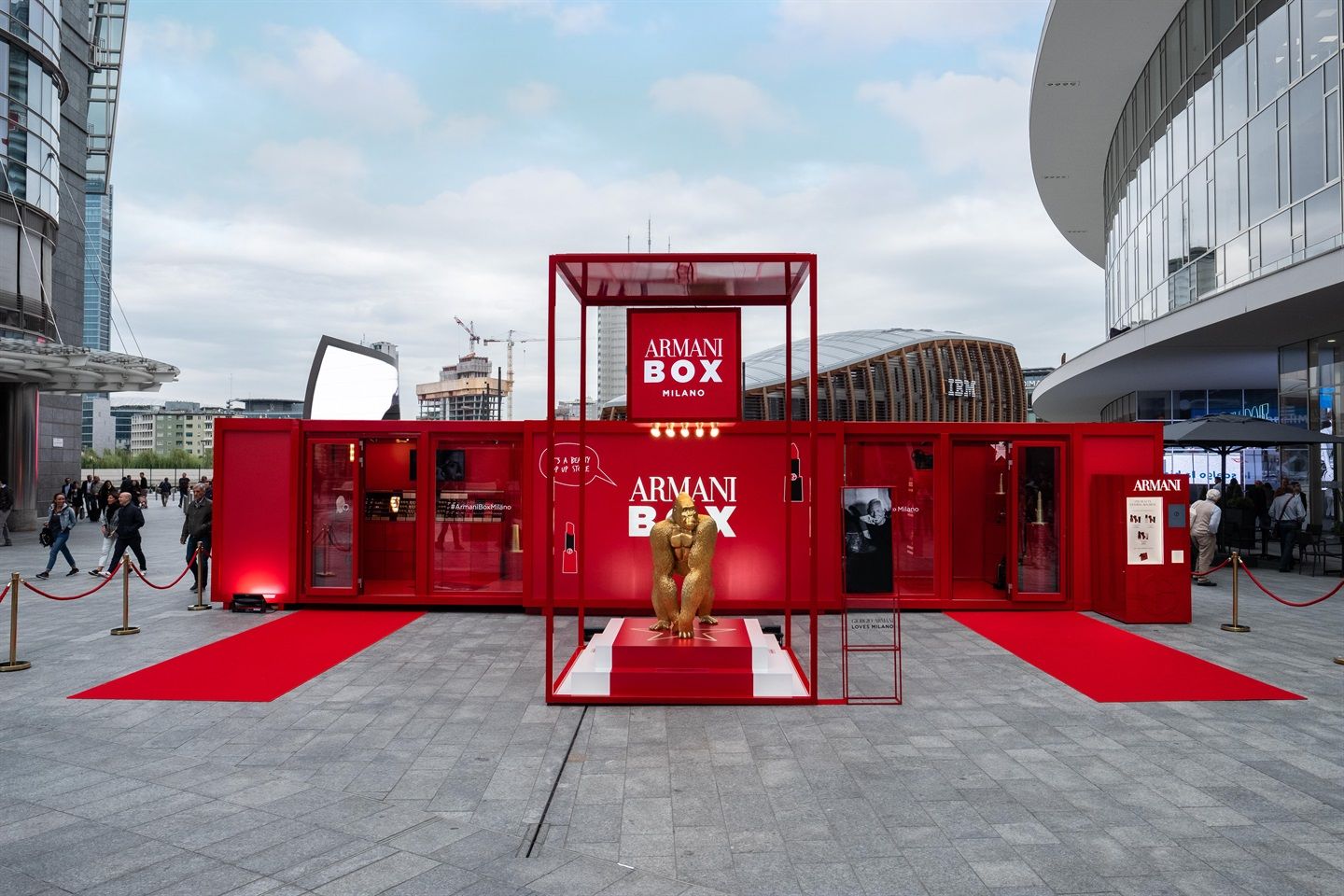
    “Uri, a giant red gorilla, welcomes visitors as they enter the store: created by Italian artist Marcantonio Raimondi Malerba, the full-sized gorilla is a replica of one that resides in Giorgio Armani’s home in Milan.”

    Armani describes the pop-up concept as a ‘sensorial and playful immersion’ in Giorgio Armani Beauty’s universe. It also features a photo booth.

    “With its hot red walls and black lighting fixtures, Armani box is full of surprises,” says Armani.

    “Visitors will indulge in a unique experience, as they will be able to book a private consultation with one of the eight top selected Armani Face Designers in Asia,” adds Armani.

    Travelers will be given the chance to try the Armani Glow complexion range – including the top-selling Power Fabric foundation; experience the full Armani lip range, including the Lip Maestro products and the latest Ecstasy Shine line. They will also have the chance to personalize their makeup products with an engraving.

  • Reliance to open Armani Cafe in India

    Reliance to open Armani Cafe in India

    Indian conglomerate Reliance Industries is launching a Michelin-star restaurant in Mumbai in partnership with Italian luxury firm Emporio Armani.

    The first Armani Cafe venue is set to open in the firm’s upcoming luxury Bandra Kurla mall, the Jio World Centre.

    Armani restaurants have opened in several major cities among 20 international locations.

    Reliance is the luxury brand’s master franchisee in the Indian territory, and already operates Emporio Armani, Giorgio Armani and Armani Exchange outlets nationwide. It is expected to roll out Armani’s sportswear brand EA7 in March.

  • L’Oreal Asia Sales for the First Time outpaces Europe

    L’Oreal Asia Sales for the First Time outpaces Europe

    L’Oreal Asia now sells more products than the company’s home European division. Sales in Asia outpaced those in western Europe for the first time in the last quarter, with China leading the growth, despite a slowing economy.

    Just a decade ago, L’Oreal Asia sales were less than one third of its European sales.

    Globally, first-quarter L’Oreal sales rose 7.7 per cent for the quarter to US$8.53 billion, excluding currency fluctuations. That news drove the company’s share price even higher, taking growth to 21 per cent so far this year. It is now France’s second-largest company by market value.

    L’Oreal, which owns Garnier, Maybelline, Acqua di Gio Armani, and Laroche Posay, has become increasingly reliant on fast-growing Asian economies to maintain growth rates impossible in its mature home and North American markets. But analysts like James Edwards Jones are unconcerned by such reliance.

    “It is true that the growth is not broad-based. But given L’Oreal’s proven ability to identify, stimulate and capitalise on those parts of the business where the most attractive growth is to be had, we struggle to find fault with this,” the company said in a client note.

    L’Oreal CEO Jean-Paul Agon says young Chinese consumers are increasingly drawn to luxury brands, a positive trend for the cosmetics manufacturer.

    European sales were rebounding but “nothing would compete with what we see in Asia,” he said in an analyst briefing.

  • Armani Box Bangkok pops up at Suvarnabhumi Airport

    Armani Box Bangkok pops up at Suvarnabhumi Airport

    Giorgio Armani Beauty has opened an Armani Box Bangkok pop-up store at Suvarnabhumi Airport.

    Located in the departures hall, the pop up will showcase the brand’s beauty ranges until the end of this month.

    The Armani Box Bangkok store was designed with hot-red walls and black lighting fixtures. A giant gorilla, Uri, welcomes visitors as they enter the store. Created by Italian artist Marcantonio Raimondi Malerba, the full-sized golden gorilla is a replica of the black one that resides in Giorgio Armani’s home in Milan.

    Thai and Chinese KOLs, Ms Nutty Ploychompoo, Ms Archita Siripinyanond and Ms Liu Lin (Xiao Yu) at the Armani Box Bangkok

    Thai and Chinese KOLs, Ms Nutty Ploychompoo, Ms Archita Siripinyanond and Ms Liu Lin (Xiao Yu) at the Armani Box Bangkok

    The Armani Box Bangkok is decked out with a series of cinematic details to explore

    The Armani Box Bangkok is decked out with a series of cinematic details to explore

    Armani Box Bangkok is decked out with a series of cinematic details and visitors can become ‘movie stars’ with a series of details to explore, including making a Walk of Fame digital handprint and filming their own screen test.

  • Giorgio Armani open first pop up store at DFS Hong Kong

    Giorgio Armani open first pop up store at DFS Hong Kong

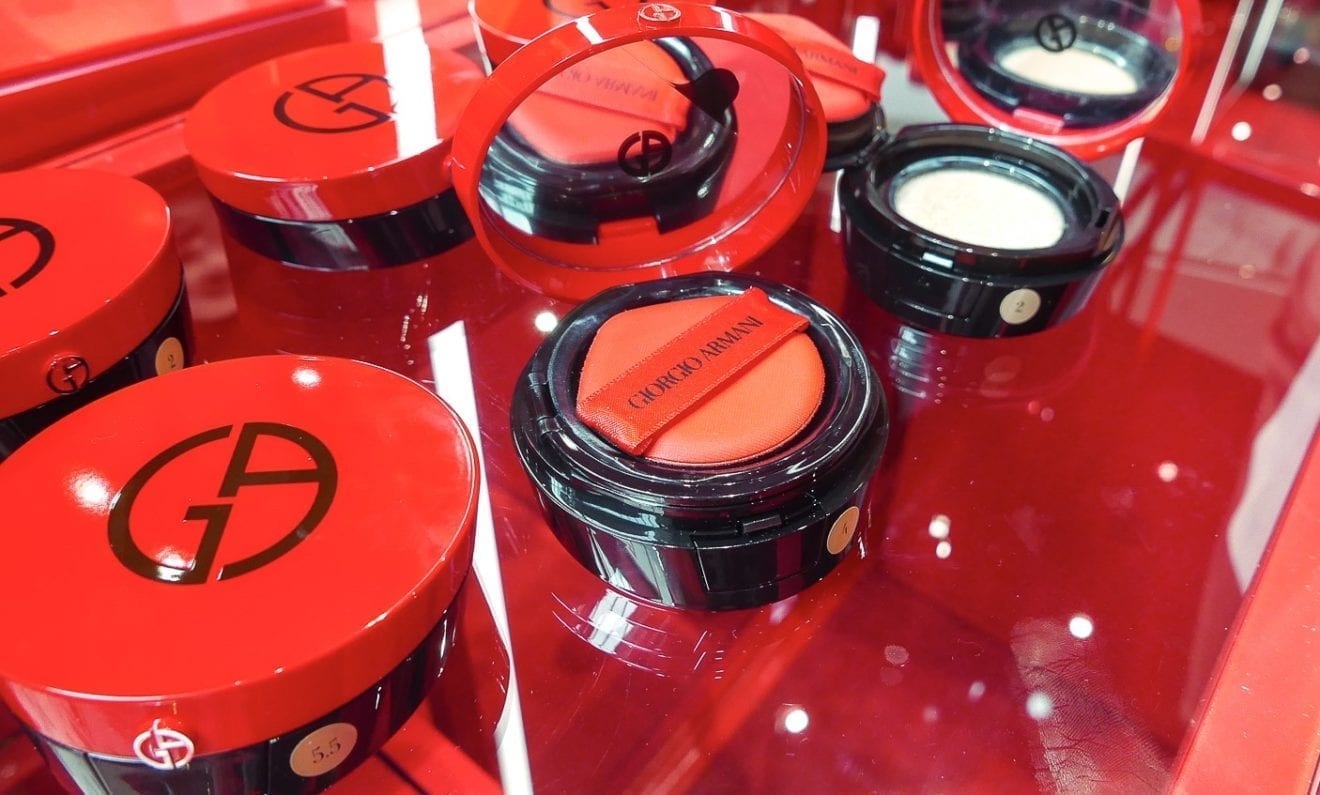
    Giorgio Armani Beauty is starting the year of 2019 strong by collaborating with DFS on celebrating Chinese New Year. In January, Giorgio Armani Beauty launched its first Chinese New Year pop-up stores at T Galleria Beauty By DFS, Causeway Bay and T Galleria By DFS, Canton Road respectively. Iconizing the brand’s 3 star products – the legendary Lip Maestro, the iconic My Armani To Go Cushion Foundation and the new bestselling fragrance – Sì Passione, the pop-up stores reflected Armani’s commitment to modernity whilst celebrating the traditional festival with the Asian consumers.

    A UNIQUE BEAUTY EXPERIENCE Visitors were able to indulge themselves in a unique Armani Beauty experience under the Chinese New Year festivity. They discovered New Year fortune and recommended Giorgio Armani Beauty products through the in-store digital app, try their luck on the app and receive attractive gifts upon purchase; and completed their memorable experience by getting the exclusive gift set of the 3 star products featuring My Armani To Go Cushion Limited Edition “Cushion Couture”. Customers also enjoyed professional make up consultation by Giorgio Armani Beauty Face Designers.

  • Retail sector Korea in future

    Retail sector Korea in future

    Technology and e-commerce trends are reshaping the global retail industry in profound ways, as the rise of online channels threatens to displace more traditional shopping experiences. However, Korea’s retail sector seems to be thriving in the face of this upheaval, with a 6% year-over-year increase in retail sales by Q3 2018. What are the factors fuelling this encouraging retail growth?

    Firstly, improved relations with China and North Korea have energised the retail sector, with duty-free sales registering an impressive 34% year-over-year growth by Q3 2018. While this retail boost can primarily be attributed to the recent surge of Chinese tourists in Korea, it also reflects the growing international popularity of Korean beauty and lifestyle brands.

    E-commerce is also emerging as a key driver of Korea’s retail sector. Online channels have experienced rapid growth since 2010, and will only keep expanding their foothold as Korean consumers start shifting away from brick-and-mortar stores. With Korea’s e-commerce market predicted to grow by 21% this year, traditional retailers will need to find new ways of adapting to this rapidly evolving landscape.

    Some retailers are already turning to artificial intelligence and other Industry 4.0 technologies in an effort to provide consumers with more innovative shopping experiences. For instance, Hyundai Department Store is using Naver’s virtual assistant Clova to answer customer inquiries – whether they relate to store locations or specific purchases.

    Another interesting example is retail giant Lotte Home Shopping, which has developed its own augmented reality system so that customers can visualize how products would look in their home. As these new technologies get ushered into the mainstream, we can expect to see more and more retailers jumping on the AI bandwagon in the next few years.

    However, this doesn’t mean that we should write off the traditional brick-and-mortar experience just yet. Major brands are still banking on attracting consumers with the enduring prestige of high street locations – such as Maison Kitsuné, which recently opened its flagship store in Seoul’s trendy Garosugil district.

    Many global retailers continue to view Seoul, one of the world’s most famous shopping destinations, as a test bed in Asia. With cosmetics brands like Givenchy Beauty and Armani Beauty making their debut in Seoul this year, and renowned F&B brand Blue Bottle Coffee preparing to enter the Korean market in 2019, it’s clear that leasing demand from foreign retailers is still going strong.

    If we look to other segments of the retail industry that are experiencing growth, it’s worth highlighting the surge of fresh food delivery services across the country. With double-income families emerging as a major consumer force, demand for overnight fresh food delivery has also been rising – and major retailers as well as food startups are turning their attention towards this potentially profitable market.

    The rapid expansion of the food delivery market – and of the e-commerce sector in general – is proving to be a windfall for Korea’s logistics industry. Logistics developers are recognizing the need for large-scale modern logistics centers capable of storing and delivering goods nationwide, with faster delivery remaining the market’s key competitive measure. The growing demand for cold chain facilities is expected to fuel a mass redevelopment of older warehouses, especially in the Greater Seoul area.

    So far, Korea’s retail industry has shown remarkable resilience against a backdrop of technological disruption. More brick-and-mortar retailers are offering F&B, AI and entertainment options to differentiate themselves from their e-commerce counterparts; and this trend will only grow as consumers seek out unique shopping experiences. The question is, will Korea’s retail market keep thriving in the long term?  As long as technology continues to enhance – and not supplant – existing retail experiences, we can venture to hope that a bright future is in store for this challenging and dynamic sector.

    -CBRE-

  • More brands join anti-fur movement

    More brands join anti-fur movement

    Among the investors who snapped up shares in luxury e-commerce marketplace Farfetch after its September IPO was one buyer with little interest in operating profits or projected revenue. People for the Ethical Treatment of Animals pounced on shares in the newly public company so it could make its case directly to ban fur sales on the platform. They needn’t have bothered.

    Farfetch quietly committed to going fur free in May, inserting a promise in the terms and conditions section of its website to stop selling items made with fur by the end of next year.

    Farfetch joins a growing list of luxury brands and retailers turning their backs on animal fur.

    Within the past 18 months, Yoox Net-a-Porter, GucciMichael Kors, Versace, Furla, Burberry and DVF have all announced anti-fur policies, while this year’s September London Fashion Week became the first of the major fashion weeks not to show any fur on the catwalk.

    Within the luxury space, the balance has tilted against fur.

    In the 1980s, fur was synonymous with luxury, representing a status symbol for many women.

    The global fur trade is valued at $40 billion, but today fur is central to the image — and revenue — of only a handful of major brands.

    Meanwhile, anti-fur messaging is being amplified by social media and a millennial customer base that is paying closer attention to the values represented by the products they buy.

    For brands like Gucci, the goodwill generated by banning fur outweighs the sacrifice of a few million dollars in sales of fur-trimmed loafers.

    “[It’s about] being more modern in our thinking and our approach to business and how we talk and engage with our consumer and our community of women,” Sandra Campos, chief executive at DVF, said of the decision earlier this month to stop using fur, exotic skins, mohair and angora in upcoming collections.

    “No one really wanted to associate the brand with [fur]. We don’t need real fur to have a status symbol anymore.”

    The anti-fur movement has ebbed and flowed for decades.

    Calvin Klein stopped using fur in 1994, the same year Peta ran a campaign featuring supermodels including Naomi Campbell and Christy Turlington, who claimed they would “rather go naked than wear fur.”

    Ralph LaurenTommy Hilfiger and Selfridges barred fur in the mid-2000s.

    More recently, Hugo Boss joined the no-fur list in 2015, followed by Armani the following year.

    Gucci kicked off the latest wave of brands announcing fur bans in October 2017.

    Winning over luxury’s hottest brand was a coup for animal-rights activists who had been targeting specific companies for almost a decade via a mix of behind-the-scenes talk and public protest.

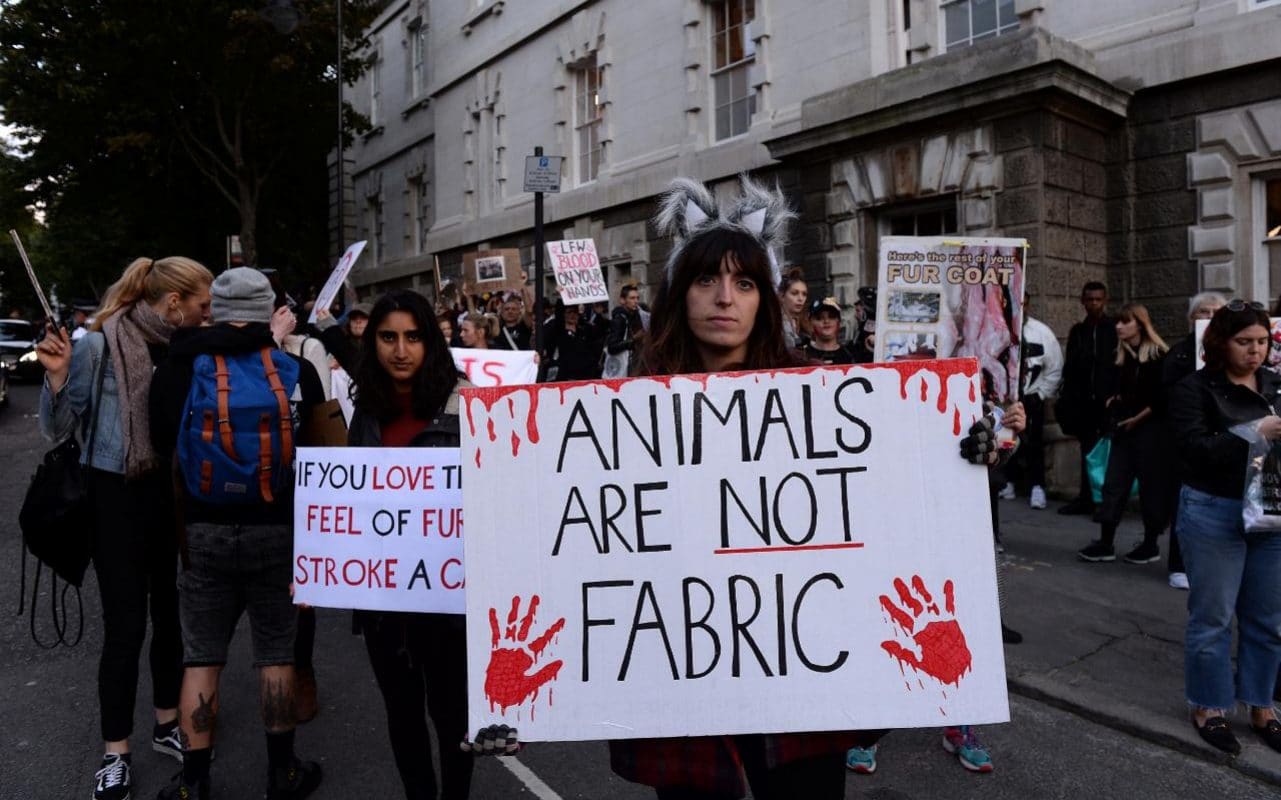
    In July 2017, more than 20 animal rights activists heckled Michael Kors during a speech, while in September 2017, Burberry’s London Fashion Week show was disrupted by about 250 anti-fur protesters.

    Michael Kors agreed to ban fur in December, Burberry last month.

    The rise of social media has provided the general public with a direct line of communication to companies and a platform for opinions and protest, making it harder for brands to ignore targeted activism.

    It’s also given animal rights organisations a platform for mobilising consumers into action.

    The global fur industry is fighting back, launching its own campaign making the case for fur as a natural, sustainable product that is better for the environment than alternatives, which are often made from plastic.

    One recent campaign featured Fendi and Oscar de la Renta, among other brands.

    “Brands are under huge pressure to respond to social media and avoid any controversy,” says Mark Oaten, chief executive of the IFF.

    “Even in a five year period that has changed … the fear of reputational damage is increased at the moment.”

    Studies show activism is impacting purchasing decisions.

    Prior to announcing its fur-free policy last June, Yoox Net-a-Porter surveyed 24,000 customers: 72 percent said social or environmental considerations drove their purchasing decisions at least some of the time, while 58 percent said having more information about the ethics and sustainability of a product would influence their shopping choices.

    Indeed, the idea of what luxury means to consumers today has evolved.

    “It’s become synonymous with social responsibility and innovation,” said PJ Smith, fashion director at the Humane Society US.

    “Companies that want to position themselves as corporate social responsibility leaders are seeing the marketing potential of going fur free, especially with new luxury consumers.”

    For a brand like Michael Kors or Burberry, going fur free won’t have much impact on the bottom line, while providing a marketing boost.

    For DVF, fur was “a very minimal percentage” of the overall business, said Campos.

    “It wasn’t something we relied on heavily at all,” she said. “It made sense for us to walk away from it in total.”

    Similarly, Gucci’s decision to bet on animal rights activism wasn’t much of a trade-off, as the brand sold only €10 million ($12 million) in fur products last year, less than 0.2 percent of revenue.

    Gucci’s Instagram post announcing the news was among the brand’s top performing posts at the time of the announcement, amassing 179,524 likes.

    Even brands that still use fur are acknowledging shifting attitudes.

    Fendi, which started as a furrier in 1925, rebranded its Couture Week show this past July as haute couture, rather than the haute fourrure description it used in recent seasons.

    And while fur was still present in the label’s Spring 2019 collection, it was less prominent than in past seasons.

    Prada, too, has been decreasing its use of fur.

    Recently the brand has come under pressure as a result of a targeted campaign spearheaded by the Fur Free Alliance, a coalition of 40 animal rights groups.

    According to the company, thousands of e-mails demanding it bans animal fur have been sent to the Prada Group and personal addresses of employees.

    However, the company has not announced plans to stop using fur.

    “We believe it is important to stress that all the advertising campaigns of the Group’s brands, together with the fashion shows and displays in the shop windows, have not been presenting these products for some time, in order to discourage demand from consumers,” the Italian house said in a statement.
  • Armani’s Uri is back in Hong Kong

    Armani’s Uri is back in Hong Kong

    First arrived in Hong Kong last year, the popular striking red ARMANI Beauty pop-up store, ARMANI BOX HONG KONG, is coming back to Hong Kong from September 11 to 25.

    This summer, ARMANI BOX and its signature gorilla, Uri, will return to Hong Kong in their 11th stop, showing up in even more spectacular styles at Harbour City’s Forecourt, Atrium II, and Ocean Terminal Lobby, Tsim Sha Tsui.

    ARMANI BOX is customised for every city it tours, to show visitors “The Armani You Don’t Know”. This time, ARMANI BOX Hong Kong will stay with the Armani Red #400 as the themed colour, with new elements, cinematic and red carpet, which are closely associated with Mr. Armani. The striking red gorilla, Uri, will turn into gold in colour in the very first time as if the Oscar statuette.

    In every city it goes, ARMANI BOX showcases an iconic artpiece, a life-sized resin gorilla Uri, at the most prominent spot. It is a replica, by Italian artist Marcantonio Raimondi Malerba, of the gorilla artwork at Mr Armani’s home in Milan.

    The return of ARMANI BOX Hong Kong is bringing more surprises to visitors with new special features inspired by the movie world and the star-studded red carpet.

    Visitors can enjoy new experiences, such as Walk of Fame to leave their digital handprint and the Screen Test “Be a star” audition, for an unforgettable journey. They will also be able to indulge in the ARMANI Beauty’s universe and try new experiences exclusive to ARMANI BOX Hong Kong only.