Tag: Armani

  • OnTheList launches in Singapore

    OnTheList launches in Singapore

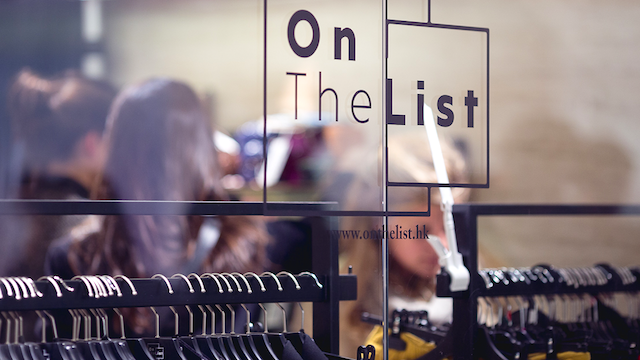
    Hong Kong’s OnTheList flash-sale concept has launched in Singapore.

    The first OnTheList Singapore sale will run from September 19 to 22 in Ngee Ann City Tower B.

    It marks the first overseas foray by the independent, members-only flash-sale concept platform, founded in 2016 by French entrepreneurs, Delphine Lefay and Diego Dultzin Lacoste.

    OnTheList contracts to brands to move excess inventories in short-term sales, with discounts as high as 90 per cent. By selling to a pre-registered, members-only audience, the sales do not undermine those at mainstream stores, or clutter them with racks of off-price merchandise.

    Consumers enrol to attend sales online, with options of free access or a paid premium membership giving advance access to sales.  A separate website has been built for OnTheList Singapore.

    “When I was working in Hong Kong’s retail industry, there was an absence of options for distributors and brands to clear old inventory occupying valuable warehouse space,” explains Delphine Lefay. “To fill this gap, we founded OnTheList as an independent third-party platform and it was the first of its kind in Asia.

    “Through flash sales we hosted, we offered consumers access to premium products at attractive prices, and brands the opportunity to clear past-season items and connect with new customers,” she adds.

    Dultzin Lacoste says this method of clearing stock also promotes sustainability and minimises environmental impact within the retail industry, as old inventory does not go to waste.

    “OnTheList’s business model also gives brands the opportunity to reach out to a wider consumer database, engaging them through the flash sale platform as a first touch point.”

    In just two years, the business has gone from a few pop-up sales to over 150 flash sales and partnerships with over 250 premium brands, including Armani, Clarins, Diane Von Furstenberg, Ferragamo, Kenzo, Roberto Cavalli, and Ted Baker Le Creuset and Havaianas. In Hong Kong, OnTheList now has a permanent venue for its flash sales, but has grown so big it still needs short-term venues, often running multiple sales concurrently.

    OnTheList has now cleared more than 1 million items from its brand partners – and in one four-day sale last year it sold a pair of Havaianas every six seconds.

    OnTheList Singapore will launch with monthly pop-up sales, announcing participating brands just 10 days prior to the sale.

    “We are expanding into Singapore because its retail market has many similarities with Hong Kong’s,” says Lefay.

    OnTheList Singapore also hopes to tap into the large tourism market, as tourism receipts in the city have reached record highs during the past two years.

    “As visitor arrivals from China, India, Indonesia and Vietnam have increased tremendously, it is an opportune time for OnTheList to attract high spenders from the region and to use Singapore as a launchpad for future expansion in Asia and beyond.”

  • Tmall taps 10 beauty brands for omnichannel growth

    Tmall taps 10 beauty brands for omnichannel growth

    Tmall will this year work with top beauty brands such as Estee Lauder and Lancome to help them surpass RMB 1 billion (US$157.9 million) in annual sales on the platform.

    The increased focus on the beauty sector will also see Tmall deliver an updated suite of New Retail solutions so that all merchants can better serve Chinese consumers, the Alibaba Group-owned B2C shopping site says.

    Tmall plans to partner closely with about 10 beauty brands in particular, also including SK-II and Olay, to help them break that sales threshold. New Retail initiatives include a new “try-before-you-buy” feature, where users pay a 10 per cent deposit to test a product with the promise of a simpler and faster refund process.

    “Our partnership with brands will cover every corner from online to offline,” Tmall president Jet Jing said. “We will be consistently involved in daily operations ranging from product innovation, brand building, channel management, supply chain to customer operations.”

    Tmall Supermarket would also expand its one-hour delivery service to more customers, as faster service is also a part of New Retail, Jing said. However, the biggest changes won’t come until the 11.11 Global Shopping Festival, which is typically when Alibaba rolls out its New Retail initiatives.

    The initiatives were announced during the Tmall Beauty Awards in Shanghai, where more than 1000 beauty professionals, from both international and home-grown brands, gathered for the annual event. This year, Estee Lauder, SK-II, Giorgio Armani Beauty and Givenchy each took away a “Super Brands Award,” for their outstanding performance in brand influence, marketing creativity and consumer engagement. Newcomer Givenchy on March 1 broke the single-day sales record, selling more than 58,000 lipsticks and generating over RMB 16 million – all in the first 12 hours of the day.

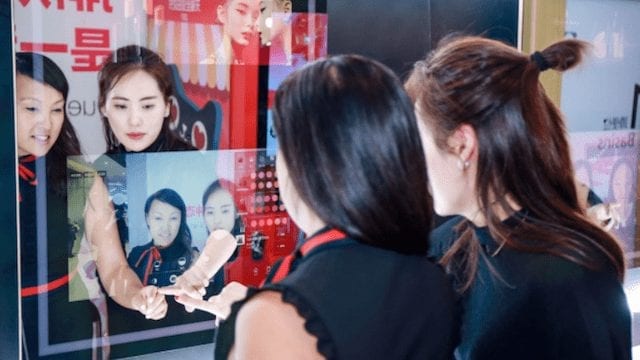
    Since launching in 2015, the awards largely have spotlighted New Retail-driven innovations. Featured technology at this year’s awards included the “Cloud Shelf” and the latest iteration of the augmented reality-powered “Magic Mirror,” which allows users to virtually try on new hairstyles, lipstick, eyeshadow and blush. Tmall said it would partner with with French cosmetics company L’Oreal to install Magic Mirrors in 50 of the beauty giant’s physical stores in China.

    Tmall hosts more than 3000 beauty brands on its platform, according to a report released by Tmall and Chinese research firm CBNData last year. Some of the newest entrants include LVMH-owned Givenchy, L’Oreal’s Giorgio Armani Beauty and Estee Lauder’s Darphin.

    “After two years of very successful acceleration in China, we felt this is the right timing to join Tmall to push artistry and premium-ness of the brand,” said Andrea Yann, GM of the China market at Giorgio Armani Beauty. “Our plan is really to understand from [Alibaba’s] database what are the main beauty concerns of Chinese women to solve their beauty issues, be very personalised still being [seen as] very artistry and premium.”

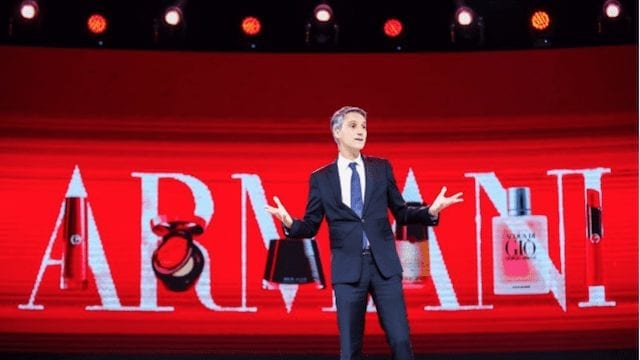
    Andrea Yann, GM of the China market at Giorgio Armani Beauty, speaks on stage.

    Younger more focused on beauty

    According to a report released by Tmall and market research consultancy Kantar, what they want is a more elaborate skincare regimen. Thirty-five per cent of respondents said they have added more steps to their beauty routines, and therefore are spending more on skincare products and cosmetics. Tmall attributed 53 per cent of the sales of beauty products on Tmall to consumers making more purchases per person.

    Beauty consumers in China – the world’s largest and fastest-growing beauty market at $22 billion – are also becoming younger than ever, the report noted. In 2017, users born after 1990 made up over 40 per cent of shoppers on Tmall Global, the site’s cross-border e-commerce channel, overtaking those born in the 1980s as the main consumption force on Tmall Global, the site’s cross-border e-commerce channel.

    Consumers born after 1990 like to try new products from new brands and less familiar origin countries, the report said.

    Embracing the new

    “In China, there’s more willingness to try new products at a faster rate than what you would see in different markets,” said Danielle Bailey, head of Asia Pacific research at digital agency L2.

    “It’s not that [Chinese beauty consumers] are less loyal, but their desire to explore is much higher,” she said. “This makes it more challenging for brands to sell to the market, but also creates new opportunities.”

    Tmall’s latest report also showed momentum for homegrown brands, particularly for skincare, where they accounted for 56 per cent of sales last year – up from 54 per cent in 2016. However, foreign brands still dominate the cosmetics category with 56 per cent of total makeup sales.

    Chinese brands are trying to boost their profiles by launching new prestige product lines or creating new products within an existing line, said Bailey. “It will be interesting to see if local brands can successfully transition to that space. It’s still a bit unclear because Western brands tend to be associated with better quality,” she added.

    From a product development standpoint, the pace of innovation in Asia has forced brands in the West to shrink development timelines to stay relevant, said Bailey. Where Western companies may take two years to release a product,” he said, “in Korea, some brands are launching new product every three months.”

    Time-to-market is indeed very important for beauty brands, said Ye Guohui, GM of Tmall’s new retail division.

    “Conducting market research alone can be very time-consuming, taking up to over a year,” he said. “But brands in China can leverage Alibaba’s data capacities to really shorten that timeline, and accelerate product development.”

  • Luxury cosmetic brand Giorgio Armani Beauty to Join Tmall

    Luxury cosmetic brand Giorgio Armani Beauty to Join Tmall

    Giorgio Armani Beauty will launch a flagship store on Alibaba-owned B2C shopping platform Tmall next month as part of the brand’s latest campaign to capture China’s fast growing appetite for high-end beauty products, Alibaba said Monday.

    The luxury beauty and skin care brand, owned by the world leading cosmetic giant L’Oreal, will hold a series of pre-sale events on Tmall for the next three weeks ahead of its official launch on Jan 16. As part of the rev-up, the brand is offering 4,000 cases of its iconic “My Armani To Go” cushion foundation exclusively to be sold on the platform during the period.

    On the day of the launch, the brand will also open a store on the Luxury Pavilion, the invite-only section within the shopping site for premium and luxury brands. Brands including Burberry, Hugo Boss, La Mer, Maserati and Guerlain (LVMH) have joined since the platform was first introduced in August this year.

    China’s beauty product sector has seen a boom in recent years in tandem with the rapid development of the Chinese economy. According to China’s National Bureau of Statistics, retail sales of cosmetic items in the first 11 months of this year notched a 13.5% on-year growth, amounting to RMB $228.5 billion ($34.87 billion).

    Recognizing China’s fast-growing demand for high-quality cosmetic products and Tmall’s expansive reach with its 500 million active users, many top beauty names such as Lancome, La Mer, MAC, Bobbi Brown, Fresh and Kiehl’s have opened up shops on Tmall in recent years.

    In a recent interview with China Daily, Veronique Gautier, global president of Giorgio Armani Fragrances & Beauty, said Armani Beauty has seen stellar growth in China, at twice the speed of the rest of the markets combined.

    On Jan 12, several of the Giorgio Armani Beauty’s high-ranking executives will appear at an event in Beijing to announce the official launch of the flagship store on Tmall. The brand will also introduce a high-tech showcase of its 2018 spring-summer collection.

    As part of tie-up, the brand and Tmall will introduce interactive digital experiences for consumers to book offline make-up sessions with beauty advisors, explore its product offerings — from the latest Ecstasy Shine lipstick crafted specifically for the Asian market to its iconic fragrances and Lip Maestro lip gloss.

    Entertainment and gamification will also play a major role in attracting customers to Giorgio Armani Beauty’s new online store. By using their mobile phones, users can use the AR-powered interactive feature—Unlock Armani Codes—to scan anything that contains any of the six-letters in the word “Armani.” Those who have collected all six letters will have the chance to win sample kits priced at RMB 260 each.

  • JD.com surprises with first profitable quarter

    JD.com surprises with first profitable quarter

    JD.com profit soared 50 per cent after a 39 per cent increase in sales during the Chinese online retailer’s latest quarter.

    Its unaudited results for the three months to the end of September show revenue of RMB83.7 billion (US$12.6 billion), with a record 50.3 per cent surge in gross profit to RMB13 billion. Non-GAAP gross profit was RMB12.8 billion, up 51.9 per cent.

    Active customer accounts increased by 34 per cent to 266.3 million in the 12 months to September 30.

    Chairman/CEO Richard Lio says the company is building robust product content and enhancing user engagement with innovative tools that enable brands to launch highly targeted online marketing programs.

    “The scale economies of our model are becoming clearer with every quarter,” says CFO Sidney Huang. “Looking ahead, we will continue to prioritise investments in technology and leading R&D talent as we execute on our vision to revolutionise China’s retail industry.”

    While releasing its third-quarter figures, JD.com also listed its latest business developments…

    In October, JD and Tencent expanded their partnership with the launch of a marketing initiative that integrates insights on consumer behaviour from Tencent’s social-media platforms with online and offline shopping data from JD and its brand partners. As well as enabling more precise target marketing, the move benefits consumers by offering them wider access to sales promotions and preferred discounts.

    Strategic partnerships

    During the past three months, JD.com also formed strategic partnerships with Baidu, iQIYI, NetEase, Sogou and Qihoo 360 with their big-data resources, massive user bases and AI algorithm technologies.

    JD also continued to strengthen its position among top-tier international brands, expanding its partnership with high-fashion brand Armani with the opening of official online stores for Armani Exchange and Emporio Armani.

    JD Worldwide also launched flagship stores for such companies as Reckitt Benckiser, Spectrum Brands and Tiger, while its new Toplife platform attracted marquee brands like Dyson, La Perla, Rimowa (LVMH) and Trussardi.

    During the quarter, JD Logistics test-launched an unmanned sorting centre, the first of its kind in the logistics industry. JD also signed agreements to lay the groundwork for the rollout of China’s largest drone network.

    In September, JD Logistics expanded its environmentally friendly logistics and packaging campaign, working with brands including  Johnson & Johnson, Kimberly-Clark, Lego, L’Oreal, P&G, Nestle, Unilever, Watsons and Wrigley. The aim is to minimise environmental impact by cutting back on packaging materials.

    Customer demand

    JD also enhanced its fresh product offerings during the quarter to meet customer demand. In July, it launched the Canadian Fresh Food Pavilion, the first country pavilion for fresh products on the JD.com platform. Live lobsters from Canada can now be delivered to customers’ doorsteps in China in as little as 48 hours. During JD’s Super Canadian Day, 140,000 lobsters were sold within 24 hours.

    In September, JD.com, JD Finance, Central Group and Provident Capital announced agreements to establish two JVs in Thailand covering e-commerce and fintech services, with an aggregate investment of $500 million. JD.com is providing its expertise in technology, e-commerce and logistics while Central Group is drawing on its retail store network, brand and merchant relationships, and retail behaviour insights from its loyalty program.

    In October, JD and Sam’s Club launched a promotion offering customers discounted bundled memberships for Sam’s Club and the JD Plus paid-for membership service.

    By the end of October, JD.com JV New Dada had partnered with 146 Walmart stores and 301 Yonghui stores, as well as many other supermarkets and grocery stores, to provide online fresh grocery shopping with one-hour home delivery.

    At the end of September, JD.com had 405 warehouses and provided scheduled delivery services in 250 Chinese cities. It had about 160,000 merchants on its online marketplace, and 137,975 full-time employees.

  • Emporio Armani Hong Kong launches star hunt

    Emporio Armani Hong Kong launches star hunt

    High-fashion brand Emporio Armani Hong Kong has launched its first-treasure hunt app, with augmented-reality technologies to enable users to track down a special quarry, Shanghai actor Hu Ge.

    Until October 17, the EA Collector app can be downloaded to scan AR images on four Hu Ge posters scattered around Harbour City. Users will then be able to take virtual photos with the Emporio Armani brand ambassador for Greater China and Asia Pacific.

    Users who present one of Hu Ge images can redeem a gift at the Harbour City Emporio Armani store, with a limited-edition postcard holder for anyone collecting all four images. There are limited daily quotas for this offer.

    Furthermore, there is a a chance to win an invitation to Emporio Armani’s party to meet Hu Ge by using the app to submit a virtual photo with the actor before October 15. The actor himself will choose 10 winners to attend the party, on October 18.

    To celebrate the event, a limited-edition Hu Ge Octopus Card will be launched at all Emporio Armani stores across Hong Kong.

  • Giorgio Armani brings made-to-measure service to Hong Kong

    Giorgio Armani brings made-to-measure service to Hong Kong

    Since its launch, Giorgio Armani’s made-to-measure service has captivated a lot of customers.

    It also has a celebrity following, including Leonardo DiCaprio, Paolo Sorrentino, Christian Bale, Tom Cruise, Will Smith and George Clooney.

    Made-to-measure suits combine the spirit of Armani with the premium quality of craftsmanship.

    “To qualify as a true bespoke, or hand-made garment, there are certain elements you need to deliver,” Giorgio Armani says.

    The customer is able to select from a number silhouettes, and choose the material, the lining, the lapel the style of buttons and pocket combinations.

    Specialised tailors from Italy will provide the exclusive made-to-measure service in Hong Kong at Giorgio Armani’s Central store from September 22 to 23 and at Giorgio Armani’s Canton Road store on September 24. Appointments are necessary.

  • ‘Customer-centric’ Giorgio Armani counter opens at Lotte Hotel

    ‘Customer-centric’ Giorgio Armani counter opens at Lotte Hotel

    L’Oréal Travel Retail has partnered with Lotte Duty Free to open a 23sq m counter at the Lotte Hotel in Seoul.

    The counter, based on Armani’s “from fashion dress code to beauty dress code” concept, is the first in travel retail to showcase the brand’s new retail expression. The space, which features curved lines and an open feel, allows customers to try the brand’s products and services.

    From fashion dress code to beauty dress code: The counter features splashes of red, inspired by the iconic lipstick colour Rouge #400.

    The counter enables customers to discover a complete beauty dress code through make-up and skincare (dress code for lips, dress code for face) and perfumes (fragrances dress code). Giorgio Armani Face Designers also offer customers tailor-made advice.

    Lotte Duty Free Merchandising Innovation Team Merchandising Director Jeffrey Davis said: “We are very pleased to open the very first Giorgio Armani Cosmetics beauty concept counter at Lotte Duty free. It breaks the rules of retail standards in travel retail as it is fully customer-centric enabling each customer to play with the products and indulge in the full universe of Armani.

    “The revolutionary design sets itself apart from all of the other beauty counters with its signature red and black design and fabric swatches above the foundation bar that ties back to Armani’s runway fashions. Sales have already improved since opening and you can see the smiles and joy from customers that love the new look and freedom to navigate in a more playful manner.”

  • LVMH will expand to eyewear business

    LVMH will expand to eyewear business

    Luxury brand group LVMH is thinking about taking its eyewear business in-house.

    This could be a further blow for Italian eyewear group Safilo, which lost the Armani licence in 2013 and those for the Kering Group labels (Alexander McQueen, Bottega Veneta, Gucci and Saint Laurent) at the end of 2014, reports CPP-Luxury.com.

    Italian investment bank Mediobanca has published a report about Safilo, owned by Dutch investment fund Hal, focussing on its announcement that its licence agreement with Celine has been terminated while its contract with Christian Dior has been extended until 2020. The licence for Celine’s eyeglass collections – the LVMH label joined Safilo’s portfolio in 2012 – ends on December 31.

    While the licence agreement for the design, production and distribution of eyeglasses and sunglasses for Dior and Dior Homme, also part of LVMH’s galaxy, has been extended until the end of 2020, Mediobanca says the extension is for three years only, not for seven years as was the case for the previous contract, renewed in September 2010.

    The bank’s analysts noted that the standard renewable licence contract is for five years.

    “We believe markets are much more volatile than in the past, and renegotiating contracts on a more frequent basis may be to the advantage of both parties,” says the bank. “But we think this could also signal a change in LVMH’s approach as the group has the financial strength to internalise its eyewear business, as Kering did a few years ago.”

    LVMH has been managing the eyewear collections for its leading brand, Louis Vuitton, internally for several years.

    Mediobanca estimates the sales for Celine and Dior eyeglasses collections are worth respectively €40 million (US$41 million) and €200 million. As well as these, there are the sales for the eyewear lines of Fendi, Givenchy and Marc Jacobs, all licensed to Safilo. Altogether, LVMH brands are worth €350 million in annual revenue for the eyewear group, equivalent to nearly 30 per cent of its total revenue, which Mediobanca pegs at €1.2 billion.

    The bank report also highlighted the Safilo portfolio’s “marked reliance on one single client”, plus the weakness of its own brands.

  • YNAP pins hopes on expansion

    YNAP pins hopes on expansion

    Italian online fashion retailer Yoox Net-A-Porter (YNAP) aims to double sales and boost profits by 2020 as it expands in new markets, including Asia, but says it is still committed to Britain despite the vote to leave the European Union.

    The group says it is expanding its London headquarters and hiring several hundred new staff members despite Brexit. About a sixth of its total revenue comes from Britain.

    “We believe in this market. We believe in London and we continue to grow here,” says chief executive Federico Marchetti. “We have a very resilient business model thanks to our geographies being global.”

    YNAP says it plans to more than double revenues to around 4 billion euros (US$4.4 billion) by 2020. Its growth plans include further expansion in China and the rest of Asia.

    It also plans to offer jewellery and watches – Swiss watchmaker Richemont is a major shareholder – targeting sales of 100 million euros by 2020. This is part of a strategy to focus more on premium customers and fast-growing brands, as well as investing heavily in mobile. It says three-quarters of sales are set to come from mobile devices by 2020, from 41 per cent now.

    YNAP, a merger of Italy’s Yoox with upmarket rival Net-A-Porter, has its own multi-brand shopping websites but also runs online stores for luxury brands including Armani and Valentino. It added Prada this week.

    Finance chief Enrico Cavatorta says he expects synergies from the merger to take full effect from 2018, improving margins, and says the group should be cash positive from 2018.

  • Global duty free retailing to hit US$98 billion

    Global duty free retailing to hit US$98 billion

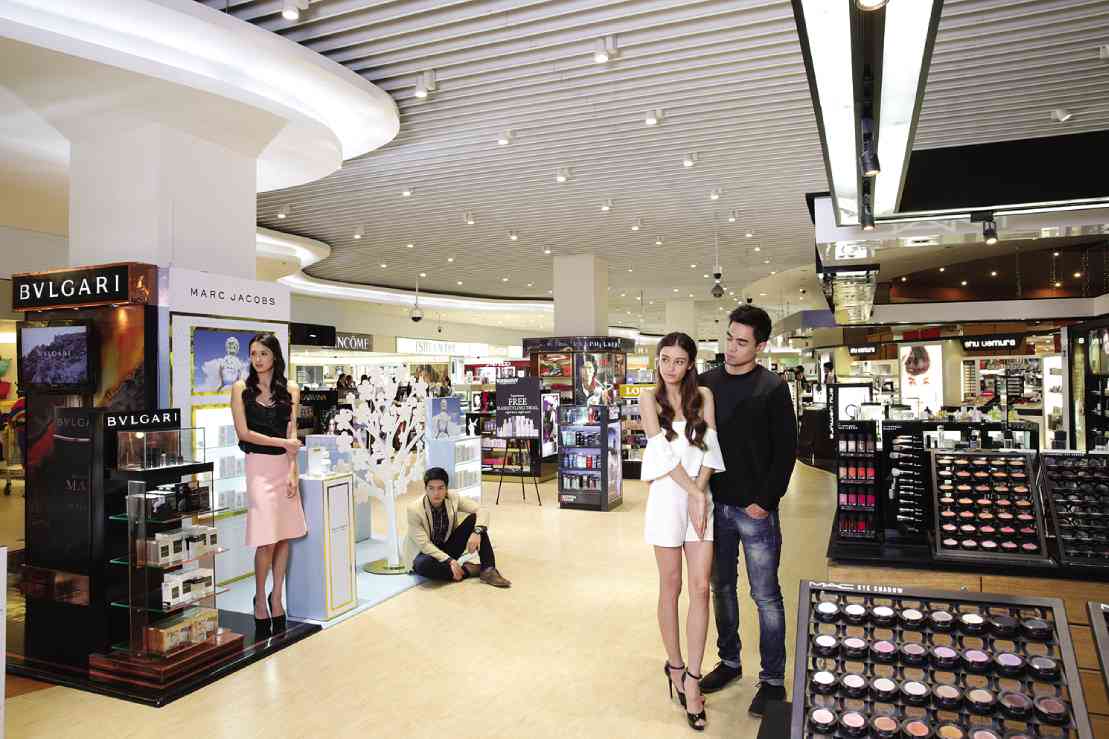
    Global duty-free retailing is expected to reach nearly US$98 billion in revenue by 2019, according to a new study by global technology research and advisory company Technavio.

    With the expansion of low-cost airlines, many middle-class travellers are taking inexpensive holidays, a trend that has helped the Asia Pacific and Middle East emerge as the fastest-growing regions for duty-free retail marketing, says Technavio analyst Vijay Sarathi.

    He says China, India, Indonesia, South Korea and Sri Lanka were among some of the most-desired inexpensive destinations in 2014.

    “During the same period, it is estimated that international tourist inflow in APAC increased to almost 263 million travellers, and it has largely helped the market grow until 2019.”

    Just released in London, Technavio’s report, Global Duty-Free Retailing Market 2015-2019, provides an in-depth analysis of market growth in terms of revenue and emerging market trends.

    By products, the global duty-free retailing market for 2014 comprised fashion accessories and hard luxury (32.1 per cent), perfume and cosmetics (29.21 per cent), wines and spirits (16.02 per cent), tobacco (12.43 cent), and confectionery and fine food (10.25 per cent), says the report.
    It says the fashion, accessories and hard luxury segment was valued at close to $20.81 billion, with the most in-demand products including precious jewellery, briefcases, handbags and shoes. The more popular brands include Armani, Burberry, Fossil, Gucci and Michael Kors.
    Technavio researchers say Chinese travellers emerged as the largest consumers of luxury brands last year, contributing nearly 25 per cent of global revenue.
    The perfumes and cosmetics segment is one of the fastest-growing categories in the global duty-free retailing market. APAC and the Middle East are the key regions for this category, with some of the top-selling brands including Chanel, Christian Dior, Estee Lauder and Guerlain.

    With close to 21.5 per cent of revenue share in the category, L’Oreal created a division especially for duty-free stores in 2013, describing the division as “the sixth continent”. In 2014, L’Oréal launched theVichy and Kerastase brands in the duty-free retail segment in Asia, and also launched the Three-Minute Beauty program to engage with potential luxury product buyers at airports.
    The liquor category is expected to grow to $13.47 billion in 2019. In 2014, Diageo opened two Johnnie Walker Houses in duty-free shops in India and Taiwan.

  • High-end retailers in China no longer have the luxury of time

    High-end retailers in China no longer have the luxury of time

    In the heart of Guangzhou’s Yuexiu district, the shopping centre La Perle is a symbol of luxury living in the southern mainland city.

    The high-end shopping mall, which opened in January 2004, has long been the first stop for many international brands seeking to conquer China market.

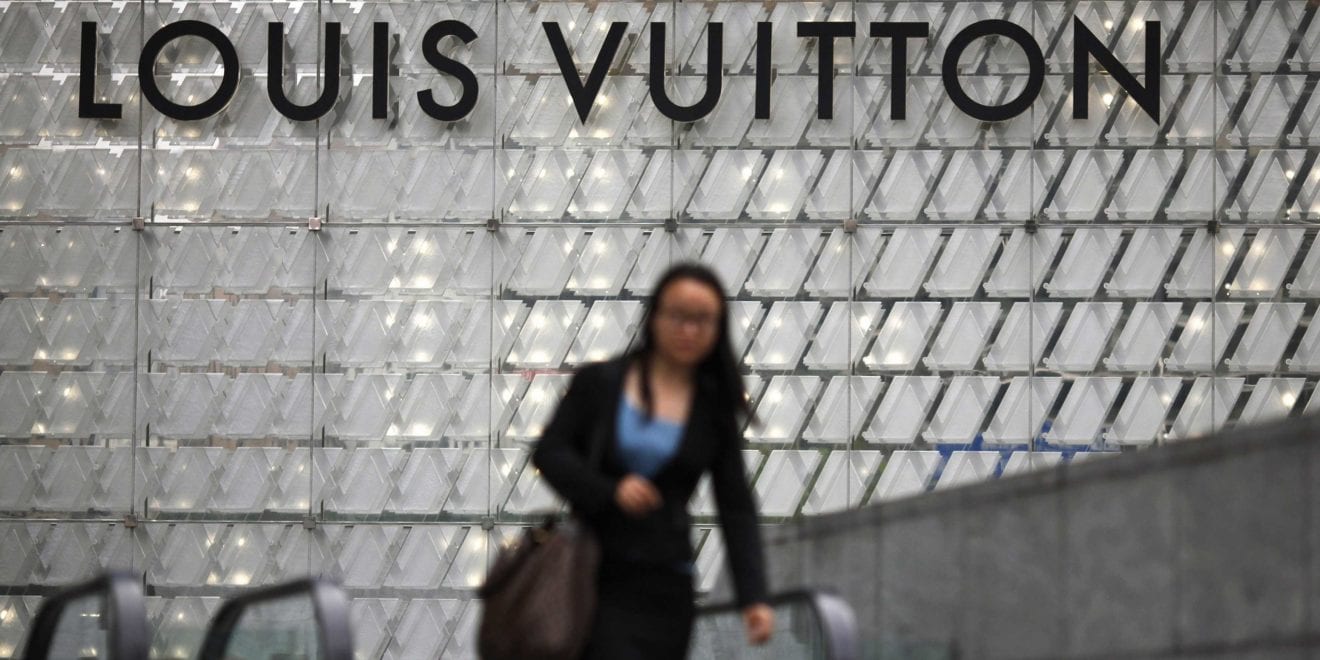
    But times are changing. A few weeks ago, La Perle lost one of its biggest tenants. Louis Vuitton. The French luxury retailer closed its store on the ground floor saying it would not renew its expired lease.

    This followed the shutting down of the two other LV stores – in the northeastern city of Harbin and the western city of Urumqi.

    The brand said the closures were part of a marketing strategy adjustment by headquarters.

    It’s a strategy that appears to have been taken on by many other international luxury brands.

    Following ten years’ aggressive expansion in China, they have been shrinking their physical presence in the nation to adapt to a cooling market plagued by a slowing economy, an ongoing anti-corruption campaign and Chinese buyers’ increasing overseas purchases.

    The Fortune Character Institute, a Shanghai-based market research unit, forecasts mainland luxury sales to grow 3 per cent to US$25.8 billion this year, much slower than the 11 per cent in the recovering global market.

    A study by the institute found that although Chinese shoppers consumed 46 per cent of luxury goods around the world, their purchases in their home market accounted for only 10 per cent of global sales, falling from 11 per cent in 2012 and 13 per cent in 2013.

    The sluggish growth is reflected in the expansion plans of luxury brands. They are opening fewer new stores and closing more.

    During the past two years, Burberry closed four stores on the mainland, Coach shut two, Hermes one, Armani five, and Prada went from 49 to 33.

    Regina Yang, of real estate consultancy Knight Frank Shanghai, said store consolidation would continue, especially in smaller cities.

    “Now the luxury brands do not need two or three outlets in one city. Those having three outlets will be cut to one,” said Yang.

    The situation is no better in Hong Kong, which relies heavily on mainland shoppers’ spending.

    In August, TAG Heuer, the expensive watch brand under LVMH, closed its Causeway Bay store while Coach closed its flagship store in Central due to high rent pressure and a falling number of mainland tourists.

    Store openings are no longer a major way for international luxury brands to expand in the China market

    Zhou Ting, Fortune Character Institute

    “Store openings are no longer a major way for international luxury brands to expand in the China market. Over the next two years we expect these brands to close even more stores than before,” said Zhou Ting, director of the Fortune Character Institute.

    “But if you think luxury brands are taking a totally defensive strategy in China, you would be wrong. The closures are only a small part of a thorough strategy adjustment they are undertaking in China.”

    While closing smaller and underperforming outlets, the top brands are investing more resources to upgrade and expand other stores and are even venturing into different industries to attract local shoppers. Considering Chinese buyers’ preference to shop online, they are also building e-commerce channels and closing price gaps between China and foreign markets to retain their consumption locally.

    “In the past, foreign luxury retailers had treated the China market like a money printer. They were busy opening stores to cover more cities. But their customer services and shopping experience were far from good compared to their stores in Europe. Now they have to pay a big cost for it,” said Zhou.

    The first batch of luxury brands entered into China in the 1990s. Most of them set up stores in five-star hotels and high-end department stores in big cities, targeting foreign businessmen, overseas Chinese and government officials.

    In 2004, as the Chinese government loosened restrictions on foreign retailers, luxury brands that had previously relied on local distributors started to engage in direct sales and expand into shopping malls.

    In the past, foreign luxury retailers had treated the China market like a money printer

    Zhou Ting, Fortune Character Institute

    The golden era came around 2009 and 2010 as a rising number of affluent Chinese consumers started to spend on high-end leather goods and jewellery, making the country the fastest-growing luxury market in the world.

    Encouraged by the fast growth and huge potential in the China market, luxury retailers rushed to open stores. Global consultancy Bain & Co estimated that the 15 top luxury brands it surveyed had opened more than 80 new shops during the first eight months of 2010.

    Meanwhile, the big brands’ aggressive expansion was also partly promoted by the increase in shopping mall construction.

    “Developers in second and third tier cities lured big brands as anchor tenants by offering them very flexible leasing terms,” said Kenith Kong, director and head of retail service at real estate agency DTZ/Cushman Wakefield China.

    A watershed for China’s luxury market came in 2013. Late that year, Beijing embarked on a long-term anti-corruption campaign and banned government officials from giving or receiving gifts. Such expenditure had previously been a major driver of domestic luxury consumption.

    More recently, the rapid growth of overseas purchases has also been worrying top-end retailers.

    Chinese consumers, who are travelling overseas more often, now spend more than 70 per cent of their luxury budgets in Europe, North America, Japan and other countries where the prices are lower, options are greater, and services better.

    The demand has even created a booming “daigou” or personal shopper industry, in which the daigou makes a living by purchasing products from overseas and selling them to buyers at home at a profit.

    All such developments are forcing luxury retailers to reappraise their business models.

    “We have noticed an upward trend on the portion of large stores opened by luxury brands in recent years,” said Frank Chen, research head of global real estate agency CBRE.

    The company observed that three quarters of renovations by luxury stores that took place between January 2013 and July 2015 in eight major cities were expansions.

    It also said the proportion of luxury stores with floor areas of more than 800 square metres climbed to 22 per cent in 2014 from 18 per cent a year earlier.

    “Larger sizes means luxury retailers can display more products and add more functions in their physical stores. Increasingly, they are displaying categories which were previously given little emphasis, such as shoes, household items, cosmetics and children’s apparel,” said Chen.

    In February, Louis Vuitton unveiled its newly upgraded store in the China World Mall in Beijing. The 3,000-square-metre shop not only offers various tailor-made services, it hosts a bookstore, an arts exhibition room and a Chinese tea zone.

    On July 31, the French luxury brand opened a new store on the bank of the West Lake scenic area in Hangzhou City, Zhejiang province, to tap the growing tourism market.

    Also taking an innovative approach in reaching out to local customers is Italian label Gucci. The brand opened a restaurant, 1921 Gucci, in Shanghai’s iAPM shopping mall.

    French fashion house Versace opened a cafe in one of Shanghai’s most expensive malls, Grand Gateway 66, which also hosts Burberry’s first beauty salon.

    Meanwhile, Hermes, Armani, and Dolce & Gabbana are expected to introduce their restaurants and cafes to China, providing a new engine for revenue growth.

    Such strategies create new forms of profitability based on experience-oriented consumption

    Frank Chen, CBRE

    “Such strategies create new forms of profitability based on experience-oriented consumption, as well as an additional sales opportunities for physical goods by attracting more shoppers to spend more time in their places,” Chen said.

    While reducing their physical presences, luxury retailers are embracing e-commerce despite their concerns that online channels cannot emulate the physical shopping experience.

    However, Chinese consumers’ increasing reliance on online shopping, especially on their mobile phones, has convinced brands to launch shopping sites or form partnerships with e-commerce firms.

    In October, Cartier launched its China shopping site. One month earlier, high-end brand Coach reopened its online store on T-mall.com three years after closing it.

    Other brands such as Burberry and Tag Heuer are working with local e-commerce giants like T-mall of Alibaba and JD.com to provide online selling services in addition to their own official shopping sites.

    “Many luxury brands have begun to close the retailing price gaps between China and other markets. One of their purposes is also to establish a comprehensive global pricing system and prepare for their future online expansion,” Zhou Ting said.
  • Sports fashion demand drives Stella sales

    Sports fashion demand drives Stella sales

    Shoe marketer Stella International has reported increased sales in the second quarter on the back of growing demand for sports fashion footwear.

    In the three months to September 30, consolidated revenue from its China retail business and its manufacturing operations amounted to US$569 million, up 4.3 per cent year on year. For the nine months to September 30, revenues totalled US$1.366 billion, an increase of 7.9 per cent.

    “Looking forward, the group expects orders for the group’s footwear products will pick up further towards the end of this year and the beginning of 2016, as its customers continue to expand their global presence and as demand for sports fashion footwear continues to grow,” the company said in a stock exchange filing.

    “Order levels will also be supported by greater efficiency and improved utilisation at the group’s production facilities in inland China and Southeast Asia.

    “The group cautiously expects shipment volumes to reach 58 million pairs by the end of 2015.”

    Stella produces shoes for brands including Clarks, Deckers, Ecco, Rockport, Timberland, Wolverine, Cole Haan, Guess, Jones Group, Kenneth Cole and Michael Kors. It also designs, develops and manufactures footwear for high-fashion brands including Alejandro Ingelmo, Alexander Wang, Armani, Bally, Balmain, Brian Atwood, Givenchy, Kenzo, Marc by Marc Jacobs, Marciano, Miu Miu, Paul Smith, Prada, Sigerson Morrison, Via Spiga and Y3.

    And taking advantage of its manufacturing expertise, the wide acceptance of Stella’s products by brand customers, the company has successfully expanded into the Chinese and global footwear retail market through its own brands Stella Luna, What For, JKJY by Stella and joint-venture brand, Pierre Balmain.

    Stella says it will continue to implement strict cost controls and efficiency improvement measures to preserve its profitability. This includes placing a renewed focus on leveraging its competitive strengths to pursue new promising product segments, such as sports fashion footwear.

    “The group also remains committed to building the long-term competitiveness of its retail business with the opening of new standalone stores and shops-in-shops in quality locations. It will also continue to boost its branding efforts in Europe to further grow the value of its brands among Chinese consumers.”