Retail News CRM

Tag: asean

  • Clarion Events Asia Announce the Acquisition of RetailEX ASEAN

    Clarion Events Asia Announce the Acquisition of RetailEX ASEAN

    Clarion Events Asia, part of the global Clarion Events Group – a leading event organiser, producing and delivering innovative and cutting edge events since 1947 – today announced that they have acquired RetailEX ASEAN, a fast growing trade exhibition serving retailers in the ASEAN region. Co-organising the event with IMPACT, the premium venue in Thailand, Clarion Events look to enhance its offering to the retail industry in Asia.

    The purchase of RetailEX, based in Thailand, further increases Clarion Events involvement in the Asian retail market. “The combination of RetailEX ASEAN’s early success with Clarion’s history of nurturing events will provide our clients with the business intelligence to transform retail in Asia” said Richard Ireland, Managing Director of Clarion Events Asia. “The acquisition is expected to result in a show that can support the needs of retailers across ASEAN as they transition through the next 5-10 years of exciting transformation. We are grateful that the co-founder of RetailEX ASEAN, Ms Rosalind Ng, Managing Director of Globe International Events Consultancy has set a good foundation for us to bring the event to the next level.”

    “A partnership was formed with Clarion Events Pte Ltd (Asia) to broaden and strengthen RetailEX ASEAN’s position in the ASEAN region,” commented Mr Loy Joon How, General Manager, IMPACT Exhibition Management. “This new collaboration with Clarion Events could not have come at a better time for us as we are anticipating new upcoming challenges for the ASEAN retailers in this digital age of disruption. Clarion Events, with their success in e-Commerce and Internet Retailing events will bring a whole new dimension to RetailEX ASEAN, which now promises to be the most complete and most exciting retail trade show in the region.”

    RetailEX Asean will continue to operate under that name. Clarion Events will leverage the IMPACT team’s knowledge of the market and to work closely with them during the integration of both companies – which will take place over the next 6 months, leading to the RetailEX ASEAN show happening on 14-17 September, at the IMPACT Exhibition Hall, Bangkok. “With the involvement of Clarion Events, our clients will expect higher international quality services,” stated Mr Loy. 

    To augment the offering to retailers of the region, Clarion Events will introduce Internet Retailing Expo (IRX) ASEAN to co-locate with RetailEX ASEAN. With a successful history in Indonesia the event provides a vital digital/ ecommerce offering to retailers looking to compete in the online retail space. “We look to offering the Thailand retail market even more expertise from around the world and seeing more visitors attracted to the show this September” says Richard Ireland. 

  • Cambodia Properties Shine in Asean

    Cambodia Properties Shine in Asean

    Asean property markets are promising, with Cambodia offering the most attractive prospects due to strong demand and limited supply, notably in Phnom Penh.

    Aliwassa Pathnadabutr, managing director of property consultant CBRE Thailand, said prime residential property for rent in the Cambodian capital has posted the highest yield among all sectors at eight percent per year. Selling prices remain relatively low, but rents are high.

    “Demand for rental in Phnom Penh is driven by expatriates working for multinational companies set up in the city,” she said. “Asking rents are high as those companies are willing to spend on good accommodation for their staff.”

    With strong demand and a limited supply of only 5,500 units, the apartment sector has an occupancy rate of between 80 to 90 percent while rent per square meter is 700 to 1,000 baht (about $20 to $28).

    Rent for a one-bedroom serviced apartment is around 40,000 to 50,000 baht per month ($1,141 to $1,426), the same rate for a unit in Bangkok.

    But the average selling price for a high-end unit is only 110,000 baht per square meter, lower than Bangkok’s 200,000-300,000 baht.

    She said the selling price per square meter for a high-end residential unit in Phnom Penh is lower than that in Bangkok due to lower land costs. Construction costs, however, are close to those in Bangkok as most of the construction materials are imported from Thailand.

    For the high-end segment, the average selling price is 110,000 to 170,000 baht per square meter. For middle-end condos it is 93,000 baht and 24,000 baht on average for the affordable segment.

    The foreign ownership quota in Cambodia’s residential sector is higher than Thailand’s, with up to 70 percent of total units at a project. But foreigners are not allowed to buy ground-floor or basement units. Foreigners are also allowed to set up a company with 100 percent ownership.

    However, Thai investors should be cautious if they want to jump on the bandwagon as Phnom Penh’s residential supply will reach 25,000 units in 2018 from only 5,000 units this year, Ms. Aliwassa said.

    Investing in a condo for rent in Phnom Penh is attractive for individual investors. The major investment buyers in the city are Taiwanese, Chinese, Singaporean, South Korean and Japanese.

    “If Thais want to get in on the act, they should do so now or at the beginning of the boom as there will be a large volume of new supply being completed in the next two years,” added Ms. Aliwassa.

    She said office and retail spaces in Phnom Penh are limited but demand is strong so the occupancy rate is quite good. The city’s office supply totals around 280,000 square meters, compared with 8.4 million square meters in Bangkok.

    For C-grade office space, occupancy is as high as 90 percent due to a lower monthly rent of $10 to $15 per square meter. Rent for B-grade office space is $16 to $25 with an occupancy rate of 85 percent while A-grade rent stands at $28 with an occupancy rate of only 40 percent, compared with $30 in Bangkok.

    Another attractive investment in Phnom Penh is retail, as Thai brands are very popular among Cambodian consumers. Successful Thai retailers in Phnom Penh now include Major Cineplex, Fuji and S&P restaurants.

    Nonetheless, the retail property market in Phnom Penh is quite small compared with Bangkok. The current retail space in Phnom Penh totals 680,000 square meters, which accounts for less than 10 percent of Bangkok’s total retail area of seven to eight million square meters.

    Despite limited supply, the monthly rent for prime malls remains low at only 1,200 baht per square meter, compared with 3,000 to 4,000 baht in Bangkok.

    Although Phnom Penh’s luxury segment has a limited supply, it might be too soon to enter the market as the segment is very small and Cambodian consumers are not ready to accept luxury prices, said the consultant.

    “Besides checking local regulations, investors should consider the balance of costs, prices and returns. If one of them is too high, the rest will fall down just like in Myanmar where land costs are very high,” added Ms. Aliwassa.

    Tony Picon, managing director of property consultant Colliers International Myanmar, said all commercial properties in Yangon are attractive with high occupancy rates since supply is limited and demand is strong.

    “New supply is difficult to enter as regulations are unclear and land costs are steep,” he said. “But opportunities in Myanmar are high as its GDP is the highest in the region at 8.3 percent. The country also boasts abundant resources.”

    Suphin Mechuchep, managing director of property consultant JLL Thailand, said Vietnam is an interesting investment destination as its economy is picking up, purchasing power is strong and the government is spending on infrastructure projects.

    “All segments in Vietnam’s property market have bottomed out in the past two years as middle-income earners prefer spending on IT, mobile and technology,” she said.

  • Indonesia’s logistic sector lags behind other ASEAN countries

    Indonesia’s logistic sector lags behind other ASEAN countries

    Indonesia needs to work harder to improve its logistic sector because its performance lags behind those of other ASEAN countries such as Singapore, Thailand and Malaysia, Finance Minister Sri Mulyani said on Wednesday.

    “On the Logistics Performance Index (LPI), according to the World Bank, Indonesia stood at 63rd place of the 160 countries surveyed,” the minister said in her opening speech during the Jakarta International Logistics Summit and Expo in Jakarta.

    Singapore topped the list of ASEAN countries, ranking fifth globally, while Malaysia ranked 32nd and Thailand 45th, she added.

    The LPI is a benchmarking tool created to help countries recognize challenges and opportunities they face in their performance on trade logistics and improve it.

    She said there were aspects affecting the competitiveness of logistics in Indonesia, namely a lack of infrastructure and complex customs and excise procedures.

    “To realize this, the government has utilized the state budget and funds from the private sector to develop infrastructure across Indonesia,” she said.

    Besides improving infrastructure, another important measure is to fix the quality of regulations and simplify bureaucracy, she said.

  • Indonesian Retailers Prepares for ASEAN Market

    Indonesian Retailers Prepares for ASEAN Market

    Deputy Chairman of the Indonesian Retailers Association (Aprindo) Tutum Rahanta, said that the Association is currently aiming for the ASEAN market, specifically countries like Vietnam, the Philippines, Laos, Myanmar, and Cambodia.

    Tutum predicted that hundreds of millions can be gained if Indonesian retailers can tap into international markets. “I think if we can penetrate the market, it would be like serving 600 million people, and it is three times bigger than Indonesian market,” Tutum said on Monday, September 26, 2016.

    Tutum said that Indonesian retailer has plenty of open chances and opportunities to tap into the ASEAN market, especially in terms of expansion costs, which according to Tutum, would be similar to expanding their business in Indonesia. In addition, Indonesian retailers would have better chances at expanding in ASEAN with the recent establishment of the ASEAN Economic Community.

    “It would be much different if retailers wanted to expand to Japan, opening one outlet there equals opening 30 outlets [in Indonesia], it doesn’t make sense,” Tutum said.

    Tutum added that despite retailers’ readiness to expand to ASEAN, Aprindo expected the government to show support by facilitating bureaucratic affairs and adapting regulations.

    “The government can lobby the foreign country’s government to see if there are any obstructing regulations, then they can inform retailers,” Tutum said.

  • Aeon Mall inviting foreign firms to be tenants

    Aeon Mall inviting foreign firms to be tenants

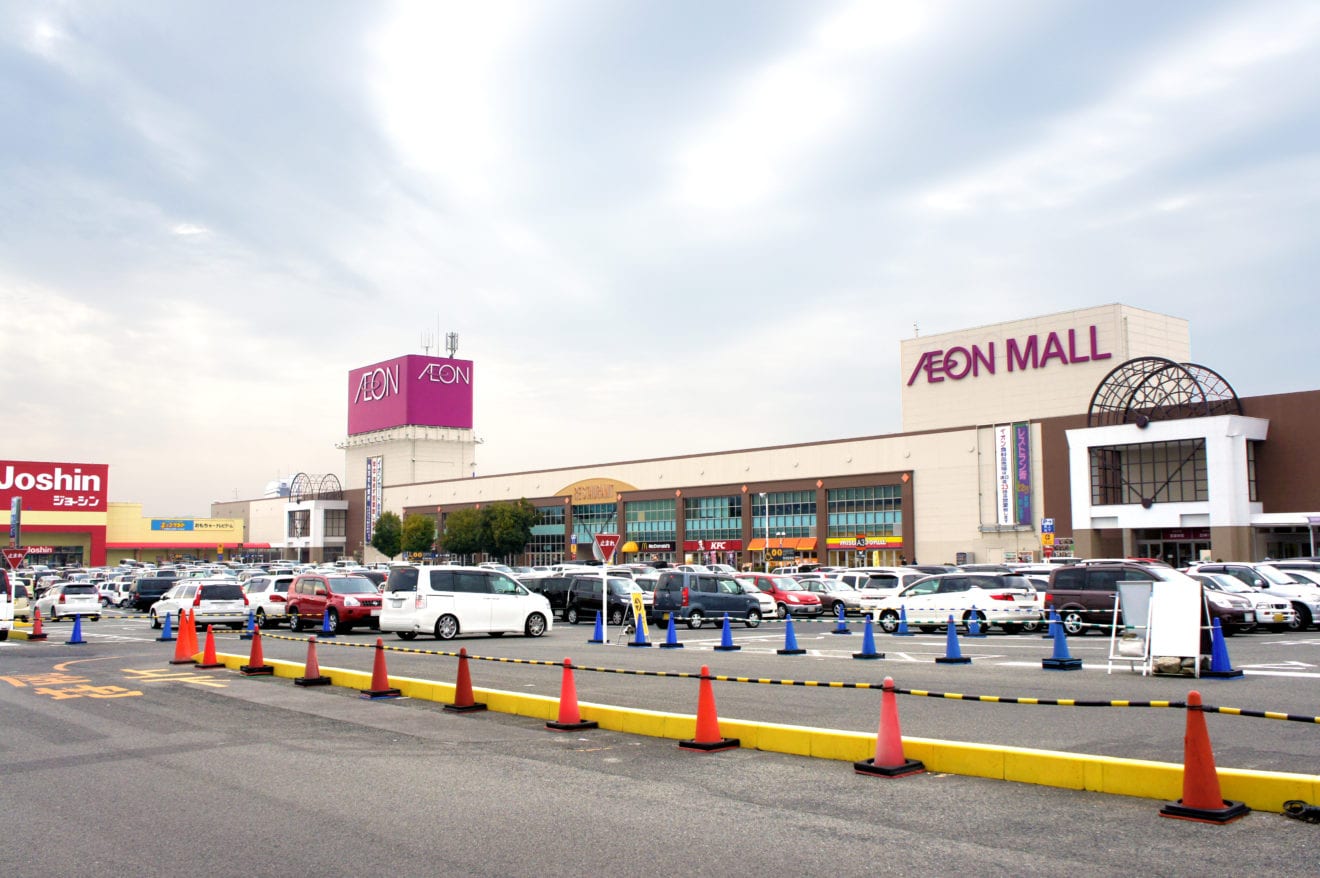
    Aiming to add variety in the face of intensifying competition, Japanese retail giant Aeon Mall is inviting foreign businesses to sign on as tenants in Japan.

    Aeon Mall, which has about 150 shopping centres across Japan, will aim to have its first new-look location open next spring. A new dedicated department includes two staff members assigned to Chinese businesses and three to businesses from members of the Association of Southeast Asian Nations (ASEAN). Tenants from other areas, such as Europe and the US, are also sought.

    A broad range of sectors is being considered, including restaurants, apparel, home products and services. As well as major chains, Aeon is interested in small businesses in the tourism sector.

    Aeon Mall is negotiating arrangements with more than 30 companies already. By inviting multiple tenants all at one time, the company seeks to recreate the feel of an Asian-style “restaurant alley”, for example.

    aeon-mall-japan

    Targeted candidates include foreign companies interested in doing business in Japan but hesitant because they lack knowledge of the market. To help deepen their understanding, Aeon will offer tours of its malls in Japan and abroad.

    Japan’s shopping centre market grew 4.5 per cent last year to 31 trillion yen (US$302 billion), according to the Japan Council of Shopping Centers, but was treading water on an existing-store basis.

    The market’s medium- to long-term outlook is also dim with the shrinking Japanese population and the rise of online shopping.

    “Mass-producing the same type of shopping mall will not lead to substantial growth going forward,” says Aeon Mall president Akio Yoshida. The company last year opened a more experience-focussed mall with an athletic track and racetrack.

  • ASEAN tourism to launch Visit ASEAN@50 Golden Celebration in 2017

    ASEAN tourism to launch Visit ASEAN@50 Golden Celebration in 2017

    Member countries of ASEAN will celebrate the groupings 50th Anniversary in 2017 by holding a joint tourism programme under the theme “Visit ASEAN@50: Golden Celebration” with the objective of embracing ASEAN as a single and united tourism destination.

    “Visit ASEAN@50: Golden Celebration will highlight ASEANs best 50 festivals and 50 most unforgettable travel experiences, whereby visitors will enjoy a wide range of ASEAN tourism products through diverse destinations, culinary, events, and engagements with local communities,” the ASEAN Secretariat said in a statement.

    Special offers and travel promotions with affiliated partners will be rolled out for travellers to enjoy the richness of cultural, heritage, nature, and to feel the warmth of ASEAN hospitality.

    Targeting major regional and long-haul source markets, such as: China, Japan, Korea, India, Australia, UK, Germany, Russia, the UAE, USA and Canada, Visit ASEAN@50: Golden Celebration is expected to achieve 121 million international visitor arrivals to the region by the end of 2017.

    Also increase tourism receipts to USD 83 billion; and extend tourist visitations average length of stay to 6-7 days, and to more than 2 ASEAN countries.

    The official pre-launch of the Visit ASEAN@50: Golden Celebration campaign was spearheaded by ASEAN Tourism Ministers and Leaders at the ITB Berlin on 10 March 2016.

    The pre-launch was followed by two days of ASEAN cultural performances for ITB Berlin’s public audiences on 12 and 13 March at Thailand pavilion.

  • Philippines SMEs urged to pursue eCommerce

    Philippines SMEs urged to pursue eCommerce

    Philippines SMEs and micro-businesses are being urged to pursue eCommerce in a government initiative.

    Micro, small and medium enterprises (MSME) should benefit from global trade opportunities through eCommerce, says the Philippine government.

    The Department of Trade and Industry (DTI) targets to reach out to 100,000 MSMEs, 11 per cent of total MSMEs doing local eCommerce – by 2020.

    “We are focusing our promotion activities on eCommerce not only within the East Asia sub region but [also in the Philippines], to help MSMEs to engage in borderless trade, ” said Prudencio Reyes, Trade and Industry Undersecretary for Special Concerns.

    This will help MSMEs engage in borderless trade, given East Asia’s huge market for eCommerce, said Reyes during the recent Brunei Darussalam-Indonesia-Malaysia-Philippines East ASEAN Growth Area press conference in Davao, in the south of the Philippines.

    With aid from faster internet connection and increased number of internet users, an eCommerce roadshow for entrepreneurs will focus on e-business models, e-payments, eCommerce website development, eCommerce platforms and eCommerce marketing.

    ASEAN already has 143 million internet users; 44.2 million of them from the Philippines.

    The Philippine eCommerce Roadmap 2016-2020 is a product of private, academic and government discussions, launched in February.

    On March 9-11, 2016, the DTI will join the Asian Development Bank’s Workshop on Cross-Border eCommerce: Towards Seamless Connectivity event in Bangkok.

  • Index Living Mall plans ASEAN expansion

    Index Living Mall plans ASEAN expansion

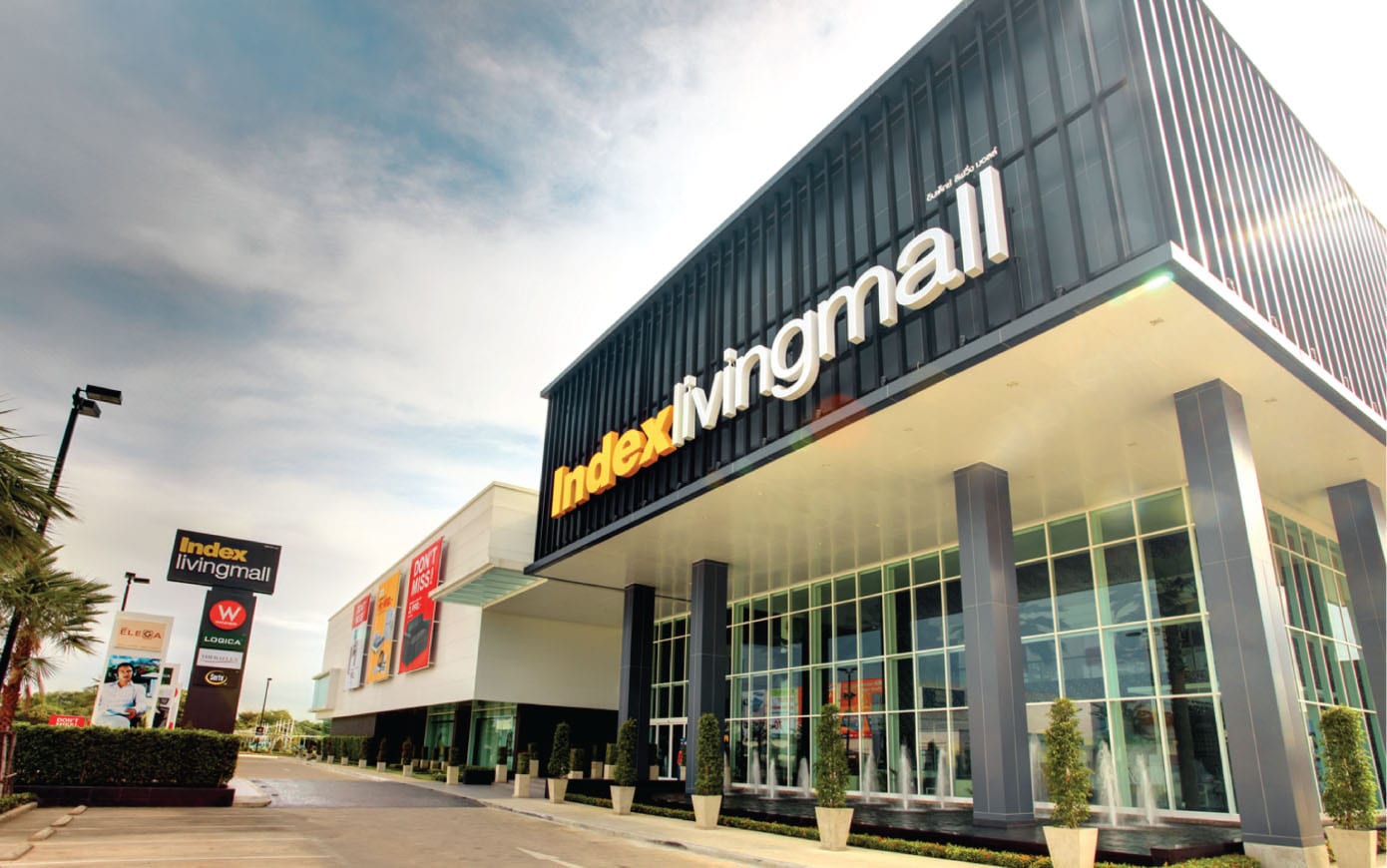
    Home-furnishing retailer Index Living Mall has announced its 2020 vision to continue its push beyond Thailand into other ASEAN countries.

    With franchised stores already trading in Malaysia, Thailand and Vietnam, the company believes the region’s urbanisation has shifted consumers toward a more modern lifestyle, including the way they buy and use home-furnishing products. It also notes a rise in the number of middle-income earners throughout the ASEAN Economic Community.

    MD Kridchanok Patamasatayasonthi says the company aims to double the present 5 per cent contribution to its total revenue from AEC markets by 2020. The company’s total revenue of Bt9.5 billion (US$264.8 million) last year was 5 per cent up on 2014.

    “Our market expansion through international franchisees is the result of growth in the home-furnishing and accessories sectors among ASEAN member countries,” says Kridchanok. “Other positive factors, including the bustling economic outlook, rising gross incomes and similar customer behaviour, helped accelerate our decision to look for investment opportunities in new markets.”

    She says the company has appointed VinDS, the retail investment arm of Vietnamese commercial property developer Vingroup, as its franchisee to tap into the home-furnishing and accessories retail market in that country. The first Index Living Mall under that partnership had a soft opening last month in Ho Chi Minh City, occupying 7000 sqm in Vincom Mega Mall Thao Dien. Costing more than Bt200 million, the store is expected to achieve Bt350 million in sales in its first year.

    Index Living Mall has had a store trading in Ho Chi Minh for more than four years, effectively testing the market. Now with VinDS it expects to open 10 more stores in major cities in Vietnam, including Ho Chi Minh, Hanoi and Da Nang, within five years.

    “Economic growth indicators show that the Vietnamese retail market is number two in Asia, after only China,” says Kridchanok.

    “During the first half of last year, the Vietnamese economy posted 6.28 per cent growth, the highest since 2008. With a population of 90 million, this will continue to grow, thanks to per capita income rising more than 10 per cent over the past decade.”

    Kridchanok says it is expected that the number of Vietnamese earning a median income of 15 million dong ($673) a month will grow to 33 million by 2020.

    Index Living Mall’s director for international business development Ekaridhi Patamasatayasonthi says the company’s venture into Vietnam highlights its marketing direction to tap into emerging CLMV (Cambodia, Laos, Myanmar and Vietnam) markets, aimed at strengthening its leadership position in the home-furnishings and accessories retail market in the ASEAN region.

    Ekaridhi says the company plans to open store in Manila in September via a joint venture with SM Retail, a Philippine business conglomerate involved in shopping mall, property development, banking and retailing. Index Living Mall has a 30 per cent stake in the venture.

    In Malaysia, Index Living Mall opened its first home-furnishing store in Putrajaya last year in a joint venture with AEON. Three more stores are planned for Malaysia this year – in Kuala Lumpur in March, Kota Bharu in April and Johor Bahru in the fourth quarter.

    Ekaridhi says there are six franchised stores in five countries – Malaysia, Russia, Maldives, Nepal and Vietnam – as well as dealers in Laos and Myanmar. In its home country, the company has 25 stores in 17 provinces, of which nine are in Bangkok. It plans to invest Bt470 million this year to open two stores, in Nakhon Pathom and Chachoengsao.

    Index Living Mall expects to post Bt10 billion in revenue this year and to grow its annual sales by 10 per cent over the next five years.

  • SSI hunts ASEAN retail brands

    SSI hunts ASEAN retail brands

    Leading Philippines retail group SSI says it is actively seeking to acquire brands and suppliers in the region that can help it build its ASEAN retail portfolio.

    “We continue to seek brands and suppliers that manufacture within the Asean region that would allow us to make the most of Asean free trade agreement. That is a key to our expansion and success in the recent past – to expand our retail concepts in new geographic areas,” SSI president Anthony T. Huang told the Manila Times.

    ASEAN, which comes into effect later this year, groups 10 economies in Southeast Asia, creating a free trade zone with less restricted borders. Participating countries are Indonesia, Malaysia, the Philippines, Singapore, Thailand, Brunei, Cambodia, Laos, Myanmar and Vietnam.

    “We’re hopeful because we have ongoing discussions [with potential acquisitions and partners] but nothing final at this time,” Huang said.

    “We’ve really been focused on the new acquisitions that we have to roll out next year and on the existing brand portfolio that we’re continuously rolling out and the continued expansion of FamilyMart,” he said.

    SSI is also in talks with other foreign brands outside the ASEAN group as it builds a portfolio of lifestyle and fashion brands. Its most recent deal was to partner with Canadian fashion label Joe Fresh.

    Huang says foreign brands find the Philippines appealing because the culture is westernised, it has a young population, strong growth and rising middle class with discretionary income.

    “We have the youngest population in the region. ‘Youngest market’, that’s the magic formula.

    “We’re seeing continued interest that many of the international retail concepts that should be in the market are in fact already in the market. But interests from new concepts are coming in to expand in the region,” he said in the interview.

    SSI’s portfolio already includes 115 brands.

  • Five trends in Vietnam retailing

    Five trends in Vietnam retailing

    Vietnam’s retail market is set to grow by 8.4 per cent annually until 2020, making it one of the fastest-growing markets in south-east Asia.

    Against a backdrop of increased disposable income, rapid urbanisation and an appetite for change among younger shoppers, we take a look at five trends defining the marketplace for pan-Asian retailers right now.

    Confident investment

    January 2015 marked the first time non-domestic retailers could take full ownership of commercial property in Vietnam, following commitments made to the World Trade Organisation. Now, new trade agreements with Japan, Korea and the countries that make up the Association of South-East Asian Nations (ASEAN) look set to support further growth for international retailers in Vietnam:

    Tailoring the best of international retail

    Domestic retailers may have the advantage when it comes to local shopper knowledge but
    international retailers are drawing on their own strengths to help them compete.

    Dairy Farm, FamilyMart and Aeon have brought their expertise in loyalty schemes, private label and innovative marketing to their stores in the region.

    Other points of difference include appealing to busy office workers with a fast food to go counter (seen at Family Mart and B Mart) and bringing an international flavour to the in-store hot food offer (Aeon Mall).

    Alternative store concepts

    Many retailers have established themselves in Vietnam with a hypermarket presence in one of the major retail hotspots like Hanoi or Ho Chi Minh City.

    Lotte and hypermarket chain Aeon are appealing to families and experimental shoppers with department store formats that act as wider shopping and entertainment destinations. Aeon is also making its mark with a loyalty scheme that includes tailored offers for mums – such as birthday treats or discounts on baby care.

    In the convenience channel, Guardian is the first combined-format health, beauty and drugstore in Vietnam. The store is making waves with its clean layout, colourful signage, bold promotional activity and sales assistants offering a superior level of service.

    Product innovation for a changing market

    A new concept in Vietnam, private label is appealing to young, experimental shoppers thanks to its lower prices and alternative products.

    Aeon has introduced its TopValu private label range, which taps into the popularity of Japanese culture by offering authentic Japanese ingredients and home cooking kits. The retailer is now working with local suppliers to explore domestic production.

    An increasingly affluent middle class is also supporting demand for exclusive and imported novelties. Dairy Farm is well-known for attracting these shoppers with its packaged food, household, health and beauty ranges.

    Expanding to national coverage

    A priority for most retailers is to create a nationwide presence. Lotte has built a network of ten hypermarkets spanning six big cities across Vietnam, making them the first pan-Asian retailer to achieve such a spread of coverage. Meanwhile, Ministop (Aeon), Guardian (Dairy Farm) and Shop&Go are pushing their convenience format in retail hotspots.

    Major retailers are seeing good growth from their franchise models, making partnerships, mergers and acquisitions hot topics.

    Aeon has partnered with local retailers Citimart in the south of the country and Fivimart in the north. The domestic chains are helping Aeon speed up its expansion plans by using their existing store networks. In return, their own customers are benefitting from the retail giant’s private label ranges and investment in infrastructure.

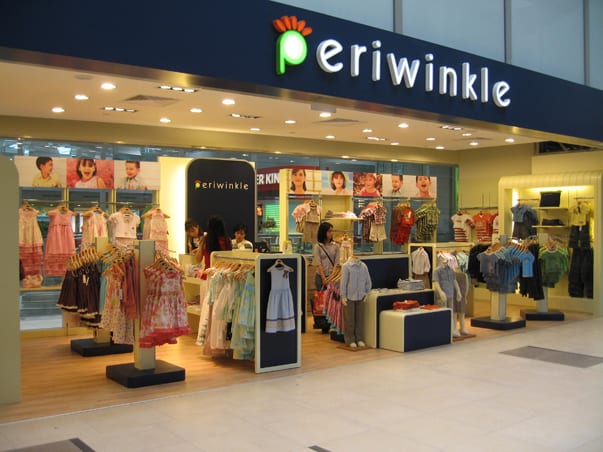
  • Periwinkle childrens clothing targets ASEAN

    Periwinkle childrens clothing targets ASEAN

    Periwinkle childrens clothing has opened its first store in Indonesia through a licensing agreement with an Indonesian partner.

    The Philippines retailer, which already has a presence in Singapore and Canada, received support from the Department of Trade and Industry, as part of a program to help retailers from the Philippines expand into other ASEAN markets with the advent of the Asian Economic Community (AEC) this year.

    “We intend to assist local companies with established brands, expand in the international market by partnering with foreign companies, particularly in the Asean countries, and promote the Philippines as a reliable and competitive source of global fashion retail brands,” said Trade Undersecretary Ponciano C. Manalo Jr.

    Periwinkle’s first store is a concession at the newly opened Central Department Store at the Grand Indonesia East Mall in Jakarta.

    It will open a second concession at British department store Debenhams at the Senayan City Mall and is currently evaluating franchising in Indonesia.

    Periwinkle’s partner in Indonesia is the Boga Group, which is active in the food and beverage and retail sectors, operating some 1000 hundred restaurants and retail outlets in Jakarta, Bandung, Surabaya, Yogyakarta, Medan, Makassar and Bali.

    “Periwinkle’s presence in Indonesia is an excellent opportunity for the retail brand to aim for wider regional expansion in light of the AEC 2015,” said Alma Argayoso, Philippine Trade and Investment Center Jakarta commercial counsellor.

    “We are optimistic that Periwinkle’s high-quality design will be patronised by Indonesian society, particularly sophisticated mothers, who love dressing up their children,” he said.

    The DTI is providing support to retailers through business counselling, business matching and brand promotion.

    Periwinkle executive Allan Hao Chin said the Boga Group partnership is purely a licensing agreement and the company will consider a full scale franchise and other options including a joint venture, depending on the success of the initial stores.

    “It is a milestone for Periwinkle to be present in Indonesia, Southeast Asia’s largest economy, and being able to share our brand globally,” Chin said.

  • New Horizons eyes ASEAN

    New Horizons eyes ASEAN

    New Horizons, the world’s largest independent computer training company is planning expansion into ASEAN.

    The company, which offers a broad range of technical and desktop application training and certification courses, has signed an exclusive franchise consultancy agreement with VF Franchise Consulting with the aim of expanding to Thailand, the Philippines and Vietnam.

    Scott McDaniel, director of international development of New Horizons, says that with successful training centers already open in Singapore and Malaysia, New Horizons’ expansion into the remaining countries of the Association of Southeast Asian Nation (ASEAN) will service the existing high demand for professional IT training and certification.

    “We are happy to partner with VF Franchise Consulting to bring our world-class IT training and certification centers to the rest of ASEAN.”

    Headquartered in the US, New Horizons has been embarking upon an aggressive international expansion campaign that has seen it grow successfully in over 60 countries and over 300 locations.

    “Through our extensive research, further expansion into ASEAN is desirable due to the significant growth of the IT sector in Thailand, the Philippines and Vietnam,” McDaniel said.

    New Horizons Computer Learning Centers is one of the most successful franchises in the training industry. Over the last 30 years, the company has successfully trained over 30 million people. New Horizons offers instant recognition for franchisees as the clear market leader in IT training.

    Added Sean T. Ngo, CEO of VF Franchise Consulting: “New Horizons offers global recognition for franchisees as the clear market leader in IT training. The brand’s huge brand name and international success in the IT training industry gives its franchisees the ultimate competitive advantage.”