Retail News CRM

Tag: asics

  • Asics Boosts Japan Presence with Second Flagship Store Launch in Tokyos Shinjuku District

    Asics Boosts Japan Presence with Second Flagship Store Launch in Tokyos Shinjuku District

    Asics, the renowned Japanese sportswear brand, is set to open its second flagship store in Japan. The grand opening is scheduled for later this month, and the new store will be located in the bustling heart of Tokyo’s Shinjuku district. This four-storey retail expansion signifies Asics’ commitment to increasing its local presence and enhancing its customer engagement platform.

    A New Flagship Store with Innovative Offerings

    Spanning approximately 605 square meters, the Shinjuku store will serve as the company’s third global flagship location. This follows the establishment of the initial flagship stores in Harajuku, Japan and Shanghai, China. The store will feature a broad selection of Asics’ products, including its popular running, tennis, basketball, and golf collections. Customers can also look forward to exploring the SportStyle lifestyle range and a variety of collaborative products.

    One innovative feature of the new store is the introduction of Asics Create, a unique apparel customization service. This will be the first time the service is available in a directly operated store, providing customers with the opportunity to personalize select garments with embroidered designs.

    The flagship store also boasts an exclusive private lounge, accessible only by reservation. This lounge is designed to provide personalized one-on-one consultations for select members of the OneAsics loyalty program.

    Sustainable and Strategic Expansion

    In line with increasing global consciousness about sustainability, the Asics Shinjuku store incorporates various recycled materials in its construction. For instance, the flooring in the fitting rooms is partly fabricated from foam that has been salvaged from discarded shoes.

    The opening of the Shinjuku store marks another step in Asics’ strategic investment in expanding its branded retail network. It also aligns with the company’s broader goal of reorganizing its business portfolio. Just last month, Asics announced its plan to spin off its rapidly growing premium lifestyle label, Onitsuka Tiger, into a standalone subsidiary named OT Group starting in January 2027. This move aims to give the brand more operational freedom and catalyze its global expansion.

    Questions & Answers

    What is unique about Asics’ new flagship store in Shinjuku?
    The new store will introduce Asics Create, a unique apparel customization service, in a directly operated store for the first time. It will also feature a private lounge for personalized consultations with select members of the OneAsics loyalty program.

    How is Asics addressing sustainability in its new store?
    The Asics Shinjuku store incorporates various recycled materials, including fitting room flooring partly fabricated from foam salvaged from discarded shoes.

    What is the significance of the new store opening?
    The opening of the new flagship store in Shinjuku is a part of Asics’ strategic plan to expand its branded retail network and to reorganize its business portfolio.

  • Onitsuka Tiger to Roar Solo: Asics Announces Spin-off for Enhanced Global Competitiveness

    Onitsuka Tiger to Roar Solo: Asics Announces Spin-off for Enhanced Global Competitiveness

    In a strategic move to bolster its global standing, Asics Corporation has announced plans to bifurcate its Onitsuka Tiger business into an independent, wholly owned subsidiary, effective from January 1. This segment will transition to a newly conceived entity, OT Group Corp, through a company division. While Onitsuka Tiger will be afforded greater independence, it will simultaneously remain an integral part of the Asics Group.

    Onitsuka Tiger: A Legacy of Growth and Innovation

    This decision stems from the consistent, robust growth exhibited by Onitsuka Tiger, underpinned by its upscale positioning, international proliferation, and product development exploration. As a core element of Asics’ internal organizational structure, the brand has prioritized broadening its lattice of directly operated stores while reinforcing its status as a luxury lifestyle brand.

    Asics asserts that this restructured arrangement is set to facilitate expeditious decision-making and an adaptive response to fluctuating market conditions and consumer predilections. Concurrently, it will augment the brand’s worth and competitive edge in the international fashion and lifestyle sphere.

    Onitsuka Tiger, originally established as a sports shoe brand by Kihachiro Onitsuka in 1949, was rejuvenated as a fashion label in 2002. Since its revival, it has metamorphosed into a globally recognized lifestyle brand, seamlessly marrying Japanese tradition with contemporary design elements.

    Questions & Answers

    **What is the primary reason for Asics splitting the Onitsuka Tiger business?**
    Asics is aiming to boost the brand’s global competitiveness by enabling faster decision-making, improving its response to changing market conditions and consumer trends, and enhancing its value and competitiveness.

    **How does Asics plan on maintaining its relationship with Onitsuka Tiger post-split?**
    The Onitsuka Tiger brand will operate as an independent, wholly owned subsidiary under the newly formed OT Group Corp but will continue to be a part of the Asics Group.

    **What has been the trajectory of the Onitsuka Tiger brand since its inception?**
    Onitsuka Tiger was initially a sports shoe brand founded in 1949. In 2002, it was resurrected as a fashion label and has since evolved into a global lifestyle brand that artfully blends Japanese heritage with modern design.

  • Asics Shatters Fiscal Records in 2025: A Year of Exponential Growth and Expansion

    Asics Shatters Fiscal Records in 2025: A Year of Exponential Growth and Expansion

    Asics, a renowned Japanese firm specializing in footwear and apparel, has hit an all-time high in the 2025 fiscal year, demonstrating growth across all aspects of its operation.

    Stellar Financial Performance

    The fiscal year that ended on December 31, 2025, saw Asics garner as much as ¥810.9 billion (US$5.298 billion), marking a 19.5 per cent surge in growth from the previous year. The firm also recorded an operating profit of ¥14.2 billion ($92.8 million), an impressive figure by any standard.

    For four consecutive years, Asics has consistently set new records in terms of net sales and operating profit. Notably, 2025 was the year when the company’s Sport Style and Onitsuka Tiger brands crossed the ¥100 billion milestone in net sales.

    Brand Expansion and Innovative Projects

    Onitsuka Tiger, the luxury lifestyle label hailing from Japan, debuted its flagship stores in notable European cities such as Barcelona, London, and Paris in 2025. This move is part of Asics’ strategy to further strengthen its market presence. Simultaneously, the company has initiated the construction of the Onitsuka Innovative Factory, located in Sakaiminato City.

    Asics reported a 34.7 per cent increase in domestic sales on a year-on-year basis, attributing this to the 84 per cent boost in sales derived from tourists visiting Japan. This surge in domestic growth was mirrored by a 33.4 per cent rise in sales in Southeast and South Asia, underpinned by the opening of a flagship store in New Delhi.

    Despite initial concerns, Asics saw its sales in Greater China grow by 19.9 per cent.

    Supporting Global Athletic Events

    As the official partner of the 2025 World Athletics Championships held in Tokyo, Asics successfully executed targeted product launches in Japan, thereby solidifying its position among runners and athletes.

    Questions & Answers

    How much did Asics earn in the 2025 fiscal year?
    Asics reported earnings of ¥810.9 billion (US$5.298 billion) in the 2025 fiscal year.

    Which brands of Asics surpassed the ¥100 billion mark in net sales?
    Asics’ Sport Style and Onitsuka Tiger brands crossed the ¥100 billion milestone in net sales in 2025.

    What was the percentage increase in Asics’ domestic sales in 2025?
    In 2025, Asics recorded a 34.7 per cent increase in domestic sales from the previous year.

  • Surging Demand for Lifestyle Footwear Propels Asics to Stellar Q3 Performance

    Surging Demand for Lifestyle Footwear Propels Asics to Stellar Q3 Performance

    Asics, the Japanese sportswear giant, has reported robust performance in both the third quarter and the overall nine-month period ending 30th September. This upturn is largely credited to growing demand for lifestyle-centric footwear and a steady flow in its key running sector.

    Surge in Q3 Sales

    The third quarter saw net sales soar to ¥218.5 billion (approximately $1.4 billion), marking a 17 per cent increase from the previous year’s corresponding period. Operating profit also witnessed a significant surge, reaching ¥46.2 billion ($298.9 million), a 38.5 per cent hike.

    Nine-month Period Profit

    During the nine-month period in question, Asics’ net sales touched ¥625.1 billion ($4.04 billion), a rise of 19 per cent from the same span the previous year. This, as the company revealed, was a first-time occurrence in nine months. The period also saw operating profit leap by 39.4 per cent, hitting ¥127.6 billion ($825.8 million), and gross margin bettering by 1.1 percentage points to land at 56.5 per cent. This surge is reflective of a beneficial product mix and an increase in direct-to-consumer sales.

    Driving Factors

    The upward trend in both periods was primarily driven by Asics’ SportStyle and Onitsuka Tiger lines, which registered about 45 per cent rise in net sales. The company’s core running products also maintained a steady pace, backed by continuous innovation and consumers’ propensity for premium footwear.

    Geographical Performance

    Region-wise, Japan, North America, and Europe emerged as the top performers with sales up by 34.5 per cent, 10.2 per cent, and 24 per cent respectively. Greater China also displayed robust growth, recording a 20.6 per cent increase.

    In a recent move, the company opened its first company-owned store in India’s Delhi metropolitan area and broadened its direct-to-consumer channel as a strategy to boost growth in the market.

    Factors Behind the Upturn

    Asics attributes its impressive results to strong product demand, disciplined inventory management, and efficient supply chain operations. However, the company also warned that it would need to keep an eye on currency fluctuations and high logistics costs as potential challenges in the coming quarter.

    Questions & Answers

    What led to the surge in Asics’ Q3 sales?
    The Q3 sales surge was primarily due to rising demand for lifestyle-centric footwear and consistency in the running segment.

    Which Asics product lines largely contributed to the sales increase?
    The sales uptick was mainly due to the SportStyle and Onitsuka Tiger lines, which reported around a 45 per cent increase in net sales.

    Which geographical areas showed significant sales growth for Asics?
    Japan, North America, and Europe were the standout performers, with Greater China also showing substantial growth.

  • Asics Unveils Flagship Store In India: A Strategic Move In Expanding Market Presence

    Asics Unveils Flagship Store In India: A Strategic Move In Expanding Market Presence

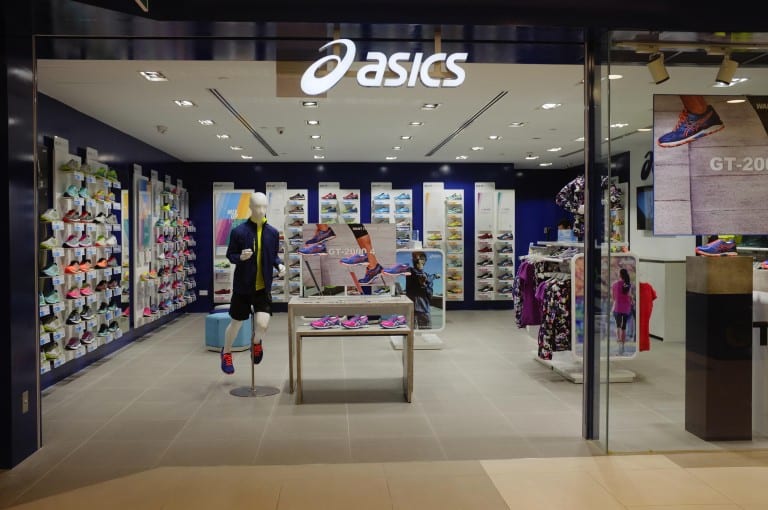
    Global athletic apparel titan Asics has recently unveiled its flagship store in India, occupying a prime location in the heart of New Delhi’s bustling Connaught Place. As the brand’s largest retail space in the country, this new outlet represents a significant strategic move aimed at expanding Asics’ presence in the Indian domestic market.

    The Flagship Store

    Sprawling over an expansive 2800 square feet, the flagship store is a comprehensive showcase of Asics’ diverse product lines. In addition to its highly regarded performance running gear, the store offers a broad range of core performance sports items, SportStyle products, and apparel ranges.

    Asics has designed this extensive retail space to cater to a wide spectrum of consumers. Beyond its core performance offerings, the brand aims to appeal to casual wearers and leisure-focused customers by integrating SportStyle and athleisure into their product repertoire. The store is thus positioned to attract everyone from elite athletes to lifestyle-focused and fitness-conscious consumers.

    Store Design and Layout

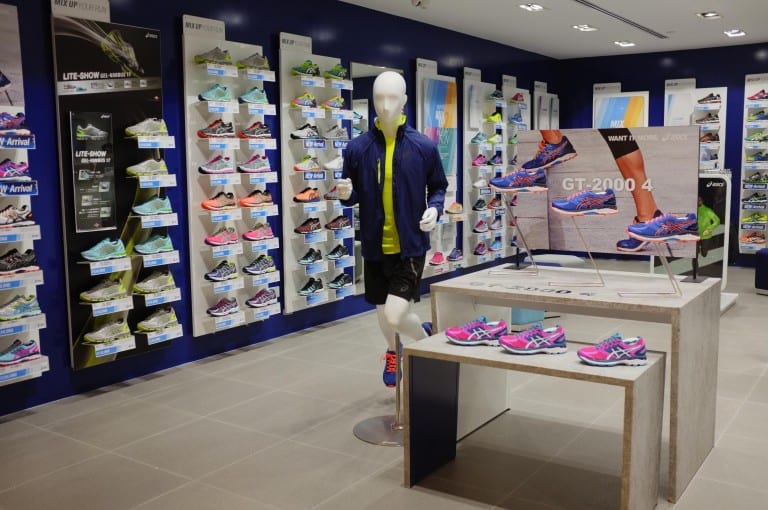
    The store layout features numerous wall displays and category zones, reflecting Asics’ commitment to innovation and product discovery. These strategic elements of the store’s design facilitate seamless navigation for customers and ensure that the full range of Asics’ products are effectively showcased.

    Brand Expansion and Growth

    The launch of this flagship store underscores Asics’ ongoing investment in strategic store zoning, comprehensive product assortments, and experiential sales formats. Furthermore, it serves as a clear signal of the brand’s expansion objectives, with plans to establish a network of 200 stores across the country by the forthcoming year. This ambitious expansion includes the launch of the brand’s first company-owned outlet later this year.

    Asics’ decision to strengthen its physical retail footprint in India is a testament to the country’s robust footwear market, which is projected to grow at a compound annual growth rate (CAGR) of 12.2 per cent.

    Manufacturing Plans

    In response to India’s stringent import regulations, Asics announced in June its plan to increase domestic manufacturing to 40 per cent over the coming years, thereby ensuring a consistent product supply.

    Questions & Answers

    What is the significance of Asics’ new flagship store in India?

    The new flagship store represents Asics’ strategic move to expand its market presence in India and cater to a broader range of consumers, from elite athletes to lifestyle-focused and fitness-conscious individuals.

    What is Asics’ expansion plan in India?

    Asics plans to extend its network to 200 locations across India by next year, including the launch of its first company-owned outlet.

    How does Asics plan to maintain a steady supply of products in India?

    To ensure a consistent supply chain, Asics intends to increase its domestic manufacturing in India to 40 per cent over the coming years, in response to the country’s strict import regulations.

  • Asics Raises Annual Forecast Following Impressive Half-year Performance Across All Product Lines

    Asics Raises Annual Forecast Following Impressive Half-year Performance Across All Product Lines

    Leading sportswear brand Asics has adjusted its annual forecast upwards, following an impressive performance in the first half of the year. The company’s exceptional sales growth was seen across all product categories and global regions.

    Asics witnessed a robust 17.7% year-over-year increase in net sales, amounting to $2.74 billion. The operating profit also experienced a significant rise, reaching $551.48 million, with the profit ascribed to owners standing at $364.48 million.

    Segment-Wise Growth

    The company’s performance running segment reported an 8.2% rise in sales, equal to $1.26 billion, with profit experiencing a 13.3% boost. Core performance sports also showed a positive trend, increasing 4.8% to reach $300.02 million, while its profit rose 16.5%.

    Asics’ apparel and equipment segment experienced a 6.9% sales increase, hitting the $136 million mark, while recording a remarkable 45.1% profit surge.

    In terms of lifestyle-oriented segments, SportStyle demonstrated significant growth, with sales skyrocketing by 46.4% to reach $457.71 million, and profit rising by 60.9%. Similarly, the Onitsuka Tiger brand experienced a 50.1% sales increase, reaching $447.98 million, with profit rising by 54.5%.

    Regional Sales Growth

    Asics experienced growth in all its regional markets. Japan’s sales increased by 24.3%, reaching $674.97 million, while North America saw a 9.1% rise, amounting to $502.59 million. Europe’s sales growth stood at 24.2%, reaching $773.64 million, while Greater China reported a 16.9% increase, amounting to $421.76 million.

    In addition to these, substantial gains were reported from Southeast and South Asia, with a growth rate of 33.4%, and Oceania, which increased by 3.8%.

    Leadership Commentary

    Koichiro Kodama, who serves as the President and CEO of Asics North America, expressed confidence in the company’s global performance. He underlined the steady demand for Asics products across various regions as an indicator of the brand’s strong market presence.

    Kodama emphasized the company’s unceasing efforts to develop technologically advanced performance running products. At the same time, he stressed the importance of staying informed about broader cultural and lifestyle trends to support the sportstyle category.

    Questions & Answers

    What were the net sales of Asics for the first half of the year?
    Asics reported net sales of $2.74 billion for the first half of the year.

    Which product segment reported the highest sales growth?
    The SportStyle segment reported the highest sales growth, with a surge of 46.4%.

    Which regions experienced the most significant sales growth?
    Europe and Japan were the regions with the most significant sales growth, reporting increases of 24.2% and 24.3% respectively.

  • Asics Boosts Indian Manufacturing Amid Regulatory Changes, Plans For Brand-owned Stores

    Asics Boosts Indian Manufacturing Amid Regulatory Changes, Plans For Brand-owned Stores

    Asics, the Japanese sportswear giant, has announced plans to increase its manufacturing operations in India from 30% to 40% over the coming years. This move is aimed at maintaining a stable supply chain, following changes in the country’s regulations that have led to a halt in footwear imports.

    The Indian government has recently introduced a set of standards for different footwear types. These regulations demand that both local and international manufacturers secure quality certifications. In response to these rules, Asics has paused its footwear imports, citing the impracticality of importing without the required government certification.

    Local Production Strategy

    In order to navigate this challenging situation, Asics is working towards enhancing its local production capabilities. “We are strategically developing local production capabilities,” stated Rajat Khurana, Managing Director of Asics India.

    During the 2024-25 fiscal year, Asics achieved 30% local production. This achievement meets the government’s required threshold, which permits foreign brands to run their own single-brand stores in India.

    Expansion Plans

    With approximately 125 stores currently being operated via franchise partners, Asics is now planning to open its first brand-owned store within the year. The company is actively exploring potential locations in and around major cities such as Delhi and Mumbai, with plans to establish a few more outlets in the years to come.

    In addition to directly owned stores, Asics also intends to open three new franchise stores every month until the end of the year. The brand, which competes with internationally recognized names such as Nike, Adidas, and Skechers USA in the Indian market, is set to capitalize on the country’s growing fitness culture.

    Financial Outlook

    Asics is optimistic about its financial prospects in India, predicting a revenue growth of between 35% and 37% for the fiscal year 2024-25. This projection follows a 26% increase in revenue during the previous fiscal year, which saw its earnings rise to 4.28 billion rupees (US$49.7 million).

    The company, which is particularly known for its running shoes, is benefitting from the rising interest in fitness, tennis, and pickleball among India’s affluent urban dwellers. The local market for sporting goods and apparel is anticipated to double by 2030, reaching US$58 billion, up from the 2023 levels, as per a 2024 report by Deloitte.

    Questions & Answers

    What is the reason behind Asics’ decision to increase manufacturing in India?
    Asics is boosting its manufacturing in India in response to new regulations that have halted footwear imports.

    What are Asics’ expansion plans in India?
    Asics plans to open its first brand-owned store in India this year and aims to establish more in the coming years. The company is also looking to open three new franchise stores every month until the end of the year.

    What is Asics’ projected revenue growth in India for 2024-25?
    Asics is expecting to see a revenue growth of between 35% and 37% in India for the fiscal year 2024-25.

  • Asics shutters New York flagship as Covid plagues business

    Asics shutters New York flagship as Covid plagues business

    Japanese sporting goods maker Asics closed down its New York flagship store in December amid the prolonged impact of the COVID-19 pandemic, the company announced on Monday.

    The store opened in December 2017 on Fifth Avenue, selling running shoes and sportswear. Asics’s decision comes as high rent bites the company, on top of uncertainties around when the pandemic will end.

    Due to the store’s closure, the sports brand is taking an extraordinary loss of about 2.3 billion yen ($22 million) for the fiscal year ended December 2020. The loss is already included in the latest earnings forecast.

    Asics’ sales in North America declined by 19% between January and September 2020, compared to the same period in 2019. The company is expected to take a net loss of 17 billion yen in fiscal 2020. Sales are forecast to decline by 15% to 320 billion yen.

  • Pandemic causes steep drop in Asics revenue

    Pandemic causes steep drop in Asics revenue

    Japanese sportswear retailer Asics has posted a steep drop in revenues as a consequence of the coronavirus pandemic.

    The firm has seen a 21.5-per-cent dip in global sales to the equivalent of US$1.4 billion in this year’s second financial quarter, and operating losses of $36.6 million against an $81.2 million profit last year.

    In keeping with a global rise in e-commerce trade heavily influenced by lockdowns and stay-at-home orders internationally, Asics saw an uptick in online sales of 139 percent for its European market – but that was not enough to prevent a fall in gross profits of 20.7 percent to $667 million.

    In its home market sales fell by 24 percent to $444.6 million, while in European sales were down 20.5 percent to $350.9 million.

  • Asics Singapore E-commerce Platform Launched

    Asics Singapore E-commerce Platform Launched

    Asics Singapore has launched an online store, with other Southeast Asian markets to follow soon.

    The one-stop destination for all Asics products introduces an integrated shopping experience with shoes exclusive to the online store and a seamless check-out experience.

    The e-commerce site will strengthen Asics’s omnichannel retail strategy in Singapore, providing avid runners with easy access to shoes across all categories and a platform to browse for new purchases while on the move.

    Shoppers can choose to collect their orders directly from the stores or have them delivered.

    Asics’ brick-and-mortar stores will have tablets accessible to customers who want to  experience the Asics.com portal while in store.

    During the next eight weeks, shoppers can collect Asics shopping vouchers at pop-up vending machines across the island. By answering the questions posted weekly on the machines, shoppers can receive an eight-digit code to obtain the vouchers.

    This month, vending machines will be placed at SAFRA EnergyOne Toa Payoh from April 8 to 17; at SAFRA EnergyOne Yishun from April 18 to 27; and at Singapore Polytechnic (InnoMall) from April 28 to May 5. More locations will be revealed on the Asics Instagram account.

  • Onitsuka Tiger store in Singapore is biggest yet

    Onitsuka Tiger store in Singapore is biggest yet

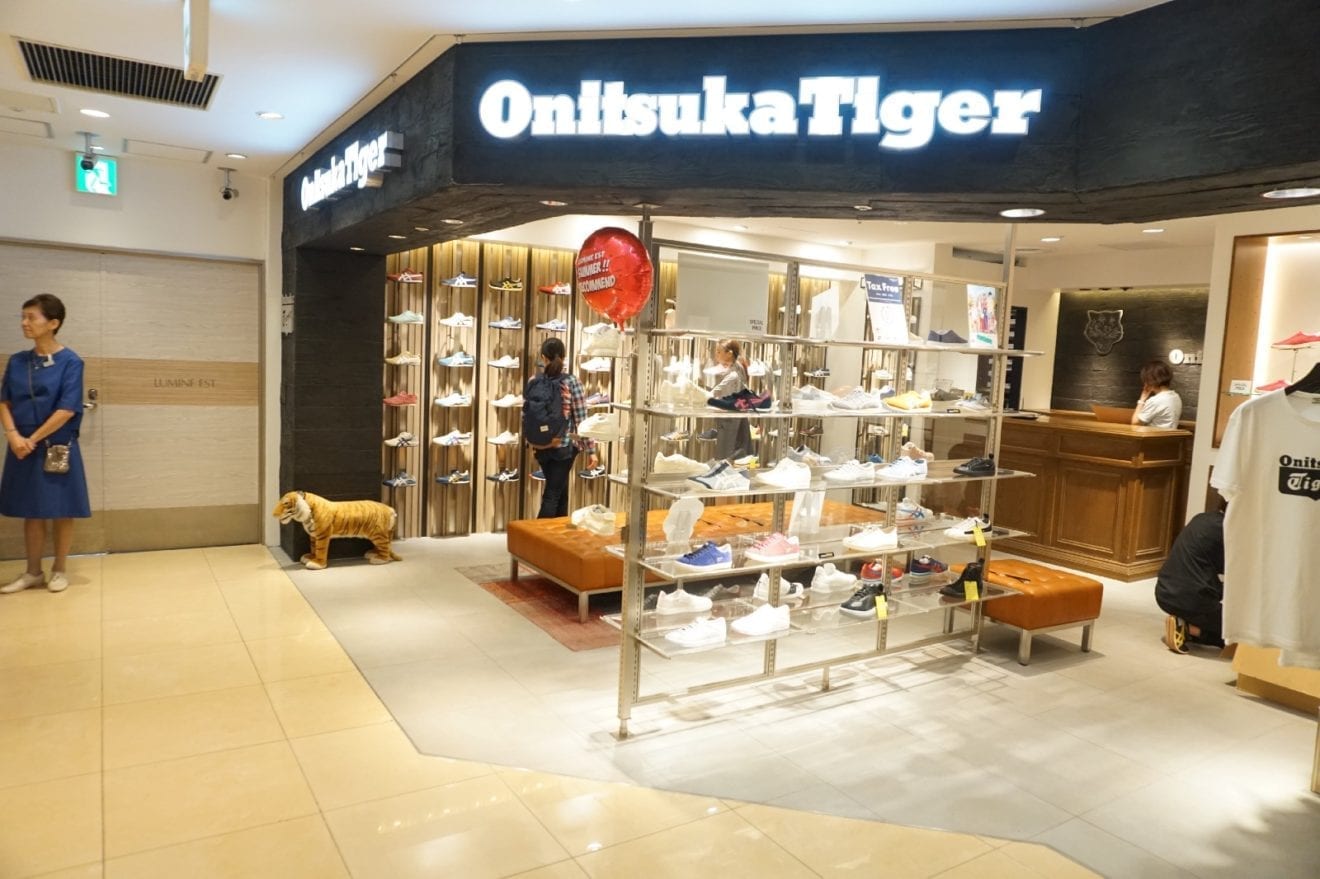
    Onitsuka Tiger Singapore has opened its largest boutique in Ngee Ann City. As part of its efforts to become recognised as a fashion lifestyle brand beyond its sneaker business, the Japanese footwear firm’s new 165sqm store – the label’s fifth in Singapore – exclusively stocks the label’s Nippon Made collection as well as its usual retail offerings, focused on hand-made shoes following traditional Japanese methods.

    The store also sells Japanese-designed athleisure apparel and accessories in a store space fitted out with plush tiger toys.

    Onitsuka Tiger is owned by Asics.

  • Goldwin tops sports market growth through store investment

    Goldwin tops sports market growth through store investment

    Marketing of sports brands has become increasingly retail-led in the last decade and a focus on retailing has enabled Goldwin to make serious gains while the two biggest domestic brands, Asics and Mizuno, have been distracted by overseas expansion. Goldwin took a close look at its beleaguered business 15 years ago and decided retail could be its salvation. At current rates it will catch up with Mizuno’s domestic sales in a few years.

    Goldwin was a struggling sports apparel distributor 15 years ago, floundering in declining wholesale channels, the implosion of the ski boom, and a fear of risking all on expensive retail investment, resulting in sales collapsing from a peak of ¥78 billion to less than ¥50 billion.

    No longer. The rights owner for The North Face and Helly Hansen in Japan posted another strong set of results in 1H2018: sales jumped 16.2% to ¥33.4 billion and operating profit doubled to ¥3.1 billion. The strong first half follows an equally good 2017 when sales rose 15.6%, the eighth straight year of growth. Operating profit reached ¥7.1 billion, up 81% and the highest for 25 years.

    Sales for FY2018 ending March are expected to come in 13.6% higher at ¥80 billion, with operating profit of ¥9.1 billion, up 28.1%. If these numbers turn out to be correct, Goldwin will have achieved it highest sales ever and met the goals set out in its medium-term plan ending March 2021, two years ahead of schedule. It has now updated the medium-term plan from ¥80 billion to ¥90 billion in sales, operating profit from ¥6.5 billion to ¥11 billion, and an ROE of 15% against a forecast 11.2% (the ROE in FY2017 was 15.4% and is forecast at 18% for FY2018).

    What has changed? The key factor is the success of its outdoor brands, which accounted for ¥49 billion, or 70%, of sales in FY2017, and in particular the change in management’s willingness to invest in retail stores in shopping centres a decade ago.

    Since the decision to invest in retail, Goldwin has opened well-executed stores in busy malls such as Lalaport and Lumine, as well as some very popular outlet stores. Today, its own directly operated stores account for 56% of sales. In addition, Goldwin garners another 5% of sales from e-commerce, still a small percentage but online sales were up 50% in a year. This performance is far better than either of the two largest domestic brands, Asics and Mizuno. Goldwin had little choice than to risk all given its dependence on the Japanese market for almost all its sales, forcing it to seek an alternative to its traditional wholesale model.
    Goldwin has focused investment on key brands rather than try to lift all boats at once.

    The growing appetite for outdoor fashions from both active consumers and those who just like the outdoor look, has helped propel The North Face and Helly Hansen in the last few years. In contrast, other Goldwin brands, like Ellesse, Canterbury and Speedo, which are sold at wholesale and through department store corners, have seen sales languish, falling 3.3% in FY2017.

    What is impressive about Goldwin’s stores is relentless effort to attract new footfall. In-store events are held regularly to pull in customers and deepen interaction, with customer feedback passed back to product planning and marketing teams. Goldwin also locates stores close to outdoor sports activities, such as its Nagano and Niseko The North Face Gravity stores which combine merchandise sales with ski rental services and even a library of books on outdoor sports. At the new National Stadium in Gaien-mae, it has opened an athletics complex/store called Neutralworks by Goldwin.
    On the supply side, Goldwin has worked to simplify supply chains through more direct contracts with factories, which in turn has helped streamline inventory management, resulting in a lower cost of sales, better sell-through and an increase in operating profit margins from 4.9% to 9.4%.

    Given the intense competition and the plethora of similar product from multiple sports brands, Goldwin has been investing in product innovation for both its own brands and licensed product. In 2017 it built a technical research centre in Toyama – where the company was founded – at which it develops new fabrics and performance functions using environmental chambers and motion capture systems. It has also partnered with other companies: it uses a synthetic, protein-based, petroleum-free silk developed by Spiber (in which it has invested ¥3 billion) for jackets and hoodies, and has licensed odour-reducing, sweat-absorbing fabrics originally developed by Jaxa for astronauts’ underwear.

    Goldwin is now investing in stores for other promising brands. It opened stores in Aoyama, Tokyo and Sapporo for the US brand Woolrich in October, and forecasts sales growth of 6.5% this year. Goldwin plans 10 stores for Woolrich through FY2020. For its eponymous Goldwin brand it opened the first flagship store in November in Nijubashi Square in Marunouchi.

    Going forward, plans for overseas expansion look promising for the first time. In the last two years, it introduced a new logo and updated merchandise for the Goldwin brand. It will transform what was a domestic skiwear label into a lifestyle sports label with global reach, similar to Descente’s plans for its own brand. In A/W 2019 a new lifestyle collection of sports apparel and accessories will be launched at home and overseas – this year the ‘hero’ product, a down parka using synthetic silk from Spiber, was gold winner at the European sports trade show, ISPO Munich.

    Last year, Goldwin acquired a stake in Woolrich International, a UK-based entity that owns the Woolrich brand, and plans to “participate actively” in its global development, particularly in Asia, including production – it has created a premium collection for the brand this year.

    Investment in sports retail stores will increase at home over the next couple of years, with all major sports brands looking to expand. The success of Japan in the soccer World Cup, big expectations for the Japan team in the 2019 Rugby World Cup, and the upcoming Olympics in 2020 all contribute to consumer interest in sports. Goldwin itself is hoping for an afterglow effect after the Olympics – what it calls “Golden Sports Years” – but the even more important trend is growing interest in health and well-being in general.

    What also makes the prospects for sports brands so bullish over the next decade is that interest in active sports, and the attire to go with this, is common to all age groups in Japan. This includes the fast growing population segment, the over 60s, ensuring sustained demand for many years to come. Sports and sports fashion is in many ways one of the few consumer categories to be largely immune to a demographically challenged market like Japan.

    Some local sports firms have been complacent in taking for granted customer loyalty to Japanese brands, but Goldwin has matched international brands in development of solid retail concepts, mixing innovative products with store entertainment and services, the basis of its new found success. Asics and Mizuno will be hoping that investment plans in the next few years will be enough to restore the balance.
     

  • What is Amazon’s Japan bestseller fashion?

    What is Amazon’s Japan bestseller fashion?

    Amazon Japan has revealed its most popular items sold on the online retailer’s platform in the last twelve months, with basics and sportswear taking the top spot in both fashion and accessories, and footwear categories. According to the ‘Amazon Ranking Grand Prize 2018’, the United Athle 5.6 Ounce High Quality T-shirt took first place in the clothing and accessories category. In a classic design, the affordable fashion item was followed in popularity by the brand’s crew neck t-shirt, which came in second place.

    Looking at the top 20 apparel brands, Champion gained five spots in the report, while in the womenswear section, casual tops by And It_ sat high in the rankings.

    Asics’ running shoes won both first and second place in footwear, while Anello’s poly-canvas mini bag proved popular in the bag category.

    In watches, Casio’s G-Shock shock-resistant smart-watch continued to gain popularity, with the Casio brand featuring 11 times in the Amazon Japan top 20. In the jewellery ranking, products by Tiffany & Co. gained in popularity too, said the report.

    The “Amazon Ranking Grand Prize 2018” ranked the U.S. e-commerce giant site’s most popular products by category for the period beginning in November 13, 2017, and ending on October 31, 2018.

    In the last twelve months, retail expenditure has continued to grow in Japan.

    In September, the archipelago nation recorded its 11th consecutive month of retail revenue growth, with sales up 2.1% on the same period last year, according to data by the Japanese trade ministry.

    Specifically, online shopping is at the forefront of this drive with the Japanese love for online shopping helped by the trend to online shop using mobile phones.

    In the latest Criteo survey, mobile devices accounted for 55% of all EC transactions in Japan, up 4 points on the year.

    Transactions through smartphones increased 9%, and tablets 3%, but purchases by PC were down 9%, said the report.

  • ASICS India opens first store in Kolkata

    ASICS India opens first store in Kolkata

    ASICS, a true sport performance brand, launched its first store in Kolkata thereby expanding its retail footprint in a bid to strengthen its presence in India. With the opening of the ASICS Kolkata store, the brand has taken a step forward to strengthen its presence in the east region. The new store is located conveniently in one of the finest malls of the city – South City Mall. The store will offer a wide range of running, training and core performance sports shoes, apparel and accessories for men and women.

    The brand will accelerate its expansion of operations in India, bolstering sales and marketing support for retail stores in response to increasing consumer awareness of health and fitness and rise in spending power.

    Speaking on the new launch, Rajat Khurana, Managing Director, ASICS India said, “Given the potential and growing demand for fitness and sports, India has emerged as an important market for ASICS. This year, our focus is to expand our footprint in both tier 1 and tier 2 cities and offer our best in class products ranging from running, sports, for gym and other fitness-related gear. Kolkata is a very key market for us considering the large audience for sports and fitness in this market. We are hopeful that our products designed keeping core performance in mind will be able to cater to the needs of sports and fitness lovers in the city.”

    The store will showcase the latest ASICS AW18 collection that will host a range of key collections, like the newest additions to the ASICS running portfolio – ASICS Liteshow along with key products like Kayano 25 and Nimbus all featureing FLYTEFOAMTM, ASICS lightest-ever midsole technology. FLYTEFOAM works with the wearer’s foot to deliver superior cushioning every step of the way. It is also about 55 percent lighter than the industry standard midsole material, offering runners a comfortable fit with a fast, responsive feel.

  • Onitsuka Tiger Delhi store opens door

    Onitsuka Tiger Delhi store opens door

    Japanese luxury sneaker brand Onitsuka Tiger has opened its third store in India, expanding its footprint to Delhi.

    The debut Onitsuka Tiger Delhi store is located in the Select Citywalk shopping centre, which hosts more than 80 luxury brands, this is Onitsuka Tiger’s third store in India. It has opened previous outlets in Mumbai and Chandigarh.

    Select Citywalk executive director and CEO Yogeshwar Sharma said Select Citywalk has always been at the forefront of retail experience keeping pace with the changing priorities in the retail landscape… “With the Onitsuka Tiger Delhi launch, Select Citywalk brings the deep-rooted heritage and craftsmanship of Japan mixed with modern flair, for the people of Delhi.”

    The Onitsuka Tiger Delhi launch was attended by popular Bollywood actor Tiger Shroff.

    Onitsuka Tiger, launched in 1949, is the original brand name of Asics, which was revived as a luxury brand spurning an independent retail network about a decade ago.