Retail News CRM

Tag: asics

  • Asics tapped a DJ for its new brand campaign

    Asics tapped a DJ for its new brand campaign

    Asics is debuting a new brand campaign called “I Move Me,” which features DJ Steve Aoki. The athletic shoe and apparel company aims to reset what shoppers know its products for.

    The sports retail market was already facing headwinds before Amazon decided it wanted to encroach on the space. Now, those pains are only being exacerbated.

    In October 2017, Amazon declared that is working with some of the sporting goods’ industry’s biggest suppliers, looking to create its own private-label lines. It is a move that could threaten companies ranging from Dick’s Sporting Goods and Foot Locker, to Lululemon and Gap’s Athletanameplate.

    The sports world could take some “important lessons” from so-called fast-fashion players like Zara, analysts say.

    After he took the helm at Asics, Asics America Group Chief Executive Gene McCarthy  brought in new management, pulled product out of some third-party retailers and even held a “tough” conversation with Amazon, deciding it was best to renegotiate that relationship.

    Asics will sell directly to Amazon, he said, but shoppers can still find the brand on Amazon.com through third-party sellers, or those relationships McCarthy has made a priority as CEO.

    Nike, in comparison, caved earlier this year when it announced plans to sell some of its product assortment on Amazon’s U.S. e-commerce platform.

    Asics is repositioning its brand by telling a story that dates back to the company’s inception in Japan in 1949. Founder Kihachiro Onitsuka built the brand around motivating children to “move” and be active, McCarthy explained.

    Today, Asics is still publicly traded in Japan, and its name is an acronym for the Latin phrase “anima sana in corpore sano,” which translates to “healthy soul in a healthy body.”

    Asics’ “I Move Me” campaign, which rolls out online and in Asics’ handful of stores on Wednesday, was crafted by working with international DJ Steve Aoki. The shoe company has taken a nontraditional approach, using a brand ambassador who isn’t a star athlete, but Asics aims to be unique and hopes to reach a larger audience with its refreshed messaging.

    “My life is not only about music and fashion, but also fitness, nutrition and health,” Aoki said in a statement.

    Aoki is also of Japanese descent. He is already begun promoting the brand on his social media channels, where he boasts millions of followers.

    Asics has also promised more nontraditional brand ambassadors for an athletic shoe company to come. The goal is to have a greater voice in an increasingly crowded market.

    To many shoppers, Asics is considered a brand for “performance” activity, not so much for casual wear. While McCarthy said he doesn’t want Asics to get away from its core and what it does best, he wants to reach more consumers and encourage a healthier lifestyle, just as Onitsuka was trying to do in the ’40s in Japan.

    In addition to beefing up its online platform, Asics is opening a slew of new stores and growing its relationships with its closest third-party retailers, like Foot Locker, McCarthy said.

    To be sure, companies like Foot Locker, Hibbett Sports and Finish Line are facing their own challenges, as big-name brands decide to scale back product in stores and sell more online or through their own channels, like Nike.com.

    McCarthy said he’s noticed the environment become tumultuous and competitive in recent years. But he doesn’t see a world without retail, or without brands.

  • Asics to open the largest flagship store in Busan, Korea

    Asics to open the largest flagship store in Busan, Korea

    Asics Korea (CEO Kim Jung Hoon) has opened the largest flagship store in Busan, Korea. The store is three stories, and the whole front is made with a full glass, which make customers can see various products in the store from the outside.

    Especially, this store is a space where customer can feel the change of “ASICS” first through the change from the tag line “I MOVE ME” newly launched this year.

    This store combines the expertise of “ASICS” for its customers in a relaxed atmosphere, so that consumers can feel free to come in and shop and experience the technology of “ASICS”.

    On the first floor, there are running and training products for women and the floor is designed with comfortable and luxurious interior using warm woods to match the consumer’s target.

    The second floor is a space for men and has a modern and dynamic interior. We also provided a space where customers can experience ‘Foot ID Service’, a professional foot measurement system.

    ‘Foot ID Service’ analyzes customer’s foot, height and width in depth by using 8 cameras and laser project installed in the front and rear. After that, tester is attached to customer’s both feet and shooting the motion of running on the treadmill.

    Scientific analysis of the degree of leaning and tilting of the feet as well as the shape of the landing when running is recommended to customers with the most optimized products.

    The third floor is made up of a community room, so that the running crew can freely use it. There is also customizing service that can make their item by using print in “Asics” garment on third floor. It’s free service is provided until September 30th.

    In the meanwhile, “ASICS” held a ‘Night Run’ event in Busan and Gyeongsang with a running crew on September 2 to celebrate the opening of this store.

    This event was a combination of running and after-party events, and it was a meaningful time for the members of ‘SMSB Seoul’, a global running crew of ‘ASICS’, and nine running crews of Busan and Gyeongsang, to gather together and exchange culture with each other.

  • Asics New Zealand launches in Auckland

    Asics New Zealand launches in Auckland

    Sneaker company Asics New Zealand has opened its first retail store in Auckland – one of only nine concept stores for the Japanese brand.

    Covering 203sqm over two levels, the store houses the nation’s only 3D foot-mapping system.

    “If you walk into the store in New York or New Zealand you have the same look and feel – it’s welcoming and comfortable. We are using a lot of wood, for example,” says Asics GM Greig Bramwell.

    “We are showcasing the full range of product, ‘head to toe’, with a focus on developing our apparel business.”

    He says the Shortland Street site is great. “It grabs your attention with big screens on the mezzanine.”

    It is only the second company-owned outlet in Australasia for Asics. It has a Family and Friends Outlet Store in New South Wales, with most of its stores being in Asia and Europe. Asics was founded in Japan in 1949 and has its head office in Kobe.

  • Asics Tiger opens in Seoul

    Asics Tiger opens in Seoul

    Japan’s Asics has taken its Asics Tiger lifestyle concept to South Korea, opening its first standalone store for the sub-brand in Seoul.

    This is the second Asics Tiger concept store to open worldwide for Asics, following the debut of the Asics Tiger Osaka Shinsaibashi store, which opened in Japan in September last year.

    Located on Garosugil Road in Seoul’s Sinsa-dong, the latest Korean store boasts Asics Tiger’s chic aesthetic via marble shoe walls and white centre tables. Being a trendy sneaker outlet, there are clear street elements too, such as mortar walls and guardrails. Other features include a graphic wall and a straight yellow accent line on the ceiling.

    The Asics Tiger brand was revived as the third Asics pillar brand back in January 2015, to target the global sports lifestyle market.

    At the time of the launch, a brand new logo was developed to appease the street-ier, youth-ier market. Complementing the original 1977 logo used when Asics was founded, the new brand logo added the word ‘Tiger’ in similar typography, and was developed together with graphic designer Alan Peckolick.

    “The new logo expresses the universal dynamism of our sports brand and the strengths that colour active lifestyles,” the company said, at the opening of their Asics Tiger Japan store in 2016.

    Essentially, Asics Tiger looks to mesh modern designs that integrate technology and fashion, with throwback designs from the 1980s and 1990s. The move hopes to shake-up dwindling revenues for Asics.

    In early May, Asics Corp. said during its first quarter ended March 31, consolidated net sales fell 4% or 1.3% using the previous fiscal year’s foreign exchange rate to 113,052 million yen ($993 million).

    Domestic net sales decreased 3.6% to 30,804 million yen ($270 million) due to weak sales of sportswear, said Asics. However, Asics’ Oceania, Southeast and South Asian regions sales increased 11.3% to 8,068 million yen ($70 million), due to continuing steady sales of running shoes and the strong sales of Onitsuka Tiger shoes.

  • If You Think Sports Retail in Singapore is Dead, Read This.

    If You Think Sports Retail in Singapore is Dead, Read This.

    The great debate — about whether or not eCommerce will nail the coffin on bricks and mortar retail shops — has droned on for as long as the Internet began cannibalizing sales.

    So asking a pertinent question — If retail stores are disappearing from the Singapore scene, why do new sports stores keep popping up? — is a logical one, particularly from the perspective of runners on ever-present searches for the latest gear and fashion.

    Can history unravel the mystery?

    The evolution of retail stores began when markets sprung up thousands of years ago across Asia, Europe and Africa. Ultimately open-stall, outside markets morphed into enclosed shops.

    As competition exerted influence, stores carrying a wide range of merchandise replaced speciality stores, though today, innovative small boutiques have managed to survive, and no niche is healthier than sporting goods stores kept alive by Singaporeans who are deeply invested in the nation’s fitness movement.

    Then, along came the Internet. Even chain and big-box stores suffered as eCommerce gobbled up shoppers. Even “Store-within-a-store” concepts, pioneered by Asian retailers could not stop the steady, ever-present incursion of online retail marketing, and nothing has prompted consumer dependency more than an ability to shop using smartphones and devices.

    Forrester Research reports that 56-percent of consumers use smartphones to shop.
    If You Think Sports Retail in Singapore is Dead, Read This.

    Specialty stores remain viable

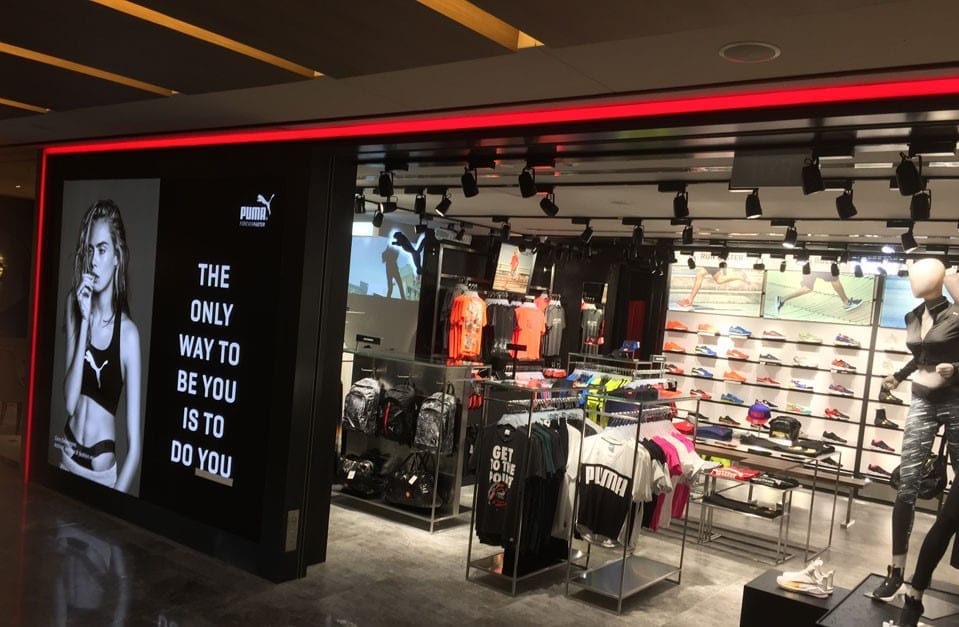
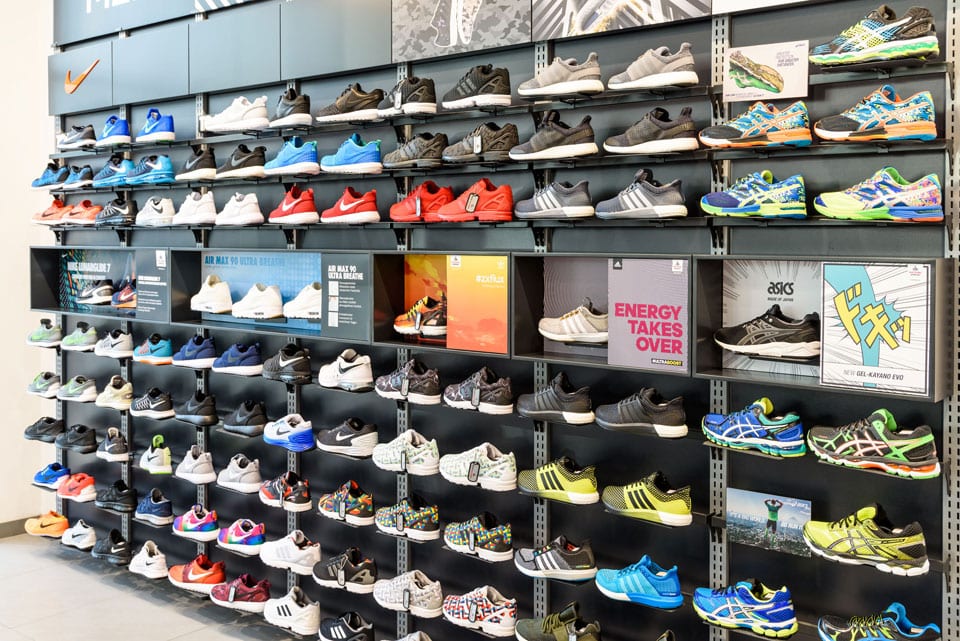
    PUMA recently opened two concept stores at Paragon and Bugis+, hoping to lure runners and sports enthusiasts away from their mobiles and computers.

    PUMA believes that dedicated store sections have the power to bring shoppers to these new locations because they’re strategically located within concentrated shopping areas that attract a youth market eager to find deals and promotions.

    Not to be outdone, ASICS saw an untapped market in northeastern Singapore and launched a stand-alone shop at the NEX shopping mall recently.

    ASICS believes that identifying an under-served populace is the key to in-person shopping. Their spacious new location is thoughtfully merchandised to encourage avid runners to browse the latest in ASICS innovations.

    Further, the new Under Armour presence at Vivo City Brings UA’s Singapore stores to five, including their new retail presence sprawling across 1,980 square feet of product display area and trendy décor touches.

    Under Armour has become an expansive presence throughout Southeast Asia and it’s considered by many athletes to be the coolest brand on the planet, even when measured against big dogs like Nike and adidas.

    Why is UA so cool? Because everything about their products is superior, starting with the brand’s quirky tagline: “It’s what you do in the dark that puts you in the light.”

    That light, of course, is a spotlight shining on the impeccable taste of runners who prefer to be seen wearing the UA logo on everything they own!

    Non-branded stores continue to open, too

    The space-age design of Running Lab’s two new locations — Marina Square and Tampines Mall — is reason enough for passionate runners to browse the retailer’s unique enclaves which are sorted by brand and gender, and there is no shortage of signature brands on display that are beloved by running enthusiasts and athletes.

    To drive traffic, Running Lab organises free runs throughout Singapore on Tuesdays and Thursdays, but they’re not the only show in town.

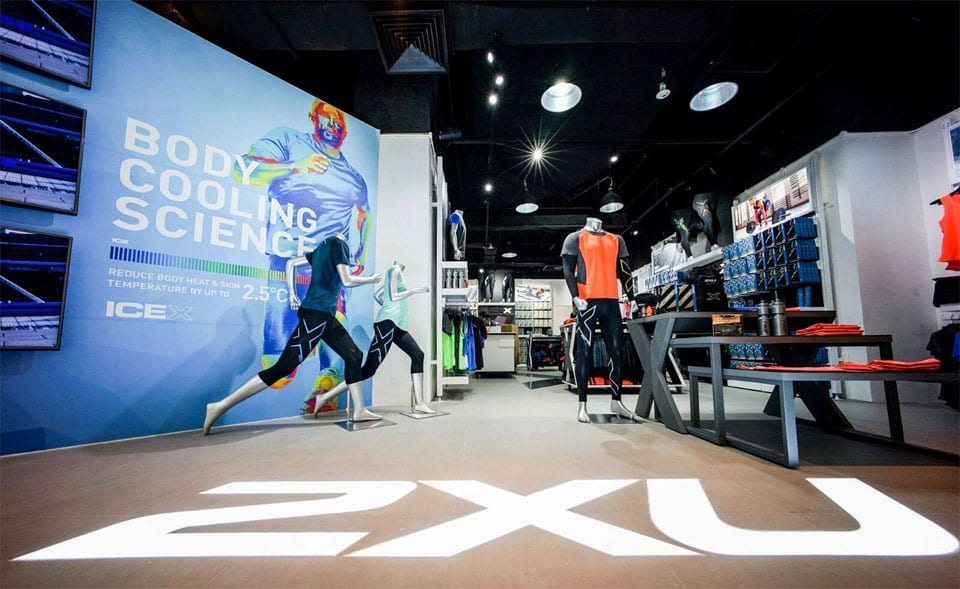
    The first 2XU Performance Centre opened just weeks ago at Suntec City Tower Three. Their ambitious marketing plan — to become the epicentre of performance compression wear — sets it apart from competitors because the niche alone has the potential to drive traffic into the store.
    If You Think Sports Retail in Singapore is Dead, Read This.

    Always a trendsetter, we toss the iconic Uniqlo into the mix. Uniqlo’s Orchard Central grand opening recently introduced Singapore to what can only be described as a sensory playground filled with wall-to-wall digital displays and rotating mannequins, while there’s a nice balance of innovative activity-related products, ideas and wares and the prestigious brands to which runners remain loyal.

    For Uniqlo, size matters. This 29,000-foot retail spot has become a destination unto itself, catering to sports-minded Singaporeans of every age group.

    It’s not all good news

    Common sense would lead one to believe that the opening of new sporting goods stores in Singapore portends good news for the future of retail, but business writers warn that, “what you see isn’t necessarily what you can believe.”

    In fact, a steady stream of popular stores continue to close because they have become unprofitable.

    Singapore economics played some part in this exodus, but not all blame-placing can be ascribed to fiscal decline due to online shopping and tech-savvy consumers continuing to find favour with cyber shopping.

    But the reality is this: retailers start every day in the red, supporting rental space, salaries, power bills, taxes and marketing expenses. Further, brands and stores refusing to track changing shopper behaviours aren’t likely to survive.

    What are solutions to this mystery?

    Absent a crystal ball, it’s obvious that Singapore retailers won’t survive without retooling their business models and no niche is worthier of emulation that the nation’s sports boutiques because the folks that run and manage them keep a pulse on Singapore’s vibrant fitness movement and watch trends like hawks.

    Further, a mindful balance of retail and online business practices keep shops afloat in addition to taking advantage of trend-tracking.

    Here’s why we think sporting goods stores have an advantage over other retailers:

    1. A shared retail/online presence has been the secret that has helped many sporting goods stores stay afloat.
    2. Management understands that athletes aren’t particularly crazy about the idea of having to return merchandise bought online and aren’t shy about using promotions and specials to a bring them in.
    3. More runners frequent sports stores for social reasons than analysts report. In-person shopping beats scrolling through screens of merchandise says TANGS Assistant Vice President of Communications Ms. Jocelyn Teo.
    4. Sporting goods shoppers are a different breed. Their performance depends upon the right shoe fit and gear choices, and while time-crunched athletes may turn to online shops for some purchases, retailers give athletes more reasons to show up in person, including incentives, promotions and deals.
    5. A CBRE Asia Pacific research study asked 11,000 Singapore consumers (ages 18 to 64) to weigh in on the online/in-person shopping debate, concluding: “… consumers are more comfortable with the traditional shopping format where they can touch and feel the products before purchasing.”
    6. Integrated shopping patterns are the wave of the future and savvy sporting goods retailers know this. The ability to switch back and forth between store and website drives traffic since returns, purchases, exchanges apply equally.
    7. Look for a more dynamic retailer consortium to cooperate on shared functions like integrated warehousing, shipping and order-fulfillment that can lower overheads resulting in merchandise price reductions.
    8. Common-sense changes — staying open more hours, sponsoring in-store events, offering a fully-integrated online/in-store experience and making sure employees behave more like concierges and less like clerks are but a few of the ways sporting goods stores will not only survive, but thrive.

    If you were forced to choose between online and in-store shopping and were required to pick just one, which would it be and why?
  • Asics Bugis Junction and VivoCity in Singapore

    Asics Bugis Junction and VivoCity in Singapore

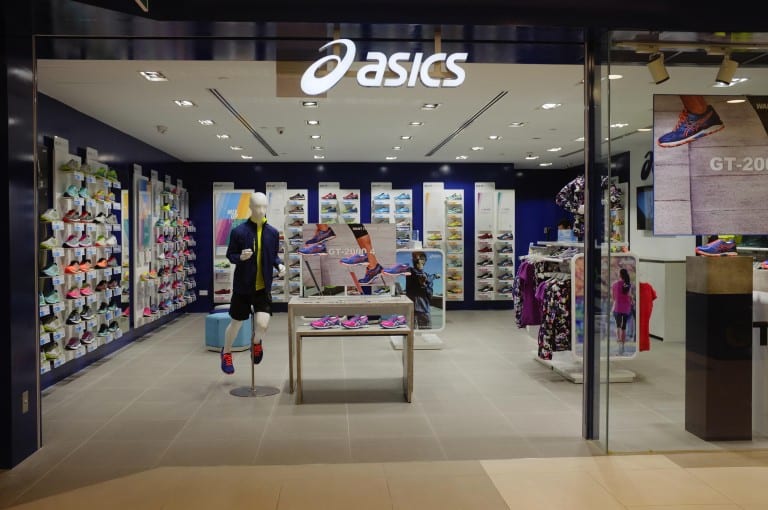
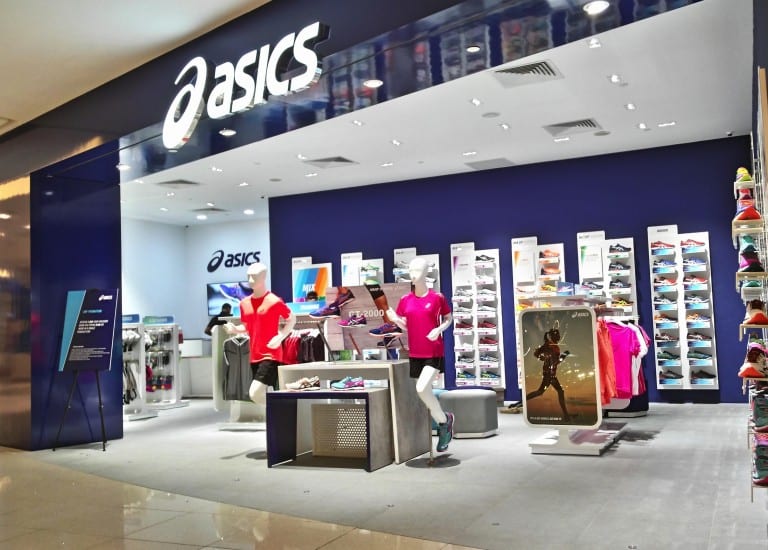
    ASICS, a true sport performance brand, has opened 2 new stores in Singapore, increasing the number of ASICS stores to 7 locally to strategically cater to an increasingly more distributed retail need.

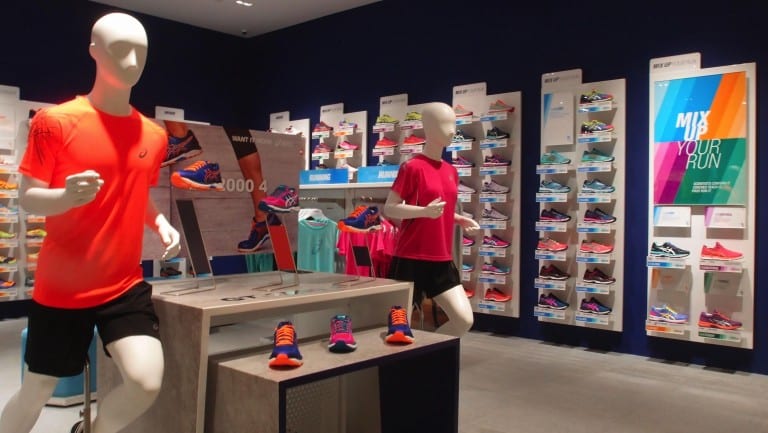
    Located in Bugis Junction Shopping Mall, a vibrant and popular mall in the central business district, and in VivoCity, the largest retail and lifestyle destination in Singapore, these new ASICS stores will front cutting-edge ASICS footwear and apparels for running and popular sports in the region, including badminton, netball, tennis, soccer and gym training. Products are displayed with the latest ASICS visual merchandising concept congruent with innovative trends, to inspire a premium and positive shopping experience for each customer.

    ASICS’ aspirational “Mix Up Your Run” concept inspires runners to run stronger, faster and further. To activate and strengthen different muscle groups for better performance, runners train under varied regimes. Runners “run long” to build endurance and conquer the longest distances, “run natural” to give the muscles a completely different workout, “run fast” to break the speed limit and attain new PB (personal best) and “run tough” to stimulate agility and improve balance.

    In line with the ASICS visual merchandising concept, finding the best footwear has now been simplified with colour coding; “RUNLONG” (in blue), “RUNNATURAL” (in magenta), “RUNFAST” (in orange) and “RUNTOUGH” (in green). Customers can easily select the right footwear by looking for footwear displayed with the relevant colour codes.

    Running enthusiasts will be spoilt for choice with the comprehensive range of footwear available in the store, including the much awaited GEL-KINSEI 6, GT-2000 4, GEL-KAYANO 22, GEL-NIMBUS 17 LITE-SHOW, and GEL-QUANTUM 360.

    ASICS Bugis Junction Store, Singapore

    ASICS Bugis Junction Store, Singapore

  • Yue Yuen sales rise on retail rollout

    Yue Yuen sales rise on retail rollout

    The world’s largest branded athletic and casual footwear manufacturer and retailer Yue Yuen Industrial says retail and wholesale sales of sportswear in Greater China rose 19.6 per cent in the first nine months of this year, due to an expanding store network.

    Yue Yuen operates more than 6000 retail stores and concessions across Greater China under its own name as well as the international brands it manufactures for.

    Total sportswear sales reached US$1.7 billion compared to US$1.456 billion in the same period last year. Other factors in the growth were the company’s efforts to increase efficiency and a better merchandise selection.

    Sales of athletic shoes were up by 3.4 per cent and sales of casual shoes were down by 5.6 per cent. The total volume of shoes sold increased by just 1.1 per cent to 231.4 million pairs for the period.

    Hong Kong listed Yue Yuen designs and makes shoes for brands including Nike, Crocs, Adidas, Reebok, Asics, New Balance, Puma, Timberland and Rockport as well as operating its own network of retail stores under the YY Sports brand, through subsidiary Pou Shen.

    The increased athletic shoes and sportswear sales helped boost Yue Yuen’s overall revenue by 5.8 per cent to US$6.3 billion and gross profit by 9.1 per cent to $1.422 billion. Total net profit attributable to owners of the company was $285.6 million, up 36.6 per cent year on year, according to figures filed with the stock exchange.

    Pou Shen, which opened 771 new points of sale during the nine months, increased its gross profit by 32.5 per cent to $566.5 million due to management’s strategy to concentrate on the retail business, improved operating efficiency, and better procurement of inventory.

    YY Sport instore wide

  • Asics restructures global operations

    Asics restructures global operations

    Japanese sports brand Asics has announced an organisational restructure and the appointment of experienced international executives to accelerate business growth.

    Under what it calls ‘The Center of Excellence Initiative’ Asics is strengthening its global business, which includes the Onitsuka Tiger brand and retail network, through the appointment of “top talent to lead and manage its global categories from the most influential regional markets by category”.

    From September 16, a new Global Lifestyle Division will be established to lead global marketing for Lifestyle brands such as Onitsuka Tiger and Asics Tiger. Europe will be designated as the Center of Excellence for this category with the offices based in Amsterdam. This division will be headed by the newly appointed senior GM, Torsten Widarzik, who moves from his current position as CEO of German fashion label Campus. Widarzik was previously Levis Strauss Germany/Switzerland GM and business and brand director with Nike Sportswear at Nike CEMEA, where he built the sportswear business across Central and Eastern Europe.

    Asics says strengthening its footwear and apparel business is also a key part of the business growth strategy following the appointment of Asics as Gold Partner in Japan for Tokyo 2020 Olympic and Paralympic Games.

    “To further accelerate growth, the design functions will be added to the Global Footwear Product Marketing Division.

    “The seamless integration of the product design, development and manufacturing functions will boost the development of competitive products.The reformed Global Footwear Product Marketing Division will continue to be led by Gerard Klein, senior GM, who returned to Asics in August 2014 after seven years at Converse where he was in charge of the go-to-market strategy and merchandising in the EMEA market.”

    Earlier this year, Asics also strengthened its Global Brand Marketing Division by appointing a new leader, Paul Miles, senior GM, who joined Asics in May 2015 from Nissan Motor, where he was VP of marketing and communications. Miles previously worked for Fast Retailing in France and Japan, where he was responsible for the market launch and expansion of the Uniqlo brand.

    “The restructuring of our global operations and the appointment of top talent as our new leaders shows our commitment to accelerate growth as a global sporting goods company,” said Motoi Oyama, CEO of Asics Corporation.

    “I am confident that the Center of Excellence initiative will enhance organisation’s capacity and effectiveness, and lead us into the next stage of growth.”

  • Asics India goes it alone

    Asics India goes it alone

    Japanese sports shoe brand Asics has opened its first company owned store in India.

    The 670 sqft outlet has opened in a shopping centre in south Delhi.

    It marks the end of a five year partnership with local conglomerate Reliance Retail.

    “We had a five-year agreement with Reliance Retail, and we did not want to renew the alliance,” Rajat Khurana, director of Asics India said in an interview.

    “The market has matured, and we have a much better understanding about the Indian sports shoes market, which is worth about $1 billion.”

    Now the brand will operate as a wholesaler, opening mono brand stores across India through franchise partners. It will manage the franchise business directly rather than partner with a local master franchisee.

    “Over the next 18 months, we will open exclusive outlets across the top 10 Indian cities, with one or two outlets in each city. Over the next three years, sales should treble,” said Khurana.

    Asics is the fourth largest sports goods manufacturer in the world and is currently sold in more than 150 countries.

    Asics branded products will continue to be available through multi-brand stores in India, including reliance Retail’s network.