Retail News CRM

Tag: asos

  • Asos to overhaul business model after profit slump

    Asos to overhaul business model after profit slump

    ASOS, a single-time British poster youngster for the shift to on the web style retailing, will overhaul its business enterprise model following the financial crunch and a string of operational troubles hammered its income.

    New CEO José Antonio Ramos Calamonte mentioned that when ASOS’s core business enterprise in the UK remained robust, returns from its international operations, especially from the United States, were unsatisfactory and necessary to be addressed.

    He vowed to re-vamp ASOS’s “inefficient” provide chain, uncover a way to re-engage its 20-a thing buyers, improved leverage its information, reduce charges and refresh its culture.

    “The strategy more than the subsequent 12 months is going to be focusing on simplifying the business enterprise and producing it a lot more resilient and a lot more versatile,” Ramos Calamonte told Reuters.

    “We want to be capable to provide a lot more relevant stock and quicker to customers.”

    Shares in ASOS have been up eight.eight% at 1138 GMT, as investors welcomed the shift and a new deal with lenders, paring 2022 losses to 78%.

    ASOS and rival Boohoo (BOOH.L) grew swiftly as young buyers about the globe snapped up their rapidly fashions, and demand surged once more through the coronavirus pandemic when higher street rivals have been closed.

    But provide chain troubles, elevated competitors and the sharp downturn in the economy have badly impacted its business enterprise model. The perennial issue of managing consumer returns has also weighed on the business enterprise.

    Ramos Calamonte mentioned he was committed to totally free returns. Boohoo, which does charge for returns, warned on the outlook final month.

    ASOS created adjusted pretax profit of 22 million pounds ($24.9 million) in the year to Aug. 31, in line with guidance that was lowered final month and down from the pandemic boosted 193.six million pounds created in 2020-21.

    It forecast a very first half loss as it cuts costs to clear old stock, requiring a non-money create-off of up to 130 million pounds. Some 40 million pounds of other restructuring charges will also be booked.

    In the second half, ASOS will commence to operate with decrease stock levels as lead instances on orders and deliveries are lowered. It would also advantage from lowered freight prices and price cuts.

    ASOS did not give profit guidance for the complete year. Prior to the update, analysts on typical have been forecasting an adjusted pretax profit of 61 million pounds.

    It mentioned when trading was volatile, September had showed a slight improvement relative to August.

    Ramos Calamonte mentioned that with money and facilities of a lot more than 650 million pounds, ASOS had ample area to manoeuvre and did not have to have one more equity raise.

    Capital expenditure for 2022-23 was guided at 175-200 million pounds, down from 200-250 million pounds, with the phasing of automation projects below critique.

    The CEO mentioned he was not concerned by the threat of a takeover bid and did not obsess more than the share cost.
  • Asos hit by supply chain disruption, volatile Christmas demand

    Asos hit by supply chain disruption, volatile Christmas demand

    British online fashion retailer ASOS reiterated its already downgraded outlook on Thursday after supply chain constraints and volatile demand limited sales growth in its four months to Dec. 31 trading period.

    It posted total sales growth of 5%, following a 22% rise in the year to end August, and said gross margin decreased by 400 basis points to 43.0% driven by a need to discount goods and higher freight costs.

    For the full year it reiterated its outlook of revenue growth in the range of 10%-15% and adjusted profit before tax of 110 million pounds to 140 million pounds. That hit its shares when it was published in October, and would represent a more than 40% drop on the year before.

    “ASOS has delivered a robust start to the year, in line with the guidance we set out at full-year results, despite challenging market conditions,” Chief Operating Officer Mat Dunn said.

    ASOS, once a darling of the stockmarket, was hit by a difficult end to 2021, when it cut its annual profit forecast and parted ways with its CEO following supply chain pressures and a return by shoppers to pre-pandemic ways.

    While shoppers often return partywear clothing and fashion, incurring a cost for the company, they retained the athleisure wear bought during the pandemic to use at home, giving the company a boost to its finances during lockdowns.

    Its shares are down 56% this year, prior to Thursday’s update, mirroring similar falls seen at rival Boohoo which has also been hit by high product return rates, disruption to international deliveries and inbound freight costs.

    ASOS added that it intended to move to the LSE’s main stock market, expected by the end of February.

  • Asos CEO, chairman resigning

    Asos CEO, chairman resigning

    Asos chief executive Nick Beighton unexpectedly announced that he is to step down with immediate effect from the U.K.-based online fashion retailer this morning, with Asos warning that the supply chain crisis and rising costs will hit its profits.

    The fast-fashion retailer, which has been one of the chief beneficiaries of the online shopping boom during the Covid pandemic – with revenues up by one fifth and profits rising by a quarter in the year to the end of August – said that the global supply chain shortage, tough comparables and this summer’s travel restrictions all affected sales.

    And profits could be off by as much as 40%, as the company pledged to push for international growth to take sales from $5.5 billion annually to $9.6 billion within four years.

    Asos said Beighton and the board had agreed that it was “the right time” for him to go after 12 years with the business and the past six of those in the role of chief executive, although no reason was offered for his departure. Synonymous with the brand, Beighton was expected to lead a revival next year and news of his sudden departure saw shares off by 15% in early trading before starting to recover.

    Since its peak valuation in March of this year, shares are down circa 60%, which no doubt played its part in the company’s change of direction, which it hopes will see the doubling in size of its combined U.S. and Europe business and the addition of at least $1.36 billion to its own-brand sales.

    Asos chairman, Adam Crozier, who is to stand down next month to take over as chairman at U.K. telecoms giant BT, said: “Asos’s management and board have spent considerable time over recent months developing and validating a clear strategic plan to accelerate international growth, building on Asos’s undoubted strength in the U.K.

    Ian Dyson will become the next Asos chairman, chief financial officer Mat Dunn will take on the role of chief operating officer and will lead the day-to-day business, while Katy Mecklenburgh will act as interim CFO.

    In addition, Dyson will succeed Adam Crozier as non-executive chairman, effective November 29, for a three-year term, while a search has started for a successor to Beighton.

    The company, which like many other U.K. businesses has been hit by the double blow of a global supply chain crisis and the impact of Brexit, said: “Industry-wide supply chain pressures are expected to continue through the first half, resulting in longer lead times and constrained supply from a number of our partner brands.”

    Asos added that there would be “notable cost headwinds” including inbound freight costs, labor cost inflation, outbound delivery costs and Brexit duty, although it predicted a recovery beginning in 2022.

    The company, which reported profits of $241.5 million in the year to the end of August, said it expects adjusted profits before tax to fall between $150 million and $191 million for its next financial year. This is below analysts’ expectations of $254 million.

    The retailer said it achieved particularly strong sales growth of 36% in the U.K., while sales in the U.S., E.U. and the rest of the world increased by 21%,15% and 6% respectively.

    Beighton is credited with helping turn Asos into a global online fashion powerhouse and recently the company bought the Topshop brand, following the collapse of billionaire Philip Green’s Arcadia empire.

    Of his departure, Beighton said: “I have enjoyed every moment of my 12 years at Asos. When I joined, there were fewer than 200 people and we had annual sales of around $300 million. I leave a business reporting turnover of almost $5.5 billion, with more than 3,000 fantastic ‘Asos-ers’ delivering for 26 million customers in 200 markets around the world.”

  • Asos to sell Topshop apparel through Nordstrom US stores

    Asos to sell Topshop apparel through Nordstrom US stores

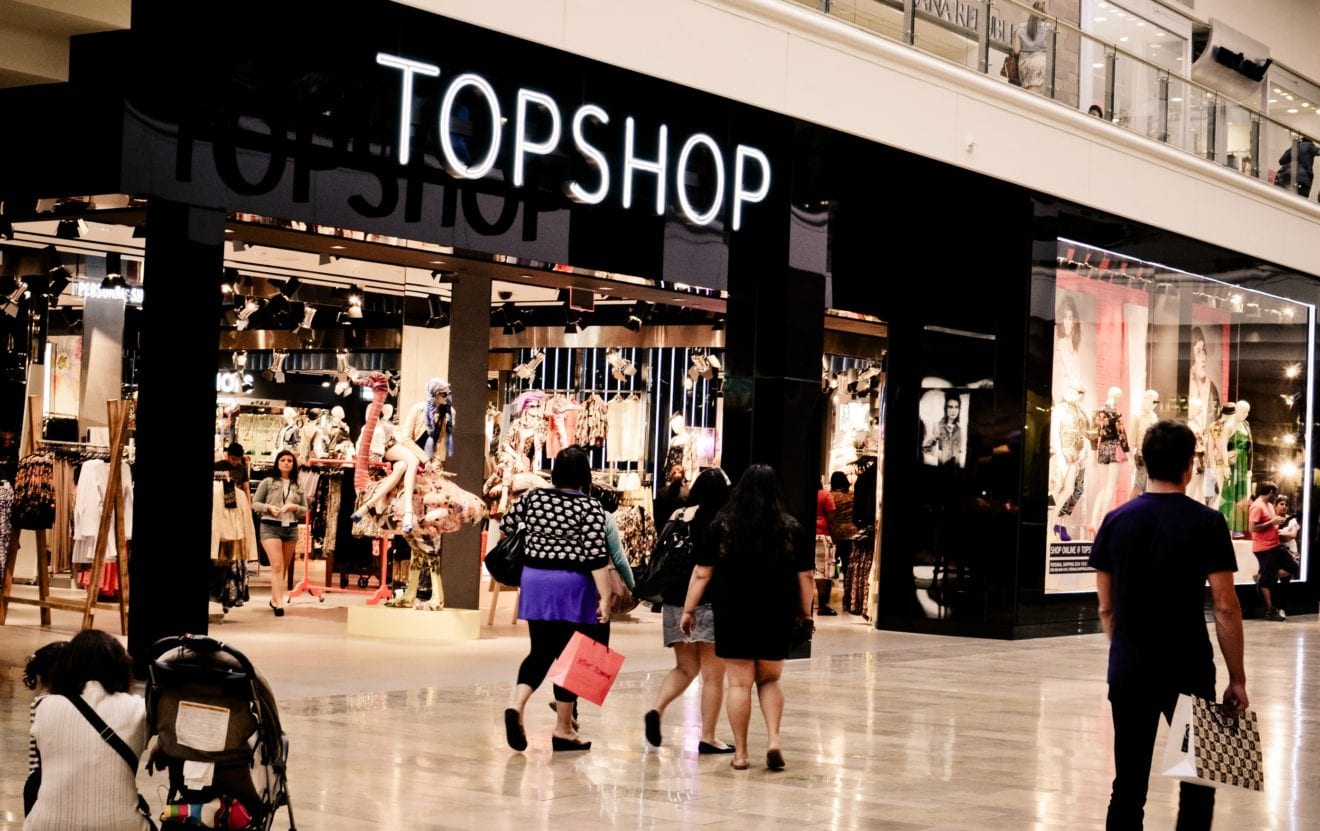
    Online fashion group Asos has partnered with US retailer Nordstrom in a joint venture that will see Topshop clothes sold in physical stores again for the first time since the brand collapsed last year.

    The deal sees Nordstrom, which first struck a deal with the former Arcadia brand nine years ago, buy a minority stake in the Topshop, Topman, Miss Selfridge and HIIT brands that were bought out of administration by Asos earlier this year. No financial terms were disclosed.

    Asos said: “The joint-venture will help drive the growth of these brands and paves the way for exploration of a new wider strategic partnership aimed at building greater awareness and engagement in the US and Canadian market.”

    It is the first time Asos, which sells fashion aimed at 20-somethings, has struck a deal with a retailer with physical stores, having always only traded online in the past.

    Nordstrom has 350 brick-and-mortar stores in North America and a strong online business, which Asos hopes to tap into, despite having a strong internet presence of its own in the region.

    Asos will retain operational and creative control but will collaborate on reaching a larger customer base. This includes “an edit of the best Asos brands launching across Nordstrom.com and in selected high-impact Nordstrom stores”.

    The move is a significant one for Asos and comes five months after it bought the brands from administrators for Sir Philip Green’s Arcadia empire for £330 million.

    But while the retailer bought the brands, it decided not to take on the 70 stores, including the flagship site at London’s Oxford Circus, affecting around 2,500 workers.

    Asos boss Nick Beighton said: “With its long-established connection to Topshop, extensive US consumer insight, and unparalleled reach right across North America, Nordstrom is the right partner to help Asos accelerate the growth of our Topshop and Asos brands in this key market.

    Nordstrom president and chief brand officer Pete Nordstrom said: “We could not have found a better partner in Asos, the world leader in fashion for the 20-something customer.”

    The deal will help Nordstrom improve its assortment and services for millennials and a growing cohort of Generation Z shoppers, he said in an interview.

    “There’s a big opportunity for us to be more meaningful to 20-something customers and to young customers,” Mr Nordstrom. It also makes sense, after a year of retail dislocation, to strike a deal with an online-only fashion company like Asos, he said.

    “Particularly with the pandemic, what we thought was going to happen with the online business overtime ended up happening very quickly because stores were shut down,”

    Topshop and Nordstrom first teamed up in 2012, with the brand selling a range of clothes in the retailer’s US stores. It was part of the UK fashion brand’s first foray into the United States and eventually led to several Topshop stores in US cities.

  • Topshop, Topman join Asos’ stable of brands

    Topshop, Topman join Asos’ stable of brands

    Topshop’s ‘disgusted’ staff today revealed they were officially told they’d lost their jobs two hours after Asos announced its £330million takeover on Twitter – as Sir Phillip Green’s family is ‘set for £50m’ from the sale.

    The outraged workers, numbering around 2,500, ripped into the online retailer as it was revealed that their former boss Sir Philip Green and his family are expected to gain £50million from the fire sale as experts told MailOnline that the Topshop, Topman, Miss Selfridge and HIIT brands and their warehouses full of stock had been flogged ‘on the cheap’.

    ASOS reveled in the deal after winning a battle with rival Boohoo to grab the crown jewels of Sir Philip’s Arcadia empire after its collapse last year. It said on Twitter: ‘The rumours are true… @Topshop & @Topman are now part of the ASOS family’.

    But one Arcadia employee said minutes later: ‘Nice way to find out I’ve lost my job, ASOS, great move for the people.’ Another added: ‘Thanks for informing me I’ve lost my job, after 10 years. Very compassionate.’ And a third said: ‘It’s actually disgusting. I’ve worked for Topshop for two years and my own manager found out through Sky News as the administrators didn’t inform us.’

    ASOS hopes the deal will help it grow in the US. The sale will see 300 shops shut down and 2,500 store staff lose their jobs. But it will ‘look at’ saving Topshop’s flagship Oxford Street store, which would be its first and probably only high street shop, meaning the deal announced to the stock market this morning will leave more ‘big holes’ in UK’s ailing high streets as fast fashion companies hoover up collapsed retail brands.

    Sir Philip Green’s family will reportedly pocket £50million from the sale of Topshop – yet the shop’s 1,000 suppliers are expected to get less than 1 percent of any cash owed to them, it has emerged. Sir Philip is still worth an estimated £930million despite the disintegration of his retail empire.

    Green’s Aldsworth Equity, which is incorporated in the British Virgin Islands and controlled by his wife Lady Tina, is owed £50million due to an interest-free loan made to Arcadia in 2019. This will be paid back to the Greens before cash is handed to any suppliers, landlords, and HMRC.

    ASOS, run by Scotland’s richest man Anders Holch Povlsen, worth £6.1billion, has bought the Topshop, Topman, Miss Selfridge, and HIIT brands from administrators for £265million. They also paid another £65million for current and pre-ordered stock.

    Topshop’s sale came after an extraordinary collapse of a brand that was the biggest fashion chain on the high street just a decade ago. The brand had showstopping collaborations with designers including supermodel Kate Moss who was pictured holding hands with Sir Philip when she helped open its New York branch in 2009 – Topshop’s first in the US. Thousands camped overnight outside stores to buy Kate’s designer clothes.

    In 2012 Arcadia Group was delisted from the London Stock Exchange when it was bought by Green’s Taveta Investments group for £850million. Its success contributed to him getting a knighthood and earning the nickname: ‘King of the High Street. Now Arcadia’s crown jewels have been sold for £330million including all its clothes and accessories.

    Guy Elliott, retail analyst at consultancy Publicis Sapient, told MailOnline today: ‘Asos’ acquisition of Arcadia brands Topshop, Topman, and Miss Selfridge is a quick move to acquire some valuable consumers and brand assets ‘on the cheap’.  I think it is disappointing and somewhat short-sighted that they are not keeping any of the brand stores. That to me feels like a bad longer-term decision’.

  • Boohoo and Asos are acquiring collapsed retail brands

    Boohoo and Asos are acquiring collapsed retail brands

    British online fashion retailers Boohoo and ASOS made major expansion moves on Monday, with the former buying the Debenhams brand and the latter in talks to buy the key brands of Philip Green’s collapsed Arcadia group.

    The moves underline how online players have gained the upper hand over traditional bricks and mortar clothing retailers, a trend accelerated by the Covid-19 pandemic.

    Boohoo said it had acquired all of the intellectual property assets, including customer data, related business information and selected contracts of Debenhams from its administrators for 55 million pounds ($75.4 million).

    It will not take on Debenhams’ stores or its staff.

    Debenhams’ administrators said last month it was starting a liquidation process, putting 12,000 jobs at risk.

    Meanwhile, ASOS said it was in exclusive talks with the administrators of Green’s collapsed Arcadia group over the acquisition of the Topshop, Topman, Miss Selfridge and HIIT brands.

    “The board believes this would represent a compelling opportunity to acquire strong brands that resonate well with its customer base,” ASOS said, adding that any deal would be funded from cash reserves.

    However, it cautioned there was no certainty a deal will be sealed.

    Arcadia collapsed into administration in November, putting over 13,000 jobs at risk.

  • Asos upgrades sales and profit outlook as returns drop

    Asos upgrades sales and profit outlook as returns drop

    British online fashion retailer Asos forecast full-year sales and profit significantly ahead of market expectations, saying it was benefiting from stronger than anticipated underlying demand and fewer products being returned by shoppers.

    Shares in Asos surged 8.5 percent on Wednesday morning UK time, extending gains this year to 36 percent after it said revenue growth for its 2019-20 year was now expected to be between 17 and 19 percent.

    It forecast pretax profit in the region of $170-$196 million, up from $43.2 million in 2018-19.

    Several British clothing retailers, including Next and Superdry , have recently reported better-than-expected trading as Britain emerged from coronavirus lockdown.

    Asos, whose fast fashion is popular with shoppers in their twenties, said it had expected to see return levels normalize once lockdown measures eased and customers were able to ship returns and felt more comfortable doing so.

    However, it said returns were not increasing at the rate it had anticipated due to strong demand during the lockdown for activewear and a shift to more deliberate

    It said this reflected robust demand for “lockdown” categories, such as activewear, and a prolonged shift in customer behavior towards more intentional purchasing across all ranges.

    German online fashion retailer Zalando said on Tuesday it had also benefitted from a decline in returns, though it assumes the fall will be temporary

    “Looking forward, the consumer and economic outlook remains uncertain and it is unclear how long the current favorable shopping behavior will persist,” Asos said.

    Last month Asos said it would repay the money it claimed under Britain’s scheme to furlough workers during the crisis.

  • Asos profits tumble as international sales growth slows

    Asos profits tumble as international sales growth slows

    Global fashion online retailer Asos has seen profits tumble 68 percent in the year to August, despite a 13-per-cent increase in sales.

    In what Sofie Willmott, lead retail analyst at GlobalData, described as “a tumultuous” year, Asos reported sales of £2.73 billion and a profit of just £33.1 million. After two profit warnings during the year, investors were unsurprised by the numbers and its share price actually rose 16 percent in post-announcement trading.

    Asos says it received 72.3 million orders and its core UK market performed the best, where sales rose by 15 per cent.

    “This financial year was a pivotal period for Asos, where we have invested significantly and enhanced our global platform capability to drive our future growth,” said CEO Nick Beighton.

    “Regrettably this was more disruptive than we originally anticipated. However, having identified the root causes of our operational issues, we have made substantial progress over the last few months in resolving them.

    “Whilst there remains lots of work to be done to get the business back on track, we are now in a more positive position to start the new financial year.”

    Willmott said with overseas sales accounting for 62.6 percent of group turnover, a modest 11.4-percent rise had a major impact on top-line growth.

    “Although its reliance on territories outside of the UK has been an asset in the past, helping to drive total performance while its domestic market has been challenging, its troubles overseas remain a concern going forward as Asos attempts to improve its proposition and entice shoppers back. The retailer’s plans to bolster its management team with the addition of four new c-suite roles, alongside the four non-executive directors due to join imminently, is a wise one considering it has a number of key areas of focus in the year ahead.”

    Willmott said it bodes well for Asos that it is clearly willing to adapt to survive – unlike some of its multichannel rivals that have been slow to respond to changing consumer needs and shopping habits.

    “Although a quantifiable forecast for the new financial year was omitted from the results today, we expect the online pureplay to continue to outperform in the year ahead.”

  • Asos shares tumble as growth slows

    Asos shares tumble as growth slows

    Online fashion-retailer Asos reported sales growth beneath expectations for the four months to June, spooking investors and causing its share price to tumble 13 per cent overnight.

    That was despite a 14 per cent increase in sales in what CEO Nick Beighton described as a more competitive market.

    The slowdown has been attributed to operational changes, essential for the retailer to continue expanding internationally.

    “Asos is capable of a lot more,” said Beighton. “We have identified a number of things we can do better and are taking action accordingly. We are confident of an improved performance in the second half and are not changing our guidance for the year.

    “We are nearing the end of a major [capital expenditure] program. Whilst this has inevitably involved significant disruption and transition costs, the global capability it now provides us gives us increased confidence in our ability to continue to capture market share whilst restoring profitability and accelerating free cash flow generation,” he said.

    Sofie Willmott, lead analyst at GlobalData, said Asos has been able to deliver consistent double-digit top-line growth in recent years due to increased warehouse capacity and improved logistics processes, and the changes being made to US and EU distribution centres are vital to facilitate long-term growth in these key markets.

    “Asos will need to focus on winning back disappointed shoppers by bolstering its marketing efforts. Though this may need to include discounts, by recovering customers quickly they will not be lost forever.”

    She said Asos continues to innovate and introduce new tools to drive conversion and adapt to its demanding young shopper base, such as its recently added responsible filter.

    “However despite strong UK growth, with 62.6 per cent of retail sales coming from international markets, a robust UK performance is not enough to protect top line results.”

    “The future remains bright for Asos. The retailer’s agility and willingness to change to remain relevant to its customer base will help it to continue gaining market share both at home and abroad.”

    Beighton said the global online fashion market is worth more than £220 billion and growing fast.

    “We now have the tech platform, the infrastructure, a constant conversation with our growing customer base who love our own great product and the constantly evolving edit of brands we present to them. We believe that ultimately there will only be a handful of companies with truly global scale in this market.

    “We are determined that Asos will be one of them.”

  • Asos’ US warehouse struggles to cope with demanding customers

    Asos’ US warehouse struggles to cope with demanding customers

    UK digital fashion store Asos said its new US warehouse struggled to cope with demand last quarter, hitting sales there and causing delayed shipments. Asos CEO Nick Beighton said the unexpected high demand in the Atlanta warehouse caused a significant short-term despatch backlog, which has now been cleared.

    “As our Atlanta warehouse went fully online, demand far exceeded our expectations,” Beighton said.

    “While very encouraging for the longer term, this caused a significant short-term despatch backlog which we have now cleared. These delayed shipments will be recognised in P3 and US trading is now regaining momentum.”

    The upsurge in US demand caused Asos to cancel marketing and promotions, Beighton said. These will now run in the second half of the financial year. The online fashion retailer posted a 13 per cent increase in group sales for the latest quarter with retail gross margin improving by 40bps.

    “We continued to outperform in the UK with sales growth of 14 per cent,” Beighton said.

    Sales in Europe were up 12 per cent, although, according to Beighton, France and Germany, the two largest markets, continue to be challenging.

    “Our ROW segment returned to good growth of 20 per cent after a disappointing Q1,” he said. “Our retail gross margin guidance for the year remains.”

    Beighton said Asos will be increasing investment in price and marketing in the second half, particularly in France and Germany.

    “Given the actions we are taking together with an improving US performance, we believe the group will deliver stronger growth in the second half,” he said.

    “Consequently we remain confident that we will meet guidance for the full year.”$

  • Tech startup Blinq to focus on Southeast Asia

    Tech startup Blinq to focus on Southeast Asia

    Tech startup Blinq is targeting Southeast Asia with software which allows users to virtually try on and purchase designer apparel and accessories from online luxury and contemporary fashion retailers globally. “Blinq uses AR and algorithmic patterns to provide users with the latest trends and personalised fittings from their digital devices,” explains entrepreneur and Blinq founder Bob Chua.

    “It also allows users to choose how they would like to consume fashion, which may not necessarily be to buy, but to also rent, subscribe, or pay later for latest luxury designs from major and upcoming brands across Southeast Asia.”

    A rental-subscription model provides users the option of renting designer apparel and accessories, while the back-end automated warehousing operation enables brands to fulfil their products throughout the Asia-Pacific region.

    Citing McKinsey’s global fashion report, Chua says the personal luxury market is predicted to grow to US$500 billion by next year, with close to 44 per cent coming from Asia.

    “There is clear retail disruption happening everywhere, and e-commerce adoption in the luxury space is growing at a staggering rate here in Asia. We see a major opportunity.

    “In a way we are fusing the successful models of Asos, Farfetch, Rent-the-Runway and The Real Real into a single platform, while targeting affluent Asians.”

    Chua says the company plans to monetise its platform by white-labelling its virtual changing room AR features to other e-commerce sites, which will ultimately reduce returns and increase purchasing propensity for retailers.

    He says Blinq has secured significant seed funding and is currently en route to a next fundraising round.

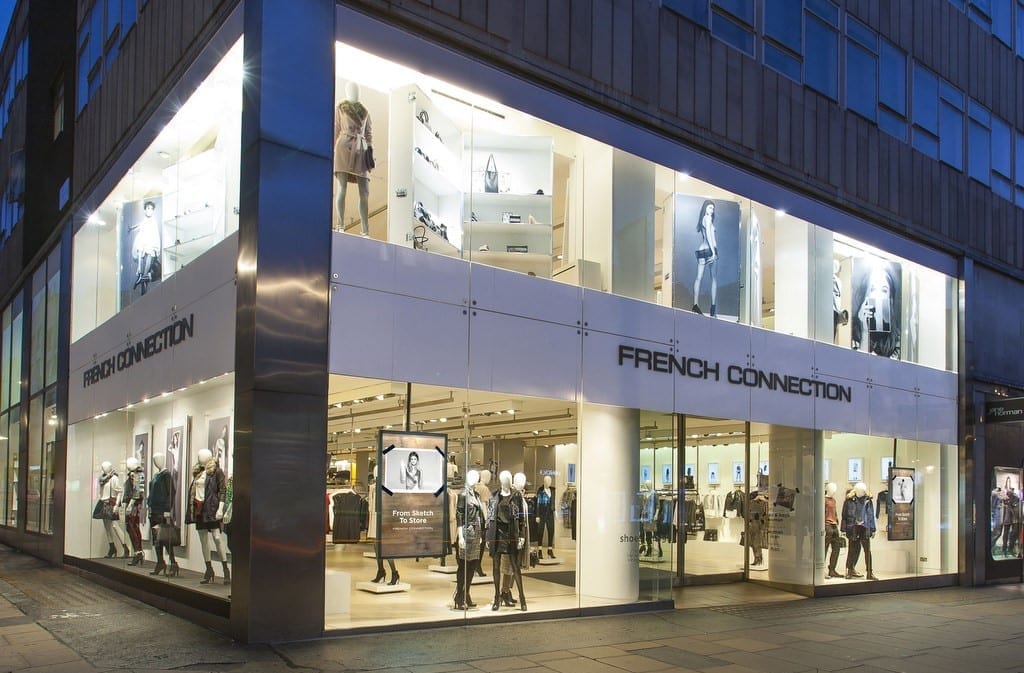
  • Stephen Marks mulls French Connection sale

    Stephen Marks mulls French Connection sale

    French Connection founder and CEO Stephen Marks plans to sell his remaining cornerstone stake in the fashion label.

    Sky News UK has reported Marks has engaged Numis Securities to approach prospective buyers for the 42 per cent stake in French Connection which he still holds. He founded the brand back in 1969.

    UK media is reporting that should a buyer be found for the stake, it would almost certainly trigger a takeover bid for the entire company. A formal stock exchange announcement is pending.

    French Connection is emerging from a challenging period in its history after its hugely successful FCUK era brand positioning fell from favour in the late 2000s. In recent months, it has built strong sales online via Asos and it raised £23.3 million from the sale of 75 per cent of its Toast label in April to Danish retailer Bestseller United, parent of Selected, Vera Moda and Jack & Jones, among others.

    But the parent brand, now down to a store network of only about 30, recorded a like-for-like sales decline of 7 per cent in the half year to July 31 and a loss of £5.5 million. Marks, however, anticipates the business will be profitable by January with licensing income on the rise, reaching £2.6 million for the period, and wholesale revenues up 6.2 per cent.

    Any deal for Marks’ stake will be heavily influenced by the second largest shareholder in French Connection, Mike Ashley, who holds 27 per cent of the stock. Ashley recently bought out troubled House of Fraser and is CEO of Sports Direct.

  • Embracing body diversity, Asos invests in virtual fit tech

    Embracing body diversity, Asos invests in virtual fit tech

    Online fashion giant, Asos, is making it easier for consumers to see how items of clothing fit different body types and saving time and money on photography in the process.

    The retailer recently started working with Israeli tech startup Zeekit, which uses augmented reality (AR) to digitally ‘map’ the same item of clothing on various models using existing photographs of the item and models.

    A customer noticed the change while shopping on the site last month, eliciting a response from Asos that the new feature will be rolling out across the app soon.

    In a statement, Asos explained, “We’re always testing new technology that can make our customers’ experience even better.

    “In this case, we’re experimenting with AR to show product on different size models, so customers can get a better sense of how something might fit their body shape.”

    The race to solve the fit problem

    Fit is one of the biggest sticking points for online clothing retailers, which still by and large rely on size-8 models. With the average Australian woman being closer to a size 14, most consumers are left to guess how an item will fit and look in real life.

    A study by global research firm, IHL, pegs the annual cost of preventable returns at US$642.6 billion globally, and while it is difficult to pinpoint the average return rate for online purchases, (one analyst suggested 17-25 per cent is normal, it is decidedly higher than for items purchased in-store.

    Solving the fit – and return – problem becomes even more important for online retailers that offer free shipping, delivery and returns, which consumers have come to expect in the age of Amazon.

    A number of digital startups have sprung up in this space in recent years, such as Virtusize, which helps customers compare the measurements of an item they want to purchase with a garment they already own, and Fit.me and Metail, which let customers create 3D models to virtually ‘try on’ clothes.

    Asos struck a deal with Virtusize – which lacks a visualisation component – in 2013. The partnership with Zeekit crucially enables customers to also see how an item will fit.

    Zeekit differs from existing players, since it digitally maps garments onto the bodies of real models, not virtual avatars or faceless mannequins, which not only creates a more seamless shopping experience for customers, but also potentially saves Asos an enormous amount of time and money on photographing different size garments on different size models.

  • Asos wants to make online shopping more inclusive

    Asos wants to make online shopping more inclusive

    The millennial fashion company has stocked petite, tall, curve, plus size and maternity ranges for a while now, and this new step will help it embrace inclusivity even further.

    According to the reports, the images will be created using augmented reality, as the technology will enable to company to superimpose the pieces on women of different sizes rather than having to resort to countless and expensive photo shoots.

    The feature will be rolled out gradually across the brand’s app, it confirmed this week via social media.

    Asos said in a statement: “We’re always testing new technology that can make our customers’ experience even better. In this case, we’re experimenting with AR to show product on different size models, so customers can get a better sense of how something might fit their body shape.”

    The decision was praised by consumers on Twitter, with one user writing: “This helps massively, as I often wonder how clothes would look on me, when I’m clearly 5 sizes bigger than the model. Great move forward.”’

    With over 80,000 brand and own-brand products available on its platform, Asos is one of the largest fashion platforms in the e-commerce space. The company is continually innovating, having launched try-before-you-buy in November and a Christmas gift assistant on Facebook in December.

    The company overtook Marks & Spencer last year in market value, and is en route to reach a 25-30% sales growth in financial 2018.

  • Asos posts massive growth across globe

    Asos posts massive growth across globe

    Online fashion retailer Asos has reported a 30 per cent rise in retail sales during the last four months of 2017.

    Across its international marketplaces including Australia, the retailer said sales were up 35 per cent to 489.5 million pounds.

    The UK-based retailer saw sales increase 23 per cent to hit 300 million pounds in its home market during the period, which the retailer said was driven by a range of initiatives.

    “We acquired 2.6 million active customers year on year and saw encouraging movements across all key customer KPIs,” said Nick Beighton, CEO.

    “Velocity in our technology programmes continued, with a record number of releases.”

    Beighton said its customer proposition was further enhanced in the U.K. by the launch of ‘Try Before You Buy and ASOS Instant, the retailer’s same day delivery proposition.

    “Following this strong start to the year, we remain confident in our full year guidance and delivery of our planned investments in infrastructure to support our global ambitions.”

    The retailer expects its full year capital expenditure to now be around the upper end of the previously indicated range of £200-220m.