Retail News CRM

Tag: asos

  • H&M Suffers From Online Disruption

    H&M Suffers From Online Disruption

    Shares of the world’s second-largest fashion chain, H&M, have hit its lowest in eight years as the retailer reports plummeting sales at the conclusion of a despondent year.

    In the three months to the end of November 2017, H&M reported a 4 percent drop in sales, and on Friday its shares traded 15 percent lower than its lowest level from back in May 2009.

    Like many high-streets fashion brands H&M is having a difficult year, struggling to cope with the shift to online shopping. The retail giant blamed online shopping as well as “imbalances in parts of the H&M brand’s assortment composition”.

    The company says as a result it would focus more on integrating its online and brick and mortar stores, and re-strategise its physical store footprint by closing more stores and opening fewer.

    “In order to respond even quicker to customers’ fast-changing behaviour the company’s ongoing transformation journey is being accelerated. Among other things, this includes continued integration of the physical and digital stores, and intensifying the optimisation of the H&M brand’s store portfolio – leading to more store closures and fewer openings,” it said in a statement on Friday.

    H&M was one of the first retailers to sell online, but due to slowing its digital stride, it had been quickly overtaken by both pureplays, such as ASOS, and high-street fashion labels such as Zara, Gap and Uniqlo. H&M also had a plan to aggressively grow its physical stores, which clearly now has been reconsidered.

    In a separate note, H&M also announced on Friday that it would start selling its merchandise on China’s Alibaba-owned Tmall e-commerce platform by the second quarter next year. It currently sells its Monki brand on the site, however it’s in negotiations at the moment about selling all of its eight brands on the world’s largest e-commerce platform.

    “We are very happy to be able to make H&M even more accessible in mainland China. Tmall is an important complement to our existing physical and digital stores. We see great potential for substantial future growth and Tmall will be an important part of this,” says Karl-Johan Persson, CEO of the H&M group.

    Controlled by the Pearson family, which still provides the company with a CEO and a chairman, H&M has been under pressure from its minority shareholders, and in February 2018 it will hold its first-ever investor day.

  • Asos posts half year profit increase

    Asos posts half year profit increase

    Online fashion retailer, Asos, has posted a 14 per cent increase in profits for the six months to the end of February to £27.3 million.

    The company saw a 31 per cent increase in sales to £889.2 million. UK retail sales rose by 18 per cent and international sales went up by 42 per cent.

    Sofie Willmott, senior retail analyst at GlobalData, said Asos’ broad product range sold on local language and currency platforms, along with its aggressive delivery proposition and responsive pricing, allows it to steal market share from well-established international and local players.

    “Asos’ mobile-first approach has paid off with mobile devices now accounting for 58 per cent of orders and 70 per cent of traffic,” she said.

    Willmott said competitors targeting the 16-34 age group should take note that a spotlight on mobile functionality to create a smooth, and enjoyable, shopping journey will drive visitor-purchaser conversion.

    “In a period of weak volume growth, retailers must use mobile channels to capitalise on frequent engagement and implement fast and simple checkouts to capture impulse spend.”

    According to Willmott, Asos has continued to strengthen its product offer by introducing new brands, including competitors Miss Selfridge and Burton, while also broadening its own label offer into niche product areas such as plus size for men which was recently introduced and activewear due to launch in 2017 – allowing Asos to target a larger customer base.

    “Meanwhile, the number of UK Asos premier customers lifted 41 per cent on last year, leading to an eight per cent rise in order frequency in the UK.”

    GlobalData research shows Asos is market leading in driving spend through its delivery subscription scheme, with 60 per cent of consumers shopping at Asos more often since signing up.

    Despite a 14.3 per cent rise in operating profit to £27.1 million, operating margins fell to 2.9 per cent from 3.6 per cent last year, signalling the impact of the highly promotional sector.

    “Since Asos is committed to keeping prices stable despite higher inflation in 2017, we forecast margins to weaken further in H2.”

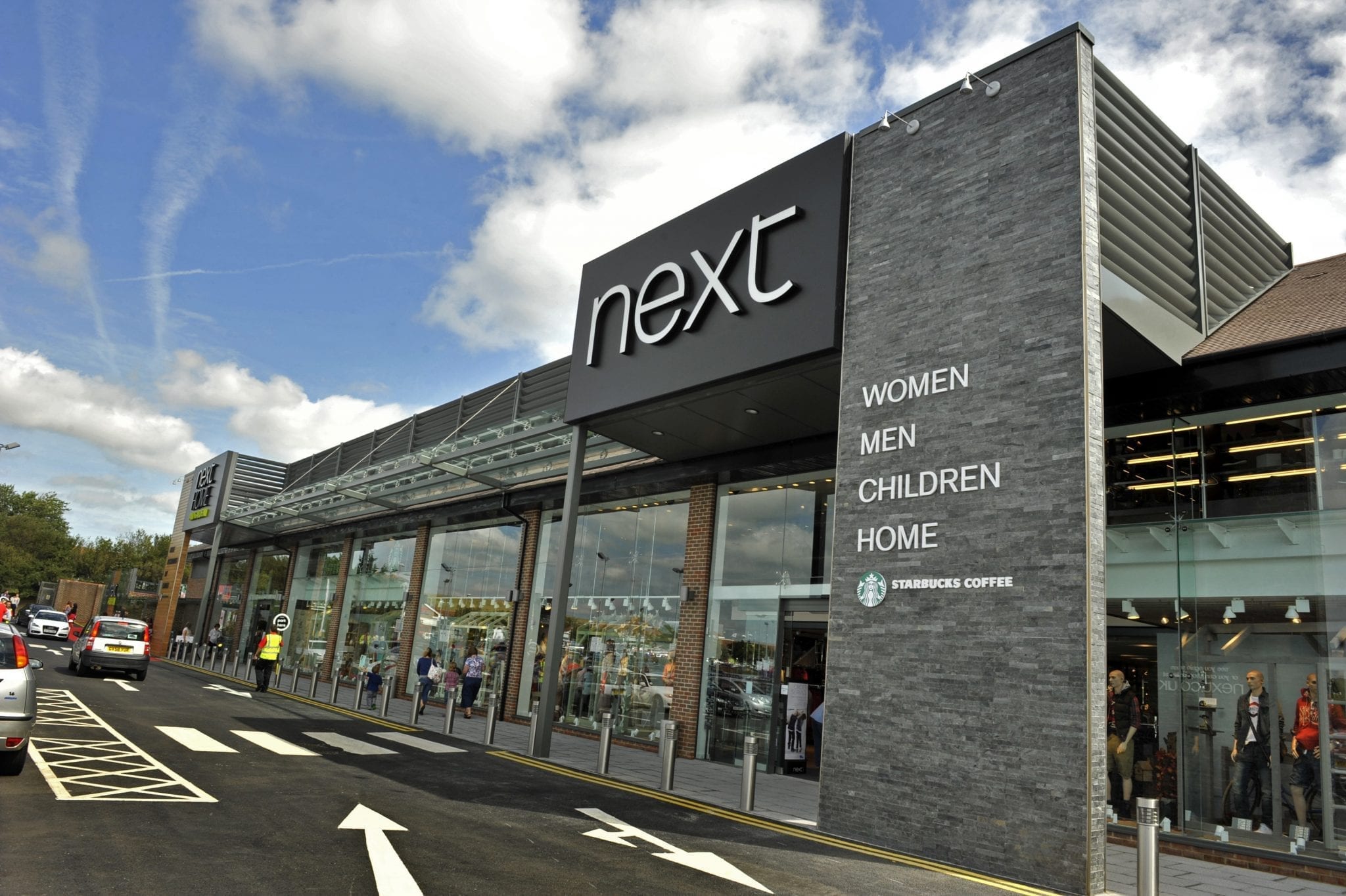
  • Next faces a downturn

    Next faces a downturn

    Next profits have fallen for the first time in nearly a decade.

    The UK high street fashion retailer said pre-tax profits fell 3.8 per cent to  £790.2 million last fiscal year.

    Emily Stella, a senior retail analyst with GlobalData, says the company has faced numerous challenges over the last year: erratic weather, rising import costs as the pound depreciated, and Next Directory being hit by increased competition from online pure-plays Asos and Boohoo.

    “Not to mention a more general shift away from clothes buying in favour of spending on leisure,” she commented.

    “Next’s stance on discounting – only marking down items during sale periods – has been a good thing for the retailer, sustaining consumer perceptions of product value and allowing Next to retain high margins. However, full-price retail sales were down 4.6 per cent, indicating that shoppers are not buying into its current proposition – and Next admits it has not been fast enough at responding to new trends.”

    But she says the retailer remains one of the best-run brands on high street – the issue is that the clothing market is “far tougher than before”.

    Next says it anticipates a difficult first half of the new trading year with improved performance in the latter half.

    “But the retailer could find the next few years a challenge as competition intensifies and Next struggles to keep up,” concludes Stella.

  • Closing shop on China’s e-commerce platforms

    Closing shop on China’s e-commerce platforms

    The closures of a number of retail and luxury brand giants on China’s e-commerce platforms indicate that retail competition is no less fierce online than offline.

    It is old news that the Chinese market is highly competitive and unlike any other market in the world. What may sell on the high street in London is not guaranteed to sell in China. The rainbow-lensed promises of e-commerce seem to be an easy way to access China’s 770.4 million working population, 0.2 per cent or over 1.5 million of which have an average income of US$500,000.

    Political concerns and falling sales: Lotte

    In 2015, Lotte Group Retail opened a Tmall store, hoping to widen its reach in China, where over 60 per cent of its overseas stores are located. The large South Korean multinational conglomerate has had a presence in China for over 20 years, with 115 supermarkets and five shopping malls.

    But on January 12 this year, Lotte closed its Tmall store – along with three brick-and-mortar stores in Beijing – after rising political tension between China and South Korea. In December, Lotte’s China headquarters admitted that the company was facing investigations for tax, fire control and safety issues. However, the closure of its Tmall store seems to have stemmed also from the fact that China is Lotte’s only international market where growth is stymying. Sales fell during the last three months of 2016, year-on-year.

    While Lotte remains in the market through its physical shopping malls and supermarkets, and on the JD.com website, the company has not announced whether it will be reopening its Tmall store at any future date.

    Heavy local competition: Asos

    Asos, the UK’s largest online fashion retailer, entered China in 2013 with high expectations. The company announced it was investing RMB 100 million (US$14.5 million) towards the market, importing British styles and developing a sales force. Its business model relied exclusively on e-commerce, with its own website, as well as a Tmall store.

    However, Asos failed to attract enough customers and was running a loss of GBP 4 million (US$5 million) by April of 2016, when it announced that it was shutting down its China operations.

    Asos faced a number of problems in the Chinese market, from operations to marketing. When it first started, the company encountered issues with shipping though China Post, with customers paying import taxes on clothes. Eventually, Asos obtained a local warehouse, but then it encountered complex clothing trade regulations in China, particularly in regards to correct labelling. As a result, Asos had to spend additional funds on restitching to comply with local code, contributing to higher than expected start-up costs.

    Effective marketing was also a major issue for Asos, with the company failing to distinguish itself from local, more affordable brands. While it may be a major player in the US and Europe, Asos was relatively unknown to Chinese millennials, its target consumer base.

    Tmall concerns for luxury brands: Coach

    Coach was one of the first US luxury handbag brands to launch a Tmall store, creating a pop-up store from December 2011 to January 2012, and then an official one in 2015. However, citing a shifting operational strategy, Coach announced that it was leaving the platform just one year later in September 2016.

    China is a critical market for luxury goods, as sales in the US and Europe steadily decline. Many brands see e-commerce as a way to directly access customers and receive greater exposure, which is why many have moved onto online platforms en masse. Despite this, online platforms have always been a concern for luxury brands, who fear appearing too mass market. Moreover, Alibaba has been criticised by brands for not doing enough to remove fake goods, despite a counterfeit removal program. In 2016, Gucci and Michael Kors quit the anti-counterfeit coalition as protest against the program’s inefficacy.

    Coach still remains in the Chinese market through its WeChat account, an avenue that is growing in popularity amongst luxury brands. Cartier, Longchamp, and Montblanc all have WeChat shops with WePay functions. Some companies believe that WeChat offers a more personalised shopping experience, as well as greater control over its brand.

    For many luxury brands, online platforms are more for marketing and building brand image, rather than sales. However, official Tmall flagship stores do not receive priority listing on searches. In fact, according to a 2016 study by L2, only 12 per cent of first page Tmall search results were through the official Coach shop. The only luxury brands that controlled more than 80 per cent of first page search results were Ports 1961, Burberry, Tommy Hilfiger, Calvin Klein, and Tumi.

    Key Takeaways

    E-commerce is a high-growth sector, with online retail sales totaling US$581.61 billion in 2015, and it is estimated to grow 20 per cent annually by 2020. China is now the biggest online retail market in the world, and Chinese consumers make up almost half of all online sales globally.

    Companies looking to take advantage of China’s market size and sell to Chinese consumers often mistakenly believe that e-commerce offers a shortcut to success. While a misconception, this idea is understandable. There are fewer licensing requirements to operate through e-commerce, and customs clearance is faster.

    However, as has been demonstrated through high-profile store closures in 2016, e-commerce requires extensive pre-entry knowledge of current regulations, a realistic logistics plan, and a local marketing strategy. Those who enter the market blindly do so at the risk of expensive learning curves and wasted efforts.

    • This article was first published on dezshira.com.  Since its establishment in 1992, Dezan Shira & Associates has been guiding foreign clients through Asia’s complex regulatory environment and assisting them with all aspects of legal, accounting, tax, internal control, HR, payroll, and audit matters. For inquiries, email [email protected].
  • New Look loses market share in tough year

    New Look loses market share in tough year

    New Look’s share of the UK clothing market has fallen to 2.6 per cent for calendar year 2016 – from 2.7 per cent in 2015.

    Stores have failed to drive the necessary footfall to return its like-for-like performance to positive territory, with year-to-date (39 weeks to 24 December 2016) UK like-for-likes are down 7.3 per cent with the likes of Next, Primark and Matalan also finding it tough to grow organic stores sales during 2016. Moreover, weaker sales and significant levels of discounting throughout the year led to a 32.6 per cent decline in underlying operating profit to £111.5 million, bringing margins down 4.2 percentage points to 9.8 pr cent.

    The strength of the online competition has dampened the appeal of New Look’s physical stores.

    The fashion-led product mix, attractive pricing and inspiring shopping experience at the likes of boohoo.com, Missguided and Asos continue to encourage New Look’s core shopper base to browse and shop more online reducing the need to visit physical stores. This shift has benefited New Look’s online platform as has its investment in product styling, delivery options and editorial content.

    The double digit growth in online sales highlights that the problem does not lie with product – it is the number of stores New Look operates and their lack of responsiveness during periods of unseasonal weaker.

    Store closures, enhanced visual merchandising, increased product newness and adapting its seasonal mix and phasing is essential to return like-for-likes to growth and limit the threat of the online pure-plays.

    Honor Strachan

  • Social media drives Asos success

    Social media drives Asos success

    The first quarter was an especially promotion-abundant period for pureplay UK-based online retailer Asos.

    Blanket discounts of 20 per cent for Halloween and Asos’ five-day Black Friday period as well as 30 per cent off selected categories in the run up to Christmas drove sales growth of 52 per cent.

    Asos’ promotions clearly resonated well with UK shoppers, as first quarter UK retail sales grew to an impressive £244 million. Asos should use the wealth of data it has on customers to offer customers tailored discounts on products they are likely to buy rather than blanket discounting.

    Part of the reason behind the consistent Asos success is the way it successfully targets customers with creative email and social media marketing on platforms such as Twitter and Instagram. The retailer also offers attractive delivery options such as Asos Premier, costing £9.95 for 12 months of unlimited next-day delivery; this encourages consumers to choose Asos over other online retailers over this period. Asos.com is regularly updated with new fashion ranges and featured brands such as 3INA and Young Bohemians, all of which encourage repeat spend and maintain customer loyalty which is vital over the peak trading period.

    Asos is continually future-proofing the business, ensuring it can cope with increased demand as it expands globally. The strong growth in international sales, particularly in the US as a result of the weak pound, means Asos will have to keep up with order fulfilment as the retailer expands. This will be imperative as rival retailer boohoo.com seizes market share away from Asos (which stands at 6.6 per cent for the UK online clothing & footwear market in 2016) through its own global expansion.

    The decision from CEO Nick Beighton in January 2017 not to raise prices should help Asos stay competitive in a busier-than-ever online fashion pureplay market.

  • Lingerie startup Boux Avenue surges into top 15

    Lingerie startup Boux Avenue surges into top 15

    In just five years, British lingerie retail startup Boux Avenue has made it into the top 15 brands in women’s underwear.

    Despite facing growing pressure from Primark and H&M, following significant range expansion and improved design and quality in their underwear and nightwear collections, Boux Avenue continues to build a loyal customer following and differentiate its proposition from the value segment of the market.

    As a result, full year 2015/16 UK sales reached £44.4million – entering the lingerie specialist into the women’s underwear Top 15 with a market share of 1.3 per cent in 2016.

    boux-avenue-store

    Despite pressures on the high street to discount, Boux Avenue has maintained a strict stance on full-price trading and strategic promotions, which has been essential in justifying its mid-market prices and encouraging consumers to buy into the brand all year round rather than wait for sale periods. While midmarket rival M&S remains the UK market leader, it is losing share and traction among a younger shopper base. This provides Boux Avenue with a ripe opportunity to lure M&S’s customers in the 16-30 age bracket away, via investment in trend influenced designs, specialist customer service, and enhanced product fit and innovation – particularly in shapewear where M&S continues to excel in.

    For a young retailer, Boux Avenue has approached physical expansion cautiously, operating 28 UK stores after five years of trading. This has allowed it to build consumer awareness on the high street, but ensures that it is not overexposed during periods of restricted discretionary spending and as consumer spend continues to shift online.

    Improving brand accessibility via selling through third party online channels including Asos and Very will fuel further sales growth and win the appeal of new customers in 2017.

  • Fashion retailer French Connection’s shares jump on takeover hopes

    Fashion retailer French Connection’s shares jump on takeover hopes

    Shares in UK-based fashion retailer French Connection Group Plc rose more than 20 percent on Monday after a media report said overseas investors were looking to buy the lossmaking firm.

    The Telegraph newspaper had said on Saturday that interested buyers were thought to be a mix of European and U.S. private equity firms, as well as investment manager Neuberger Berman, and that French Connection had approached investment bank Moelis & Co (MC.N) for advice.

    French Connection and Moelis declined to comment. Neuberger Berman did not immediately respond to a request for comment.

    French Connection has struggled to compete in recent years against fast-fashion rivals such as ASOS, Forever 21 and Inditex’s Zara and has failed to report a pretax profit since the year ended Jan. 31, 2012 with critics saying it should ditch its 25-year-old FCUK logo.

    Private equity firms could be a natural fit for French Connection as they could push through operational changes to extract profit, and revive the company’s brand appeal, said Neil Saunders from retail consultant Conlumino.

    The retailer has been the source of takeover speculation in the past, and some industry experts said there was now more pressure on the company following years of underperformance and little sign of underlying issues being addressed, despite turnaround measures including store closures and the hiring of new management and design teams.

    Activist investment firm Gatemore Capital Management (GCM), which has an 8 percent stake in French Connection, would be supportive of running an open sales process, Liad Meidar, managing partner at GCM said in an emailed statement.

    GCM said it would be interested in a potential buyer looking to focus on increase the rate of store closures and improve gross margins in French Connection’s retail and wholesale business.

    French Connection needed to focus on fashion for 25- to 35- year-olds, said Gatemore, which last month urged the retailer to speed up its store closure program after its first-half results showed another loss.

    As of Friday’s close of 32.75 pence – a fraction of highs of more than 500p set in 2004 – French Connection had a stock market value of 31.5 million pounds.

    Any buyer will have to gain the backing of founder and executive chairman Stephen Marks, who still holds a 41.65 percent stake in the company as of March 15, according to Thomson Reuters data.

    British companies have become cheaper for overseas buyers in recent months as Britain’s vote to leave the European Union has driven the pound GBP= to its lowest in about three decades.

    French Connection shares were up 10 percent at 36p by 0721 ET on Monday.

  • Sainsbury’s China doubling product range

    Sainsbury’s China doubling product range

    With the success of its trial with Tmall Global, Sainsbury’s China is doubling its product range.

    Citing “increasing demand”, the British supermarket retailer is about to release 100 more items, such as tea bags, coffee and pasta.

    “Chinese online shoppers are increasingly demanding high-quality international products,” says Sainsbury’s CFO John Rogers.

    “Many customers also want to replicate tastes and occasions they have enjoyed or heard about through international travel. Products to make a British breakfast and English afternoon tea have therefore proved hits.”

    Sainsbury’s started with Tmall last September, joining such British retailers as Asos, Burberry and fellow grocer Waitrose, which sell products on Alibaba’s Royal Mail online outlet.

    Rogers says the trial with Tmall has taught the company much about China’s digital market, including the importance of sales.

  • Asos gives up on the Chinese market

    Asos gives up on the Chinese market

    Asos has made the decision to remove its Chinese operations as the retailer found expansion of the business too costly.

    Instead of holding stock in China, Asos will serve it Chinese customers through its global platform and ship clothes from Europe. Asos will also be discontinuing its Mandarin website. Chief Executive Nick Beighton noted that the closure of the Chinese website would “remove the drag on earnings and a £60m to £70m operating loss”.

    Due to complex restrictions on clothing commerce in China, the fashion etailer has found it is easier to ship to China from the UK. Certain difficulties Asos has encountered within China are regulations on clothing labels and cultural issues such as selling one seasonal range in a country with diverse climates throughout.

    As well as these, Asos struggled to attract Chinese consumers away from etail behemoth Alibaba which dominates 75% of the ecommerce market.

    The CEO stated that the company’s decision to pull the plug on Asos.cn was part of its strategy to concentrate on less regions.

    “Getting eyeballs on our product has proven more difficult than we thought. There are always challenges as a start-up in a country, but there are additional challenges to being a start-up in China,” Beighton said.

    “We are simply serving our growing customer base there in a more efficient, less costly manner”.

  • Singapore customers left hanging when Asos orders fail to arrive

    Singapore customers left hanging when Asos orders fail to arrive

    She is a loyal Asos customer who has ordered from the UK website not once, not twice, but a total of 19 times so far. But the latest experience for Ms Bernie Low, a local blogger, has been nothing short of frustrating.

    Ms Low, 22, is just one of many customers who have taken to Facebook to voice their unhappiness over missing goods ordered from the retail giant in January.

    Many of these customers had placed their orders as early as the beginning of January as they were hoping to wear their new clothes for Chinese New Year. However, Chinese New Year has come and gone but there was still no sign of their clothes.

    What has been more agonising for these customers is that they have been told time and again to wait for their deliveries by different members of the Asos social media team.

    Ms Low, who likes Asos for its free worldwide shipping, affordable prices and plus-sized offerings, had ordered five items from the store on Jan 10 this year. However, her items did not arrive on the Jan 28 delivery date that is usually stated on the email tax invoice.

    Instead, she was told that delivery would be pushed back by almost one month to Feb 24. Despite this, she told AsiaOne that she had not received any of the five items on Feb 24.

    In a blog post on Feb 18, Ms Low expressed frustration at the way the Asos team was handling its customer queries.

    “Look, there has to be something that is wrong since so many orders to Singapore have all gone missing, most likely all from the same batch and shipped together. They keep asking us to send in more details to verify the order and everyone gets told to wait even longer,” she wrote.

    “Plus many, many, many other Singaporeans have faced this problem yet no one is getting a proper response. We see the exact same responses copy pasted for every single dispute. It is very frustrating.”

    Another Asos customer, Laysie Lim, 35, told AsiaOne that she had also raised her concerns with the company after her Jan 14 order failed to arrive on Feb 3. According to Ms Lim, the retailer was holding a Chinese New Year promotion at the time and offered an 18 per cent discount on purchases.

    When she contacted Asos, the designer was told that her shipment would arrive on Feb 21 instead.

    Later, she heard from two of her colleagues that they too had not received orders made on Asos. That was when she realised that many other Singaporeans had been complaining of missing parcels on the Asos Facebook page.

    Ms Lim was then told to give her order details to Asos again, but the representative who replied told her that delivery would be further delayed till Feb 26.

    “Real sorry for this delay, I hope it doesn’t cause you too much troubles – keep an eye out for the postman Laysie,” the message from a representative identified as Danielle read.

    When asked about the cause of the delay, another representative named Holly said: “We need to allow some extra time due to postal delays in your area. We’re really sorry about this Laysie”.

    In an email response to AsiaOne, the London-based e-commerce retailer did not mention that there were any obstacles for delivery to Singapore.

    Instead, a spokesperson from Asos said that the delay was caused by incorrect address labels printed by its delivery partner.

    “One of our delivery partners recently made a change to their technology that updated the way address labels were printed. As a result many of our customers’ addresses were not printed correctly and packages were unable to be delivered,” the spokesperson said.

    According to Asos, the problem was identified and fixed on the same day.

    When asked about the feedback received so far, Asos said in an email: “We apologise to any customers who are impacted”.

    For many customers, however, an answer – not an apology – is what they are looking for.

    Both Ms Lim and Ms Low said that they would continue to order from Asos despite the disappointing experience – but only if their purchases are accounted for.

    “I’m very disappointed because I really like Asos,” Ms Low said in a phone interview with AsiaOne in February, adding that she could still forgive the store if her purchases arrive by March, or if she is given a refund. In a second interview, Ms Low said that Asos had offered to give her a refund after the clothes she ordered did not arrive on Feb 24 as promised.

    But even getting a refund might not prove to be any easier.

    Although Ms Lim told AsiaOne that she had received her refund, not all Asos customers were given a satisfactory reply to their requests.

    Facebook user Jo Koh was one of many customers who left a frustrated message on the Asos page asking for a proper response. “I have been in contact with Asos since Feb 16 for an order which (was) due to arrive on Feb 4 but never arrived,” the user wrote on Feb 24.

    As her order had not arrived by Feb 23, she decided to request for a refund instead. To her disappointment, she did not receive a reply from Asos. “I am completely disappointed! Can someone please get back to me!” she wrote.

    Another Facebook user, Daryl Aw Yeong, wrote on Feb 23 that he had gotten a refund from Asos, but not without “a heck load of trouble and it wasn’t a good experience”.

    His tactic for finally getting a response? “Spamming” the Asos Facebook page, he said.

    Going by the number of complaints posted on the Asos Facebook page thus far, it seems that “spamming” is what many of its customers have resorted to doing in the hopes of getting a response from the e-retailer on their delayed parcels.

    In response to AsiaOne’s queries on Asos’ refund process, a spokesperson said:”‘Our customer care team has a full list of all those affected by this issue. Should any customer on this list advise our team that their delivery has not yet arrived, they will be entitled to a full refund.”

  • ASOS launches mobile apps for iPhone, iPad and Android in China

    ASOS launches mobile apps for iPhone, iPad and Android in China

    Developed using retail technology specialist Red Ant’s award-winning RetailOS mobile commerce accelerator, the apps are:In a first for the UK’s largest independent online fashion and beauty retailer, ASOS has launched mobile apps for iPhone, iPad and Android to the Chinese market.

    • Fully transactional mobile app designed specifically for the 700 million-strong Chinese smartphone user market
    • Feature rich and fully shoppable with hybris commerce platform and Alipay
    • Features include Catwalk for all products, access to personal profiles, wishlists and Chinese social sharing

    Social media buzz suggests it has been well-received by ASOS customers and the fashion industry:

    • “I appreciate the fashion sense of ASOS’ fashion buyer, the items on the app attracted me so much and the app is more convenient than selecting on the website. I can also share the items with my friends from my phone, it is very warm and useful for us.”

    Men’s Health Assistant Editor Yu Qing

    • “Cool! Finally I can view the ASOS products in clear categories instead of spending a lot of time searching for what I want on Tmall. It’s more convenient.”

    Rayll Beauty Fashion Editor Kich

    ASOS’ general manager – China, Daniel Jenks, said: “ASOS is dedicated to delivering the best possible experience to our customers in China, and the launch of our apps, backed by Red Ant’s expertise, is a significant step towards ensuring they receive a high-quality, mobile-first service which meets all of their needs in an increasingly sophisticated marketplace. We’re delighted with the results so far and in the space of a few weeks, app downloads and sales have exceeded our expectations to form a substantial mix of our sales.”

    Red Ant’s CEO Dan Mortimer said: “As the UK continues to forge stronger and more profitable business relationships with China, we are delighted to be the mobile partner of choice in the Far East for one of the world’s most successful and reputable online retailers. The local knowledge and expertise of our team on the ground in Asia has been invaluable in developing an app which makes the most of the commercial opportunities presented by the world’s biggest mobile market.”

  • Asos Mobile Apps in China Go Live

    Asos Mobile Apps in China Go Live

    In a first for the UK’s largest independent online fashion and beauty retailer, ASOS has launched mobile apps for iPhone, iPad and Android to the Chinese market.

    Developed using retail technology specialist Red Ant’s award-winning RetailOS mobile commerce accelerator, the apps are:

    • Fully transactional mobile app designed specifically for the 700 million-strong Chinese smartphone user market
    • Feature rich and fully shoppable with hybris commerce platform and Alipay
    • Features include Catwalk for all products, access to personal profiles, wish lists and Chinese social sharing

    Red Ant’s CEO Dan Mortimer said: ‘As the UK continues to forge stronger and more profitable business relationships with China, we are delighted to be the mobile partner of choice in the Far East for one of the world’s most successful and reputable online retailers. The local knowledge and expertise of our team on the ground in Asia has been invaluable in developing an app which makes the most of the commercial opportunities presented by the world’s biggest mobile market.’

    ASOS’ General Manager – China, Daniel Jenks, said: ‘ASOS is dedicated to delivering the best possible experience to our customers in China, and the launch of our apps, backed by Red Ant’s expertise, is a significant step towards ensuring they receive a high-quality, mobile-first service which meets all of their needs in an increasingly sophisticated marketplace. We’re delighted with the results so far and in the space of a few weeks, app downloads and sales have exceeded our expectations to form a substantial mix of our sales.’

  • Asos China braces for losses

    Asos China braces for losses

    Online fashion retailer Asos is budgeting for losses as it breaks into the China market.

    Announcing a pretax profit of £47.5 million for the year to August 31, the company offered an overview of its future plans geographically, including a lessened focus on the Australian market.

    New CEO Nick Beighton said China was a “key market” for Asos moving forward but the company was still in startup mode there.

    “It’s all about planting the seeds for future growth.”

    He said Asos expects losses of £5 to £7 million over the next 12 months in China as it builds its offer.

    In the year ahead, Asos will be focusing more on the UK – which remains its biggest market, Europe, the US and China.

    Last year, global sales rose 17 per cent to £1.12 billion. UK sales rose 27 per cent while international sales were up 11 per cent.

    Beighton said the online retailer’s mission to be the number one fashion destination for twenty-somethings, remains the same. The new CEO won’t be changing the Asos culture or the way the business does things, but he acknowledged the world Asos plays in is changing fast.

    “It’s more about mobile, it’s more about social, it’s more about content,” he said.

    The online retailer’s strategy is made up of four key pillars: great fashion at a great price, be awesome on mobile and, deliver engaging content and experience, supported by best in class service (ie. a friction-free experience from logistics through to customer care).

    “This really has been another year of mobile,” Beighton said.

    “In the last 12 months mobile penetration has increased throughout our business. In August 60 per cent of our global traffic came from mobile devices alone.” He added, just in the UK in August, 50 per cent of orders – not traffic – came from mobile devices.

  • Australia no longer sweet spot for Asos

    Australia no longer sweet spot for Asos

    Australia was once Asos’ largest market outside Britain. In 2012, the British online fashion retailer was flying four jumbo jets of clothing to this country each week.

    But Asos revealed this week international sales, comprising 57 percent of its total sales, were down 2 percent in the first quarter to GBP145.5 million (USD228.6m).

    And “rest of world” sales, of which Australia is estimated to comprise half, fell by 6 percent to GP58.5 million in the three months ended November 30.