Tag: Assets

  • Telkom Finalizes $4.8 Billion Spinoff of InfraNexia Network Assets, Paving Way for Enhanced Connectivity Services

    Telkom Finalizes $4.8 Billion Spinoff of InfraNexia Network Assets, Paving Way for Enhanced Connectivity Services

    Telkom Indonesia has disclosed the completion of its two-step division of network infrastructure assets into its operational subsidiary, InfraNexia. The entire transaction, amounting to IDR 85.7 trillion (equivalent to USD 4.8 billion), was first proposed in September 2025 and received shareholder approval in December of the same year.

    Phase Breakdown

    The initial stage of the spinoff was settled in January 2026. This entailed transferring over half of Telkom’s fiber network infrastructure, including elements contributing to access, aggregation, backbone, and other supporting segments, to lay the groundwork for InfraNexia’s operational activity. In the second stage, InfraNexia has taken over 90% of Telkom’s network infrastructure assets and business portfolio, thus expanding its operational capacity.

    Despite the division, Telkom will maintain a 99.9% share in InfraNexia, enabling it to operate as a wholly-owned subsidiary that offers neutral wholesale connectivity services. InfraNexia will now manage approximately 112,000 km of fiber-optic networks throughout Indonesia, of which 26,000 km are domestic subsea cables spread across the archipelago.

    Future Developments

    Lukman Hakim Abd. Rauf, President Director of InfraNexia, articulated that with the growing integration of assets, the company aims to enhance its primary services, including 5G backhaul, wholesale network, and FTTx, as well as passive infrastructure sharing. Lukman also anticipates that these advancements will set up InfraNexia to back the expansion of AI, cloud services, and data centers in Indonesia.

    Dian Siswarini, President Director of Telkom, emphasized that the InfraNexia spinoff is a significant move towards expediting Telkom Group’s business transformation as part of its TLKM 30 strategy. This strategy targets the monetization of high-value infrastructure assets like data centers, towers, and fiber networks to stimulate new growth possibilities for the future. She expressed confidence that the establishment of InfraNexia would enable the company to deliver faster, more reliable, and superior quality services to enhance customer experience.

    Questions & Answers

    What is the total transaction value of the spinoff?
    The total transaction value of the spinoff is IDR 85.7 trillion, which is approximately USD 4.8 billion.

    What will InfraNexia focus on enhancing post the spinoff?
    InfraNexia plans to strengthen its primary services, such as 5G backhaul, wholesale network, and FTTx, alongside passive infrastructure sharing.

    How will InfraNexia support the growth of AI, cloud services, and data centers in Indonesia?
    With an increasingly integrated asset base and a robust network infrastructure, InfraNexia is poised to provide the necessary connectivity and infrastructure support for the growth of AI, cloud services, and data centers in Indonesia.

  • Digital Assets Maintain Strong Long-Term Prospects, Asserts Sygnum Co-Founder

    Digital Assets Maintain Strong Long-Term Prospects, Asserts Sygnum Co-Founder

    Sygnum, a regulated digital asset bank, was conceived with a dual vision between Singapore and Switzerland. Gerald Goh, co-founder and CEO of Sygnum Asia-Pacific, has been a key player in establishing this transcontinental structure since 2017. Even with the fluctuating state of crypto markets, Goh reports a robust demand. According to Sygnum’s recent survey, digital assets are becoming increasingly popular among high net worth individuals (HNWIs) in Asia.

    Origins of Sygnum

    The concept of Sygnum saw its inception in Singapore in 2017 during the Singapore Fintech Festival. Goh, along with his three co-founders Luka Müller, Manuel Krieger and Mathias Imbach, were united by a shared vision: to provide a trustworthy platform for global access to digital assets.

    The founders envisioned Sygnum as a bridge between Singapore and Switzerland, two of the world’s most innovative and forward-thinking financial centers. Their goal was to leverage the openness of these regulatory environments to integrate digital assets into the financial services sector. However, they were unsure which jurisdiction would pioneer the regulation of digital assets.

    Dual Incorporation Strategy

    As a result, the founders decided to simultaneously incorporate Sygnum in both Singapore and Switzerland. This decision proved to be a prudent one, as it allowed them to engage with both regulatory environments from the outset. From its inception, Sygnum has had a strong presence in the Asia-Pacific region.

    Goh explains that the dual structure was driven by the recognition of Singapore and Switzerland as trusted financial hubs in their respective regions. The Swiss base was intended to serve Europe, while the Singapore base would cater to the Asia-Pacific region. The founders saw this as a strategic combination of the best of both worlds, given that both the Swiss Financial Market Supervisory Authority (FINMA) and the Monetary Authority of Singapore (MAS) were among the earliest regulators to recognize the potential of blockchain technology.

    Market Orientation

    While Sygnum Asia appears to be more consumer-focused (B2C), its Swiss counterpart is more oriented towards serving businesses (B2B). In Singapore, Sygnum utilizes both B2C and B2B channels, but Goh acknowledges the current tilt towards B2C. The company has more direct clients than banking partners in Singapore, whereas in Switzerland, Sygnum collaborates with over 20 Swiss banks and is a leading provider of B2B services.

    Goh believes that the slower institutional adoption of crypto in Singapore is due to the cautious approach of regulated intermediaries in the region. Despite years of engagement with local banks and external asset managers, the momentum to launch regulated digital asset services has been somewhat subdued compared to other regions.

    Questions & Answers

    How did the concept of Sygnum come into being?
    The idea for Sygnum was conceived during the 2017 Singapore Fintech Festival. The co-founders envisioned a platform that would offer global access to digital assets in a trusted manner.

    What was the rationale behind incorporating Sygnum in both Singapore and Switzerland?
    The decision to incorporate in both jurisdictions was driven by the recognition of Singapore and Switzerland as leading, innovative financial hubs. The dual structure allowed Sygnum to engage proactively with the regulatory environments of both regions.

    Why is institutional adoption of crypto slower in Singapore?
    The slower adoption rate is attributed to the cautious approach of regulated intermediaries in Singapore. Despite ongoing engagement with local banks and external asset managers, the pace to launch regulated digital asset services has been more measured than in other regions.

  • 21Shares Shakes Things Up: New Leadership Structure Amidst $11 Billion Crypto Assets Management

    21Shares Shakes Things Up: New Leadership Structure Amidst $11 Billion Crypto Assets Management

    21Shares, a well-known firm that specializes in exchange-traded products (ETPs) tied to cryptocurrency assets, recently unveiled some major changes in its leadership structure. Having recently been taken over by a U.S. broker, the company currently oversees more than $11 billion in assets.

    Adrian Fritz’s Promotion

    With a tenure of four years, Adrian Fritz, who held the position of Global Head of Research, has ascended to the role of Chief Investment Strategist. In this new leadership role, Fritz will pivot his concentration towards sales and capital markets. As Vice President and Chief Investment Strategist, Fritz’s obligations will comprise of directing the company’s global investment strategy. This involves enhancing market predictions, portfolio evaluations, and the asset allocation strategy in digital assets.

    Eliézer Ndinga to Lead Research

    The leadership baton for the five-member research team has been passed to Eliézer Ndinga, the former Head of Strategy at 21Shares since April 2020.

    Ndinga, who originally founded the research team, served in this role for over three years. He held the position of Vice President, Head of Strategy at 21.co in New York City from December 2023 onwards. Ndinga will now resume his duties from the company’s headquarters in Zurich.

    Questions & Answers

    Who has been promoted to the role of Chief Investment Strategist at 21Shares?
    Adrian Fritz, who previously served as the Global Head of Research for the firm, has been promoted to the role of Chief Investment Strategist.

    Who will succeed Adrian Fritz as the head of the research team at 21Shares?
    Eliézer Ndinga, the former Head of Strategy at the company, will now lead the research team.

    What are the new roles and responsibilities of Adrian Fritz and Eliézer Ndinga?
    As the Chief Investment Strategist, Adrian Fritz will oversee the company’s global investment strategy, improve market forecasts, portfolio assessments, and manage the asset allocation strategy in digital assets. Eliézer Ndinga, on the other hand, will lead the research team from the company’s headquarters in Zurich.

  • Kegstar Seeks Commerce Commission Approval To Acquire Liquidated Konvoy’s Assets

    Kegstar Seeks Commerce Commission Approval To Acquire Liquidated Konvoy’s Assets

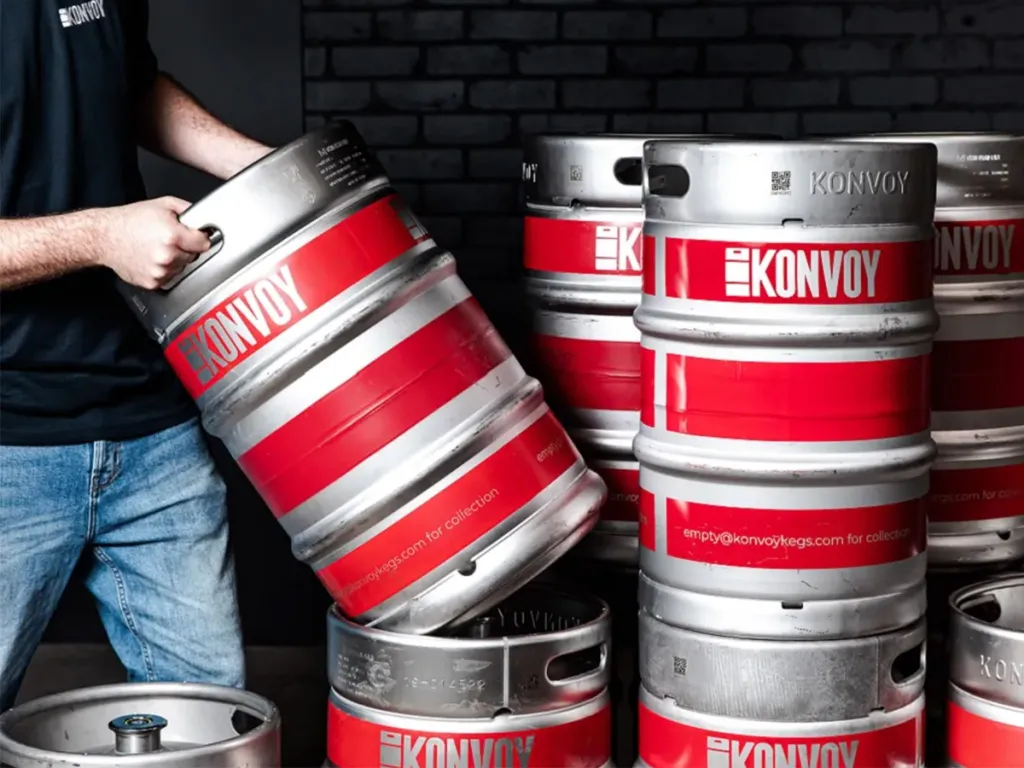
    Kegstar New Zealand is seeking approval from the Commerce Commission to acquire assets from the now-liquidated Konvoy New Zealand. The requested assets include kegs, beacons attached to these kegs or stored in inventory, and New Zealand keg records.

    The Background

    This acquisition proposal follows Konvoy’s financial struggles, which led to the company entering receivership in March and subsequent liquidation in May. Both Kegstar and Konvoy are suppliers of beer kegs to breweries on a rental basis, in addition to offering logistics services.

    Kegstar, owned by MicroStar Logistics, has a broader operational reach than Konvoy, with a presence in Australia, New Zealand, Europe, and the US. In comparison, Konvoy’s operations were limited to Australia and New Zealand.

    The Approval Process

    The Commerce Commission is set to publicize a version of the application on its website. The regulatory body will only grant clearance for the proposed acquisition if it deems that the transaction will not significantly impact market competition.

    Questions & Answers

    What is Kegstar New Zealand proposing?
    Kegstar New Zealand is seeking to acquire certain assets from Konvoy New Zealand. These include kegs, related beacons, and keg records.

    Why is Kegstar interested in Konvoy’s assets?
    Konvoy New Zealand recently entered receivership and was liquidated. The company’s assets are now up for acquisition, and Kegstar, also a keg supplier, is interested in expanding its inventory.

    What conditions must be met for the deal to proceed?
    The Commerce Commission must grant clearance for the acquisition to go forward. The primary condition is that the deal should not substantially lessen competition within the market.

  • Philippine Thrift Banks Surge to $19.5 Billion in Assets, Marking 6% Growth in 2024

    Philippine Thrift Banks Surge to $19.5 Billion in Assets, Marking 6% Growth in 2024

    The Philippine thrift banking sector revealed strong performance indicators as it reported total assets reaching $19.5 billion (PHP1.1 trillion) by the end of 2024, marking a 6% increase from the previous year. The data, released by the Chamber of Thrift Banks (CTB) in July 2025, spotlighted significant growth in lending activities, with core loan portfolios expanding by an impressive 14.7% to $13.8 billion (PHP777.28 billion).

    Deposits on the Rise

    Meanwhile, deposit liabilities in the sector also saw an upswing of 4.7%, reaching $14.67 billion (PHP826 billion). This growth reflects a resilient demand for thrift banking services, even as the economy faces various challenges. The sector’s capital base remains robust at $3.08 billion (PHP174 billion), boasting a capital adequacy ratio of 17.88%, comfortably above the regulatory benchmarks.

    A Commitment to Progress

    “We are pleased to report that the Chamber of Thrift Banks has continued to demonstrate remarkable growth and adaptability through the years,” stated CTB President Mary Jane Perreras. Under her leadership, the CTB is advocating for crucial regulatory adjustments, including a proposed reduction of the Minimum Liquidity Ratio from 20% to 16%, to better align with the realities of thrift banks.

    Digital Innovation Takes Center Stage

    Perreras noted that many member banks have successfully enhanced their digital infrastructure and adopted advanced cybersecurity protocols. “In today’s interconnected financial landscape, offering digital literacy programs is essential to protecting consumers,” she asserted. Collaborations with fintech firms and low-code platform providers have allowed thrift banks to introduce customized digital services with greater efficiency—a move that has infused new energy into traditional banking practices.

    Looking Ahead

    As the sector looks to the future, the CTB remains focused on promoting sound risk management, operational excellence, and sustainable growth. “Our goal is to strengthen the thrift banking sector’s contribution to inclusive economic development, ensuring our members remain key providers of financial access in communities across the country,” Perreras emphasized, hinting at a vision where thrift banks not only survive but thrive in the evolving market landscape.

    Questions & Answers

    What growth rate did Philippine thrift banks achieve in lending activities?
    Philippine thrift banks recorded a significant growth rate of 14.7% in core loan portfolios, totaling $13.8 billion (PHP777.28 billion).

    What initiatives is the CTB pursuing for regulatory changes?
    The Chamber of Thrift Banks is advocating for a reduction in the Minimum Liquidity Ratio from 20% to 16% to better reflect the operational realities of thrift banks.

    How are thrift banks enhancing their services in the digital age?
    Many member banks are upgrading their digital infrastructure, adopting cybersecurity measures, and collaborating with fintech firms to offer customized digital services, thus improving consumer protection and service efficiency.

  • Bega Cheese Eyes Acquisition Of Fonterra Oceania: A Potential Boost For Australia’s Dairy Industry

    Bega Cheese Eyes Acquisition Of Fonterra Oceania: A Potential Boost For Australia’s Dairy Industry

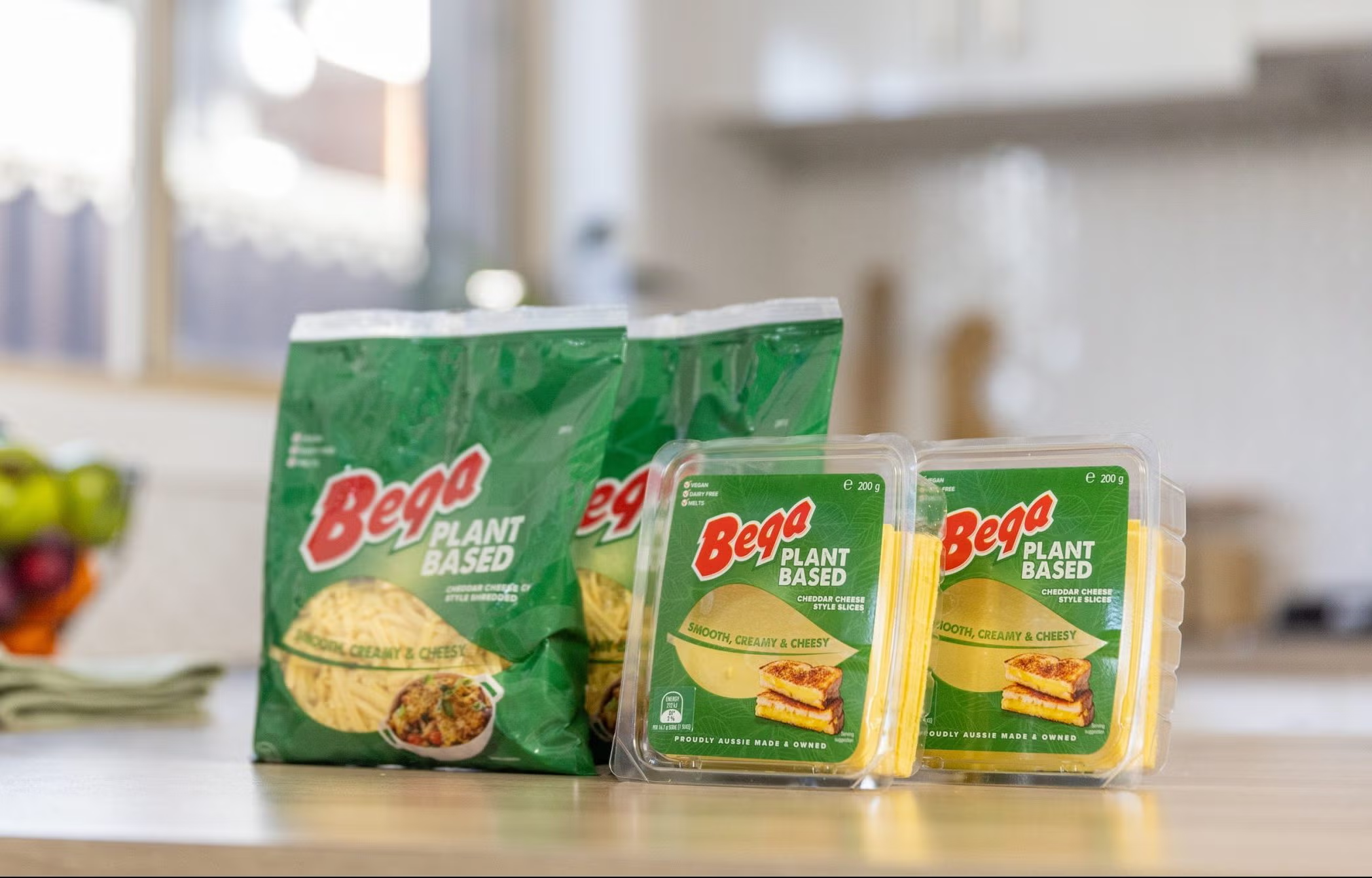
    Bega Cheese, an Australian dairy company, has indicated its intention to file an application with the Australia Competition and Consumer Commission (ACCC) seeking authorisation for its planned acquisition of Fonterra Oceania.

    Enhancing Outcomes through Acquisition

    Bega Cheese believes that the prospective acquisition would greatly improve the company’s performance and efficiency, and it would also have substantial benefits for the broader dairy industry. The company argues that combining its resources with those of Fonterra Oceania would result in improved efficiencies and outcomes for Australian dairy farmers, customers, and consumers.

    Bega Cheese is of the view that it is the most suitable acquirer of Fonterra’s Oceania businesses and is keenly interested in pursuing this opportunity. The company is hopeful of engaging in productive discussions with Fonterra Group on the sale of its Oceania businesses.

    Domestic Acquisition not Subject to Foreign Review

    As Bega Cheese is an Australian business, it expects that the potential acquisition will not require the approval of the Foreign Investment Review Board (FIRB).

    Fonterra’s Divestiture Strategy

    In November, Fonterra revealed its plans to divest by pursuing a trade sale and an initial public offering of its global consumer business, as well as its integrated businesses Fonterra Oceania and Fonterra Sri Lanka. The company believes that this divestment will allow it to concentrate its resources on the ingredients and foodservice businesses, thereby maximising value.

    Fonterra’s consumer business includes the operations and marketing of a variety of brands, such as Mainland, Anchor, Kapiti, and Anlene.

    Questions & Answers

    Why is Bega Cheese planning to acquire Fonterra Oceania?
    Bega Cheese believes that the acquisition of Fonterra Oceania would greatly improve its own business efficiencies and performance.

    Who needs to approve the acquisition?
    The Australia Competition and Consumer Commission (ACCC) needs to approve the acquisition.

    What is Fonterra’s rationale behind its divestiture strategy?
    Fonterra believes that by divesting, it will be able to concentrate its resources on the ingredients and foodservice businesses, thereby maximising value.

  • Private Banks Surge as Client Assets Shatter Milestone Barrier

    Private Banks Surge as Client Assets Shatter Milestone Barrier

    Last year proved to be a remarkable period for Swiss private banks, as they reveled in impressive results bolstered by favorable financial markets and substantial net new money inflows. This surge in assets under management (AuM) occurred amid a backdrop of shrinking institutions.

    Double-Digit Gains Across the Board

    A recent study by consultancy PwC reveals that in 2024, all segments of Swiss and Liechtenstein private banks enjoyed double-digit growth in their assets under management. PwC’s analysis covered 74 banks, categorizing them into small (AuM 50 billion francs).

    Market Optimism Fuels Growth

    So what fueled this growth? It was a combination of robust markets and an uptick in investor confidence, particularly in the United States. All banks reaped the benefits of favorable market shifts, with several even hitting record highs in client assets. This wave of market confidence also spurred strong net new money inflows.

    Large Private Banks Struggle to Keep Up

    In a notable twist, while large private banks collectively surpassed the 3 trillion francs mark with a total of 3,025 billion francs, their contribution to overall net new money growth was relatively tepid at just 2.2 percent. In contrast, their smaller and mid-sized counterparts showcased impressive inflow rates of 4.5 percent and 4.9 percent, respectively.

    PwC attributes the standout performance of specific banks to their consistent strategic execution, successful client transitions from major competitors, sharp business positioning, and targeted geographical strategies. However, PwC cautions that early market turbulence in 2025 may cloud these promising figures.

    Net New Money Inflows Projected to Slow

    Looking ahead, while private banks are likely to continue attracting net new money, PwC anticipates a moderation in inflow rates due to intensifying competition. 2024 marked a pivotal moment as interest income, which surged in 2023 due to rising interest rates, began to decline by March 2024, putting pressure on margins.

    The traditionally strong revenue driver for private banks—fee- and commission-based income (Net Fee and Commission Income, NFCI)—has returned to the forefront. NFCI margins on assets held steady, and overall NFCI saw an increase of 7-9 percent across all peer groups, helping to compensate for lower interest income.

    Small Banks Feel Interest Rate Pinch

    An average look over three years reveals that client deposits constituted about 16 percent of AuM at small banks, 11 percent at mid-sized banks, and 10 percent at large ones. This dependency on interest income is underscored by loan exposure, with loans typically representing 8 percent of volumes at small and mid-sized banks and 5 percent at large institutions.

    Facing Margin Pressures

    Since 2022, NFCI margins have flattened, reflecting heightened price sensitivity among clients and fierce competition. The industry also faces structural challenges: increased IT expenditures, shifting client expectations, ongoing digitalization, and new regulatory demands are putting traditional business models to the test and driving up operational costs.

    Embracing Consolidation

    The landscape of wealth management banks has shrunk dramatically, dropping from over 150 to fewer than 90 in recent years, with expectations that it may soon dip below 60. Yet, this consolidation isn’t all doom and gloom. PwC suggests that “fewer but stronger banks will shape the market,” as those that remain are proving their adaptability in this ever-evolving environment.

    Questions & Answers

    Which sectors of Swiss private banks saw the most growth in assets last year? All customer segments, including small, mid-sized, and large banks, recorded double-digit growth in assets under management.

    What was a key factor driving net new money inflows in 2024? Investor optimism, particularly in the U.S., alongside positive market developments, greatly contributed to net new money inflows.

    What challenges do private banks face heading into 2025? Intensifying competition and declining interest margins pose significant challenges, with higher operational costs further complicating traditional business models.

  • More Central Banks Mulling Digital Currencies

    More Central Banks Mulling Digital Currencies

    Many central banks have or plan to launch digital central bank money. A PwC study looks at the winners and losers.

    A study from PwC released Monday analyzing central banks’ level of maturity and development of their digital currencies (CBDCs), shows that Nigeria’s eNaira scores high in retail models, with Thailand the frontrunner among wholesale customers.

    According to PwC’s Global CBDC Index report, over 80 percent of central banks have issued CBDCs or are in the process of doing so.

    This year’s PwC report looks at two separate models, retail and wholesale, ranking CBDCs on a scale of 100.

    Thailand came out atop the wholesale rankings, followed by Hong Kong and Singapore. Switzerland jumped up two spots from 12th to move into the top 10 globally and to second place in Europe.

    The Swiss National Bank (SNB) completed Phase II of the CBDC’s Helvetia project in January 2022. Together with five commercial banks, the SNB examined the settlement of interbank, monetary policy, and cross-border transactions on SIX Digital Exchange’s (SDX) test systems, the Swiss real-time gross settlement system SIX Interbank Clearing (SIC), and the core banking systems.

    Retail CBDCs reached a higher level of maturity than their wholesale counterparts, according to PwC, with the Nigerian eNaira receiving a score of 95, making it the most developed in the retail category.

    Also notable in the retail category was the Bahamas, which became the first country ever to introduce a digital central bank currency – the Sand Dollar. Jamaica’s Jam-Dex is scheduled to launch later this year. Thailand and Hong Kong top the large customer category for their joint mBridge project for cross-border payments.

    PwC found that stablecoins, which are private virtual digital currencies that peg their market value to an external reference, have become an integral part of the crypto ecosystem. It is impossible for any crypto fund or institution to be active in the crypto world without using stablecoins, the report said.

  • Sberbank Approved to Issue Digital Assets

    Sberbank Approved to Issue Digital Assets

    Russia’s largest bank has been approved by the Bank of Russia to issue digital financial assets on its platform starting a month from now.

    Sberbank received regulatory approval to start issuing digital financial assets (DFAs), Russia’s largest bank announced in a statement Thursday. It has been included in the list of information system operators issuing digital financial assets (DFAs) on March 17, 2022, which means it has been approved by the Bank of Russia.

    Companies will be able to issue DFAs using Sberbank’s proprietary platform, proving cash requirements which will, in turn, enable them to attract market investments. Moreover, they can also acquire DFAs on the Sber system where they can invest funds lying idle to generate income.

    Companies will be able to make their first transaction on our blockchain platform one month from now. We are just starting our work with digital assets, realizing that further development requires adaptation of the current regulatory framework. To do that, we are ready to work closely with the regulator and executive bodies, Sergey Popov, direction of Sberbank’s Transaction Business Division, said.

    Sberbank’s license to issue DFA’s comes two month’s after Russia’s central bank warned of the risks of crypto-assets.

    The Bank of Russia issued a consultation paper in January warning that wider adoption of cryptocurrencies creates significant risks for the Russian financial market. As there are no restrictions in place, a further increase in Russians’ cryptocurrency investments and an extensive involvement of banks and other financial institutions in the cryptocurrency market might exacerbate risks inherent in this activity and pose systemic threats.

    The same day as Sberbank’s announcement, European Supervisory Authorities (ESAs comprising EBA, ESMA and EIOPA) issued a warning to consumers that crypto assets are highly risky and speculative.

    With growing consumer interest in crypto-assets, the ESAs warned that most assets are neither suitable for retail consumers as investments nor as means of payment or exchange, warning they could lose all their invested money.

    The ESAs also warned of the dangers of misleading advertisements, particularly on social media and from influencers and, that «should investments fail, there is little recourse available through existing EU financial services rules.

    Commenting on the situation in Ukraine, the ESAs said they welcome the clarification by the Council of the European Union of the scope of the restrictive measures against Russian and Belarusian entities and individuals as regards crypto-assets.

    In 2020, the Swiss subsidiary of Sberbank entered into a partnership with Geneva-based start-up Komogo, a blockchain trade finance platform.

    But earlier this month, the Swiss Bankers Association excluded both Sberbank and Gazprombank from its organization, saying Swiss banks maintain strict compliance with all applicable regulations and measures, including sanctions imposed by Swiss, international and supranational bodies. Integrity and reputation are important key factors for the financial center.

    Both Ukraine and Russia are among the top 20 countries adopting crypto according to the Chainalysis Global Crypto Adoption Index for 2021, coming in at 4th and 18th, respectively. The year before, they occupied the first two spots, although the methodology for 2021 contained one less metric than the year before, with the number of on-chain deposits dropped from the study.

  • Technical Standards To Simplify Digital Payments

    Technical Standards To Simplify Digital Payments

    The Swiss Bitcoin Association recommends the first technical standards for simplified payment verification (SPV) using digital currencies, eliminating the need to download entire the blockchain for transactions.

    Switzerland’s Bitcoin SV Technical Standards Committee today recommended its first digital currency standard for simplified payment verification (SPV), enabling transactions to occur without having to download the entire blockchain.

    This standardized format is now in use across three prominent ecosystem applications, the Bitcoin SV node software, Merchant API (mAPI), ElectrumSV and ElectrumX.

    The first BSV technical standard progressing to the recommended stage – the final stage for technical standards – represents a significant achievement for the Bitcoin SV Technical Standards Committee, says Technical Committee Chair Steve Shadders.

    The Swiss government today adopted a report on the digitalization of the financial markets, identifying opportunities and risks and laying out action points for the coming years.

  • Asia Assets Climb Higher at HSBC Private Banking

    Asia Assets Climb Higher at HSBC Private Banking

    Assets under management at HSBC Private Banking climbed higher, driven in part by more than $9 billion of net new inflows in the first half of 2021.

    Asia assets under management at HSBC Private Banking grew 25 percent to $193 billion in the first half of this year, according to a statement, driven in part by $9.3 billion of net new money inflows.

    This accounts for over 45 percent of HSBC Private Banking’s total assets under management worldwide at $427 billion, according to its recent interim report.

    In addition to private banking, HSBC also saw growth across its affluent segments in Asia – Premier and Jade – with a 7 percent increase in the number of affluent and higher net worth clients to 1.7 million.

    Asian wealth revenues in the first half increased 26 percent and account for much of global wealth revenue growth.

    Asian wealth balances – the sum of client assets from HSBC’s Premier, Jade, and private banking segments – reached a new high of $810 billion and accounted for $49 percent of global assets.

    HSBC continues to pursue its ambitions of becoming a leading wealth manager by 2025.

    It has rolled out a series of mobile solutions and digital enhancements for wealth clients in key Asian markets.

    The bank also added around 600 full-time employees in the first half – including 350 personal wealth planners for its mainland China mobile services HSBC Pinnacle with plans to add another 100. The bank said it is on track to hire over 1,00 client-face wealth staff in Asia by the end of 2021.

    The positive momentum of our Asian Wealth business this year shows the traction we are seeing on-the-ground with our clients, as we forge ahead with our considerable investments in technology, products, and people,» said APAC regional head of wealth and personal banking Greg Hingston.

  • ZA Adds Digital Asset Capabilities

    ZA Adds Digital Asset Capabilities

    ZA International has established a partnership with BC Technology Group which operates the city’s only licensed digital asset platform. ZA International and BC Technology Group have entered into a mutual collaboration agreement, according to a statement. ZA will use BC Technology Group as its exclusive digital asset trading partner via its Hong Kong-licensed digital asset platform OSL.

    On the other hand, BC Technology will leverage ZA’s tech capabilities in areas such as facial recognition and machine learning to enhance user experience on its trading platform.

    Both ZA and OSL remain in growth mode with the former reportedly considering the acquisition of Hong Kong’s largest non-bank lender late last year and the latter recently making a series of global hires.

    The digital asset industry presents a thriving future, and fintech companies are well-positioned to promote the universal application of digital assets in Hong Kong through capitalizing on their technological advantages, said ZA International president Wayne Xu.

  • Thailand Reins in Speculation in Digital Assets

    Thailand Reins in Speculation in Digital Assets

    The country’s finance regulator is banning licensed digital asset exchanges from trading meme coins, fan-based tokens, NFTs and social coins as part of its ongoing regulatory action against crypto trading.

    The Thai Securities and Exchange Commission (SEC) is prohibiting exchanges in the country from providing services related to utility tokens or cryptocurrencies to ensure customer protection and ward off attempts by anyone using digital assets to operate a grey business, the regulator announced on Friday.

    As a result, meme coins like Doge, which has attracted the interest of investors in the past year as its price surged by as much as 10,000 percent this year, will no longer be allowed to be traded in Thailand. The SEC said such coins have «No clear objective or substance or underlying, and whose price [runs] on social media trends.

    The move came amid reports that publicly listed mobile phone retailer Jay Mart was making plans to launch the country’s first non-fungible tokens (NFTs) linked to nine local stars and celebrities. However, Jay Mart said it would go ahead with the launch this week as planned, though the NFTs will be listed on foreign exchanges.

    NFTs have garnered increasing popularity in recent months, particularly as a way to sell and invest in digital artworks as verification of authenticity and ownership are stored on the blockchain.

  • Thailand Reins in Speculation in Digital Assets

    Thailand Reins in Speculation in Digital Assets

    The country’s finance regulator is banning licensed digital asset exchanges from trading meme coins, fan-based tokens, NFTs, and social coins as part of its ongoing regulatory action against crypto trading.

    The Thai Securities and Exchange Commission (SEC) is prohibiting exchanges in the country from providing services related to utility tokens or cryptocurrencies to ensure customer protection and ward off attempts by anyone using digital assets to operate a grey business, the regulator announced on Friday.

    As a result, meme coins like Doge, which has attracted the interest of investors in the past year as its price surged by as much as 10,000 percent this year, will no longer be allowed to be traded in Thailand. The SEC said such coins have «No clear objective or substance or underlying, and whose price runs on social media trends.

    According to «The Bangkok Post,» the move came amid reports that publicly listed mobile phone retailer Jay Mart was making plans to launch the country’s first non-fungible tokens (NFTs) linked to nine local stars and celebrities. However, Jay Mart said it would go ahead with the launch this week as planned, though the NFTs will be listed on foreign exchanges.

    NFTs have garnered increasing popularity in recent months, particularly as a way to sell and invest in digital artworks as verification of authenticity and ownership are stored on the blockchain

  • eSIM and its impact in an hyperconnected world

    eSIM and its impact in an hyperconnected world

    Powered by 5G, eSIM or embedded subscriber identity module is a rising technology that is threatening to replace traditional SIM cards. With 5G revolutionizing connectivity, eSIM emerges as a seamless way to harness greater connectivity between a future of billions of IoT devices. Instead of relying on physical SIM cards, eSIM is the embedded alternative that uses remote SIM provisioning (RSP) to download a user’s profile onto a device, to provide users full control of connectivity management and the ability to switch networks as desired.

    Last year, eSIM adoption grew in the wake of the pandemic. In the coming years, this trend will continue to persist. According to recent findings from Juniper Research, the number of eSIMs embedded in connected devices will more than double from 1.2 billion this year to 3.4 billion in 2025. Of which, 94% of global eSIM installations in 2025 can be attributed to the consumer sector.

    In the consumer market, eSIM is deployed in tablets, smartphones, laptops, and wearables. Some smartphones from Apple, Google, Huawei, and Samsung are already supporting eSIM, though they continue to allow for physical SIM. Last year, Motorola released the world’s first eSIM-only smartphone.

    With IoT on the rise, connectivity is one of the important considerations when developing future-proof tech solutions. Across industries, automotive is one of the areas that fuel eSIM deployment. For instance, Tesla’s electric vehicles use eSIM to power in-car connectivity. Juniper Research predicts that other industries such as oil and gas, manufacturing, and logistics industries will also experience a hike in eSIM adoption to power connectivity, with eSIM installations growing from 28 million to 116 million by 2025.

    For many, it is becoming clear that eSIM is the future for IoT connectivity as it offers a level of flexibility not provided by traditional SIM. Since all IoT subscriptions and connectivity can be carried out through a single embedded source, this significantly simplifies SIM management for as many devices across geographies. For enterprises or governments, eSIMs can also be used for asset tracking, with each IoT device being remotely and automatically provisioned to an optimal carrier profile.

    For consumers, eSIM is the seamless management of subscriptions whereby they no longer need multiple SIM cards for different connections. In this pandemic, eSIM offers the advantage of subscribing to a connectivity service without having to physically purchase a SIM.

    For MVNOs, tech giants, and device manufacturers, eSIM is the ideal avenue to generate new revenue streams. For device manufacturers, for instance, it means the ability to create smaller products without a SIM card and an opportunity to optimize supply chain processes.

    Of course, more entrants into the mobile market is unsettling for network operators that fear disruption and stiffer competition in addition to having to build costly cellphone towers to support 5G networks. At the same time, telecom operators cannot ignore the fact that future IoT devices will be better served with eSIMs. With brands like Apple and Google, which have massive followings offering eSIM, operators are pressured to catch onto the eSIM fad to avoid being displaced.

    According to GSMA, about 175 mobile operators launched eSIM for smartphones across 69 countries by the end of last year. Amongst these operators, Vodafone Group leads in eSIM roll-out.

    In Asia, Singtel and China Unicom launched an eSIM network swap service last December to allow devices equipped with China Unicom eSIM to automatically switch profiles to Singtel’s in Singapore. In India, the three largest telecom operators Airtel, Jio, and Vi have started to offer eSIM functionality for supported devices. For operators, eSIM roll-out achieves customer churn, creating opportunities for up-selling and cross-selling services and packages.

    To stay ahead, Tata Communications is going beyond connectivity to expand competency in mobility and IoT. Last October, Tata Communications partnered with Micron for a cloud-based eSIM business. In December, the company acquired a majority equity stake in a France-headquartered eSIM technology provider. The acquisition was motivated by enterprises’ heavy reliance on mobile devices to operate and access data in the cloud and an upward trend in machine-to-machine (M2M) connections worldwide.

    According to Ecosystem, Asia-Pacific is poised to lead in IoT by 2023. With connectivity becoming more pervasive in our everyday lives, there is no doubt that eSIM will play a pivotal role in ushering in a new era in consumer and enterprise applications.