Tag: Assets

  • GIC Bets on Digital Assets

    GIC Bets on Digital Assets

    The blue chip-focused Singapore sovereign wealth fund has invested in a crypto bank, in a signal that digital assets are here to stay.

    In an announcement on its blog last week, U.S.-based digital asset bank Anchorage said it raised $80 million in a Series C funding round led by GIC.

    Joining the sovereign wealth fund were U.S. venture capital firms Andreessen Horowitz, Blockchain Capital, and Lux, as well as Portuguese fund Indico.

    Anchorage said the new capital will allow it to «rapidly scale to meet the rising demand for participation in the digital asset space, particularly among corporations and traditional financial institutions.»

    It also said that it wants to be a crypto partner to neo banks, challenger banks, and traditional banks, and make institutional decentralized finance (DeFi) participation accessible.

    In 2018, GIC was among investors who raised $300 million for Coinbase, a digital currency exchange headquartered in San Francisco, California.

    The news came as a surprise as CEO Lim Chow Kiat previously said that GIC would avoid crypto-related investments as it goes against GIC’s investment mandate, which is «to preserve and enhance the international purchasing power of Singapore’s financial reserves.»

  • Sustainable Assets Surge at UBS

    Sustainable Assets Surge at UBS

    UBS maintains momentum in sustainable investments, registering strong asset growth across its asset and wealth management divisions as a result of both market performance and new client demand.

    In 2020, UBS’s global wealth arm saw assets in sustainable portfolios (those defined as 100 percent invested with the consideration of environmental, social and governance (ESG) factors) exceed $18 billion, $7 billion from inflows alongside even better performance than traditional equivalents, according to a statement.

    The asset management arm also posted strong growth with sustainability-focused assets doubling to $97 billion and ‘Climate Aware’ strategies reaching $15 billion.

    The bank has also successfully met its commitment to raise $5 billion for impact investments related to United Nations Sustainable Development Goals (SDG), beating the five-year timeline (2017-2021) in the second half of last year.

    Sustainability is no longer just a talking point, but also a catalyst for action said group CEO Ralph Hamers. Investors and companies should seek to get ahead of this transformation if they wish to navigate 21st-century risks and opportunities effectively.

    The bank highlighted Asia as a region of focus for sustainability as a theme not only within investment portfolios but across other areas.

    From our conversations with investors and business owners across Asia, we know that many more are looking to integrate ESG-related aspects in their investment portfolios, business plans and philanthropic ventures, said Desmond Kuek, divisional vice chairman and chair of the bank’s APAC sustainable finance network.

    The statement accompanied a white paper for the World Economic Forum’s Davos Agenda Meetings.

    It listed ten sustainable finance trends the bank identified including investor engagement, impact investing, electric transport, net-zero emissions, innovations in big oil, diversity, plant-based meat, climate stress testing, sustainable data and greater data transparency.

  • Petronas buys 10% of Block 61 onshore Oman

    Petronas buys 10% of Block 61 onshore Oman

    Petroliam Nasional Bhd (Petronas), through its subsidiary, PC Oman Ventures Ltd (PCOVL) has acquired a 10% stake in Block 61, onshore Oman from Makarim Gas Development LLC (MGD), after the conditions for the completion of the transaction were fulfilled. MGD is a subsidiary of Oman Oil Company Exploration & Production LLC. Petronas said the completion of the transaction was formalised at an event held in Muscat, Oman on Dec 27.

    Following the deal, MGD’s stake in Block 61 will be reduced to 30%, while P Exploration (Epsilon) Ltd as the operator holds the remaining 60% stake.

    Petronas noted that the acquisition of Block 61 marks an important step in realising the group’s growth strategy in the upstream sector in the region and globally, as it aligns its activities to ensure sustainable energy supply.

  • Grab eyes stake in Vinasun, taxi company refuses to play ball

    Grab eyes stake in Vinasun, taxi company refuses to play ball

    Grab’s surprise offer to buy a $2.78-million stake in top taxi company Vinasun has failed, with the latter asking to end negotiations. The negotiations between the two firms began earlier this month for compensation claimed by Vinasun from the Malaysian ride-hailing firm after the People’s Court of Ho Chi Minh City yet again adjourned hearing of a suit Vinasun had filed last year.

    A Vinasun spokesperson told the court following the latest resumption of the trial Wednesday that his firm had declined the offer since Grab had not made an appropriate offer. “We don’t want to continue the negotiations.”

    But Grab does not want the lawsuit to continue.

    Its spokesperson said: “We have become very tired during the 17 months of this trial for damages we did not cause. We do not want Vinasun to waste its time on this meaningless lawsuit. We consider the proposal to buy Vinasun’s stake an investment activity, and we expect to cooperate with Vinasun to end the case in a good way.”

    Vinasun filed the suit against Grab in June last year, accusing it of abusing the Ministry of Transport’s pilot scheme and committing violations.

    It said Grab’s illegal activities were responsible for nearly VND42 billion (nearly $1.8 million) of the VND76 billion ($3.25 million) worth of losses it had suffered in 2016 and the first half of 2017.

    The trial began last February, but was adjourned a month later to allow for more evidence to be gathered. Grab had protested against the value of Vinasun’s losses.

    Last October prosecutors asked the court to accept Vinasun’s petition for compensation of nearly VND42 billion, rejecting Grab’s claim it was a tech firm and not a taxi company.

    Grab responded by writing to Prime Minister Nguyen Xuan Phuc to say that identifying it as a taxi firm would be “a step backward from Industry 4.0.”

    The latest draft of a transport ministry decree requires firms offering taxi services to register as taxi firms before they can apply ride-hailing technologies.

    This means that Grab and other ride-hailing firms have to register afresh as taxi businesses and comply with legal requirements related to operating licenses, drivers’ profiles and taxes.

  • Vanguard to target retail investors in China

    Vanguard to target retail investors in China

    The Vanguard Group, which had $4.2trn in assets under management as of 3 March this year, will set up in the Shanghai Free Trade Zone under China’s Wholly Foreign-Owned Enterprise (WFOE) scheme as Vanguard Investment Management (Shanghai) Ltd.

    The new operation will be located in the Shanghai World Financial Center and plans to carry out investment management, investment consulting, client liaising and servicing, marketing, investment research, investor education and business development.

    Charles Lin will be Vanguard’s head of China and managing director, while the general manager is Clare Zhao, Vanguard’s current head of China institutional business.

    “This new milestone solidifies our commitment to China,” said F. William McNabb III, chairman and chief executive of Vanguard.

    “Bringing our unique and proven investment approach to the millions of investors in China is an important initiative for Vanguard’s international business,” said McNabb.

    Vanguard has been serving institutional clients in China, including insurance, banking, asset managers and other financial institutions, for several years, and in 2014 set up a representative office in Beijing.

    Vanguard is known in the industry for its low investment costs. It has reduced the asset-weighted average expense ratio of its US funds from 0.68% in 1975 to 0.12% today – less than one-fifth of the US industry asset-weighted average of 0.62%.

    The company has also taken its low-cost strategy to international markets including Australia, Japan, Europe, Canada, Singapore, and Hong Kong.

    Earlier this month it launched a new direct-to-consumer investment service in the UK which will charge an annual account fee of just 0.15% a year, capped at £375 (€441, $483).

  • Singtel sale slide offset by Indonesia, Thai mobile affiliates

    Singtel sale slide offset by Indonesia, Thai mobile affiliates

    Singapore Telecommunications announced a net profit of S$944 million for its first quarter ended June, up 0.3 per cent on the year, mainly due to stronger contributions from its mobile affiliates in Indonesia.

    Singtel’s sales fell 7.1 per cent on the year to S$3.9 billion. Singapore consumer revenue declined by 8.5 per cent to S$558 million. The growth in mobile data use could not fully offset the revenue decline in roaming and voice services in the city-state. The company’s operating revenue in Australia also fell by 15 per cent due to higher mobile service credits from device repayment plans and a weaker Australian dollar.

    Weaker equipment sales also dragged revenue down for both countries. “Equipment sales both in Singapore and Australia showed a decline and that reflects lower re-contracting volumes. There was also a higher take-up of SIM-only plans where they don’t buy the handset from us,” said Chua Sock Koong, group chief executive of Singtel, in a media briefing on Thursday.

    Contributions from Singtel’s other mobile affiliates helped to offset its losses. Indonesian mobile operator Telekomunikasi Indonesia’s profit after tax jumped 31.1 per cent on the year to US$244 million (S$327.78 million), supported by strong growth in voice, data and digital businesses. Thailand’s Advanced Info Service also generated higher contribution for the quarter, a 5.1 per cent increase to US$98 million after tax on the year.

  • Hui Xian Reit sees steady growth despite slowing Chinese economy

    Hui Xian Reit sees steady growth despite slowing Chinese economy

    Hui Xian Real Estate Investment Trust, the first yuan-denominated reit listed in Hong Kong, said on Tuesday that its amount available for distribution rose 8.4 per cent last year despite the weak growth in the mainland Chinese economy and the ongoing global slowdown.

    The reit said the amount available for distribution grew to 1.48 billion yuan from 1.36 billion yuan a year ago, with 98 per cent to be distributed to unit holders. Distribution per unit for the second half of the year was about 13.4 fen.

    Together with the interim amount announced earlier, the total distribution per unit for the year rose 5.2 per cent year on year to 27 fen. Its distribution yield was 8.11 per cent, based on the closing unit price of 3.33 yuan on December 31, 2015.

    “Last year was challenging, marked by a worldwide economic slowdown and increased international volatility,” said Kam Hing-lam, chairman of Hui Xian Asset Management, the manager of the reit, which is partly owned by Cheung Kong Property Holdings.

    Nonetheless, Hui Xian Reit managed to maintain the growth momentum, Kam said, adding that the increase was mainly driven by the organic growth of its existing leasing and hotel portfolio. The reit also gained from the additional income contributed by the newly acquired Chongqing Metropolitan Oriental Plaza from March 2 last year.

    Total revenue for the period was 3.05 billion yuan, up 9.1 per cent on an annual basis, while net property income rose 9.9 per cent to 2.04 billion yuan.

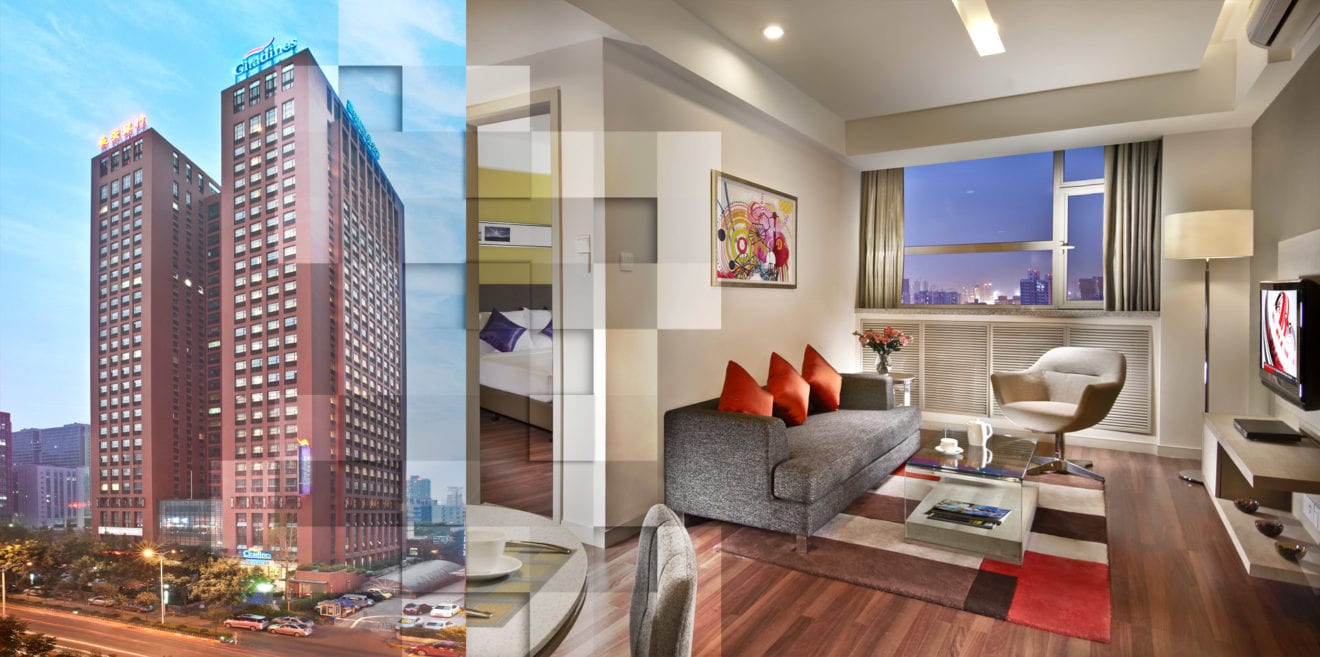
    Hui Xian Reit said its core asset, the Oriental Plaza in Beijing, achieved stable growth as it had heavy visitor flows despite a gloomy retail environment in mainland China.

    The average monthly passing rent surged 9 per cent to 1,193 yuan.

    Last year was challenging, marked by a worldwide economic slowdown and increased international volatility
    KAM HING-LAM, CHAIRMAN, HUI XIAN ASSET MANAGEMENT

    The reit said its offices and serviced apartments showed stable income growth while the hotel sector showed signs of stabilising.

    The average occupancy rate at Grand Hyatt Beijing improved to 58.8 per cent from 55.9 per cent a year ago, with the average room rate per night down 7.9 per cent year on year to 1,461 yuan.

    Hui Xian said all its existing projects were in mainland China, generating revenue in yuan. The currency’s exchange rate volatility, however, did not have a significant impact on the performance of the reit’s projects.

    Though most of its borrowings are in Hong Kong dollars, its yuan exposure will become visible when the currency’s exchange gain or loss is realised upon repayment.

  • Capital Group, Samsung Asset Management form strategic partnership in Korea

    Capital Group, Samsung Asset Management form strategic partnership in Korea

    Capital Group and Seoul-based Samsung Asset Management on Wednesday announced a strategic partnership to cooperate on developing active investment strategies for institutional and retail investors in Korea.

    Capital Group, with $1.4 trillion in assets under management, and Samsung Asset Management, Korea’s top manager with $166 billion in AUM, “will work together to co-develop retirement solutions and asset allocation products and enhance SAM’s active investment capability,” a news release said.

    Under the agreement, Capital Group will help its Korean partner become familiar with “Capital-style active management,” and work to provide management know-how in areas such as business management and client management.

    A Seoul-based spokesman for Samsung Asset Management said the partnership with Capital Group would be a cornerstone of the firm’s goal of becoming one of Asia’s top three home-grown asset management companies by 2020.

    Sung-hoon Koo, SAM’s CEO, said in the release that the partnership will pave the way for his firm to “upgrade its active equity investment capability and implement life cycle asset allocation product strategies.”

    The news release also quoted Tim Armour, chairman of the Capital Group, saying the “broader plan is to co-design investment solutions to fulfill the savings, retirement and insurance-linked needs of Korean investors.”

    The Samsung spokesman, in a telephone interview, and Tom Joyce, Capital’s head of global media relations, in an e-mail, said details of the economics of the relationship — specifically how co-developed products would be distributed and revenues shared — had yet to be worked out. “It is too early to say what the pricing and structures will be,” noted Mr. Joyce, adding “the economics will be worked through.”

    Separately, the news release said the partnership will include selecting and using “appropriate Capital Group products and services across multiple Samsung distribution channels.”

    Mr. Joyce didn’t respond directly to a question about whether this was the first time Capital Group had entered into such a partnership. Instead, he cited Samsung’s interest in learning more about Capital’s system and “way of investing,” while noting Capital’s interest in learning “how Samsung markets and distributes products to Korean investors.”

    According to data provider eVestment, Capital Group listed roughly $275 million in AUM managed on behalf of Korean investors.

  • Tesco may seal Lotus’ fate Thurs

    Tesco may seal Lotus’ fate Thurs

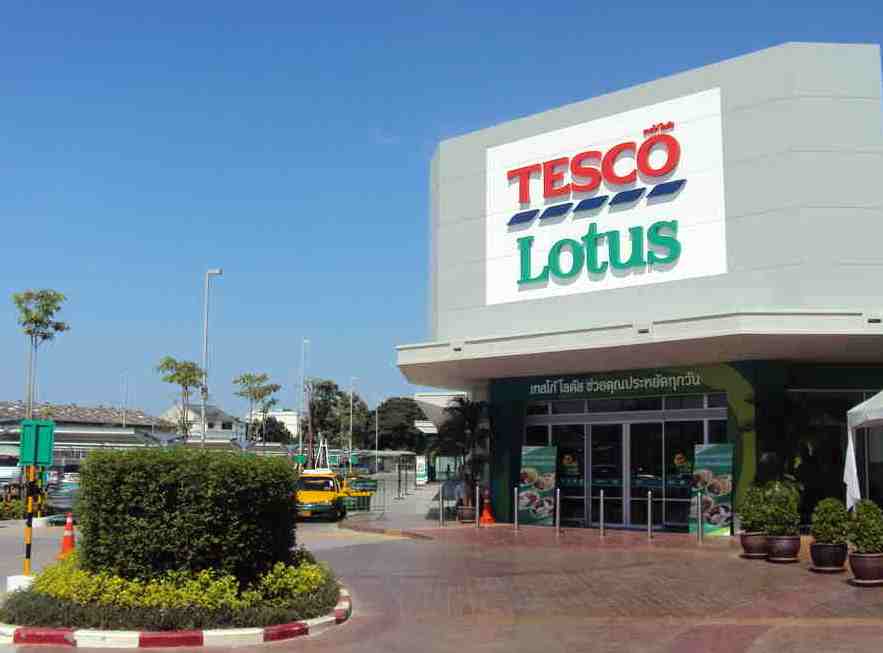
    New Tesco boss Dave Lewis is expected to focus on cost cuts and asset sales — including the possible sale of its Tesco-Lotus venture in Thailand – when he provides an update on his plans to revive the troubled British grocer’s fortunes on Thursday.