Retail News CRM

Tag: audio

  • Apple patents technology for AR audio headphones

    Apple patents technology for AR audio headphones

    Imagine listening to a conference call on a headset and knowing the position of everyone in the room just by listening to the sound. Apple apparently is planning on developing AR audio headphones and has just received a patent covering related technology from the U.S. Patent and Trademark Office. Called Intelligent augmented audio conference calling using headphones, the patent mentions how augmented reality headsets take metadata generated from audio signals and “associates each of the audio signals with a spatial position in a virtual representation of the conference call.”

    As Apple explained in the patent documentation “Multiparty conference calls often have callers participating from different locations which may be all over the world. In situations without video feedback, it is especially difficult to identify a speaker. Often, when callers can’t be identified or heard, interaction during such conference calls may be awkward. Embodiments discussed herein aim to provide a more intuitive, clear teleconference experience.” If a conference call is made up of callers from different locations, a virtual room is created and a position in the room is assigned to each person as they join the call. If the listener on a conference call turns his head toward someone in the virtual conference room, the audio will adjust to match how it would have sounded had the listener really been in the room.

    In the patent, Apple mentions something it calls “the ‘Cocktail Party’ mechanism in the listener’s brain.” The company explains that this is “a key psychoacoustic process enabling an improved sound source segregation.” Apple continues by mentioning the advantages to the listener and says, “It is therefore advantageously possible to more easily identify individual talkers and to increase speech intelligibility, without the need for visual cues or the need for a caller to state a name before talking during the conference call. Furthermore, it is advantageously possible to provide a virtual audio environment that is more natural sounding as compared to conventional technologies.” The company believes that knowing who is speaking and where that person is in a room makes it easier to participate in such a call. It will also help the listener understand what is being said during an audio-only conference call. And even if a listener cannot recognize the voice of the person talking, he still can tell who it is based on the speaker’s position in the room.

    In one scenario mentioned in the patent documentation, Apple envisions that a caller being assigned to a position in a virtual conference room is placed in a group that could be made up of family members or based on the geographic location of the caller or even the strength of the caller’s signal. In a situation where there are two different and separate groups, one might be “placed” to the left of the listener while callers from the other group are “placed” to the right of the listener.

    It’s an intriguing technology that if commercialized, could help Apple sell a ton of AR headphones to corporations. And there might even be some use for the technology by consumers listening to podcasts, streaming radio (including audio-based news apps) and more. This technology could eventually be used with video games. Or, as Apple points out on all of its patents, the patented technology might never see the light of day. Not that Apple isn’t high on AR; it is. Earlier this month we told you that the company reportedly plans on offering a mixed reality headset in 2022 with the long-awaited AR glasses to appear the following year.

    The patent was originally filed back in June 2017 and was previously published last December before being awarded to Apple.

  • Asia Music acquires audio-book business

    Asia Music acquires audio-book business

    Asia Music Investments (AMI) has bought a music-book business and expanded its operations and distribution partnerships with major publishers.

    The company has taken over the music-book distribution business from Gramercy Music, which occupied 2700sqft of space on Bukit Timah Road. AMI says the S$1.2 million acquisition and investment is a strategic move to expand its repertoire of services, expand its customer base and develop new competencies.

    AMI also operates four music schools offering a range of musical courses including piano, violin, guitar, guzheng, vocal, erhu and dance. The music-book business deal will enable AMI to provide greater value to its students, by making available the largest and latest range of musical books in the market.

    “Our acquisition has enabled us to immediately offer our customers better value-added service as they can access and purchase music books easily,” says Vivian Gao, MD of AMI.

    “In addition, we are also able to strike up new partnerships and distributorships with publishers to expand the music book business.”

    Customers can purchase music books online via its official online store or drop by the bookstore, which is a one-stop music concept offering books, accessories and musical instruments.

    “Having a physical store enables our customers, many of whom are music teachers, to be able to conveniently compare the many books available on the shelves. This better helps them to make decisions on which books to use for teaching,” Gao added.

    In May this year, AMI finalized partnerships with Alfred Music to be the exclusive distributor of its UK’s Basic Graded Piano Course series. Alfred Music is the leading publisher of music education books and currently has 150,000 titles worldwide.

    It is also teaming up with Poco Studio, a music education publisher, to distribute its full range of titles in Singapore.

  • Apple Music grows to over 60 million monthly users worldwide

    Apple Music grows to over 60 million monthly users worldwide

    Apple Music and Spotify continue to compete for world domination, as both music streaming services claim they have many millions of subscribers. Up until now, Spotify was the supreme ruler with more than 100 million subscribers worldwide reported two months ago.

    Before that, Apple said it has amassed 56 million subscribers by December 2018. Six months later, the number didn’t increase as much as one would expect. French media (via Music Business Worldwide) reports Apple’s SVP of Services, Eddy Cue said the music platform exceeded 60 million users.

    We’re referring to them as users since Apple confirmed the number includes free trialists, so we’re not yet sure how many are actually paying for the service, although we do know they should probably be at least 56 million as Apple pointed out six months ago.

    With the latest improvements to its Music platform added in the latest iOS 13 version, such as time-synced lyrics, Apple hopes to bring even more subscribers under its umbrella in the coming months. It remains to be seen whether or not the pace at which Apple Music is adding new subscribers each month is too slow to beat Spotify for the world’s largest music streaming service title.

    It’s also worth mentioning that Apple Music has more subscribers in the US than Spotify and that the latter announced it reached more than 200 million monthly users back in April.

  • Honda e Electric Vehicle Details Revealed

    Honda e Electric Vehicle Details Revealed

    Honda’s new compact electric vehicle, the Honda e, is the first Honda to be built on a dedicated EV platform, designed from the ground up but finally, there are details that have poured out which give more information about the specifications. The Honda e platform has been developed focussing on urban environments. The battery is positioned at a low level under the floor, and centrally within the wheelbase of the car, affording a 50:50 weight distribution and low center of gravity for optimal handling and stability. Power from the high-torque electric motor is delivered through the rear wheels, enabling steering precision even at high acceleration.

    The four-wheel independent suspension is engineered to offer better stability in all conditions, a smooth ride and responsive handling. Elements of the suspension components are forged aluminum to reduce weight and benefit performance and efficiency. The compact size of the Honda e sees it get a short overhang and it’s also best suited for the urban environment.

    The Honda e gets a 35.5 kWh Lithium-ion high-capacity battery, can be charged using either Type 2 AC connection or a CCS2 DC rapid charger. It’s range on a full charge stands at 200 km, and the fast charging capability sees it charge up to 80 percent in just 30 minutes. The Honda e charging port is integrated into the bonnet, with LED lighting visible through a glass panel to illuminate the port for the driver and highlight the battery charging status. The positioning of the charging port allows easy access from the front of the car or from either side. Displays on the dual touchscreens inside the car present the current level of battery charge, while a drivetrain graphic charts the current power flow and the regeneration and recharging status.

    The battery pack is water-cooled to maintain an optimum thermal state, therefore, maximizing the efficiency of the battery and charge state, while also ensuring its size and weight are minimized so that it does not compromise cabin room.

    Honda has already received 31,000 expressions of interest, and customers can make a reservation for priority ordering online in UK, Germany, France and Norway

  • WK Life launches its flagship store at Mall of India

    WK Life launches its flagship store at Mall of India

    Electronics and accessories retailer WK Life is launching its first Indian flagship at DLF Mall of India, Noida. The firm is entering the Indian market on the strength of its more than 1000 outlets in 60 countries worldwide. The 1000sqft flagship stocks a broad range of the brand’s products designed according to the ideas of its customers.

    WK Life director Rohit Sahni said the launch of the company’s first store in India is a significant achievement. “The decision to enter the Indian market has been driven by the anticipated growth in this untapped sector which is worth ₹10,000 crore.”

    WK Life retails bluetooth speakers, laptop accessories, travel luggage and gear, household electronic articles and car accessories.

  • Mahindra Marazzo MPV Gets Apple CarPlay

    Mahindra Marazzo MPV Gets Apple CarPlay

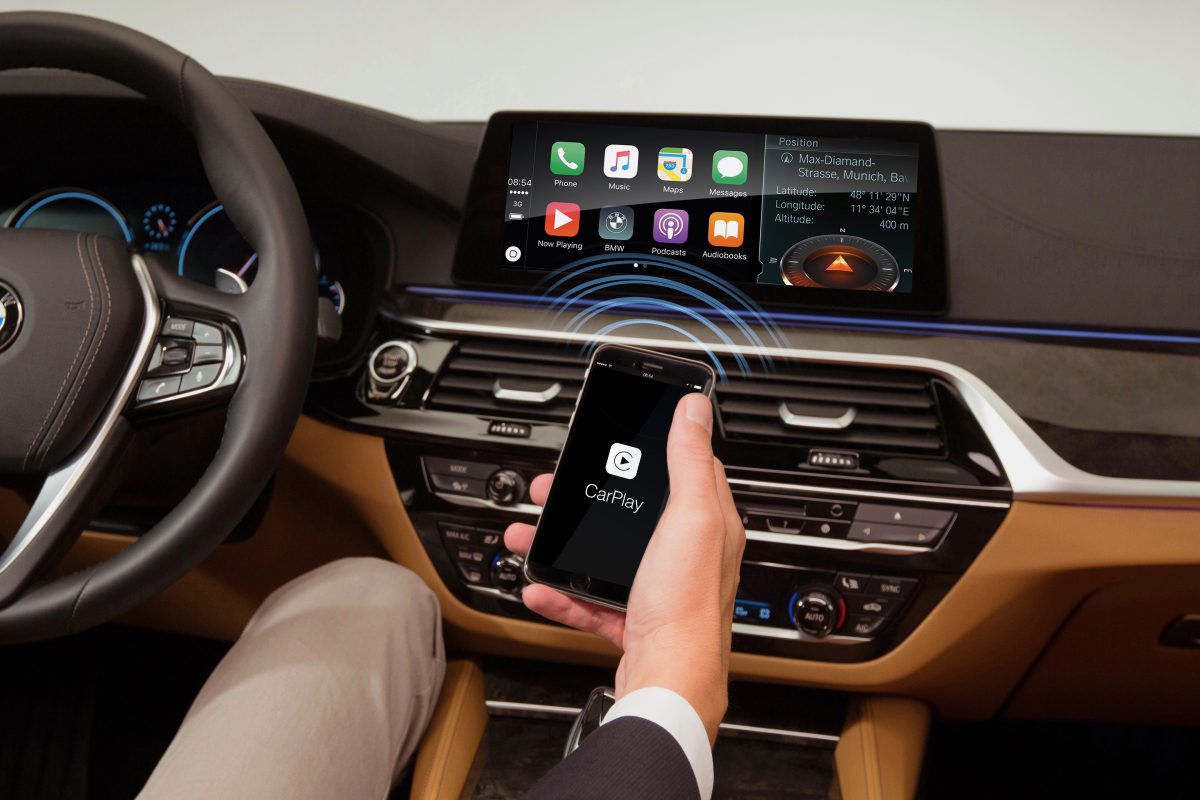
    Mahindra’s latest launch- the Marazzo will now be equipped with Apple CarPlay. The MPV was launched in India on September 3 and it’s infotainment system was Android Auto compatible. The UV maker has now confirmed to carandbike of having received the licence for Apple CarPlay. The company has sold over 4500 units of the Marazzo, which were rolled out of the Nashik plant. All these units did not have Apple Carplay but the company has informed us that all the models sold will be updated with the Apple CarPlay in their schedule service, without any additional cost.

    The timing for the license couldn’t have come at a better time as Mahindra is all set to launch the Y400 in the country in November this year and well, the SUV of course will get both Apple CarPlay and Android Auto now.

    The 7-inch touchscreen infotainment system in the Mahindra Marazzo is claimed to be the most updated unit in Mahindra’s product portfolio boasting of some cool features, for example configurable home screen. Buyers can add personalized images on the infotainment system’s internal memory via the USB socket and select it as the background wallpaper. Moreover, Mahindra has also been innovative with the creature comfort features in the Marazzo.

    The new Mahindra Marazzo is powered by a new 1.5-litre four-cylinder diesel engine that has been tuned to offer a maximum of 121 bhp and develops a peak torque of 300 Nm. The engine only comes mated to a 6-speed manual gearbox, and right now, there is no automatic transmission on offer. Mahindra is also working on the petrol engine and an automatic transmission for the Marazzo and could introduce the same when the BS VI emission norms come into effect from April 2020.

  • Spotify launches programmatic audio campaigns in APAC

    Spotify launches programmatic audio campaigns in APAC

    Spotify and Rubicon Project have launched programmatic audio advertising campaigns in APAC for the Australia, New Zealand, Hong Kong and Singapore markets following the music streaming service’s foray into global programmatic audio solution earlier this year. With the launch of the campaigns, brands will be able to target audiences based on Spotify “moments” such as commute, party and workout.

    Spotify users do not just browse for music by genres or artists, but also playlists that express the moods of those moments. Programmatic audio advertising allows buyers to target those moments based on users’ age and gender in real time. Its audio inventory is traded programmatically via private marketplaces on Rubicon Project’s platform.  In a statement, Joanna Wong, head of business marketing at Spotify for APAC, said the campaign presents advertisers with a new channel to reach consumers.

    “Since the launch of our programmatic audio campaign in August we have seen an incredible response in APAC,” said Wong. “Programmatic audio advertising means that buyers can reach individuals at scale based on not just the usual age, gender and geographical identifiers, but on a whole new data trove–their taste in music,” she added.  “Spotify’s programmatic audio proposition demonstrates the future of all media going programmatic.

    Our recent ventures into out of home, TV and now audio are all a part of this broader automation trend, and we look forward to continuing to collaborate with innovative partners like Spotify to offer buyers innovative ways to engage with consumers,” said Rick Mulia, managing director of JAPAC at Rubicon Project. A Tech Navio report mentioned that APAC will be the fastest-growing region in the music streaming market with around 21 percent compound annual growth rate by 2020.

    Widespread smartphone penetration and high speed data connectivity are expected to further augment the growth of the music streaming market in APAC over the next four years.

  • Spotify Launched in Indonesia

    Spotify Launched in Indonesia

    Spotify is finally kicking back into expansion mode in Asia. Nearly two years after its last country launch in the region and close to four years after it first stepped into Asia, the music streaming service has confirmed plans to go live in Indonesia at the end of March.

    Indonesia could have serious potential for Spotify. The fourth most populous country on the planet, Indonesian smartphone sales are projected to grow by 20 percent this year as its population of 250 million becomes increasingly more affluent and connected to technology.

    Last October, we reported that Spotify was close to launch in Indonesia and Japan, too, and the company has been quietly upping its efforts in Tokyo, where it established an office some time ago. In one sign of its imminent arrival, Spotify inked a partnership with Japan’s top messaging app Line which, similar to its agreement with Facebook, lets users share Spotify tracks through the Line app.

    Beyond that deal, which is only available in markets where Spotify has launched (i.e. not Japan right now), and in another big hint at an impending launch, Spotify is currently hiring for 12 roles in Japan — including telling positions like head of consumer marketing, head of communications, social media marketing manager — while its central team tasked with market expansions has made trips to the Tokyo office.

    TechCrunch understands that, as was the case in October, the challenging landscape for music streaming services in Japan — where CDs still rule for music sales — has delayed Spotify’s Japan launch longer than the company would have liked. Already, though, Apple Music and a competing music service from Line (both a friend and rival, it seems) are among the services available in the country. Thus Spotify wants to act quickly and join them.

    Spotify declined to comment on its launch plans in Asia, Indonesia aside, when we asked. But we have come to learn from a source close to the company that it has begun to look at India.

    That interest is exploratory at this point, but Spotify would enter a challenging race were it to bring its service to India. Apple entered the country last summer when Apple Music launched globally, but local services like Tiger Global-backed Saavn and Times Internet’s Gaana lead the mobile music space. We haven’t heard much about how Apple Music is faring in India, but Spotify could be a better fit for the country since it offers a free version of its service and has a more robust Android app — both of which are essential in India.

    Asia marks a potentially important focus for Spotify, which recently hit the 30 million paying user milestone. Large swathes of the region are mobile-first or mobile-only, with many consumers reliant on their phone to provide all of their entertainment options. That opens an obvious window for mobile music services, but monetization is a huge challenge since Asia is less developed when it comes to paying for digital content and piracy reigns supreme.

    Spotify’s initial foray into Asia saw it land in small and fairly Western-influenced countries like Hong Kong and Singapore, markets where it was likely to see uptake, but now the Swedish company appears to have its sights set on larger challenges, starting with Indonesia.

  • Harman partners with TCL to boost retail, product collaboration

    Harman partners with TCL to boost retail, product collaboration

    Chinese audio and infotainment company Harman International opened its flagship store on 23 April at the TCL Tower in High-tech Industrial Park of Shenzhen. Its sister store, the TCL O2O flagship store was also set up the same day. TCL Corporation’s Chairman Li Dongsheng and Harman International’s Chairman Dinesh Paliwal attended the ceremony together, representing the start of a comprehensive partnership between the two corporations.

    Harman develops and produces professional audio electronic products and infotainment systems for various markets, ranging from auto markets, consumer markets, to professional audio markets. Over the past few years, Harman has already established a strong partnership with TCL Corporation, a global manufacturer of smart products and provider of internet application services. With the firm presence in TV and communications industries for years, TCL Corporation was the first TV manufacturer of China to engage in an all-round brand collaboration with Harman Kardon, a noted section of Harman International.

    The comprehensive partnership between TCL and Harman is mainly in the form of retail collaboration and product collaboration. Harman plans to create an online flagship store bearing its name on TCL’s e-commerce platform and identify TCL as its only e-commerce partner. Harman will also provide on-site product supports in 100 high-quality TCL stores. And in terms of product collaboration, Harman will provide diversified product customization services for TCL products.

    According to Li Dongsheng, the two corporations had always maintained a deep collaboration, with substantial progress being made between Harman and TCL’s four business areas including TV, cellphone, Tonly OEM, and O2O