Tag: Australia

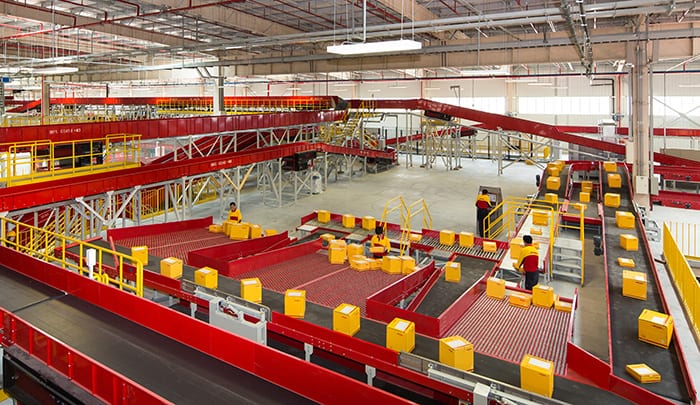
  • DHL eCommerce has launched its fulfillment centre in Sydney

    DHL eCommerce has launched its fulfillment centre in Sydney

    “E-commerce has gone borderless, and order fulfillment needs to do the same,” said Charles Brewer, CEO of DHL eCommerce. “Our Australian facility adds another node to our standardized global network of fulfillment centres located in the US, Mexico, India, Hong Kong and Central Europe, eliminating the need for e-commerce merchants to hunt for new logistics partners as they look to expand their global reach.”

    According to DHL, the new facility integrates inbound freight, inventory and last-mile delivery into a single consolidated service, operating under the same service level agreements, management platforms and customer support as the rest of the DHL eCommerce fulfillment network. All services will be offered on a pay-per-use basis.

    “Australian shoppers are the second-most likely in the world to buy online from overseas merchants, and the significance of their purchasing power will only increase as cross-border e-commerce grows at an average of 29% per year until 2020,” said Damien Sheehan, managing director of Australia at DHL eCommerce. “Online retailers need to overcome the traditional problems associated with overseas expansion — finding new suppliers in each market, delivering shipments within days not weeks, and keeping costs in check — if they want to stay competitive in this borderless future. The launch of our Australian fulfillment centre gives our customers immediate access to one of the world’s most mature and fastest-growing e-commerce markets, with the scalability and quality needed to reach Australia’s highly savvy online shoppers.”

    Malcolm Monteiro, CEO of Asia Pacific at DHL eCommerce, said that cost-effectiveness and scalability are the most critical issues for online retailers in Australia because the value of the country’s e-commerce sales is expected to grow by almost 50% between now and 2020.

    “Whether it’s extending into new channels, offering more delivery options, or simply increasing inventory and warehouse capacity, global brands need fulfillment solutions that can adapt to their needs without requiring hands-on intervention every time a change occurs,” he said. “Global e-tailers can access our latest fulfillment centre for simplified nationwide inventory and last-mile delivery and also as part of a rapid and painless global expansion.”

  • Hawaiki completes route survey for subsea cable

    Hawaiki completes route survey for subsea cable

    Hawaki Submarine Cable and TE SubCom have completed the route survey for the 14,000km Hawaiki transpacific cable system linking Australia and New Zealand with mainland US.

    With the successful completion of the survey, the companies remain on track to complete the deployment of the cable in mid-2018.

    Once complete, the carrier-neutral cable system will be the highest cross-sectional capacity link between the US and Australia/New Zealand. It will also link to Hawaii and American Samoa, with options to expand to several other South Pacific islands including New Caledonia, Fiji and Tonga.

    TE SubCom meanwhile continues to manufacture the cable, with more than 4,500km of cable and over 25 repeaters completed.

    “The start of 2017 finds the Hawaiki cable system closer and closer to ready for service,” Hakaiki CEO and co-founder Remi Galasso said.

    “The information garnered from the recently completed deep water route survey will be instrumental in ensuring the long-term viability of the cable system, and we are thrilled with the progress on the cable and repeater manufacturing efforts. Installation will begin later in 2017 and a fully lit system that should positively impact the entire region is soon to follow.”

  • Ministry terminates Australia`s Tiger Air charter flight operations

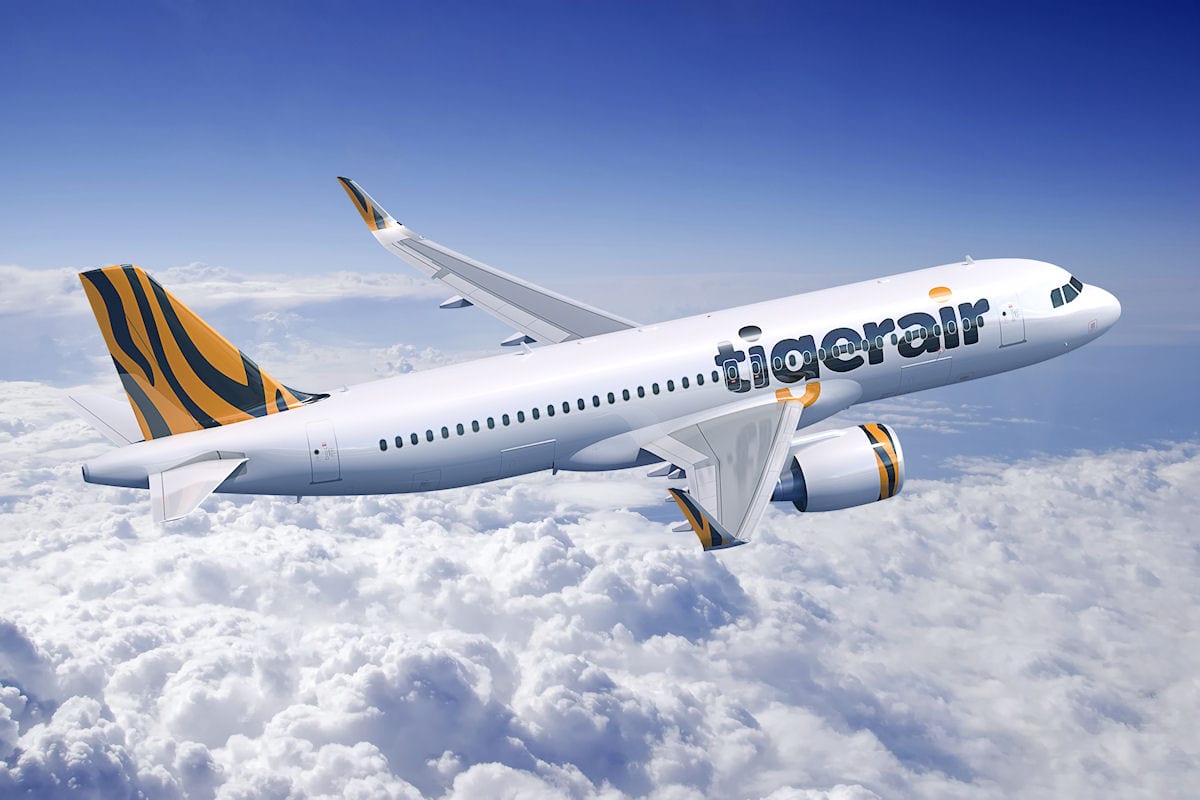
    Ministry terminates Australia`s Tiger Air charter flight operations

    The Airport Authority of the Transportation Ministry has terminated the operations of the Tiger Air charter flight from Bali to Australia for failure to abide by regulations.

    The decision to terminate the Tiger Air charter flight from Bali to Australia was made by the Airport Authority (OBU), Region VI of the Directorate General of Air Transportation, Wednesday, January 11, 2017.

    Spokesman of the Directorate General of Air Transportation Agoes Soebagio, in a written statement in Jakarta, Wednesday, said the OBU Region IV had also terminated, as of Wednesday (January 11), the operations of charter flights of the Tiger Airways Australia from Melbourne, Perth and Adelaide in Australia to Denpasar, Bali.

    The examinations by the OBU Region IV revealed that Tiger Airways Australia (TT) did not abide by the regulations contained in the charter flight permit provided by the Directorate General of Air Transportation.

    The Tiger Airways Australia did not comply with regulations as contained in the KM 25/2008 and PM 66/2015, which has been amended to PM 109/2016.

  • International MVNE to launch on ASX tomorrow

    International MVNE to launch on ASX tomorrow

    Australia-based international MVNE United Networks will list on the Australian securities exchange (ASX) tomorrow after completing an A$7.1 million IPO.

    United’s main product is a white label global roaming service operating over cellular, Wi-Fi and GPS networks worldwide, targeted at corporate customers including insurers, airlines, banks and travel agents. The company also offers data and value added services.

    This month, United launched a white label Wi-Fi application connecting users to unlimited data in over 57 million hotspots across 120 countries.

    The company also offers a location based services platform that has recently been used to provide location and alert services for major events such as natural disasters and terrorist attacks.

    United plans to use the proceeds from its IPO to expand the strength and coverage of the United network to help broaden its customer base and product range.

    “The success of United’s white labelling has come from it being an attractive low cost customer acquisition program for corporates, as well as offering them a chance to convert this cost into a revenue earner,” United CEO Nicholas Ghattas said.

    “With the launch of the Wi-Fi app we have streamlined the use of the global roaming product and we expect it to be the basis for its growing appeal among new and existing corporate customers.”

  • House of Chivas pours Regal Ultis to Qantas First Class customers

    House of Chivas pours Regal Ultis to Qantas First Class customers

    To celebrate the launch of Chivas Regal Ultis, Pernod Ricard Travel Retail Asia Pacific is offering the blended malt Scotch whisky to Qantas First Class customers until March.

    Chivas Regal Ultis features on the summer menu in the Sydney and Melbourne First Lounges and in a bespoke cocktail called ‘Fine St Blend’. First Class Qantas passengers will also be offered the spirit onboard and can buy it through Qantas epiQure and Qantas inSky shopping pre-order sites.

    Pernod Ricard Travel Retail Asia Pacific Senior Brand Manager Katie Gee said: “We know our Chivas Regal drinker travels frequently and is always discovering and seeking out new experiences. Showcasing our new product, Chivas Regal Ultis, with Qantas is a fantastic platform to connect with whisky enthusiasts along their journey.”

    To further promote the Chivas Regal Ultis launch in the region, Pernod Ricard Travel Retail Asia Pacific has partnered with duty free retailers to create large scale promotions in airports. Tasting bars, ambassador appearances and gifts-with-purchase were featured in December and will continue in selected locations throughout January.

    Chivas Regal Ultis is available now in global travel retail and in selected domestic retailers. The Scotch is also available through Qantas epiQure and Qantas inSky shopping pre-order channels in Asia Pacific.

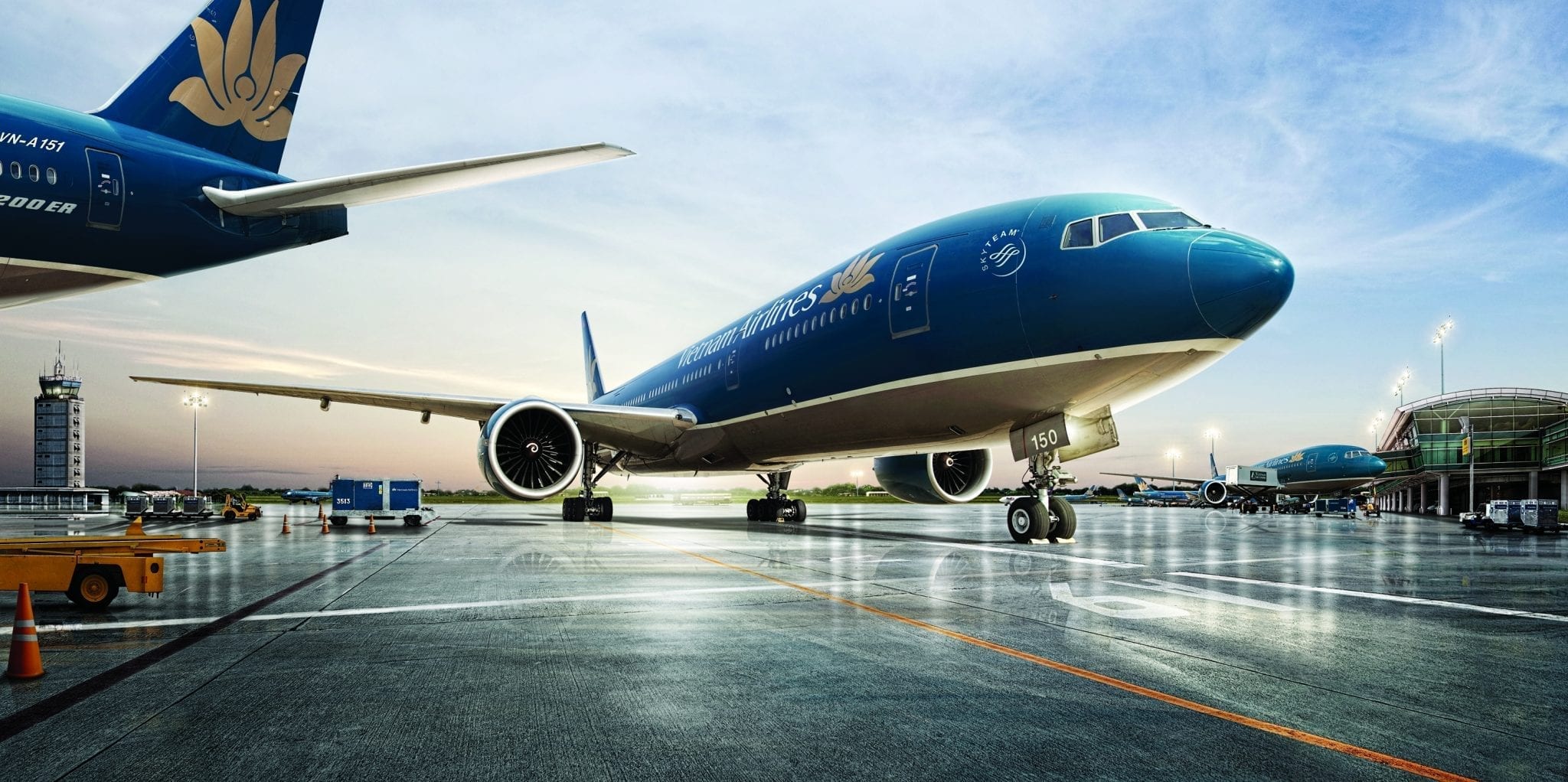
  • Vietnam Airlines switches Australian routes to all-787 operation

    Vietnam Airlines switches Australian routes to all-787 operation

    Australia has become an all Boeing 787 destination for Vietnam Airlines after the Skyteam alliance member switched both its Melbourne and Sydney services to the next-generation Dreamliner.

    Vietnam Airlines’ first 787 flight to Australia arrived on Friday morning, when VN781 operated by 787-9 VN-A865 touched down at Melbourne Tullamarine at about 0930, after an eight hour and 20 minute journey from Ho Chi Minh City. The route was previously served with Airbus A330-200 equipment.

    The airline is the eighth carrier to serve Melbourne Tullamarine with the 787 alongside Air India, Air New Zealand, Jetstar, Royal Brunei Airlines, Scoot, United and Xiamen Airlines.

    And Melbourne is due to get another 787 operator with LATAM announcing the start of Melbourne-Santiago nonstop flights from October 2017.

    Meanwhile, Vietnam Airlines’ first 787 service to Sydney arrived less than an hour after the flight to Melbourne landed.

    Flight VN773, operated by 787-9 VN-A870, arrived at Sydney Kingsford Smith Airport a little after 1010, with passengers taken on a scenic fly over Sydney Harbour prior to landing.

    Vietnam Airlines previously operated Boeing 777-200ERs on the Ho Chi Minh City-Sydney route. The switch to the Dreamliner brings to nine the number of carriers operating the aircraft at Sydney – Vietnam Airlines joins Air India, Air New Zealand, ANA, Jetstar, LATAM Airlines, Scoot, United and Xiamen Airlines.

    Qantas places its QF airline code on Vietnam Airlines’ two Australian routes.

  • Aussie telco complaints on the decline: ACMA

    Aussie telco complaints on the decline: ACMA

    Australian operators are delivering better levels of customer service with the number of complaints moving lower and “bill shock” less prevalent, according to a major annual national study.

    The Australian Communication and Media Authority’s (ACMA) report “Reconnecting the Customer – Tracking Consumer Outcomes” reveals that the overall incidence of complaints has decreased from 36% in 2013 to 31% this year.

    A significantly lower number of complaints related to mobile phone services was a feature of the result.

    The study also showed that the incidence of consumers complaining about unexpectedly high bills was now at 19% for post-paid mobile services, down from 33% in 2013.

    Complaints for product bundles fell from 26% to 31% over the same period.

    The extra amount consumers are complaining about has fallen from an average AU$94 ($68) to AU$60 ($44).

    In more evidence that Australian consumers are more engaged with their telecom services, consumers are monitoring their expenditure with SMS alerts and apps.

    “In good news for consumers, fewer are experiencing unexpectedly high bills, and they are making better use of spend management tools to monitor and track their expenditure,’ said ACMA’s acting chairman, Richard Bean.

    “They have a clearer understanding about the cost of their communications services, and are better able to plan and budget accordingly.”

    A separate study looking at consumer migration to new technologies also had some positive results, showing that 82 percent of Australian consumers saying it was either easy or not difficult to connect to the new National Broadband Network (NBN).

  • Vodafone Australia builds cyber security center for enterprise customers

    Vodafone Australia builds cyber security center for enterprise customers

    Vodafone Hutchison Australia (VHA) has contracted Dimension Data and FireEye to build its first Cyber Defence and Response Centre (CDRC) to offer services to enterprise customers.

    The CDRC will provide around-the-clock advanced event monitoring, threat protection and intelligence, and incident response to help protect Vodafone Enterprise and its customers against online security threats, as well as assist with the aftermath of an attack.

    Vodafone signed a five-year contract with FireEye and a three-year contract (with a two-year option for extension) with Dimension Data to help deliver a range of services through the CDRC, including proactive threat hunting, global threat intelligence correlation, vulnerability management, penetration testing, digital forensics and crisis management.

    “Cybercrime is a topic that we take very seriously at Vodafone. We have partnered with the industry’s best providers to help us protect our critical information and infrastructure, as well as intellectual property,” said Vodafone chief technology officer Kevin Millroy.

    “The capabilities, maturity, flexibility, and scalability of Dimension Data and FireEye enables us to be ready and open to exchange threat information and knowledge with the federal government’s Australian Cyber Security Centre, and ultimately contribute to protecting Australia’s national security and economic prosperity from online threats.”

  • More Singapore Airlines flights for Sydney, Melbourne, Brisbane

    More Singapore Airlines flights for Sydney, Melbourne, Brisbane

    Singapore Airlines is ramping up flights to Sydney, Melbourne and Brisbane in 2017, a year which marks the airline’s 50th anniversary in Australian skies.

    Melbourne will see a fifth flight appear on the schedule from 17 July 2017, with the new SQ247/248 operating on Monday, Friday and Saturday.

    The SQ247 Airbus A330 service will depart Singapore at 2am and arrive in Melbourne at 11.25am; SQ248 leaves Melbourne at 12.40pm to reach Singapore at 6.30pm.

    In addition, from January Melbourne’s SQ227/228 will step up to a four-class Boeing 777-300ER with the Star Alliance member’s new premium economy class.

    Brisbane will see SQ265/266 tick over to a daily frequency from 22 August 2017, up from the current four flights a week; it’ll stay on a Boeing 777-200ER aircraft with a fully-flat business class bed for the overnight flight between Brisbane and Singapore.

    Sydney is also gaining extra flights. Beginning 4 June 2017, SQ251/252 will be bumped up from three times weekly to five times weekly, while SQ231/222 will continue as a four-class Airbus A380 from 18 June to 30 September 2017.

    2017 will also see Singapore Airlines boost flights to popular cities in Europe and Asia – including Rome, Moscow and Bangkok – with a new via Moscow route to Stockholm.

  • Australia’s Thinxtra to launch IoT network in HK

    Australia’s Thinxtra to launch IoT network in HK

    Australia-based pure-play IoT infrastructure provider Thinxtra has expanded into Hong Kong, with plans to launch Sigfox low-power wide area (LPWA) network in the market early next year.

    The company is deploying a territory-wide open IoT LPWA network that connects to other networks based on Sigfox’s network technology in 28 countries.

    Ahead of the launch, Thinxtra has been working with Hong Kong’s Science Park on IoT R&D efforts as well as the design of devices, sensors and services for the network.

    Thinxtra is the exclusive Sigfox network operator for Australia, New Zealand and now Hong Kong, and also has LPWA networks covering 62% of the population in Australia and 73% in New Zealand.  Now the company is pursuing expansion into the APAC region.

    “We’re bringing our expertise and experience to Hong Kong to support its ongoing transformation into a smart city and a leader in IoT adoption and development,” Thinxtra Asia managing director Murray Hankinson said.

    “We also see great potential for Hong Kong to be a world-leading design and manufacturing hub for IoT innovation, and we’re investing here to support this growth.”

    Sigfox is working with partners to roll out a global LPWA network dedicated to the IoT, designed to meet the low energy consumption and long range requirements for IoT devices.

  • TPG wins auction to be Singapore’s fourth cellco

    TPG wins auction to be Singapore’s fourth cellco

    Australian fixed line operator TPG Telecom has won the new entrant spectrum auction to become Singapore’s fourth mobile network operator.

    TPG submitted the winning bid of S$105 million ($72.8 million) for a provisional allocation of 60 MHz of spectrum in the 900-MHz and 2.3-GHz spectrum bands.

    TPG outbid MyRepublic to secure the new license and spectrum.

    Final allocation of the spectrum will require payment of the relevant spectrum fees, and the commencement date of spectrum rights will be scheduled after the planned general spectrum auction to be held in the first quarter.

    Regulator IMDA said the new spectrum rights are expected to commence on April 1 at the earliest. TPG will also be eligible to compete in the general spectrum auction if the operator so chooses.

    As a condition of its bid, TPG will need to provide nationwide street level 4G coverage within 18 months of the new spectrum rights commencing, road tunnels and in-building coverage within 30 months and coverage of MRT underground stations and lines within 54 months.

    Singapore MVNO Circles.Life, which launched earlier this year as the market’s fourth postpaid mobile service provider, has welcomed the move.

    “Circles.Life welcomes IMDA’s on-going efforts to support competition and look forward to TPG Telecom’s entry into the telco space in Singapore… We hope TPG Telecom will continue to support our ambition to bring more innovation and choice to the market,” the company’s co-founder and director Rameez Ansar said.

    “In the short-term, the impact may be limited until TPG Telecom enters the market in about two years from now after building the required infrastructure. Meanwhile, we are focusing on targeting the data savvy segment.”

  • Telstra excluded from Australian 700-MHz auction

    Telstra excluded from Australian 700-MHz auction

    The Australian government will exclude the market’s largest operator Telstra from taking part in a digital dividend auction of 700-MHz spectrum, on the advice of telecoms regulator ACMA.

    ACMA held that because Telstra already owns more than 50% of available low-band spectrum, a victory in the auction would only increase its dominance.

    Communications minister Mitch Fifield has instructed ACMA to set a reserve price for the auction of $1.25 ($0.93) per MHz per head of population covered.

    The terms of the auction will stipulate that no operator can own more than two 20 MHz blocks of spectrum in the 700 MHz band.

    Setting such a cap could allow both Telstra rivals Optus and Vodafone Australia to secure more spectrum to compete against the incumbent. If major fixed line operator TPG chooses to participate the operator would also be better positioned to roll out a fourth 4G network in Australia.

    TPG spent A$13.5 million ($10 million) for 2×10 MHz of 2.5-GHz spectrum in 2013. The operator also recently won the auction to become Singapore’s fourth mobile network operator after securing 60 MHz of 4G spectrum.

    The digital dividend auction will involve 2×15 MHz of the 700-MHz spectrum freed up from the migration from analog to digital broadcasting, but left unsold during the initial digital dividend auction in 2013.

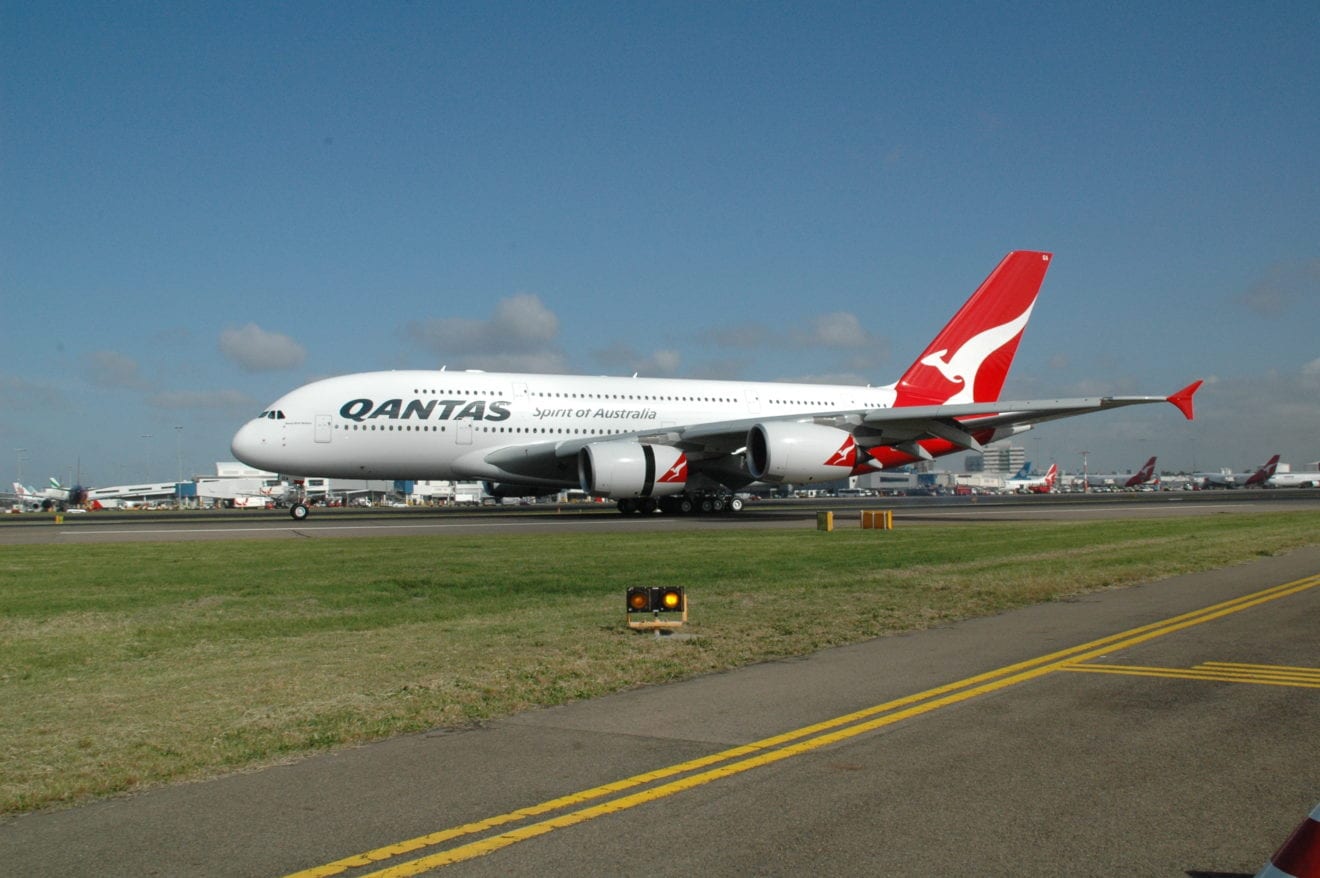
  • Qantas To Launch 787 with Melbourne – LA Route

    Qantas To Launch 787 with Melbourne – LA Route

    Qantas will inaugurate long-haul flights with its new Boeing 787-9s by flying them between Melbourne and Los Angeles from December 15, 2017.

    The flight will be operated six times a week, replacing the current twice-weekly flight operated by a 747-400.

    Qantas also operates a daily Airbus A380 flight between Melbourne and Los Angeles.

    The carrier recently announced that it would fly its 787s non-stop between Perth and London from March 2018.

    Qantas has eight 787-9s on firm order.

  • Australia plans controversial rural NBN levy

    Australia plans controversial rural NBN levy

    The Australian government is planning to impose a monthly levy on rival networks to the state-funded National Broadband Network (NBN) to help fund the roll out of the NBN to rural areas.

    Communications minister Mitch Fifield said the government will seek to pass legislation that would establish an A$40 million ($30 million) Regional Broadband Scheme.

    This scheme would be funded by a levy of A$7.30 per month for each fixed line connection provided by rival superfast broadband providers, increasing every year into 2022 when it reaches A$8 per month.

    The levy would not apply for small companies with under 2,000 customers. Australia’s largest operator Telstra and main rival Optus will also be exempt because they are transitioning their fixed line operations onto the NBN as part of separate deals with the government.

    But the government’s own advice indicates that such a levy will be passed on to consumers resulting in higher prices.

    High-speed providers have complained that the proposed levy could “cripple” their operations, destroying 30% of their revenue, the report adds. The proposal has also been slammed as extremely anti-competitive.

    The presence of competing fiber networks to the NBN has been a contentious issue since the project was first announced in 2007, with successive governments fearing that the rival services could “cherry pick” the network’s most lucrative customers in dense population centers without needing to invest large sums to reach sparse regional areas.

  • Australia may revamp telecoms USO

    Australia may revamp telecoms USO

    Australia’s Productivity Commission has called for the current telecommunications universal service obligation (TUSO) scheme to be scrapped and replaced with a more future-proof regime.

    Currently the government has a deal to provide former state-owned operator and fixed line market leader Telstra $300 million per year to ensure fixed voice and payphone services are available to every Australian.

    Nearly $3 billion of the 20-year TUSO contract is provided by tax payers, with the remaining $3 billion provided by Telstra and rival operators. But these rivals have often complained about issues including a lack of transparency from Telstra over how it is spending the money.

    As with all other markets, fixed voice services have also been declining in popularity as mobile adoption reaches a saturation point.

    In a new report, recommended that the current TUSO scheme be replaced with a version that seeks to ensure all Australians have access to a baseline broadband connection including a voice service.

    The responsibility for meeting TUSO obligations would also shift from Telstra to the state-owned national broadband network (NBN), which is expected to be fully rolled out by 2020.

    “In a digital age, the current obligation — requiring Telstra to provide all Australians with access to basic fixed line telephones and payphones — is anachronistic and needs to change,” commissioner Paul Lindwall said.

    “Once rolled out to all Australians, the NBN will be the foundation on which a future broadband based telecommunications universal service policy should be built. A completed NBN, which provides broadband and voice services to all Australians, will make the current TUSO obsolete.”

    But the commission has acknowledged that there could be difficulties ensuring a basic broadband service is provided in areas only due to be served by the wireless and satellite component of the NBN.