Tag: Auto

  • Tesla’s China Car Registrations Surge In March As Shanghai Factory Back Up

    Tesla’s China Car Registrations Surge In March As Shanghai Factory Back Up

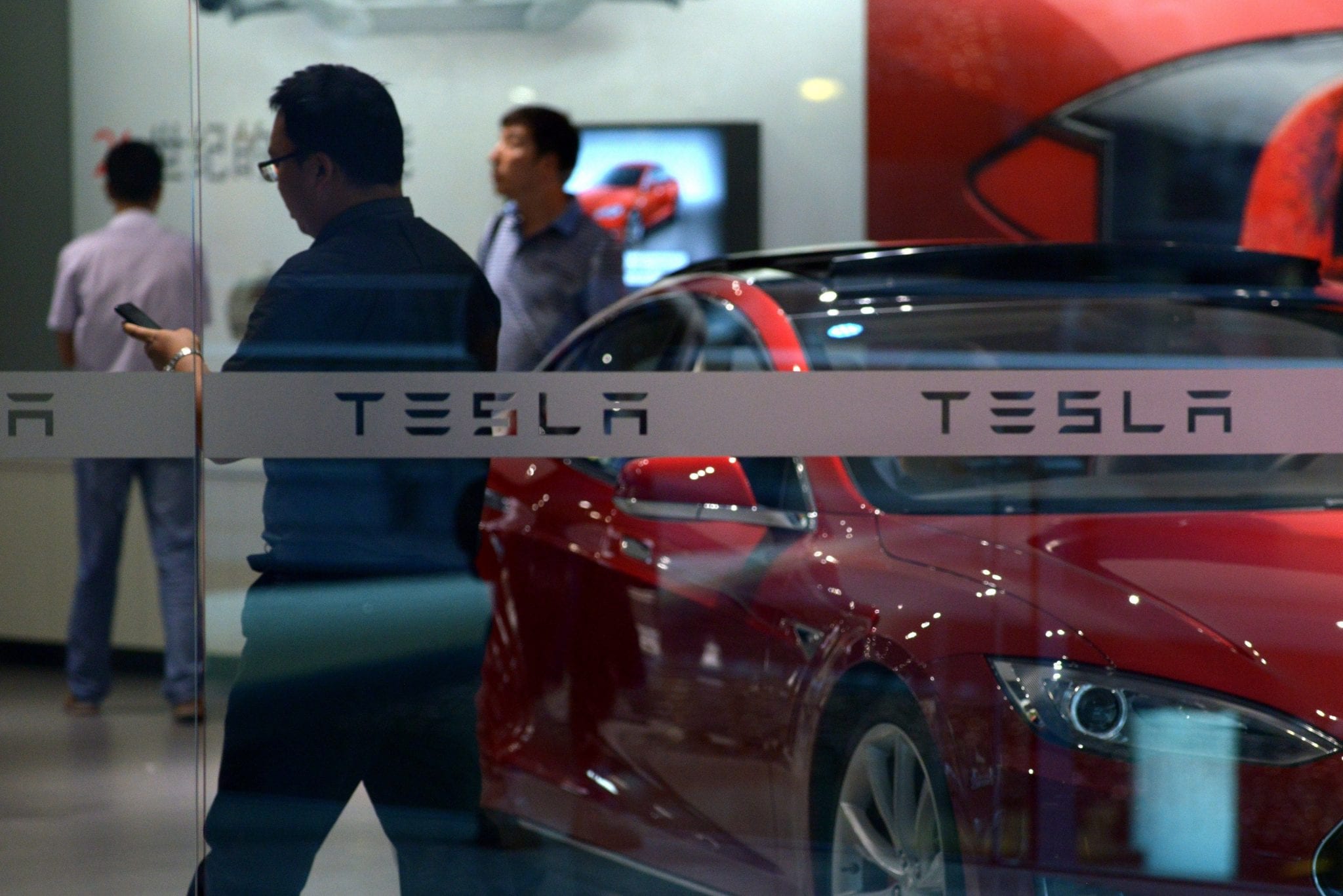
    U.S. electric vehicle maker Tesla Inc’s China car registrations jumped 450% in March, month on month, data from auto consultancy LMC Automotive showed.

    Tesla’s China registrations rose to 12,709 units in March from 2,314 in February.

    Overall auto sales in China plunged 43.4% in March, as a coronavirus pandemic continued to depress demand, industry data showed.

    Tesla told employees on Tuesday the company will furlough all non-essential workers and implement salary cuts as part of a continued shutdown of the company’s U.S. production facilities.

    Tesla, which started delivering cars from its Shanghai factory last year, said last week it has started China sales of two more Model 3 variants built at its Shanghai plant.

  • Volkswagen To Aid U.S. Dealers Supporting Coronavirus Relief Efforts

    Volkswagen To Aid U.S. Dealers Supporting Coronavirus Relief Efforts

    Volkswagen AG said on Monday it would give financial assistance to its U.S. dealers who wish to use their loaner fleet to pick up and deliver essential supplies in areas affected by the COVID-19 pandemic.

    The loaner cars, typically offered to customers to drive while their vehicles are in a shop for repairs, can be called upon for delivering food to a local food bank, transporting masks and gowns, and dropping off necessary items to those who are unable to leave their home, the automaker said.

    Dieselgate’ made headlines around the world. For deliberately cheating the system, Volkswagen was made to pay a record $20 billion fine. But, as this investigation shows, they were far from the only culprits.

    Volkswagen said its dealers would not charge the group or person making such a request.

    “Only dealership employees will be permitted to drive vehicles. Volkswagen corporate will offer dealers a daily stipend per vehicle to cover fuel and lease costs,” the automaker said.

    Volkswagen’s network of more than 600 U.S. dealers maintains a loaner fleet of nearly 7,000 vehicles, although some dealerships could be closed or working with reduced personnel due to state and local guidelines.

  • Ford Expects Coronavirus Shutdown To Cause $600 Million Quarterly Loss

    Ford Expects Coronavirus Shutdown To Cause $600 Million Quarterly Loss

    Ford Motor said on Monday it expects to post a pre-tax loss of about $600 million for the first quarter as the coronavirus outbreak pummeled its sales and shuttered vehicle assembly plants, resulting in a 21% drop in vehicle sales to dealers versus the same quarter in 2019.

    The news sent Ford’s shares down more than 5% in morning trading.

    Only Ford’s joint ventures in China, where the COVID-19 pandemic has been receding, are currently producing vehicles. The automaker said it is working on a scenario for a phased restart of its manufacturing plants beginning in the second quarter.

    “However, we believe we have sufficient cash today to get us through at least the end of the third quarter with no incremental vehicle production and wholesales or financing actions,” Chief Financial Officer Tim Stone said in a statement.

    Global automakers reeling from the COVID-19 pandemic are accelerating efforts to restart factories from Wuhan to Maranello to Michigan, using safety protocols developed for China and U.S. ventilator production operations launched in recent weeks. Cia

    Asked whether Ford would apply for loans from the U.S. government or the Federal Reserve to sustain its operations for longer if needed, a spokesman for the automaker said that unlike during the Great Recession – when financing dried up – there is still plenty of liquidity in the capital markets.

    “We have a broad range of options” for obtaining additional financing if needed, the spokesman said.

    As of April 9, Ford said it had about $30 billion in cash on its balance sheet, including $15.4 billion it borrowed last month against two existing credit lines.

    Ford said any decisions on restarting its plants will be made “in cooperation with local unions, suppliers, dealers and other stakeholders.”

    In March, the company shuttered plants in North America and Europe due to the spreading pandemic.

    Earlier this month, the No. 2 U.S. automaker said its first-quarter U.S. sales had fallen 12.5% during the quarter. The U.S. market, with its highly profitable pickup truck and SUV segments, generates the overwhelming majority of Ford’s profits.

    Ford’s U.S. sales chief Mark LaNeve said on April 2 that Ford believes some level of government stimulus will be needed for American consumers once the COVID-19 pandemic recedes.

    Ford said it expects its first-quarter adjusted loss before interest and taxes to be about $600 million, compared with a profit of $2.4 billion a year ago.

    The company said it expects to report revenue of about $34 billion for the quarter.

  • Passenger Vehicle Sales Down  In March 2020

    Passenger Vehicle Sales Down In March 2020

    The entire nation is under lockdown since March 24 which has been taking a toll on businesses. With both sales and production being stopped, auto sales have taken serious hit recording a sales decline of 44.95 percent in March 2020 selling 10,50,367 units last month as compared to 19,08,097 units which were sold in the same month a year ago. Sales of passenger vehicles went down by 51 percent in March 2020 selling 143,861 units as compared to 2,91,861 units a year ago. Sales of passenger cars went down by 52.12 percent at 85,229 units as compared to 178,019 units while UV sales slumped by 44.67 percent at 51,569 units as compared to 93,206 units in the same month a year ago. However, it’s the Van segment that witnessed the steepest decline at 69.88 percent selling 6216 units as compared to 20,636 units in March 2019.

    Two-wheelers sales too went down by 39.83 percent at 866,849 units against 14,40,593 units sold in the same month last year while three-wheeler sales went down by 58.34 percent in the same month at 27,608 units as compared to 66,274 units sold last year. Sales of commercial vehicles took the worst hit dropping by 88.05 per cent at 13,027 units as compared to 109,022 units sold in March 2019.

    Speaking on the sales performance, Rajan Wadhera, President- SIAM said, “The month of March 2020 was one of the most challenging months for the Auto sector as the 21-day lockdown resulted in bringing the production and sales of vehicles to a standstill in the last week. As the revenues took a severe hit, the OEMs struggled on meeting fixed cost and working capital requirements. The industry was already reeling under severe de-growth and the pressure of disrupted supply chain, which was followed by a majority of the auto companies announcing a shutdown of their manufacturing units in the last week of March 2020, due to concerns over ensuring workplace safety & health of their employees. As per our estimates at SIAM, Auto industry is losing Rs 2,300 crore in production turnover for every day of closure.

    Owing to the prolonged slowdown that had gripped the industry for the last 15 months, sales in FY2020 also remained subdued recording a decline of 17.96 percent selling 2,15,48,494 units as compared to 2,62,66,179 units sold a year ago. The PV segment witnessed a decline of 17.82 percent at 27,75,679 units as compared to 33,77,389 units. In the same period, sales of two-wheelers went down by 17.76 percent at 1,74,17,616 units as compared to 2,11,79,847 units last year while three-wheelers sales declined by 9.19 per cent at 6,36,569 units as compared to 7,01,005 units. CV sales went down by 28.75 per cent at 7,17,688 units against 10,07,311 units. Sales of quadricycles in the same month went up by 50.24 percent at 942 units as compared to 627 units sold in FY2019.

  • Daimler To Restart German Factories From April 20

    Daimler To Restart German Factories From April 20

    Mercedes-Benz maker Daimler said Wednesday it plans to restart work at factories in Germany from April 20, after a weeks-long interruption due to the coronavirus pandemic. “In a few selected factories, we are implementing a coordinated restart of production,” the group said in a statement. “From April 20 this will affect the car motor factories in Germany, Mercedes-Benz car factories in Sindelfingen and Bremen and the vans factories.” Truck and bus sites will also open from the same date.

    But Daimler also said that it would extend shorter hours for its German workers until April 30, impacting “the majority of production… as well as administration”.

    In the first quarter, Daimler’s worldwide sales slumped 15 percent year-on-year, with Mercedes-Benz cars alone seeing a 20-percent drop in China and 16 percent in Europe.

    Coronavirus “heavily impacts sales on a global scale,” finance chief Harald Wilhelm said in a conference call Wednesday, adding “the overall economic impact cannot yet be assessed with sufficient certainty”.

    Meanwhile, Volkswagen said Wednesday that it would begin increasing production from April 14 in “a few” factories building car components, which are currently operating at much-reduced capacity.

    Most of the auto behemoth’s sites are closed until at least April 19, but the group wants “to safeguard the supply of components to plants in China” after the Easter weekend.

    “Further details of the mode of operation are expected after Easter” for other components and vehicle sites, VW said.

    Daimler rival BMW said Tuesday that it would extend a production stop until April 30, while Ford’s European factories are on hold until at least May 4.

    Car sales plummeted in several European countries in March as far-reaching restrictions on daily life to limit the spread of the coronavirus bit.

    Experts expect still-worse performance in April, while rating agency Moody’s forecast a 14-percent contraction in the global car market for 2020 as a whole.

    But the picture is brightening in Asia, with “significant growth in demand” in China and South Korea, Mercedes-Benz sales director Britta Seeger said in a statement.

    BMW also sees “first signs of a rebound” in China, sales chief Pieter Nota said Tuesday.

  • Toyota Extends North American Plant Shutdown

    Toyota Extends North American Plant Shutdown

    Toyota Motor said Wednesday it plans to reopen its North American auto plants on May 4, extending its current shutdown by two additional weeks.

    The Japanese automaker cited the ongoing COVID-19 pandemic and decline in vehicle demand to extend the halt of production at all of its automobile and components plants in Canada, Mexico and the United States.

    Toyota will not furlough its direct employees but has asked its hourly plant employees to take two days out of the 10-day extension as paid time off or they can go without pay if they don’t have accrued leave.

    The Toyota Vellfire is a luxurious MPV and is the perfect vehicle for celebrities, movie stars and the likes. It is full-sized panel van and it is loaded with all sorts of creature comforts. We spent a scant amount of time with the new Vellfire an…

    For Toyota’s 5,000 workers provided by outside agencies, Toyota is releasing those workers back to their agencies. Toyota will continue to pay the benefits of those workers for the time being, and they may be eligible for unemployment.

    On Tuesday, Honda Motor Co and Nissan Motor Co on Tuesday said they had furloughed thousands of workers at their U.S. operations as the coronavirus pandemic slashes demand for cars in the country.

    A spokesman for Honda, which employs about 18,400 workers at plants in Alabama, Indiana and Ohio, said the Japanese automaker would guarantee salaries through Sunday, has suspended operations on March 23. The plants will be closed through May 1.

    Nissan said it was temporarily laying off about 10,000 U.S. hourly workers effective April 6. It has suspended operations at its U.S. manufacturing facilities through late April due to the impact of the outbreak.

    Automakers are facing a dramatic drop in sales in the United States, the world’s second-largest car market after some states barred dealers from selling new cars while “stay-at-home” orders are in place. Fiat Chrysler Automobiles NV on Monday extended its shutdown of U.S. and Canadian plants until May 4.

  • European Motorcycle Industry Appeals For Extension Of Euro 5 Deadline

    European Motorcycle Industry Appeals For Extension Of Euro 5 Deadline

    The global motorcycle industry has been hit hard by the novel coronavirus outbreak. In Europe, brands like Ducati, KTM, BMW and MV Agusta have all halted production in the battle against the COVID-19 outbreak. A few European motorcycle brands are citing supply chain slowdowns and retail shutdowns, in order to justify delaying the Euro 5 emission standards by as much as six months, or up to even a year. From January 1, 2021, every new motorcycle sold in the European Union will have to comply with the Euro 5 regulations.

    The European motorcycle industry association, ACEM, is working on possible solutions but has also appealed for an extension of the Euro 5 deadline. The ACEM has reportedly started pushing the EU to postpone the final adoption date of Euro 5 by a full 12 months, giving manufacturers, as well as dealers, another year to clear stock of Euro 4 models and prepare their Euro 5 successors. In a statement, the ACEM said that it has pushed for the delay in the deadline.

    “The ongoing pandemic o 5 models. This disruption, in addition to virus containment measures taken in factories, has led to a near-complete standstill of the industry in many countries. The recent lock-down and stringent measures to contain the pandemic have also paralyzed motorcycle retail business activity. This is progressively affecting all European markets, creating unsettling uncertainties for the motorcycle sector. The COVID-19 crisis is placing dealerships, most of which are small family-run operations, under extreme financial hardship. Immediate cash flow concerns will need to be addressed through support measures in every impacted country.

    “Against this background, the motorcycle industry urgently calls on the European Commission and national administrations to swiftly adopt all necessary measures to help the sector come through this unprecedented crisis. The motorcycle sector is ready to work with all policymakers to achieve this aim, protecting the 300,000 jobs linked to this industry.”

    Unlike the BS6 regulations in India, in Europe, manufacturers have been given a lot of time, with the deadlines chalked out well in advance, with the final implementation laid out in 2013. But now it seems that a lot of modern motorcycles have yet to be approved to meet the Euro 5 standards. Some of those motorcycles will need minor updates, but others will need to be completely revamped, and in the current situation it appears to be difficult that these models will be allowed to be sold after December 31, 2020

    Many current motorcycle models, across brands like Ducati, BMW, Kawasaki, Yamaha and Suzuki still don’t meet the Euro 5 regulations, although some are described as “Euro 5-ready”, meaning they will still need to go through final testing to get the Euro 5 certification. What is clear is that the motorcycle industry across the world will be under pressure, even if, and when, the world moves out of the coronavirus pandemic. So far, it’s still not clear how the European Union will react to pressure to delay the introduction of Euro 5. Either way, the industry will be under pressure and will take several months to make a turnaround, that is certain.

  • Honda, Fiat Chrysler Aim To Restart production in  U.S.

    Honda, Fiat Chrysler Aim To Restart production in U.S.

    Honda Motor Co and Fiat Chrysler Automobiles NV said on Monday they hope to restart U.S. and Canadian auto production in May amid the ongoing coronavirus pandemic.

    The Japanese automaker halted production on March 23 and said it will extend the halt through May 1.

    Fiat Chrysler said Monday it “intends to progressively restart its U.S. and Canadian manufacturing facilities beginning May 4.”

    U.S. President Donald Trump last week extended the guidelines aimed at slowing the spread of the coronavirus to April 30.

    US auto industry executives say it will be nearly impossible for companies to resume production before the end of the month

    Several U.S. auto industry executives told Reuters on Monday it will be nearly impossible for companies to resume production before the end of the month — and there is no assurance automakers will be able to resume production in early May. Other automakers plan to extend current production halts later this week, automakers told Reuters.

    It will also take auto suppliers time to resume production. In an internal estimate, Ford Motor Co said last week it believed 600,000 U.S. industry auto sales may have been lost in March because of the coronavirus outbreak.

    The threat from the coronavirus crisis closed in on the global auto industry on Thursday, as Fiat Chrysler Automobiles NV warned that a European plant could shut down within two to four weeks if Chinese parts suppliers cannot get back to work.

    Honda noted many consumers are unable to purchase vehicles and said it “must continue to suspend production in order to align product supply with a lack of market demand.” Some states have barred car dealers from selling new cars while “stay at home” order are in place.

    Last week, Nissan Motor Co said it would extend its U.S. production halt into late April. Toyota Motor Corp has halted U.S. and Canadian production through April 17.

    Ford said last week it was postponing its plan to restart production at its North America. Ford had been aiming to resume production at several key U.S. plants on April 14, but then said it would now do so at dates to be announced later. Ford said Monday it is “continuing to assess public health conditions, government guidelines and supplier readiness to determine when the time is right to resume production in our North American plants.”

    General Motors Co has shuttered its plants indefinitely and has not provided a date for vehicle production to restart.

    Automakers are working on additional employee protections to add when they restart, including new personal protective gear, staggering shift starts, more frequent cleanings and new social distancing rules.

    Fiat Chrysler said it will redesign “work stations to maintain proper social distancing and expanding the already extensive cleaning protocols at all locations.”

  • Kia Compact Vehicles Contractor Suspends Production

    Kia Compact Vehicles Contractor Suspends Production

    A South Korean contract manufacturer for Kia Motors’ compact vehicles has suspended production, a company official said on Monday, citing a drop in overseas demand as the coronavirus outbreak has spread across Europe.

    Donghee Auto, which produces Kia’s Picanto and Ray models, has suspended production at its plant in Seosan, South Korea, until April 13, the official said.

    Of the 195,516 Picanto vehicles produced in South Korea last year 73% were exported, mostly to Europe, Korea Automobile Manufacturers Association data shows.

    Hyundai Wia, which produces engines for the Picanto and Ray, also said in a regulatory filing on Monday that it will suspend operations at its plant in Pyeongtaek, South Korea, from April 6 to April 9.

    Kia did not reply immediately to a request for comment.

  • Honda Extends North American Auto Plant Shutdowns

    Honda Extends North American Auto Plant Shutdowns

    Honda Motor Co has said that it will extend a shutdown of all U.S. and Canadian auto plant production through April 10 and at its plant in Celaya, central Mexico, until April 13, because of the ongoing coronavirus outbreak.

    Honda’s plant in El Salto in the western Mexican state of Jalisco, will also suspend production operations between April 4 and April 13, Honda’s Mexican unit said.

    Companies all over the world are joining in the battle against coronavirus, helping to make ventilators, face masks and hand sanitizer.

    A growing number of automakers have said they will not restart U.S. production until at least mid-April as demand sharply falls off for auto sales. Honda began its auto production halt on March 23.

  • Veoneer And Volvo Cars To Split Zenuity Software Joint Venture

    Veoneer And Volvo Cars To Split Zenuity Software Joint Venture

    Geely-owned Volvo Cars and auto tech supplier Veoneer will split their jointly owned software venture Zenuity as the Swedish carmaker focuses on developing autonomous driving software, the companies said on Thursday.

    Volvo and Veoneer said last year they were conducting a strategic review of Zenuity, which develops software for advanced driver assistance systems (ADAS) and autonomous driving, in part due to a wider introduction of self-driving cars being pushed further into the future.

    Under the new agreement, Veoneer will integrate the current Zenuity business focused on ADAS software, while Volvo Cars will set up a new stand-alone company to take over Zenuity’s development and commercialization of unsupervised autonomous drive software.

    Geely Automobile and its sister company Volvo Cars are planning to merge and list in Hong Kong and possibly Stockholm, giving Volvo access to public markets after it dropped a move to list its stock two years ago. Ciara Lee reports

    “This means that we will buy today’s systems (ADAS) from a more traditional supplier relationship, but development-wise we now want to put our focus on the next generation of products,” Volvo Chief Technology Officer Henrik Green told Reuters.

    Volvo’s part of Zenuity will focus on software that will be introduced in the next generation of cars based on Volvo’s SPA2 vehicle architecture platform, starting from around 2022, Green added.

    The agreement will see about 600 of the current 800 Zenuity staff and consultants transfer to the new Volvo Cars-owned company, with the remainder moving to Veoneer.

    Veoneer, which also makes radars and vision systems and expects 90% of its available market to be for advanced driver assistance systems (ADAS) in the next decade, said the move would help it drive its business strategy more effectively.

    The loss-making company said it expected annual savings of around $30 – $40 million from the deal as well as a payment of around $15 million from Volvo Cars, subject to final agreement.

    Shares of Veoneer, which is seeking to cut costs as the coronavirus outbreak makes its path to profitability exceedingly challenging, were up 3.8% by 1020 GMT.

    Analysts at Carnegie said the move was positive for Veoneer, and that its decision to focus on ADAS software was the right one.

    The split was expected to be finalized in the third quarter at the latest, the companies said.

  • Hyundai’s Global Sales Drops By 21% In March As Coronavirus Hits Demand

    Hyundai’s Global Sales Drops By 21% In March As Coronavirus Hits Demand

    Global sales for Hyundai Motor Co tumbled 21% in March to an 11 year-low for the month as the coronavirus pandemic batters demand and forced several of its overseas plants to suspend production.

    The South Korean automaker reported provisional global sales of 308,503 vehicles for March.

    The top automotive news of the day – Hyundai has launched the 2020 Verna in India. Royal Enfield Meteor 350 spied. Mahindra to manufacture face shield for medical personnel.

    Hyundai Motor closed its Montgomery, Alabama, assembly plant last month after an employee there tested positive for the disease, and also suspended production at plants in the Czech Republic and India over the virus.

    Plants in South Korea are, however, running at close to full capacity.

    Credit ratings agency Moody’s Investors Service said in a report last month it expects global sales for the auto industry to slide 14% this year. It placed the ratings of Hyundai and its affiliate Kia Motors Corp on review for a possible downgrade.

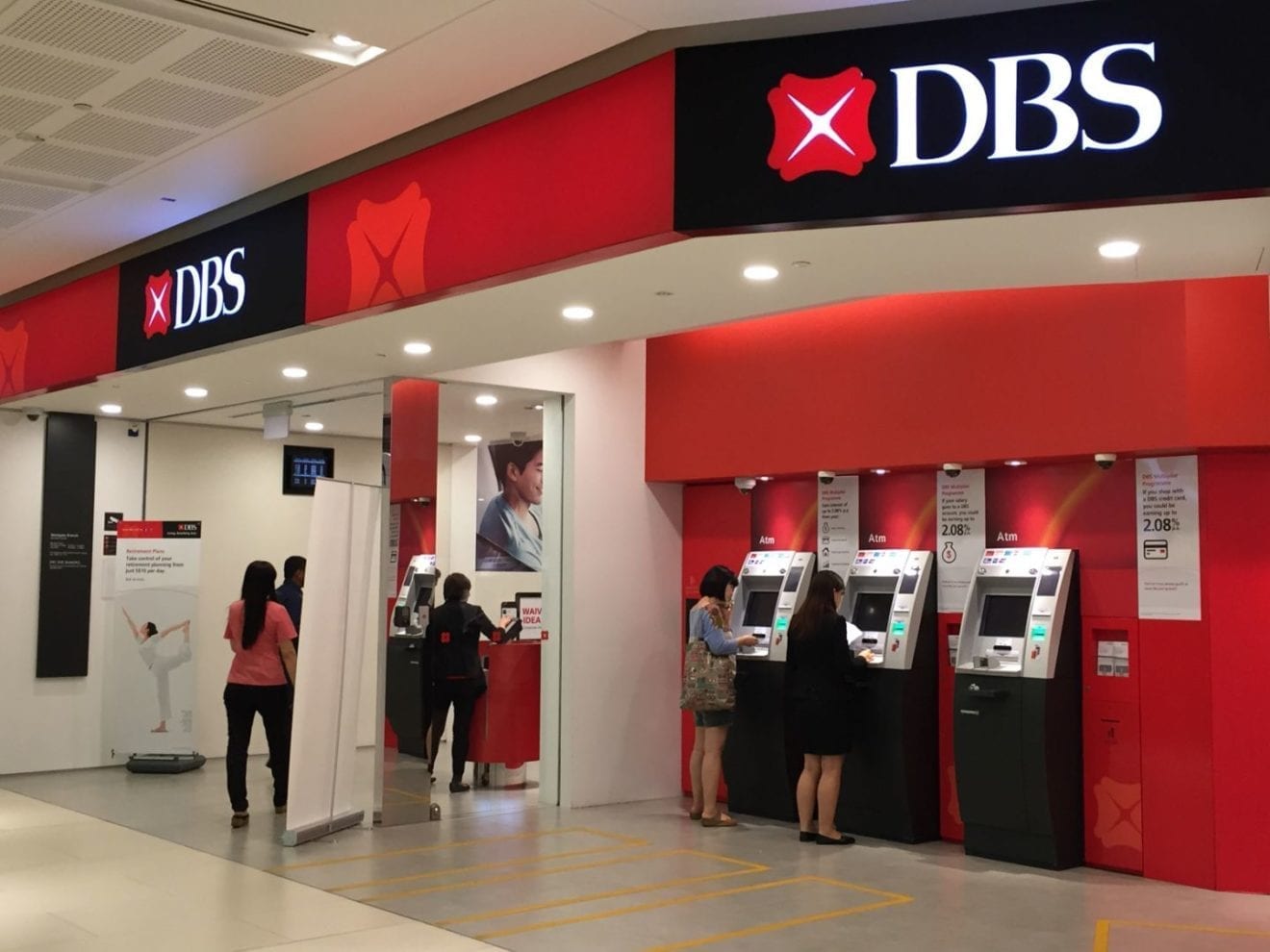
  • DBS Plans to Take Lion’s Share of Used-Car Loans

    DBS Plans to Take Lion’s Share of Used-Car Loans

    DBS has doubled its used-car loan market share, space traditionally dominated by lenders like Hong Leong Finance and Maybank. It hopes to grab 80 percent of used-car loans taking place online by 2021.

    The bank’s decision to focus on the used-car segment came about two years ago, partly due to regulatory changes as well as expectations of decreasing certificates of entitlement (COEs) over time.

    «With the COE quota reducing, the argument is that the premium could possibly go up, but we have not seen it yet as it’s too early to tell,» said Nelson Neo, head of new business for DBS’ deposits and secured lending division.

    «So what we see is really the potential, where consumers will continue to buy used cars, so that’s why we decided to intensify our focus around used cars,» added Neo, who plans to plans to rev up growth in used-car loans by 20 percent.

    Prior to 2018, used-car loans made up 10 percent of the bank’s auto loans, with new-car loans accounting for the rest. Now that used-car loans make up 20 percent, DBS is aiming for 80 percent of used-car loans taking place online by 2021.

    The rapid expansion was a combination of competitive pricing by offering one of the lowest rates in town, stronger partnerships with dealers, and enhanced digital capabilities that allow car owners to complete a loan application online, Neo said. Its interest rates for used cars are similar to new cars at about 2.28 percent.

    Two years ago, used-car loan rates were higher than that of new cars, but they have since fallen to either on par or even lower, depending on promotions.

    Aside from its new car pricing strategy, it is the bank’s data and digital capabilities that have been a game-changer.

    Last October, DBS fully digitized its sign-ups, allowing customers to apply online either through the national data repository MyInfo or DBS’ digital banking platform.

  • Android Auto wireless compatibility arrives in additional markets

    Android Auto wireless compatibility arrives in additional markets

    Android Auto is one of the trickiest products developed by Google. First off, it’s not compatible with all smartphones and some of the features are limited to select markets. Secondary, Android Auto is in a constant state of development, as Google adds and removes features all the time. Sometimes, updates remove features in favor of new ones, which are then brought back a few updates later.

    If you’re one of the many millions of Android Auto users, you’ll be happy to know that Google is expanding the availability of one of its features to additional markets. We’re talking about wireless compatibility, an option that only Android Auto users in about 15 countries were able to use until recently.

    Starting today, Android Auto in 16 countries join the list of markets where wireless compatibility is available. The new feature will allow Android Auto to display information on your vehicle’s display automatically once you start your car via Wi-Fi Direct, assuming you’re using a compatible device.

    Without further ado, here are the countries that are getting Android Auto wireless compatibility this week: Australia, Austria, Germany, France, India, Ireland, Italy, New Zealand, Philippines, Singapore, South Africa, South Korea, Spain, Switzerland, Taiwan, and United Kingdom.

  • Lamborghini’s New V12 Track Car Teased

    Lamborghini’s New V12 Track Car Teased

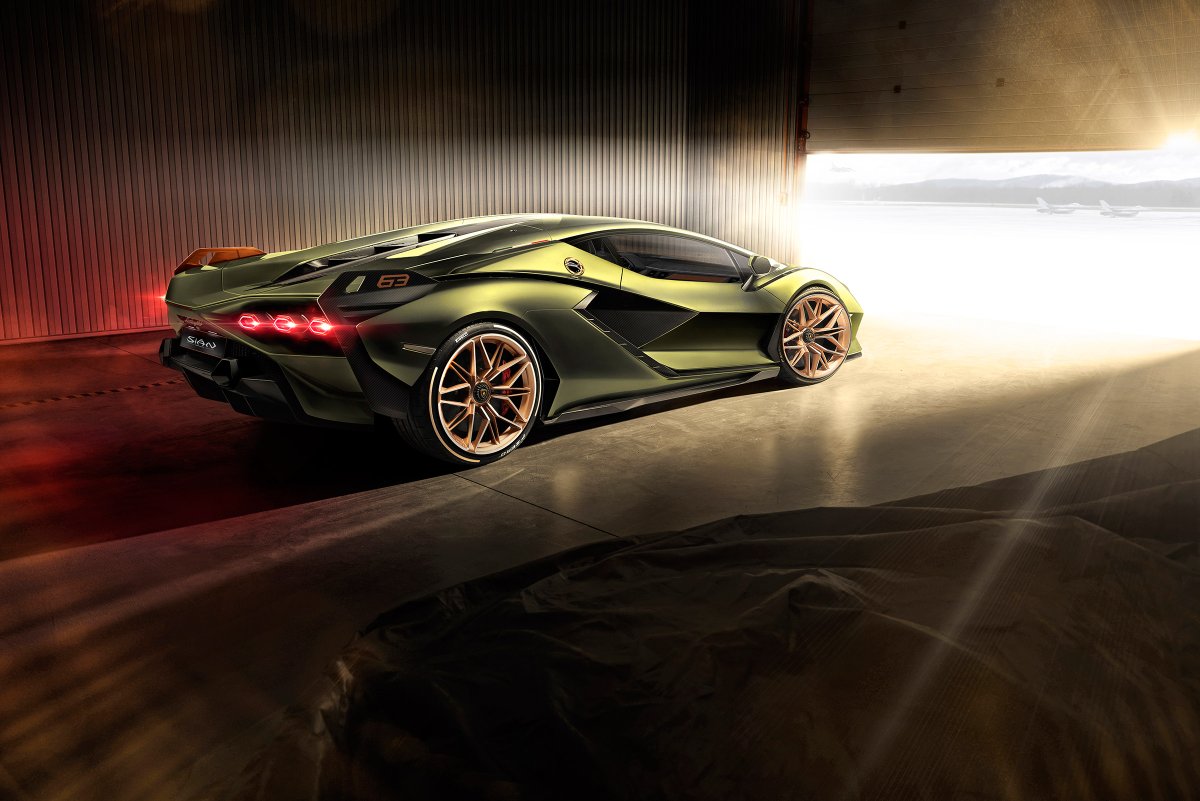
    Lamborghini working on a track-specific model was known to us, and finally the supercar maker has released a teaser video of its upcoming track-only machine. While the video primarily focuses on its razor-sharp styling and bodywork, we also get a whiff of what the humongous 6.5-litre, V12’s roar will sound like. It has not given much details about the model though, and all we know at this point of time is that it will churn out close to 830 bhp which is mind-boggling.

    As far as the construction is concerned, it sports a roof-mounted intake and a gigantic wing at the rear to generate heavy downforce. There are also dual air inlets on the hood and a detailed look will give away the sharp sculpting on the hood and along with the profile. Though we still can’t see all of it, since it’s just a teaser, the rear too looks muscular with massive haunches and there is a big diffuser sporting dual exhaust outlets.

    Lamborghini’s track division- Squadra Corse had mentioned that the track car will be manufactured in limited numbers and we expect just 40 units of it to roll off the assembly line. Towards the end, the video also hints at a new model which is the Huracan Super Trofeo Omologato (STO) that will be powered by the 5.2-litre naturally aspirated V10 motor that will belt out close to 640 bhp.