Retail News CRM

Tag: Auto

  • Toyota to introduce new safety features in future vehicles

    Toyota to introduce new safety features in future vehicles

    Japanese auto major Toyota plans to introduce its new global architecture and latest safety technologies in future vehicles as it seeks to play a major role in bringing down fatalities in road accidents.

    The company, which has introduced its Toyota New Global Architecture (TNGA) in its 4th generation hybrid car Prius, plans to introduce it in its future models as well.

    Besides, it is also looking to introduce pre-collision system (PCS) in vehicles from next year in Japan, Europe and the US.

    “We have introduced the TNGA in the market with our 4th generation Prius. We will introduce it in vehicles following the Prius and eventually introduce it to all our products when there is a model change,” Toyota Motor Corporation Assistant Chief Safety Technology Officer Seigo Kuzumaki said here.

    Stating that TNGA has resulted in new collision safety body structure, he said in oblique frontal crash test, the new Prius has about 55 per cent decline in cabin deformation percentage compared to the previous 3rd generation.

    The test was conducted at a speed of 90 kmph as compared to 64 kmph done in the previous generation, he added.

    According to Toyota, TNGA incorporates wide reaching structural innovations that promises substantially improved basic performance and product appeal.

    Commenting on the PCS, Kuzumaki said: “The plan is to introduce this technology to our vehicles in Japan, Europe and the US in 2017. Later on, it will be rolled out country wise depending on suitability.”

    The PCS is a feature that helps prevent collisions using a camera and millimetre wave radar and engaging brake assistance system after warning when a driver fails to use brake.

    Although the company hasn’t specified a timeline for these technologies to be brought to India, it assumes significance as Indian roads account for registering the highest number of road fatalities in the world.

    Deaths due to road accidents in the country increased by around 5 per cent to 1,46,000 in 2015 from the previous year.

    As per WHO, fatalities due to road accidents globally were at 1.42 million people and is projected to increase to 1.85 million by 2030.

  • Toyota to Continue to Invest Big in Indonesia

    Toyota to Continue to Invest Big in Indonesia

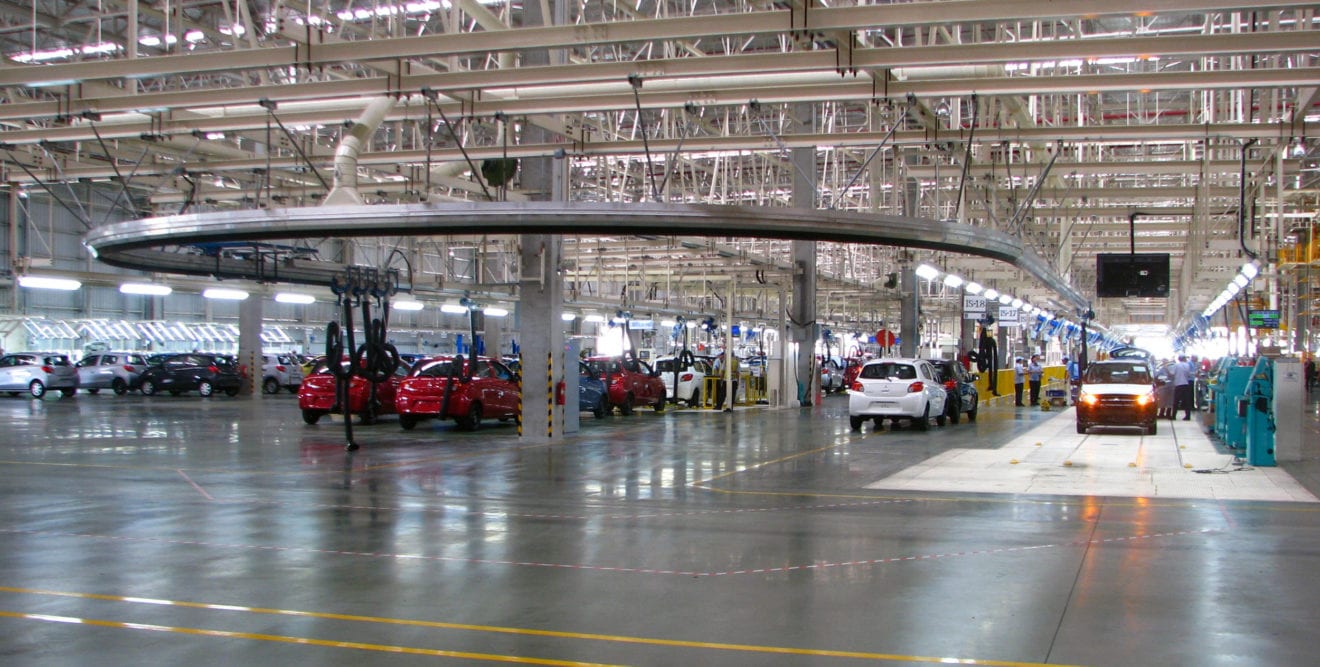
    Toyota will continue its major investment plan in Indonesia, particularly in manufacturing, up to Rp20 trillion by 2020.

    PT Toyota Motors Manufacturing Indonesia (TMMIN) deputy president director Warih Andang Tjahjono in Tokyo, Japan, said Sunday, August 28, 2016, that Toyota has made Rp10 trillion investment of its planned investment in Indonesia, as promised by Toyota Motor Corp (TMC) president director Akio Toyota.

    “Major projects have been realized, the third plant has been completed,” he said.

    Since 2013, he went on, Toyota’s production capacity in Indonesia continues to increase, from 110,000 units to currently 25,000 units per day.

    According to Warih, the total TMC investment in the past few years have reached roughly Rp10 trillion, in which the biggest investment had been made to develop the production capacity of Kijang Innova and Fortuner at approximately Rp5 trillion, followed by the production of Sienta at around Rp2.5 trillion, and NR engine production with an investment value of roughly Rp2.3 trillion.

    “Investment will continue, although it would not be as big as the current investment,” Warih said.

  • Nissan seeks to boost South Korean output on post-Brexit yen surge

    Nissan seeks to boost South Korean output on post-Brexit yen surge

    Nissan Motor wants to increase the output of its Rogue model at Renault’s factory in South Korea this year, as a stronger yen makes exports from Japan less competitive, a Renault executive told Reuters.

    The yen has jumped 20 percent against the dollar this year in the wake of Britain’s decision to leave the European Union, pressuring Japanese exporters. The South Korean won rose 7.4 percent against the dollar this year.

    “We have got a request to boost Rogue production by 8,000 vehicles this year,” Renault Samsung Motor Chief Executive Officer Park Dong-hoon told Reuters, adding that the company was reviewing whether it would be able to meet the additional demand.

    He added that Nissan Motor previously targeted output of 125,000 Rogue vehicles in South Korea this year.

    Rogue is Nissan Motor’s top-selling sport utility vehicle in the United States, with sales jumping 14 percent to 182,181 from January to July this year from a year earlier.

    Nissan Motor currently produces Rogues in South Korea, Japan and the United States.

  • Porsche launches digital business division for premium segment

    Porsche launches digital business division for premium segment

    Porsche AG, the sportscar unit of Volkswagen, launched Porsche Digital GmbH, a division dedicated to developing digital services for the premium segment.

    Porsche Digital GmbH will become a competence centre and an incubator to help find ideas which can be turned into businesses and services, the company said on Friday.

    The division will be based in Ludwigsburg near Stuttgart, and have offices in Berlin, Silicon Valley and China.

    It will be headed by Thilo Koslowski, a former digital mobility analyst at consulting firm Gartner.

  • Volkswagen considers setting up its own battery factory

    Volkswagen considers setting up its own battery factory

    Volkswagen is considering building a multi-billion-euro battery factory as part of a major expansion of its electric-car portfolio, company sources told the Handelsblatt, a leading German daily.

    The factory will allow Volkswagen to operate independently of Asian firms like Panasonic, LG and Samsung that have dominated the battery market to date, the newspaper added.

    The company’s executive board looks to be in favour of approving the plan, which is also supported in principle by the works council and the state of Lower Saxony, its major shareholder, before the firm’s annual meeting on June 22.
    The company hopes that focusing on battery technology and electric cars can help it make a fresh start and improve its negative image after the “Dieselgate” scandal, the paper said.

  • Astra car sales down 2.7 percent to 208,804 units in Q1

    Astra car sales down 2.7 percent to 208,804 units in Q1

    The countrys largest automotive company PT Astra International recorded a 2.7 percent decline year-on-year in car sales to 208,804 units in the first four months of the year.

    Based on data at the Indonesian Association of Motor Vehicle Industries (Gaikindo), Low Cost Green Cars (LCGC) contributed 34,209 units to the total sales by Astra Group.

    The sales in the first four month, however, was on the rise from 47,159 units in January to 49,933 units in February, to 54,508 units in March and to 57,204 units in April.

    The Astra group produces and sells Toyota, Daihatsu, Isuzu, Peugeot cars and UD Trucks. Sales have continued to be dominated by Toyota with sales reaching 111,710 units in the January-April period.

    Peugeot sales were the lowest in number reaching only 14 units. Sales of Daihatsu cars totaled 56,854 units, Isuzu 5,490 units, and UD Trucks 527 units.

    Sales of motorcycles produced by PT Astra Honda Motor (AHM) reached 1,439,241 units, down 13.5 percent from 1,664,395 units in the same period last year.

    Sales of non Astra cars in the first four months of the year totaled 177,316 units down 1.67 percent from 180,340 units in the same period last year.

    Sales of non Astra motorcycles totaled 543,263 units.

  • Hyundai restyles 2017 Elantra to look like a luxury vehicle

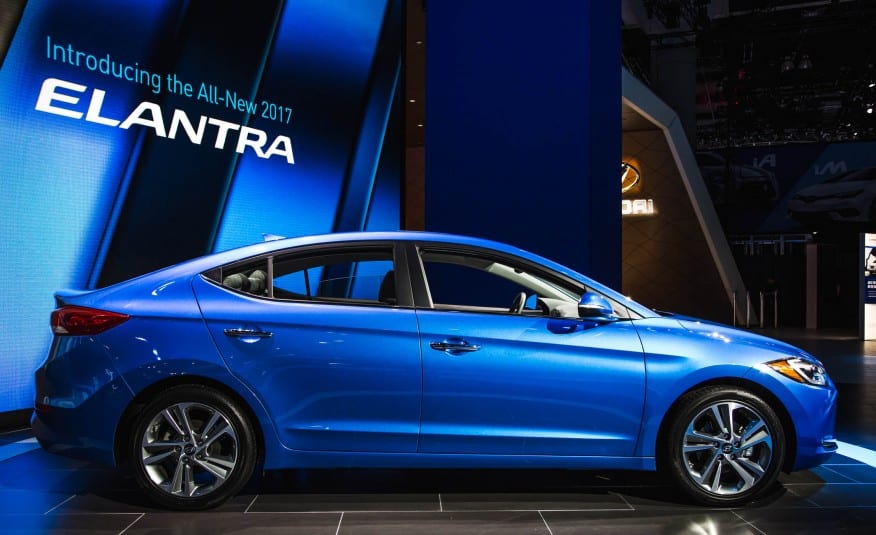
    Hyundai restyles 2017 Elantra to look like a luxury vehicle

    Hyundai’s top-selling car in the United States, the Elantra, has been nicely restyled and upgraded to the point that its 2017 model could pass for a higher-priced luxury car.

    The new Elantra, which is already at dealerships, has a surprisingly refined ride and can be stocked with features like heated rear seats, driver-seat memory settings, automatic emergency braking with pedestrian detection and headlights that swivel to the side to illuminate roads during turns. The 2017 Elantra even has a hands-free trunk that opens on its own when a driver, perhaps laden with grocery bags, has the car’s proximity key fob in his or her pocket or purse and stands within 3 feet of the back of the vehicle for at least 3 seconds.

    It also comes with something that no luxury car has: Hyundai’s 10 years/100,000-mile warranty of coverage on the car’s powertrain and five years/unlimited miles of free roadside assistance.

    Starting manufacturer’s suggested retail price, including destination charge, is $17,985 for the base 2017 Elantra SE with six-speed manual and $18,985 with six-speed automatic — some $100 less than the starting retail prices for the base 2016 Elantras. The top 2017 Elantra — the Limited— has a starting retail price of $23,185, and prices can approach $28,000 when all luxury features are added.

    The Elantras have a new 147-horsepower, four-cylinder engine that generates 132 foot-pounds of torque at 4,500 rpm. It’s also lighter than its predecssors, even a loaded Elantra Limited weighs less than 3,000 pounds, according to Hyundai. As a result, the Elantra Limited test vehicle performed capably.

    The test vehicle impressed with its virtually vibration-free ride. The driver didn’t detect powertrain vibrations or any roughness, even when resting a hand on the Elantra’s gearshift lever when the car was idling. When the Elantra accelerated, some engine noise could be heard, but it was strong, not a buzzing sound.

    The restyled Elantra maximizes aerodynamics, which eliminate drag and help fuel economy. The test vehicle averaged nearly 29 miles per gallon in mostly city driving that was done primarily in Normal, not Eco, mode; with 14-gallon fuel tank, it could travel a noteworthy 400 miles in mostly city driving.

    The U.S. government rates the 2017 Elantra Limited at 28 mpg in the city and 37 mpg on highways for a combined 32-mpg average that makes the Elantra second best among gasoline-powered, non-hybrid sedans of its size.

    Inside, the Elantra is comfortable, particularly for front-seat passengers, who have up to 42.2 inches of legroom and nearly 39 inches of headroom. Back-seat passengers have 35.7 inches of legroom and 37.3 inches of headroom, which allows two adults to travel well. A nice touch is the pull-down rear-seat armrest with cupholders, which doesn’t flop loosely or rest at a downward angle.

    Rear seatbacks split 60/40 and fold down so that the Elantra’s 14.4-cubic-foot trunk can accommodate long items.

    Fit and finish of the Alabama-built Elantra tester was excellent, and the tactile feel of the car’s buttons and knobs was akin to a luxury car’s.

    However, the base Elantra SE doesn’t include a standard rearview camera nor does it have the hood-insulator material that comes on the Limited, meaning its interior isn’t as quiet as the Limited.

    A second Elantra engine — a turbo with 158 foot-pounds of torque — is due this spring, when the 2017 Elantra Eco debuts.

  • TSS Revs up the Bangkok Auto Salon

    TSS Revs up the Bangkok Auto Salon

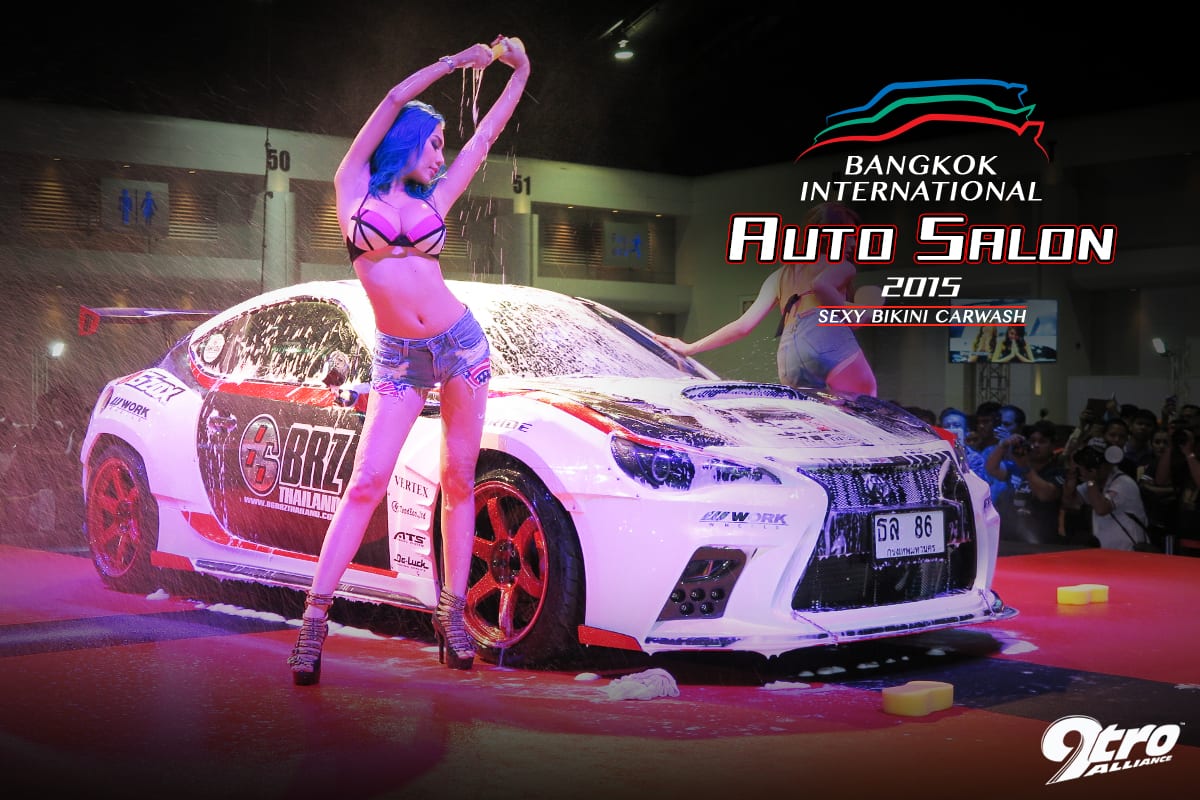
    Thailand Super Series (TSS) is thinking big these days so it was no surprise that its booth at the 3rd Bangkok International Auto Salon last week was packed out with ambition, menace and muscle. The biggest motorsport series in Thailand was right under the spotlights.

    Leading out the display was the monstrous Camaro GT3 of Vattana Motorsport, the big machine raced by Czech former F1 driver Tomáš Enge to double victory last December in Bangsaen. Next up was the unique ‘Australian V8 Supercar’ Holden that is raced by Craig Corliss. The New Zealander bagged a sensational win in the car (which was shipped to Australia at the end of last year for a total rebuild) at the season opener and he has his eye on the title.

    Then there was the Porsche 997 GT3 Cup of Sarun Sereethoranakul, the drift star turned circuit racer is the joint Super Car championship leader after the first round thanks to two consistent drives and he’s another aiming for the title. Not to be missed was the high-tech Audi R8 LMS Cup of Henk Kiks, the B-Quik Racing machine dazzling onlookers in its customary yellow and black colours, while the booth was wrapped up by the first car to be built for the series’ new ‘Racing Academy’ that aims to teach drivers the art of racing.

    ‘TCR Thailand’ promises to be one of the most exciting new categories to be introduced to Thai motorsport in recent years and the build up to the launch of the series in 2016 is well underway. In Buriram Khun David Sonenscher, CEO of Motorsport Asia, the promoter of TCR Asia Series, explained the exiting new concept in full detail during a well-attended Q&A session.

    Super Car Class 2-GTM regular Khun Paul Kanjanapas has officially launched his team for the 2015 championship with a new title sponsor and a new supporting crew during a prestigious mall ceremony and he has ambitions to keep improving as he undertakes a full season of top level racing.
    Finally, in amongst the many motorsport industry companies supporting the new breed of state-of-the-art racecars in TSS is MCS. Khun Jerome van Gool, President of Worldwide Operations, was in Buriram at the season opener to keep an eye on the Ferrari and Porsche entries from Singha Motorsport Team Thailand and A Motorsport, respectively.

    TSS in the spotlights at the Auto Salon

    TSS had an imposing presence at the 3rd Bangkok International Auto Salon, ASEAN’s biggest tuning and modified car show, which ran from Wednesday to Sunday last week at Muang Thong Thani’s Impact Exhibition Center.

    The strategically located official TSS booth packed a real punch with four stunning ‘Super Car’ machines on display, each one residing at the top the horsepower stakes – as well as at the business end of the racing grids. The TSS display was certainly one of the most popular with visitors to the show over the five days.

    VIP guest during the show’s official opening ceremony was TSS Vice President Khun Preeda Tantemsapya and he reckoned it was a natural ‘fit’ for the series to be seen at this glamorous event. “The reason for being here is that the Auto Salon is mainly about modification and all the cars in TSS are modified to a certain extent as far as the regulations allow them to,” he said.

    “We bring the cars to show so people who are interested in high performance cars and parts see that we exist in Thailand we have top racecars from all over the world in TSS,” Khun Preeda explained. “As we can see we have an Australian V8 Super Car on show all the way to Porsche and Camaro GT3 cars. We hope our display will encourage people to learn more about what we are and become interested in TSS.”

    Khun Preeda also reckoned that is was important for TSS to support this budding show, which is just three editions old but already growing rapidly in stature, not just here in Thailand, but right across the whole of South East Asia.

    Leading out the power packed display was the monstrous Chevrolet Camaro GT3, which is entered in Super Car Class 1-GT3 by Reiter Vattana Motorsport. Former F1 driver Khun Tomáš Enge raced to a superb double victory in the big black Reiter Engineering-built machine in Bangsaen last December and he was straight back onto the front running pace during the season opener in May. The Czech will be targeting more victories in the Camaro when TSS returns to Buriram for Round 3 & 4 at the end of this month.

    Next up was the unique ‘Australian V8 Supercar’ Holden Commodore VE that is raced by Craig Khun Corliss. The New Zealander bagged a sensational Super Car Class 2-GTM win in the big lurid-green car (which was in fact shipped to Australia after Bangsaen for a total rebuild in time for 2015) at the season opener and he’s another driver that has his eye on the title.

    Then there was the striking #55 Porsche 997 GT3 Cup of Khun Sarun Sereethoranakul. The ‘drifting’ star turned circuit racer is already the joint Super Car Class 2-GTM championship leader after the first rounds of the year thanks to two very consistent drives onto the podium and he’s another driver aiming for the title.
 
Then there was the high-tech #26 Audi R8 LMS Cup of Henk Kiks, the B-Quik Racing machine dazzling visitors to the booth in its customary standout yellow and black colours. The Dutchman had a tough start to the season in May but he’s ready to bounce back when racing resumes at the end of the month.

    The booth, laid out in the form of a ‘racing grid’, was completed by a Honda Jazz, the car that will form the backbone of the new TSS Racing Academy (TRA). That was one of a batch of eight examples that have already arrived at the school and which will initially operate from the Pathum Thani Speedway. More ‘learner’ racecars are following. The show was an ideal way to raise the Academy’s profile and plenty of interest followed the Jazz’s public debut.

    Khun Preeda reckoned the Auto Salon was the perfect event to use to bring the TRA to public attention for the first time. “We want people to learn about the TSS Racing Academy which we will launch [this coming weekend] with a soft opening,” he said. “So by having the car on our booth now we have a very good sense that the Academy exists although we won’t fully promote it yet but will wait until we have had a run in, got the concept full honed and then in a few months time we will officially launch it. By carefully honing it we should be able to create a good and solid foundation.”

    The presence of TSS racecars at the show didn’t stop with the official booth either; in fact there were machines from right across the series’ multiple categories on display throughout the Auto Salon. On the official Toyota booth, for example, was the Super Car Class 2-GTM ‘86’ of Khun Nattavude Charoensukhawatana. This car has a superb pedigree, winning the 2013 Drivers’ title while finishing runner up last year.
 
Next door on the Mazda booth the Innovation Motorsports-run cars from Super Production took pride of place. The new Mazda2 turbodiesel hatchback, which debuted at the season opener back in May, sat alongside the brand-new sedan version, which will be seen in TSS for the first time when the racing action resumes at the end of this month. Joining them was the sleek Mazda RX-8 that Khun Michael Freeman ran in Super Car Class 2-GTM at Bangsaen last December.

    Appearing in the big racing car display in the Challenger Hall was the Porsche 997 GT3 Cup of TSS President, Khun Sontaya Kunplome. He’s had a cracking start to the season and two strong results in Buriram in May have put him in command in the points’ standings in Super Car Class 3-GTC.

    H.Drive Racing hosted the new Porsche 991 GT3 Cup that Khun Pitsanu Sirimongkolkasem is using for his graduation year in Super Car. It’s the first of the new ‘991 generation’ to arrive on the racetrack in Thailand and is quite unmistakable as it’s wrapped in a striking gold livery. Alongside the #90 Porsche on the H.Drive stand was the Honda Civic FD that the same driver used to win Super 2000’s ultra-competitive Class B title last year; it was shown in the colours it ran in at Bangsaen last December where Khun Pitsanu wrapped up that title.

    The official Singha booth showcased a real line up of winners from Super Car and Super 2000. Leading the charge were the two Ferrari 458 Challenge machines of reigning Super Car Class 2-GTM champion Khun Voravud Bhirombhakdi and Singha Motorsport Team Thailand’s newest signing, hotshot youngster Khun Kantasak Kusiri.

    The two Prancing Horse machines were complimented by a trio of the team’s Honda Civic FDs, including the examples of Khun Kittipol Pramoj Na Ayudhya and Khun Thamrong Mahadumrongkul, two fast-emerging front-runners in the highly competitive world of Super 2000.

    Finally, the Ginetta G55 of Khun Naputt Assakul made a piece of history at the season opener when it gave the tiny British marque its first ever win in Thailand, the victory coming in Super Car Class 3-GTC. That noteworthy achievement was celebrated at the show as the black and gold car, with its long sweeping bonnet and its compact low-slung glasshouse, was on display in front of visitors.
  • Auto market flooded with imports from Thailand, Indonesia

    Auto market flooded with imports from Thailand, Indonesia

    A report of the General Statistics Office (GSO) showed a high car import growth rate in the last year. Vietnam imported $6 billion worth of cars in 2015, an increase of 59 percent in comparison with 2014.

    These include 125,000 CBU cars (complete built unit) worth $3 billion, an increase of 77 percent in quantity and 88 percent in value in comparison with the year before.

    Of the imports, transport vehicles were worth $1.2 billion, less-than-9-seater cars $507 million and large-size cars $34 million.

    Analysts noted that of the 10 largest markets from which Vietnam imports cars, including China, Japan, South Korea, Germany, the UK, France and India, imports from Thailand and Indonesia have seen sharp increase in the last months of the year.

    According to the General Department of Customs (GDC), in the first 11 months of 2015, Vietnam imported 23,516 CBU cars from Thailand, worth $406.1 million. The figures were much higher than 14,416 cars and $243 million in the same period of the year before.Both of them are ASEAN members.

    The car imports from Indonesia were lower than from Thailand, but have also seen a high growth rate. In 2014, Vietnam imported 1,686 cars from the market with the value of $16.9 million. Meanwhile, in 2015, the figure rose to 3.277 and $32.6 million.

    Analysts pointed out that Vietnam also imports vehicles in a large quantity from China, but the imports from the market are mostly trucks and specialized vehicles, while the imports from Thailand and Indonesia are mostly those with less than nine seaters.

    Vietnam not only imports CBU cars from Thailand and Indonesia, but car components as well, $542 million and $105 million, respectively, in 2015, which were even higher than the CBU import turnover.

    Analysts commented that large imports from two ASEAN countries are predictable, especially since the car price decreased by 40-42 percent recently.

    They believe that the imports from ASEAN would dominate the domestic market thanks to their more reasonable prices, compared with imports from developed countries and domestically made products.

    According to the Strategy Research Institute, the car price in Vietnam is much higher than Indonesia because taxes and fees make up 40-50 percent of the cars’ value.

    Toyota Camry in Vietnam, for example, is priced at $50,000, while it is just $40,000 in Indonesia. Similarly, the price of Honda CR-V is $45,000 in Vietnam and $29,000 in Indonesia.

    The Ministry of Finance estimated that from 2019 when the import tariff and luxury tax are cut, cars with cylinder capacity of less than 1,000 cm3 would see prices drop by 42 percent.

    Car owners complain about regulations on equipping their cars with fire extinguisher

    • Renault eyes Vietnam expansion
    • Vietnam buys many Chinese goods, from onions to cars
  • Japan interested in auto component factory in Indonesia

    Japan interested in auto component factory in Indonesia

    A company in Japans Okayama Prefecture is interested in the automotive component business in Indonesia, Okaya Prefecture Governor Ryuta Ibaragi said.

    During his visit to the Indonesian Capital Investment Coordinating Board (BKPM) here on Friday, Governor Ibaragi said the automotive component company, which has supplied components for Mitsubishi cars, was interested in developing an auto component factory in Indonesia.

    “There are 422 companies from Okoyama Prefecture that have made investments outside Japan. In Indonesia, we have a number of large companies which made investments,” he said, in a written statement made available in Jakarta on Saturday.

    Meanwhile, Okayama Prefecture’s governor said there is considerable interest among Japanese businessmen to conduct business in Indonesia. However, there are a number of concerns about the investment climate in Indonesia from investors from the Prefecture Okoyama, he said, including the problem of the country’s unpredictable wage system.

    Ibaragi said that during his visit in Indonesia he found Indonesians to be quite open to Japanese companies.

    “Regarding the MRT project, we thank the Indonesian government for its trust in a Japanese company. Of course, we will not ignore it and will maintain that trust,” he said.

    BKPM Chief Franky Sibarani said Japanese companies were given priorities regarding assistance from investment facilities.

    Japanese investment is the main component of the economic growth driver in Indonesia, he said.

    “We are ready to assist investment from Japan. The Marketing Office for the Japan area and the BKPM representative office in Tokyo could be used by investors and companies in Okoyama to plan business activities in Indonesia,” he said.

    He noted that his office was planning to conduct an investment promotion in Yokoyama early next year to win over interest by Japanese investors.

    “One of the major investors is Sumitomo. We will invite a number of companies which have made investments in Indonesia to share their successful experiences with their colleagues in Japan,” Sibarani said.

    In the first half of this year, Japan was ranked third in foreign investments, amounting to US$1.6 billion after Malaysia (US$2.6 billion) and Singapore (US$2.3 billion).

    Coming next were South Korea (US$0.8 billion) and the United States (US$0.6 billion).

  • Luxury carmakers clock best-ever India sales in 2014

    Luxury carmakers clock best-ever India sales in 2014

    Riding on high demand that outstripped supply, luxury car manufacturers Audi and Mercedes-Benz have ended 2014 with best-ever sales in their history in India. German carmaker Audi sold 10,851 units in 2014, compared with 10,000 in 2013, it said in a statement. Audi India sold 3,044 units in the October-December quarter, posting a 17 per cent growth over the year-ago period when it sold 2,611 units.

  • After terrible year, Thailand’s auto sector is expecting 2015 recovery

    After terrible year, Thailand’s auto sector is expecting 2015 recovery

    The Thai auto industry may have suffered a terrible year, with domestic sales plummeting by almost 40 percent during the first 10 months, but many believe the worst has passed and that 2015 will be a year of recovery.