Retail News CRM

Tag: Auto

  • Volvo recalls vehicles in US, Canada for seat belt problem

    Volvo recalls vehicles in US, Canada for seat belt problem

    Volvo is recalling about 79,000 cars and SUVs in the US and Canada because the front passenger seat belt may not hold people in a crash.

    The recall covers certain S60, S90, V60, XC60 and XC90 vehicles from the 2016 and 2017 model years.

    Volvo says in government documents that a buckle stud can come loose, allowing the buckle to separate from a bracket. If that happens, the belt may not hold the front passenger in a crash. The company said Wednesday it has no reports of injuries. It does not expect to find any loose studs but says it’s recalling the vehicles as a precaution.

    Dealers will replace the buckle if needed at no cost to owners starting December 12.

    Volvo began investigating the problem after getting reports of buckle failures starting in August. It traced the trouble to cars made from February 16, 2015, to August 22, 2016

  • Honda plans North American production shifts to make more SUVs

    Honda plans North American production shifts to make more SUVs

    Honda Motor Co is shifting around its North American vehicle production mix and may raise imports from Japan to squeeze out more SUVs as it struggles to keep up with strong U.S. demand for larger models, a factor which has prompted the automaker to trim its annual sales forecast.

    From early next year, Honda will dedicate production at its Alabama plant to its Pilot SUV, Ridgeline pick-up truck and Odyssey minivan, shifting production of its luxury Acura MDX SUV to its plant in Ohio as part of efforts to align its overall production of popular models to better reflect market demand.

    Demand for multi-tasking vehicles from cost-conscious consumers and historically low gasoline prices have ramped up demand for SUVs and other larger models over that of passenger cars.

    So far this year, roughly 59 percent of all new vehicles sold in the world’s No.2 auto market have been light trucks, versus 41 percent passenger vehicles, compared with 55 percent and 45 percent, respectively, a year earlier.

    In comments scheduled for release on Thursday, American Honda Motor Co CEO Toshiaki Mikoshiba told reporters that by also shifting more production of its popular CR-V model to its Indiana plant from Mexico, and producing more of its HR-V models in Mexico, the company planned to lift its production weighting between light trucks and passenger cars more in favor of light trucks, from an even balance currently.

    “While maintaining our current overall capacity (in North America), we’d like to also consider our production options in Japan … to produce more light trucks to respond to strong demand,” Mikoshiba said.

    “So long as we don’t see a sudden reversal in gasoline prices, we believe this would be the right move for the market.”

    Japan’s third-largest automaker by vehicle sales also said that it was considering producing the CR-V and the Civic sedan in Japan to be exported to North America to fill any gaps in local production.

    Honda is planning to market the recently revamped Civic in Japan, which a company spokeswoman said would add to production capacity, while it is also considering marketing the latest CR-V at home.

    Last month, Honda lowered its annual North American vehicle sales forecast to 1.985 million, from its previous expectation for 1.990 million, due in part to the skew in market demand.

  • VW’s Skoda Auto says October deliveries grew 10.6 percent

    VW’s Skoda Auto says October deliveries grew 10.6 percent

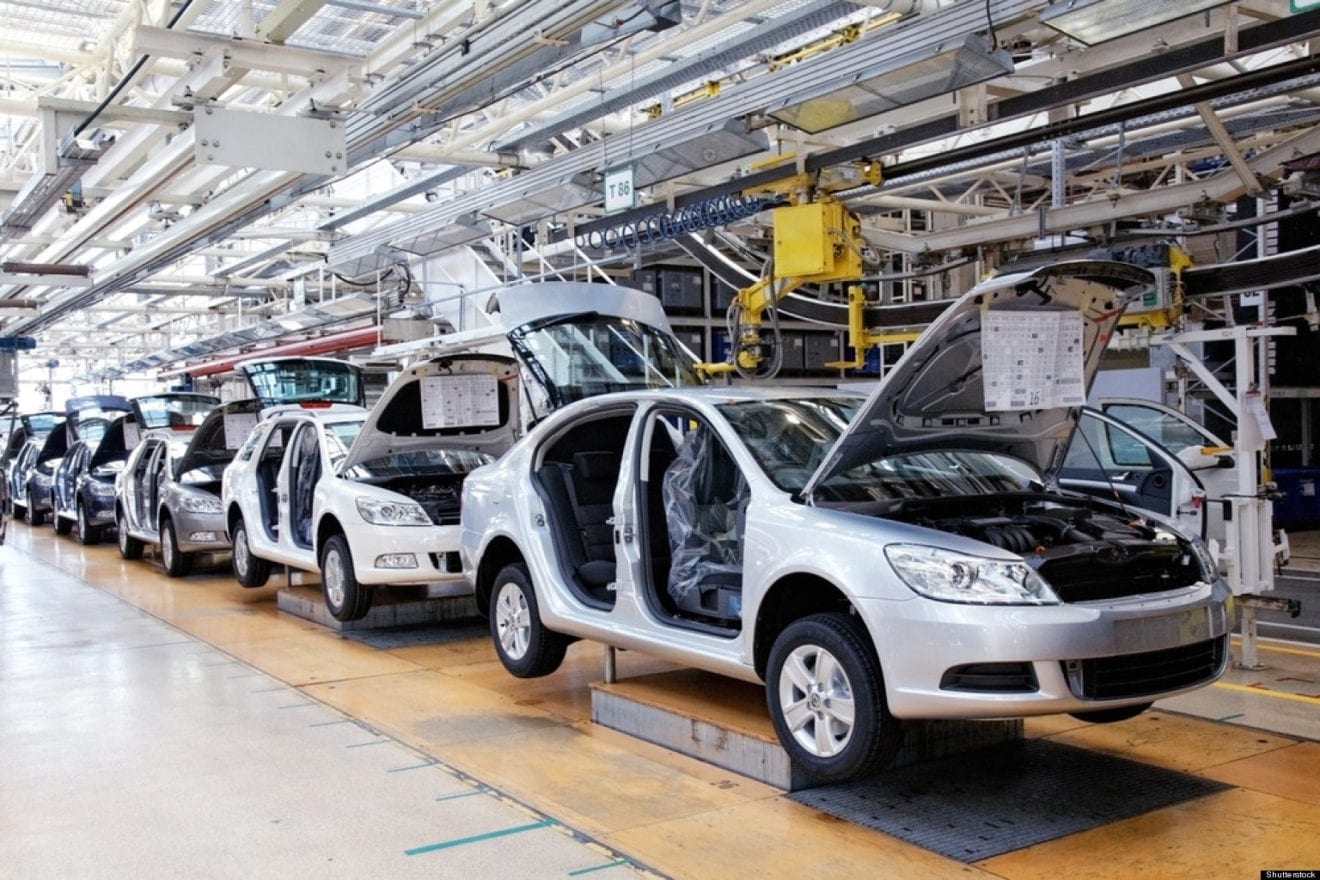
    Global deliveries of Skoda Auto, the Czech unit of Volkswagen, grew by 10.6 percent to 97,900 vehicles in October, boosted by growing sales in China and Europe, the company said on Thursday.

    In the January-October period, Skoda said sales had grown by 6.7 percent to 938,800 units.

    The company, the biggest Czech exporter, sold 1.06 million cars in 2015, the second year in a row it topped the 1 million mark.

  • Japan auto parts firm Usui settles U.S. price-fixing allegations

    Japan auto parts firm Usui settles U.S. price-fixing allegations

    Japanese auto parts maker Usui Kokusai Sangyo Kaisha Ltd will plead guilty and pay a $7.2 million fine for fixing the prices of steel tubes sold to car makers, the U.S. Justice Department said on Tuesday.

    Usui worked with other manufacturers to set prices and allocate customers for their steel tubes, which are used in fuel distribution, braking and other automotive systems, the Justice Department said.

    The department said a total of 47 companies and 65 people have pleaded guilty or been charged with price fixing of auto parts during its long-running probe of the industry.

    Attempts to reach Usui Kokusai Sangyo Kaisha were unsuccessful.

  • Nissan expects sales growth to slow in China, U.S. in near term

    Nissan expects sales growth to slow in China, U.S. in near term

    Nissan Motor Co Ltd on Monday said its sales growth in the world’s two biggest auto markets is likely slow in the near term as consumer tax breaks end in China while U.S. tastes move away from the automaker’s main area of focus.

    Japan’s second-biggest automaker by sales, which earlier blamed a strong yen for a 19 percent drop in second-quarter profit, made the comments after growth in Chinese and North American retail vehicle sales outperformed many markets in April-September.

    Sales in China in the six-month period grew 3.8 percent from a year prior, and Nissan’s head of operations in the country, Jun Seki, expects double-digit sales growth for calendar 2016, aided by economic incentives aimed at stimulating demand.

    “But as the government’s small-car subsidies wind down at the end of the year, we’re expecting to see a slowdown in sales early next year, and see single digit growth for the year,” Seki told reporters at Nissan’s Yokohama headquarters via telephone.

    Nissan also said recent growth in China’s auto market was due mainly to rising demand for local brands. In response, the automaker said it would further promote its China-only Venucia brand.

    The automaker sells almost a quarter of its output in China, and around 40 percent in North America.

    Its North American retail vehicle sales rose 5.4 percent in April-September. But it said demand growth was peaking and that any additional growth had been limited by its dependence on sales of sedans, at a time when low fuel prices had boosted demand for petrol-guzzling sport utility vehicles.

    Aggressive buying incentives for its sedans had also crimped profit margins, Nissan said.

    The automaker on Monday nevertheless kept its operating profit forecast at 710.0 billion yen ($6.80 billion) for the year through March, down 10.5 percent from a year prior, and said it continues to expect sales of 5.6 million vehicles.

    It also said it still expects the domestic currency to average 105 yen to the U.S. dollar and 120 yen to the euro.

    Earlier, Nissan said yen strength was responsible for July-September operating profit falling 19 percent to 163.9 billion yen – a result that still beat the 154.5 billion yen average of 10 estimates from analysts surveyed by Thomson Reuters I/B/E/S/. For April-September, profit fell 14 percent.

    Nissan raised its exposure to the strong yen at the start of the business year in April as it has been exporting its Rogue SUV crossover model from Japan to North America to meet demand.

  • Singulato is China’s latest e-car newcomer to rev up with big fundraising

    Singulato is China’s latest e-car newcomer to rev up with big fundraising

    Little-known Chinese electric car start-up Singulato Motors is expected to say this week it raised around $600 million in a second fundraising – the latest such move illustrating China’s headlong ‘gold rush’ into all-electric battery cars.

    The apparent ease with which Chinese electric car start-ups can raise new funds is largely down to government subsidies and favorable policies. Subsidies can total around 110,000 yuan ($16,285) a car, or around a third of the sticker price of a model such as the BYD e6.

    While China today is reminiscent of Detroit in the early 20th century, with a host of new car makers arriving on the scene, Beijing is expected to phase out subsidies from 2020 – potentially crushing the start-ups’ survival rate.

    China has made a priority of making smart, connected electric cars. Entry barriers are relatively low, and Beijing sees the sector as a way for its auto industry to challenge, and even overtake, established global automakers, several of which have instead focused more on cleaner hydrogen fuel cell propulsion technology.

    Shen Haiyin, Beijing-based Singulato’s 42-year-old co-founder and CEO, says his company has raised about $700 million in total, much of it from an investment fund run by the municipal government of Tongling City in Anhui province as part of a “strategic partnership”.

    Tongling city mayor Ni Duping said the decision to invest in Singulato is part of a strategy to promote the new energy automotive industry. “We believe this effort will definitely allow Tongling to accelerate the city’s industry transformation,” he said in a statement.

    The company plans to invest in technology and build what Shen says will be a state-of-the-art electric vehicle (EV) production plant in Tongling capable of making 200,000 cars a year, by around 2020.

    The two-year-old start-up, with 140 employees, plans to roll out its first product, a crossover sport utility vehicle, by late next year or early 2018. Production will be outsourced, at least initially, to an existing automaker with excess manufacturing capacity, Shen said.

    “We’re targeting our EVs at young city dwellers in Beijing, Shanghai, Shenzhen and other large cities where buying a gasoline car is becoming more difficult because of purchase restrictions imposed by the government,” Shen told Reuters in his modest office.

    “If they buy an EV, they could buy a car immediately as EVs are exempt from purchase restrictions. Tech-savvy young people are naturally going to gravitate toward EVs.”

    Battling road congestion and air pollution, more Chinese cities are restricting new vehicle purchases – holding auctions and lotteries to sell a limited number of license plates. In Beijing, drivers of gasoline cars are barred from driving on one weekday per week. All-electric battery cars and heavily electrified plug-in hybrids are usually exempt.

    EASY MONEY

    Singulato’s fundraising follows an around $1 billion financing deal for another Chinese EV start-up WM Motor, again largely involving a municipal government.

    Other well-funded Chinese electric car start-ups include Future Mobility, LeEco’s LeSee, Next EV, Ch-Auto’s Qiantu Motor, and Changjiang Auto, as well as U.S.-based Chinese-funded start-ups Atieva and Faraday Future.

    LeSee, which aims to launch an all-electric luxury car, for example, raised more than $1 billion in a latest financing, mostly from Chinese investors including state-owned enterprises and a local municipality.

    Some 289,000 ‘new energy’ vehicles, including all-electric battery and plug-in electric vehicles, were sold in China in January-September. Full-year sales are likely to fall well short of a 700,000 target, according to a top official at the China Association of Automobile Manufacturers.

    MOVING IN-HOUSE

    Singulato’s Shen, who made his money as a tech entrepreneur in Tokyo, plans to aim straight for the electric car mass market rather than follow Tesla Motors’ model of first making a high-profile electric battery super sports car to stir up buzz around a new brand.

    Shen declined to elaborate on his pricing strategy beyond saying his cars would compete on price with Tesla’s $35,000 Model 3.

    For its first model, Singulato has developed in-house the electric propulsion and smart, connected systems, while doors, seats, panels and other basic parts were outsourced to Beijing-based IAT Automobile Technology Co.

    For future models, Singulato plans to design, develop and manufacture more on its own, and has been scouting global automakers for talent.

    “Compared to gasoline cars, EVs don’t have complex mechanical systems like the engine and transmission. They’re much easier to engineer and manufacture,” Shen said.

    “We think an even bigger differentiator will be how connected and intelligent the car is going to be, and we’re focusing on that more than the car itself.”
  • Scania Strengthens Position in Indonesia

    Scania Strengthens Position in Indonesia

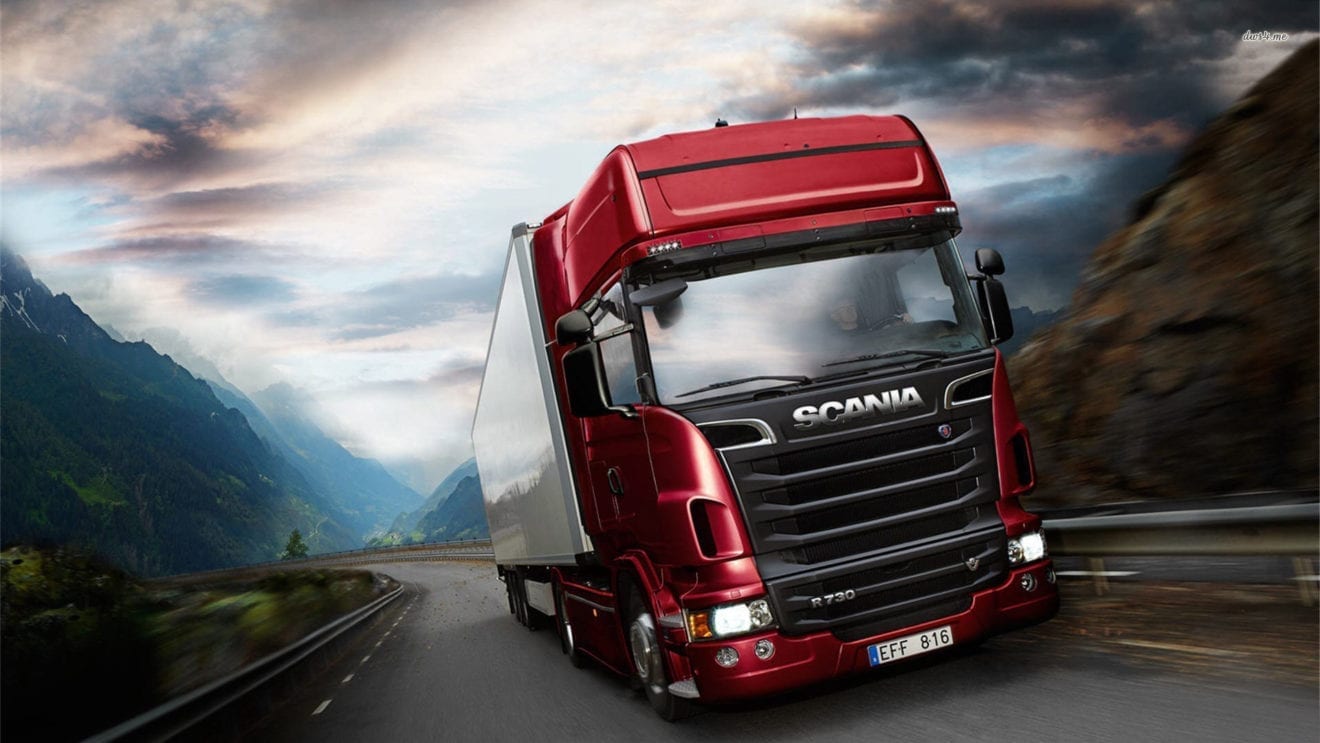
    Scania continues to reinforce its position in the Indonesian bus market. Transjakarta has now placed an order for 150 low-entry city buses in addition to the previously ordered 110 3-axle Scania buses that will be delivered later this year. The public transport operator in the Indonesian capital already has 108 articulated Euro 6 Scania gas buses in its network.

    The Transjakarta Bus Rapid Transport system is considered to be the world’s longest busway, serving more than 10 million passengers monthly. The forthcoming delivery of low-entry buses will replace the existing, highly polluting, old buses that operate outside the busway corridors. The new Scania buses, delivered by United Tractors and bodybuilt by Laksana, will feature wheelchair ramps.

    On announcing the order, Jakarta Governor Basuki “Ahok” Tjahaja Purnama particularly highlighted the greater accessibility and said, “this is the world-class bus we expect to have. Jakarta has never before had low-entry buses.”

    Scania, through its Indonesian partner United Tractors, has established the bus depot workshop facilities and parts supply systems in Jakarta needed to uphold an uptime of over 90 percent.

    United Tractors is the leading and the largest distributor of heavy equipment in Indonesia, providing products from world-renowned brands, including Scania. The partnership between United Tractors and Scania was established in 2004, initially focusing on heavy-duty trucks for the Indonesian mining industry.

    Scania is major supplier of buses for BRT systems throughout the world. “We are convinced that bus systems offer the quickest and most cost-effective solution for cities to increase urban mobility and alleviate traffic congestion,” says Karin Rådström, Head of Buses and Coaches. “The Jakarta BRT system serves as a model for many growing cities.”

    Scania is a part of Volkswagen Truck & Bus GmbH and one of the world’s leading manufacturers of trucks and buses for heavy transport applications. Scania is also leading provider of industrial and marine engines. Service-related products account for a growing proportion of the company’s operations, assuring Scania customers of cost-effective transport solutions and maximum uptime. Scania also offers financial services. Employing some 44,000 people, the company operates in about 100 countries. Research and development activities are concentrated in Sweden, while production takes place in Europe and South America, with facilities for global interchange of both components and complete vehicles. In 2015, net sales totalled SEK 95 billion and net income amounted to SEK 6.8 billion.

  • Guangzhou Auto raising up to $2.2 bln in green car, proprietary brand push

    Guangzhou Auto raising up to $2.2 bln in green car, proprietary brand push

    China’s sixth-largest car maker by sales, Guangzhou Automobile Group (GAC Group) , plans to sell up to 15 billion yuan ($2.2 billion) worth of shares to fund development of its green car business, proprietary brands and factories, the firm said late on Monday.

    Chinese automakers have invested billions in developing electric and petrol-electric hybrid vehicles at the direction of the government, which sees green cars as a way to leapfrog global competitors more experienced in traditional petrol engines while also cutting heavy pollution.

    Five investors involved in the private placement of GAC Group A-shares are mainly controlled by the government in the southern metropolis of Guangzhou, Thomson Reuters’ IFR reported on Tuesday.

    The automaker, like most domestic peers, is a state-owned enterprise.

    GAC Group said in an exchange filing that the proceeds would be used in 10 projects, with nearly a third of the funds to be spent on research and development of green energy cars and other technology.

    Other projects include factory expansion and improvement and developing a host of new models for its GAC Motor brand.

    The automaker’s Shanghai-listed shares jumped 9.6 percent after resuming trading on Tuesday, closing the session up 6 percent. Trading had been halted on Oct. 18 pending the announcement.

    The newly issued shares account for roughly 10 percent of the automaker’s outstanding stock.

    In addition to making cars under a wholly owned brand, GAC Group also makes vehicles through joint ventures with Toyota Motor Corp, Honda Motor Co Ltd and Fiat Chrysler Automobiles NV.

  • Honda raises profit forecast on strong China sales

    Honda raises profit forecast on strong China sales

    Honda Motor Co lifted its full-year net profit forecast by 6 percent, betting that Chinese customers will keep buying its XR-V and Vezel SUVs and the popular Civic sedan after robust demand there boosted Asian sales sharply in the latest quarter.

    Japan’s third-largest automaker by sales said on Monday it expects full-year net profit to hit 415 billion yen ($3.95 billion), compared to its previous forecast of 390 billion yen. Honda upgraded its global sales forecast to reflect strong demand in China, the world’s biggest auto market and the company’s second largest.

    It also expects cost cuts and lower quality-related costs to offset the impact of a stronger currency and lift its bottomline this year, after taking a hit last year due to hefty provisions for costs to recall Takata (7312.T) air bag inflators.

    Strong demand in growing cities has pushed Honda’s Chinese sales up 26 percent higher year-on-year to 872,000 in the first nine months of 2016, boosted by a near doubling in sales for the Civic, which underwent a model change this year.

    This prompted it to lift the forecast for group vehicle sales in Asia by 11 percent on the year to 1.915 million for the year ending in March 2017, after overall Asian sales rose 22 percent on the year in the second quarter.

    As a result, it sees global sales rising by 5 percent from last year to 4.98 million cars.

    “We’re seeing a positive impact from our new models. The Civic is doing very well in North America, China, and South America,” Honda Executive Vice President Seiji Kuraishi told reporters at a briefing, adding that strong demand for the XR-V compact SUV crossover was also lifting Chinese sales.

    To keep up with rapidly growing demand for its sedans and SUVs in China, Honda is planning to build a new factory in the country with partner Dongfeng Motor Group Co (0489.HK), two people familiar with the matter told Reuters earlier this month.

    Honda sells roughly 40 percent of its global production in North America, but as growing demand in China drives Asian sales higher, the automaker expects sales in the two regions to be roughly the same this year.

    Despite the rosier profit outlook, Honda’s new profit forecast remains lower than the average 482 billion yen profit expected by 21 analysts polled by Thomson Reuters, and Honda said that its conservative outlook was largely due to global uncertainties.

    “At the moment we see uncertainties related to the U.S. elections, Brexit and a weaker sterling, and in Asia, the outlook for Thailand after the death of the country’s monarch,” Kuraishi said.

    “We haven’t seen the impact of these factors yet, but we’re taking a cautious approach to our forecasts.”

    Honda operates a plant in Britain, producing around 140,000 vehicles per year, including the CR-V crossover SUV and Civic sedan at its plant in Swindon. Half of its production is exported to the EU.

    Kuraishi said that the automaker had no plans at the moment to shift its production away from Britain, adding that it would consider factors including the value of sterling and the likely introduction of tariffs when deciding its future in the country.

    Honda is assuming an average rate of 103 yen to a dollar for the current year, against its earlier forecast of 105 yen.

  • Chinese automaker BYD forecasts up to 84 percent profit rise for 2016

    Chinese automaker BYD forecasts up to 84 percent profit rise for 2016

    Chinese automaker BYD Co Ltd, backed by Warren Buffett’s Berkshire Hathaway, on Sunday said 2016 full-year profit was likely to rise as much as 84.17 percent, as rapid growth of the green car market eases.

    The Shenzhen-based manufacturer, which has invested heavily in making electric and hybrid petrol-electric vehicles, forecast a 77.09 percent to 84.17 percent increase in net profit for the year, at 5.0 billion yuan ($737.90 million) to 5.2 billion yuan.

    For the first nine months of 2016, BYD reported 3.66 billion yuan in profit, an 86.82 percent increase year-on-year. That compared with the automaker’s forecast in August of 83 percent to 91 percent for the period.

    BYD reported triple-digit profit growth for the previous four quarters. But its earnings expansion in the first nine months of 2016 slipped below 100 percent as the overall market for green-energy vehicles moderates after government support helped it quadruple last year.

    Overall sales of electric and plug-in hybrids in China totaled 289,000 vehicles in January-September, according to China’s automakers association, far from its target of 700,000 vehicles for 2016. An association official said Friday that sales were now likely to miss that target.

    Analysts said China may struggle to meet that target following the revelation that dozens of companies had been cheating the subsidy system.

  • Tesla’s Musk unveils solar roof tiles, longer-lasting batteries

    Tesla’s Musk unveils solar roof tiles, longer-lasting batteries

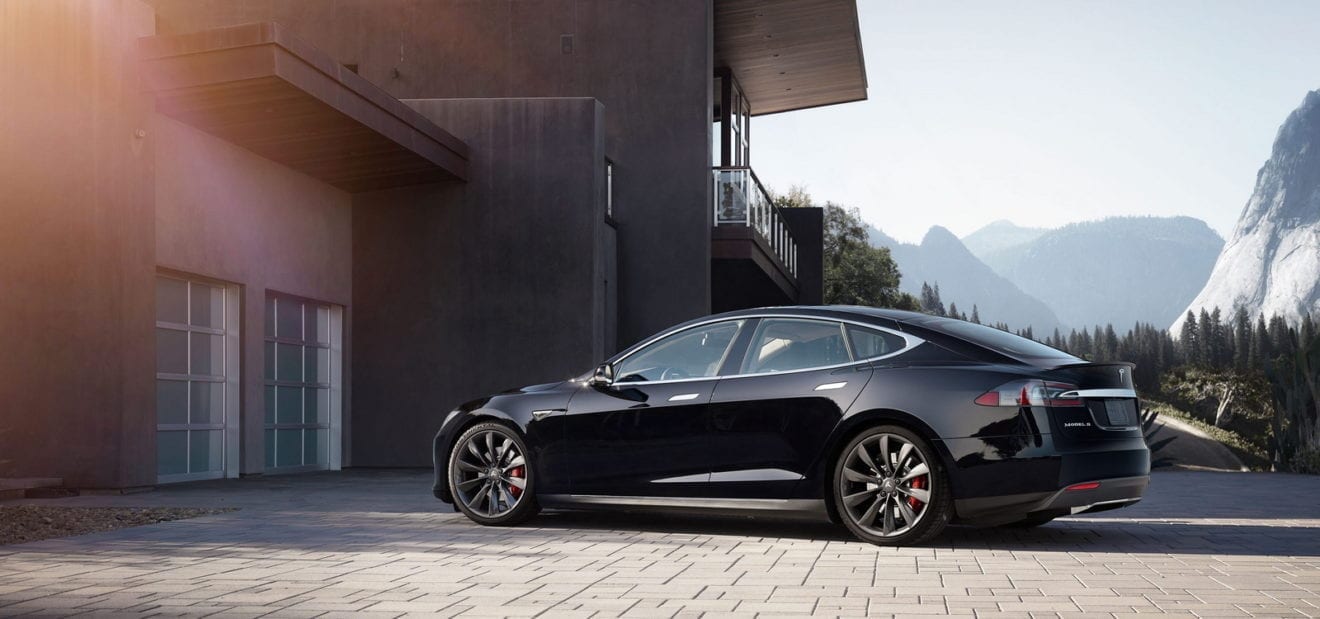
    Tesla Motors Inc Chief Executive Elon Musk on Friday unveiled new energy products aimed at illustrating the benefits of combining his electric car and battery maker with solar installer SolarCity Corp.

    The products include solar-powered roof tiles that eliminate the need for traditional panels and longer-lasting batteries aimed at helping to realize Musk’s vision of selling a fossil fuel free lifestyle to consumers.

    “This is sort of the integrated future. An electric car, a Powerwall and a solar roof. The key is it needs to be beautiful, affordable and seamlessly integrated,” Musk said during an event to showcase the products at the Universal Studios theme park near Los Angeles. “If all those things are true why would you go any other direction?”

    Musk is the biggest shareholder in both Tesla and SolarCity, which is run by two of his first cousins. Analysts have been dubious of the deal’s proposed synergies, with some suggesting the merger is a way for Tesla to rescue money-losing SolarCity. A vote on the acquisition is scheduled for Nov. 17.

  • Japan’s Nissan to sell parts maker Calsonic Kansei to KKR

    Japan’s Nissan to sell parts maker Calsonic Kansei to KKR

    Nissan Motor Co has decided to sell its entire stake in Japanese auto parts maker Calsonic Kansei Corp to U.S. private equity firm KKR &Co as part of a $3.8 billion takeover, the Nikkei daily reported, without citing its sources.

    KKR then will try to buy the remaining shares in Calsonic from other shareholders through a takeover bid, bringing the total deal to as large as 400 billion yen ($3.80 billion), the report said.

    Bain Capital and MBK Partners were also bidding to buy the auto parts maker, which has a market value of about 280 billion yen, Thomson Reuters LPC had reported earlier.

    Trading of Calsonic Kansei was suspended by the Tokyo Stock Exchange on Friday morning. A Calsonic Kansei spokesman said the company had not announced a sale to KKR.

  • China’s Geely shows global ambitions, launching new compact SUV

    China’s Geely shows global ambitions, launching new compact SUV

    Chinese automaker Geely, the owner of Volvo cars, showed off the first model of its new Lynk & Co brand in Germany on Thursday, a compact SUV aimed at taking on the likes of BMW and Mercedes-Benz, as well as ride-hailing service Uber, across the world.

    The Lynk, made in China, will go on sale at home in 2017, followed by Europe and the United States in 2018, and marks one of the first attempts by a Chinese carmaker to create a global brand that makes use of European design and technology know-how.

    Chinese companies have been snapping up cutting-edge German technology to push upmarket and gain a global footprint. This year alone, Chinese home appliances maker Midea has agreed to buy German robotics firm Kuka and Fujian Grand Chip Investment Fund LP is taking over semiconductor equipment maker Aixtron.

    Long seen as a cheap, no-frills brand in China and unheard of in Europe, Zhejiang Geely Holding Group purchased struggling Swedish carmaker Volvo from Ford in 2010 to help it leapfrog a decade of research and development.

    While Volvo will continue to focus on premium vehicles, Lynk is an attempt to grab a slice of the mid market. It will initially take on foreign carmakers’ joint ventures in China, but – as shown by the global launch in Berlin – it also aims to challenge the world’s biggest automakers in their own markets.

    ‘SMARTPHONE ON WHEELS’

    At the launch of the ’01’ model at a former railway station in Berlin that now frequently hosts start-up conventions, Alain Visser, senior vice president at Lynk & Co, described the SUV as “our first smartphone on wheels.”

    It is targeting tech-savvy consumers that may have prioritized flexibility over car ownership in the past. “We are looking very much at millennial consumers all over the world who are very much concentrated around bigger cities,” he said.

    Each car will be permanently connected to the Internet and have a “share” button, enabling owners to rent out their car to other motorists via a smartphone app.

    “That becomes a source of income, which some of the consumers may use, a bit like an Airbnb vehicle,” said Visser, referring to the home rental company.

    Lynk has more models in its line-up, which the carmaker plans to launch over the next 3-5 years, but Visser declined to give details on body styles or launch dates apart from the name of the next car: ’02’.

    Once the full line-up is launched, Lynk aims to sell more than 500,000 vehicles a year by 2021, he said.

    EUROPEAN KNOW-HOW

    Geely’s design has been refined by British designer Peter Horbury, who headed up design at Volvo in the 1990s and oversaw it for Jaguar, Aston Martin and Ford’s other brands from 2002.

    In doing so, Geely is upping the competitive pressure on established global carmakers, which have long accused Chinese rivals of merely ripping off their designs.

    Jaguar Land Rover (JLR), for example, has sued China’s Jiangling Motor after it released the Landwind X7 SUV in 2014, a car that JLR says copies its Land Rover Evoque while costing around the third of a price.

    The car will be a hybrid powered by a 1.5-litre three cylinder petrol engine combined with a lithium-ion battery and electric motor, and will be the first based on the Complex Modular Architecture platform developed by Geely and Volvo.

    Mercedes-owner Daimler and BMW are also investing heavily in hybrid vehicles and will be watching closely to see how the ’01’ fares with European consumers.

    Geely said the car would be priced competitively and said it would be fixed across all markets, but declined to give details. It plans to keep down costs by selling the car online only and limiting the number of configurations available.

  • Honda planning new China car factory for 2019 start

    Honda planning new China car factory for 2019 start

    Honda Motor Co plans to build a new factory in China that will produce passenger cars from 2019, boosting its output capacity in the country by about a fifth, two people familiar with the matter said on Tuesday.

    Honda and partner Dongfeng Motor Group Co (0489.HK) are experiencing explosive growth in China with sales for their joint venture soaring 48 percent for the year to date thanks to the popularity of the XR-V sport-utility vehicle as well as the recently launched Civic sedan.

    At the same time, the venture, Dongfeng Honda, is coming close to its capacity limits at its two factories, targeting sales of 450,000 vehicles for 2016 – not far off current annual capacity of 480,000.

    The new factory will be located in Wuhan, central China, a major auto hub. It will initially produce 120,000 cars a year, with capacity likely to double eventually, the sources said, declining to be identified as there had not been a formal announcement by the companies.

    Honda confirmed that it was discussing the additional plant in Wuhan with Dongfeng, but that it had nothing official to announce now. A Beijing-based spokesman for Honda said the project had yet to be formally approved by the company or the government.

    The plan was initially reported by the Nikkei business daily, which said the venture planned to spend “hundreds of millions of dollars” on the factory.

    The new factory would be Honda’s seventh in China. Honda also has a joint venture with GAC Group (601238.SS)(2238.HK) called Guangqi Honda which has three plants. The Japanese automaker also has a separate plant for exports.

    Honda said in April it was looking to boost car sales in China to 1.07 million cars this year. It sold 1.01 million vehicles in 2015, a 33 percent jump over the previous year.

    Auto sales in China strengthened in September for a consecutive fifth month, rising to a three-and-a-half year high.

  • Mazda to leave Indonesia, hands distribution to Eurokars

    Mazda to leave Indonesia, hands distribution to Eurokars

    Mazda Motor Corporation has appointed Eurokars Motor Indonesia, a member of Eurokars Group, as the distributor of Mazda vehicles in Indonesia following its decision to leave the country.

    Eurokars Group spokesperson Angeline Tan said Mazda’s distribution network of 45 dealers would be officially transferred from Mazda Motor Indonesia to Eurokars Indonesia in February.

    “This appointment represents a significant milestone for Eurokars Group. It also reflects the synergistic partnership between Mazda Motor Corporation and Eurokars Group, which is well-positioned to run the distributorship,” she said in a press statement in Jakarta on Friday.

    Following the official transfer, she added, Eurokars would take over existing staff members and dealers currently under Mazda Indonesia. It will also be responsible for after-sales including the warranties of all Mazda vehicles sold by Mazda Indonesia prior to the transfer.

    Founded in 1985, Eurokars was a dealer for Mazda cars in Indonesia in 2007 and took over the distribution of Mazda vehicles in Singapore in 2011.

    From November, Mazda Indonesia’s business entity will be changed from a sole distributor to an importer of the Japan-based Mazda Motor Corporation’s products in related to the business decision.