Tag: automotive retail

  • BYD Launches Denza Z9GT in Thailand at 2.9 Million Baht

    BYD Launches Denza Z9GT in Thailand at 2.9 Million Baht

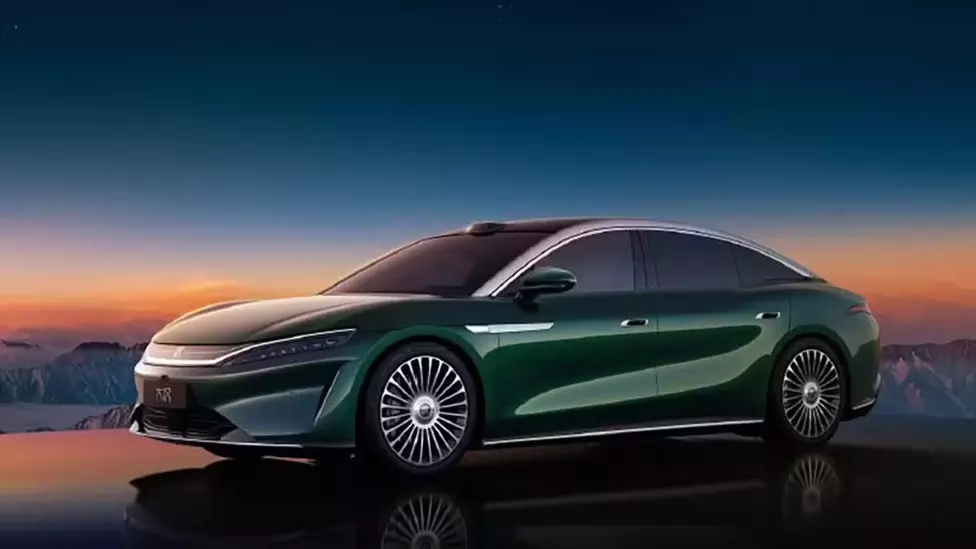
    BYD rolled out its Denza Z9GT shooting brake in Thailand on September 16. The tri-motor luxury electric vehicle costs 2,999,900 baht ($89,870). An introductory promotion cuts the price to 2,899,900 baht for orders placed before September 30.

    Rever Automotive imports the car fully assembled from China. It brings the carmaker’s second-generation Blade Battery and flash charging hardware to Southeast Asia for the first time.

    High Voltage Hardware and Fast Turnarounds

    A tri-motor all-wheel-drive system generates 1,156 horsepower. It draws power from a 122.5 kilowatt-hour battery pack, delivering up to 701 kilometres of driving range on one charge.

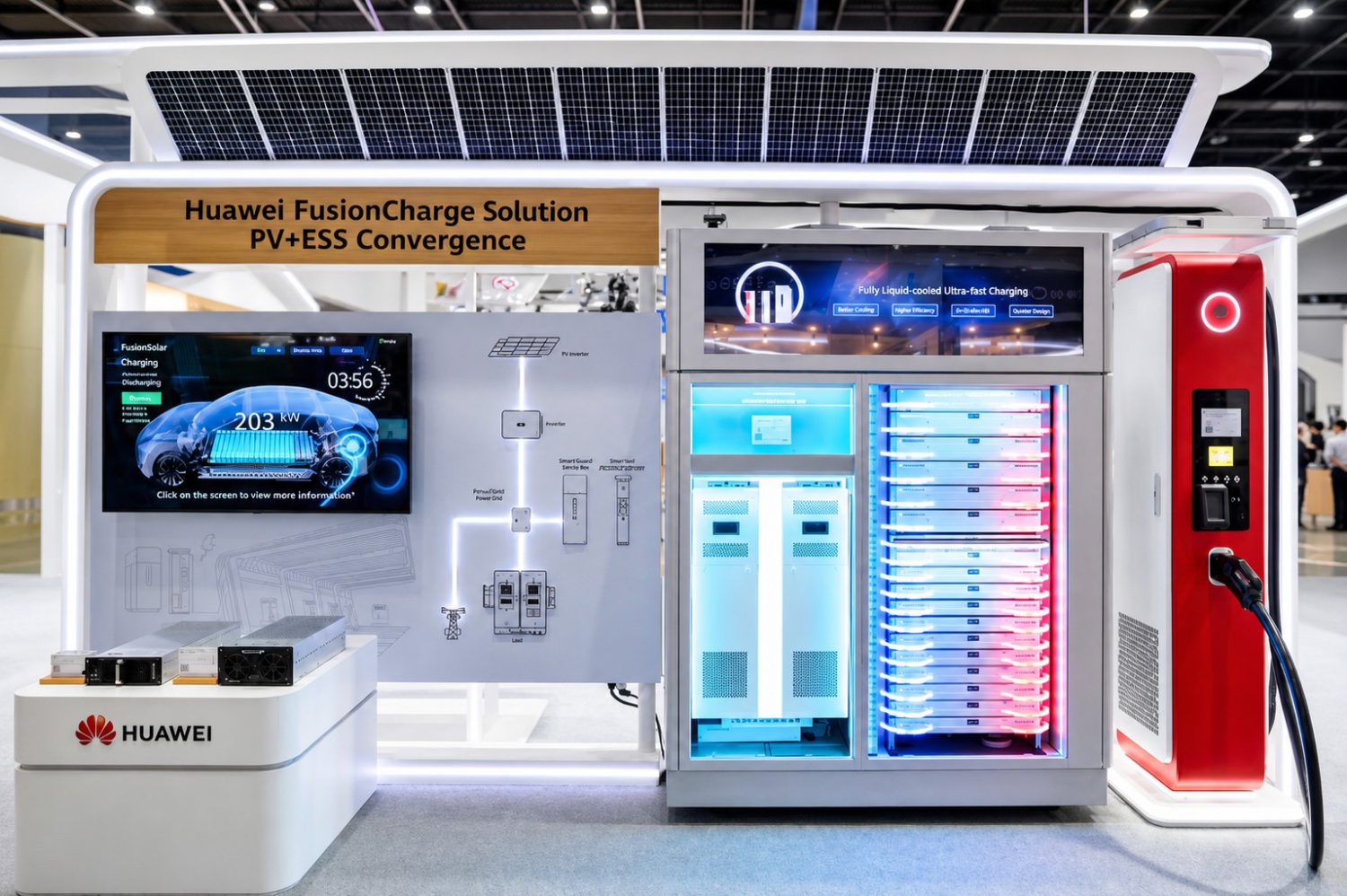
    Charging speed leads the spec sheet. The vehicle takes direct-current rates up to 1,500 kilowatts. That fills the battery from 10 to 97 per cent in nine minutes. Ke Yubin, general manager of BYD Thailand, ran live charging and handling demonstrations in Bangkok to prove the times to buyers.

    At 5,180 millimetres long, the shooting brake features independent rear-wheel steering and BYD’s e3 chassis platform. Inside, the cabin offers ultra-wideband digital key support, near-field communication access, and three interior trim selections designed to compete against European grand tourers.

    Denza Expands Across Asia-Pacific

    Thailand is now the 13th Asia-Pacific market to sell Denza vehicles. The sub-brand first entered the country in November 2024 with the D9 multi-purpose vehicle, following rollouts in Hong Kong, Cambodia, and Singapore.

    Subsequent rollouts reached Malaysia and Europe, alongside an April exhibition in Paris. In China, where an updated version went on sale in March, buyers can choose between pure electric and plug-in hybrid setups. Thailand gets only the high-output battery-electric model, aimed squarely at the top of the local market.

    BYD completed its 10,000th flash charging station in China in August and will continue rolling out the technology globally.

    Liu Xueliang, General Manager of Asia-Pacific Auto Sales Division, BYD

    A Strategic Wedge in Luxury Transport

    Distributors across Southeast Asia face a tricky transition as Chinese manufacturers move from volume hatchbacks into high-margin luxury segments. Premium electric cars in Bangkok have long belonged to Porsche, BMW, and Mercedes-Benz. Badge heritage carries real weight with wealthy buyers there. Denza wants to break that hold by offering hypercar acceleration and fast charging at half the price of German rivals.

    Grid operators face their own hurdles with the hardware. Delivering 1,500 kilowatts requires dedicated megawatt-level grid connections and liquid-cooled cabling that private Thai charging networks lack. BYD is building its own charging infrastructure alongside vehicle shipments so buyers can actually reach those speeds.

    Manufacturing Foundations in Rayong

    This premium launch follows rapid industrial growth across Thailand over the past two years. BYD’s assembly plant in Rayong province reached its two-year operational milestone in July 2026 with 130,000 total domestic deliveries. The facility holds an annual nameplate capacity of 150,000 vehicles. It already exports right-hand-drive cars to European ports.

    Earlier entry with the D9 secured showroom floor space inside existing dealer networks, reducing upfront capital costs for this launch. The Z9GT now gives those dealers a halo car to pull foot traffic into showrooms.

    Excise Tax Deadlines and Network Targets

    Importers face a steep tax cliff at year’s end. Thailand’s revised electric vehicle excise tax structure takes effect in 2027. Distributor forecasts show the new rules will push the imported Z9GT’s retail price to 3,999,900 baht.

    Fourth-quarter sales will reveal whether luxury buyers jump in before that 1-million-baht tax hike takes hold. At the same time, BYD needs to install roughly 80 fast-charging stations daily around the world to hit its goal of doubling its 10,000-site network.

  • Japan Retail Sales Rise 4.0% in July as Department Stores Beat Formats

    Japan Retail Sales Rise 4.0% in July as Department Stores Beat Formats

    Japan’s retail sales rose 4.0 per cent year on year in July, driven by vehicle demand and strong department store receipts. Data released on August 31 by the Ministry of Economy, Trade and Industry (METI) showed department stores expanded 4.3 per cent, outperforming convenience stores at 1.3 per cent and supermarkets at 0.8 per cent.

    Wholesale sales across the country climbed 9.0 per cent over the same period, pointing to steady business-to-business inventory movement alongside consumer channels.

    Autos and Machinery Lift Totals

    Gains varied sharply by product line. Motor vehicle retail jumped 16.2 per cent year on year, delivering the fastest expansion among all retail sectors tracked by METI. Machinery and equipment retail climbed 6.3 per cent, while general merchandise sales rose 3.1 per cent and medical and cosmetics retail gained 1.6 per cent. Fuel retail turnover remained flat.

    Apparel and textile retail dropped 6.6 per cent year on year. That was the steepest contraction in the survey and the only major retail category to decline in July.

    Department Stores Lean on Inbound Spend

    The gap between falling clothing sales and rising department store receipts reveals a split in consumer behavior. Department store operators historically rely on apparel for a large share of their floor space, yet their revenue expanded while domestic clothing retail contracted. Tax-free transactions, luxury goods, and jewellery purchases by foreign visitors filled the shortfall left by cautious local fashion shoppers.

    Department stores across East and Southeast Asia have navigated similar pressures, leaning into high-margin luxury concessions and tourist footfall to offset sluggish domestic volume in apparel. For Japanese operators, sustained gains now tie closely to exchange-rate levels and international passenger arrivals rather than domestic wage spending.

    METI will publish its finalized July commerce figures in mid-September, with retail watchers monitoring whether vehicle order backlogs and inbound tourist spending hold up through late summer.

  • Dongfeng and Huawei Brand Epicland Weighs Battery Swapping for Second EV

    Dongfeng and Huawei Brand Epicland Weighs Battery Swapping for Second EV

    Epicland, the premium electric vehicle marque jointly developed by Dongfeng Motor and Huawei, has begun preliminary research into adding battery-swap capability to its upcoming second production model.

    The study marks the first time a brand inside Huawei’s automotive ecosystem has explored swappable battery architecture to lower retail costs and accelerate vehicle charging times.

    No final decision has been taken on whether Epicland will build its own proprietary stations or plug into a third-party public network. The brand opened pre-sales for its debut vehicle, the six-seat X9 extended-range SUV, on August 18 with prices starting from 299,800 yuan ($44,210) to 379,800 yuan. Deliveries for that model begin in the third quarter of 2026, with three additional vehicle lines scheduled to follow in 2027.

    Shared Platforms and Battery Networks

    Separating the battery pack from the vehicle purchase price allows carmakers to cut retail sticker prices while matching the refuelling speed of petrol cars. For new brands entering an aggressive price war across China, joining shared networks avoids the heavy capital expenditure of building proprietary charging points across hundreds of cities.

    Dongfeng already maintains joint battery-swap operations with CATL in central Chinese cities including Wuhan and Xiangyang. CATL operated 2,000 Choco battery-swap stations across 180 cities as of June 30, with plans to surpass 3,000 locations by the end of 2026 through partnerships with Changan Automobile, Chery, GAC Group, and Seres.

    Differentiation Beyond Huawei Software

    Hardware differentiation has become urgent for automakers partnering with Huawei. As the tech giant rolls out its Qiankun autonomous driving system and HarmonySpace cockpits across rival brands including Luxeed, Stelato, and Aito, software alone no longer guarantees a distinct competitive edge on showroom floors.

    Other emerging players are making similar calculations. Saidou Technology, backed by Seres, is in discussions to connect its upcoming Aiva brand to CATL’s network ahead of pre-orders for its ME7 model in early 2027. Epicland faces a clear trade-off: adapting its chassis to third-party standard packs requires engineering compromises, while constructing dedicated stations demands massive sales volumes to achieve operational break-even.

    Epicland will confirm the powertrain specifications and commercial launch schedule for its second model ahead of its wider three-vehicle rollout in 2027.

  • SAIC Volkswagen Cuts Starting Price on ID. ERA 5S Sedan to 89,900 Yuan

    SAIC Volkswagen Cuts Starting Price on ID. ERA 5S Sedan to 89,900 Yuan

    SAIC Volkswagen launched its ID. ERA 5S plug-in hybrid sedan at the Chengdu Auto Show on Friday. Introductory incentives lower the base price to 89,900 yuan ($13,260).

    A 30,000-yuan discount brings the car below its 115,900-yuan pre-sale baseline and undercuts the official 119,900-yuan sticker price. Five variants run up to an official 149,900 yuan. Initial trade-in subsidies and deposit promotions reduce that top price to 119,900 yuan.

    Powertrain and Localized Driver Assistance

    This sedan is the second entry in the ID. ERA series following the ID. ERA 9X SUV. Power comes from a 1.5-litre plug-in hybrid setup pairing an 80 kW engine with a 130 kW drive motor. The configuration yields 160 kilometres of electric range under CLTC testing and more than 2,000 kilometres of total range. Depleted-battery fuel consumption is rated at 2.82 litres per 100 kilometres.

    Volkswagen fitted the model with its Xingyun assisted-driving software, built on Horizon Robotics’ HSD algorithm. The system supports urban navigation on autopilot, highway cruising, automated valet parking and multi-level memory parking. Inside, the cabin carries an 8.8-inch digital cluster and a 15.6-inch central touchscreen. Voice software was developed alongside iFlytek.

    Foreign Carmakers Defend Mass Market Share

    Joint ventures across China continue shifting product pipelines toward hybrid powertrains and domestic tech suppliers to defend market share against local price leaders. SAIC Volkswagen delivered more than 10,000 units of the ID. ERA 9X within two months of its April launch. That performance validated an extended-range strategy tailored to Chinese buyer preferences.

    At the show, the carmaker displayed the ID. ERA 8X and the ID. ERA 5X, an upcoming pure electric model engineered on the China Main Platform. SAIC Volkswagen plans to introduce seven new energy vehicle models before the end of the year.

  • China August NEV Retail Sales Hit 1.04 Million as Market Share Reaches 65.8%

    China August NEV Retail Sales Hit 1.04 Million as Market Share Reaches 65.8%

    China’s passenger new energy vehicle retail sales will reach approximately 1.04 million units in August, rising 9.4 per cent from July, the China Passenger Car Association said on Friday.

    The projected rebound lifts new energy vehicle retail penetration to a record 65.8 per cent, up from 65.1 per cent the previous month. Total passenger vehicle retail deliveries are expected to reach 1.58 million units for the month, an 8.1 per cent month-on-month rise that still represents a 21.7 per cent drop compared with August 2025.

    Chengdu Auto Show Drives Volume

    Extreme weather and planned summer plant maintenance slowed showroom traffic in early August, pulling average daily retail volume down to 35,000 units during the first week. Deliveries recovered as typhoons cleared coastal provinces and carmakers rolled out new product campaigns ahead of the Chengdu Auto Show. Daily transactions are projected to reach 77,000 units in the final week of August.

    The divergent performance between powertrains widened through the summer. Retail sales of petrol-powered passenger vehicles fell 40.5 per cent year on year in July to 510,000 units, while electrified models fell 3.9 per cent to 951,000 units over the same period.

    Big-Ticket Spending Faces Drag

    Automotive retail remains the heaviest drag on Chinese consumer spending. Total retail sales of consumer goods across China rose 2.6 per cent year on year during the first seven months of 2026, yet automotive retail revenue shrank 13.2 per cent over the same period.

    For retailers and dealership groups across the region, these numbers confirm that volume growth is now entirely hostage to electrification and replacement subsidies. Pure internal combustion inventory has become a liability on dealer balance sheets, forcing legacy showroom networks into aggressive discounting or outright closure as floor space pivots toward plug-in hybrids and battery-electric models.

    Automakers now face the September-October peak buying season with fresh order books opened at Chengdu, where full-month delivery tallies will show whether state trade-in incentives can offset persistent consumer caution.

  • BYD Unveils Third-Gen Tang SUV with 850-Km Range Ahead of Q4 Release

    BYD Unveils Third-Gen Tang SUV with 850-Km Range Ahead of Q4 Release

    BYD unveiled its third-generation Tang electric sport utility vehicle at the Chengdu Auto Show on Friday, targeting a commercial release in the fourth quarter. The redesigned five-seat model offers an all-electric range of up to 850 kilometres and charges from 10 to 70 per cent in five minutes.

    Dynasty sales chief Lu Tian presented the vehicle on the opening day of the exhibition. The launch forms the second half of BYD’s dual-flagship Dynasty SUV strategy alongside the larger Da Tang, which reached showrooms in June.

    Battery specs and charging speeds

    The new Tang measures 5,045 mm in length, 1,980 mm in width, and 1,760 mm in height, with a 2,950 mm wheelbase. Power comes from BYD’s second-generation Blade Battery pack, supplied in capacities of 88.682 kWh and 105.792 kWh. These packs deliver CLTC ranges of 730 km, 830 km, and 850 km depending on trim.

    Under normal temperatures, the vehicle reaches a 97 per cent charge within nine minutes. Cold-weather conditions add roughly three minutes to that benchmark. Regulatory filings show a single electric motor variant producing 300 kW, equivalent to 402 horsepower, with a top speed capped at 250 km/h.

    Every variant includes the God’s Eye B driver-assistance suite, which relies on a single LiDAR unit to manage highway and urban navigation alongside automated parking. The chassis rides on the DiSus-A dual-chamber air suspension system, incorporating an active road-preview function that scans surface conditions ahead.

    Rebuilding Dynasty flagship sales

    The overhaul arrives after an extended sales slump for the Tang nameplate. Volume fell sharply through the first half of 2026 in the absence of major product updates, lingering below 7,200 units monthly from March through May before rebounding to 13,535 deliveries in July.

    BYD tested this premium positioning when it launched the full-size Da Tang EV in June at 239,900 yuan ($35,370). That larger 9-series model logged more than 10,000 customer deliveries in its first month. Alongside the Tang debut, BYD opened pre-sales in Chengdu for its Da Han flagship sedan at roughly $36,800, claiming an electric range of 1,008 kilometres.

    Pricing for the third-generation Tang remains unannounced ahead of official showroom deliveries scheduled before the end of the year.