Tag: aviation

  • Aviation industry to suffer $649 mln loss

    Aviation industry to suffer $649 mln loss

    Vietnamese carriers could suffer a loss of more than VND15 trillion ($649 million) this year with the suspension of commercial international flights still in effect.

    The Vietnam Aviation Business Association says in a report sent to the Ministry of Planning and Investment that domestic airlines had already posted a loss of over VND18 trillion last year, with revenues plunging by VND100 trillion year-on-year.

    In the first two months of this year, domestic carriers transported just 66,600 international passengers, down 98.8 percent year-on-year.

    The association has repeated its request for credit assistance from the government.

    Budget airline Vietjet Air has asked for a credit package of VND4-5 trillion for the 2021-2023 period, with an interest rate of 4 percent.

    The association has also proposed reducing the environmental tax on fuel to VND900 – 1,000 per liter and extending deadlines for paying taxes, including corporate income tax, value-added tax, and personal income tax.

    Bamboo Airways has called for a refinanced, zero interest long-term loan of VND5 trillion from commercial banks.

    Earlier, the government approved a bailout package for national flag carrier Vietnam Airlines, with the State Bank of Vietnam (SBV) allowed to provide a refinanced loan of up to VND4 trillion at zero interest.

    Aviation was among the worst hit sectors in 2020. The number of air passengers declined by 43 percent to 66 million, while cargo transport was down 15 percent to 1.3 million tons.

    Insiders have said that it will take at least until 2023 for the aviation industry to recover to pre-pandemic levels.

  • Vietnam among world’s 10 largest aviation markets

    Vietnam among world’s 10 largest aviation markets

    Its effective pandemic response has seen Vietnam become the 10th largest aviation market with a week-on-week growth of 12 percent in domestic seat capacity.

    Vietnam registered an additional 117,000 seats between March 8-15, raising its total scheduled capacity to 1.07 million seats, according to data released Tuesday by British aviation analysis company OAG.

    Despite this impressive growth, the figure was still down 31.4 percent against the pre-pandemic level in January 2020, the company said.

    China is still the world’s largest aviation market, with over 16 million seats, followed by the U.S. and India. Indonesia and Japan rounded out the top five.

    “The recent steady if not earth-shattering increases in global capacity are very welcome and reflect as much optimism rather than confidence in the recovery process through the next few months,” OAG said.

    “There remain far too many variables for anyone to be really confident about the shape of a recovery, but vaccine passports and other initiatives are all helping to build some momentum.”

    Experts have suggested that Vietnam test “vaccine passports” on certain groups of entrants before adopting an official policy for the holders.

    Vietnam has recorded 904 cases in its latest Covid-19 outbreak since Jan. 28, but most of the 13 affected localities have gone through many days without any domestic transmission of the novel coronavirus.

    With the pandemic more or less contained, air travel demand has returned to normal, with many cities and provinces, including Hai Phong, Hanoi, Ho Chi Minh City, and Quang Ninh, allowing tourism services to resume.

  • Aviation industry could see revival in second half of 2021

    Aviation industry could see revival in second half of 2021

    The aviation industry will recover in the second half of 2021 with the advent of coronavirus vaccines, SSI Securities Corporation has forecast.

    While it would be a difficult year since the coronavirus variant identified in the U.K. is spreading quickly and new outbreaks are emerging in many countries, “the future of the aviation industry could be brighter when large-scale Covid-19 vaccination is carried out,” SSI said. “This could only happen in the second half of 2021.”

    Airlines will mainly focus on the domestic market in 2021 since international travel would not resume until the end of 2021, and the international aviation market could recover in 2022.

    “In 2021, airlines strategies will include increasing the number of inbound commercial flights, providing better flight services and offering a range of fares so that passengers will have more options,” SSI analysts said.

    The baseline scenario is for airlines to suffer losses though they would be halved from 2020.

    The number of domestic passengers will rise to 75 million, the same as in 2019. The number of foreign visitors is expected to reach 12 million, or 34 percent of the pre-pandemic number.

    Besides the challenges posed by Covid-19, airlines also face rising fuel prices, while competition is increasing with Vietravel Airlines, Vietnam’s sixth carrier, set to enter the aviation market this month.

  • AirAsia fails again in Vietnam partnership bid

    AirAsia fails again in Vietnam partnership bid

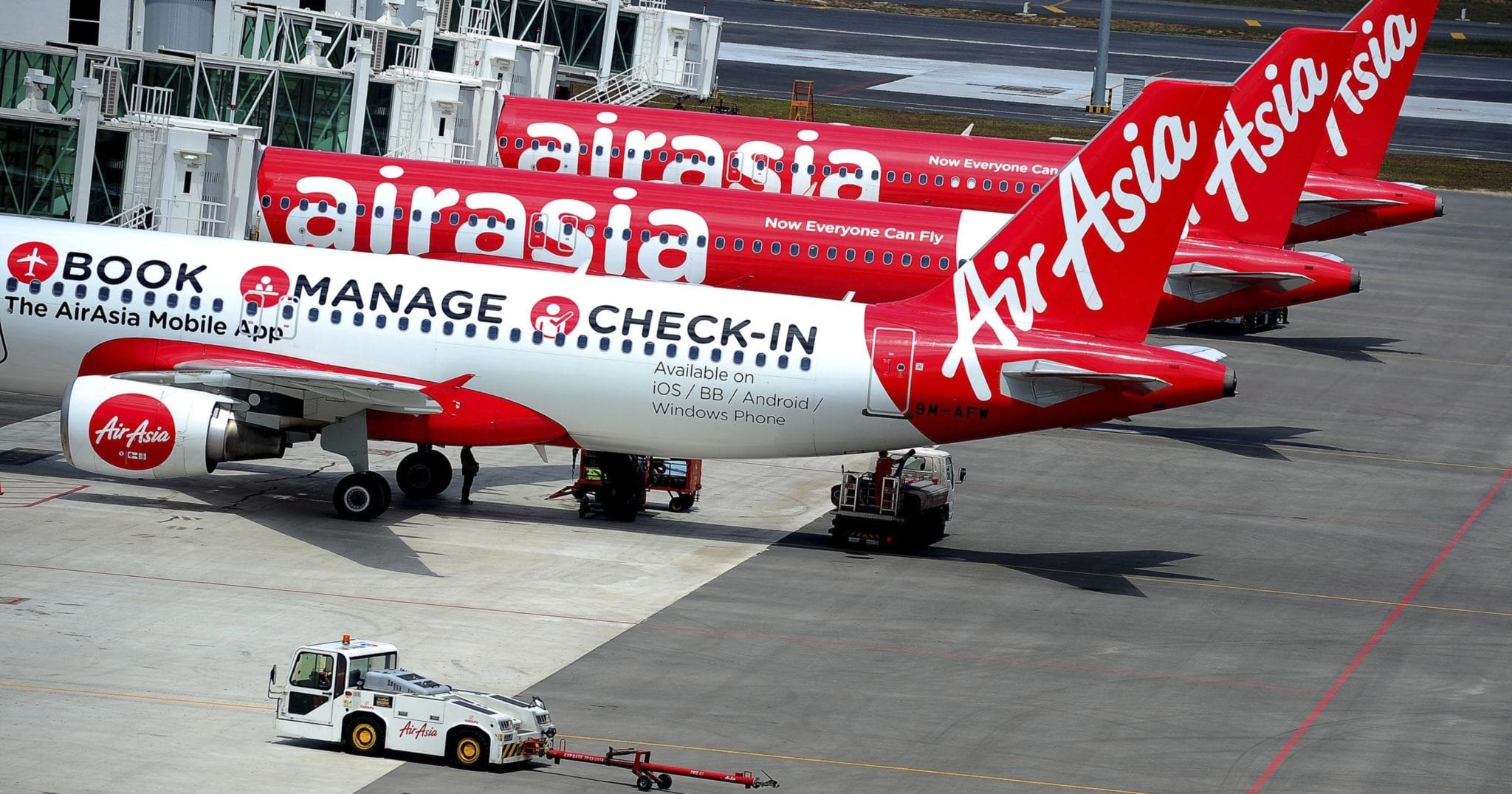
    Malaysian budget carrier AirAsia says it will keep trying to crack the Vietnamese market even as analysts warn it has “missed the boat” after its latest failed attempt to set up a joint venture in the country.

    The airline announced on Wednesday that it has terminated an agreement with Thien Minh Group, under which it was to take a 30% stake in an airline company to be launched this year.

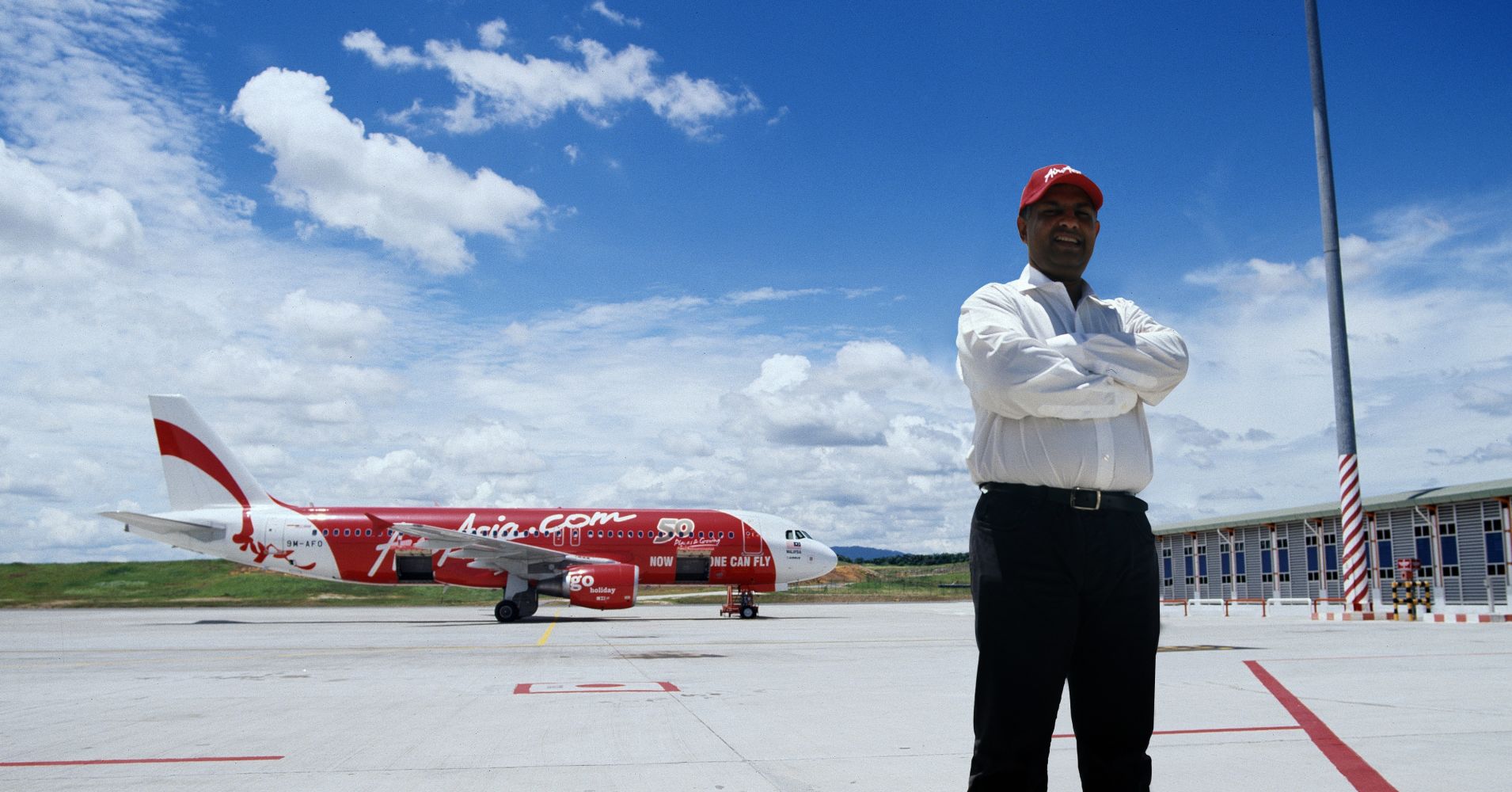
    AirAsia has already tried three times to set up a partnership in Vietnam, but AirAsia Group CEO Tony Fernandes is not ready to give up.

    “I am still optimistic about AirAsia being in Vietnam by end of the year,” Fernandes said in a Twitter post the day after the company’s announcement. He hinted in his tweet that the choice of partner was to blame for the failure, saying, “Watch this space. Picking the right one.”

    AirAsia and Thien Minh had agreed in December to set up a joint venture in which the Malaysian company would own a 30% stake, the maximum allowed under Vietnamese law. The company did not give a reason for ending the agreement in its official statement, though local analysts point to the country’s restrictive regulations on foreign aviation players as one possible hurdle.

    A spokesperson for Thien Minh told that the group will release an official statement on the move next week.

    AirAsia already offers international flights connecting to Vietnamese cities, but Fernandes has been trying to set up a partnership in the country since 2005.

    Travel demand in the market of 95 million grew 9% in 2018, according to the local aviation authority, and Fernandes has referred to Vietnam as the missing piece of the puzzle in AirAsia’s plan to tap demand from emerging markets.

    But according to Brendan Sobie of the Sydney-based CAPA Center for Aviation, now may be the time for AirAsia to rethink its approach.

    “After three failed attempts with three different partners, it’s time to let this one go and focus on international expansion using their affiliates from Malaysia, Thailand, Japan, etc.,” Sobie said.

    The Vietnamese market for budget travel, moreover, is already dominated by local players: Vietjet Aviation, which controls nearly half the market, Jetstar Pacific Airlines and Bamboo Airways.

    “The domestic market has become overcrowded and intensely competitive,” Sobie added. “Entering now would be risky and it would be nearly impossible to become a significant domestic competitor. AirAsia unfortunately missed the boat on the Vietnam domestic market.”

    Foreign players, moreover, are forbidden from operating domestic routes in Vietnam, even with a local partner. Licenses, moreover, are awarded on a case-by-case basis, and though newcomer Bamboo Airways received its license relative quickly, the process can take much longer. Vietstar Airlines, established in 2010, is still waiting for a license to begin passenger flights. Local analysts have pointed to these hurdles as one possible reason for AirAsia’s repeated setbacks in the country.

    The airline has a presence in Indonesia, India, Japan, Thailand and Philippines, and thrives on a feeder traffic business model of connecting second-tier cities to capitals, while keeping operating costs low with no-frills service.

    The stock market was little moved by the announcement. AirAsia’s share opened 0.4% higher on Thursday trade before closing at 2.43 ringgit.

    MIDF Research echoed Sobie’s sentiment, saying it is “not imperative” for the group to set up local operations in Vietnam as it can still fly to cities in the country from its regional network.

    The Malaysian investment outfit cited the recently inaugurated Kuala Lumpur-Can Tho route, AirAsia’s sixth route in Vietnam, as an example of the group’s ability to continue expanding regionally without Fernandes’ missing puzzle piece.

    AirAsia’s failed bid to penetrate into Vietnam means Vietjet will continue to dominate the market for now. Vietjet’s share price rose 0.44% on Thursday to close at 114,00 dong, and rose a further 0.79% on Friday.

  • AirAsia buys Irish leasing units; Citilink Indonesia bid rejected

    AirAsia buys Irish leasing units; Citilink Indonesia bid rejected

    Asia Aviation Capital Ltd (AACL), the aircraft leasing unit of AirAsia Group Bhd, has acquired four newly incorporated companies in Ireland. AirAsia said in a stock exchange filing that AACL — its indirect wholly-owned subsidiary — had acquired the entire issued and paid-up share capital of Merah Aviation Asset Holding Two Ltd, Merah Aviation Asset Holding Three Ltd, Merah Aviation Asset Holding Four Ltd, and Merah Aviation Asset Holding Five Ltd.

    AirAsia said the four Merah Aviation companies were incorporated under the laws of Ireland on Wednesday for the purpose of owning, leasing and/or financing of aircraft. Each of Merah Aviation has issued and paid-up share capital of US$1 (RM4.09).

    In a separate matter, the Jakarta Post reported yesterday that AirAsia Indonesia’s proposal to acquire low-cost carrier (LCC) Citilink Indonesia had been rejected by Garuda Indonesia, quoting Garuda president director Ari Askhara.

    Citilink is a subsidiary of Garuda, according to the Jakarta Post report that is based on a report.  Ari was quoted as claiming that “Citilink is doing better than AirAsia, even under Garuda’s new management”.

    He said there are no internal talks within Garuda and no order from shareholders to sell Citilink. He also said Garuda has not received an official proposal from AirAsia Indonesia to buy Citilink.

    Though he conceded that talks had taken place between Garuda and AirAsia, he gave assurance that they were about possible cooperation, not acquisition.

    The report came after AirAsia Indonesia president director Dendy Kurniawan said on Monday the company was interested in acquiring Citilink because of the similarities between the two LCCs.

    “Both are LCCs. We are strong in international routes, while they (Citilink) are strong domestically. We have also a similar rating of pilots and cabin crew members.

    “We are interested. If Citilink’s shareholders welcome our offer, we will thank God. But if not, it is no problem,” Dendy said, adding that both LCCs operate Airbus aircraft.

  • Vietnam aviation faces safety rating challenge

    Vietnam aviation faces safety rating challenge

    Vietnam might find it difficult to maintain its aviation safety rating due to a lack of qualified personnel, experts caution. The U.S. Federal Aviation Administration (FAA) Friday gave Vietnam a Category 1 safety rating, allowing local airlines to operate direct flights to the U.S. “Acquiring this rating is hard, keeping it is going to be even harder,” Dinh Viet Thang, head of the Civil Aviation Authority of Vietnam (CAAV) said.

    He said that the CAAV currently has only 30 aviation safety officers, meeting only 30 percent of the demand. They hire the rest from other airlines.

    The U.S. Federal Aviation Administration (FAA) has required that the CAAV has enough aviation safety officers on its own in upcoming years so that it doesn’t need to hire people from outside, and CAAV plans to meet this goal by 2025.

    However, training these officers is costly, with an individual bill costing over VND5 billion ($216,000).

    One of the biggest hiring difficulties is that aviation safety officers are attracted by the higher salaries offered by airlines compared to state-owned companies, Thang said.

    An aviation safety officer at CAAV earns only VND10 million ($432) a month, while local airlines pay them about VND300 million ($12,960).

    “The government gives us VND20-30 billion ($864,000-1.29 million) each year to hire aviation safety officers and VND10 billion ($432,000) to train new ones, but we really need more investment from the government to develop this team,” he noted.

    Another challenge is meeting FAA safety requirements as they conduct unannounced safety examinations. If Vietnam doesn’t meet these requirements, FAA will downgrade the rating to Category 2, meaning no direct flight to the U.S. is allowed.

    This has happened before in Thailand, Indonesia, Philippines and most recently India, he said.

    Local airlines, including state-owned Vietnam Airlines, budget airline Vietjet and new private airline Bamboo Airways, have previously expressed interest in operating direct flights to the U.S.

    Vietnam’s aviation industry has been growing rapidly in recent years. There were 12.5 million air passengers last year, up 14.4 percent from 2017.

    The number of flights in the country grew by 16 percent on average between 2010 and 2017, according to official data.

  • AirAsia’s Vietnam venture set to fly in August

    AirAsia’s Vietnam venture set to fly in August

    A new Vietnam-based airline set up by Malaysian budget carrier AirAsia and a local company is expected to fly by next August. Tran Trong Kien, CEO of Hanoi-based resort ooperator Thien Minh Group, AirAsia’s partner, said that applications for aviation licenses would be made next February and likely obtained in six months.

    Vietnam will become the newest market for AirAsia, the largest low-cost carrier in Southeast Asia, which has affiliates in India, Indonesia, Malaysia, the Philippines, and Thailand.

    Kien said Prime Minister Nguyen Xuan Phuc had expressed support for the airline, which has yet to be named.

    The airline plans to deploy five or six Airbus SE A320 and A321 aircraft on domestic and regional routes, and expand the fleet to 30 within three years, he added.

    Last week Thien Minh Group signed a memorandum of understanding with AirAsia for setting up the new airline with a capital of VND1 trillion ($44 million).

    AirAsia will hold a 30 percent stake in it, and Thien Minh, 70 percent.

    The new airline would be a direct competitor to Vietnam’s budget carriers Vietjet Aviation and Jetstar Pacific, according to industry insiders.

    Vietnam Airlines is currently the biggest airline in terms of passengers carried.

    Bamboo Airways, owned by private corporation FLC, last month received a license and expects to make its maiden flight on December 29. It is allowed to operate 10 aircraft on domestic and international routes.

    There are five carriers in Vietnam: Vietnam Airlines, Vietjet Air, Bamboo Airways, Jetstar Pacific and VASCO. Vietnam Airlines owns VASCO and has a 70 percent stake in Jetstar Pacific.

    Vietnam received 14.12 million foreigners in the first 11 months of the year, up 21.3 per cent year-on-year, according to the General Statistics Office. Eighty percent of foreign tourists arrive by air.

    Vietnam’s aviation market has averaged 17.4 percentage growth in the past decade, far higher than the 7.9 percent rate for the Asia-Pacific, according to the International Air Transport Association.

    AirAsia almost struck a deal with Vietjet, but in 2010 the deal collapsed.

  • AirAsia probe may ground Vistara international flights

    AirAsia probe may ground Vistara international flights

    Vistara, the joint venture airline of Tata Sons Ltd and Singapore Airlines Ltd (SIA), may face the cascading effect of an ongoing probe into AirAsia India’s operations. The Central Bureau of Investigation (CBI)-led probe into AirAsia India, in which Tata Sons own a 49% stake, may be forcing the government to withhold permission sought by Vistara to start international flights, two people familiar with the matter said.

    AirAsia India is being investigated by the central agency for allegedly lobbying the government for international flight permits and violating rules that prevent foreign airlines from controlling an Indian operator.

    According to the people cited above, Vistara had applied in June for rights to start international flights, after it took the delivery of its 20th aircraft, and was hoping to fly out from October. The deadline has now been moved to December, Vistara chief executive Leslie Thng said in July.

    “With the general elections coming up next year, bureaucrats may be wary of granting Vistara overseas flight permits in the backdrop of CBI investigating another airline,” one of the two people mentioned above said.

    CBI had in May raided the offices of AirAsia India and filed a complaint against Tony Fernandes, chief executive of the company’s Malaysian parent. Fernandes has rebutted the charges.

    Airlines were earlier required to fly for at least five years on domestic routes, and have a fleet of 20 aircraft before being allowed to fly international. Now, they can fly just by having 20 aircraft in its fleet or 20% of total capacity (in term of average number of seats on all departures put together), whichever is higher for domestic operations, according to the new civil aviation policy.

    Vistara became eligible to fly international in June when it added its 20th plane. The same month, it submitted a list of potential overseas destinations to the government.

    However, the civil aviation ministry is yet to clear Vistara’s proposal. “Once cleared, the Directorate General of Civil Aviation will also have to clear the airline to fly international. But, the file hasn’t moved from the ministry yet,” one of the two people mentioned above said.

    Civil aviation secretary R.N. Choubey did not respond to an email.

    A Vistara spokesperson said, “We await necessary approvals from the authorities and aim to start our international operations by end of this year. Vistara’s expansion plans are on course at present.”

    Vistara, which started operations in 2015, has a fleet of 22 Airbus A320s. The airline, which had listed out a plan to fly to destinations like Sri Lanka, Maldives, Thailand and other neighbouring countries, according to reports, may have seen rivals grab some of these routes in recent days.

    For instance, GoAir recently launched flights on Delhi-Phuket route, while Jet Airways will start flights on Pune-Singapore route from 1 December. Yet, Vistara is willing to wait it out to begin its international operations, the first person quoted in the story said.

    Vistara, in July, announced its decision to order 19 planes worth $3.1 billion from Airbus SE and Boeing Co. It plans to lease 37 new A320neo planes.

    The letter of intent with Airbus includes a firm order for 13 A320neo and A321neo jets, as well as options for seven more aircraft from the A320neo family. Another 37 new A320neo-family planes will be added from leasing companies.

    The Boeing order includes six firm-ordered 787-9 Dreamliner and purchase rights for four more from the 787 Dreamliner family.

    “The aircraft purchase will help Vistara expand both within and outside India and on all routes that this aircraft could support us on,” Vistara’s chief executive Leslie Thng said at that time.

    “For medium to long-haul destinations, we decided that Boeing 787-900 (Dreamliner) would be best for us and would allow us to start medium-haul operations from 2020,” Thng had said.

    “When India’s third FSC (full service carrier) launched, it did so with its eye on the opportunity in the international market. More than three years later Vistara remains a solely domestic carrier, thanks to Indian regulations,” said CAPA India’s Mid-Year Outlook for FY19. “Although the airline technically qualified to operate international services earlier this year when it inducted its 21st aircraft, it is experiencing delays in securing an international flying permit, which is surprising.”
  • Vietnam confirms plan to fly non-stop to California in 2018

    Vietnam confirms plan to fly non-stop to California in 2018

    Vietnam’s government has approved plans to expand its air network to major markets including Australia, China, Europe and the United States starting from this year.

    According to the plan, Vietnam Airlines will go through with its proposal to open non-stop services to the U.S., starting with direct flights to the west coast in 2018. The national carrier is considering between San Francisco and Los Angeles.

    The U.S. proposal was revealed a couple of years ago and received much excitement, given busy travel between the countries. The U.S. is the fourth largest source of foreign visitors to Vietnam, with more than 614,000 people coming in 2017, up 11 percent from the previous year, according to the General Statistics Office.

    Aircraft manufacturer Airbus said in September 2016 that it had signed an MoU with Vietnam Airlines to deliver 10 A350-900 aircraft, which will be used for non-stop flights to the U.S.

    But the giant economy across the Pacific is just part Vietnam’s sky plan.

    For its neighbor China, Vietnam is set to open dozens of new flights by 2020.

    The new routes will connect Can Tho, Da Lat, Da Nang, Hai Phong, Hue, Nha Trang and Phu Quoc Island of Vietnam with at least 17 Chinese destinations: Changchun, Chongqing, Dalian, Fuzhou, Guilin, Guiyang, Haikou, Hainan, Harbin, Lanzhou, Ningbo, Shenyang, Wuhan, Xi’an, Xiamen, Xishuangbanna and Zhengzhou.

    Current flights to Beijing, Chengdu, Guangzhou and Shanghai will increase passenger load by adding to their frequency and using bigger aircraft, according to the development plan which has been approved by Prime Minister Nguyen Xuan Phuc.

    Chinese passengers to Vietnam surged nearly 50 percent to more than 4 million in 2017, accounting for nearly a third of foreign arrivals to the country.

    Vietnam’s aviation development plan also involves new flights to Australia, France, India, Japan, Malaysia, Russia, South Korea, Thailand, and the U.K., all of which now benefit from Vietnam’s e-visa and visa waiver programs.

    The country welcomed nearly 13 million foreign visitors and raked in nearly VND515 trillion ($22.7 billion) from tourism in 2017. It hopes the new air routes will bring the number of visitors up to 17-20 million in the next two years, when tourism money will contribute 10-12 percent to the economy, compared to the current 7 percent.

  • FL Technics Opens for Business in Jakarta

    FL Technics Opens for Business in Jakarta

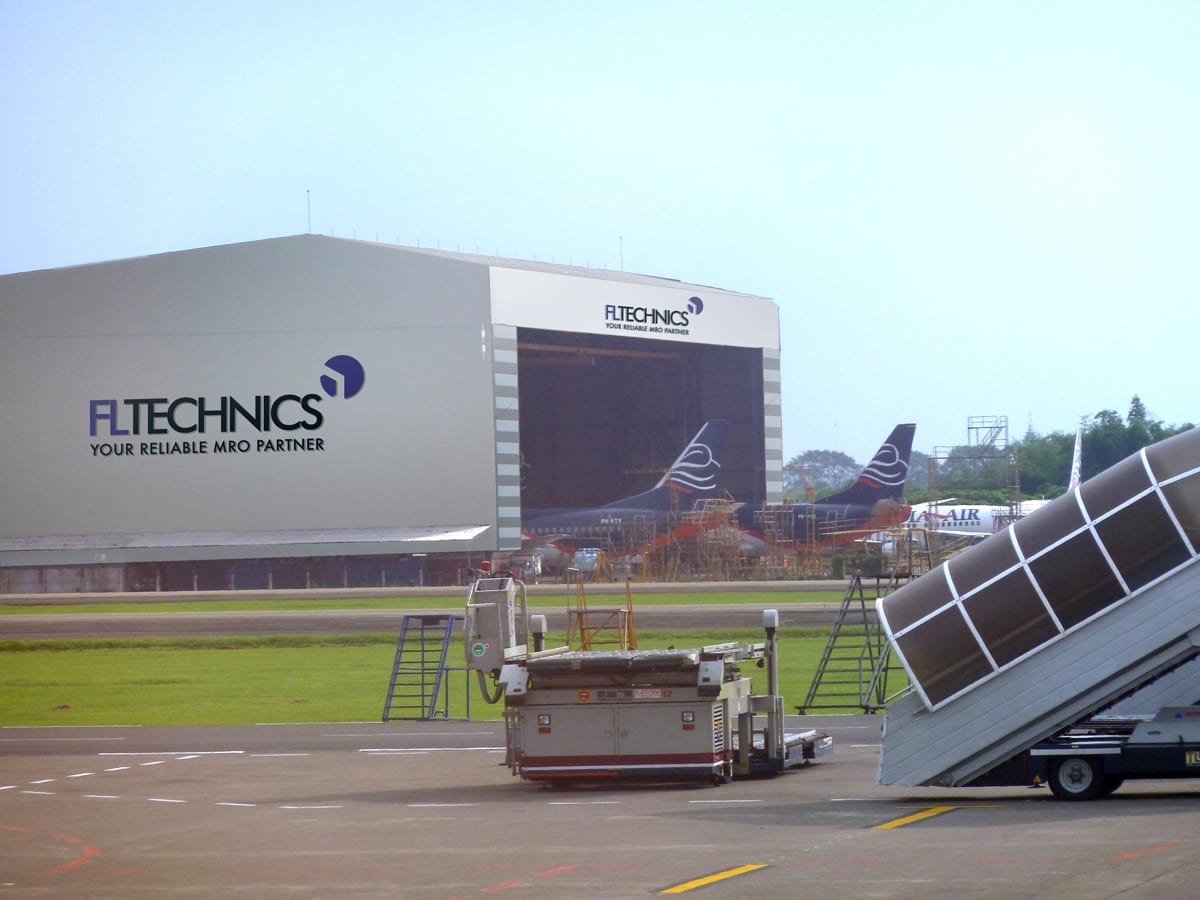
    FL Technics has opened its MRO hangar at Soekarno-Hatta International Airport, Jakarta, Indonesia, and reached cooperation agreements with ten Asian airlines.

    The 9,000-square-meter facility accommodates up to three narrowbodies and is certified to serve 737NGs and CLs, A319s, A320s and A321s.

    Line maintenance has started and base maintenance will begin in 2017.

    Zilvinas Lapinskas, CEO of Lithuania-headquartered FL Technics, said: “After renovating and upgrading the facilities according to European standards, we finally have a modern MRO centre, located in the heart of Indonesia.”

    The unveiling of the facility follows FL Technics Indonesia passing audits by Indonesia’s Directorate General of Civil Aviation and the Thai Department of Civil Aviation.

    The ten airline customers are comprised of NAM Air, Sriwijaya Air, K-Mile Air, Lion Air, Batik Air, Kalstar Aviation, Airfast Indonesia, Trigana Air Service, Tri-MG Intra Asia Airlines and Travira Air.

  • Inmarsat to debut GX Aviation this year

    Inmarsat to debut GX Aviation this year

    Inmarsat has announced it will use its new Global Xpress (GX) satellite fleet to provide in-flight connectivity services for the airline industry.

    The company will launch its Global Xpress Aviation offering this year, and has already arranged to serve initial customers including Lufthansa, Singapore Airlines and Jazeera Airways.

    Inmarsat’s GX network entered commercial service in December. It currently includes three Ka-band satellites with sufficient capacity to meet existing and near-term demand for Airlines.

    A fourth GX satellite has already been commissioned, and is completing construction and testing by Boeing. Inmarsat said it will build on this capacity to meet more long-term demand.

    Inmarsat has also contracted Airbus Defence and Space to build the first two satellites for its sixth-generation fleet, the first of which is due for delivery by 2020.

    The new sixth-generation satellites will support both the Ka-band and L-band. Inmarsat expects to use the Ka-band payload to augment the capacity of the GX network in busy regions, and use the L-band capacity for a new generation of aviation safety services.

    Inmarsat is also building the European Aviation Network, which will integrate a satellite network with an LTE-based ground network provided by Deutsche Telekom. Aircraft will automatically switch between satellite and terrestrial connectivity.

  • CAPA names Dubai’s Griffiths top Asia CEO

    CAPA names Dubai’s Griffiths top Asia CEO

    The first CAPA Asia Pacific Airport CEO award has been given to Dubai Airports CEO Paul Griffiths for his ‘outstanding strategic thinking and innovative direction for the growth of their business and the industry.’

    The award was presented by CAPA Executive Director Peter Harbison in Singapore on 23 November, with Griffiths singled out for ‘successfully managing Dubai through a massive expansion programme and completing an unprecedented runway improvement project’.

    “In 2014 Mr. Griffiths oversaw one of the largest ever runway improvement projects, which required Dubai to operate with only one runway for three months,” said Harbison. “Despite the runway closures, Dubai was able to overtake Heathrow in 2014 as the world’s biggest international airport as passenger throughput increased by 6% to 70.5 million.”

    Paul Griffiths - Dubai Airports CEO

    Dubai Airports CEO Paul Griffiths.

    Now in its thirteenth year, CAPA’s Aviation Awards for Excellence are intended to reward airlines and airports that are not only successful, but have also provided industry leadership in ever-changing environments.

    In its tribute to Griffiths, CAPA noted that much of the UAE’s economic success comes from the performance and growth of Dubai International where he became CEO of Dubai Airports in 2007.

    He has since managed the airport’s successful launch of T3 (2008) and is now in the process of overseeing a $7.8bn expansion plan, including Concourse D which will open in 2016 providing 32 additional gates.

    This will increase Dubai’s passenger handling capacity from 75m to 90m. Griffiths is also heading up the ongoing operation and development of Dubai World Central (DWC), which will eventually become the world’s largest airport with an ultimate capacity of 240m passengers.