Retail News CRM

Tag: axiata

  • Malaysia’s local telco industry needs consolidation

    Malaysia’s local telco industry needs consolidation

    Celcom Axiata Bhd CEO Michael Kuehner, while welcoming the expected entry of a new player in the local telco scene next week, pointed out that what the industry needs is consolidation and not another player.

    Yodoo is expected to launch its mobile data plan next Tuesday.

    “The market has too many (telcos) than too few. Customers have ample choice in Malaysia, from all price range, from all types of network experience, there is enough to choose from. There is no need for another one coming in.

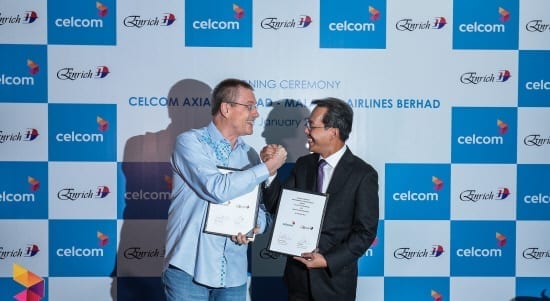
    “No worries about competition. Very happy with competition. We’re strong enough to stay in competition and be successful. Of course there is always the element of competition when it comes to pricing, which possibly has an impact on revenue, but it’s about how strong you are, how much value you deliver to customers and that makes you successful,” Kuehner said after signing a memorandum of understanding (MoU) with Malaysia Airlines Bhd (MAB) to collaborate in enhancing digital lifestyle for travellers today.
    He expects industry growth for 2019 to be flattish after industry revenue fell for the last three years.

    “After three years of shrinking revenue for telcos, maybe a bit of stabilisation possibly on telcos’ revenue side next year, so we’re slightly positive,” Kuehner said.

    Earlier, Celcom Axiata and Malaysia Airlines inked an MoU to provide benefits spanning multiple areas across both companies, including Enrich rewards, flight discounts for Celcom customers, attractive roaming plans and more.

    Kuehner said both Celcom and Enrich customers will enjoy innovative digital offerings and rewards, starting Feb 1. Both companies are still in the exploratory stage to discuss the details.

    On anotehr matter, Kuehner said a merger between Axiata Group Bhd and Telekom Malaysia Bhd (TM) makes sense in terms of scale , delivery and network perspectives.
    He said fixed mobile convergence is a trend worldwide and it is also relevant in Malaysia, adding that TM is strong on the fixed line side while Axiata is strong on the mobile side.

    “It (the merger) makes sense and this is where rumours come from, because a lot of people are talking about it. But not everything that makes sense will always happen. It’s difficult to predict,” Kuehner

    “It (merger) is up to the shareholders. I don’t have an opinion. I’m not the one calling the shots,” said Kuehner, adding that there is no indication on the merger from parent Axiata Group.

    News of a possible merger between the two emerged some nine months ago, with both companies deniying news of a reunion after a demerger in 2008. Analysts are still banking on the merger to set the tone for an industry consolidation, which is deemed as the logical route forward.
  • Ncell Axiata expands LTE network

    Ncell Axiata expands LTE network

    Nepal’s Ncell Axiata has revealed it has expanded its LTE network to cover two more cities – Lahan and Dhangadhi.

    The operator’s 4G network now spans 21 cities, giving Ncell the widest 4G coverage in the market at more than 15% of the population.

    Ncell launched 4G mobile broadband in the 21 cities last week. The company is giving customers the ability to acquire a 4G SIM with the same mobile number for just 1 rupee ($0.0098).

    The new SIM will be bundled with 1GB of 4G data valid for three days, as well as a buy 1 get 1 free offer providing the equivalent of double the 4G data for any data packs. The offer will also be bundled with a 30 day subscription to the Yonder Music digital music library.

    As well as the two new cities, Ncell’s 4G network covers Nagarkot, Banepa, Dhulikhel, Pokhara, Damauli, Biratnagar, Birtamode, Damak, Dharan, Bharatpur, Hetauda, Birjung, Bhairahawa, Butwal and Nepalgunj, Kolhpur and Birendranagar.

    “We are very much delighted to announce introduction of 4G service in Lahan and Dhangadhi, bringing more people into access of new technology based high speed mobile connectivity,” Ncell corporate services director Pranay Acharya said.

    “By making the 4G service accessible to more than 15% of population, we have been able to swiftly deliver on what we have committed, contributing towards the goals of National Broadband Policy and Digital Nepal.”

    Expansion to other parts of the country is already underway.

  • Axiata Group appoints heads for business service, info security

    Axiata Group appoints heads for business service, info security

    Axiata Group has made two key appointments for its business services and information security, as part of its transformation efforts into a “new generation digital champion.”

    The Malaysia–based telecoms conglomerate has recently appointed Asri Hassan Sabri – Axiata’s group chief business operations officer since January 2016  –  as chief executive officer of its newest subsidiary, Axiata Business Services. His appointment is effective January 1, 2018.

    Asri has 30 years of experience in various management, consulting and entrepreneur engagements in the IT and telecom industries. Prior to joining Axiata, he was a strategic partner with Provident Capital Partners, an established South Asia private equity company.

    Operating under the brand Xpand, Axiata Business Services will drive the group’s enterprise and Internet of Things (IoT) business across all of Axiata’s footprint in ASEAN and South Asia.

    The subsidiary was established in 2017 as a new area of focus for the group, one which is earmarked to achieve double-digit growth and holds great promise as a multi-billion dollar addressable market within the next few years, according to a company statement.

    Axiata has also hired Abid Abdul Adam as group chief information security officer, as part of the operator’s continued focus and commitment to improving cyber security capabilities. Abid will also assume the position of group head of privacy given the increasingly critical nature of data privacy and protection.

    Abid joins Axiata from South Africa where he was the chief information security officer and deputy information protection officer for a leading financial services organization. He brings to the table over 15 years of experience in developing, implementing, and leading an Information security and technology risk management function.

    Commenting on the appointments, Axiata president and group CEO Tan Sri Jamaludin Ibrahim said the move is in line with the group’s hope to build a leading digital company, beyond its core mobile business.

    “Asri’s role as CEO of Axiata Business Services is to scale up this addressable area of growth in the enterprise and IoT space and to ensure that group aggressively capitalizes on the opportunities in the ASEAN and South Asia market, to eventually bring a significant uplift in revenue,” he said in a statement.

    “Abid’s two led functions work in tandem to help us to achieve cyber resilience and data privacy across the group.”

  • Axiata more than doubles Q2 profit

    Axiata more than doubles Q2 profit

    Malaysia’s Axiata Group has reported a strong 115.5% year-on-year surge in Q2 profit to 479.1 million ringgit ($112.2 million) due in part to record-high revenue.

    Group revenue increased 13.9% year-on-year and 3% sequentially to 6.1 billion ringgit, despite increased losses from Axiata’s 19.75% stake in India’s Idea Cellular due to that market’s ongoing weakness.

    Revenue and ebitda at both Malaysian mobile unit Celcom Axiata and Indonesia’s XL Axiata both improved, while Cambodia’s Smart Axiata had another strong quarter, the company said.

    Data revenue grew nearly 11% from the previous quarter to account for 44.1% of service revenue.

    In the group’s South Asian Markets, Sri Lanka’s Dialog Axiata increased its mobile data revenue by 44.1% sequentially, Bangladesh’s Robi Axiata’s year-to-date data revenue grew 95.6% sequentially and Nepal’s Ncell posted data revenue growth of 16.9% quarter-on-quarter.

    For the first six months of the year, group revenue grew 15.7% quarter-on-quarter to 11.9 billion ringgit with profit up 17% over the same period to 741.1 million ringgit.

    “While the Group achieved better-than-expected half year performance, there remain considerable macroeconomic and industry challenges. As such, the Board is supportive of the ongoing turnaround of key units, while balancing the need to remain fiscally disciplined in terms of dividend and investment policies,” Axiata chairman Tan Sri Azaman Hj. Mokhtar said.

  • Cambodia’s Smart Axiata launches 4.5G

    Cambodia’s Smart Axiata launches 4.5G

    Cambodia’s Smart Axiata has launched 4.5G mobile connectivity in the country in collaboration with Huawei.

    The launch supports speeds 10 times faster than those available over normal 4G, the companies said.

    Smart Axiata will also potentially be able to use the technology to introduce new services including wireless home broadband and IoT services for residential and business customers. The deployment also marks part of Smart Axiata’s evolution to 5G.

    “I’m very pleased that together with Smart, we are able to build a better connected Cambodia through accelerating the mobile broadband development,” Huawei Cambodia CEO Margaret Hu said.

    “With increasing demand for personalized and diversified services, emerging markets represent tremendous new opportunities for the telecom operators. Huawei is committed to supporting operators seize new opportunities by driving sustainable development in emerging markets.”

    Smart Axiata is Cambodia’s top mobile operator with a market share of an estimated 57% as of last year. The company recently secured a $66 million investment from Japanese conglomerate Mitsui & Co and an affiliate, which secured a 10% stake in return. But Smart Axiata’s parent company Axiata Group has committed to maintaining a majority stake in the venture.

  • Axiata, iflix sign non-binding MoU

    Axiata, iflix sign non-binding MoU

    Axiata Group and iflix, a subscription video on demand service provider, have inked a non-binding Memorandum of Understanding (MoU) relating to the expansion of their strategic collaboration to provide entertainment to Axiata’s more than 125 million customers in six countries.

    In a statement, Axiata said from two existing successful partnerships with Celcom in Malaysia and Dialog in Sri Lanka, the regional collaboration is intended to extend to Axiata’s customers at XL in Indonesia, Smart in Cambodia, Robi in Bangaldesh and Ncell in Nepal.

    “Axiata has always demonstrated a strong focus on customer experience and innovation, as we strengthen our position in new sources of value, specifically in digital entertainment products and digital content distribution platforms across the region.

    “The expansion of our collaboration with iflix is a testament to that commitment. We are thrilled to make iflix’s world-class service and content available to over 125 million customers in Malaysia, Indonesia, Bangladesh, Cambodia, Nepal and Sri Lanka,” Axiata group chief strategy and marketing officer Dominic Arena said.

    Axiata said the collaboration would further strengthen the group’s leading regional telecommunications position.

    Meanwhile, iflix group chief executive officer Mark Britt said it was committed to provide all Axiata customers with unlimited access to the world’s best TV shows and movies through an exceptional user experience and unparalleled service, already enjoyed by Celcom and Dialog customers.

    “Together with Axiata’s highly innovative and award winning Mobile Internet Fulfilment Exchange application platform and music service Yonder, we look forward to working with Axiata to further redefine media and entertainment for Axiata’s customers in Malaysia, Sri Lanka, Indonesia, Cambodia, Bangladesh and Nepal, over the coming months,” he said.

  • Dialog Axiata consolidates billing with Netcracker platform

    Dialog Axiata consolidates billing with Netcracker platform

    Dialog Axiata has expanded its partnership with Netcracker by using Netcracker’s Customer Billing Management solution to consolidate billing across all lines of business into a single platform.

    This expansion will bring Dialog’s retail and enterprise fixed-line subscribers onto Netcracker’s BSS, which already bills for Dialog’s GSM, digital TV and Wi-Fi lines of business.

    The consolidation of all billing processes onto Netcracker’s solution will enable Dialog to open new revenue opportunities by offering converged services that span across several lines of business.

    The solution will also help Dialog deliver a better customer experience, bring new services to market faster and reduce opex due to the need to manage fewer systems.

    “Consistency across all lines of business and minimizing the number of systems required enables us to offer new digital services faster and provide innovative bundles that our customers expect,” said Anthony Rodrigo, group CIO at Dialog.

    Loh John Wu, SVP and GM of APAC at Netcracker, said the expanding market for digital services is encouraging service providers around the world to consolidate and streamline processes, systems and applications that may have been traditionally separated.

    “Our expansion with Dialog underscores this trend and validates our ability to enable the operational transformation required when becoming a digital service provider,” said Loh.

  • Underserved Indonesian Areas to be Connected via Thaicom and Axiata Partners

    Underserved Indonesian Areas to be Connected via Thaicom and Axiata Partners

    The partners inked the deal for Axiata Business Services to purchase the remaining capacity on IPSTAR over Indonesia to deliver Axiata’s operating company, PT XL Axiata Tbk (“XL”), more than 1 Gbps High Throughput Satellite (HTS) capacity for the provision of broadband services in Indonesia. According to the terms of the agreement, Axiata Business Services will use capacity of up to seven Ku-band shaped and spot beams on the IPSTAR-1 broadband satellite located at 119.5°E for the provision of broadband services in Indonesia, including broadband access direct to residential and enterprise premises, and cellular network backhaul.

    The IPSTAR-1 satellite was launched in 2005 and was the first HTS ever launched into orbit. IPSTAR cellular backhaul and direct to premise broadband connectivity provides telecom operators with the ability to expand their networks, launch new broadband services and reach underserved areas quickly and cost-effectively.

    Asri Hassan Sabri, Group Chief Business Operations Officer of Axiata, reported that his company is leveraging on Thaicom’s capabilities in Asia to grow their enterprise business quickly and flexibly, all the while providing reliable broadband services to all potential customers, regardless of their location. Where terrestrial-based connectivity is limited or unavailable, HTS connectivity serves as an enabler to unlock the digital ecosystem for new market opportunities. As the world’s first ever HTS, launched in 2005, Thaicom’s IPSTAR helps us to connect users in remote and underserved areas of Indonesia cost-effectively.

    Dian Siswarini, Chief Executive Officer of XL, added that as the biggest archipelago in the world, there are many areas and islands in Indonesia that have not been served by Internet services as of yet.The availability of HTS will help to cover these unserved areas with considerable economic potential. On top of that, the company will be able to support the local community’s economic growth and Indonesian government’s vision to accelerate the national development of digital economy across Indonesia.

    Dominic P Arena, Group Chief Strategy Officer of Axiata, indicated that this HTS partnership is highly strategic for Axiata and the beginning of what all believe can become a core future broadband delivery platform for the operating companies to deliver broadband connectivity, media and entertainment, IoT and other digital services to enterprise and consumer home segments. More importantly, this partnership allows the firm to provide the best connectivity option and reach to underserved communities, in line with Axiata’s broader goal of advancing Asia by piecing together the best in innovation, connectivity and talent.

  • Axiata to lease capacity on IPSTAR-1 for Indonesia

    Axiata to lease capacity on IPSTAR-1 for Indonesia

    Malaysia’s Axiata Group has signed a four-year agreement to lease capacity over Thaicom’s IPSTAR-1 satellite for the provision of broadband services in Indonesia.

    Subsidiary Axiata Business Services will purchase the remaining capacity on the broadband satellite, located at 119.5° east.

    Thaicom’s IPSTAR unit will provide multi-transponder 1Gbps high throughput satellite (HTS) capacity under the contract.

    As well as direct home and enterprise broadband access, Axiata plans to use the capacity for mobile backhaul.

    “We are leveraging on Thaicom’s capabilities in Asia to grow our enterprise business quickly and flexibly while providing reliable broadband services to all potential customers regardless of location,” said Axiata group chief business operations officer Asri Hassan Sabri said.

    “Where terrestrial-based connectivity is limited or unavailable, HTS connectivity serves as an enabler to unlock the digital ecosystem for new market opportunities… Thaicom’s IPSTAR helps us to connect users in remote and underserved areas of Indonesia cost-effectively. We are confident that the partnership will enable us to continue to grow our business faster without infrastructure limitations.”

    IPSTAR-1, also known as THAICOM-4, was the first HTS satellite launched worldwide in 2005, with a capacity of 45Gbps. It includes 87 Ku-band transponders and 10 Ka-band transponders.

  • Robi completes LTE trial in Dhaka

    Robi completes LTE trial in Dhaka

    Bangladesh’s Robi Axiata is gearing up to launch 4G services after completing a successful trial of the technology in conjunction with Ericsson.

    The operator conducted an LTE demonstration using a combination of 1800-MHz and 2100-MHz spectrum in Bangladesh’s capital Dhaka, achieving download speeds of over 90Mbps.

    Ericsson provided cutting-edge base station, radio units and baseband technologies for the trial, the companies said.

    The demonstration was also intended to explore how the technology can help facilitate adoption of high-speed broadband applications including HDTV and videoconferencing.

    “Although there are some barriers to the adoption of 4G/LTE technology such as low penetration of compatible smartphones, we recognize and appreciate our customers’ growing demand for high speed internet which can only be served using this technology,” Robi Axiata CEO Mahtab Uddin Ahmed said.

    “Unfortunately, we feel the licensing framework proposed by the government make the business case for 4G unviable in Bangladesh. However, we are very keen on introducing this technology in our telecom market considering the customers’ interest… We hope the government will kindly consider revising the licensing framework to make it more enabling for 4G business.”

    Last month, Bangladesh’s regulator prepared its guidelines for the proposed 4G licensing regime for the nation.

    These include requiring operators to pay a 15% gross revenue share – compared to 5.5% for 2G and 3G services – as well as a 150 million taka ($1.8 million) 15-year license fee and a further 75 million taka in annual fees.

    Bangladesh is the only country among its neighbors to have yet to introduce 4G services.

  • Dialog Axiata lifts FY16 profit by 74%

    Dialog Axiata lifts FY16 profit by 74%

    Sri Lanka’s Dialog Axiata boosted its net profit for FY16 by 74% year-on-year to 9 billion rupees ($59.4 million), recording strong growth across all its business segments.

    The operator reported total revenue of 86.7 billion rupees, up 17% year-on-year, with revenue from its core business increasing 16% to 73 billion. Mobile customers increased to 11.8 million.

    Dialog Broadband Networks revenue grew 28% to 9.3 billion rupees, but the division’s net loss more than doubled to 385 million rupees due to higher depreciation and finance costs.

    Dialog Television revenue meanwhile grew 5% to 6.1 billion rupees, but its net loss also more than doubled to 644 million rupees.

    The group’s total capex for the year reached 23.2 billion rupees, representing a capex to revenue ratio of 27%. The bulk of spending went towards investments in high speed broadband infrastructure aimed at strengthening Dialog’s position in Sri Lanka’s broadband sector.

    For the fourth quarter, Dialog reported a 5% increase in revenue growth to 7.4 billion rupees. The company attributed the slower growth to the reintroduction of Sri Lanka’s value added tax at the start of November.

    Net profit for the quarter meanwhile declined 56% quarter-on-quarter to 1.3 billion rupees, due to lower pre-tax earnings, increased depreciation and higher non-cash forex losses.

  • XL Axiata swings back to profit in FY16

    XL Axiata swings back to profit in FY16

    Indonesia’s XL Axiata swung back to a 376 billion rupiah ($28.1 million) profit in 2016, as the company benefited from its $250 million tower sale and a stronger rupiah.

    The sale of 2,500 telecoms towers to local tower operator Protelindo, announced in March, helped the operator recover from a 25 billion rupiah loss the year before.

    But service revenue declined 4% to 19.19 billion rupiah due to the ongoing shift from legacy services to data. As a result of this rebalancing, data grew to account for 53% of the operator’s service revenue as of the fourth quarter, up from 35% a year earlier.

    Data traffic also surged to 515,304 terabytes, up from 196,341 terabytes a year earlier. The surge was driven by a 21 percentage point increase in smartphone penetration among XL’s subscribers to 63%, totalling 29 million customers at the end of FY16.

    During the fourth quarter, service revenue grew for a second consecutive quarter, albeit a slim 1% sequentially.

    XL Axiata’s results show that the company rolled out over 25,000 new base stations during the year, taking its total to 84,484 by the end of the year. Of these, 8,204 are 4G e-Node base stations, 38,731 are 3G node base stations and 37,549 are 2G sites.

  • Axiata to sell 34.1% of tower unit for $600m

    Axiata to sell 34.1% of tower unit for $600m

    Malaysia’s Axiata Group has arranged to sell a 34.1% stake in its wholly-owned telecommunications infrastructure services division edotco Group for $600 million.

    The operator will place $400 million worth of primary shares with Innovation Network Corporation of Japan, and $200 million in secondary shares with Khazana Nasional Berhad.

    The placement is expected to close by the end of January. It values edotco at close to $1.5 billion, with an enterprise value to FY16 ebitda multiple of 12.5x – roughly comparable to the company’s regional peers.

    The valuation takes into account the potential future injection of tower assets from Axiata’s Cambodian and Sri Lankan operations, which would further increase Axiata’s shareholding in edotco.

    “Our lead investors and new shareholders, INCJ and Khazanah, are both long-term investors who will provide strategic value-add to edotco’s growth strategy, open doors to further strategic collaborations, as well as enhance and diversify our shareholder base,” edotco CEO Suresh Sidhu said.

    Axiata CEO Jamaludin Ibrahim added that edotco achieved a comparatively strong valuation during the placement due to its robust recent business growth.

    “We are determined to make edotco a world-class business and one of the world’s largest independent tower companies by 2020. The successful placement exercise is yet another step – financially and symbolically – towards facilitating this aspiration.”

  • Smart Axiata deploys SMS spam filtering suite

    Smart Axiata deploys SMS spam filtering suite

    Cambodia’s Smart Axiata announced it has deployed an SMS spam filtering and A2P SMS monetization platform from 365squared for its more than 8 million customers.

    The operator is using the 365secure service to continuously monitor and filer SMS traffic from any source on a round-the-clock basis. The service is designed to detect and block fraudulent SMS messages delivered through gray routes.

    Smart will also be able to use the service’s proprietary 365analytics software to conduct detailed traffic analysis and reporting. The implementation was conducted by 365squared last month.

    “Spam messages are disliked by everyone. The partnership with 365squared stands on our desire to strengthen customer relationships based on trust,” Smart Axiata CEO Thomas Hundt said.

    “By filtering intrusive and uninvited messages we provide to our customers peace of mind and therewith step up our customer experience efforts further.”

    Smart Axiata launched LTE services in January 2014, and has now expanded the network to cover 25 key provincial capitals as well as other key cities. The company’s combined 2G, 2.5G, 3G, 3.75G and 4G mobile network covers more than 98% of the Cambodian population.

  • Axiata Group 9M16 revenue grows 8.6%

    Axiata Group 9M16 revenue grows 8.6%

    Malaysia-based Axiata Group has reported an 8.6% growth in revenue for the first nine months of the year, due in part to strong growth from the South Asia region.

    Total revenue reached 15.8 billion ringgit ($3.55 billion), with ebitda up 13.4% to 6 billion ringgit. But net profit slumped 55.7% to 929 million ringgit due to one-off gains in the previous year, higher financing costs and increased forex losses from the weaker ringgit.

    For the third quarter, total revenue grew 2.8% quarter-on-quarter and 8.6% year-on-year to a record 5.5 billion ringgit, due largely to the performance of its newest acquisition, Nepal’s Ncell. Q3 represented the first full quarter of contribution from Ncell.

    Net profit reached 296 million ringgit, up 27.3% quarter-on-quarter but down significantly from 955 million a year earlier.

    Across Axiata’s operation, improvements were seen at domestic mobile unit Celcom and Indonesia’s XL for the third quarter, with service revenue at Celcom returning to growth after three consecutive quarters of declines.

    XL revenue grew 1.6% quarter-on-quarter and year-to-date net profit grew by over 100% mainly due to forex gains associated with the refinancing of XL’s US dollar debt to Indonesian rupiah.

    In South Asian markets, Ncell reported a 16.9% year-to-date profit growth, Sri Lanka’s Dialog posted a profit growth of 18.7% over the same nine-month period, but Bangladesh’s Robi reported a 1% decrease in normalized profit.

    “We are pleased with the improvements in revenue and EBITDA, although the Group performance continues to be affected by the weaker operating environment and increased competitive pressures across our markets,” Axiata chairman Tan Sri Azman Hj Mokhtar said.

    “We remain especially focused on management’s plans for recovery and turnaround strategies at XL and Celcom.”

    Axiata group CEO Tan Sri Jamaludin Ibrahim added that 2016 “2016 remains challenging for the group across most of our markets – particularly in Malaysia, Indonesia, Singapore and India where fiercer competition and rising capex have weighed in on overall performance and profitability.”