Retail News CRM

Tag: axiata

  • Dialog Axiata revenue grows 19% in 9M16

    Dialog Axiata revenue grows 19% in 9M16

    Sri Lanka’s Dialog Axiata has reported a 19% increase in revenue for the first nine months of the year to 64 billion rupees ($430.9 million) as a result of a temporary suspension of value-added tax (VAT) and strong growth momentum across the operator’s business.

    Net profit for the period grew 71% to 7.8 billion rupees as a result of improving profit margins and significantly lower forex losses.

    Dialog Axiata increased its mobile subscriber base by 10% year-on-year to 11.3 million, mostly from prepaid services. The company also recorded 43,000 net additions to its subscription TV service.

    Broadband revenue for the nine-month period grew 27% to 6.76 billion rupees, but the broadband segment recorded a net loss of 62 million rupees due to aggressive fixed LTE and fiber expansion.

    Total group capex for the nine months reached 12.7 billion rupees, with the high-speed broadband investments dominating spending.

    Blended ARPU grew 3.8% during the third quarter to 406 rupees, while average minutes of use edged up by 1 minute to 133.

  • Axiata has no plans to downsize regional operations

    Axiata has no plans to downsize regional operations

    Axiata Group has no plans to downsize its operations in any of its eight markets, according to CEO Jamaludin Ibrahim.

    Last months, reports suggested that the company is considering selling stakes in its Indonesian, Cambodian and Sri Lankan operations, leading to speculation that the company may seek to exit the markets.

    But Kamaludin said Axiata Group is a long-term investor in each of its operating countries, the Khmer Times reported. Regardless of if the company does plan to reduce its stakes in the regional operations, the group will maintain majority ownership.

    He also told  that if the company does decide to reduce its 83.3% stake in Sri Lanka’s Dialog Axiata, money raised will be reinvested back into Sri Lanka for another venture.

    We quote Axiata’s group chief strategy officer repeating the same sentiment for funds raised through any divestment of Cambodia’s Smart Axiata.

    According to last month’s reports, Axiata was said to be seeking buyers for stakes worth up to $700 million in the regional subsidiaries. The reports indicated that the potential sales are part of efforts to reduce the group’s debt, although Axiata executives are declining to comment on this aspect.

    But Kamaludin said Axiata Group invests around $600 million to $700 million per year in expanding its regional operations.

  • Indonesia’s Indosat Ooredoo & XL Axiata Suspected of Cartel Practices

    Indonesia’s Indosat Ooredoo & XL Axiata Suspected of Cartel Practices

    Muhammad Syarkawi Rauf, Chairman of the KPPU, informed that there are indications that both telecommunication operators – both listed on the Indonesia Stock Exchange (IDX) – are (1) coordinating to determine prices, (2) coordinating to divide geographical areas for their products, and (3) coordinating to restrict the output of their products. These allegations are the result of the establishment of their joint venture One Indonesia Synergy.

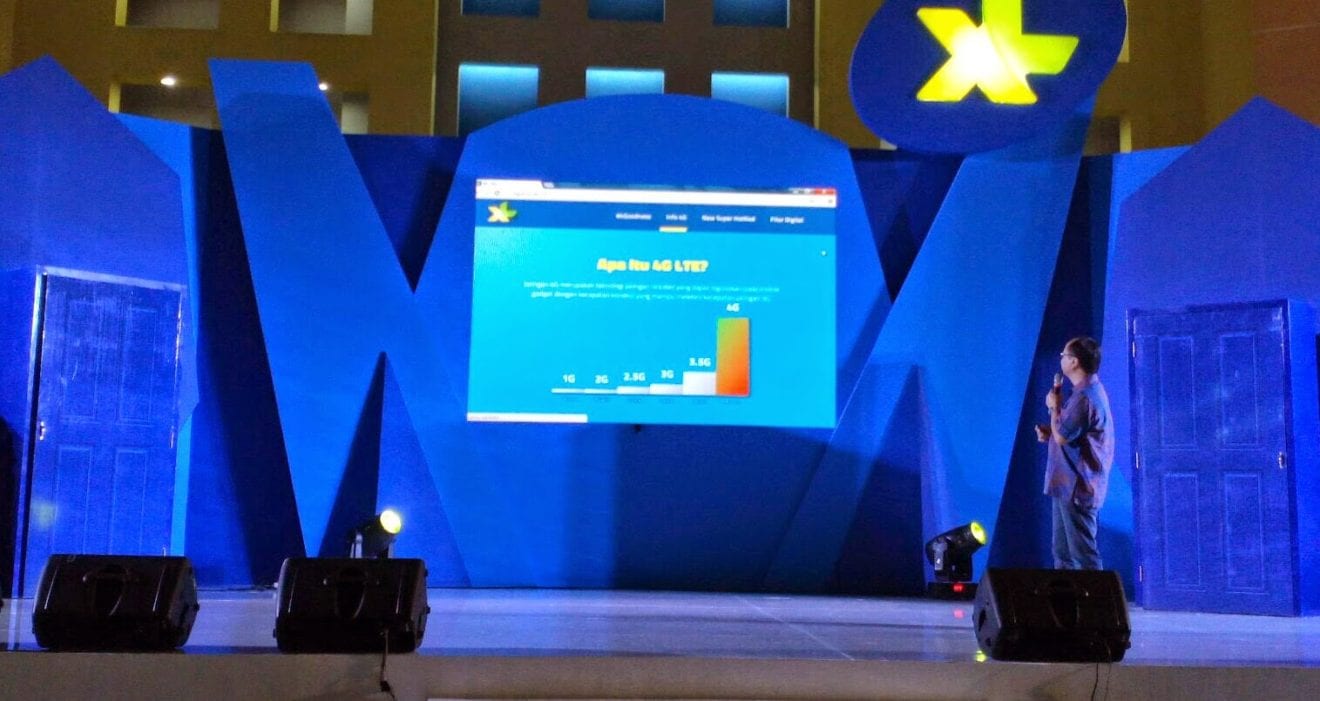
    Turina Farouk, Vice President Corporate Communication of XL Axiata, said the company cannot respond yet to the KPPU’s summon as XL Axiata is yet to receive the full details of the case. However, regarding One Indonesia Synergy Farouk said this joint venture is not a vehicle used to engage in cartel practices but is part of cost efficiency efforts for the development of their 4G LTE network. Farouk added that One Indonesia Synergy is not operational yet as it awaits several permits from authorities.

    Cooperation is a strategy of Indosat Ooredoo and XL Axiata to make their operations more efficient in the future. Indonesia’s telecommunication sector is dominated by state-controlled Telekomunikasi Indonesia.

    Indosat Ooredoo and XL Axiata each own a 50 percent stake in joint venture One Indonesia Synergy. Alexander Rusli, President Director and CEO of Indosat, said One Indonesia Synergy will offer consultation services for both companies’ cooperation in telecommunication networks, for example the so-called multi operator radio access network.

  • Axiata may sell up to $700m in shares in three units

    Axiata may sell up to $700m in shares in three units

    Malaysia’s Axiata Group is said to be seeking buyers for stakes in its Asian telecoms assets worth up to $700 million as part of efforts to reduce debt.

    The group may sell around 11% of Indonesia’s XL Axiata and up to 30% each of Sri Lanka’s Dialog Axiata and Cambodia’s Smart Axiata, Bloomberg reported, citing unnamed sources.

    According to the report, Axiata is seeking to cut down its debt, which had grown to 21.5 billion ringgit ($5.2 billion) as of the end of June.

    Axiata Group currently owns 83.3% of Dialog Axiata, 95.4% of Smart Axiata and 66.4% of XL Axiata, on top of its operations in Bangladesh and Pakistan and minority stakes in Singapore and India.

    In a statement responding to the report, Axiata said the company “continuously reviews various strategic options to enhance shareholders’ value.”

    The company confirmed that it has been exploring options to optimize its balance sheet since the middle of last year, “potentially including, but not limited to, the portfolio rebalancing and review of shareholding across subsidiaries.”

    But Axiata added that any reports are “speculative” unless and until any transactions are entered into and disclosed to the market.

  • Axiata may lift stake in Singapore’s M1

    Axiata may lift stake in Singapore’s M1

    Malaysia’s Axiata Group is considering increasing its stake in Singapore’s M1 as a strategic investment.

    Axiata CEO Tan Sri Jamaludin Ibrahim told that the company would “seriously consider” lifting its stake in M1 “if the price is right”.

    Axiata is already M1’s largest shareholder with a 28.5% stake. M1’s second largest shareholder Keppel Corp’s parent company Temasek Holdings is meanwhile reportedly considering selling Keppel’s stake in the operator.

    But the prospect of heightened competition in Singapore’s mobile market arising from the award of the nation’s planned fourth mobile license may limit the attraction of a potential deal.

    Jamaludin told that the company is not pursuing any major mergers and acquisitions, noting that even if the group wanted to expand into another country, the opportunity is not there.

  • Axiata details major organizational revamp

    Axiata details major organizational revamp

    Malaysia’s Axiata group has announced a major organizational and management shake-up across its group of companies, with the reshuffling or appointment of multiple new top executives.

    The company has embarked on a transformation as part of its strategy of executing its succession plan and strengthening its ability to manage an entity that has grown to more than twice its size since its inception.

    As part of the restructuring, Axiata has established a new unit to oversee its Southeast Asia operations. The current CEO of domestic mobile subsidiary Celcom Axiata, Dato’ Sri Shazalli Ramly, has been selected to take responsibility for all Southeast Asia operations.

    Axiata recently set up a similar unit to manage the operator’s South Asia operations and appointed Dr Hans Wijayasuriya, currently CEO of Sri Lanka’s Dialog Axiata, as regional CEO for South Asia.

    Celcom itself will meanwhile undertake an organizational refresh which will involve the establishment of a new executive committee, including the appointment of six new key senior positions.

    Axiata Group CEO and Celcom chairman Jamaludin Ibrahim will chair this committee.

    Former Robi Axiata CEO Michael Kuehner will meanwhile become the new CEO of Celcom starting in September.

    He will be assisted by two new deputy CEOs – Azwan Khan Osman Khan and Mohamed Adlan Ahmad Tajudin, who have been promoted from within the group.

    Celcom has also appointed a neew CFO – Jennifer Wong – a new chief human capital officer (CHCO) – Azmi Ujang – and a new chief transformation and digital officer – Azmi Ujang.

    Finally, Axiata Group has also named the planned successor for Wijayasuriya. Supun Weerasinghe will take over as Dialog’s CEO at the start of next year.  Weerasinghe is currently CEO of Robi Axiata, and will himself be replaced in this role by Robi COO Mahtab Uddin Ahmed.

  • Mobitel, Dialog Axiata trial 1Gbps+ 4.5G

    Mobitel, Dialog Axiata trial 1Gbps+ 4.5G

    In a South Asia first, Sri Lanka’s Mobitel and Dialog Axiata have each completed successful trials of 4.5G technology capable of speeds of over 1Gbps.

    Mobitel announced it has tested a technology it calls LTE-A Pro at the operator’s test lab.

    The operator partnered with Huawei and ZTE to test LTE-A technology capable of using a combination of up to five-carrier aggregation, 4×4 MIMO and 256 QAM. The company plans a commercial deployment in the near future.

    Dialog meanwhile revealed it has completed capability testing on Huawei’s LTE equipment, demonstrating the ability to deliver throughputs exceeding 1Gbps over the LTE radio interface.

    Mobitel asserts it was the first operator in South Asia to trial LTE technology in 2011, while Dialog Axiata said it was the first in the region to launch commercial LTE services in 2014. Dialog’s LTE network now covers more than 50% of the population.

    Dialog and Mobitel are Sri Lanka’s first and second largest mobile operators by subscribers respectively.

    The ITU has named Sri Lanka as having the lowest broadband tariffs among operators in the Asia-Pacific region.

  • Axiata Q1 profit falls 37% on rising costs

    Axiata Q1 profit falls 37% on rising costs

    Malaysia-based Axiata Group has reported a 37% slump in net profit for the first quarter ending in March, due in part to higher capex, financing and depreciation costs.

    Net profit fell to 368 million ringgit ($90.1 million) despite a 5.4% year-on-year increase in revenue to 5 billion ringgit.

    Axiata’s domestic subsidiary Celcom Axiata had what the company called a “challenging quarter,” with revenue declining 13.4% year-on-year.

    As a result of new regulations, Celcom had to temporarily suspend almost all value added services during the quarter due to customer complaints, resulting in VAS revenue falling by 19.8%. Celcom’s normalized profit fell 22.3%.

    But Indonesia’s XL Axiata had a strong first quarter, with net profit more than doubling and revenue growing 2.5% as a result of the strong performance of the Axis brand, acquired in 2014.

    Axiata Group also reported a steady performance in its emerging markets segment of Sri Lanka, Bangladesh and Cambodia. But the contributions from regional associates Idea Cellular in India nd M1 in Singapore both declined.

    “The first quarter showed mixed results with XL, Dialog and Smart performing exceptionally well while Celcom’s performance impacted the Group’s results,” Axiata Group CEO Dato’ Sri Jamaludin Ibrahim said.

    “However, I am pleased to note there are many positive signs; Celcom has been aggressively rolling out more LTE sites and a number of competitive and exciting data products and services over the last two months. I am confident with these initiatives in place, Celcom will be back on track to finish the year respectably.”

  • XL Axiata swings back to profit in Q1

    XL Axiata swings back to profit in Q1

    Indonesia’s XL Axiata swung back to a net profit for the first quarter during what CEO Dian Siswarini said was a “promising start to 2016.”

    The operator reported a net profit of 20 billion rupiah ($1.5 million) during the period, which compares to a loss of 758 billion rupiah in the same quarter last year.

    Profit for 2016 was positively impacted by the strengthening of the rupiah against the US dollar this year, compared to a weakening in the first quarter of 2015.

    Revenue meanwhile grew 2% year-on-year during Q1 of 2016, with core usage revenue up 5%, driven by a 23% year-on-year growth in the data segment. Data traffic grew 94% year-on-year and total data users grew to 22.8 million, or 54% of XL’s total base.

    XL commented that LTE has become a key part of the operator’s mobile internet leadership strategy. By the end of the quarter, XL expanded its LTE footprint to cover 3,286 sites in 36 Indonesian cities and areas. The company’s total BTS footprint as of the end of March was 59,040.

    “We have made a promising start to 2016 with further improvements in our operating and financial performance, and we hope to build momentum as we execute on our transformation agenda,” Siswarini said in a statement.

  • Axiata Group buys Nepal’s Ncell for $1.36b

    Axiata Group buys Nepal’s Ncell for $1.36b

    Malaysia-based Axiata Group has entered the Nepal telecoms market with the acquisition of the nation’s largest mobile operator Ncell.

    Axiata has paid $1.36 billion for an effective 80% stake in Ncell from previous owners TeliaSonera UTA Holdings and Reynolds Holdings’ SEA Telecom Investments.

    Local partner Sunivera Capital Ventures will retain a 20% direct stake in Ncell, as required under Nepalese law.

    Axiata group CEO Dato’ Sri Jamaludin Ibrahim commented that Ncell represents a perfect expansion opportunity for the group.

    “One key ambition we have is to effectively offer high-speed data connectivity, and exciting products and services to meet the demands of a young and maturing Nepali market,” he said.

    “There are tremendous opportunities for us to grow with the nation for the longer term. As a Group respected for its commitment to corporate responsibility and governance, we will play an integral role with the Nepali government and civil society, and contribute towards the socioeconomic development of the country and her people.”

    Axiata is already exploring synergies including opportunities to serve Nepal’s overseas foreign workers segment, which number around 1 million in Malaysia alone.

    The operator plans to launch special products for Ncell customers offering discounted prices for Ncell customers roaming within the Ncell footprint.

    Axiata Group said its combined footprint in South and Southeast Asia now covers a total population of over 2 billion.

  • Ericsson wins 4G network deal from XL Axiata

    Ericsson wins 4G network deal from XL Axiata

    Swedish telecom gear maker Ericsson said that it has signed a three-year contract with Indonesian telco XL Axiata for design and implementation of 4G/LTE network and upgrade of existing 2G and 3G networks in Jakarta and Central Java.

    The agreement includes all hardware, software and services to deliver 4G/LTE services for XL Axiata’s subscribers.

    “We are keen to work with Ericsson to bring this next generation technology to Indonesia. We are looking forward to the implementation of the 4G/LTE network and the improved mobile broadband experience this will deliver for our subscribers,” Dian Siswarini, President Director and CEO of XL Axiata, said in a statement.

    This 4G/LTE network deployment will improve network capacity and enhance speeds to allow Indonesian users to enjoy improved smartphone and network performance, as well as faster web browsing and downloads.

    “Ericsson’s LTE solution will enable XL Axiata to deliver unique experiences for people, society and businesses, thus shaping and accelerating the Networked Society in Indonesia,” Thomas Jul, Head of Ericsson Indonesia and Timor Leste, said.

    Ericsson is today present in all high traffic LTE markets including the US, Japan, and South Korea, and is ranked first for handling the most global LTE traffic – 40 percent of the world’s mobile traffic is carried over Ericsson networks.

    Ericsson is number one in LTE market share within the world’s top 100 cities. More than 220 LTE RAN and evolved Packet Core networks have been delivered worldwide, of which 170 are live commercially.

  • XL Axiata targets Bandung, Jakarta for next 4G 1800MHz launch

    XL Axiata targets Bandung, Jakarta for next 4G 1800MHz launch

    The Indonesian mobile operator XL Axiata has revealed that the ongoing phased rollout of 1800MHz 4G LTEservices will target a commercial launch in Bandung, West Java by the end of the month, followed soon after by Jakarta in November, after the company concludes its nationwide spectrum refarming programme. Dian Siswarini, President Director and CEO of XL Axiata, notes that the process has already reached Central Java and will be completed next month to comply with the ministry’s 23 November deadline. ‘There have been minimal obstacles in the refarming process. That’s why we are confident to say that we are able to have 4G LTE services operating in Bandung by the end of October, and in Jakarta by November,’ she said.

    XL introduced its first 1800MHz 4G service in Lombok, West Nusa Tenggara in July 2015, followed soon after by Denpasar (Bali) and Surabaya (East Java). It currently has around 1.2 million 4G users to its 900MHz service, although Dian concedes that some customers have complained that LTE-900 is proving to be little faster than XL’s W-CDMA-based 3G network. Last month XL Axiata, which is 66.5%-owned by Axiata Group of Malaysia through Axiata Investments (Indonesia), selected Ericsson to act as its turnkey supplier for 4G LTE design and implementation in Jakarta and Central Java, as well as for 2G and 3G upgrades to meet an explosion in demand for data traffic. Under a three-year contract, the Swedish vendor will supply all necessary hardware, software and services to deliver 4G services for XL Axiata’s subscribers. The pair say the deployment will improve both network capacity and data transmission speeds.

    In another development regarding the government’s recent plan to tighten procedures on the purchase of mobileSIM cards, The Jakarta Post quotes Dian as saying that XL Axiata had prepared for the regulation in terms of its data systems and forging standard operating procedures (SOPs) with retail outlets to make them aware of the regulation. The telecoms ministry and the telecommunications regulatory authority (BRTI) issued a regulation in September, requiring customers to show an ID upon the purchase of pre-paid SIM cards starting 15 December.

  • Axiata buys Komli Media’s SEA operations for $11.25m

    Axiata buys Komli Media’s SEA operations for $11.25m

    Malaysian telecommunications group Axiata Group Bhd has acquired the Southeast Asian operations of Komli Media, a digital advertising firm, for $11.25 million.

    In an announcement on Bursa Malaysia, the group said its subsidiary Adknowledge reached an agreement with Komli Asia for the acquisition.

    The business being acquired include, Mumbai-headquartered Komli Media’s operations in the Southeast Asia markets – Singapore, Thailand, Vietnam, Philippines, Indonesia, Malaysia – and Hong Kong.

    The rationale behind the acquisition, according to Axiata, is that it allows them to “skip past the formative stage of its business plan and scale up its presence and operations in Southeast Asian region.”

    It saw Komli’s geographical spread and diversified revenue streams as “a strong strategic fit across digital advertising verticals such as social, video, display and mobile.”

    Adknowledge Asia Pacific is an 80 per cent subsidiary of Axiata Digital Advertising, which is a wholly owned by Axiata Digital Services, which in turn is a wholly owned subsidiary of Axiata Group Bhd. Axiata said in its filing that the acquisition “does not have any effect on the issued and paid-up share capital of Axiata and will not have any material effect on the earnings, gearings and net assets of the Axiata Group for the year financial ending December 31, 2015.”

    Under the deal, $11.25 million shall be paid in cash. The purchase consideration shall be adjusted with the difference between the target working capital of Komli Asia Group against its working capital which shall be determined based on the aggregate value of Komli Asia Group’s current assets less its current liabilities.

  • Malaysia’s Axiata Boosted by Overseas Business

    Malaysia’s Axiata Boosted by Overseas Business

    Malaysia’s Axiata says profits rose sharply in the second quarter, thanks to contributions from various overseas interests, and claims to have seen improvements in the markets of Malaysia and Indonesia, where it has been struggling amid fierce competition.

    Through its various subsidiaries and affiliates, Axiata Group Berhad serves about 260 million mobile subscribers in Asia, making it one of the region’s biggest operators by customer numbers.

    Axiata reported a 34.2% year-on-year increase in profits after taxation and minority interests, to 611 million Malaysian ringgits ($147.9 million), following strong contributions from subsidiaries in Sri Lanka, Cambodia and India.

    Difficulties in Malaysia and Indonesia triggered a 0.5% dip in revenues over the same period, to MYR4.7 billion ($1.14 billion), but the operator said that Malaysia’s Celcom Malaysia had grown its customer base for the first time since the third quarter last year and that Indonesia’s XL was also making good progress.

    Nevertheless, Dato’ Sri Jamaludin Ibrahim, Axiata’s president and CEO, said there is still work ahead before the operator could feel satisfied with its performance.

    “While Celcom’s IT transformation issues are generally resolved and we are making significant progress in regaining some goodwill that was lost last year, there is still more to be done,” he said in a company statement.

    Axiata blamed declines in the voice and text-messaging businesses for a dip in Celcom’s service revenue but also claimed to have added another 61,000 customers to its subscriber base in the quarter.

    Having launched a series of new pre- and post-paid tariffs, the operator said it is now “regaining market confidence.”

    Axiata serves about 12.3 million customers in Malaysia, down from 13.4 million in the second quarter of 2014, but still generates about 38% of its revenues in the country.

    Celcom believes that upgrades to its IT systems will help it to compete more effectively against rivals including Maxis Communications Bhd. and DiGi Telecommunications Sdn Bhd. , which appear to have been eating into its market share in recent quarters.

    A similar transformation program is under way at XL in Indonesia, where subscriber losses have been even more dramatic over the last year.

    Currently Indonesia’s third-biggest mobile operator, XL revealed that customer numbers fell to about 46 million in the second quarter from as many as 62.9 million in the same period last year.

    In local currency terms, revenues have dropped from 6.1 trillion Indonesian rupiahs ($439 million) to IDR5.6 trillion ($403 million) over the same period.

    XL says its current strategy is to focus on serving heavier-spending customers. It has booked a sharp increase in average revenue per user over the past year — up to IDR32,000 ($2.3) per month from IDR26,000 ($1.87) in the second quarter of 2014 — despite the overall sales decline.

    Axiata’s performance in the much smaller markets of Sri Lanka and Cambodia stood in sharp contrast to the setbacks at home and in Indonesia.

    Sri Lanka’s Dialog grew revenues to 17.7 billion Sri Lankan rupees ($130 million), from SLR16.7 billion ($120 million) in the second quarter of 2014, and saw its customer base balloon from 9.3 million to 10.1 million subscribers over the same period.

    In Cambodia, meanwhile, Axiata revealed that revenues have grown from MYR270 million ($65.4 million) in the first six months of 2014 to MYR420 million ($101.7 million) in the same period this year.

    Axiata was also boosted by the performance of Idea Cellular Ltd. , one of India’s biggest mobile operators, in which it owns a stake of about 20%.

    In its results presentation, the operator indicated that Idea contributed MYR102 million ($24.5 million) to its profit before taxation and minority interests in the second quarter — about a sixth of the total figure.

    Fueled by growth in India’s burgeoning mobile data market, Idea reported a 14% year-on-year increase in revenues in the April-to-June quarter.