Tag: Indonesia

  • Bidgely Shows Energy AI for 50 Million Homes at Enlit Asia 2026

    Bidgely Shows Energy AI for 50 Million Homes at Enlit Asia 2026

    Bidgely will present its energy artificial intelligence solutions alongside regional energy leaders at Enlit Asia 2026, scheduled for 22 to 24 September in BSD City, Jakarta.

    Headquartered in Los Altos, California, the company serves over 50 million homes globally and holds more than 19 foundational patents powering its UtilityAI platform.

    Bidgely and its vice president for EMEA and APAC, Nipun Jain, will demonstrate how smart meter data analytics can be deployed directly or across cloud ecosystems such as AWS, Microsoft Azure, Snowflake, and Databricks.

    Targeting Southeast Asian Power Loss

    Power distributors across Southeast Asia face heavy revenue leakage from non-technical losses, primarily unmetered taps, meter tampering, and unrecorded commercial consumption. Traditional auditing relies on manual inspections across sprawling municipal feeder lines. It is a slow, expensive field process that leaves billions in lost revenue on distribution balances. Algorithmic anomaly detection cuts those inspections down to verified problem sites. That gives state-backed utilities in Indonesia, Malaysia, and the Philippines a faster return on their smart meter outlays.

    Commercial property owners and industrial operators across the region will feel this operational shift directly. As utilities adopt granular meter-level intelligence, billing discrepancies become faster to audit and harder to contest. For enterprise consumers, appliance-level breakdown data clarifies peak-demand surcharges. Regional distributors also gain direct data to use when negotiating tariff structures and demand-response targets.

    Cloud Platforms and Grid Strains

    Growth across ASEAN follows Bidgely’s addition of regional executive teams in July 2026 and technical roadshows across North America and Europe earlier in the year. Rapid deployment of advanced metering systems across key ASEAN markets has generated vast troves of interval data. Local power authorities rarely process this information beyond standard monthly invoicing.

    At Enlit Asia, we are showing how energy leaders are extracting value from this AMI data with AI/ML based big-data analytics, which turn interval data into concrete outcomes that remove bill shock, eliminate non-technical losses and build a resilient grid for the future.

    Technical Sessions in Jakarta

    Nipun Jain, vice president for EMEA and APAC at Bidgely, leads the regional delegation. Technical sessions scheduled for 22 and 23 September focus on feeder-level forecasting, battery asset visibility, and active grid layer management for distribution networks facing new consumer demand spikes.


  • Eastern Communications Targets Regional Enterprise Deals at BATIC 2026

    Eastern Communications Targets Regional Enterprise Deals at BATIC 2026

    Eastern Communications pitched its enterprise connectivity portfolio to regional partners at the Bali Annual Telkom International Conference in Nusa Dua, Indonesia, seeking cross-border deals across Southeast Asia. The four-day summit brought together regional operators and digital infrastructure providers to negotiate wholesale bandwidth, enterprise links, and cloud interconnects.

    The push comes as Philippine telecommunications operators prepare more than USD 2.2 billion in capital expenditures for 2026 network upgrades. Eastern Communications, which is approaching its 150th year of operations, wants to capture more corporate traffic flowing between Manila and regional hubs like Singapore and Jakarta.

    Enterprise Focus in Bali

    Company co-coordinators Atty. Aileen Regio and Jaeson Evangelista led discussions at the Bali International Convention Center from August 25 to 28. Management focused talks on international enterprise clients that require dedicated bandwidth and cross-border connectivity across the Philippine archipelago.

    “Technology may connect the world, but it is people who make those connections meaningful,” Regio said, pitching the company’s customer support and service model to international carriers looking for local landing partners.

    Regional Wholesale Traffic

    Competition for regional enterprise traffic has intensified across Southeast Asia as businesses digitize supply chains and shift workloads to distributed data centres. Philippine carriers are actively securing bilateral agreements with regional telcos to defend enterprise margins against domestic rivals and international network providers.

    Eastern Communications plans to roll out additional enterprise data products and international partner links before the end of the year.

  • Pomelo Operator KCG Collects 231 Kilos of Garments in Indonesian Take-Back Push

    Pomelo Operator KCG Collects 231 Kilos of Garments in Indonesian Take-Back Push

    PT Kurnia Ciptamoda Gemilang collected 231 kilograms of used clothing across eight Pomelo stores in Indonesia during the first month of its in-store take-back programme.

    The haul more than doubled the retailer’s initial 100-kilogram target despite launching without promotional marketing.

    KCG installed drop-off boxes in every Indonesian Pomelo branch to collect apparel directly from shoppers. Wearable items go to the Cinta Laura Foundation for distribution to orphanages and local communities. Unwearable, damaged pieces head to domestic textile recyclers Lestari and New Factory for industrial processing.

    Haryanto Pratantara, business and operations director at KCG, said the intake relies on repeat donors seeking practical reuse for old apparel. Turning ruined garments into usable raw material carries high processing costs that the company cannot sustain alone. KCG is seeking corporate social responsibility funding and state backing to expand the processing chain.

    High Processing Costs and Policy Gaps

    Pratantara expects garment recycling to shift from a competitive differentiator to standard retail practice within five years. Government policy will dictate how fast that transition happens.

    “The key is the government,” Pratantara said. “Regulation cuts the timeline. Without it, this cannot work.”

    Fashion operators across Southeast Asia frequently launch circularity pilots to retain younger shoppers, but few manage to scale mechanical recycling without state subsidies or formal producer responsibility rules. While donation bins clear closet space and bring foot traffic back into stores, true fibre-to-fibre recycling remains bottlenecked by local sorting and processing infrastructure across the region.

    Expanding Beyond Store Bins

    KCG has not yet measured the direct revenue impact of the programme on overall apparel sales. The operator is now tracking repeat drop-offs while waiting for state policy clarity and corporate partners to fund the next stage of textile processing.

  • Southeast Asia Targets USD 11 Billion Subsea Cable Expansion for Route Redundancy

    Southeast Asia Targets USD 11 Billion Subsea Cable Expansion for Route Redundancy

    Telecommunications operators and infrastructure investors are committing USD 11 billion between 2026 and 2035 to build new subsea cable systems across Southeast Asia. The spending will expand the number of active intra-Asian cable lines from 14 in 2025 to 19 by 2035, securing international data bandwidth for regional digital economies and hyperscale cloud providers.

    Submarine cables handle more than 99 per cent of international communications traffic in hubs such as Singapore. Under the city-state’s Digital Connectivity Blueprint, authorities plan to double the volume of subsea cable landings over the next decade, backed by an estimated SGD 10 billion (USD 7.4 billion) in predominantly private sector capital.

    Rerouting Around Maritime Chokepoints

    Engineering plans for newly announced trans-Pacific and regional cables increasingly avoid traditional, direct passages through the South China Sea. Systems including Apricot, Echo, and Bifrost run alternative paths through Indonesian and Philippine territorial waters to connect Southeast Asia directly with North America, Japan, and South Korea. Taking longer perimeter paths increases capital costs and latency, but operators accept the trade-off to shield data links from geopolitical exposure and congested straits.

    For enterprise users and cloud operators across Asia-Pacific, these southern corridors remove single-point failure risks that have historically disrupted regional supply chains. Financial platforms, retail marketplaces, and cloud providers gain lower downtime risks during localized outages, while secondary telecom operators in Jakarta and Manila secure direct wholesale access without routing entirely through Singapore.

    Equipment Supply and Infrastructure Competition

    The supply chain for physical infrastructure remains divided among a handful of global manufacturers. Japan’s NEC and France’s ASN maintain strong market positions in island networks across Indonesia and the wider archipelago, while Chinese suppliers have expanded cable contracts in Cambodia and selected Indonesian domestic systems.

    This supplier spread gives regional governments room to balance national security requirements against procurement costs. At the same time, physical reliability remains a constant operational bottleneck. International Telecommunication Union data indicates that human activity, mainly commercial fishing and vessel anchoring, causes 86 per cent of all subsea cable faults, requiring more than 200 offshore repair operations worldwide each year.

    Coordinated Regional Master Plans

    The push for network redundancy builds on policy commitments laid out in the ASEAN Digital Master Plan 2030, which directs member countries to coordinate subsea repair approvals and landing permits. Previous repair timelines often stretched for months due to overlapping maritime jurisdictions and strict cabotage restrictions in archipelagic waters.

    Attention now turns to the planned commissioning of major multi-terabit links, including the Apricot and Bifrost systems, which are scheduled to land initial capacity phases before 2027.

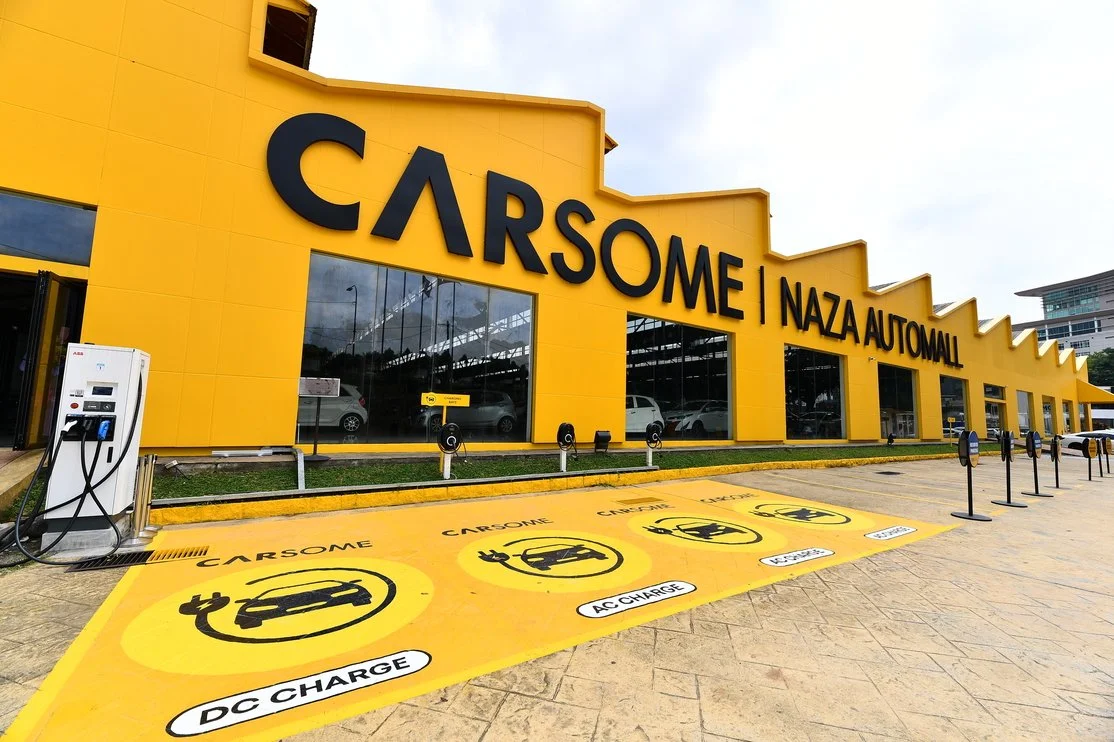
  • Carsome Posts US$8.3 Million Quarterly EBITDA as Retail Shift Widens Margins

    Carsome Posts US$8.3 Million Quarterly EBITDA as Retail Shift Widens Margins

    Malaysian used-car platform Carsome posted an operating EBITDA of US$8.3 million for the second quarter of 2026. That is a 38 per cent increase from the same period a year earlier.

    Sales reached 35,903 vehicles during the three months ended June 30, up 11 per cent. That volume lifted gross profit 15 per cent to US$43.8 million. The result gave Carsome its tenth straight profitable quarter on an EBITDA basis. Consumer retail transactions and auto financing drove the gains.

    Retail and Financing Drive Margin Expansion

    Gross profit outpaced unit sales as the platform shifted volume toward retail buyers. Ancillary products helped widen margins. Financing packages, extended warranties and direct retail margins yield higher earnings per transaction than wholesale dealer auctions.

    Under a new agreement, Carsome will serve as the exclusive official trade-in partner for Suzuki Cars Malaysia. The pact channels structured inventory directly into its inspection network. It secures steady supply while carmakers use trade-in valuations to support new-vehicle sales as borrowing costs pinch consumer budgets.

    Other players across Southeast Asia show a similar pattern. Regional rivals Carro, based in Singapore, and Indonesia’s Moladin have also pivoted away from venture-funded volume acquisition. Both now target unit profitability, credit distribution and ancillary services.

    Showroom Additions in Malaysia and Jakarta

    Physical inspection hubs and retail centres led network growth during the quarter. In Malaysia, Carsome opened three locations in Sungai Petani, Bukit Tinggi in Klang, and Sungai Buloh. That took its domestic network to 55 inspection centres and showrooms.

    Across Indonesia, the company added four locations in Greater Jakarta, expanding its local footprint to 10 sites. Vehicle ownership in Indonesia trails Malaysia and Thailand. Even so, the market offers heavy transaction volume for operators able to resolve fragmented title transfers, vehicle vetting and buyer credit access.

    Looking ahead, management will focus the rest of the financial year on transaction growth, financing attachment rates and fixed-cost efficiency across its 65 combined retail locations.

  • Giordano Net Profit Drops to HK$108 Million as Asian Margins Lag

    Giordano Net Profit Drops to HK$108 Million as Asian Margins Lag

    Giordano International reported a net profit drop to HK$108 million for the six months to June 30, down from HK$121 million a year earlier.

    Group revenue slipped 1 per cent to HK$1.914 billion as store counts dropped across Mainland China and Indonesia, leaving the apparel retailer heavily dependent on earnings from the Gulf Cooperation Council.

    The geographic split reveals an uneven business. Greater China, Southeast Asia and Australia generated HK$1.572 billion, representing 82.1 per cent of total sales, but produced only 61 per cent of segment results. In contrast, the GCC delivered HK$62 million in segment profit on just 18 per cent of revenue, even after traffic in Gulf stores fell by up to 40 per cent following regional disruption in late February.

    Pruning China and Sourcing Locally

    In Mainland China, Giordano cut its store footprint to 239 doors from 359 a year earlier, halving its directly operated outlets to 48. The downsizing helped narrow the mainland segment loss from HK$16 million to HK$9 million, with constant-currency revenue down 0.9 per cent at HK$334 million. Management cleared older stock through VIP.com and shifted higher-margin product lines to Tmall, intending to rebuild physical retail starting in southern China.

    Southeast Asia and Australia remained the largest regional earnings contributor at HK$86 million in segment results on revenue of HK$699 million. Indonesia, the anchor market, brought in HK$330 million after import restrictions slowed merchandise shipments and forced store closures from 199 locations to 176. The company countered the disruption by shifting production to Indonesian factories, which began delivering local stock in June.

    Taiwan proved the regional exception. Segment profit climbed to HK$21 million from HK$15 million on a 5.9 per cent constant-currency revenue gain, meaning Taiwan generated more profit than Hong Kong, Macau and Mainland China combined.

    Korean Drag and the Next Overhaul

    The company faced additional pressure from its 48.5 per cent-owned South Korean joint venture, where revenue slid 8.9 per cent to KRW59.7 billion and 19 stores closed. Giordano deliberately restricted wholesale shipments into the venture to clear excess stock, causing group wholesale revenue to decline 12.2 per cent and cutting royalty income.

    For years, Giordano relied on high-density physical networks in lower-tier Chinese cities and steady franchised wholesale to support its balance sheet. With those legacy channels retreating under fierce domestic e-commerce competition and supply chain friction, the group is now forced to extract higher gross margins from a much smaller physical footprint across Asia.

    Management plans to launch its Giordano 2.0 concept in the fourth quarter, rolling out revamped store layouts and core product lines in Hong Kong and Singapore before expanding to overseas digital channels in Europe and North America.

  • Mixue Closes 89 Overseas Stores as First-Half Profit Drops 15%

    Mixue Closes 89 Overseas Stores as First-Half Profit Drops 15%

    Mixue cut its overseas footprint by 89 stores in the first half of 2026, driven by closures across core Southeast Asian markets Vietnam and Indonesia.

    Net profit fell 15 percent year on year to 2.32 billion yuan, even as total revenue edged up 2.3 percent to 15.2 billion yuan ($2.26 billion). Group filings show higher selling and distribution expenses ate directly into margins across its franchise network.

    Rising Distribution Costs Squeeze Margins

    The Henan-headquartered drinks giant operated 63,987 outlets globally by June 30, with 59,609 locations in mainland China. That leaves roughly 4,378 international stores, concentrated heavily in Southeast Asia where the brand sells budget soft-serve ice cream and milk tea.

    Mixue did not publish country-level closure totals for Vietnam or Indonesia. The company stated in its interim report that reducing store density improved individual unit quality and created a cleaner base for sustainable operations.

    Franchisee economics have tightened across the region. Rapid street-level expansion in major cities sparked cannibalisation between neighbouring outlets, forcing operators to absorb higher logistics costs on imported syrups and packaging without room to raise retail prices.

    Rebalancing Southeast Asian Footprints

    Vietnam was Mixue’s first international market when the chain launched in Hanoi in 2018. By September 2024, the brand ran 1,304 stores across the country, according to its Hong Kong listing prospectus filed in early 2025.

    Mass-market tea and coffee chains in Southeast Asia now face heavier competition from local discounters and Chinese rivals copying the low-price franchise playbook. Mixue’s retreat from sheer store count growth signals that overseas networks cannot rely solely on relentless opening schedules to deliver profit.

    Investors now await Mixue’s updated capital-raising timeline in Hong Kong, where full-year store productivity figures will test whether the overseas pruning protected operating cash flow.

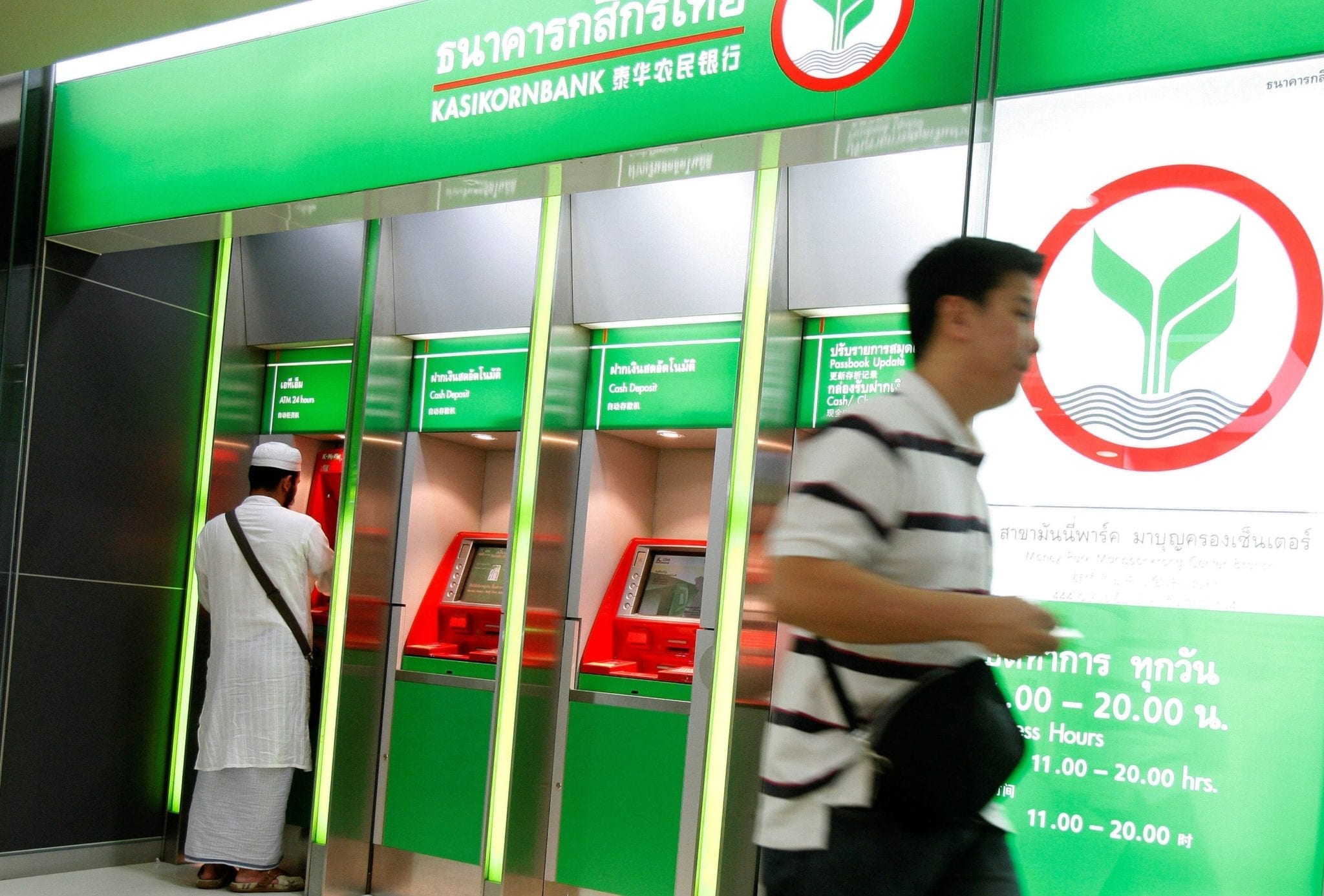
  • Kasikornbank Launches KBank Indonesia with 40 Trillion Rupiah Loan Target

    Kasikornbank Launches KBank Indonesia with 40 Trillion Rupiah Loan Target

    Thailand’s Kasikornbank has opened operations in Indonesia under the KBank Indonesia brand, targeting a loan portfolio exceeding 40 trillion rupiah by 2030.

    The formal launch follows the rebranding of PT Bank Maspion Tbk to PT Bank Kasikorn Indonesia Tbk after a multi-year acquisition drive in Southeast Asia’s biggest economy.

    KBank Indonesia will focus on corporate, commercial, and retail clients, combining Maspion’s branch network with the parent bank’s regional cross-border infrastructure. Kasemsri Charoensiddhi, chief executive officer of KBank Indonesia, said the bank will connect Indonesian clients directly to trade and investment flows with Thailand, Vietnam, and China.

    Building an 89 Percent Stake

    Kasikornbank entered Bank Maspion in 2017 with an initial 9.99 percent purchase. It took majority control in 2022 by lifting that share to 67.5 percent, before injecting roughly 3.5 trillion rupiah in 2023 to reach 84.55 percent.

    Regulatory filings from July 31, 2026, show the Thai group and its units hold a combined 89.48 percent stake in the Indonesian lender. Kasikorn Vision Financial Company Pte. Ltd. Holds 86.03 percent, Kasikornbank Public Company Limited owns 2.45 percent, and PT Kasikorn Vision Financial Indonesia holds 1 percent. Public investors hold the remaining 10.52 percent.

    Trade Corridors and Mobile Banking

    Thai financial groups have expanded aggressively across Southeast Asia over the past decade to offset slower growth and demographic shifts at home. Bangkok Bank acquired Indonesia’s Bank Permata for 2.3 billion dollars in 2020, while Kasikornbank has focused on building proprietary cross-border platforms across the Greater Mekong Subregion and Indonesia.

    Digital retail services form a core pillar of the Indonesian strategy. Maspion rolled out its MEB mobile banking platform in 2024 to adapt Kasikornbank’s small-business credit underwriting and consumer app interface for local depositors.

    The bank now faces the task of growing its balance sheet toward the 40 trillion rupiah mark while competing against established state-owned and private commercial lenders across Java and the outer islands.

  • Video Commerce Captures 20 per Cent of Southeast Asia E-Commerce GMV

    Video Commerce Captures 20 per Cent of Southeast Asia E-Commerce GMV

    Video commerce now accounts for roughly a fifth of Southeast Asian e-commerce gross merchandise value, forcing consumer brands across the region to overhaul their distribution models. Data compiled by Google, Temasek and Bain shows creator-led sales shifting from experimental promotional spending into core retail infrastructure across key markets including Indonesia, Thailand and Vietnam.

    That expansion brings operational friction. Sellers running live broadcasts face steep drops between top-line gross merchandise value and realized revenue once cash-on-delivery refusals, return windows, creator fees and platform commissions clear. Promotional subsidies, including platform-funded vouchers and discounted freight, have masked true channel margins during market-share acquisition phases. When platforms pull back subsidies, merchant unit economics drop quickly.

    Platform control and merchant margin pressure

    Selling through creator streams leaves transaction infrastructure in third-party hands. Platforms control storefronts, checkout systems, payment rails, customer records, delivery terms and dispute resolution, leaving brands to supply inventory and absorb product returns.

    Multi-market operators managing sales across Jakarta, Bangkok and Manila face diverging compliance environments. Content licensing, creator contracts, disclosure mandates and withholding taxes vary by jurisdiction, preventing companies from running uniform regional campaigns without local adaptation.

    The pattern follows China’s live commerce cycle. Brands in that market initially concentrated volume through top independent hosts before margins deteriorated. Chinese consumer labels responded by building internal broadcast studios and running scheduled daily programming to retain customer data and protect gross margins.

    Regulatory scrutiny reshapes regional operations

    Governments across Southeast Asia have moved to regulate social commerce platforms as critical retail infrastructure rather than digital advertising channels. Indonesia enacted Ministry of Trade Regulation 31 in September 2023, banning direct e-commerce transactions inside social media applications. The rule halted TikTok Shop until parent company ByteDance completed a 1.5 billion dollar investment to secure a controlling stake in GoTo’s Tokopedia platform.

    Vietnam enacted Decree 147 in late December 2024, enforcing strict account verification requirements before individuals can post or host livestreams. Merchant operators are now building direct customer channels, internal studio facilities and formal data-rights clauses into creator agreements across tier-two Vietnamese cities and eastern Indonesia, where production overhead remains competitive.

    Retailers across the region now track net settlement data and return rates per stream as platforms adjust commercial take rates and enforcement rules throughout 2026.

  • Indonesia Consumer Inflation Climbs to 3.19% in August

    Indonesia Consumer Inflation Climbs to 3.19% in August

    Indonesia’s headline inflation jumped to 3.19 per cent year on year in August 2026, driven by rising grocery bills, gold jewelry costs and higher transport fares.

    The increase from 2.28 per cent in July lifted the national consumer price index to 111.97 from 108.51 a year earlier, according to the Central Statistics Agency (BPS). The headline print remains inside Bank Indonesia’s target corridor of 2.5 per cent plus or minus one percentage point.

    Food and Personal Care Drive Basket Costs

    Food, beverages and tobacco delivered the heaviest punch to household budgets, climbing 3.86 per cent and adding 1.13 percentage points to the headline number. Broiler chicken, fresh fish, cooking oil and rice led the increases alongside bird’s eye chili, beef and cigarettes. Volatile food prices alone advanced 4.06 per cent over the twelve months.

    Personal care and other services recorded the steepest category increase at 9.25 per cent, contributing 0.63 percentage points. High retail demand and elevated prices for gold jewelry accounted for most of that category gain.

    Transportation expenses climbed 4.79 per cent from August 2025, adding 0.58 percentage points to headline inflation. BPS Deputy for Distribution and Services Statistics Ateng Hartono said higher gasoline prices, costlier airfares, vehicle lubricants, and rising prices for cars and motorcycles drove the transport index up.

    Core Price Pressures Across Provinces

    Core inflation, which strips out volatile food and government-regulated tariffs, stood at 2.92 per cent year on year. It contributed 1.87 percentage points to the overall index, buoyed by gold jewelry, prepared rice meals, cooking oil, mobile phones and laptops. Government-administered prices rose 3.32 per cent on higher household fuel and air travel costs.

    All 38 Indonesian provinces recorded annual price increases during the month. North Maluku logged the country’s highest regional inflation at 5.28 per cent, while North Kalimantan posted the lowest reading at 2.17 per cent.

    For consumer brands and supermarket operators, the sharp uptick in poultry and staple grain prices tests grocery basket sizes after a period of quiet monthly deflation in July. Packaged food manufacturers face immediate margin pressure across basic cooking ingredients, while discretionary retailers must contend with higher transport outlays eating into urban household disposable income.

    Bank Indonesia next reviews its benchmark policy rate later this month, with policymakers balancing rupiah stability against the latest pickup in core consumer prices.

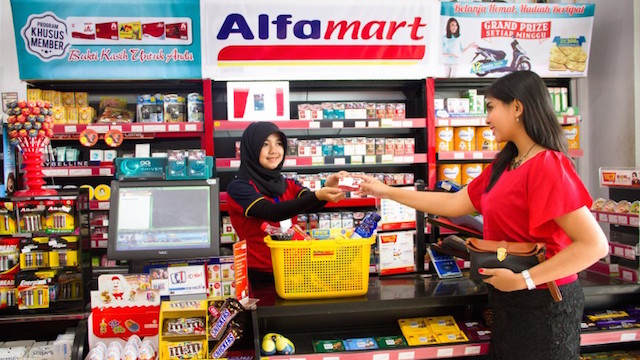
  • Alfamart Pushes Quick Commerce and Targets 100 Stores in Bangladesh

    Alfamart Pushes Quick Commerce and Targets 100 Stores in Bangladesh

    Indonesian minimart chain Alfamart is expanding its Alfagift delivery network and preparing a 100-store entry into Bangladesh to counter slowing domestic convenience store expansion.

    The Jakarta-based operator, PT Sumber Alfaria Trijaya, is turning to digital ordering and dedicated fulfillment hubs as traditional store density approaches saturation across its home market.

    Dark stores and digital ordering

    President Director Anggara Hans Prawira confirmed that the Alfagift mobile application and loyalty platform have become central to maintaining transaction volumes. Urban shoppers increasingly order household staples and groceries through the digital channel instead of visiting neighborhood brick-and-mortar checkouts.

    To support faster fulfillment, the company is integrating dark stores into its distribution setup. These dedicated micro-warehouses shorten delivery windows and relieve pressure on standard retail outlets in crowded metropolitan areas where finding viable new retail real estate has become harder.

    South Asian expansion

    Slowing domestic retail growth has also pushed Sumber Alfaria Trijaya to seek greenfield opportunities abroad, led by a planned 100-store rollout in Bangladesh. The move marks an aggressive geographic push outside Southeast Asia as domestic store growth tapers.

    Convenience operators across the Asia-Pacific region are confronting the same ceiling. Rapid physical rollouts that drove earnings for two decades across Indonesia, Thailand, and the Philippines now deliver tighter margins, forcing traditional grocers to fight app-based delivery services on speed while exporting their store models into emerging consumer markets.

    The retailer now faces the rollout of its initial 100 Bangladesh sites while testing how deeply quick commerce can defend its domestic basket sizes against dedicated delivery platforms.

  • Southeast Asian Shopping App Installs Jump as Singapore and Indonesia Lead Gains

    Southeast Asian Shopping App Installs Jump as Singapore and Indonesia Lead Gains

    Shopping app downloads across Southeast Asia surged in the first half of 2026, led by a 67 per cent jump in Singapore.

    Average session duration in Singapore expanded 58 per cent over the same period as regional platforms stepped up user acquisition spending.

    Data from mobile analytics firm Adjust shows Vietnam recorded a 42 per cent rise in e-commerce application installs alongside a 21 per cent gain in session length. Indonesia registered a 36 per cent increase in installs and a 62 per cent jump in session time. Malaysia saw downloads rise 14 per cent and sessions increase 38 per cent, while Indian app installs climbed 37 per cent against a 42 per cent increase in sessions.

    Platform Spending and Acquisition Battles

    Shopee, Lazada and TikTok Shop are competing directly for user traffic across the region, channeling higher advertising budgets into external media channels including YouTube. Shopee has maintained quarterly revenue expansion of nearly 50 per cent, but escalating logistics requirements and higher sales expenses continue to weigh on operating budgets.

    Fulfillment across fragmented island networks and developing road corridors keeps shipping expensive across Southeast Asia. Those operational complexities earlier prompted Amazon to halt regional expansion plans beyond Singapore.

    Usage Gaps Behind Western Markets

    Actual time spent inside shopping apps across Asia remains lower than the global average despite the sharp uptick in downloads. North American shopping apps logged a 46 per cent increase in installs and a 26 per cent rise in session length over the same timeframe, holding higher total engagement per user.

    RetailNews Asia tracking shows marketplace operators are now focused on closing that engagement deficit as consumer acquisition costs rise heading into the final quarters of 2026.

  • Indosat and Arsari Group Launch 86,000-Kilometer RAIA Grid in Indonesia

    Indosat and Arsari Group Launch 86,000-Kilometer RAIA Grid in Indonesia

    Indosat Ooredoo Hutchison and Arsari Group have launched an 86,000-kilometer digital network across Indonesia through their joint venture PT Infra Fiber Teknologi. The open-access platform, named RAIA Grid, links data centers, 5G sites, and home broadband lines to handle computational workloads and cloud traffic.

    The network operates on an open-access model, allowing third-party telecom operators, hyperscalers, data center operators, and cloud service providers to lease capacity. Built-in machine learning models manage route optimization, demand forecasting, automated deployment, and predictive maintenance across the nationwide fiber footprint.

    Connecting Data Centers and Fiber

    Former Telkomsel chief executive Hendri Mulya Syam leads the venture as president director of RAIA Grid. The platform handles data center-to-data center connections alongside fiber-to-the-home and cellular backhaul, aiming to lower data transfer latency across the Indonesian archipelago.

    Indosat president director Vikram Sinha noted that the system integrates with Indosat and technology partner Zankore to provide a foundation for full-stack artificial intelligence services. By linking wholesale transport infrastructure directly to server hubs, the operators plan to capture enterprise data processing demand that traditional carrier networks struggle to route efficiently.

    Ambitions for Computing Power

    Indonesian telecommunications groups are shifting capital expenditure away from pure consumer mobile coverage toward wholesale fiber, enterprise cloud links, and data center interconnects. With international cloud providers building facilities in Greater Jakarta and Batam, carrier revenue growth now hinges on carrying high-density computational traffic between these server campuses.

    Arsari Group deputy chief executive Aryo Djojohadikusumo indicated the partnership intends to expand beyond basic transmission into high-performance computing, including exploratory plans for domestic supercomputer assembly. The joint venture now faces the operational rollout of its route links as data center operators bring new capacity online in West Java and secondary island hubs.

  • Rose All Day Cosmetics Secures US$5.41 Million Series A Round

    Rose All Day Cosmetics Secures US$5.41 Million Series A Round

    Indonesian beauty brand Rose All Day Cosmetics raised US$5.41 million in a Series A funding round to finance its retail rollout and product line expansion. The company secured the financing as local cosmetics makers push for larger shares of Southeast Asia’s beauty and personal care market.

    The direct-to-consumer label plans to deploy the capital toward scaling its omnichannel retail footprint, improving product formulation pipelines, and bolstering distribution infrastructure across regional retail channels.

    Capital for regional distribution

    Founded to offer accessible daily beauty and skincare products, the brand built its initial customer base through online channels before expanding into physical retail counters, department stores, and beauty specialty chains. Direct-to-consumer beauty brands across Indonesia increasingly rely on physical shelf space to protect margins against rising digital acquisition costs.

    Offline distribution networks remain essential for consumer conversion in Southeast Asia, where physical storefronts and modern trade outlets still generate the bulk of personal care purchases. Securing shelf space in multi-brand retail chains gives local brands immediate access to foot traffic outside major metropolitan centres.

    Direct brand competition in Southeast Asia

    Venture investors continue backing local beauty startups in Indonesia, betting that domestic brands can defend domestic market share against legacy multinational operators. Similar consumer brand funding rounds across the region have targeted supply chain localization and regional export capabilities into neighbouring markets such as Malaysia and Vietnam.

    RetailNews Asia tracking shows that homegrown beauty labels in Jakarta face steepening competition for floor space in premium shopping malls and modern trade outlets. The next operational test for Rose All Day Cosmetics will be proving its unit economics across physical retail partners while managing regional inventory rollouts.

  • Indonesian Trading App Ajaib Raises $270 Million from Japan SBI Holdings

    Indonesian Trading App Ajaib Raises $270 Million from Japan SBI Holdings

    Indonesian online stock trading platform Ajaib has raised $270 million in a Series C funding round backed entirely by Japanese financial services conglomerate SBI Holdings. The transaction delivers one of the largest single equity checks into Southeast Asian retail financial technology this year.

    The capital injection gives Ajaib substantial runway to expand its wealth management and retail brokerage offerings across Indonesia. Jakarta has become a competitive battleground for digital brokerages seeking to convert first-time millennial and Gen Z savers into active market participants.

    Japanese capital targets Indonesian retail investing

    SBI Holdings has built a wide investment portfolio across Asian digital finance, backing regional digital banks, payment rails and cryptocurrency infrastructure. The group led the round directly, cementing a deeper balance-sheet commitment to Indonesia’s domestic capital markets.

    Southeast Asian fintech funding endured two years of compressed valuations and selective dealmaking following the 2021 market peak. A single $270 million commitment signals that large strategic investors are once again willing to write late-stage checks for established market leaders with deep domestic distribution.

    Expanding product lines across domestic markets

    Ajaib launched in 2018 targeting first-time retail investors through mobile-first stock trading and mutual fund distribution. The platform grew quickly during Indonesia’s retail investing boom, securing unicorn status in 2021 before adding digital asset products and margin financing services.

    RetailNews Asia notes that rival platforms across Jakarta and Singapore are racing to consolidate wealth management, bond distribution and consumer credit onto single interfaces. Japanese institutional backers like SBI provide both long-term capital and potential product partnerships as Indonesian regulators tighten compliance requirements for digital asset brokers.

    The company will deploy the capital toward platform security, customer acquisition and new asset management products ahead of scheduled regulatory reviews in Jakarta.