Category: Electronics

Retail News Asia is committed to providing both local and global retailers with the latest Electronics news throughout the Asian market. This on a daily base.

  • Foreign Tech Investors Pay up to US$15,000 for Access to Chinese Factory Floors

    Foreign Tech Investors Pay up to US$15,000 for Access to Chinese Factory Floors

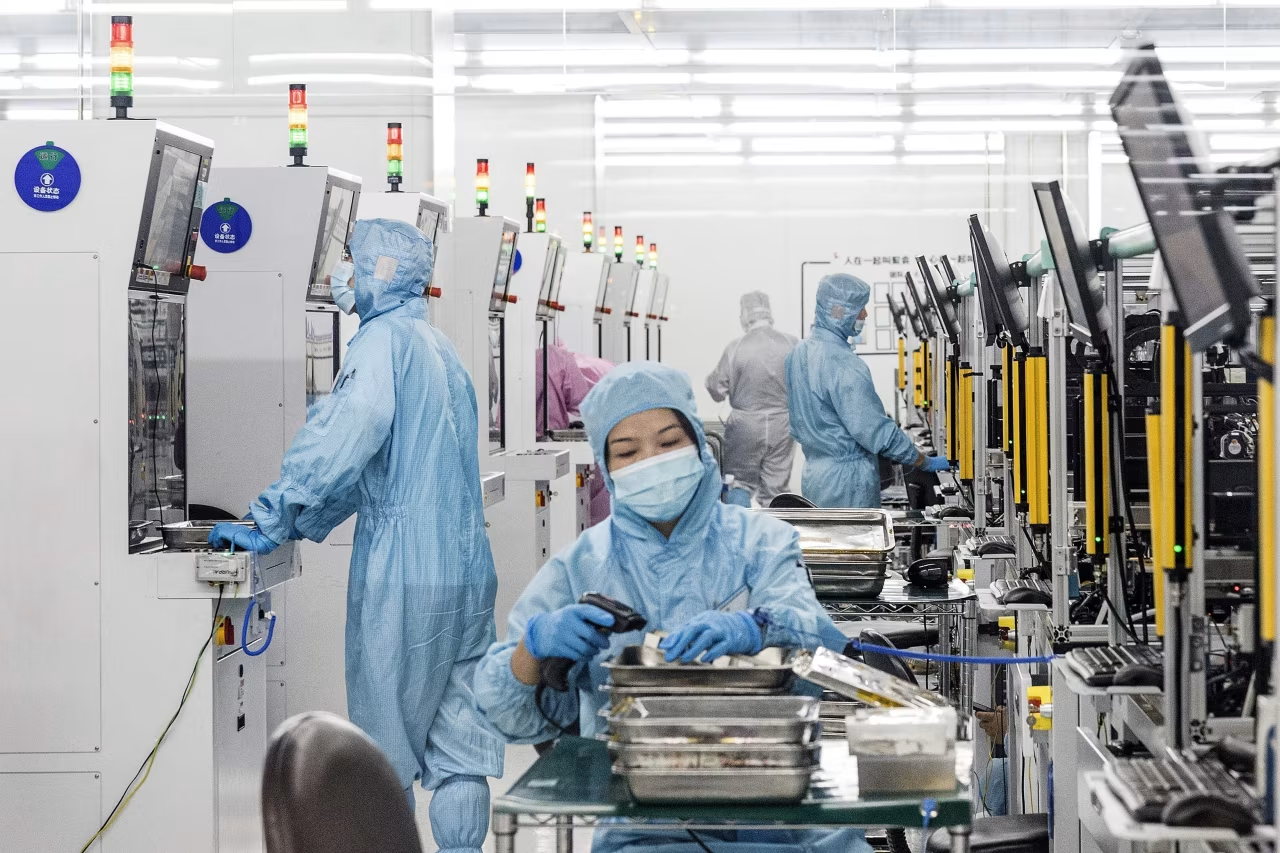
    Foreign investors and tech executives are paying up to US$15,000 each to tour Chinese manufacturing plants. The visits cover robotics, electric vehicle and artificial intelligence facilities across five industrial hubs.

    Western and regional boardrooms face pressure to see if Chinese automation has pulled ahead of global rivals. These paid delegations offer a direct look at mainland hardware supply chains.

    Programmes span Beijing, Shenzhen, Shanghai, Hangzhou and Hefei. Shanghai-based data research firm Baiguan charges up to US$15,000 for a five-day itinerary. Around half its participants come from Southeast Asia. Tech tour agency Glopen reported a 50 per cent jump in enquiries during 2026, mostly from European and Singaporean clients. It now operates more than 100 single-day corporate visits every month. Tech Buzz China founder Rui Ma has organised 11 delegations since 2019, including an April tour through three cities focusing on robotics.

    The Business Behind Factory Tourism

    State backing has turned industrial site visits into commercial business across the mainland. Beijing has designated more than 140 demonstration sites for industrial tourism. The sector generated US$17.8 billion last year and is projected to reach 300 billion yuan (US$44.6 billion) by 2029.

    Public rates for individual factory visits usually run around US$60, but premium access commands steep markups. Xiaomi’s electric vehicle assembly plant in Beijing has recorded more than 250,000 visitors since March 2024. Entry slots from Xiaomi’s official lottery system have been scalped on secondary platforms for up to 2,000 yuan (US$300), despite company rules barring transfers.

    Institutional investors have quietly joined the circuit. US firms Dimension, Capital Group and Thrive Capital have all sent representatives to inspect mainland production setups. European corporate delegations have also toured sites to study state-backed technology coordination.

    Hardware Dependence and Supply Realities

    Consumer hardware and robotics brands see that physical supply chains remain tethered to southern China. Geopolitical posturing has not changed that reality. Western developers still depend on mainland ecosystems for sensors, battery cells, structural frames and precision actuators. Replicating those supplier clusters outside the Pearl River Delta remains slow and capital intensive.

    Visitors risk mistaking demonstration speed for total commercial dominance. Non-Chinese technology firms still hold most global market share, high-margin software profits and core intellectual property. In sectors like autonomous robotaxis, Chinese domestic deployment continues to move cautiously. Regulators remain concerned about urban transport employment.

    Shenzhen Emerges as the Focal Point

    Years of infrastructure spending transformed Shenzhen from a contract assembly zone into an integrated hardware design centre. The current tour rush builds on that base. Foreign visitor arrivals in Shenzhen jumped 70 per cent last year and rose another 30 per cent in the first quarter. Total entries topped 5 million through August.

    Founders use 10-day visa-free entry policies to test prototypes directly with component suppliers. Local operators have opened communal hacker houses for visiting robotics and AI engineers. Informal network groups coordinate factory access across Shenzhen and Silicon Valley.

    Next up is the Asia-Pacific Economic Cooperation forum in November, which Shenzhen will host. Municipal officials plan to show automated assembly plants and urban drone networks to pitch the city’s hardware infrastructure to visiting regional trade delegations.


  • TCL Affiliate RayNeo Launches GT and iO Smart Glasses Across 40 Markets

    TCL Affiliate RayNeo Launches GT and iO Smart Glasses Across 40 Markets

    RayNeo launched its GT Series and iO smart glasses across 40 retail markets on September 4, 2026. Pricing ranges from US$329 to US$549.

    The Chinese hardware maker held a 23.7 per cent global market share in the first quarter of 2026. That made it the world’s largest consumer augmented reality vendor.

    Hardware Pricing and Regional Distribution

    Sales started immediately through Amazon and the company’s direct web store. Distribution spans 40 countries and territories, including Singapore, Malaysia, Thailand, Vietnam, Japan, Australia, New Zealand, Saudi Arabia, the United Arab Emirates, the United States, Canada, Mexico, the United Kingdom and the European Union.

    Products fall into two distinct hardware tiers. The 33-gram RayNeo iO operates as a heads-up display for navigation, teleprompting, live translation and voice recording summaries. It costs US$499 with a standard case, or US$549 with a charging case bundle. For entertainment, the RayNeo GT retails at US$329, and the GT Max costs US$429. Both GT models feature audio co-tuned with Danish specialist Bang & Olufsen. They also support Dolby Vision playback when paired with the companion RayNeo Pocket TV Pro accessory.

    Competitive Shift in Consumer Wearables

    For electronics retailers and distributors in Southeast Asia, the rollout signals a shift from crowdfunding campaigns to volume consumer retail. At an entry price of US$329, the TCL-backed company takes direct aim at portable monitors and external displays rather than bulky mixed-reality headsets.

    Hardware margins in this segment stay tight. That puts pressure on companion accessories, such as the Pocket TV Pro and optical prescription inserts, to generate operating profit. Ecosystem lock-in presents the main commercial risk. Smart glasses still rely heavily on external host processing and content partnerships to attract buyers beyond early adopters.

    From Domestic Lead to Global Retail Footprint

    RayNeo built up to the Berlin release with several hardware announcements earlier in 2026. It debuted eSIM-enabled glasses at CES in January and introduced the Air 4 Pro at Mobile World Congress in March. Tracking databases from IDC, RUNTO, CINNO Research and AVC all ranked the company first for shipments in China.

    Demonstrations and executive interviews run through September 8 at Hall 21A at IFA 2026 in Berlin. Buyers can access introductory promotional discounts of US$30 during this opening sales window.

  • Taiwan Targets Silicon Photonics to Cut AI Chip Power Use by 50 Percent

    Taiwan Targets Silicon Photonics to Cut AI Chip Power Use by 50 Percent

    Taiwan is mobilising its chipmaking sector to commercialise silicon photonics and copackaged optics, with the Ministry of Economic Affairs backing efforts to overcome artificial intelligence computing bottlenecks.

    The island holds over 90 percent of global manufacturing capacity for chips at 7 nanometers or below, while more than 30 firms including Taiwan Semiconductor Manufacturing Co and MediaTek Inc formed an industry alliance in 2024.

    Silicon photonics replaces conventional copper wiring between chips with optical signals. Because optical transmission generates negligible heat, the technology cuts device power consumption by 30 to 50 percent, according to the Ministry of Economic Affairs. That saving eases cooling limits in high-density AI data centres. It also clears the 1.6-terabit-per-second bandwidth ceiling that hampers electronic links.

    Optics Replace Copper Interconnects

    Heavy capital is pouring across the hardware supply chain. Nvidia invested US$4 billion into silicon photonics development in March. The chipmaker needs architectures that sustain real-time AI workloads and high-definition streaming without overheating server racks.

    Taiwanese authorities have folded the technology into their New 10 Major AI Infrastructure Projects. Funding flows through the government’s A+ Enterprise Innovation research programme. The scheme subsidises domestic research teams and equipment developers building local manufacturing tooling.

    Alliance Mobilises Heavyweights

    Execution on the ground rests on the Silicon Photonics Industry Alliance, a consortium established in 2024 with industry group SEMI. The group brings together more than 30 technology suppliers. Members include Taiwan Semiconductor Manufacturing Co, ASE Technology Holding, MediaTek and Hon Hai Precision Industry.

    Asian hardware vendors and server assemblers face shifting procurement cycles. Traditional printed circuit board layouts will yield to integrated optical packaging. As a result, component suppliers must retool production lines for optical transceivers and precision glass substrates.

    Manufacturing risks centre on packaging yields and costs. Integrating laser sources and optical waveguides directly alongside silicon dies requires packaging tolerances tighter than standard wire bonding. These yield hurdles could delay volume delivery.

    Race for Next-Generation Packaging

    Foundry and packaging operators have spent years researching optics to counter the slowdown of traditional transistor scaling. Physical node shrinking now delivers diminishing returns. Advanced packaging formats like copackaged optics have become the primary path to computing efficiency.

    Prototype lines are now running across alliance members to finalise copackaged optics standards before volume production begins for 2026 data centre hardware cycles.

  • Xiaomi Launches 18 Fold Smartphone at 10,999 Yuan with Custom Silicon

    Xiaomi Launches 18 Fold Smartphone at 10,999 Yuan with Custom Silicon

    Xiaomi launched its flagship 18 Fold smartphone in Beijing on Monday, pricing the device from 10,999 yuan (US$1,639) to compete directly with high-end foldables from Huawei and Apple.

    The phone carries Xiaomi’s proprietary Xring O3 processor and LPDDR6 memory from ChangXin Memory Technologies, with sales opening on Thursday at 10am across mainland retail channels.

    Founder and chief executive Lei Jun detailed the hardware specifications at the Beijing presentation. The device includes a 7.58-inch inner display, a reinforced hinge mechanism, an aluminium chassis, and strengthened cover glass. The 24-billion-transistor Xring O3 artificial intelligence processor raises central processor performance by 60 per cent over the prior Xring O1 generation while cutting energy consumption on select workloads by 25 per cent. Lei said Xiaomi has earmarked 50 billion yuan specifically for custom chip development, part of a wider 200 billion yuan research and development budget planned over the next five years.

    Silicon Independence and Electric Vehicle Pricing

    Alongside the phone, Xiaomi rolled out its Pad 9 Pro Max tablet starting at 4,799 yuan, also powered by the Xring O3, and priced its extended-range Skynomad sport utility vehicles. The five-seat N70 Pro SUV starts at 209,900 yuan, while the seven-seat N90 Max begins at 269,900 yuan. Both undercut Tesla’s Model Y L, which retails from 339,000 yuan in China. The extended-range powertrain uses an auxiliary petrol engine to charge the battery pack, delivering a driving range exceeding 1,000 kilometres on a single cycle.

    For consumer tech retailers and premium device vendors across Asia, Xiaomi’s dual offensive in mobile silicon and electric mobility tightens pricing pressure across two categories simultaneously. By pairing domestic memory from CXMT with proprietary processors, the company shields its bill of materials against international component shortages that are squeezing entry-level hardware margins. The aggressive SUV pricing also demonstrates that Xiaomi is treating hardware margins as secondary to ecosystem lock-in, forcing traditional carmakers and handset specialists to defend their retail territory on compressed margins.

    Premium Tier Resists Smartphone Downturn

    The product blitz lands during an intense competitive window in China. Huawei unveiled its Mate XT 2 trifold handset on Monday starting at 19,999 yuan, using its Kirin 9050 Pro processor. Richard Yu Chengdong, chairman of Huawei’s Consumer Business Group, confirmed that Huawei has sold more than 1 million trifold devices worldwide. Meanwhile, Apple is scheduled to present its product line-up on Wednesday in California, where analysts anticipate the launch of a foldable model priced above US$2,000.

    This surge in premium launches contrasts sharply with the broader consumer hardware environment. Counterpoint expects global smartphone shipments to contract 12.4 per cent this year, hit by surging memory costs and lengthening replacement cycles among budget consumers. Premium foldables remain an exception. Counterpoint projects cumulative worldwide foldable shipments will cross 100 million units by year-end, with annual category shipments set to expand 37 per cent in 2027.

    Xiaomi built up to this release after spending 105.5 billion yuan on research and development over the past five years and first previewing the Skynomad vehicle architecture in late July. The group had previously rolled out the first-generation Xring O1 chip last year to test its custom silicon pipeline in select devices.

    Market attention now shifts to Thursday morning retail sell-through figures for the 18 Fold, followed by initial delivery volumes for the Skynomad SUV series ahead of fourth-quarter earnings.

  • Indian Appliance Makers Swap Copper for Aluminium to Defend Shrinking Margins

    Indian Appliance Makers Swap Copper for Aluminium to Defend Shrinking Margins

    Electronics and appliance manufacturers across India are replacing copper with aluminium and expanding domestic component sourcing after input inflation squeezed industry operating margins into single digits.

    Producers have already raised retail prices on air conditioners, refrigerators, and washing machines by 10 to 12 percent across three rounds since January, while absorbing an additional 7 to 10 percent to protect sales volumes.

    Value Engineering and Sourcing Shifts

    Surging copper prices, which rose roughly 45 percent year on year, have forced appliance brands to redesign motors, connecting pipes, and coils. Replacing copper with aluminium, steel, or alternative alloys saves between 2 and 6 percent of final manufacturing costs. Strong buying from artificial intelligence data centres and electric vehicle producers has tied up global copper output months in advance.

    Memory component prices have also doubled or tripled on heavy AI infrastructure demand, driving price hikes of 20 to 40 percent on smartphones, laptops, and televisions. Indian consumer electronics manufacturers import between 30 and 40 percent of their inputs, leaving factory gates exposed to higher freight rates and currency depreciation.

    Supply chain snarls have caused direct revenue losses. Crompton Greaves Consumer Electricals missed out on nearly Rs 200 crore in sales during the previous quarter because of material shortages. At contract manufacturer PG Electroplast, the cost to build 500,000 air conditioners climbed from Rs 700 crore last year to Rs 940 crore.

    Local Manufacturing Expansion

    Brands are countering these cost pressures by shifting away from overseas suppliers. LG Electronics India now sources a key moulding resin domestically after importing its entire requirement until March, while engineering teams adjust product designs to trim material volume per unit. Voltas and Bajaj Electricals have rolled out similar value engineering programs across their appliance lineups.

    Cost restructuring of this scale reflects a broader defensive pivot across Asian consumer hardware manufacturing. When consumer demand resists further retail price hikes, brands must either cut bill-of-materials costs or surrender volume in price-sensitive suburban and rural markets.

    PG Electroplast plans to commission domestic production of air conditioner compressors between December and January, alongside a separate manufacturing line with an annual capacity of two million units.

  • Solum Expands Electronic Shelf Labels Across Australian Retailers

    Solum Expands Electronic Shelf Labels Across Australian Retailers

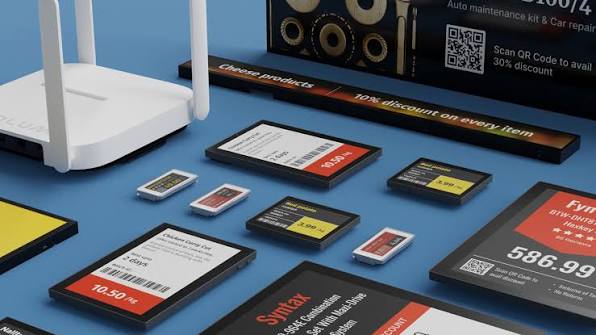
    Retail technology provider SOLUM has expanded its electronic shelf label network across Australia. The deployment covers rollouts with appliance chain Bing Lee and The Natural Grocery Company.

    Bing Lee is extending digital price tags across multiple consumer electronics stores. The chain aims to eliminate paper ticketing and curb pricing discrepancies on shop floors.

    Centralised Pricing at Scale

    The system connects in-store tags directly to a central management platform. Store managers can push real-time price updates and promotions instantly. Staff no longer need to replace physical shelf tags manually.

    Across its grocery aisles, The Natural Grocery Company has deployed the same digital setup. Freeing employees from manual repricing shifts floor labor toward customer service. It also cuts paper waste from recurring promotional cycles.

    “For The Natural Grocery Company, our ESL solution supports real-time pricing, rapid promotional updates, and greater pricing accuracy,” said Paul Kyriakos, General Manager at SOLUM Australia.

    Automation on Shop Floors

    Australian retailers face elevated labor costs and high operational overheads. Automated shelf-edge tools have become an operational priority across electronics and food retail. Supermarket operators and specialty chains across the Asia-Pacific region have accelerated similar rollouts to compete with dynamic pricing used online.

    SOLUM plans to roll out additional digital store infrastructure across retail partners in Australia and the wider Oceania region.

  • HarmonyOS Hits 24 per Cent Share in China as Global Smartphone Sales Fall

    HarmonyOS Hits 24 per Cent Share in China as Global Smartphone Sales Fall

    Huawei’s HarmonyOS captured 24 per cent of China’s smartphone sales in the second quarter of 2026, squeezing Android down to 58 per cent. The domestic operating system expanded its footprint as overall worldwide smartphone shipments dropped 11 per cent year on year.

    Global handset demand contracted faster than the 4 per cent drop recorded in the first quarter, with the sharpest drops hitting budget and mid-tier devices across developing markets. Android felt the brunt of that pullback. Its worldwide sales share dropped four percentage points to 75 per cent, even with stronger sales from Samsung’s Galaxy S26 lineup.

    Shifts in Component Sourcing and Pricing

    Huawei insulated its handset business from rising component prices by sourcing more parts from domestic suppliers in mainland China. High demand for the Enjoy 90 Pro Max alongside steady sales of legacy models helped HarmonyOS reach a 5 per cent global volume share.

    Chinese Android manufacturers took a different path. Pinched by memory chip shortages and higher bill-of-materials expenses, brands scaled down their low-cost phone lineups to focus on higher-margin premium devices. That pivot opened room for Apple at the top end of the market.

    Apple Takes Record June Quarter Share

    Apple captured 20 per cent of worldwide sales during the three months ending June, its highest second-quarter share on record. Deliveries were anchored by the iPhone 17 family and the entry of the iPhone 17e, supported by trade-in programs and retail installment plans.

    In India, Android maintained a dominant 91 per cent volume share, leaving iOS with 9 per cent. In the United States, Apple took 51 per cent of sales against Android’s 49 per cent.

    For retailers and hardware distributors across Asia, the product mix is shifting upmarket as low-end volumes shrink. Brands are preparing their product allocations for the fourth-quarter holiday cycle, where component pricing will dictate whether entry-tier production rebounds or stays constrained.

  • Tim Cook Steps Down as Apple Chief Executive and Hands Reins to John Ternus

    Tim Cook Steps Down as Apple Chief Executive and Hands Reins to John Ternus

    Tim Cook will step down as Apple chief executive to become executive chairman, handing control of the 4.5 trillion dollar company to hardware chief John Ternus.

    The transition ends a 15-year tenure that increased Apple’s annual sales from 108 billion dollars to 416 billion dollars, with net profit surging fourfold to 112 billion dollars.

    Cook will guide Apple’s government relations and trade strategy between Washington and Beijing starting September 1. A regulatory filing shows Ternus receives a base salary of 3 million dollars and an annual equity target of 55 million dollars beginning in 2027. Cook will draw an annual salary of 2 million dollars effective September 26, alongside a 45 million dollar target award in restricted stock units.

    The Asian Manufacturing Pivot

    Ternus inherits a hardware empire undergoing its biggest geographic realignment since the launch of the original iPhone. Apple is shifting assembly lines outward from mainland China to insulate its retail pricing from tariffs and geopolitical disputes. The company plans to manufacture the majority of US-bound iPhones in India by the end of 2026, while routing AirPods and iPad assembly through Vietnam.

    Cook built Apple’s initial dominance on Chinese factory scale, but the post-pandemic supply map demands distributed capacity. For electronics retailers and component suppliers across Asia, the succession confirms that Apple’s diversification away from single-country manufacturing will continue under a hardware-focused chief executive.

    Hardware Strategy and Artificial Intelligence

    Beyond factory logistics, Ternus faces immediate product hurdles across consumer markets. Wearables generated 35 billion dollars in fiscal 2025 sales from devices like the Apple Watch and AirPods, yet the 3,499 dollar Vision Pro headset struggled to capture high volumes. Apple also scrapped its decade-long electric vehicle program in 2024 and continues working to catch rivals in artificial intelligence features and voice assistance.

    The new leadership team must now execute the late-2026 India iPhone production target without eroding gross margins across the 2.5 billion active device base.

  • Tencent-Backed Enflame Draws 4,073 Times Retail Demand in Shanghai IPO

    Tencent-Backed Enflame Draws 4,073 Times Retail Demand in Shanghai IPO

    Shanghai Enflame Technology drew 4,073 times retail subscription for its public offering on Shanghai’s STAR Market, raising 6.12 billion yuan ($860 million) to expand production of domestic artificial intelligence chips.

    Individual buyers lodged seven million orders totaling 5.98 trillion yuan, taking up the retail tranche of an issue priced at 142.18 yuan per share. The sale of 43 million shares represents 10 percent of the company’s enlarged equity base.

    Anchor Customer And Rising Shipments

    Founded in 2018, Enflame develops AI accelerator hardware designed for cloud infrastructure and large data centers. Tencent Holdings owns 20 percent of the business and generated 84 percent of Enflame’s total revenue in 2025, up from roughly 38 percent a year earlier.

    The company builds processor cards deployed in chatbots, recommendation systems and generative computing workloads. SWS Research estimates Nvidia commanded 55 percent of China’s AI accelerator market in 2025, while Enflame captured 1.7 percent of local shipments.

    The Final Dragon Reaches Public Capital

    Enflame is the last of China’s four emerging AI chip startups, known locally as the four little dragons, to complete a public listing. Peers Moore Threads, Biren Technology and MetaX Integrated Circuits reached the market earlier, with Moore Threads gaining 425 percent on its trading debut last December.

    While local computing platforms continue to substitute imported silicon, profitability remains unproven across the cohort. Enflame cut its net loss to 1.2 billion yuan in 2025 from 1.5 billion yuan in 2024. For the first half, the company projects a loss of 600 million yuan against anticipated revenue between 10.6 billion and 11.5 billion yuan.

  • Taiwan Pitches Global Chip Alliances as Market Heads for 1.5 Trillion Dollars

    Taiwan Pitches Global Chip Alliances as Market Heads for 1.5 Trillion Dollars

    Taiwan President William Lai told tech executives in Taipei that international chip partnerships will anchor an industry projected to exceed 1.5 trillion dollars this year.

    Foreign semiconductor leaders continue to pour capital into the island, led by Nvidia’s annual procurement and investment topping NT$3 trillion ($94.84 billion). Micron Technology has committed more than NT$1.4 trillion to local operations, while Advanced Micro Devices pushed its research spending in Taiwan past NT$300 billion.

    TSMC’s Overseas Buildout

    Taiwan Semiconductor Manufacturing Co is matching domestic research with heavy spending abroad to insulate buyers against supply shocks. The world’s largest contract chipmaker announced an additional $100 billion commitment to its Arizona facilities in July, while its plant in Kumamoto, Japan, continues on schedule.

    In Europe, TSMC expects its Dresden fabrication facility to begin commercial chip production before the end of next year. That site will supply automotive and industrial customers across the European Union.

    For consumer electronics makers and device brands across Asia, the dual strategy offers reassurance. Taiwan is retaining cutting-edge wafer fabrication and packaging on home soil while duplicating mature and specialized capacity in Western markets to guarantee steady silicon delivery during regional crises.

    State Support for Next-Gen Tech

    Taipei plans to back corporate spending by funding core infrastructure, including power generation, water supplies, land access, and computing capacity. State research backing will focus on silicon photonics, quantum computing, and artificial intelligence robotics.

    US Undersecretary of State for Economic Affairs Jacob Helberg told attendees via video link that concentration without resilience creates systemic vulnerabilities. He pointed to the Pax Silica framework, an alliance designed to secure technology supply lines among trusted trade partners.

    Discussions continue this week as the Semicon Taiwan trade exhibition runs through Friday at the Taipei Nangang Exhibition Center.

  • Google to Roll Out Two AI Chips a Year and Expand Taiwan Hub

    Google to Roll Out Two AI Chips a Year and Expand Taiwan Hub

    Google will accelerate its custom artificial intelligence chip rollout from a two-year cycle to two processors annually while expanding its Taiwan research footprint by 60 per cent.

    The revised schedule shifts the company away from its traditional multi-year hardware cadence as competition for proprietary cloud computing silicon intensifies across the tech sector.

    Faster Silicon Cadence

    Amin Vahdat, Google’s senior vice president and artificial intelligence infrastructure chief, announced the accelerated timeline during a keynote address at Semicon Taiwan in Taipei on Wednesday. The company plans to release two bespoke chips every year and expects to lift that frequency even further over time.

    Backing the faster production tempo requires more engineering capacity on the ground. Google is growing its dedicated research and development floor space across Taiwan by 60 per cent to house expanded design and testing teams.

    Regional Hardware Footprint

    Taiwan sits at the centre of global advanced semiconductor fabrication and packaging. By enlarging its local engineering hubs, Google tightens operational proximity to key foundry partners, contract assemblers and component supply chains that manufacture its custom processing units.

    For cloud platforms and enterprise services operating across Asia-Pacific, in-house silicon helps control operational power costs and workload efficiency in regional data centres. Competing tech operators across the region are running similar programs to secure custom processing capacity.

    The company will now focus on staffing the expanded Taiwan design facilities ahead of its next scheduled processor rollouts.

  • John Ternus to Take over as Apple CEO as Tim Cook Becomes Executive Chairman

    John Ternus to Take over as Apple CEO as Tim Cook Becomes Executive Chairman

    Apple chief executive Tim Cook will step down after 15 years, handing leadership of the US$4.5 trillion tech company to hardware head John Ternus.

    Cook expanded Apple from a US$350 billion business into the world’s most valuable hardware maker before preparing to shift into the executive chairman role in September.

    Hardware leadership and AI priorities

    Ternus takes charge as Apple faces growing pressure across artificial intelligence development and device assembly. Having run Apple’s hardware engineering division, he oversaw major product portfolios across iPhone, Mac, and iPad product cycles.

    Cook built Apple’s post-2011 growth on rigorous manufacturing coordination and deep consumer distribution networks. His operational playbook turned the brand into a retail powerhouse across China, Japan, and newer retail growth corridors such as India and Southeast Asia.

    Production footprint and next steps

    For electronics supply chains in Asia, the executive change lands as hardware brands reshape procurement and expand production footprints beyond mainland China into India and Vietnam. Regional competitors are simultaneously pushing rapid consumer AI deployments to test Apple’s premium smartphone sales.

    Ternus takes the top post this September as Cook moves into the board chairmanship.

  • TCL Sues Samsung in US Court over Alleged Mini LED Television Claims

    TCL Sues Samsung in US Court over Alleged Mini LED Television Claims

    Chinese electronics manufacturer TCL sued Samsung in Los Angeles federal court, accusing its South Korean competitor of falsely marketing standard screens as Mini LED televisions.

    The complaint targets Samsung’s M Model line, which launched in March at price points below TCL’s entry-level display range. TCL claims the rival sets contain conventional LED hardware rather than the smaller, high-contrast diodes required for true Mini LED performance.

    Dispute Over Screen Technology

    According to the filing, TCL held the lead in US Mini LED television sales between 2023 and 2025 after pricing its units below Samsung’s premium lines. TCL attorney R.C. Harlan stated that Samsung peddled a recycled product line as a supreme tier model to claw back retail buyers.

    Samsung rejected the claims on Tuesday. The company said it intends to vigorously defend itself in court and stands fully behind the accuracy of its product specifications.

    Fight for US Market Share

    Chinese display makers have steadily squeezed South Korean rivals by scaling up advanced panel manufacturing in mainland factories, driving down retail prices across Western markets. While Samsung built its dominance on premium OLED and Quantum Dot hardware, TCL used competitive Mini LED pricing to erode Samsung’s volume share in major retail chains.

    TCL is asking the court for an injunction to halt Samsung’s Mini LED marketing claims alongside unspecified monetary damages. The case now moves toward initial procedural hearings in the Central District of California.

  • Taiwan Pledges NT$40 Billion to Train 500,000 AI Specialists by 2040

    Taiwan Pledges NT$40 Billion to Train 500,000 AI Specialists by 2040

    Taiwan will allocate more than NT$40 billion (US$1.26 billion) next year across 10 major artificial intelligence projects to train 500,000 technical specialists by 2040.

    President William Lai confirmed the funding commitment in Taipei, tying the long-term headcount target to the government’s newly established AI Talent Ark Project. The program combines basic technical schooling, professional upskilling, and data-driven instruction to supply engineering talent to domestic hardware and software sectors.

    Building Domestic GPU Capacity

    Alongside the training quota, the Ministry of Digital Affairs is targeting the installation of at least 10,000 graphics processing units across local data centers within 12 months. The compute capacity will be developed through private investment under a build-own-operate framework.

    Minister of Digital Affairs Lin Yi-ching designated domestic AI computing facilities as public infrastructure eligible for private capital. The policy requires data centers to operate under Taiwanese legal jurisdiction so that commercial models remain compliant with local data governance standards.

    The ministry is also assembling a sovereign AI training corpus by opening state datasets to domestic and foreign developers. The goal is to build base models capable of handling Taiwanese language variants and local commercial contexts without relying entirely on offshore platforms.

    Sovereignty and Network Resilience

    Taiwan’s push mirrors parallel infrastructure plays across East Asia, where governments in Tokyo and Seoul are funding domestic compute clusters and localized foundation models to avoid complete reliance on US cloud hyperscalers. For technology hardware makers and enterprise software vendors operating in the region, the plan secures subsidized access to local high-performance compute capacity and a steady supply of specialized engineers.

    Network resilience forms the secondary layer of the digital sovereignty push. Lin noted that low-Earth-orbit satellite systems remain an active priority to safeguard data traffic against potential disruptions to undersea telecommunications cables.

    The digital ministry will roll out the private investment terms for the build-own-operate compute centers later this fiscal year, with the first 10,000 GPU deployments expected on line before late 2027.

  • Asia-Pacific Retail Automation Market to Reach $5.07 Billion by 2029

    Asia-Pacific Retail Automation Market to Reach $5.07 Billion by 2029

    Retail automation spending across regional Asia-Pacific markets will reach $5.07 billion by 2029, up from $2.65 billion in 2024.

    The expansion represents a compound annual growth rate of 13.8 percent, outperforming the broader global retail automation sector’s projected 9.9 percent rate over the five-year forecast period.

    Rising wages across developing economies are pressing store operators to replace manual routines with self-checkout kiosks, automated inventory tracking, and warehouse robotics. Worldwide automation revenue is projected to climb from $27.63 billion in 2024 to $44.3 billion by 2029, with Asian markets taking up a growing share of enterprise procurement budgets.

    Warehouses and Non-Food Chains Lead Spending

    Warehouse installations form the largest share of automation deployments in the region, pushed by logistics operators sorting heavier e-commerce parcel flows. Non-food retail stores represent the fastest-growing buyer category as fashion, specialty, and electronics chains adopt electronic shelf labels, autonomous mobile robots, and automated storage systems to defend operating margins.

    Technology vendors competing for contracts include Zebra Technologies, IBM, SAP, Microsoft, and Saison Information Systems, alongside automation hardware groups such as Honeywell, ABB, and Siemens. Cheaper cloud systems and IoT sensors have lowered entry costs, enabling mid-tier chains to buy tools once restricted to massive supermarket operators.

    Shift from Pilot Trials to Fleet Deployments

    Regional merchants previously limited automated checkouts and radio-frequency identification tags to flagship concept locations. Higher store operating expenses have pushed those tests into broad network rollouts across hypermarkets, specialty outlets, and distribution centers.

    Technology vendors are focusing on integrated suites that connect front-of-store optical sensors and automated sortation networks directly to enterprise planning software, targeting retail operators upgrading their infrastructure before 2029.