Category: Electronics

Retail News Asia is committed to providing both local and global retailers with the latest Electronics news throughout the Asian market. This on a daily base.

  • Taiwan Semiconductor Manufacturing Emerges as Clearer Investment Choice over SoundHound AI

    Taiwan Semiconductor Manufacturing Emerges as Clearer Investment Choice over SoundHound AI

    Taiwan Semiconductor Manufacturing Company (TSMC), the world’s largest contract chipmaker, has been identified as a significantly stronger investment choice compared to conversational AI firm SoundHound AI for the year 2026. This assessment, rooted in a comprehensive financial and operational comparison, positions TSMC as a robust foundation for the global technology ecosystem, including critical support for Asia’s burgeoning retail and consumer technology sectors.

    TSMC’s Dominance and Financial Strength

    TSMC’s financial performance in fiscal year 2025 demonstrated remarkable strength, with revenues soaring to approximately $120.3 billion, a 33% increase from the previous year. The company recorded a net income of about $54.3 billion, yielding a net margin of 45.1%. This profitability is bolstered by its role as a dedicated foundry, manufacturing advanced chips that power everything from high-performance computing to smartphones. As of December 2025, TSMC maintained a low debt-to-equity ratio of 0.2x and a healthy current ratio of 2.5x, indicating strong financial stability. Free cash flow for the year reached approximately $34.3 billion, underscoring its operational efficiency and ability to fund ongoing expansion. This makes TSMC a cornerstone for Asian electronics manufacturing and by extension, the retail chains dependent on these devices.

    The company’s strategic importance extends to its global manufacturing footprint, with facilities across Taiwan, China, and the United States, serving over 500 customers. Its advanced chip production is essential for the AI industry, with high-performance computing now accounting for nearly two-thirds of its total revenue. TSMC’s continuous investment in cutting-edge fabrication technologies, despite annual billions spent on new factories, is crucial for maintaining its market leadership against rivals like Intel and Samsung. For Asian markets, this ensures a reliable supply chain for next-generation consumer electronics and enterprise solutions.

    SoundHound AI’s Growth Amidst Challenges

    In contrast, SoundHound AI, while showing rapid growth, faces a more challenging path. The company, which provides specialized voice software for sectors like automotive, retail, and hospitality, reported revenues of nearly $168.9 million in FY 2025, a growth rate of 99.4%. However, this growth came with a net loss of approximately $14.0 million, resulting in a negative 8.3% net margin. The company’s strategy involves aggressive growth through acquisitions, such as LivePerson and Amelia, which can introduce integration complexities and higher costs. Its balance sheet as of December 2025 showed a debt-to-equity ratio of 0.0x and a current ratio of 4.6x, but free cash flow remained negative at $103.1 million.

    SoundHound AI operates in a highly competitive landscape against larger technology firms like Microsoft and Alphabet, which possess significant resources. The company has also contended with internal control weaknesses and ongoing legal challenges. While its agentic AI software finds traction with partners like Casey’s convenience stores and MUSC Health, its financial scale and profitability remain far behind TSMC. For retail and hospitality businesses in Asia considering voice AI solutions, the long-term stability and competitive resilience of providers like SoundHound AI become key considerations.

    RetailNews Asia notes that while the allure of high-growth tech firms like SoundHound AI can be strong, the foundational importance and robust financial health of companies like TSMC offer a more predictable, albeit less explosive, investment outlook for those backing the region’s vast consumer tech ecosystem. Similar to how other regional manufacturing giants provide stability, TSMC’s role is critical for the continuous innovation seen across Asian retail and technology.

  • Chip Squeeze Drives up Smartphone Prices in India, Boosting Apple and Samsung over Chinese Rivals

    Chip Squeeze Drives up Smartphone Prices in India, Boosting Apple and Samsung over Chinese Rivals

    Rising memory chip costs are significantly impacting India’s smartphone market, leading to a surge in average selling prices and a shift in consumer preferences. The average smartphone selling price in India has reached a record $315, marking a 14.4 percent increase from the previous year, according to recent market data.

    This price inflation is particularly affecting budget-focused Chinese smartphone brands, which have historically dominated the sub-$150 segment. As cheaper chips become scarce and more expensive, these companies are forced to raise their prices, diminishing their traditional value-for-money appeal. Conversely, premium and mid-range players such as Samsung and Apple are gaining market share, partly due to improved financing options that make their higher-priced devices more accessible to consumers.

    Chinese Brands Face Mounting Pressure

    Chinese smartphone makers, including Vivo, Oppo, Xiaomi, and Realme, experienced significant declines in shipments during the June quarter. Vivo’s shipments fell by 13.9 percent, Oppo by 8.5 percent, Xiaomi by 10 percent, and Realme by 14.2 percent year-on-year, according to IDC. Only OnePlus, which caters to a higher-end segment, saw a smaller decline of 2.5 percent.

    Industry experts indicate that the era of sub-$150 smartphones is effectively over in India. New Chinese models with similar features are now expected to cost between $200 and $250, a substantial increase from their previous pricing. This pricing pressure has already led to some budget brands raising smartphone prices by up to 40 percent.

    This development is crucial for RetailNews Asia readers, as India represents one of the world’s largest and fastest-growing consumer markets. The shift towards premiumisation, driven by supply chain economics, presents both challenges and opportunities for retailers and brands operating across Asia-Pacific. As affordability dynamics change, retailers may need to adapt their product assortments and financing solutions to cater to evolving consumer demand.

    Samsung And Apple Expand Their Foothold

    In contrast to the struggles faced by Chinese brands, Samsung and Apple have demonstrated resilience and growth. In the June quarter, Samsung’s shipments rose by 0.4 percent, and Apple’s by 0.7 percent. This enabled Samsung to narrow the gap with the leading player, Vivo, increasing its market share by nearly 200 basis points. Apple also saw its market share rise by 100 basis points in the same period.

    Samsung, with its diverse portfolio spanning from $200 to over $800, is intensely competing with Vivo in the $200-$300 segment. A key advantage for Samsung is its access to in-house memory chip supplies, which mitigates some of the cost pressures affecting competitors. Many Chinese firms rely on external suppliers like MediaTek, SK Hynix, and even Samsung for their chips, making them more vulnerable to price fluctuations.

    The global memory chip shortage, exacerbated by increased demand for AI and data center applications, has driven chip prices up fourfold since September 2025, with further increases anticipated. This trend is expected to continue pushing smartphone prices higher, accelerating the Indian market’s shift towards more premium products as financing options become more prevalent for expensive handsets.

  • TSMC’s AI Chip Capacity Challenges Offer Samsung A Pricing Advantage

    TSMC’s AI Chip Capacity Challenges Offer Samsung A Pricing Advantage

    Taiwan Semiconductor Manufacturing Company (TSMC), a global leader in chip manufacturing, is reportedly struggling with production constraints for its advanced AI chips. These bottlenecks are primarily linked to the intricate Chip-on-Wafer-on-Substrate (CoWoS) packaging technology, which is critical for high-performance computing components used in artificial intelligence.

    This production challenge at TSMC presents a strategic advantage for its main competitor, Samsung. With demand for AI chips surging and TSMC’s capacity limited, Samsung finds itself in a stronger position to negotiate higher prices for its competing memory products, particularly High Bandwidth Memory (HBM). HBM is a vital component often bundled with AI chips.

    Market Dynamics and Pricing Power

    The current situation highlights the intense competition and intricate supply chain dynamics within the semiconductor industry. As AI development accelerates, the ability to produce these complex chips and their associated components at scale becomes a major determinant of market leadership. TSMC’s temporary hurdles with CoWoS packaging could give Samsung a window to capture a larger share of the lucrative AI hardware market, at potentially more favourable pricing. This rivalry extends beyond just the foundry business into memory and packaging, where both companies are significant players.

    Implications for Asia’s Electronics Supply Chain

    For Asia’s electronics and consumer tech sectors, this dynamic is crucial. Many consumer devices, from smartphones to smart home hubs, increasingly rely on AI capabilities, which in turn depend on advanced chips and memory. A shift in pricing power or supply availability from major manufacturers like TSMC and Samsung can ripple through the entire supply chain, affecting component costs and product development timelines for brands across the region. RetailNews Asia tracks how such foundational shifts in manufacturing impact the availability and pricing of critical components for major electronics brands and, ultimately, the consumer market.

  • Samsung Eyes over $72 Billion Shareholder Return Amid AI Chip Surge

    Samsung Eyes over $72 Billion Shareholder Return Amid AI Chip Surge

    Seoul, South Korea based Samsung Electronics is expected to announce a substantial new shareholder return policy later this month, reportedly exceeding 100 trillion won (approximately $71.75 billion). This initiative comes as the technology giant seeks to share record profits with investors, largely fueled by the ongoing AI-driven chip supercycle.

    According to media reports, the South Korean memory-chip maker’s board is scheduled to convene at the end of August to approve the new shareholder return plan. Industry sources suggest the program will include a special dividend and allocate 50 percent of the company’s free cash flow to this new scheme.

    Rival Actions and Market Impact

    This anticipated announcement from Samsung follows closely on the heels of a significant move by its local competitor, SK Hynix. On Wednesday, SK Hynix, the world’s second-largest memory-chip producer after Samsung, revealed its own 40 trillion won share buyback and cancellation program. This represents the largest shareholder return initiative ever declared by a publicly listed South Korean company. SK Hynix also committed to dedicating over 50 percent of its free cash flow generated between 2025 and 2027 to shareholder returns.

    Such large-scale financial commitments from key players like Samsung and SK Hynix highlight the robust profitability within the global semiconductor industry, particularly in the memory chip segment. The surge in demand for chips due to advancements in artificial intelligence has created a lucrative environment for these technology powerhouses, allowing them to reward investors handsomely. These moves are likely to influence investor sentiment and financial strategies across Asia’s tech sector, setting a precedent for how major corporations manage their excess capital in times of high growth.

    Rewarding Investors Amid Strong Performance

    The reported shareholder return program from Samsung underscores a period of strong financial performance for the company. The AI-driven surge in demand for high-performance memory chips, essential for AI applications, has significantly boosted revenues and profits for chip manufacturers. By distributing a substantial portion of its free cash flow, Samsung aims to enhance shareholder value and maintain investor confidence. The company has not yet commented on the media reports.

  • Nvidia’s Multi-Billion Dollar Quest: Fueling the Expansion of AI Infrastructure with Top Financial Firms

    Nvidia’s Multi-Billion Dollar Quest: Fueling the Expansion of AI Infrastructure with Top Financial Firms

    Nvidia, a prominent player in the tech industry, publicized its deal with several major firms such as Apollo, Blackstone, Blackrock, Brookfield, Goldman Sachs, and KKR, among others. The intent of this agreement is to collect a minimum of 500 billion dollars in long-term financing from their clients. This substantial fund aims to facilitate the expansion of AI infrastructure.

    Nvidia’s Ambitious Leap Towards AI

    Jensen Huang, the CEO of Nvidia, regards this initiative as a crucial stride towards the enhancement and expansion of artificial intelligence. In his view, the evolving prominence of computing capacity is transforming it into an asset class in itself, with chips becoming a substantial investment opportunity.

    Huang was joined by several senior executives from some of the world’s leading financial groups during the announcement. Larry Fink, the CEO of Blackrock, acknowledged the AI infrastructure expansion as a significant economic opportunity. As per his estimates, the United States would need an additional 70 gigawatts of power, and constructing one gigawatt of data center capacity would cost between 50 and 60 billion dollars.

    Unprecedented Opportunities and Challenges

    Fink projects this venture as an immense financial opportunity that would generate an abundance of new jobs. He emphasizes the urgency to generate the necessary funds to ensure the United States maintains its global leadership in the AI race. He projects that this endeavor would necessitate trillions in fresh capital.

    David Solomon, the CEO of Goldman Sachs, voiced his confidence in Nvidia’s potential growth and the opportunities it presents. He stated, “We strongly believe in the continued development and the opportunities associated with it.”

    However, concerns have arisen among investors that the technology companies and their financial backers are accelerating AI investment to an unsustainable pace. These concerns have been fueled by a recent correction in technology and semiconductor stocks due to unexpectedly strong competition from China.

    Huang clarified that the funding would not be sourced from Nvidia but from external investors. The consortium plans to establish dedicated pools of capital at a considerable scale and on enticing terms for Nvidia’s customers, with the goal of making it easier for them to access scarce computing capacity on a large scale.

    Despite the apprehensions, Nvidia has already secured deals worth hundreds of billions of dollars with companies across the AI industry. Nvidia also recently expanded its partnership with the South Korean conglomerate SK Group, with plans to conduct more than 500 billion dollars’ worth of business with each other in the future.

    Questions & Answers

    What is the primary goal of Nvidia’s deal with major firms?
    The primary purpose is to facilitate the expansion of AI infrastructure by raising at least 500 billion dollars in long-term financing from their clients.

    What is the role of computing capacity, according to Nvidia’s CEO?
    According to Jensen Huang, the CEO of Nvidia, computing capacity is transforming into an asset class in itself, with chips becoming a substantial investable asset.

    What are the concerns among investors?
    Investors have expressed concerns that technology companies and their financial supporters might be pushing AI investment to an unsustainable pace, especially in light of recent corrections in tech and semiconductor stocks due to strong competition from China.

  • Tech Industry Strains Cause Apple to Scrap Visionary iPhone 20 Pro Design

    Tech Industry Strains Cause Apple to Scrap Visionary iPhone 20 Pro Design

    Apple had in store an impressive three-year plan for its flagship product, the iPhone, which would have reached its peak next year – the 20th anniversary of the iconic smartphone range. However, a recent report indicates a change in plans as the company has had to abandon its ambitious iPhone 20 Pro project.

    Scrapping of the iPhone 20 Pro

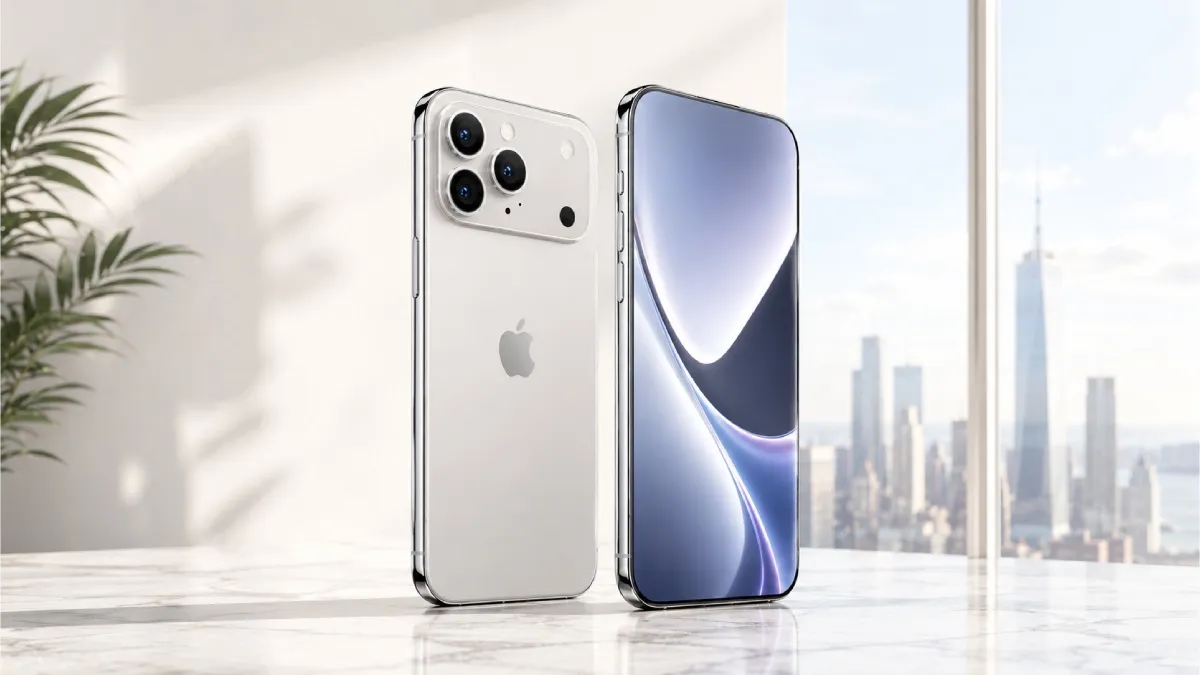
    The iPhone 20 Pro was set to be a remarkable device, featuring an all-glass screen design. The concept involved no bezels, giving the impression of the screen floating above the chassis. It also proposed to relocate the Face ID component and the selfie camera underneath the display.

    The display was designed to seamlessly merge into the phone’s body, creating a bezel-less effect without distorting the content displayed on the screen. This concept was intended to take a step ahead of Samsung’s Edge phone models. However, Apple has had to abandon the original design of the iPhone 20 Pro.

    It seems that the company has discontinued this model. In its place, a different type of iPhone will be released next year.

    Production Challenges Derail 20th Anniversary Plans

    The technology industry’s existing strained state led to yield issues that forced Apple to change its plans. The 20th anniversary of the iPhone, which was supposed to mark a significant restructuring of the smartphone world, will now be a less extraordinary event.

    Apple’s devoted fans, although disappointed with this news, understand the industry’s current state and do not fault the company.

    Expectations for the 20th Anniversary

    Next year’s 20th anniversary marks a significant milestone for one of the most transformative devices ever created. With the cancellation of the all-glass iPhone 20 Pro, expectations should be adjusted for something less than groundbreaking.

    Industry insiders have recently shared renders of an iPhone 20 Pro that boasts a bezel-less design and a Dynamic Island cutout. It’s highly probable that this is what the new iPhone 20 Pro will look like.

    The dream of a phone with a cutout-free display had many, including me, eagerly awaiting the iPhone 20 Pro’s release before considering switching to Apple. This recent development not only postpones this potential switch but also increases the likelihood of an Android manufacturer outpacing Apple in this innovation.

    Questions & Answers

    What changes were planned for the iPhone 20 Pro?
    The iPhone 20 Pro was supposed to feature an all-glass, bezel-less screen. The Face ID component and the selfie camera were to be moved under the display.

    Why did Apple cancel the iPhone 20 Pro?
    Due to the existing strained state of the technology industry, Apple encountered yield issues, which forced the company to abandon its original plans for the iPhone 20 Pro.

    What should we expect from the 20th anniversary iPhone?
    With the cancellation of the all-glass iPhone 20 Pro, the 20th anniversary iPhone is expected to be less groundbreaking. It’s likely to feature a bezel-less design and a Dynamic Island cutout.

  • Third-Party App Store Aptoide Games Launches on Google Play: Heres What You Need to Know

    Third-Party App Store Aptoide Games Launches on Google Play: Heres What You Need to Know

    The Google Play Store is now offering a new third-party app outlet known as Aptoide Games, featuring a variety of free and paid games. Accessing this new store is straightforward; simply launch the Play Store app on your Android device, tap on the profile icon located in the upper right corner, and scroll down the menu until you find the “Third-party app stores” option.

    Exploring Aptoide Games: A Third-Party App Store within Google Play

    Upon clicking, you are presented with a list of third-party app stores available, currently headlined by Aptoide Games. By selecting this entry, you are directed to an installation button for the alternative app store.

    The Aptoide Games platform offers an array of applications available for installation, including:

    – Huawei Health: An app that tracks your health metrics, workouts, and calorie consumption on any Android 6.0 or higher device, regardless of whether it’s a Huawei product or not.
    – Clash of Kings: A real-time strategy game that thrusts you into the shoes of a lord responsible for constructing a castle.
    – Vikings: War of Clans PvP: A game that makes you a Viking chieftain tasked with building a stronghold, training armies, and participating in both player vs player and player vs environment battles.
    – Legend of Mushroom: This role-playing game allows you to embark on a journey to become human as a mushroom character.
    – LUDUS: Merge Arena PvP: A game where you can collect and upgrade over 100 unique heroes for arena combat.
    – Wartune Ultra: A mobile strategy-based role-playing game where you command a city and ally with others to combat the forces of darkness.
    – Saint Seiya: Legend of Justice: This game tasks you with assembling the ultimate underworld team to dominate the Sanctuary War as Hades arrives.
    – Duck Survival: A roguelike shooter game with thrilling survival scenarios against zombies and giant bosses.
    – The Ants: Underground Kingdom: An immersive game where an ant colony endeavors to survive crises, protect the Queen, and construct an anthill.

    The Backstory: Why Google Now Allows Third-Party App Stores

    The presence of third-party app stores within Google Play Store stems from court orders resulting from the Epic Games v Google lawsuit. The conflict began when Epic Games, developer of Fortnite, sued Google over the 30% commission it took on in-app purchases. To circumvent this fee, Epic Games implemented a direct payment system within Fortnite, which violated Play Store’s regulations.

    Following the introduction of this direct payment system, Google removed Fortnite from the Play Store on August 13, 2020. This event sparked lawsuits that ultimately compelled Google to permit third-party apps within the Play Store. Notably, while Google lost a significant antitrust lawsuit initiated by Epic Games, Apple triumphed in most of its 2021 legal skirmish with Epic and is not subject to the same court order as Google.

    Questions & Answers

    What is Aptoide Games?
    Aptoide Games is a third-party app store accessible via Google Play Store. It offers a variety of free and paid games.

    How can I access Aptoide Games?
    To access Aptoide Games, open your Google Play Store app, tap on the profile icon, scroll down the menu until you find the “Third-party app stores” option, and click to view.

    Why does Google now allow third-party app stores within Play Store?
    Google’s decision to allow third-party app stores is due to a court order that came about as a result of the Epic Games v Google lawsuit.

  • Google Messages Levels Up: Unveils User-Friendly Features in New Update

    Google Messages Levels Up: Unveils User-Friendly Features in New Update

    Following the termination of Samsung Messages, Google Messages has risen to prominence as the primary texting application for Android. It boasts notable features such as Rich Communication Services (RCS) support and end-to-end encryption. However, it has been criticized for its lack of some fundamental features. According to reports, these missing features might soon be introduced, as they have been seen in the app’s beta version.

    Enhancements to the Long Press Menu

    The current long press menu in Google Messages has faced criticism for being less than user-friendly. When a message is long-pressed, a ‘pill’ with emoji actions and Photomoji is displayed, followed by four action buttons: copy, delete, star, and a three-dots button.

    Tapping the three-dots button reveals an extra menu with options like reply, share, forward, and view details. The user has to navigate through multiple steps to access even basic actions. With the new update, this is set to change.

    In the updated version, long-pressing a message will bring up a new menu that contains all the essential action buttons. Moreover, a blur effect has been added to the background, modernizing the app’s look. The emoji bar remains unchanged and still appears when a message is long-pressed.

    This adjustment was first noticed in January, but it was only accessible to a select few testers. Now, it’s widely available on almost every device registered to receive the latest Google Messages beta version.

    Text Selection Feature

    One of the most significant issues with Google’s messaging app is its inability to select a specific part of a message. For instance, from a message saying, “Hey, this is Aman from PhoneArena,” it’s impossible to choose and copy a particular section like “from PhoneArena”; users can only select and copy the entire message.

    The current solution is to copy the entire message, paste it where required, and manually remove the unwanted part. Recognizing that users sometimes want to copy a particular section from a lengthy message instead of the whole text, Google has introduced the capability to select only the needed part of a message.

    This change first surfaced months ago, but it now seems to be reaching more Google Messages beta testers.

    Users’ Long-Standing Demands

    Following Samsung Messages’ discontinuation, its users were urged to transition to Google Messages. Nevertheless, some users expressed dissatisfaction with the Google messaging application’s lack of basic features, such as the ability to select and copy a specific part of a text message. One user, evidently a former Samsung Messages app user, mentioned that they started using a third-party SMS application specifically because Google Messages didn’t offer this feature.

    Another user humorously remarked on how long the above-mentioned features have been in the beta phase, a sentiment shared by many, given that it’s been over six months since they were first noticed, yet they remain unavailable in the stable version of the application.

    Progress Towards Completeness

    Despite offering impressive features like RCS, Google Messages lacks several basic functions typically expected in any texting application. The good news is that these shortcomings are being gradually addressed. It recently introduced the trash feature. It now also allows theme changes, which was a significant complaint among Samsung Messages users.

    The new long press menu and the ability to select only the desired text are also on the verge of being added to the app’s stable build. All these improvements are steadily shaping Google Messages into one of the top messaging applications for Android.

    Questions & Answers

    What are the new features being introduced in the Google Messages update?
    These include an enhanced long press menu and the ability to select a specific part of a message.

    Why was there criticism regarding Google Messages?
    Critics pointed out that it lacked some basic features, such as a user-friendly long press menu and the ability to select and copy specific parts of a text message.

    What improvements have been made to address these criticisms?
    Google has introduced an improved long-press menu and the ability to select and copy a specific part of a text message. Additional features, such as the trash feature and theme changes, have also been added.

  • Revolutionizing Communication: Google Unveils Enhanced Customization Features for Google Messages App

    Revolutionizing Communication: Google Unveils Enhanced Customization Features for Google Messages App

    As an Android user since 2009, my journey started when I bought the Motorola DROID. This marked my introduction to Google’s beta program, which offers early access to updates for Google’s main suite of apps. Over the years, this decision has proved beneficial because it allowed me to access and review new features before they were widely rolled out to all Android devices.

    The following are the primary Google apps with beta programs:

    – Google Play Services
    – Google Messages
    – Google Chrome
    – Google Phone (Dialer)
    – Google Maps
    – Google Photos
    – Google Clock
    – Google Calculator
    – Gboard
    – Android Auto

    Joining a Beta Program for a Core Google App

    To join a beta program for any of these apps, one must first visit the Play Store. Once there, find the specific Play Store listing for the app you’re interested in. Scroll down until you find the “Join the beta” section. A simple tap on “Join” and a confirmation are all it takes to become part of the program. However, you might encounter situations where the beta is full, in which case, you will be notified accordingly.

    This brings us to the latest update regarding Google’s testing of new designs for the Google Messages app. To experience these changes, your Android phone needs to be running the v20260731 beta version of the Google Messages app.

    Determining the Version of Google Messages on Your Phone

    To find out the exact version of the app on your device, navigate to Settings > Apps > See all apps. From there, scroll down to Messages and tap on it. This brings up the ‘App Info’ page for the app. The version number of the app installed on your phone can be found at the very bottom of this page.

    Google’s latest update gives Google Messages users the chance to rearrange the icons in the attachment menu. Previously, tapping the attachment icon—the “+” button to the left of the text field in an ongoing chat—would display a 3×3 grid of shortcuts. These shortcuts included Gallery, Camera, GIFs, Files, Real-time Location, Contacts, Sticker, Schedule Send, and One-time Location.

    The order of these icons was previously fixed, but with the new update, users can now press and hold any of the nine icons and move them around. This process can be repeated until the shortcut menu is arranged according to the user’s preference.

    Questions & Answers

    What does the Google Messages app’s latest update offer?
    The latest update for the Google Messages app presents users the opportunity to rearrange the icons in the attachment menu to their liking.

    How can I join a Google app’s beta program?
    To join a beta program for a Google app, go to the Play Store, look up the specific app’s Play Store listing, and scroll down to the “Join the beta” section and tap “Join”.

    How can I check the version of the Google Messages app on my phone?
    You can find the version of the Google Messages app on your phone by going to Settings > Apps > See all apps. Scroll down to Messages and tap on it. The version number of the app installed on your phone can be found at the very bottom of the ‘App Info’ page.

  • Costco’s Online Leap into China: Partnership with JD Expands Nationwide Reach

    Costco’s Online Leap into China: Partnership with JD Expands Nationwide Reach

    Costco, the multinational warehouse retailer, has embarked on an exciting new chapter in its expansion efforts within China. The company recently inaugurated an online flagship store on JD, China’s leading e-commerce platform. This online presence is set to enhance Costco’s reach beyond its existing physical warehouse network.

    The collaboration with JD provides nationwide consumers with access to an impressive array of approximately 700 products. These offerings encompass various categories, such as groceries, household essentials, health supplements, beauty, and Costco’s exclusive Kirkland Signature private-label line. Significantly, this also includes regions where Costco currently lacks a physical presence.

    This strategic partnership with JD serves as a critical step in augmenting Costco’s business operations in China. It goes beyond the restricted physical scope of their membership warehouses. As stated by Costco China, “Our alliance with JD, utilizing its robust online platform and extensive logistics network, allows us to overcome regional boundaries. It facilitates the expansion into wider markets and ensures effective delivery of Costco’s distinctive merchandise and service value to consumers across the country.”

    The online flagship store underwent a trial phase that commenced in late May. According to Costco, during the first month of the trial period, the store attracted over 30 million visits and gained nearly 200,000 followers. These figures underscore the strong consumer interest leading up to the store’s official inauguration.

    This development materializes as Costco continues to cautiously extend its footprint in Mainland China. Since the establishment of its maiden warehouse in Shanghai in 2019, Costco has introduced a few additional stores in the nation’s major cities. Concurrently, the retailer is increasingly incorporating digital channels to augment its market reach.

    Questions & Answers

    What is the significance of Costco’s partnership with JD?
    The collaboration with JD enables Costco to extend its reach across China, beyond the physical boundaries of its warehouse network. It allows consumers from various regions, including those where Costco has no physical presence, access to an array of products.

    How many products will be available through Costco’s online flagship store on JD?
    The online store offers nationwide consumers access to around 700 products spanning various categories.

    What was the consumer response during the trial phase of the online store?
    During the trial phase in its first month, the online store attracted over 30 million visits and gained nearly 200,000 followers, indicating strong consumer interest.

  • China’s Midea Doubles AC Production to Quench Heatwave-Driven Demand in Europe

    China’s Midea Doubles AC Production to Quench Heatwave-Driven Demand in Europe

    Midea, the Chinese home appliance heavyweight, recently revealed that it accelerated its production operations to deliver 20,000 air conditioning units to France in a span of seven days. This was in response to the escalating demand spurred by the severe heatwave that is engulfing Europe.

    In 2020, Midea led China’s air conditioning sector in terms of market share. It was able to double its production capacity to 6,000 portable units each day by initiating a fresh production line on July 7. As a result, the company managed to finish manufacturing all 20,000 units in just three and a half days. Midea prioritized the French order by designating additional labor and production capacity, even while its factories were operating at full tilt to satisfy local demand.

    Increased Demand for Chinese Home Appliances in Europe

    The ongoing heatwave in Europe has sparked a significant surge in demand for Chinese-made home appliances. Midea Group reported that sales of a portable split air conditioner, specifically designed for the European market, have exceeded 200,000 units this year, marking a twofold increase from the previous year. Furthermore, this particular model has sold out in Germany, France, the Netherlands, and the United Kingdom.

    Official data disclosed that more than 10,000 extra deaths were reported in European countries during the extraordinary heatwave that swarmed the western part of the continent in late June. The majority of these, over 9,000, were among individuals aged 65 and above.

    Surge in Online Sales of Air Conditioners and Fans

    Alibaba, the e-commerce juggernaut, has reported three-figure growth in sales of air conditioners and fans on its overseas platforms. On AliExpress, Alibaba’s international retail platform, warehouse inventory of a 2.35-kilowatt Midea air conditioner, which was released in Germany in June, was entirely sold out by Thursday.

    The trend was significantly evident in southern Europe as well. In Spain, fan sales skyrocketed by 94% between June 17 and 23 compared to the same period in May. Meanwhile, Italy witnessed a 100% month-on-month surge in sales of cooling appliances and sun-protection apparel in June.

    The rush by European consumers was also mirrored on Alibaba.com, the company’s business-to-business platform, displaying urgent procurement by local merchants. In June, air conditioner orders in Spain almost doubled from a year earlier. Simultaneously, wholesale fan orders saw a staggering increase of 378% in Sweden and 114% in Belgium.

    Questions & Answers

    What has been Midea’s response to the increased demand for air conditioners in Europe?
    Midea has ramped up production and shipped 20,000 air conditioners to France in just seven days to meet the increased demand due to the intense heatwave.

    What is the sales trend of the portable split air conditioner designed for Europe?
    Sales of the portable split air conditioner, specifically designed for the European market, have exceeded 200,000 units this year, marking a twofold increase from the previous year.

    How has the demand for cooling appliances and sun-protection apparel changed in Italy?
    In Italy, there has been a 100% month-on-month increase in sales of cooling appliances and sun-protection apparel in June due to the heatwave.

  • Bang & Olufsen Unveils Asias Largest Flagship Store in Singapore: A New Era of Luxury Electronics Experience

    Bang & Olufsen Unveils Asias Largest Flagship Store in Singapore: A New Era of Luxury Electronics Experience

    Established Danish electronics manufacturer, Bang & Olufsen, recently unveiled its flagship store at Singapore’s Scotts Square shopping complex. With a retail area of approximately 2853 square feet, this site represents the company’s first Culture Store in Southeast Asia and the grandest in the Asia Pacific region. The inauguration follows their centennial celebration in the previous year.

    The innovative store design mirrors a high-end home, offering patrons the unique opportunity to explore Bang & Olufsen’s product range in a realistic setting, rather than on traditional display shelves. Amongst the features of this space are exclusive listening suites and personal consultation areas. These have been specifically designed for customers to assess the products in various acoustic conditions.

    Why Singapore?

    Bang & Olufsen’s CEO, Nikolaj Wendelboe, stated that Singapore was chosen as the location for their flagship store due to its status as a design, cultural, and commercial nexus in the region. The store was established through a collaborative effort with Design Collection Denmark. This partnership has been a key part of Bang & Olufsen’s operations in Singapore for the past two decades.

    Originally founded in 1925 in Struer, Denmark, Bang & Olufsen has made a name for itself with its premium audio equipment, televisions, and headphones. Globally, the brand has a commercial presence extending over more than 70 countries.

    Questions & Answers

    What is the significance of the new Bang & Olufsen store in Singapore?
    This store is the first Culture Store in Southeast Asia for Bang & Olufsen and is the largest of its kind in the Asia Pacific region.

    What differentiates this store from traditional retail spaces?
    Instead of standard display shelves, the store is designed to resemble a luxury home, allowing customers to experience the products in realistic living environments. There are also dedicated listening rooms and private consultation spaces.

    Why was Singapore chosen as the location for this flagship store?
    According to the CEO of Bang & Olufsen, Nikolaj Wendelboe, Singapore’s position as a regional hub for design, culture, and commerce made it an ideal location for their flagship store.

  • Electronics Retail Giant Dien May Xanh Soars with $505m IPO in Vietnams Largest Market Listing in Two Years

    Electronics Retail Giant Dien May Xanh Soars with $505m IPO in Vietnams Largest Market Listing in Two Years

    Mobile World Investment Corporation, a renowned retail conglomerate in Vietnam, recently made a significant move in the business world by separating its electronics retail chain, Dien May Xanh, through an initial public offering (IPO) valued at US$505 million. This event has been one of the most substantial stock market listings in Vietnam over the past couple of years.

    According to internal documents from the company, investors showed substantial interest in the offering, with registrations to buy around 166 million shares. These shares accounted for 92.5 percent of the total 179.5 million shares available, effectively raising around 13.29 trillion dong (equivalent to US$505 million).

    Implications of the IPO

    This development was not unexpected as Dien May Xanh had earlier, in May, expressed its intent to raise approximately US$546 million. This fund-raising was to be accomplished by selling 179.5 million shares at a fixed price – 80,000 dong a share. The raised funds are targeted towards fueling the next phase of the company’s growth and solidifying its place in Vietnam’s consumer electronics market.

    It is expected that Dien May Xanh will make its debut appearance on the Ho Chi Minh Stock Exchange in the first week of August.

    As one of Mobile World Investment Corporation’s key business arms, Dien May Xanh is one of the largest electronics retailers in Vietnam. Its nationwide network comprises stores selling a wide range of consumer technology products, including smartphones, televisions, and home appliances.

    The company has set ambitious financial goals for the next decade. It aims to achieve a compound annual revenue growth of 11 percent and an annual net profit growth of 16 percent through to 2030, as it further broadens its market reach.

    Questions & Answers

    What is the significance of Dien May Xanh’s IPO?
    The IPO is a strategic move by the company to raise funds for its next growth phase and to bolster its position in Vietnam’s consumer electronics market.

    When is Dien May Xanh expected to join the Ho Chi Minh Stock Exchange?
    Dien May Xanh is expected to make its debut on the Ho Chi Minh Stock Exchange in the first week of August.

    What financial targets has the company set for the next decade?
    The company aims for a compound annual revenue growth of 11 percent and an annual net profit growth of 16 percent through 2030.

  • Apple’s Key Supplier Tata Boosts Security Measures Amid Dark Web Data Leak Investigation

    Apple’s Key Supplier Tata Boosts Security Measures Amid Dark Web Data Leak Investigation

    Tata Electronics, a primary supplier for tech giant Apple in India, has increased its internal security measures following a potential leak of confidential client files on the dark web, according to a source from Tata and two industry representatives.

    In response to the incident, Tata has engaged an international consultant to perform a forensic audit. The company has also reported the incident to the Indian government and its customer base. The source from Tata chose to remain anonymous due to the sensitive nature of the situation.

    The cybercrime group known as World Leaks claimed responsibility for uploading over 200,000 files onto the dark web. These files allegedly include design documents for components used by both Apple and Tesla, another of Tata’s clients. The authenticity of the data remains unverified.

    Tata acknowledged the occurrence of a “cybersecurity incident” but assured that its operations were not affected, without providing further details.

    In addition to Apple and Tesla, the leaked data is believed to include at least 16 files and folders from Taiwan Semiconductor Manufacturing Co (TSMC) and 23 from Qualcomm. Both companies supply parts for iPhones.

    Increased Security Measures

    Following the breach, Tata Electronics strengthened security protocols across all its facilities and offices. Remote access to sensitive internal tools, such as those used for placing purchase orders, was limited to a select group of employees. Prior to the incident, these tools were more accessible. The updated protocols apply across Tata Electronics and are not limited to specific factories.

    The investigation into the breach continues, with Apple’s security team reportedly collaborating closely with Tata. The security enhancements include stricter regulations for accessing Tata’s official network from outside the company’s premises.

    Implications for Tata and its Clients

    Tata Electronics, led by former Intel and Applied Materials executive Randhir Thakur, is a critical part of Apple’s strategy to expand iPhone production outside China. However, the breach poses a significant setback to Apple’s supply chain. Tata is also facing scrutiny over alleged farmland contamination near one of its iPhone parts plants in India.

    World Leaks claimed to have published more than 204,341 files containing Tata Electronics data, amounting to over 630.4 gigabytes. The exposed documents include purported “product reliability test” details of a TSMC component and mechanical specifications for a power management integrated circuit from Qualcomm.

    Despite the challenges, India is expected to manufacture 26% of the world’s iPhones by 2026, a significant increase from the 6% it produced four years ago, as reported by research firm Counterpoint.

    Questions & Answers

    How has Tata Electronics responded to the data breach?
    Tata Electronics has increased internal security measures, limited remote access to sensitive systems, and engaged an international consultant for a forensic audit.

    What does the leaked data purportedly contain?
    The data allegedly contains design documents from Apple and Tesla, and files from Taiwan Semiconductor Manufacturing Co and Qualcomm.

    What are the potential impacts of the breach on Tata and its clients?
    The breach could interrupt Apple’s supply chain and increase scrutiny on Tata, which is already facing allegations of farmland contamination in India.

  • Apple’s Leap of Faith: Intel Chip Deal Sparks Debate on Future of U.S. Chipmaking Industry

    Apple’s Leap of Faith: Intel Chip Deal Sparks Debate on Future of U.S. Chipmaking Industry

    Apple’s transition to Intel chips, as reported last week, displays a strategic move driven by necessity and ambition. However, industry experts suggest this is not a straightforward transition, as advanced Intel chips typically require two to three years to manufacture. Moreover, the translation of this shift into tangible benefits may take even longer due to the extensive and meticulous production process.

    This potential deal, which has not yet been officially confirmed by either party, could present a mutually beneficial opportunity. Intel has been striving to reestablish its reputation as a credible contract chipmaker, while Apple seeks additional manufacturing capacity. This comes in light of Apple’s current supplier, TSMC, grappling with increased Artificial Intelligence (AI) chip demand led by companies such as Nvidia.

    Supply issues have impacted iPhone sales, as Apple CEO Tim Cook noted in April. The prospective agreement with Intel aligns with the U.S strategy to bolster domestic chip manufacturing, using tariffs and incentives. Intel, holding a 10% stake in the company and having received a $5 billion investment from Nvidia on the request of President Donald Trump, is considered a critical player in this initiative.

    However, Malcolm Penn, CEO of chip research firm Future Horizons, offers a cautious perspective. “The very best-case scenario would see the first chips produced within two to three years. Designing an SoC (system on chip) of this complexity takes two years, with an additional four months needed for production cycle time to ramp up,” he explained. Penn underscores that this estimation is contingent on Intel’s technology being fully developed and its design tools sufficiently reliable for Apple to rely on. He termed the deal as “a shotgun wedding,” due to the high degree of faith and commercial risk involved.

    Intel’s Prospects with Apple

    Despite being late to the AI boom, Intel has made tentative strides, securing Tesla as a customer in April and potentially entering a significant partnership with Apple. Experts are split over which Intel manufacturing process Apple will select.

    While some predict Apple will follow Tesla onto Intel’s forthcoming 14A process, others foresee Apple prioritizing reliability over cutting-edge gains, potentially favoring 18A-P, a refined version of Intel’s most advanced process, or a reliable, older node such as Intel 3.

    Bob O’Donnell, an analyst at TECHnalysis Research, believes Apple might opt for Intel’s 14A process technology, expected to be available by 2028 or 2029. He notes that if this comes to fruition, it would mark a pivotal development for Intel’s foundry business and U.S-based semiconductor manufacturing more broadly.

    Turning Apple’s Vision into Reality

    Daniel Newman, CEO of tech research firm Futurum Group, suggests that the mass production of Apple-designed chips may not commence until late 2027 or early 2028. It is anticipated that initial efforts will concentrate on less critical components used in MacBook Air or certain iPad Pro models.

    Apple might adopt a cautious approach, initially testing Intel with lower-end products before entrusting them with their most essential chips, as per analysts. Intel, which has faced challenges with the timeline and quality of its chips, will need to meet Apple’s high yield expectations—a standard that TSMC has accustomed Apple to.

    Paul Meeks, head of tech research at Freedom Capital Markets, voices skepticism. “Investors are betting on flawless execution by Intel, a company that hasn’t delivered for about 20 years. While Intel seems to have made progress with its latest manufacturing process, we should all at least modestly discount a perfect outcome,” he warned.

    Questions & Answers

    What is the predicted timeline for the production of Intel chips for Apple?
    The best-case scenario predicts that the first chips could be produced within two to three years. However, the mass production of Apple-designed chips may not start until late 2027 or early 2028.

    What factors could impact this timeline?
    The timeline depends largely on whether Intel’s technology is fully developed and its design tools reliable enough for Apple to depend on. It is also contingent on Intel meeting Apple’s high yield expectations.

    What could be the implications of this shift for Apple and for U.S. semiconductor manufacturing?
    The shift could potentially provide Apple with the additional manufacturing capacity it seeks and help Intel rebuild its credibility as a contract chipmaker. If successful, it could also mark a significant development for U.S-based semiconductor manufacturing.